
Antique Jardinieres & Planters Identification Guide: Types, Marks & Dating
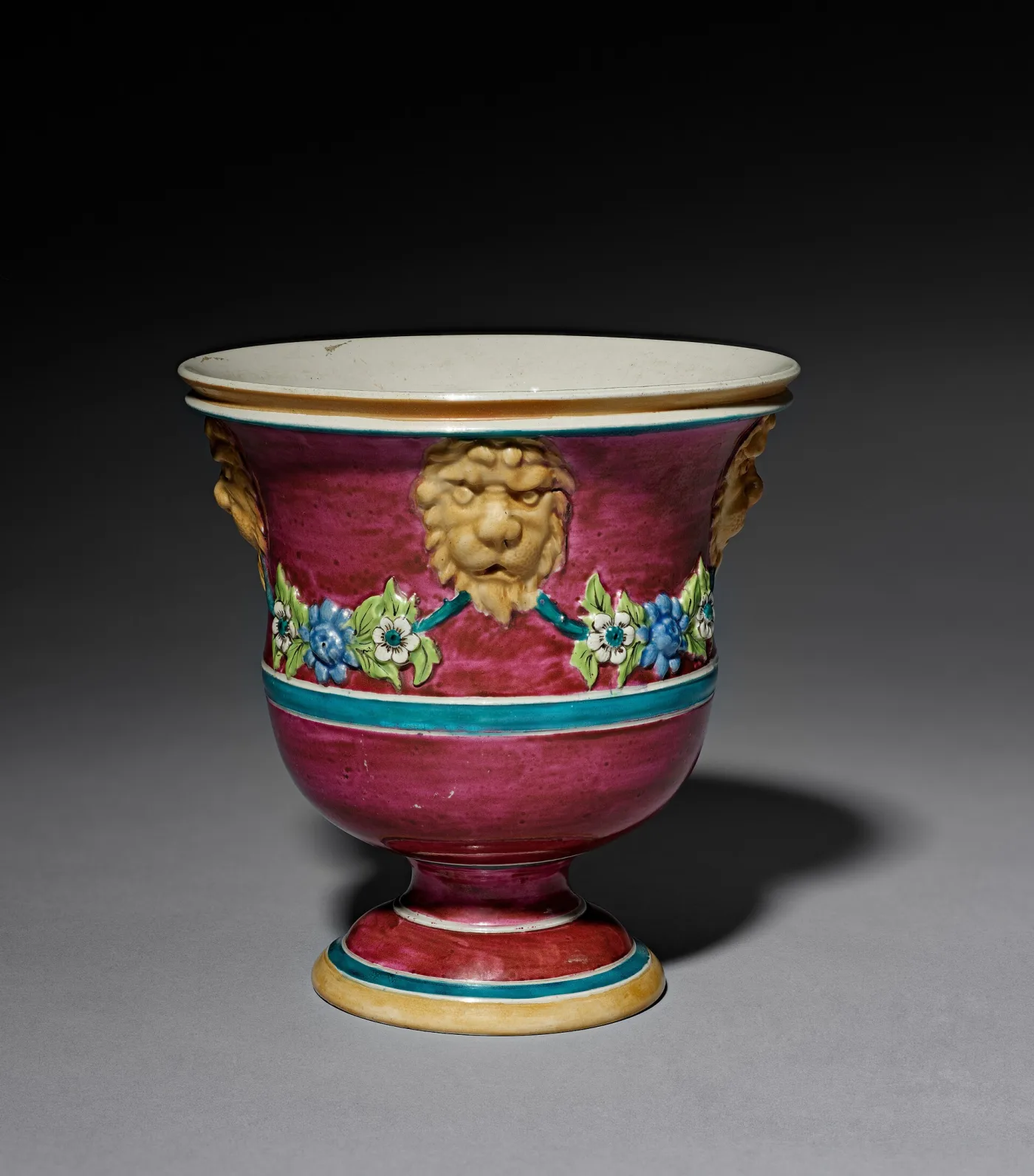
Jardinieres and planters have served as both functional plant containers and decorative showpieces for centuries. From ornate Victorian majolica jardinieres to sleek Art Deco ceramic planters, these vessels reflect the artistic tastes and horticultural passions of their eras. Understanding how to identify and date antique jardinieres opens a fascinating window into the history of decorative arts, ceramic manufacturing, and interior design.
The term "jardiniere" derives from the French word for gardener and traditionally refers to an ornamental pot or stand designed to hold plants indoors. While planters serve a similar purpose, jardinieres are typically more elaborate, often featuring pedestals, intricate relief decoration, and fine glazes. Collectors today prize antique jardinieres from makers like Weller, Roseville, Minton, and Sarreguemines for their craftsmanship and artistic merit.
This guide covers the major types of antique jardinieres and planters, key identification techniques including maker marks and material analysis, dating methods by style and construction, and current market values to help you authenticate and appraise these beautiful objects.
Table of Contents
- History of Jardinieres & Planters
- Major Types of Antique Jardinieres
- Materials & Construction Methods
- Majolica Jardinieres
- American Art Pottery Jardinieres
- European Porcelain & Faience Jardinieres
- Metal & Cast Iron Jardinieres
- Identifying Maker Marks
- Dating Antique Jardinieres
- Jardinieres & Pedestals
- Style Periods & Design Elements
- Condition Assessment & Restoration
- Spotting Reproductions & Fakes
- Market Values & Collecting Tips
- Care & Display Recommendations
History of Jardinieres & Planters
The practice of growing plants in decorative indoor containers stretches back to ancient civilizations. The Romans cultivated herbs in ornamental terracotta pots, while Chinese scholars kept miniature trees in ceramic vessels as early as the Tang Dynasty. However, the jardiniere as we know it today emerged primarily during the 18th and 19th centuries in Europe, driven by a growing passion for indoor horticulture among the middle and upper classes.
18th-Century Origins
During the 1700s, European aristocrats began commissioning elaborate plant holders from leading porcelain manufacturers. Porcelain factories like Meissen, Sevres, and Derby produced exquisite jardinieres painted with floral scenes and gilded borders. These early examples were typically small, designed for windowsills and mantels rather than floor display. The Neoclassical movement of the late 18th century introduced urn-shaped jardinieres decorated with classical motifs such as swags, laurel wreaths, and Greek key patterns.
Victorian Heyday
The Victorian era marked the golden age of the jardiniere. The Crystal Palace Exhibition of 1851 showcased spectacular jardinieres from manufacturers worldwide, sparking intense public interest. The Victorian passion for indoor plants, ferns in particular, created enormous demand for decorative containers. Manufacturers responded with jardinieres in every conceivable material: majolica, stoneware, cast iron, brass, copper, and fine porcelain. The introduction of matching pedestal stands during this period elevated the jardiniere from a tabletop accessory to a statement piece of Victorian interior design.
Arts & Crafts and Art Nouveau Periods
The late 19th and early 20th centuries brought new aesthetic approaches to jardiniere design. The Arts and Crafts movement favored hand-thrown pottery jardinieres with organic glazes and minimal decoration, while Art Nouveau designers created flowing, naturalistic forms inspired by plants and flowers. American art pottery companies like Weller, Roseville, and McCoy flourished during this period, producing distinctive jardinieres that remain highly collectible today.
Art Deco and Mid-Century
The Art Deco period of the 1920s and 1930s introduced geometric forms, bold colors, and streamlined silhouettes to jardiniere design. Manufacturers like Rookwood and Cowan produced modernist planters that contrasted sharply with the ornate Victorian predecessors. By the mid-20th century, studio potters and companies like Hull and McCoy created planters in casual, organic forms that suited contemporary ranch-style homes.
Major Types of Antique Jardinieres
Antique jardinieres come in a remarkable variety of forms, each reflecting the aesthetic preferences and manufacturing capabilities of its era. Understanding these types is essential for accurate identification and dating.
Footed Jardinieres
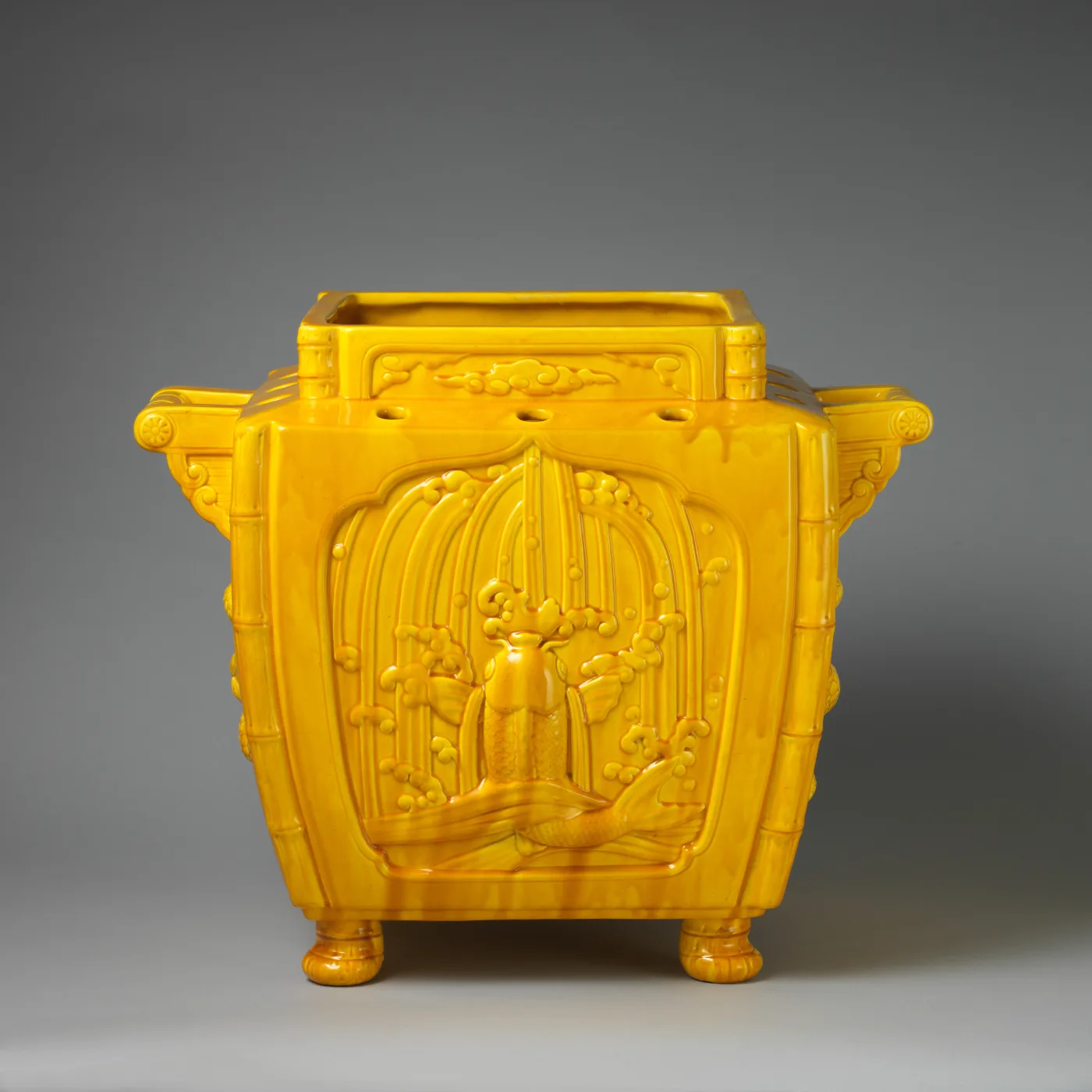
Footed jardinieres sit on three or four small feet molded as part of the base. These are among the most common antique forms, produced by nearly every major pottery and porcelain manufacturer from the mid-19th century onward. The feet may be simple pads, scrolled brackets, lion's paw forms, or figural supports. Footed designs elevate the vessel slightly, protecting furniture surfaces from moisture while adding visual interest to the base profile.
Pedestal Jardinieres
These consist of a separate planting vessel and a tall pedestal stand, typically sold as a matched set. Victorian and Edwardian manufacturers produced jardiniere-and-pedestal combinations in coordinated patterns, standing 30 to 42 inches tall. The pedestal may feature columns, figural supports, or architectural moldings. Complete sets with original pedestals command significantly higher prices than orphaned jardinieres alone.
Wall-Mounted Jardinieres
Designed to hang on walls, these half-round or D-shaped planters were particularly popular during the Victorian and Art Nouveau periods. They feature flat backs with hanging holes or bracket attachments. Majolica wall pockets depicting birds, flowers, or cornucopia shapes are especially sought after by collectors.
Hanging Jardinieres
Suspended by chains or cords, hanging jardinieres were fashionable for displaying trailing plants in conservatories and parlors. They typically feature three or more pierced lugs or rings for suspension. Art pottery examples from Weller and Roseville in this form are particularly collectible.
Window Box Jardinieres
These elongated, rectangular planters were designed to sit on windowsills or mantels. They range from simple troughs to elaborate molded designs with relief decoration on all visible sides. Victorian and Edwardian window boxes often feature landscape scenes, floral garlands, or classical figures in low relief.
Materials & Construction Methods
The material of a jardiniere provides crucial clues for identification and dating. Each material has distinctive characteristics that experienced collectors learn to recognize.
Earthenware & Stoneware
Most antique jardinieres are made from earthenware or stoneware. Earthenware bodies are porous and opaque, typically fired at lower temperatures, and require glazing to become watertight. Victorian earthenware jardinieres often feature thick, colorful glazes in the majolica tradition. Stoneware bodies are denser and partially vitrified, giving them greater strength and water resistance. Salt-glazed stoneware jardinieres from the 19th century display the characteristic orange-peel texture of this technique.
Porcelain
Fine porcelain jardinieres represent the upper end of the market. Translucent when held to light, porcelain bodies are fully vitrified and ring when tapped. European porcelain jardinieres from manufacturers like Sevres, Meissen, and Royal Worcester feature hand-painted decoration, gilding, and transfer-printed designs. These pieces were luxury items intended for formal rooms and conservatories.
Cast Iron
Cast iron jardinieres became widely available during the mid-19th century as iron foundries expanded their decorative product lines. These heavy, durable planters feature intricate relief patterns cast from molds, including Greek Revival motifs, naturalistic foliage, and geometric designs. They were popular for both indoor and outdoor use. Cast iron pieces can be identified by their weight, the presence of casting seams, and sometimes foundry marks on the base.
Brass & Copper
Metal jardinieres in brass and copper were fashionable from the Arts and Crafts period through the early 20th century. Hand-hammered examples with visible tool marks are characteristic of the Arts and Crafts movement, while machine-made brass jardinieres with embossed patterns were mass-produced for the middle-class market. Copper develops a distinctive green patina over time that adds character and helps confirm age.
Terracotta
Unglazed terracotta jardinieres have been produced continuously for centuries. Antique examples are distinguished from modern reproductions by their irregular hand-formed shapes, accumulated mineral deposits, and the quality of any applied decoration. Italian and French terracotta jardinieres from the 18th and 19th centuries often feature classical relief designs and warm orange-red coloring.
Majolica Jardinieres
Majolica jardinieres represent some of the most visually striking and collectible examples of the form. This style of brightly colored, lead-glazed earthenware became enormously popular after Minton's display at the 1851 Great Exhibition and remained fashionable through the end of the 19th century.
English Majolica Jardinieres
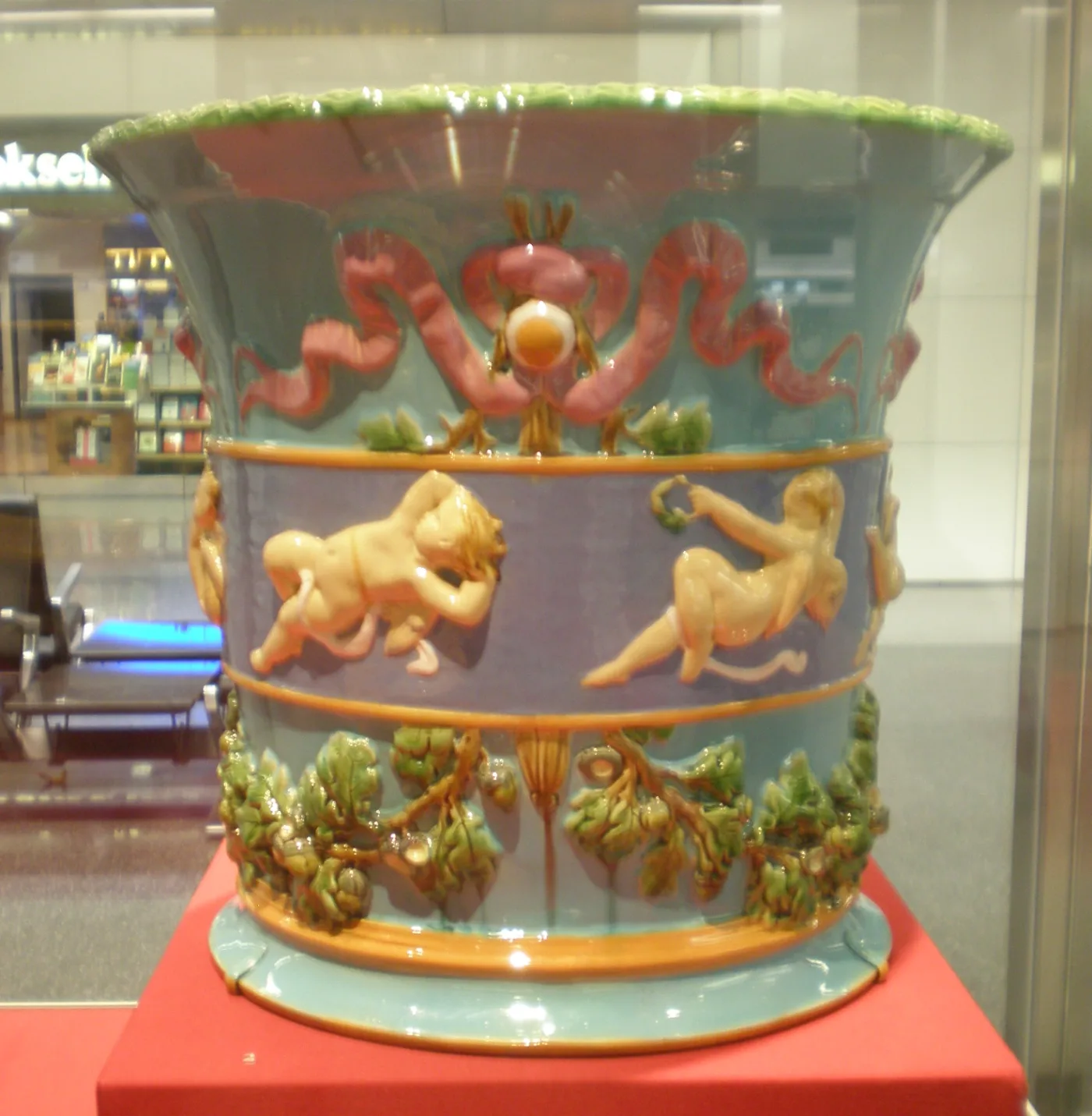
The major English manufacturers of majolica jardinieres include Minton, George Jones, Wedgwood, and Joseph Holdcroft. Minton produced the finest and most expensive examples, featuring naturalistic designs of leaves, flowers, birds, and mythological figures. George Jones pieces are recognized by their distinctive turquoise interiors and careful attention to detail. Wedgwood majolica jardinieres tend toward more restrained classical forms with mottled green, brown, and yellow glazes.
Continental Majolica Jardinieres
French manufacturers like Sarreguemines, Vallauris, and Massier produced distinctive majolica jardinieres, often featuring Mediterranean themes such as olives, lemons, and sunflowers. German and Austrian manufacturers including Schütz-Blansko, Wilhelm Schiller, and Hugo Lonitz created elaborate figural jardinieres depicting animals, mythological creatures, and harvest scenes. Portuguese Caldas da Rainha majolica, inspired by the work of Palissy, features remarkably realistic frogs, lizards, and insects applied to rustic vessel forms.
American Majolica Jardinieres
American manufacturers including Griffen, Smith & Hill (Etruscan Majolica), the Chesapeake Pottery Company, and numerous smaller firms produced majolica jardinieres for the domestic market. American examples tend to be more affordable than their English counterparts but are increasingly appreciated by collectors. The leaf-and-fern patterns of Etruscan Majolica jardinieres are instantly recognizable and remain popular with collectors today.

American Art Pottery Jardinieres
American art pottery companies produced some of the most beloved and collectible jardinieres of the late 19th and early 20th centuries. Each manufacturer developed distinctive styles, glazes, and forms that collectors learn to recognize.
Weller Pottery Jardinieres
Weller Pottery of Zanesville, Ohio, produced jardinieres in dozens of distinct lines from the 1890s through the 1940s. The most sought-after include Louwelsa (hand-painted underglazes with floral motifs), Forest (woodland scenes with trees and foxes), and Woodcraft (naturalistic tree-trunk forms). Weller jardinieres often came with matching pedestals. Early hand-decorated examples are far more valuable than later molded production pieces. Look for the incised or stamped "Weller" mark on the base, though some early pieces bear only a paper label.
Roseville Pottery Jardinieres
Roseville Pottery, also of Zanesville, produced jardinieres in virtually every one of their production lines. Popular patterns include Pinecone (featuring realistic pine cones and needles), Sunflower, Clematis, Foxglove, and Freesia. Roseville jardinieres with matching pedestals in good condition bring premium prices. The company's marks evolved from early Rozane stamps to the raised "Roseville U.S.A." mark used from the 1930s onward, with pattern numbers that help identify specific lines and sizes.
McCoy Pottery Jardinieres
McCoy Pottery produced affordable, attractive jardinieres for the mass market from the early 1900s through the 1980s. While generally less valuable than Weller or Roseville, McCoy jardinieres in unusual glazes or discontinued patterns attract dedicated collectors. The stoneware jardinieres with blended green-to-brown glazes from the early 20th century are particularly collectible. McCoy marks include the incised "McCoy" or "McCoy USA" stamps, though many early pieces are unmarked.
Hull, Brush, and Other Manufacturers
Hull Pottery produced attractive jardinieres in their well-known pastel matte glazes, including the popular Water Lily, Woodland, and Bow-Knot patterns. Brush Pottery (formerly Brush-McCoy) created durable stoneware jardinieres often featuring embossed designs of leaves, berries, and geometric patterns. Smaller manufacturers like Peters & Reed, Zanesville Stoneware, and Red Wing also produced notable jardinieres that are gaining collector recognition.
European Porcelain & Faience Jardinieres
European manufacturers produced some of the finest and most valuable antique jardinieres, ranging from delicate hand-painted porcelain to robust tin-glazed faience.
French Jardinieres
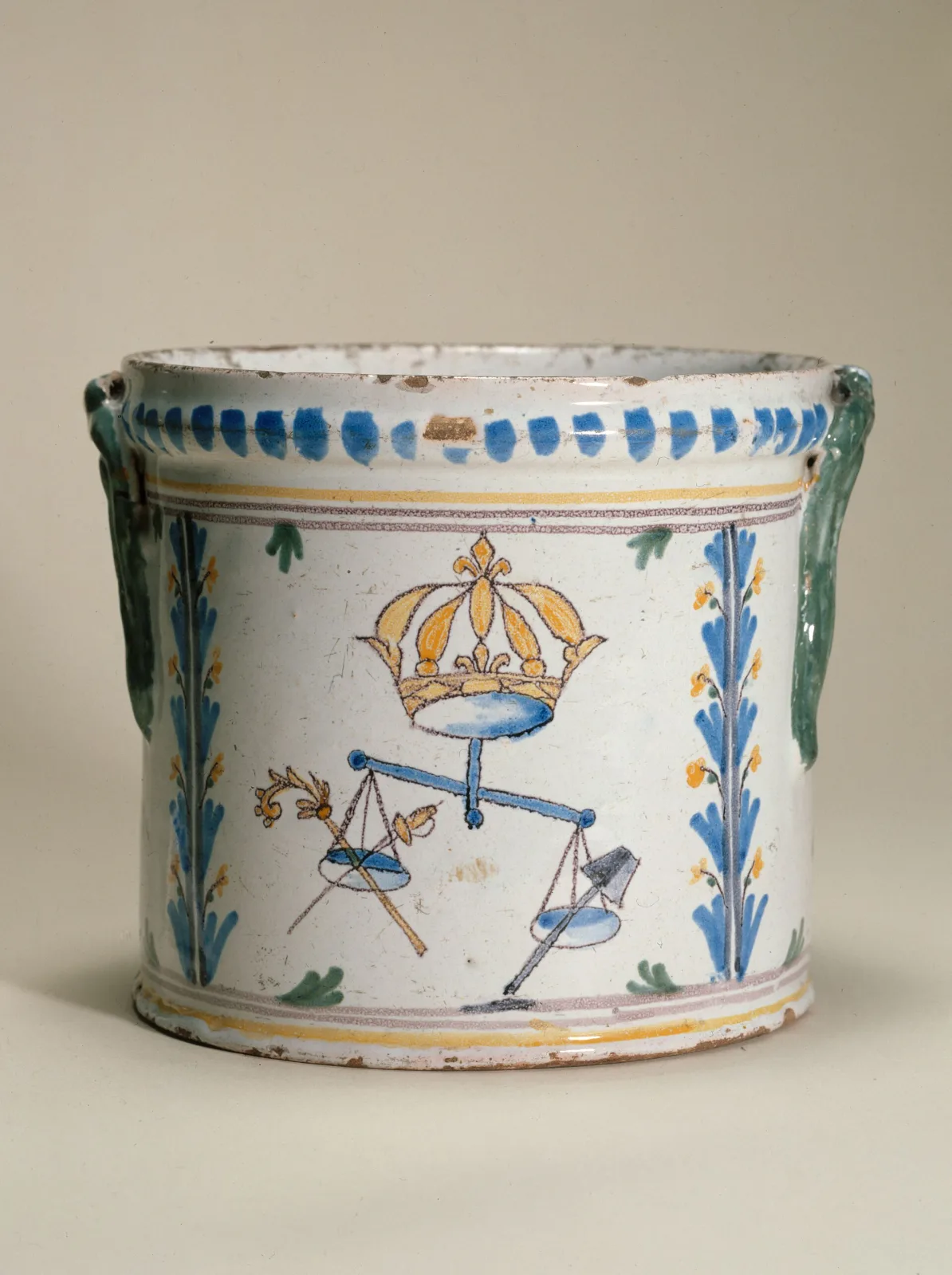
Sevres porcelain jardinieres with hand-painted reserves, gilded borders, and cobalt blue grounds represent the pinnacle of jardiniere craftsmanship. These pieces were produced for the French court and aristocracy from the mid-18th century onward. More accessible French jardinieres include those from Longchamps, Gien, and various faience manufacturers, featuring traditional blue-and-white decoration or colorful provincial motifs. French faience jardinieres from Quimper, Moustiers, and Rouen display regional decorative styles that help with identification.
German & Austrian Jardinieres
German porcelain manufacturers including Meissen, KPM Berlin, and Dresden produced refined jardinieres with floral painting, figural handles, and lavish gilding. Austrian firms like Royal Vienna and Amphora created distinctive jardinieres in the Art Nouveau style, often featuring organic forms and iridescent glazes. Zsolnay of Hungary produced jardinieres in their signature Eosin lustre glaze, with metallic green, purple, and gold surfaces that remain highly sought after.
English Jardinieres
Beyond majolica, English manufacturers produced jardinieres in many other styles. Royal Doulton offered stoneware jardinieres with hand-incised decoration, Lambeth faience pieces with painted floral designs, and Burslem fine china jardinieres with transfer-printed and hand-finished decoration. Bretby Art Pottery created innovative jardinieres with metallic and aventurine glazes. Burmantofts of Leeds produced notable Arts and Crafts jardinieres with muted, flowing glazes.
Dutch & Belgian Jardinieres
Dutch and Belgian manufacturers created jardinieres that reflect their strong ceramic traditions. Gouda pottery jardinieres feature bold Art Nouveau and Art Deco designs with colorful matte glazes. Royal Bonn and Mettlach (Villeroy & Boch) produced high-quality jardinieres with both printed and hand-painted decoration. Belgian manufacturers including Boch Freres created distinctive Art Deco jardinieres in geometric patterns.
Metal & Cast Iron Jardinieres
Metal jardinieres offer a different collecting experience from their ceramic counterparts, with their own identification challenges and rewards.
Cast Iron Jardinieres
Victorian cast iron jardinieres were produced by foundries throughout Europe and America. Major manufacturers include Coalbrookdale (England), J.L. Mott Iron Works (New York), and Val d'Osne (France). These pieces feature elaborate relief decoration cast in molds, often depicting classical scenes, mythological figures, or naturalistic foliage. Identification relies on maker marks (often cast into the base), pattern numbers, and comparison with period catalogs. Weight is a key authenticator: genuine antique cast iron jardinieres are substantially heavier than modern aluminum or resin reproductions.
Brass Jardinieres
Brass jardinieres were popular from the 1870s through the 1920s. Hand-hammered Arts and Crafts examples by makers like the Jarvie Shop, Dirk van Erp, and Stickley bear distinctive hammer marks and often exhibit the warm, mellow patina of age. Mass-produced brass jardinieres with embossed or repoussé decoration were made in enormous quantities, particularly in India and the Middle East for the Western market. These imported pieces are generally less valuable than Western-made examples.
Copper Jardinieres
Copper jardinieres share many characteristics with brass examples but develop a distinctive verdigris patina over time. Arts and Crafts copper jardinieres with hand-riveted seams, hand-hammered surfaces, and applied strap-work handles are highly prized. The Roycroft community in East Aurora, New York, produced notable copper jardinieres with their distinctive orb-and-cross mark.
Identifying Maker Marks
Maker marks are the single most important tool for identifying antique jardinieres. Most established manufacturers marked their products, though marks evolved over time and some pieces were sold unmarked.
Where to Find Marks
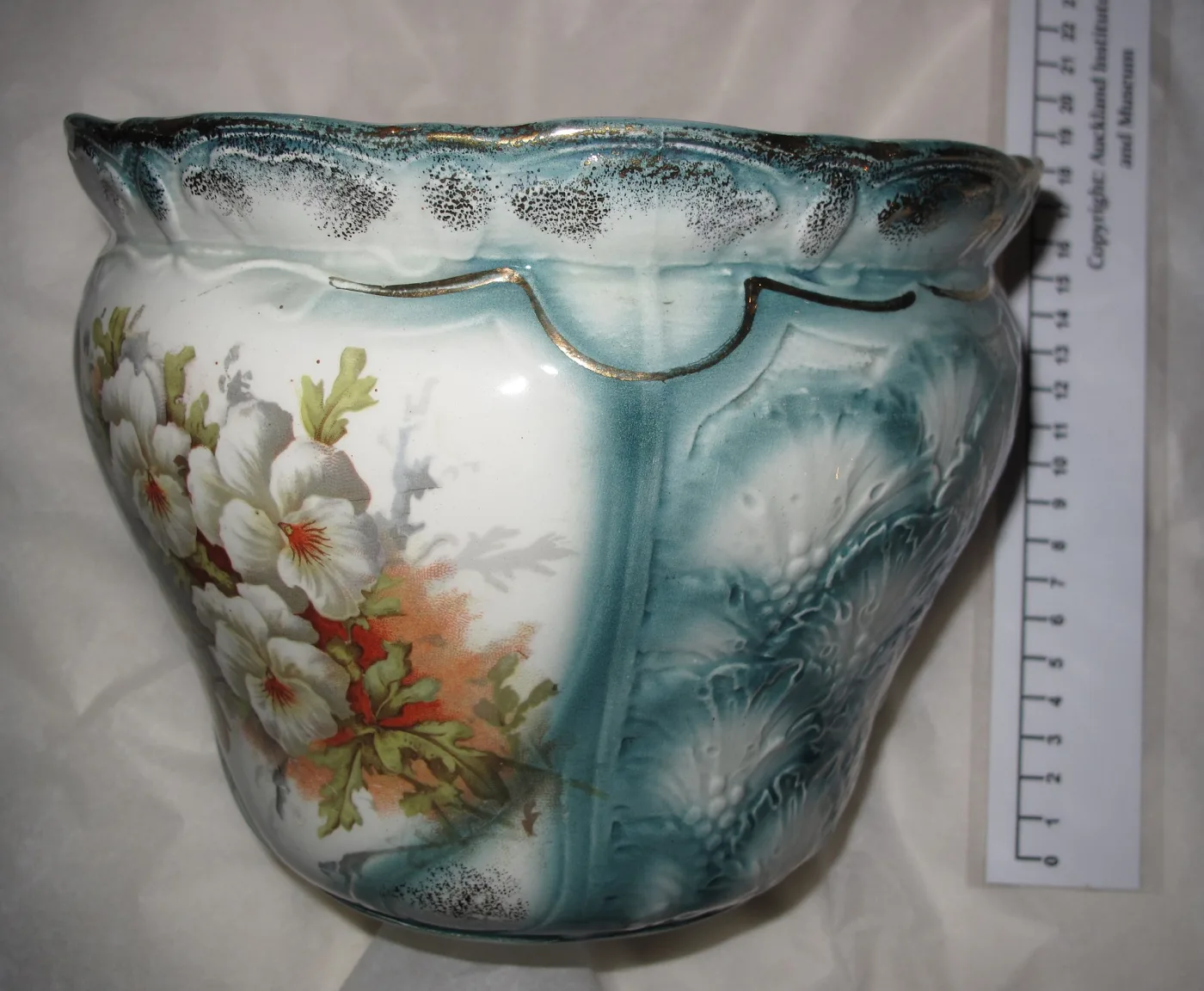
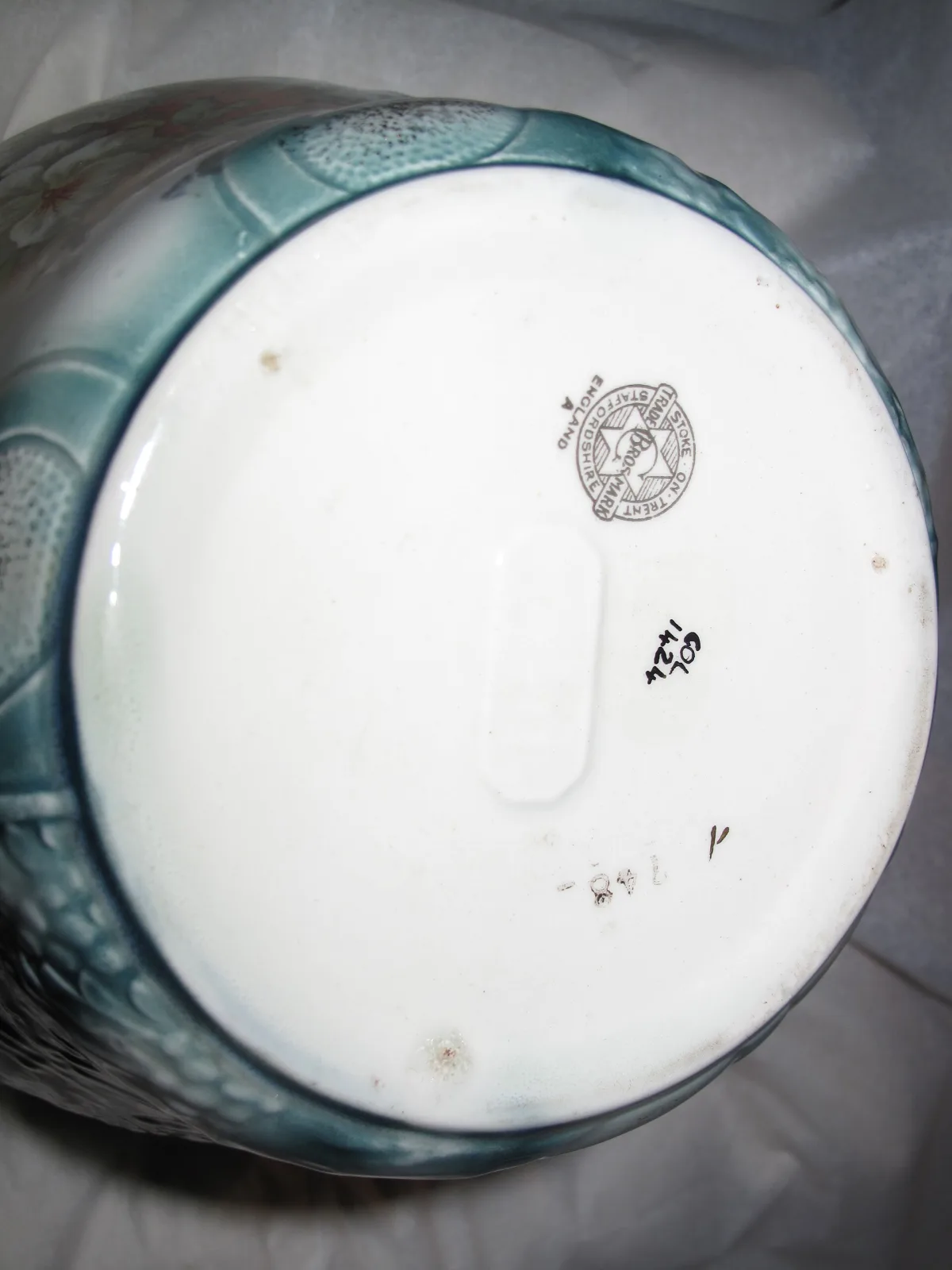
Check the base (bottom) of the jardiniere first, as this is the most common location for marks. Also examine the interior base, the lower exterior walls, and any attached pedestal. Marks may be impressed, incised, stamped in ink, applied as transfers, or molded in relief. On metal jardinieres, look for stamps or engraved marks on the base or lower body.
Common Mark Types
Factory marks typically include the manufacturer's name, logo, or monogram. Pattern marks identify the specific design or decoration line. Date marks indicate the year or period of manufacture, often using letter codes, number systems, or symbols. Registry marks (found on English pieces) provide exact registration dates that help establish the earliest possible date of manufacture. Size marks, usually numbers, indicate the jardiniere's size within a production range.
Key Manufacturer Marks
Weller marks range from hand-incised "Weller" to stamped ink marks and later die-impressed marks. Roseville pieces feature raised marks with pattern names and numbers from the 1930s onward, while earlier pieces may have only paper labels or small impressed marks. Minton majolica bears impressed marks with date cyphers that precisely date each piece. George Jones used the crescent-and-monogram mark. Royal Doulton marks include lions, crowns, and date codes. Familiarity with each manufacturer's mark evolution is essential for dating pieces accurately.
Dating Antique Jardinieres
Accurate dating combines evidence from maker marks, construction techniques, decorative style, and materials. Multiple dating indicators should agree before you assign a confident date range to a piece.
Construction Clues
Hand-thrown jardinieres display spiral throwing marks on the interior and slight irregularities in shape, while slip-cast or press-molded examples show mold seams and uniform wall thickness. The presence of a drainage hole (or lack thereof) can provide dating information, as purpose-made indoor jardinieres typically lack drainage holes while outdoor planters often have them. Foot construction, attachment methods for applied handles, and the quality of clay preparation all provide age-related evidence.
Glaze Analysis
Glaze technology evolved significantly over the centuries. Lead-based majolica glazes (pre-1900) have a distinctive soft sheen and may show crackling or crazing. Alkaline and tin glazes used in faience have characteristic opacity and pooling in recesses. American art pottery glazes from the early 20th century display specific characteristics for each manufacturer: Roseville's distinctive matte blended glazes differ markedly from Weller's hand-painted Louwelsa glazes or McCoy's utilitarian stoneware glazes.
Decorative Style Dating
Decorative motifs serve as reliable dating indicators. Neoclassical designs with urns, swags, and Greek key patterns suggest the late 18th to early 19th century. Naturalistic Victorian motifs with ferns, flowers, and birds point to the 1850s through 1890s. Sinuous Art Nouveau lines and organic forms indicate the 1890s to 1910s. Angular geometric Art Deco patterns date to the 1920s and 1930s. Abstract and organic modernist designs suggest the post-war period.
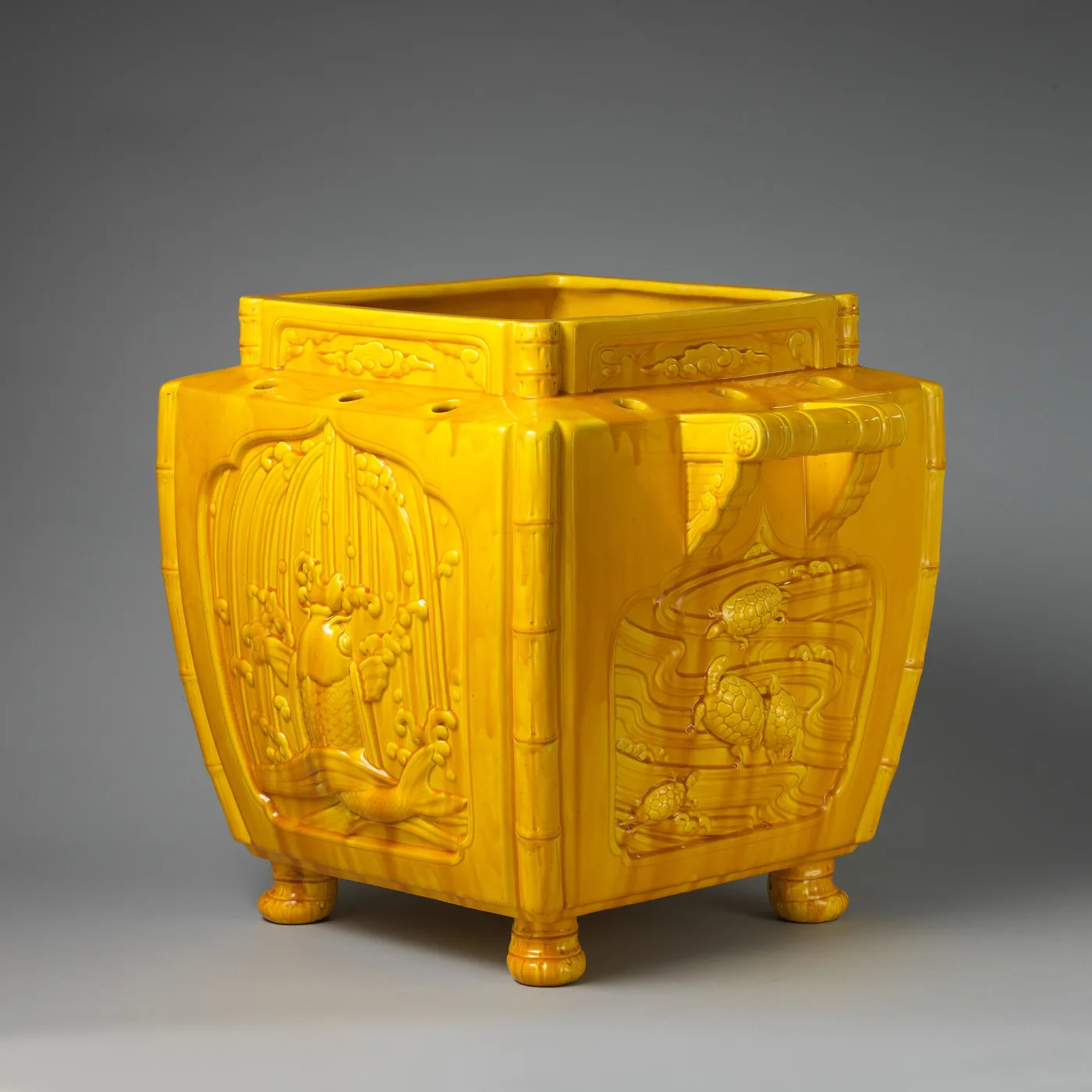
Jardinieres & Pedestals
The jardiniere-and-pedestal combination became the most prestigious form of indoor plant display during the Victorian and Edwardian periods. These sets were designed as unified compositions, with the pedestal complementing the jardiniere in material, glaze, decoration, and proportions.
Matching Sets
A matched jardiniere and pedestal set should share identical clay body, glaze color, decorative pattern, and degree of wear. The pedestal typically features a recessed top that cradles the jardiniere base, and the pattern flows naturally between the two components. Matched sets in good condition are significantly more valuable than individual pieces. When assessing a set, check that both pieces bear the same maker marks, pattern numbers, and size indicators.
Married Sets
Many sets on the market today are "married," meaning a jardiniere has been paired with a pedestal from a different source. While a married set may still be attractive, it is worth less than an original matched pair. Signs of a marriage include slight color or glaze differences, mismatched pattern details, different maker marks, and proportional inconsistencies between the two pieces. Always examine both components carefully, comparing clay color at unglazed areas, before accepting a set as original.
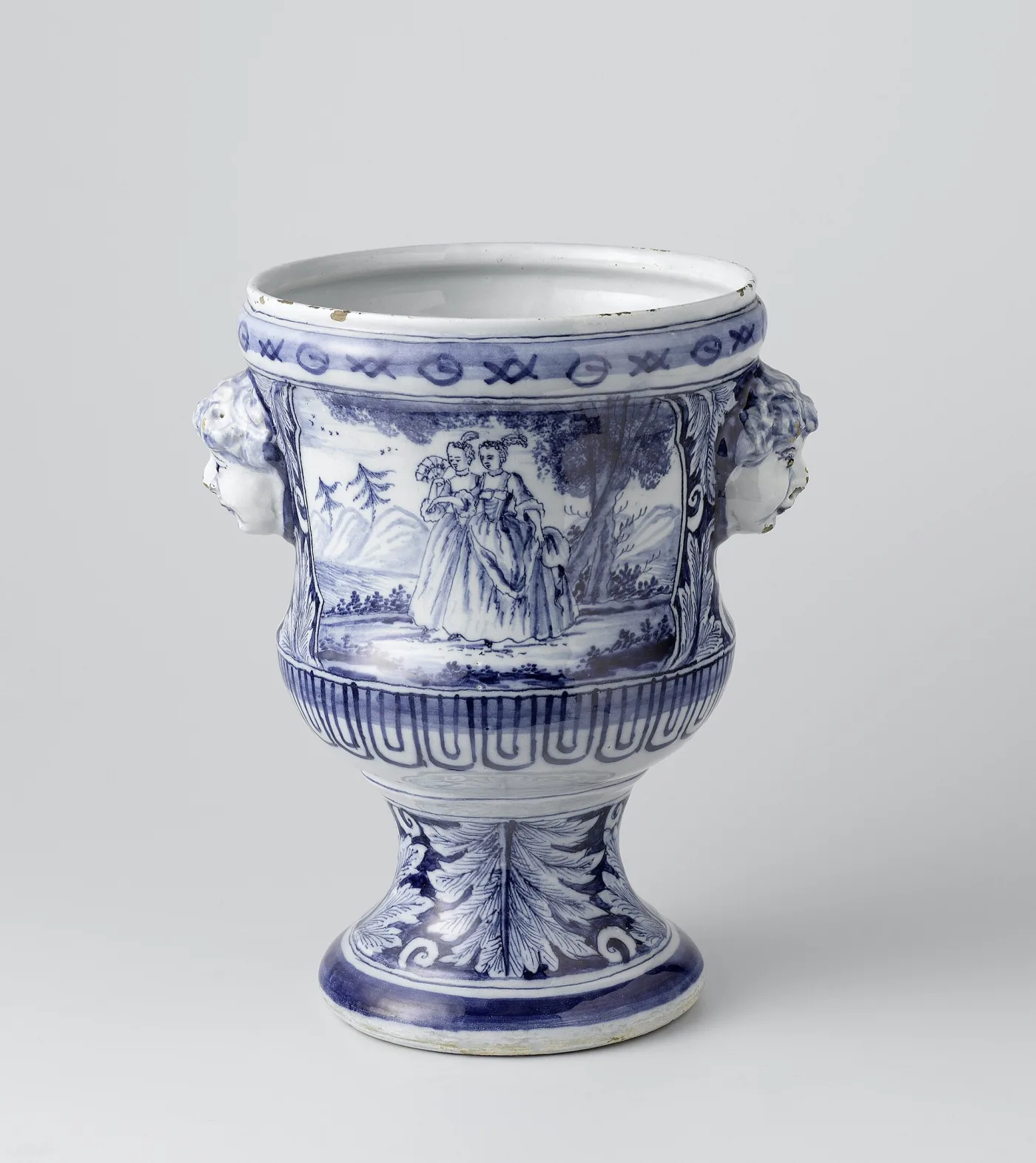
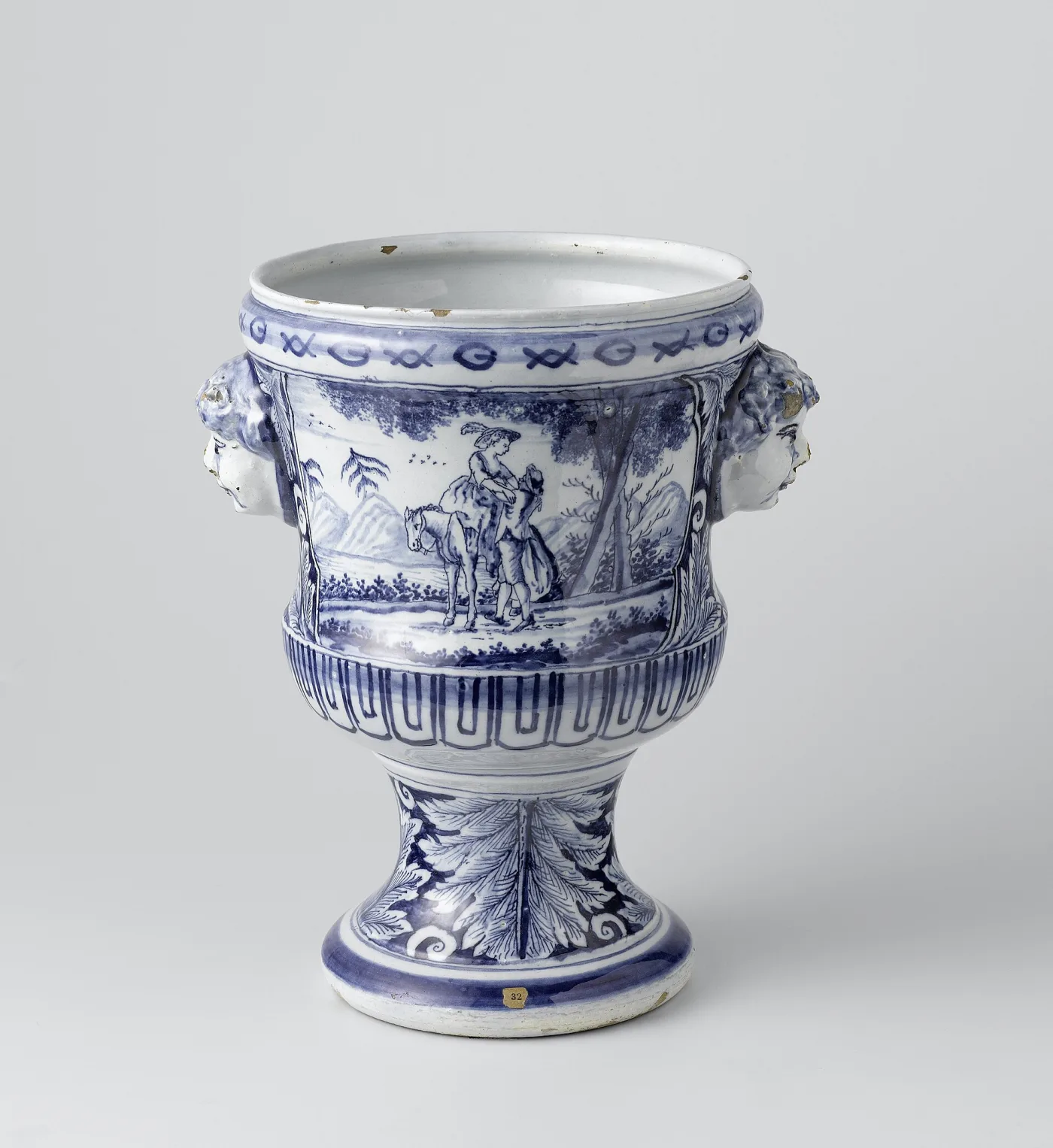
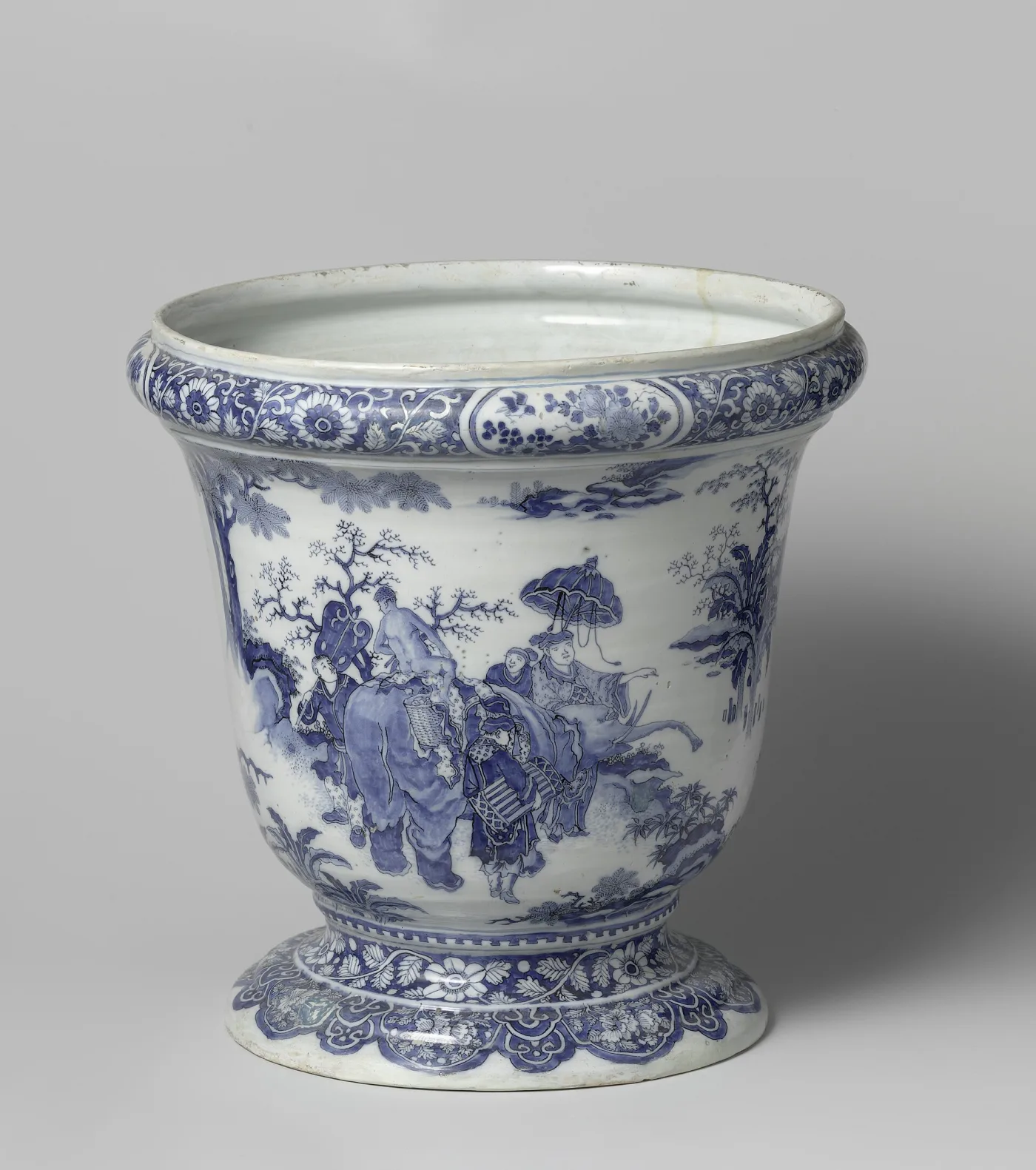
Those two are a genuine pair — Delft, about 1730–70, accessioned together as twee bloempothouders, the same 27 cm height, the same mask handles modelled as children’s heads, the same acanthus foot. Yet the scenes on them are different, and the wear is different too. So qualify the checklist above: on a pair of jardinieres, mismatched pattern detail is not by itself evidence of a marriage, because painters varied the reserve from piece to piece by design. What has to match is the form — profile, height, handle model, foot — and the palette. Judge a pair on those, and treat the picture in the reserve as decoration rather than as proof.
Pedestal-Only Pieces
Orphaned pedestals without their original jardinieres are common and typically sell for a fraction of a complete set. However, quality pedestals from prestigious makers retain significant value on their own as decorative stands for sculpture, lamp bases, or modern planters. Some collectors specifically seek pedestals from garden ornament sets.
Style Periods & Design Elements
Understanding the key design characteristics of each historical period helps narrow the date range and origin of antique jardinieres.
Neoclassical (1760-1840)
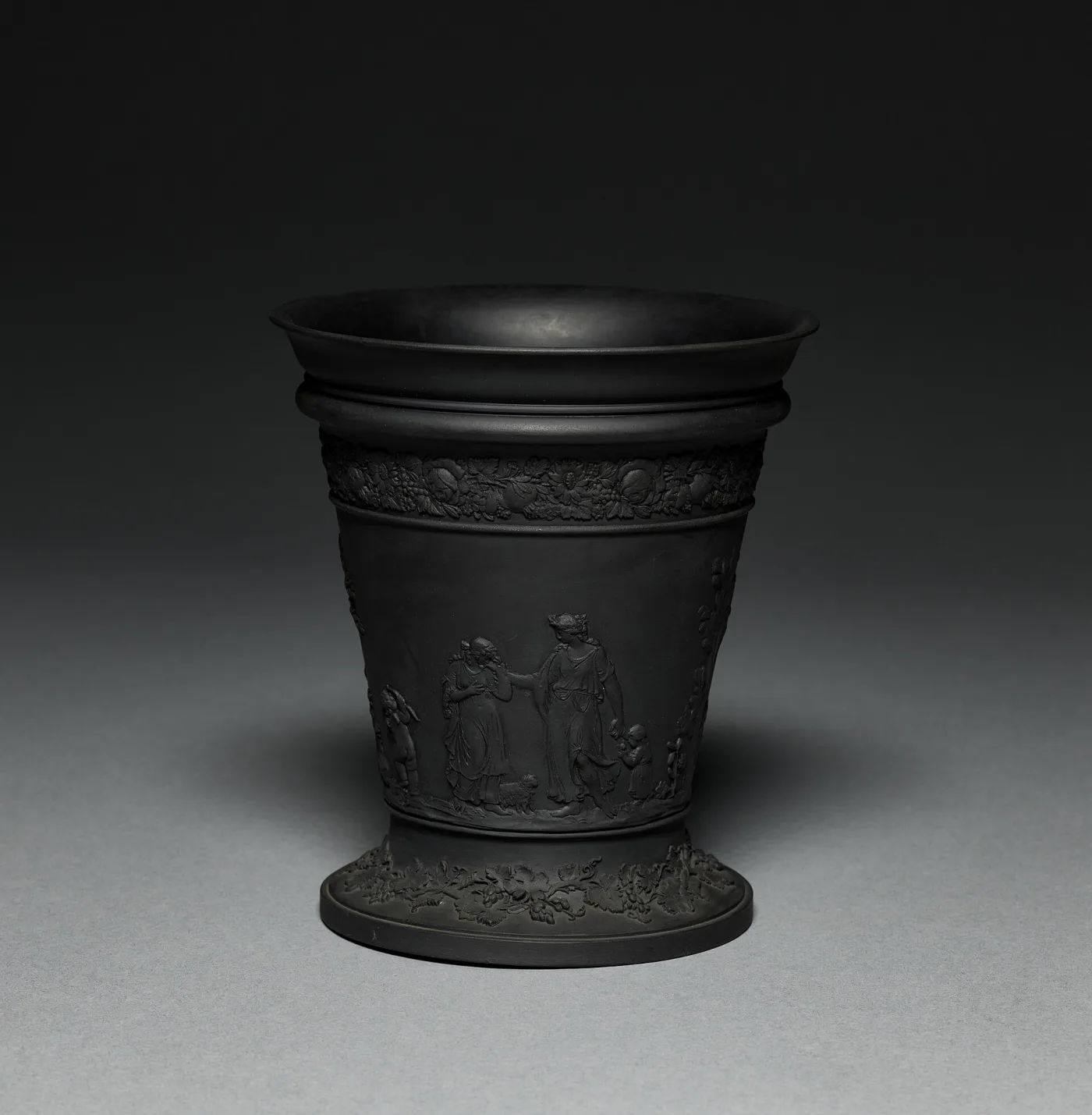
Urn and campana shapes predominate. Decoration includes acanthus leaves, laurel garlands, Greek key borders, and classical figure panels. Colors tend toward refined pastels, white and gold, or monochrome jasperware-style palettes. Materials include porcelain, jasperware, and architectural terracotta.
Victorian (1840-1900)
The most diverse period for jardiniere production. Forms range from restrained classical revival shapes to exuberant rococo revival pieces with scrolling handles and encrusted floral decoration. Majolica jardinieres with bright polychrome glazes define the mid-Victorian taste. Later Victorian examples show Japanese influence in asymmetric designs and nature motifs.
Arts & Crafts (1880-1920)
Simple, honest forms emphasizing material qualities and handcraft. Jardinieres feature matte glazes in earth tones, visible throwing marks, and minimal applied decoration. The emphasis falls on the beauty of the clay body and the organic quality of the glaze. Copper and brass jardinieres with hand-hammered textures also characterize this movement.
Art Nouveau (1890-1915)
Flowing, organic forms inspired by natural growth patterns. Decoration features sinuous lines, whiplash curves, water lilies, dragonflies, and female figures with flowing hair. Glazes often incorporate lustre effects and iridescent finishes. Manufacturers like Amphora, Zsolnay, and Massier excelled in Art Nouveau jardiniere design.
Art Deco (1920-1940)
Geometric forms with stepped profiles, angular handles, and bold color contrasts. Decoration includes chevrons, sunbursts, stylized animals, and Egyptian-inspired motifs. Mass production made Art Deco jardinieres widely available, from luxury porcelain to affordable earthenware.
Condition Assessment & Restoration
Condition significantly affects the value and desirability of antique jardinieres. Because these vessels were designed for practical use with soil and water, many surviving examples show signs of their working life.
Common Condition Issues
Glaze crazing (fine crackle lines) is common on earthenware jardinieres and generally accepted as normal aging. However, staining within the craze lines from soil and mineral deposits detracts from value. Chips to rims and feet are extremely common, as jardinieres are heavy objects that were frequently moved. Hairline cracks from thermal shock (caused by cold water on a warm body) are also prevalent. On metal jardinieres, look for corrosion pitting, lost patina from aggressive cleaning, and dents.
Restoration Considerations
Professional restoration of chipped or cracked jardinieres is acceptable for display purposes but should always be disclosed when selling. Ultra-violet light reveals most modern restoration materials, which fluoresce differently from original glazes. For valuable pieces, seek a conservator experienced with ceramic restoration rather than attempting home repairs. Over-restored pieces with extensive repainting or regilding are generally less desirable than honestly worn originals.
Spotting Reproductions & Fakes
The popularity of antique jardinieres has led to a steady market in reproductions, ranging from honest copies to deliberate fakes. Learning to distinguish genuine antiques from modern imitations is essential for collectors.
Common Reproduction Indicators
Modern reproductions often use lighter-weight materials than originals. Cast iron reproductions may actually be aluminum or resin painted to look like iron. Ceramic reproductions frequently display overly uniform glazes lacking the subtle variations of handwork. The base should show natural wear from decades of use: genuine antique jardinieres display scratches, stilt marks, and accumulated grime in recesses that are difficult to replicate convincingly.
Mark Forgeries
Fake marks applied to unmarked or lesser-known jardinieres to suggest prestigious manufacturers are a significant problem. Forged marks may appear too crisp and sharp compared to worn originals, may be positioned incorrectly, or may include anachronistic mark elements. Always cross-reference marks against published reference guides and compare the clay body, glaze quality, and workmanship to authenticated examples.
Asian Reproductions
Large quantities of reproduced majolica and Art Nouveau-style jardinieres have been imported from Asia since the 1990s. These copies often feature bright, garish colors compared to the subtler tones of Victorian originals, lightweight construction, and generic or absent maker marks. The clay body is typically white or very pale, unlike the buff or gray bodies of most European and American originals.
Market Values & Collecting Tips
The jardiniere market offers opportunities at every price level, from modest McCoy examples at under $50 to museum-quality Minton majolica pieces commanding five figures at auction.
Value Factors
The most important value determinants are manufacturer prestige, condition, rarity of form or pattern, and whether the piece retains its original pedestal. Size also matters: large floor-standing jardinieres in good condition are scarce because their size makes them vulnerable to damage. Unusual color glazes or experimental forms from known manufacturers bring premium prices. Provenance from notable collections or exhibitions adds value.
Current Market Trends
American art pottery jardinieres from Weller, Roseville, and similar manufacturers remain popular with collectors, though prices have moderated from their peaks in the early 2000s. English and Continental majolica jardinieres maintain strong demand, particularly from makers like Minton and George Jones. Mid-century modern planters from manufacturers like Architectural Pottery and Gainey have attracted a new generation of design-conscious collectors willing to pay premium prices for clean-lined examples in good condition.
Building a Collection
New collectors might focus on a specific manufacturer, period, material, or decorative style to build expertise and a cohesive collection. Estate sales, antique shops, online auctions, and specialized pottery shows are all productive sourcing venues. Joining collector organizations and pottery societies provides access to knowledgeable dealers, educational resources, and exclusive sales events. Study reference books, attend museum exhibitions, and handle as many authenticated examples as possible to develop your eye for quality and authenticity.
Care & Display Recommendations
Proper care ensures that antique jardinieres remain beautiful and structurally sound for future generations. Whether used for plants or displayed as decorative objects, these pieces require thoughtful handling.
Using Jardinieres for Plants
If you plan to use an antique jardiniere for live plants, always place a modern plastic or metal liner inside rather than planting directly in the antique vessel. Direct contact with soil, water, and fertilizer accelerates glaze deterioration and can cause staining that is difficult or impossible to reverse. Ensure that water cannot collect between the liner and the jardiniere walls, as trapped moisture promotes mold growth and can weaken clay bodies over time.
Cleaning & Maintenance
Clean ceramic jardinieres with a soft cloth dampened with distilled water. Avoid harsh chemicals, abrasive cleaners, and scouring pads that can damage glazes. Mineral deposits from years of plant use may respond to a gentle application of diluted white vinegar, but test on an inconspicuous area first. Metal jardinieres should be dusted regularly and polished only if you prefer a bright finish; many collectors value the natural patina that develops over time. For detailed conservation advice, refer to our guide on antique preservation and care.
Display Considerations
Position jardinieres away from direct sunlight, which can fade colored glazes over time. Ensure that heavy jardinieres are placed on surfaces strong enough to bear their weight, particularly when filled with soil and plants. Use felt pads under the feet to prevent scratching furniture or floors. For elevated display on pedestals, ensure the pedestal is stable and the jardiniere sits securely in the recessed top. In earthquake-prone areas, consider museum putty to secure valuable pieces.