Antique Delftware Identification Guide: Marks, Dating & Value
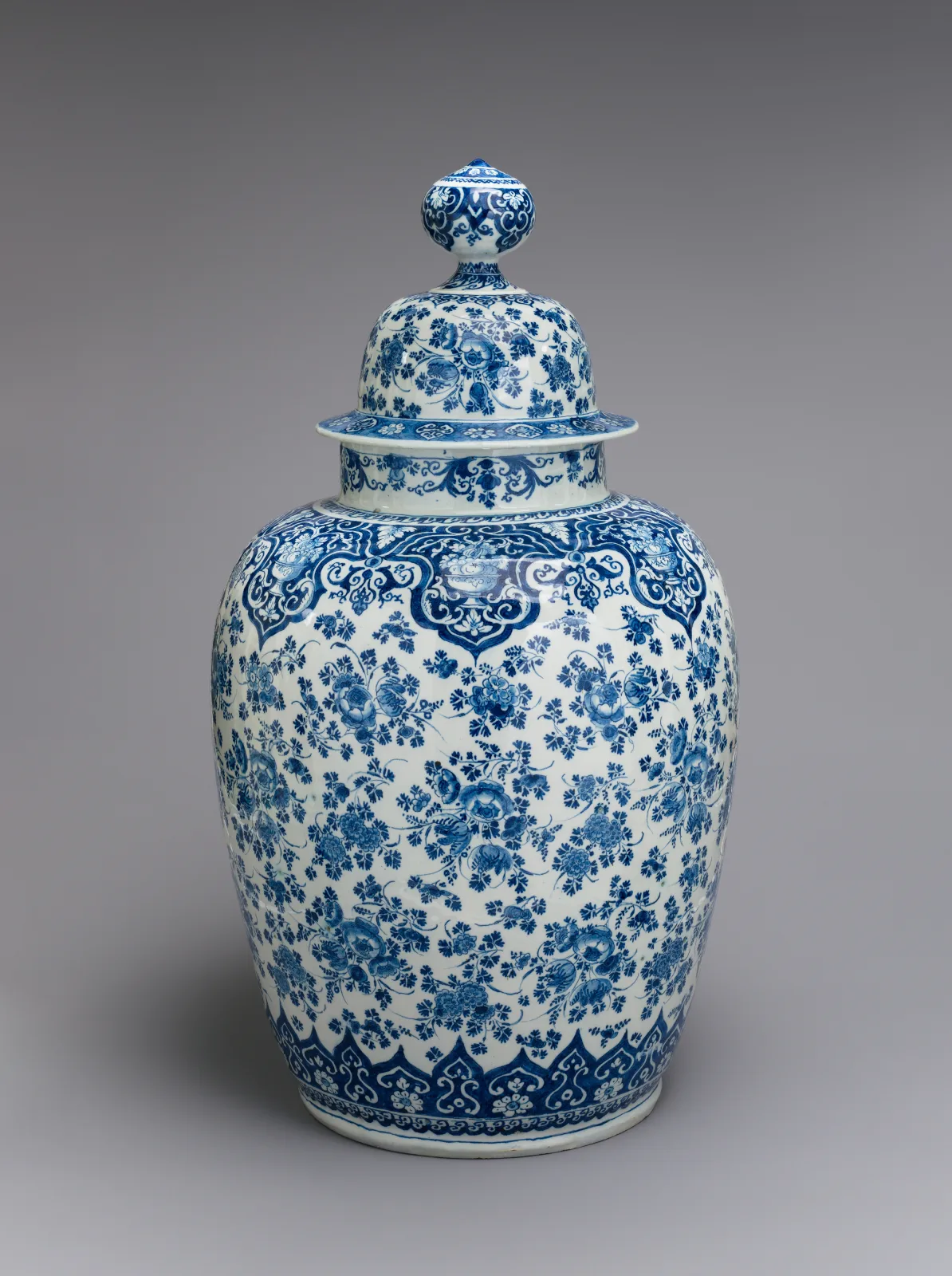
Delftware stands among the most recognizable and cherished categories of antique ceramics. With its distinctive blue-and-white palette, tin-glazed earthenware body, and centuries of continuous production in the Netherlands and England, Delft pottery offers collectors a rich field of study and discovery. From humble kitchen tiles to elaborate tulip vases commissioned by royalty, the range of Delftware forms and decoration is extraordinary.
Understanding how to identify authentic antique Delftware requires knowledge of factory marks, glaze characteristics, decorative techniques, and the subtle differences between Dutch and English traditions. The market is also filled with later reproductions and outright fakes, making informed collecting essential. Whether you are examining a charger at an estate sale or evaluating a garniture set at auction, the ability to read marks, assess condition, and recognize period characteristics will serve you well.
This guide covers the full spectrum of Delftware identification, from the historical origins of tin-glazed earthenware in the Low Countries to practical tips for building a collection today. You will learn to distinguish the products of major Dutch factories, understand the differences between grand feu and petit feu decoration, identify English Delft from Bristol, Lambeth, and Liverpool, and spot the telltale signs of reproductions and fakes.
Table of Contents
History of Delftware
The story of Delftware begins not in the Netherlands but in the broader European tradition of tin-glazed earthenware that traces its roots to the Islamic world. Tin-opacified glazes were developed by Middle Eastern potters as early as the 8th century, and the technique gradually spread through North Africa to Spain and Italy, where it became known as maiolica. Italian potters brought the craft to Antwerp in the early 16th century, and from there the technology migrated northward into the Dutch Republic. For collectors interested in the broader tin-glazed pottery tradition, understanding this lineage is essential to placing Delftware in its proper context.
The Rise of Delft as a Pottery Center
The city of Delft emerged as a major pottery production center in the early 17th century, partly by accident. A devastating gunpowder explosion in 1654 destroyed much of the city's brewery district, and the vacant brewery buildings provided ideal workshop spaces for potters. By the 1660s, Delft had become the undisputed center of Dutch tin-glazed earthenware production, with over thirty active potteries operating within the city walls.
The timing coincided with the golden age of Dutch trade. The Dutch East India Company (VOC) was importing vast quantities of Chinese porcelain, and the blue-and-white Kraak porcelain of the late Ming dynasty captivated Dutch buyers. When civil war in China disrupted porcelain exports in the mid-17th century, Delft potters stepped in to fill the gap, producing tin-glazed earthenware that closely imitated the Chinese originals in both form and decoration. This period of chinoiserie influence permanently shaped the character of Dutch Delftware.
The Golden Age (1650-1720)
The late 17th century represented the pinnacle of Dutch Delft production. Potters refined their techniques to create wares of remarkable quality, with smooth white tin glazes, detailed brushwork in cobalt blue, and increasingly sophisticated forms. These cobalt blue techniques later influenced English potters who developed flow blue china in the 19th century. Factories competed to produce the finest work, and master painters like Frederik van Frytom created landscape scenes of extraordinary artistic merit on large plaques and chargers.
During this period, Delft potters also developed distinctly Dutch decorative vocabularies alongside the Chinese-influenced designs. Tulips, windmills, sailing ships, biblical scenes, and pastoral landscapes became characteristic motifs. The factories supplied both domestic households and export markets, with Delftware reaching courts across Europe.
Decline and Revival
The 18th century brought increasing competition from English creamware, German porcelain, and cheaper imported Chinese ceramics. By 1800, most of the Delft factories had closed. Only De Porceleyne Fles survived, continuing production into the 19th century and eventually becoming Royal Delft, which still operates today. The late 19th and early 20th centuries saw renewed interest in Delftware as a collectible, along with a wave of reproductions and revival pieces that collectors must learn to distinguish from genuine antique examples.
Types of Delftware
Delftware encompasses a remarkable variety of forms, from utilitarian kitchen items to purely decorative showpieces. Understanding the major categories helps collectors identify pieces and assess their relative rarity and value.
Plates, Chargers, and Dishes
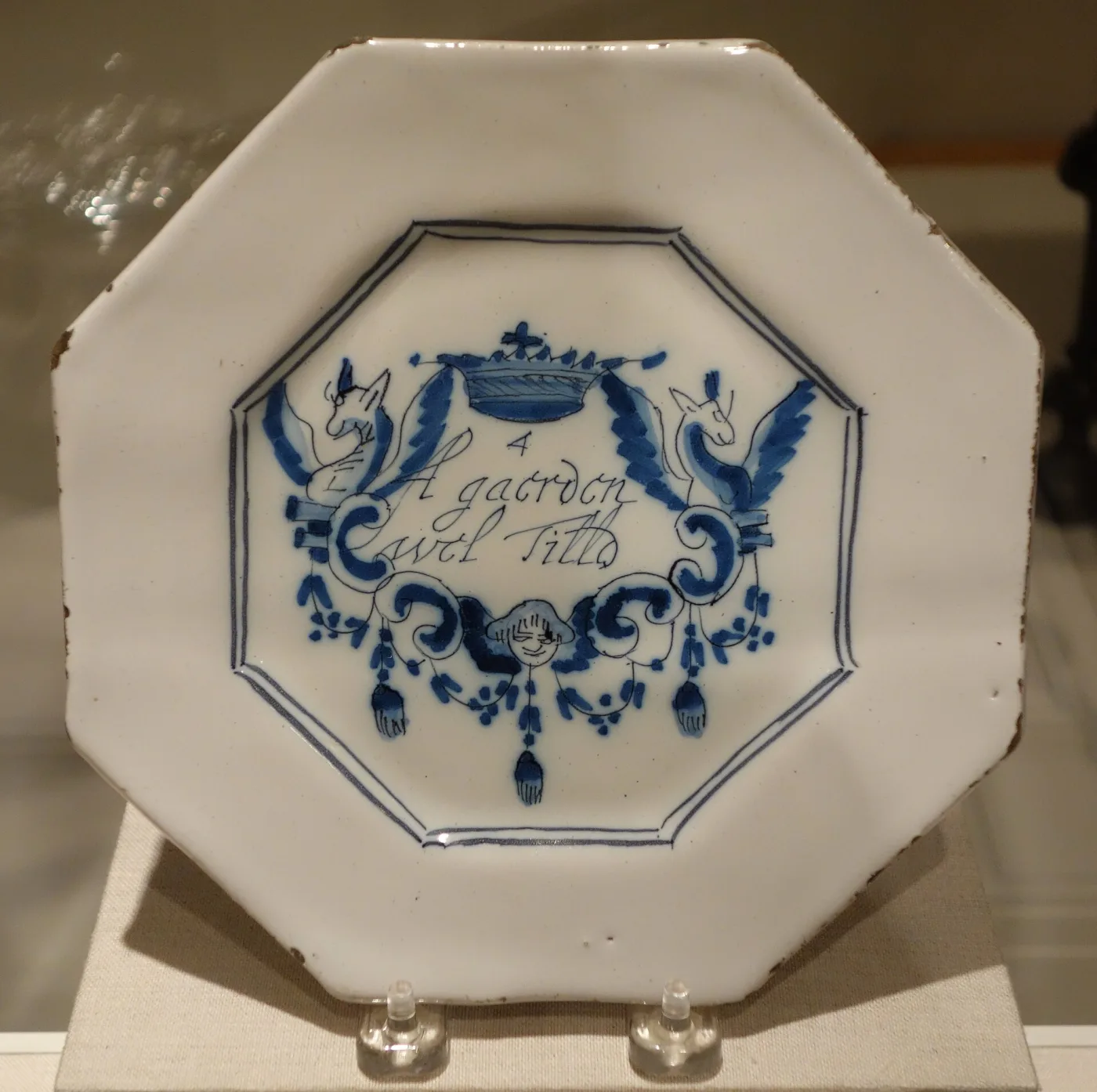
Flat wares form the largest category of surviving Delftware. Standard plates range from about 22 to 25 centimeters in diameter, while chargers can exceed 35 centimeters. Dishes were made in various shapes including round, octagonal, and lobed forms. Decoration ranges from simple floral sprays to elaborate chinoiserie scenes, biblical narratives, and heraldic devices. The backs of plates often provide valuable identification clues, as different factories used distinctive lead-glaze colors and marking conventions.
Vases and Garniture Sets
Delft vases represent some of the most ambitious products of the factories. Garniture sets, typically consisting of three covered baluster vases and two trumpet-shaped beaker vases, were designed to adorn fireplace mantels and cabinet tops. These five-piece sets followed Chinese porcelain prototypes and were produced in graduated sizes. Individual vases also came in diverse forms including gourd shapes, bottle vases, and the famous Delft tulip vases. For broader context on antique vase forms and identification, see our vase identification guide.
Tulip Vases
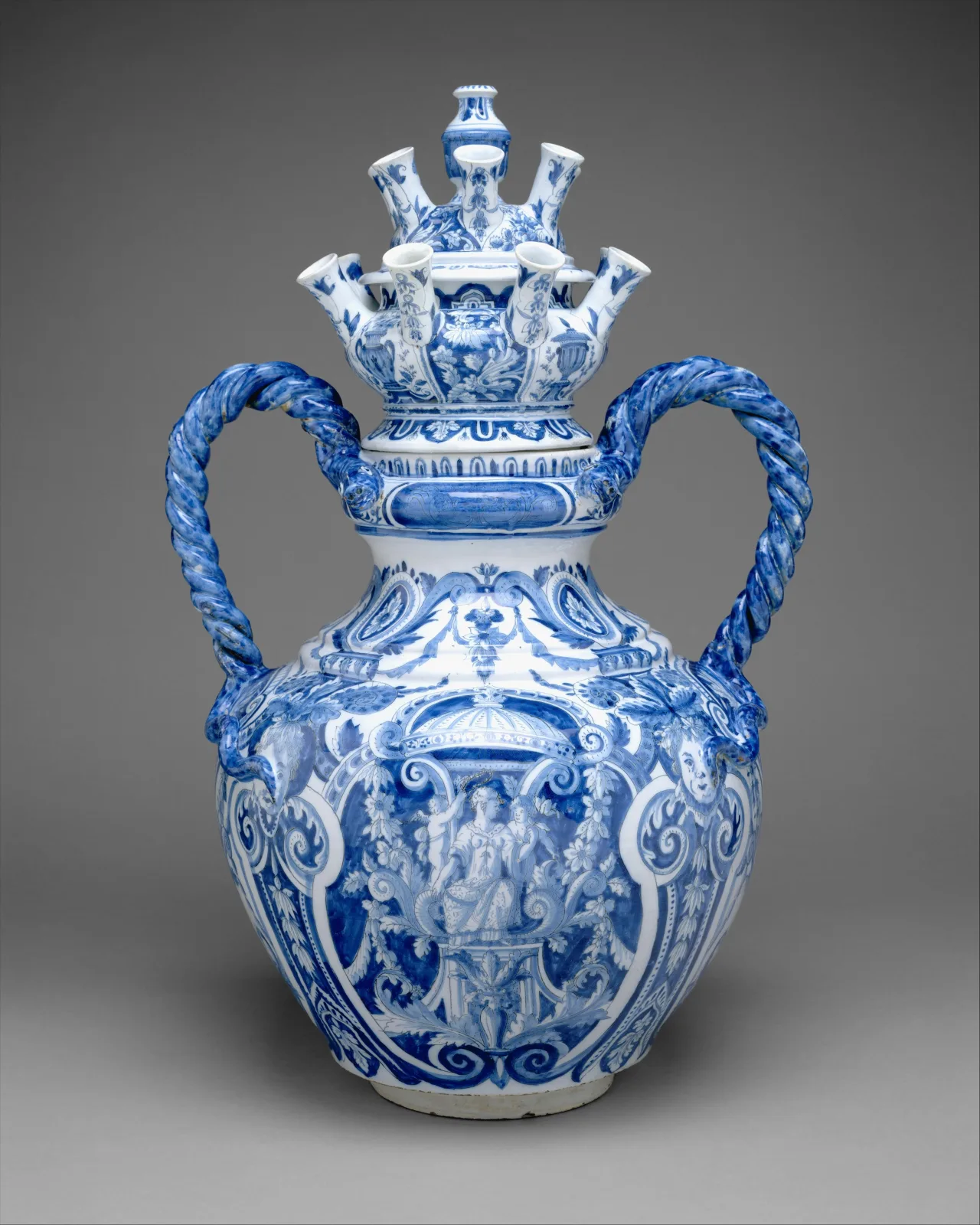
Perhaps the most iconic Delft form is the tulip vase, known in Dutch as a tulpenvaas. These elaborate vessels feature multiple spouts or openings for holding individual flower stems. They range from modest pyramid-shaped pieces with a few spouts to monumental stacked forms standing over a meter tall. The most spectacular examples, like those made for Hampton Court Palace and the Paleis Het Loo, are architectural in scale and complexity. Authentic period tulip vases are extremely rare and command prices well into six figures at auction.
Tiles
Delft tiles deserve their own category due to their enormous production volume and continued popularity. Millions of tiles were produced from the 17th through 19th centuries, and they remain among the most accessible and affordable forms of antique Delftware. We cover tiles in detail in a dedicated section below.
Figurines and Novelty Pieces
Delft potters created a wide range of figural items including animals (particularly cows and horses), human figures, shoes, violins, birdcages, and miniature furniture. These novelty pieces showcase the versatility of the medium and are eagerly collected today. Small shoes and miniature items were often made as samples or gifts for visiting buyers.
Functional Wares
Beyond decorative items, Delft factories produced functional wares including drug jars (albarelli), butter tubs, salt cellars, candlesticks, ink stands, flower bricks, posset pots, and puzzle jugs. These utilitarian forms often feature simpler decoration than display pieces but can be equally collectible due to their rarity and charm.
Key Dutch Delft Factories
At the peak of production in the late 17th century, Delft supported over thirty pottery factories. Each operated under a distinctive trade name and mark, though the system was complicated by factories changing hands, marks being reused, and painters moving between workshops. Knowledge of the major factories is fundamental to Delftware identification.
De Porceleyne Fles (The Porcelain Bottle)
Founded in 1653, De Porceleyne Fles is the only original Delft factory still in operation today, now known as Royal Delft. Its mark evolved over the centuries: early pieces bear a simple bottle or flask device, while later pieces carry the distinctive intertwined JT monogram (for Joost Thooft, who acquired the factory in 1876). Post-1879 pieces are marked with "Delft" written beneath the bottle device. Royal Delft pieces from the 20th century are well documented and relatively easy to identify, but 17th and 18th century pieces attributed to the factory require careful analysis of mark, style, and body.
De Grieksche A (The Greek A)
This factory, established around 1658, was one of the finest Delft workshops. Under the ownership of Samuel van Eenhoorn (1678-1685) and later Adrianus Kocx (1686-1701), it produced some of the most accomplished Delftware ever made, including elaborate polychrome pieces and refined chinoiserie designs. The factory mark is a stylized letter A, sometimes accompanied by the owner's initials. Pieces from De Grieksche A's golden period under Van Eenhoorn and Kocx are among the most prized by collectors and museums.
De Metaale Pot (The Metal Pot)
Operating from around 1639, De Metaale Pot was among the earlier Delft factories. Under Lambertus Cleffius (1679-1691), the factory became known for high-quality blue-and-white wares and innovative forms. The factory mark features the letters MP or a pot device. Cleffius-period pieces are distinguished by their fine painting and sophisticated compositions.
De Drie Klokken (The Three Bells)
Active from the 1670s, this factory used a mark depicting three bells. It produced a wide range of wares including plates, vases, and tiles. Quality varied considerably depending on the period and the individual painter, as was true of most Delft factories.
De Roos (The Rose)
Founded in 1662, De Roos used a rose as its factory mark. The factory was known for both blue-and-white and polychrome wares and continued operating until the late 18th century. Its products ranged from everyday domestic pieces to fine display wares.
Other Notable Factories
Additional important factories include Het Moriaanshooft (The Moor's Head), De Twee Scheepjes (The Two Ships), De Porceleyne Schotel (The Porcelain Dish), De Porceleyne Bijl (The Porcelain Axe), Het Jonge Moriaanshooft (The Young Moor's Head), and De Dubbelde Schenkkan (The Double Jug). Each used distinctive marks, though attributions can be complex when marks are unclear or absent. Reference books by Jan Daniel van Dam, Marion van Aken-Fehmers, and others provide detailed factory histories and mark illustrations essential for serious identification work.
Identifying Authentic Maker Marks
Marks are the single most important tool for identifying and dating Delftware. However, the marking system used by Delft factories is considerably more complex than, say, the standardized hallmarking systems used on silver. Understanding the different types of marks and how to read them is critical for any collector.
Factory Marks
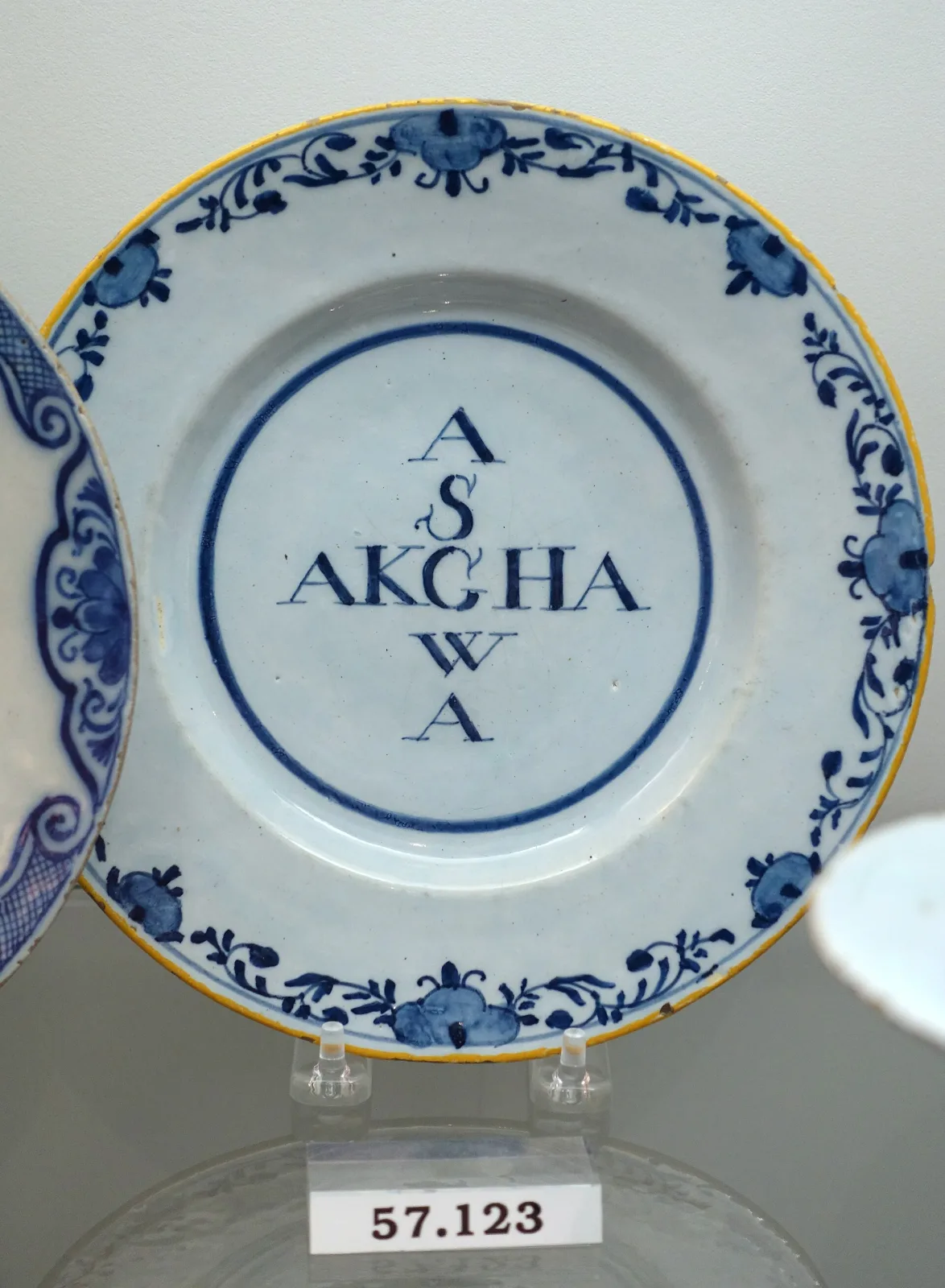
Each Delft factory used a primary mark, usually a stylized device or set of initials that identified the workshop. These marks were typically painted in blue (or occasionally manganese) on the base of the piece before the final glaze firing. Factory marks are the starting point for identification, but they must be interpreted carefully because marks sometimes changed when ownership transferred, and similar marks were used by different factories in different periods.
Owner and Master Marks
In addition to the factory device, pieces often bear the initials or monogram of the factory owner or master. These personal marks help narrow the dating, as ownership records for most factories are well documented. For example, a piece marked with the Greek A device and the initials SVE can be attributed to Samuel van Eenhoorn's tenure at De Grieksche A (1678-1685), while AK initials indicate Adrianus Kocx (1686-1701).
Painter Marks
Individual painters sometimes added their own marks or initials to pieces they decorated. These marks are typically smaller and less prominent than the factory mark and appear near the base or on the foot ring. Identifying painter marks can be challenging, as records of individual painters are incomplete, but when a painter can be identified, it adds significantly to both the historical interest and value of a piece.
Numerals and Letters
Many Delft pieces bear additional numbers or letters that may indicate production sequences, sizes, pattern codes, or inventory numbers. These secondary marks are less well understood than factory and owner marks, but they can provide useful corroborating evidence when building an attribution. For instance, a numeral on the base might correspond to a specific plate size or indicate its position in a garniture set.
Reading Marks in Practice
When examining a Delft mark, always consider it in conjunction with the piece's form, decoration, glaze quality, and body characteristics. A mark alone is never sufficient for authentication, as marks have been copied and faked for centuries. The mark should be painted with the confident, fluid brushwork of a skilled potter, not carefully drawn or stamped. Compare marks against published references, and note that genuine period marks often show slight variations because they were hand-painted. Perfectly uniform marks may actually suggest a later reproduction. For a broader discussion of identifying marks on antique ceramics, consult our ceramics and pottery identification guide.
Glaze and Body Characteristics
Beyond marks, the physical characteristics of the glaze and ceramic body provide essential identification clues. Experienced collectors can often determine the approximate date and origin of a piece simply by handling it and examining the glaze surface and exposed body areas.
The Tin-Glaze Technique
Delftware belongs to the broad family of tin-glazed earthenware, which includes Italian maiolica, French faience (notably the Quimper potteries of Brittany), Spanish majolica, and Portuguese azulejo. The technique involves coating a fired earthenware body with a glaze opacified by tin oxide, which produces a smooth white surface suitable for painting. The decoration is applied to the unfired glaze surface, and the piece is then fired a second time. This approach differs fundamentally from Chinese porcelain, where the white color comes from the clay body itself rather than from a glaze coating.
Dutch Delft Body and Glaze
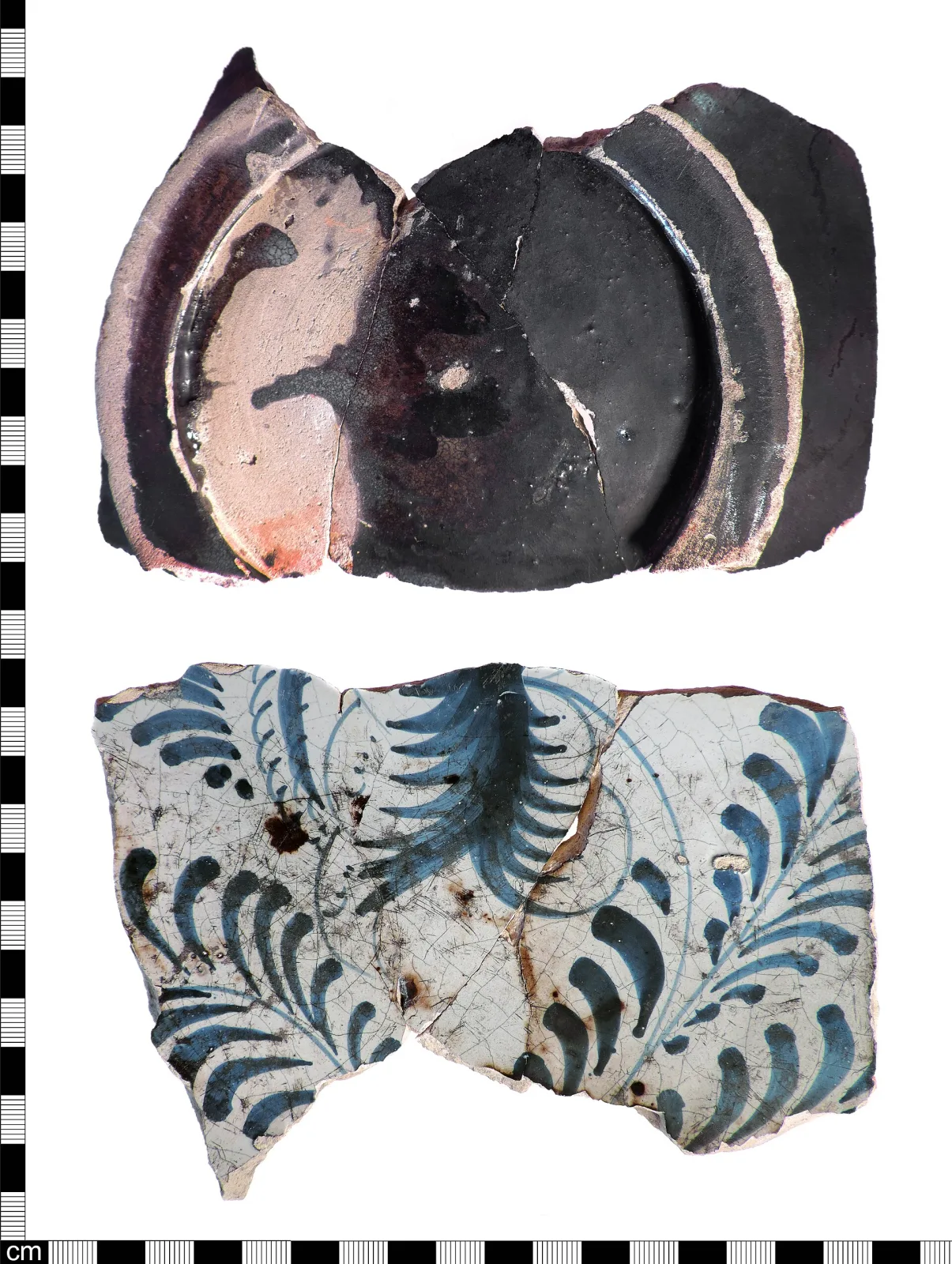
The clay body of Dutch Delft is typically a pale buff or yellowish earthenware, often visible at chip edges or on unglazed areas of the base. The tin glaze on the front and sides of plates is white and opaque, ranging from a slightly blue-tinted white in the finest 17th century pieces to a warmer, cream-tinted white in later production. A key distinguishing feature of Dutch Delft is the treatment of the back: rather than applying costly tin glaze to both sides, potters typically covered the back with a cheaper transparent lead glaze, which allowed the buff body color to show through, often with an orange-peel texture. This lead-glazed back is a helpful indicator of Dutch origin.
Kraak and Kwaart
On the finest Dutch Delft pieces, the painted and fired decoration was sometimes covered with an additional layer of transparent lead glaze called kwaart (literally "quart" or "coat"). This extra glaze coat gave the surface a brilliant, glassy finish that more closely approximated the appearance of Chinese porcelain. The presence of kwaart is considered a sign of quality, and pieces with this treatment tend to be from the best factories during peak production periods.
Crazing and Aging
Tin glaze on earthenware is inherently susceptible to crazing, the network of fine cracks that develops when the glaze and body expand and contract at different rates. On genuine antique Delftware, crazing is expected and should appear as a natural, random network of fine lines. The crazing lines on old pieces typically contain accumulated dirt and darkening that gives them a subtle brown or gray tint. Uniform, clean crazing may suggest a newer piece. The glaze on authentic antique Delftware also develops a characteristic softness or slight mellowing over time, distinguishable from the hard, bright surface of modern reproductions.
Distinguishing Delftware from Porcelain
Beginning collectors sometimes confuse fine Delftware with actual porcelain. The differences are fundamental: Delftware is opaque earthenware with a tin-opacified surface glaze, while porcelain is a vitrified, translucent ceramic. Holding a piece up to strong light will immediately reveal whether it is translucent (porcelain) or opaque (earthenware). Delftware is also lighter in weight relative to its size compared to porcelain, and the body at chip edges will appear granular and buff-colored rather than white and glassy.

Blue and White vs Polychrome Delft
While blue and white is the dominant palette associated with Delftware, the factories produced a significant body of polychrome work that is equally collectible and often more valuable than comparable blue-and-white pieces.
Traditional Blue and White
The classic Delft blue-and-white palette uses cobalt oxide to produce decoration ranging from pale sky blue to deep indigo, depending on the concentration of the pigment and the firing conditions. The finest painters achieved remarkable tonal range within this single-color system, using washes for backgrounds and fine-line work for details. The blue of 17th century Delft tends to be deeper and richer than later production, though this generalization has many exceptions. Blue-and-white Delftware directly parallels the blue-and-white pottery tradition that later flourished in English transferware, though the techniques are entirely different.
Grand Feu Polychrome
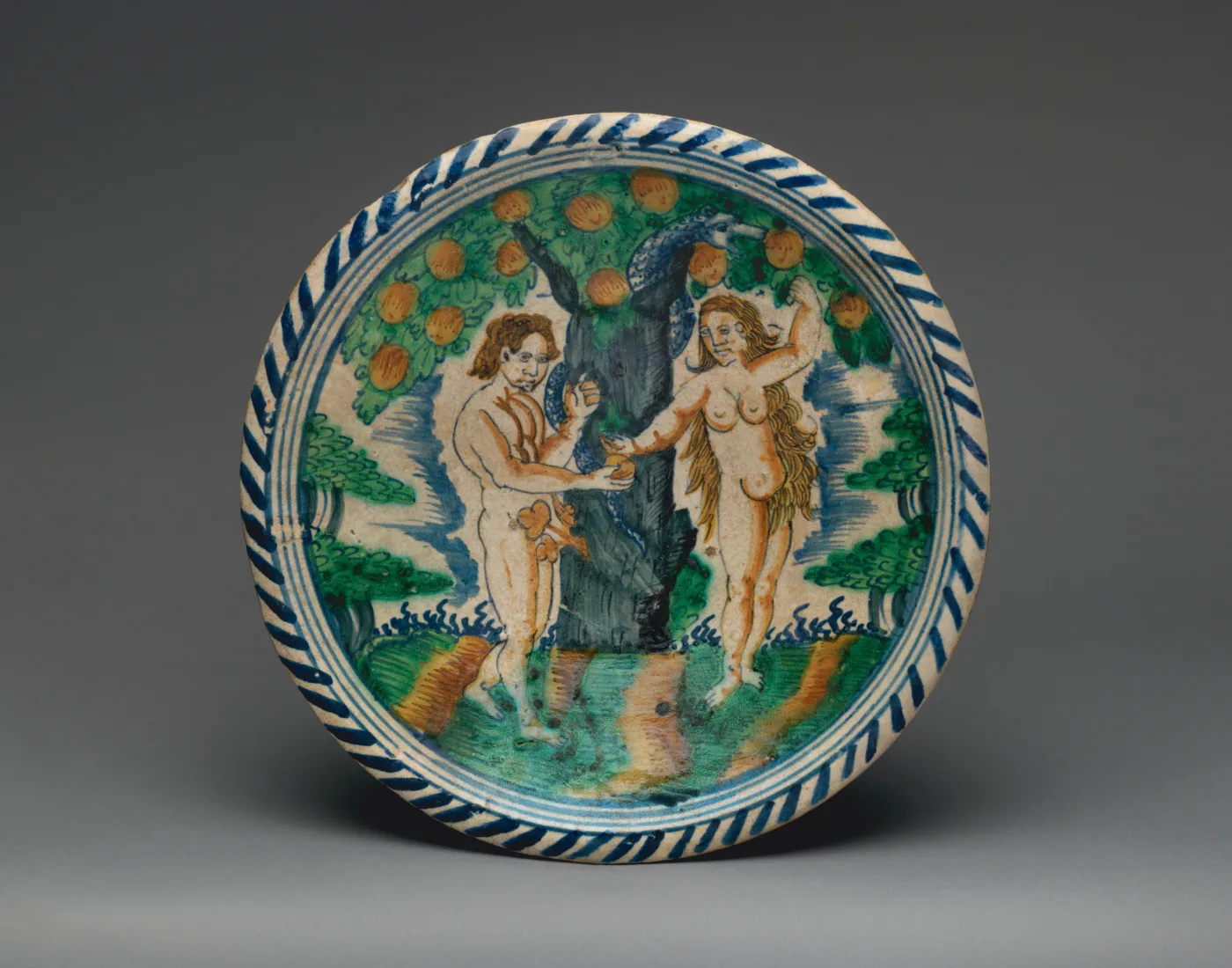
Grand feu (high-fire) polychrome Delftware uses pigments that can withstand the full temperature of the glaze firing, typically around 1000-1100 degrees Celsius. The available palette is limited to colors derived from metal oxides: cobalt blue, manganese purple, iron red-orange, antimony yellow, and copper green. These colors have a characteristic softness and transparency, as they fuse into the tin glaze during firing. Grand feu polychrome Delft is found from the earliest production period, with some of the finest examples dating to the late 17th century.
Petit Feu Polychrome
Petit feu (low-fire) decoration represented a significant technical advance, introduced to Delft in the early 18th century. In this technique, the piece is first fired with its tin glaze, then painted with enamel colors that are fixed in a second, lower-temperature firing (around 600-800 degrees Celsius). This lower temperature allowed a much wider range of colors, including bright red, pink, and gold, which cannot survive the high-fire process. Petit feu decoration sits on top of the glaze surface rather than being absorbed into it, giving the colors a different character: brighter and more opaque, but also more vulnerable to wear.
Polychrome Styles and Influences
Polychrome Delft encompasses several distinct decorative styles. Cashmere or Delft doré pieces feature rich palettes inspired by Japanese Imari porcelain, with iron red, cobalt blue, and gold predominating. Famille verte and famille rose styles imitate Chinese porcelain color schemes. Dutch floral polychrome developed its own vocabulary of tulips, carnations, and other flowers rendered in naturalistic colors. These polychrome pieces often reflect the same cross-cultural exchange with East Asian ceramics that influenced blue-and-white production.
Delft Tiles
Delft tiles represent the most prolific and enduring product of the Dutch tin-glazed earthenware industry. Produced in the millions from the late 16th century onward, they adorned kitchens, hallways, fireplaces, and entire rooms in Dutch homes and far beyond. Today they offer collectors an accessible entry point into Delftware collecting. For a broader look at antique tile types across all periods and styles, see our decorative tiles identification guide.
Standard Tile Format
The standard Dutch tile measures approximately 13 by 13 centimeters (about 5 by 5 inches), though earlier tiles from the late 16th and early 17th centuries tend to be slightly larger. Thickness varies but generally ranges from 8 to 12 millimeters. Each tile was hand-pressed from clay, dried, coated with tin glaze, painted, and fired. The back of a genuine antique tile shows the rough texture of the clay body, sometimes with traces of mortar from its original installation.
Decorative Subjects
The range of subjects depicted on Delft tiles is enormous. The most common categories include:
- Figures: Soldiers, children at play, craftsmen, merchants, and other human figures, typically rendered in blue within a circular or octagonal frame
- Animals: Sea creatures, birds, horses, dogs, and exotic animals drawn from natural history prints
- Ships and Maritime: Sailing vessels, harbors, and nautical scenes reflecting the Netherlands' maritime heritage
- Landscapes: Windmills, farmhouses, churches, and pastoral scenes, often with characteristic tiny figures
- Biblical Scenes: Stories from the Old and New Testament, produced in vast quantities for use in churches and homes
- Flowers: Tulips, carnations, and other flowers, either as central subjects or in decorative border patterns
- Mythological and Allegorical: Scenes from classical mythology and allegories of virtues and seasons
Corner Motifs
One of the most useful features for dating Delft tiles is the corner motif, the small decorative element painted in each corner. Early tiles (pre-1625) often have elaborate corner patterns including interlocking circles or fleur-de-lis designs. The ox-head corner motif, a simplified floral device resembling a bull's head, became dominant in the mid-17th century. Spider-head corners, with finer, more delicate radiating lines, appeared later in the 17th century and continued into the 18th. By the late 18th and 19th centuries, corners became increasingly simple, sometimes reduced to a single small dot or eliminated entirely.
Tile Panels and Tableaux
Beyond individual tiles, the Delft potteries produced large tile panels and tableaux that function as paintings in ceramic. These multi-tile compositions depict elaborate harbor scenes, flower arrangements, landscapes, and other subjects across grids of tiles that can number in the dozens or even hundreds. Complete tile panels are rare and valuable, and even fragments of larger panels attract collector interest. Some of the finest tile panels rival oil paintings in their compositional ambition and detail, comparable to the decorative ambitions seen in other ornamental craft traditions.
Dating Techniques
Establishing the age of a piece of Delftware requires a combination of evidence drawn from marks, style, technique, and form. No single indicator is definitive, but together they build a convincing picture.
Dating by Mark
When a mark can be confidently identified and linked to a specific factory owner, it provides the most precise dating evidence. Ownership records for major Delft factories are well documented, and the initials or monograms of successive owners can bracket a piece within a specific decade or even shorter period. However, many pieces are unmarked, and not all marks have been definitively attributed. The standard reference for Delft marks remains the work of Jan Daniel van Dam and others at the Rijksmuseum.
Dating by Style and Decoration
Decorative fashions at Delft evolved in response to changing tastes and market demands. Broadly, the progression moves from close imitation of Chinese Kraak porcelain in the early period (1620s-1660s), through increasingly confident chinoiserie designs mixed with European subjects in the golden age (1660s-1720s), to a broader palette of European Baroque and Rococo motifs in the 18th century. Familiarity with these stylistic periods helps place undated or unmarked pieces within approximate timeframes.
Dating by Glaze Color
The character of both the tin glaze and the cobalt blue decoration changed over time. The finest 17th century pieces typically have a slightly blue-tinted white glaze and rich, deep cobalt decoration. By the mid-18th century, the tin glaze often appears warmer or more cream-colored, and the blue can be paler or more diffuse. These are generalizations with many exceptions, but glaze quality is one factor in building a dating argument.
Dating by Form
Certain forms are associated with specific periods. Lobed dishes imitating Chinese Kraak porcelain belong primarily to the 17th century. Tall, narrow-necked bottle vases reflect late 17th century fashion. Rococo-influenced forms with scrolled edges and asymmetrical decoration date to the mid-18th century. The relative proportions and profiles of standard forms like plates and chargers also shifted subtly over time, and experienced collectors develop an eye for these changes through handling many examples.
Scientific Dating Methods
Thermoluminescence (TL) dating can establish the approximate date of the last firing of a ceramic piece. While not routinely used for every purchase, TL dating provides an objective check on suspicious or particularly valuable pieces. The technique can identify modern fakes with high confidence, though it is less precise for distinguishing between, say, a 1680 and a 1720 piece. Authentication services specializing in Delftware can also perform compositional analysis of the body clay and glaze to determine consistency with known factory production.
English Delftware
English Delftware represents a parallel but distinct tradition of tin-glazed earthenware production that flourished from the late 16th through the 18th centuries. While sharing the same basic technology as Dutch Delft, English Delft developed its own forms, decorative styles, and regional character.
Origins and Major Centers
Tin-glazed earthenware production in England began in the late 16th century, established by Flemish potters who settled in London. The primary production centers were Southwark and Lambeth in London, Bristol, Liverpool, Glasgow, and Dublin. Each center developed recognizable stylistic tendencies, though attribution to specific potteries is often difficult because English Delft was rarely marked with factory identifiers.
Lambeth and Southwark
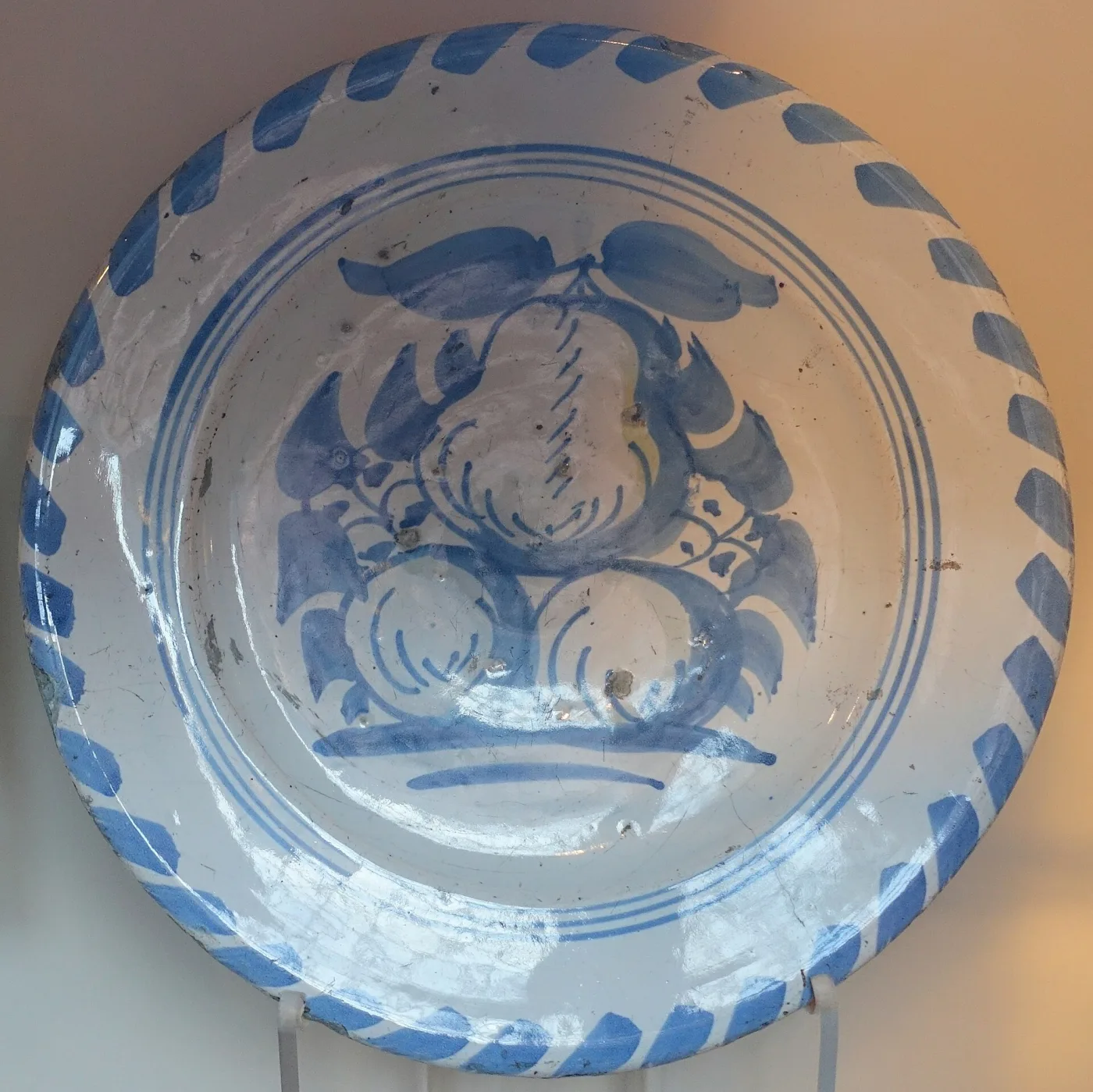
The London potteries were the earliest and among the most accomplished English producers. Lambeth Delftware is known for its chargers featuring portraits of monarchs (the famous "blue dash chargers"), polychrome tulip chargers, and a wide range of domestic forms. London production continued from the late 16th century through the mid-18th century, with the finest work dating to the period 1660-1740.
Bristol
Bristol became a major Delftware center from the late 17th century, eventually rivaling London in output. Bristol potters are associated with a characteristic bianco-sopra-bianco technique, in which white decoration is painted over a pale blue or lavender-tinted ground, creating subtle, elegant designs. Bristol also produced fine landscape and figure decoration, as well as practical wares like drug jars for the city's apothecaries.
Liverpool
Liverpool emerged as an important production center in the 18th century, with several potteries operating simultaneously. Liverpool Delftware is often characterized by a slightly green- or blue-tinted glaze and a distinctive palette that sometimes includes a characteristic powdered manganese purple ground. Liverpool potters also produced transfer-printed Delftware, a relatively late innovation that bridged the gap between hand-painted tin-glazed ware and the emerging transfer-printed earthenware industry.
Distinctive English Forms
English Delftware includes several forms rarely or never found in Dutch production. Blue dash chargers, large display plates with bold dashes of blue around the rim, are quintessentially English. Posset pots, two-handled vessels with spouts for drinking the warm milk-and-ale mixture called posset, are another English specialty. Puzzle jugs, with their perforated necks that challenged drinkers to figure out how to drink without spilling, represent the playful side of English Delft. Wine bottles, shoe forms, and barber's bowls further distinguish the English tradition.
Identifying English vs Dutch Delft
Several characteristics help distinguish English from Dutch Delftware. English Delft bodies tend to be pinker or more reddish than Dutch bodies, which are typically pale buff or yellowish. English tin glaze is sometimes slightly thinner and less opaque than Dutch glaze. Decoration on English pieces is often bolder and less refined than the finest Dutch work, with a distinctive folk art quality. English pieces are generally unmarked, while Dutch pieces frequently bear factory marks. The foot ring construction also differs, with English potters typically using a less refined finish on the base.
Reproductions and Fakes
The popularity of Delftware has inevitably attracted forgers and imitators. Reproductions range from honest 19th century revival pieces to deliberate modern fakes intended to deceive. Developing an eye for reproductions is an essential skill for any serious collector.
19th Century Revival Pieces
The late 19th century saw a major revival of interest in Delftware, and several factories, including the surviving De Porceleyne Fles, produced pieces in historical styles. These are not fakes in the strict sense, as they were typically marked with their own factory marks and dates, but they can confuse inexperienced collectors. French factories, particularly Samson of Paris, also produced tin-glazed wares in the Delft style, sometimes bearing marks intended to imitate original factories. Samson pieces are generally well made but can be distinguished by their body composition, glaze quality, and certain details of decoration that differ from genuine period pieces.
Modern Tourist Pieces
The Netherlands produces vast quantities of modern "Delft Blue" souvenirs, from miniature clogs and windmills to decorative plates and tiles. These mass-produced items are generally easy to distinguish from antique originals: they are often marked "Holland" or "Hand Painted" in English, use a bright, uniform blue that differs from the more nuanced tones of antique cobalt, and show mechanical consistency in their decoration. The body is usually a white or bright-colored modern earthenware rather than the buff-colored clay of genuine antique Delft.
Deliberate Fakes
The most dangerous reproductions are pieces deliberately made to deceive, complete with fake marks, artificial aging, and careful imitation of period styles. Warning signs include:
- Too-perfect marks: Genuine period marks show the natural variation of hand-painting; mechanically precise marks suggest modern production
- Artificial crazing: Fakers may induce crazing through thermal shock, but the result typically lacks the accumulated dirt and organic darkening found in genuine old crazing
- Inconsistent aging: Genuine wear occurs at natural contact points like rims, foot rings, and high points of decoration. Artificially distressed pieces may show wear in unlikely places or uniform abrasion that does not match normal use patterns
- Wrong body color: Modern reproduction bodies are often whiter or more uniformly colored than the buff, slightly gritty body of genuine old Dutch Delft
- Decoration anomalies: Fakers may combine decorative elements from different periods or factories in ways that would not occur in genuine production. A detailed knowledge of period styles is the best defense
- Suspiciously bright glaze: Antique tin glaze develops a subtle softness over centuries of handling and exposure. Modern glaze retains a harder, brighter quality that is difficult to fake convincingly
Authentication Resources
When in doubt about a significant piece, consult published references, seek opinions from specialist dealers, or engage a professional authentication service. Thermoluminescence dating provides a scientific check on age. Major auction houses also offer pre-sale authentication for valuable Delftware. The investment in professional advice is worthwhile for any piece representing a substantial financial commitment.
Condition and Value Factors
As with all antique ceramics, condition significantly affects the value of Delftware. However, the relative importance of condition varies depending on the rarity and age of the piece.
Common Condition Issues
Tin glaze on earthenware is inherently fragile. The most common condition issues in Delftware include:
- Glaze chips and flakes: Small chips around the rim are almost universal on plates and chargers that have been in use. Minor rim chips are generally accepted by collectors and have only modest impact on value for 17th century pieces, though they matter more for later or more common examples
- Crazing: Expected on most antique Delftware and not considered a fault unless accompanied by flaking or loss of glaze
- Glaze loss and flaking: More serious than crazing, occurring when the glaze bond to the body fails. Significant glaze loss substantially reduces value
- Cracks and hairlines: These can range from barely visible hairlines to structural cracks. Even hairline cracks reduce value, and structural cracks significantly so
- Staining: Brown or gray staining in the crazing lines is normal aging. Heavy staining or discoloration from burial or water damage reduces appeal
- Restoration: Old restorations using staples or rivets are part of the piece's history and may even add character. Modern restorations should be disclosed and generally reduce value compared to unrestored examples in similar condition
Rarity and Desirability
The most valuable Delftware combines early date, fine quality, interesting form, excellent condition, and clear provenance. Specific factors that increase value include:
- Attribution to a top factory during its peak period (particularly De Grieksche A under Van Eenhoorn or Kocx)
- Unusual or rare forms, especially tulip vases, large garniture sets, and figural pieces
- Exceptional painting quality, particularly named or identifiable painters
- Polychrome decoration, especially petit feu enamel work
- Documented provenance, including descent in notable collections
- Dated pieces (those bearing an actual painted date)
- Pieces with historical significance, such as commemorative items or royal commissions
Market Overview
The Delftware market spans an enormous price range. Common 18th century tiles can be purchased for modest sums, while exceptional 17th century pieces from the best factories can sell for hundreds of thousands at major auction houses. The mid-range of the market, covering good-quality 17th and 18th century plates, small vases, and tiles, offers strong collecting opportunities at accessible price points. As with most antique categories, quality, rarity, and condition drive pricing more than age alone.
Building a Delftware Collection
Whether you are drawn to Delftware for its historical significance, aesthetic beauty, or investment potential, building a collection requires strategy, knowledge, and patience.
Where to Buy
Authentic antique Delftware is available through several channels, each with advantages and risks:
- Specialist dealers: The safest route for beginning collectors. Established dealers in Dutch and English ceramics stake their reputation on authenticity and typically provide written guarantees. Prices reflect this security but also the dealer's expertise and overhead
- Auction houses: Major houses like Christie's, Sotheby's, and Bonhams hold dedicated ceramics sales featuring Delftware. Smaller regional and online auction houses also offer Delftware regularly. Auction buying requires confidence in your own assessment, as auction house attributions, while generally reliable, carry less guarantee than dealer purchases
- Antique fairs and shows: Ceramics fairs bring together specialist dealers and offer opportunities to handle and compare many pieces. The TEFAF fair in Maastricht regularly features museum-quality Delftware
- Online marketplaces: Platforms offer a wide selection but carry higher risk. Purchase only from sellers with strong track records and clear return policies. Photographs can be misleading, so request detailed images of marks, glaze quality, and any condition issues before committing
Starting a Collection
For new collectors, tiles and small plates offer the most accessible entry points. Tiles are abundant, relatively affordable, and provide an excellent education in the decorative vocabulary and dating of Delftware. A collection of tiles organized by subject, date, or corner motif can be both visually striking and historically informative. Small plates and dishes are the next step, offering a broader range of decoration and the opportunity to learn about factory marks and glaze characteristics.
Focusing Your Collection
The most satisfying and coherent collections tend to have a focus. Possible organizing themes include a specific factory, a time period, a decorative subject (ships, biblical scenes, flowers), a form type (tiles, plates, vases), or a comparison of Dutch and English traditions. A focused collection develops depth that a scattered approach cannot match, and it allows you to develop specialized expertise in your chosen area.
Display and Care
Delftware requires sensible care to preserve its condition. Display pieces away from direct sunlight, which can cause cumulative damage over time. Use plate stands or wall mounts designed for the weight and size of your pieces. Avoid hanging heavy chargers with adhesive hangers alone; mechanical supports are more reliable. Handle pieces with clean, dry hands, supporting them from below rather than gripping rims or handles. Clean gently with a soft, damp cloth. Never immerse antique Delftware in water or use harsh cleaning agents, as moisture can penetrate the porous earthenware body through chips or crazing and cause damage to the glaze bond.
Research and Education
Building knowledge is as important as building a collection. Key reference books include Jan Daniel van Dam's "Delffse Porceleyne" and the multi-volume series by Marion van Aken-Fehmers on individual factories. Michael Archer's "English Delftware" covers the English tradition comprehensively. Museum collections offer invaluable study opportunities: the Rijksmuseum in Amsterdam, the Gemeentemuseum Den Haag, the Victoria and Albert Museum in London, and the Fitzwilliam Museum in Cambridge all hold significant Delftware collections. Handling sessions at specialist dealer galleries and collector society meetings provide practical experience that no book can replace.
For collectors who want to combine traditional knowledge with modern tools, digital identification resources can complement hands-on experience. Building familiarity with period styles, factory marks, and glaze characteristics through both physical handling and reference materials creates the foundation for confident collecting decisions.