
Art Deco Collectibles Identification Guide: How to Identify & Value Art Deco Antiques
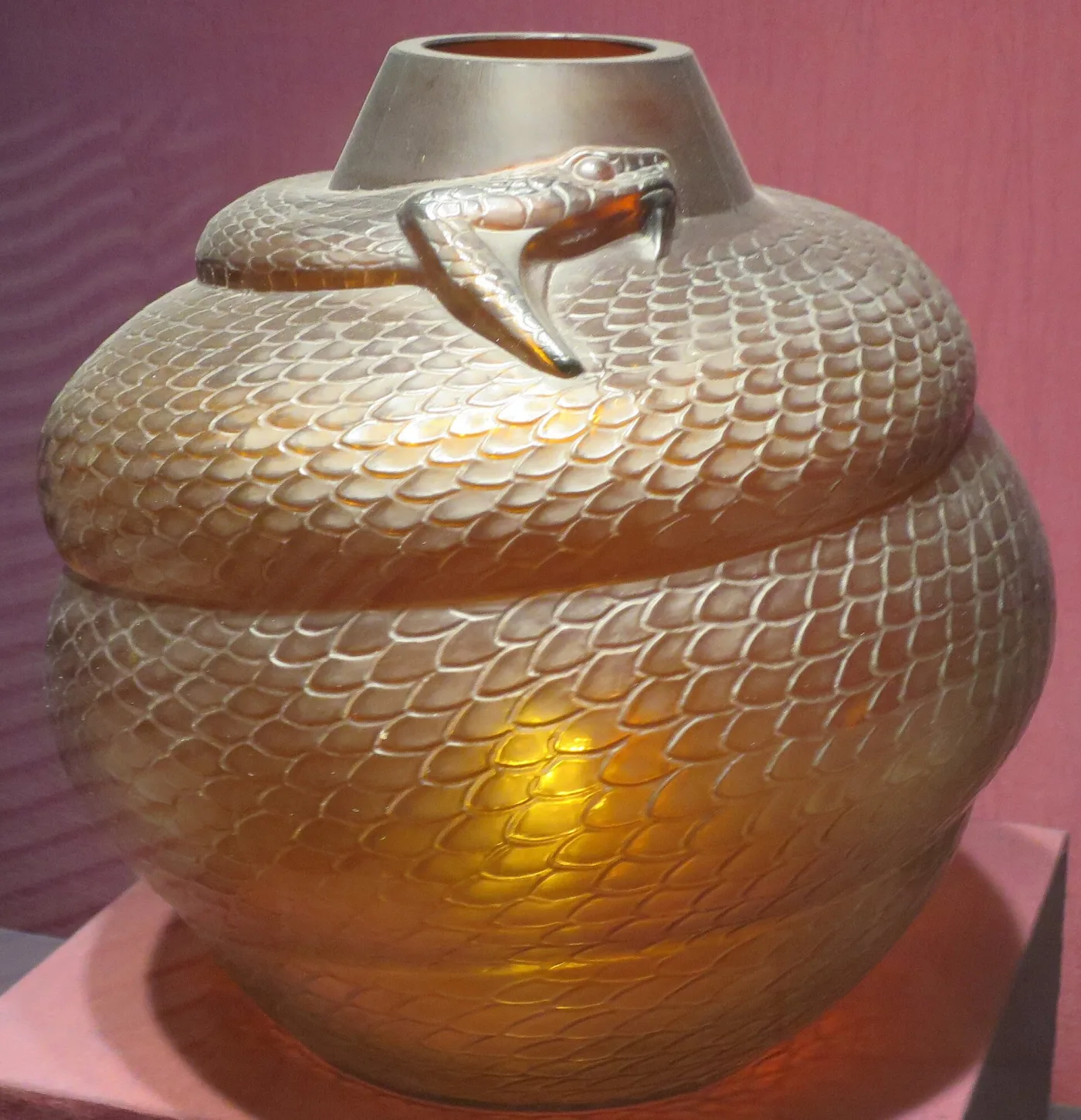
Art Deco represents one of the most visually striking and instantly recognizable design movements of the 20th century. Flourishing between the 1920s and 1930s, this international style combined luxury materials, bold geometric patterns, and streamlined forms that captured the optimism and modernity of the Jazz Age. Today, Art Deco collectibles command premium prices in the antique market, with exceptional pieces by renowned makers like Lalique, Tiffany, and Cartier reaching six-figure valuations at major auction houses.
The Art Deco movement took its name from the 1925 Exposition Internationale des Arts Décoratifs et Industriels Modernes in Paris, though its influence had begun earlier and continued well into the 1940s. This revolutionary aesthetic rejected the flowing, organic forms of Art Nouveau in favor of symmetrical, angular designs inspired by Cubism, Futurism, Ancient Egyptian motifs, and the Machine Age. From skyscraper-inspired furniture to glamorous jewelry featuring geometric diamonds, Art Deco transformed every aspect of decorative arts.
This comprehensive guide will teach you how to identify authentic Art Deco collectibles across all major categories, recognize the hallmarks of important makers, understand the key design elements that define the movement, evaluate condition and rarity, and accurately assess the market value of Art Deco antiques. Whether you're an experienced collector or just beginning your journey into this fascinating period, mastering these identification techniques will help you make informed purchasing decisions and build a valuable Art Deco collection.
Table of Contents
- Understanding the Art Deco Movement
- Key Art Deco Design Characteristics
- Art Deco Furniture Identification
- Art Deco Jewelry and Watches
- Art Deco Glass and Crystal
- Art Deco Ceramics and Pottery
- Art Deco Metalwork and Sculpture
- Art Deco Lighting Fixtures
- Art Deco Decorative Objects
- Major Art Deco Designers and Makers
- Materials and Manufacturing Techniques
- Regional Variations in Art Deco
- Dating Art Deco Pieces
- Condition Assessment
- Identifying Reproductions and Fakes
- Valuation and Market Trends
- Building an Art Deco Collection
- Care and Preservation
Understanding the Art Deco Movement
The Art Deco movement emerged in France just before World War I and reached its zenith during the 1920s and 1930s, representing a fundamental shift in design philosophy that embraced modernity, luxury, and mass production. Unlike the handcrafted ethos of Arts and Crafts or the organic naturalism of Art Nouveau, Art Deco celebrated industrial materials, geometric precision, and the aesthetics of the machine age. This forward-looking movement influenced architecture, interior design, fashion, and virtually every category of decorative arts.
Historical Context and Origins
Art Deco developed during a period of unprecedented technological advancement and social change. The movement was influenced by multiple sources including Cubist art, Russian Constructivism, Ancient Egyptian discoveries following the opening of Tutankhamun's tomb in 1922, Aztec and Mayan motifs, and the sleek forms of ocean liners and automobiles. The 1925 Paris Exposition showcased Art Deco at its most luxurious, featuring elaborate pavilions by leading French designers including Jacques-Émile Ruhlmann, Edgar Brandt, and René Lalique.
The style evolved through two distinct phases. Early Art Deco from approximately 1910 to 1925 featured rich materials, elaborate ornamentation, and exceptional craftsmanship aimed at wealthy clientele. Later Art Deco or Streamline Moderne from the mid-1920s through the 1930s embraced simpler forms, emphasized horizontal lines suggesting speed and progress, and utilized industrial materials suitable for mass production. This later phase became particularly prominent in America, where it influenced everything from kitchen appliances to movie palace architecture.
Philosophy and Aesthetic Principles
Art Deco represented a conscious rejection of historicism and a celebration of contemporary life. Designers sought to create objects that were unmistakably modern, combining fine craftsmanship with industrial efficiency. The movement embraced luxury materials including exotic woods, ivory, sharkskin, lacquer, and precious metals, but also incorporated new industrial materials such as chrome, Bakelite, and aluminum. This duality allowed Art Deco to appeal to both elite consumers seeking handcrafted luxury and middle-class buyers attracted to affordable mass-produced designs.
The aesthetic emphasized strong geometric forms, symmetrical compositions, and stylized rather than naturalistic ornamentation. Designers favored bold contrasts in color and material, creating visual drama through juxtaposition. The sunburst motif, chevron patterns, zigzags, and stepped forms became signature elements, while flora and fauna appeared in highly stylized, geometric interpretations rather than realistic depictions.
Global Spread and Cultural Impact
While centered in Paris during the 1920s, Art Deco rapidly spread internationally, adapting to local tastes and traditions in different regions. American Art Deco developed a distinctive character, particularly in skyscraper design and Hollywood glamour. British Art Deco showed restraint compared to French exuberance, while Scandinavian designers created lighter, more functional interpretations. The style profoundly influenced popular culture, from fashion and jewelry to automotive design and cinema, creating a visual language that defined the interwar period.
Key Art Deco Design Characteristics
Identifying authentic Art Deco pieces requires understanding the distinctive design elements that define the movement. These characteristics appear consistently across all categories of Art Deco collectibles, from massive furniture pieces to delicate jewelry, creating a unified aesthetic vocabulary that remains instantly recognizable nearly a century later.
Geometric Forms and Patterns
Geometric shapes form the foundation of Art Deco design. Circles, triangles, squares, and trapezoids appear individually and in complex combinations. The stepped pyramid or ziggurat form, inspired by Aztec and Mayan architecture, became one of the most iconic Art Deco motifs, appearing on everything from building facades to powder compacts. Chevron patterns create dynamic visual movement, while concentric circles suggest modernist abstraction.
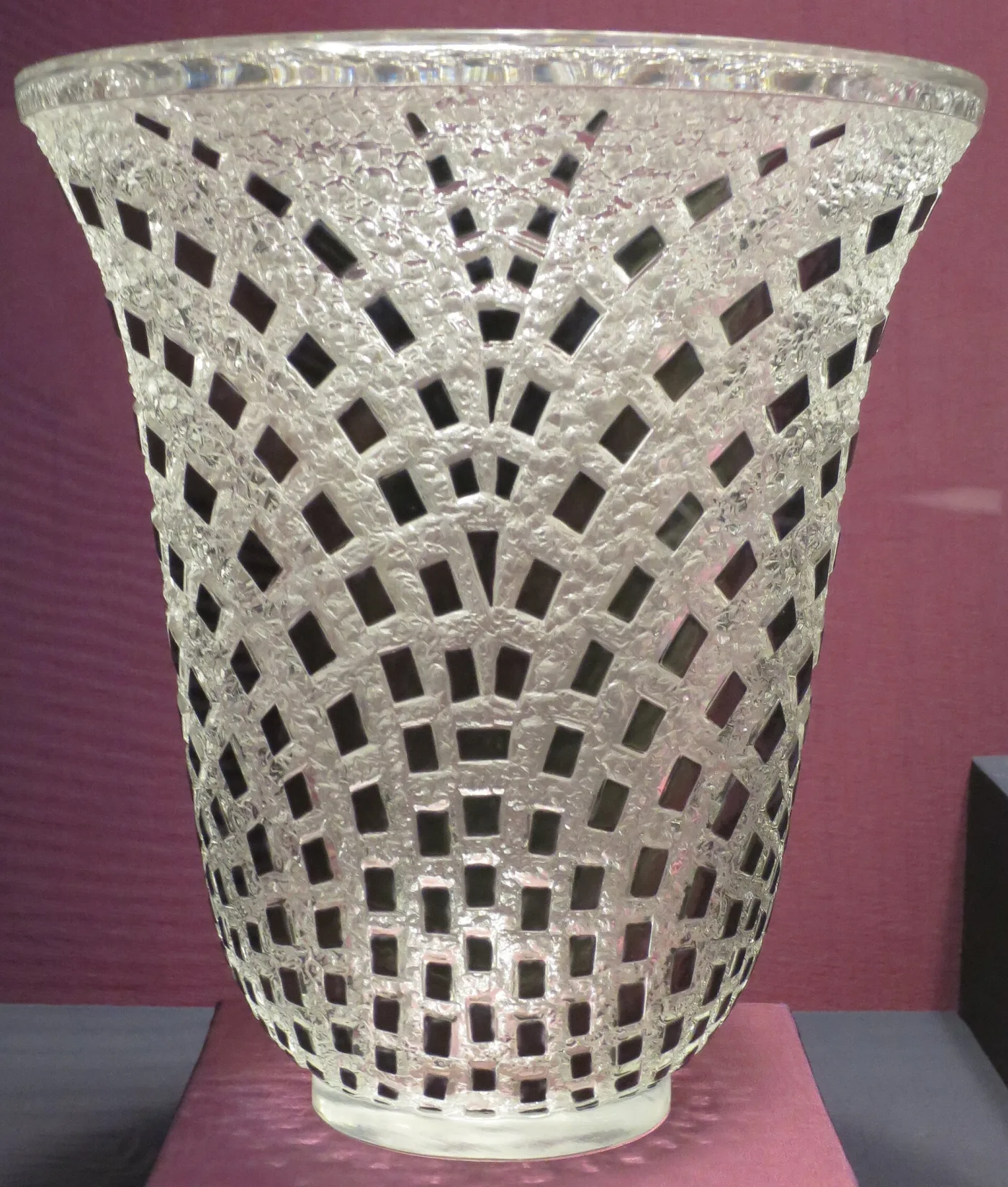
Sunburst or sunrise motifs radiate from a central point, symbolizing the dawn of a new age. These appear on mirrors, clocks, architectural details, and jewelry. Octagonal and hexagonal shapes replaced traditional circular or rectangular forms in everything from perfume bottles to picture frames. The fascination with geometry extended to three-dimensional forms, with designers creating objects based on spheres, cylinders, and cubes rather than organic or historical shapes.
Streamlined and Symmetrical Design
Symmetry dominates Art Deco composition, creating balanced, harmonious designs that convey stability and elegance. Unlike the asymmetrical naturalism of Art Nouveau, Art Deco pieces typically feature mirror-image designs with central focal points. This symmetry extends from overall form to decorative details, creating compositions that feel simultaneously modern and classical.
Streamlining emerged as a key principle, particularly in later Art Deco designs. Smooth, aerodynamic forms suggested speed, efficiency, and technological progress. Horizontal emphasis through banding, parallel lines, and elongated proportions created visual associations with trains, ships, and automobiles. Even stationary objects like furniture incorporated these dynamic elements, reflecting the era's enthusiasm for transportation and movement.
Stylized Natural Motifs
While Art Deco rejected naturalistic representation, it incorporated highly stylized interpretations of flora, fauna, and the human figure. Flowers appear as geometric abstractions rather than botanical studies. Animals, particularly leaping gazelles, greyhounds, and exotic birds, appear in sleek, simplified forms emphasizing movement and grace. The female figure, often depicted as a dancer or athletic form, represents idealized beauty and modern femininity.
These stylized natural elements frequently combined with geometric patterns, creating hybrid designs that balanced organic inspiration with geometric discipline. Fountain motifs suggesting upward movement appeared on everything from bookends to building facades. Clouds rendered as parallel curves suggested both nature and machine-made precision.
Bold Color Contrasts
Art Deco color schemes favored dramatic contrasts and strong, saturated hues. Black paired with gold or silver created sophisticated elegance. Vibrant combinations including orange and black, red and chrome, or emerald green and ivory provided visual impact. Pastel colors appeared but were typically used in combination with stronger accents rather than as dominant tones.
Material contrasts reinforced color effects. Light and dark woods combined in geometric veneers. Chrome contrasted with black lacquer or colored Bakelite. In ceramics, bright glazes in strong colors replaced the subtle tones preferred in earlier periods. These contrasts created visual drama and emphasized the modern, bold character of Art Deco design.
Exotic and Luxurious Materials
Art Deco celebrated material luxury through both traditional precious materials and newly available exotic substances. Ebony, rosewood, and other exotic woods appeared alongside mother-of-pearl inlay and ivory details. Sharkskin, called shagreen, covered boxes and furniture. Lacquer techniques imported from Asia created glossy, colored surfaces that embodied modern sophistication.
Industrial materials received equal prominence. Chrome plating transformed utilitarian metal into glamorous surfaces. Bakelite and other early plastics enabled new forms and colors impossible in traditional materials. Aluminum, previously rare and expensive, became accessible and appeared in everything from furniture to jewelry. This democratic approach to materials reflected Art Deco's dual nature as both luxury movement and mass-market phenomenon.
Art Deco Furniture Identification
Art Deco furniture represents some of the most valuable and sought-after pieces in the antique market, ranging from lavish custom creations by master ébénistes to elegant mass-produced designs. Identifying authentic Art Deco furniture requires understanding construction techniques, recognizing important makers, and distinguishing high-end pieces from commercial productions.
French Art Deco Furniture
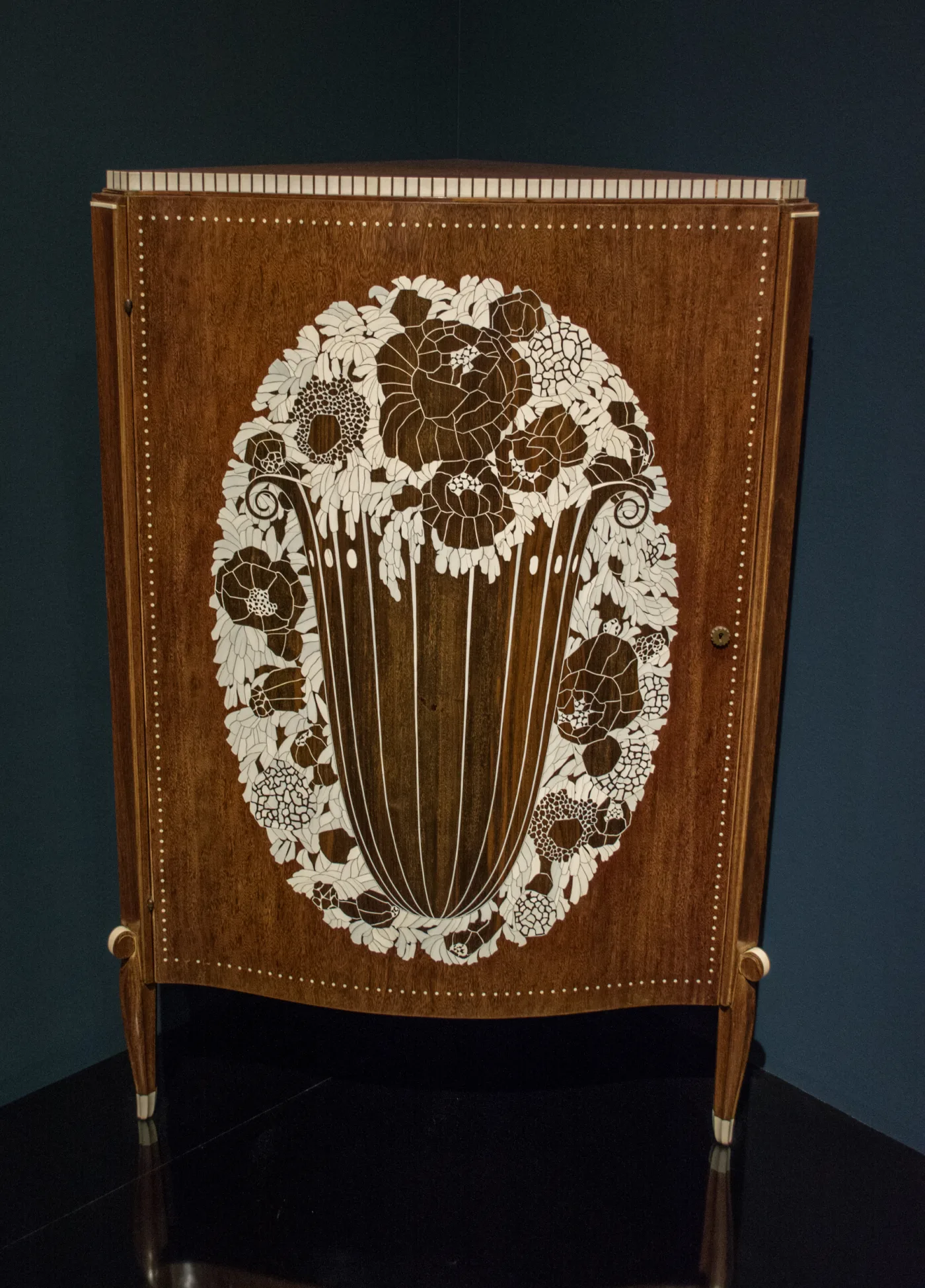
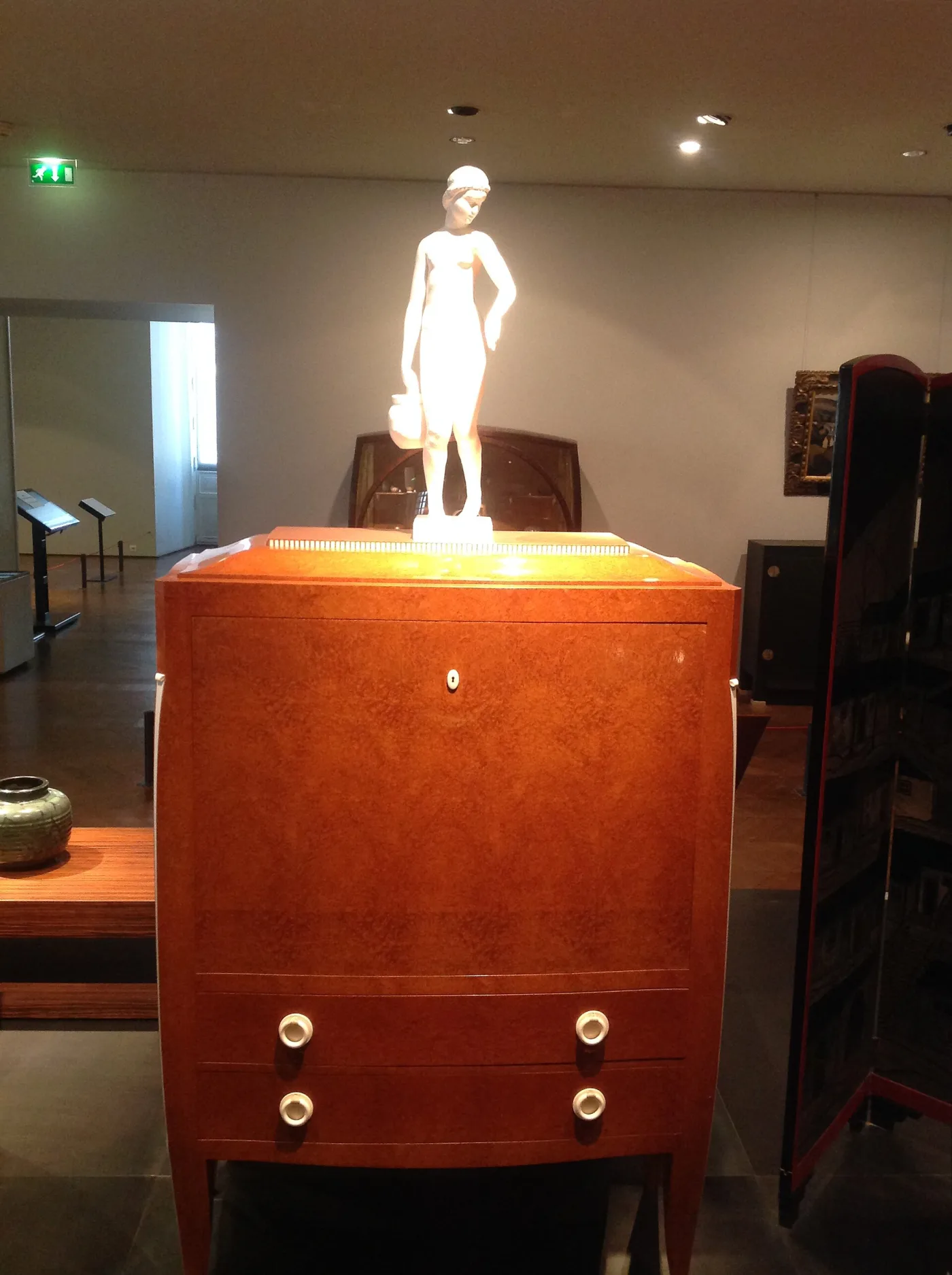
French Art Deco furniture reached its apex in the work of master craftsmen like Jacques-Émile Ruhlmann, who created extraordinarily luxurious pieces using exotic woods, ivory inlays, and impeccable craftsmanship. Ruhlmann furniture features elegant proportions, subtle curves within overall geometric forms, and exquisite veneers often centered on individual panels. His signature tapered legs end in small ivory or metal sabots. Other important French makers include Louis Süe and André Mare, Émile-Jacques Ruhlmann, and Paul Follot.
Authentic French Art Deco furniture typically employs exotic woods including Macassar ebony, amboyna, palisander, and blonde woods arranged in book-matched veneers creating symmetrical patterns. Construction follows traditional French ébénisterie techniques with dovetail joinery, though forms are distinctly modern. Hardware features geometric designs in bronze, brass, or ivory. The scale tends toward refined elegance rather than monumental proportions, designed for sophisticated urban apartments.
American Art Deco Furniture
American Art Deco furniture developed distinct characteristics reflecting American tastes and manufacturing capabilities. Companies like Herman Miller, Kem Weber, Donald Deskey, and Paul Frankl produced furniture that emphasized streamlined forms, industrial materials, and efficiency. Skyscraper-style bookcases with stepped tops became iconic American Art Deco forms, as did waterfall-edge bedroom suites featuring curved drawer fronts.
American pieces often incorporated chrome, Bakelite, and mirror glass alongside wood. Blonde woods gained particular popularity in American designs, creating lighter aesthetics than dark French examples. Mass production techniques resulted in more standardized forms, though high-end American makers like Gilbert Rohde maintained excellent craftsmanship standards. Identifying marks, labels, or stamps from recognized manufacturers significantly increases value and authenticity confidence.
Construction and Materials
Examine construction carefully when evaluating Art Deco furniture. High-quality pieces feature solid wood frames veneered with exotic woods arranged in geometric or book-matched patterns. Veneers should be thin, expertly applied, and show no modern synthetic adhesives. Dovetail joints in drawers indicate quality construction, though machine-cut dovetails became common in later production pieces.
Period hardware provides important authentication clues. Original pulls and handles feature geometric designs in appropriate materials for the era including cast bronze, chrome-plated brass, or Bakelite. Replacement hardware immediately diminishes value. Interior surfaces of drawers and cabinets should show age-appropriate wear and patina. The presence of exotic materials like ivory, shagreen, or lacquer requires careful verification, as these valuable elements attract fakers.
Upholstered Furniture
Art Deco upholstered furniture features geometric forms with minimal curves, straight or gently angled arms, and often exposed wood elements in exotic materials. Club chairs, sofas, and benches display streamlined profiles quite different from earlier overstuffed styles. Original upholstery rarely survives, but recovering should maintain period-appropriate fabrics including velvets, mohair, leather, or geometric-patterned textiles.
Frame construction follows traditional techniques, but forms reflect modern aesthetics. Look for solid wood frames, hand-tied springs in seats, and horsehair or cotton batting rather than modern foam. Chrome or exotic wood legs, often tapered or geometric in section, support upholstered pieces. The overall silhouette should appear low, horizontal, and streamlined rather than vertical or bulky.
Identifying Makers and Provenance
Maker identification dramatically affects Art Deco furniture values. French master ébénistes often signed or stamped their work, though signatures may appear in inconspicuous locations. Check the underside of tables, inside drawers, or on the back of case pieces for stamps, signatures, or branded marks. American manufacturers frequently used paper labels, metal tags, or stamps indicating company name and sometimes date.
Research specific makers to understand their characteristic techniques, materials, and forms. Ruhlmann used specific leg designs and ivory details; Donald Deskey favored Bakelite and aluminum; Paul Frankl created distinctive skyscraper forms. Documentation including original bills of sale, exhibition records, or provenance connecting pieces to important collections significantly enhances value and authentication confidence.
Art Deco Jewelry and Watches
Art Deco jewelry represents one of the most valuable and actively collected categories of Art Deco antiques, with exceptional pieces by Cartier, Van Cleef & Arpels, and other prestigious makers regularly achieving record prices at auction. The geometric precision, platinum settings, and striking gemstone combinations of Art Deco jewelry created a revolutionary aesthetic that remains highly influential in contemporary design.
Platinum and White Metal Dominance
The Art Deco period coincided with platinum becoming widely available for jewelry manufacture, and this strong, lustrous white metal became the preferred setting material for fine Art Deco jewelry. Platinum's strength allowed for delicate filigree work and secure settings for valuable gemstones while providing a neutral backdrop that enhanced diamond brilliance. Authentic Art Deco platinum jewelry typically shows appropriate hallmarks including "PLAT," "PT," or purity marks like "950" indicating 95 percent platinum content.
White gold also appeared in Art Deco jewelry, particularly in American and more affordable pieces. Period white gold appears slightly warmer than platinum and may show more wear over time. Rhodium plating, introduced during this era, created bright white surfaces on both white gold and silver. Less expensive Art Deco jewelry utilized sterling silver, chrome, or white metal alloys, sometimes set with marcasites, paste stones, or Czech glass rather than precious gems.
Geometric Diamond Settings
Art Deco diamond jewelry revolutionized gemstone setting techniques, creating geometric patterns through calibrated stone arrangements. The geometric style emphasized linear arrangements, repeating patterns, and architectural compositions rather than naturalistic clusters. Baguette-cut diamonds, developed during this period, formed linear borders and geometric patterns impossible with traditional round cuts. Trapezoid, triangle, and geometric fancy cuts created angular compositions.
Examine stone settings carefully when evaluating Art Deco diamond jewelry. Period pieces feature hand-fabricated platinum settings with detailed millegraining along edges, creating beaded texture that both decorates and secures stones. Open-back settings allowing light to pass through gems indicate quality work, though closed backs appear on some pieces. Prong settings should appear proportional and expertly finished. Modern repairs or replacement stones significantly impact value and authenticity.
Colored Gemstone Combinations
Art Deco jewelers created striking effects through bold gemstone color combinations inspired by oriental art, Egyptian motifs, and modern painting. Sapphires, emeralds, and rubies appeared alongside diamonds in geometric arrangements. Carved gemstones including jade and nephrite, coral, onyx, and lapis lazuli created three-dimensional elements. Black onyx contrasting with diamonds became particularly characteristic of Art Deco design, as did combinations of coral and jade or emerald and diamond.
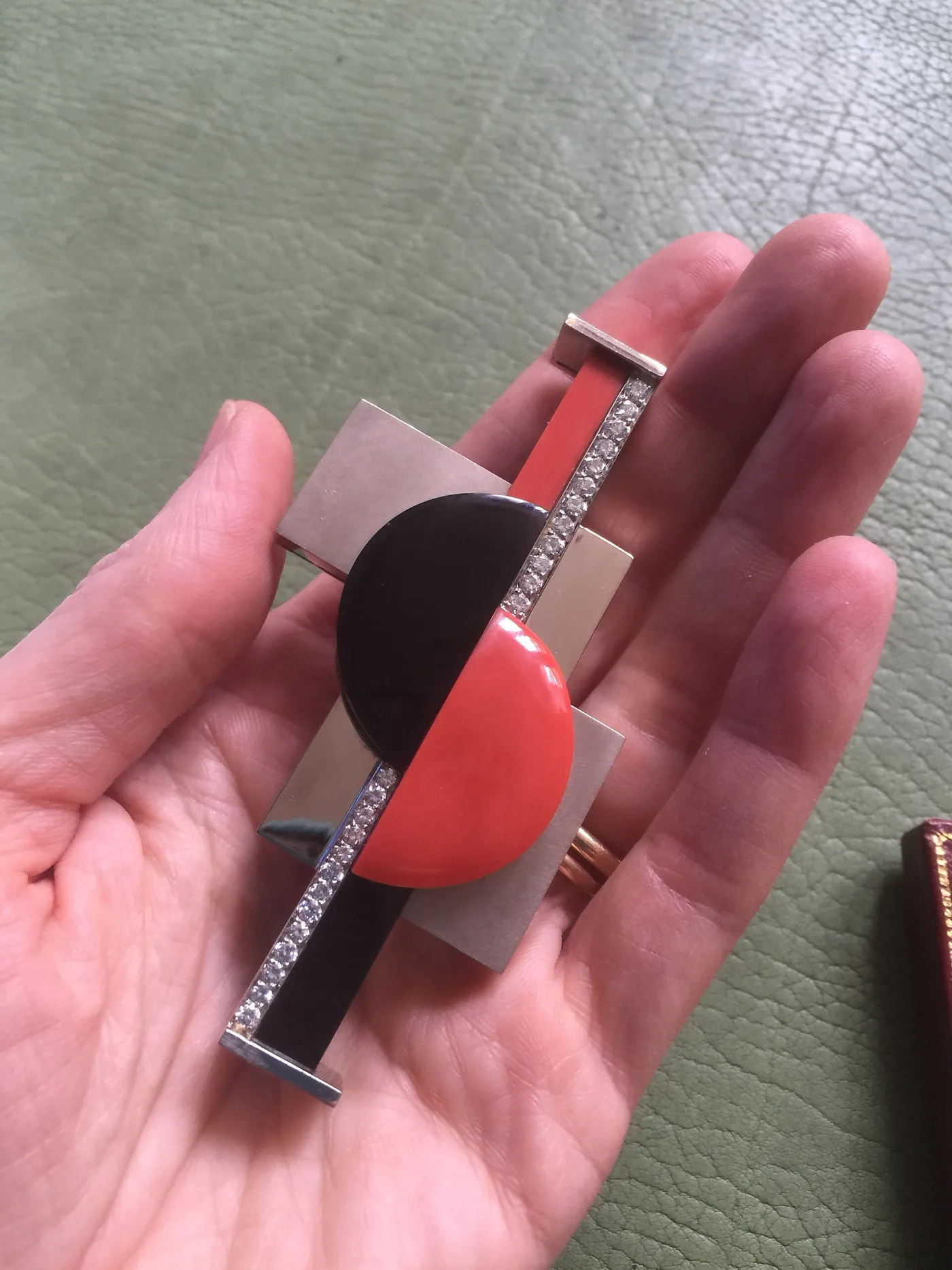
The use of calibrated colored stones cut to precise measurements enabled complex geometric patterns impossible with irregularly sized gems. Rows of identically sized sapphires or emeralds formed borders and linear elements. Some pieces incorporated dozens of precisely matched stones creating architectural effects. The quality and calibration of colored stones significantly affects value, with well-matched suites commanding premium prices.
Art Deco Watches
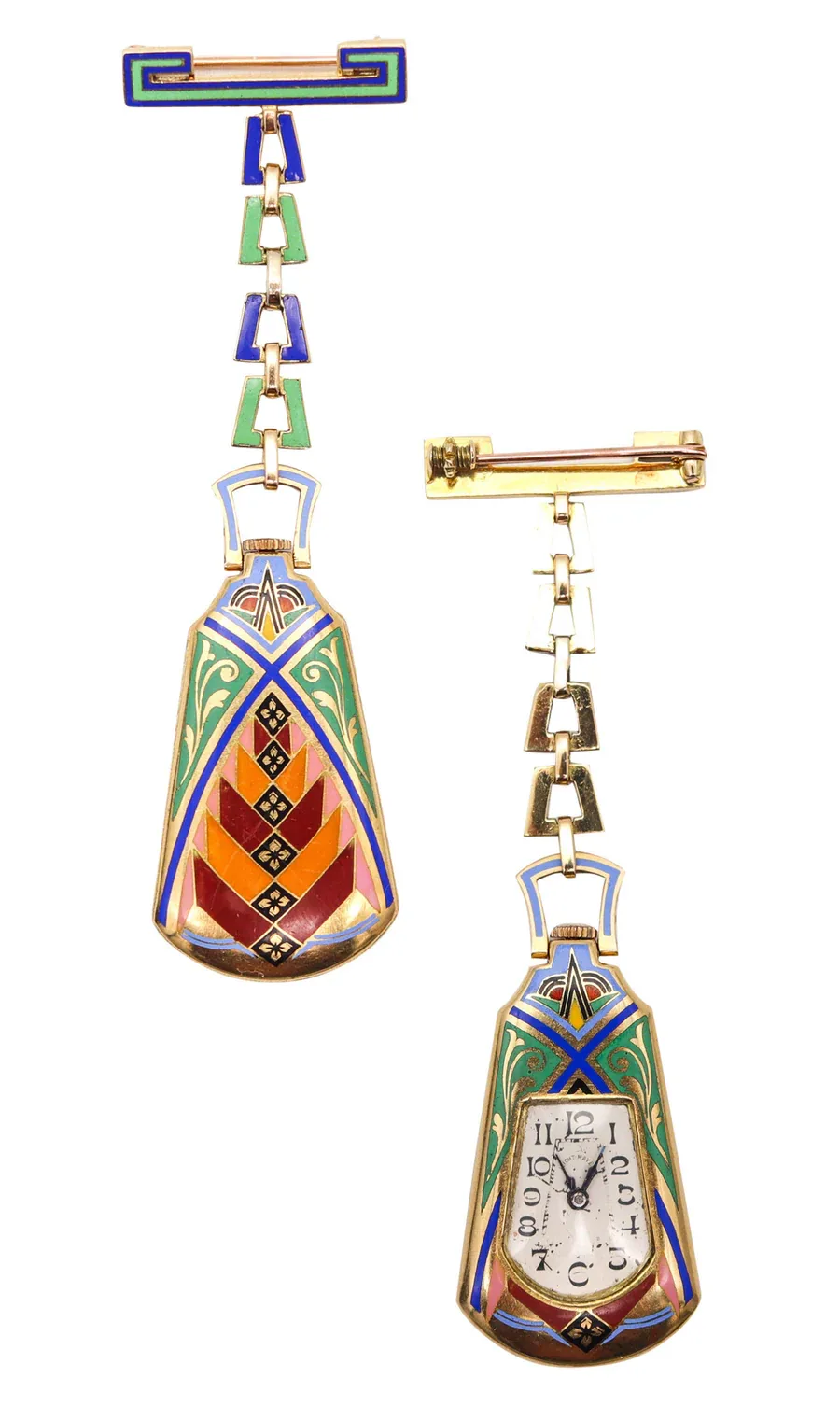
Art Deco watches represent highly collectible timepieces combining mechanical precision with geometric design. Rectangular, square, and octagonal cases replaced traditional round forms, and reading their movements and case references is covered in our vintage wristwatch identification guide. Companies including Cartier, Patek Philippe, Jaeger-LeCoultre, and Longines created iconic designs including the Cartier Tank, introduced in 1917 and remaining in production. Ladies' watches featured platinum or white gold cases set with diamonds and colored stones in geometric patterns.
Period movements should match case dates, and original dials should show appropriate aging and style. Art Deco watch dials typically feature Arabic numerals or geometric indices rather than Roman numerals, with railroad-track minute rings and blued steel hands. Bracelets may be original mesh or articulated links, often set with gems matching the case decoration. Original boxes and papers significantly enhance value, as does complete original condition without replacement parts.
Costume and Commercial Jewelry
Affordable Art Deco jewelry brought geometric style to middle-class consumers through chrome, Bakelite, glass, and base metal designs. Companies like Napier, Trifari, and Coro produced stylish signed costume jewelry echoing expensive jewelry designs. Bakelite bangles, brooches, and necklaces in bold colors epitomize accessible Art Deco style. Czech glass beads and paste stones created affordable glamour.
Quality costume jewelry from recognized makers has become highly collectible. Look for maker's marks, original clasps and findings, and good condition. Bakelite should be tested using hot water test or Simichrome polish method to distinguish it from later plastics. Original Art Deco costume jewelry shows period-appropriate construction techniques including hand-wiring of components rather than modern gluing or cheap findings.
Authentication and Maker Identification
Hallmarks and maker's marks provide crucial authentication for Art Deco jewelry. Prestigious makers including Cartier, Van Cleef & Arpels, Tiffany & Co., Boucheron, and Mauboussin marked their creations, though marks may be subtle and require magnification. French jewelry shows maker's marks and assay hallmarks punched into precious metal. American jewelry often includes manufacturer names or quality marks.
Examining construction details helps authenticate unsigned pieces. Period work shows hand-fabrication techniques including file marks on metal surfaces, slightly irregular stone settings indicating handwork, and construction methods appropriate to the 1920s-1930s. Modern reproductions often show laser welding, perfect symmetry indicating CAD design and machine manufacture, and stone settings inconsistent with period techniques. Consulting specialized jewelry references and expert appraisers provides essential guidance when evaluating high-value pieces.
Art Deco Glass and Crystal
Art Deco glass represents one of the most technically accomplished and artistically significant categories of Art Deco collectibles, ranging from René Lalique's molded glass masterpieces to brilliant cut crystal by makers like Baccarat and Steuben. The period saw revolutionary developments in glass technology and design, creating objects that combined industrial production methods with exceptional artistry.
René Lalique Glass
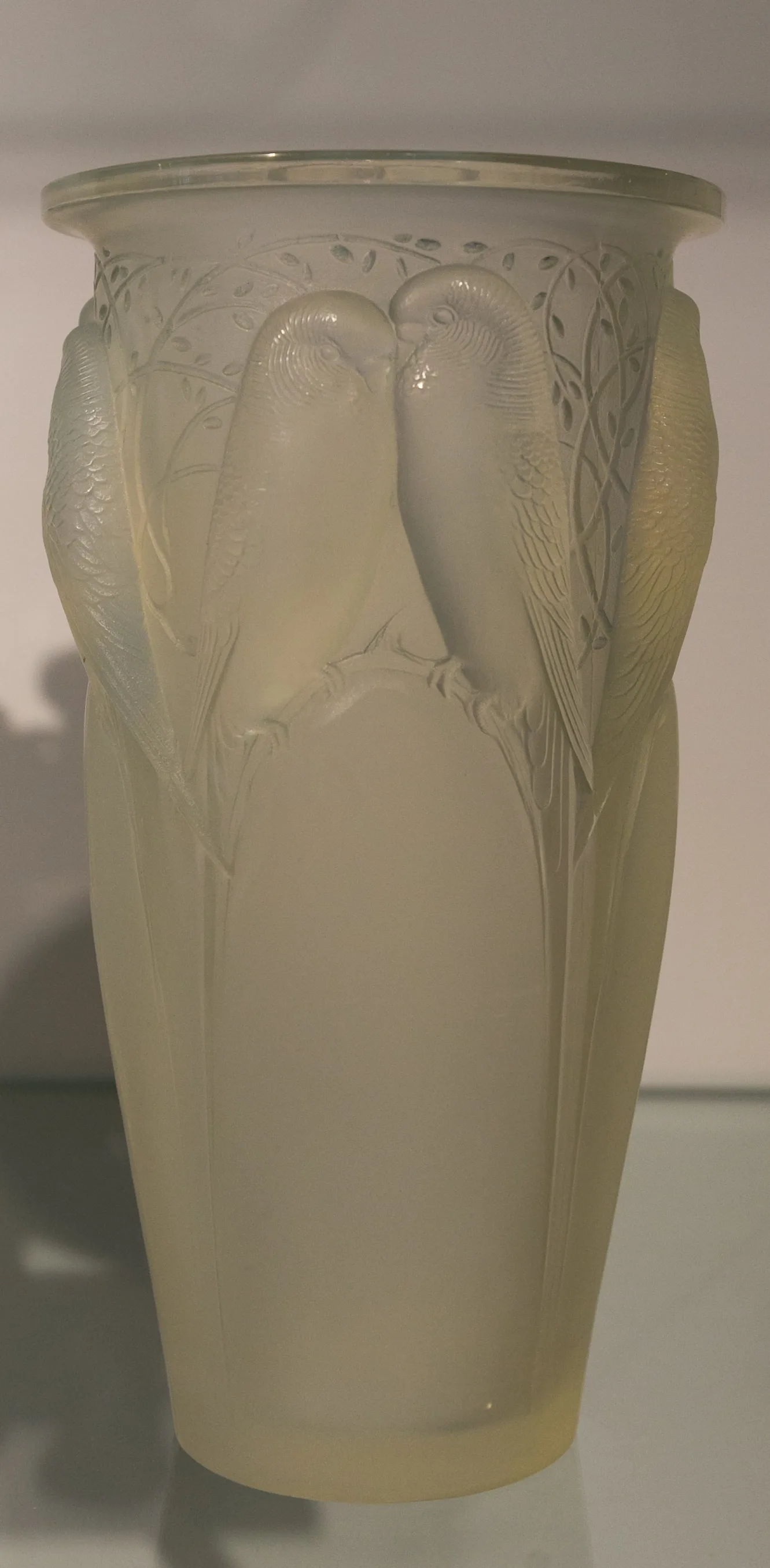
René Lalique stands as the most celebrated Art Deco glass maker, creating thousands of designs including vases, perfume bottles, car mascots, architectural elements, and decorative objects. Lalique revolutionized glass design by perfecting molded glass techniques that enabled mass production of complex forms while maintaining artistic quality. His characteristic opalescent glass captures and refracts light, creating luminous effects that change with viewing angle and illumination.
Authentic Lalique glass shows specific identifying characteristics. Most pieces bear molded or engraved marks including "R. LALIQUE FRANCE" on pre-1945 pieces or "LALIQUE FRANCE" after René's death. Examine signatures carefully, as reproductions exist. Period Lalique glass exhibits specific qualities including precise molding with crisp details, appropriate weight for size, and characteristic opalescence created through specific glass formulas. Common motifs include stylized flowers, birds, geometric patterns, and female figures.
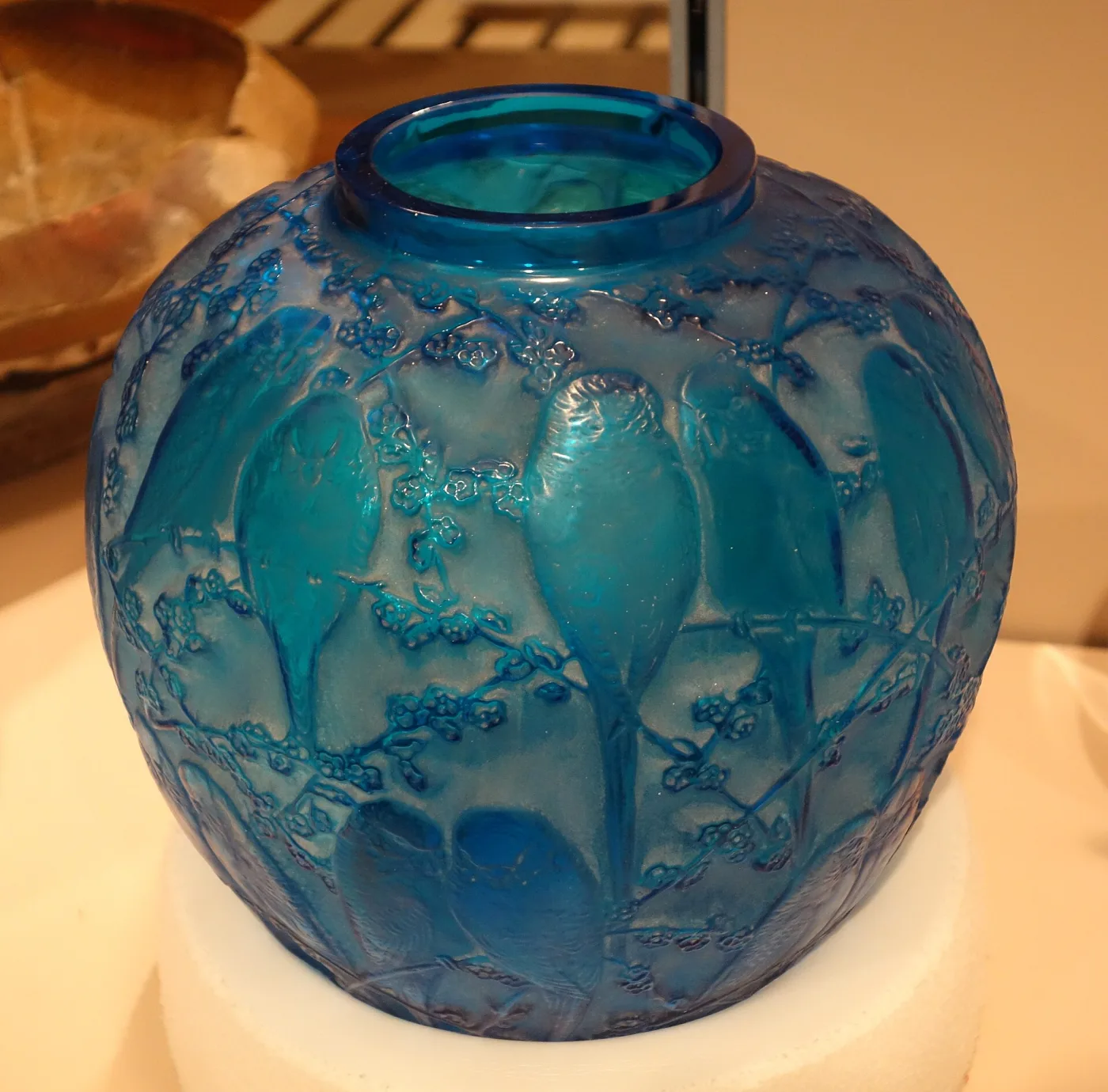
Lalique created numerous vase designs that remain highly collectible. Notable models include Bacchantes with molded female nudes, Tourbillons with spiral patterns, and Perruches featuring parrots. Original color variations including clear, opalescent, electric blue, amber, and rare colors like red significantly affect values. Condition critically impacts value, with chips, cracks, or cloudiness substantially reducing prices even on rare models.
Other French Art Deco Glass
Beyond Lalique, numerous French glassmakers created important Art Deco glass. Sabino produced molded opalescent glass similar to Lalique but generally more affordable. Etling made Art Deco glass sculptures and vases. Verlys created molded glass with different surface treatments. Daum Nancy continued their tradition of art glass with Art Deco designs featuring acid-etched decoration and geometric forms quite different from their earlier Art Nouveau cameo work.
Identifying marks help attribute pieces to specific makers. Sabino typically marked pieces with molded signatures. Daum pieces show engraved "DAUM NANCY FRANCE" with a cross of Lorraine. Verlys glass may be marked "Verlys France" or "Verlys Made in France." Understanding each maker's characteristic techniques, color palettes, and design vocabularies aids authentication when marks are absent or unclear.
American Art Deco Glass
American companies including Steuben, Consolidated, and Phoenix produced distinctive Art Deco glass. Steuben Glass Works under designer Sidney Waugh created exceptional colorless crystal featuring engraved decoration of mythological and contemporary subjects rendered in Art Deco style. These pieces emphasized optical clarity and brilliant cutting rather than color or opalescence.
Depression glass manufactured during the 1930s brought Art Deco style to mass-market consumers through molded colored glass in geometric patterns. Companies like Jeannette, Hazel Atlas, and Federal Glass produced affordable tableware featuring characteristic Art Deco motifs. While inexpensive when new, certain patterns and rare colors have become quite collectible. Identifying specific patterns, manufacturers, and color variations requires consulting specialized references.
Cut and Engraved Crystal
Prestigious crystal manufacturers including Baccarat, Saint Louis, and Orrefors created cut and engraved crystal featuring Art Deco geometric patterns. Deep cutting created faceted surfaces that brilliantly refracted light. Geometric patterns replaced the flowing curves of earlier cut glass, with strong angular compositions, parallel lines, and architectural forms reflecting modernist aesthetics.
High-quality Art Deco crystal shows exceptional clarity, precise cutting with sharp edges, and designs rendered with geometric precision. Wheels used for cutting should leave characteristic marks visible under magnification. Engraved decoration appears as frosted areas contrasting with polished crystal surfaces. Most prestigious makers marked their crystal with engraved signatures or acid-etched marks, though markings may be subtle.
Art Deco Perfume Bottles
Art Deco perfume bottles represent a specialized collecting category combining glass artistry with fashion history. Lalique designed hundreds of perfume bottles for companies including Coty, Worth, and Roger et Gallet. These range from simple geometric forms to elaborate figural designs, often featuring stoppers that form integral parts of the overall composition.
Other makers including Baccarat, Depinoix, and Viard also created Art Deco perfume bottles. Some featured elaborate metal mounts in silver or gold-plated brass. Commercial perfume bottles from this period show Art Deco influence in geometric forms and decorative patterns. Collecting perfume bottles requires understanding which bottles came with commercial perfumes versus those sold empty as decorative objects, as this significantly affects both rarity and value.
Art Deco Ceramics and Pottery
Art Deco ceramics encompass an extraordinarily diverse range from bold hand-painted pottery to elegant porcelain tableware, reflecting the movement's influence across all price points and markets. British, French, and American potteries created distinctive Art Deco ceramics that remain highly collectible, with certain makers and patterns commanding strong prices.
British Art Deco Ceramics
British ceramics manufacturers embraced Art Deco with enthusiasm, creating some of the most recognizable and collectible designs. Clarice Cliff stands as perhaps the most celebrated Art Deco ceramics designer, creating the revolutionary Bizarre and Fantasque lines featuring bold geometric and landscape patterns hand-painted in vibrant colors. Cliff's work exhibits characteristic angular forms, bright contrasting colors, and patterns including Crocus, Autumn, and Secrets rendered in distinctive banding and geometric compositions.
Authentic Clarice Cliff pieces bear printed backstamps indicating "Bizarre by Clarice Cliff" or similar marks along with shape numbers and pattern names. Hand-painted decoration should show slight variations indicating genuine handwork rather than perfect mechanical application. Colors should appear vibrant and appropriate to documented patterns. Condition significantly affects value, with mint examples commanding premium prices while chips, cracks, or color loss substantially reduce worth.
Susie Cooper created more refined Art Deco ceramics featuring elegant shapes with restrained geometric decoration often in pastel colors. Cooper's work shows sophisticated design sense with patterns perfectly integrated into forms. Other notable British Art Deco ceramics include Shelley's geometric patterns and Moorland ware, Keith Murray's engine-turned designs for Wedgwood featuring lathe-cut geometric decoration, and Charlotte Rhead's tube-lined Art Deco patterns for various Staffordshire potteries.
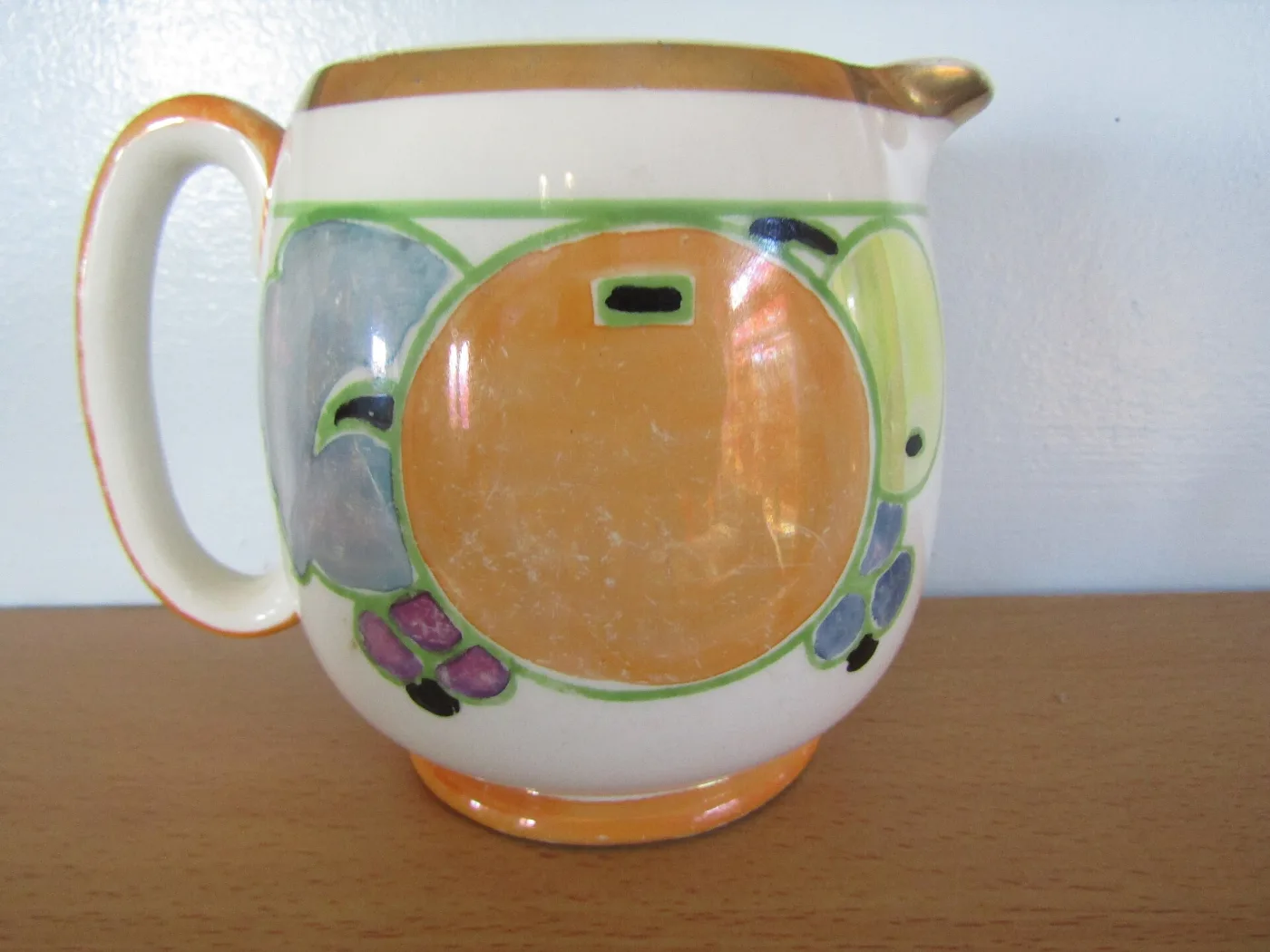
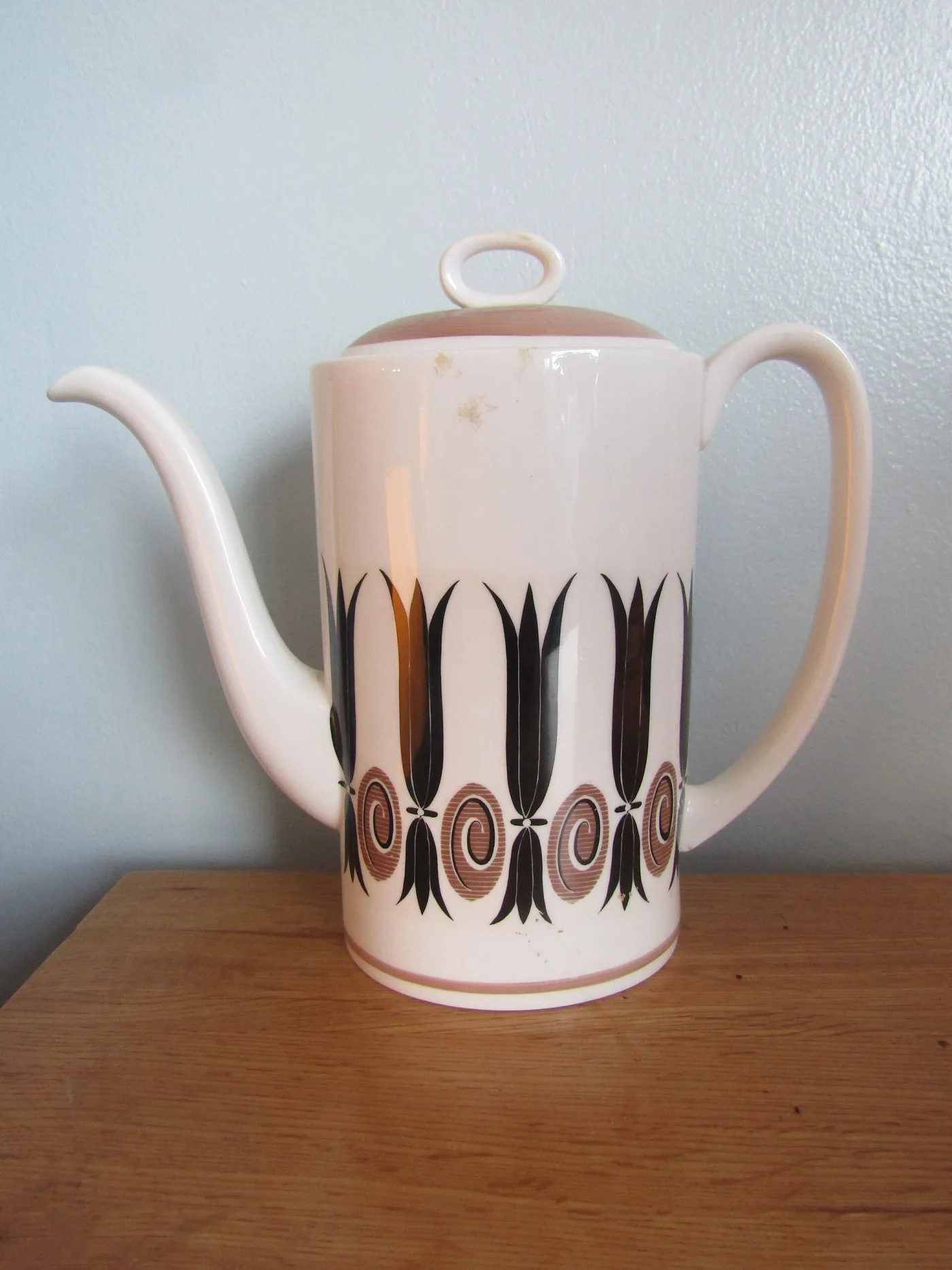
French Art Deco Ceramics
French Art Deco ceramics ranged from elegant porcelain to bold studio pottery. The prestigious porcelain manufacturer Sèvres produced Art Deco designs though in limited quantities compared to continuing traditional patterns. Art Deco Sèvres features geometric forms, stylized decoration, and occasionally collaboration with important designers. These pieces bear the characteristic Sèvres marks and date codes.
Studio potters including Jean Besnard, Emile Lenoble, and Emile Decoeur created individual Art Deco ceramics emphasizing form, glaze, and subtle decoration rather than elaborate painting. These pieces show exceptional craftsmanship, sophisticated glazing techniques, and modernist aesthetics. Most are marked with artist signatures or monograms, though identification can require expertise in studio pottery of the period.
American Art Deco Ceramics
American potteries produced extensive Art Deco ceramics across all quality and price levels. Roseville Pottery introduced Art Deco-influenced lines including Futura with its dramatic geometric forms and glossy glazes quite different from their traditional matte-glazed art pottery. Authentic Roseville Futura shows characteristic angular handles, triangular and geometric vessel forms, and specific glaze colors documented in company records.
Cowan Pottery created sophisticated Art Deco ceramics often designed by commissioned artists including Viktor Schreckengost, whose Jazz Bowl exemplifies American Art Deco ceramic design with its energetic decoration depicting New York nightlife. Frankoma, Red Wing, and numerous other American potteries incorporated Art Deco elements into both art pottery and commercial wares. The most popular of all was Homer Laughlin's Fiesta dinnerware, whose concentric rings and bright solid glazes brought Art Deco styling to millions of Depression-era tables. Industrial designers including Russell Wright and Eva Zeisel created ceramic tableware featuring streamlined forms and modernist aesthetics.
Identification Marks and Authentication
Maker's marks provide essential authentication for Art Deco ceramics. Most established potteries marked their wares with printed, impressed, or painted marks indicating manufacturer and often including pattern names, shape numbers, and date codes. Learn to recognize marks for makers you collect, as marks changed over time and provide dating information. References including Geoffrey Godden's Encyclopedia of British Pottery and Porcelain Marks and similar specialized guides help identify marks.
Beyond marks, examine construction and decoration techniques. Hand-painted decoration should show slight irregularities indicating human execution. Molded decoration should exhibit crispness and appropriate wear patterns for age. Glazes should appear consistent with period formulations and application methods. Modern reproductions of popular patterns exist, particularly for Clarice Cliff and other valuable makers, making careful examination and provenance research essential for expensive pieces.
Condition Considerations
Condition critically affects Art Deco ceramics values, particularly for decorative pieces where visual appeal drives collecting. Examine pieces carefully under strong light for hairline cracks, chips, or restoration. Check high-points including handles, spouts, and rims where damage commonly occurs. Crazing in glaze may be acceptable on some types but reduces value on pieces where smooth glaze is characteristic.
Color degradation from sunlight exposure particularly affects pieces with bright enamels like Clarice Cliff. Compare colors to documented examples to assess fading. Professional restoration can make damage difficult to detect, so ultraviolet light examination helps reveal repairs. While mint condition commands highest prices, rare patterns or forms retain value even with minor damage, though significant damage substantially reduces worth except on the rarest pieces.
Art Deco Metalwork and Sculpture
Art Deco metalwork encompasses everything from monumental architectural elements to delicate decorative objects, showcasing the period's embrace of both traditional bronze casting and modern industrial materials. The combination of classical metalworking techniques with geometric modern design created some of the most iconic Art Deco objects, from Demetre Chiparus chryselephantine sculptures to streamlined cocktail shakers.
Art Deco Bronze Sculpture
Art Deco bronze sculpture emphasized dynamic poses, streamlined forms, and subjects reflecting contemporary life including dancers, athletes, and exotic figures. Leading sculptors including Demetre Chiparus, Ferdinand Preiss, Paul Philippe, and Claire Jeanne Roberte Colinet created bronze and chryselephantine figures that epitomize Art Deco elegance. Chryselephantine sculptures combine bronze with carved ivory, typically using bronze for clothing and ivory for exposed skin, creating dramatic contrasts.
Authentic period bronzes show casting quality appropriate to their era and maker. High-quality bronzes exhibit sharp details, smooth finishing, and patinas developed through period techniques. Most important sculptors signed their work either in the bronze casting itself or on the base. Foundry marks including those of prestigious foundries like Etling or LN & JL add value and authentication support. Examine signatures carefully under magnification, as fake signatures appear on reproduction bronzes.
Ivory components require particular attention. Period ivory shows natural aging including color changes from white to warmer tones. Modern ivory restrictions have made chryselephantine figures subject to complex regulations, affecting marketability even for authentic period pieces. Some sculptures used ivory substitutes including celluloid during the period itself, which can complicate authentication. Weight, translucency, and grain patterns help distinguish genuine ivory from substitutes.
Decorative Bronze and Metal Objects
Art Deco metalworkers created countless decorative objects including bookends, ashtrays, vases, boxes, and desk accessories in bronze, brass, chrome, and other metals. Edgar Brandt stands as the preeminent Art Deco ironworker, creating architectural elements, furniture, and decorative objects featuring elaborate wrought iron work with geometric and stylized natural motifs. Brandt's work shows exceptional craftsmanship with complex compositions perfectly executed.
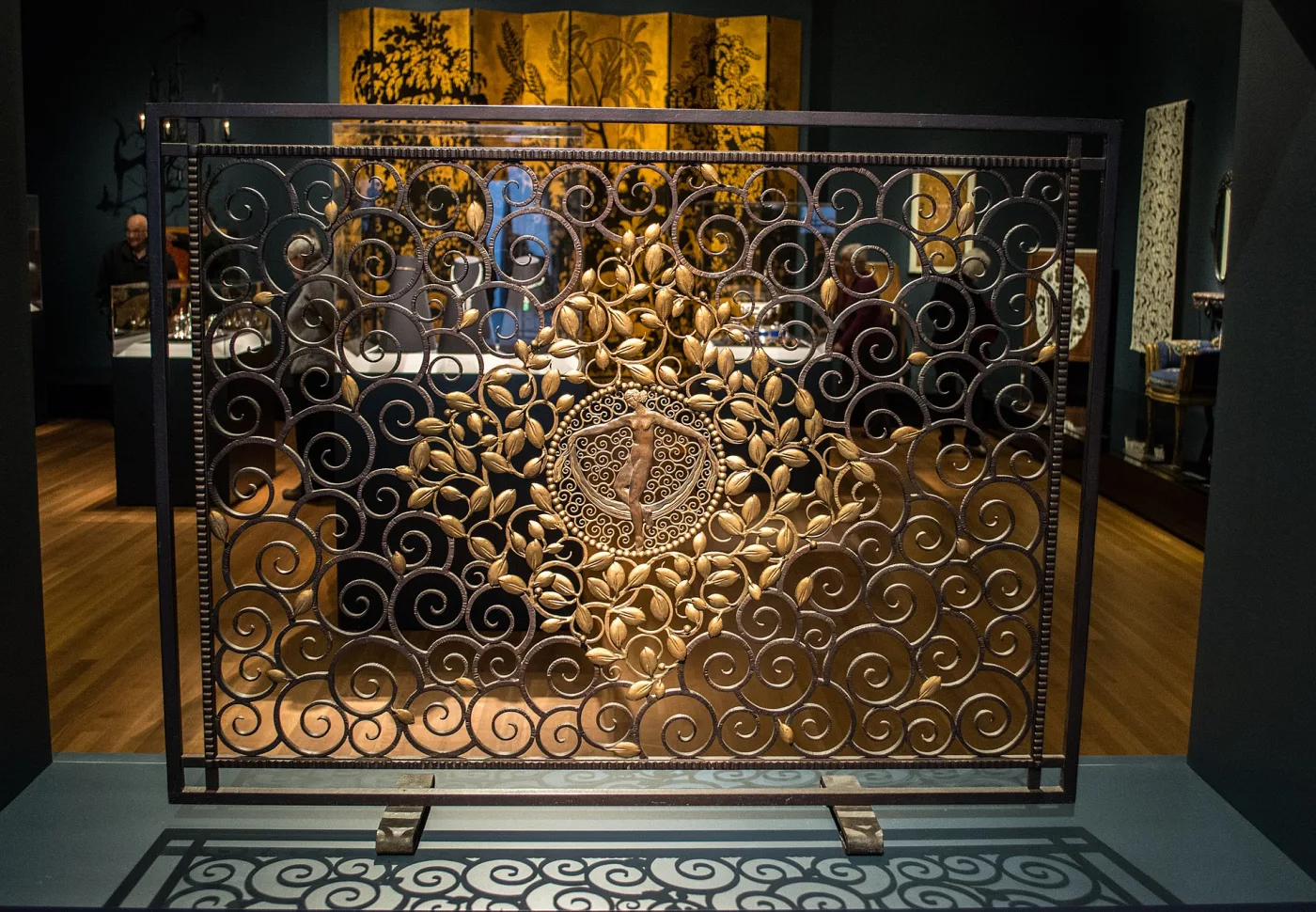
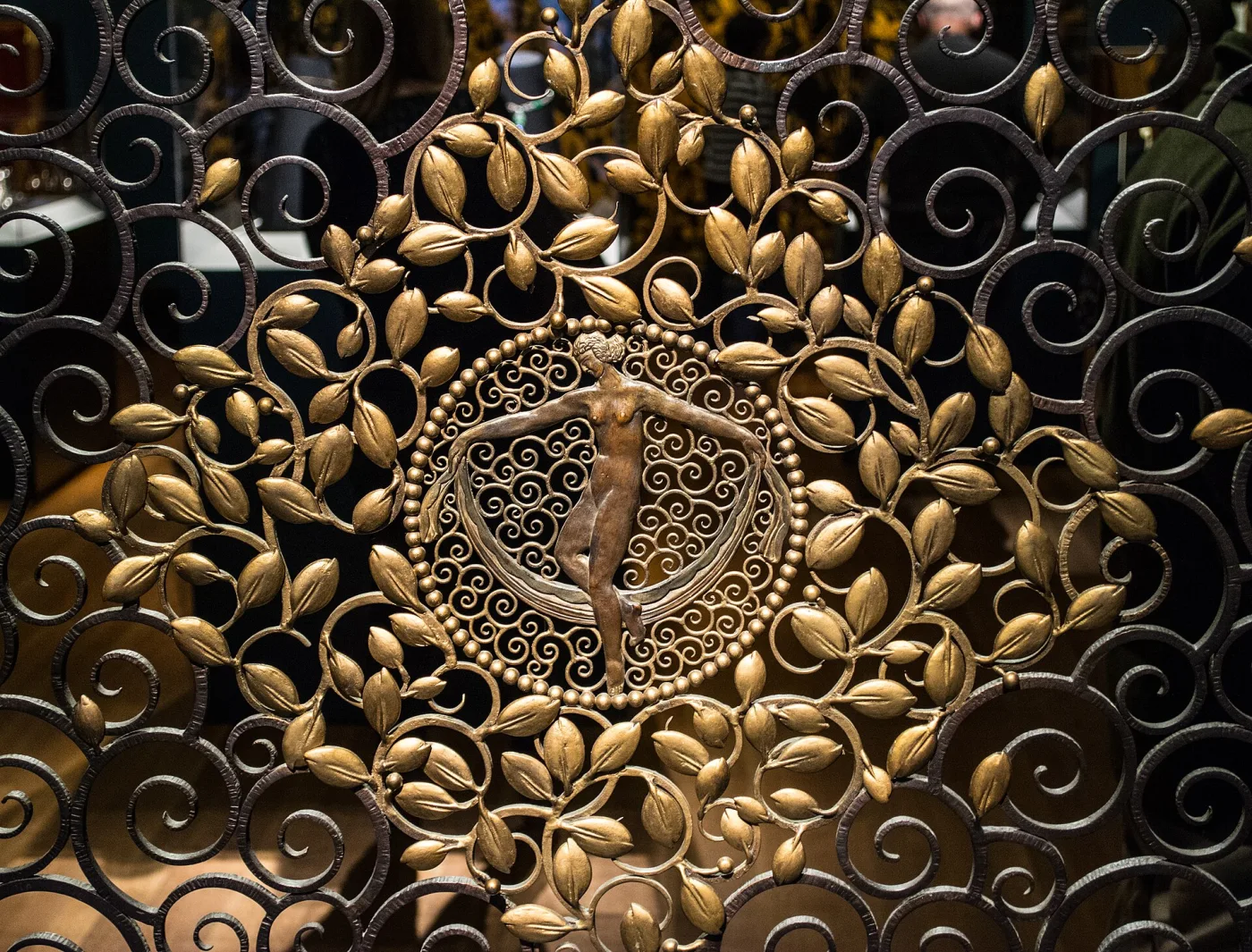
Chrome became the quintessential Art Deco metal, its bright modern finish epitomizing the machine age aesthetic. Chrome-plated objects ranging from cocktail shakers and ice buckets to lighting fixtures and furniture hardware brought Art Deco style to middle-class consumers. Quality chrome plating from the period shows characteristic aging including some wear to high points but should not exhibit the heavy pitting or complete loss of plating that indicates poor original quality or harsh use.
Silver and Silverplate
Art Deco transformed silver design, introducing geometric forms and streamlined profiles quite different from ornate Victorian silver. Jean Puiforcat stands as the greatest Art Deco silversmith, creating sleek geometric forms that elevated functional objects to sculpture. Puiforcat pieces combine perfect proportions with exceptional craftsmanship and sometimes incorporate exotic materials including lapis lazuli, jade, or ivory as decorative accents.
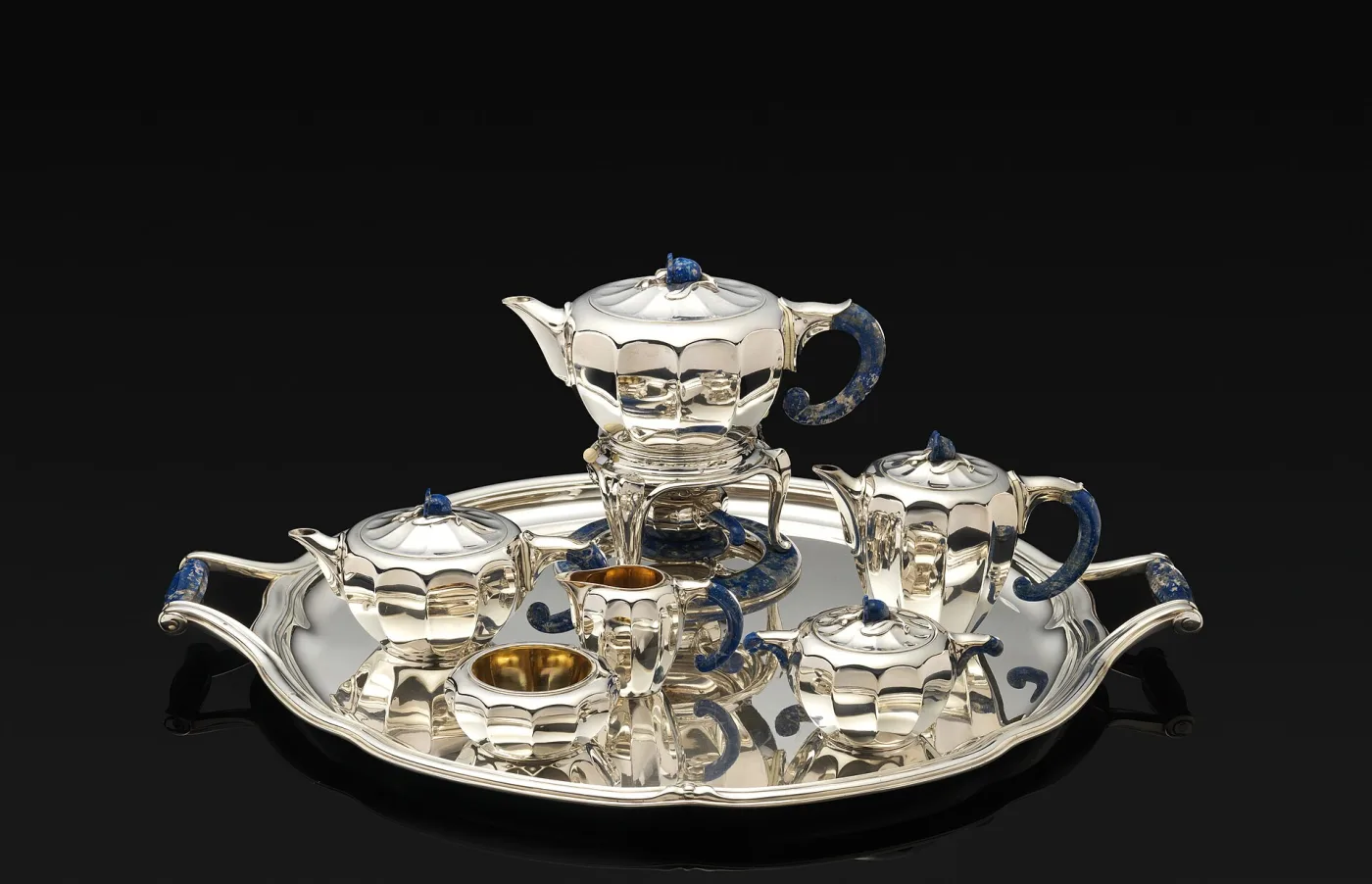
Other important silver manufacturers including Christofle in France and Gorham, Reed & Barton, and Tiffany & Co. in America produced Art Deco silver and silverplate. Examine hallmarks carefully to identify makers, determine silver content, and date pieces. British hallmarks provide precise dating through date letters, while American silver marks indicate manufacturer and sterling standard. Quality of construction, weight appropriate to size, and originality of form affect values significantly.
Industrial Design Objects
The Art Deco period saw the emergence of industrial design as a profession, with designers creating mass-produced objects combining modern materials, streamlined forms, and geometric decoration. Chrome and Bakelite combined in cocktail shakers, coffee services, and tableware. Aluminum, newly accessible through improved production methods, appeared in everything from furniture to decorative objects.
Notable industrial designers including Norman Bel Geddes, Walter Dorwin Teague, and Raymond Loewy created iconic Art Deco products. While many were mass-produced, original examples have become collectible, particularly items in excellent condition retaining original finishes. Look for maker's marks, model numbers, or other identifying features. Original packaging and promotional materials significantly enhance value for industrial design objects.
Authentication and Quality Assessment
Authenticating Art Deco metalwork requires examining construction techniques, materials, signatures, and stylistic consistency with known works. Period casting shows characteristics different from modern methods, including specific alloy compositions and finishing techniques. Patinas should appear natural rather than artificially applied. Weight often distinguishes solid bronze from spelter or resin reproductions.
Signatures require careful verification against documented examples. Forgers add signatures to unsigned bronze or create outright fakes of valuable sculptures. Comparing proportions, details, and casting quality to authenticated examples helps identify reproductions. Consulting specialized auction records and reference books provides essential guidance. For expensive pieces, professional authentication through recognized experts justifies the cost.

Art Deco Lighting Fixtures
Art Deco lighting transformed both the functional and aesthetic aspects of illumination, creating fixtures that ranged from theatrical chandeliers to sleek modernist table lamps. The period's embrace of new materials and manufacturing techniques combined with geometric design principles to produce some of the most distinctive lighting in decorative arts history.
Art Deco Chandeliers
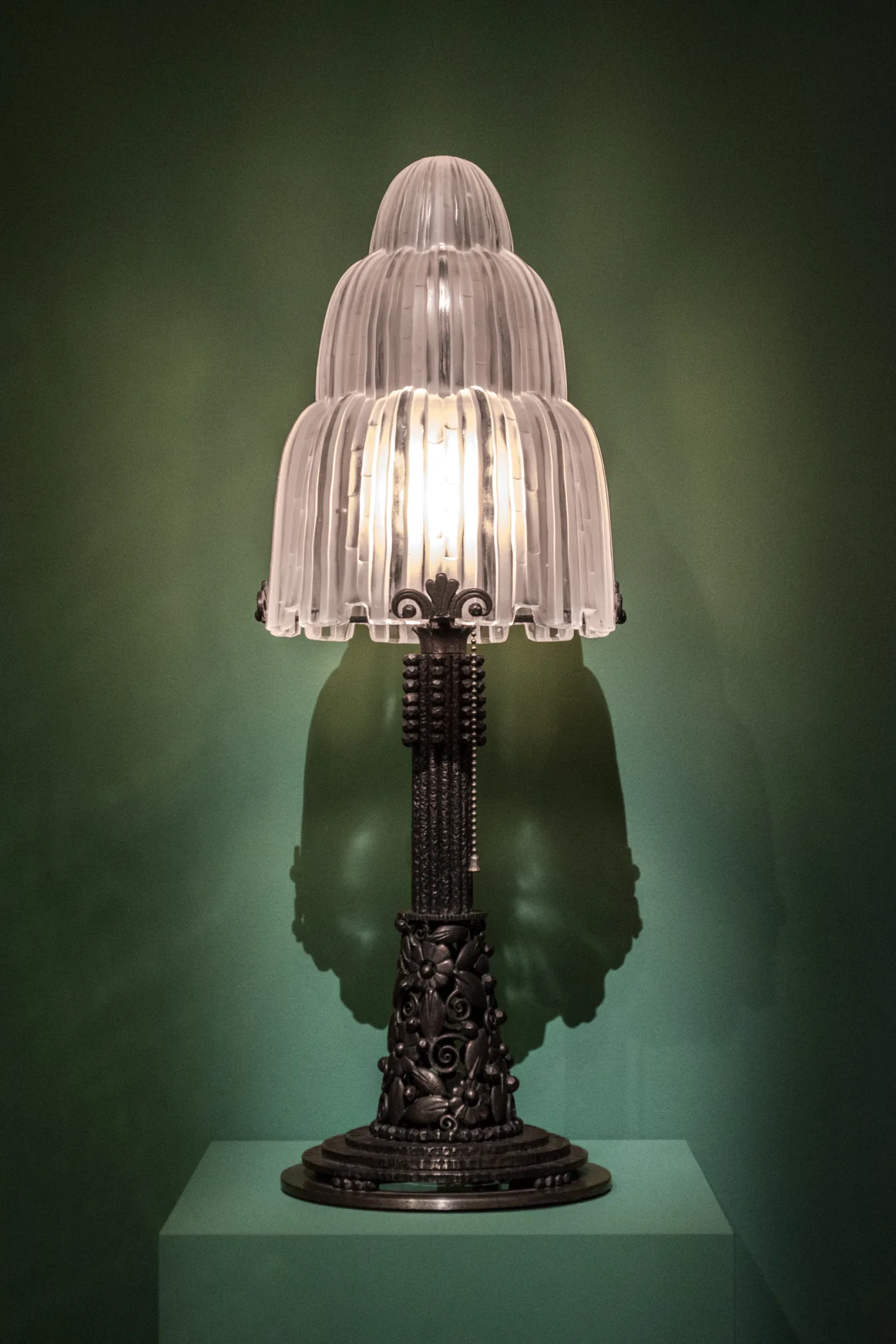
Art Deco chandeliers exhibit dramatic geometric forms quite different from traditional crystal chandeliers. French manufacturers including Degue, Muller Frères, and Petitot created elaborate fixtures featuring molded glass shades in geometric or stylized forms suspended from chromed or bronze fittings. Skyscraper-form chandeliers with stepped tiers epitomize American Art Deco style, while French examples often feature more curvilinear elements within geometric frameworks.
Glass shades for Art Deco chandeliers utilized molded glass techniques similar to Lalique, creating geometric patterns, stylized flowers, or abstract compositions that diffused light while providing decorative interest. Colors range from frosted clear glass to amber, pink, and blue. Original fixtures retain all matching glass elements, as finding replacement shades can prove difficult. Examine fittings for appropriate materials, construction methods, and wear patterns consistent with age.
Table and Floor Lamps
Art Deco table lamps showcase extraordinary design diversity from figural bronzes to geometric chrome and Bakelite constructions. Figural lamps featuring female dancers, exotic subjects, or stylized animals often combine bronze or metal figures with glass shades. Look for quality casting, appropriate signatures, and original shades rather than replacements. The combination of figure and shade should appear balanced and intentional.
Modernist table lamps in chrome, Bakelite, and glass emphasize geometric forms and industrial materials. Stepped forms, circular bases, and angular shades characterize this style. Original electrical components should appear period-appropriate, though rewiring for safety is standard practice. Original cloth cords, Bakelite sockets, and metal fittings indicate originality, though updated wiring doesn't necessarily diminish value if done sympathetically.
Floor lamps in Art Deco style range from torchères with glass shades to angular modernist designs in chrome and enamel. French manufacturer Petitot created distinctive floor lamps with elaborate wrought iron bases and molded glass shades. American manufacturers including Frankart produced floor lamps featuring figural elements in metal. Stability, appropriate scale, and original finishes contribute to both aesthetics and value.
Wall Sconces
Art Deco wall sconces transformed wall lighting with geometric forms, exotic materials, and innovative designs. Molded glass shades in geometric or stylized forms mounted on chrome, bronze, or brass fittings appear in countless variations. Theatrical sconces with fan shapes, sunburst patterns, or stepped forms brought Art Deco drama to both residential and commercial interiors.
Examine sconces for original components including backplates, arms, and shades. Reproductions of popular Art Deco sconce designs exist, so verify construction methods, materials, and wear patterns. Original finishes including chrome plating, bronze patinas, or painted surfaces should show age-appropriate wear. Modern electrical components are acceptable and often necessary for safety, but the overall form and aesthetic should remain original.
Specialty and Novelty Lighting
Art Deco designers created innovative specialty lighting including neon signs, indirect lighting fixtures, and novelty lamps. Neon became commercially viable during the Art Deco period, and geometric neon signs epitomize the era. Original neon signs have become highly collectible architectural salvage, though working examples require careful electrical assessment.
Indirect lighting concealing light sources behind molded glass or metal diffusers created modern effects impossible with traditional fixtures. Chrome and glass panels, stepped metal housing, and architectural integration characterized indirect lighting. Nightlights, boudoir lamps, and specialty fixtures in figural or novelty forms provided decorative lighting for specific purposes. Condition, completeness, and originality particularly affect values for specialty lighting.
Assessing Value and Authenticity
Lighting fixtures present specific authentication challenges. Many components can be replaced, mixed, or modified over decades of use. Examine each element critically. Glass shades should show appropriate molding techniques, color, and wear for their purported age and maker. Metal fittings should exhibit period-appropriate construction, finishes, and marks. Electrical components will likely show updating, which is acceptable and often necessary.
Maker identification significantly affects value. Signed glass shades from makers like Degue, Muller, or Sabino command premium prices. Bronze figural lamps should bear sculptor signatures. American manufacturers often marked fixtures with company names or model numbers. Matching fixtures to documented examples in reference books or auction records helps verify authenticity and establish appropriate values.
Art Deco Decorative Objects
The breadth of Art Deco decorative objects encompasses virtually every category of household and personal items, from clocks and mirrors to compacts and cigarette cases. These objects brought Art Deco style into daily life across all economic levels, with examples ranging from precious metal and gemstone creations to mass-produced chrome and Bakelite items.
Art Deco Clocks
Art Deco clocks exhibit distinctive geometric forms quite different from earlier clock designs. Materials range from exotic woods and marble to chrome, glass, and Bakelite. French makers including Cartier created precious clocks combining rock crystal, enamel, and precious metals. ATO and JAZ produced affordable electric and mechanical clocks in geometric forms with colorful Bakelite cases bringing Art Deco style to mass markets.
Mantel clocks in geometric forms, skyscraper shapes, or featuring figural elements typify Art Deco design. Examine movements to verify period manufacture, though replacement of worn movements is sometimes necessary and acceptable if done properly. Original dials should show appropriate numerals, markers, and manufacturer marks. Glass or Bakelite should be original without cracks or replacements. Working condition affects value, though rare or exceptional clocks retain worth even when not functioning.
Art Deco Mirrors
Art Deco mirrors showcase the movement's decorative ambitions through elaborate frames in diverse materials and geometric forms. Sunburst mirrors with radiating elements became iconic Art Deco objects. Other popular forms include geometric shapes, stepped frames, and mirrors incorporating chrome, etched glass, or exotic materials. Venetian glass manufacturers created mirrors with elaborate etched decoration in Art Deco patterns.
Original mirror glass should show appropriate aging including minor silvering loss at edges. Complete resilvering diminishes value compared to original glass showing natural age. Frames should exhibit appropriate construction for claimed materials and period. Wooden frames may combine exotic veneers in geometric patterns. Metal frames in chrome or brass should show period-appropriate construction and finishing.
Compacts, Vanity Items, and Accessories
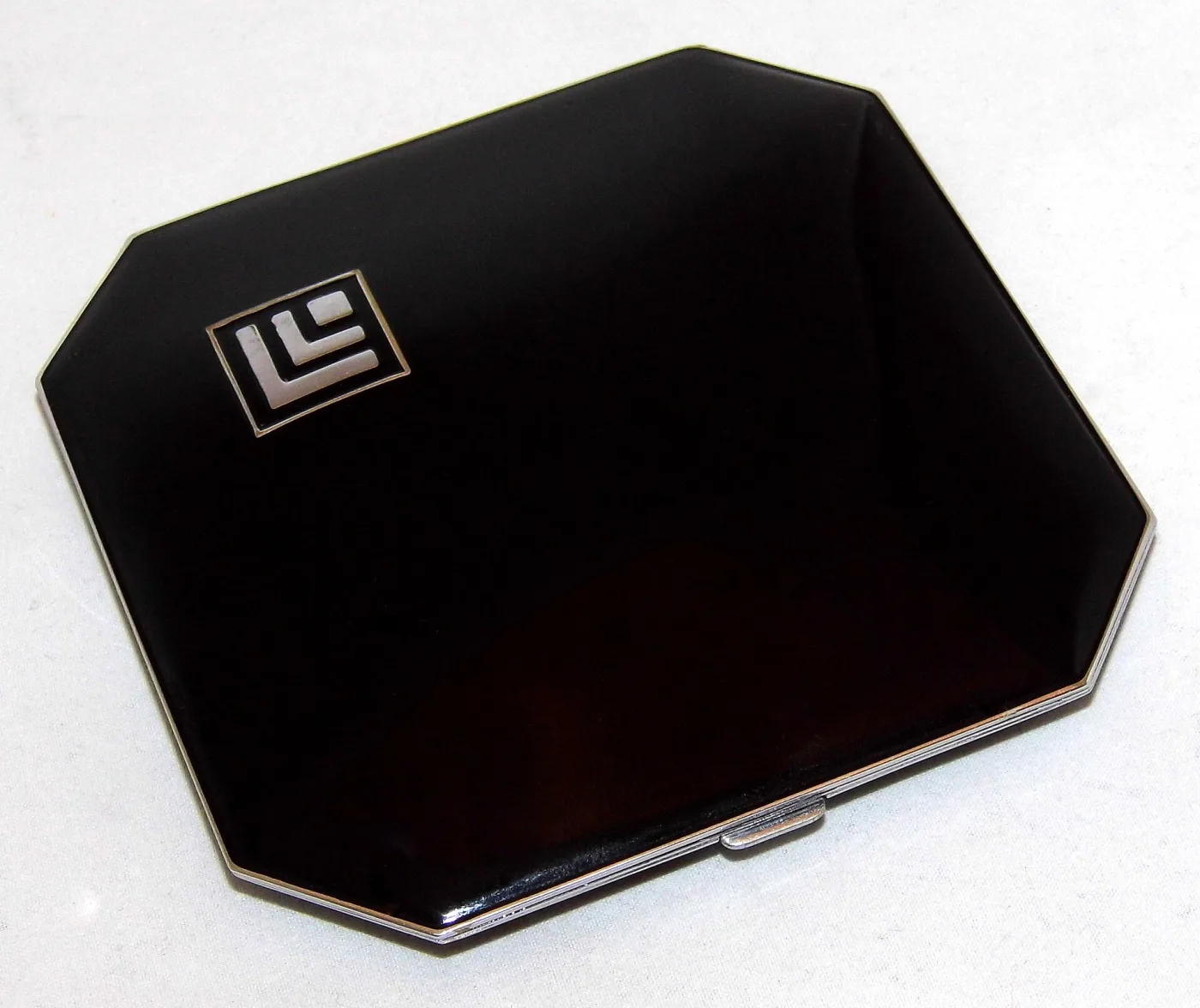
Art Deco compacts, cigarette cases, and vanity accessories represent highly collectible small objects combining functional design with decorative artistry. Prestigious makers including Cartier, Van Cleef & Arpels, and Tiffany created precious examples in gold, platinum, enamel, and gemstones. Mass-market manufacturers produced chrome, enamel, and base metal examples bringing Art Deco glamour to middle-class consumers.
Engine-turning, geometric enameling, and applied decoration characterized Art Deco compacts. Examine mechanisms for smooth operation and original condition. Mirrors should be original. Powder puffs are rarely original but period replacements are acceptable. Cigarette cases in chrome, enamel, or precious metals feature geometric decoration, angular forms, and occasionally figural or narrative decoration reflecting period interests including travel, sports, and modernism.
Bookends and Desk Accessories
Art Deco bookends transformed functional objects into sculptural elements, often featuring figural designs, geometric abstractions, or stylized natural motifs. Bronze, marble, onyx, and chrome appeared individually or in combination. Subjects included classical figures rendered in Art Deco style, animals particularly greyhounds and gazelles, and abstract geometric forms.
Desk accessories including pen trays, inkwells, letter openers, and desk sets exhibited Art Deco design across all price points. Sets in matching materials and patterns have particular appeal. Examine for completeness of sets, original surfaces, and appropriate wear. Maker's marks on quality pieces add value and authentication support. Chrome should retain plating; bronze should show original patina; onyx or marble should lack chips or cracks.
Barware and Entertaining Accessories
Prohibition and its repeal during the Art Deco period created strong demand for cocktail equipment and barware, resulting in exceptional designs. Cocktail shakers in geometric forms, chrome and Bakelite combinations, and figural designs epitomize Art Deco sophistication. Look for original condition, smooth mechanisms, and appropriate materials. Prestigious makers including Asprey, Cartier, and Hermès created luxury barware while industrial manufacturers produced affordable chrome examples.
Ice buckets, trays, and serving accessories in chrome, glass, and Bakelite brought modern style to entertaining. Examine chrome for original plating, glass for chips or cracks, and Bakelite for damage or alterations. Complete sets with original components command premium prices. Condition significantly affects value for functional items expected to show use but not abuse.
Major Art Deco Designers and Makers
Understanding important Art Deco designers and manufacturers provides essential context for identification and valuation. Certain names command significant premiums while others, though producing quality work, remain more affordable. Learning to recognize the characteristics of major makers helps authenticate pieces and assess their significance.
French Designers and Makers
Jacques-Émile Ruhlmann stands as the most celebrated Art Deco furniture designer, creating exceptional pieces characterized by refined proportions, exotic materials including Macassar ebony and ivory, and impeccable craftsmanship. Ruhlmann furniture commands premium prices, with major pieces reaching six figures at auction. His work represents the pinnacle of French Art Deco luxury.
René Lalique revolutionized glass design through molded glass techniques creating everything from car mascots to architectural elements. Lalique's opalescent glass, precise molding, and characteristic designs make his work highly collectible. Values range from hundreds to tens of thousands depending on rarity, color, and condition.
Other essential French names include Edgar Brandt for wrought iron, Jean Puiforcat for silver, Cartier and Van Cleef & Arpels for jewelry, Émile-Jacques Ruhlmann for furniture, and designers including Süe et Mare, Paul Poiret, and Jean Dunand for diverse decorative arts. Each developed distinctive styles recognizable through careful study.
American Designers and Manufacturers
Donald Deskey emerged as a leading American Art Deco designer, creating furniture combining industrial materials including aluminum, Bakelite, and cork with modern geometric forms. His commission to design Radio City Music Hall represents the apex of American Art Deco interior design. Deskey's furniture and decorative objects have gained increasing recognition and value.
Paul Frankl created distinctive skyscraper furniture, particularly bookcases with stepped tops echoing New York architecture. Other important American names include Kem Weber, Gilbert Rohde, Walter Dorwin Teague, Norman Bel Geddes, and industrial designers who brought Art Deco principles to mass-produced objects. Companies including Frankart, Chase Brass & Copper, and Revere produced accessible Art Deco designs.
British Designers and Makers
Clarice Cliff dominates British Art Deco ceramics with her Bizarre and Fantasque lines featuring bold hand-painted decoration. Her work ranges from affordable to quite valuable depending on pattern rarity and form. Susie Cooper created more refined ceramics with elegant shapes and sophisticated decoration. Other important British ceramicists include Charlotte Rhead and Keith Murray.
British furniture and decorative arts designers including Betty Joel, Gordon Russell, and Ambrose Heal created distinctive work combining modernist principles with British design traditions. Silver manufacturers including Mappin & Webb and jewelry firms including Asprey produced Art Deco designs for British markets.
Other Important International Designers
Scandinavian designers created distinctive Art Deco work emphasizing clean lines and functional forms. Swedish designers including Simon Gate and Edward Hald working for Orrefors created exceptional engraved crystal. Finnish architect Alvar Aalto began his career during the Art Deco period, creating bent plywood furniture that bridged Art Deco and later modernism.
Austrian and German designers including Josef Hoffmann, Dagobert Peche, and the Bauhaus-associated designers created work related to but distinct from French-originated Art Deco. Understanding these parallel modernist movements helps contextualize Art Deco within broader design history. Eastern European designers and manufacturers also produced Art Deco work, particularly in glass and ceramics.
Maker Research and Documentation
Building knowledge about specific makers requires studying auction catalogs, museum collections, and specialized references. Major auction houses including Christie's and Sotheby's publish detailed catalogs documenting Art Deco sales with photographs, descriptions, and realized prices providing essential market information. Museum exhibitions and permanent collections offer opportunities to examine authenticated examples.
Specialized reference books covering individual makers or categories provide detailed information about marks, dating, and design development. Building a reference library appropriate to your collecting interests supports informed buying decisions. Online databases and collector forums provide additional resources, though information quality varies. Consulting experts and appraisers for significant purchases provides professional authentication and valuation.
Materials and Manufacturing Techniques
Understanding the materials and techniques characteristic of Art Deco production helps authenticate pieces and appreciate their craftsmanship. The period embraced both traditional luxury materials and modern industrial products, creating distinctive combinations that define Art Deco aesthetics.
Exotic Woods and Veneering
Art Deco furniture makers utilized exotic woods including Macassar ebony with its dramatic striped figure, amboyna with its burl figure, palisander or rosewood, and blonde woods including sycamore and birch. These woods appeared as solid timber but more commonly as veneers over secondary wood cores allowing economical use of expensive materials while achieving dramatic visual effects.
Veneering techniques during the Art Deco period reached high levels of sophistication. Book-matching created mirror-image patterns by slicing consecutive veneer sheets and arranging them symmetrically. Quadrant matching arranged four veneers creating four-way symmetry. Veneers ranged from thin traditional knife-cut examples requiring careful application to slightly thicker rotary-cut veneers suitable for curved surfaces. Examining veneer edges and any damage areas reveals construction methods.
Lacquer and Exotic Finishes
Asian lacquer techniques applied to Art Deco furniture created glossy colored surfaces impossible with traditional Western finishes. Jean Dunand mastered lacquer techniques creating furniture and decorative objects in black, red, and occasionally other colors. Authentic lacquer shows depth, subtle surface variations, and appropriate aging including fine crazing. Modern synthetic finishes attempting to replicate lacquer appearance lack the depth and character of genuine lacquer.
Shagreen, the skin of shark or ray, provided exotic textured surfaces for boxes, furniture panels, and decorative objects. Period shagreen typically appears gray-green, though dying created other colors. The characteristic grain pattern of small bumps should appear consistent and natural. Ivory, though now restricted, appeared extensively in Art Deco work as inlay, carved elements, and structural components. Authenticating ivory requires expertise, as celluloid and other substitutes appeared even during the period.
Chrome Plating and Metal Finishes
Chrome plating became commercially viable during the early 20th century and achieved widespread use during the Art Deco period. Decorative chromium plating provided brilliant, corrosion-resistant surfaces perfect for the modern aesthetic. Period chrome shows characteristic wear patterns including minor loss at high points and edges but should not exhibit heavy pitting unless from harsh use or poor original quality.
Other metal finishes included nickel plating, silver plating, and various patinas on bronze. Engine-turning created geometric patterns through lathe work. Enameling in geometric patterns decorated metal surfaces. Understanding period metal finishing techniques helps distinguish original surfaces from later replating or restoration. Original chrome on brass shows different characteristics than chrome on steel or other base metals.
Early Plastics
Bakelite and other early plastics enabled new forms and colors impossible in traditional materials. Bakelite, a phenolic resin invented in 1907, became widely used during the 1920s-1930s for everything from jewelry to radio cases. Period Bakelite typically appears in solid colors including butterscotch, green, red, and black, though marbled and laminated effects also appeared.
Authenticating Bakelite requires testing, as later plastics can appear similar. The hot water test involves running hot water over the piece then smelling for a characteristic phenolic odor. The Simichrome polish test uses specialized polish that turns yellow-orange when rubbing genuine Bakelite. Examining construction details helps, as period Bakelite shows appropriate molding or carving techniques, appropriate weight, and aging characteristics including patina development.
Glass Techniques
Molded glass production revolutionized glass design during the Art Deco period. Press-molding techniques enabled complex forms in limited production runs while maintaining quality. Understanding molding techniques helps authenticate pieces and assess quality. Crisp molding with sharp details indicates quality work and good mold condition. Blurred details suggest worn molds or poor quality control.
Other glass techniques included acid-etching creating frosted decoration, wheel-engraving for detailed designs, cutting creating faceted surfaces, and various surface treatments. Opalescent effects characteristic of Lalique and similar glass resulted from specific glass formulations creating light-diffusing qualities. Understanding these techniques aids authentication and quality assessment.
Regional Variations in Art Deco
While Art Deco emerged as an international style, regional interpretations developed reflecting local tastes, manufacturing capabilities, and cultural influences. Understanding these regional characteristics helps attribute pieces and appreciate the movement's global reach.
French Art Deco
French Art Deco originated the movement and maintained the highest standards of luxury and craftsmanship. Paris served as the epicenter, particularly following the 1925 Exposition. French work emphasized exotic materials, exceptional craftsmanship, and often individual commissions for wealthy clients. The division between luxury handcrafted pieces and mass-produced items remained clearer in France than elsewhere.
French Art Deco showed strong influences from fine art movements including Cubism and from African and Asian arts popularized through colonial expositions. Color palettes tended toward sophisticated combinations. Forms balanced geometric discipline with subtle curves. The French tradition of ébénisterie influenced furniture construction even as forms became modern. This combination of traditional excellence and modern aesthetics defines French Art Deco.
American Art Deco
American Art Deco developed distinctive characteristics reflecting American culture and manufacturing. Skyscraper forms inspired by New York architecture appeared across product categories. Streamlining achieved particular prominence, influenced by industrial design and transportation. American designers embraced mass production, creating designs specifically for mechanical manufacture rather than handcraft.
Hollywood glamour influenced American Art Deco, with theatrical effects and overt luxury appealing to American tastes. Chrome, mirror, and blonde woods created lighter aesthetics than dark French examples. Regional variations appeared, with Florida and California developing tropical and Spanish-influenced Art Deco. Depression-era design created affordable Art Deco products making the style accessible to middle-class consumers.
British Art Deco
British Art Deco showed characteristic restraint compared to French exuberance or American boldness. Designers often incorporated traditional British design elements within modernist frameworks. Ceramics particularly flourished, with numerous potteries producing Art Deco designs. British ocean liners including Queen Mary showcased Art Deco interiors adapted to British sensibilities.
Odeon cinema architecture represented distinctively British Art Deco, combining geometric forms with Egyptian and Aztec-inspired details. Furniture design maintained traditional construction methods while adopting modern forms. Silver and metalwork combined Georgian proportions with Art Deco decoration. British Art Deco often appears more conservative than Continental examples but demonstrates sophisticated design sense.
Other European Variations
Scandinavian countries developed distinctive modernism related to but separate from mainstream Art Deco. Swedish Grace combined Art Deco geometry with traditional Swedish design creating elegant, restrained forms. Finnish designers including Alvar Aalto created work bridging Art Deco and later modernism. These designs emphasized functionality, natural materials, and sophisticated simplicity.
Central European designers, particularly in Vienna and Prague, created work influenced by Wiener Werkstätte traditions and emerging modernist movements. Italian designers incorporated futurist influences creating dynamic, machine-inspired forms. Eastern European countries produced Art Deco glass, ceramics, and decorative objects often showing distinctive regional character within international Art Deco vocabulary.
International Interpretations
Art Deco spread globally with interpretations reflecting local cultures. Latin American Art Deco, particularly in Argentina, Brazil, and Mexico, incorporated local decorative traditions. Asian interpretations appeared in Japan, China, and India combining Art Deco geometry with traditional design elements — most famously in Noritake lustreware from Nagoya, which paired iridescent metallic-salt grounds with bold geometric borders and stylised figural scenes for the American export market. Colonial contexts created hybrid forms merging European Art Deco with indigenous aesthetics.
Understanding regional variations helps identify unmarked pieces by recognizing characteristic materials, forms, and decorative approaches. Regional variations also affect values, with French luxury pieces generally commanding highest prices while regional variations may appeal to specialized collectors. This geographic diversity demonstrates Art Deco's significance as truly international design movement.
Dating Art Deco Pieces
Accurately dating Art Deco objects requires understanding stylistic evolution, maker histories, and manufacturing techniques. While the Art Deco period spans roughly 1910-1940, significant stylistic shifts occurred within this timeframe affecting dating precision.
Stylistic Dating
Early Art Deco from approximately 1910-1925 featured richer ornamentation, more elaborate forms, and stronger connections to earlier decorative arts traditions. Pieces from this period often incorporate expensive materials, complex construction, and individually crafted elements. Motifs drawn from Ballets Russes, Egyptian discoveries, and Cubism appeared frequently. Colors tended toward rich, saturated hues.
Classic Art Deco from 1925-1935 represents the movement at its most characteristic. The 1925 Paris Exposition codified Art Deco aesthetics, creating international style awareness. Pieces from this period show fully developed geometric vocabulary, balanced proportions, and confidence in modern forms. Materials range from exotic luxury to industrial products. This period produced the iconic designs most associated with Art Deco.
Late Art Deco or Streamline Moderne from roughly 1930-1940 emphasized horizontal lines, curves suggesting movement, and simplified forms influenced by industrial design. Ornamentation became more restrained. Chrome, aluminum, and plastics appeared frequently. This late phase particularly flourished in America where streamlining influenced everything from appliances to architecture. The transition to post-war modernism began during this period.
Maker's Marks and Date Codes
Many manufacturers used date codes, marks, or labels that changed over time enabling precise dating. British ceramics often incorporate date codes in printed marks. French silver includes year marks within hallmarking systems. Glass manufacturers including Lalique changed signature styles over time. Learning these marking systems for makers you collect enables accurate dating.
Patent dates, model numbers, and manufacturing codes provide dating information. American design patents include dates or serial numbers. Some manufacturers stamped production dates directly on products. Company histories help date pieces, as mergers, name changes, and business closures create terminus points. Reference books documenting specific manufacturers often include marking evolution timelines.
Technical and Material Evidence
Manufacturing techniques evolved during the Art Deco period enabling dating through technical examination. Early chrome plating differs from later applications. Plastic formulations changed. Furniture construction methods evolved. Examining these technical details helps narrow dating when stylistic evidence proves ambiguous.
Materials availability also aids dating. Certain exotic woods became scarce during specific periods. Import restrictions affected material access. Wartime shortages influenced design and material choices from the late 1930s. Understanding these historical constraints helps date pieces and assess authenticity claims. Pieces claiming 1925 dates but using materials unavailable until 1935 warrant skepticism.
Provenance and Documentation
Original sales receipts, exhibition records, publications, or other documentation provide definitive dating when available. Pieces exhibited at the 1925 Paris Exposition or other documented events carry known dates. Designer records, manufacturer archives, or estate inventories sometimes survive providing dating information. Provenance connecting pieces to original owners with known acquisition dates helps establish authenticity and date ranges.
Period photographs showing pieces in original contexts provide both dating and authentication evidence. Publications including design magazines, manufacturer catalogs, and exhibition catalogs document when specific designs appeared. Building documentation for pieces in your collection through research and expert consultation increases both knowledge and value while supporting future authentication.
Condition Assessment
Condition significantly affects Art Deco values, though the importance varies by category, rarity, and price level. Understanding how to evaluate condition and recognize various types of damage or restoration helps make informed purchasing decisions and properly care for collections.
Furniture Condition Issues
Art Deco furniture condition assessment focuses on structural integrity, surface condition, and originality. Examine joints for stability and evidence of repair. Check drawer construction and operation. Veneers should adhere properly without lifting, bubbling, or losses. Original exotic wood veneers in good condition significantly affect value, while missing or replaced veneers substantially reduce worth.
Surface finishes including lacquer, French polish, or other treatments should appear original showing appropriate wear rather than heavy refinishing or modern synthetic coatings. Some surface wear is acceptable and expected, but excessive damage, staining, or refinishing reduces value. Hardware should be original, as replacement pulls, hinges, or other fittings diminish authenticity and value. Missing hardware can sometimes be sourced, but original examples command premium prices.
Upholstered furniture rarely retains original fabric, and recovering is generally acceptable provided frames remain original and work uses appropriate materials. Structural issues including broken frames, missing elements, or amateur repairs affect both safety and value. Professional restoration of important pieces can preserve value, but over-restoration removing original character proves counterproductive.
Ceramics and Glass Condition
Ceramics and glass require careful condition examination as damage significantly affects value. Check for cracks, chips, restoration, or repairs under strong light and using tactile examination. Hairline cracks may be difficult to see but affect both structural integrity and value. Check rims, handles, spouts, and other high-points where damage commonly occurs.
Crazing in ceramic glazes may or may not affect value depending on the type of ware and whether crazing is characteristic. English ceramics often show crazing that may be acceptable, while French porcelain should not craze. Glaze losses, staining, or color degradation reduce value. For glass, cloudiness, chips, or cracks substantially diminish worth. Lalique glass values particularly depend on condition, with mint examples commanding multiples of damaged pieces.
Professional restoration can make damage difficult to detect visually. Ultraviolet light reveals many repairs showing fluorescence different from surrounding material. Touching suspected repair areas may reveal different textures or temperatures. When purchasing expensive pieces, professional condition reports from recognized conservators provide essential documentation and peace of mind.
Metalwork and Jewelry Condition
Metal objects including bronze sculptures, silver, and decorative items require condition assessment appropriate to material. Bronze should retain original patina rather than showing cleaning or artificial patination. Some wear to high points is acceptable, but heavy wear, corrosion, or amateur repair reduces value. Check for cracks, particularly in cast bronze, and examine soldered or welded joints for integrity.
Silver and silverplate should show appropriate wear but not excessive damage or plate loss. Light scratching is normal and acceptable, but deep scratches, dents, or heavy tarnish proves undesirable. Replating silver diminishes value compared to original surfaces. Chrome plating should remain mostly intact, though minor wear to high points is acceptable on utilitarian objects. Heavy loss of chrome plating substantially reduces value.
Jewelry condition critically affects value. Examine stone settings for security and originality. Worn prongs require attention. Check for replaced stones, particularly in colored stone jewelry where calibrated matching affects value. Metal should not show excessive wear, though some patina is acceptable. Mechanical elements including clasps should function properly. Original boxes and papers significantly enhance value when present.
Restoration Considerations
Professional restoration can preserve deteriorating pieces and maintain value when done properly. However, over-restoration removing original character and patina often proves counterproductive. Consult recognized conservators specializing in appropriate materials and period before undertaking restoration of valuable pieces. Documentation of restoration including photographs and descriptions should be maintained as part of provenance.
Some restoration proves acceptable and even expected. Reupholstering furniture, rewiring lamps for safety, or cleaning appropriate to material maintains usability without diminishing value provided work follows conservation standards. Conversely, refinishing furniture, replating metalwork, or repairing ceramics with obvious modern materials diminishes both authenticity and value. Understanding when restoration proves beneficial versus detrimental requires expertise and careful consideration.
Identifying Reproductions and Fakes
The popularity and value of Art Deco collectibles has spawned extensive reproduction and outright faking across all categories. Learning to distinguish authentic period pieces from later copies protects collectors from expensive mistakes and develops essential connoisseurship skills.
Common Reproduction Categories
Certain Art Deco categories face particularly heavy reproduction including bronze sculptures, especially Chiparus and Preiss figures, Lalique glass, particularly popular vase models and car mascots, Clarice Cliff ceramics with characteristic patterns reproduced, designer furniture particularly Ruhlmann and American classics, and Art Deco jewelry with geometric diamond pieces reproduced. Understanding that reproductions exist in these categories encourages extra scrutiny when examining purported examples.
Reproductions range from honest recreations marked as such to deceptive fakes with forged signatures and artificial aging. Some reproductions were produced decades ago and now show age, complicating authentication. Learning characteristics that distinguish period pieces from reproductions across different categories develops essential expertise for serious collecting.
Authentication Techniques for Bronze Sculptures
Bronze sculpture reproductions represent a major challenge as casting techniques can create detailed copies. However, several characteristics help distinguish period bronzes from reproductions. Weight provides initial screening, as period bronzes exhibit appropriate weight for size while resin reproductions feel light. Examine casting quality under magnification, as period bronzes show fine details, specific casting textures, and appropriate finishing.
Patinas require careful examination. Period patinas develop naturally showing subtle color variations and appropriate wear patterns. Artificial patinas often appear uniform, may show chemical residues, and lack the depth of authentic patinas. Signatures require verification against documented examples, examining both location and execution. Fakers add signatures to unsigned bronzes or create complete fakes with forged marks.
Foundry marks provide authentication clues but can also be forged. Research specific foundries to understand their marking practices and dates of operation. Some sculptures were cast during the period by multiple foundries, while others indicate specific maker-foundry relationships. Consulting bronze sculpture references and expert appraisers helps authenticate valuable pieces.
Glass Authentication
Lalique glass faces extensive reproduction, with popular models recreated using various techniques. Authentic Lalique shows specific characteristics including precise molding with sharp details, appropriate weight for size, characteristic opalescence from period glass formulas, and correct signatures for date and model. Compare suspected pieces to documented examples in reference books noting proportions, details, and quality.
Modern reproductions often show slight size variations from period pieces as molds wear or copies are made from original pieces rather than original molds. Glass composition differs, with modern glass showing different optical properties. Signatures on reproductions may appear in wrong locations, fonts, or execution. Some reproductions honestly mark "Lalique" without "R" indicating post-1945 production, but fakers may alter these marks.
Other Art Deco glass also faces reproduction. Understanding period manufacturing techniques, appropriate aging characteristics, and specific maker details aids authentication. Consulting specialist dealers, auction house experts, or recognized authorities provides essential guidance when purchasing expensive glass.
Ceramics Authentication
Clarice Cliff ceramics face extensive reproduction including pieces with forged backstamps and pattern names. Authentic Cliff shows specific characteristics including hand-painted decoration with slight irregularities, appropriate glaze surfaces and colors, correct body color and weight, and proper backstamps for pattern and date. Compare decoration quality to documented examples, as reproductions typically show looser painting and incorrect colors.
Other reproduced Art Deco ceramics require similar scrutiny. Examine backstamps carefully under magnification comparing to documented marks. Check construction techniques, as period pieces show appropriate manufacturing methods for claimed makers and dates. Modern reproductions may show laser-printed marks, inappropriate glazes, or construction methods anachronistic to claimed dates.
Furniture Authentication
High-value Art Deco furniture attracts reproduction and faking including pieces with forged signatures, marriages of period elements with later additions, and complete fakes. Examine construction techniques carefully, as period furniture shows specific joinery, appropriate tool marks, and construction methods consistent with claimed dates and makers. Veneers should appear period-appropriate in thickness, adhesives, and application.
Signatures and marks require verification. Compare to documented examples noting exact location, execution, and any accompanying numbers or codes. Examine hardware for appropriate manufacture and aging. Check all surfaces including backs, undersides, and interiors for consistent age and finishing. Modern reproductions may show router marks, modern screws, or synthetic adhesives anachronistic to claimed dates.
General Authentication Principles
Developing authentication skills requires studying authentic examples in museums, galleries, and auction previews. Handle and examine pieces to understand how period objects feel, look, and age. Build reference libraries covering your collecting areas. Consult experts when purchasing expensive pieces, as authentication costs prove minor compared to buying mistakes. Maintain skepticism regarding unsigned pieces attributed to famous makers or deals that seem too good to be true.
Valuation and Market Trends
Art Deco values vary enormously depending on category, maker, rarity, condition, and market trends. Understanding current market dynamics and valuation factors helps collectors make informed decisions and build valuable collections.
Current Market Overview
The Art Deco market shows strong sustained interest with certain categories achieving record prices while others remain accessible. Top-tier pieces by recognized masters including Ruhlmann furniture, Lalique rare colors, and important designer jewelry regularly achieve six-figure prices at major auction houses. Mid-range pieces by recognized makers remain in strong demand at prices ranging from hundreds to tens of thousands depending on quality and rarity.
Market segmentation has increased, with sophisticated collectors focusing on specific categories, makers, or styles while general collectors seek iconic pieces representing Art Deco style. This creates price tiers where exceptional examples command multiples of similar but less perfect pieces. Condition, rarity, and provenance increasingly affect values as collectors become more knowledgeable and selective.
Value Factors
Multiple factors determine Art Deco values. Maker identification proves crucial, with documented pieces by recognized designers commanding significantly higher prices than anonymous productions. Clarice Cliff Bizarre pottery values range from hundreds for common patterns in good condition to five figures for rare patterns or forms in mint condition. Similarly, Lalique vases range from hundreds to tens of thousands depending on model, color, and condition.
Rarity substantially affects values. Limited production pieces, rare colors or variations, and unusual forms command premiums. Documentation including provenance, exhibition history, or publication increases values. Condition critically affects values across all categories, with mint examples commanding multiples of similar damaged pieces. Size often influences values, with larger impressive pieces typically worth more than smaller examples all else being equal.
Category-Specific Markets
Art Deco furniture markets segment by maker and type. French master furniture by Ruhlmann, Leleu, or other top ébénistes achieves exceptional prices. American designer furniture shows strong interest particularly for documented pieces. Commercial Art Deco furniture remains affordable with quality examples available at modest prices. Investment in furniture requires storage and care, affecting collecting decisions.
Jewelry markets show particular strength for platinum and diamond Art Deco pieces, especially by prestigious makers. Geometric designs in excellent condition achieve strong prices. Colored stone pieces particularly featuring calibrated gems command premiums. Costume jewelry markets have developed sophisticated collector bases with rare Bakelite and quality signed pieces achieving notable prices.
Glass markets focus heavily on Lalique with rare colors including red, electric blue, and amber commanding multiples of common clear or opalescent pieces. Other Art Deco glass shows varying values based on maker, quality, and rarity. Ceramics markets particularly value Clarice Cliff, with strong international interest supporting prices. Other ceramics including Susie Cooper and studio pottery show steady demand.
Market Trends and Predictions
Current trends show continued strong interest in top-quality Art Deco across all categories. Museum acquisitions and exhibitions maintain scholarly interest and public awareness. Interior design trends incorporating Art Deco elements support decorative markets. Investment interest in tangible assets has brought new buyers to Art Deco markets.
Certain categories show particular growth including American Art Deco design receiving increased recognition, studio ceramics and glass by individual artists, industrial design objects and mechanical items, and complete documented ensembles or suites. Markets for commercial or mass-produced Art Deco remain affordable, offering entry points for new collectors and opportunities to acquire quality pieces at reasonable prices.
Buying and Selling Venues
Major auction houses including Christie's, Sotheby's, and specialized houses offer the highest-value Art Deco pieces with expert cataloging, condition reports, and guaranteed authenticity. Prices include buyer's premiums but provide access to exceptional pieces. Specialist dealers offer expertise, authentication, and often guarantees while maintaining inventories across price ranges. Antique shows and fairs provide opportunities to examine pieces directly and compare offerings from multiple dealers.
Online venues including specialized auction sites and marketplaces offer accessibility but require greater buyer expertise as condition assessment and authentication prove challenging without direct examination. Estate sales, house sales, and local auctions may offer bargains but require knowledge to identify valuable pieces among general merchandise. Building relationships with reputable dealers and auction specialists provides market access and expertise supporting successful collecting.
Building an Art Deco Collection
Successful Art Deco collecting requires developing focus, building expertise, and making strategic decisions about what to acquire. Whether collecting for investment, decoration, or pure enjoyment, thoughtful strategies enhance both satisfaction and collection value.
Defining Collection Focus
Consider specializing in specific categories rather than attempting comprehensive collecting across all Art Deco. Focus might include a specific maker, particular object types, regional variations, materials, or chronological periods. Specialization enables developing deep expertise, building significant holdings, and potentially creating important focused collections. However, some collectors prefer eclectic approaches assembling diverse pieces unified by quality or aesthetic compatibility.
Budget considerations affect collecting strategies. Top-tier Art Deco requires substantial financial resources, but excellent pieces exist across all price levels. Beginning collectors might focus on affordable categories building expertise before progressing to expensive acquisitions. Some categories including certain ceramics, commercial metalwork, or mass-produced items offer quality and style at accessible prices while prestigious jewelry, important furniture, or rare glass require significant investment.
Building Expertise
Knowledge drives successful collecting. Study museum collections examining pieces directly when possible. Visit auction previews handling objects and comparing authentic pieces. Read widely including auction catalogs, museum publications, and specialized references covering your interests. Join collector organizations providing access to expertise, resources, and fellow collectors. Attend lectures, seminars, and conferences expanding knowledge and networks.
Handle as many pieces as possible, as tactile experience develops authentication skills and understanding of quality differences. Visit reputable dealers examining inventory and asking questions. Serious dealers appreciate informed questions and often share knowledge supporting collecting. Build relationships with specialists who can advise on authenticity, condition, and value. This expertise protects against mistakes and enables recognizing opportunities.
Acquisition Strategies
Develop acquisition criteria based on collection focus, budget, and space. Prioritize quality over quantity, as fewer excellent pieces typically provide more satisfaction and value than numerous mediocre examples. Patience proves essential, as finding specific pieces may require time. Avoid impulsive buying, instead researching pieces carefully before purchasing particularly for expensive items.
Establish authentication standards appropriate to price levels. For expensive pieces, require expert authentication, condition reports, and provenance documentation. For moderate pieces, apply knowledge developed through study and examination. For inexpensive items, accepting reasonable risk may be acceptable while maintaining basic authentication practices. Understanding when to seek expert advice prevents expensive mistakes.
Consider condition realistically. While mint condition commands premium prices, accepting minor condition issues on rare or desirable pieces may prove reasonable particularly when condition affects price favorably. However, avoid severely damaged pieces unless extraordinarily rare or important. Restoration possibilities and costs should factor into acquisition decisions.
Documentation and Organization
Document acquisitions thoroughly including purchase information, receipts, authentication documents, condition reports, and photographs. Create inventory records noting dimensions, marks, condition, and provenance. This documentation supports insurance, estate planning, and potential future sales while providing personal satisfaction and organization. Digital photography provides permanent records tracking condition and details.
Consider how pieces will be used and displayed. Collecting for decoration requires considering scale, compatibility with interiors, and practical use. Collecting for investment or museum-quality assembly may prioritize different factors. Storage requirements affect certain categories, particularly furniture or large objects. Insurance, security, and conservation needs increase with collection value requiring appropriate measures.
Evolution and Refinement
Collections naturally evolve as expertise grows and interests develop. Many collectors upgrade pieces, selling earlier acquisitions to fund superior examples. This refinement process proves normal and healthy, creating increasingly significant collections. Some collectors shift focus as opportunities arise or interests change. Flexibility supports enjoyment while maintaining collecting standards and expertise.
Consider eventual disposition when building collections. Estate planning becomes important as collections gain value. Some collectors donate pieces to museums ensuring permanent preservation and public benefit. Others plan sales benefiting heirs or favorite causes. Documentation, organization, and maintaining condition support whatever eventual disposition collectors choose.
Care and Preservation
Proper care preserves Art Deco collectibles for future generations while maintaining condition and value. Different materials require specific care approaches, but general principles apply across categories emphasizing preventive conservation over intervention.
Environmental Conditions
Controlling environmental conditions prevents deterioration affecting Art Deco materials. Maintain stable temperature and humidity levels avoiding extremes and fluctuations. Ideal conditions typically range from 65-70 degrees Fahrenheit and 45-55 percent relative humidity, though specific materials may have different requirements. High humidity promotes mold, corrosion, and material deterioration while low humidity causes brittleness and cracking in organic materials.
Light exposure damages many Art Deco materials. Ultraviolet light fades colors, degrades plastics, and damages organic materials. Use UV-filtering glass for displayed items, install UV filters on windows, and employ appropriate artificial lighting. Rotate displayed items periodically allowing pieces time in dark storage. Consider light levels when displaying valuable pieces, as even visible light causes cumulative damage over time.
Furniture Care
Art Deco furniture requires careful handling and appropriate maintenance. Dust regularly using soft cloths avoiding abrasive materials. Wax occasionally using appropriate products for specific finishes, though excessive waxing builds residues. Lacquered furniture requires specialist care, as inappropriate cleaning damages finishes. Consult conservators for valuable pieces before attempting any treatment beyond basic dusting.
Protect surfaces from moisture, heat, and scratches. Use coasters, pads, and protective covers when furniture sees practical use. Avoid placing furniture near heat sources, in direct sunlight, or where humidity fluctuates. Check joints periodically for stability, addressing problems before they worsen. Professional conservation addresses serious issues including structural problems, veneer losses, or finish deterioration.
Glass and Ceramics Care
Handle glass and ceramics carefully using both hands and supporting objects appropriately. Clean using mild detergent and water applied with soft cloths or brushes. Avoid harsh chemicals, abrasives, or temperature extremes. Some Art Deco glass including certain Lalique pieces show cloudiness from improper washing, so research appropriate cleaning methods for specific types.
Display ceramics and glass securely using appropriate stands, brackets, or museum-quality mounting. Earthquake-prone areas require additional security measures. Examine displayed pieces periodically for changes suggesting deterioration. Store undisplayed pieces using appropriate packing materials separating items to prevent contact damage. Avoid stacking valuable pieces or storing in unsuitable conditions.
Metalwork and Jewelry Care
Metal objects require care appropriate to specific materials. Bronze develops patinas that should be preserved rather than removed through polishing. Dust bronze regularly using soft brushes. Wax occasionally using microcrystalline wax providing protective coating. Avoid touching bronze with bare hands, as oils promote corrosion. Handle using clean gloves particularly for valuable pieces.
Silver requires periodic cleaning to remove tarnish. Use appropriate silver polishes following manufacturer directions. Avoid harsh abrasives or excessive polishing removing metal. Store silver using tarnish-preventing materials and in low-humidity environments. Chrome should be cleaned gently avoiding abrasion. Bakelite and early plastics require careful handling avoiding harsh chemicals or excessive heat. Clean using mild soap and water dried immediately.
Jewelry requires specific care based on materials. Remove jewelry before activities risking damage. Store pieces separately preventing scratching. Have settings checked periodically for stone security. Professional cleaning maintains jewelry while identifying potential problems. Avoid exposing jewelry to chemicals, extreme temperatures, or harsh conditions.
Textile and Organic Materials Care
Textiles including upholstery and period fabrics require careful handling. Vacuum gently using screen or mesh protecting fibers. Avoid direct sunlight causing fading and fiber degradation. Consider professional conservation for valuable textiles. Store flat or properly supported avoiding folding creating permanent creases. Use acid-free materials for storage and interleaving.
Ivory, although now restricted, appears in many Art Deco pieces. Maintain stable temperature and humidity preventing cracking or warping. Clean gently using barely damp cloths. Avoid water immersion or harsh chemicals. Consult conservators for damaged ivory, as repairs require expertise. Exotic materials including shagreen, leather, or organic substances require specialized care. Research appropriate methods or consult conservation professionals for valuable pieces.
Professional Conservation
Serious condition issues require professional conservation rather than amateur intervention. Conservators possess specialized knowledge, materials, and techniques addressing problems while preserving authenticity and value. Interventions should be documented photographically and in writing. Choose conservators with appropriate credentials, experience with specific materials, and understanding of Art Deco objects.
Preventive conservation proves more effective than remedial treatment. Maintaining appropriate environmental conditions, handling carefully, and addressing minor problems before they worsen prevents serious deterioration requiring expensive conservation. Regular examination identifies developing problems enabling timely intervention. Investment in proper care preserves collections and maintains value over time.