Antique Majolica Pottery Identification Guide
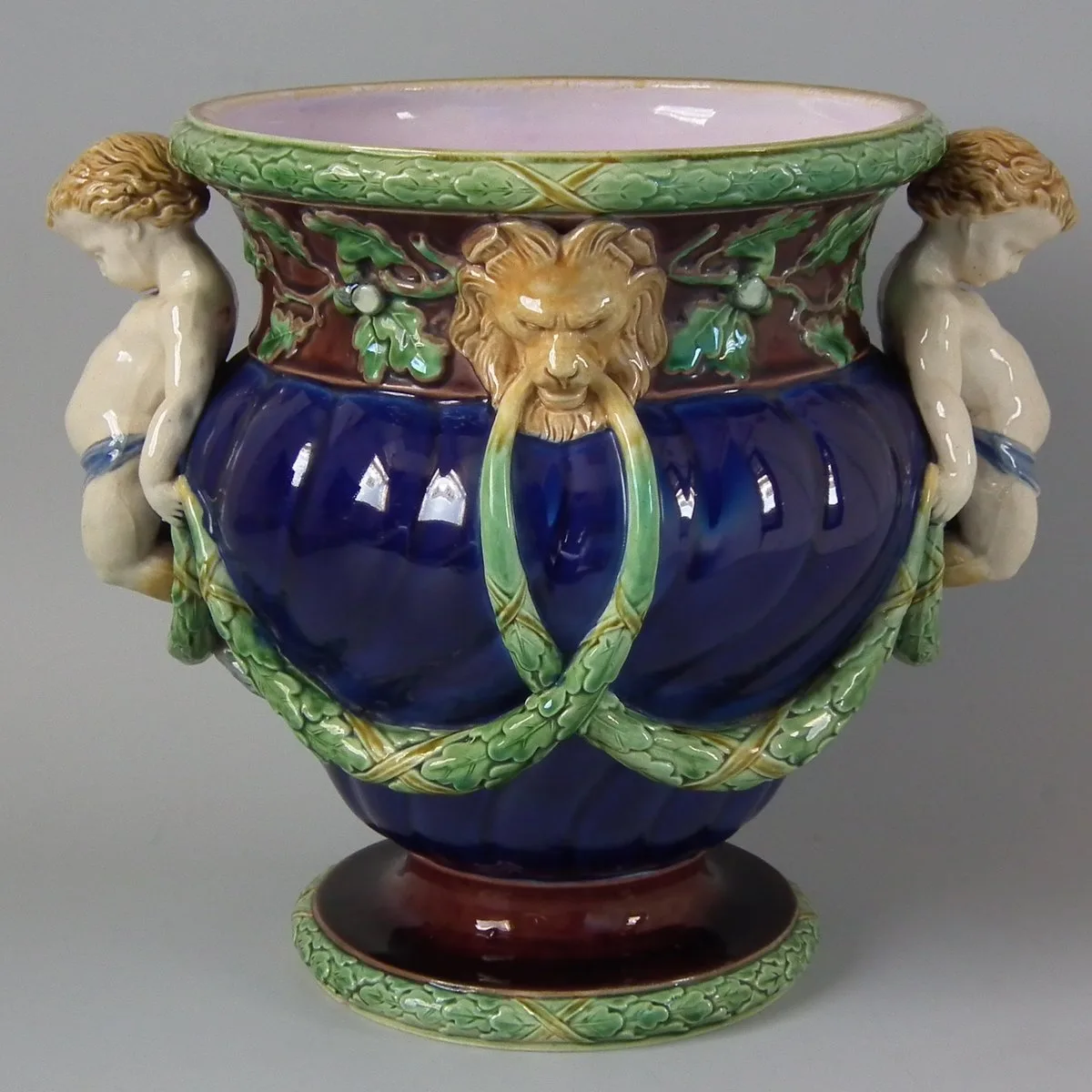
Majolica pottery represents one of the most vibrant and collectible categories of Victorian-era ceramics. Characterized by its richly colored lead glazes, naturalistic designs, and three-dimensional relief modeling, majolica captured the imagination of the Victorian public from the 1850s onward. These distinctive pieces featuring leaves, shells, flowers, birds, and whimsical figures continue to captivate collectors today with their bold colors and exuberant designs.
The term "majolica" (sometimes spelled "maiolica") refers to earthenware covered with colorful, opaque tin-glazed or lead-glazed surfaces. Victorian majolica differs from Italian Renaissance maiolica — which shares roots with Delftware in the tin-glazed tradition — in its use of colored lead glazes applied directly over relief-molded earthenware bodies. This technique allowed for brilliant colors and sharp definition that made majolica instantly recognizable and highly desirable.
This comprehensive guide will teach you how to identify majolica pottery from the major English manufacturers like Minton, George Jones, and Wedgwood, as well as American makers such as Griffen, Smith and Hill. You will learn to read maker's marks, recognize authentic pieces, spot reproductions, and understand the factors that determine value in today's collecting market.
Table of Contents
- What Is Majolica Pottery?
- History and Development
- English Majolica Makers
- Minton Majolica Identification
- George Jones Majolica Identification
- Wedgwood Majolica Identification
- Other English Manufacturers
- American Majolica
- Continental European Majolica
- Authentication and Spotting Fakes
- Popular Patterns and Forms
- Collecting Tips and Values
What Is Majolica Pottery?
Majolica is a type of earthenware pottery decorated with colorful, opaque glazes applied over relief-molded surfaces. The Victorian interpretation of majolica, developed in the 1850s, features lead-based glazes in vibrant colors including greens, blues, yellows, pinks, and browns applied directly over the molded clay body. This differs from earlier Italian maiolica, which used tin-based white glazes as a base for painted decoration.
Characteristics of Majolica
Authentic Victorian majolica exhibits several distinctive characteristics:
- Relief molding: Three-dimensional designs raised from the surface
- Colorful glazes: Bright, saturated colors in greens, blues, yellows, pinks
- Naturalistic themes: Leaves, flowers, shells, fish, birds, fruits
- Earthenware body: Cream to buff-colored clay base
- Lead glazes: Smooth, glossy finish with depth and richness
- Whimsical designs: Animals, figural pieces, and fantastical subjects
Types of Majolica Wares
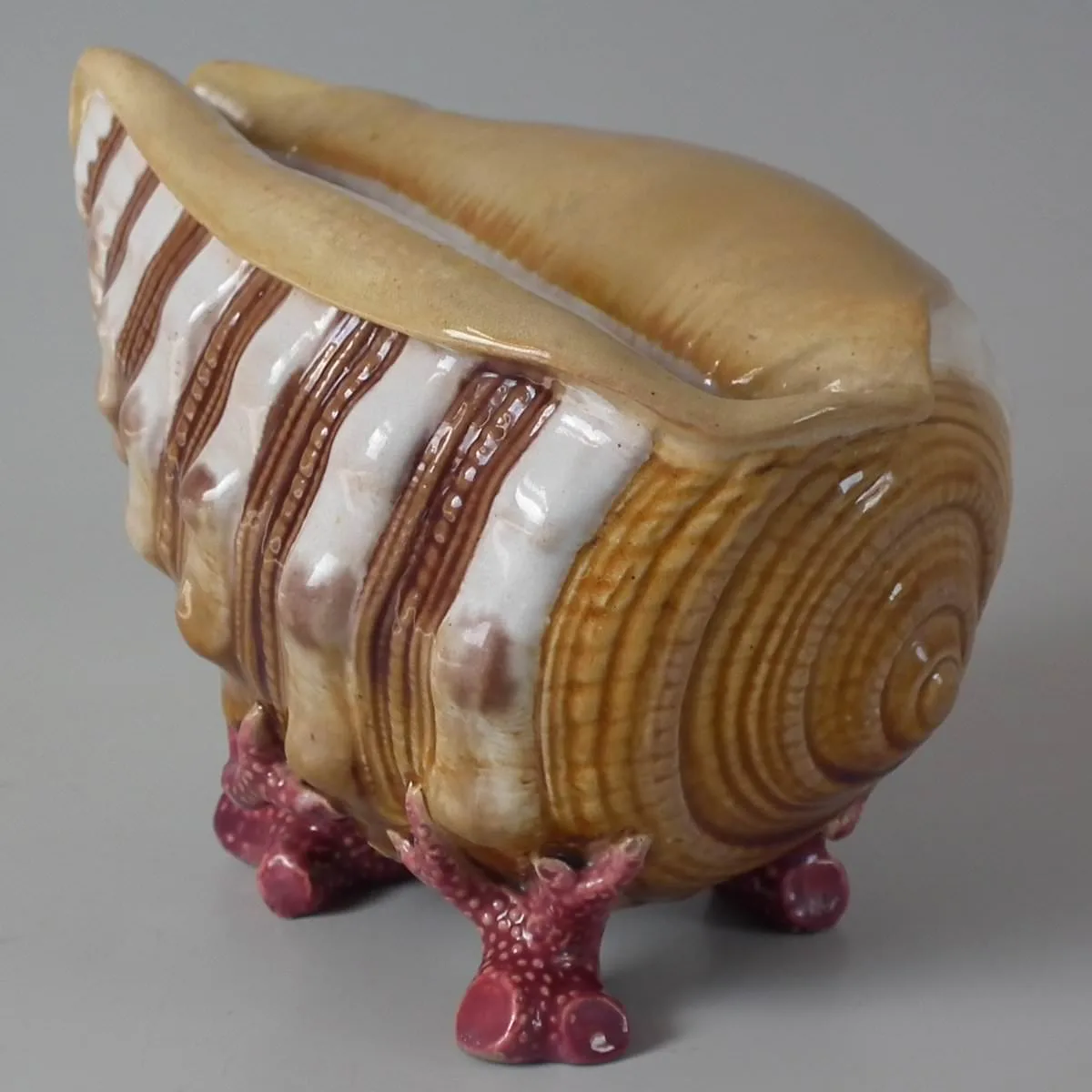
Majolica was produced in an enormous variety of forms:
- Tableware: Plates, platters, compotes, serving dishes
- Tea and coffee wares: Teapots, cups, saucers, sugar bowls
- Decorative items: Jardinieres, vases, wall pockets, pedestals
- Specialty pieces: Oyster plates, sardine boxes, game pie dishes
- Smoking accessories: Tobacco jars, match strikers, ashtrays
- Figural pieces: Animals, people, architectural forms
- Architectural tiles: Majolica-glazed decorative tiles for fireplaces and walls
History and Development
Origins at Minton
Victorian majolica was pioneered at the Minton factory in Stoke-on-Trent, England. The development is credited to Leon Arnoux, Minton's art director, who perfected the technique of applying colored lead glazes over relief-molded earthenware. Minton first exhibited majolica at the Great Exhibition of 1851 in London, where it created a sensation and launched a new collecting craze.
The Victorian Era Boom
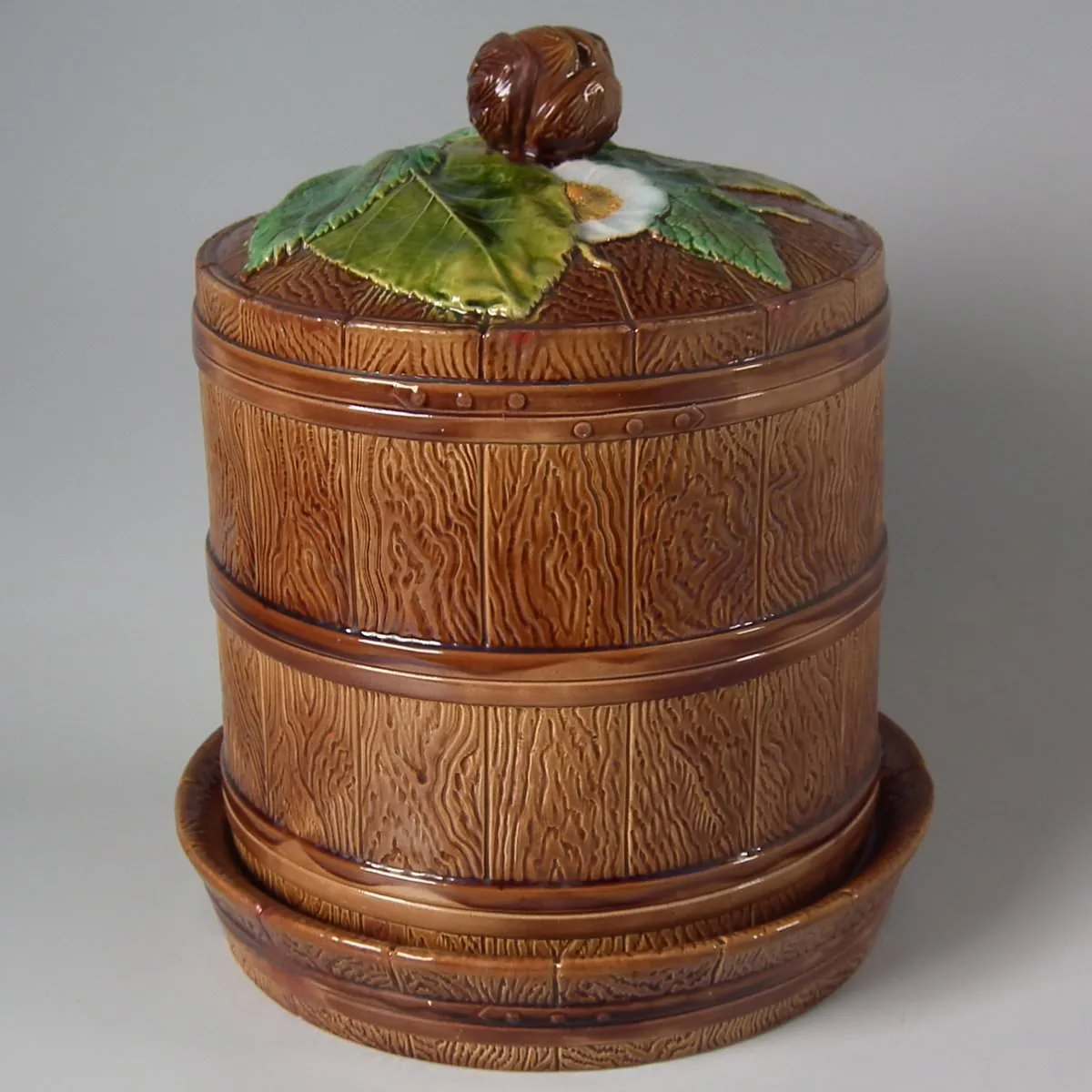
Following Minton's success, numerous English potteries began producing majolica:
- 1850s: Minton pioneers the technique
- 1860s: Wedgwood and George Jones enter production
- 1870s: Peak of English majolica production
- 1880s: American manufacturers join the market
- 1890s: Decline as tastes change
- Early 1900s: Production largely ceases
The Name "Etruscan"
The name "Etruscan" was adopted by several manufacturers, most notably the American firm Griffen, Smith and Hill. This classical reference mirrored Wedgwood's use of "Etruria" for their pottery works and reflected Victorian fascination with archaeological discoveries of ancient pottery near Rome.
Revival and Collecting
Interest in majolica declined after 1900 but revived strongly in the 1960s and 1970s. Today, majolica remains a popular collecting field with dedicated societies, specialized dealers, and active auction markets worldwide.
English Majolica Makers
English manufacturers dominated majolica production during the Victorian era. The "Big Three" English makers are Minton, George Jones, and Wedgwood, whose work is most highly sought after by collectors. The best of their output combines innovative contemporary design with technical perfection, featuring sharp, crisp, bright colors and excellent color control.
The Big Three
These three manufacturers set the standard for majolica quality:
- Minton: The pioneer and technical leader
- George Jones: Known for exceptional quality and distinctive styling
- Wedgwood: Massive output with consistent quality
Other Notable English Makers
Many other English potteries produced majolica:
- Holdcroft: Quality pieces with distinctive marks
- Brown-Westhead, Moore: High-quality production
- Samuel Lear: Known for leaf patterns
- Thomas Forester: Prolific producer
- Banks & Thorley: Quality decorative pieces
- William Brownfield: Notable designs
Minton Majolica Identification
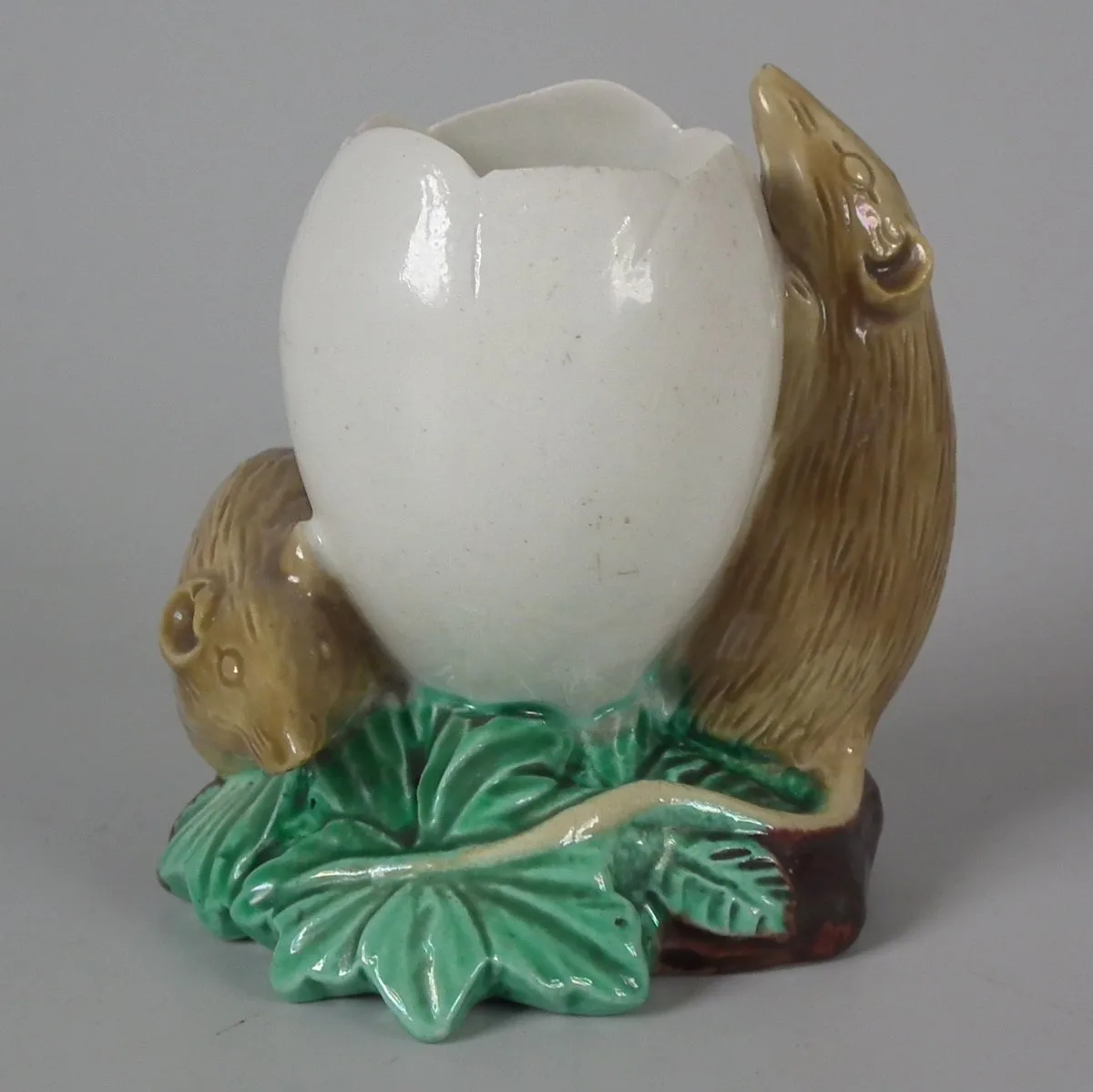
The Minton factory is where Victorian majolica was pioneered and developed, and they remained at the forefront in design throughout the era. Minton pieces are among the most desirable and valuable majolica available to collectors today.
Minton Marks
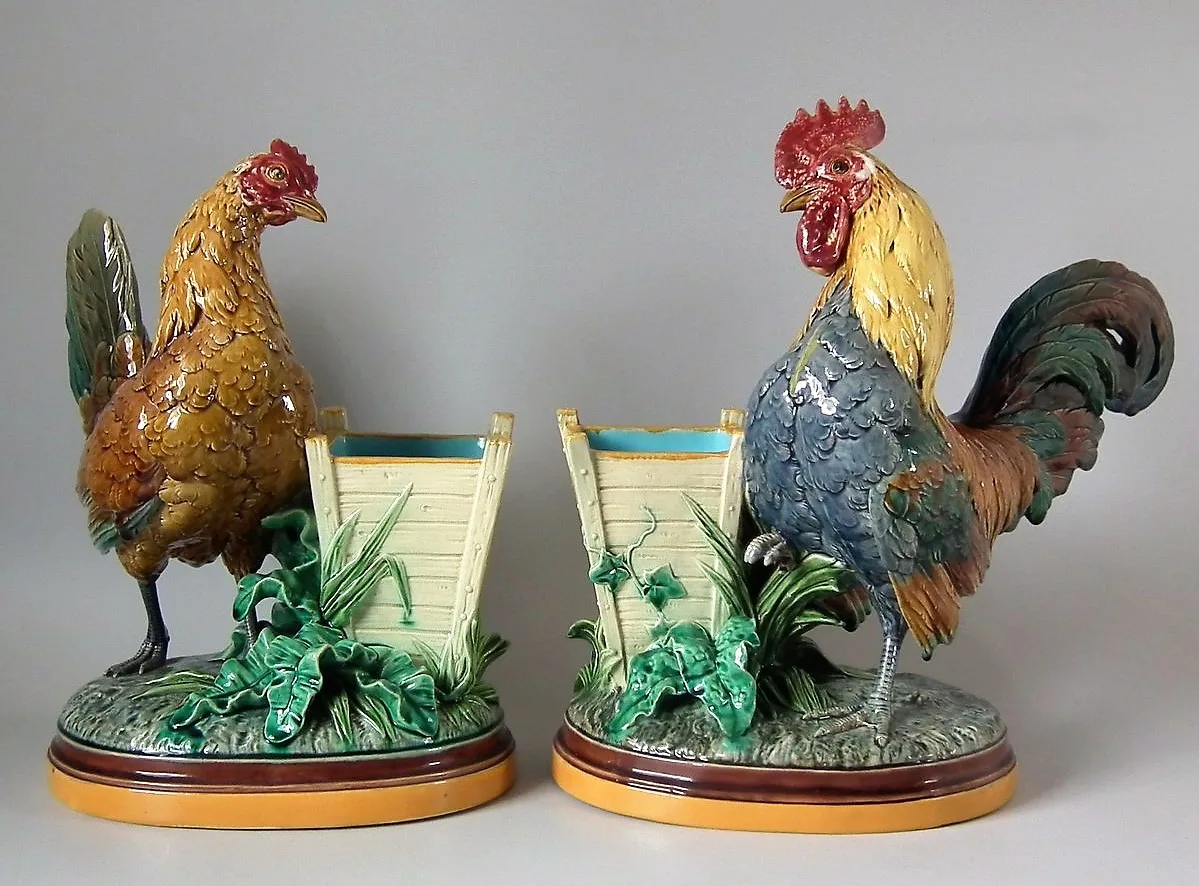
Mintons were systematic about marking their pottery, making attribution relatively straightforward:
- Impressed name: "MINTON" or "MINTONS" impressed in the clay
- Date cyphers: A series of symbols indicating the year of manufacture
- Shape numbers: Numerical codes for specific forms
- Registry marks: Diamond-shaped marks for registered designs
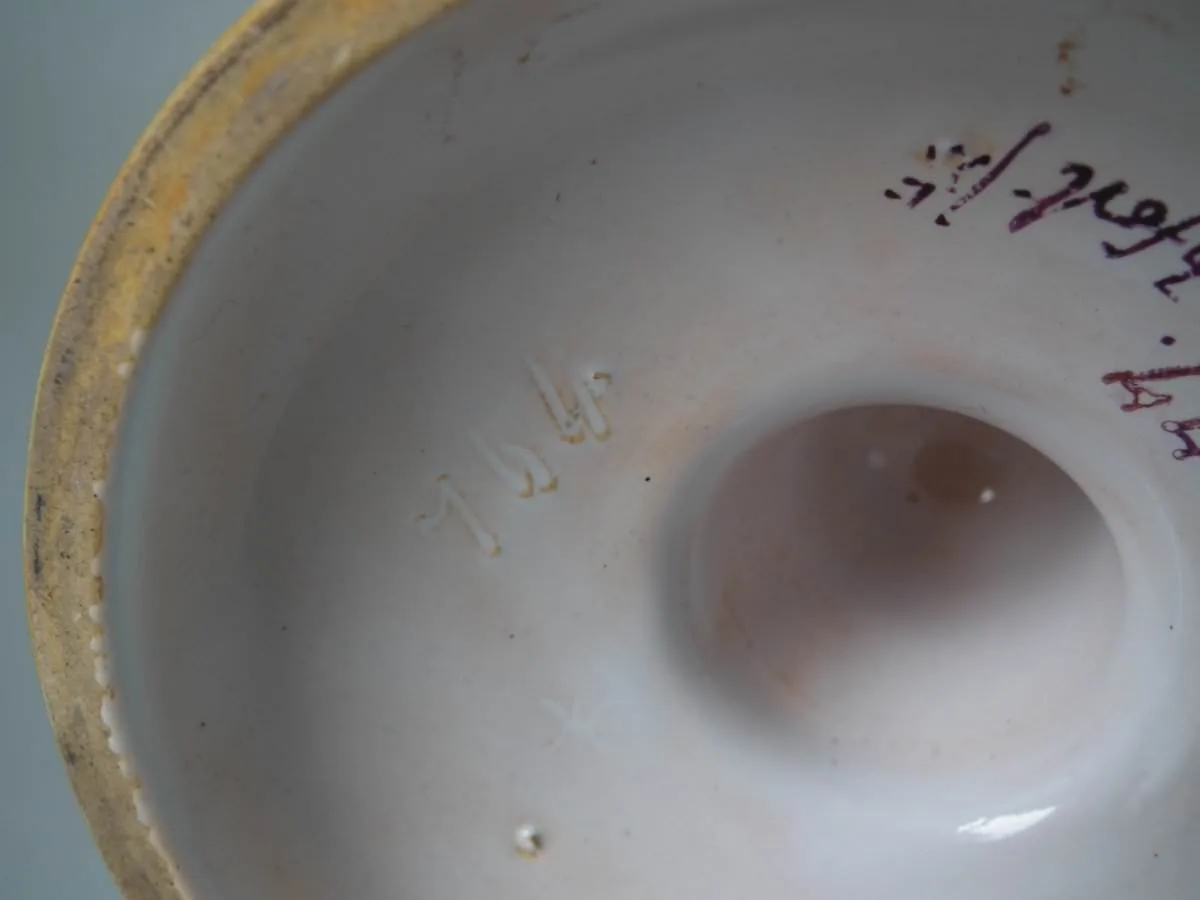
Sometimes the mark is concealed by pottery glaze, but closer inspection will reveal at least the name "MINTON" impressed in the clay. Mintons used a series of symbols to indicate the year a piece was made, and these date cyphers can be decoded using reference charts.
Minton Characteristics
Identifying features of Minton majolica include:
- Technical excellence: Sharp molding and precise glazing
- Innovative designs: Often the first to introduce new patterns
- Rich colors: Deep, saturated hues with excellent control
- Quality earthenware: Dense, well-fired clay body
Notable Minton Designs
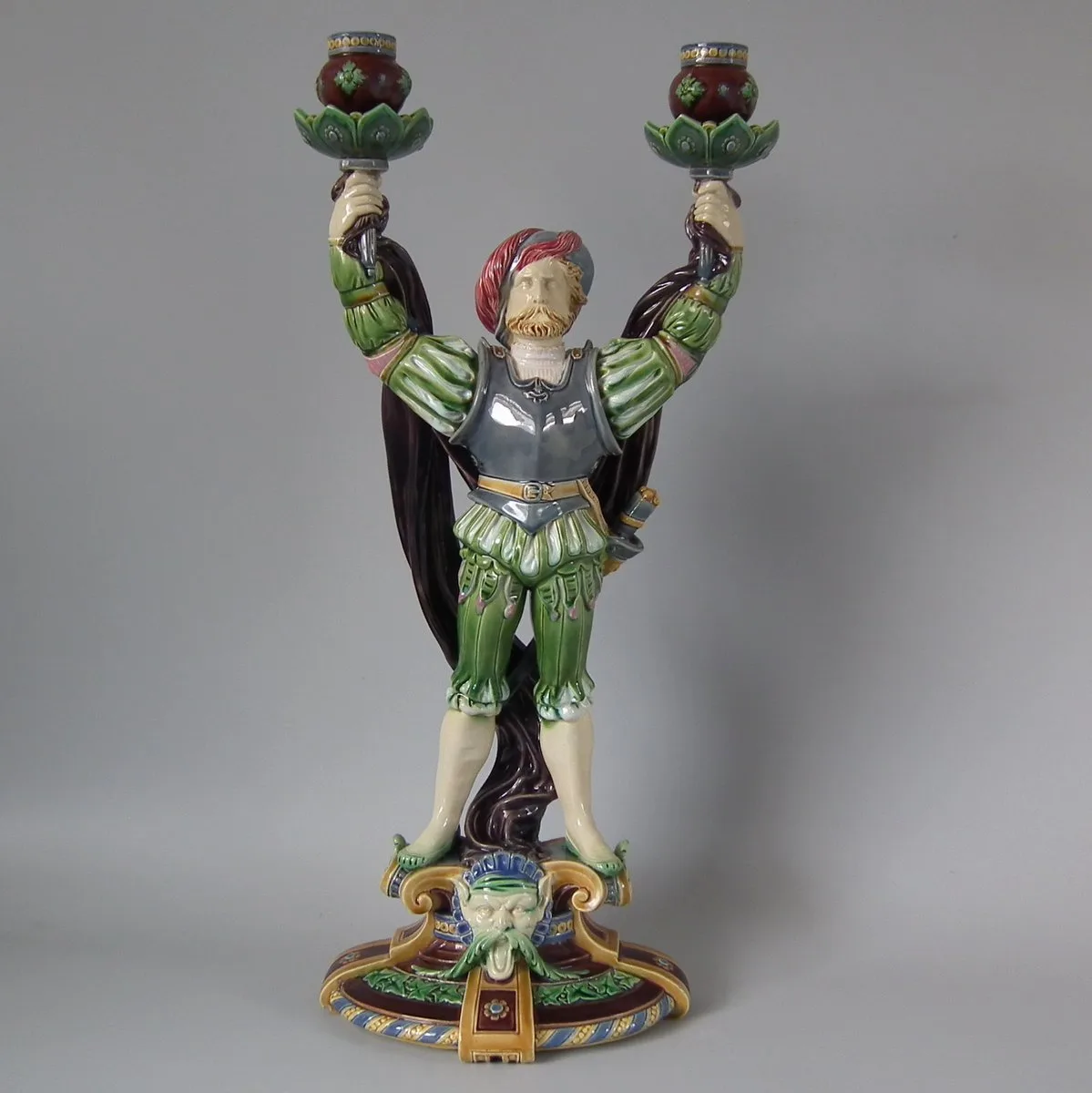
Minton produced many iconic majolica patterns:
- Figural pieces and centerpieces
- Garden seats and jardinieres
- Elaborate game pie dishes
- Naturalistic plant and animal forms
George Jones Majolica Identification
George Jones commenced production of majolica in 1866 and quickly established a reputation for exceptional quality. By 1873, his eldest two sons joined him in partnership, and the firm was retitled George Jones & Sons with "Crescent" registered as the trademark.
George Jones Marks
George Jones majolica evolved through several marking periods:
- Early mark (1866-1873): Impressed superimposed letters "GJ" contained within a circle
- Post-1873 mark: A crescent inscribed with "& SONS" added beneath the initials
- Pad marks: Applied pads with impressed monograms
- Pattern numbers: Numerical codes for designs
The Distinctive Underglaze
One of the most reliable ways to identify unmarked George Jones majolica is by the distinctive mottled brown and green undersurface glazing. This characteristic underside treatment allows attribution of unmarked pieces and is a hallmark of the firm's production.
George Jones Quality
The firm produced a large amount of majolica still available to collectors, and being of uniformly high quality, the pieces are among the more expensive on the market. Characteristics include:
- Exceptional modeling: Crisp, detailed relief work
- Superb glazes: Brilliant, well-controlled colors
- Innovative forms: Creative and original designs
- Consistent quality: Reliable excellence across production
Popular George Jones Patterns
Notable George Jones majolica includes:
- Strawberry servers and dishes
- Figural sardine boxes
- Naturalistic leaf and flower forms
- Game pie dishes with figural lids

Wedgwood Majolica Identification
Wedgwood's majolica output was enormous, successfully feeding the home market and exporting extensively to America and Australia. It is distinctive for its quality of glazes and sharpness of modeling, and most pieces bear impressed marks making identification straightforward.
Wedgwood Marks
Wedgwood marking was systematic and consistent:
- Impressed name: "WEDGWOOD" in small capital letters
- Date codes: Three-letter codes indicating production date
- Majolica mark: Impressed "M" (1873-1888) or "K" (1888-1920)
- Registry marks: Diamond marks for registered designs
Understanding Wedgwood Date Codes
In 1860, Wedgwood added a system of date codes consisting of three capital letters, and the same code appears on their jasper — our guide to reading Wedgwood date codes gives the full year-letter tables:
- First letter: Indicates the month of production
- Second letter: A potter's or workman's mark
- Third letter: Indicates the year of production
If present, a British registry mark notes the date of registration, which is not necessarily the year of manufacture but does indicate a "circa" date.
Wedgwood Characteristics
Distinctive features of Wedgwood majolica:
- Quality glazes: Consistent, well-applied colors
- Sharp modeling: Precise relief detail
- Wide variety: Enormous range of forms and patterns
- Reliable marking: Most pieces clearly marked
Popular Wedgwood Patterns
Notable Wedgwood majolica designs include:
- Cauliflower and vegetable forms
- Shell and Seaweed patterns
- Leaf plates and serving pieces
- Fan and bamboo designs
Other English Manufacturers
Holdcroft
Joseph Holdcroft produced quality majolica from the 1870s. Pieces are often marked with an impressed "JH" monogram and are known for distinctive pond lily patterns and figural pieces.
Brown-Westhead, Moore & Co.
This Staffordshire pottery produced high-quality majolica often comparable to the Big Three. Look for impressed marks including the company name or initials.
Samuel Lear
Known for naturalistic leaf patterns and quality glazework. Pieces may bear impressed "S. LEAR" or monogram marks.
Thomas Forester
A prolific producer of decorative majolica including jardinieres and umbrella stands. Various marks used including impressed company name.
Unmarked English Majolica
Many English majolica pieces are unmarked or have marks obscured by glaze. Attribution of unmarked pieces requires careful study of:
- Design style and subject matter
- Glaze colors and application
- Modeling quality and technique
- Underside treatment and finish
American Majolica
Griffen, Smith and Hill
The largest and best known of the American majolica manufacturers was Griffen, Smith and Hill of Phoenixville, Pennsylvania. Their "Etruscan Majolica" is highly collectible today.
Company History
Key dates in Griffen, Smith and Hill history:
- 1867: John Griffen establishes pottery in Phoenixville
- 1871: John Smith, English potter from Stoke-on-Trent, joins firm
- 1879: Majolica production begins
- 1880: Firm renamed Griffen, Smith & Co.
- 1890: Fire at plant
- 1894: Becomes Phoenix Pottery
Etruscan Marks
Most Etruscan majolica was marked, making identification relatively straightforward:
- Early mark: Impressed monogram "GSH" in stylized script
- Post-1880 mark: Monogram within a circle bearing "ETRUSCAN MAJOLICA"
- Pattern numbers: Impressed letters and numbers indicating pattern
Design Influence
An Englishman named Hamlet Bourne, son of a chief designer at Wedgwood, worked at Griffen, Smith & Co. during the 1880s. Given this direct link to Wedgwood, many Phoenixville designs are almost exact copies of Wedgwood models, particularly the Shell and Seaweed pattern.
Popular Etruscan Patterns
Notable Griffen, Smith and Hill patterns include:
- Shell and Seaweed: Opalescent pinks, greys, and blues with green seaweed
- Cauliflower: Vegetable-form teapots and tableware
- Sunflower: Bold floral designs
- Begonia Leaf: Naturalistic leaf plates
Collecting Etruscan Majolica
Although somewhat rustic compared to the finest English examples, majolica produced by Griffen, Smith and Hill was generally of good quality. While popular among collectors, it remains more affordable than pieces from the top English manufacturers. There is no doubt that many of today's most prestigious majolica collections began with an Etruscan leaf plate.
Other American Makers
Other American potteries produced majolica, though none achieved the prominence of Griffen, Smith and Hill:
- Chesapeake Pottery (Baltimore)
- Edwin Bennett Pottery (Baltimore)
- Various smaller regional potteries
Continental European Majolica
French Majolica
French potteries produced distinctive majolica styles:
- Sarreguemines: Large producer with diverse output
- Saint-Clement: Quality decorative pieces
- Vallauris: Regional pottery tradition
- Quimper: Breton faience with petit Breton and a la touche decoration, overlapping the majolica market through HB, Henriot, and Porquier output
Portuguese Majolica
Portugal produced majolica known for distinctive Palissy-style pieces featuring realistic reptiles, insects, and sea creatures in relief.
German and Austrian Majolica
Various German and Austrian factories produced majolica, often with distinctive regional characteristics and marks.
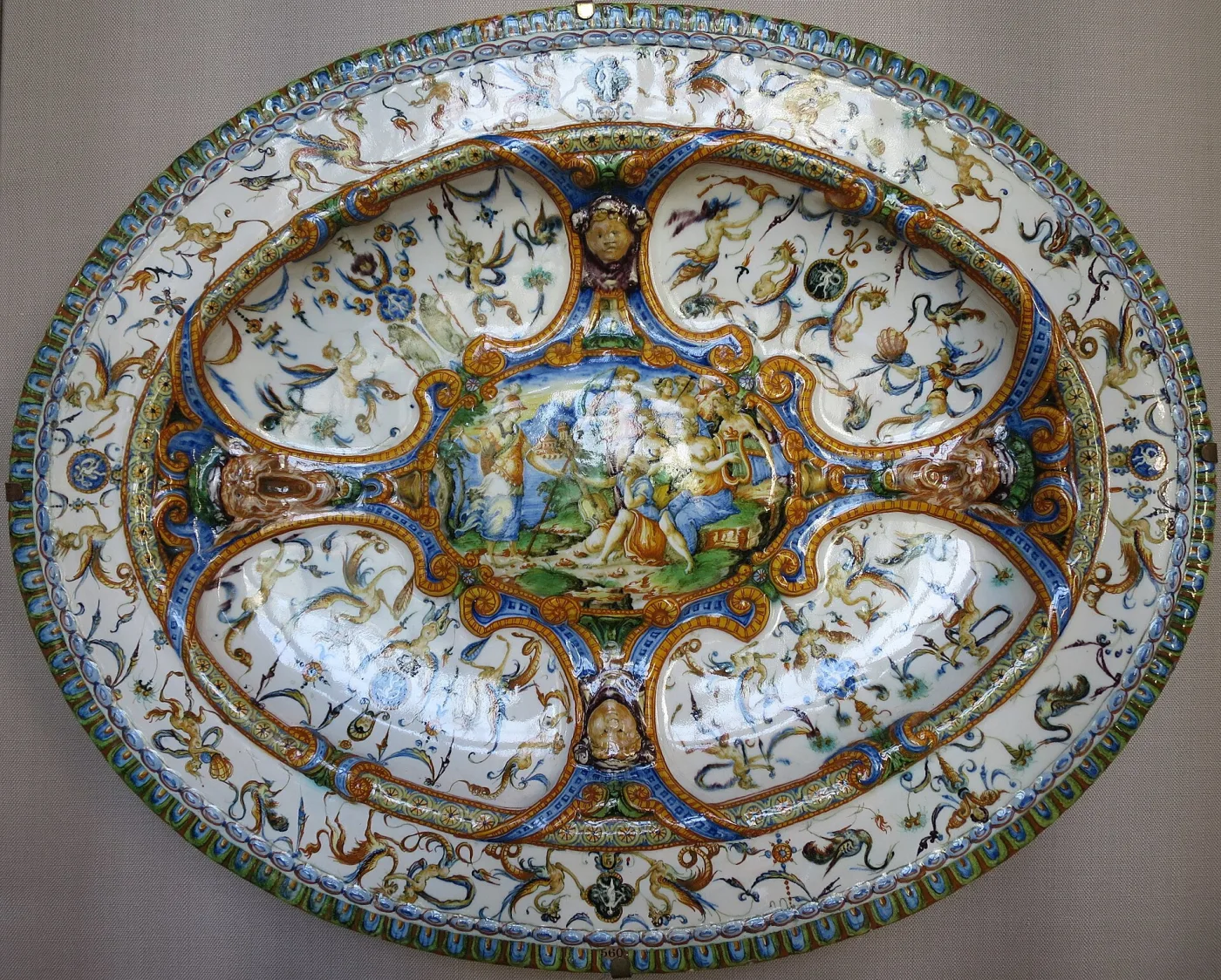
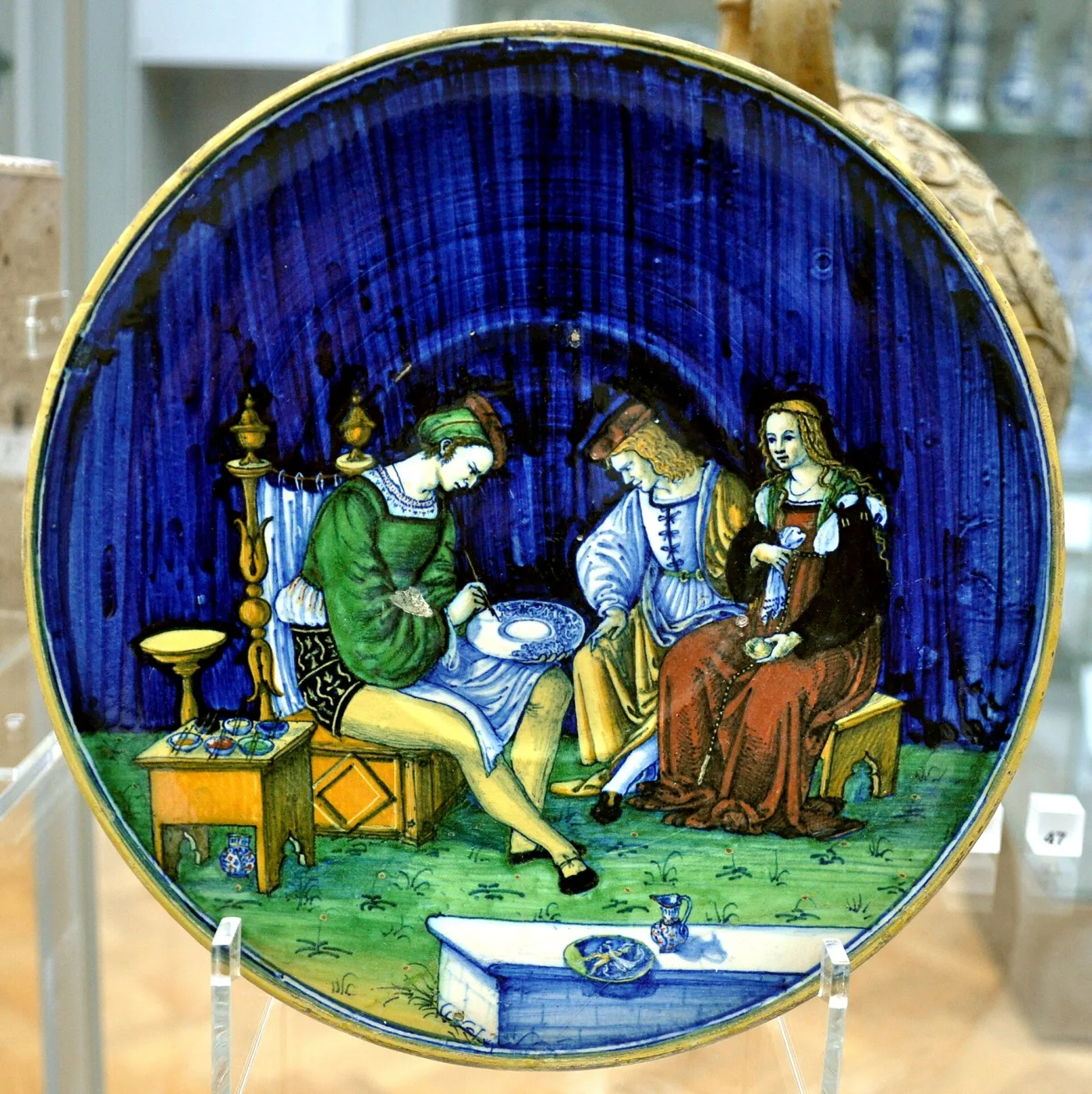
Neither of these is majolica in the sense the rest of this article uses the word, and the collision of names causes more misattribution here than any forger does. Maiolica, with an i, is Italian tin-glazed earthenware from roughly the fifteenth century onward: the glaze is a flat opaque white, the decoration is painted onto it in metallic-oxide pigments and fired, and the surface stays level, because nothing is modelled and nothing pools. Majolica, with a j, is the Victorian ware Minton launched in 1851 and named after it: coloured lead glazes poured over heavy relief modelling, so the surface is three-dimensional and the colour varies with the depth of the glaze. Hold the two side by side and you cannot confuse them — one is a painting, the other is a sculpture. But a catalogue entry, an auction listing or an online search will confuse them constantly, and a dish described as “16th-century majolica” is telling you the cataloguer was not paying attention rather than telling you what the object is.
Italian Production
Italy continued producing majolica in traditional and Victorian styles, particularly from factories in the Deruta and Faenza regions, while its parallel porcelain tradition — led by the royal Neapolitan factory whose flower-encrusted Capodimonte porcelain remains widely collected — carried Italian ceramic prestige into the wider decorative market.
Authentication and Spotting Fakes
As majolica values have risen, reproductions and fakes have become more common. Learning to distinguish authentic pieces from modern copies is essential for collectors.
Signs of Authenticity
Genuine antique majolica typically exhibits:
- Age wear: Slight rubbing on high points, minor scratches
- Crazing: Fine network of lines in the glaze
- Staining: Some discoloration in crazed areas
- Proper marks: Correct impressed marks for the period
- Clay color: Cream to buff earthenware body with age discoloration
Warning Signs of Reproductions
Modern reproductions and fakes often show:
- Mold lines visible inside: Slip-cast reproductions show pattern details on interior surfaces
- Very white clay: Bright white, undiscolored clay body suggests recent manufacture
- Harsh colors: Incredibly bright, saturated glazes lacking subtlety
- Shiny glazes: Overly glossy finish without age patina
- Drip marks: Noticeable glaze runs and inaccuracies
- Wrong marks: Incorrect or anachronistic maker's marks
The Interior Test
One reliable way to identify reproduction or fake majolica is to look at the inside surface. If you can see the details or textures of the pattern showing through on the inside surface, the piece may not be authentic. This happens because reproductions often use slip casting, where liquid clay is poured into a mold, creating thin walls that show the exterior pattern inside.
Registry Marks
A diamond-shaped registration mark tells the date the pattern was registered with the British Patent Office. Letters and numbers in the four corners specify the exact date of registration. Note that the year of pattern registration is not necessarily the year of manufacture but does indicate a "circa" date for authentic pieces.
Popular Patterns and Forms
Most Collectible Patterns
Brand recognition and popular patterns drive higher prices:
- Shell motifs: Oyster plates, shell dishes, nautical themes
- Leaf and fern designs: Begonia, chestnut, maple leaves
- Bamboo patterns: Oriental-inspired designs
- Fish and game themes: Sardine boxes, game pie dishes
- Floral designs: Sunflowers, morning glories, roses
- Figural pieces: Animals, people, fantasy creatures
Desirable Forms
Certain forms command premium prices:
- Oyster plates: Always popular with collectors
- Large jardinieres: Impressive decorative pieces
- Game pie dishes: Elaborate lids with figural animals
- Sardine boxes: Whimsical fish-topped containers
- Figural teapots: Animals, vegetables, novelty forms
- Garden seats: Large, impressive pieces
Color Preferences
Rare colorways often command higher prices. Look for:
- Unusual color combinations
- Rare background colors
- Exceptional color saturation
- Well-executed color blending
Collecting Tips and Values
Factors Affecting Value
Valuing majolica pottery can be complex, as prices vary widely depending on several factors:
- Maker: Big Three makers command highest prices
- Rarity: Unusual forms and patterns are more valuable
- Condition: Chips, cracks, and repairs significantly reduce value
- Size: Larger, more impressive pieces often worth more
- Design quality: Intricate, well-executed designs are prized
- Color: Rare colorways command premiums
Price Ranges
General price guidelines (as of 2026):
- Common unmarked pieces: $50-200
- Marked English secondary makers: $100-500
- Etruscan (Griffen, Smith & Hill): $100-1,000+
- Wedgwood marked pieces: $200-2,000+
- George Jones pieces: $500-5,000+
- Minton marked pieces: $500-10,000+
- Rare forms and exceptional examples: $10,000+
Building a Collection
Tips for new majolica collectors:
- Start with affordable examples to develop your eye
- Study authentic pieces in museums and shows
- Join the Majolica International Society
- Buy from reputable dealers and auction houses
- Focus on quality over quantity
- Document your collection with photographs and provenance
Condition Considerations
When evaluating condition:
- Minor crazing is acceptable and expected
- Small chips significantly reduce value
- Repairs should be disclosed and deducted from value
- Hairline cracks are less damaging than chips
- Staining in crazed areas is common
Where to Find Majolica
Sources for acquiring majolica include:
- Specialized antiques dealers
- Major auction houses
- Antiques shows and fairs
- Online auctions and marketplaces
- Estate sales
Conclusion
Majolica pottery offers collectors a vibrant window into Victorian decorative arts, combining technical innovation with exuberant naturalistic design. From the pioneering work at Minton to the widespread production by Wedgwood and George Jones, and across the Atlantic to American firms like Griffen, Smith and Hill, majolica captured the imagination of a generation and continues to delight collectors today.
Understanding maker's marks, recognizing authentic pieces, and appreciating the factors that influence value will help you build a meaningful collection. The broad range of shapes and prices lets new buyers enter the field with modest outlays while offering depth for advanced collectors pursuing the finest examples.
Whether you are drawn to the brilliant colors, the naturalistic themes, or the whimsical Victorian sensibility, majolica offers endless opportunities for discovery and appreciation. With careful study and attention to quality, you can acquire pieces that will bring color and life to your collection for generations to come.