Stoneware Crocks and Jugs: Complete Identification Guide 2026
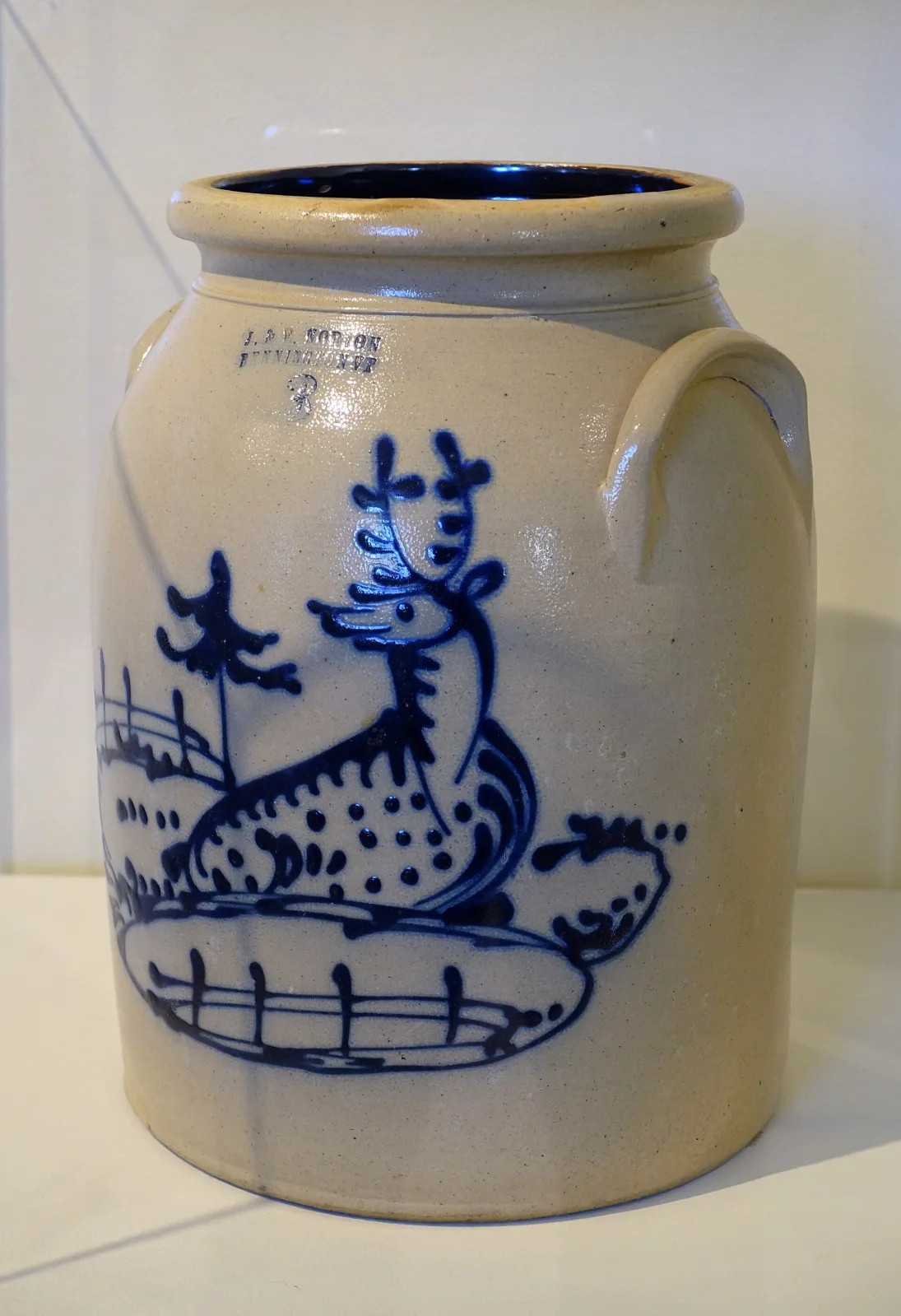
Stoneware crocks and jugs represent one of the most fascinating and collectible categories of American and European ceramics. These utilitarian vessels, once essential for food preservation and storage, now serve as windows into our agricultural and domestic past. This comprehensive guide will teach you how to identify stoneware using glaze analysis, form recognition, decoration patterns, and maker's marks. Whether you're a seasoned collector or just beginning your journey, understanding these identification techniques will help you build a valuable and authentic collection. Modern tools like the Antique Identifier app can provide instant AI-powered identification, but mastering the fundamentals is essential for any serious stoneware collector.
Table of Contents
- What Is Stoneware?
- Stoneware Identification Methods
- Glaze Analysis and Types
- Form Recognition and Function
- Decoration Patterns and Styles
- Maker's Marks and Capacity Marks
- Regional Variations and Traditions
- Condition Assessment and Damage
- Value Determination and Market Factors
- Digital Tools for Identification
- Expert Tips and Best Practices
What Is Stoneware?
Stoneware is a type of ceramic that is fired at high temperatures (typically 1200-1300°C or 2200-2400°F) to create a vitreous, non-porous body. Unlike earthenware such as redware, which remains porous and requires glazing for water resistance, stoneware becomes naturally watertight due to the high firing temperature. This characteristic made it ideal for food storage containers, particularly crocks and jugs used for preserving foods like sauerkraut, pickles, and butter.
Key Characteristics of Stoneware
- High firing temperature: Creates a dense, vitreous body
- Natural water resistance: No need for interior glazing
- Durability: Resistant to chipping and thermal shock
- Weight: Heavier than earthenware due to density
- Color: Typically gray to buff, sometimes with blue or brown tones
Historical Development
Stoneware production in America began in the early 18th century, with significant centers developing in:
- Northeastern United States: New York, New Jersey, Pennsylvania
- Mid-Atlantic region: Maryland, Virginia, North Carolina
- Midwest: Ohio, Indiana, Illinois
- Europe: Germany, England, France
Stoneware Identification Methods
1. Visual Examination
The first step in stoneware identification is a thorough visual examination. Look for:
- Body characteristics: Color, texture, density, and firing quality
- Glaze appearance: Type, color, thickness, and surface texture
- Form and proportions: Shape, size, and functional design
- Decoration techniques: Applied, incised, or stamped designs
- Wear patterns: Natural aging, use marks, and patina
2. Physical Testing
Several physical tests can help with identification:
- Sound test: Tap the piece to hear the ring (stoneware has a clear, bell-like sound)
- Weight assessment: Stoneware feels heavier than earthenware such as yellow ware
- Surface examination: Use magnification to examine glaze and body details
- UV examination: Detect repairs, overpainting, and modern materials
3. Marking Analysis
Examine all surfaces for identifying marks:
- Maker's marks: Impressed or cobalt-stenciled names and symbols
- Capacity marks: Numerals indicating size (1, 2, 3, 5, 10 gallons)
- Date codes: Manufacturing dates or period indicators
- Quality marks: Factory or guild symbols
Glaze Analysis and Types
1. Salt Glaze
Salt glaze is the most distinctive and historically significant stoneware glaze:
- Process: Salt is thrown into the kiln during firing, creating a vapor that reacts with the clay
- Appearance: Characteristic orange-peel texture with a glassy, translucent finish
- Colors: Typically gray to buff body with blue cobalt decoration
- Period: Most common from 1750-1900, though some production continued later
- Regional variations: Different salt concentrations and firing techniques created variations
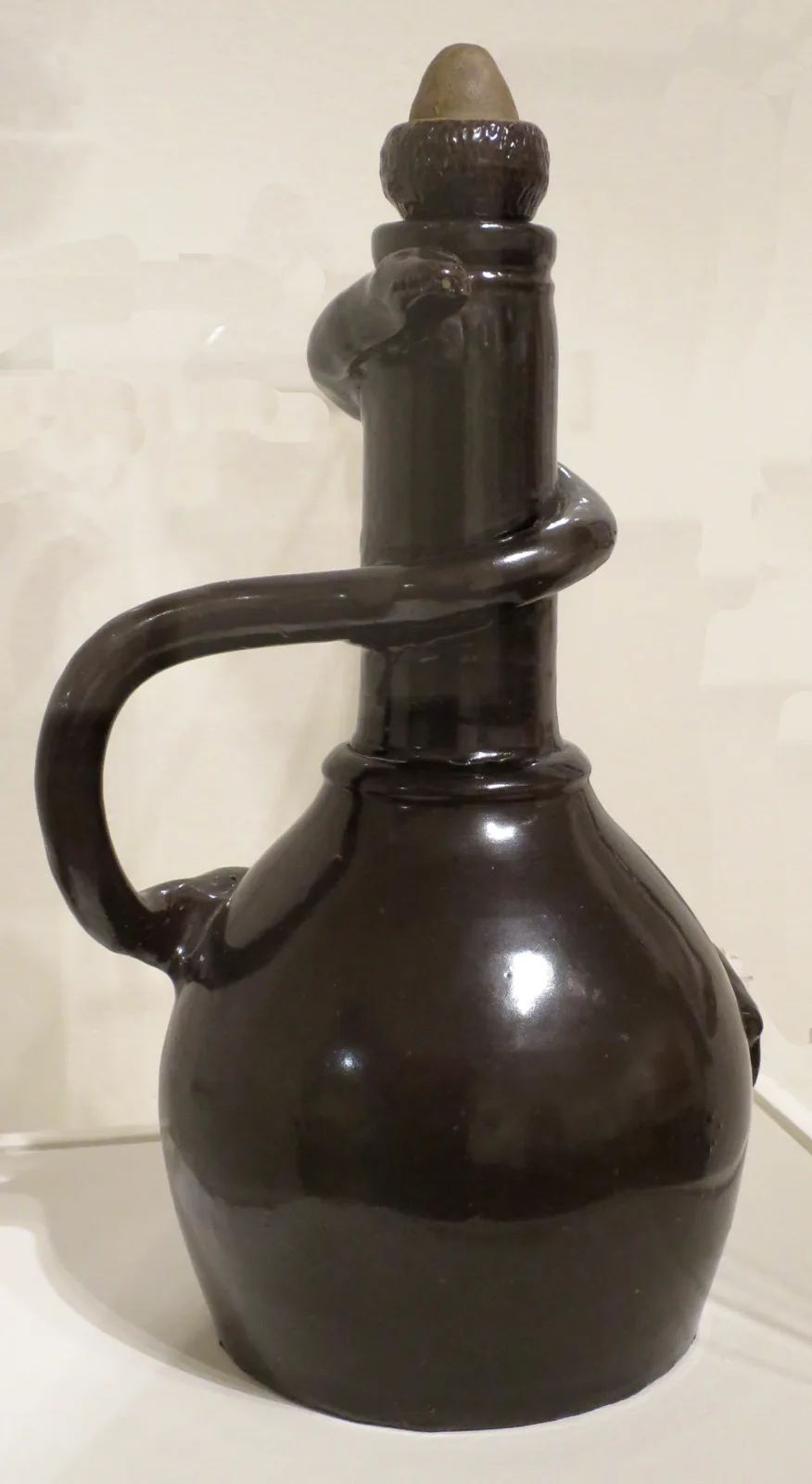
2. Albany Slip
Albany slip is a distinctive brown interior glaze:
- Composition: Iron-rich clay from Albany, New York, mixed with water
- Application: Poured into the interior of crocks and jugs before firing
- Appearance: Rich brown color, often with variations in tone
- Function: Provides a smooth, non-reactive surface for food storage
- Dating: Most common from 1820-1920
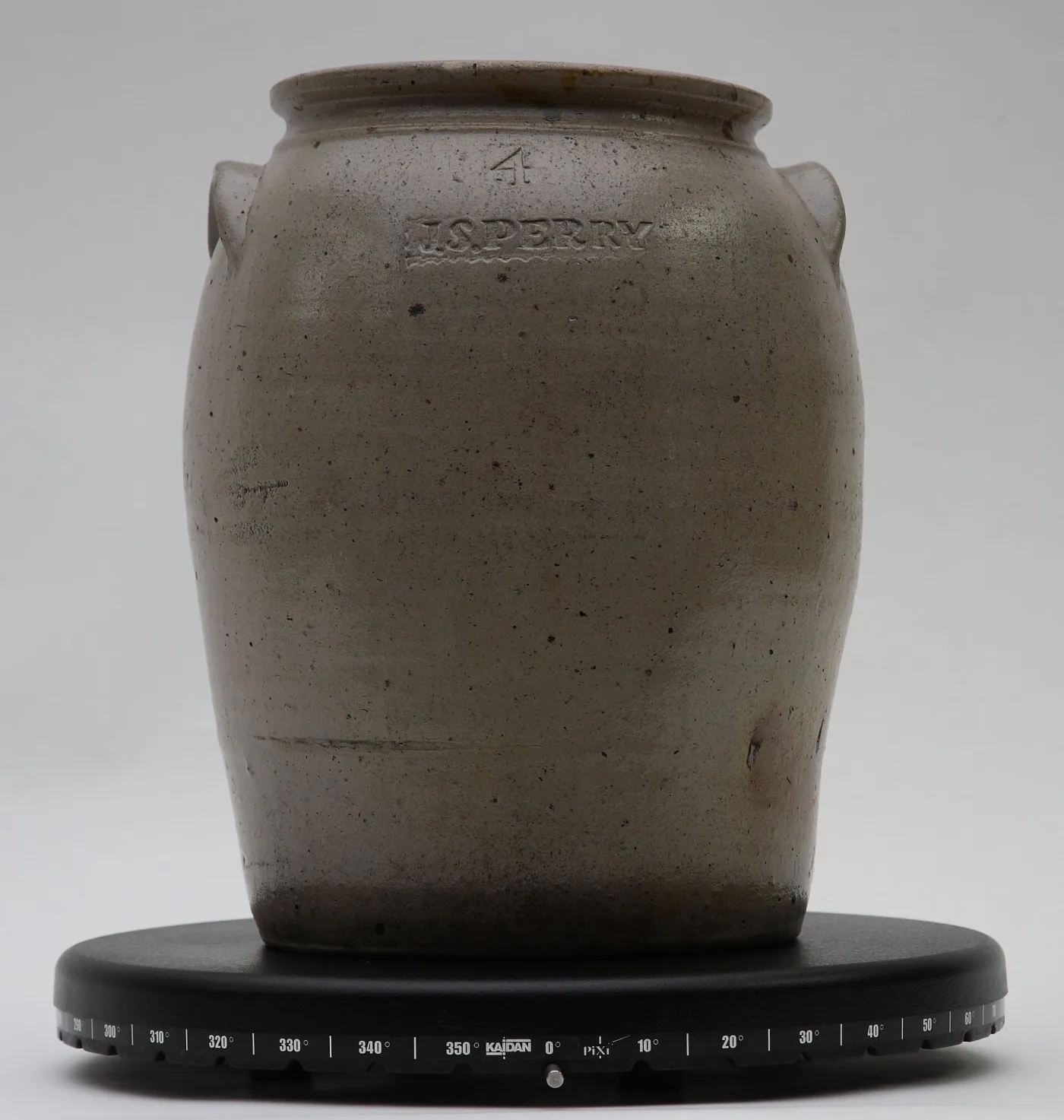
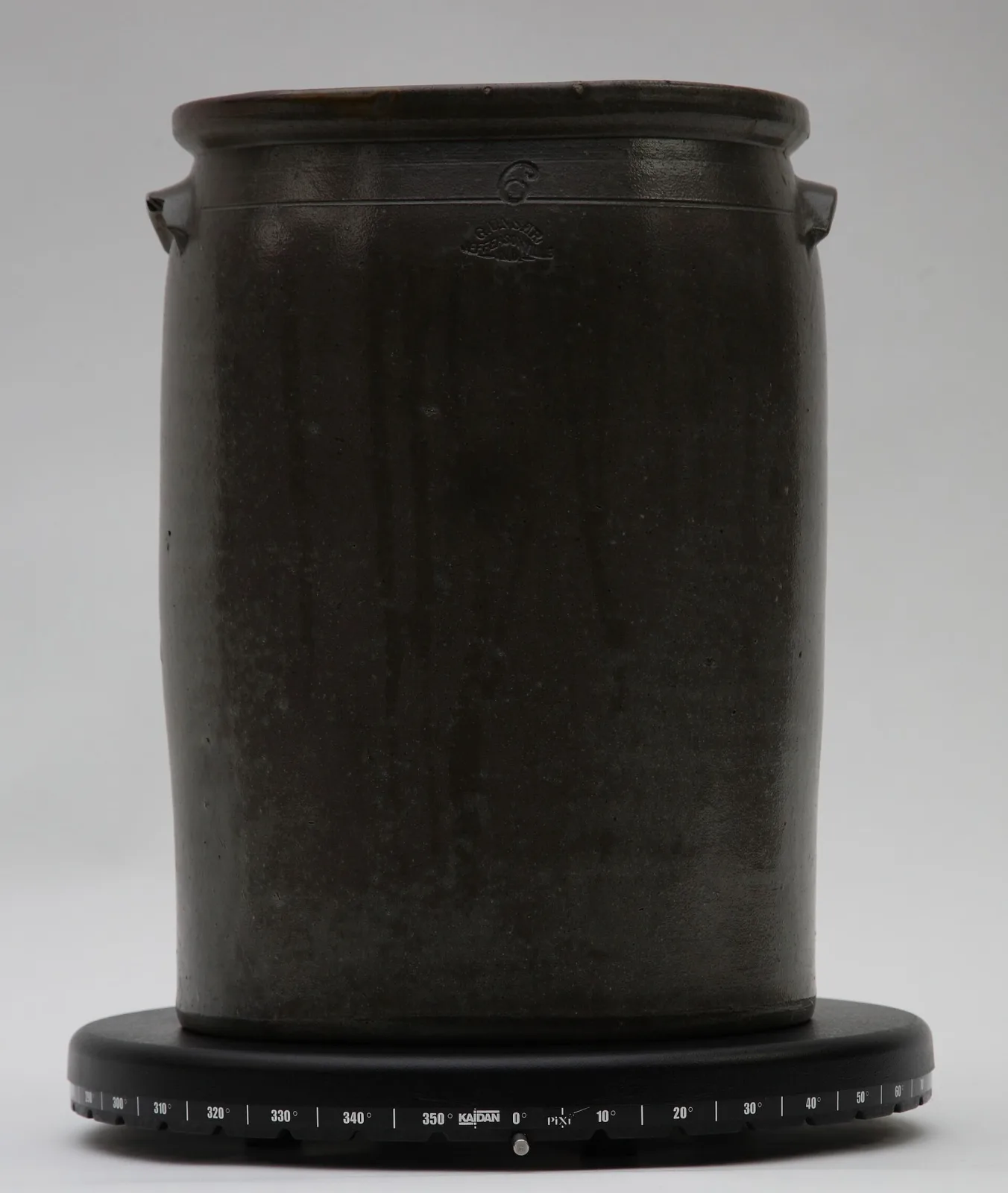
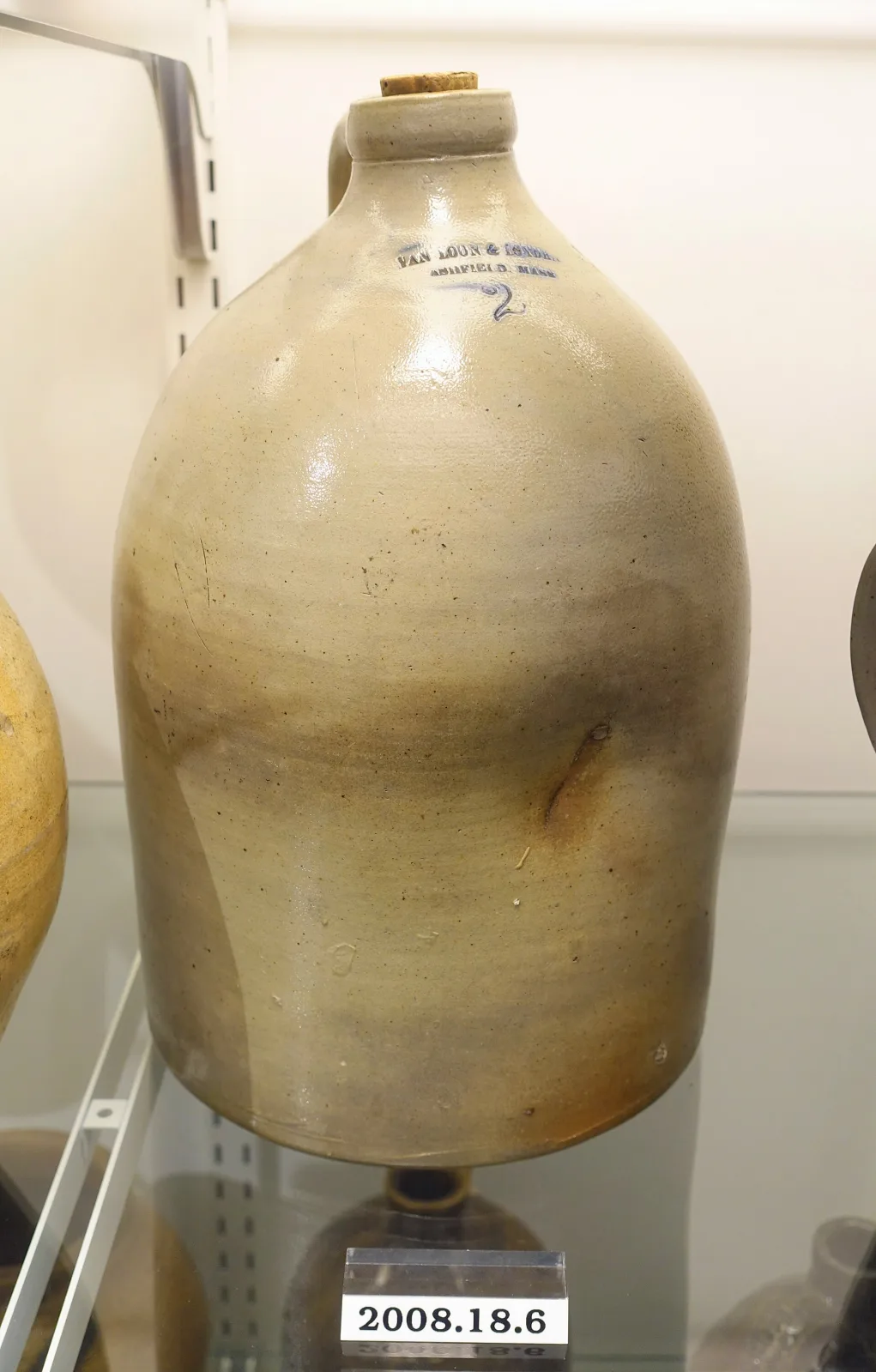
Both jars carry an impressed capacity numeral and an impressed maker's die in the same place, and both are stoneware fired in the same kind of kiln — the difference is entirely what was put on the surface before firing. Two things follow that are worth knowing before you buy. First, the description "grey stoneware" in a catalogue listing is often the cataloguer's shorthand for the body rather than the finish; the jar on the right is catalogued as grey and is plainly brown all over, because the slip was poured over the exterior as well as the interior. Trust the photograph, not the colour word. Second, a slip-glazed exterior hides decoration, so an all-brown pot is almost never a decorated one — if you are hunting cobalt, you are hunting grey.
3. Bristol Glaze
Bristol glaze represents a later development in stoneware production:
- Composition: White or colored opaque glaze
- Appearance: Smooth, uniform surface without the texture of salt glaze
- Period: Late 19th century through the 20th century
- Advantages: More consistent application and easier to control
- Collector appeal: Often less valued than salt glaze pieces
4. Glaze Analysis Techniques
When examining glazes, consider:
- Texture: Salt glaze has distinctive pitting, Bristol glaze is smooth
- Color consistency: Natural variations vs. artificial coloring
- Thickness: Hand-applied vs. machine-applied glazes
- Wear patterns: Natural aging vs. artificial distressing
Form Recognition and Function
1. Crocks
Crocks are the most common form of stoneware storage container:
- Ovoid crocks: Early form (18th-early 19th century) with rounded sides
- Straight-sided crocks: Later form (mid-19th century onward) with vertical sides
- Lug handles: Applied handles for easy carrying and handling
- Rim variations: Rolled rims, flat rims, and specialized food-preservation rims
- Base design: Flat bases for stability, sometimes with foot rings
2. Jugs
Stoneware jugs served multiple purposes:
- Liquor jugs: Small to medium sizes for spirits and wine
- Milk jugs: Specialized forms for dairy products
- Water jugs: Large containers for household water storage
- Handle styles: Strap handles, loop handles, and specialized grip designs
- Spout variations: Pouring spouts, narrow mouths, and wide openings
3. Specialized Forms
Other stoneware forms include:
- Churns: Narrow-mouthed containers for butter making
- Preserve jars: Specialized containers for canning and preservation (see also antique mason jars and fruit jars)
- Batter bowls: Wide-mouthed containers for food preparation
- Chamber pots: Bedroom containers (less collectible but historically significant)
4. Form Dating Techniques
Form can help date stoneware pieces:
- Early period (1700-1820): Ovoid forms, simple decoration, limited capacity marks
- Middle period (1820-1880): Straight-sided forms, elaborate decoration, standardized capacity marks
- Late period (1880-1920): Machine-made forms, mass-produced decoration, factory marks

Decoration Patterns and Styles
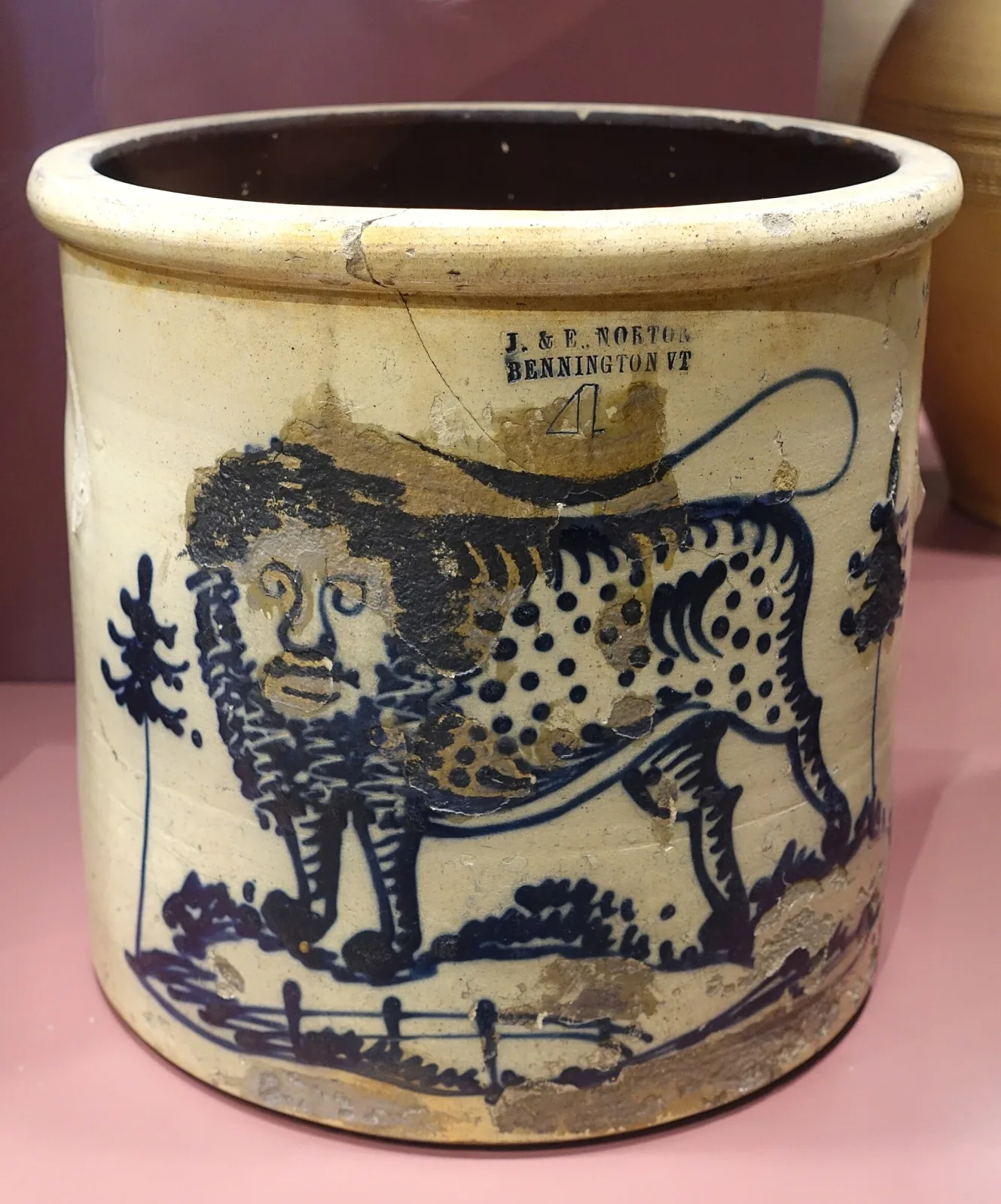
1. Cobalt Blue Decoration
Cobalt blue is the most iconic stoneware decoration:
- Application methods: Brushed, stenciled, and stamped designs
- Common motifs: Flowers, birds, animals, geometric patterns, and numbers
- Regional styles: Different decorative vocabularies by region
- Quality indicators: Hand-painted vs. stenciled vs. stamped decoration
- Color variations: Deep blue to light blue, sometimes with purple tones
2. Incised and Stamped Decoration
Other decoration techniques include:
- Incised decoration: Carved designs made before firing
- Stamped decoration: Impressed designs using carved stamps
- Applied decoration: Clay elements added to the surface
- Sponged decoration: Natural or cut-sponge stamping, characteristic of later utilitarian crocks and explored fully in our spongeware pottery identification guide
- Combined techniques: Multiple decoration methods on single pieces
3. Regional Decorative Styles
Different regions developed distinct decorative traditions:
- Northeastern US: Elaborate floral designs, often with birds and animals
- Mid-Atlantic: Geometric patterns, simple floral motifs
- Midwest: Bold, simple designs, often with maker's names prominently displayed
- German tradition: Traditional European motifs, often more formal
4. Decoration Quality Assessment
When evaluating decoration quality:
- Skill level: Hand-painted vs. stenciled vs. stamped
- Complexity: Simple vs. elaborate designs
- Execution: Neatness and precision of application
- Originality: Unique designs vs. mass-produced patterns
Maker's Marks and Capacity Marks
1. Maker's Marks
Maker's marks are crucial for identification and valuation:
- Impressed marks: Carved stamps pressed into the clay before firing
- Cobalt marks: Painted or stenciled names and symbols
- Location: Usually on shoulders, bases, or sides
- Content: Potter's name, company name, location, or symbols
- Dating clues: Mark style and content can indicate period
2. Capacity Marks
Capacity marks indicate the size of the container:
- Standard sizes: 1, 2, 3, 5, 10 gallons (sometimes 1/2, 1/4, 1/8)
- Application methods: Impressed, painted, or stenciled
- Location: Usually on shoulders or sides
- Consistency: Should match the actual size of the piece
- Dating value: Style and placement can help date pieces
3. Mark Analysis Techniques
When analyzing marks:
- Compare to known examples: Use reference books and databases
- Check for consistency: Marks should match the piece's age and style
- Look for wear: Marks should show appropriate aging
- Verify placement: Marks should be in typical locations
- Check for modern fonts: Anachronistic typefaces indicate reproductions
4. Common Mark Types
Familiarize yourself with common mark categories:
- Individual potters: Personal names and initials
- Company marks: Business names and symbols
- Location marks: City, state, or country indicators
- Quality marks: Symbols indicating quality or certification
Regional Variations and Traditions
1. Northeastern United States
The Northeast was a major stoneware production center:
- New York: Albany, New York City, and Hudson Valley production
- New Jersey: Trenton and surrounding areas
- Pennsylvania: Philadelphia and eastern Pennsylvania
- Characteristics: Elaborate decoration, high-quality salt glaze, diverse forms
- Notable makers: Remmey family, Crolius family, many others
2. Mid-Atlantic Region
Mid-Atlantic stoneware has distinct characteristics:
- Maryland: Baltimore area production
- Virginia: Richmond and northern Virginia
- North Carolina: Piedmont region
- Characteristics: Simpler decoration, practical forms, regional clay bodies
3. Midwest and Western States
Midwestern stoneware developed later but has unique features:
- Ohio: Cincinnati and northern Ohio
- Indiana: Southern Indiana production
- Illinois: Chicago area and southern Illinois
- Characteristics: Bold decoration, large sizes, maker prominence
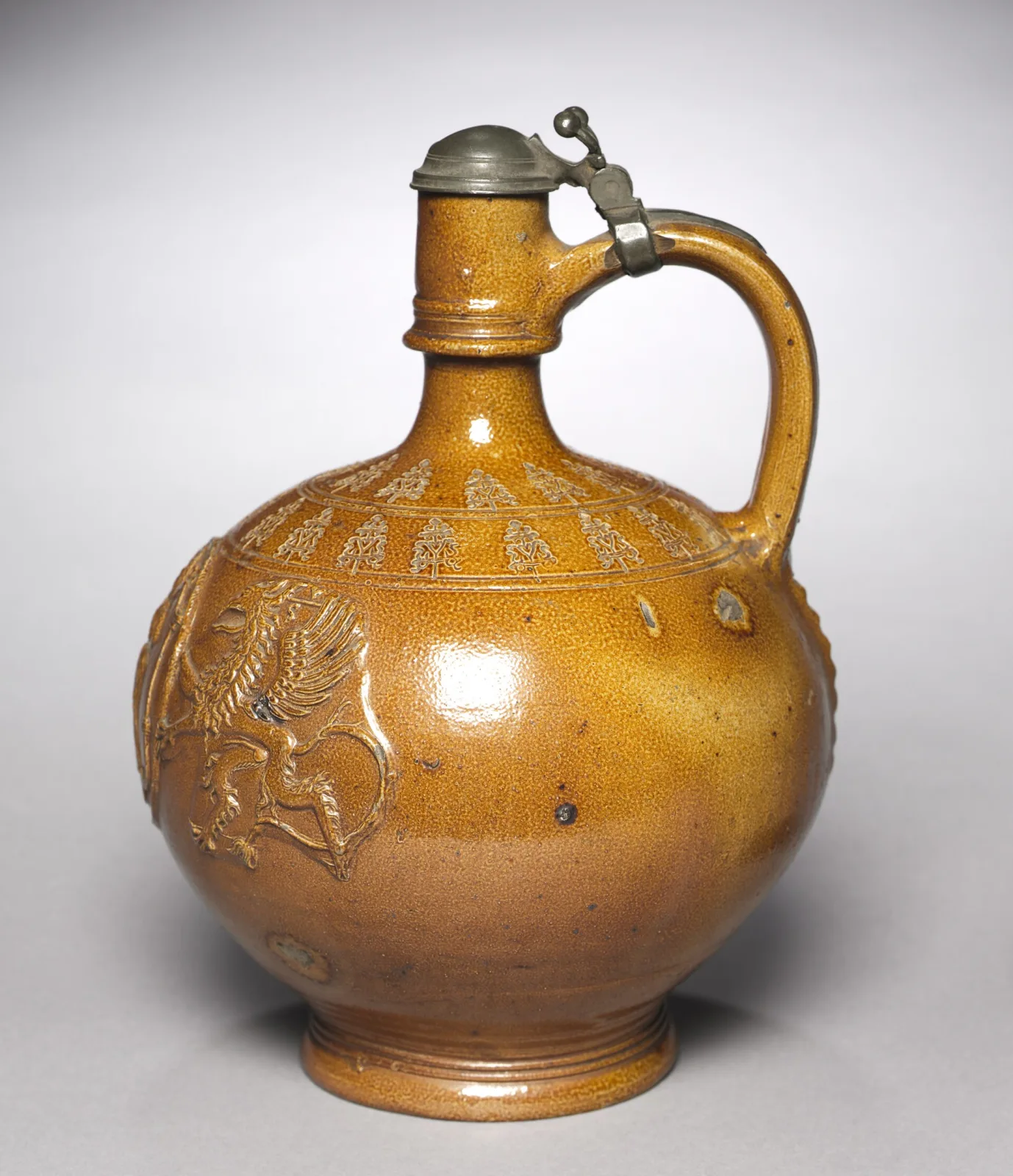
4. European Traditions
European stoneware influenced American production:
- Germany: Traditional salt glaze techniques
- England: Industrial production methods
- France: Artistic decoration traditions
- Influence: Techniques, forms, and decorative styles
Condition Assessment and Damage
1. Types of Damage
Common types of stoneware damage include:
- Hairlines: Fine cracks that don't go through the piece
- Base chips: Damage to the bottom edge
- Rim damage: Chips or cracks around the top
- Glaze loss: Missing or damaged glaze areas
- Structural breaks: Pieces that have been broken and repaired
2. Damage Assessment Techniques
Use multiple methods to assess damage:
- Visual examination: Look for cracks, chips, and repairs
- Sound testing: Tap for dull sounds indicating cracks
- UV examination: Detect repairs and overpainting
- Raking light: Use angled light to reveal surface irregularities
- Magnification: Examine details under magnification
3. Repair Identification
Learn to identify common repairs:
- Filler materials: Putty, epoxy, or other fillers
- Overpainting: Paint applied to hide damage
- Glue repairs: Adhesives used to reattach broken pieces
- UV fluorescence: Modern materials often fluoresce under UV light
4. Condition Grading
Standard condition grades for stoneware:
- Mint: No damage, original condition
- Excellent: Minor wear, no significant damage
- Very Good: Some wear, minor chips or hairlines
- Good: Moderate wear, some damage but stable
- Fair: Significant wear or damage, may need restoration
- Poor: Extensive damage, limited value
Value Determination and Market Factors
1. Primary Value Factors
Several factors determine stoneware value:
- Rarity: Limited production, unique features, regional scarcity
- Condition: Original finish, minimal damage, proper restoration
- Maker significance: Famous or important potters
- Decoration quality: Hand-painted vs. stenciled vs. stamped
- Size and form: Larger pieces often command higher prices
2. Market Trends
Current market conditions affect values:
- Collector interest: Growing or declining demand for specific types
- Economic factors: Disposable income, interest rates, inflation
- Regional preferences: Local vs. national vs. international markets
- Exhibition value: Pieces suitable for display or museum collections
3. Valuation Methods
Professional appraisers use several approaches:
- Comparable sales: Recent auction results and dealer prices
- Replacement cost: Cost to acquire similar pieces
- Condition adjustment: Modifying values based on damage
- Market analysis: Current supply and demand factors
4. Investment Considerations
Stoneware as an investment:
- Long-term appreciation: Historical value trends
- Market volatility: Short-term price fluctuations
- Storage requirements: Proper care and display needs
- Insurance considerations: Protection for valuable collections
Digital Tools for Stoneware Identification
1. AI-Powered Apps
Modern technology has revolutionized stoneware identification:
- Antique Identifier App: Instant AI-powered identification from photos
- Image recognition: Compare pieces with vast databases
- Style matching: Identify regional styles and periods
- Mark analysis: AI assistance with maker's mark identification
- Condition assessment: AI analysis of damage and repairs
2. Online Databases
Digital resources for research and comparison:
- Museum collections: High-resolution images and detailed descriptions
- Auction archives: Historical sales data and pricing
- Collector forums: Community knowledge and experience sharing
- Expert blogs: Specialized knowledge and current trends
- Social media groups: Real-time sharing and identification help
3. Advanced Imaging Technology
Emerging technologies in stoneware identification:
- 3D scanning: Detailed examination of complex forms
- High-resolution photography: Detailed surface and mark analysis
- UV photography: Document fluorescence for condition assessment
- X-ray imaging: Internal structure examination
Expert Tips and Best Practices
1. Building Your Knowledge Base
- Study period-specific stoneware books and catalogs
- Visit museums with stoneware collections
- Attend antique shows and auctions
- Join stoneware collector organizations
- Take courses in ceramics and art history
- Handle as many authentic pieces as possible
2. Developing Your Eye
- Learn to recognize quality materials and craftsmanship
- Understand the difference between age and wear
- Study the evolution of decorative styles
- Familiarize yourself with regional variations
- Practice identifying maker's marks and capacity marks
3. Avoiding Common Mistakes
- Don't rely solely on online research
- Beware of "too good to be true" deals
- Always verify provenance claims
- Get professional appraisals for valuable pieces
- Understand that condition significantly affects value
- Be cautious of reproductions and fakes
4. Using Technology Wisely
- Use AI apps like Antique Identifier as a starting point
- Verify AI identifications with traditional methods
- Combine digital tools with expert consultation
- Keep up with new identification technologies
- Build your own digital reference library
5. Conservation and Care
- Store stoneware in stable temperature and humidity
- Avoid direct sunlight and extreme temperature changes
- Handle pieces carefully to prevent damage
- Clean only when necessary using appropriate methods
- Document any repairs or restoration work
Conclusion
Stoneware identification is a skill that develops over time through study, practice, and experience. While modern tools like the Antique Identifier app can provide instant insights, they work best when combined with traditional knowledge and expert consultation. Remember that every piece of stoneware tells a story about our agricultural and domestic past, and the more you learn about identification techniques, the better you'll become at uncovering those stories.
Whether you're using traditional methods or cutting-edge technology, the key to successful stoneware identification is patience, research, and a willingness to learn. Start with the basics, build your knowledge gradually, and don't hesitate to seek expert advice when needed. The world of stoneware collecting offers endless opportunities for discovery and appreciation of our ceramic heritage.