
Antique Sheet Music Identification Guide: Covers, Publishers & Value
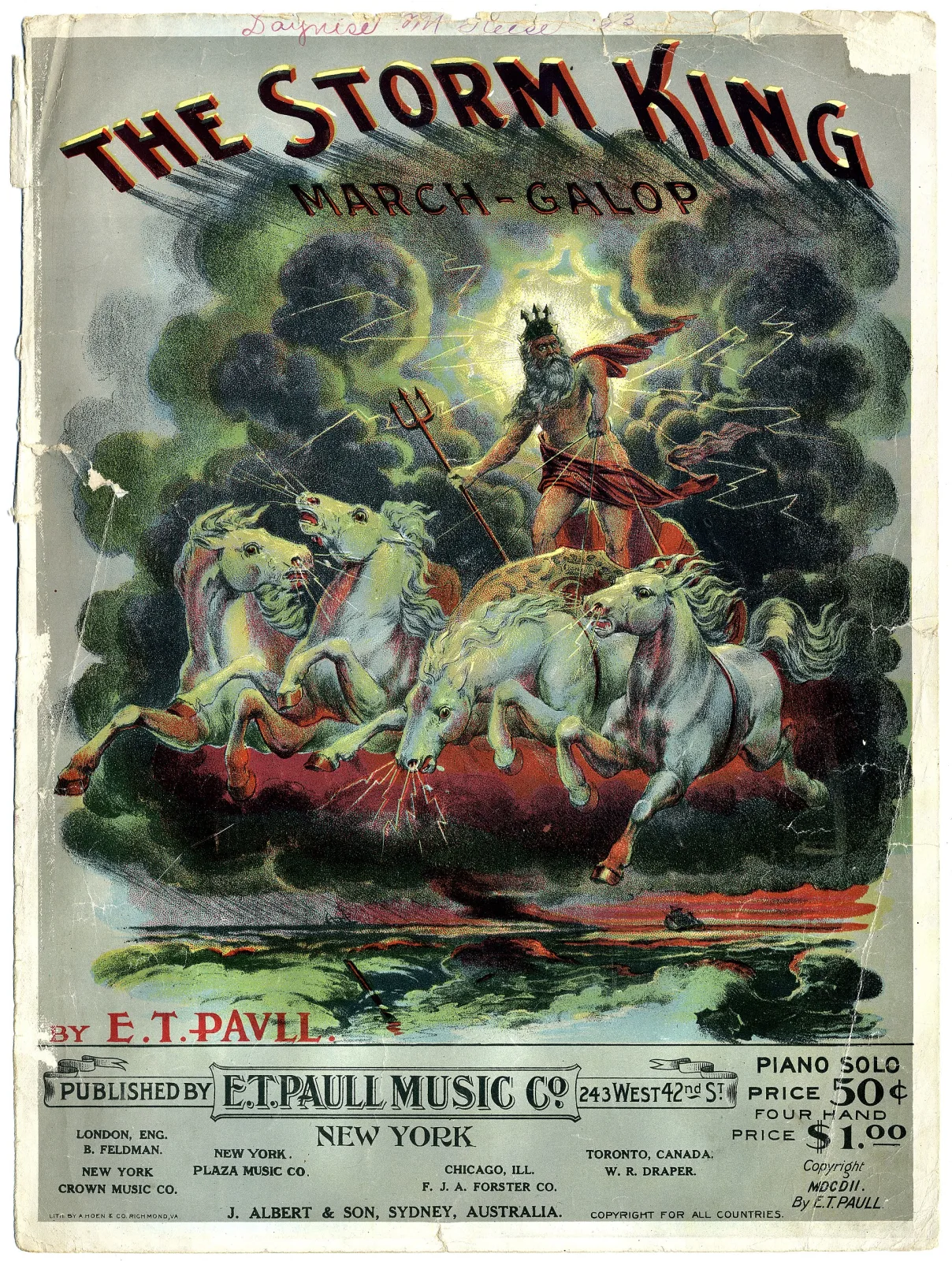
Antique sheet music sits at the crossroads of music history, graphic design, and social commentary. Between the 1820s and the 1940s, publishers in New York, Boston, London, Leipzig, and Paris produced millions of large-format paper folios — most about 10 by 13 inches — that recorded everything from parlor ballads and minstrel tunes to Civil War marches, ragtime cakewalks, Tin Pan Alley hits, and early film themes. The covers, often lithographed in vivid color, are now prized far beyond the music inside them.
Identifying a piece of sheet music means reading three layers at once: the music itself, the printed cover, and the back-page advertising. Each layer carries dating clues. The cover lithographer's signature, the publisher's address, the copyright date, the typography, and the cast photograph (when one is present) all converge on a fairly narrow date range — often within two or three years.
This guide walks through the major eras and styles, the publishers and lithographers worth knowing by name, the marks and imprints that fix a date, the rarity factors that drive prices into the hundreds or thousands, and the condition issues that quietly cut value in half. Whether you have a single inherited folio or a stack found in a piano bench, you will finish this guide knowing what you have and what to look at next.
Table of Contents
- What Counts as Antique Sheet Music
- The Major Eras: 1820 to 1940
- Anatomy of a Sheet Music Folio
- Major Publishers and Imprints
- Cover Lithographers Worth Knowing
- Dating Clues: Copyright, Plate Numbers, Addresses
- Reading Cover Art by Period
- Collectible Categories and Subjects
- What Drives Rarity and Value
- Condition Grading and Common Damage
- Reprints, Facsimiles, and Reproductions
- Storage, Handling, and Conservation
- Research Tools and Reference Works
- Common Mistakes Beginners Make
- Frequently Asked Questions
What Counts as Antique Sheet Music
The term "sheet music" covers any printed musical score sold as loose folded sheets rather than bound into a book. The form took its modern shape in the 1820s and 1830s when steam-powered printing and lithography made illustrated covers cheap enough for mass production. Most collectors treat anything published before about 1950 as antique or vintage, with the strongest collector demand falling between 1840 and 1925.
A typical folio is two folded leaves of paper — four sides — measuring about 10½ by 13½ inches. The front cover carries the title and illustration. The inside pages hold the music. The back is usually an advertisement for the publisher's other titles. Larger formats (folios printed on a single oversize sheet, often 11 by 14) appeared in the late nineteenth century and became standard for show tunes and movie themes through the 1920s.
Sheet Music vs. Songbooks vs. Music Books
A bound book of compiled songs is not sheet music. A piano method, hymnal, or opera score in board covers belongs to the broader category of antique books. Sheet music, properly speaking, is the loose-leaf, single-piece publication. The distinction matters because the bound forms follow different dating rules — publication date on the title page, edition number, binding evidence — while sheet music is dated almost entirely from imprints and copyrights printed on the cover and music plates.
The Standard Folio
From roughly 1860 onward, almost all American and British sheet music followed a four-page convention: cover, two pages of music, back-cover advertising. Before 1860, formats varied more — some early American imprints are single sheets printed on one side only, others are six- or eight-page folios for longer works. European imprints often ran longer, especially for piano arrangements of operatic excerpts.
The Major Eras: 1820 to 1940
Sheet music collectors generally break the long nineteenth and early twentieth centuries into recognizable eras, each defined by printing technology, dominant musical styles, and visual conventions. Knowing the era at a glance is the fastest way to date a piece before you read the imprint.
Early Lithographic Era (c. 1820 to 1860)
The earliest American sheet music had plain typographic covers, sometimes with a small engraved vignette. By the 1840s, full-cover lithographed illustrations became standard for important titles. Boston firms like Oliver Ditson and Henry Prentiss, New York's Firth, Pond & Co., and Philadelphia's Lee & Walker dominated this era. Covers from this period are usually monochrome (black ink on cream paper) or hand-tinted in two or three flat colors. Subjects range from sentimental ballads and parlor songs to political campaign tunes.
Civil War Era (1861 to 1865)
The American Civil War drove an explosion of patriotic, military, and sentimental sheet music. Both Union and Confederate publishers issued thousands of titles. Confederate imprints (especially New Orleans, Augusta, Macon, and Richmond firms) are scarce because southern paper supplies collapsed after 1862. Civil War covers often feature flag motifs, regimental dedications, soldier portraits, and battle scenes. Original Confederate imprints in good condition can bring four-figure prices. For broader context on the period, see our military artifacts guide.
Chromolithograph Era (c. 1865 to 1900)
After the war, full-color chromolithography became the dominant cover technology — the same printing process that flooded American households with the small Victorian trade cards of the 1880s and 1890s. Printers used a separate stone for each color — sometimes ten or twelve — to build up rich, painterly images. Covers from this era show portraits of stage performers, scenes from minstrel shows, depictions of new technologies (bicycles, telephones, electric lights), and increasingly elaborate floral and decorative designs. The artistic peak runs roughly 1885 to 1900.
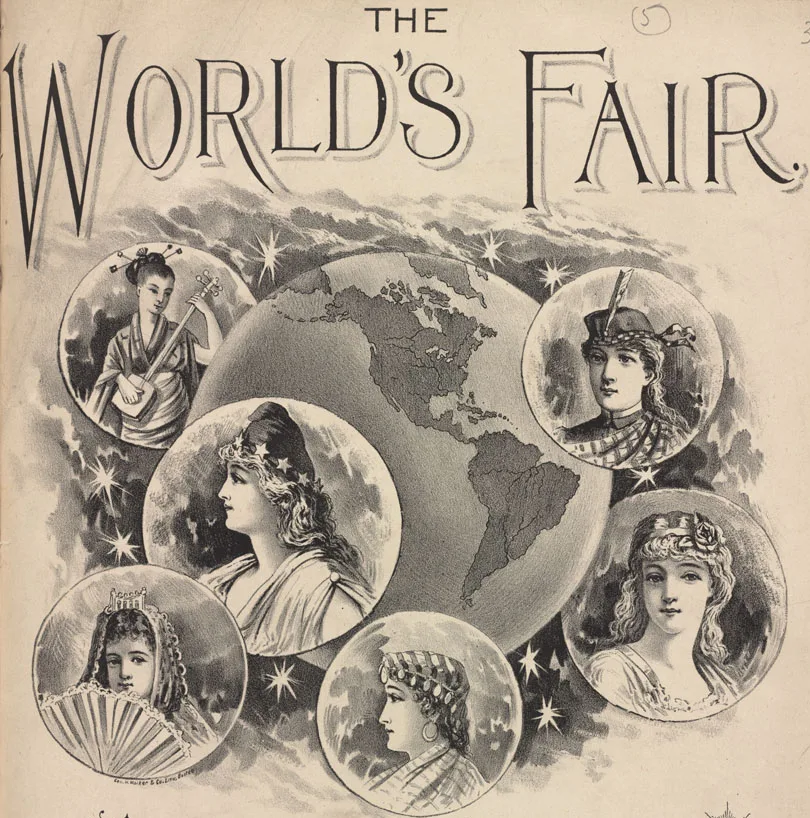
Ragtime and Tin Pan Alley (1895 to 1919)
The ragtime craze and the consolidation of the New York music-publishing district known as Tin Pan Alley produced the golden age of collectible sheet music. Scott Joplin's "Maple Leaf Rag" (1899) is the genre's signature work. Covers from this period embraced bold color, art-nouveau borders, and prominent cast photographs of vaudeville performers. Race-related imagery — including overtly racist caricature on minstrel and "coon song" covers — is common and historically significant, though it makes some material difficult to display.
World War I Era (1914 to 1918)
The war years generated patriotic, sentimental, and morale-boosting songs by the thousand. "Over There," "Keep the Home Fires Burning," and "Pack Up Your Troubles" are emblematic. Covers from this era often use red, white, and blue color schemes, soldier portraits, and flag imagery. Prices for war songs are generally modest because they were printed in huge quantities, but exceptional cover art — especially by named illustrators like Norman Rockwell or James Montgomery Flagg — commands premium money.
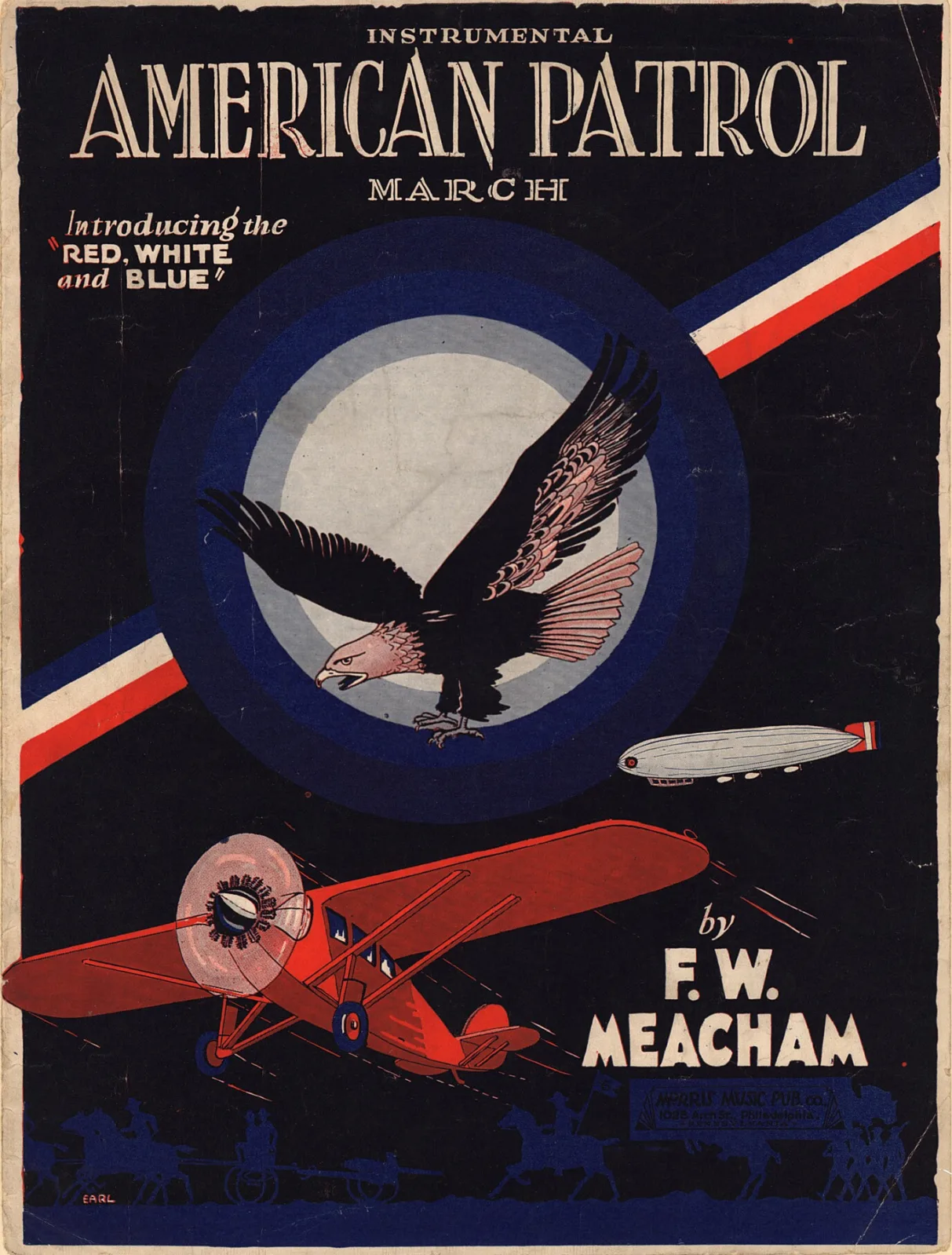
Jazz Age and Show Tune Era (1919 to 1929)
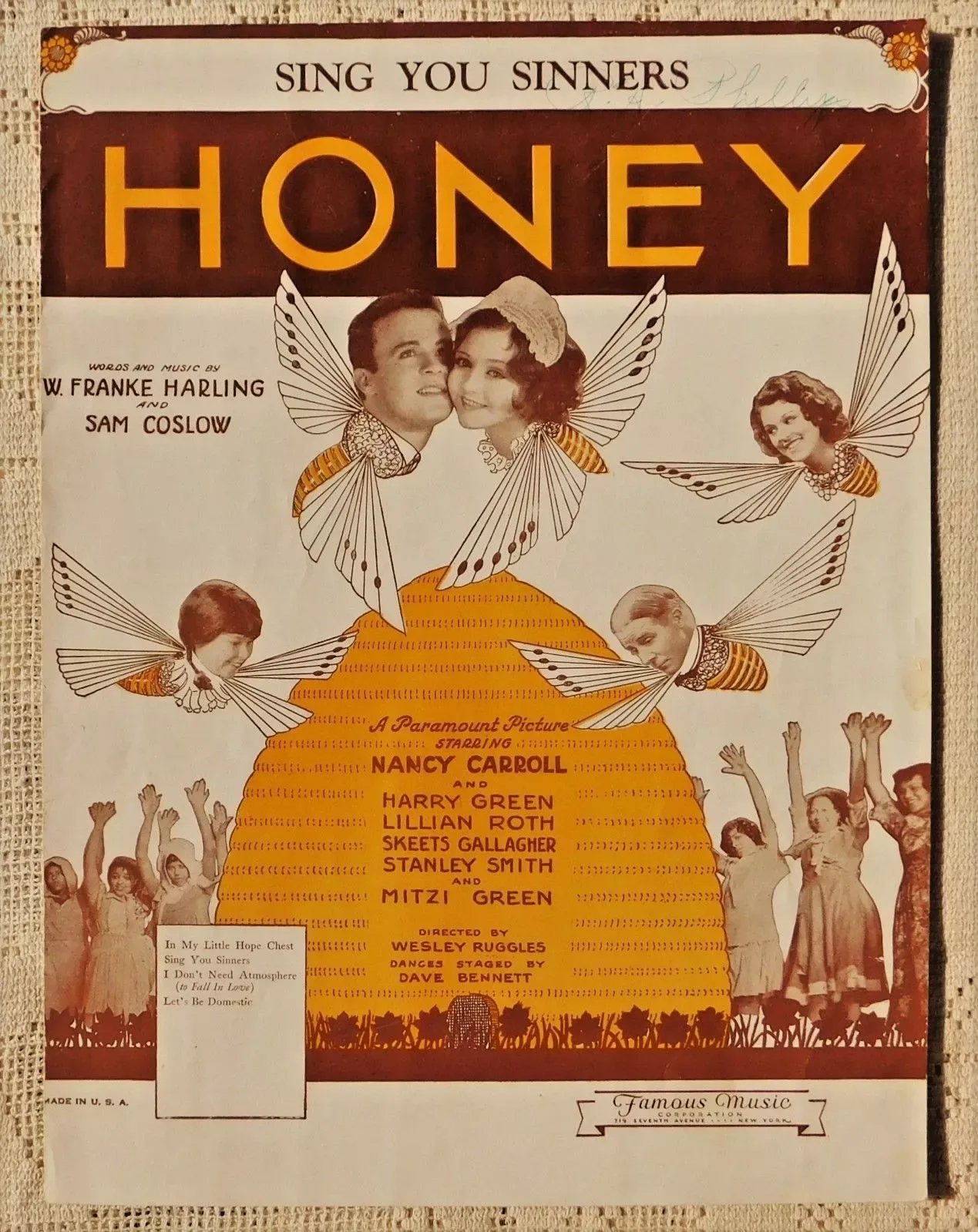
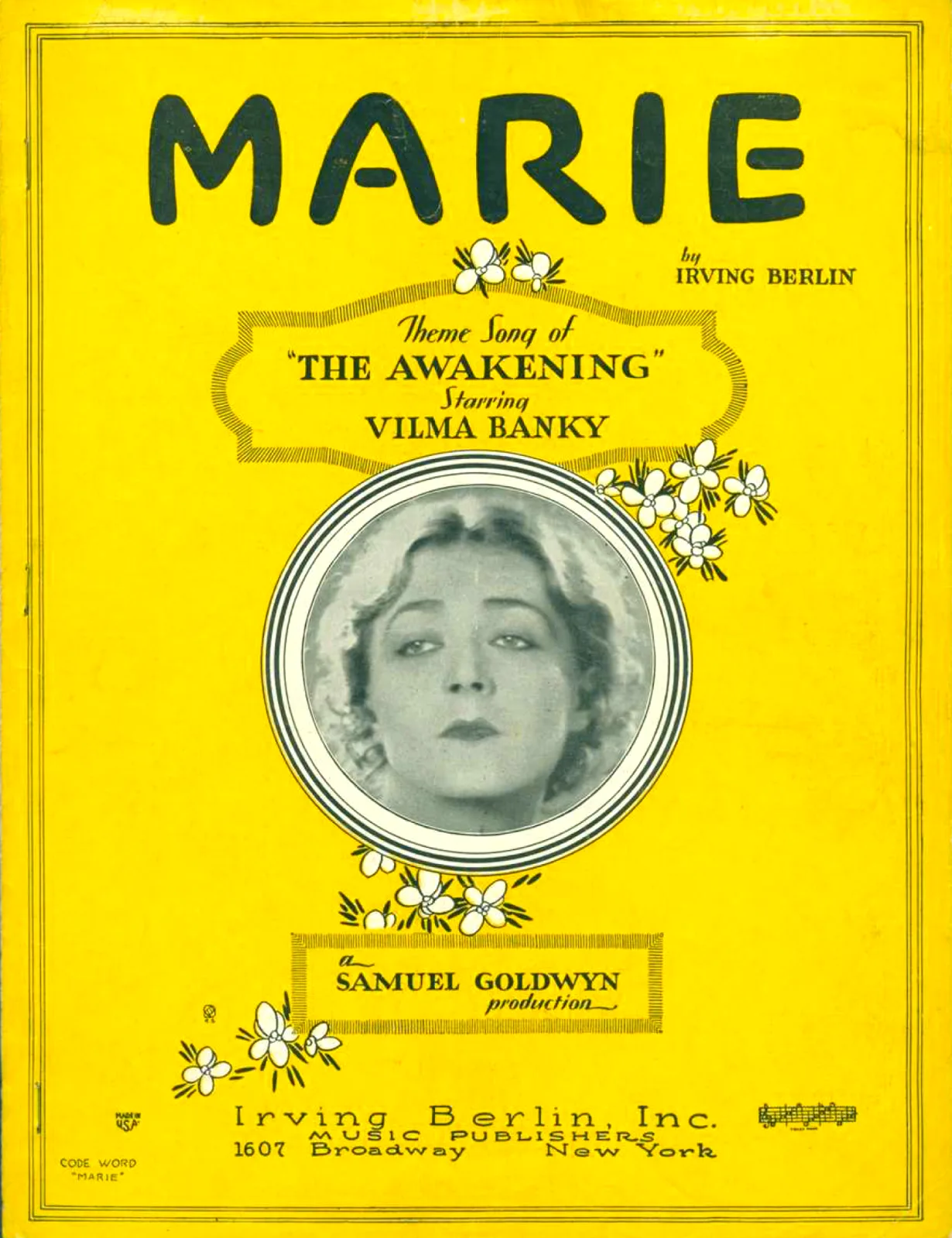
The 1920s brought Broadway show tunes, jazz standards, and the early film theme song. Covers grew larger (most 1920s pieces are 11 by 14) and embraced art-deco geometry, flapper imagery, and stylized lettering. Composers like George Gershwin, Irving Berlin, Cole Porter, and Jerome Kern dominated. Photographic covers featuring stars like Al Jolson, Eddie Cantor, and Bessie Smith are particularly collected. For visual style cues, see our art deco collectibles guide.
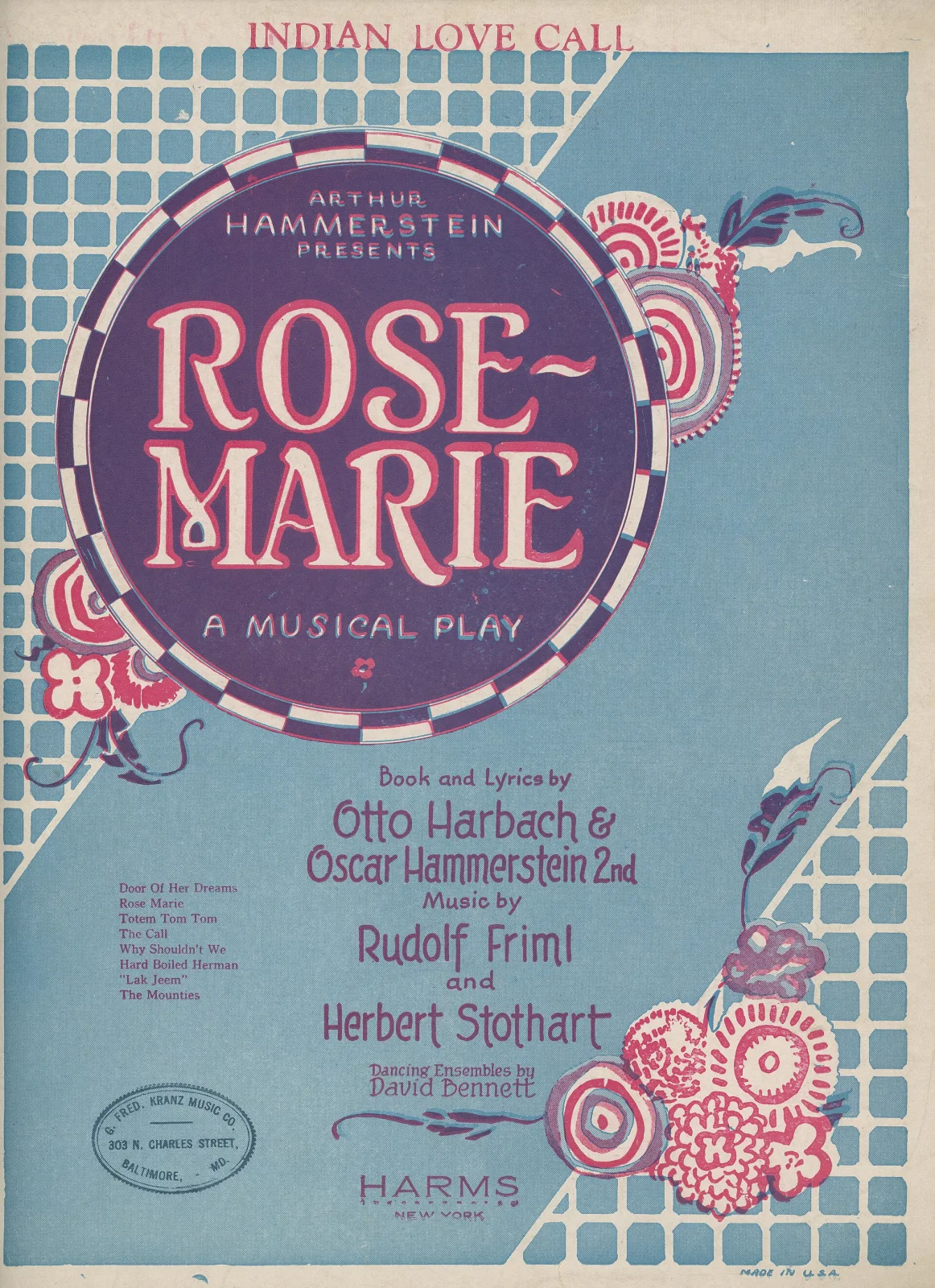
Depression and Early Film Era (1929 to 1940)
Sheet-music sales declined sharply after 1929 as radio and recorded music took over. Covers in this period often promote movies and feature publicity stills of film stars. Publishers consolidated; many older firms were absorbed into a few large concerns. Disney sheet music — early Mickey Mouse and Silly Symphonies titles — emerges as a distinct collecting category around this time.
Anatomy of a Sheet Music Folio
Every collectible piece of sheet music has the same six identification points. Read them in order and most pieces give up their date and origin in under a minute.
1. Title and Subtitle
The title is usually the largest type on the cover. The subtitle (often "Song," "March," "Two-Step," "Fox-Trot," "Waltz," "Cake-Walk," or "Rag") is a strong era indicator: "Cake-Walk" peaks 1898 to 1905, "Two-Step" runs through about 1915, "Fox-Trot" begins about 1914 and dominates the 1920s.
2. Composer and Lyricist Credit
Names are usually printed below or beside the title. For collectors, certain names trigger immediate value flags — Stephen Foster, Scott Joplin, James Scott, Joseph Lamb, George M. Cohan, Irving Berlin, George Gershwin, Cole Porter, Jerome Kern, Harold Arlen, and Duke Ellington being the headliners.
3. Publisher Imprint
The publisher's name and address appear at the bottom of the cover. Address changes are dating gold (see the publisher section below).
4. Copyright Notice
Copyright text usually sits at the bottom of the first music page, occasionally on the cover. American copyright notices follow a strict statutory form: "Copyright [year] by [publisher]" or "Copyright MCMXX by [publisher]." Roman-numeral dates are common 1900-1930.
5. Plate Number
A small number printed at the bottom of each music page — often four or five digits — is the publisher's internal plate number. For major publishers, plate numbers run sequentially through their entire catalog. Reference works (see the research section) match plate numbers to issue dates with surprising precision.
6. Cover Artist or Lithographer Signature
The cover artist's signature, when present, is usually tucked into a corner of the illustration. The lithographer's mark — a small printed credit like "Pub. by Hatch & Co. NY" or "Quigley Litho Co. Cincinnati" — appears in tiny type along the bottom or side margin. Both are powerful dating clues.
Major Publishers and Imprints
A handful of publishers dominate the sheet-music landscape. Knowing their addresses, era of operation, and typical output lets you date pieces quickly.
American Publishers
Oliver Ditson & Co. (Boston, 1835-1931) — the largest American music publisher of the nineteenth century. Address evolved from 115 Washington St. (1845-1857) to 277 Washington St. (1857-1864) to 451 Washington St. (1864-1890s). The Ditson address is one of the cleanest dating tools in the field.
Firth, Pond & Co. (New York, 1847-1863) — published most of Stephen Foster's hits. Subsequent firm Firth, Son & Co. (1863-1867) signals the post-Foster era.
Lee & Walker (Philadelphia, 1848-1875) — major Philadelphia house, absorbed by Ditson in 1875.
M. Witmark & Sons (New York, 1885-1929) — the first true Tin Pan Alley publisher. Multiple address moves up Broadway track the firm's growth: 32 East 14th St., 51 West 28th St., and finally the Witmark Building at 144-146 West 37th St.
Leo Feist (New York, 1897-1934) — Tin Pan Alley powerhouse. The famous slogan "You Can't Go Wrong With Any Feist Song" appears on most covers from 1905 onward.
Jerome H. Remick & Co. (Detroit/New York, 1898-1931) — published much of the ragtime catalog and many early Gershwin pieces. Detroit and New York addresses both appear, often together.
John Stark & Son (Sedalia/St. Louis/New York, 1882-1929) — published Scott Joplin and most of the classic ragtime canon. Stark imprints in original first printings are among the most valuable American sheet music.
T.B. Harms (New York, 1881-1929) — specialized in show tunes; published Jerome Kern and early Gershwin.
Irving Berlin Inc. (New York, 1919-1944) — Berlin's own firm, publishing his catalog and others.
British and European Publishers
Chappell & Co. (London, 1810-present) — the dominant British music publisher. Bond Street and New Bond Street addresses date pieces precisely.
Boosey & Co. (London, 1816-1930) — merged with Hawkes in 1930.
Novello, Ewer & Co. (London, 1811-1898) — major classical publisher.
Schott (Mainz, 1770-present) — German house, important for classical first editions.
Breitkopf & Härtel (Leipzig, 1719-present) — the oldest music publisher; classical first editions bring strong prices.
Cover Lithographers Worth Knowing
Sheet-music covers were rarely printed by the music publisher itself. Instead, publishers contracted with specialized lithographic shops. Knowing the major lithographers — and the artists who worked for them — separates ordinary copies from collector pieces.
Major American Lithographers
Sarony, Major & Knapp (New York, 1857-1867), succeeded by Major & Knapp (1867-1871) and Knapp & Co. — printed many of the finest Civil War and post-war covers.
J.H. Bufford (Boston, 1835-1890) — Boston's leading sheet-music lithographer. Winslow Homer worked as an apprentice illustrator for Bufford in the 1850s; Bufford-printed covers from that period are sometimes Homer's earliest published work.
Currier & Ives (New York) — better known for prints, but produced sheet-music covers in the 1850s and 1860s. Genuine Currier & Ives sheet-music covers are rare and valuable. For broader context, see our guide to dating antique prints.
Hatch & Co. (New York) — late-nineteenth-century powerhouse, printed many vaudeville and minstrel covers.
Strobridge Lithographing Co. (Cincinnati) — best known for circus posters; their sheet-music covers are bright, large, and prized.
Quigley Litho Co. (Cincinnati) — Tin Pan Alley era, particularly active 1900-1920.
Named Cover Artists
Cover artists who signed their work command premium prices today. Watch for:
- E.T. Paull — both composer and self-publisher; his march covers (1894-1923) are some of the most spectacular chromolithographs in the field.
- Albert Wilfred Barbelle — prolific Tin Pan Alley illustrator, 1910s-1930s.
- Andre De Takacs — art-nouveau cover specialist, 1900-1919.
- Frederick S. Manning, Etheridge, Pfeiffer — recurring signatures on quality 1900s-1920s covers.
- Norman Rockwell, James Montgomery Flagg, Rose O'Neill — famous illustrators who occasionally produced sheet-music covers; these crossover pieces command strong prices.

Dating Clues: Copyright, Plate Numbers, Addresses
Once you know what to look for, dating sheet music is more deterministic than dating most other antiques. Four converging clues usually fix the year.
Copyright Date
The copyright statement is the single best clue. American statutory copyright requires year and claimant. A 1908 copyright tells you the music was first registered in 1908. Beware: the cover may carry a later printing, while the music plates carry the original copyright. Pieces frequently went through multiple printings, sometimes for decades. The copyright date is the floor for the actual print date, not the ceiling.
Publisher Address
Most major publishers moved offices several times. Each address corresponds to a known date range. A piece bearing M. Witmark's "51 West 28th Street" address must date 1893-1903; the "144 West 37th Street" Witmark address dates 1903 onward. Detailed publisher address chronologies are published in standard reference works (see the research section). For a Witmark, Feist, or Remick piece, address alone often dates the printing within five years.
Plate Numbers
Plate numbers — those small numerals at the bottom of music pages — run sequentially within a publisher's catalog. For Oliver Ditson, plate numbers reach roughly 5,000 by 1850, 30,000 by 1860, and 80,000 by 1890. A Ditson plate number of 28,000 confidently dates the piece to about 1860. Pamela King, Frank Hoffmann, and other reference compilers have published plate-number charts for major publishers.
Performer Photo or Dedication
From about 1895, covers frequently feature a photograph of the singer or band that introduced the song, with text like "As Featured by Sophie Tucker." The performer's career window narrows the date — Sophie Tucker's portrait covers, for example, range mostly 1908-1925. Cross-reference with the performer's known venues and recordings. For period photographs themselves, see our antique photographs guide.
Typography and Color Palette
Even without imprint clues, type and color identify the era. Pre-1860 covers use Didone (modern) and slab-serif types in heavy black. 1880s-1900s covers favor ornate Victorian display faces. Art-nouveau covers (1900-1910) use whiplash curves and tendril-like letter forms. Art-deco covers (1925-1940) use geometric sans-serifs, often in two or three high-contrast flat colors.
Reading Cover Art by Period
The illustration on the cover communicates as much as the music. Reading cover art is partly stylistic dating, partly cultural decoding.
Pictorial Vignettes (1840s-1860s)
Small framed scenes — a parlor, a battlefield, a sentimental tableau — printed in one or two colors. Often the title is set in elaborate calligraphic script across the top half of the page.
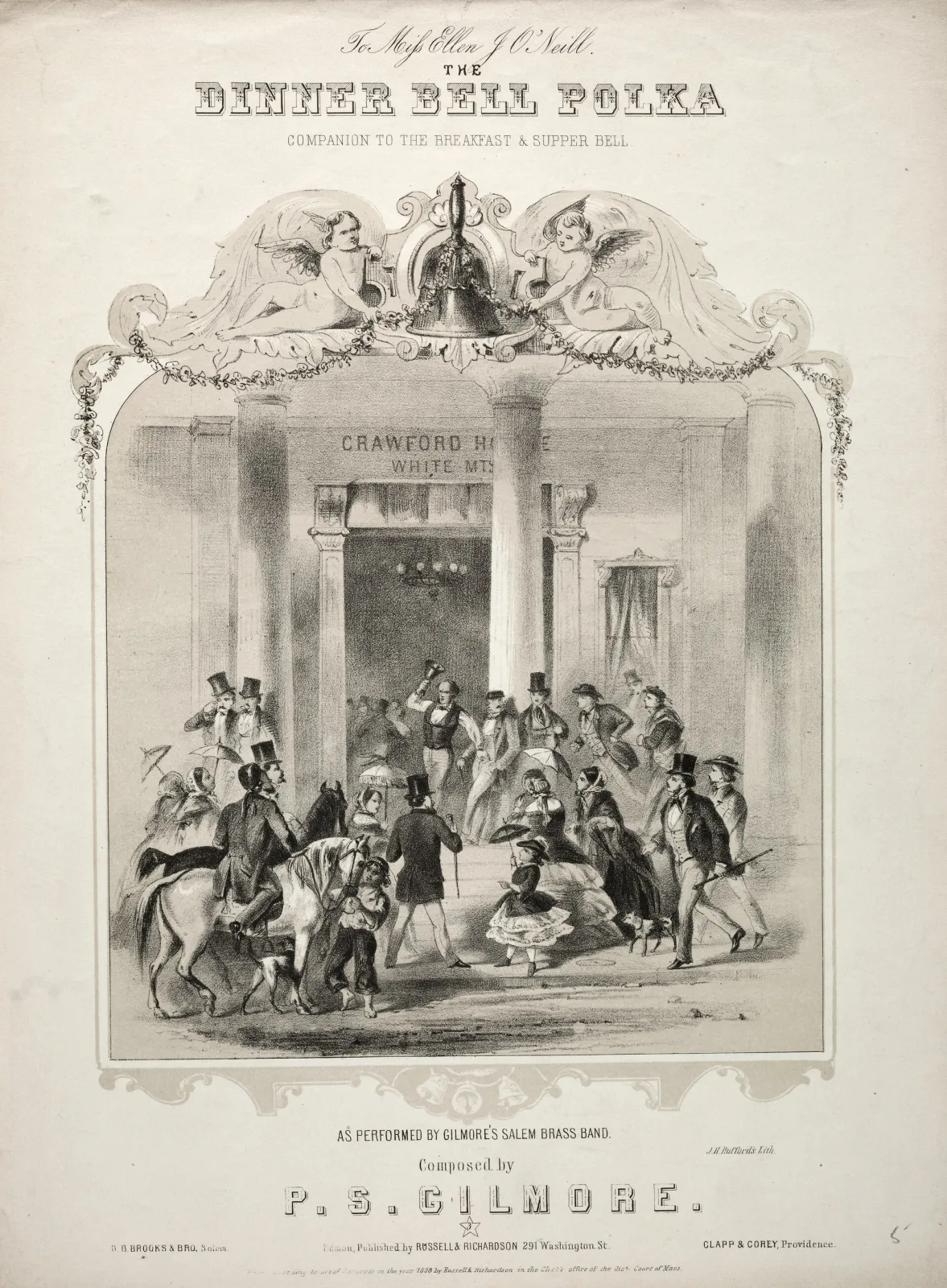
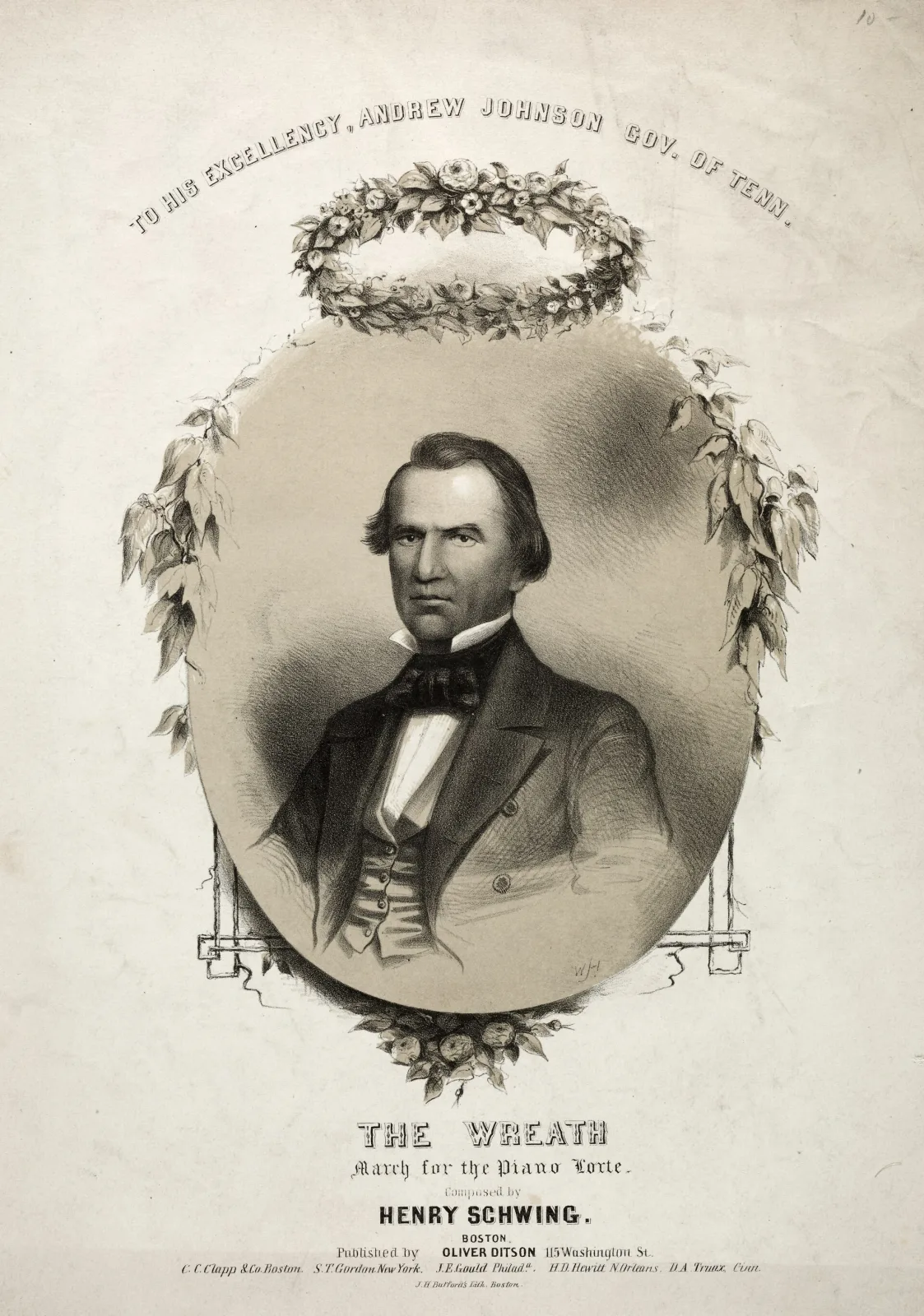
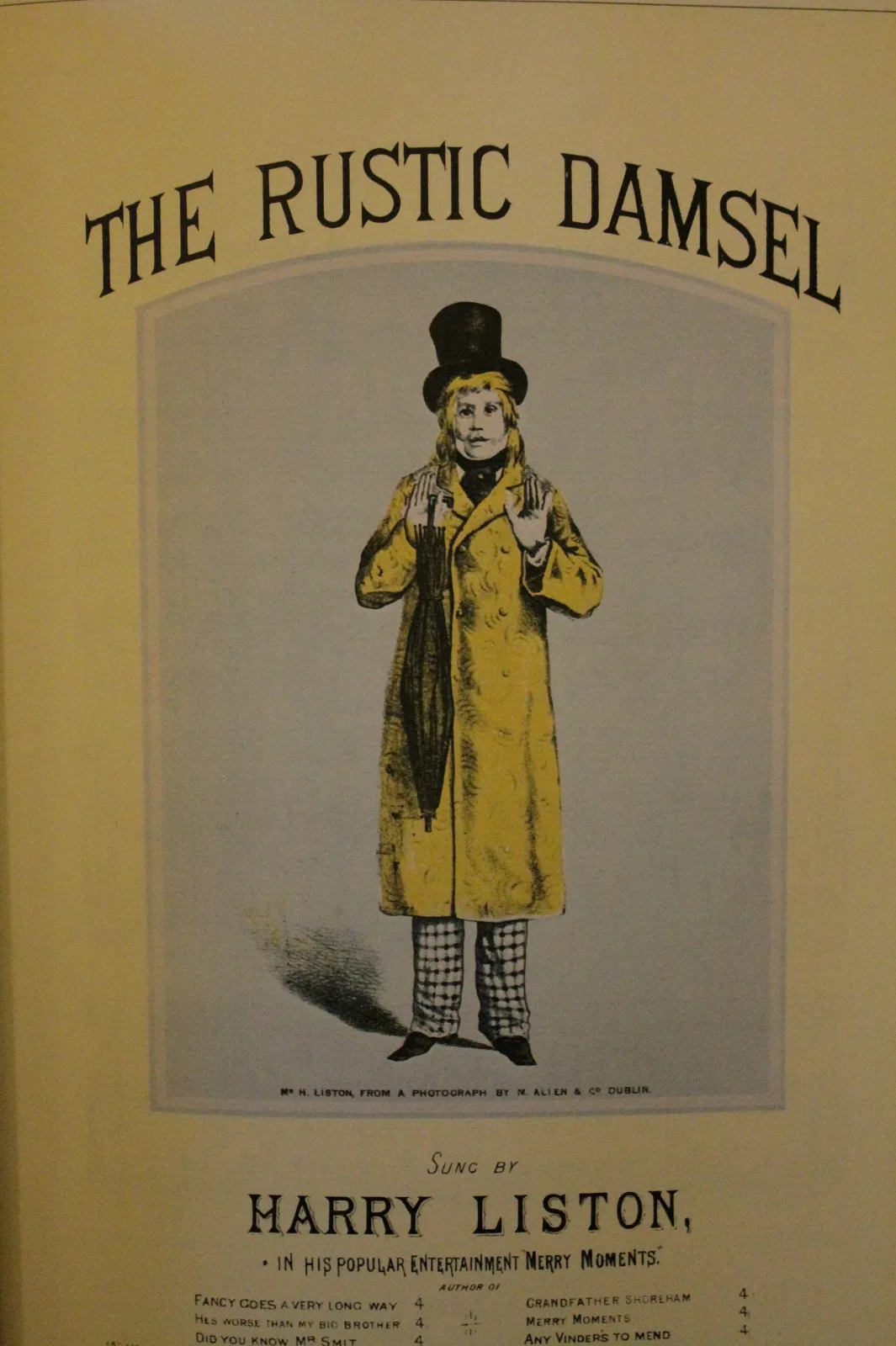
Both of these were drawn by Winslow Homer, before he was Winslow Homer. He worked as a commercial lithographer in Boston in the 1850s, and sheet-music covers were part of the trade — which is the single best argument for looking hard at the small print on a cover before you judge its value. A cover by a named artist who later became famous is worth a multiple of the same title from the same publisher drawn by somebody else, and the attribution usually rests on a signature a few millimetres high in the bottom margin of the image, or on nothing at all but scholarship. The pair also shows the two dominant cover formats side by side and the moment the field turned from one to the other: a scene that illustrates the song, against a portrait that sells the performer.
Portrait and Performer Covers (1860s onward)
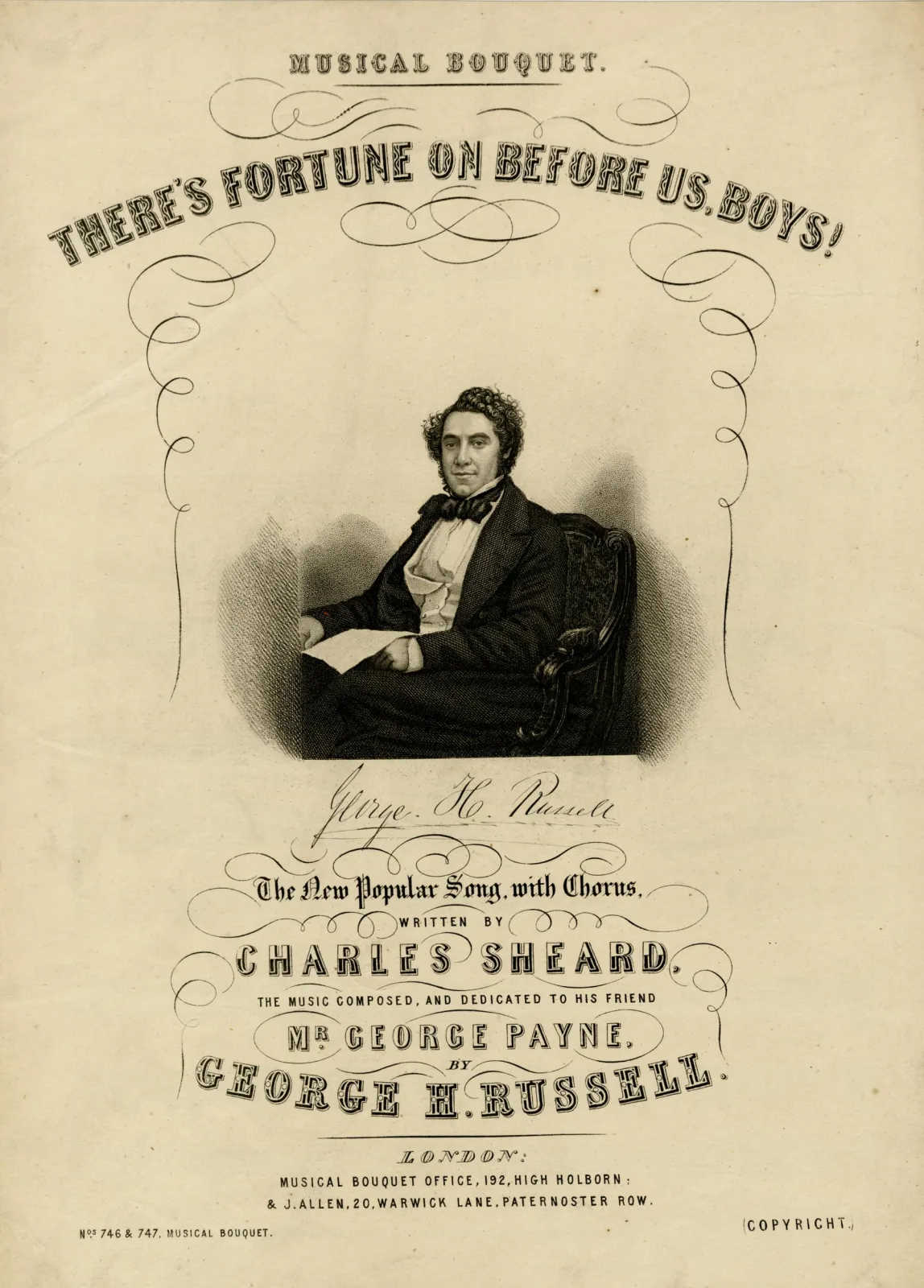
Engraved or lithographed portraits of the dedicatee or performer. Civil War regimental dedications, post-war minstrel-show stars, and turn-of-the-century vaudeville performers all show up as cover portraits.
Floral and Decorative Covers (1880s-1900s)
Elaborate borders, scrolling vines, ribbons, and pastel color washes. These are common on parlor songs and waltzes; they were the dominant style for "polite" home music.
Topical and Novelty Covers (1890s onward)
New technologies and current events appear as cover subjects: bicycles and "wheel" songs (1890s), telephone songs, automobile songs (1900s), aviation songs (after 1908), submarine songs (during WWI), radio songs (1920s). Topical covers are heavily collected as visual records of popular culture.
Race and Minstrelsy
From roughly 1850 to 1925, "coon songs," cakewalks, and minstrel-show pieces formed a major cover-art category. The imagery is racist by modern standards and often shocking. Collectors handle this material carefully — much of it has historical and academic significance, and some early Black composers (notably Scott Joplin, Bert Williams, and James Reese Europe) appeared on covers in this category.
Art Nouveau and Art Deco (1900-1940)
Stylized fashion-magazine covers. Strong examples by named illustrators command consistent collector demand. Covers featuring flapper imagery, jazz-age nightclub scenes, and early Hollywood glamour frequently sell well above face material.
Collectible Categories and Subjects
Because sheet music spans every popular music style and most major events of the nineteenth and early twentieth centuries, collectors usually specialize. The most active collecting categories include:
- Civil War sheet music — both Union and Confederate, with Confederate imprints especially scarce.
- Stephen Foster first editions — particularly Firth, Pond imprints of "Oh! Susanna," "Camptown Races," and "Old Folks at Home."
- Classic ragtime first printings — Stark imprints of Joplin, James Scott, Joseph Lamb, and other Stark composers.
- African-American composers and performers — early Black-composed and Black-performed material is increasingly recognized as historically significant.
- Show tunes and Broadway — first printings of Gershwin, Berlin, Porter, Kern, Rodgers and Hart, and Hammerstein songs.
- Topical covers — bicycle songs, automobile songs, aviation songs, telephone songs, baseball songs, suffrage songs.
- World's Fairs and expositions — Chicago 1893, St. Louis 1904, Panama-Pacific 1915, Chicago 1933, New York 1939.
- Political and presidential campaign songs — Lincoln, Roosevelt (TR and FDR), Wilson.
- Disney and early film themes — early Mickey Mouse, Silly Symphonies, "Snow White" titles.
- Patriotic and war songs — Spanish-American, WWI, and early WWII titles.
Specialty subjects intersect with other collecting fields: railroad songs cross over to railroad collectibles; nautical and naval songs to maritime collectibles; suffrage songs to political and women's-history collecting.
What Drives Rarity and Value
Most antique sheet music is worth between $3 and $25. Common Tin Pan Alley pieces from the 1910s and 1920s can be bought in stacks for under a dollar each at estate sales. The pieces that bring real money — three figures and up — share specific characteristics.
First Edition or First Printing
The first printing of a hit song is the prize. Subsequent printings, sometimes by other publishers under license, are far less valuable. Distinguishing first from later printings requires knowing the publisher's imprint progression, the original cover artist, and (where available) the plate number.
Famous Composer or Lyricist
Pieces by Foster, Joplin, Berlin, Gershwin, Porter, and Cohan command premiums when authenticated as first printings. Joplin's "Maple Leaf Rag" first printing (Stark, Sedalia, 1899) routinely brings $1,500-$5,000 in collector grade.
Documented Provenance
Pieces inscribed by composers, dedicated to identifiable historical figures, or accompanied by performer correspondence carry strong premiums. For broader provenance principles, see our authentication and provenance guide.
Outstanding Cover Art
Even a common song with a spectacular signed cover by a known illustrator commands strong prices. E.T. Paull marches in fine condition routinely bring $50-$200 each on cover-art demand alone.
Topical Significance
Covers depicting major historical events, technologies, or cultural moments — first powered flight, the Titanic disaster, Lindbergh's transatlantic crossing, the Hindenburg, early radio, women's suffrage — bring strong prices from non-music collectors.
Rarity of the Title
Some songs were hits that sold a million copies; others were issued in small print runs and forgotten. Print-run scarcity matters more than musical merit. A failed song from a small Confederate publisher may be worth $400; a million-selling 1918 hit, $5.
Condition
Condition multiplies or destroys value (see the next section).
Condition Grading and Common Damage
Sheet music collectors use a grading vocabulary borrowed from book and print collecting. Conditions in descending order:
- Mint / Fine — As issued. Bright cover, no foxing, no tears, no tape, no writing, square corners. Rare in antique sheet music.
- Very Good — Light wear, perhaps minor edge softening. No tears, no tape, no significant soiling.
- Good — Visible wear, some edge chipping, minor foxing or soiling, but complete and presentable.
- Fair — Significant wear: tears, tape repairs, separations along the spine fold, water staining, writing or stamps.
- Poor — Heavily damaged, missing pieces, brittle paper, pages detached.
Common Condition Issues
Foxing — small reddish-brown spots from mold or iron-particle oxidation in the paper. Universal in pre-1920 sheet music; light foxing is acceptable, heavy foxing reduces value sharply.
Spine separation — the center fold splits as paper ages. Sheet music is usually unbound and held together only by the fold; a clean fold is a strong condition point. Tape repair on the spine is a value-killer.
Edge chipping and tears — common at corners and along the fore-edge. Small chips are tolerable; tears extending into the illustration cost serious money.
Tape damage — old cellophane and masking tape have ruined more sheet music than any other single factor. Tape oxidizes into the paper, leaving permanent brown stains. Even after professional removal, the stain remains. A piece with old tape on the cover loses 50% to 80% of its potential value.
Writing, stamps, and pencil marks — names, prices, library stamps, music-store stamps, and pencil annotations all reduce value, though prices written in pencil at a top corner are sometimes left as collecting history.
Trimming — covers trimmed by previous owners (often to fit a binder or scrapbook) are essentially worthless to collectors. Original deckle edges and full margins matter.
Acid burn — yellowing and embrittlement from acidic paper or storage in acidic folders. Severe acid burn turns paper brown and brittle; the piece becomes a research copy only.
Reprints, Facsimiles, and Reproductions
Modern reprints, facsimiles, and outright reproductions exist for almost every famous piece. Distinguishing them from originals is essential.
Authorized Reprints
Many publishers reprinted hit songs decades after first issue. The cover art is often the original; only the imprint and copyright dates reveal the later printing. Dover Publications, in particular, issued thousands of public-domain ragtime and parlor-song reprints from the 1960s onward, identifiable by the Dover imprint and the modern paper and binding.
Facsimile Editions
High-quality facsimiles produced for collectors and libraries. These are usually clearly marked as facsimiles in small type, but the marking can be missed. Paper weight, surface finish, and ink characteristics distinguish modern facsimiles from genuine antique paper — modern paper is brighter, smoother, and lacks the slight tooth of nineteenth-century rag papers.
Outright Reproductions
Color photocopies and modern digital prints of valuable covers, sometimes mounted on antique-looking paper, do appear in the market. Examine the printing under magnification: genuine chromolithographs show distinct flat color areas with visible registration; digital reproductions show CMYK halftone dot patterns. For broader principles on detecting reproductions, see our general antique identification guide.
"Schirmer's Library" and Other Series
Many classical pieces appear in standardized series editions (Schirmer's Library of Musical Classics, Peters Edition, Augener's Edition). These are usually study or performance editions — useful, but not collectible as antique sheet music in the popular-song sense.
Storage, Handling, and Conservation
Sheet music is paper, and paper has straightforward enemies: light, heat, humidity, acid, and tape. Good storage practice prevents most damage that condition graders penalize.
Storage Materials
Use acid-free, lignin-free folders and boxes. Standard archival-supply houses (Gaylord, Hollinger, University Products) sell folders sized for sheet music. Avoid ordinary manila folders — they are mildly acidic and yellow over decades. Avoid PVC-plastic sleeves — they off-gas and embrittle paper. Use polyester (Mylar, Melinex) sleeves if you want plastic protection.
Environmental Controls
Aim for stable 65-70°F and 40-50% relative humidity. Avoid attics, basements, and exterior walls. Light is the most underrated enemy: even indirect daylight fades chromolithograph covers over years. Display copies should rotate in and out of light exposure.
Handling
Clean, dry hands. Open folios fully — don't fight the spine fold. Never write on the music or cover, even in pencil. For broader paper-care principles, see our storage and preservation guide and our conservation guide.
Repairs
Do not use household tape, white glue, or rubber cement. Period-appropriate repairs use Japanese tissue and reversible wheat-starch paste, applied by a trained paper conservator. For valuable pieces ($200+), pay a conservator. For ordinary pieces, leave damage alone — it costs less to live with a tear than to repair it badly.
Research Tools and Reference Works
Sheet-music identification has good reference literature. The standard works to know:
- Levy Sheet Music Collection (Johns Hopkins University) — searchable online database of 30,000+ pieces. Excellent for verifying imprints and dating.
- Library of Congress American Memory — Civil War and pre-1923 sheet music digitized and searchable.
- Dichter and Shapiro, "Early American Sheet Music" — the classic reference for pre-1889 American imprints.
- Hoffmann, Carlin, and Bryant, "Cake Walks, Two-Steps, and Trots" — cataloging African-American influenced popular music.
- Pauline Norton plate-number tables for Ditson, Schirmer, and other major publishers.
- Jasen and Tichenor, "Rags and Ragtime" — exhaustive ragtime discography and bibliography.
- The Music Trades and Billboard archives — period trade-press records of publishing activity.
Online Catalogs and Auctions
Recent auction prices establish market value. Heritage Auctions, PBA Galleries, Swann Galleries, and Skinner regularly sell sheet music in dedicated sales. Completed-listing searches on major online marketplaces give a useful read on common-piece prices.
Common Mistakes Beginners Make
A short list of errors that show up over and over.
- Confusing copyright date with print date. The copyright is the floor, not the ceiling. A 1908 copyright may be on a 1925 reprint.
- Assuming all old sheet music is valuable. Most isn't. The 1918 hit "K-K-K-Katy" was printed in millions and sells for under $5 in any condition.
- Repairing with tape. Modern adhesive tape destroys far more sheet music than mice or mold.
- Trimming covers to fit folders or frames. A trimmed cover loses most of its value.
- Pricing by "rare" claims. Many dealers list common pieces as "rare." Use auction records and the Levy Collection's hit count to check actual scarcity.
- Ignoring back-cover advertising. The back cover is part of the piece and adds dating evidence; never discard or replace it.
- Mixing eras in valuation comparisons. Civil War prices, ragtime prices, and Tin Pan Alley prices are different markets. Compare like with like.
- Overlooking the lithographer. A common song with a Strobridge or signed De Takacs cover is worth far more than the song alone.
Frequently Asked Questions
Is my grandmother's piano-bench stack worth anything?
Probably modest sums — most piano-bench accumulations are 1910s-1940s Tin Pan Alley material in worn condition, valued at $1-$10 per piece. Sort by composer, publisher, and cover quality before assuming any single piece is worthless. The exceptions — early Berlin, Gershwin, Joplin, Foster — are worth searching for.
Does it matter if pieces have writing on the cover?
Yes. Names, prices, music-store stamps, and library stamps reduce value. Pencil annotations are less damaging than ink. Original-owner inscriptions ("To Mary, from Father, Christmas 1903") are sometimes left as character but generally lower collector demand.
What about the music inside — does it matter if pages are torn?
Yes, although collectors care about the cover most. A clean cover with damaged inside pages is worth more than a damaged cover with clean inside pages, but completeness matters: missing pages cut value sharply.
How do I tell a first edition from a later printing?
Compare the publisher imprint (especially the address) with that publisher's known address chronology. Compare the cover art with documented first-edition covers (the Levy Collection is invaluable here). Plate numbers, when present, settle most cases.
Should I clean dirty covers?
Surface dust can be removed with a soft brush. Anything beyond that — water, solvents, erasers, bleach — should be left to a paper conservator. Amateur cleaning damages more covers than dirt does.
What's the most valuable sheet music ever sold?
Manuscript material aside, printed first editions of Beethoven, Mozart, and Chopin works have sold for tens of thousands of dollars at major auctions. Among American popular music, Joplin first editions, Foster manuscripts, and certain Confederate imprints have brought $5,000+ at specialist sales.
Is sheet music a good investment?
For most pieces, no — common sheet music has tracked sideways or down for thirty years. The top of the market (named ragtime, early jazz, Confederate imprints, Foster firsts) has held value better. Buy because you love the material; if you want investment-grade paper, focus narrowly on documented rarities in fine condition.