
Antique Maritime Instruments Identification Guide: Sextants, Chronometers & Nautical Provenance
Marine navigation hardware—sextants, octants, chronometers, binnacles, barometers, and signal instruments—captured the golden age of exploration in brass and mahogany. Each surviving instrument carries a story about the ship it guided, the navy bureau that accepted it, and the artisan who calibrated it against the stars. This exhaustive guide equips collectors, museums, and Antique Identifier app users with the methodology to authenticate nautical instruments, decode naval inspection symbols, benchmark condition, and understand pricing momentum in the global market for maritime heritage. Maritime enthusiasts also collect antique ship models as prized display pieces.
Table of Contents
- Instrument Taxonomy and Core Functions
- Construction Details and Material Diagnostics
- Maker Marks, Naval Inspections, and Ownership Inscriptions
- Dating Frameworks and Historical Context
- Condition Grading, Completeness, and Conservation
- Valuation Factors and Market Intelligence
- Authentication Workflow and Research Resources
- Collection Strategy, Display, and Risk Mitigation
Instrument Taxonomy and Core Functions
Understanding the function and era of each instrument prevents mislabeling and informs appropriate restoration decisions.
Primary Navigation Instruments
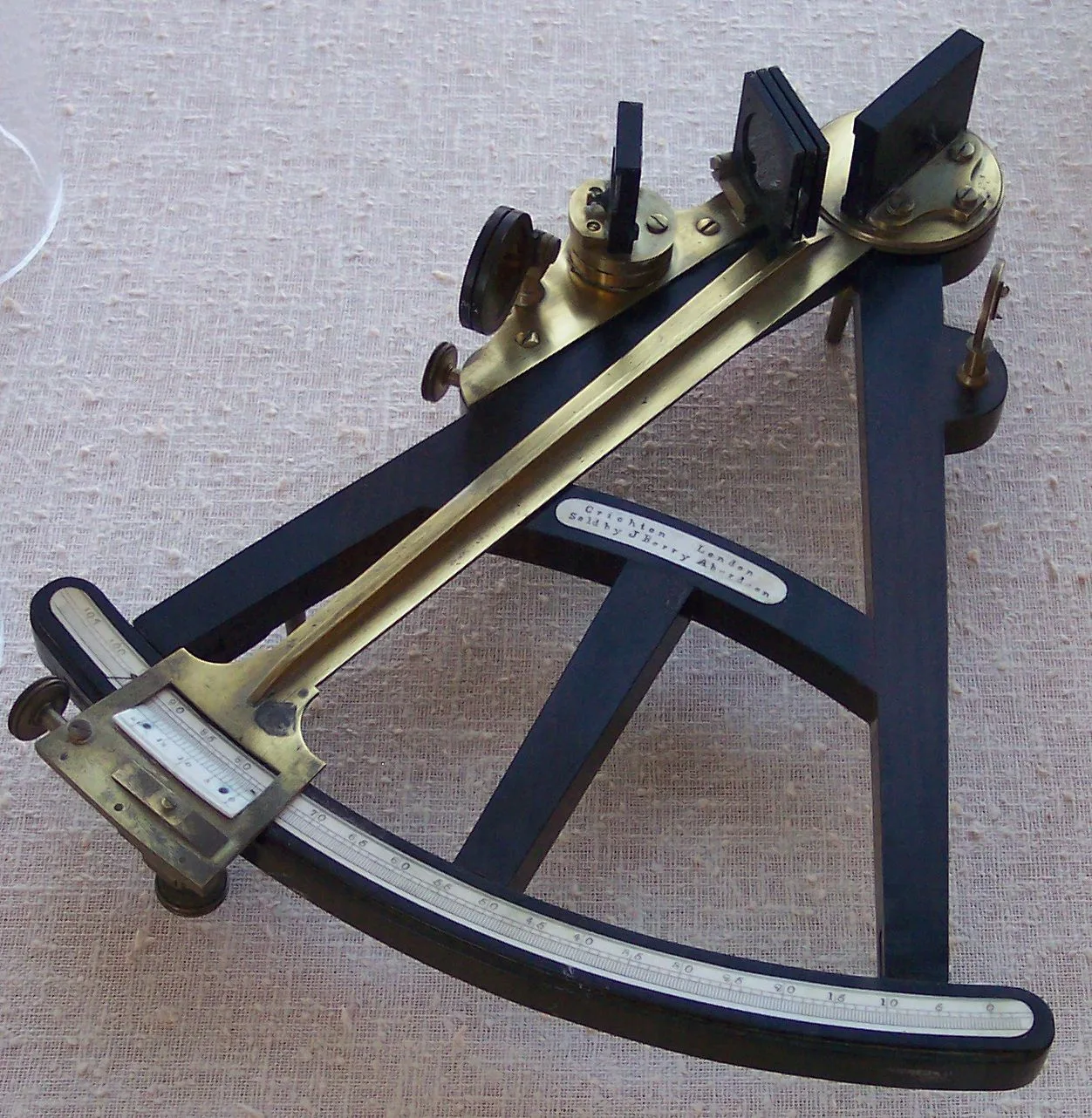
- Sextants & Octants: Precision sighting tools measuring celestial angles; octants typically pre-1800, sextants later and more robust.
- Marine Chronometers: Spring-driven timekeepers housed in gimbal boxes that enabled longitudinal calculations.
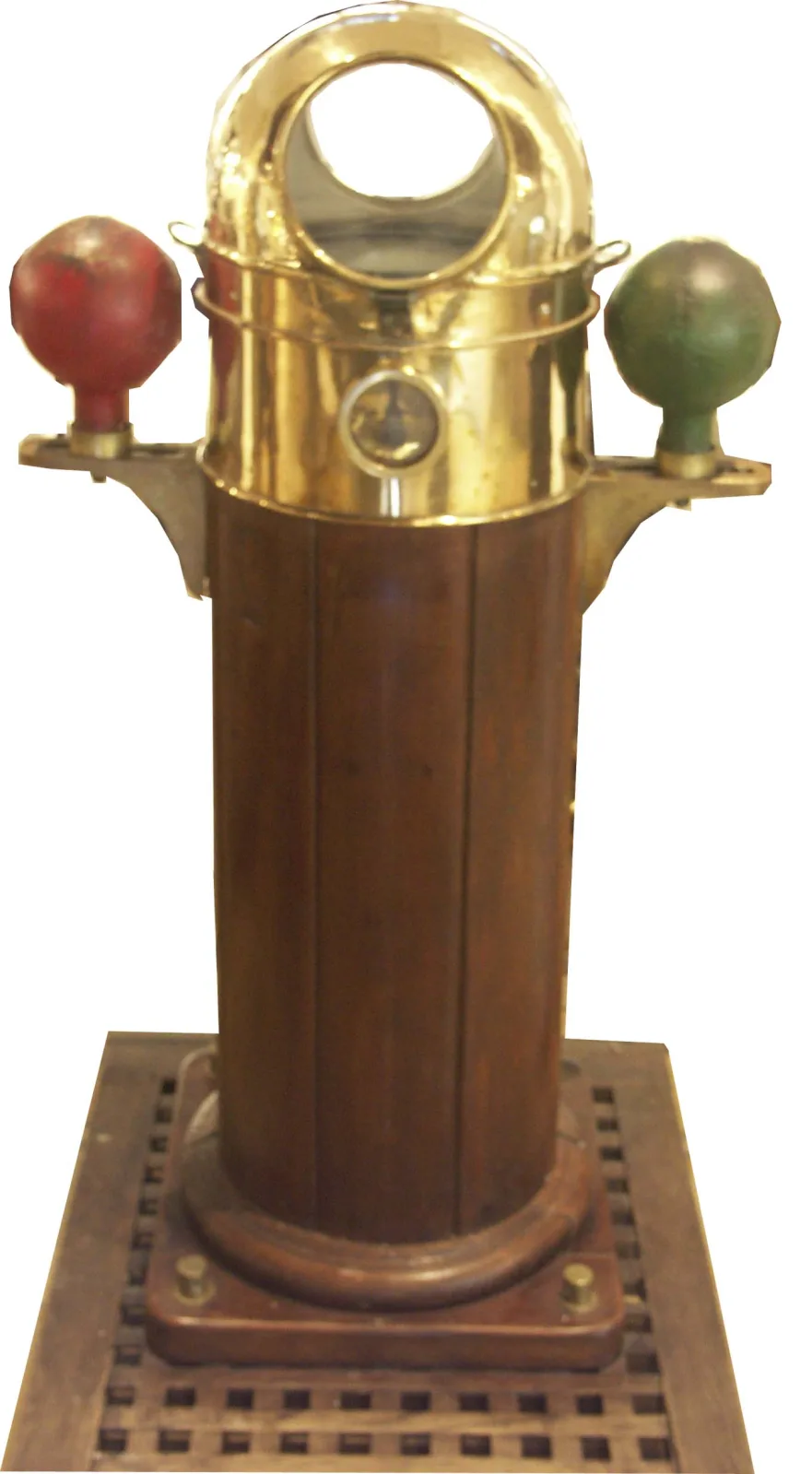
- Compasses & Binnacles: Gimbaled compasses housed in protective cabinets with Kelvin spheres for deviation correction.
- Barometers & Hygrometers: Atmospheric gauges used to predict weather windows and storm intensity.
- Sounding & Signal Devices: Lead lines, speaking trumpets, ship bells, and Morse signal lamps critical for harbor entry and convoy communication.
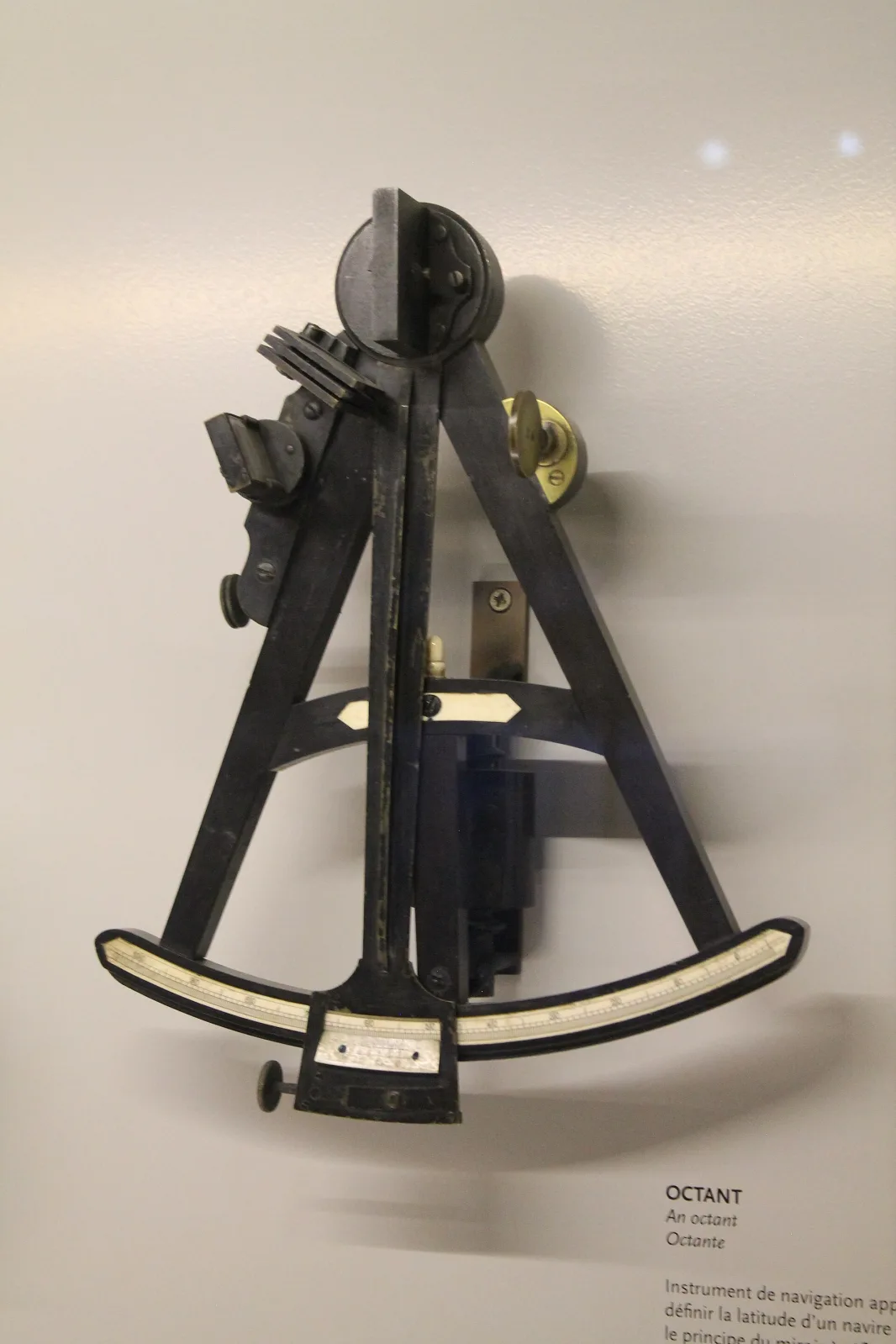
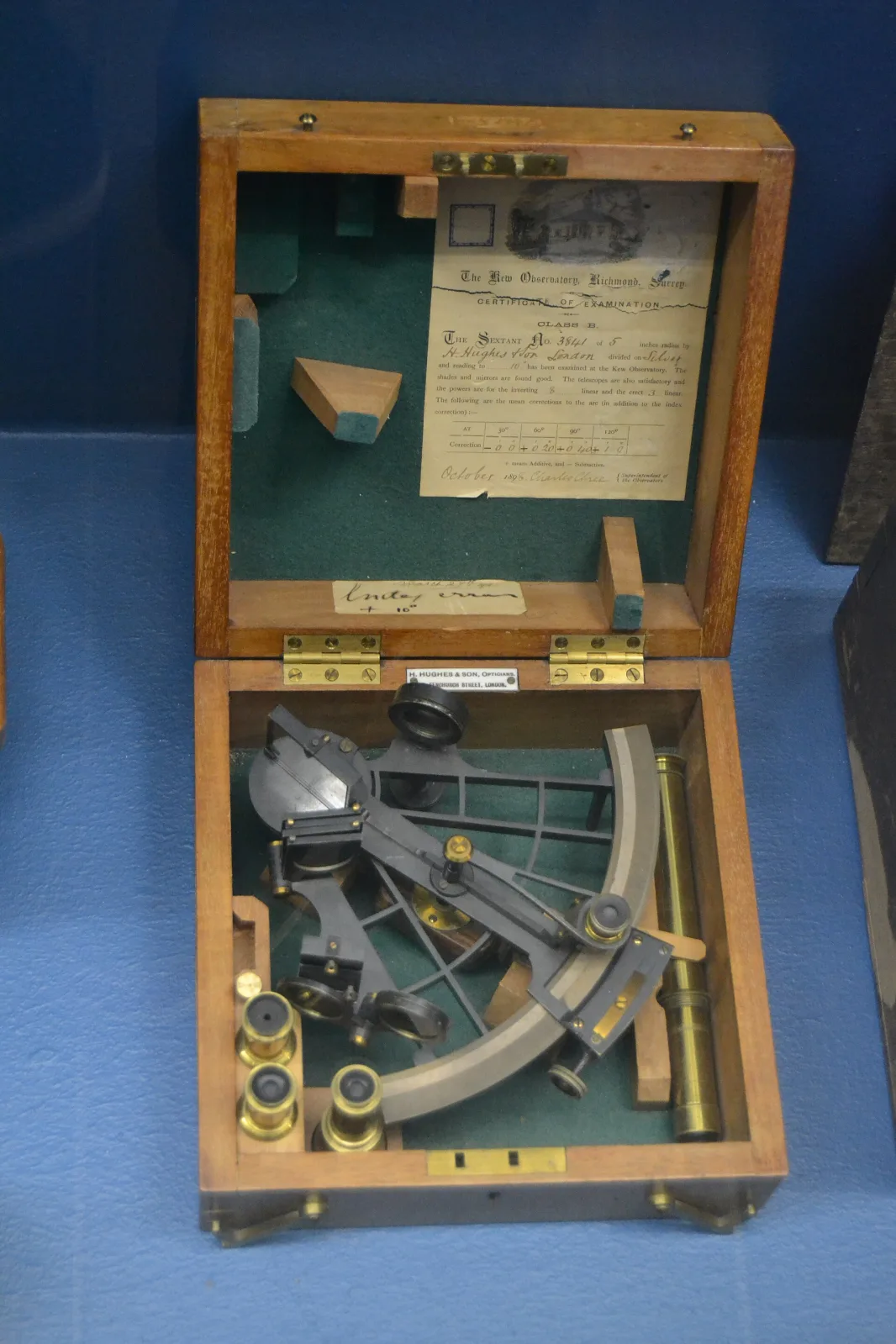
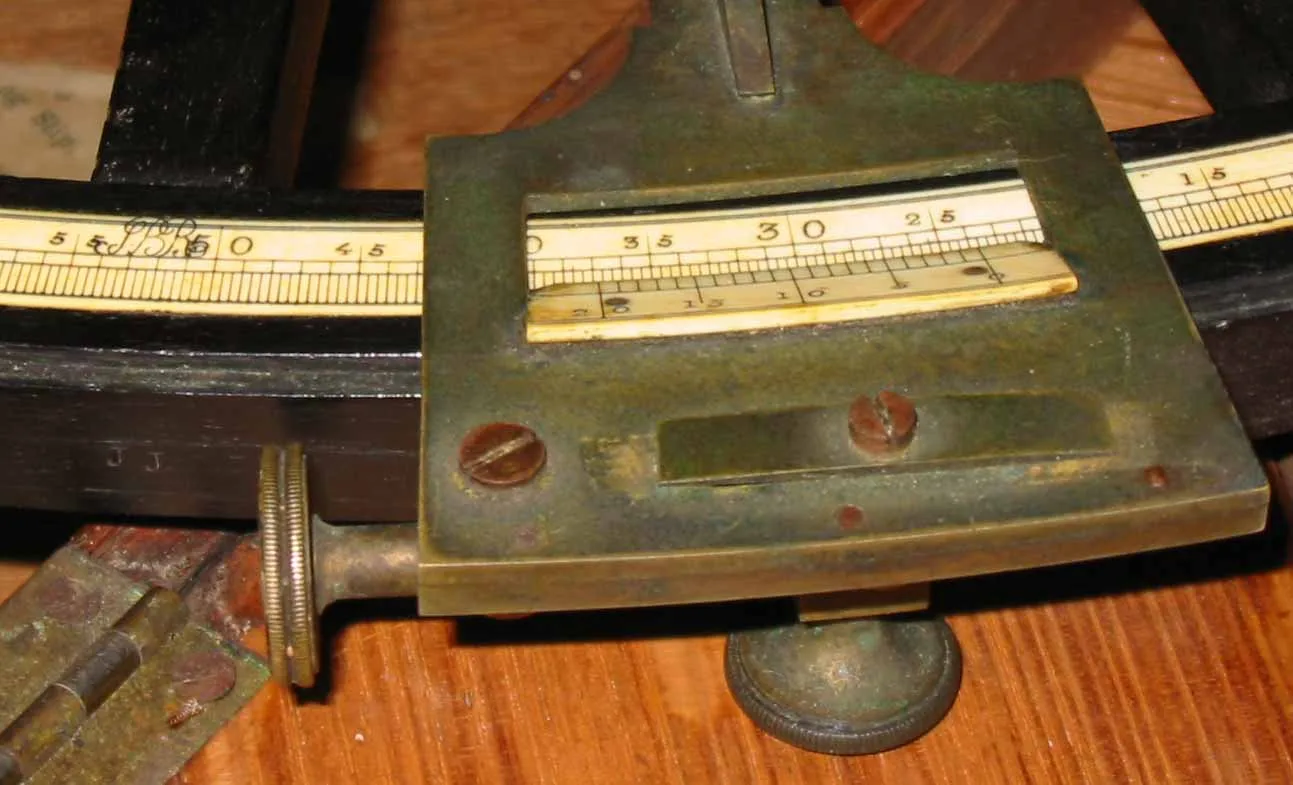
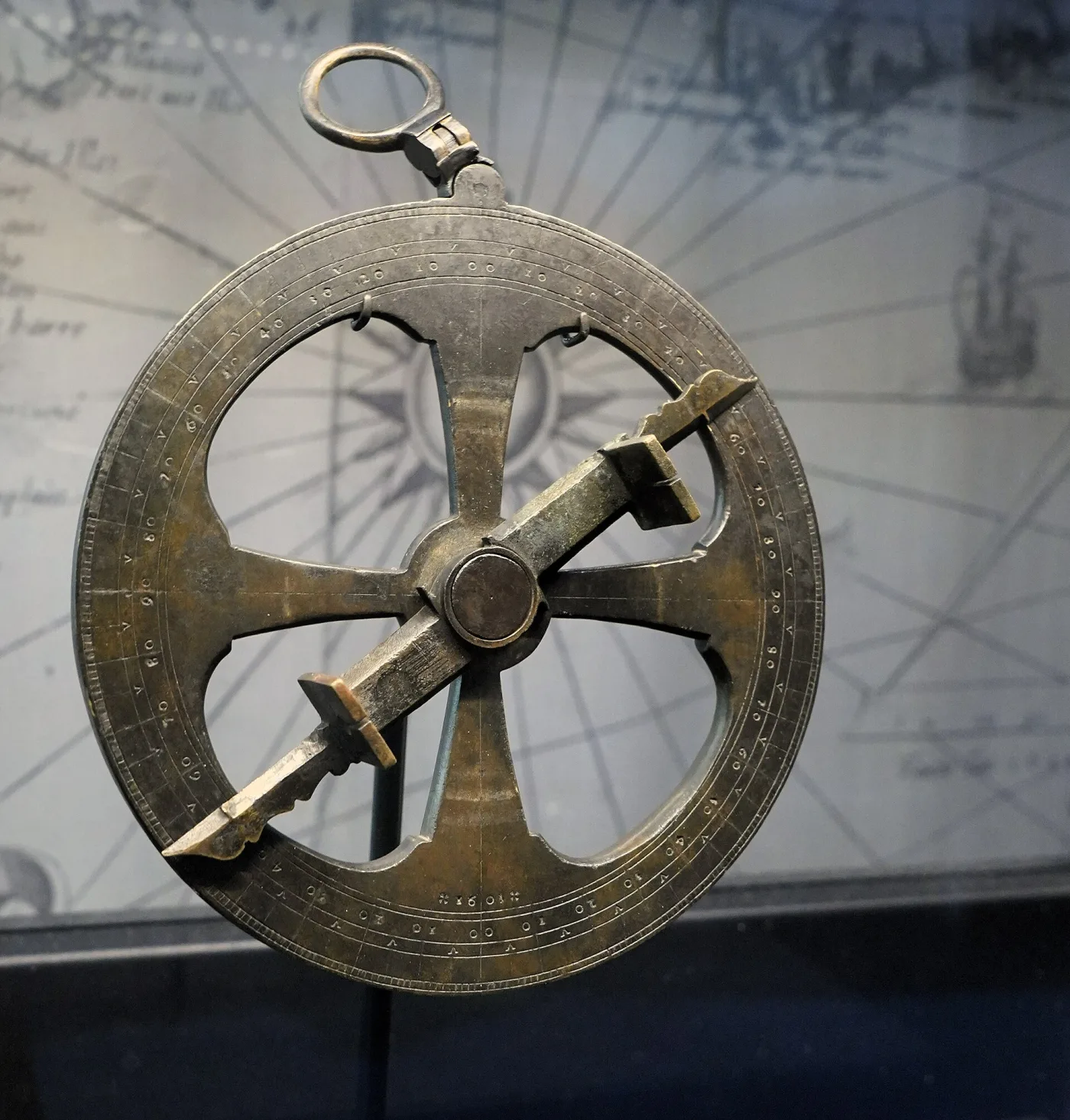
These are the two instruments the field is built on, and telling them apart takes one glance once you know what to look at. The arc is the definition: an octant carries 45 degrees of arc and reads to 90, a sextant carries 60 and reads to 120, so a sextant’s arc is visibly the longer sweep. Everything else follows from cost and date. Octants were the cheap working instrument — wooden frame, ivory scale, plain sights or a simple tube — and dominate the period from the 1730s to the middle of the nineteenth century. Sextants are metal-framed, carry a proper telescope and a micrometer drum for fine reading, and cost several times as much. Note what comes with the sextant: the fitted case with its shaped blocks, the spare eyepieces, and a maker’s certificate of examination. Those accessories are a large part of what an instrument is worth, and they are the first things separated from it. A sextant sold “with case” where the blocks do not match the instrument is a marriage.
Specialized Naval Equipment
- Torpedo Director Sights: Late 19th–early 20th century optical systems aligning torpedo tubes.
- Engine Room Telegraphs: Brass dials and levers transmitting throttle commands from bridge to engine deck.
- Azimuth Mirrors: Attachments for compasses to capture sun bearings during course corrections.
- Harbor Survey Instruments: Plane tables, theodolites, and prismatic compasses for naval cartography units.
Terminology to Master
- Index Arm: Moving arm on a sextant that carries the index mirror.
- Vernier Scale: Secondary scale providing readings down to arc-minutes.
- Earnshaw Detent: Chronometer escapement design providing low-friction impulse.
- Deviation & Variation: Compass errors caused by onboard magnetism and geographical location.
Construction Details and Material Diagnostics
Material science cues reveal the era of production, authenticity of components, and quality tier intended by the maker.
Metallurgy and Finishes
- Brass Alloys: Early sextants employed high-copper brass with visible hammering; post-1880 instruments move toward uniform rolled brass.
- German Silver & Nickel: Premium makers used corrosion-resistant nickel silver for index arms and micrometers.
- Gunmetal: Marine chronometer bowls and binnacle fittings often cast in reddish gunmetal for stability.
- Lacquer & Japaning: Original lacquer exhibits mellow honey tone; bright, unscratched lacquer suggests modern refinish.
Optical Components
- Mirrors: Early mirrors are polished speculum metal; silvered-glass mirrors became common mid-19th century.
- Filters & Shades: Blue, green, and neutral-tint filters mounted on swing arms; cracked modern acrylic replacements reduce value.
- Telescope Types: Simple sight tubes indicate entry-level instruments; erect-image telescopes with rack-focus mark higher-grade builds.
Joinery and Cases
- Mahogany Cases: Dovetail joinery with brass reinforcements; check for warping, replaced hinges, and reproduction handles.
- Chronometer Boxes: Typically three-tiered with lockable face; original felt lining and winding key add to completeness.
- Accessory Trays: Slots for arc brushes, spare filters, and adjustment tools should match catalog illustrations.
Maker Marks, Naval Inspections, and Ownership Inscriptions
Signatures and inspection marks authenticate origin, trace service history, and can tie an instrument to specific expeditions.
Locating Manufacturer Signatures
- Arc or Limb Engravings: Sextant limbs typically carry the maker name, serial number, and address.
- Chronometer Dials & Movement Plates: Watch for double signatures when retailers sold instruments made by specialists.
- Compass Bowls: Casting marks or stamped numbers on the underside of the bowl and inside lid plaques.
- Instrument Certificates: Original Admiralty or US Navy performance certificates may be pasted beneath box lids.
Military and Government Markings
- Broad Arrow & Admiralty Crowns: British government property marks denoting naval issuance.
- US Navy Bureau Codes: "BU. SHIPS," "NAVSEA," or inspector initials etched or inked onto chronometer boxes post-1900.
- French Marine Ancre: Anchor stamps accompanied by depot numbers for instruments serviced at Dépôt des cartes et plans.
- Merchant Fleet Inscriptions: Shipping line logos or engraved dedication plates linking instruments to specific vessels.
Cross-Referencing Serial Numbers
Consult Lloyd's Register, Admiralty ledgers, and maker catalogs to match serial numbers with production batches. Cross-check recorded voyages or decommission dates to tell a complete provenance story.

Dating Frameworks and Historical Context
Combining stylistic cues, technological milestones, and geopolitical events narrows production windows with high confidence.
Technological Benchmarks
- Double-Frame Sextants: Introduced c.1840 to reduce flex; presence signals mid- to late-19th century.
- Micrometer Drum Readings: Became standard after Troughton & Simms innovations around 1870.
- Swiss Detent Chronometers: Hampden & Patek derivatives with palladium balance springs appear after 1895.
- Electric Illumination: Naval binnacles wired for lamps indicate 20th century modernization programs.
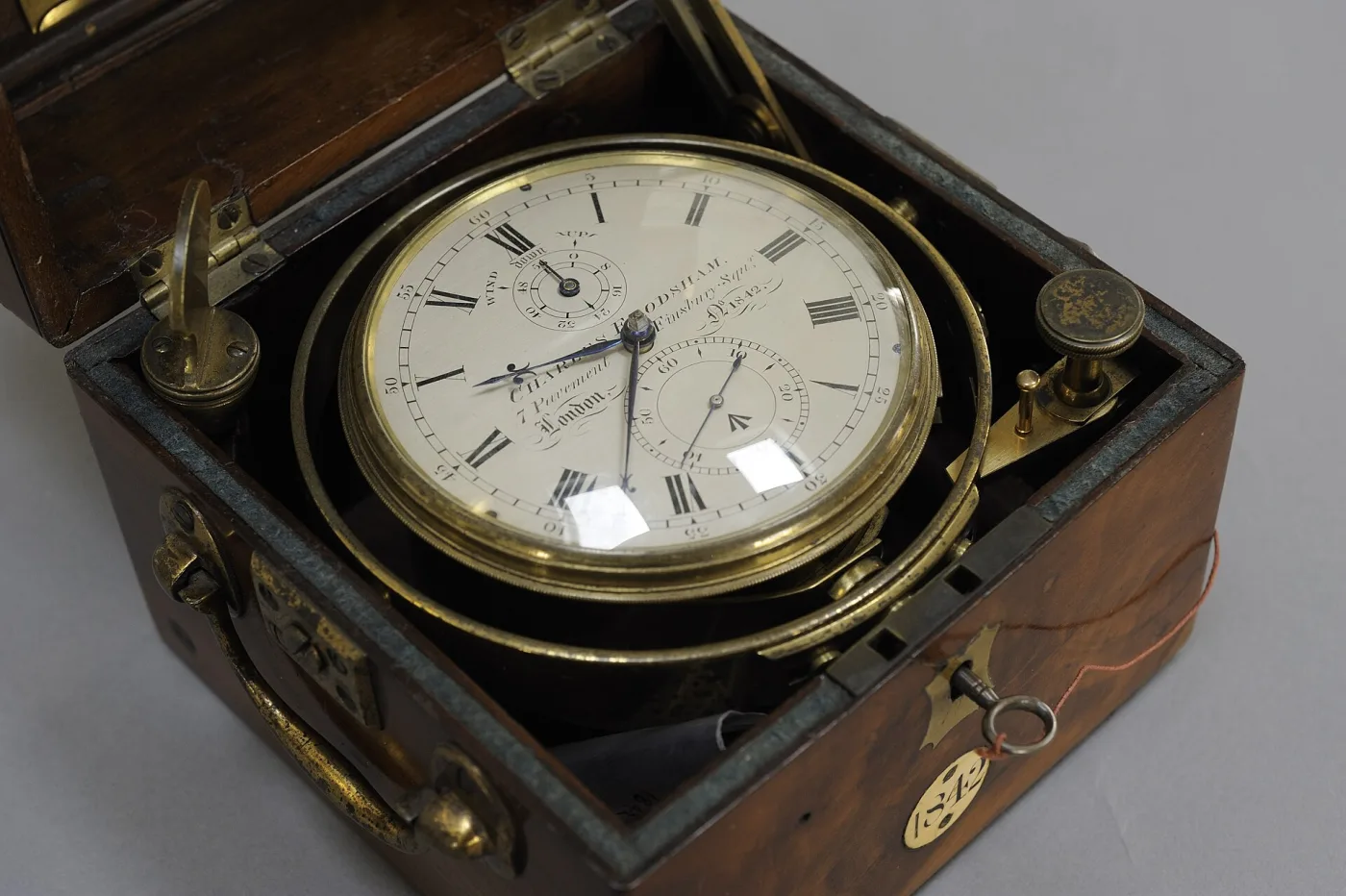
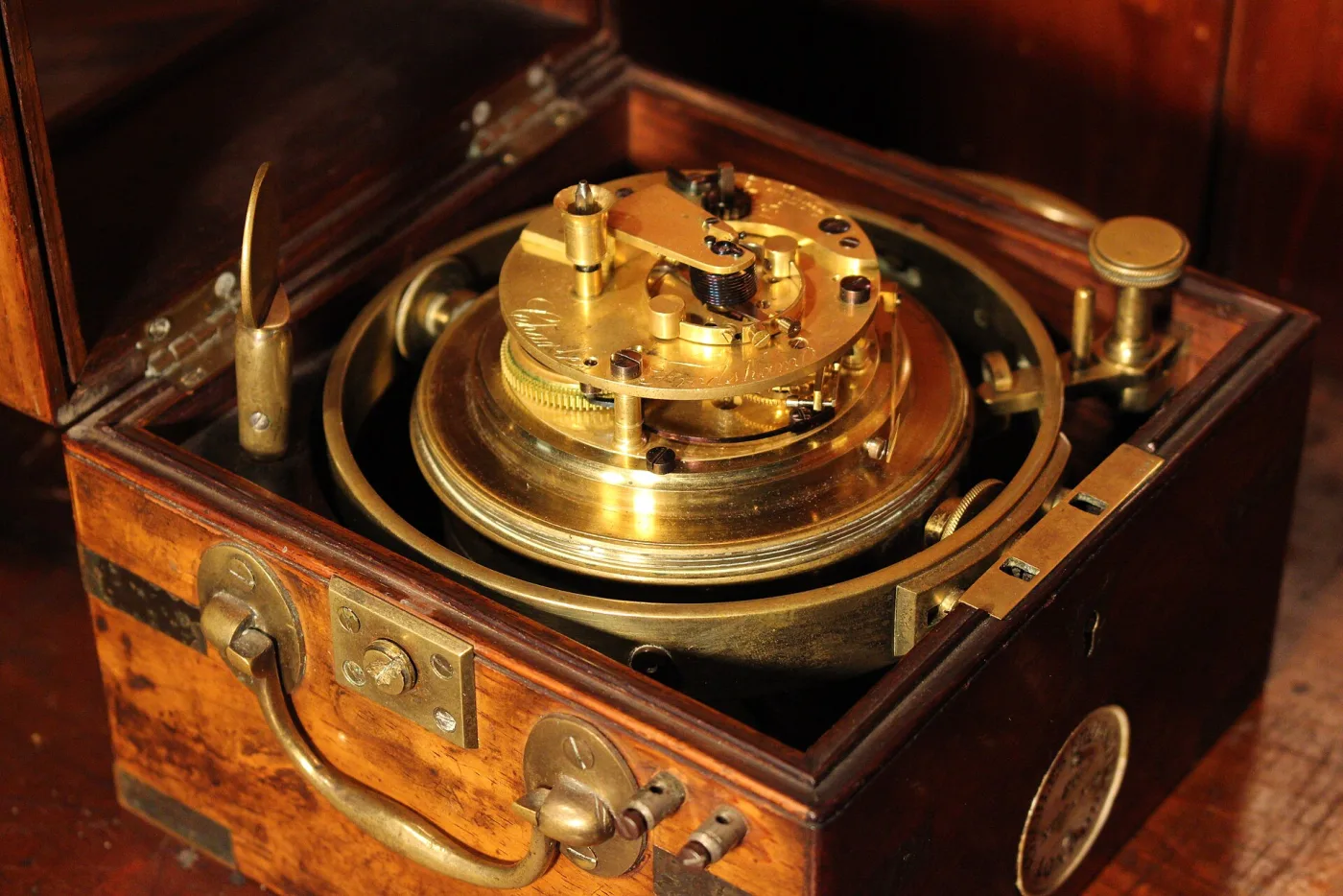
Marine chronometers are the one instrument class where the paperwork is genuinely inside the object. Both of these are signed and numbered, and the number is the research key — maker’s number sequences are published, so a chronometer can usually be dated to a year or two, which is a precision no octant will ever give you. Note that the first is signed with a street address. Makers moved, and an address on a dial dates the signature the same way a street number dates a livery button’s backstamp. The second one carries the other half of the lesson: it was modified decades after manufacture, in another country, to drive a telegraph circuit for an observatory. Later modification is normal in this field rather than disqualifying — these were working scientific instruments kept in service — but it must be identified and disclosed, because an unaltered example and a converted one are different objects at different prices.
Style and Engraving Clues
- Copperplate Lettering: Flowing script typical of Georgian-era makers.
- Sans-Serif Stamps: Industrial block lettering adopted by wartime contractors for rapid marking.
- Pictorial Cartouches: Decorative anchor-and-rope motifs popular with luxury yachting outfitters circa 1900.
Historical Context
Align instrument features with major naval reforms or conflicts. For example, chronometers with US Navy BuShips marks likely date to WWII convoy service, while sextants bearing East India Company crests precede the 1874 dissolution.
Condition Grading, Completeness, and Conservation
Marketability hinges on operational capability, originality of components, and documented maintenance history.
Condition Checklist
- Alignment Accuracy: Verify sextant index error can be set to zero; note if mirrors are desilvered.
- Chronometer Performance: Test rate over 24–48 hours and inspect balance pivots for scoring.
- Case Integrity: Look for replacement screws, cracked glass viewing panels, or inappropriate polyurethane finishes.
- Accessory Completeness: Presence of adjusting keys, oil bottles, spare filters, and certificate paperwork boosts value 20–40%.
Conservation Best Practices
- Cleaning: Use microcrystalline wax on brass; never machine-polish engraved arcs.
- Mirror Replacement: When necessary, retrofit reversible replica mirrors and document intervention.
- Chronometer Service: Engage qualified marine chronometer specialists who can fabricate fusee chains and burnish pivots.
- Environmental Control: Maintain 40–50% relative humidity to protect wood cases and prevent verdigris blooms.
Documentation
Log every conservation action with before-and-after imagery, chemical products used, and technician credentials. This transparency reassures buyers and insurers.
Valuation Factors and Market Intelligence
Pricing for maritime instruments varies widely based on provenance, maker prestige, and functionality.
Primary Valuation Drivers
- Maker Hierarchy: Troughton & Simms, Heath & Co., Thomas Mercer, and Ulysse Nardin chronometers secure premium multiples.
- Proven Naval Service: Instruments linked to exploration voyages, clipper races, or wartime convoys attract institutional buying.
- Original Finish: Untouched lacquer and patina outweigh mirror-bright polishing in sophisticated markets.
- Operational Readiness: Fully serviced chronometers can achieve 60–80% higher hammer prices than non-running examples.
Market Trends
- Auction Activity: London, New York, and Hong Kong maritime sales show steady CAGR of 6–8% since 2020.
- Cross-Disciplinary Demand: Interior designers and yacht clubs seek statement pieces, creating competition beyond hardcore collectors.
- Digital Provenance: Blockchain-backed provenance certificates are emerging for blue-chip chronometers.
- Insurance Requirements: High-value fleets now mandate condition reports similar to fine art appraisals.
Comparable Tracking
Use the Antique Identifier app or auction databases to monitor realized prices for specific maker/serial combinations. Normalize results for completeness and recent servicing to create accurate comparables.
Authentication Workflow and Research Resources
A disciplined process protects against composite instruments and modern reproductions.
Step-by-Step Workflow
- Initial Survey: Photograph instrument in situ, noting accessories and storage environment.
- Technical Measurements: Record arc radius, telescope magnification, and chronometer balance diameter for cross-checking.
- Archive Research: Compare serials with National Maritime Museum or Smithsonian catalogs.
- Expert Peer Review: Consult the Antiquarian Horological Society or Navigational Instrument Society for validation.
Recommended Resources
- Reference Texts: "Sextants at Greenwich" by W.F.J. Mörzer Bruyns; "Marine Chronometers at Greenwich" by Jonathan Betts.
- Digital Archives: Royal Museums Greenwich collections, US Naval Observatory bulletins, French SHOM records.
- Communities: Navigation instrument forums, maritime museum study groups, and specialist dealers.
- Tech Tools: Antique Identifier app for AI-driven maker recognition and comparable sale alerts.
Collection Strategy, Display, and Risk Mitigation
Strategic planning ensures long-term preservation and storytelling impact.
Building a Cohesive Collection
- Theme Curation: Focus on a narrative such as Age of Sail exploration, interwar yacht racing, or submarine navigation.
- Documentation First: Acquire instruments with traceable service records before chasing aesthetic rarities.
- Balanced Portfolio: Blend flagship chronometers with supporting instruments to contextualize displays.
Display & Security
- Vitrines & Mounts: Use inert mounts that avoid point-loading on delicate cases.
- Lighting: Opt for low-UV LED strips; highlight engraved arcs without heating varnish.
- Insurance & Inventories: Update inventory logs annually with serial numbers, valuations, and photographs.
Risk Mitigation
Maintain duplicate digital archives of provenance files, implement humidity alarms, and schedule recurring chronometer windings to keep lubricants distributed.
Conclusion
Antique maritime instruments are tangible relics of oceanic innovation, blending precision engineering with imperial history. By mastering construction diagnostics, decoding naval inspection marks, and situating each piece within broader maritime narratives, you can confidently authenticate, conserve, and appraise these artifacts.
Approach each sextant, chronometer, or binnacle as a data-rich object: document every measurement, track repair lineage, and leverage the Antique Identifier app to compare global benchmarks. With diligent stewardship, nautical instruments will continue to inspire navigators, historians, and design enthusiasts alike.