Antique Decorative Tiles Identification Guide: Types, Marks & Dating
Antique decorative tiles represent one of the most enduring and visually captivating areas of collecting. From the iconic blue-and-white Delft tiles of 17th-century Holland to the sinuous floral motifs of Art Nouveau, ceramic tiles have adorned fireplaces, walls, and floors for centuries. Each tile carries clues to its origin in its glaze, clay body, construction method, and decorative style.
Collecting antique tiles has surged in popularity as both interior designers and history enthusiasts recognize their value. A single Victorian transfer-printed tile might sell for a few dollars, while a rare medieval encaustic tile or a signed Art Nouveau panel by a renowned maker can command thousands. Understanding what you are looking at is the key to building a meaningful collection.
This guide covers the major categories of antique decorative tiles, from early medieval floor tiles through the mass-produced wonders of the Victorian age to the artistic masterpieces of the early 20th century. You will learn how to read maker marks, identify glazing techniques, date tiles by their construction, and spot reproductions.
Table of Contents
- A Brief History of Decorative Tiles
- Medieval Encaustic Tiles
- Delft Tiles & Dutch Tin-Glazed Earthenware
- Spanish & Moorish Tiles
- Victorian Decorative Tiles
- Arts & Crafts Movement Tiles
- Art Nouveau Tiles
- Art Deco Tiles
- Reading Tile Maker Marks
- Glazing & Decoration Techniques
- Construction Clues for Dating
- Condition, Grading & Value
- Spotting Reproductions & Fakes
- Building a Tile Collection
A Brief History of Decorative Tiles
The history of decorative ceramic tiles stretches back thousands of years. Ancient Egyptians glazed bricks with turquoise faience as early as 4,000 BCE, while the Islamic world perfected geometric tile work in mosques and palaces from the 8th century onward. In Europe, the tradition of decorated floor tiles emerged in medieval monasteries, where inlaid clay patterns created striking geometric and heraldic designs.
The Dutch tile industry rose to dominance in the 17th century, producing millions of hand-painted tin-glazed tiles that decorated homes from Amsterdam to the American colonies. Spain and Portugal developed their own vibrant traditions with azulejo tiles, blending Islamic geometric precision with European figurative art.
The Industrial Revolution transformed tile production dramatically. By the 1840s, English manufacturers like Minton, Maw & Co., and Craven Dunnill were producing dust-pressed tiles by the millions. This era saw an explosion of decorative styles, from transfer-printed designs to hand-painted art tiles. The aesthetic movements of the late 19th and early 20th centuries, including Arts & Crafts, Art Nouveau, and Art Deco, each left distinctive marks on tile design that collectors prize today.
Medieval Encaustic Tiles
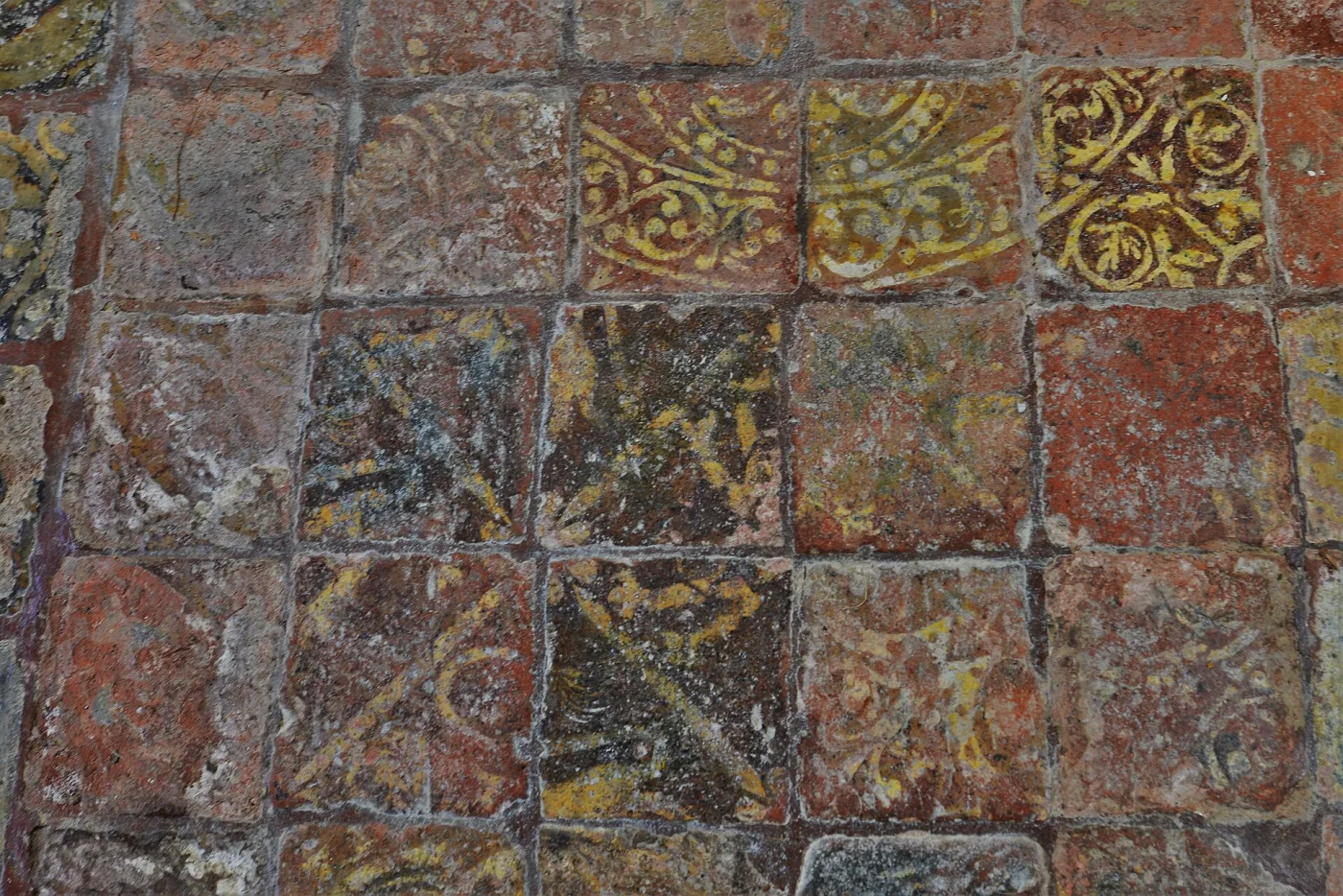
Encaustic tiles are among the oldest decorative floor tiles found in Europe, dating from the 12th to the 16th century. The term "encaustic" refers to the technique of inlaying different colored clays into a tile body to create a pattern, rather than applying surface decoration. These tiles were primarily produced for abbeys, cathedrals, and royal residences.
How Encaustic Tiles Were Made
The process began with a red clay tile body. A carved wooden stamp was pressed into the soft clay to create an impression, and the recessed areas were filled with a contrasting light-colored slip, typically white or cream pipe clay. After drying, the surface was scraped level and the tile was glazed with a clear lead glaze before firing. The result was a durable, two-toned pattern embedded within the tile itself.
Identifying Medieval Encaustic Tiles
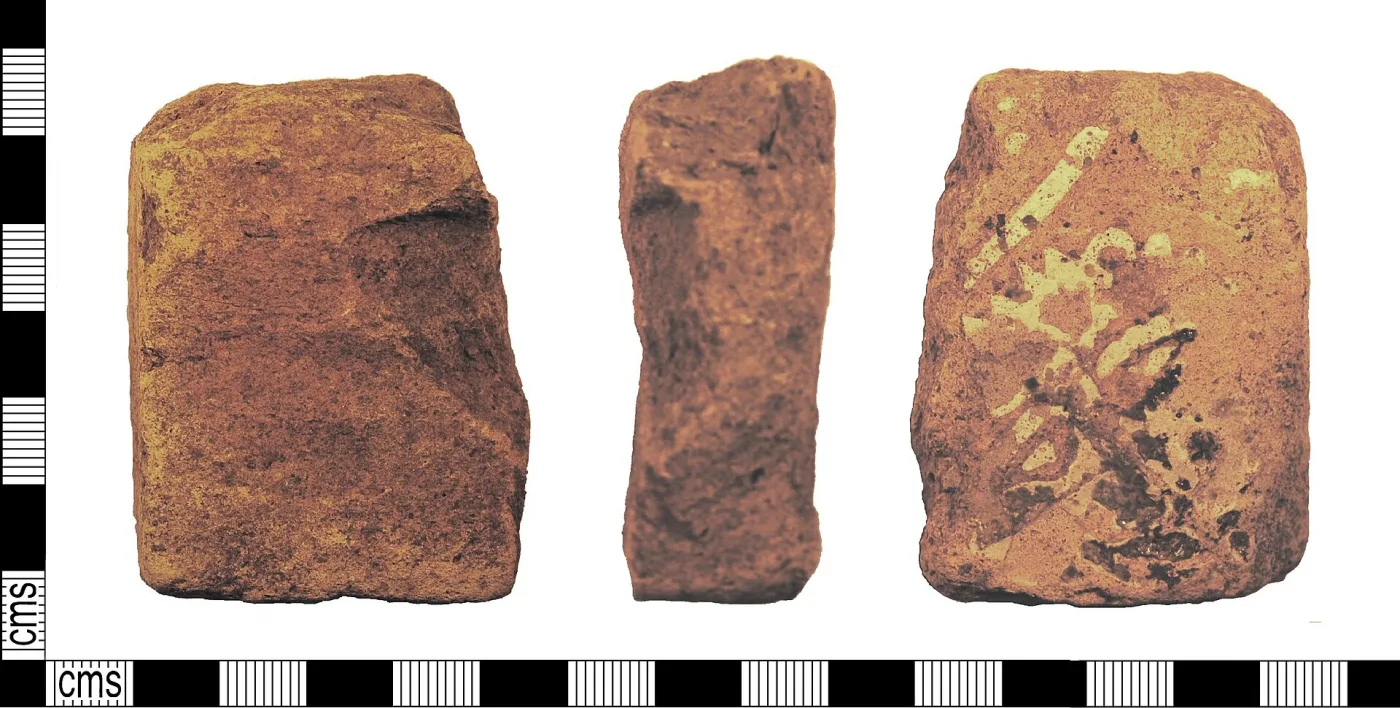
Genuine medieval encaustic tiles exhibit several telltale characteristics. They are typically thick, ranging from 20mm to 30mm, with an irregular hand-formed shape. The clay body is coarse and often contains visible inclite and sand particles. The inlaid pattern shows slight irregularities from hand stamping, and the glaze is typically a warm amber or honey-colored lead glaze that has often worn thin on high-traffic areas. Common motifs include fleur-de-lis, heraldic lions, griffins, geometric interlace patterns, and religious symbols.
Victorian Encaustic Revivals
The Gothic Revival of the 1840s sparked enormous interest in medieval tile designs. Herbert Minton perfected a mechanical process for producing encaustic tiles, and his factory at Stoke-on-Trent supplied tiles for the Houses of Parliament, designed by Augustus Pugin. Victorian encaustic tiles are thinner, more uniform, and display sharper pattern definition than their medieval predecessors. They remain highly collectible and are easier to find than genuine medieval examples.
Delft Tiles & Dutch Tin-Glazed Earthenware
Dutch Delft tiles are perhaps the most recognized and widely collected antique tiles in the world. Produced primarily in the Netherlands from the late 16th through the 19th century, these tin-glazed earthenware tiles feature hand-painted decoration on a white opaque ground.
Early Polychrome Period (1580-1625)
The earliest Dutch tiles were strongly influenced by Italian maiolica and Spanish tile traditions. These polychrome tiles featured orange, green, blue, and yellow designs, often with pomegranate or arabesque patterns. Corner motifs typically included ox-head designs or fleur-de-lis patterns. These early examples are rare and valuable.
Classic Blue-and-White Period (1625-1700)
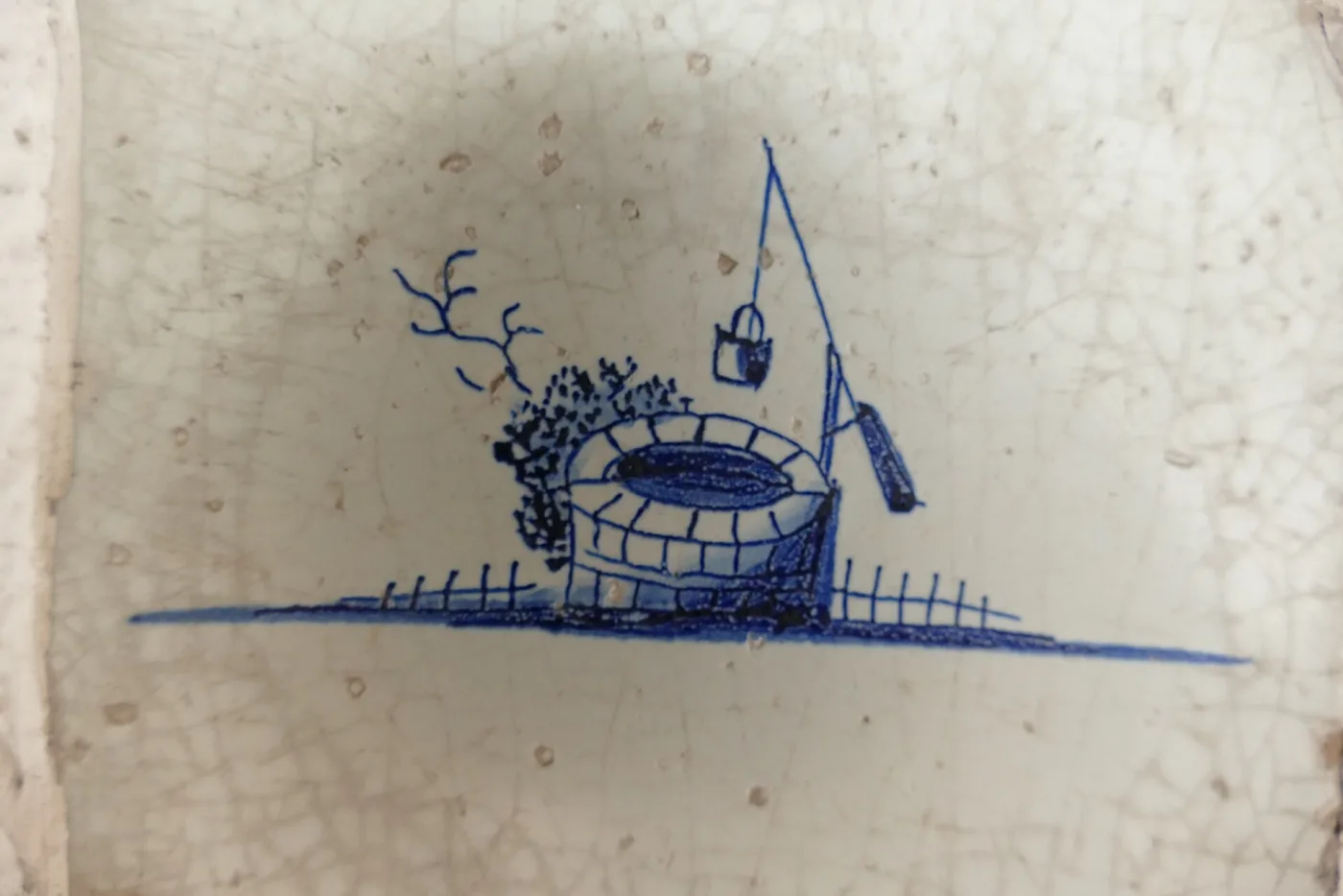
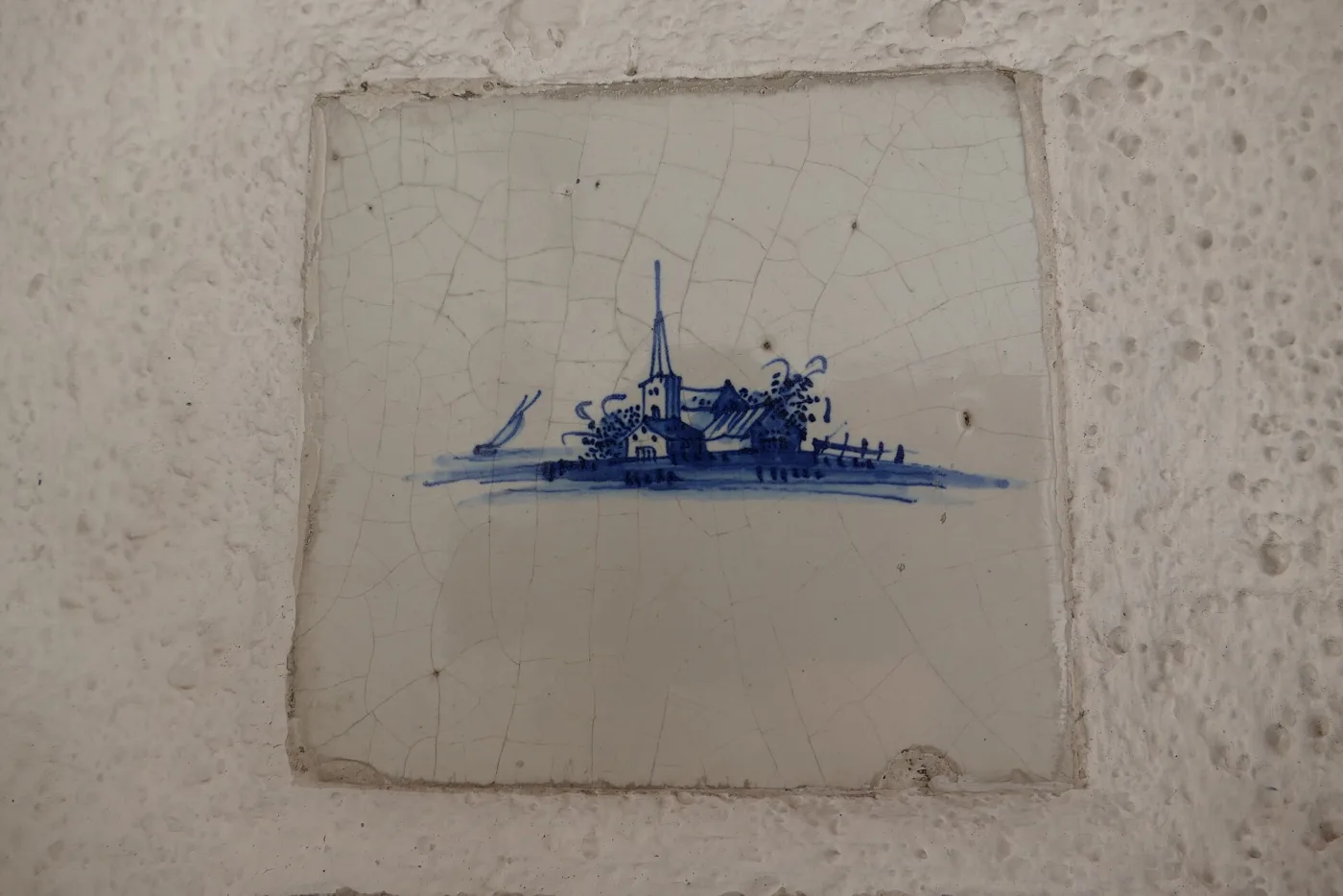
The influence of Chinese porcelain arriving via the Dutch East India Company shifted tastes decisively toward blue-and-white decoration. This golden age of Delft tile production saw millions of tiles painted with landscapes, ships, biblical scenes, soldiers, children at play, sea creatures, and floral designs. Spider-head corner motifs became standard. The cobalt blue ranged from deep navy to pale sky blue depending on the workshop and period.
Later Periods & Decline (1700-1900)
By the 18th century, Delft tile production became increasingly formulaic. Designs were simpler, painting was less detailed, and manganese purple became common alongside blue. The 19th century saw factory-produced tiles imitating earlier styles, with stiffer brushwork and more uniform appearance. Knowing these distinctions helps collectors assign approximate dates to unmarked tiles.
Identifying Authentic Delft Tiles
Genuine antique Delft tiles measure roughly 130mm square and 8-10mm thick. The reverse shows a buff or pinkish earthenware body with nail or peg marks from kiln furniture. The tin glaze gives the surface a slightly uneven, milky-white appearance. Brush strokes are fluid and confident in quality examples. Look for natural crazing in the glaze, which develops over centuries and cannot be convincingly faked.
Spanish & Moorish Tiles
The Iberian Peninsula has one of the richest tile-making traditions in the world, rooted in the Islamic artistic heritage that flourished during centuries of Moorish rule. Spanish and Portuguese tiles, broadly known as azulejos, represent a fusion of Islamic geometric precision with European pictorial traditions.
Alicatados & Cuerda Seca
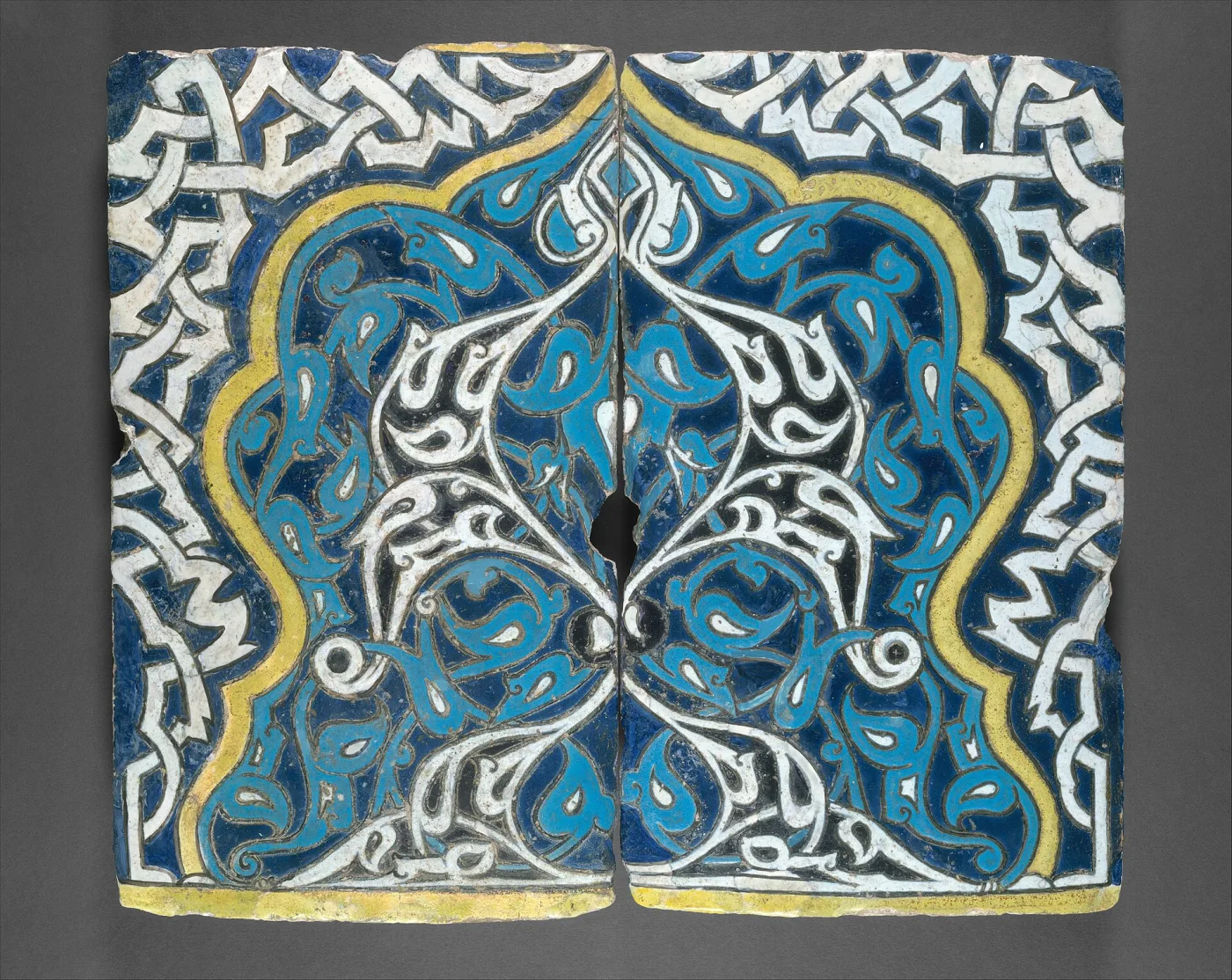
The earliest Moorish tile technique, alicatado, involved cutting individual pieces of monochrome glazed tile into geometric shapes and assembling them into complex mosaic patterns. The cuerda seca (dry cord) technique used lines of grease mixed with manganese to separate different colored glazes on a single tile, preventing colors from running together during firing. Tiles made with these techniques from the 13th to 15th century are museum-quality pieces.
Cuenca & Arista Tiles
The cuenca technique, developed in the late 15th century, used a mold to press raised ridges into the tile surface, creating cells that could be filled with different colored glazes. This efficient method allowed mass production of multicolored tiles and dominated Spanish production through the 16th century. Authentic examples show characteristic thick, glossy glazes pooled within the molded ridges.
Portuguese Azulejo Panels
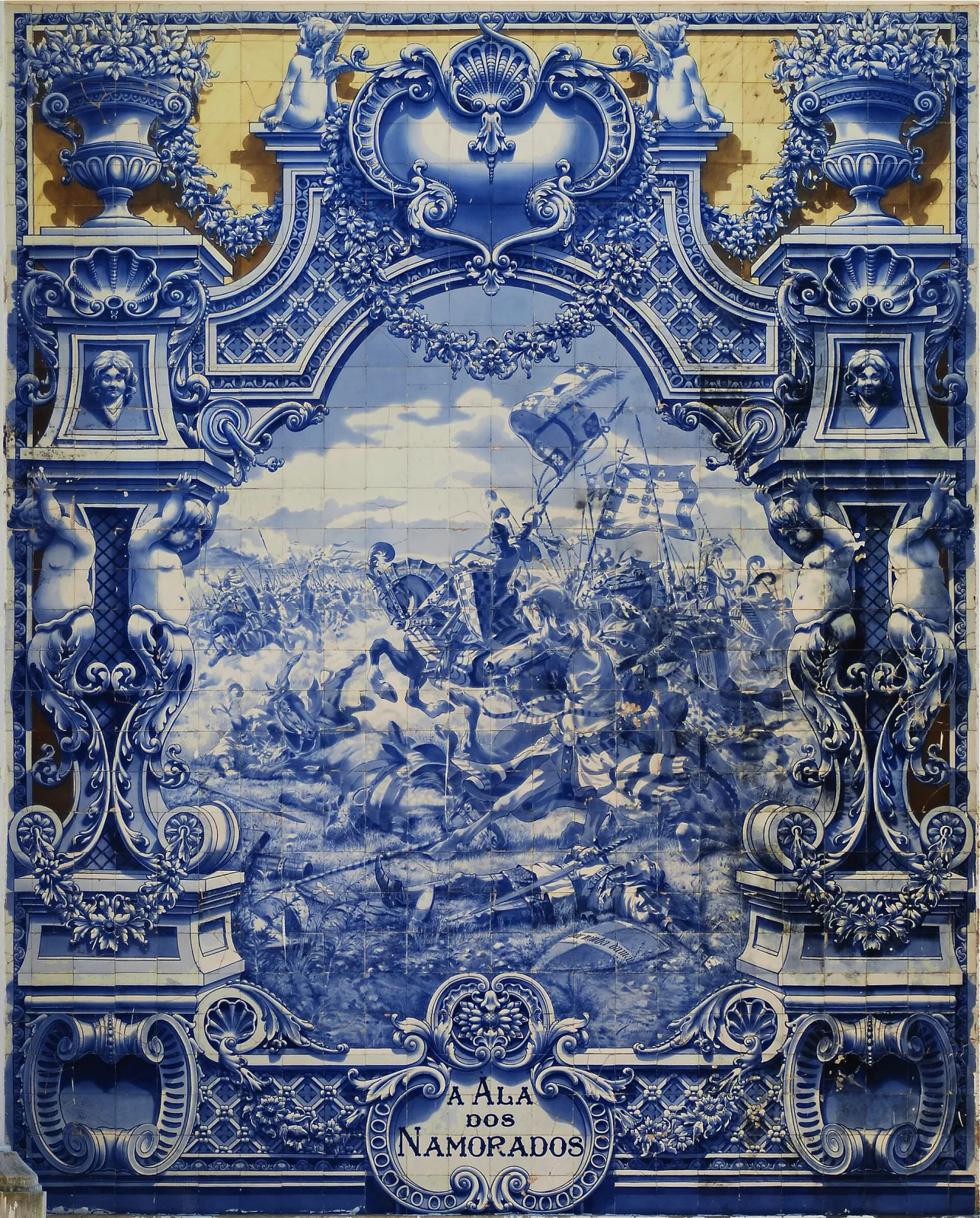
Portuguese tile work reached its artistic zenith in the 17th and 18th centuries, when entire church interiors and palace walls were covered with blue-and-white pictorial tile panels depicting religious scenes, historical events, and decorative motifs. These large-scale azulejo installations are among the most impressive examples of ceramic artistry in the Western world.

Victorian Decorative Tiles
The Victorian era (1837-1901) was the golden age of mass-produced decorative tiles in Britain and across the industrialized world. Advances in dust-pressing technology, transfer printing, and glaze chemistry made decorated tiles affordable for middle-class homes. Fireplaces, hallways, porches, and bathrooms were adorned with tiles in an astonishing range of styles.
Transfer-Printed Tiles
Transfer printing, adapted from the pottery industry, allowed intricate designs to be reproduced consistently on tiles. A design was engraved on a copper plate, printed onto tissue paper with ceramic ink, and transferred to the tile surface before glazing and firing. Common subjects included classical figures, botanical studies, fairy tales, aesthetic movement designs, and architectural scenes. Major producers included Minton, Hollins & Co., Maw & Co., Wedgwood, and T. & R. Boote.
Majolica-Glazed Tiles
Victorian majolica tiles featured richly colored, opaque tin glazes applied over molded relief designs. These thick, lustrous tiles in greens, browns, blues, and yellows were popular for fireplace surrounds and exterior architectural use. Minton's majolica tiles are particularly sought after by collectors.
Dust-Pressed Geometric Floor Tiles
Geometric floor tiles, produced by companies like Minton, Maw & Co., and Godwin, were used extensively in hallways, churches, and public buildings. These unglazed tiles relied on the natural color of differently tinted clay bodies to create patterns when laid together. Red, black, cream, buff, and chocolate brown were standard colors. Original Victorian geometric tile floors are prized by heritage homeowners.
Aesthetic Movement Tiles
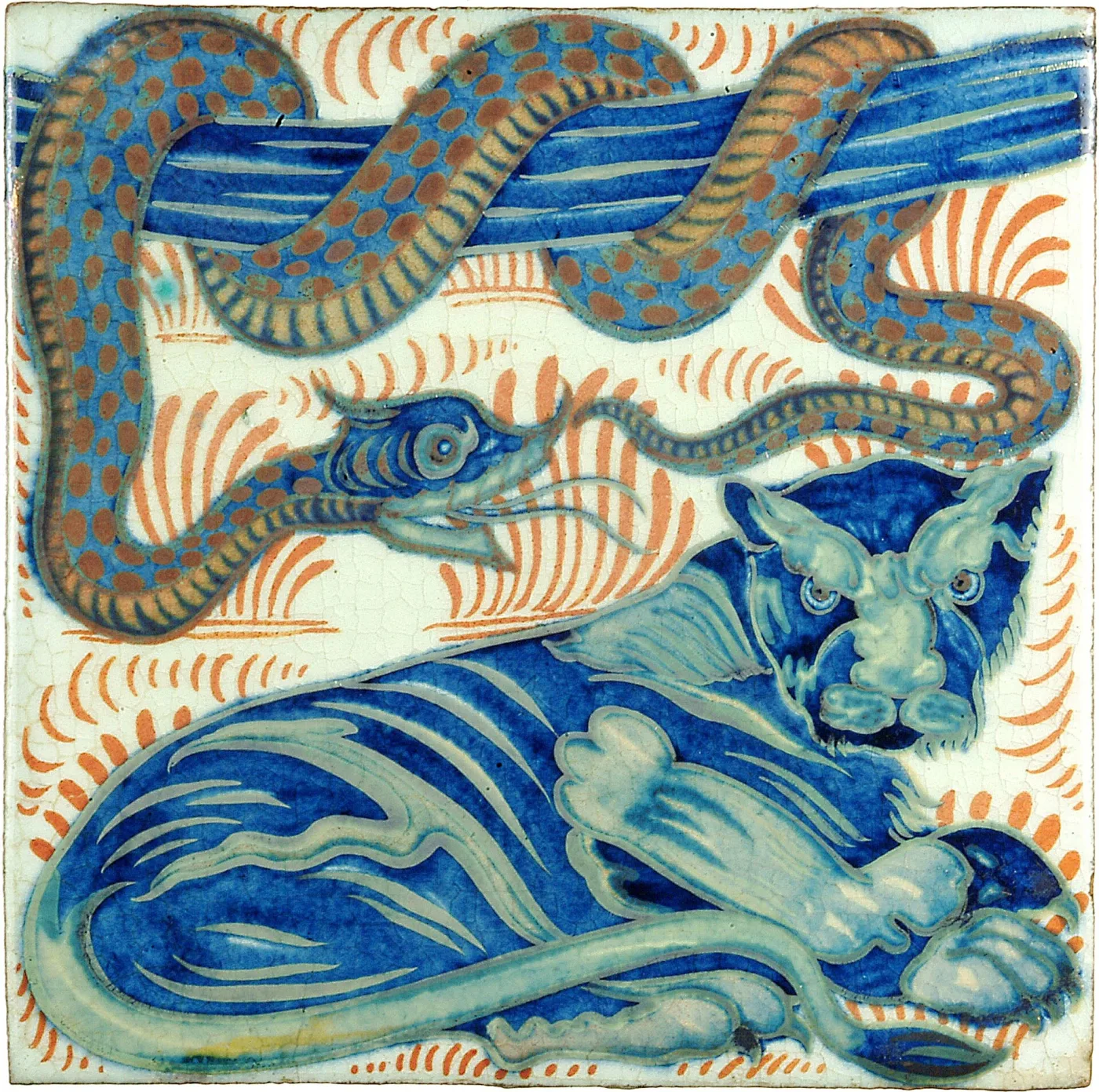
The Aesthetic Movement of the 1870s and 1880s brought Japanese-inspired designs, sunflowers, lilies, and Pre-Raphaelite imagery to tile decoration. Designers such as Walter Crane, William De Morgan, and Kate Greenaway created tile designs that remain icons of Victorian decorative arts. De Morgan's lustred tiles, with their vivid ruby and gold iridescent glazes, are among the most valuable Victorian tiles on the market.
Arts & Crafts Movement Tiles
The Arts & Crafts movement, championed by William Morris and his circle, reacted against industrial mass production by emphasizing handcraft, natural materials, and honest construction. Tile makers associated with this philosophy produced distinctive works that collectors eagerly seek.
William De Morgan
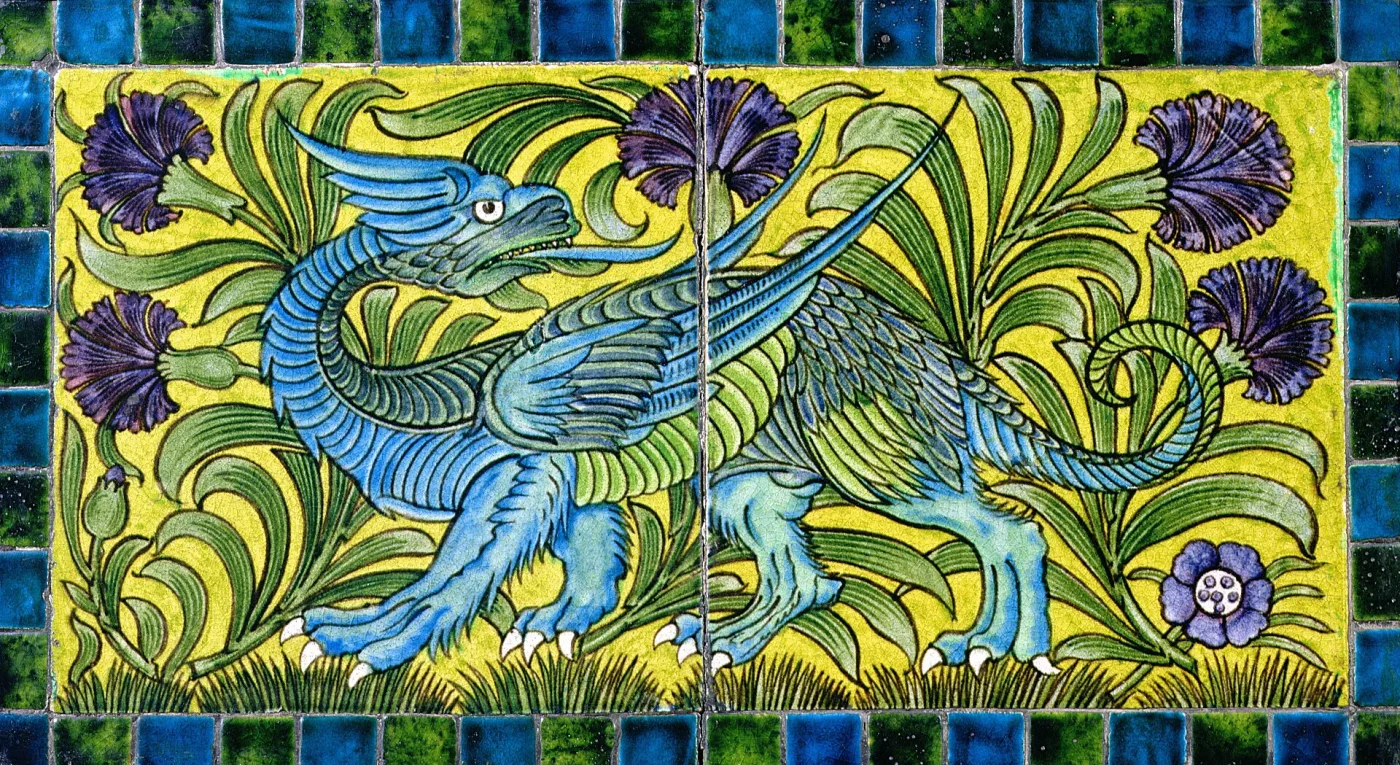
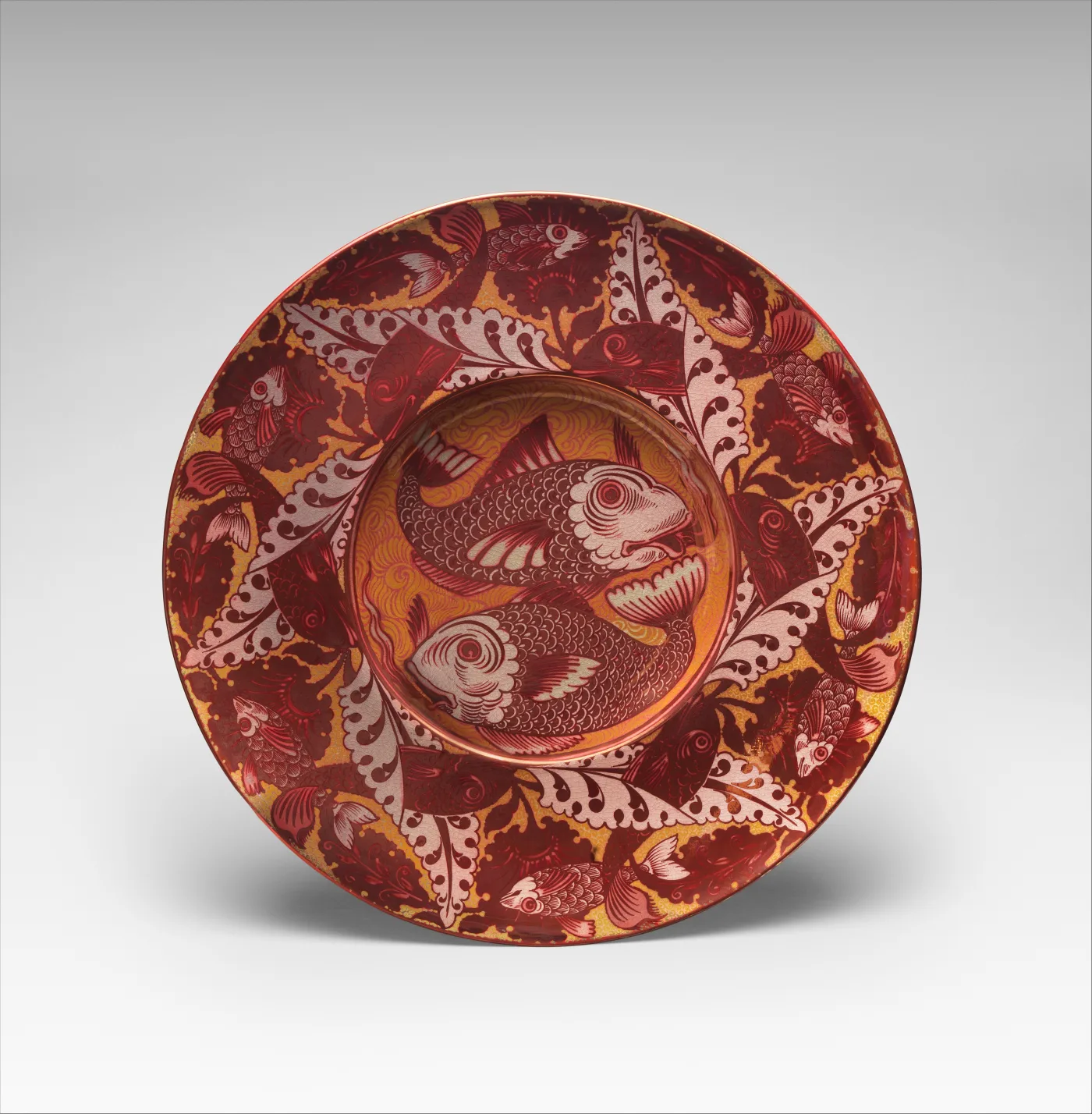
William De Morgan (1839-1917) is arguably the greatest tile artist of the 19th century. Working first at his Chelsea studio, then at Merton Abbey near Morris's workshop, and finally at Fulham, De Morgan produced tiles featuring Persian-inspired floral designs, fantastical animals, ships, and mythological creatures. His rediscovery of Islamic lustre glazing techniques produced tiles with breathtaking ruby, copper, and gold iridescent surfaces. Genuine De Morgan tiles are highly valued, with single tiles regularly fetching hundreds or thousands of dollars.
Pilkington's Royal Lancastrian
The Pilkington tile works in Manchester produced some of the finest Arts & Crafts tiles in England from 1893 onward. Their Royal Lancastrian lustre tiles, decorated by artists including Walter Crane and Lewis F. Day, featured medieval and heraldic imagery with rich lustre glazes. Pilkington tiles are marked with a capital "P" and often include individual artist monograms.
American Arts & Crafts Tiles
In the United States, potteries such as Grueby, Rookwood, Moravian Pottery and Tile Works, and Batchelder produced distinctive Arts & Crafts tiles. Grueby tiles, with their matte green glaze and organic relief designs, were installed in notable buildings including the New York City subway stations. Henry Chapman Mercer's Moravian tiles featured narrative scenes from history and folklore, hand-pressed from carved molds in the medieval tradition.
Art Nouveau Tiles
The Art Nouveau movement (roughly 1890-1910) produced some of the most visually striking decorative tiles ever made. Characterized by sinuous, flowing lines, organic forms, and stylized natural motifs, Art Nouveau tiles transformed interiors across Europe and beyond.
Belgian & French Art Nouveau
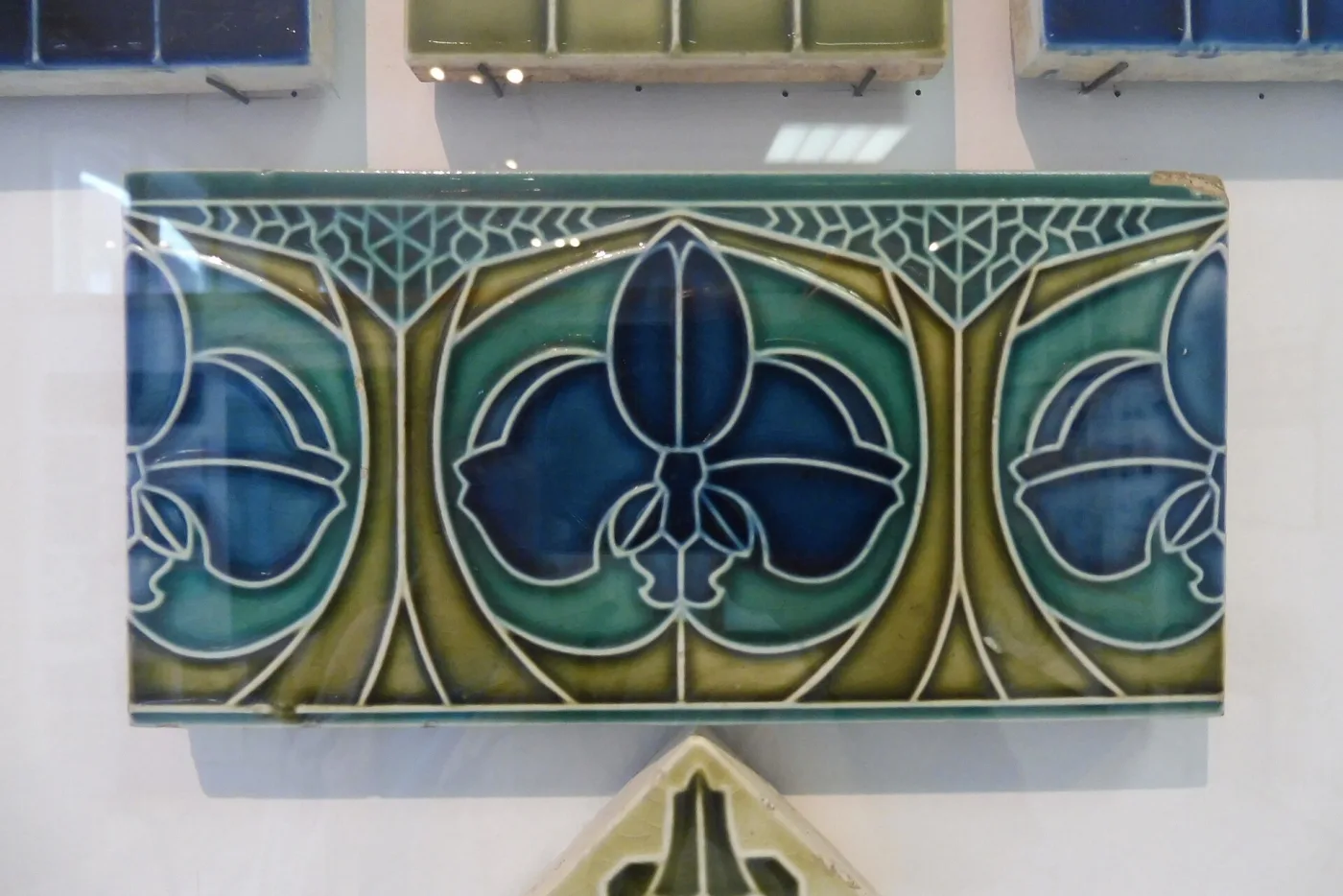
Belgium was a major center of Art Nouveau tile production. Factories including Helman, Gilliot & Cie, and Boch Frères produced tiles with swirling floral designs in rich color palettes. The tube-lining technique, where raised lines of slip outline colored glazed areas, became the signature decorative method for Art Nouveau tiles. French manufacturers, particularly those near the border with Belgium, also produced exceptional examples.
German Jugendstil Tiles
In Germany, the Jugendstil (youth style) movement inspired tile manufacturers such as Villeroy & Boch, Meissen, and Servais to produce distinctive geometric and floral tiles. German Art Nouveau tiles often feature bolder, more angular designs compared to the flowing curves of their French and Belgian counterparts.
Identifying Art Nouveau Tiles
Art Nouveau tiles are recognizable by their asymmetric, nature-inspired designs featuring whiplash curves, stylized flowers (especially water lilies, irises, and thistles), dragonflies, peacock feathers, and flowing female figures. The tube-lined technique creates raised outlines that can be felt by running a finger across the surface. Colors tend toward muted greens, blues, mauves, and creams, though vivid polychrome examples also exist.
Art Deco Tiles
The Art Deco movement of the 1920s and 1930s brought a new aesthetic to tile design, replacing the organic curves of Art Nouveau with bold geometric patterns, sunburst motifs, and streamlined forms. Art Deco tiles are characterized by strong angular shapes, stepped designs, zigzag patterns, and a palette that often includes black, silver, gold, turquoise, and coral.
Key Manufacturers
Major producers of Art Deco tiles included Carter & Co. of Poole (later Poole Pottery), Pilkington's, H. & R. Johnson, and Richards Tiles in Britain. In the Netherlands, factories like De Porceleyne Fles continued Delft traditions while incorporating modernist designs. American companies including American Encaustic Tiling Company, Mosaic Tile Company, and California Faience produced distinctive Art Deco architectural tiles.
Architectural Applications
Art Deco tiles were widely used in commercial and public architecture, including cinemas, department stores, Underground stations, swimming pools, and ocean liners. The bold, hygienic appeal of glazed tiles aligned perfectly with the modernist ethos. Many of these installations survive and are now protected as heritage features. Individual salvaged tiles from demolished Art Deco buildings are highly sought after by collectors interested in architectural salvage.
Reading Tile Maker Marks
Maker marks are crucial for identifying and dating antique tiles. Most major manufacturers impressed, stamped, or printed their marks on the reverse (back) of tiles. Understanding these marks can instantly reveal the manufacturer, approximate date, and sometimes even the specific pattern name.
Common British Tile Marks
Minton tiles typically bear an impressed "MINTON" or "MINTONS" mark, sometimes accompanied by a date cipher system similar to that used on their porcelain. Maw & Co. tiles show "MAW & CO" or "MAW & CO / BROSELEY" impressed into the back. Craven Dunnill tiles display "CRAVEN DUNNILL / JACKFIELD" marks. Doulton tiles carry the distinctive Doulton mark with "LAMBETH" or "BURSLEM" location identifiers.
Dutch Tile Marks
Most early Dutch Delft tiles are unmarked, making attribution to specific workshops difficult. However, some 18th and 19th-century factories used painted initials or symbols. The Makkum pottery used a crown mark, while various Rotterdam factories used initials or symbolic devices. Factory marks on Dutch tiles tend to be painted on the front lower corner rather than impressed on the reverse.
American Tile Marks
American tile companies generally marked their products clearly. Grueby tiles show an impressed lotus or the word "GRUEBY" in a distinctive font. Rookwood tiles bear the famous reversed "RP" monogram with flames. Moravian tiles carry "MORAVIAN" or "MPC" marks. American Encaustic Tiling Company tiles are marked "AETCO" or with the company's full name.
Tips for Reading Marks
Tile backs often reveal more than just maker marks. Look for registration marks (diamond-shaped marks used in Britain from 1842-1883), patent numbers, mold numbers, and size designations. Some tiles have hand-written batch numbers or decorator initials. Photographing the back of a tile is just as important as photographing the front when documenting a collection.
Glazing & Decoration Techniques
Understanding the various glazing and decorating methods used on antique tiles is essential for accurate identification and dating. Each technique produces distinctive visual and tactile qualities.
Tin Glaze (Maiolica/Delftware)
Tin-opacified glaze creates the white, slightly irregular surface characteristic of Delft and maiolica tiles. The glaze is soft and porous compared to later industrial glazes, and it often shows pinholes and crawling. Decoration was painted directly onto the unfired glaze surface, requiring swift, confident brushwork as corrections were impossible.
Transfer Printing
Developed in the 18th century for pottery and adapted for tiles in the 1840s, transfer printing allows detailed, reproducible imagery. Under the glaze, the printed design shows a characteristic fine stipple or line pattern visible under magnification. Over-glaze transfers sit on top of the glaze surface and are more vulnerable to wear. Understanding the difference between transfer-printed decoration and hand painting is fundamental to tile identification.
Tube-Lining
Tube-lining involves piping lines of liquid clay (slip) onto the tile surface through a nozzle, creating raised barriers that separate areas of different colored glazes. This technique, used extensively for Art Nouveau tiles, produces a distinctive tactile quality where the raised slip lines can be felt. The glazed areas between the lines often show pooling and variation in color depth.
Lustre Glazing
Lustre glazes contain metallic compounds (typically copper, silver, or gold) that produce iridescent, metallic surfaces when fired in a reduction atmosphere. William De Morgan mastered this technique for tile production. Genuine antique lustre tiles display a depth and warmth of iridescence that modern reproductions struggle to replicate.
Encaustic & Inlaid Techniques
True encaustic decoration involves inlaying different colored clays into the tile body, creating a pattern integral to the tile itself. The colored areas extend through the full thickness of the decoration layer and will not wear away under foot traffic, unlike surface-applied decoration. This durability is one reason encaustic tiles are found intact in medieval buildings after 800 years of use.
Construction Clues for Dating
The physical characteristics of a tile, including its body, thickness, and forming method, provide reliable dating evidence independent of the decorative style.
Hand-Made vs. Machine-Made
Hand-made tiles, typical before the mid-19th century, show slight irregularities in shape, thickness, and surface. The edges may be uneven, and the back often shows finger marks, kiln stilt marks, or impressions from the surface they dried on. Machine-made tiles, produced from the 1840s onward using hydraulic dust presses, are more uniform in thickness, have sharper edges, and display a characteristic pattern of impressed ridges or a "waffle" grid on the back to aid adhesion.
Clay Body Composition
The color and texture of the clay body provide clues to origin and date. Dutch Delft tiles have a soft, buff-colored body. Medieval English tiles use coarse red clay with visible inclusions. Victorian dust-pressed tiles have a dense, fine-grained body that can be white, cream, red, or gray depending on the manufacturer and the clay source used.
Tile Dimensions
Tile sizes changed over time and varied by region. Dutch Delft tiles gradually decreased in size from about 135mm square in the early 17th century to about 125mm square by the 19th century. Standard Victorian wall tiles measure 6 inches (152mm) square, while floor tiles came in various sizes from 3-inch squares to large 12-inch panels. Unusual sizes may indicate a specific manufacturer or a custom order.
Back Marks & Registration
The pattern of ridges, keys, and marks on the back of a tile evolved over time. Early industrial tiles have smooth backs or simple score marks. By the 1870s, most manufacturers used raised parallel ridges or cross-hatching. The British diamond registration mark (1842-1883) and subsequent registration numbers provide precise dating. Patent numbers and design registration stamps similarly help narrow the date range.
Condition, Grading & Value
Condition is a major factor in the value of antique tiles, though the standards vary depending on the tile's age and rarity. A medieval encaustic tile with significant wear may still be highly valuable, while a common Victorian transfer tile in the same condition would be worth very little.
Condition Factors
Key condition issues include crazing (fine cracks in the glaze), chips to edges or corners, loss of glaze, staining from mortar or iron deposits, wear to the decorated surface, and cracks through the body. Tiles that have been removed from walls or floors often show mortar residue on the back and edges, which is generally acceptable to collectors. However, aggressive cleaning or restoration can reduce value.
Value Considerations
Several factors influence tile value beyond condition. Rarity is paramount: a tile from a limited production run or a short-lived factory commands a premium. Named designers (De Morgan, Walter Crane, Lewis Day) add significant value. Unusual subjects, particularly pictorial tiles depicting specific scenes, are more valuable than standard floral or geometric patterns. Complete sets or panels are worth considerably more than the sum of individual tiles.
Market Trends
The antique tile market has seen steady growth, driven by demand from heritage restoration projects, interior designers, and dedicated collectors. Art Nouveau tube-lined tiles have appreciated significantly in recent years. Victorian transfer-printed tiles remain affordable entry points for new collectors, with most examples available for modest prices. At the high end, panels by De Morgan or rare medieval tiles achieve prices in the thousands at specialist auctions.
Spotting Reproductions & Fakes
As antique tile values have risen, reproductions and fakes have become more common. Knowing what to look for protects collectors from costly mistakes.
Common Reproduction Signs
Modern reproductions often betray themselves through overly uniform glazes that lack the subtle variations of handwork. The clay body may be too clean and uniform compared to historical examples. Artificial aging, including fake crazing, applied dirt, and deliberate chipping, often looks unconvincing under close examination. Genuine crazing develops randomly over centuries, while artificial crazing tends to be too regular or too uniform in depth.
Weight & Sound Tests
Antique tiles often feel lighter than modern reproductions due to lower firing temperatures and different clay compositions. Tapping a tile can also provide clues: a clear, high-pitched ring suggests a dense, high-fired modern tile, while a duller, softer sound is typical of lower-fired antique earthenware. These tests are not definitive but provide useful initial indicators.
Using Technology
Modern tools can help authenticate tiles. UV light reveals modern adhesives, paints, or restoration work that fluoresce differently from original materials. Magnification helps distinguish hand-painted decoration from printed reproductions. For valuable purchases, thermoluminescence testing can scientifically date the last time a ceramic was fired, providing definitive authentication for important pieces.
Building a Tile Collection
Starting a tile collection is accessible and rewarding. Tiles are relatively affordable compared to other antique ceramics, they display beautifully, and they connect to broader histories of architecture, design, and technology.
Getting Started
New collectors should begin by focusing on a specific area, whether that means tiles from a particular period, manufacturer, technique, or subject matter. This focused approach builds expertise quickly and creates a more coherent collection. Visit architectural salvage yards, antique fairs, and specialist tile dealers to handle as many tiles as possible. Nothing replaces the education of touching, turning over, and comparing real examples.
Where to Find Antique Tiles
Sources for antique tiles include specialist dealers, architectural salvage companies, auction houses (both local and online), antique fairs, and estate sales. Demolition sites sometimes yield tiles, though always ensure salvage is legal and authorized. Online marketplaces have expanded access to tiles worldwide, but buying online requires caution, as condition issues may not be apparent in photographs.
Display & Storage
Tiles can be displayed in custom frames, on plate stands, in shadow boxes, or mounted directly on walls. Proper storage requires keeping tiles in a dry environment, separated by soft padding to prevent edge damage. Avoid stacking tiles directly on top of each other without protection, as improper storage can cause scratches and chips over time.
Documentation
Maintaining detailed records of each tile is essential for any serious collection. Photograph both the front and back of every tile, record dimensions and weight, note any marks or inscriptions, and document the provenance and purchase details. Good documentation aids in authentication research, insurance claims, and eventual resale. Digital cataloging tools make this process straightforward.