
Antique Architectural Salvage & Hardware Identification Guide
Antique architectural salvage represents a fascinating intersection of history, craftsmanship, and preservation. From ornate Victorian doorknobs to elegant leaded glass windows, these rescued building elements offer collectors the opportunity to own pieces of architectural heritage that might otherwise be lost to demolition. The growing appreciation for historic preservation has transformed architectural salvage from a niche market into a thriving collecting category.
Understanding how to identify and authenticate antique architectural elements requires knowledge of historical building practices, manufacturing techniques, and stylistic periods. Whether you are restoring a historic home, decorating with period-appropriate details, or building a collection of significant hardware, this guide will provide the essential knowledge needed to make informed acquisitions.
This comprehensive guide covers the major categories of architectural salvage including door hardware, window elements, fireplace components, lighting fixtures, and decorative ironwork. You will learn to recognize period-specific characteristics, identify manufacturer marks, distinguish genuine antiques from reproductions, and understand the factors that determine value in this specialized market.
Table of Contents
- Understanding Architectural Salvage
- Doorknobs and Door Hardware
- Hinges, Latches, and Fasteners
- Door Plates, Escutcheons, and Backplates
- Stained Glass and Leaded Windows
- Fireplace Mantels and Surrounds
- Architectural Lighting Fixtures
- Decorative Iron and Metalwork
- Woodwork, Moldings, and Trim
- Dating Techniques and Authentication
- Identifying Reproductions
- Collecting and Sourcing Tips
Understanding Architectural Salvage
Architectural salvage encompasses building components rescued from demolished or renovated structures. These elements range from small hardware items to major architectural features, each carrying the craftsmanship and design sensibilities of its era.
Historical Context
The architectural salvage movement gained momentum in the 1960s and 1970s as preservationists recognized the value of saving building elements from urban renewal demolitions. What began as practical recycling evolved into appreciation for the superior materials and craftsmanship of earlier eras.
Victorian and Edwardian buildings provided particularly rich salvage opportunities. These structures featured elaborate hardware, decorative woodwork, and ornamental elements that reflected the era's celebration of skilled handwork and quality materials. As these buildings aged and faced demolition, their components became sought-after collectibles.
Categories of Architectural Salvage
The major categories include:
- Door and window hardware: Knobs, hinges, locks, plates, pulls, window latches, and mechanical doorbells
- Glass elements: Stained glass, leaded windows, beveled glass panels, transoms
- Fireplace components: Mantels, surrounds, tiles, grates, andirons, fenders
- Lighting: Chandeliers, sconces, gas fixtures, early electric fixtures
- Metalwork: Gates, fencing, railings, brackets, registers, grilles
- Woodwork: Doors, columns, corbels, moldings, newel posts, balusters
- Stone and tile: Carved elements, decorative tiles, flooring, hearths
Why Collect Architectural Salvage
Collectors are drawn to architectural salvage for various reasons. Restoration enthusiasts seek period-appropriate elements for historic homes. Designers incorporate vintage hardware and fixtures into contemporary spaces. Historians appreciate these objects as tangible connections to past building traditions. And investors recognize the increasing scarcity of quality antique architectural elements.
Doorknobs and Door Hardware
Antique doorknobs represent one of the most accessible and popular categories of architectural salvage. These functional objects showcase remarkable variety in materials, designs, and manufacturing techniques across different periods.
Materials and Manufacturing
Brass doorknobs dominated American hardware from the 1840s through the early 20th century. Early brass knobs were sand-cast, producing slightly irregular surfaces with visible casting seams. By the 1870s, die-casting produced more uniform results. Solid brass knobs feel heavier than later brass-plated examples.
Bronze doorknobs appeared in higher-quality installations. Bronze alloys varied, but most contain copper, tin, and sometimes zinc. Bronze develops a distinctive patina that differs from brass oxidation, typically showing deeper brown and green tones.
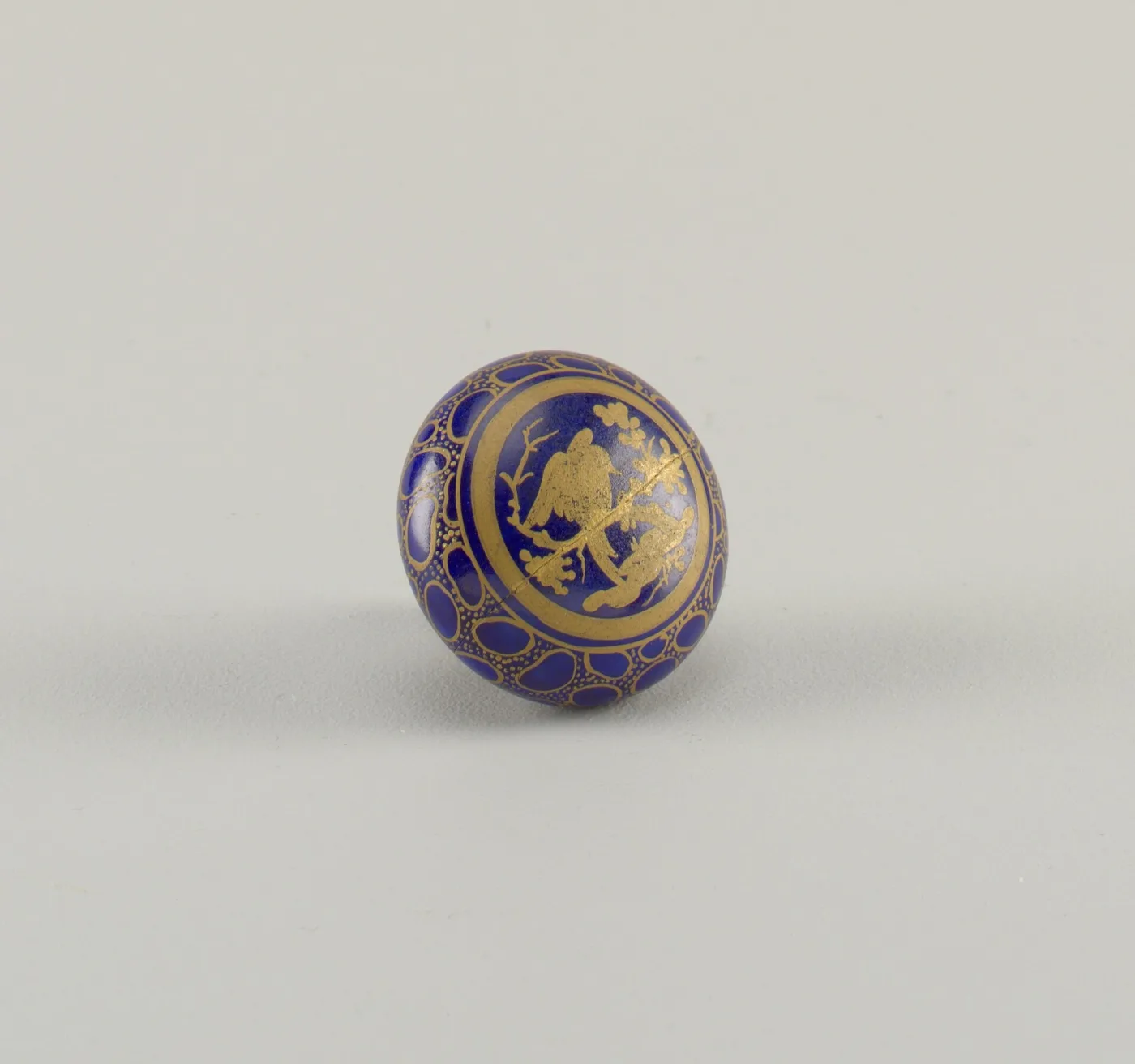
Porcelain and ceramic knobs enjoyed popularity from the 1850s through the 1920s. White porcelain was most common, but colored glazes, transfer prints, and hand-painted decorations add variety and value. Examine the mounting ferrule and the connection between the porcelain and metal components for age indicators.
Glass doorknobs peaked in popularity during the Depression era when they offered an economical alternative to metal. However, earlier pressed glass and cut glass examples from the Victorian period command premium prices. Look for pontil marks on early hand-blown examples and examine the metal shanks for period-appropriate construction.
Mineral and stone knobs include examples in agate, jasper, marble, and other decorative stones. These luxury items appeared primarily in high-end Victorian installations and remain relatively rare.
Period Styles
Victorian era (1837-1901) doorknobs display elaborate ornamentation including floral patterns, geometric designs, and naturalistic motifs. The Aesthetic Movement brought Japanese-influenced designs. Eastlake-style hardware featured incised linear patterns and geometric forms.
Arts and Crafts period (1880-1920) hardware emphasized handcrafted appearance with hammered surfaces, simple geometric forms, and honest expression of materials. Look for evidence of hand finishing and deliberately irregular surfaces.
Art Nouveau (1890-1910) brought flowing organic lines, whiplash curves, and naturalistic imagery to doorknob design. Female figures, flowers, and sinuous plant forms characterize this style.
Colonial Revival (1880-1940) reproduced earlier American designs with varying degrees of accuracy. Better examples faithfully copy 18th-century originals, while others merely suggest colonial themes.
Major Manufacturers
Identifying manufacturer marks helps date and authenticate doorknobs:
- Russell and Erwin (R&E): New Britain, Connecticut company active 1839-1964. Look for R&E marks on plates and knob shanks.
- Yale and Towne: Stamford, Connecticut manufacturer known for locks and hardware. Y&T marks appear on quality installations.
- Corbin: New Britain company producing hardware from 1849. Corbin name often cast into backplates.
- Reading Hardware: Pennsylvania manufacturer producing Eastlake and Victorian designs. Reading name on plates.
- P&F Corbin: Related Corbin company with distinctive mark.
- Sargent: New Haven, Connecticut company with Sargent mark on quality hardware.
Hinges, Latches, and Fasteners
Door and cabinet hinges provide excellent dating evidence and showcase the evolution of hardware manufacturing. Understanding hinge construction helps authenticate period installations.
Hinge Types and Dating
Strap hinges represent the earliest form, with hand-forged examples dating from colonial times. Look for hammer marks, irregular profiles, and hand-filed edges. The pivot pins were often made separately and inserted during installation.
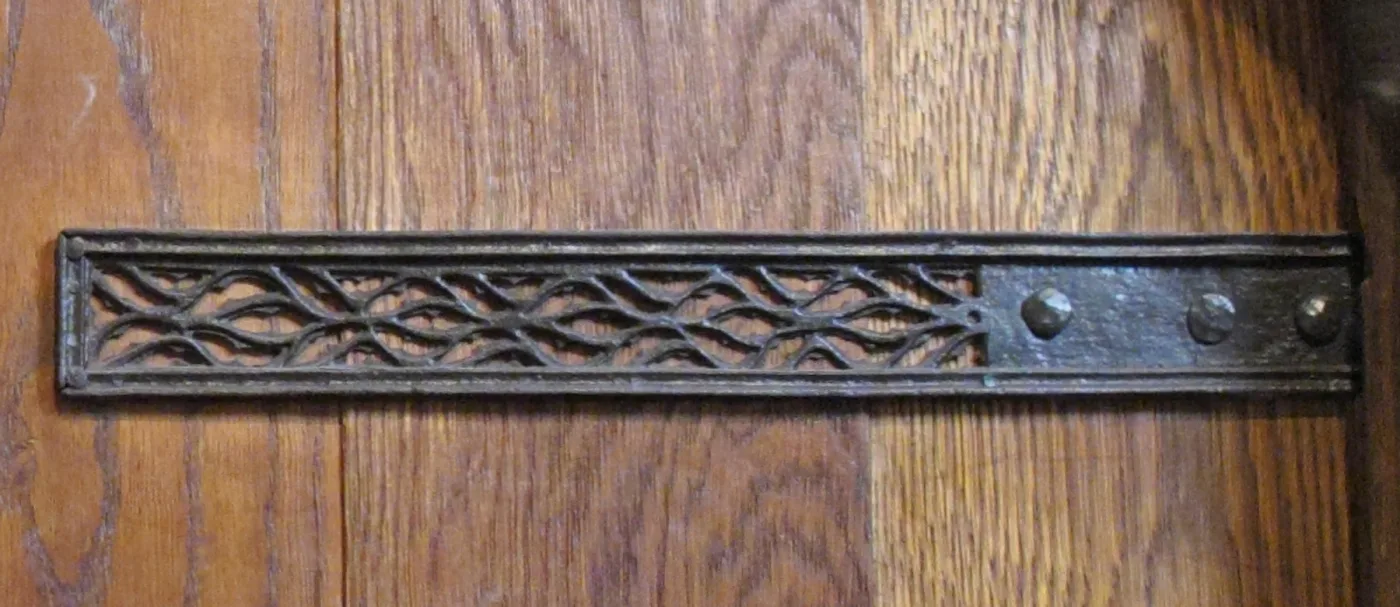
H and HL hinges were cast or forged in distinctive shapes resembling their letter namesakes. These appeared on colonial and early Federal furniture and buildings. Genuine examples show casting irregularities or forging marks.
Butt hinges became standard during the 19th century. Early butt hinges were heavier gauge with hand-cut screw slots. Machine-made examples from after 1850 show more uniform construction. The knuckle (barrel) design evolved from loose-pin to fixed-pin construction.
Parliament hinges feature wide throws that allow doors to fold completely flat against walls. These H-shaped hinges appeared in Georgian and Federal buildings where door clearance was important.
Rising butt hinges lift doors as they open, clearing carpets and rugs. The spiral knuckle design is distinctive. These remained popular throughout the Victorian era.
Surface Treatments and Finishes
Original finishes help authenticate age:
- Japanning: Black lacquer finish common on 18th and early 19th-century hardware
- Brass plating: Thin brass layer over iron, showing wear patterns on genuine antiques
- Bronzing: Chemical treatment creating bronze-like appearance on brass or iron
- Nickel plating: Common after 1870, shows distinctive wear patterns
- Chrome plating: Indicates 20th-century manufacture, post-1920s
Latches and Catches
Thumb latches feature a plate with a pivoting thumb piece that lifts an interior latch bar. Colonial and early American examples are hand-forged with distinctive decorative forms. Later cast versions show more uniform construction.
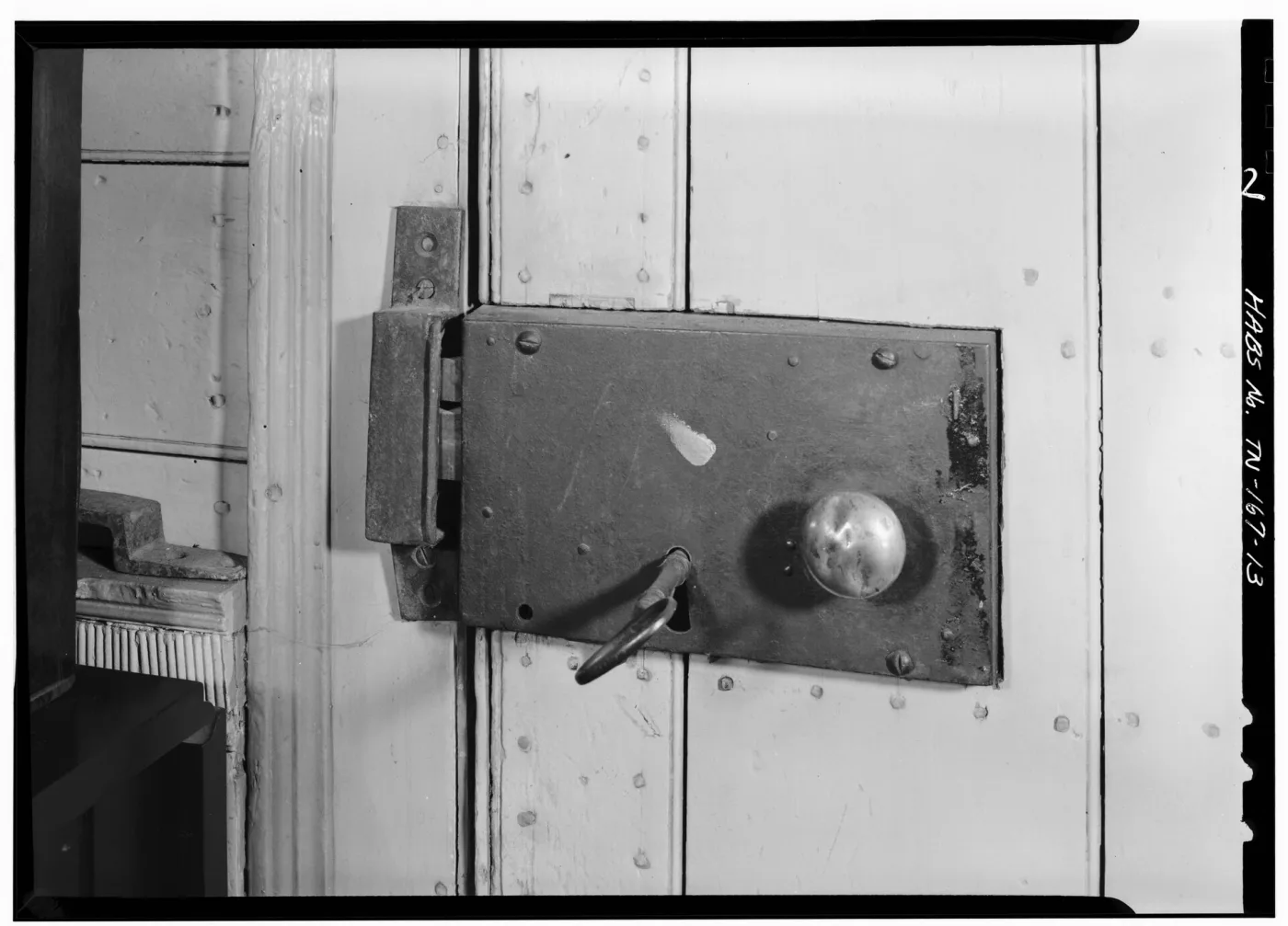
Norfolk latches include an attached handle, combining latch and pull functions. These appeared primarily in English and English-influenced American buildings.
Rim locks mount on the door surface rather than within the door. Early examples are hand-made with irregular components. Victorian rim locks often feature decorative cases in brass or iron.
Door Plates, Escutcheons, and Backplates
Door plates and escutcheons provide both functional protection and decorative enhancement. These elements offer excellent opportunities for dating and manufacturer identification.
Types of Door Plates
Knob backplates mount behind doorknobs, protecting the door surface and providing visual enhancement. Victorian examples range from simple rosettes to elaborate rectangular or shaped plates with extensive ornamentation.
Keyhole escutcheons surround and protect keyhole openings. These small elements often match knob designs and carry manufacturer marks. Examine both front design and reverse construction for dating clues.
Push plates protect door surfaces where hands contact the door. These became popular in commercial and high-traffic residential applications. Victorian push plates often feature elaborate engraving or cast decoration.
Kick plates protect the lower door rail from foot traffic. While often utilitarian, decorative versions in brass or bronze add visual interest.
Materials and Construction
Door plate construction evolved with manufacturing technology:
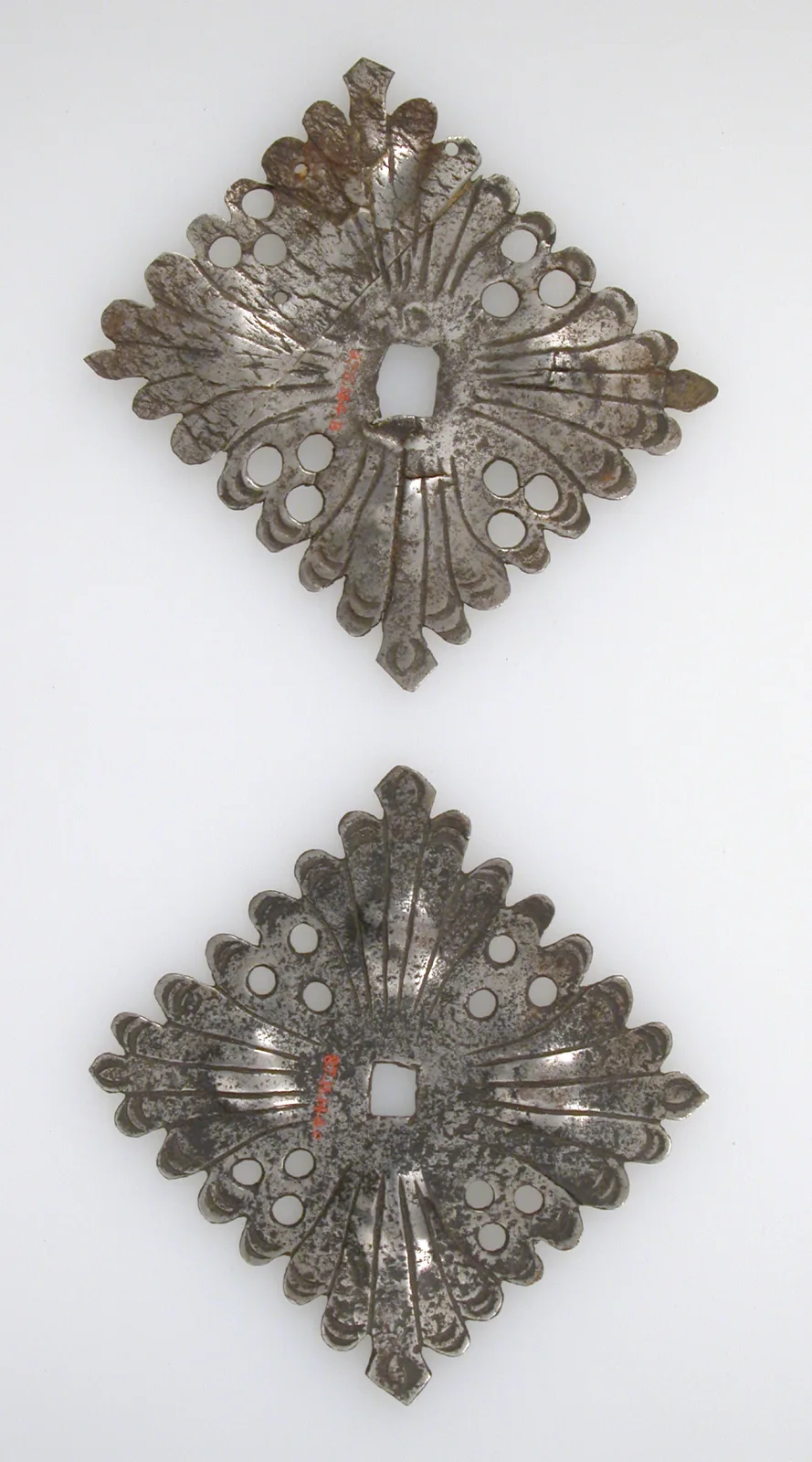
Cast plates dominated the Victorian era. Sand casting produced slightly textured surfaces with visible parting lines. Die casting after 1870 created sharper details and more uniform results. Cast plates feel substantial and show consistent patina.
Stamped plates became common in the late 19th century. These pressed metal plates are thinner than cast examples but could incorporate fine detail. Look for tool marks on the reverse and sharp edges.
Plated finishes vary with period. Nickel plating appeared in the 1870s, followed by various bronze and brass electroplate finishes. Chrome plating indicates 20th-century manufacture.
Design Styles
Door plate designs closely follow furniture and decorative arts styles:
- Renaissance Revival: Classical motifs, medallions, and symmetrical arrangements
- Eastlake: Incised lines, geometric patterns, and stylized flowers
- Aesthetic Movement: Japanese-influenced motifs, asymmetry, and naturalistic details
- Art Nouveau: Flowing lines, female figures, and organic forms
- Arts and Crafts: Simple shapes, hammered textures, and honest construction
- Colonial Revival: Reproductions of Federal and Georgian designs

Stained Glass and Leaded Windows
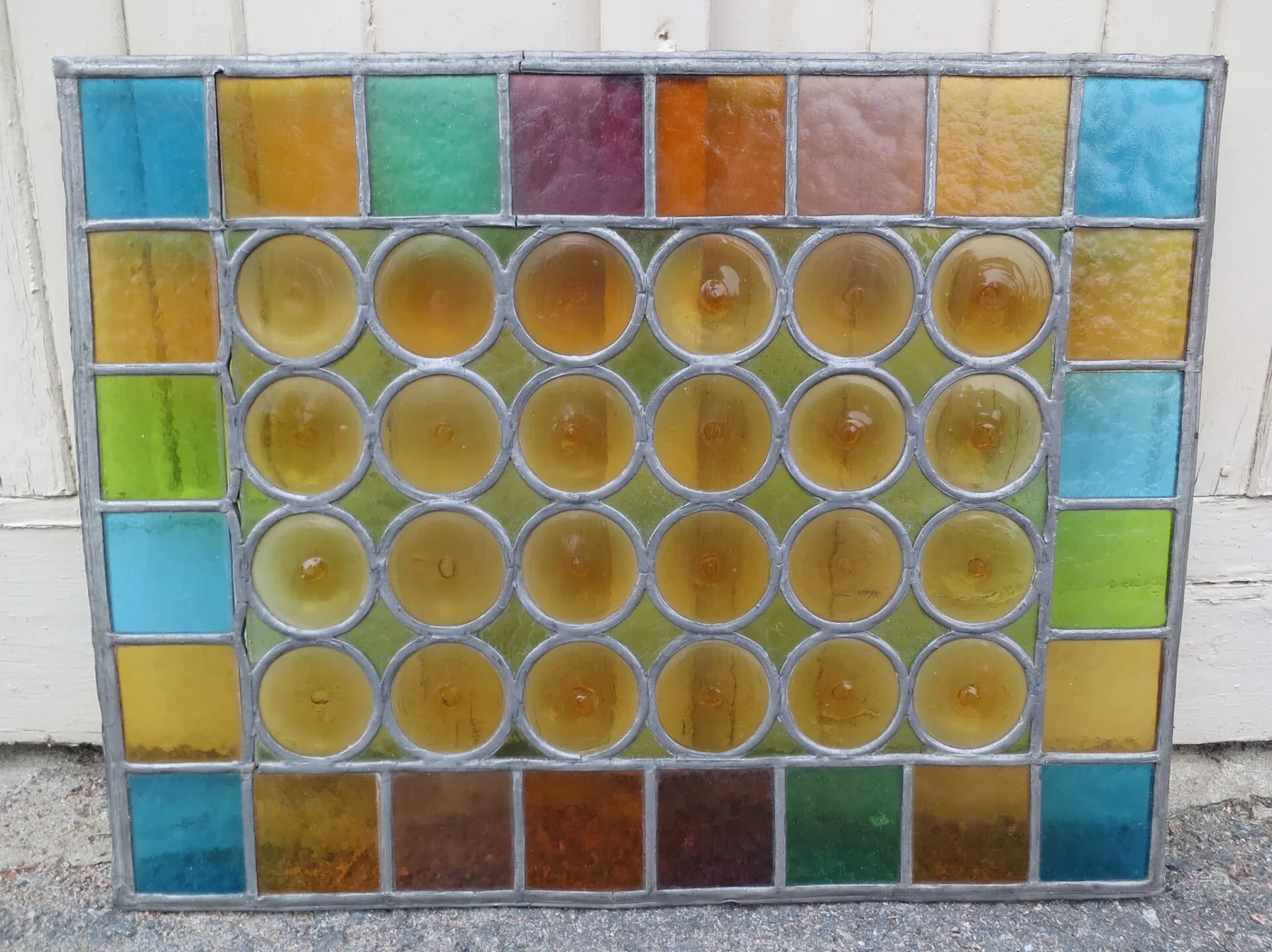
Antique stained glass and leaded windows represent significant architectural salvage finds. These fragile treasures require careful evaluation for authenticity and condition.
Understanding Glass Types
Antique glass (the type, not just old glass) is mouth-blown sheet glass showing characteristic striations, bubbles, and thickness variations. Each sheet is unique. This glass remained the standard for quality windows through the early 20th century.
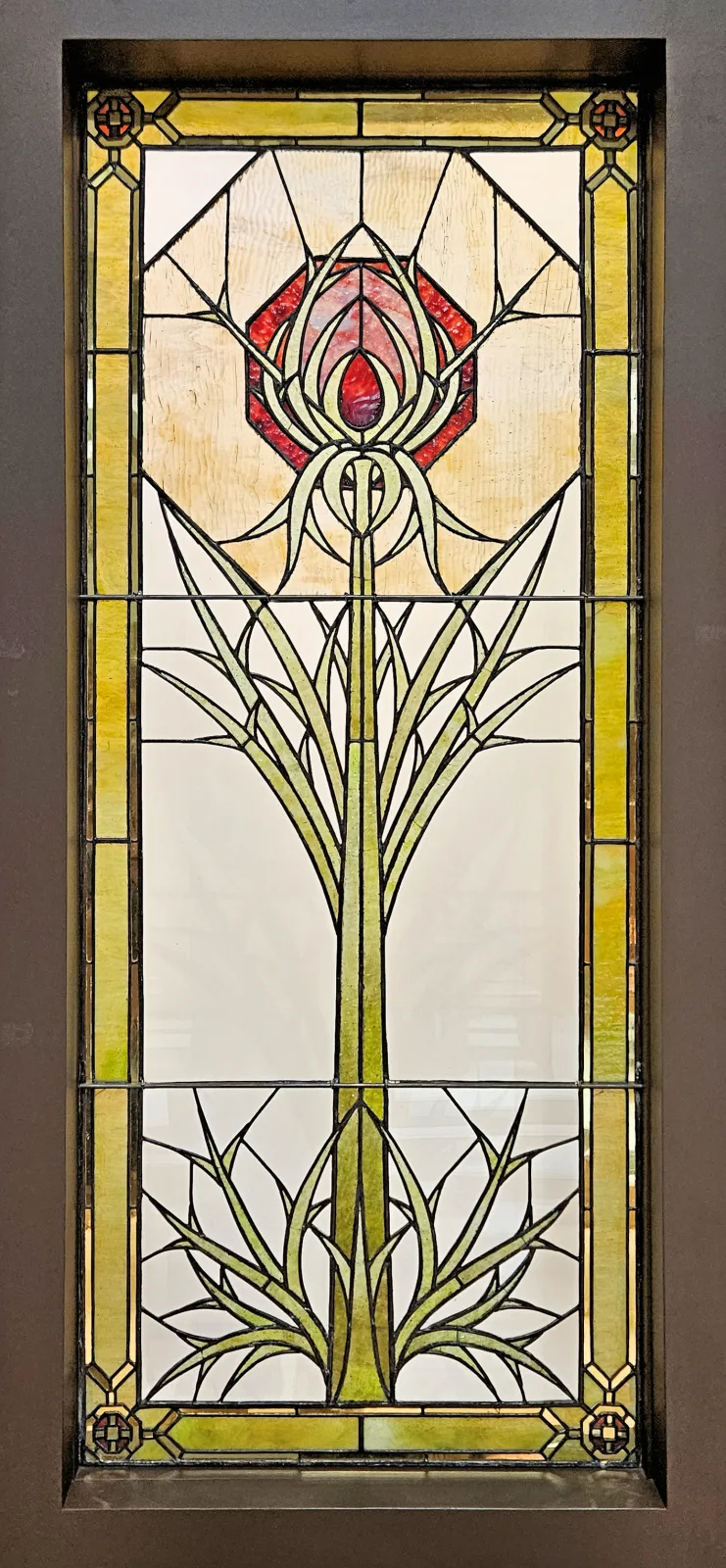
Cathedral glass is machine-rolled colored glass with uniform thickness and color. Available from the late 19th century, it indicates more affordable production but can still be quite old.
Opalescent glass features milky, translucent qualities with swirled colors. Developed in America in the 1880s, this glass is associated with Louis Comfort Tiffany and John La Farge. It appears primarily in American windows.
Flashed glass features a thin layer of colored glass over a clear or lighter base. Portions of the flashed layer can be etched or abraded to create two-tone effects. This technique appears in both medieval and Victorian windows.
Lead Came Construction
Traditional stained glass uses lead came (channeled lead strips) to join glass pieces:
- H-came: Standard profile with channels on both sides for interior glass joints
- U-came: Single channel used at window edges
- Flat came: Creates minimal visual line between glass pieces
- Round came: Decorative profile for special applications
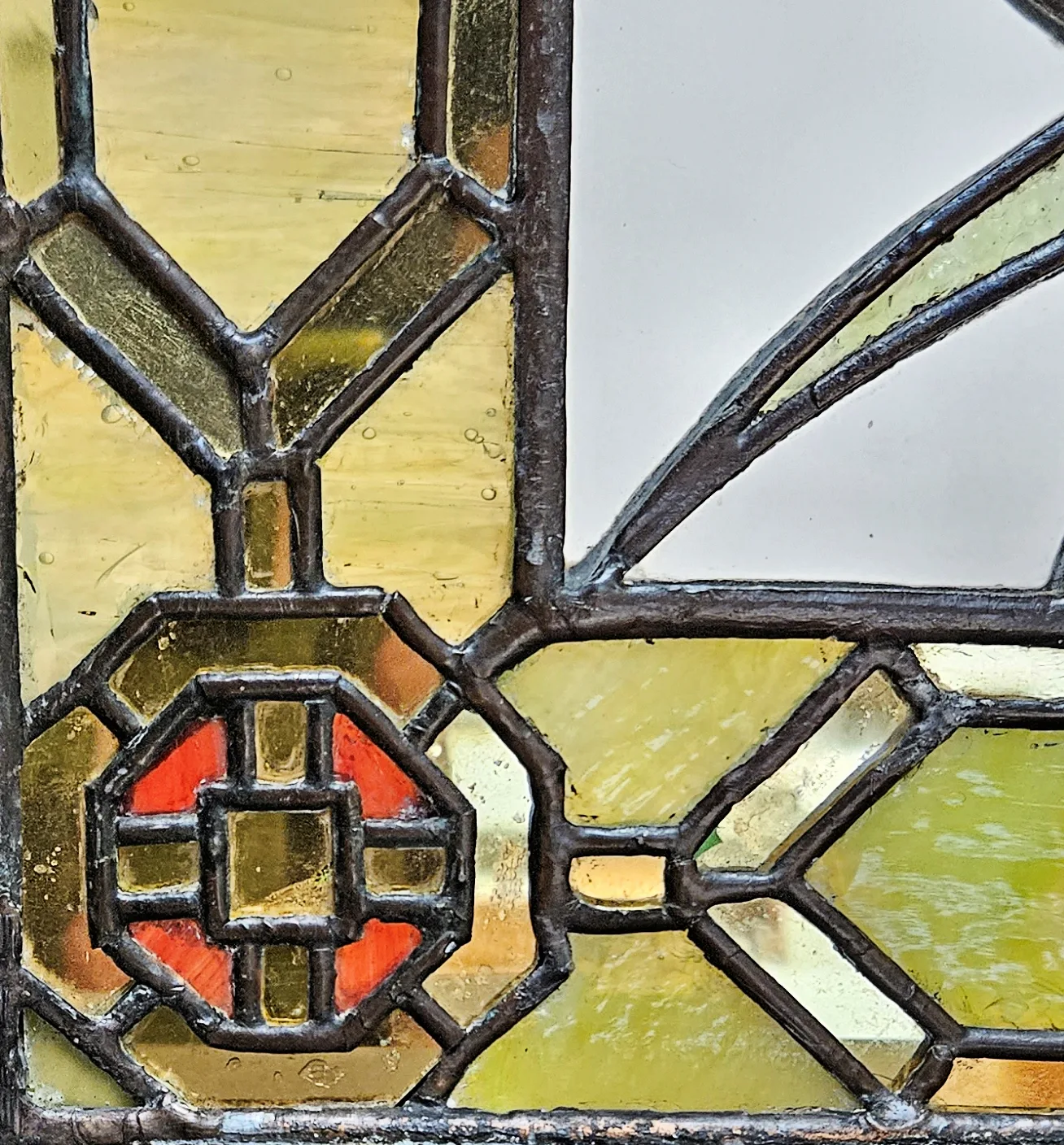
Examine came joints for evidence of age. Original solder should be smooth and oxidized. Re-soldered joints often look brighter or show different technique. The lead itself darkens and oxidizes over decades.
Dating Stained Glass
Several factors help date stained glass windows:

Glass characteristics provide primary evidence. Hand-blown antique glass with significant variations indicates earlier production. Machine-made glass with uniform characteristics suggests later 19th or 20th-century manufacture.
Design elements reflect period styles. Victorian windows often feature naturalistic flowers, geometric borders, and rich colors. Art Nouveau windows show flowing organic lines. Arts and Crafts windows emphasize simpler geometric patterns and earthy colors.
Construction details reveal age and quality. Hand-cut glass pieces show slight irregularities. Leading should fit tightly without excessive gaps. Original putty or cement appears dark and aged.
Condition Assessment
Evaluate stained glass condition carefully:
- Check for cracked or broken glass pieces
- Examine lead came for sagging, bowing, or separation
- Look for previous repairs or replaced sections
- Assess the cement or putty condition between glass and lead
- Note any missing or replaced pieces that affect the design
Fireplace Mantels and Surrounds
Antique fireplace mantels and surrounds anchor room design and represent significant architectural salvage finds. Understanding period styles and construction helps authenticate these impressive pieces.
Mantel Materials
Wood mantels range from simple colonial designs to elaborate Victorian compositions. Pine served economy installations, while mahogany, oak, and walnut appeared in finer homes. Look for hand-carved details on earlier examples and machine-carved repetitive elements on later pieces.
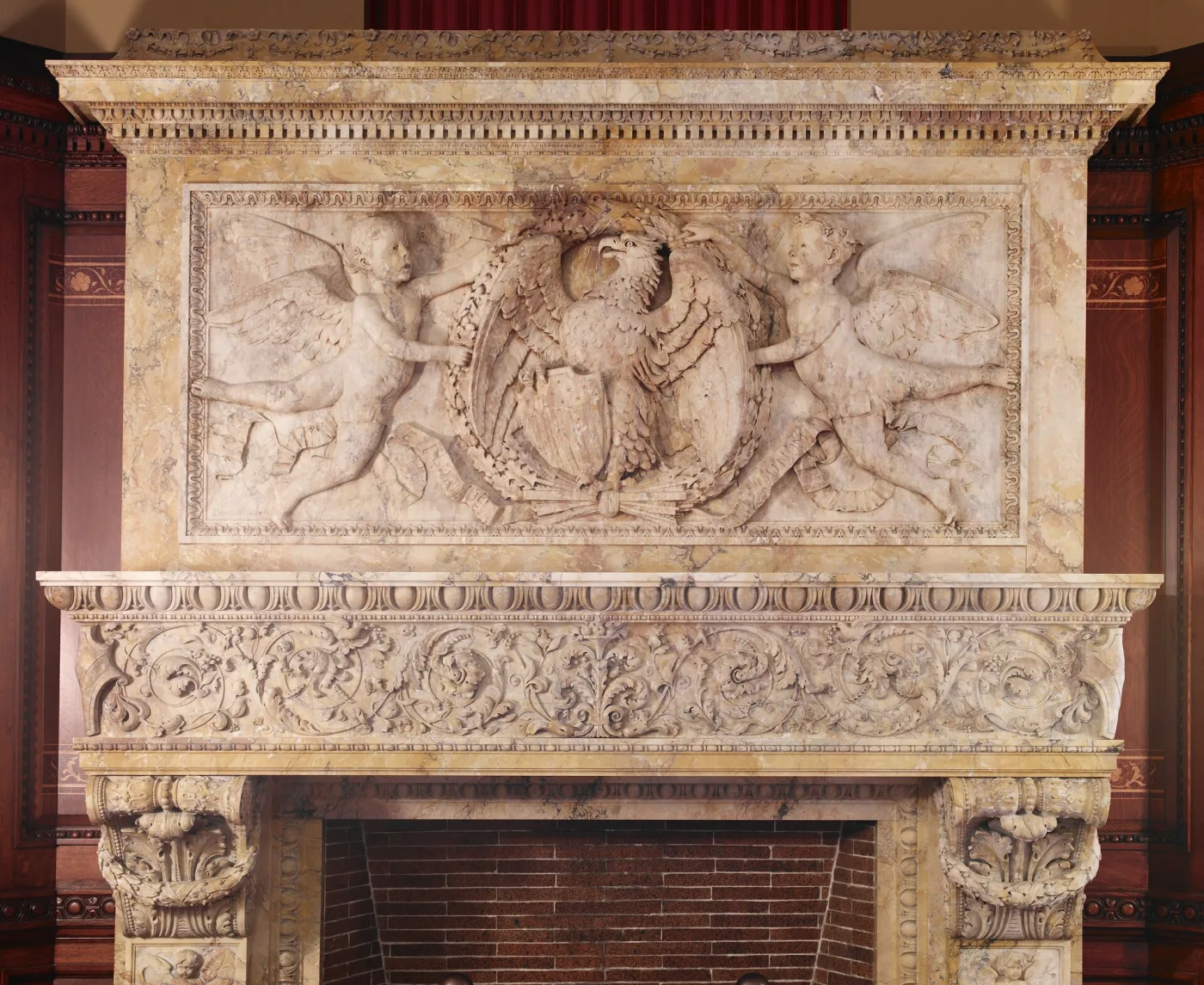
Marble mantels indicate higher-quality installations. White statuary marble, colored marbles, and combinations appeared throughout the 19th century. Examine the undersides and back for evidence of hand finishing versus machine sawing.
Slate mantels offered a more affordable alternative to marble. These were often painted to simulate marble or other materials. Original painted finishes add value when intact.
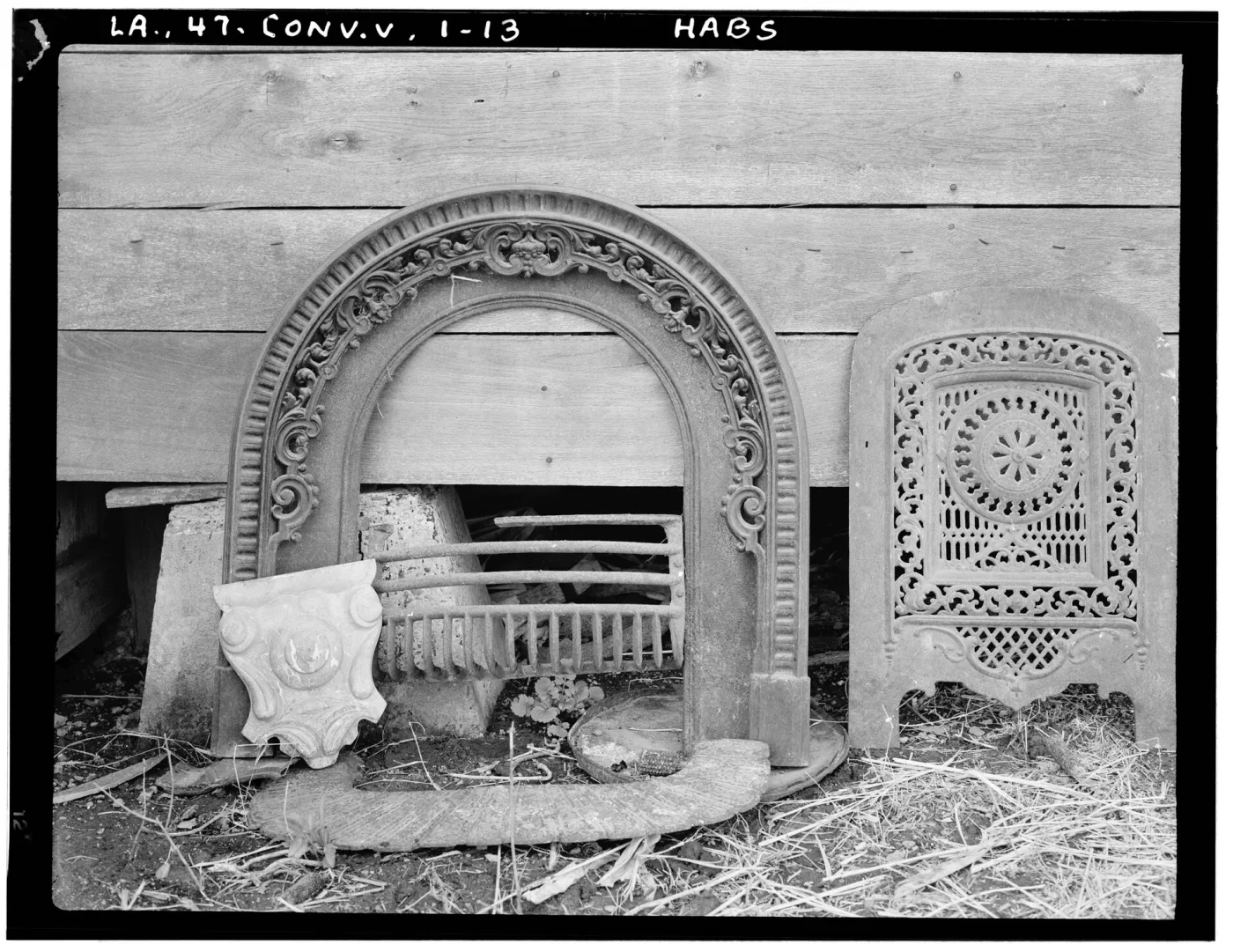
Cast iron surrounds became popular during the Victorian era. These featured elaborate relief decoration including floral patterns, classical motifs, and figurative scenes. Look for maker's marks cast into the back or bottom edges.
Period Styles
Federal period (1780-1820) mantels feature delicate classical details including reeded columns, oval medallions, and restrained ornamentation. Proportions are refined and elegant.
Greek Revival (1820-1860) brought bold classical elements including full columns, heavy entablatures, and Greek key patterns. Proportions are larger and more imposing than Federal examples.
Victorian era (1840-1900) produced tremendous variety. Early Victorian maintained classical themes while adding more elaborate carving. Later Victorian included Eastlake geometric patterns, Renaissance Revival medallions, and naturalistic carved designs.
Arts and Crafts (1880-1920) mantels emphasized simple lines, honest materials, and handcrafted appearance. Quartersawn oak, hammered copper hoods, and Craftsman tiles characterize this style.
Fireplace Accessories
Original accessories add value and authenticity:
- Fireplace tiles: Decorative tiles surrounding the firebox opening, often matching the surround style
- Summer covers: Decorative panels covering the firebox when not in use
- Grates and baskets: Cast iron or steel grates holding fuel
- Andirons: Decorative supports for logs, in various period styles
- Fenders: Protective screens at the hearth edge
- Coal scuttles and tools: Matching accessories for fireplace use
Architectural Lighting Fixtures
Antique lighting fixtures salvaged from period buildings offer both decorative and functional value. Understanding the evolution from gas to electric illumination helps authenticate and date these pieces.
Gas Lighting Era
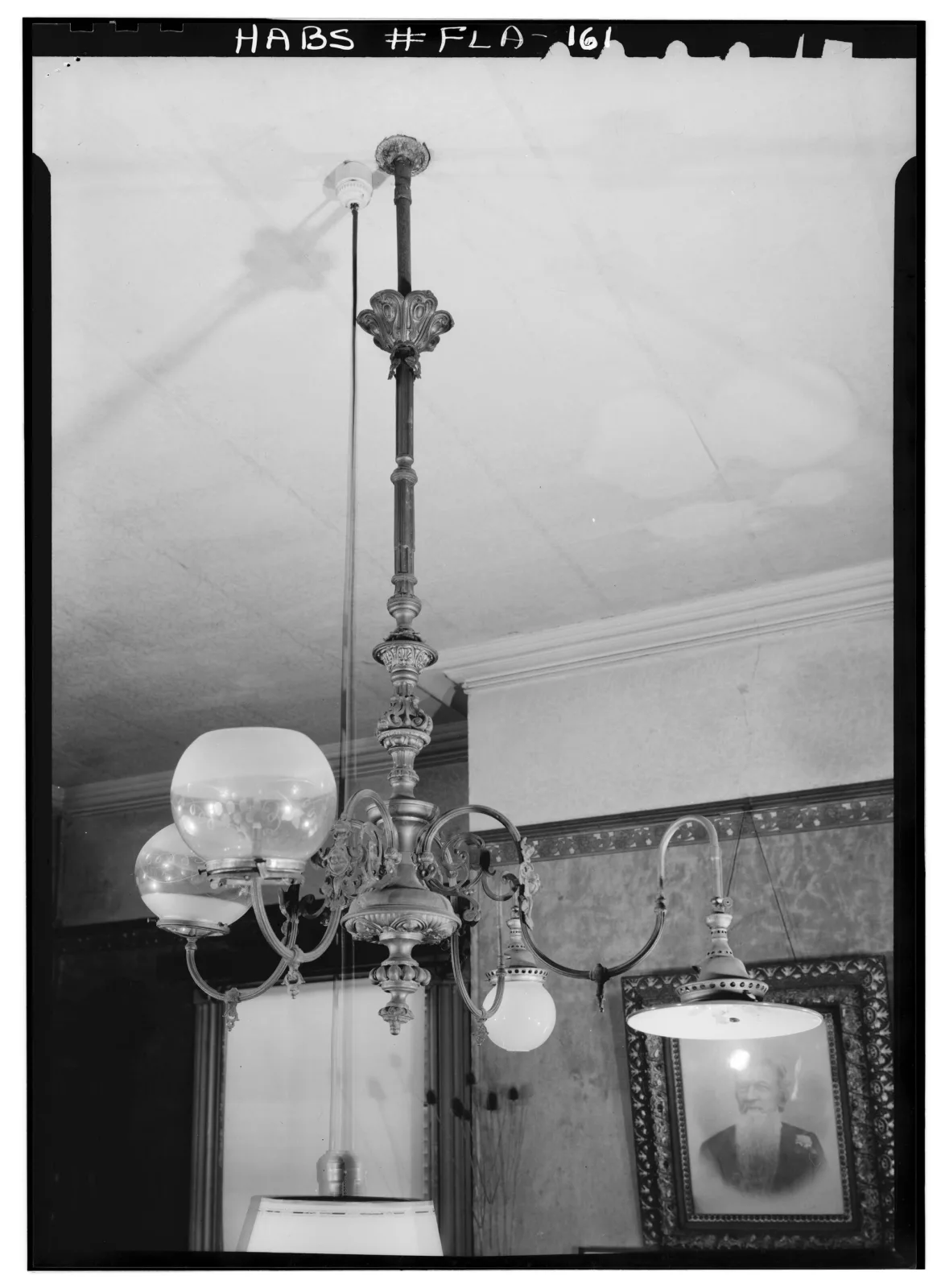
Gas lighting dominated American homes from the 1850s through the early 20th century. Gas fixtures feature distinctive characteristics:
- Gas arms point upward to direct flames toward ceiling
- Burner tips show wear from use and often carry maker marks
- Gas cocks (valves) control fuel flow to individual burners
- Shades protect flames and direct light, often in frosted or colored glass
- Fixture bodies often feature elaborate cast brass or bronze construction
Combination Fixtures
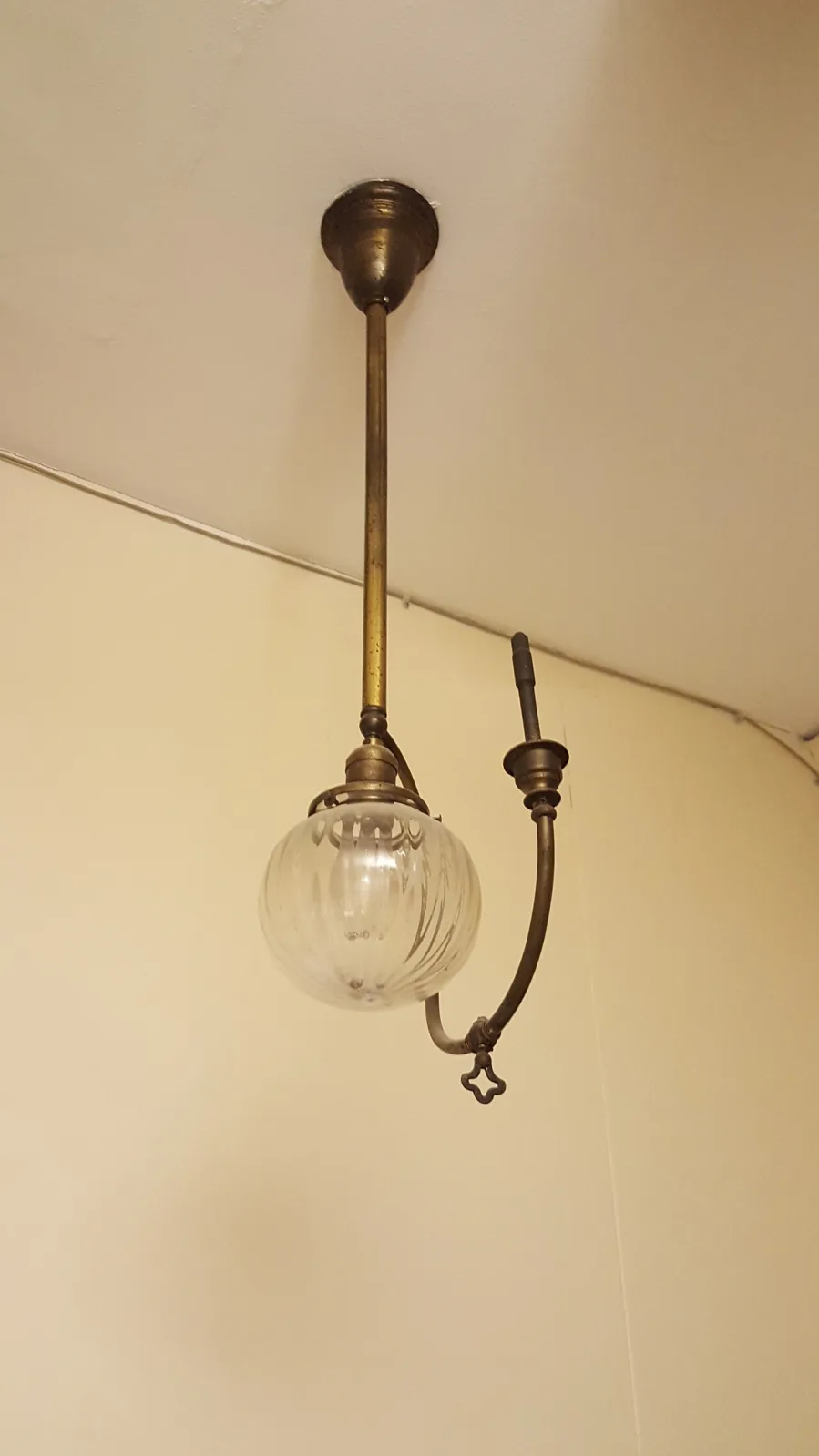
During the transition period (1880s-1920s), many fixtures combined gas and electric illumination. These transitional pieces feature:
- Upward-pointing gas arms with burners
- Downward-pointing electric arms with sockets
- Original wiring that should be replaced for safety
- Higher collector interest due to historical significance
Early Electric Fixtures
Electric lighting evolved from the 1880s onward with distinct period characteristics:
Victorian electric fixtures (1880s-1900s) often adapted gas fixture designs with downward-pointing arms. Early sockets show distinctive construction with exposed terminals and cloth-covered wiring.
Arts and Crafts fixtures feature hammered metal, mica or art glass shades, and handcrafted appearance. Makers include Gustav Stickley, Dirk van Erp, and numerous regional craftsmen.
Art Nouveau and Art Deco fixtures bring distinctive stylistic elements. Art Nouveau features organic flowing lines and naturalistic forms. Art Deco brings geometric patterns, stepped forms, and streamlined designs.
Authentication Considerations
Evaluate antique lighting carefully:
- Examine original finishes for consistent aging and wear patterns
- Check construction details for period-appropriate techniques
- Look for manufacturer marks or labels inside canopy or body
- Assess wiring condition (original wiring must be replaced but confirms age)
- Verify that all components match in style, material, and patina
Decorative Iron and Metalwork
Architectural ironwork encompasses gates, fencing, railings, brackets, and countless decorative elements. Understanding ironwork construction and regional traditions aids identification.
Wrought Iron vs Cast Iron
Wrought iron is worked by hand while hot, creating unique pieces with visible hammer marks and forge welds. Wrought iron bends rather than breaks under stress and develops a distinctive surface texture with age. Early American ironwork was primarily wrought.
Cast iron is poured molten into molds, creating identical repeated elements. Cast iron snaps rather than bends and shows mold seams and parting lines. Cast iron became dominant after 1850 when foundries could produce elaborate patterns economically.
Common Architectural Iron Elements
Gates and fencing range from simple colonial designs to elaborate Victorian patterns. Look for consistent aging across all components and evidence of original installation hardware.
Stair railings and balusters feature both wrought and cast examples. Wrought iron railings show hand-forged scroll work and unique details. Cast iron balusters repeat identical patterns with mold marks visible.
Window guards and grilles provided security and decoration. Victorian examples often feature elaborate patterns while earlier pieces are simpler.
Registers and grilles covered heating and ventilation openings. Cast iron and brass examples feature period-specific patterns. Working louvers indicate intended heating function.
Brackets and corbels supported shelves, cornices, and overhangs. Cast iron brackets feature elaborate Victorian patterns. Wrought iron examples show hand-forged construction.
Regional Traditions
American ironwork shows strong regional characteristics:
- New Orleans: Elaborate cast and wrought iron balconies and galleries
- Charleston: Distinctive wrought iron gates and window grilles
- Philadelphia: Important early wrought iron tradition
- New York: Victorian cast iron storefronts and railings
Woodwork, Moldings, and Trim
Salvaged architectural woodwork provides period-appropriate details for restoration and decoration. Understanding construction techniques helps authenticate age and origin.
Types of Architectural Woodwork
Doors range from simple four-panel colonial examples to elaborate Victorian entries with beveled glass, sidelights, and transoms. Examine panel construction, hinge mortises, and hardware evidence for dating clues.
Columns and pilasters add classical detail to entries and interiors. Full columns are typically built from staves (vertical pieces) rather than turned from solid stock. Interior pilasters are often flat-backed for wall mounting.
Corbels and brackets support cornices, shelves, and other projecting elements. Hand-carved examples show tool marks and slight variations. Machine-carved examples are more uniform.
Newel posts and balusters compose staircases. Victorian newels often feature elaborate turning and applied carving. Balusters repeat in matching sets. Complete staircases have higher value than individual components.
Molding Profiles
Molding profiles evolved through distinct periods:
- Colonial/Federal: Simple classical profiles based on Greek and Roman precedents
- Greek Revival: Bold, heavy profiles with strong shadows
- Victorian: Complex layered profiles combining multiple shapes
- Arts and Crafts: Simple, flat profiles with honest joinery
Construction Evidence
Woodwork construction reveals age:
- Hand-planed surfaces show slight scalloping and tool marks
- Hand-cut moldings vary slightly from piece to piece
- Cut nails (rectangular) indicate pre-1890 construction
- Wood shrinkage causes gaps at joints in genuine antiques
- Original painted surfaces show multiple layers and appropriate wear
Dating Techniques and Authentication
Accurate dating depends on understanding multiple factors including materials, construction, style, and provenance. Combining these elements provides the most reliable authentication.
Material Analysis
Materials provide fundamental dating evidence:
- Metal composition: Early brass and bronze have different alloy compositions than later examples
- Glass characteristics: Hand-blown versus machine-made, with different physical properties
- Wood species: American chestnut (pre-1920s), old-growth versus new-growth grain patterns
- Finish materials: Milk paint, oil-based finishes, and shellac versus modern coatings
Construction Analysis
Manufacturing techniques evolved continuously:
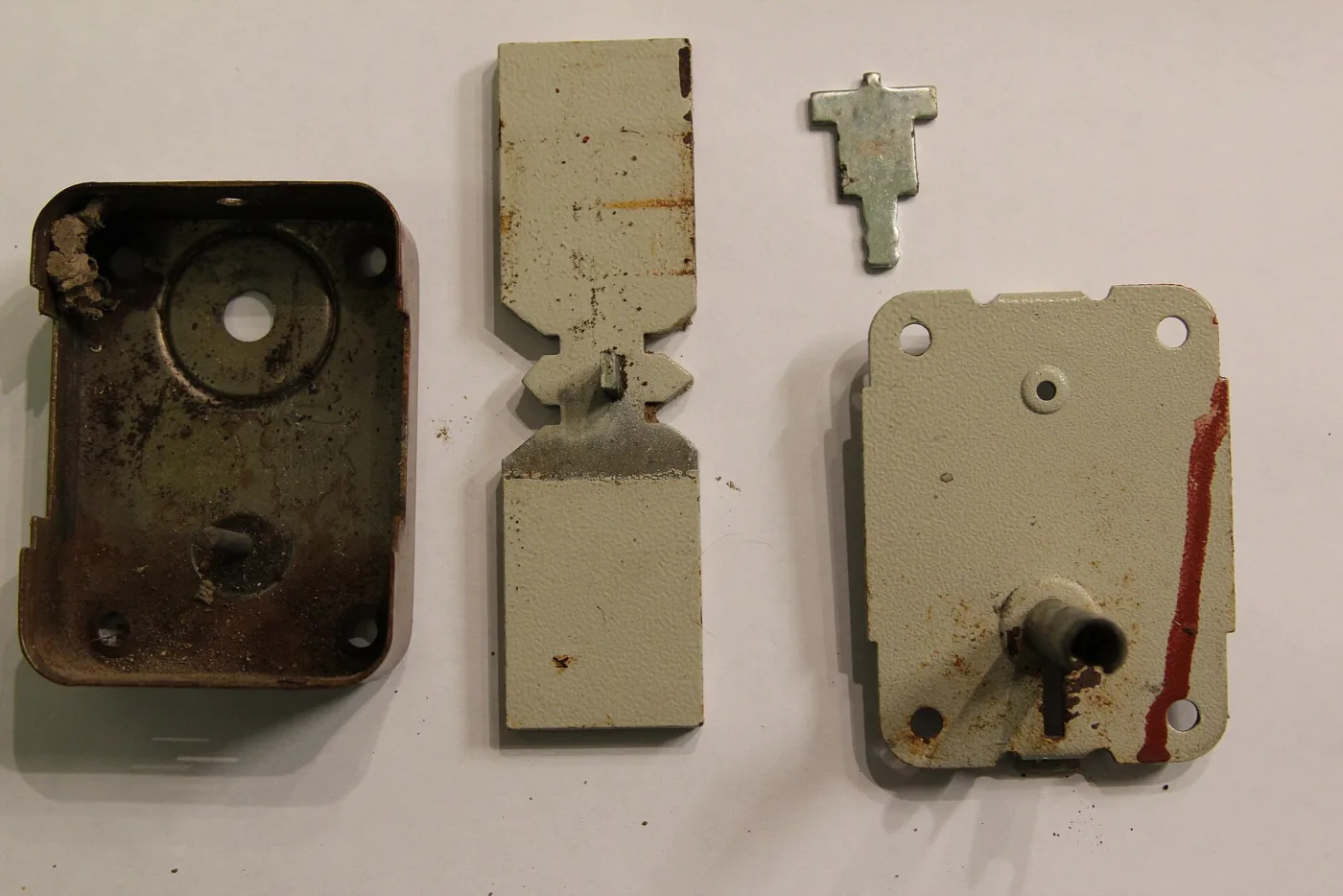
- Hand-forged hardware: Shows hammer marks, irregular shapes, and hand-filed details
- Cast hardware: Sand-casting versus die-casting, with different surface characteristics
- Machine marks: Circular saw (post-1830s), band saw (post-1870s) versus pit saw marks
- Screw types: Hand-cut (pre-1850), machine-cut (1850-1930s), modern Phillips head
Stylistic Analysis
Design characteristics align with documented period styles. However, revival styles complicate dating since Colonial Revival pieces might appear genuinely colonial to untrained eyes. Understanding both original and revival characteristics is essential.
Provenance Research
Documentation enhances value and confidence:
- Building documentation including photographs and architectural drawings
- Demolition or renovation records
- Dealer or auction records
- Previous owner history
- Related pieces from same source
Identifying Reproductions
Quality reproductions exist for most categories of architectural hardware and elements. Learning to distinguish reproductions protects against costly mistakes.
Common Reproduction Signs
Several characteristics indicate modern manufacture:
- Uniform artificial aging: Distressing appears random rather than following use patterns
- Modern fasteners: Phillips head screws, wire nails, and modern adhesives
- Contemporary materials: Modern alloys, plastics, and finishes
- Machine perfection: Too-uniform dimensions and surfaces
- Inconsistent patina: Aging that does not match wear patterns
Hardware Reproduction Indicators
Reproduction hardware often shows:
- Shiny modern screws with incompatible heads
- Lacquer coatings preventing natural patina
- Hollow construction where solid is expected
- Import markings (India, China, Taiwan) on reverse
- Uniform coloring without age-related variations
Protecting Yourself
Take precautions when purchasing:
- Buy from reputable dealers who guarantee authenticity
- Request detailed photographs of construction details
- Ask about provenance and source documentation
- Compare prices with known market values
- Develop relationships with knowledgeable dealers
Collecting and Sourcing Tips
Building a quality collection of architectural salvage requires knowledge, patience, and good sourcing strategies.
Where to Find Architectural Salvage
Architectural salvage dealers specialize in rescued building elements. Established dealers provide expertise, guarantee authenticity, and often maintain extensive inventory. Build relationships with dealers who handle your areas of interest.
Demolition sites occasionally offer direct acquisition opportunities. However, safety concerns, legal issues, and competition make this challenging. Always obtain permission before removing any materials.
Estate sales and auctions sometimes include architectural elements, particularly from historic properties. Watch for sales featuring period homes.
Online marketplaces expand access but require careful evaluation. Request detailed photographs and ask specific questions about condition and authenticity. Understand shipping logistics for heavy or fragile items.
Building Your Collection
Successful collecting strategies include:
- Focus your interests: Specialize in specific periods, types, or manufacturers
- Prioritize condition: Quality over quantity builds better collections
- Document everything: Maintain records of provenance, condition, and acquisition details
- Study continuously: Build reference library and visit museum collections
- Network actively: Connect with other collectors, dealers, and preservation organizations
Storage and Care
Proper storage protects your investment:
- Store metal hardware in stable temperature and humidity to prevent corrosion
- Keep glass elements protected from impact and temperature shock
- Store woodwork in climate-controlled conditions to prevent warping
- Document condition photographically before and during storage
- Avoid aggressive cleaning that removes original patina