Antique Cloisonné Enamelware Identification Guide: Origins, Techniques & Collecting
Cloisonné enamelware represents one of the most technically demanding and visually spectacular decorative arts ever developed. For over two millennia, artisans in China, Japan, and across the world have created breathtaking objects by fusing powdered glass within delicate metal wire compartments—a process requiring extraordinary patience, skill, and artistic vision. From imperial Chinese palace furnishings to the luminous masterpieces of Meiji-era Japan, antique cloisonné offers collectors an extraordinary journey through art history. This comprehensive guide provides the knowledge needed to identify, authenticate, date, and value antique cloisonné with expert precision.
Table of Contents
- History and Origins of Cloisonné
- The Manufacturing Process Explained
- Chinese Cloisonné: Periods and Characteristics
- Japanese Cloisonné: The Meiji Revolution
- European and Other Regional Cloisonné
- Identification Techniques and Dating Methods
- Marks, Signatures, and Attribution
- Quality Assessment and Grading
- Authentication and Detecting Reproductions
- Market Valuation and Collecting Strategies
- Care, Conservation, and Display
History and Origins of Cloisonné
The art of cloisonné—deriving from the French word "cloison" meaning partition—has ancient roots that span continents and civilizations, evolving into distinctly different traditions across cultures.
Ancient Mediterranean Origins
The earliest known cloisonné work dates to approximately 1800 BCE in the ancient Near East, where Mycenaean goldsmiths created jewelry using gold wire compartments filled with colored glass and stone inlays. Egyptian artisans during the New Kingdom period (1550–1070 BCE) refined these techniques, producing spectacular royal jewelry including the famous gold funerary mask of Tutankhamun with its cloisonné inlays of lapis lazuli, turquoise, and carnelian.
Byzantine craftsmen from the 6th century CE onward elevated cloisonné to new heights of artistry, creating religious objects, imperial regalia, and ecclesiastical furnishings of unsurpassed beauty. The Byzantine technique—using fine gold wire soldered to gold backing, filled with translucent enamels—influenced subsequent European and Islamic traditions.
The Spread to China
Cloisonné technology reached China during the Yuan Dynasty (1271–1368 CE), likely transmitted via Central Asian trade routes connecting the Middle East with the Chinese empire. Some scholars attribute its introduction to Arab craftsmen who arrived during Mongol rule, while others point to artistic exchanges with Byzantine merchants. Chinese texts from this period refer to the technique as "Dashi ware" (大食窯), meaning "Arab ware," acknowledging its foreign origins.
The Ming Dynasty (1368–1644 CE) witnessed the transformation of cloisonné from imported curiosity to quintessentially Chinese art form. The same imperial workshops in Beijing that produced cloisonné also created the era's finest carved cinnabar lacquer, developing distinctive Chinese aesthetics, color palettes, and monumental scales unseen in earlier traditions. The technique acquired its Chinese name "jingtailan" (景泰藍) during the Jingtai Emperor's reign (1450–1456), when imperial patronage reached its zenith—though earlier Ming examples predating this reign certainly exist.
Japanese Adoption and Innovation
Japan's engagement with cloisonné began in the 17th century, initially producing modest works influenced by Chinese prototypes. However, the Meiji era (1868–1912) witnessed an extraordinary flowering of Japanese cloisonné that ultimately surpassed Chinese production in technical refinement and international acclaim. Japanese artisans developed revolutionary techniques including wireless cloisonné (musen-jippo), plique-à-jour enamel, and dimensional shading that created unprecedented effects.
European Revival
European interest in cloisonné revived during the 19th century as part of broader fascination with Asian decorative arts. French firms including Christofle and Barbedienne produced cloisonné in both Asian and historicist European styles. Russian workshops, particularly during the late imperial period, created distinctive cloisonné enamelware on silver, developing the colorful style associated with firms like Fabergé and the Moscow artel cooperatives.
The Manufacturing Process Explained
Understanding the cloisonné manufacturing process is essential for identification, as each stage leaves diagnostic evidence that reveals origin, period, and quality. The traditional process involves multiple distinct steps, each requiring specialized skills.
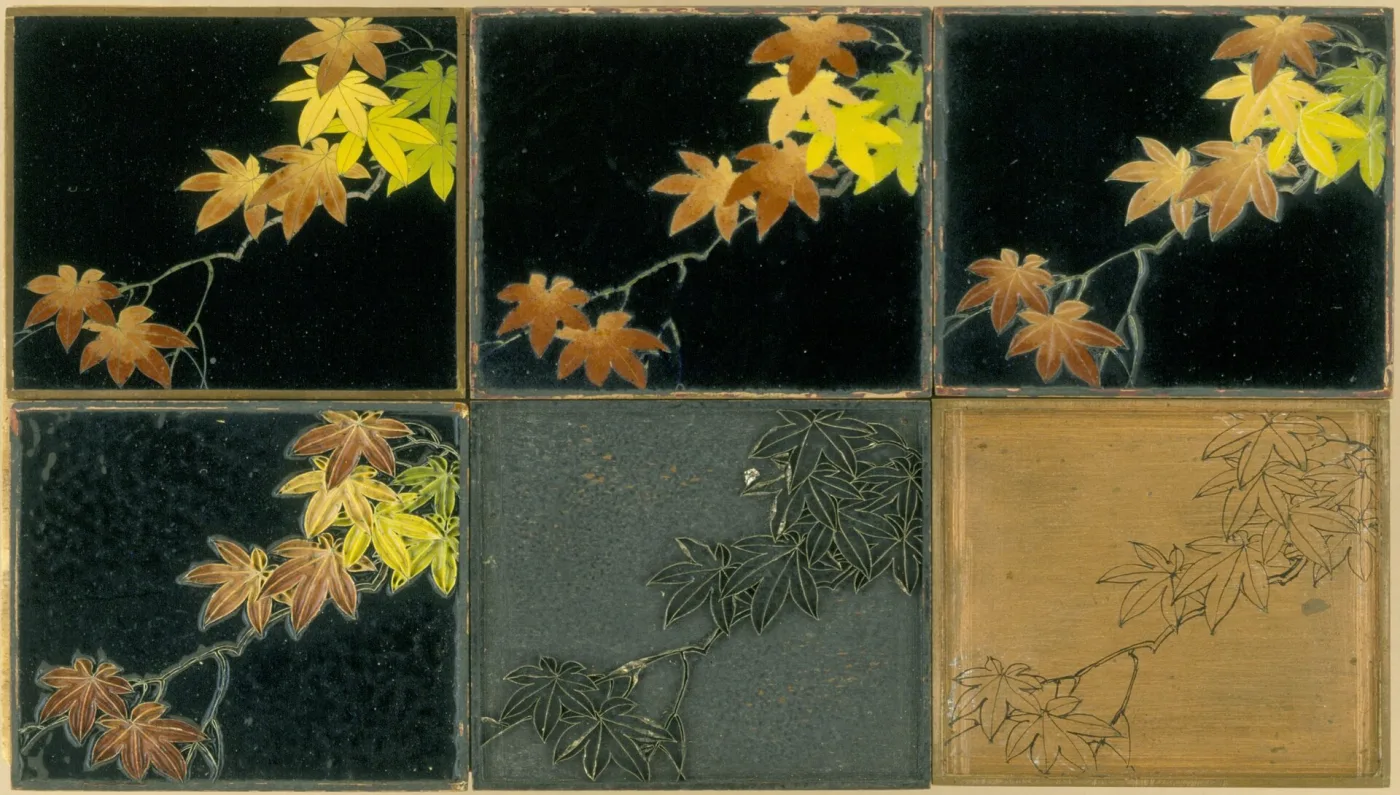
Base Metal Preparation
Cloisonné begins with a metal body—most commonly copper, though bronze, brass, silver, and gold have been used for prestigious commissions. The metal is hammered, raised, or cast into the desired shape, then cleaned and prepared for wire application. Chinese production typically employed red copper for its excellent thermal properties during firing, while Japanese workshops increasingly used purer copper or silver bases for finer work.
Wire Application (Cloisonnage)
The defining characteristic of cloisonné is the application of thin metal wires—typically brass, copper, or gold—bent into decorative patterns and attached to the metal base. Traditional methods include:
- Soldered Wires: Wires attached with solder, common in earlier Chinese production and Byzantine work. Creates permanent, stable partitions but requires high temperatures.
- Glued Wires: Wires attached with vegetable-based adhesives, which burn away during firing while the enamel fuses around the wire base. Standard in most Chinese and Japanese production.
- Fused Wires: In some Japanese techniques, wires are partially embedded in a first enamel layer, then covered with additional enamel applications.
Wire gauge and precision vary significantly by period and origin. Early Ming wires are typically heavier and less uniform than later Qing production. Japanese Meiji-era wires reached extraordinary fineness—sometimes as thin as human hair—enabling unprecedented detail.
Enamel Application
Enamel—ground glass mixed with metallic oxides for color—fills the wire compartments in multiple layers. Traditional enamel preparation involved grinding glass by hand in mortars, producing slightly irregular particle sizes that contribute to the luminous depth of antique examples. Each color requires specific metalite oxide combinations:
- Blues: Cobalt oxide produces the famous "kingfisher blue" of Chinese cloisonné
- Greens: Copper oxide and chromium compounds
- Reds: Gold chloride (rose-red) or iron oxide (brownish-red)
- Yellows: Antimony and lead compounds
- Whites: Tin oxide or arsenic compounds
- Black: Manganese dioxide or copper-iron combinations
Firing Process
Filled pieces enter kilns heated to approximately 750–850°C (1380–1560°F), where enamel powder fuses into glass. Multiple firings—typically six to ten for quality Chinese work, sometimes twenty or more for exceptional Japanese pieces—build up enamel depth. Each firing shrinks the enamel as it fuses, requiring additional applications to achieve level surfaces.
Grinding and Polishing
After final firing, surfaces are ground level using abrasives—traditionally sandstone and pumice—to expose wire tops and create smooth surfaces. Successive polishing with finer abrasives produces the characteristic glassy finish. Quality varies enormously: museum-quality pieces achieve mirror-like surfaces, while lesser examples show grinding marks, pitting, or uneven surfaces.
Gilding and Finishing
Exposed copper wires and base metal rims typically receive gilt finish to prevent oxidation and enhance appearance. Traditional fire-gilding (mercury amalgam) produces warm, slightly irregular gold surfaces. Later pieces may show electrogilding (from 1840s onward) with more uniform, cooler-toned gold.
Chinese Cloisonné: Periods and Characteristics
Chinese cloisonné production spans over six centuries, with each period displaying distinctive characteristics that enable dating and authentication.
Yuan and Early Ming Dynasty (14th–15th Century)
The earliest Chinese cloisonné pieces are exceptionally rare, with most surviving examples held in museum collections. Characteristics include:
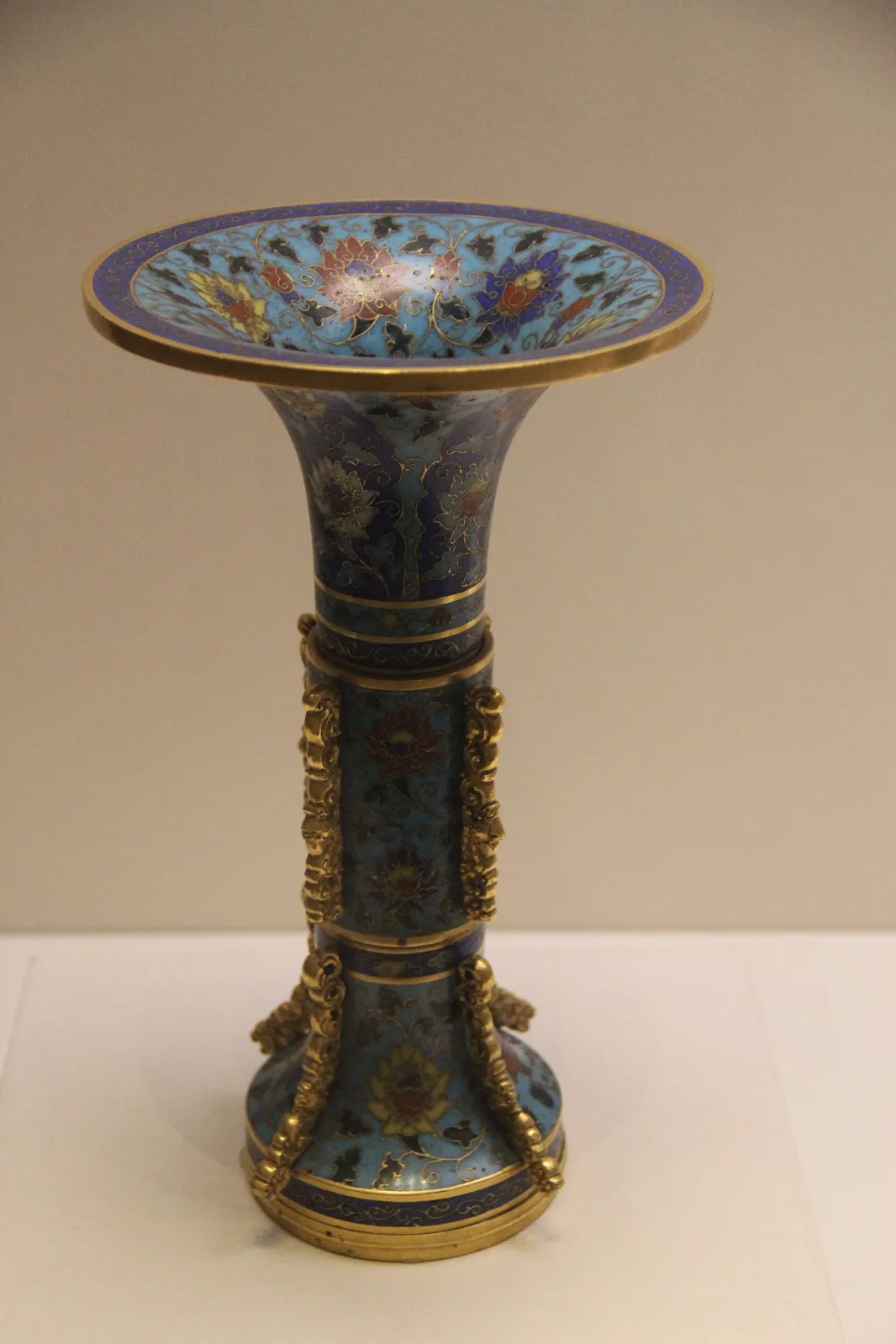
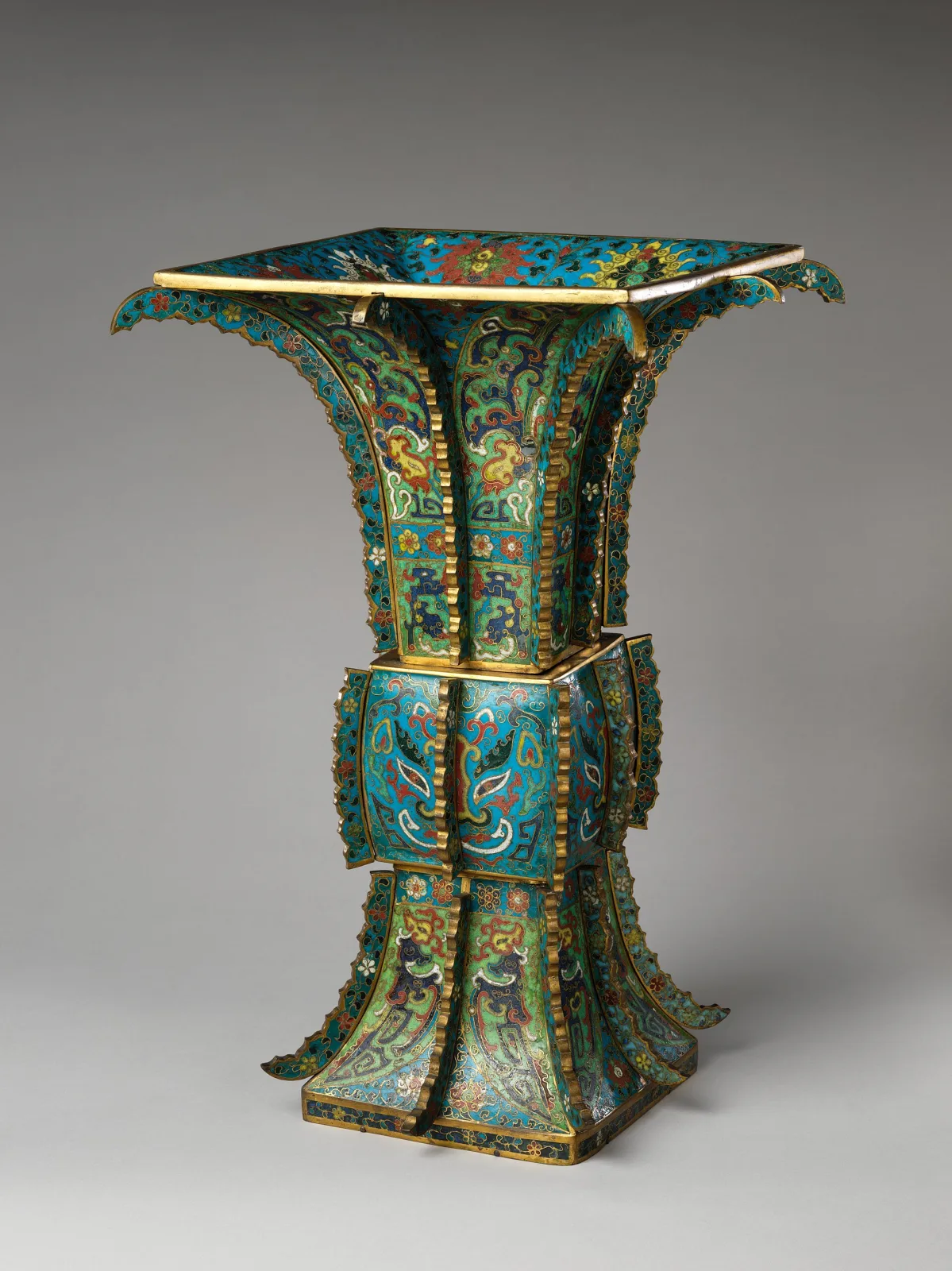
- Forms: Relatively small vessels, incense burners, and ritual objects influenced by bronze prototypes
- Palette: Limited range dominated by turquoise blue, white, and cobalt, with less refined color transitions
- Wires: Relatively thick, often irregular brass or copper wire
- Enamel: Somewhat opaque, with visible pitting and bubbles from less refined firing techniques
- Designs: Lotus scrolls, stylized clouds, and geometric patterns adapted from Islamic and Buddhist sources
Middle Ming Dynasty—Jingtai Era (1450–1500)
The Jingtai period represents the legendary golden age of Chinese cloisonné, when imperial patronage reached unprecedented levels. Jingtai-marked pieces command exceptional prices, though many later copies bear apocryphal Jingtai marks. Authentic characteristics include:
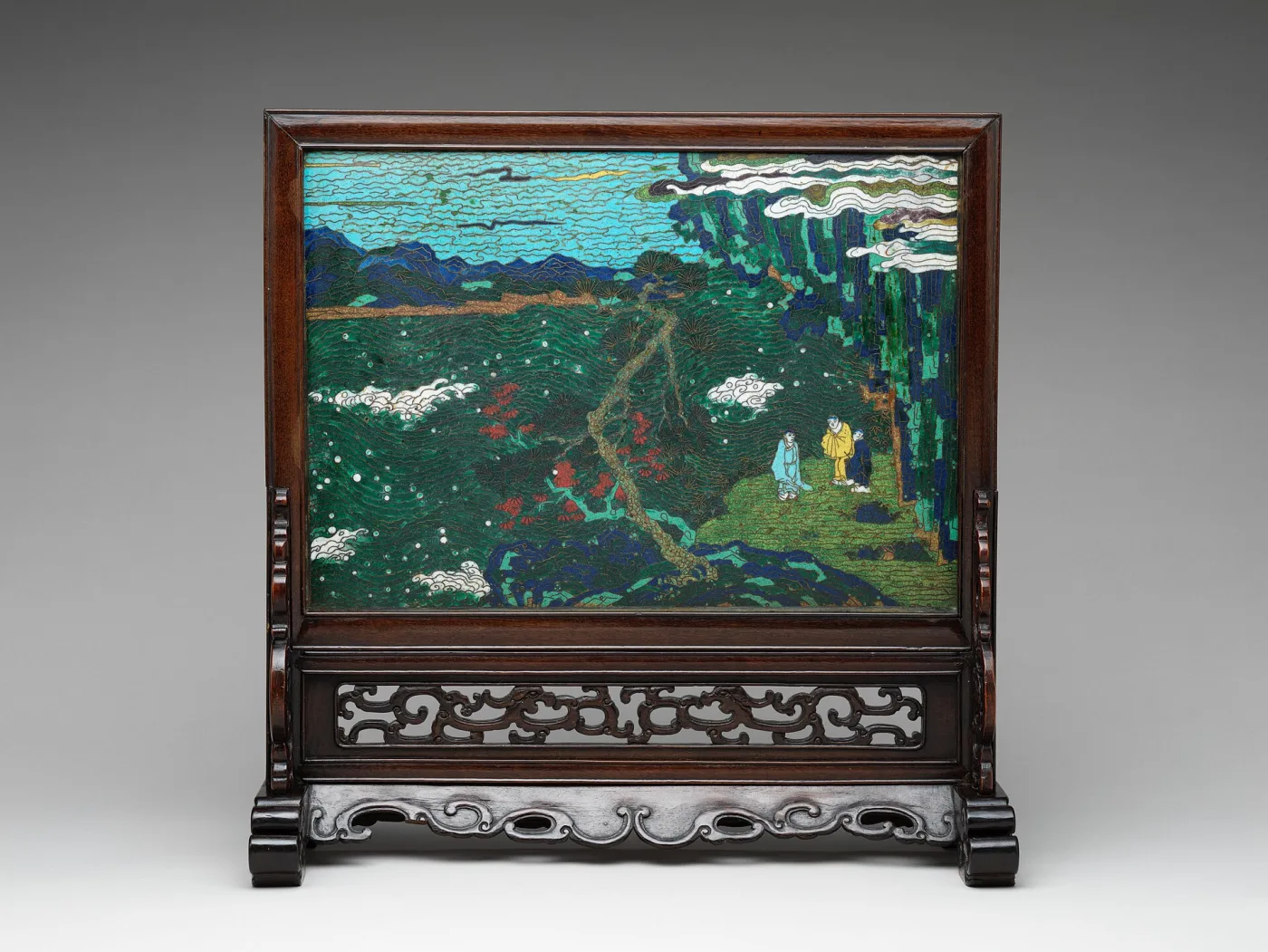
- The "Jingtai Blue": A distinctive deep turquoise-blue ground color that gave the technique its Chinese name
- Refined Wirework: More precise wire application than earlier pieces, though still heavier than later Qing work
- Imperial Quality: Exceptional finishing associated with court workshop production
- Marks: Reign marks in cast bronze or engraved beneath—though most surviving "Jingtai" marks are later additions
Late Ming Dynasty (1500–1644)
Production continued under Jiajing (1522–1566), Wanli (1573–1620), and subsequent reigns with evolving characteristics:
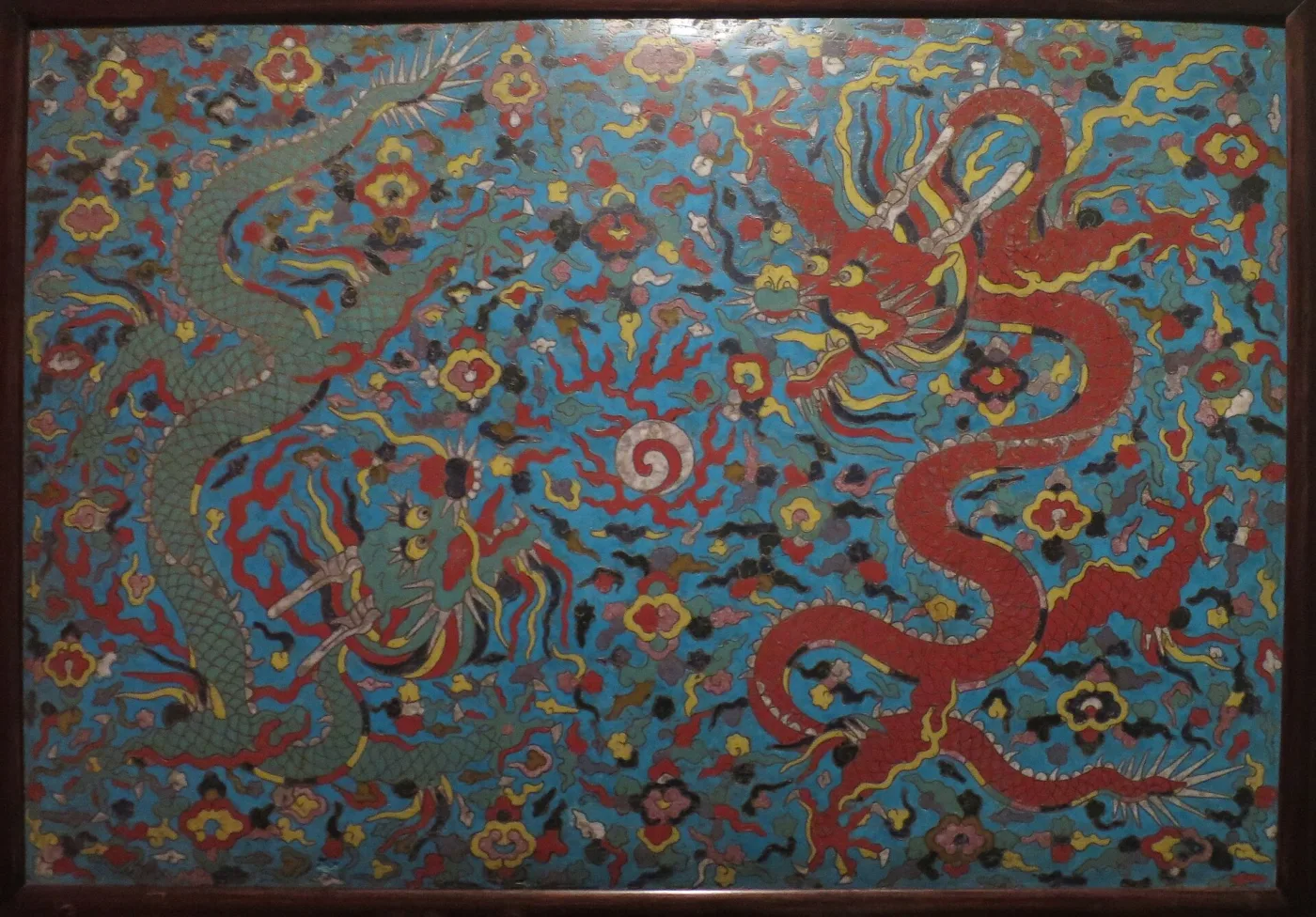
- Expanded Palette: Addition of more varied greens, reds, and yellows
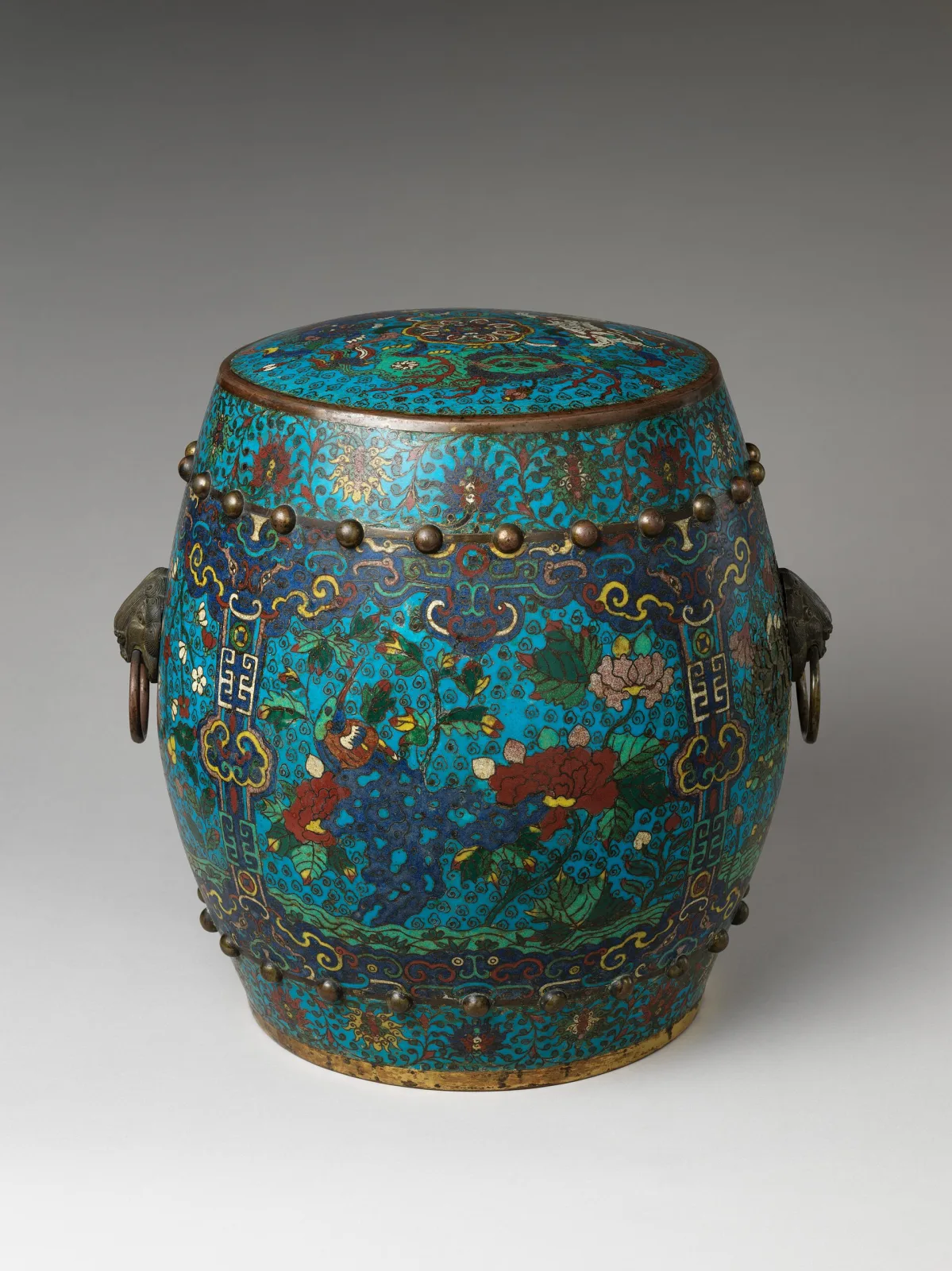
- Larger Formats: Monumental pieces including garden stools, large vases, and architectural fittings
- Buddhist and Taoist Iconography: Religious subjects reflecting court spiritual interests
- Dragon and Phoenix Motifs: Imperial symbolism increasingly prominent
Qing Dynasty—Kangxi to Yongzheng (1662–1735)
Early Qing emperors revitalized cloisonné production after Ming-Qing transition disruptions:
- Technical Refinement: Thinner wires, smoother enamel surfaces, more consistent firing
- Expanded Color Range: Introduction of pink enamel using gold chloride (derived from European techniques)
- Combination Techniques: Champlevé and cloisonné combined on single pieces
- Imperial Patronage: Kangxi Emperor established formal workshops within the Forbidden City
Qianlong Period (1736–1795)—The High Qing Zenith
The Qianlong Emperor's passion for decorative arts produced extraordinary quantities of imperial cloisonné:
- Unprecedented Scale: Monumental temple furnishings, throne room decorations, palace furniture
- Virtuoso Technique: Extremely fine wirework achieving pictorial effects
- Full Palette: Complete range of enamel colors in subtle gradations
- Reign Marks: Six-character Qianlong marks either cast or engraved; many later copies exist
- Archaistic Revival: Pieces imitating earlier Ming styles, sometimes with apocryphal earlier reign marks
- Export Production: Increased production for European markets alongside imperial commissions
Late Qing Dynasty (1796–1912)
Production continued but with gradual quality decline amid political instabilities:
- Export Emphasis: Increasing production for Western markets, often with Westernized designs
- Commercial Standardization: More formulaic designs, repetitive patterns
- New Techniques: Introduction of machine-made wires, chemical gilding
- Jiaqing through Guangxu Marks: Pieces bearing various 19th-century reign marks
Republic Period and Later (1912–Present)
Production continued through the 20th century with various characteristics:
- Tourist Market: Simplified designs for export and souvenir trade
- Revival Pieces: Quality reproductions of imperial styles
- Industrial Production: Factory-made pieces with mechanical uniformity
- "China" Marks: Export pieces marked "Made in China" (post-1891) or "China"
Japanese Cloisonné: The Meiji Revolution
Japanese cloisonné represents perhaps the most dramatic technical evolution in the medium's history, transforming from modest craft production to internationally acclaimed fine art within a few decades, paralleling the simultaneous rise of Meiji-era Satsuma pottery as a premier export category.
Early Japanese Cloisonné (17th–19th Century)
Early Japanese cloisonné (shippo-yaki) developed independently from Chinese traditions with distinctive characteristics:
- Hirado and Owari Schools: Regional traditions developing localized techniques
- Sword Furniture: Cloisonné applied to tsuba (sword guards) and other fittings
- Limited Palette: Smaller color range than Chinese contemporaries
- Smaller Scale: Generally modest-sized objects for domestic use
The Nagoya Revolution (1830s–1860s)
Kaji Tsunekichi (1803–1883) of Nagoya is credited with reviving and transforming Japanese cloisonné. His innovations included:
- Systematic Experimentation: Methodical development of new enamel colors and techniques
- Training Apprentices: Establishing the foundation for the Nagoya cloisonné industry
- Quality Improvements: Refined firing techniques producing more consistent results
The Meiji Golden Age (1868–1912)
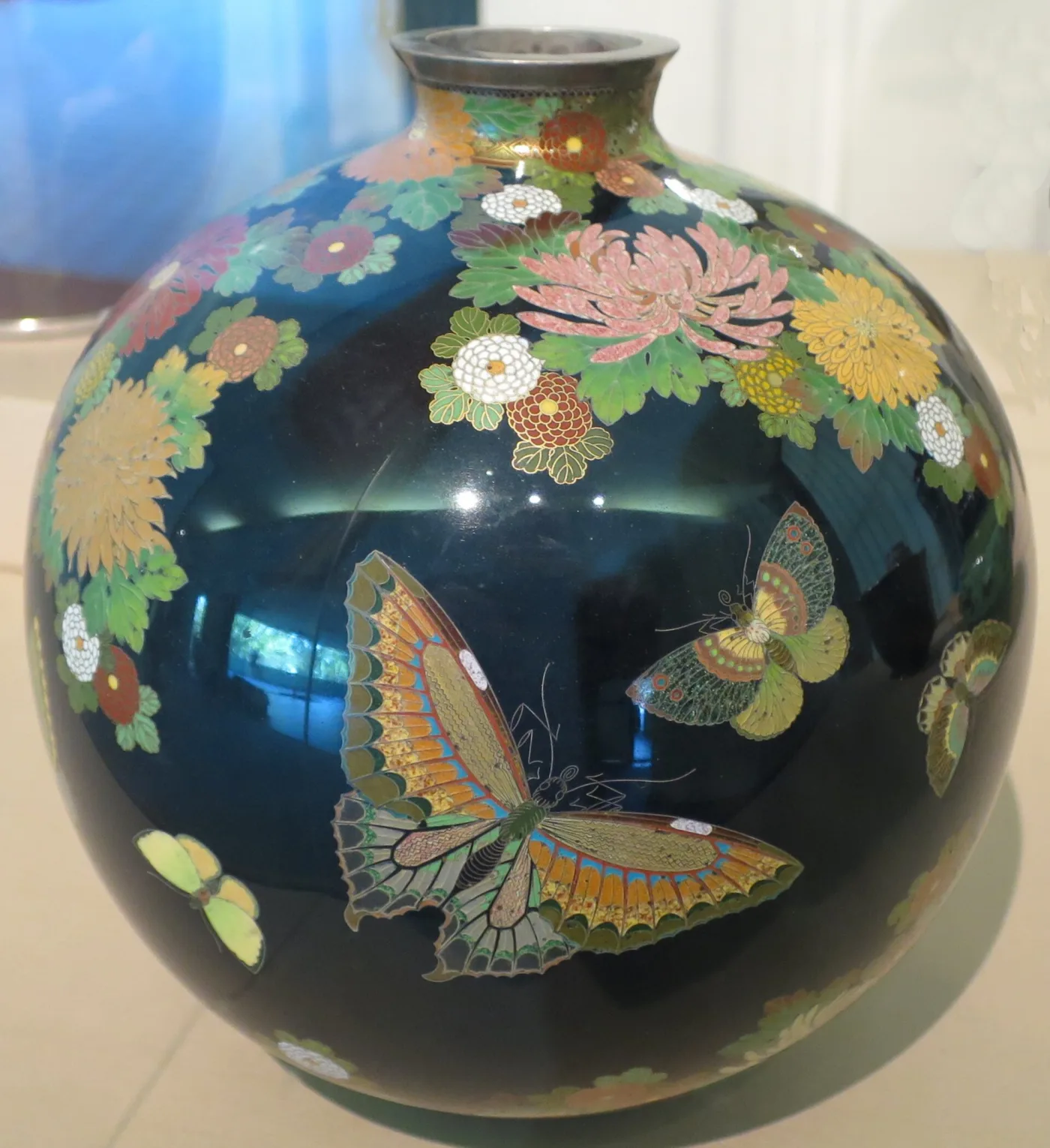
The Meiji era witnessed Japanese cloisonné's ascent to world prominence, driven by government promotion, international exhibitions, and visionary artists:
Major Workshops and Artists
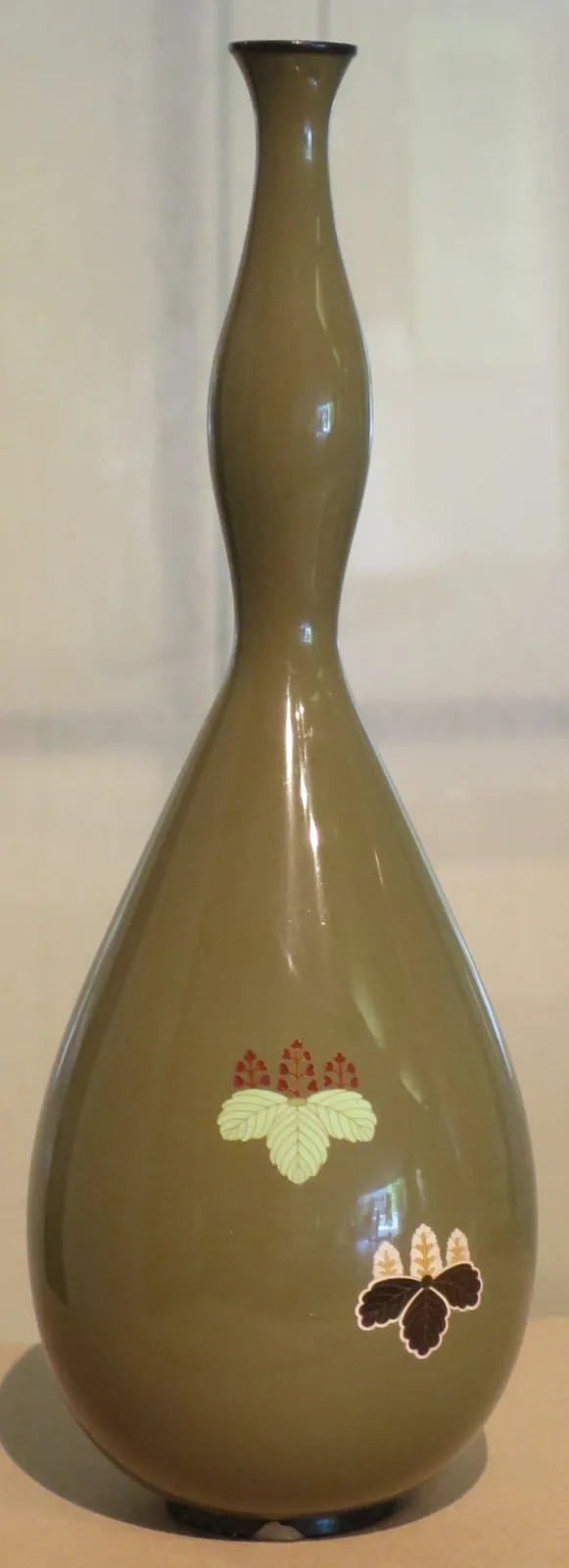
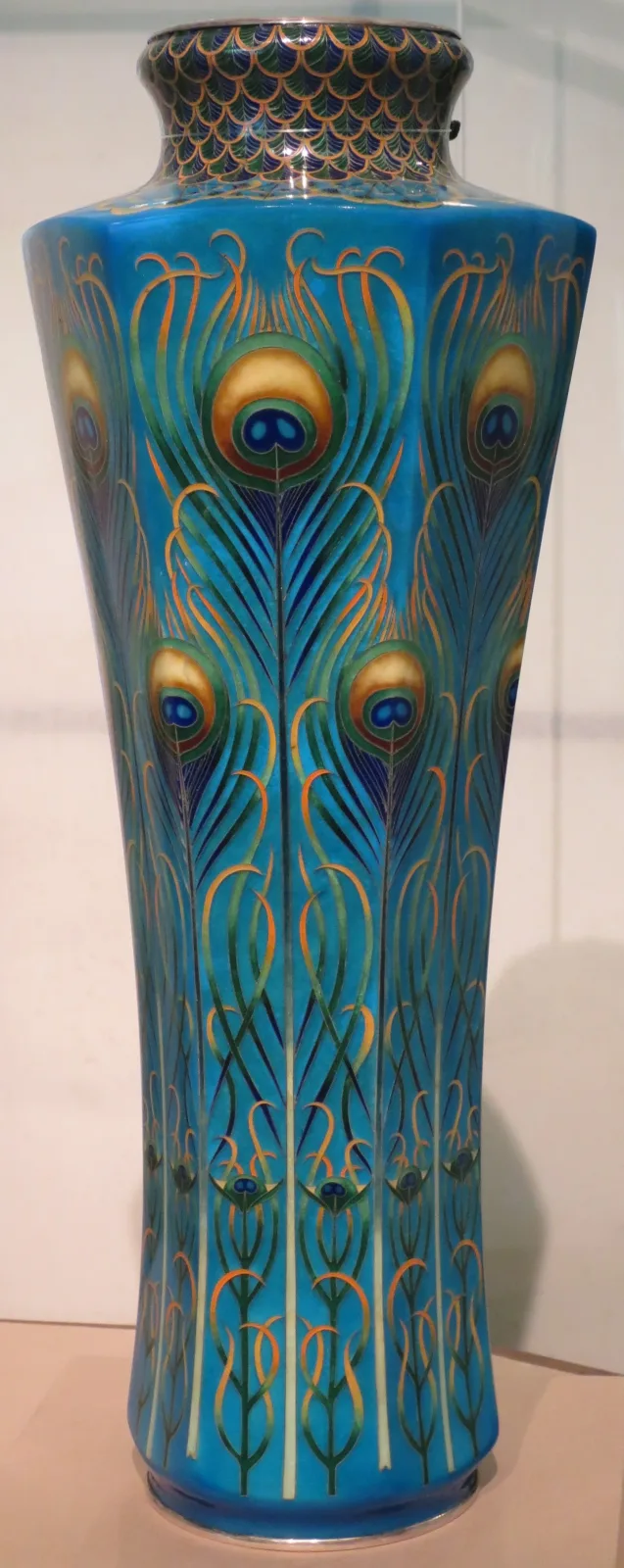
- Namikawa Yasuyuki (1845–1927): Kyoto-based master renowned for pictorial designs achieving painting-like effects. His workshop developed unprecedented shading techniques and miniature precision. Pieces signed with his mon (family crest) command premium prices.
- Namikawa Sōsuke (1847–1910): Unrelated to Yasuyuki despite sharing surname, this Tokyo-based artist pioneered musen-jippo (wireless cloisonné), removing wires after firing to create seamless enamel surfaces resembling paintings.
- Hayashi Kodenji: Nagoya master known for complex decorative pieces with traditional Japanese motifs.
- Ando Jubei Company: Major commercial workshop producing high-quality pieces for export, still operating today.
- Kawade Shibataro: Innovative artist known for experimental techniques and unusual subjects.
- Kumeno Teitaro: Known for exceptional skill in shōsen (counter-enamel) techniques.
Revolutionary Techniques
- Musen-Jippo (Wireless Cloisonné): Wires removed after initial firing, allowing colors to flow together with soft edges
- Moriage (Raised) Cloisonné: Three-dimensional enamel surfaces built up in relief
- Ginbari (Silver Foil): Translucent enamel over silver foil creating luminous effects
- Plique-à-jour: Translucent enamel without backing, creating stained-glass effects
- Shōtai-jippo (Transparent Body): Translucent enamels revealing the metal body beneath
- Pictorial Gradation: Subtle color transitions creating three-dimensional illusions
Taishō and Shōwa Periods (1912–1989)
Post-Meiji production continued but evolved:
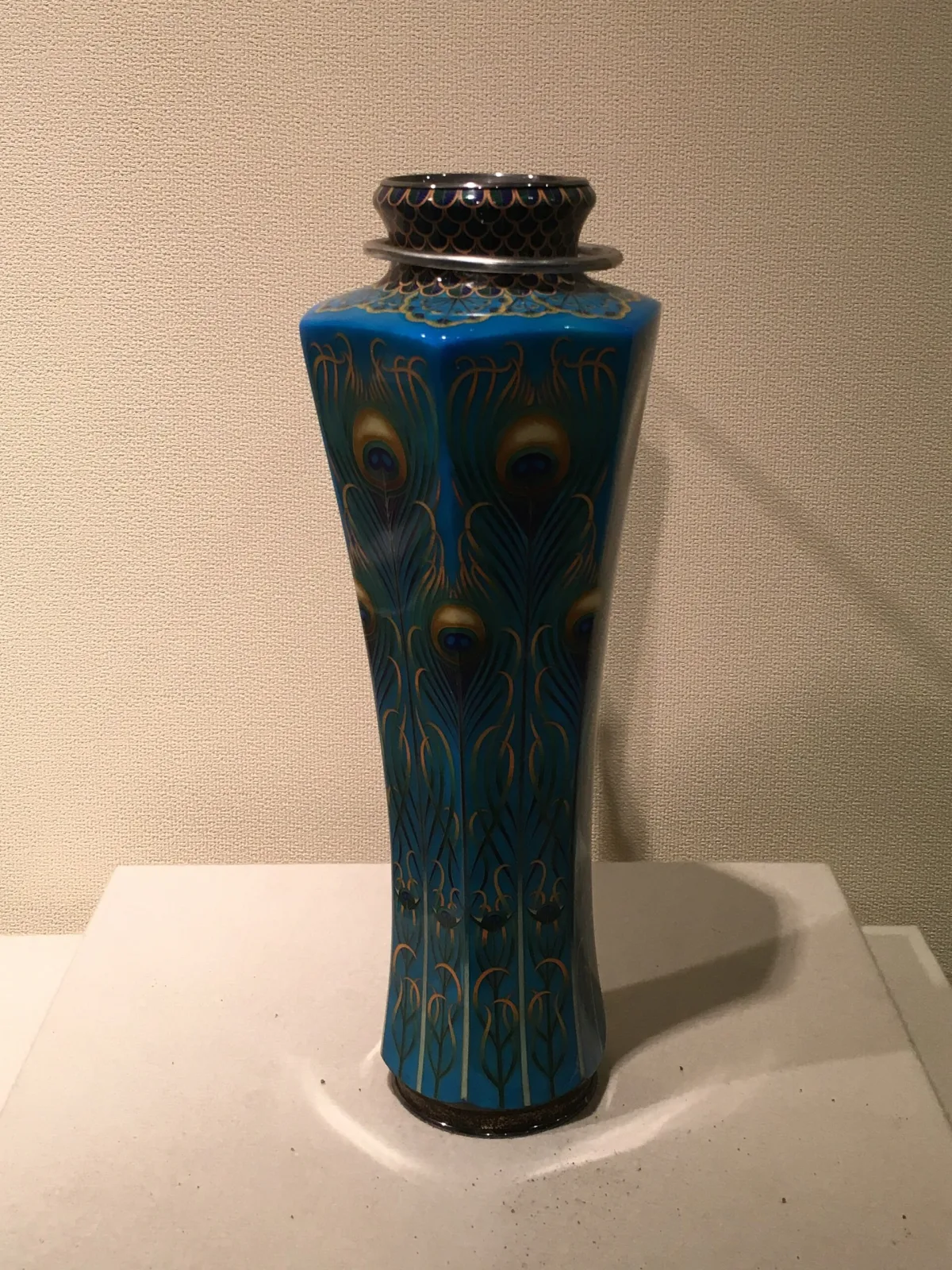
- Declining Export Market: Reduced Western demand after World War I
- Simplified Production: More standardized designs for domestic and tourist markets
- Continued Excellence: Some workshops maintained highest quality levels
- Living National Treasures: Post-war recognition of master artisans

European and Other Regional Cloisonné
Beyond Asia, cloisonné traditions developed distinctive regional characteristics worth understanding for complete identification competence.
Byzantine Cloisonné
Byzantine cloisonné represents the historical bridge between ancient and medieval traditions:
- Period: 6th–15th centuries CE
- Materials: Gold wire on gold ground, precious and semi-precious stones alongside glass enamel
- Subjects: Religious iconography, imperial portraits, ceremonial objects
- Technique: Soldered wires, often combined with gem setting
- Surviving Examples: Extremely rare; most in museum or church treasury collections
Russian Cloisonné Enamel
Russian cloisonné developed distinctive national characteristics, particularly during the late 19th and early 20th centuries:
- Base Metal: Silver (84 zolotnik or 875 standard) rather than copper
- Color Palette: Distinctive combinations including vivid blues, greens, and reds often on white or cream grounds
- Design Sources: Old Russian, Byzantine revival, Art Nouveau, and folk art influences
- Major Makers: Fabergé, Ovchinnikov, Khlebnikov, Rückert, Grachev, and various Moscow artels
- Object Types: Kovshi (traditional drinking vessels), spoons, tea glass holders, cigarette cases, small boxes
- Marks: Maker marks, city assay marks (St. George for Moscow, crossed anchors for St. Petersburg), silver fineness marks
French Cloisonné
French 19th-century production reflected broader Japonisme and historicist interests:
- Christofle: Major manufacturer producing Asian-influenced and original designs
- Barbedienne: Bronze manufacturer incorporating cloisonné panels
- Art Nouveau Period: Artists including Feuillâtre and Thesmar created innovative plique-à-jour pieces
- Style: Often combined cloisonné with bronze or other metalwork in eclectic designs
Other Regional Traditions
- Indian Meenakari: Distinctive cloisonné tradition, particularly from Jaipur, using different color palettes and design vocabulary
- Georgian/Armenian: Historic traditions connected to Byzantine influence
- Modern Middle Eastern: Contemporary production in Iran, Syria, and neighboring regions maintaining historical techniques
Identification Techniques and Dating Methods
Systematic examination using multiple criteria enables accurate identification of origin, period, and quality. No single factor is definitive; authentication requires considering all evidence collectively.
Base Metal Examination
- Weight: Genuine antique pieces typically have substantial weight. Hollow or lightweight construction suggests modern production or reproduction.
- Patina: Examine unexposed surfaces (interior of vessels, undersides) for appropriate oxidation patterns. Copper develops characteristic brown-green patination; uniform bright metal suggests recent manufacture or aggressive cleaning.
- Construction: Early pieces show hand-hammered construction with slight irregularities. Cast bodies appear in both antique and modern production.
Wire Analysis
- Wire Gauge: Early Chinese wires are thicker and less uniform than later examples. Japanese Meiji wires can be extraordinarily fine.
- Wire Placement: Hand-placed wires show slight irregularities and artistic variation. Machine-stamped wires display mechanical uniformity.
- Wire Metal: Traditional copper or brass wires. Silver wires indicate Japanese or Russian origin. Gold wires suggest exceptional quality or specific regional origin.
- Wire Edges: Magnification reveals whether wires are flat-topped (ground flush) or rounded (less refined finishing).
Enamel Characteristics
- Color Range: Different periods and origins display characteristic palettes. Ming turquoise differs from Qing turquoise; Japanese colors often differ from Chinese equivalents.
- Surface Quality: Antique enamel typically shows microscopic irregularities, subtle bubbles, and color variations. Modern industrial enamel often appears more uniform.
- Pitting: Small surface voids are common in antique pieces; their absence may indicate modern production or heavy restoration.
- Enamel Thickness: Multiple firing layers create depth visible at edges and damaged areas.
Stylistic Analysis
- Design Vocabulary: Motifs, patterns, and subjects should be consistent with claimed origin and period.
- Proportions: Traditional proportions differ between Chinese and Japanese work, and between periods within each tradition.
- Color Harmonies: Traditional combinations follow established aesthetic conventions that differ by origin.
Form and Function
- Object Types: Certain forms are characteristic of specific periods. Palace-scale pieces suggest imperial Chinese origin; small vases and boxes may indicate Japanese or export production.
- Proportions: Traditional Asian proportions differ from Western expectations. Pieces made for export often show hybrid characteristics.
- Mounting Hardware: Original mounts versus later additions reveal object history.
Marks, Signatures, and Attribution
Marks on cloisonné range from highly informative to deliberately deceptive. Understanding marking conventions aids attribution while acknowledging limitations.
Chinese Reign Marks
Chinese cloisonné may bear reign marks indicating the emperor during whose reign the piece was ostensibly made:
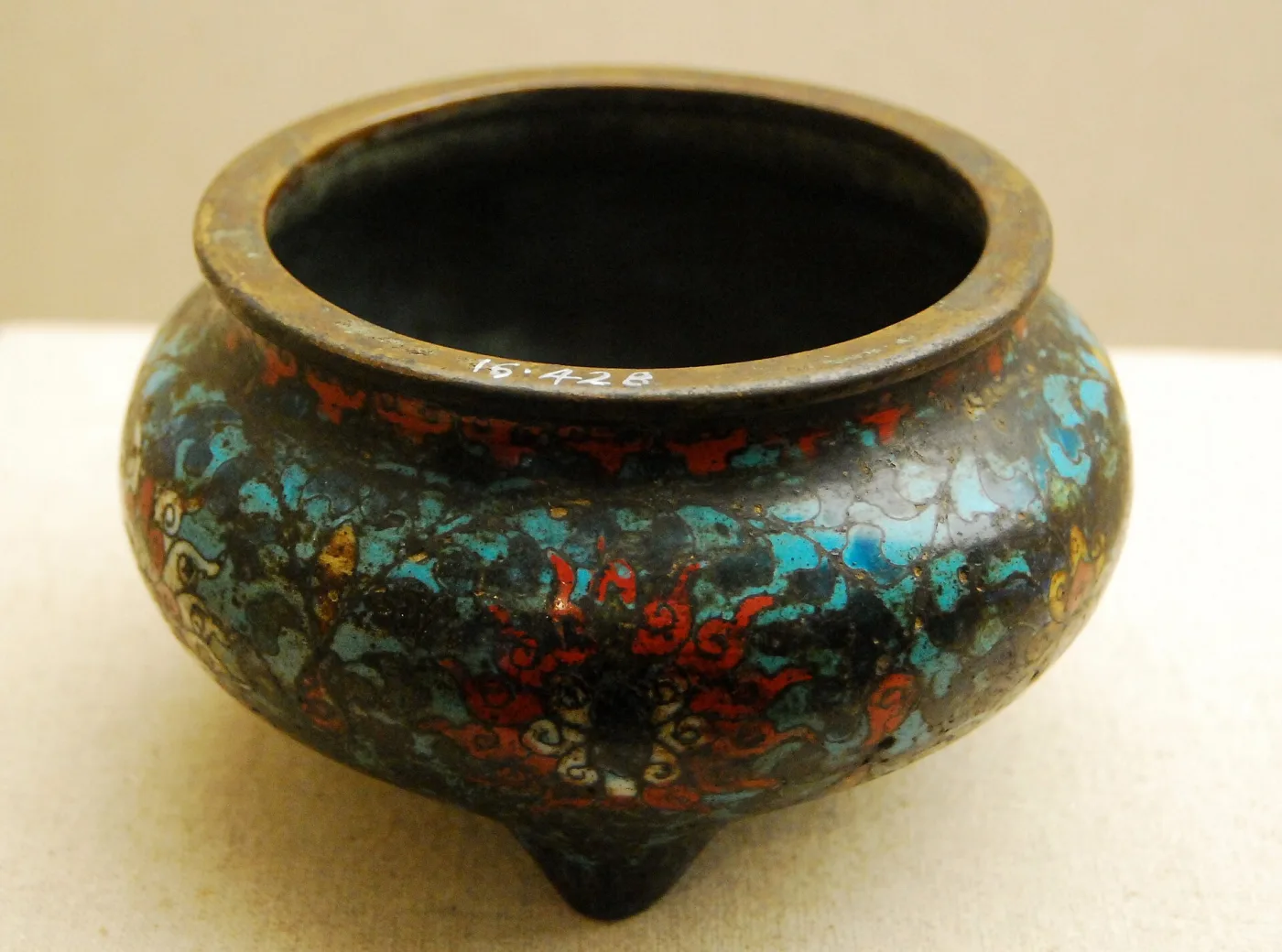
15.428 on the rim is an old painted museum accession number, not a maker’s mark.
shizhao / Wikimedia Commons, CC BY-SA 2.0
- Format: Four or six Chinese characters in seal script or regular script, typically on the base
- Application: Cast in bronze/brass, engraved, or enameled
- Reliability: Many reign marks are apocryphal—applied to later pieces as marks of quality aspiration rather than production date. Jingtai marks are especially suspect; many pieces bearing this mark date from later periods.
- Export Pieces: Late Qing and Republic pieces may bear "China" or "Made in China" export marks (after 1891 U.S. import requirements)
Japanese Signatures
Japanese cloisonné marking conventions differ significantly:
- Artist Signatures: Major artists signed pieces with personal marks (mei), often in silver or copper wire, enamel, or engraved metal
- Workshop Marks: Company marks identify production workshops
- Mon (Family Crests): Some artists used family crests as identification
- Retail Marks: Export pieces may bear retailer marks (e.g., "Yamanaka" for the famous dealer) alongside or instead of maker marks
- Paper Labels: Original paper labels, when present, provide valuable attribution evidence
Russian Marks
Russian cloisonné on silver carries comprehensive marks similar to other Russian silver:
- Maker's Mark: Cyrillic initials or company name
- City Mark: St. George (Moscow), crossed anchors (St. Petersburg)
- Fineness Mark: 84 or 88 (zolotnik standard indicating silver purity)
- Assayer's Mark: Individual assay master's initials
- Kokoshnik Mark: Female head in profile (post-1896) indicating imperial assay standards
Attribution Challenges
- Unmarked Pieces: Many authentic pieces bear no marks—absence of marks is not evidence against authenticity
- Later Additions: Marks sometimes added to unmarked pieces or replaced when originals deteriorated
- Fake Marks: Valuable makers' marks are frequently forged—stylistic analysis must support mark evidence
- Honest Copies: Some reproductions bear marks of later periods or "homage" marks acknowledging historical inspiration
Quality Assessment and Grading
Cloisonné quality varies enormously, from humble commercial production to imperial treasures and artist masterpieces. Systematic quality assessment considers multiple factors.
Technical Excellence
- Wire Precision: Fine, uniform wires precisely following design contours indicate superior craftsmanship. Irregular, clumsy wirework suggests lesser quality.
- Enamel Finish: Mirror-smooth, bubble-free surfaces represent the highest achievement. Pitting, grinding marks, and uneven surfaces indicate lesser refinement.
- Color Accuracy: Clean, vibrant colors with consistent tonality throughout each compartment. Muddy colors, fire damage, or inconsistent shading suggest production problems.
- Gilding Quality: Even, substantial gilding without wear-through or missed areas. Original fire-gilding superior to later electroplating.
Artistic Merit
- Design Sophistication: Complex, well-composed designs with effective use of the medium's possibilities
- Color Harmony: Pleasing color relationships demonstrating artistic sensibility
- Subject Mastery: Convincing rendering of difficult subjects—flowers, birds, figures, landscapes
- Innovation: Novel techniques or subjects demonstrating artistic originality
Condition Factors
- Enamel Loss: Missing or damaged enamel significantly reduces value. Small chips are common; large losses are problematic.
- Dents and Distortion: Metal body damage affects display appeal and may crack adjacent enamel.
- Wire Lifting: Wires separating from the base indicate structural problems.
- Restoration: Earlier amateur repairs may be more damaging than original wear. Professional conservation is less problematic.
- Gilding Wear: Some wear is acceptable on antique pieces; complete loss is problematic.
- Cleaning Damage: Aggressive cleaning removes patina and may scratch enamel surfaces.
Quality Tiers
- Imperial/Museum Quality: Exceptional pieces made for courts or by recognized master artists. Perfect or near-perfect technical execution, outstanding artistic merit.
- High Quality: Excellent craftsmanship for discerning collectors. Minor technical imperfections acceptable; strong artistic merit.
- Good Quality: Sound production with competent craftsmanship. Standard designs executed to acceptable standards.
- Commercial/Tourist Quality: Mass-produced pieces for general markets. Simplified designs, less refined execution, often smaller scale.
Authentication and Detecting Reproductions
The high values achieved by quality antique cloisonné have spawned an active reproduction industry. Understanding fake characteristics protects collectors from costly mistakes.
Categories of Non-Authentic Pieces
- Modern Reproductions: New pieces made in traditional styles, sometimes with false marks. May range from obvious tourist souvenirs to sophisticated copies.
- Later Copies: 19th and 20th-century copies of earlier periods—themselves now antique but not representing claimed periods.
- Honest Reproductions: New pieces in traditional styles sold as such, without intent to deceive.
- Enhanced Pieces: Authentic but modest pieces "upgraded" with false signatures or prestigious reign marks.
- Composite Pieces: Components from different periods or objects combined.
Red Flags Suggesting Reproduction
- Uniform Perfection: Machine-like uniformity in enamel colors, wire gauge, and surface finish
- Inappropriate Freshness: Enamel and gilding appearing unworn despite claimed age
- Synthetic Patina: Artificial aging applied to simulate wear—often too uniform or incorrectly located
- Wrong Base Metal: Aluminum or zinc alloys unknown in antique production
- Modern Enamel: Synthetic enamel colors unavailable in claimed period
- Inconsistent Marks: Marks stylistically inconsistent with claimed period or origin
- Wrong Forms: Object types or proportions not matching claimed origin
- Suspicious Provenance: Vague or undocumented ownership history
Scientific Authentication
For significant purchases, scientific analysis provides objective evidence:
- XRF (X-Ray Fluorescence): Analyzes metal and enamel composition without damage. Modern enamels often contain elements absent from traditional recipes.
- Thermoluminescence: Can date last firing of ceramic-like materials including some enamels.
- Microscopic Examination: Reveals tool marks, enamel structure, and construction details.
- Spectral Analysis: Identifies enamel colorants and their historical consistency.
Expert Consultation
For valuable pieces, expert opinion provides essential verification:
- Specialist Dealers: Established dealers with expertise in specific categories
- Auction House Experts: Major houses employ specialists who can provide opinions
- Museum Curators: Public institutions occasionally offer authentication consultations
- Independent Appraisers: Certified appraisers with documented expertise in Asian decorative arts
Market Valuation and Collecting Strategies
The cloisonné market offers opportunities across wide price ranges, from modest decorative pieces to museum-quality treasures commanding six-figure sums.
Primary Value Factors
- Origin and Period: Imperial Chinese pieces, signed Japanese masterworks, and documented Fabergé Russian pieces command highest prices.
- Quality: Technical excellence and artistic merit are primary determinants within each category.
- Condition: Original condition with minimal wear or damage; restoration reduces value.
- Size and Presence: Monumental pieces often command premiums; exceptional miniatures can also achieve high prices.
- Provenance: Documented history, especially prestigious collections or exhibitions, enhances value.
- Rarity: Unusual forms, techniques, or subjects attract collector competition.
- Attribution: Signed pieces by recognized masters achieve substantial premiums over unsigned equivalents.
Market Segments
- Entry Level ($100–$1,000): Late Qing to Republic Chinese export pieces, modest Japanese commercial ware, damaged examples of better quality.
- Intermediate ($1,000–$10,000): Good quality Chinese pieces, fine unsigned Japanese Meiji examples, quality Russian silver enamel.
- Advanced ($10,000–$100,000): Exceptional Chinese imperial pieces, signed Japanese masterworks, important Russian pieces by major makers.
- Museum Quality ($100,000+): Imperial Chinese treasures with court provenance, signed pieces by major Japanese masters (Namikawa Yasuyuki, Namikawa Sōsuke), exceptional Fabergé.
Collecting Strategies
- Focus and Specialize: Deep knowledge in one area—Chinese, Japanese, Russian, or a specific period—enables better judgment than superficial breadth.
- Quality Over Quantity: Fewer excellent pieces typically prove better investments than many mediocre examples.
- Condition Standards: Establish condition thresholds and resist temptation to accept damaged pieces at "bargain" prices unless for study purposes.
- Documentation: Maintain records including photographs, purchase receipts, provenance information, and research files.
- Build Relationships: Develop trusted relationships with specialist dealers who can source suitable pieces and provide expertise.
- Handle Extensively: Study pieces in hand whenever possible—auction previews, dealer visits, museum handling sessions—to develop tactile knowledge.
Buying Venues
- Major Auction Houses: Christie's, Sotheby's, Bonhams offer regular Asian art sales with cloisonné. Specialized sales focus on Japanese art or Chinese works of art.
- Regional Auctions: Local auction houses sometimes offer significant pieces at lower price levels, though expertise varies.
- Specialist Dealers: Established dealers in Asian art offer vetted inventory with authenticity guarantees.
- Art and Antique Fairs: Major international fairs attract quality dealers with significant inventory.
- Online Platforms: Require extreme caution—verify dealer credentials and insist on return privileges. High-quality photographs can obscure condition problems.
Care, Conservation, and Display
Proper care preserves cloisonné for future generations while maintaining value and beauty.
Environmental Conditions
- Temperature: Avoid extreme temperatures and rapid temperature changes. Thermal expansion differences between metal and enamel can cause cracking.
- Humidity: Moderate stable humidity (45–55% RH) prevents metal corrosion while avoiding stress on enamel. Avoid damp environments.
- Light: While enamel is generally light-stable, prolonged direct sunlight can affect some colors and cause uneven fading or expansion damage.
Handling Guidelines
- Clean Hands: Handle with clean, dry hands. Skin oils can affect metal surfaces over time.
- Support Properly: Lift pieces from the base, never by handles, finials, or projections that may have weakened attachments.
- Padded Surfaces: Place pieces on padded surfaces during examination to prevent scratches.
- Avoid Stacking: Never stack pieces or allow them to contact each other.
Cleaning
- Dust Removal: Soft brushes or gentle air puffs for routine dust removal. Avoid feather dusters that may scratch.
- Gentle Cleaning: Lightly dampened soft cloth for surface cleaning when necessary. Avoid moisture in damaged areas or around lifted wires.
- Avoid: Ultrasonic cleaners, abrasive cleaners, harsh chemicals, immersion in water.
- Metal Care: Do not polish exposed metal areas aggressively—gentle cleaning only to preserve original patina and gilding.
Professional Conservation
Leave significant repairs to qualified conservators:
- Appropriate Repairs: Stabilization of lifted wires, consolidation of cracked enamel, careful cleaning of corroded metal
- Conservation Ethics: Reversible treatments, documentation of interventions, respect for original material
- Finding Conservators: American Institute for Conservation (AIC) and international equivalents maintain referral networks
- Avoid: Amateur repairs, "touching up" enamel, aggressive cleaning, adding new parts without documentation
Display Considerations
- Secure Mounting: Stable display mounts appropriate to piece size and weight
- Lighting: LED lighting minimizes UV exposure; avoid spotlights that create heat buildup
- Case Display: Glass or acrylic cases provide dust protection and security
- Rotation: Consider rotating displayed pieces to minimize cumulative light exposure
Insurance and Documentation
- Photography: Maintain detailed photographs including overall views, marks, damage, and distinguishing features
- Appraisals: Periodic professional appraisals for insurance purposes—values change over time
- Insurance: Specialist fine art insurance provides appropriate coverage; verify policy terms regarding damage, theft, and breakage
- Provenance Records: Maintain purchase documentation and ownership history for future authentication and provenance
Conclusion
Antique cloisonné enamelware represents one of humanity's most demanding and beautiful decorative arts achievements. From the imperial workshops of Ming dynasty Beijing to the revolutionary ateliers of Meiji Japan, from Byzantine goldsmiths to Russian master enamelers, artisans across cultures and centuries have created objects that marry technical virtuosity with aesthetic brilliance.
For collectors, cloisonné offers an extraordinary range of opportunities—from accessible entry-level pieces that introduce the field's beauty, through ever-more-refined examples that reward developing connoisseurship, to museum-quality masterpieces that represent the summit of human decorative artistry. Each piece tells stories of the hands that made it, the cultures that valued it, and the collectors who preserved it through generations.
Successful collecting requires building expertise across multiple dimensions: understanding historical development and cultural contexts, recognizing technical characteristics that reveal origin and quality, developing the tactile knowledge that comes from handling many examples, and learning market dynamics that affect value and availability. This knowledge accumulates gradually through study, handling, and experience.
The investment of time and attention required to become a knowledgeable collector is repaid many times over in the satisfaction of owning objects of genuine artistic and historical significance—objects that connect us to distant times and cultures while providing daily pleasure in their beauty. Whether your collection comprises a single treasured piece or fills rooms with color and history, antique cloisonné offers rewards that transcend monetary value.