Antique Spice Boxes & Cabinets Identification Guide: Types, Origins & Values
Antique spice boxes and cabinets rank among the most charming and historically significant kitchen collectibles. Before the age of mass-produced containers, families stored their precious spices in handcrafted wooden boxes, wall-hung cabinets, and elaborately decorated chests that reflected both practical needs and artistic traditions. These small but remarkable objects tell the story of global trade, domestic life, and regional craftsmanship spanning four centuries.
For collectors and enthusiasts, spice boxes offer a uniquely accessible entry into antiques. Their compact size, rich variety of forms, and fascinating decorative traditions make them appealing display pieces that connect us to everyday life in centuries past. From the boldly painted tin-decorated examples of Pennsylvania Dutch country to the elegantly turned treenware boxes of Georgian England, each spice container carries clues about its maker, region, and era.
This guide covers the major types of antique spice boxes and cabinets, how to identify their age and origin through construction details and decorative elements, key markers of authenticity, and current market values. Whether you have inherited a family piece or discovered one at an estate sale, these identification techniques will help you understand what you have and what it may be worth.
Table of Contents
- History of Spice Storage
- Major Types of Antique Spice Boxes
- Wall-Hung Spice Cabinets
- Portable Spice Boxes & Chests
- Turned Treenware Spice Towers
- Tin & Toleware Spice Containers
- Wood Types & Identification
- Joinery & Construction Clues
- Paint Decoration & Surface Analysis
- Regional Styles & Traditions
- Labels, Marks & Inscriptions
- Dating Techniques
- Authentication & Spotting Reproductions
- Market Values & Collecting Tips
- Care & Preservation
History of Spice Storage
Spices were among the most valuable commodities in the pre-modern world. Pound for pound, cinnamon, nutmeg, cloves, and pepper rivaled silver in value during the 16th and 17th centuries. This extraordinary cost meant that household spice storage was taken seriously, and the containers designed to hold these precious ingredients reflected their worth. Spice boxes were often fitted with locks, and in wealthy households, the lady of the house kept the key on her person to prevent servants from pilfering.
The Spice Trade & Domestic Impact
The European spice trade, which drove exploration and colonialism from the 15th century onward, gradually made spices more affordable and available. As prices declined through the 18th and 19th centuries, spice storage evolved from locked strongboxes to more decorative and utilitarian forms. By the mid-1800s, commercially produced tin spice sets and mass-manufactured wooden cabinets replaced the earlier handcrafted examples, and by the early 1900s the built-in spice rack of the factory-made Hoosier kitchen cabinet absorbed spice storage into the kitchen work station entirely, though regional folk traditions continued producing distinctive handmade pieces well into the 20th century.
Evolution of Forms
The earliest surviving spice containers from the 1600s tend to be simple rectangular boxes with internal dividers. By the 1700s, wall-hung cabinets with multiple small drawers became popular in American and European kitchens. The Georgian period brought elegant turned wooden spice towers, while the Pennsylvania Dutch tradition produced vibrantly painted examples that are among the most sought-after forms today. Understanding this evolution helps collectors place a piece within its historical context, much as understanding antique furniture periods aids in dating larger household items.
Major Types of Antique Spice Boxes
Antique spice containers come in several distinct forms, each with its own construction methods, regional associations, and collector appeal. Recognizing the type of spice container you have is the essential first step in identification.
Classification by Form
The primary categories include wall-hung cabinets with small drawers, portable lidded boxes with internal compartments, stacking turned towers (also called spice trees), individual round or rectangular containers, and tin or toleware sets. Each form served slightly different purposes. Wall cabinets were permanent kitchen fixtures, while portable boxes traveled with families or were brought to the table during meals. Stacking towers were space-efficient solutions favored in English and Continental kitchens.
Classification by Material
Wood is the most common material for antique spice containers, encompassing everything from rough-hewn pine to finely turned lignum vitae. Tin and toleware examples represent a separate tradition, particularly strong in the American market. Less common materials include pewter, silver, ceramic, and papier-mache. The material alone can often narrow down a piece's origin and date range significantly.
Wall-Hung Spice Cabinets
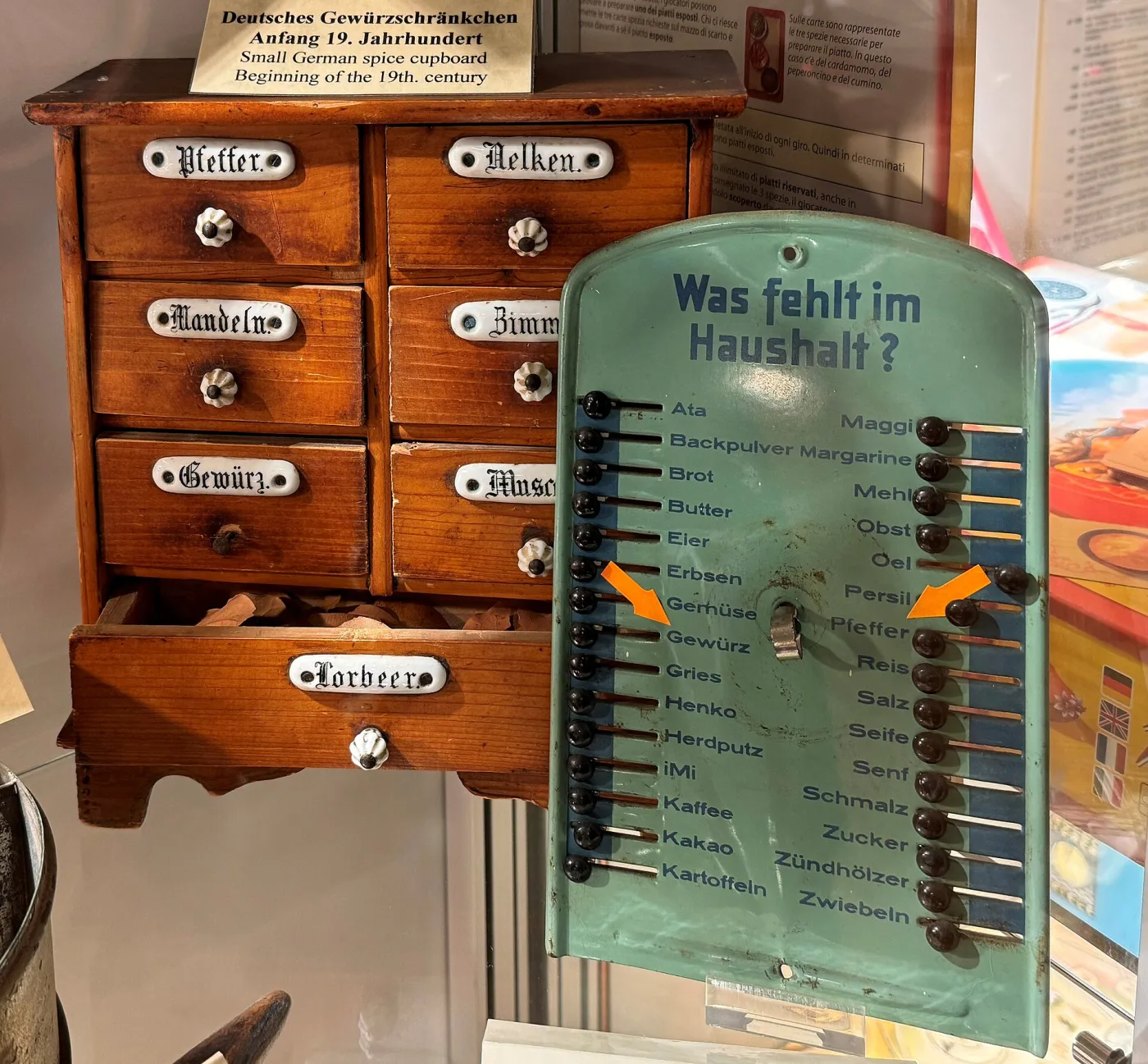
Wall-mounted spice cabinets are perhaps the most recognizable form of antique spice storage. These small cupboards, typically 12 to 24 inches tall, featured banks of tiny drawers sized to hold individual spices. The best examples combine functional design with decorative woodworking that makes them standout pieces for any collection.
American Spice Cabinets (1750-1880)
American spice cabinets most commonly feature 6, 8, or 12 drawers arranged in rows. Early examples from the mid-18th century were typically made from walnut or cherry with hand-cut dovetail joinery. By the early 1800s, pine became the dominant wood, often finished with milk paint in red, blue, or mustard yellow. The drawers usually have small turned wooden knobs, and the fronts may bear hand-lettered labels identifying each spice. Some Pennsylvania examples feature elaborate painted decoration with floral motifs or geometric designs drawn from Germanic folk traditions.
English Spice Cupboards (1700-1850)
English spice cabinets tend to be somewhat more formal than their American counterparts. Oak was the preferred wood in the 18th century, giving way to mahogany in finer examples. Some English pieces have a single door concealing the drawer bank, while others present the drawers openly. Corner-mounted spice cupboards are a distinctly English form, designed to fit into the angles of cottage kitchens. These are related to but distinct from the broader category of antique boxes and trunks that served other household storage needs.
Continental European Styles
German, Dutch, and Scandinavian spice cabinets often feature more ornate carving than their Anglo-American counterparts. Chip-carved decoration, carved rosettes, and scrollwork pediments are common on 18th-century German examples. Dutch cabinets may feature inlaid designs or painted scenes, while Scandinavian examples from Norway and Sweden often bear distinctive rosemaling (rose painting) decoration in flowing floral patterns.
Portable Spice Boxes & Chests
Portable spice boxes predate wall cabinets and represent some of the oldest surviving examples of dedicated spice storage. These lidded containers range from simple divided boxes to elaborate miniature chests with multiple compartments and locking mechanisms.
Early Divided Boxes (1600-1750)
The earliest portable spice boxes are rectangular wooden containers with fixed internal dividers creating four to eight compartments. Typically made from oak or walnut, they feature sliding or hinged lids and may show remnants of original iron hardware. Some examples include a central nutmeg grater built into the lid interior, a highly desirable feature for collectors.
Spice Chests with Drawers
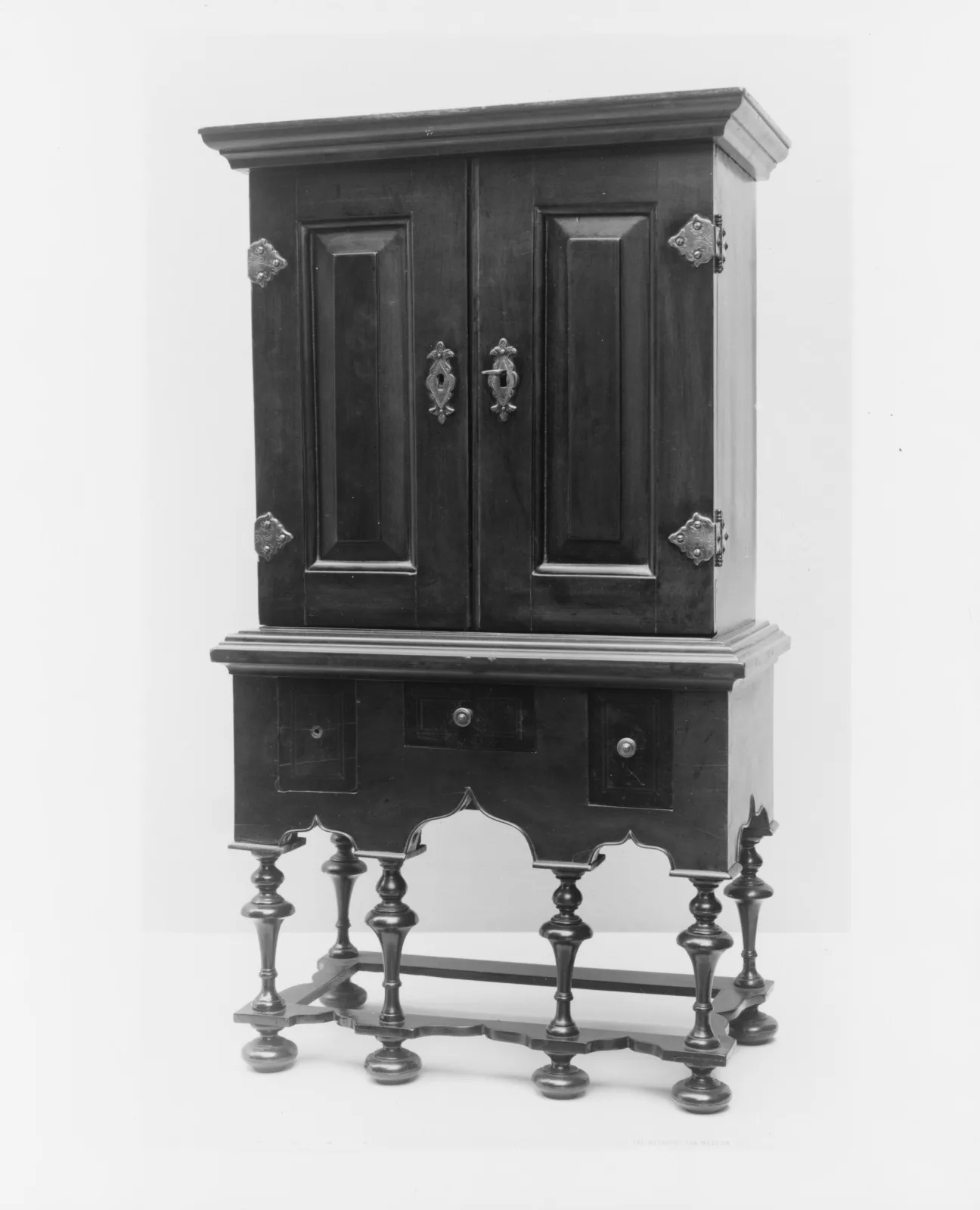
More elaborate portable spice storage takes the form of miniature chests of drawers, essentially tabletop-sized furniture pieces. These charming objects, usually 8 to 14 inches tall, mimic the construction of full-sized case furniture with drawers, backboards, and sometimes bracket feet. The finest examples feature the same quality of craftsmanship found in Chippendale-era furniture, including carefully proportioned moldings and hand-cut dovetails.
Indian & Asian Spice Boxes
The masala dabba, or Indian spice box, represents a distinct tradition of round metal containers with internal cups for individual spices. Antique examples from the 18th and 19th centuries were made from brass, copper, or silver, often with engraved decoration. Japanese and Chinese spice containers in lacquerware or porcelain represent yet another tradition, connecting to the broader world of Asian antiques.

Turned Treenware Spice Towers
Treenware spice towers are among the most elegant and collectible forms of antique spice storage. These stacking cylindrical containers were turned on a lathe, with each section holding a different spice and the whole assembly fitting together into a neat column. They represent a high point of the woodturner's art and are closely related to other forms of antique treenware.
English Spice Towers (1780-1860)
The classic English spice tower consists of three to six stacking cylindrical sections, each with a friction-fit lid, topped by a finial or acorn-shaped cap. Sycamore was the preferred wood because its tight grain and pale color did not taint the flavor of spices. Some examples were stained or lacquered, and the best pieces bear painted labels on each section identifying the intended spice: mace, clove, nutmeg, ginger, cinnamon, and allspice being the most common.
Lignum Vitae Examples
Lignum vitae, an extremely dense tropical hardwood with a distinctive dark brown-green coloration and oily feel, was prized for individual spice containers and small boxes. Its natural oils helped preserve spice freshness, and its hardness allowed for fine turning with crisp details. Lignum vitae spice containers from the 17th and 18th centuries are rare and valuable, particularly those with original threaded lids.
Nutmeg Graters
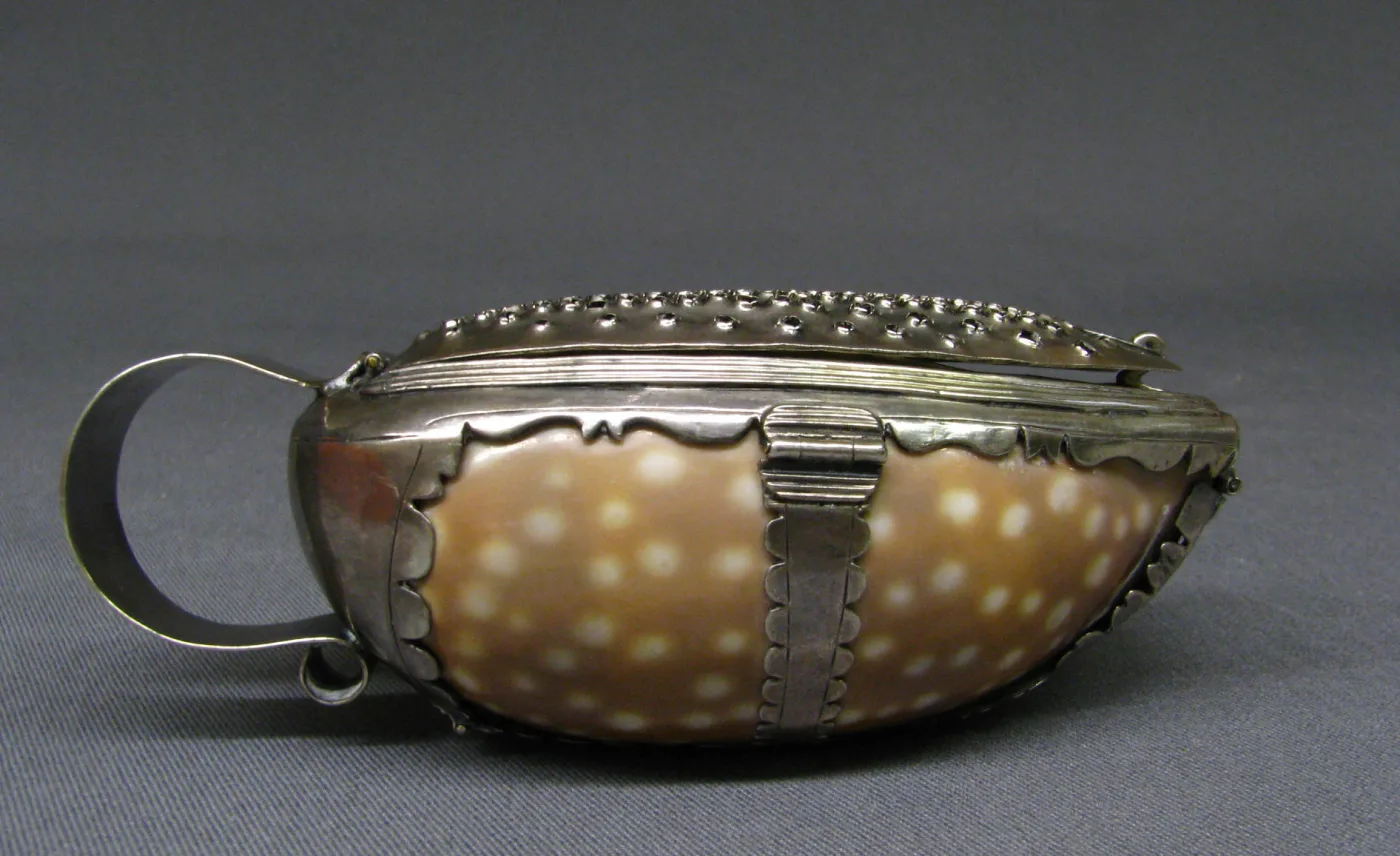
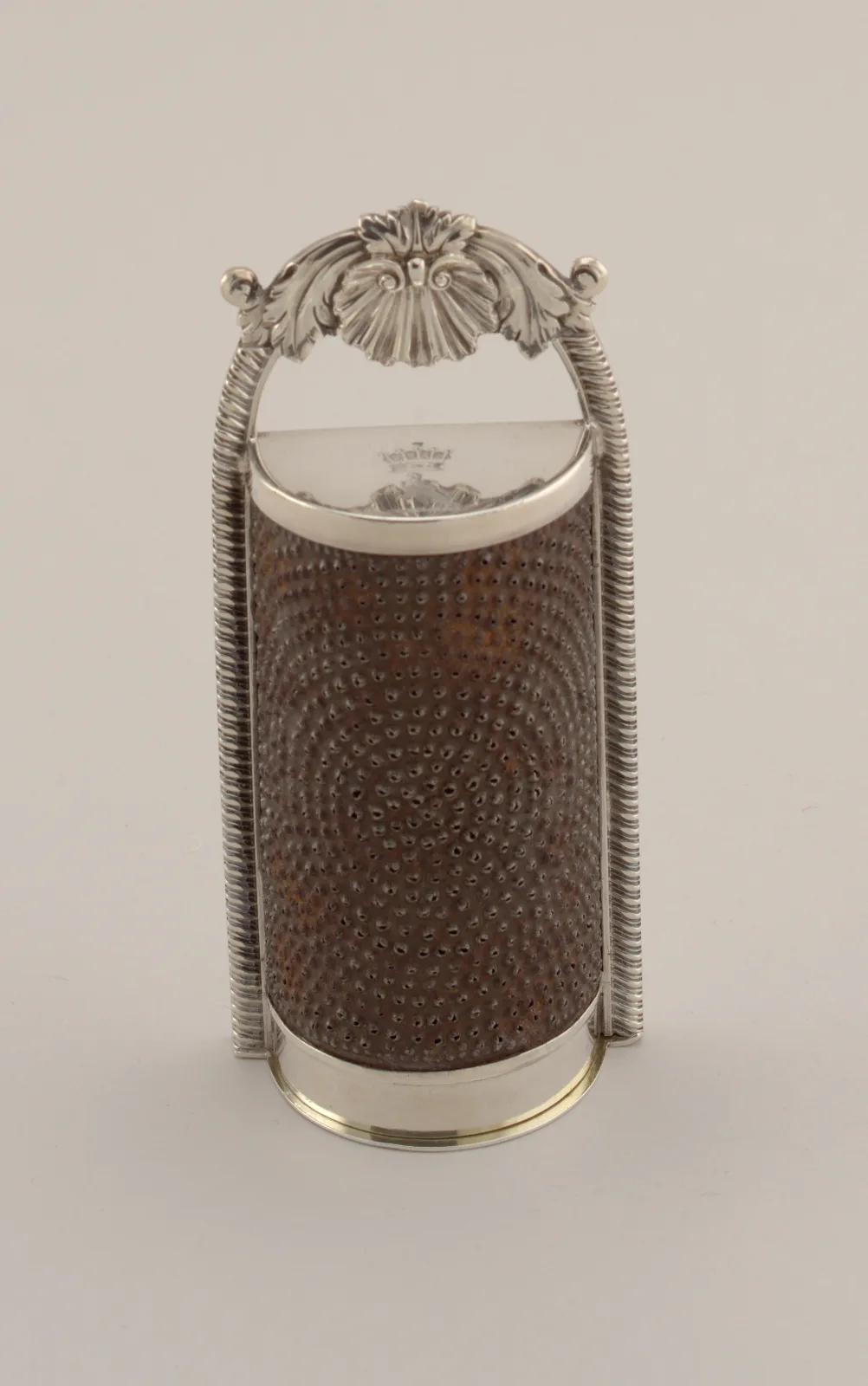
A specialized subset of turned spice containers, nutmeg graters combine a small compartment for storing a whole nutmeg with a built-in metal grater. Examples range from simple turned wooden cylinders to elaborate silver and ivory pieces. Wooden nutmeg graters from the 18th century, particularly in boxwood or fruitwood, are highly sought after by collectors of both treenware and kitchen antiques.
Tin & Toleware Spice Containers
Tin spice containers represent a parallel tradition to wooden examples, particularly popular in America from the late 18th through the early 20th century. These metal containers range from plain tinplate boxes to elaborately decorated toleware pieces with painted floral designs.
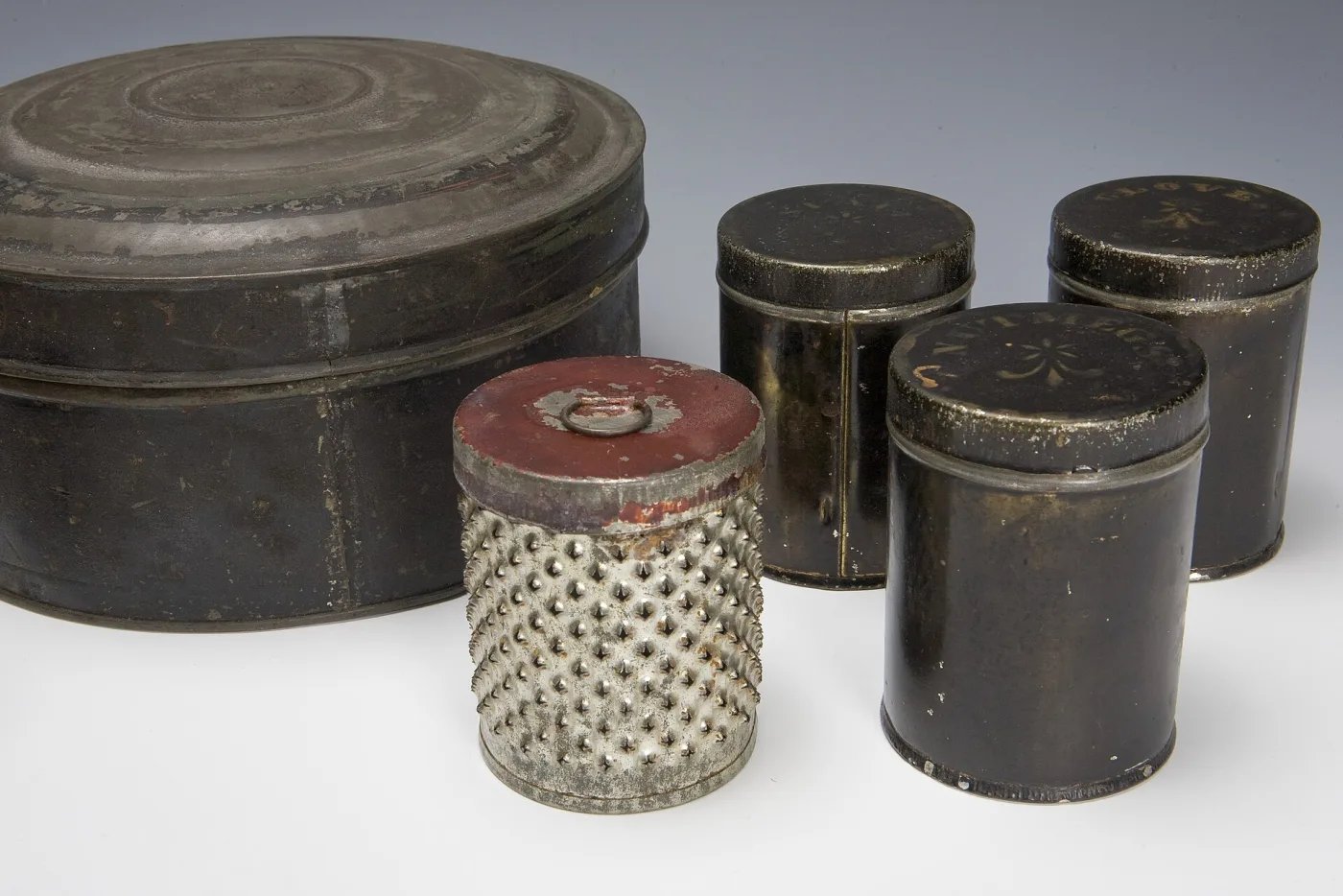
Round Tin Spice Sets
The most common form of tin spice storage is a round container holding six or eight smaller round tins, each labeled for a different spice. These nesting sets were produced from the early 1800s through the early 1900s. Early handmade examples feature hand-soldered seams and hand-painted labels, while later factory-produced sets have machine-rolled seams and printed or stenciled labels.
Painted Toleware Spice Boxes
Toleware spice containers with japanned (lacquered) backgrounds and hand-painted floral decoration represent the high end of tin spice storage. The finest American examples, produced in Connecticut and Pennsylvania from about 1800 to 1850, feature crystallized tin backgrounds with bold fruit and flower motifs. These pieces command premium prices, particularly when the original paint survives in good condition.
Advertising Tins
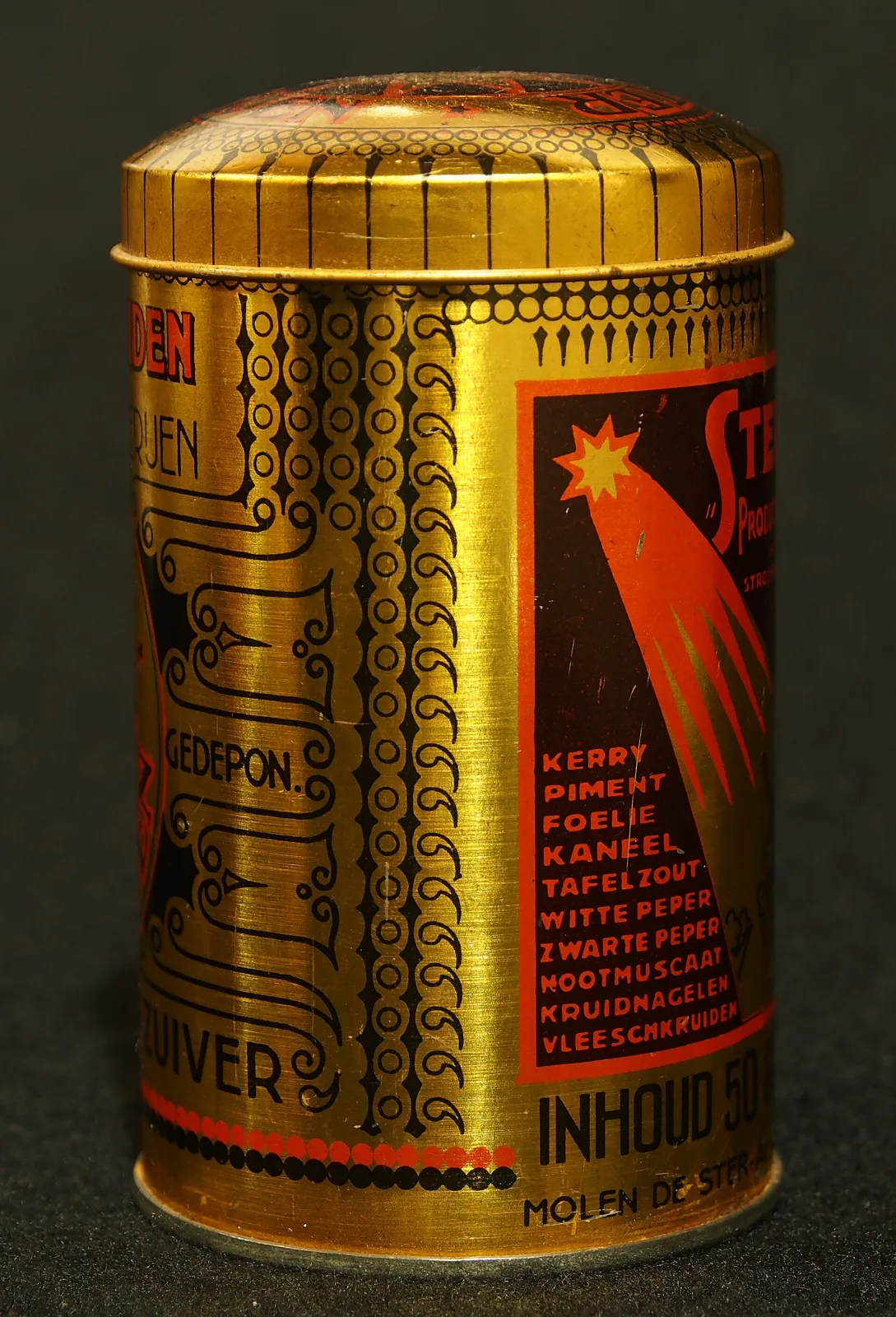
By the late 19th century, commercial spice companies began packaging their products in attractively lithographed tin containers. While technically not handcrafted antiques, early advertising spice tins from brands like McCormick, Schilling, and Durkee have become collectible in their own right. Collectors value examples with vibrant graphics, unusual flavors, or early brand designs, much as collectors prize antique biscuit tins for their decorative appeal.
Wood Types & Identification
Identifying the wood species used in a spice box is one of the most reliable methods for narrowing down its origin and date. Different regions and periods favored specific woods, and a practiced eye can distinguish them by grain pattern, color, density, and aging characteristics.
Pine
Pine is the most common wood found in American spice cabinets from the late 18th and 19th centuries. Its soft texture made it easy to work with hand tools, and it accepted paint readily. Aged pine develops a warm amber patina, and original surfaces may show the characteristic wide, uneven grain of old-growth timber. Eastern white pine was favored in New England, while yellow pine appears more commonly in Southern examples.
Walnut & Cherry
Walnut and cherry indicate higher-quality pieces, typically dating from the 18th century or made in regions where these hardwoods were abundant. American black walnut has a rich dark brown color that deepens with age, while cherry develops a warm reddish-brown tone. Both woods were often left unfinished or given only a simple oil or wax coating to showcase their natural beauty.
Oak
Oak was the standard wood for English spice cabinets and some early American examples. Its open grain and golden-brown color are distinctive, and aged oak develops a deep honey tone. Quarter-sawn oak, identifiable by its distinctive ray fleck pattern, indicates quality construction. Very early pieces may use riven (split rather than sawn) oak boards that predate sawmill technology.
Sycamore, Maple & Fruitwoods
Sycamore (known as lacewood in Britain) was preferred for turned spice towers because its fine, even grain produces a smooth interior that does not impart flavors. Maple served a similar purpose in American pieces. Fruitwoods including apple, pear, and plum were used for smaller individual spice containers and graters, valued for their close grain and attractive warm tones.
Joinery & Construction Clues
The construction methods used in a spice box provide some of the most reliable dating evidence. Joinery techniques evolved over time in well-documented ways, and examining how a piece was assembled reveals much about when and where it was made.
Hand-Cut Dovetails
Hand-cut dovetails are the hallmark of quality antique construction. On spice box drawers, look for irregular spacing, slightly uneven pin sizes, and scribe lines from the maker's layout work. Before about 1830, dovetails tend to be wider and fewer in number. After 1830, as tools improved, dovetails became finer and more numerous. Machine-cut dovetails, perfectly uniform and evenly spaced, indicate post-1870 manufacture.
Nails & Fasteners
The type of nails used in construction is a reliable dating indicator. Hand-forged nails with irregular square heads and tapered shanks indicate pre-1800 construction. Cut nails with square shanks but uniform heads suggest the 1790-1890 period. Modern wire nails with round heads and shanks point to post-1890 manufacture. Many spice cabinets use a combination of joinery and nails, so examining all fasteners is important.
Tool Marks
Saw marks on interior surfaces reveal the sawing technology available to the maker. Straight, parallel marks indicate an up-and-down sash saw (common through the mid-19th century), while circular arc marks show the use of a circular saw (common after 1850). Plane marks, especially the scalloped surface left by a jack plane, indicate hand finishing typical of pre-industrial production.
Drawer Construction
Spice cabinet drawers evolved from thick, roughly finished boxes with simple rabbeted joints in the 17th century to thinner, more refined constructions with dovetailed corners by the 18th century. Drawer bottoms in early pieces run front to back and are chamfered to fit grooves in the drawer sides. Later pieces may have bottoms running side to side or simply nailed in place.
Paint Decoration & Surface Analysis
Paint decoration dramatically affects both the identification and value of antique spice boxes. Original painted surfaces can multiply a piece's value many times over compared to a stripped or refinished example. Understanding paint types and decorative styles is essential for authentication.
Milk Paint
Milk paint (casein-based) was the standard household paint from colonial times through the mid-19th century. It produces a distinctive matte, slightly chalky surface that ages to a soft, worn finish. Common colors include barn red, Prussian blue, chrome yellow, and various greens. Genuine old milk paint shows characteristic wear patterns concentrated at handle areas, drawer fronts, and corners. It cannot be dissolved by modern paint strippers, which is one test for authenticity.
Pennsylvania Dutch Painted Decoration
The most valuable painted spice boxes come from the Pennsylvania Dutch (German-American) tradition. These pieces feature vibrant polychrome decoration including tulips, hearts, birds, stars, and geometric hex signs drawn from Germanic folk art traditions. The painting style uses bold brushwork with limited color palettes, typically on a background of blue, green, or red. These decorated examples connect to the broader tradition of American folk art that encompasses everything from fraktur documents to decorated furniture.
Grain Painting & Surface Treatments
Some spice boxes feature grain painting, a decorative technique that imitates exotic wood grains using combs, feathers, or putty applied over a wet base coat. Common imitated woods include mahogany, rosewood, and birdseye maple. Grain-painted pieces typically date from 1820 to 1860 and indicate a maker or owner who desired the appearance of expensive wood on a modest piece.
Evaluating Original Surfaces
Determining whether a painted surface is original requires careful examination. Look for paint accumulated in crevices and around hardware, consistent wear patterns that match expected use, and paint layers visible in areas of wear that show the correct sequence (primer or base coat beneath the finish coat). Ultraviolet light can help distinguish old paint from modern additions, as aged finishes fluoresce differently than fresh paint.
Regional Styles & Traditions
Spice boxes were made in virtually every region where woodworking was practiced, and local traditions produced distinctive styles that help pinpoint a piece's origin.
New England
New England spice cabinets tend toward simplicity, reflecting the region's Puritan aesthetic heritage. Expect clean lines, minimal decoration, and functional design. Pine is the dominant wood, often painted in muted colors. Six-drawer configurations are common, and the overall proportions tend to be taller and narrower than pieces from other regions.
Pennsylvania & the Mid-Atlantic
Pennsylvania produced the most decoratively diverse spice boxes in America. The Germanic immigrant communities in Lancaster, Berks, and Lehigh counties created boldly painted examples with tulip and heart motifs. Non-Germanic makers in the region produced plainer but still distinctive walnut or cherry pieces, sometimes with inlaid string decoration. Philadelphia urban workshops occasionally produced sophisticated spice cabinets in the prevailing furniture style.
Southern States
Spice boxes from Virginia, the Carolinas, and other Southern states are less frequently encountered than Northern examples. They tend to feature yellow pine construction, sometimes with cypress secondary wood, and simpler painted or unpainted finishes. The warm Southern climate often resulted in more insect damage and deterioration, making well-preserved Southern examples particularly valuable.
Shaker Communities
Shaker-made spice boxes and cabinets are prized for their restrained beauty and superb craftsmanship. Characterized by precise proportions, fine joinery, and finishes limited to stain, varnish, or muted paint colors, Shaker spice storage pieces embody the community's belief that utility and beauty were inseparable. Authentic Shaker pieces command strong premiums due to their rarity and the passionate collector market.
Labels, Marks & Inscriptions
Written labels, stamps, and inscriptions provide some of the most direct evidence for identifying and dating antique spice boxes. Even partial or faded markings can offer important clues.
Hand-Written Spice Labels
Many spice cabinets retain their original hand-written labels identifying the contents of each drawer. The handwriting style, spelling conventions, and ink type all offer dating clues. Spice names sometimes reveal the period: "Cassia" for cinnamon suggests an earlier date, as does "Jamaica pepper" for allspice. The physical labels themselves, whether paper, painted, or incised directly into the wood, indicate different traditions and periods.
Maker's Marks & Stamps
While most spice boxes are unmarked, some bear maker's stamps, brands, or paper labels. Commercial producers in the 19th century occasionally stamped their products, particularly turned treenware pieces. Look for impressed marks on drawer bottoms, the back of cabinets, or the undersides of boxes. Any maker's identification significantly increases a piece's research potential and usually its value.
Ownership Inscriptions
Initials, names, and dates scratched, painted, or inked onto spice boxes provide invaluable historical context. A dated piece eliminates guesswork, while a name enables genealogical research that may reveal the piece's full history. Marriage dates are particularly common, as spice boxes were traditional wedding gifts in many communities.
Dating Techniques
Accurate dating requires synthesizing multiple lines of evidence. No single feature provides a definitive date, but the convergence of construction details, materials, decoration, and hardware creates a reliable framework for placing a piece within its proper period.
Construction-Based Dating
Combine joinery analysis, nail types, tool marks, and wood characteristics to establish a date range. A spice cabinet with hand-forged nails, wide hand-cut dovetails, riven oak, and jack-plane marks almost certainly predates 1800. One with machine-cut dovetails, wire nails, and circular saw marks likely dates after 1870. Most pieces fall between these extremes and require careful evaluation of all construction features.
Style-Based Dating
Decorative styles help refine construction-based dates. Chip-carved decoration suggests 17th or early 18th century work. Elaborate painted decoration in the Pennsylvania style peaks between 1780 and 1840. Grain painting flourished from 1820 to 1860. Factory-made pieces with stenciled decoration typically date from 1860 onward. These style periods overlap with those found in other antique categories, and familiarity with broader antique identification principles helps build a comprehensive dating framework.
Hardware Analysis
Drawer pulls, hinges, and locks evolved in documented ways. Cast brass pulls suggest 18th-century quality work. Turned wooden knobs became standard in the early 19th century. Pressed glass knobs indicate the 1830-1870 period. Machine-stamped metal hardware points to post-Civil War manufacture. Original hardware, even if worn, is always preferable to replacements for dating purposes.
Authentication & Spotting Reproductions
The high values commanded by certain antique spice boxes, particularly painted Pennsylvania examples, have inevitably attracted forgers and reproducers. Understanding the most common deception methods helps protect collectors from costly mistakes.
Common Reproduction Types
The most frequently encountered reproductions include newly made pieces artificially aged to appear antique, genuine old boxes with added painted decoration to increase value, and assembled pieces combining old and new components. The last category is perhaps the most difficult to detect, as the old wood passes casual inspection while the overall piece may never have existed in its current form.
Red Flags
Watch for these warning signs: paint that sits on top of wear rather than worn through naturally, artificially distressed surfaces with uniform rather than logical wear patterns, hardware holes that do not match the current hardware, interior surfaces that are suspiciously clean or uniformly aged, and wood that appears old on the outside but fresh on interior cuts. Modern stains and aging agents often produce an unnaturally uniform coloration that lacks the variation found in genuinely old surfaces.
Authentication Tools
A handheld magnifying loupe (10x-20x magnification) reveals paint layers, tool marks, and wood grain details invisible to the naked eye. A UV blacklight causes old shellac and varnish to fluoresce orange-green while modern polyurethane appears milky white. A strong raking light (held at a low angle) reveals surface irregularities, brush marks, and repair patches. These same techniques apply broadly to antique authentication across many categories.
Market Values & Collecting Tips
Antique spice box values vary enormously depending on age, condition, decoration, and provenance. Understanding the market helps collectors make informed purchasing decisions.
Value Ranges
Simple 19th-century pine spice cabinets in good condition typically sell for $150 to $500. Painted examples with original finish command $500 to $2,000, while elaborately decorated Pennsylvania Dutch pieces can reach $5,000 to $20,000 or more at major auction houses. English turned treenware spice towers in sycamore or lignum vitae generally sell for $300 to $1,500. Toleware spice sets with good original paint bring $400 to $3,000. The most exceptional examples, particularly those with documented provenance or museum-quality decoration, can exceed $25,000.
Factors Affecting Value
Original painted surface is the single most important value factor for wooden spice boxes. A plain pine cabinet worth $200 stripped might bring $2,000 with its original red milk paint intact. Other value drivers include documented provenance, maker attribution, completeness (all original drawers and hardware), unusual form or size, and historical inscriptions or dates.
Building a Collection
New collectors should begin by handling as many authentic examples as possible at shows, auctions, and museum collections. Focus initially on a specific type or region to develop expertise before broadening scope. Estate sales, country auctions, and antique shows remain the best sources for finding reasonably priced examples. Online marketplaces offer convenience but require extra caution due to the difficulty of assessing condition and authenticity from photographs alone.
Care & Preservation
Proper care ensures that antique spice boxes survive for future generations. The cardinal rule of antique preservation applies forcefully here: do not strip, refinish, or aggressively clean original painted surfaces. The patina and wear that developed over decades or centuries are part of the object's history and value.
Cleaning
Dust with a soft brush or lint-free cloth. For surface grime, use a barely damp cloth with plain water, drying immediately. Never use furniture polish, oils, or cleaning products on painted surfaces. Interior drawers can be gently vacuumed with a brush attachment to remove accumulated spice residue, but avoid scrubbing. If residual spice scent remains, this is actually a charming feature that many collectors appreciate.
Display & Storage
Display spice boxes away from direct sunlight, which fades paint and dries wood. Maintain stable humidity between 40-60% to prevent warping, cracking, and joint failure. Avoid placing pieces near heating vents or fireplaces. Wall-mounted cabinets should be hung with appropriate hardware that distributes weight across the backboard. For detailed guidance on protecting all types of wooden antiques, see our antique storage and care guide.
Repair Considerations
Minor repairs like regluing loose joints or stabilizing flaking paint should be approached conservatively. Use reversible adhesives (hide glue is traditional and appropriate) and avoid modern wood fillers or epoxies on visible surfaces. Missing drawer knobs can be replaced with period-appropriate reproductions, but keep any original hardware even if damaged. Major restoration should be entrusted to a conservator experienced with painted furniture.