
Antique Folk Art Identification Guide: Expert Tips for Collectors
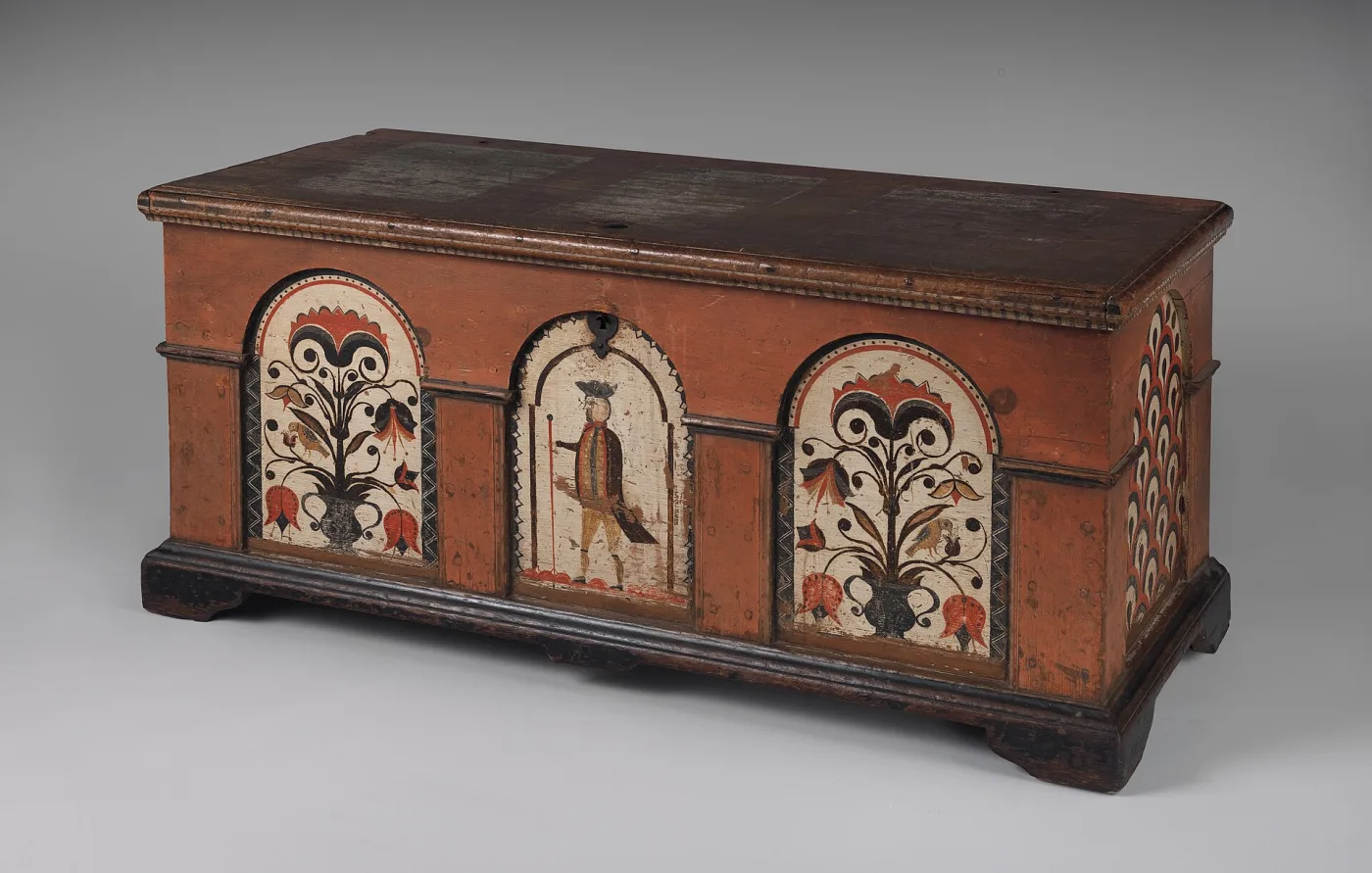
Antique folk art represents some of the most authentic and captivating expressions of human creativity, created by self-taught artists working outside formal academic traditions. These provincially-made, vernacular pieces have surged in popularity among collectors in recent years, valued for their raw authenticity, cultural significance, and unique aesthetic appeal. From weathervanes and trade signs to painted furniture, whimsical carvings, and hand-painted plaster chalkware ornaments, folk art offers a window into the daily lives, beliefs, and artistic sensibilities of ordinary people from centuries past. Painted utilitarian items like antique fire buckets are prized for their folk art decoration.
Identifying authentic antique folk art requires understanding regional characteristics, construction methods, materials, and the historical context in which these pieces were created. Unlike fine art with documented provenance and academic pedigrees, folk art often lacks signatures or maker's marks, making authentication both challenging and rewarding. The field encompasses an incredibly diverse range of objects, from utilitarian items decorated with folk motifs to purely decorative pieces created for personal expression or community celebration. With the rise of sophisticated reproductions and the complexity of authentication, many collectors now turn to AI-powered identification tools to complement their expertise and verify their findings instantly.
This comprehensive guide will walk you through the essential elements of folk art identification, including regional American styles, international traditions, materials analysis, dating techniques, condition assessment, and market valuation. Whether you're a beginning collector drawn to the charm of primitive paintings or an experienced dealer specializing in weathervanes and decoys, this guide will provide the knowledge you need to confidently identify, authenticate, and value antique folk art pieces.
Table of Contents
- Defining Folk Art and Its Characteristics
- American Folk Art Traditions and Regional Styles
- International Folk Art Traditions
- Materials and Construction Techniques
- Types and Categories of Folk Art
- Painted Decoration and Surface Treatments
- Folk Art Carvings and Sculpture
- Folk Art Textiles and Needlework
- Weathervanes and Trade Signs
- Decoys, Gameboards, and Sporting Folk Art
- Religious and Fraternal Folk Art
- Dating Folk Art: Age Indicators and Analysis
- Authentication and Detecting Reproductions
- Condition Assessment and Restoration Considerations
- Provenance, Documentation, and Research
- Market Trends and Valuation Factors
- Building a Folk Art Collection
- Care, Display, and Preservation
Defining Folk Art and Its Characteristics
Folk art encompasses creative works made by self-taught or minimally trained artists, typically working outside academic or professional art traditions. These pieces often reflect the cultural traditions, daily life, and aesthetic sensibilities of ordinary people rather than elite artistic movements. Understanding what qualifies as folk art is essential for proper identification and appreciation of these unique objects.
Core Characteristics of Folk Art
Authentic folk art typically exhibits several defining characteristics that distinguish it from academic fine art and purely commercial production. These pieces are usually created by individuals with little or no formal art training, resulting in a distinctive aesthetic that values directness and authenticity over technical perfection. Folk artists often work within traditional forms and motifs passed down through generations, yet each piece bears the unique stamp of its creator's vision and skill.
The vernacular nature of folk art means it emerges from specific cultural contexts and communities, reflecting local traditions, available materials, and regional aesthetic preferences. Many folk art pieces served utilitarian purposes before being recognized as art objects, including decorated furniture, trade signs, or household tools. The charm of folk art often lies in its honest expression, naive perspective, and the visible hand of its maker in every brushstroke, carving mark, or stitched detail.
Distinguishing Folk Art from Other Categories
Folk art differs from outsider art, which typically refers to work by individuals completely isolated from artistic traditions, often those with mental illness or living in institutional settings. While both share self-taught origins, folk art usually exists within community traditions and cultural contexts. Similarly, folk art should be distinguished from primitive art, which refers to artifacts from indigenous or tribal cultures, though the terms are sometimes used interchangeably in casual conversation.
Academic or salon art represents the opposite end of the spectrum, created by professionally trained artists working within established art world structures and theoretical frameworks. Commercial decorative arts, mass-produced for retail markets, lack the individual handmade character that defines authentic folk art. Understanding these distinctions helps collectors properly categorize and value pieces in their collections.
The Evolution of Folk Art Recognition
For most of history, folk art objects were not recognized as art at all, but simply as everyday items or curious novelties. The serious collecting and study of American folk art began in earnest during the early 20th century, particularly in the 1920s and 1930s, when modernist artists and collectors discovered aesthetic connections between folk art's simplified forms and contemporary abstract movements. This recognition transformed weathervanes from functional roof ornaments into sculpture, and simple painted furniture into valued decorative art.
Today's folk art market is sophisticated and well-established, with major museums maintaining significant collections and auction houses conducting specialized sales. This evolution has raised both awareness and prices, while also unfortunately incentivizing the creation of reproductions and outright fakes. Modern collectors must be more discerning than ever, combining aesthetic appreciation with solid knowledge of materials, construction techniques, and historical context.
American Folk Art Traditions and Regional Styles
American folk art developed distinct regional characteristics reflecting the diverse cultural traditions, available materials, and settlement patterns across the continent. Understanding these regional variations is crucial for accurate identification and authentication of folk art pieces.
New England Folk Art Traditions
New England produced some of America's most iconic folk art forms, including weathervanes, ship carvings, scrimshaw, and painted furniture. The region's maritime heritage strongly influenced its folk art, with ship figureheads, nautical paintings by sailor-artists, intricately carved whale ivory pieces, and the Caribbean-made sailor's valentines that whalers brought home from Bridgetown all representing significant collecting categories. New England furniture decorated with grain painting, sponging, or stenciled motifs reflects both English traditions and local innovation.
Connecticut and Massachusetts became centers for weathervane production in the 19th century, with both handcrafted copper examples and later molded versions. The simple, direct style of New England portraiture, exemplified by itinerant limners traveling from town to town, created a distinctive aesthetic of flat perspective and careful attention to costume and setting details. Shaker communities in the region produced minimalist furniture and objects that, while not originally intended as art, are now highly valued for their pure form and exceptional craftsmanship.
Pennsylvania German Folk Art
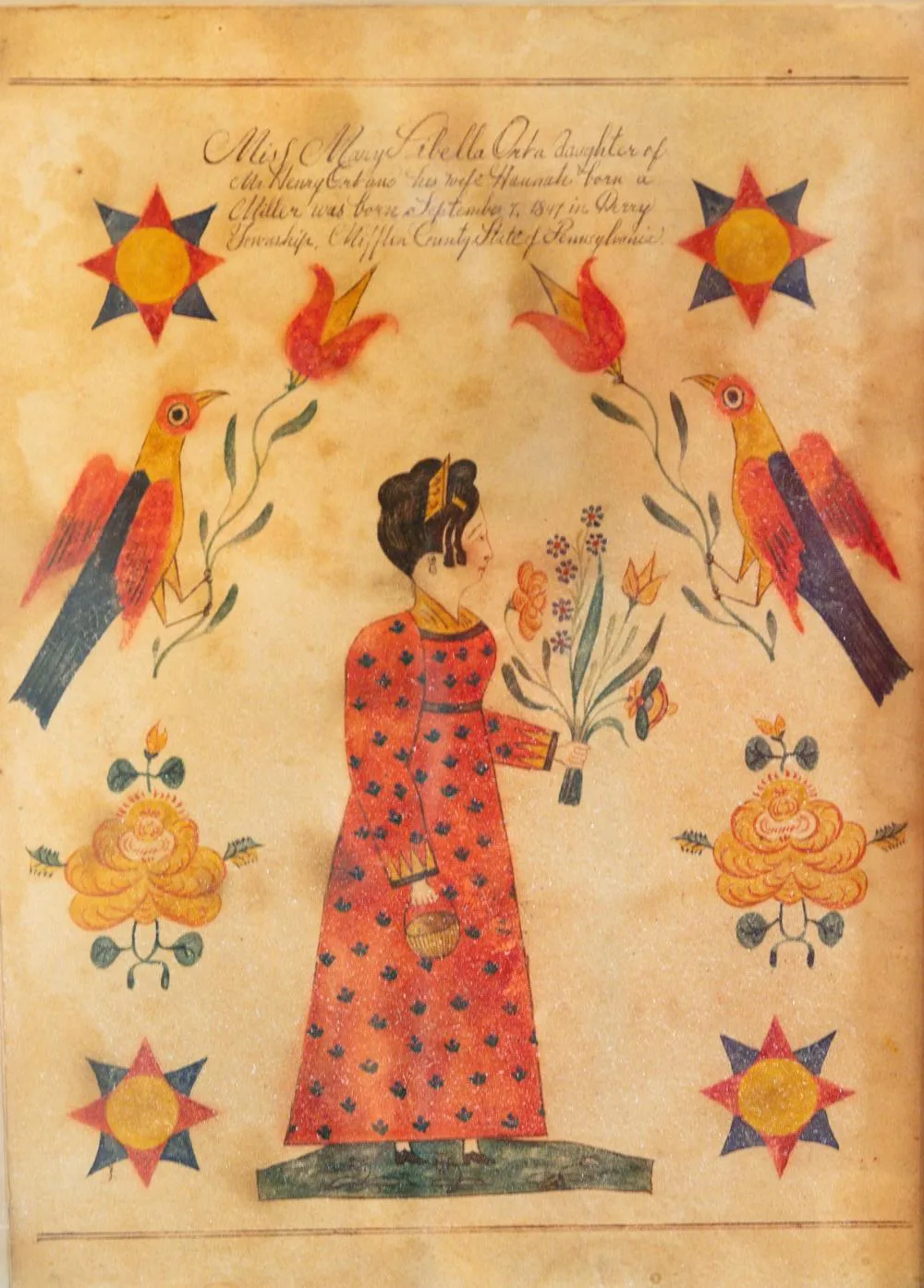
The Pennsylvania German (often called Pennsylvania Dutch) communities created one of America's most distinctive and recognizable folk art traditions. Characterized by bold, colorful decoration featuring hearts, tulips, distelfinks, and other symbolic motifs, Pennsylvania German folk art includes painted furniture, fraktur (illuminated documents), textiles, pottery, and metalwork. The tradition drew from German, Swiss, and Austrian roots — including the figural carving heritage of Black Forest and Brienz workshops — while developing its own unique American character.
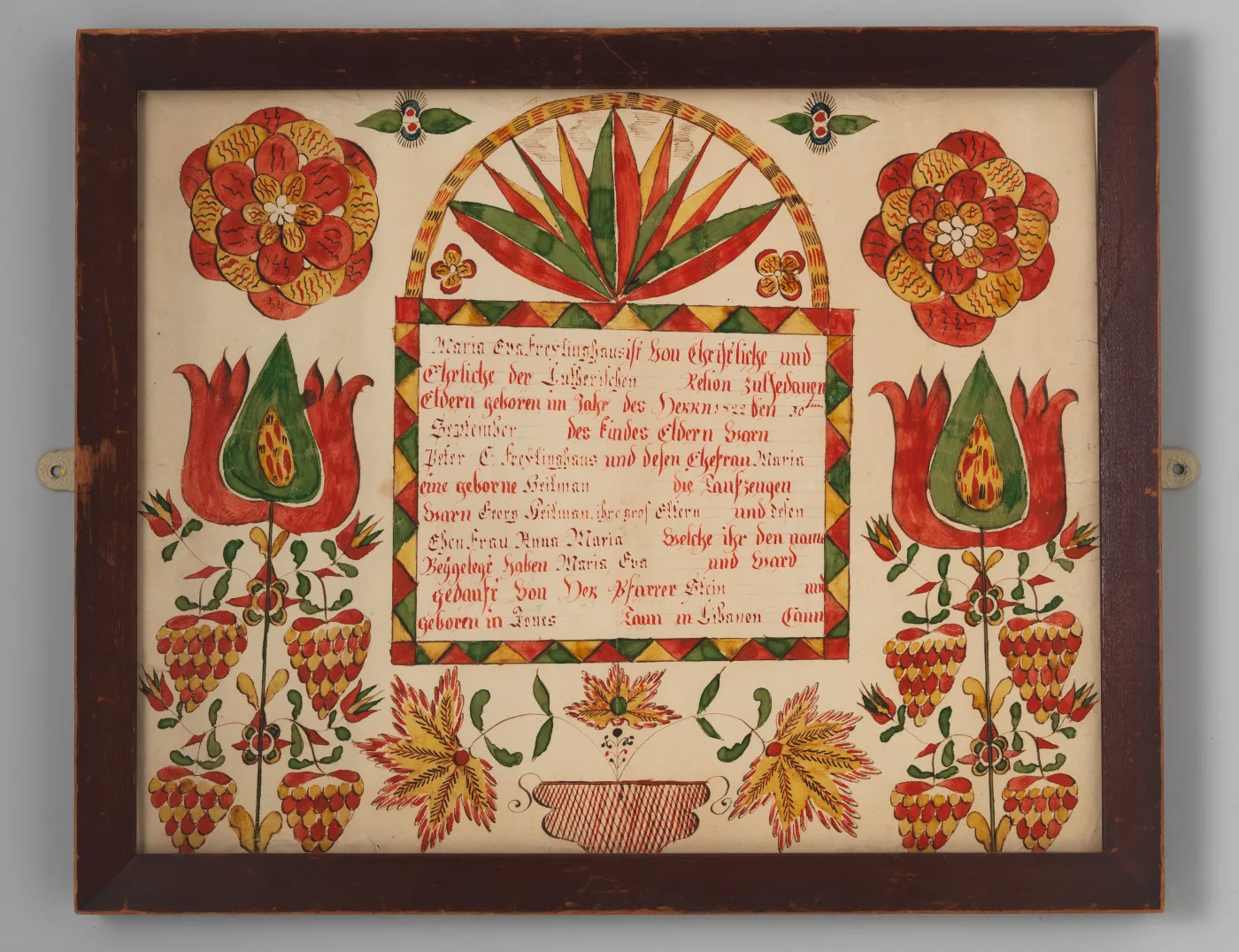
Fraktur documents, including birth and baptismal certificates, house blessings, and bookplates, represent a highly refined folk art form featuring elaborate calligraphy and watercolor decoration. Painted dower chests, blanket chests, and wardrobes often display dated decoration that helps with authentication. Sgraffito and slip-decorated redware pottery from this region exhibits characteristic motifs and techniques passed down through generations of potters. The same tulip, rose, and peafowl motifs appear on the imported Pennsylvania German spatterware that filled dresser shelves, a Staffordshire export ware whose bold spattered borders and hand-painted centers made it the everyday folk china of these communities.
Southern Folk Art
Southern folk art encompasses diverse traditions from tidewater Virginia to the Gulf Coast, reflecting English, African, Native American, and Caribbean influences. Carved wooden decoys from the Chesapeake Bay region represent a highly developed folk art form, with distinctive regional styles and individual carver characteristics. Face jugs and alkaline-glazed stoneware from Southern potters exhibit unique character, sometimes incorporating African aesthetic traditions.
Quilts from the South, particularly those made by African American quilters, often display bold improvisational patterns and color combinations that differ from more structured Northern traditions. Religious folk art, including gravestone carvings, church decoration, and devotional objects, reflects the region's strong spiritual traditions. Trade signs, tavern figures, and architectural elements from Southern buildings provide additional collecting opportunities.
Midwestern and Western Folk Art
As settlement expanded westward, folk art traditions evolved to reflect frontier life and new cultural encounters. Midwestern furniture often shows simplified versions of Eastern styles adapted to available materials and local preferences, including rural Windsor chair interpretations carried west by settlers. Painted decoration on immigrant furniture reflects Scandinavian, German, and Eastern European traditions transplanted to American soil.
Western folk art includes cowboy-made objects, Native American-influenced pieces, and items reflecting mining culture and frontier settlement. Tramp art, created from notch-carved layers of wood often salvaged from cigar boxes, became popular nationwide but particularly in the Midwest during the late 19th and early 20th centuries. A parallel wartime tradition, trench art, saw soldiers and prisoners of war transform spent shell casings and battlefield scrap into vases, ashtrays, and keepsakes. Mexican and Spanish Colonial influences shaped folk art traditions in the Southwest, creating distinctive regional styles in religious art, textiles, and decorative objects.
African American Folk Art Traditions
African American folk art represents a rich tradition combining African aesthetic principles with American experiences and materials. This tradition includes quilts, pottery, basketry, carved walking sticks, face jugs, yard art, and religious objects. Many pieces reflect African design principles including asymmetry, improvisation, and meaningful symbolic content that may not be immediately apparent to outside observers. Distinguishing authentic pieces from later interpretations requires understanding both African aesthetic traditions and American historical context—a challenging task even for experienced collectors.
The recognition of African American folk art has expanded significantly in recent decades, with scholars and collectors increasingly appreciating the sophisticated aesthetic and cultural importance of these traditions. Face vessels from enslaved potters in South Carolina, memory jugs decorated with found objects, and quilts employing improvisational piecing all represent important collecting areas within this field.
International Folk Art Traditions
Folk art traditions exist worldwide, each reflecting unique cultural contexts, materials, and aesthetic preferences. Understanding international folk art helps collectors recognize influences on American traditions and appreciate the global nature of vernacular creativity.
European Folk Art
European folk art encompasses the diverse traditions of dozens of countries and regions, from Scandinavian painted furniture to Italian ex-voto paintings. German folk art, including painted furniture, reverse glass paintings, and carved religious figures, influenced American Pennsylvania German traditions. Scandinavian folk painting traditions, featuring rosemaling and other decorative techniques, appear both in European pieces and immigrant work in America.
British folk art includes samplers, slipware pottery, naive paintings, and carved love tokens. French provincial furniture and objects show regional variations in decoration and form. Eastern European traditions encompass painted eggs, woodcarving, textiles, and paper cutting, each region contributing distinctive motifs and techniques. Recognizing these European sources helps collectors understand American folk art's roots and identify imported pieces sometimes mistaken for American work.
Latin American and Caribbean Folk Art
Mexican folk art traditions include retablos (religious paintings on tin), santos (carved religious figures), Day of the Dead objects, and Talavera pottery. These traditions influenced folk art in the American Southwest and continue as living traditions today. Central American folk art includes textiles, carved masks, painted wood objects, and pottery reflecting both indigenous and Spanish Colonial influences.
Caribbean folk art blends African, European, and indigenous traditions, creating distinctive objects including Haitian metal sculpture, painted furniture, religious objects, and textiles. Understanding these traditions is particularly important for collectors in regions with cultural connections to Latin America and the Caribbean, where authentic antique pieces may be more readily available.
Asian and Middle Eastern Folk Art
Asian folk art encompasses an enormous range of traditions, from Japanese mingei (folk craft) and miniature carvings such as netsuke toggles to Chinese folk paintings and Indian tribal art. These traditions occasionally influenced American folk art through trade contacts and immigrant communities. Middle Eastern folk art includes textiles, metalwork, pottery, and painted objects reflecting Islamic aesthetic traditions and regional cultural practices.
While this guide focuses primarily on American and European folk art most commonly encountered by collectors, awareness of global traditions enriches understanding and helps identify cross-cultural influences in American folk art. Port cities particularly show evidence of international folk art exchange through maritime trade.
Materials and Construction Techniques
Understanding the materials and construction methods used in folk art is essential for authentication, dating, and proper care. Folk artists typically worked with locally available materials using traditional techniques, creating region-specific characteristics that aid identification.
Wood Types and Their Identification
Wood served as the primary material for much American folk art, including carvings, furniture, signs, and architectural elements. Different regions favored different woods based on local availability. New England carvers often worked in pine for painted pieces and hardwoods like maple or cherry for unpainted work. Southern carvers used cypress, tupelo, and other woods suited to their humid climate. Midwestern pieces frequently employ walnut, oak, and other hardwoods abundant in that region.
Examining wood grain, weight, color, and working characteristics helps identify wood types. Pine shows distinct grain patterns and relatively light weight, making it ideal for weathervanes and large carvings. Hardwoods like maple or cherry take finer detail and were preferred for objects requiring durability. Old wood develops a patina and physical changes that differ from modern lumber, with hand-sawn boards showing different surface characteristics than machine-cut wood.
Paint and Surface Treatments
Historic paint provides crucial evidence for dating and authentication. Before the mid-19th century, paint was typically made from natural pigments mixed with oil or other binders, creating different characteristics than modern commercial paints. Milk paint, made from milk protein, lime, and pigments, was widely used on furniture and shows characteristic crackled aging. Oil-based paints develop distinct craquelure patterns and chemical changes over time that are difficult to replicate convincingly.
Paint layers reveal an object's history, with later repainting evident through surface buildup and color inconsistencies. Original surface paint, even if worn, usually increases value significantly compared to refinished pieces. Examining paint under magnification reveals brush strokes, particle size of pigments, and aging characteristics. Later synthetic pigments like chrome yellow or aniline dyes help date pieces to specific periods after their introduction.
Metal Components and Hardware
Metal elements in folk art include copper weathervanes, iron trade signs, tin paintings, and hardware on furniture and objects. Hand-forged iron shows hammer marks and irregularities unlike machine-made hardware. Cut nails, used from about 1790 to 1890, have characteristic rectangular shapes and marks from their manufacture, while modern wire nails are round. Copper weathervanes were either handcrafted from sheet copper or cast in molds, with construction methods helping date pieces.
Patina on metal surfaces develops naturally over decades of exposure, creating oxidation, verdigris on copper, and rust patterns on iron that are difficult to fake convincingly. However, collectors should be aware that artificial aging techniques can create deceptive patinas. Examining metal surfaces carefully for consistency, wear patterns, and attachment methods helps authenticate pieces.
Textiles and Fabrics
Folk art textiles include quilts, samplers, hooked rugs, and woven coverlets, each with characteristic materials and construction methods. Early fabrics were typically linen, wool, or cotton, with synthetic fibers appearing only in the 20th century. Hand-spinning creates different yarn characteristics than machine-spun thread. Natural dyes produce colors that fade in characteristic patterns unlike synthetic dyes introduced in the mid-19th century.
Examining fabric weave, fiber content, dye characteristics, and construction techniques helps date textiles. Samplers worked on linen with silk thread differ from those on cotton ground. Quilt batting materials changed over time, from wool to cotton to modern polyester. Thread composition and spinning methods provide dating clues, as does the presence of sewing machine stitching versus entirely hand-sewn construction.
Paper and Inks
Folk art on paper includes fraktur, theorem paintings, calligraphic documents, and drawings. Historic paper was typically rag-based rather than wood-pulp, with different texture, strength, and aging characteristics. Watermarks in paper help identify manufacturing dates and origins. Handmade paper shows irregular edges (deckle edges) and variations in thickness unlike machine-made paper.
Historic inks, whether iron gall ink, carbon-based inks, or watercolor pigments, age in characteristic ways. Iron gall ink often browns with age and may eat through paper over time. Early watercolors were mixed from natural pigments and show different characteristics than modern tube watercolors. The chemical composition of inks and papers can be analyzed scientifically for authentication of important pieces.
Types and Categories of Folk Art
Folk art encompasses an enormous variety of object types, from purely decorative items to embellished utilitarian objects. Understanding these categories helps collectors focus their interests and recognize the full breadth of folk art expression.
Sculptural Folk Art
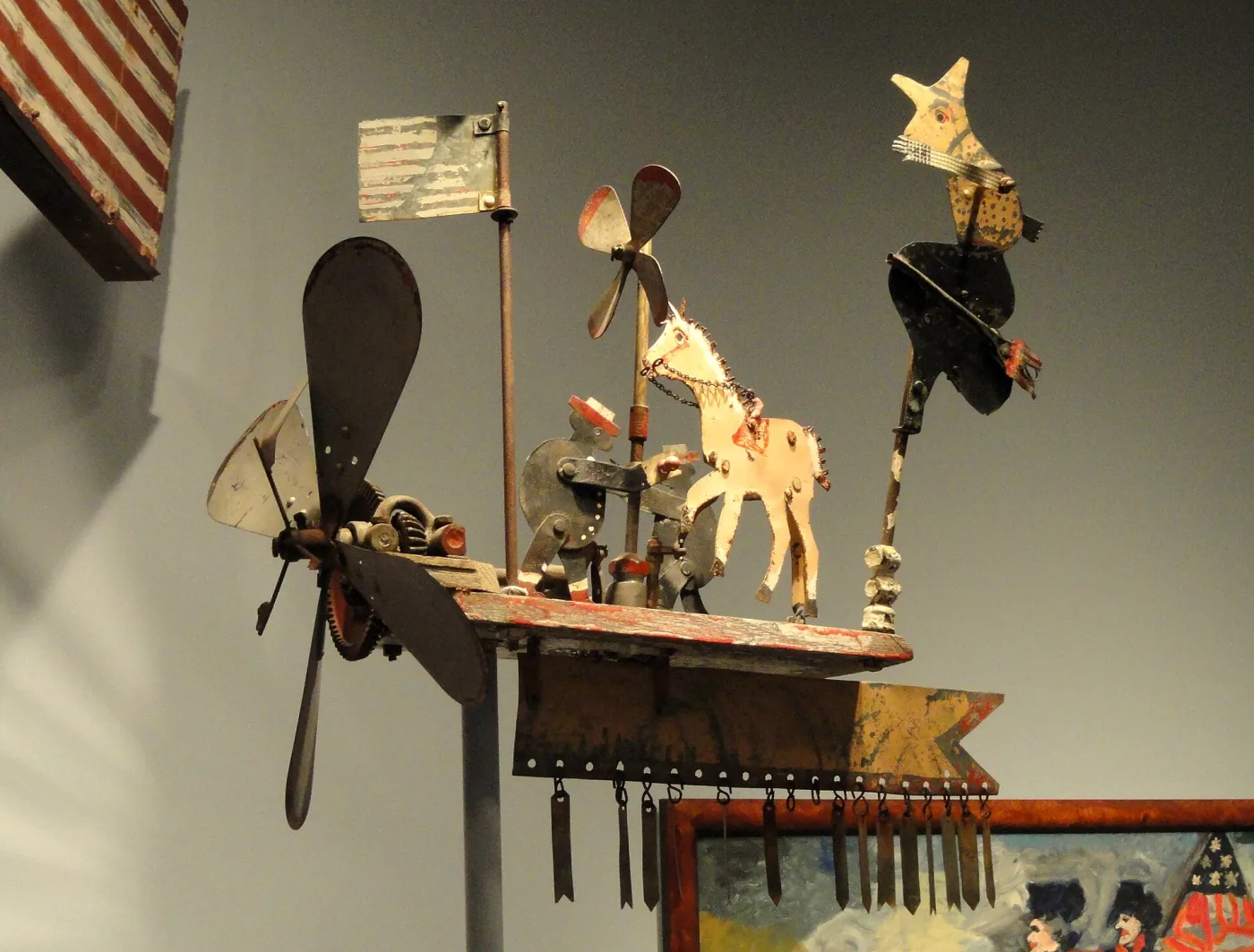
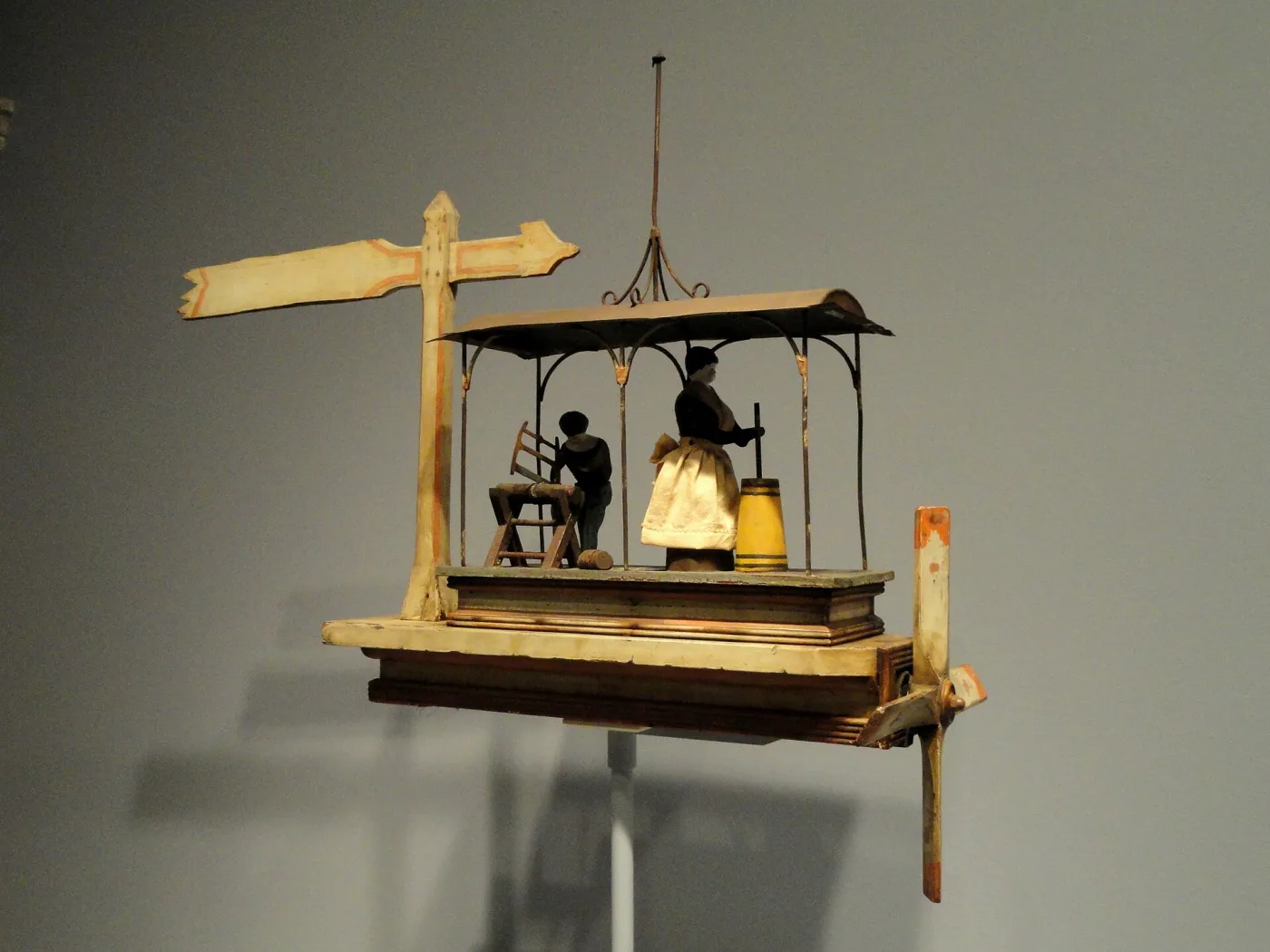
Three-dimensional folk art includes wood carvings, metal sculpture, and objects made from various materials. This category encompasses whirligigs (wind-driven kinetic sculptures), carousel figures, cigar store figures, ship figureheads, decoys, and carved animals. Each type has distinctive characteristics, regional variations, and individual maker styles that aid identification.
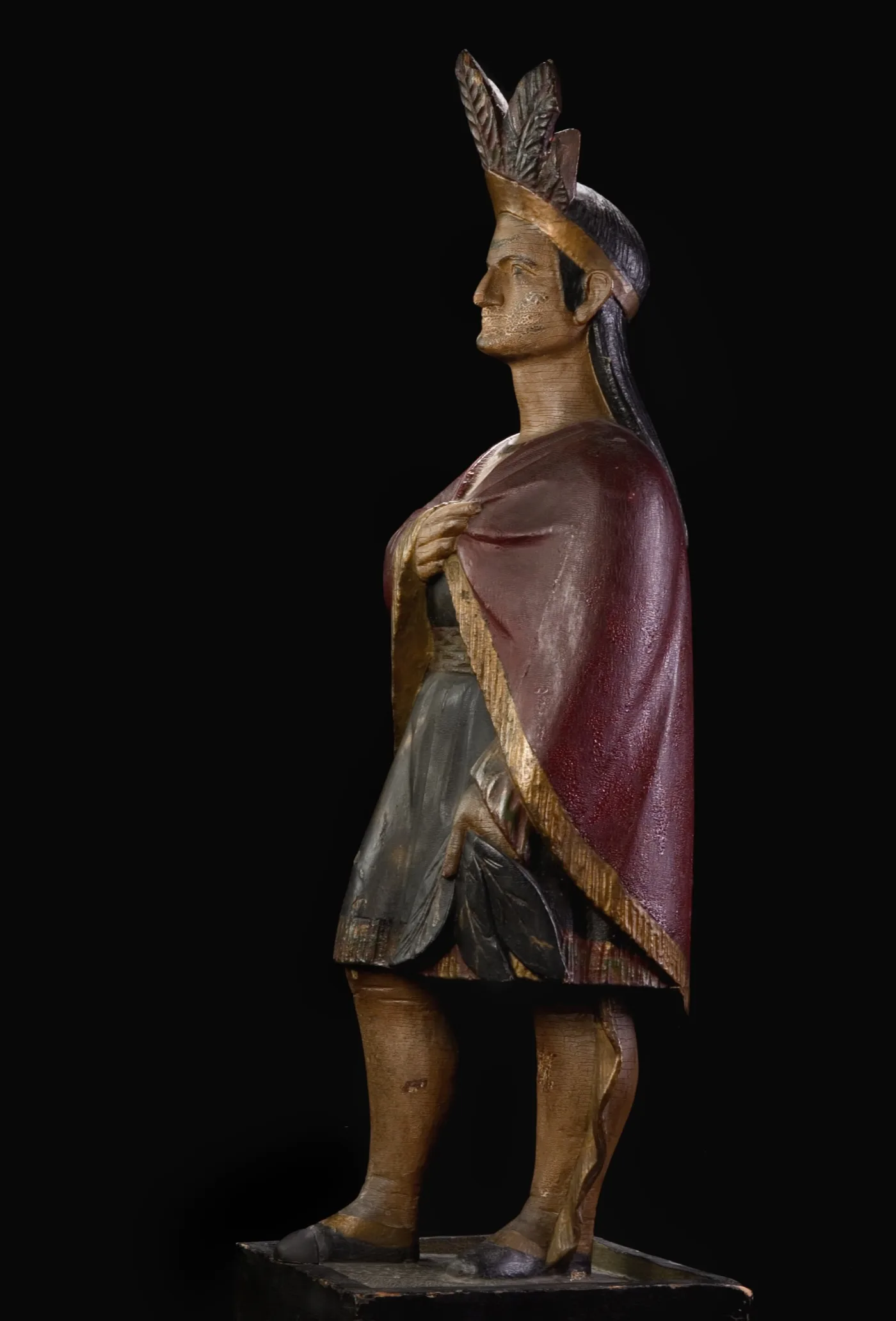
Whirligigs range from simple paddle-armed figures to complex mechanical scenes with multiple moving parts. The quality of carving, paint surfaces, and mechanical ingenuity varies widely, with the best examples combining folk art charm with sophisticated engineering. Cigar store figures, trade signs shaped as Indians, blackamoors, or other figures, represent an iconic American folk art form with examples ranging from crudely carved to remarkably sophisticated.
Two-Dimensional Folk Art
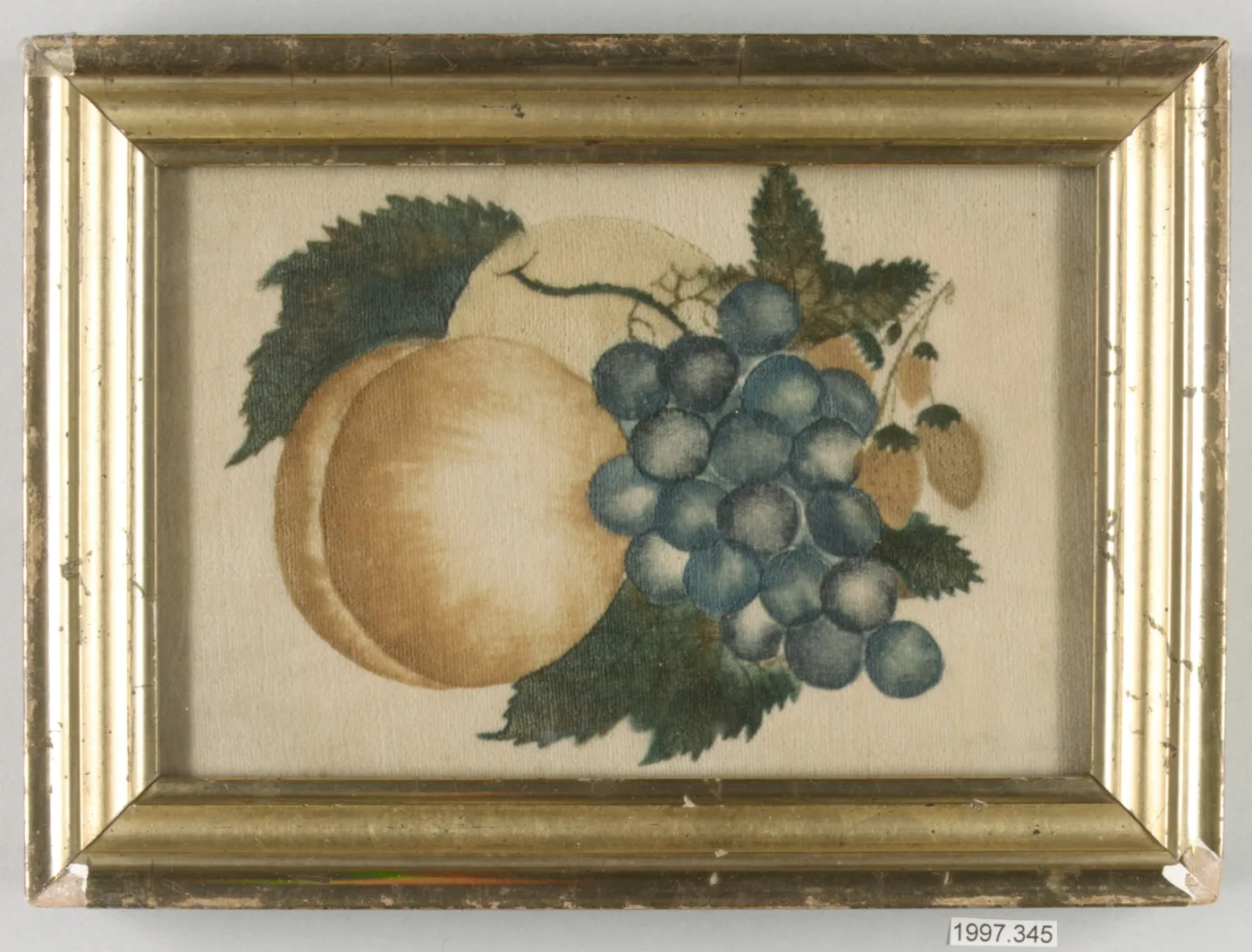
Painted and drawn folk art includes portraits, landscapes, still lifes, religious paintings, theorems, fraktur, calligraphy, and decorative paintings on various surfaces. Folk portraiture represents one of the most collected categories, with naive paintings of families, children, and individuals offering windows into 19th-century life. These portraits typically show flat perspective, careful attention to costume and accessories, and a direct, honest quality that differs from academic portraiture.
Theorem paintings, created using stencils to build up still life compositions, were particularly popular in the early 19th century and were often created by young women as part of their education. Religious paintings include devotional images, biblical scenes, and memorial pieces. Mourning pictures, commemorating deceased family members, often combine painting, embroidery, and other techniques in touching compositions.
Decorated Utilitarian Objects
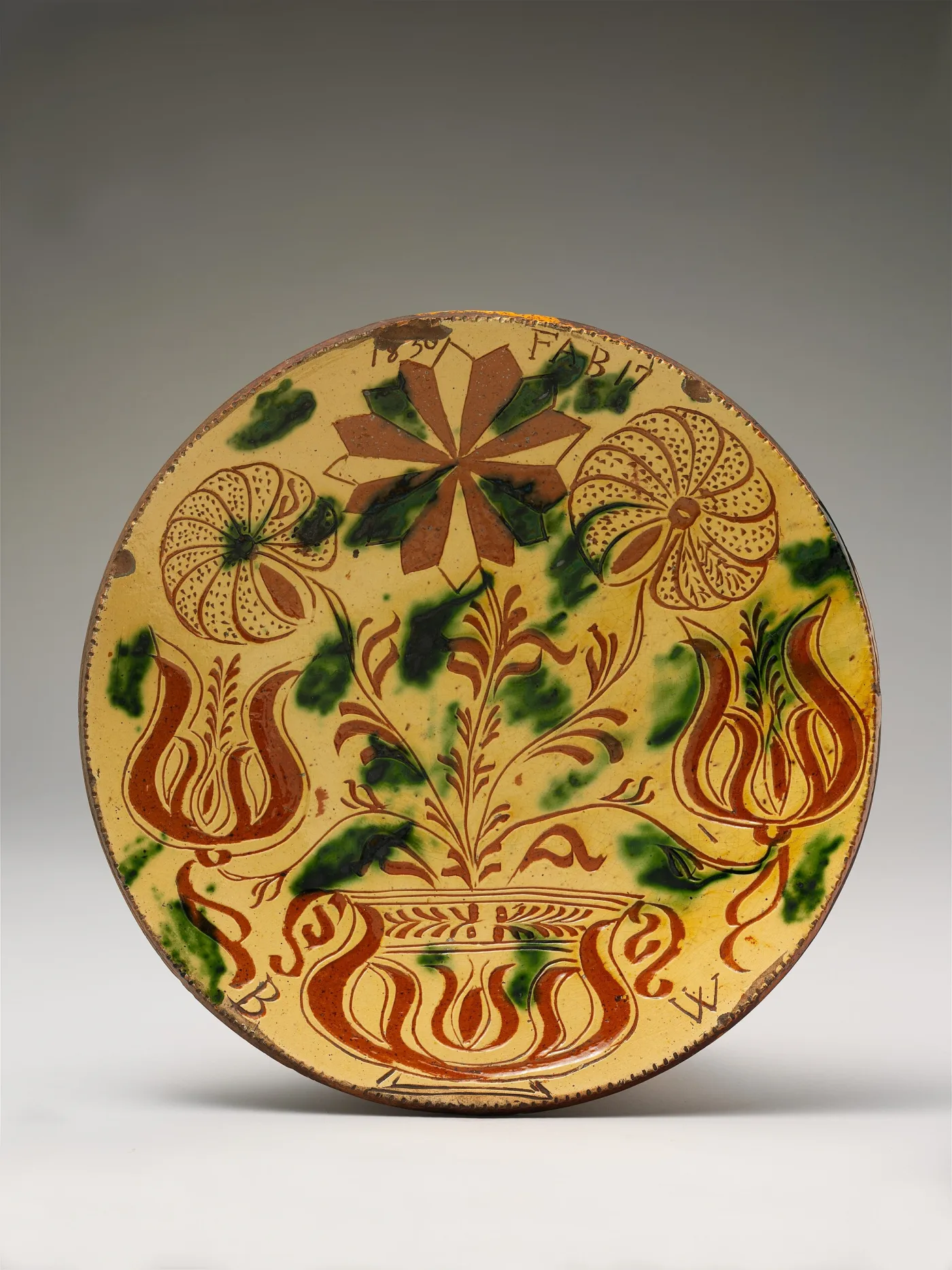
Much folk art appears on objects originally created for practical use but decorated with artistic embellishment. This category includes painted furniture, decorated stoneware and redware pottery, tinware with japanned decoration, carved and painted trade signs, and embellished tools. The marriage of utility and decoration represents an important folk art principle, where even everyday objects received artistic attention.
Decorated furniture ranges from simple painted surfaces to elaborate grain painting imitating expensive woods, stenciled decoration, and carved elements. Pennsylvania German furniture often features dated decoration and symbolic motifs that aid identification. Blanket chests, cupboards, painted spice boxes, and other case pieces received the most elaborate decoration, while chairs and tables were usually more simply treated.
Textiles and Fiber Arts
Folk art textiles include quilts, coverlets, samplers, hooked rugs, woven textiles, and needlework pictures. Each subcategory has extensive scholarship, collecting traditions, and authentication criteria. Quilts alone encompass dozens of traditional patterns, regional variations, and individual artistic interpretations. Samplers served both as learning exercises and decorative objects, with the finest examples showing remarkable needlework skill and charming naive imagery.
Hooked rugs, created by pulling fabric strips through burlap or linen backing, range from simple geometric designs to elaborate pictorial scenes. The finest examples, particularly those with unusual imagery or exceptional color, are highly valued. Woven coverlets, created on home looms often by professional weavers, sometimes include woven signatures and dates that help with identification and authentication.
Miniatures and Toys
Folk art toys and miniatures include dolls, Noah's arks, carved animals, gameboards, and small-scale furniture. These objects often display the same artistic sensibility as full-scale folk art but in diminutive form. Handmade dolls with carved or cloth faces, dressed in period clothing, represent both toys and decorative objects. Gameboards painted with bold geometric designs or pictorial scenes are particularly sought after by collectors.
Miniature furniture, sometimes made as salesman's samples but often as toys or decorative objects, displays the same construction techniques and decorative treatments as full-size pieces. Noah's ark sets, with carved and painted animals, were popular toys particularly in German traditions, and home-made rocking horses cut from plank and painted with whatever was to hand belong to the same tradition. The folk art quality of toys depends on their handmade character and artistic merit rather than their original purpose as playthings.
Painted Decoration and Surface Treatments
Painted surfaces on folk art objects provide some of the most visually striking and culturally significant elements. Understanding traditional decoration techniques, paint types, and regional styles helps with identification and authentication.
Decorative Painting Techniques
Folk artists employed various painting techniques to embellish furniture, tinware, and other objects. Grain painting or faux bois imitated expensive woods using painted techniques, allowing pine furniture to simulate mahogany, rosewood, or bird's eye maple. Skilled grainers achieved remarkably realistic effects using combs, brushes, and other tools to create wood-like patterns. Original grain painting adds significant value to furniture pieces.
Stenciling allowed the repetition of decorative motifs efficiently, particularly popular on furniture, walls, and tinware. Stencil patterns ranged from simple geometric borders to elaborate fruit and floral compositions. Multiple stencils in different colors could create complex layered designs. Freehand painted decoration shows more individual variation, with brushwork directly applied without stencil guides. This technique appears on Pennsylvania German furniture, decorated stoneware, and many other folk art forms.
Color and Pigment Analysis
Historic paint colors and their aging characteristics help date folk art pieces. Certain pigments were available only during specific periods, providing dating evidence. Chrome yellow, introduced in the early 19th century, appears in folk art from that period forward. Prussian blue, available from the 18th century, was a popular blue pigment for folk painters. Earth tones from natural ochres, umbers, and siennas were widely available and used.
Paint colors often fade or change over time, with fugitive pigments like some reds and purples particularly prone to alteration. Understanding how different pigments age helps assess whether surface color is original or repainted. Original paint, even if faded or worn, generally shows consistent aging across a piece, while selective repainting appears as newer, brighter paint in some areas.
Surface Preparation and Finishes
Traditional surface preparation involved different processes than modern methods, leaving characteristic evidence. Wood surfaces were often sized with glue or other materials before painting to reduce paint absorption. Ground layers, particularly on theorem paintings and tin pieces, provided smooth surfaces for decorative painting. These preparatory layers are visible in cross-section when paint is damaged.
Original finishes on painted furniture might include varnish, shellac, or simply aged paint with no protective coating. These finishes develop characteristic craquelure, darkening, and physical changes over time. Modern reproductions often show overly glossy or uniform finish surfaces that lack the complexity of aged originals. Examining surfaces in raking light reveals subtle texture and wear patterns that indicate age and originality.
Regional and Cultural Painting Styles
Different regions and cultural groups developed characteristic painting styles that aid identification. Pennsylvania German decoration features distinctive tulip, heart, and bird motifs in bold primary colors. New England painted furniture often shows more restrained decoration with sophisticated color combinations. Scandinavian immigrant furniture displays rosemaling and other traditional Norwegian or Swedish painting styles adapted to American forms.
Identifying these regional characteristics requires study of documented examples and comparison with pieces of known origin. However, mobile decorators traveled between regions, and cultural exchange spread motifs beyond their origins, so painting style alone should not be the sole attribution criterion. Consider painting style alongside construction methods, wood types, and form when identifying regional origins.
Folk Art Carvings and Sculpture
Carved and sculptural folk art represents some of the most visually commanding and valuable categories in the field. From weathervanes to whittled figures, three-dimensional folk art offers endless variety and appeal.
Weathervanes and Architectural Elements
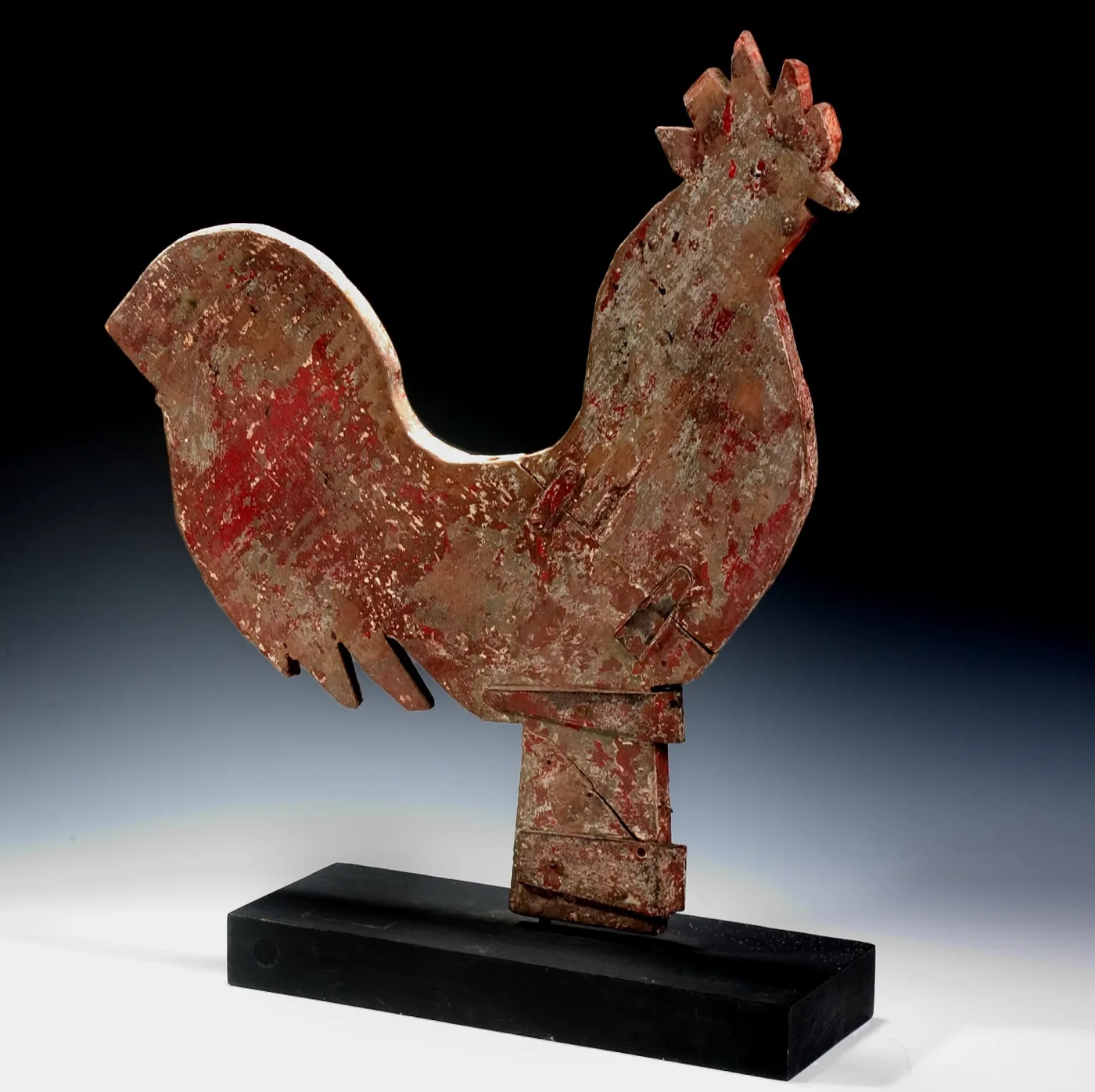
Weathervanes represent iconic American folk sculpture, with examples ranging from simple directional arrows to elaborate molded copper horses, roosters, and other figures. The finest weathervanes combine sculptural quality with functional design, having served their original purpose atop barns and buildings before being recognized as art. Early handcrafted examples were made from copper sheet, hand-formed and detailed, while later 19th-century examples were often molded and mass-produced by companies like J.W. Fiske and Cushing & White.
Handmade weathervanes show evidence of their construction, including soldered seams, hand-hammered details, and individual character variations. Molded examples, while produced in quantity, still show hand-finishing and variations between pieces. Surface patina on copper weathervanes includes verdigris, the green oxidation that develops naturally over decades of exposure. Original gilding or paint remnants add value and historical interest. Size, form, rarity, and condition all affect weathervane values significantly.
Architectural elements including carved lintels, door surrounds, corbels, and other decorative building components sometimes display folk art quality. These elements were typically created by local builders and carpenters rather than trained sculptors, resulting in charming naive interpretation of classical or Gothic architectural vocabulary. Carved building plaques with dates, initials, or symbolic imagery provide documentation of building history.
Trade Signs and Commercial Folk Art
Trade signs shaped as boots, eyeglasses, watches, mortars and pestles, and other objects related to businesses represent a distinctive American folk art tradition. Carved wooden signs, often supplemented with iron components, advertised businesses through visual symbols that could be read by illiterate customers. The most desirable examples combine sculptural quality with original paint and documented business history.
Three-dimensional trade figures including cigar store Indians, figures representing different ethnicities and occupations, and carved animals served similar advertising purposes. These figures range from crudely carved to remarkably sophisticated, with the finest examples by known carvers like Samuel Robb or Thomas Brooks commanding museum-level prices. Smaller trade signs, including painted metal and wooden flat signs, are more accessible to collectors but still require careful authentication.
Whittling and Whimsy
Small carved figures, animals, and whimsical objects represent folk art created primarily for pleasure rather than function. These pieces, often made during leisure hours by farmers, sailors, or other workers, display enormous creativity and individual character. Subjects include people, animals, fantastical creatures, and abstract forms. The finest examples show sophisticated carving technique and artistic vision despite their humble origins and materials.
Whittled chains carved from single pieces of wood, ball-in-cage carvings, and other tour-de-force demonstrations of skill represent another category of folk carving. These technical exercises often display remarkable patience and precision. Carved canes and walking sticks, particularly those with figural handles or carved along their length, combine utility with artistic expression. Documenting provenance for these smaller pieces can be challenging, making condition, carving quality, and surface character particularly important authentication criteria.
Religious Carvings and Santos
Religious folk sculpture includes carved crucifixes, saints, Madonna and Child figures, and other devotional objects. American religious carving appears in various traditions, from Germanic carved figures to Hispanic santos from the Southwest. Santos, religious figures carved and painted in Spanish Colonial traditions, represent an important collecting field with regional New Mexican styles particularly sought after.
Evaluating religious folk carvings requires understanding iconography, regional traditions, and construction methods. Original polychrome paint on religious figures adds significant value, though many pieces have been repainted over their history. Evidence of devotional use, including wear from handling or candlewax residue, authenticates pieces as having served their original religious function rather than being decorative reproductions.

Folk Art Textiles and Needlework
Textile folk art encompasses some of the most personal and culturally significant objects in the field, created predominantly by women working within domestic settings and community traditions.
Quilts and Coverlets
American quilts represent one of the most extensively collected folk art categories, with examples ranging from simple utility quilts to masterpieces of design and needlework. Traditional patterns like Log Cabin, Star, and Double Wedding Ring were interpreted individually by each quilter, resulting in infinite variations. The finest quilts combine sophisticated color sense, precise needlework, and creative pattern interpretation.
Dating quilts involves examining fabrics, batting materials, stitching techniques, and pattern styles. Early quilts used hand-spun, hand-woven fabrics, while later examples employed commercially produced cloth. The introduction of sewing machines in the mid-19th century changed construction methods, though hand-quilting remained standard for the actual quilting stitches. Batting evolved from wool to cotton to modern polyester, with materials helping establish date ranges.
African American quilts, particularly those employing improvisational piecing and bold color combinations, have gained increasing recognition for their aesthetic sophistication and cultural importance. These quilts often diverge from European-American pattern traditions, incorporating African design principles of asymmetry and improvisation. Gee's Bend quilts from Alabama represent the most famous examples, though improvisational quilting appeared in African American communities throughout the South.
Samplers and Needlework Pictures
Samplers served dual purposes as learning exercises for young girls and decorative objects displaying needlework skills. The finest samplers include alphabets, numbers, decorative motifs, pious verses, and personal information including the maker's name and date. Regional and temporal variations in sampler styles help with identification, as do characteristic color palettes and motif combinations.
American samplers from the late 18th and early 19th centuries often feature house designs, family records, maps, or mourning scenes in addition to traditional alphabet samplers. The level of skill, design complexity, condition, and historical interest all affect values. Samplers with unusual imagery, documented makers with interesting histories, or exceptional needlework command premium prices.
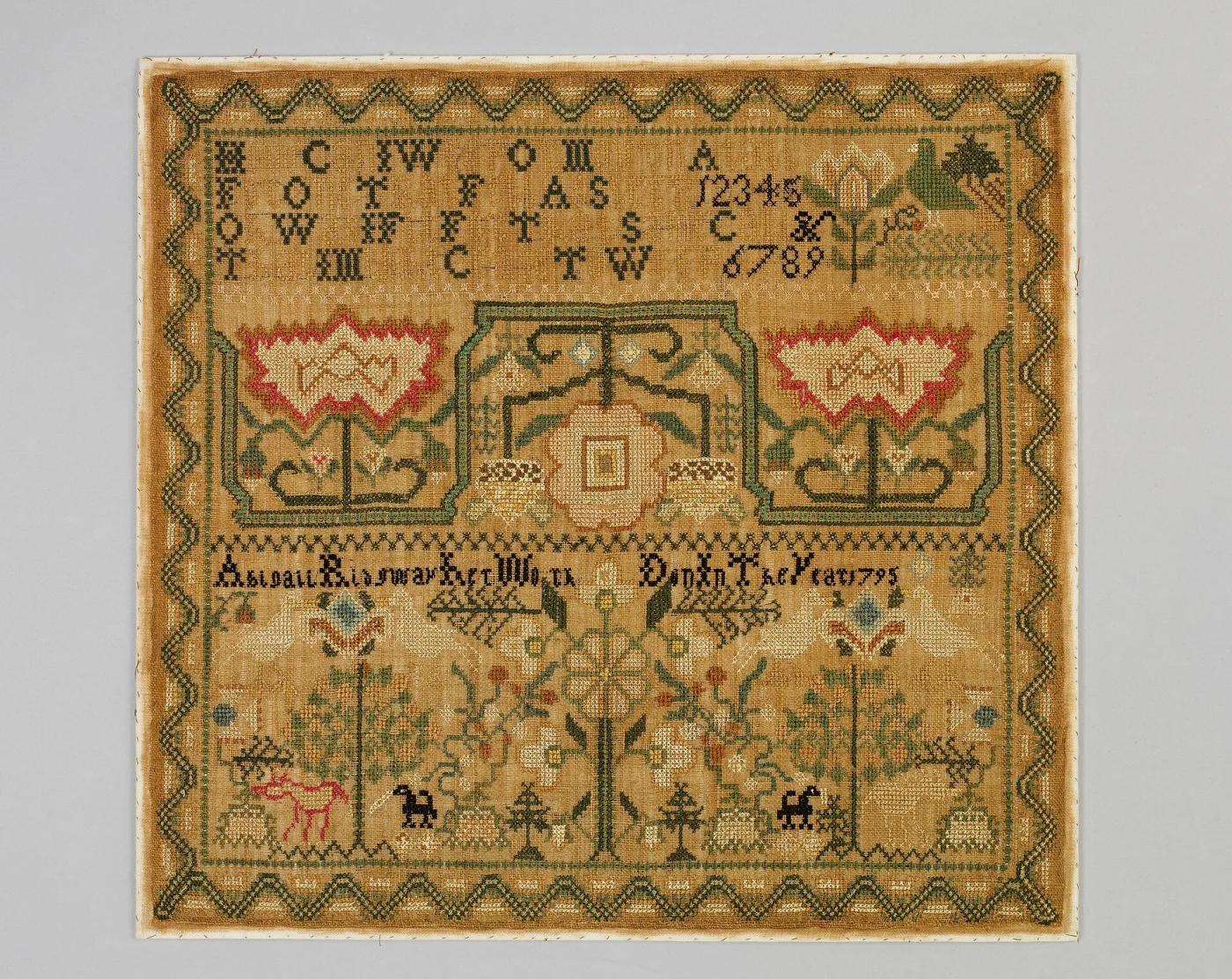
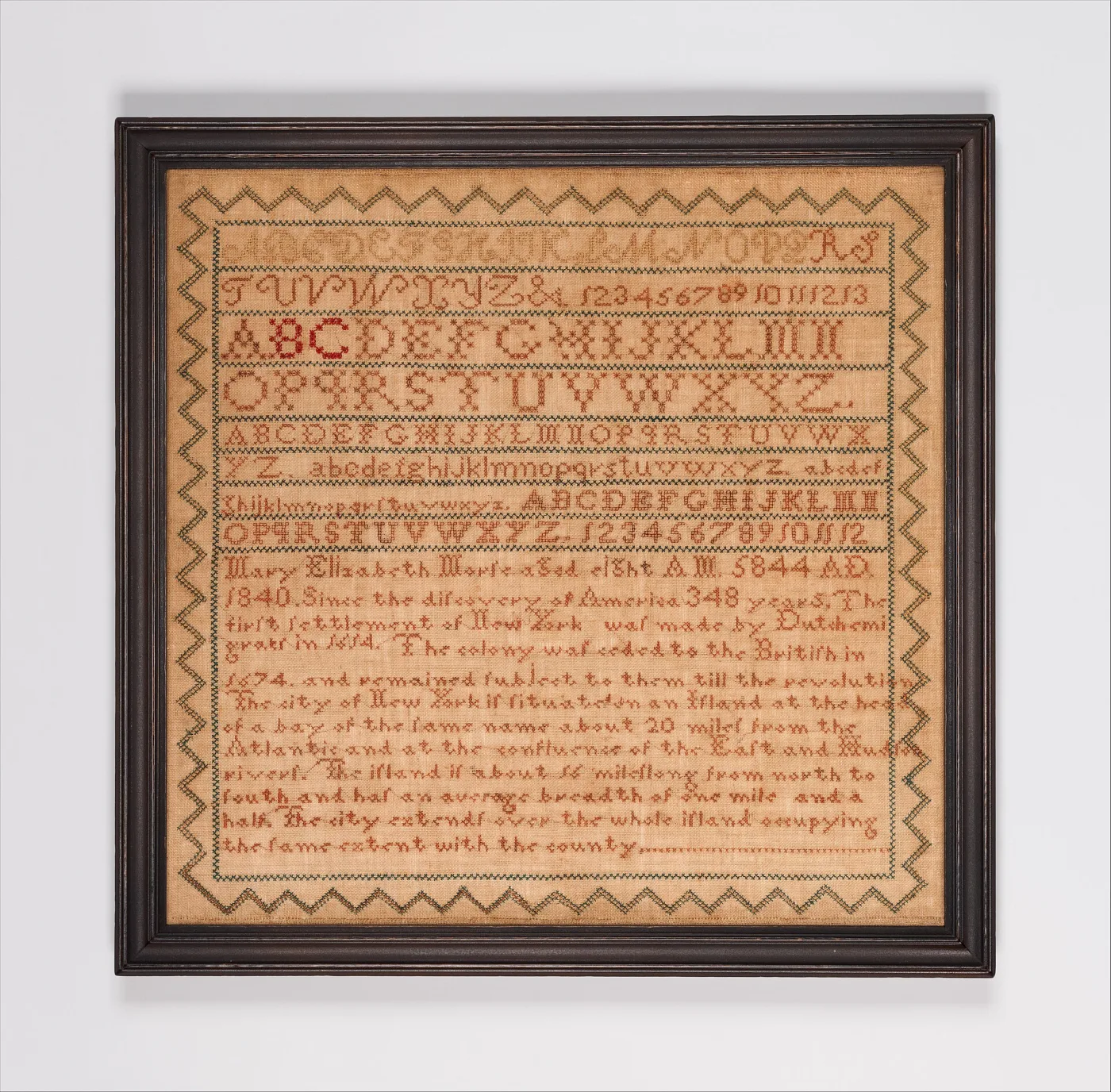
Needlework pictures beyond samplers include crewelwork, stumpwork, silk embroidery, and needlepoint compositions. Mourning pictures, commemorating deceased family members with imagery of tombs, weeping willows, and mourning figures, represent a distinctive early 19th-century form. These pieces often combine embroidery with painted elements, creating mixed-media compositions.
Hooked and Woven Rugs
Hooked rugs, created by pulling fabric strips through burlap or other foundation material, range from simple geometric designs to elaborate pictorial compositions. The finest examples feature sophisticated designs, excellent color combinations, and artistic interpretation of traditional or original motifs. Pictorial rugs depicting animals, houses, ships, or narrative scenes are particularly sought after by collectors.
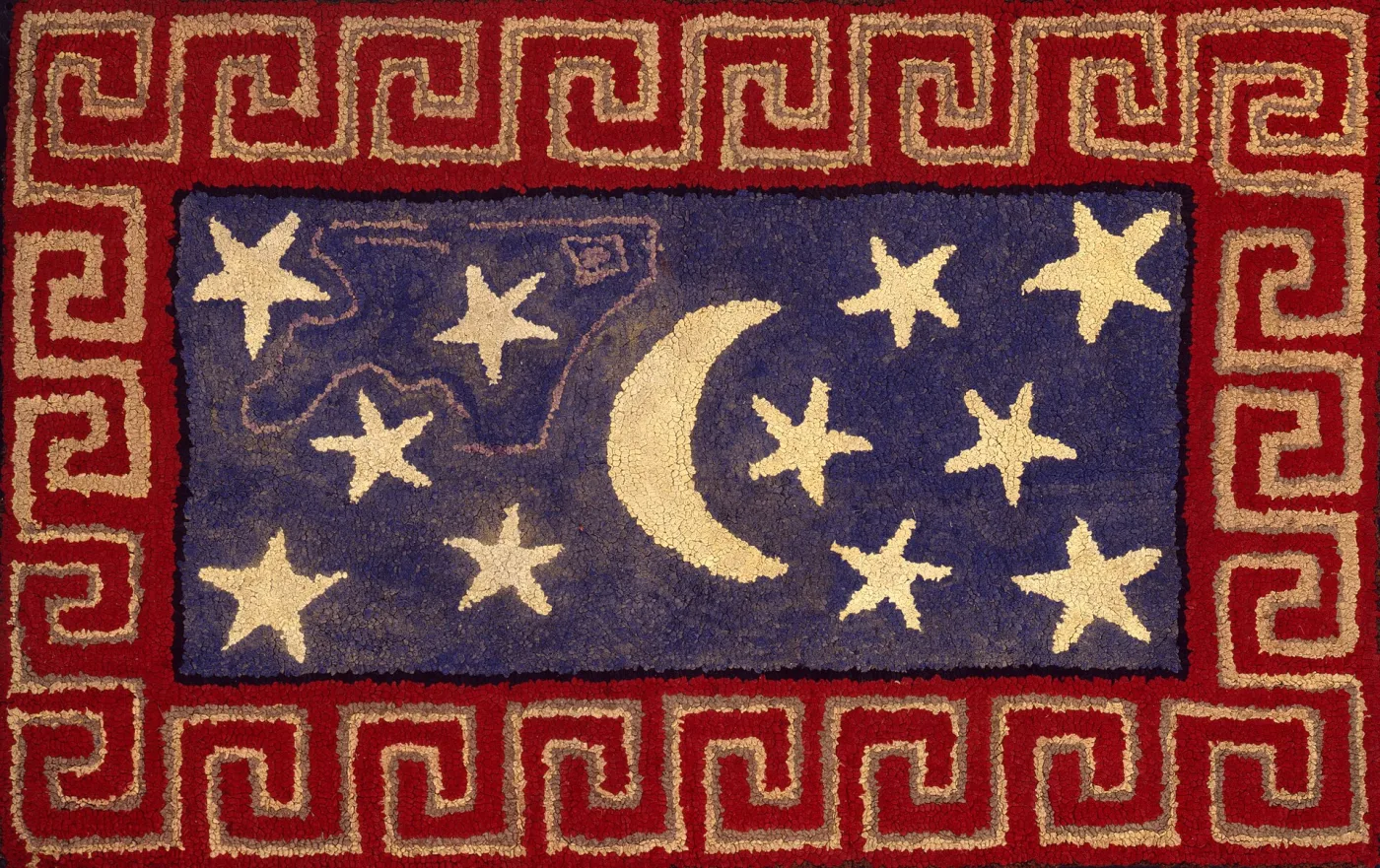
Dating hooked rugs involves examining foundation materials, dye characteristics, and design elements. Early examples used hand-dyed wool fabric strips on linen foundations, while later commercial production introduced stenciled patterns and synthetic dyes. Wear patterns should be consistent with age and use, with artificial distressing sometimes evident on reproductions.
Woven coverlets, produced on large looms often by professional weavers, include jacquard coverlets with elaborate woven patterns and sometimes incorporate maker's names and dates into the design. These inscriptions help authenticate pieces and provide documentation. Regional weaving traditions show characteristic patterns and color combinations that aid identification.
Weathervanes and Trade Signs
Weathervanes and trade signs represent quintessentially American folk art forms, combining functional purposes with sculptural expression. These objects have become some of the most valuable categories in folk art collecting.
Early Handcrafted Weathervanes
The earliest American weathervanes were individually handcrafted by blacksmiths, tinsmiths, and other craftsmen, typically from copper sheet metal. These one-of-a-kind examples show evidence of their hand construction, including hammer marks, soldered seams, and individually formed details. Subjects include traditional forms like roosters, horses, and arrows, as well as more unusual subjects reflecting individual creativity or specific building purposes.
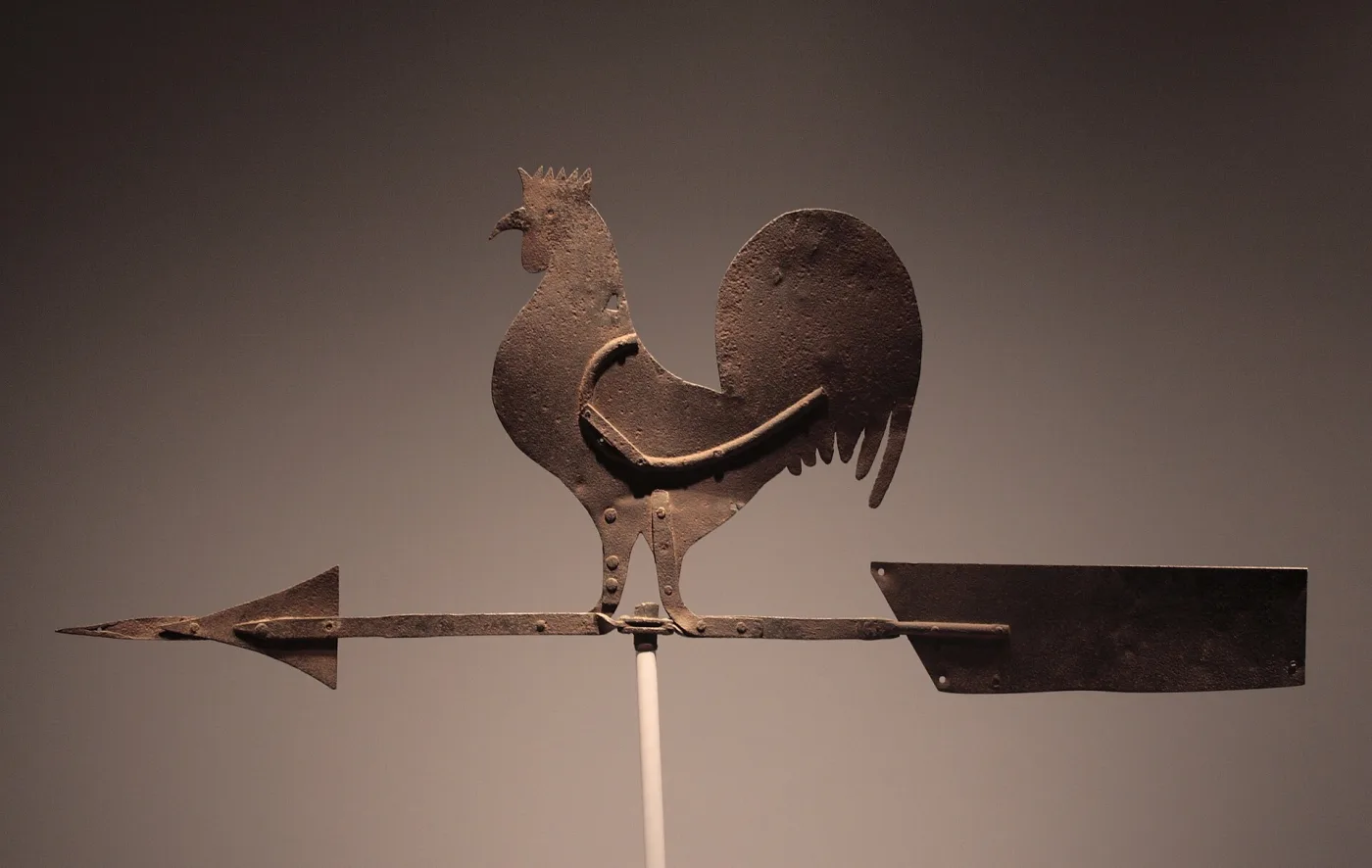
Authenticating early weathervanes requires examining construction methods, patina development, and evidence of actual weather exposure. Original vanes develop characteristic verdigris patina on copper, with wear patterns from wind movement and weather exposure. Repairs from their working life, including replaced directionals or reinforced joints, add to authenticity rather than detracting from value, as they document the vane's functional history.
Molded Commercial Weathervanes
By the mid-19th century, companies like J. Howard & Co., J.W. Fiske, L.W. Cushing & Sons, and others began producing molded copper weathervanes in standardized designs. These vanes were created using molds to form hollow copper bodies, then finished by hand with details added by skilled craftsmen. While produced in quantity, each vane still required individual finishing, resulting in variations between examples.
Commercial weathervanes are often identifiable by their forms, which appear in manufacturers' catalogs. However, rarity varies significantly even among commercial examples, with some forms produced in large numbers while others were made in limited quantities. Size, subject matter, rarity, condition, and surface quality all affect values. The finest commercial weathervanes rival handmade examples in artistic quality and market value.
Trade Signs and Business Advertising
Three-dimensional trade signs carved from wood or formed from metal advertised businesses through visual symbols. Boot-shaped signs indicated cobblers, eyeglass-shaped signs marked opticians, and mortar and pestle forms identified apothecaries. These functional sculptures combine folk art aesthetics with commercial purpose, creating objects that transcend their original advertising function. For a detailed look at all major categories, see our antique trade signs and store figures identification guide.
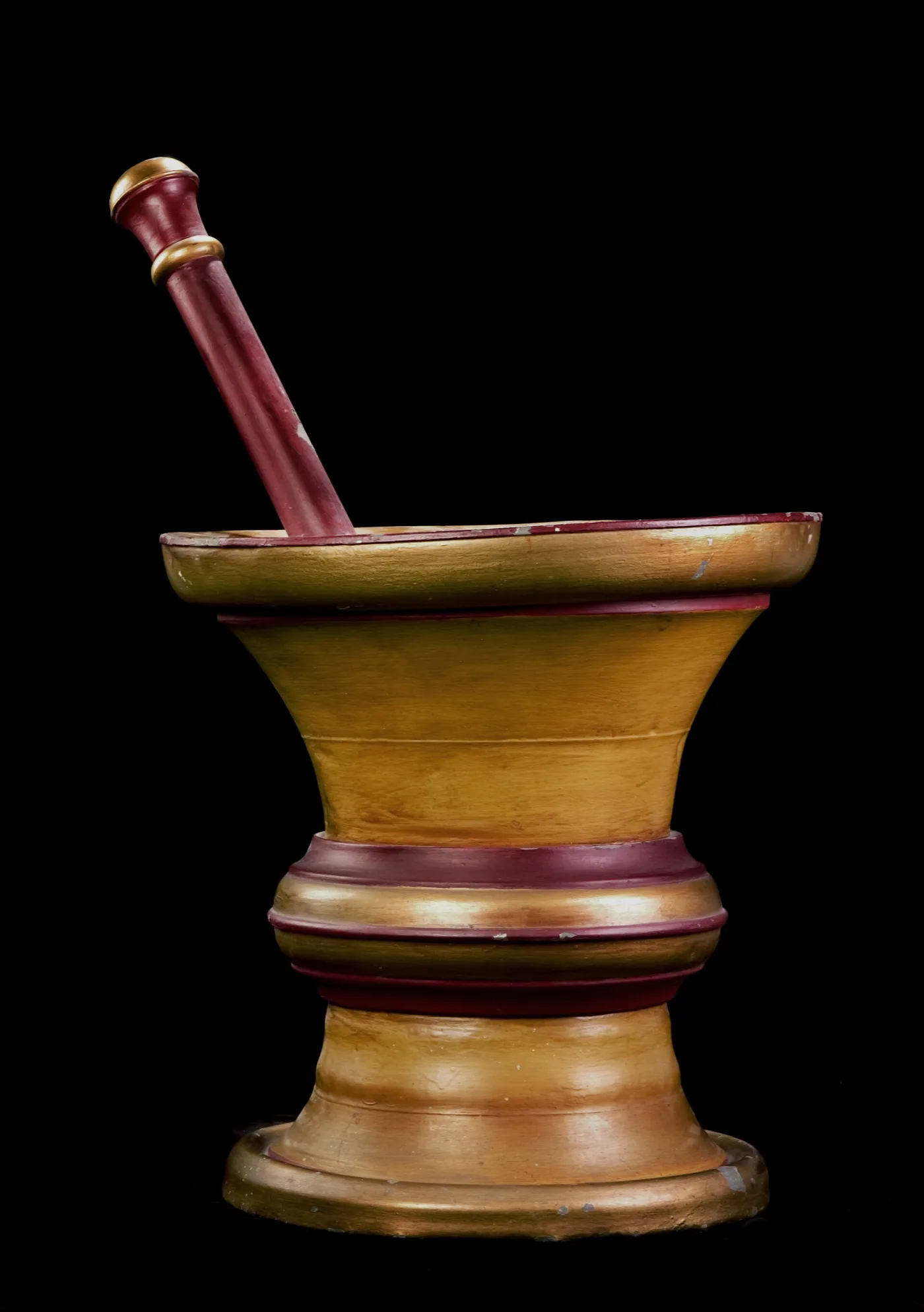
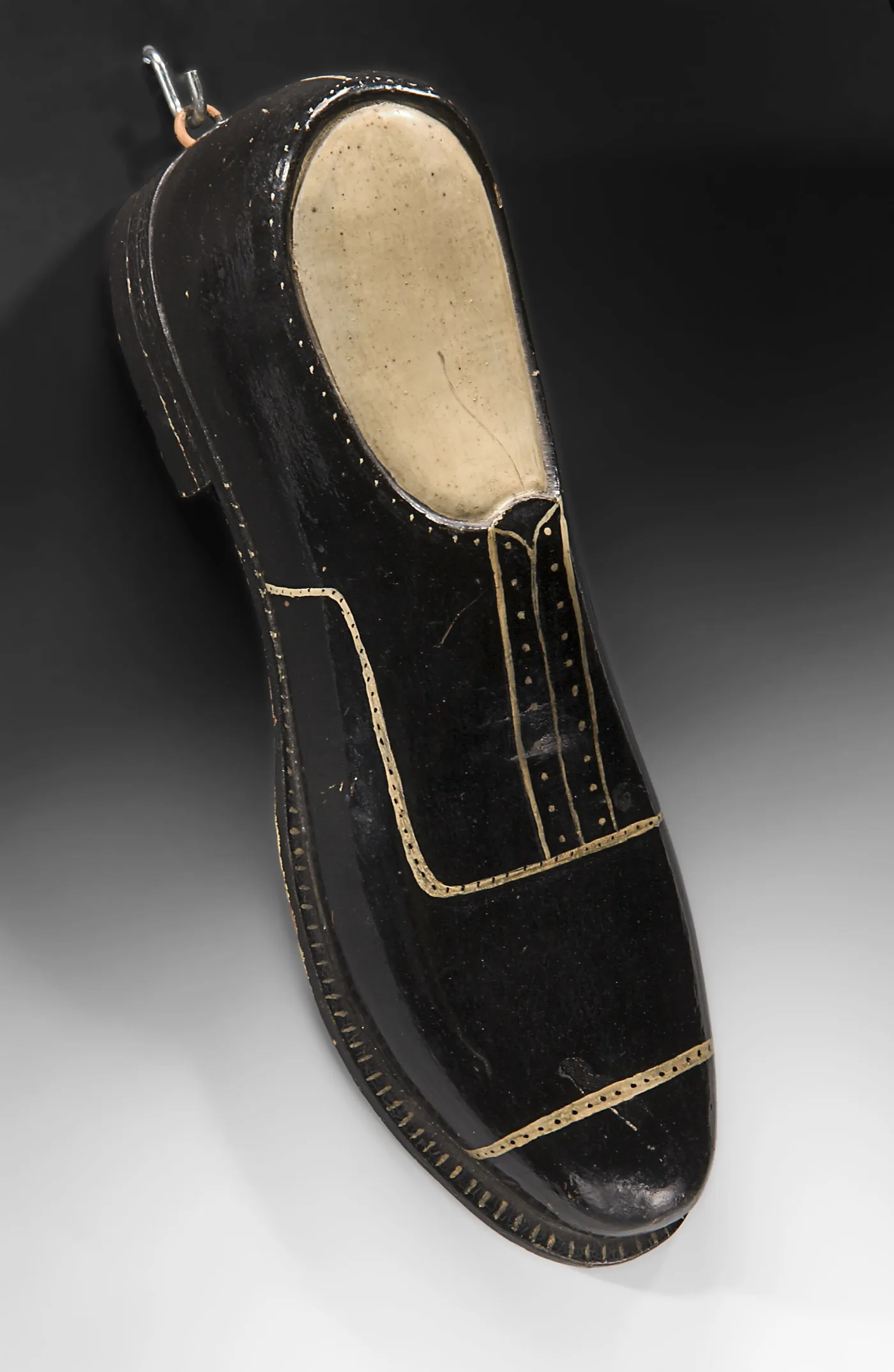
Cigar store figures, the most famous category of trade figures, advertised tobacco shops through carved wooden Indians, Turks, blackamoors, and other figures. The finest examples, carved by skilled craftsmen like Samuel Robb, Thomas Brooks, or Julius Melchers, display remarkable sculptural quality. Lesser examples range from crude carvings to competent commercial work. Size, carving quality, original paint, and documented history all significantly affect values in this highly collected category.
Flat Trade Signs and Tavern Signs
Two-dimensional painted trade signs and tavern signs represent accessible categories for folk art collectors. These signs range from simple painted boards to elaborate compositions with pictorial imagery. Tavern signs, particularly those with unusual imagery or exceptional painting quality, are highly sought after. Original wrought iron hangers and documented history add interest and value.
Painted trade signs for specific businesses, particularly those with unusual names or imagery, attract collector interest. Signs advertising obsolete trades or professions have particular historical interest. As with all folk art, original paint surfaces and documented provenance significantly enhance value and collectibility.
Decoys, Gameboards, and Sporting Folk Art
Sporting folk art, particularly duck decoys and painted gameboards, represents a highly developed collecting field with sophisticated authentication criteria and strong market values.
Duck Decoys and Wildfowl Carving
Carved wooden duck decoys represent one of the most refined American folk art forms, with the finest examples combining functional efficiency with sculptural beauty. Regional carving styles reflect local duck species, hunting methods, and individual carver characteristics. Chesapeake Bay decoys differ from Long Island examples, which differ from Illinois River carvings in head position, body form, paint patterns, and construction methods.
Authenticating decoys requires understanding individual carver styles, regional characteristics, and construction methods. Known carvers like Elmer Crowell, Charles "Shang" Wheeler, Lothrop Holmes, or Nathan Cobb created work identifiable by their distinctive approaches to form, paint, and construction. However, many excellent decoys were carved by unidentified makers, with quality and regional characteristics determining value in absence of specific attribution.
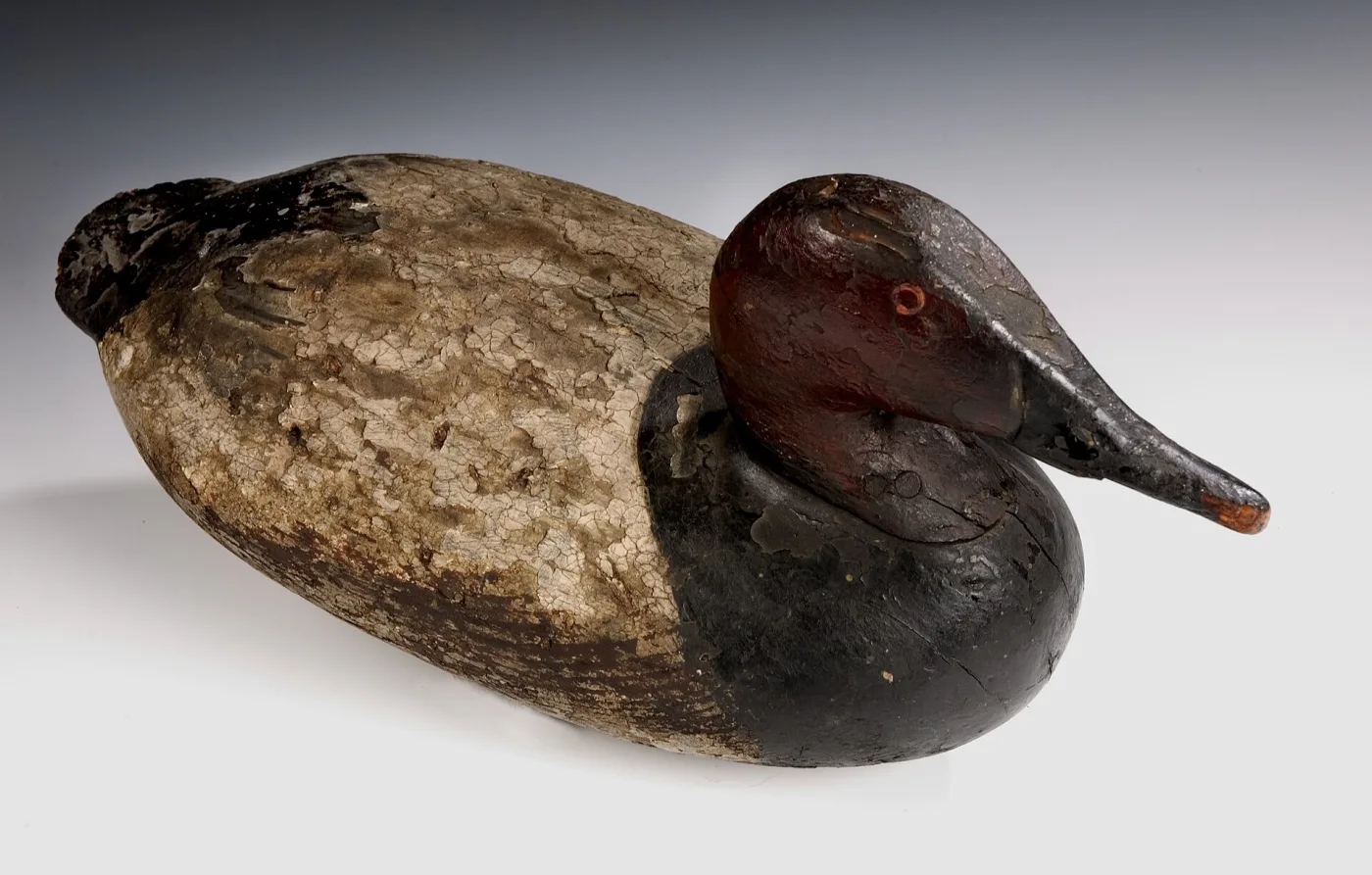
Evidence of actual hunting use, including wear from water exposure, shot marks, and period repairs, authenticates decoys as working tools rather than decorative carvings. Original paint, even if worn, adds significant value compared to repainted examples. Paint wear should show consistent patterns from water exposure and handling. Brand marks, carved initials, or documented provenance from known hunting locations support authentication.
Shorebird Decoys and Fish Decoys
Shorebird decoys, used to attract plovers, curlews, and other species, represent a specialized collecting category. These decoys are typically smaller than duck decoys and often mounted on sticks for placement in sand or marsh. The finest examples show graceful form and subtle paint decoration. Since shorebird hunting was largely prohibited by the early 20th century, authentic shorebird decoys must predate this period.
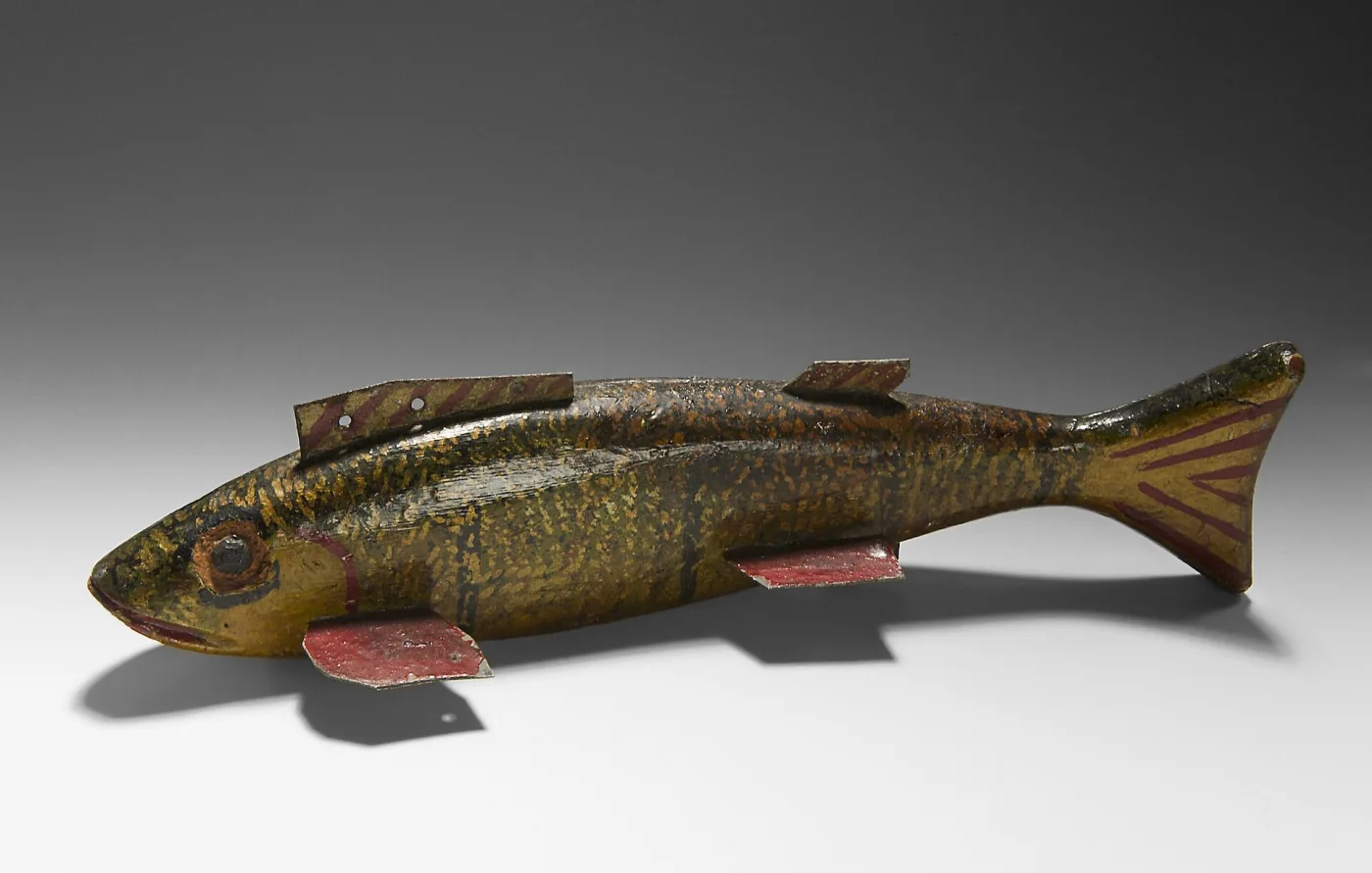
Fish decoys, used for ice fishing through holes in frozen lakes, represent a regional folk art form particularly associated with Michigan and the upper Midwest. These underwater decoys were designed to attract predatory fish through their swimming motion. Fish decoy carving ranges from simple functional forms to elaborate decorative pieces. Original paint and evidence of actual use help authenticate these specialized decoys.
Gameboards and Gaming Pieces
Painted gameboards, particularly those with bold geometric designs or unusual decorative elements, are highly valued folk art objects. Checkerboard and parcheesi boards with original paint in striking color combinations attract strong collector interest. The finest examples show sophisticated design sense and exceptional surface quality. Some gameboards are double-sided, with different games on each face.
Dating gameboards involves examining paint characteristics, wood types, construction methods, and wear patterns. Gameboards saw actual use, so wear should be consistent with age and function. Excessive or artificial-looking wear may indicate reproductions. Original paint in unusual color combinations or with additional decorative elements like borders, corner motifs, or maker's information adds significant value.
Fishing and Hunting Folk Art
Beyond decoys, sporting folk art includes carved and painted fish, trophy mounts with folk art characteristics, fishing lures, powder horns with engraved decoration, and various objects related to hunting and fishing. Carved fish, particularly those made as trade signs, weathervanes, or purely decorative objects, show the same folk art qualities as other carving categories. The finest examples combine accurate representation with artistic interpretation and quality carving.
Engraved powder horns represent a specialized folk art form, with scrimshaw-like engraving depicting maps, hunting scenes, ownership information, and decorative motifs. Military powder horns from the Revolutionary War and French and Indian War periods are particularly valued. Authentication requires examining engraving style, horn condition, and historical plausibility of any dated or inscribed information.
Religious and Fraternal Folk Art
Religious and fraternal folk art encompasses objects created for spiritual devotion, fraternal organizations, and community ceremonial purposes. These pieces often carry deep symbolic meaning and represent important cultural traditions.
Religious Folk Paintings and Prints
Religious folk art paintings include devotional images, biblical scenes, memorial mourning pictures, and fraktur birth and baptismal certificates. Pennsylvania German fraktur, with elaborate hand-drawn and painted decoration incorporating text and imagery, represents one of the most refined American religious folk art traditions. These documents were created by schoolmasters and itinerant artists, with the finest examples showing sophisticated design and execution.
Retablos, painted devotional images on tin from Mexico and the American Southwest, represent another important religious folk art tradition. These small paintings typically depict saints, the Virgin Mary, or Christ, and were used in home altars. Dating retablos involves examining paint characteristics, tin substrate, and iconographic style. Colonial-era examples differ from later 19th-century work in artistic approach and materials.
Carved Religious Figures and Objects
Carved religious folk sculpture includes crucifixes, saints' figures (santos), Madonna and Child representations, and decorative church elements. New Mexican santos, carved from cottonwood root or other local woods, represent an important regional tradition. These figures were created for use in churches and home chapels, with makers ranging from skilled santeros to relatively crude carvers.
Authenticating religious carvings requires understanding iconographic traditions, regional stylistic characteristics, and construction methods. Original polychrome paint adds significant value, though many religious figures were repainted during their working life as devotional objects. Evidence of devotional use, including candlewax residue, wear from handling, or attachment of ex-voto offerings, supports authenticity. Documenting provenance from churches or families with long regional histories strengthens attribution.
Fraternal Organization Objects
Fraternal organizations including the Masons, Odd Fellows, and others commissioned folk art for ceremonial purposes and lodge decoration. Painted banners, carved symbols, ceremonial staffs, and other objects often display symbolic imagery specific to each organization. Understanding this symbolism helps identify objects and assess their significance within fraternal traditions.
Painted lodge signs and transparencies, used in ceremonial contexts and for advertising meetings, represent an accessible collecting category. These objects range from simple painted boards to elaborate compositions with sophisticated symbolism. Masonic imagery including the square and compass, all-seeing eye, and various architectural symbols appears on numerous folk art objects. Odd Fellows symbolism includes three-link chains, hourglasses, and other mortality-related imagery.
Gravestone Carving and Memorial Art
Early American gravestones, particularly those from New England with characteristic winged death's heads, soul effigies, and symbolic carving, represent an important folk art tradition. While gravestones themselves remain in cemeteries, rubbings, photographs, and occasional loose stones or fragments appear in collections. The carving traditions vary by region and period, with identifiable carvers and workshops serving specific areas.
Memorial paintings, both on canvas and as needlework pictures, commemorate deceased family members through imagery of tombs, weeping willows, mourning figures, and memorial verses. These pieces, particularly popular in the early 19th century, range from simple compositions to elaborate symbolic arrangements. The finest examples show sophisticated design and execution, with personal details including names, dates, and family relationships adding historical interest.
Dating Folk Art: Age Indicators and Analysis
Accurately dating folk art pieces requires analyzing multiple factors including materials, construction methods, stylistic elements, and physical characteristics. No single factor definitively dates an object, but convergent evidence from multiple sources provides reliable age assessment.
Wood and Construction Analysis
Wood characteristics provide important dating evidence. Hand-sawn lumber shows different surface marks than circular-saw or modern power-saw cuts. Pit-sawn boards display characteristic parallel saw marks and irregular thickness. Early circular-saw marks appear as curved arcs, while modern circular saws leave different patterns. The presence of square-cut nails (used before about 1790) or cut nails (about 1790-1890) helps establish age ranges for furniture and wooden objects.
Joinery methods evolved over time, with specific joint types characteristic of particular periods. Dovetail joints changed from hand-cut with irregular spacing to machine-cut with uniform precision. Mortise and tenon joints show evidence of their construction through tool marks and fit. Wooden pegs used in joint construction indicate pre-industrial or rural manufacture. Machine-made screws with even threads differ from hand-filed early screws with irregular threads.
Paint and Surface Analysis
Paint composition and aging characteristics provide crucial dating evidence. Certain pigments were available only after specific dates, including chrome yellow (after about 1820), synthetic ultramarine blue (after 1828), and various aniline dyes (after 1856). Scientific analysis can identify pigment composition, though this level of investigation is typically reserved for high-value pieces or museum authentication.
Paint aging creates characteristic craquelure patterns, oxidation, and color changes that are difficult to replicate convincingly. Old paint becomes increasingly hard and brittle, showing fine crackle patterns from decades of expansion and contraction. The depth and character of this crackling differs from artificial craquelure created by baking or chemical treatment. Multiple paint layers, revealed through chips or deliberate cross-sections, document an object's history and help verify age.
Wear Patterns and Patina
Authentic age creates wear patterns consistent with an object's form and function. Furniture shows wear where it was actually used, with edges rounded by handling, paint worn from frequent contact areas, and surfaces showing accumulated grime in recesses. Artificial wear often appears too uniform or occurs in illogical locations. Examining an object carefully for consistent, logical wear patterns helps distinguish old pieces from artificially aged reproductions.
Patina on wood, metal, and painted surfaces develops naturally over decades of exposure to air, light, and handling. Wood darkens and develops a surface character unlike fresh wood. Metal oxidizes in characteristic patterns. Painted surfaces show subtle color changes and surface alterations. This patina cannot be perfectly replicated, though aging techniques can create superficially similar effects. Experience examining authentic aged surfaces trains the eye to recognize genuine patina.
Style and Design Dating
Stylistic characteristics help date folk art, though style alone can be misleading since folk artists often worked in conservative traditions, continuing earlier styles long after they fell from fashion in academic art. Folk portraits from the 1840s may show costume and compositional elements from decades earlier. However, certain style elements do correspond to specific periods and can support dating evidence from materials and construction.
Costume and accessory details in portraits provide dating clues, as do furniture styles, architectural elements in backgrounds, and other depicted objects. Comparing these elements with documented examples from specific periods helps narrow date ranges. However, always correlate style evidence with physical examination of materials and construction to avoid dating errors.
Documented Dates and Inscriptions
Some folk art pieces include dates in their decoration, particularly fraktur, samplers, furniture, and painted objects. These dates usually indicate creation date or commemorate events like births or marriages. However, dates must be verified as original rather than later additions. Examining ink or paint characteristics, wear patterns, and consistency with other object features helps verify date authenticity.
Maker's signatures, ownership names, or location information provide valuable documentation when authentic. Cross-referencing these names with historical records, census data, and genealogical information can verify information and provide collecting context. However, the presence of signatures alone does not guarantee authenticity, as known makers' work is sometimes forged by adding spurious signatures to unsigned pieces or outright fakes.
Overwhelmed by Dating Complexity?
Dating folk art requires analyzing wood types, paint composition, tool marks, and dozens of other factors. The Antique Identifier app uses AI to instantly analyze these elements and provide accurate age estimates based on visual characteristics. Get quick insights on potential age ranges while you're at estate sales, antique shows, or auctions.
Authentication and Detecting Reproductions
The popularity and value of folk art has unfortunately created a market for reproductions, fakes, and married pieces combining old and new elements. Developing authentication skills protects collectors from costly mistakes and ensures collection integrity.
Understanding the Reproduction Market
Folk art reproductions range from honest decorative pieces clearly sold as new to deliberate fakes intended to deceive buyers. Some reproductions were created decades ago and have acquired their own age, making them more challenging to identify than recent products. Understanding makers of reproduction folk art, including companies and individual artisans, helps recognize their work when it appears misrepresented as authentic antiques.
Certain folk art forms are more frequently reproduced than others, particularly high-value categories like weathervanes, decoys, trade figures, and painted furniture. Collectors should approach these categories with particular caution, seeking pieces with strong provenance or expert authentication. Less commercially valuable categories may have fewer reproductions but still require careful evaluation.
Common Reproduction Indicators
Modern materials immediately identify reproductions. Plywood, particle board, and other composite materials did not exist in the 19th century. Modern hardware including Phillips-head screws, wire nails used in supposedly 18th-century pieces, or contemporary hinges indicate recent manufacture. Synthetic paints and stains show different characteristics than period materials under magnification or ultraviolet light.
Tool marks should be consistent with period manufacture. Modern power tool marks on supposedly hand-crafted pieces indicate problems. Uniform machine-cut dovetails on allegedly 18th-century furniture suggest reproduction. However, be aware that legitimate old pieces may have been repaired using modern tools and materials, so modern elements alone don't prove an entire piece is fake without examining all evidence.
Paint and Surface Red Flags
Artificially aged paint surfaces show certain telltale characteristics. Crackle that's too uniform or too deep may indicate baking or chemical aging rather than natural development. Paint applied over artificial dirt or crackle appears different than paint that aged naturally over original grime. Examining surfaces under magnification and in raking light reveals these inconsistencies.
Recently painted surfaces often show overly bright colors, even when dull pigments are used, because they lack the oxidation and surface changes of genuinely old paint. Paint edges should show appropriate wear and deterioration patterns. Paint in protected areas like undersides or interior surfaces should differ from exposed areas, showing less fading and wear. Consistency across all surfaces may indicate recent, uniform painting rather than decades of differential exposure.
Structural and Construction Analysis
Examining construction details reveals authentication clues. Joints should show appropriate techniques for the purported age. Wood shrinkage over decades creates characteristic gaps, particularly in cross-grain joints. Fresh wood shows none of this shrinkage. Back boards on furniture, drawer construction, and other structural elements should be consistent with period manufacture.
Weathervanes should show evidence of actual weather exposure if claimed to be original working examples. Copper should have verdigris patina developed over decades, not artificial chemical patination. Directional damage from wind movement, repairs from working life, and mounting evidence consistent with rooftop installation all support authenticity. Mint condition weathervanes supposedly from the 19th century should be approached with skepticism unless provenance explains their pristine state.
The Role of Provenance
Strong provenance significantly supports authentication by documenting an object's history. Pieces from old collections formed before current high values existed are less likely to be modern fakes. Published history in auction catalogs, collection catalogs, or academic studies provides documentation. Photographs showing pieces in early collections or original locations support authenticity.
However, provenance can be faked, including false collection labels, spurious documentation, and deliberately misleading histories. Verify provenance claims through independent research when possible. Understand that lack of provenance doesn't prove an object is fake, but strong provenance significantly increases confidence in authenticity, particularly for high-value pieces where faking is economically motivated.
When to Seek Expert Opinion
For significant purchases, particularly pieces valued above several thousand dollars, seeking expert opinion is prudent. Recognized authorities in specific folk art categories can provide authentication opinions based on extensive experience with authentic examples. Some experts offer written authentication certificates, though understand that even experts can be fooled by sophisticated fakes.
Scientific analysis including wood species identification, paint pigment analysis, carbon dating, and other technical methods can support authentication of high-value pieces. These analyses are expensive but may be worthwhile for major purchases. Museums, auction houses, and specialized dealers can often recommend qualified experts and analytical services for specific object types.
Protect Yourself from Fakes and Reproductions
With sophisticated reproductions flooding the market, authenticating folk art has never been more challenging. The Antique Identifier app helps you spot red flags instantly by analyzing construction details, paint characteristics, and aging patterns. Scan pieces on the spot before making expensive purchases at auctions or antique shops.
Condition Assessment and Restoration Considerations
Understanding condition issues and their impact on value helps collectors make informed decisions. Folk art condition assessment differs somewhat from fine art evaluation, with certain types of wear and damage accepted as evidence of authentic age and use.
Evaluating Original Surface Condition
Original painted surfaces, even if worn, typically add more value than refinished or repainted pieces. Paint wear should show logical patterns consistent with use and age. Edges, handles, and high-traffic areas naturally show more wear than protected surfaces. Complete paint loss in some areas may be acceptable if remaining original paint is well-preserved. The character and patina of original surfaces contribute significantly to folk art's aesthetic appeal and historical authenticity.
Furniture and objects with multiple layers of old paint sometimes have later layers removed to reveal earlier decoration. While this reveals historical information and may uncover superior decoration, it removes evidence of the object's use history. Collectors should weigh the aesthetic improvement against the loss of historical integrity when evaluating pieces with paint removal.
Structural Condition Issues
Structural soundness varies in importance depending on object type and intended use. Decorative objects like weathervanes or carvings can have some structural issues without dramatically affecting value if properly stabilized. Furniture intended for use requires structural integrity for safety and function. Common structural problems include loose joints, cracked wood, missing elements, and wood deterioration from insect damage or rot.
Period repairs, made during an object's working life, generally add to rather than detract from authenticity and historical interest. These repairs document use history and demonstrate that objects were valued enough to repair rather than discard. Modern repairs should be reversible and compatible with original materials when possible. Overly aggressive or historically inappropriate repairs may reduce value.
Restoration Ethics and Impact on Value
The folk art collecting community has evolved increasingly conservative attitudes toward restoration. Minimal intervention to stabilize and preserve objects is generally preferred to aggressive restoration that removes evidence of age and use. Honest condition descriptions acknowledging issues are valued over heavily restored pieces presented as original.
Appropriate restoration includes consolidating flaking paint, stabilizing loose joints, and protecting surfaces from further deterioration. Inappropriate restoration includes overpainting original surfaces, replacing significant original elements, or removing authentic aged surfaces. Some types of restoration are more accepted in certain folk art categories than others, with collectors should research standards in specific collecting fields.
Disclosure of restoration is essential for ethical dealing. Significant restoration should be documented and disclosed to future buyers. Undisclosed restoration discovered later can destroy trust and may constitute fraud in commercial transactions. Conservation reports from qualified conservators document restoration work and provide valuable records for significant pieces.
Condition Impact on Market Value
Condition significantly affects folk art values, though its impact varies by category and the severity of issues. Rare and important pieces retain significant value even with condition problems, while common examples require excellent condition to command strong prices. For some categories like weathervanes, surface quality and gilding remnants are particularly important. For other categories like decoys, evidence of use through wear and shot marks may actually enhance value by documenting authenticity.
Understanding condition standards in specific collecting fields helps evaluate whether pieces are appropriately priced given their condition. Auction records, dealer offerings, and museum examples provide comparison standards. Condition reports from auction houses describe specific issues and provide useful terminology for discussing condition objectively.
Provenance, Documentation, and Research
Documenting folk art provenance and conducting research adds both historical interest and market value to pieces. Understanding research resources and documentation methods helps collectors build knowledge and support authentication.
What Constitutes Provenance
Provenance encompasses an object's ownership history, collection history, exhibition records, and publication history. Strong provenance includes documentation from previous owners, collection labels, auction records, exhibition catalogs, and scholarly publications. Even partial provenance, such as a single identified previous owner or appearance in one auction, adds to an object's documented history.
Early collection history is particularly valuable, as pieces from collections formed in the early to mid-20th century, before current high values existed, are less likely to be modern fakes. Objects from important collections carry historical interest beyond their intrinsic merit. Publication in reference books or exhibition in museum shows documents significance and provides authentication support.
Research Resources for Folk Art
Numerous resources support folk art research. Museum collections, particularly institutions like the American Folk Art Museum, Winterthur, Shelburne Museum, and Abby Aldrich Rockefeller Folk Art Museum, provide access to documented examples through online databases, publications, and in-person study. Regional historical societies and museums often have local folk art collections relevant to research.
Auction archives document prices, provenance, and provide images of folk art pieces. Major auction houses maintain online archives of past sales. Specialized folk art auctions from houses like Skinner, Sotheby's, Christie's, and regional auctioneers provide comparison examples and market information. Reference books and exhibition catalogs illustrate documented pieces and provide scholarly research on specific folk art categories.
Maker Attribution and Research
Attributing folk art to specific makers remains challenging since most pieces were unsigned and created by unknown artists. However, certain categories have been extensively studied, with individual hands or workshops identified through stylistic analysis. Decoy carvers, for instance, have been studied intensively, with regional styles and individual carvers often identifiable to experts.
Researching signed or dated pieces may reveal information about makers through census records, city directories, genealogical databases, and local histories. Even basic biographical information about a maker adds historical interest and collecting context. Some folk art makers, like limner Ammi Phillips or weathervane maker Cushing & White, are well documented, while others remain mysterious despite extensive research.
Documenting Your Collection
Collectors should maintain detailed records of their pieces including acquisition information, provenance, condition reports, authentication opinions, and insurance documentation. Photographs from multiple angles under good lighting document current condition. Measurements, materials descriptions, and condition notes provide reference information. Storing this documentation securely, preferably with backup copies in separate locations, protects information in case of loss or damage.
Recording purchase information including source, date, and price creates financial records and provenance documentation for future sale or estate purposes. Retaining any documentation that came with pieces, including auction catalog pages, dealer descriptions, or previous owner information, maintains provenance chain. This documentation becomes part of an object's history and should be passed to future owners.
Contributing to Folk Art Scholarship
Private collectors play important roles in folk art scholarship by making collections available for study, supporting publications, lending to exhibitions, and sharing information. Undocumented pieces in private collections may represent unknown maker's work or fill gaps in understanding of regional traditions. Collectors who share information contribute to growing knowledge while also establishing documentation that benefits their own collections.
Working with scholars, curators, and other collectors builds knowledge networks and enhances collecting enjoyment. Folk art collector organizations, symposiums, and publications provide opportunities for learning and sharing. Many significant folk art discoveries and attributions have resulted from collector-scholar collaboration.
Market Trends and Valuation Factors
The folk art market has evolved significantly over the past century, from a niche interest to a well-established collecting field with sophisticated markets and substantial values for the finest pieces. Understanding current market trends helps collectors make informed acquisition and selling decisions.
Current Market Overview
The folk art market has seen tremendous growth since the early 20th century when collecting began in earnest. Recent years have shown continued strong interest in the best examples, particularly pieces with exceptional visual appeal, rarity, and solid provenance. However, market conditions vary significantly by category, quality level, and specific characteristics. Understanding these nuances helps collectors navigate the market effectively.
The market has become increasingly sophisticated, with collectors and dealers more knowledgeable about authentication, condition issues, and appropriate pricing. Internet access to information, auction records, and dealer inventory has made market transparency greater than ever before, generally benefiting informed collectors while making it harder for dealers to profit from information asymmetry.
Factors Affecting Folk Art Values
Multiple factors determine folk art values, with quality, rarity, condition, and provenance being primary considerations. Visual appeal matters enormously, with the most graphically striking pieces commanding premium prices regardless of other factors. Rarity affects values, but extremely rare examples of minor object types may sell for less than more common examples of highly desired categories.
Provenance from important collections can significantly enhance values by associating pieces with respected collectors and providing authentication support. Publication in reference books or exhibition in museum shows documents significance and often increases values. Regional interest affects prices, with pieces having local connections sometimes commanding premiums in those markets. Size considerations vary by category, with some folk art forms more valuable in larger examples while others prize compact size.
Category-Specific Market Trends
Different folk art categories show varying market strength. Weathervanes remain strong, particularly fine molded copper examples and rare forms. The finest examples routinely exceed six figures, while more common forms have stabilized at accessible levels. Decoy markets show sophisticated differentiation, with known carver examples, particularly from celebrated makers, commanding strong prices while common working decoys remain affordable.
Folk paintings show wide value ranges depending on quality, subject matter, and appeal. The finest portraits with strong folk art aesthetic, exceptional condition, and good provenance bring substantial sums. Genre scenes, landscapes, and still lifes vary widely based on quality and visual appeal. Trade signs and figures remain strong for the finest examples, particularly those with original paint and documented history.
Textile markets including quilts and samplers show particular emphasis on visual appeal, with the most graphically striking examples commanding premiums. African American quilts, particularly those with improvisational design and exceptional aesthetic qualities, have gained increasing recognition and market strength. The finest samplers, particularly those with unusual imagery or exceptional needlework, remain strong.
Emerging Trends and Future Outlook
Folk art collecting has become increasingly sophisticated, with collectors seeking the best examples rather than merely representative pieces. This trend toward quality over quantity benefits dealers and collectors of superior pieces while creating softer markets for common or damaged examples. The importance of provenance and authentication has increased as reproduction problems have grown, making documented pieces increasingly valuable relative to examples without history.
Growing interest in diverse voices within folk art traditions, particularly work by women, African Americans, and other historically underrepresented groups, represents an important and positive trend. This recognition both corrects historical oversights and brings new collectors into the field. Regional folk art traditions beyond the well-studied Northeast and Pennsylvania continue gaining recognition and market development.
The folk art market faces generational challenges as some traditional collectors age without equivalent replacement by younger collectors in all categories. However, strong visual appeal and cultural significance ensure continued interest in the finest pieces. The market appears to be differentiating increasingly between museum-quality masterpieces and decorative examples, with the gap between these categories widening in terms of values.
Building a Folk Art Collection
Successful folk art collecting requires developing knowledge, defining collecting focus, building relationships with dealers and other collectors, and making thoughtful acquisition decisions. These strategies help collectors build meaningful collections aligned with their interests and resources.
Developing Expertise
Knowledge forms the foundation of successful collecting. Study museum collections through visits and online resources, comparing documented examples to develop your eye for quality, authenticity, and condition. Read reference books and exhibition catalogs covering folk art generally and your specific collecting interests. Attend folk art shows, auctions, and dealer exhibitions to see pieces firsthand and learn from experienced dealers and collectors.
Handle pieces whenever possible, as tactile examination reveals condition details and construction characteristics not visible in photographs. Join collector organizations, attend symposiums, and participate in online forums to learn from others and share information. Developing expertise takes time but pays dividends through better acquisition decisions and greater collecting enjoyment.
Defining Collecting Focus
Most successful collectors develop focus rather than collecting folk art generally, though collecting approaches vary. Some focus on specific object types like weathervanes, decoys, or samplers. Others collect regionally, focusing on folk art from specific areas. Thematic collecting around subjects like patriotic imagery, animals, or religious objects provides another approach. Developing focus allows deeper knowledge and creates cohesive collections with clear identity.
Budget considerations naturally influence collecting focus, with some categories accessible at modest levels while others require substantial resources even for entry-level pieces. Focusing on one or several related categories allows building knowledge depth that improves collecting success. However, remaining open to exceptional pieces outside defined focus prevents missing opportunities, as the best collectors balance focus with flexibility.
Building Dealer and Collector Relationships
Developing relationships with knowledgeable dealers provides access to better pieces, expert advice, and market information. Reputable dealers value long-term relationships with collectors and often offer first opportunity on new acquisitions to established clients. Be honest with dealers about your interests, budget, and knowledge level. Most dealers enjoy working with serious collectors and will share information and expertise.
Fellow collectors can become valuable resources and friends, sharing information, offering pieces from their collections, and providing authentication assistance. Collector networks formed through organizations, shows, and online forums create communities that enhance collecting enjoyment. Attending folk art auctions, even when not actively bidding, provides opportunities to meet dealers and collectors while seeing pieces firsthand.
Acquisition Strategies
Buy the best examples you can afford rather than accumulating numerous mediocre pieces. Quality matters more than quantity in building collections that retain value and provide aesthetic satisfaction. Original condition generally trumps restored condition for serious collecting, though appropriate conservation to stabilize and preserve pieces is acceptable. Be patient and selective, waiting for the right pieces rather than buying impulsively.
Diversify acquisition sources between dealers, auctions, shows, and private purchases to access different inventory and price levels. Dealers often provide authentication support and return privileges that auctions typically do not, justifying dealer premiums for some purchases. Auction buying requires greater expertise and involves more risk but can yield bargains and access to important collections being dispersed.
Trust your eye while also seeking expert opinions for significant purchases. If something doesn't feel right about a piece, whether regarding authenticity, condition, or value, it's better to pass than to make a questionable purchase. The folk art market continually offers new opportunities, so patience serves collectors well.
Care, Display, and Preservation
Proper care and display preserve folk art for future generations while allowing current enjoyment. Understanding conservation principles helps collectors make appropriate decisions about environment, handling, and interventive treatment.
Environmental Considerations
Light, particularly ultraviolet light, damages many folk art materials including paint, textiles, paper, and wood. Display folk art away from direct sunlight and strong artificial light when possible. UV-filtering glazing on framed pieces and UV filters on lighting protect against ultraviolet damage. Consider rotating displayed pieces periodically, allowing rest periods in dark storage to reduce cumulative light exposure.
Temperature and humidity extremes stress materials, causing paint to crack, wood to split, and metal to corrode. Maintain stable conditions avoiding dramatic fluctuations. While museum-level environmental control may be impractical for home collections, avoiding storage in attics, basements, or other areas with extreme or fluctuating conditions protects pieces. Humidity levels between 40-55% generally work well for mixed collections of wood, paint, and metal.
Handling and Display
Handle folk art carefully, supporting weight appropriately and avoiding stress on fragile elements. Wear clean cotton gloves when handling pieces with vulnerable surfaces, though gloves reduce tactile sensitivity and may be inappropriate for some objects. Support objects from below rather than lifting by protruding elements or fragile appendages.
Display systems should support pieces securely without causing stress or damage. Wall-mounted pieces require appropriate hanging systems that distribute weight safely. Shelved pieces need stable surfaces and positioning that prevents accidental tipping or falls. Keep displayed folk art away from heating vents, fireplaces, and other sources of heat or rapid environmental change. Secure valuable pieces against theft through alarm systems or display case locks as appropriate.
Cleaning and Maintenance
Clean folk art minimally, using gentlest methods appropriate for materials. Dust wooden surfaces with soft brushes or cloths, avoiding harsh chemicals or abrasive materials that might damage original surfaces. Many folk art pieces have original dirt and grime that contributes to patina and should be preserved rather than removed. When in doubt, do less rather than more, as overzealous cleaning can damage surfaces irreversibly.
Avoid amateur restoration attempts on valuable pieces. Well-intentioned but inappropriate treatments can reduce values and damage original materials. For significant condition problems, consult qualified conservators who specialize in appropriate materials and object types. Professional conservation ensures appropriate treatments using reversible methods and compatible materials.
Documentation and Insurance
Photograph collection pieces from multiple angles in good lighting, documenting current condition. Update photographs after any changes in condition or conservation treatment. Maintain written records of condition, dimensions, provenance, and acquisition information. Store documentation securely with copies in separate locations to protect against loss.
Insure valuable collections appropriately, whether through scheduled items on homeowner policies or specialized art insurance. Provide insurers with photographs and appraisals as required. Update appraisals periodically to reflect changing market values. Understand policy terms regarding coverage limits, deductibles, and claims procedures. Some insurers require specific security measures or environmental controls for high-value collections.
Long-Term Preservation Planning
Consider long-term plans for collections, whether eventual sale, donation to museums, or transfer to heirs. Different outcomes may require different documentation and conservation approaches. Pieces intended for museum donation benefit from professional conservation and complete documentation. Collections remaining in families should be explained to heirs regarding significance, values, and care requirements.
Creating written documentation of collection history, acquisition stories, and your knowledge about pieces preserves information for future owners. This documentation becomes part of provenance and helps future collectors understand and appreciate the pieces. Consider whether specific pieces have particular significance to family members or should be kept together as coherent collections.