
Antique Compacts & Vanity Cases Identification Guide: Makers, Styles & Values
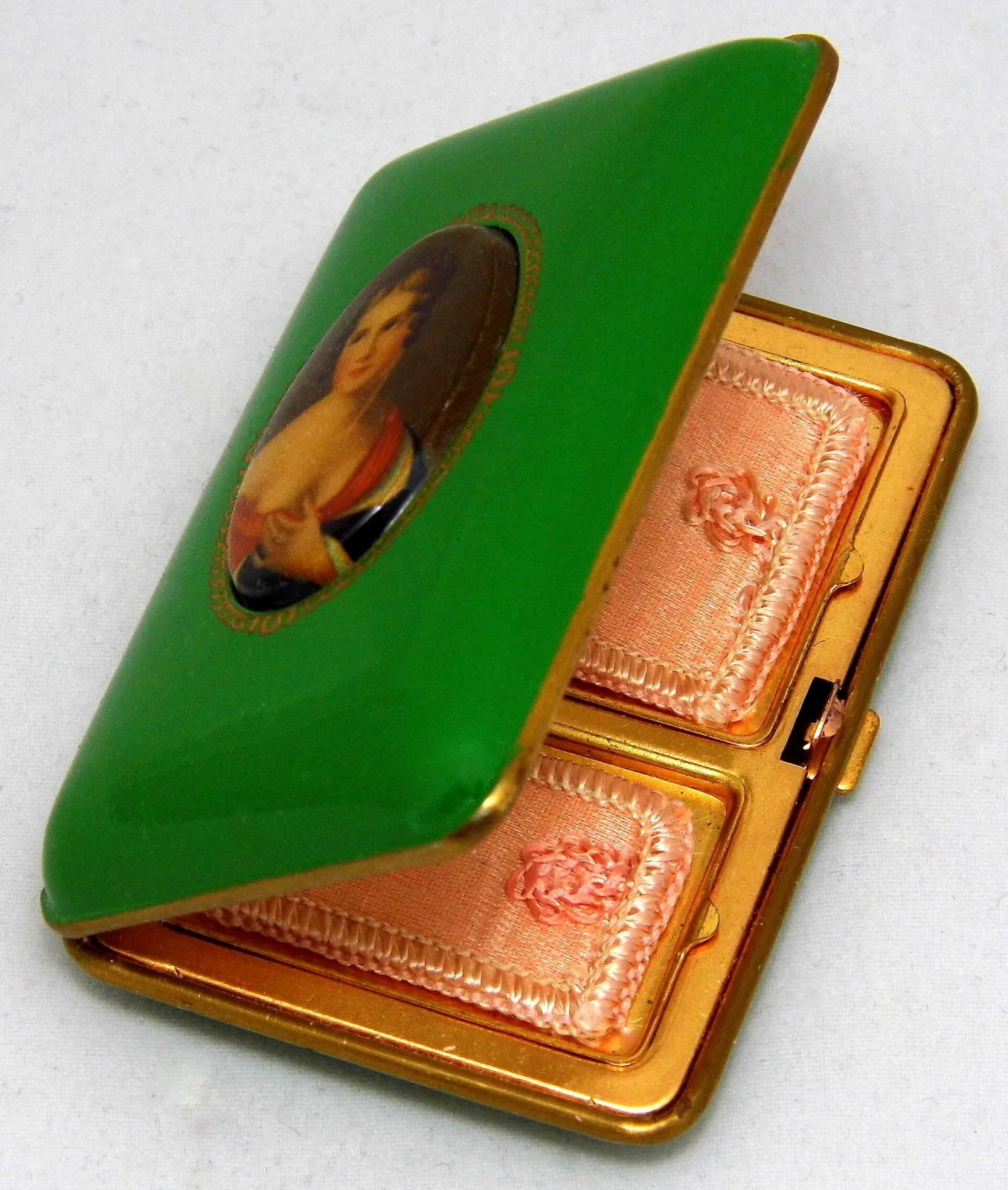
Antique powder compacts and vanity cases rank among the most collectible personal accessories from the late 19th and 20th centuries. These exquisite miniature containers, crafted from sterling silver, gold, enamel, and precious stones, reflect the artistry and social customs of their eras. From ornate Victorian vinaigrettes to streamlined Art Deco masterpieces by Elgin American and Stratton, each compact tells a story of craftsmanship and feminine elegance.
Collecting antique compacts has surged in popularity as enthusiasts appreciate both their decorative beauty and historical significance. Whether you have inherited a family heirloom or discovered a treasure at an estate sale, understanding maker marks, materials, and design periods is essential for accurate identification and valuation.
This guide covers the major types of antique compacts and vanity cases, key manufacturers and their hallmarks, dating techniques by era and style, materials identification, condition assessment, and current market values to help you build expertise in this fascinating collecting field.
Table of Contents
- History of Powder Compacts & Vanity Cases
- Types of Antique Compacts
- Major Makers & Manufacturer Marks
- Materials & Construction Methods
- Art Deco Compacts (1920s-1930s)
- Victorian & Edwardian Compacts
- Mid-Century & Post-War Compacts
- Enamel & Guilloché Techniques
- Sterling Silver & Gold Compacts
- Novelty & Figural Compacts
- Carryalls & Combination Cases
- Dating & Authentication Techniques
- Condition Assessment & Grading
- Market Values & Price Trends
- Collecting Tips & Building a Collection
History of Powder Compacts & Vanity Cases
The history of portable cosmetic containers stretches back centuries, but the modern powder compact as we know it emerged in the late 19th century. Before compacts became commonplace, women used loose powder kept in decorative boxes at their dressing tables. The idea of carrying powder in a portable case evolved from earlier accessories like silver vinaigrettes and patch boxes that Georgian and Victorian women tucked into their reticules.
The Rise of Portable Cosmetics
During the late Victorian era, shifting social attitudes toward cosmetics created demand for discreet portable containers. While heavy makeup was still associated with actresses and women of questionable reputation, a light dusting of rice powder became socially acceptable for respectable ladies. Early compacts from the 1880s and 1890s were typically silver or silver-plated cases with simple mirrors and powder compartments, often disguised as coin purses or calling card cases to maintain propriety.
The Edwardian period (1901-1910) saw compacts gain wider acceptance as cosmetics became less taboo. Manufacturers began producing purpose-built powder cases with proper sifters, mirrors, and powder puffs. Sterling silver remained the dominant material, often decorated with Art Nouveau flowing lines and naturalistic motifs.
The Golden Age of Compacts
The 1920s through the 1950s represent the golden age of compact manufacturing. The flapper era completely transformed attitudes toward cosmetics, making visible makeup not just acceptable but fashionable. This cultural revolution sparked an explosion in compact production, with hundreds of manufacturers competing to create the most beautiful and innovative designs. Companies like Elgin American, Volupté, Evans, Wadsworth, and Stratton produced millions of compacts in every conceivable style, from elegant Art Deco geometric designs to whimsical novelty shapes.
World War II temporarily disrupted compact production as metals were diverted to the war effort. Some manufacturers pivoted to plastic, cardboard, and other substitute materials, creating a distinctive category of wartime compacts that are now collectible in their own right. After the war, production resumed with renewed vigor, and the late 1940s through 1950s saw some of the most creative and elaborate designs ever produced.
Decline and Collectibility
The introduction of pressed powder in disposable cases during the 1960s gradually made refillable compacts obsolete. By the 1970s, most major manufacturers had ceased production. This decline, combined with the enormous variety of designs produced during the golden age, created a thriving collectors' market that continues to grow today. Rare compacts from premier makers now command thousands of dollars at auction, while beautiful examples from lesser-known manufacturers remain accessible to beginning collectors.
Types of Antique Compacts
Antique compacts come in a remarkable variety of forms, each designed for specific purposes and occasions. Understanding these types is fundamental to identification and collecting.
Loose Powder Compacts
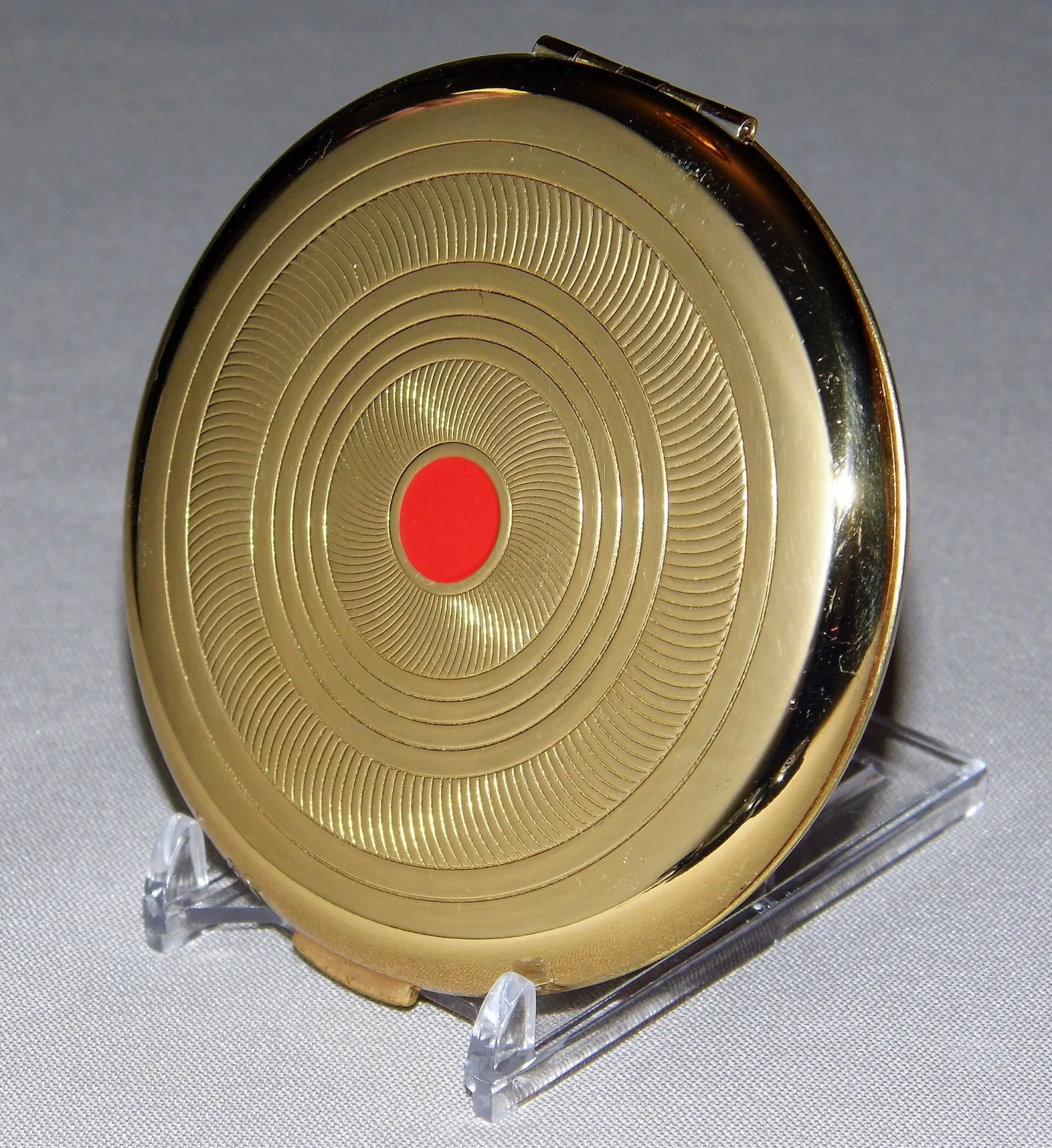
The most common type, loose powder compacts feature a compartment for loose face powder, a sifter screen to control powder distribution, a mirror in the lid, and a powder puff. They range from simple round cases to elaborately shaped designs. Quality varies enormously, from inexpensive base-metal souvenirs to exquisite gold and gem-set examples by luxury makers.
Pressed Powder Compacts
Appearing primarily from the late 1940s onward, pressed powder compacts held a cake of compressed powder rather than loose powder. These eliminated the need for a sifter and were generally slimmer and lighter than loose powder cases. The transition from loose to pressed powder compacts mirrors the broader shift in cosmetics technology during the mid-20th century.
Vanity Cases
More elaborate than simple compacts, vanity cases typically include compartments for both powder and rouge, along with a mirror and sometimes a lipstick holder. The finest examples feature multiple hinged compartments that open to reveal a miniature dressing table. Victorian and Edwardian vanity cases often incorporated sterling silver frames with engine-turned decoration.
Minaudières
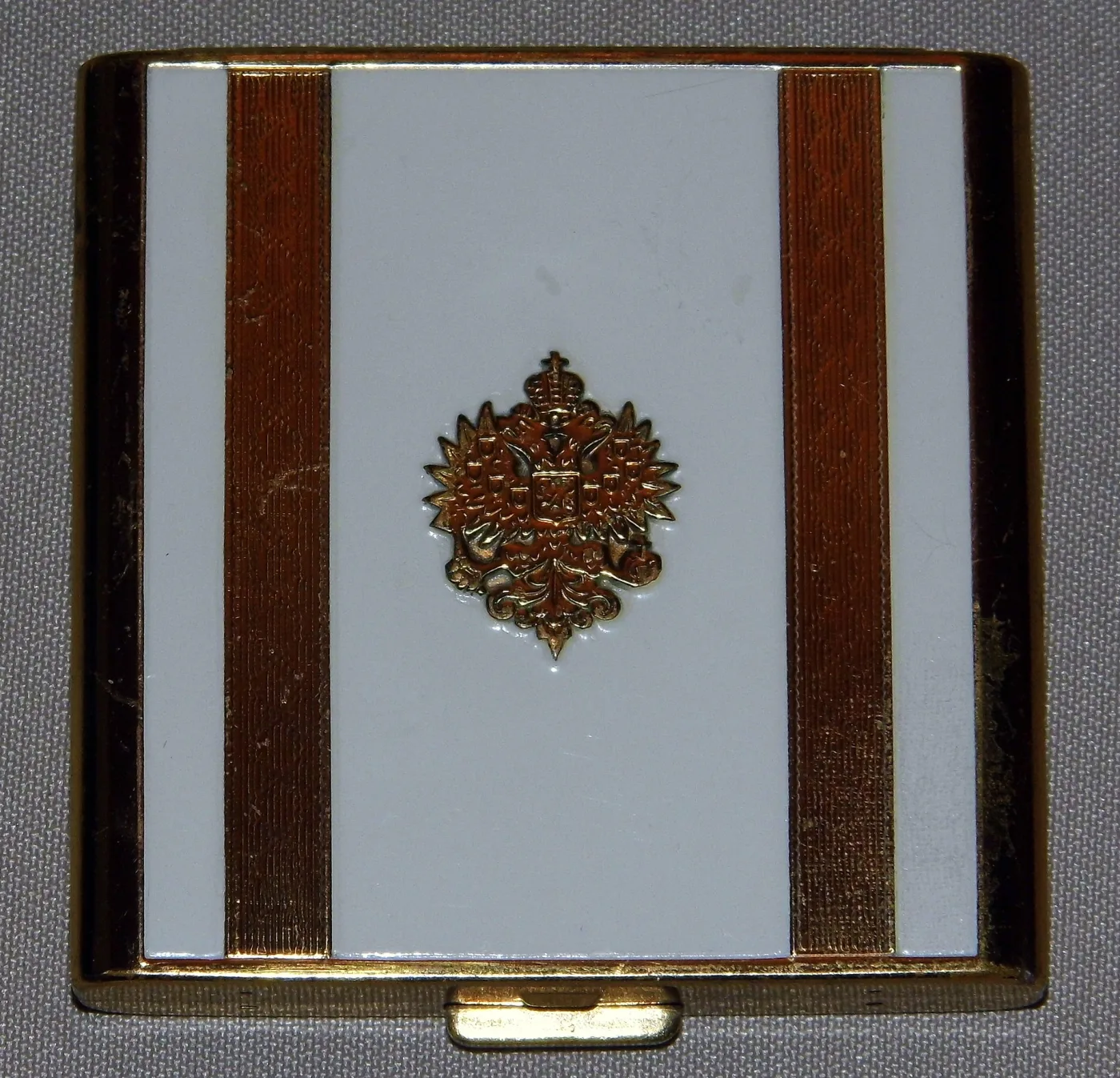
The minaudière represents the pinnacle of compact luxury. Invented by Van Cleef & Arpels in the 1930s, these multi-purpose evening cases combined a compact, lipstick holder, cigarette case, comb, and sometimes even a watch in a single elegant container. Crafted from precious metals and often set with gemstones, minaudières by Cartier, Van Cleef & Arpels, and Boucheron are among the most valuable compacts in existence, regularly selling for five and six figures at auction.
Flapjacks
Named for their large, flat, round shape resembling a pancake or flapjack, these compacts were particularly popular during the 1940s and 1950s. Measuring 3 to 5 inches in diameter, flapjacks provided a generous powder compartment and a large mirror. Volupté was especially known for its flapjack designs, often featuring textured metal surfaces and clever locking mechanisms.
Compact Purses and Carryalls
These combination pieces merged a compact with a small purse or evening bag. The exterior functioned as a handbag, while the interior contained powder, mirror, and cosmetic compartments. Evans and Dorset Fifth Avenue were prominent makers of this type, which was particularly fashionable during the 1940s and 1950s.
Major Makers & Manufacturer Marks
Identifying the manufacturer is often the most important step in dating and valuing an antique compact. Maker marks are typically stamped on the interior of the case, often on the back of the mirror frame or inside the lid.
Elgin American
Based in Elgin, Illinois, Elgin American was one of the largest and most respected compact manufacturers in the United States from the 1920s through the 1950s. Their marks typically read "ELGIN AMERICAN" in block letters, sometimes accompanied by a shield logo. Known for high-quality construction and elegant designs, Elgin American compacts featured sterling silver, gold-filled, and high-grade base metal cases with superb enamel work. Their "Beauty Box" line and mother-of-pearl inlaid compacts are particularly sought after.
Stratton of Birmingham
Stratton has been the premier British compact manufacturer since the 1940s. Founded by Leonard Hicks in Birmingham, England, the company became famous for its self-opening mechanism and consistently high quality. Stratton marks include the word "Stratton" along with "Made in England" and often a patent number. Their convertible compacts, which allowed the lid decoration to be changed, and their licensed designs featuring works by famous artists are among their most collectible products.
Volupté
A New Jersey-based manufacturer active from the 1920s through the 1960s, Volupté was known for innovative designs and theatrical presentation. Their "Hand" compact, shaped like a golden hand, and their "Lucky Purse" flapjack designs are iconic. Marks read "VOLUPTÉ" in script or block letters, sometimes with "U.S.A." Their textured metalwork, including basket weave and quilted patterns, remains highly recognizable.
Evans Case Company
Based in North Attleboro, Massachusetts, Evans produced compacts, cigarette cases, and combination pieces from the 1920s through the 1960s. Their mesh bags and carryall combinations are particularly notable. Evans marks typically include "EVANS" in block letters with a small logo. The company was also known for producing high-quality lighters, and their combination compact-lighter cases are prized by collectors.
Wadsworth
A division of the Wadsworth Watch Case Company, this manufacturer produced compacts from the 1920s through the 1950s. Wadsworth is recognized for its impeccable construction quality and conservative, elegant designs. Their marks include "WADSWORTH" and sometimes the W.W.C. Co. initials. Many Wadsworth compacts feature engine-turned decoration and subtle gold-filled trim.
Other Notable Makers
Additional manufacturers worth knowing include Rex Fifth Avenue (known for novelty shapes), Dorset Fifth Avenue (elegant evening pieces), Henriette (French-influenced designs), Pygmalion (British Art Deco), Melissa (British mid-century), and Richard Hudnut (cosmetics company that produced branded compacts). For fine jewelry-quality pieces, look for marks from Tiffany & Co., Cartier, and Van Cleef & Arpels.
Materials & Construction Methods
The materials used in a compact provide crucial clues for identification, dating, and valuation. Antique compacts were made from an extraordinary range of materials, each carrying its own significance.
Sterling Silver
Sterling silver compacts were produced throughout the entire history of the compact, from Victorian examples through the mid-20th century. Look for hallmarks indicating silver content: "925" or "STERLING" for American pieces, and the lion passant along with date letters and maker marks for British hallmarked silver. Sterling compacts by recognized silversmiths command premium prices. Tiffany & Co., Gorham, and Georg Jensen are among the most desirable makers.
Gold and Gold-Filled
Solid gold compacts are relatively rare and were produced primarily by luxury jewelers. More common are gold-filled (marked "G.F." or "1/20 12K G.F.") and gold-plated compacts. The gold filling process bonded a layer of gold alloy to a base metal core, creating a durable and attractive finish. Elgin American and Wadsworth produced many excellent gold-filled examples.
Base Metals
The majority of compacts from the golden age were made from base metals including brass, copper alloy, pot metal, and various white metal alloys. These were often plated with gold, silver, or chromium. While less valuable than precious metal compacts, base metal examples by top manufacturers with exceptional design or enamel decoration can still command strong prices.
Enamel
Enamel decoration is one of the most important value factors in antique compacts. Techniques range from simple painted enamel to sophisticated cloisonné and champlevé work. Guilloché enamel, where translucent colored enamel is applied over engine-turned metal, produces a distinctive shimmering effect that was especially popular during the Art Deco period. Austrian and Swiss makers were particularly renowned for their fine enamel work.
Other Materials
Compacts were also produced in celluloid, Bakelite, Lucite, leather, fabric, mother-of-pearl, tortoiseshell, lacquer, and various semi-precious stones. Wartime compacts may feature materials like cardboard, wood, and early plastics, which were substituted when metals became scarce. Each material has its own identification characteristics and collecting appeal.

Art Deco Compacts (1920s-1930s)
The Art Deco period produced some of the most desirable and visually striking compacts ever made. Characterized by bold geometric patterns, vivid color contrasts, and sleek modernist forms, Art Deco compacts perfectly captured the exuberance of the Jazz Age.
Design Characteristics
Art Deco compacts feature strong geometric motifs including zigzags, chevrons, sunbursts, stepped pyramids, and angular abstractions. Color palettes tend toward high contrast: black and red enamel on silver, cobalt blue with gold accents, or vivid combinations of orange, green, and black. The influence of Egyptian, Asian, and African art is evident in many designs, reflecting the era's fascination with exotic cultures.
Construction and Quality
Art Deco compacts were built to the highest standards. Many feature complex engineering with precision-machined hinges, spring-loaded clasps, and perfectly fitted components. The best examples exhibit flawless enamel work, often combining multiple techniques in a single piece. Swiss and Austrian makers were particularly skilled at producing intricate enamel decoration on silver compacts during this period.
Key Makers and Values
The most valuable Art Deco compacts come from luxury makers: Cartier, Van Cleef & Arpels, Boucheron, and Lacloche Frères. These can sell for $5,000 to $50,000 or more depending on materials and complexity. Mid-range Art Deco compacts by Elgin American, Wadsworth, and European makers typically sell for $100 to $500, while unsigned examples with good design and condition fetch $50 to $200.
Victorian & Edwardian Compacts
Victorian and Edwardian compacts predate the mass-production era and are generally rarer and more individually crafted than their later counterparts. These early pieces often blur the line between compact and other small personal accessories.
Victorian Examples (1837-1901)
True Victorian powder compacts are relatively scarce because portable cosmetics were not yet widely accepted. What collectors find from this era are typically silver or gold cases that served as combination pieces: a powder compartment paired with a card case, coin purse, or dance card holder. Decoration ranges from heavy repousse work in the mid-Victorian period to more refined engraving and niello work in the later decades. These pieces are prized for their fine craftsmanship and historical significance, often featuring hallmarks from major silver centers like Birmingham and London.
Edwardian Examples (1901-1915)
Edwardian compacts show lighter, more delicate design compared to their Victorian predecessors. Engine-turned decoration, often with guilloché enamel in pastel colors, is characteristic of the period. Sterling silver remained the primary material, with some gold examples produced for the luxury market. Edwardian compacts tend to be smaller and more refined than the larger Art Deco and mid-century pieces that followed.
Mid-Century & Post-War Compacts
The period from 1945 to 1965 saw some of the most creative and diverse compact designs ever produced. Post-war prosperity, combined with advancing manufacturing technology, allowed makers to experiment freely with shapes, materials, and decorative techniques.
1940s Designs
Late 1940s compacts reflect both wartime austerity and post-war optimism. Patriotic themes, military motifs, and sweetheart compacts (gifts from servicemen to their loved ones) are distinctive wartime products. After the war, compacts became more elaborate, with Volupté's theatrical designs and Evans' sophisticated combination pieces leading the market. This period also saw increased use of Lucite and other plastics as accent materials.
1950s Golden Era
The 1950s represents the last great decade of compact production. Designs ranged from sophisticated elegance to playful whimsy. Stratton dominated the British market with their convertible designs and licensed artwork compacts. American makers produced compacts in every imaginable style, from sleek modernist designs to elaborate novelty shapes. The era's fascination with atomic-age design is reflected in starburst patterns, boomerang shapes, and space-age metallic finishes.
Early 1960s and Decline
Compact design continued into the early 1960s but with increasingly simplified forms. The introduction of affordable pressed powder in disposable packaging gradually made refillable compacts unnecessary. By the mid-1960s, most major manufacturers had shifted to other products or ceased operations. Late-production compacts by major makers, while not as elaborate as their predecessors, are still collectible and often more affordable.
Enamel & Guilloché Techniques
Enamel decoration is perhaps the single most important decorative technique in compact manufacturing, and understanding different enamel methods is essential for identification and valuation.
Guilloché Enamel
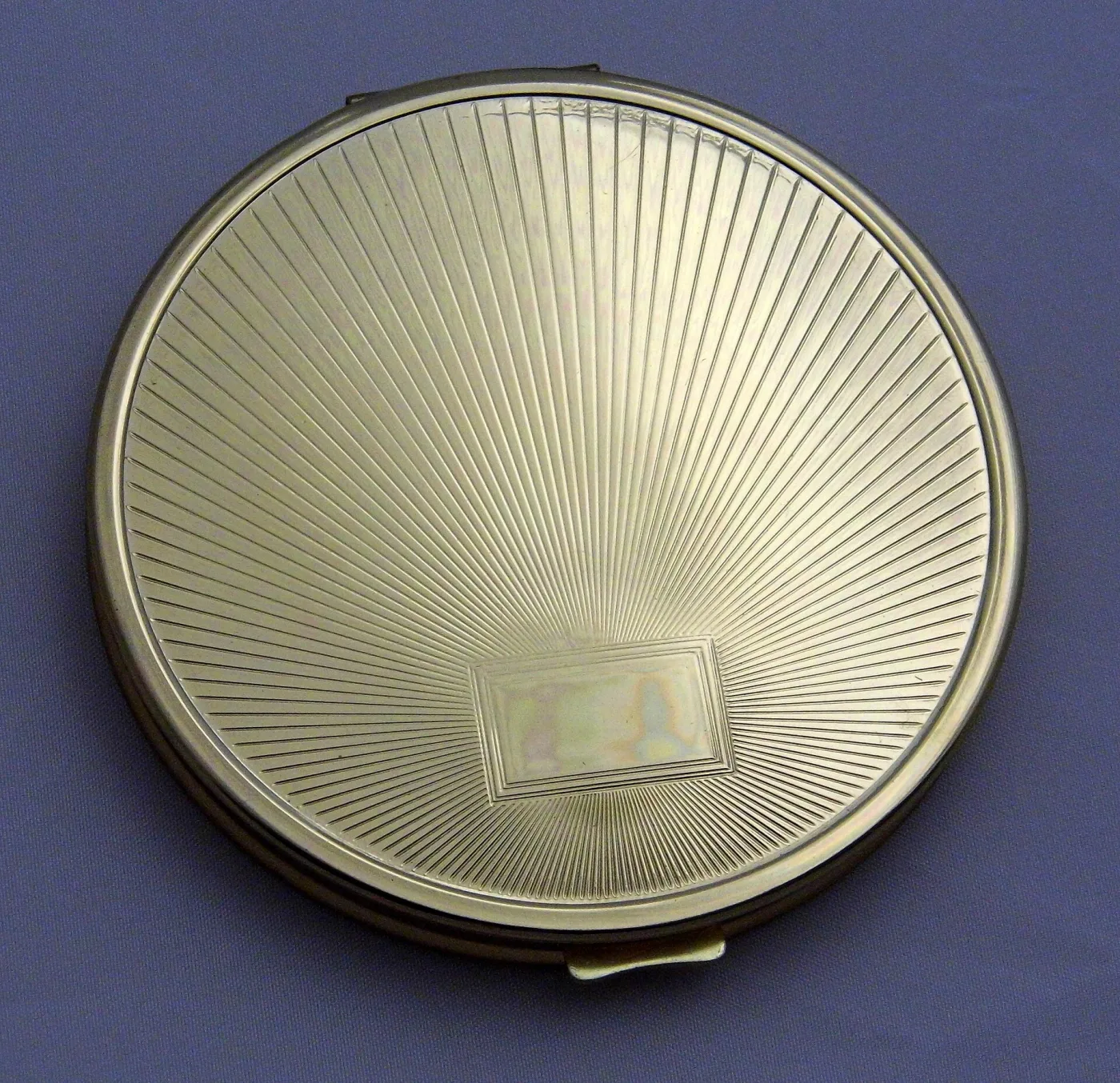
Guilloché enamel involves applying translucent colored enamel over a mechanically engraved (engine-turned) metal surface. The engraved pattern shows through the translucent enamel, creating a luminous, shimmering effect. This technique was used extensively on high-quality compacts from the Edwardian period through the Art Deco era. The finest examples come from Austrian, Swiss, and British makers. Colors range from delicate pastels to vibrant blues, greens, and reds.
Cloisonné and Champlevé
Cloisonné enamel uses thin metal wires to create cells that are filled with enamel paste and fired. Champlevé involves carving or etching cells into the metal surface before filling with enamel. Both techniques were used on compacts, particularly those with Asian-inspired designs. Chinese and Japanese cloisonné compacts from the early 20th century are a distinct collecting category with their own following.
Painted Enamel
Hand-painted enamel compacts feature detailed scenes or patterns painted directly onto a metal surface, often over a base coat of white enamel. This technique allowed for highly detailed imagery, from romantic pastoral scenes to precise floral compositions. Austrian and French makers excelled at painted enamel work, producing compacts that are miniature works of art.
Transfer-Printed Enamel
Less expensive than hand-painted work, transfer printing allowed manufacturers to reproduce detailed images on enamel surfaces using decal-like transfers. Stratton made extensive use of this technique for their licensed designs featuring reproductions of famous paintings, floral compositions, and decorative patterns. While less valuable than hand-painted examples, well-executed transfer designs by quality makers remain highly collectible.
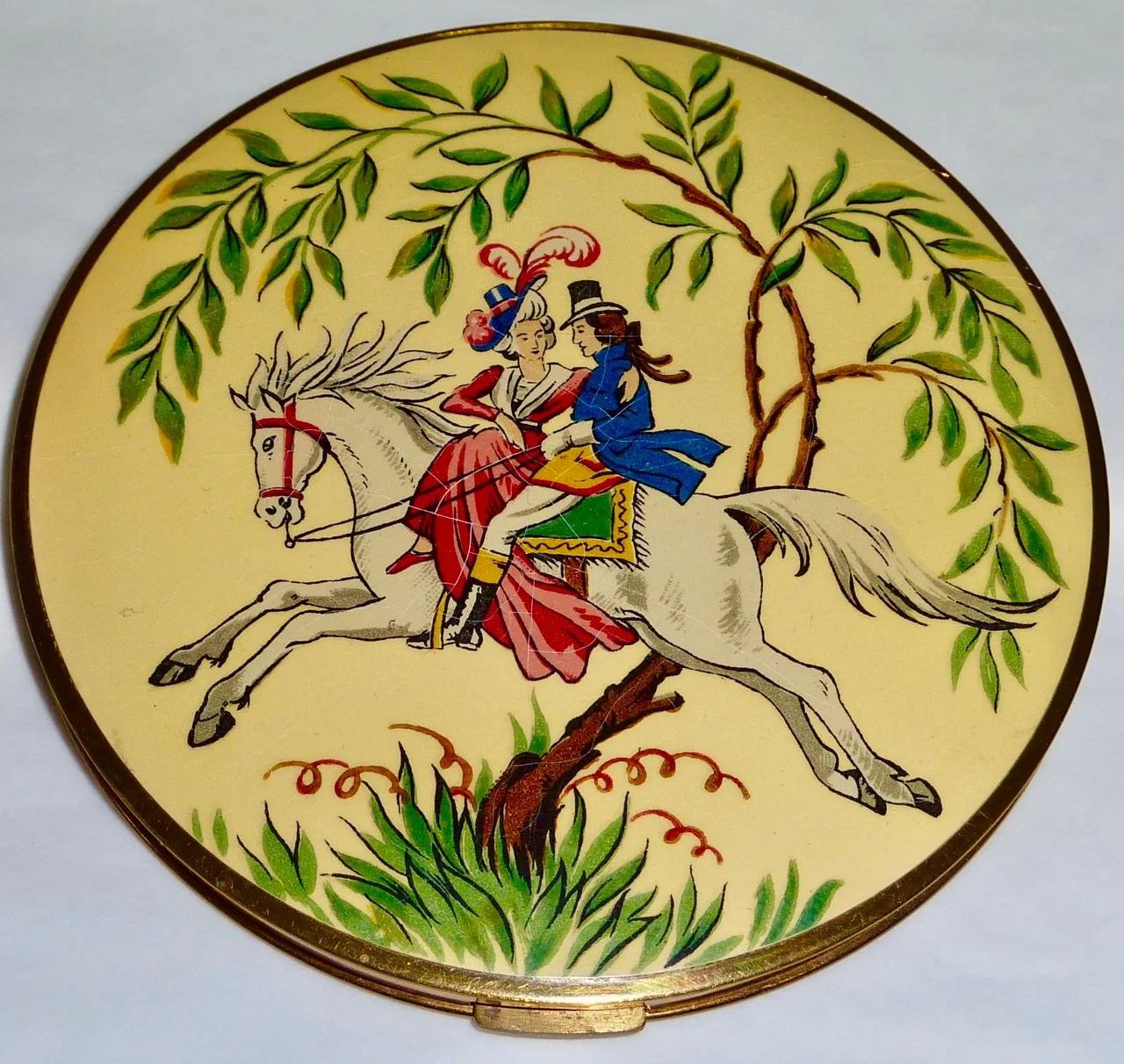
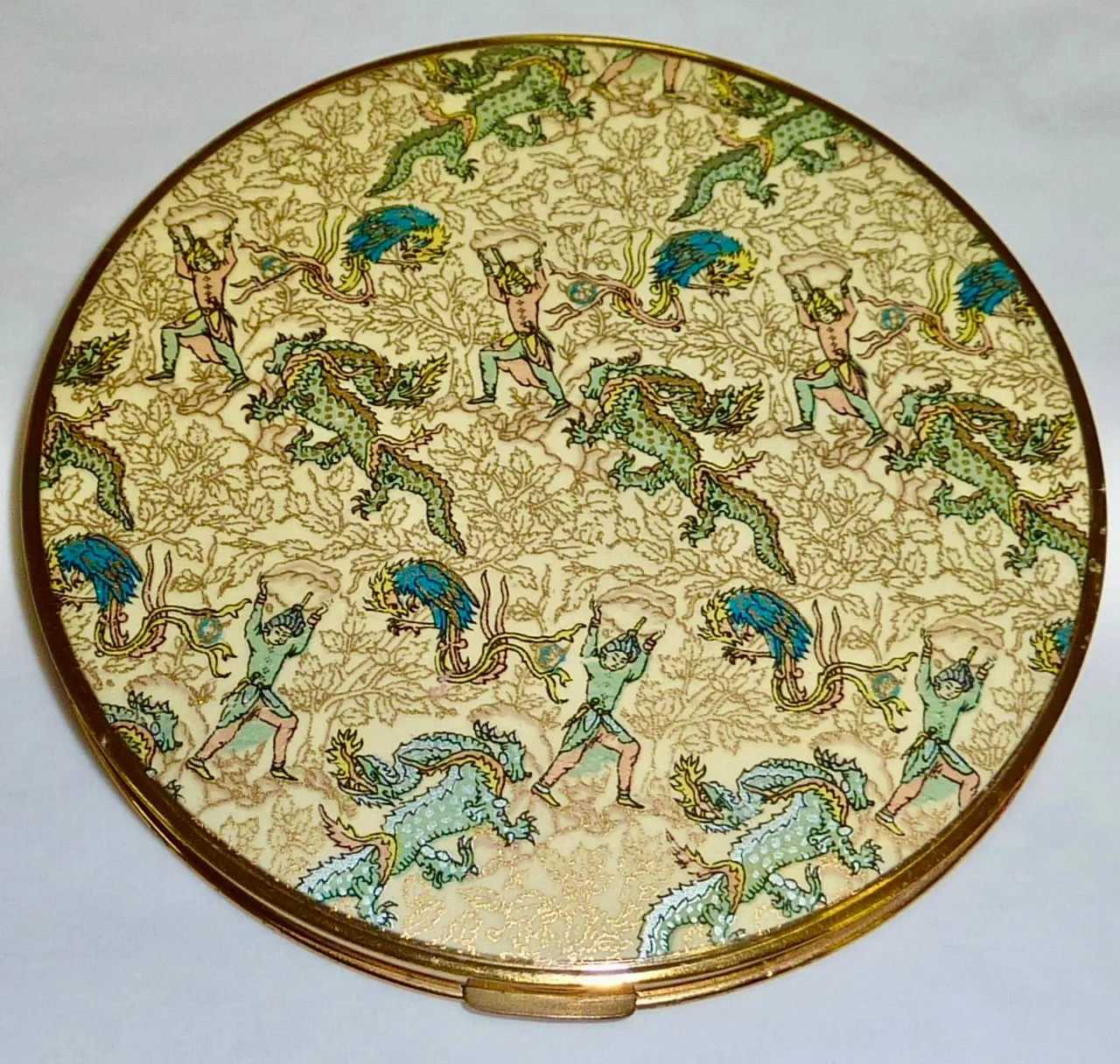
Two compacts from the same maker, and the contrast between them is the one to learn. The horseman is a single composition sized to its lid — it has a top and a bottom, the willow bends to fit the circle, and nothing about it could be moved to a compact of another size without redrawing it. The dragons are the opposite: a small motif repeating in every direction, running off all four edges of the disc as though cut from a much larger sheet, which is precisely what a printed pattern is. That difference in layout is more reliable than looking for brushstrokes, because good transfer work is smooth and a photograph flattens texture anyway. Two supporting checks: on printed work the outlines hold a constant width wherever they run, and identical repeats are identical, so if two dragons differ in any detail the decoration was painted after all.
Sterling Silver & Gold Compacts
Precious metal compacts represent the upper tier of collecting and require specialized knowledge for proper identification and authentication.
Identifying Sterling Silver
Sterling silver compacts should bear clear hallmarks. American pieces typically show "STERLING" or "925" stamps, while British examples carry the full hallmark series: maker's mark, assay office mark, date letter, and the lion passant purity mark. Continental European silver may show different purity marks depending on the country of origin. A strong magnet is a useful first test, as sterling silver is not magnetic. Weight is another clue; sterling compacts feel substantially heavier than plated base metal examples of similar size.
Gold Compacts
Solid gold compacts are marked with karat stamps (14K, 18K) and are relatively rare outside the luxury market. More common are gold-filled compacts, marked with designations like "1/20 12K G.F." (meaning the gold layer is 1/20th of the total weight and is 12 karat gold). Gold-plated compacts carry marks like "G.P." or "H.G.E." (hard gold electroplate). Understanding these distinctions is crucial because the price difference between solid gold and gold-plated compacts is enormous.
Vermeil and Other Finishes
Vermeil (gold over sterling silver) compacts combine the warmth of gold with the weight and quality feel of silver. Look for dual marks indicating both the gold plating and silver substrate. Rose gold, white gold, and green gold compacts also exist, primarily from luxury makers. Multi-color gold compacts, featuring different gold alloys in decorative patterns, are especially valuable and were a specialty of Russian and French goldsmiths.
Novelty & Figural Compacts
Novelty and figural compacts represent some of the most entertaining and sought-after pieces in compact collecting. These playful designs broke away from traditional round and square shapes to create compacts in the form of objects, animals, and whimsical figures.
Common Novelty Shapes
Popular novelty compact shapes include hearts, flowers, butterflies, seashells, fans, hats, crowns, musical instruments, and animals. Volupté's "Hand" compact, shaped like a golden hand with painted fingernails, is perhaps the most iconic novelty design. Other notable forms include Schuco teddy bear compacts (miniature bears with powder compartments hidden in their torsos), suitcase-shaped travel compacts, and globe compacts that open to reveal a map-decorated interior.
Souvenir and Commemorative Compacts
Compacts were popular souvenir items throughout the 20th century. Examples featuring landmarks, city views, exhibition logos, and royal commemorative designs form a distinct collecting category. World's Fair compacts from events like the 1939 New York World's Fair are particularly desirable. Military sweetheart compacts bearing regimental badges, national flags, and patriotic imagery connect to the broader field of military collectibles.
Advertising Compacts
Cosmetics companies and other businesses commissioned branded compacts as promotional items and retail products. Compacts bearing the logos and designs of companies like Coty, Yardley, Max Factor, and Helena Rubinstein are sought by both compact collectors and advertising memorabilia enthusiasts. These pieces offer interesting crossover appeal and are generally more affordable than decorative compacts by the major case manufacturers.
Carryalls & Combination Cases
Carryalls and combination cases represent the most complex and multi-functional category of compact collecting. These ingenious accessories combined multiple functions in a single elegant container.
Standard Carryalls
A carryall typically combines a compact (powder and mirror), cigarette case, coin holder, and comb in a single fitted case. Evans was the leading manufacturer of carryalls, producing elegant examples in various finishes from the 1930s through the 1950s. Carryalls open to reveal multiple compartments, each precision-fitted for its specific purpose. The best examples feature spring-loaded mechanisms and hidden compartments.
Compact Purses
Compact purses merge a working handbag with built-in cosmetic compartments. These range from small evening clutches with hidden compacts to full-sized purses with integrated vanity sections. Dorset Fifth Avenue and Evans were major producers. The most desirable examples feature quality leather or fabric exteriors with well-engineered interior compact mechanisms.
Nécessaires and Étuis
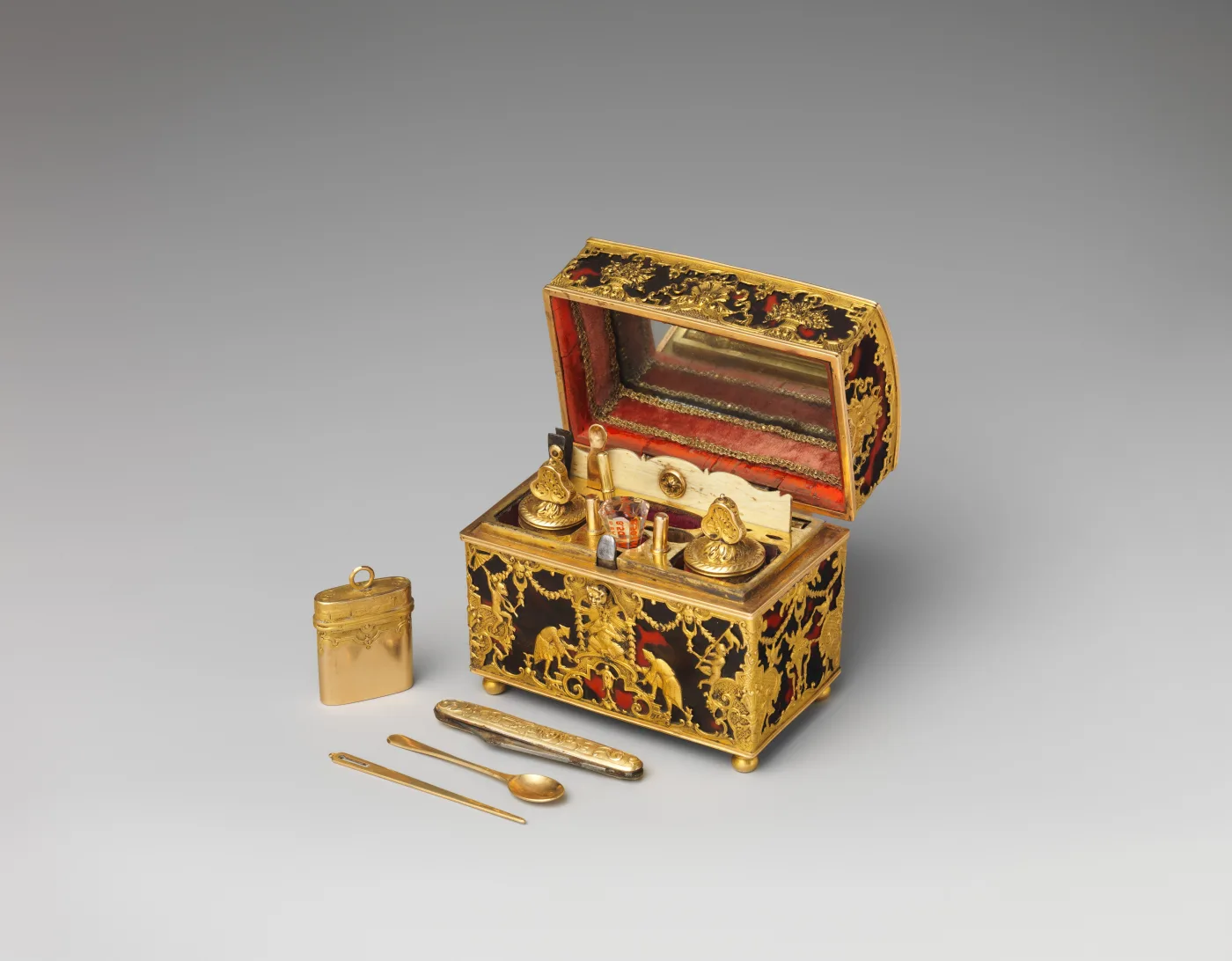
Derived from earlier 18th and 19th-century forms, nécessaires are multi-purpose personal cases that may include sewing implements, writing tools, or grooming accessories alongside a compact. Étuis are similar but generally smaller and more focused on specific functions. These forms are particularly interesting to collectors who appreciate the connection to earlier decorative arts traditions, such as those found in objets d'art collecting.
Dating & Authentication Techniques
Accurate dating of antique compacts requires attention to multiple factors including design style, materials, maker marks, construction methods, and original contents.
Dating by Design Style
Design aesthetics provide the broadest dating framework. Art Nouveau florals and flowing lines suggest pre-1920 production. Bold geometric patterns indicate the Art Deco period (1920s-1930s). Streamlined forms with chrome finishes point to the late 1930s through 1940s. Atomic-age starburst and boomerang motifs are hallmarks of the 1950s. Simple, pared-down designs typically date from the 1960s.
Dating by Construction
Construction details offer more specific dating evidence. Early compacts often feature hand-soldered joints and hand-cut mirrors. Machine-made precision increases throughout the 1920s and 1930s. The type of hinge, clasp mechanism, and mirror backing can help narrow the date. Powder sifter design also evolved: early examples use fine mesh screens, while later compacts may feature perforated metal or pressed screens.
Patent Numbers and Registration Marks
Many compacts bear patent numbers or design registration marks that can be researched to establish specific production dates. American patent numbers can be looked up in the U.S. Patent and Trademark Office database. British design registration numbers follow a sequential system that correlates to specific years. These marks provide some of the most precise dating evidence available.
Detecting Reproductions
As prices for desirable compacts have risen, reproductions and fakes have entered the market. Common warning signs include overly perfect condition with no wear, modern materials or construction techniques, poorly executed maker marks, and enamel that lacks the depth and luminosity of genuine period work. Comparing a suspect piece against authenticated examples in reference books and museum collections is the best defense against reproductions.
Condition Assessment & Grading
Condition is a critical factor in compact valuation, and understanding how to assess and grade condition is essential for both buying and selling.
Enamel Condition
Enamel is the most vulnerable element on decorated compacts. Check for chips, cracks, losses, and repairs. Minor surface scratches may be acceptable, but significant enamel damage dramatically reduces value. Hairline cracks in guilloché enamel are common due to the tension between the enamel and metal substrate and are generally tolerated by collectors if not too prominent. Look closely under good lighting, as enamel repairs can be difficult to detect.
Mechanical Function
A compact should open and close smoothly. Check that hinges are secure, clasps engage properly, and any spring mechanisms still function. Missing or replaced powder puffs are common and do not significantly affect value. Missing mirrors or sifters are more problematic but can sometimes be replaced. For antique restoration guidance on compacts, specialized dealers can provide replacement parts and conservation advice.
Grading Standards
While no universal grading system exists for compacts, most dealers and collectors use a descriptive scale. "Mint" or "New Old Stock" (NOS) indicates unused condition, often with original box and contents. "Excellent" means minimal wear with intact enamel and fully functional mechanisms. "Very Good" allows for light wear and minor imperfections. "Good" indicates noticeable wear or minor damage. "Fair" describes compacts with significant wear, enamel loss, or mechanical issues that may still have value for their design or rarity.
Market Values & Price Trends
The antique compact market spans an enormous price range, from a few dollars for common base metal examples to six figures for luxury pieces by premier jewelers.
Entry-Level Collecting ($10-$75)
Common base metal compacts from the 1940s-1960s by lesser-known manufacturers typically fall in this range. These include simple round compacts with minimal decoration, mass-produced novelty pieces, and cosmetics company promotional compacts. While individually modest in value, these accessible pieces allow new collectors to begin assembling a collection and learning about different styles and manufacturers.
Mid-Range Market ($75-$500)
This range encompasses the majority of desirable compacts by recognized manufacturers. Elgin American, Volupté, Evans, Wadsworth, and Stratton compacts with attractive designs and good condition typically sell in this bracket. Enamel-decorated compacts, sterling silver examples, and unusual novelty shapes also fall here. This is the sweet spot for most collectors, offering quality and variety at reasonable prices.
High-End Market ($500-$5,000)
Exceptional compacts by top manufacturers, rare designs, fine enamel work, and sterling or gold examples command prices in this range. Particularly desirable are Art Deco compacts with exceptional geometric enamel, large minaudières by quality makers, and compacts with documented provenance or celebrity connections. Museum-quality pieces with extraordinary craftsmanship or historical significance reach the upper end of this range.
Luxury Market ($5,000+)
The highest prices are reserved for compacts by luxury jewelers (Cartier, Van Cleef & Arpels, Tiffany), solid gold and gem-set examples, and exceptionally rare or historically significant pieces. Record auction prices for compacts have exceeded $100,000 for extraordinary Cartier and Van Cleef & Arpels minaudières. This rarified market attracts both compact specialists and fine jewelry collectors.
Collecting Tips & Building a Collection
Building a meaningful compact collection requires strategy, patience, and knowledge. Whether you collect broadly or focus on a specific niche, these guidelines will help you make informed decisions.
Choosing a Focus
The sheer variety of antique compacts makes it impractical to collect everything. Successful collectors typically focus on a specific area: a single manufacturer (all Stratton or all Volupté), a decorative technique (guilloché enamel or cloisonné), a period (Art Deco only), a form (novelty shapes or carryalls), or a material (sterling silver or Lucite). A focused collection tells a coherent story and allows you to develop deep expertise in your chosen area.
Where to Find Compacts
Antique compacts turn up in estate sales, flea markets, antique shops, online auctions, and specialized compact shows. Estate sales are often the best source for finding pieces at reasonable prices, especially when compacts are mixed in with general jewelry and accessories. Online platforms have expanded access enormously but require careful attention to photographs and condition descriptions. Specialized compact dealers offer curated selections with expert identification but at retail prices.
Authentication Resources
Building a reference library is essential. Key books include Roselyn Gerson's "Vintage and Contemporary Purse Accessories," Laura Mueller's "Collector's Encyclopedia of Compacts, Carryalls & Face Powder Boxes," and Juliette Edwards' "Compacts & Cosmetics." Online forums and collector groups provide access to shared knowledge and identification help. When in doubt about a significant purchase, consulting with an experienced dealer or auction specialist is worth the investment.
Care and Display
Proper care preserves both the beauty and value of your collection. Store compacts in a cool, dry environment away from direct sunlight, which can damage enamel over time. Avoid harsh cleaning products; a soft cloth is usually sufficient for routine maintenance. Display cases with felt or velvet lining protect against scratches. For serious collections, consider climate-controlled storage to prevent tarnish on silver compacts. If you are interested in broader preservation strategies, our guide on antique storage and preservation offers detailed advice.