
Antique Vanity & Dresser Sets Identification Guide: Materials, Makers & Styles
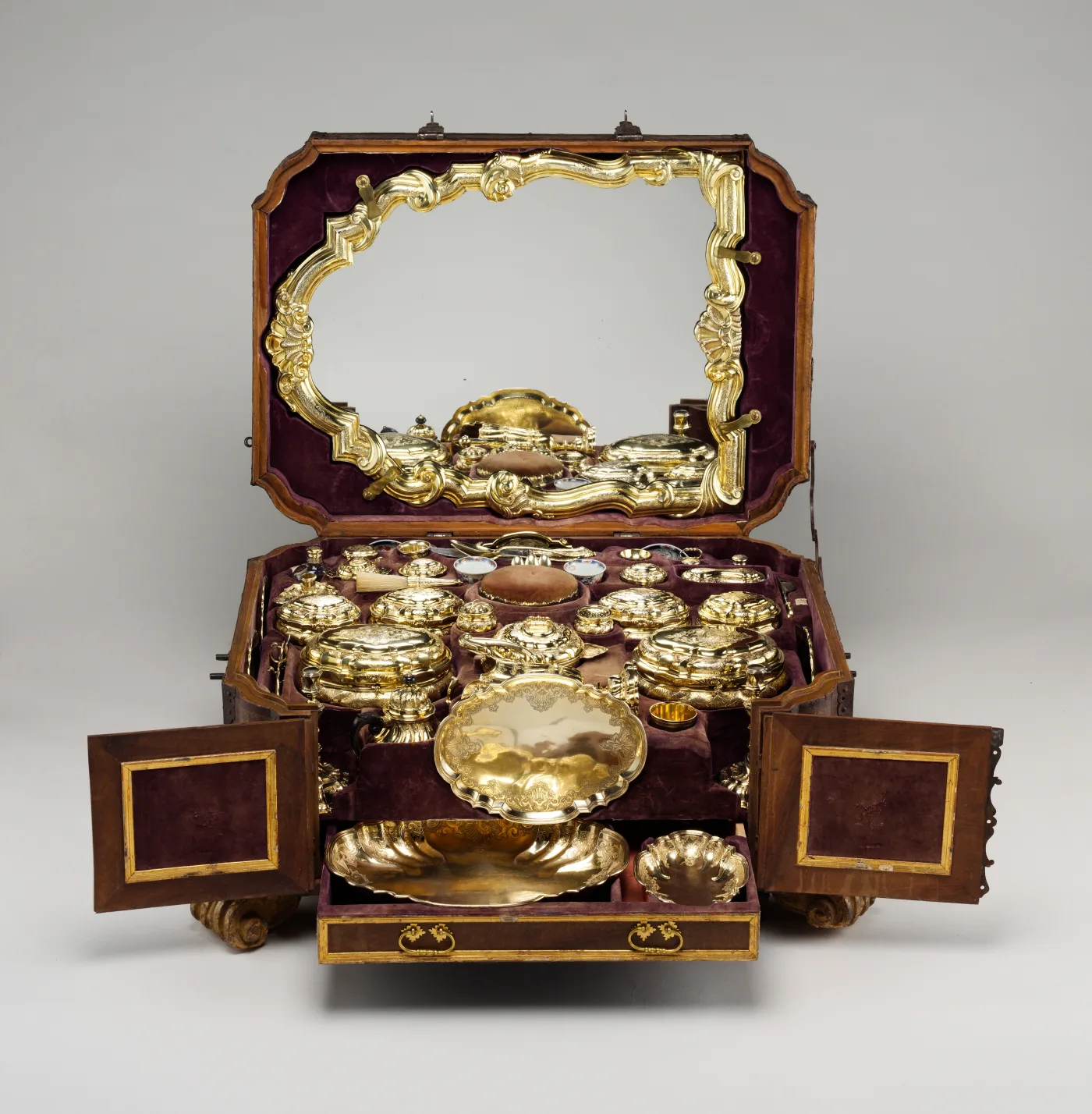
Vanity and dresser sets rank among the most elegant and collectible categories of antique personal accessories. From the gleaming sterling silver ensembles that graced Victorian dressing tables to the colorful celluloid sets of the early twentieth century, these coordinated grooming collections reflect centuries of craftsmanship, changing beauty rituals, and evolving decorative tastes. At their peak popularity between the 1880s and 1940s, dresser sets were prized gifts for weddings, birthdays, and milestone occasions, making them deeply personal objects that often carry rich provenance and sentimental history.
For collectors, antique vanity sets offer a fascinating intersection of decorative arts, social history, and material science. A single set can include hand mirrors, hairbrushes, combs, powder jars, ring holders, nail tools, and trays, each piece bearing hallmarks, maker stamps, and construction details that reveal its origin, age, and value. Whether you have inherited a family heirloom or discovered a promising set at an estate sale, understanding how to properly identify and evaluate these pieces is essential to appreciating their true worth.
This guide provides a thorough framework for identifying antique vanity and dresser sets. We will explore their history from Georgian England through the Art Deco era, examine the materials and construction techniques used by leading manufacturers, decode hallmarks and maker marks, and offer practical advice on authentication, condition assessment, and building a meaningful collection. Whether you are a seasoned collector or just beginning to explore this category, the information here will sharpen your eye and deepen your knowledge.
Table of Contents
- History of Vanity & Dresser Sets
- Types of Vanity & Dresser Sets
- Materials & Construction
- Key Components
- Major Makers & Manufacturers
- Identifying Hallmarks & Marks
- Dating Vanity Sets by Style
- Authentication & Spotting Reproductions
- Condition Assessment & Value Factors
- Care & Preservation
- Building a Collection
History of Vanity & Dresser Sets
The tradition of coordinated grooming sets stretches back to ancient civilizations, where Egyptian nobles kept polished bronze mirrors and ivory combs in decorated boxes. However, the dresser set as we recognize it today emerged in the Georgian era (1714-1837), when affluent English households began commissioning matched silver toilet services from London silversmiths. These early sets were extravagant affairs, sometimes comprising twenty or more pieces including candlesticks, caskets, ewers, and snuffer trays alongside brushes and mirrors.
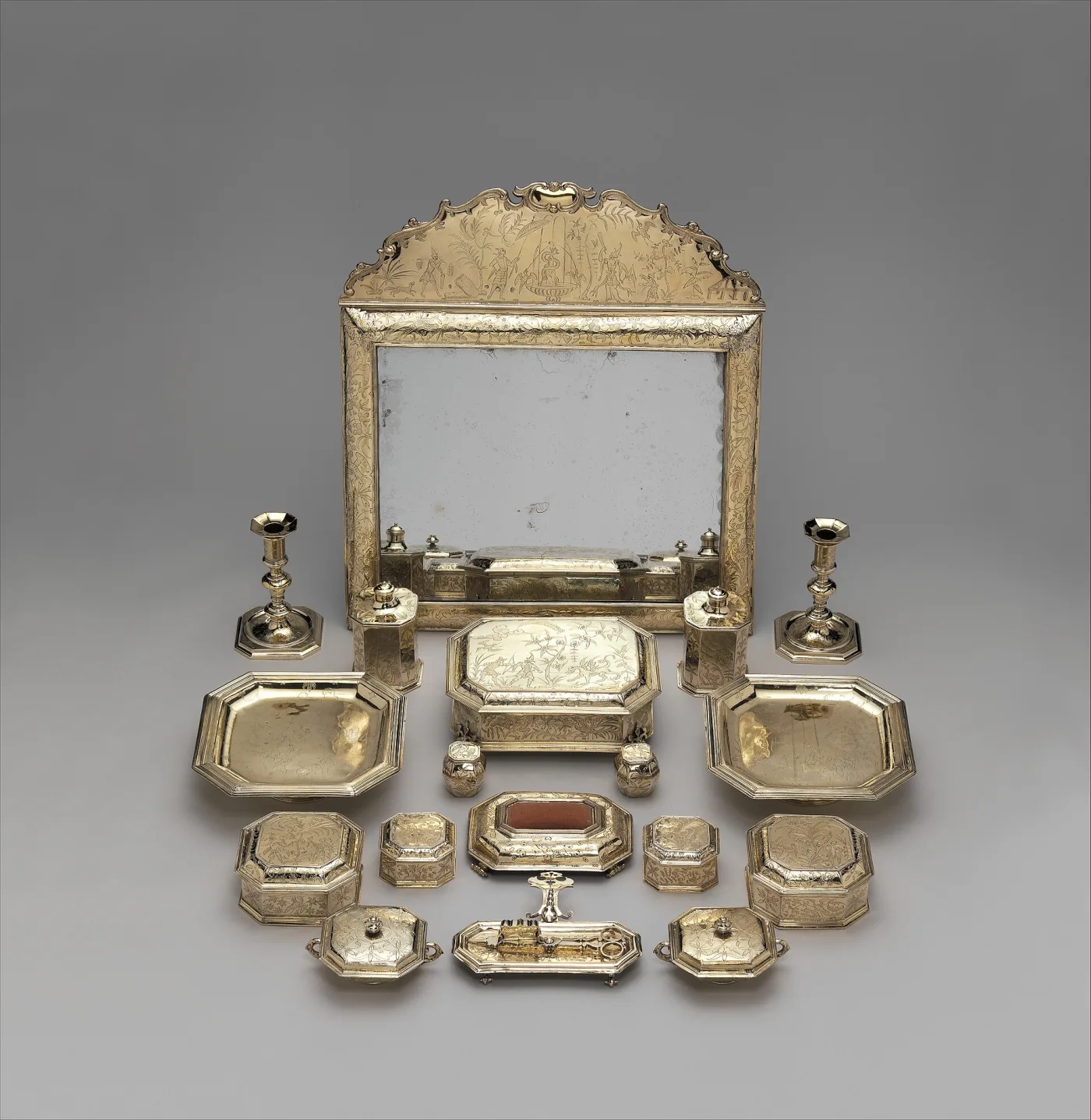
During the Regency period (1811-1820), the toilet service became more streamlined. Silversmith Paul Storr and his contemporaries produced sets with neoclassical motifs, bright-cut engraving, and gadrooned borders that reflected the refined taste of the era. These sets were often presented as wedding gifts among the aristocracy and bore family crests or monograms engraved on every piece.
The Victorian Explosion
The Victorian era (1837-1901) transformed vanity sets from aristocratic luxuries into middle-class aspirations. Industrialization made silver plating affordable through the electroplating process patented by Elkington in 1840, and manufacturers like Gorham, Reed & Barton, and Whiting Manufacturing began producing elaborate dresser sets for the American market. The Victorian obsession with elaborate personal grooming, combined with the cult of domesticity, made the dressing table a centerpiece of the bedroom. Sets grew to include specialized items like glove stretchers, buttonhooks, shoe horns, and hat pin holders.
The aesthetic movement of the 1870s and 1880s introduced Japanese-inspired motifs, sunflowers, and stylized naturalism to dresser set design. Sterling silver sets from this period often feature mixed-metal decoration, hammered surfaces, and asymmetrical compositions that broke with earlier formal symmetry.
Art Nouveau and the Edwardian Era
The Art Nouveau movement (1890-1910) brought sinuous, organic forms to vanity set design. William B. Kerr, Unger Brothers, and Foster & Bailey created stunning silver sets featuring flowing hair maidens, water lilies, iris blooms, and whiplash curves. In England, William Comyns became renowned for his elaborate Art Nouveau silver dresser sets with cherub and Reynolds angel motifs that remain highly sought after today.
The Edwardian period (1901-1910) saw a return to refined elegance with lighter, more delicate designs. Guilloche enamel over engine-turned silver became enormously popular, with firms like Mappin & Webb and Liberty & Co. producing sets in soft pastels of pink, blue, lavender, and pale green. These enamel sets are among the most coveted by collectors today.
Celluloid, Bakelite, and the Art Deco Years
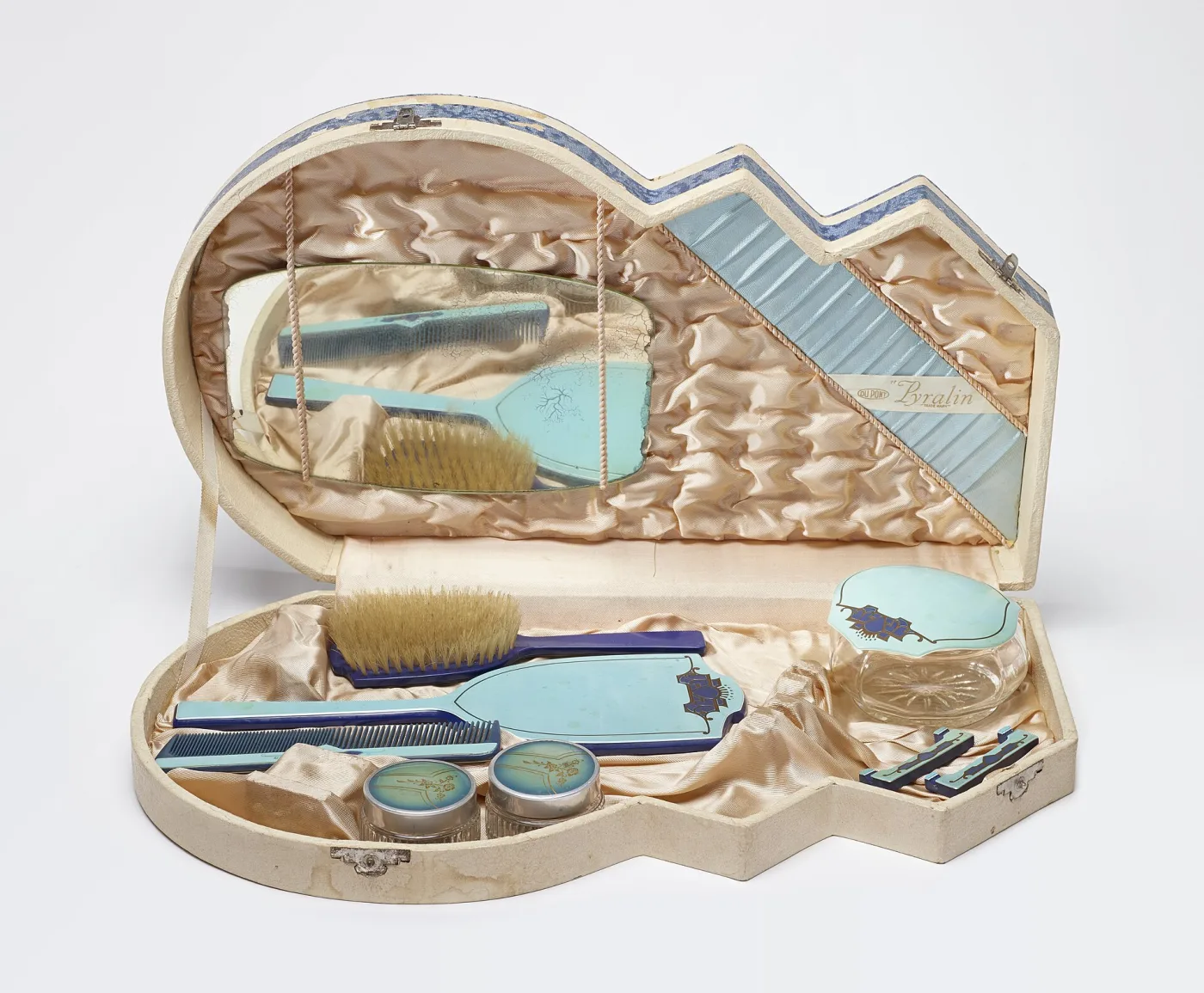
The early twentieth century brought revolutionary new materials to dresser set manufacturing. Celluloid, introduced in the 1870s but reaching its zenith in the 1910s-1930s, allowed manufacturers like the Amerith Corporation, DuBarry, and Pyralin (made by DuPont) to produce affordable, colorful sets that imitated ivory, tortoiseshell, and amber. These sets democratized the vanity table, making coordinated grooming accessories available to virtually every household.
The Art Deco movement (1920-1940) brought geometric precision, bold colors, and streamlined forms. Chrome, Bakelite, and enameled metals replaced the organic curves of Art Nouveau with angular, machine-age aesthetics. By the late 1940s, changing lifestyles and the rise of built-in bathroom cabinetry gradually diminished the cultural role of the dresser set, ending a golden age of personal grooming accessories that had lasted nearly two centuries.
Types of Vanity & Dresser Sets
Antique vanity and dresser sets come in several distinct categories, each designed for specific users and purposes. Understanding these categories helps collectors identify what they have and assess completeness.
Ladies' Dresser Sets
The most common and collectible type, ladies' dresser sets typically include a hand mirror, hairbrush, comb, and may expand to include powder jars, hair receivers, pin trays, nail buffers, button hooks, and perfume bottles. A basic three-piece set (mirror, brush, comb) was the standard gift set, while luxury versions could contain twelve or more pieces. Sterling silver, guilloche enamel, and celluloid were the most popular materials. These sets were designed to sit prominently on a bedroom dressing table and were often the most decorative objects in a woman's personal space.
Gentleman's Grooming Sets
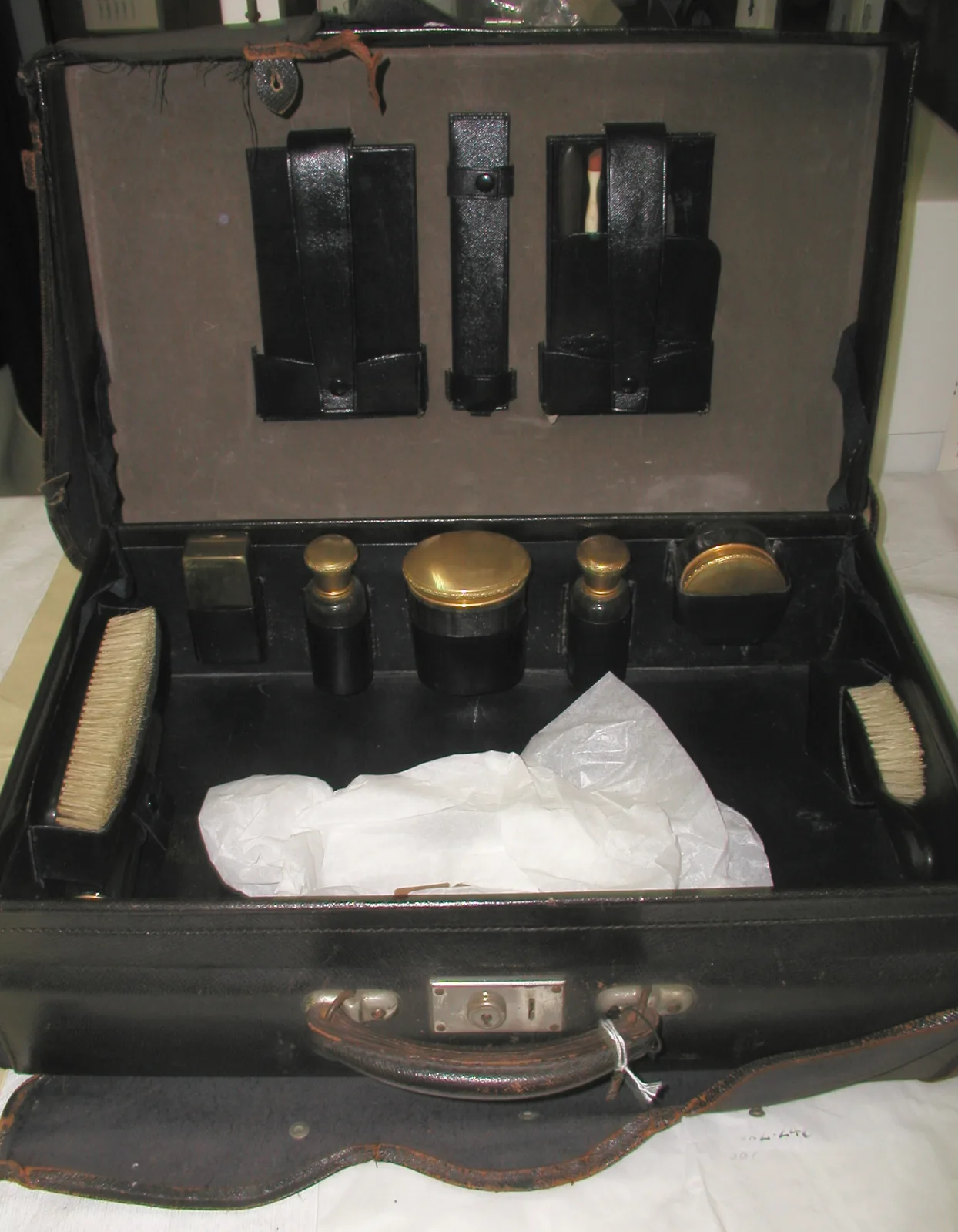
Men's dresser sets were typically more restrained in decoration, featuring engine-turned patterns, plain polished surfaces, or simple monogram panels. A standard gentleman's set included military-style hairbrushes (flat, without handles), a clothes brush, a comb, a shoe horn, and sometimes a mirror. Materials were predominantly sterling silver or silver plate with ebony or rosewood backings. Leather travel cases containing fitted grooming sets were especially popular from the Edwardian era through the 1940s, and a well-appointed gentleman's case often held coordinating dress accessories such as antique cufflinks and shirt studs alongside the brushes. Makers like Gorham, Tiffany, and the English firm Asprey produced distinguished men's sets.
Travel and Portable Sets
Travel vanity sets were designed for portability and came in fitted leather cases, often lined with silk or velvet. For portable powder compacts and vanity cases that ladies carried in their handbags, see our dedicated guide. Victorian and Edwardian travel sets are particularly collectible, with cases from makers like Asprey, Drew & Sons, and Mappin & Webb commanding premium prices. These cases feature custom-fitted compartments for each piece, sometimes including cut-glass bottles with silver caps for perfume, cologne, and other toiletries. The leather case itself is an important part of the set's value, and original cases in good condition significantly enhance worth.
Boudoir and Presentation Sets
Boudoir sets were the most luxurious category, intended as impressive gifts for weddings, anniversaries, or coming-of-age milestones. These sets often came in presentation boxes from prestigious retailers like Tiffany & Co., Shreve, Crump & Low, or Garrard of London. They typically included the full range of accessories: mirror, brushes, combs, jars, trays, manicure tools, and sometimes even matching picture frames and clocks. Presentation sets with their original fitted boxes are the most valuable to collectors, as the box provides provenance and confirms completeness.
Materials & Construction
The material composition of a vanity set is the single most important factor in identification and valuation. Each material has distinctive characteristics that help collectors determine age, origin, and authenticity.
Sterling Silver
Sterling silver (92.5% pure silver) was the premier material for high-quality dresser sets from the Georgian era through the mid-twentieth century. American sterling is marked "STERLING" or "925," while British sterling carries the lion passant hallmark along with city marks, date letters, and maker marks. Sterling silver sets are identified by their substantial weight, the warmth of their tone compared to plated items, and the quality of their engraving or repoussé work. The backs of sterling brushes and mirrors were often elaborately decorated, while the bristle plates were typically removable for cleaning. Key indicators of genuine sterling include consistent patina in recessed areas, hallmarks that show appropriate wear, and a weight that feels substantial in the hand.
Silver Plate
Electroplated silver over a base metal (usually nickel silver or copper) made dresser sets affordable for middle-class buyers. Silver-plated sets are marked "EPNS" (Electroplated Nickel Silver), "EP," "Silver Plate," or "Quadruple Plate." While less valuable than sterling, high-quality plated sets from makers like Rogers Brothers, Meriden Britannia, and Derby Silver Co. are collectible in their own right. Look for wear-through on high points that reveals the copper or nickel base, which confirms age and authentic plating rather than modern reproduction.
Celluloid
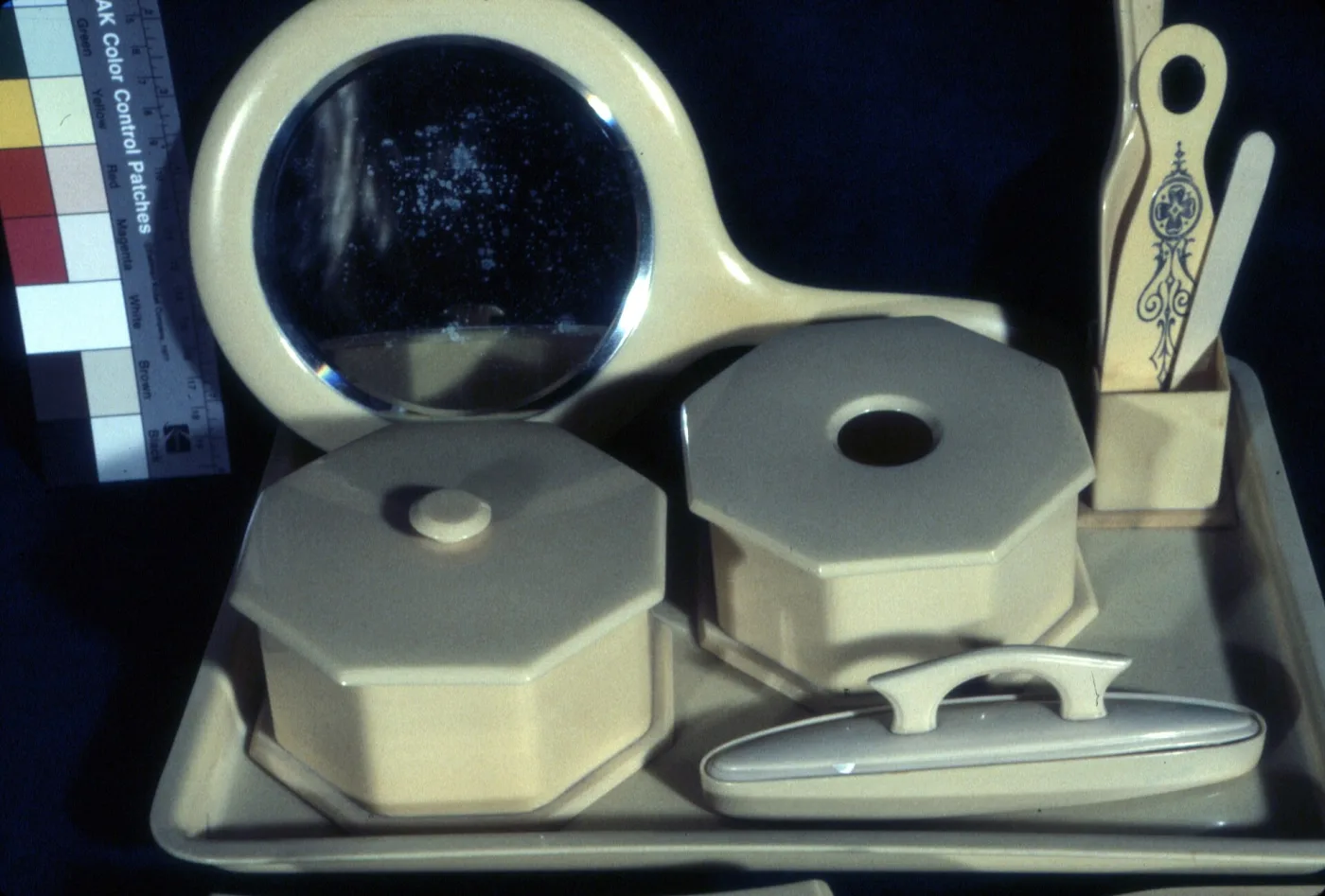
Celluloid was the first commercially successful synthetic plastic and became the dominant material for affordable dresser sets from approximately 1900 to 1940. Made from cellulose nitrate and camphor, celluloid could be molded, dyed, and finished to imitate ivory (French Ivory), tortoiseshell, amber, jade, and other expensive natural materials. Major celluloid dresser set brands include Pyralin (DuPont), Amerith, Ivorine, and Fiberloid. Celluloid can be identified by its slightly warm feel compared to modern plastics, a faint camphor odor when rubbed vigorously, and its characteristic grain pattern when imitating ivory. Collectors should note that celluloid is highly flammable and can deteriorate over time, producing a vinegar-like smell when degrading.
Bakelite
Bakelite, the first fully synthetic plastic patented by Leo Baekeland in 1907, appeared in dresser sets primarily during the Art Deco era of the 1920s-1940s. Unlike celluloid, Bakelite is a thermoset plastic that does not melt or burn easily. Dresser sets in Bakelite feature bold Art Deco colors including butterscotch, deep red (often called "cherry"), marbled green, and black. Bakelite can be identified by the Simichrome test (rubbing with Simichrome polish on a cloth produces a yellow residue) or the hot water test (a Bakelite piece held under hot water releases a distinctive formaldehyde odor). Bakelite dresser sets, especially in rare colors and complete configurations, have become highly collectible.
Guilloche Enamel
Guilloche enamel is created by applying translucent colored enamel over engine-turned silver, producing a shimmering, patterned effect beneath the glass-like enamel surface. This technique was perfected in the late Victorian and Edwardian periods and became one of the most prestigious finishes for dresser sets. Colors range from pale pastels to deep cobalt blue and emerald green. Authentic guilloche enamel shows the geometric pattern of the engine turning through the translucent enamel layer. Check for chips, cracks, and repairs in the enamel, as these significantly affect value. Leading producers included Mappin & Webb, Liberty & Co., and numerous Continental European firms.
Crystal and Glass
Crystal and glass components appear in dresser sets primarily as powder jars, ring holders, perfume bottles, and trinket boxes. Cut crystal pieces from makers like Hawkes, Libbey, Dorflinger, and Val Saint Lambert often featured sterling silver or silver-plated lids. Pressed glass jars with silver-plated lids were more affordable alternatives. Look for quality of cutting, clarity of glass, and maker marks on metal components. Crystal pieces with intact sterling lids bearing identifiable hallmarks are particularly valuable.
Ivory and Bone
Genuine ivory was used in luxury dresser sets before the twentieth century and can be distinguished from celluloid and bone by its fine, cross-hatched Schreger lines visible under magnification. Bone shows a more porous, less regular grain pattern. Due to international ivory trade restrictions under CITES, ivory dresser sets face legal limitations on sale and transport. Collectors should be aware of local and national regulations. Many pieces labeled "ivory" are actually celluloid or bone, and testing by a qualified appraiser is recommended before assuming a piece is genuine ivory.
Tortoiseshell
Real tortoiseshell, from the hawksbill sea turtle, was prized for its warm, translucent brown and amber patterns. It was used for dresser set backs, combs, and decorative inlays, often combined with silver piqué work (tiny silver or gold pins set into the shell in decorative patterns). Like ivory, genuine tortoiseshell is now protected under CITES regulations. Authentic tortoiseshell can be distinguished from celluloid imitations by its warmth to the touch, its ability to be polished to a high gloss, and the irregularity of its natural pattern compared to the more uniform patterns of synthetic alternatives.
Key Components
A complete vanity or dresser set could contain numerous individual pieces. Understanding each component helps collectors assess completeness and identify partial sets.
Hand Mirrors
The hand mirror is typically the largest and most decorative piece in a dresser set, making it the centerpiece of any collection. Antique hand mirrors feature beveled glass (in higher-quality examples), and the reverse side carries the primary decorative treatment of the set, whether that is repoussé silver, guilloche enamel, painted celluloid, or carved ivory. The mirror glass itself was originally mercury-silvered, which produces a slightly warmer, more golden reflection than modern aluminum-backed mirrors. Original mercury glass is a positive indicator of age but may show foxing, dark spots, or clouding. The handle attachment method can indicate age: early mirrors have integral handles formed from the same silver sheet, while later production often used separate, soldered handles.
Hairbrushes
Dresser set hairbrushes come in two main forms: handled brushes for ladies and flat military-style brushes for gentlemen. The decorated back panel matches the mirror and other set pieces. Original natural bristles (typically boar bristle) are a positive age indicator, though many antique brushes have been re-bristled over the decades. The bristle plate on silver brushes is usually removable, held in place by a crimped rim or small screws. Check for a maker mark on the bristle plate rim, as this can confirm the manufacturer.
Combs
Combs in dresser sets were made from tortoiseshell, horn, celluloid, or hard rubber. They are often the most fragile and frequently missing component of surviving sets. A comb in original condition with all teeth intact adds notable value to a set. Some luxury sets included multiple combs: a dressing comb with wide-spaced teeth and a fine-tooth comb for detailed work.
Trays and Pin Trays
Dresser trays held the set's pieces on the dressing table and ranged from small pin trays (for hairpins and hat pins) to large oval or rectangular trays that accommodated the entire set. Sterling silver trays typically match the decorative scheme of the set and carry hallmarks on the base. Glass or crystal trays with silver rims were popular in the Edwardian and Art Deco periods.
Powder Jars and Hair Receivers
Powder jars held face powder or talc, while hair receivers, a uniquely Victorian invention, had a hole in the lid through which women collected hair from their brushes to later use in hairpieces, jewelry, or craft projects. The hair receiver is one of the most distinctive components of a Victorian dresser set and its presence strongly suggests a pre-1920 date. Both jars typically feature crystal or glass bodies with decorated silver or celluloid lids that match the rest of the set.
Ring Holders and Trinket Boxes
Ring trees (vertical stands with finger-like branches) and ring trays (small dishes) kept jewelry safe on the dressing table. Trinket boxes with hinged lids stored small valuables. In sterling sets, these pieces often carry the same hallmarks and decorative motifs as the larger pieces, confirming they belong to the original set.
Nail Tools and Manicure Items
Larger dresser sets often included manicure components: nail buffers (with chamois-covered pads), nail files, cuticle pushers, and small scissors. The nail buffer typically has a decorated back matching the set, while the metal tools may carry the maker's stamp. Complete manicure components significantly increase a set's value.
Button Hooks and Shoe Horns
Button hooks, essential for fastening the many small buttons on Victorian and Edwardian boots and gloves, are common in sets from this period. Shoe horns with decorated silver handles also appear in gentleman's sets. Both items feature handles that match the set's decorative theme. Button hooks with their original silver handles intact and unrepaired are increasingly scarce.

Major Makers & Manufacturers
Identifying the maker of a vanity set is one of the most important steps in establishing its value. The following manufacturers are among the most significant and collectible names in dresser set production.
Tiffany & Co.
Tiffany produced some of the finest American sterling silver dresser sets from the 1870s through the mid-twentieth century. Their sets are marked with "TIFFANY & CO." along with pattern numbers, order numbers, and "STERLING." Tiffany's Chrysanthemum, Audubon, and Vine patterns are among the most valuable dresser set patterns. Tiffany sets command premium prices due to the firm's prestige, quality of workmanship, and the depth of their silver. A complete Tiffany sterling dresser set in a desirable pattern can bring several thousand dollars at auction.
Gorham Manufacturing Company
Gorham, based in Providence, Rhode Island, was one of the largest American silver manufacturers. Their dresser sets span from ornate Victorian patterns to clean Art Deco designs. Gorham marks include the anchor logo, "STERLING," and pattern numbers. The firm's Martele line, produced from 1897 to about 1912, features hand-hammered Art Nouveau designs that are exceptionally rare and valuable. Gorham also produced extensive lines of silver-plated dresser sets under their subsidiary brands.
International Silver Company
Formed in 1898 through the merger of numerous Connecticut silver companies, International Silver produced dresser sets under multiple brand names including Rogers Brothers, Meriden Britannia, and Wilcox Silver Plate. Their silver-plated dresser sets were among the most widely sold in America. Sets marked "1847 Rogers Bros." (the electroplate line) or "International Sterling" (the sterling line) are frequently encountered by collectors. Quality varies considerably across their product lines.
Whiting Manufacturing Company
Whiting, active from 1866 until its acquisition by Gorham in 1926, produced exceptional sterling silver dresser sets featuring the Lily of the Valley, Imperial Queen, and Heraldic patterns. Whiting's work is distinguished by high-quality die work and detailed ornamentation. Their marks include "W" with a griffin and "STERLING." Whiting sets are avidly collected, particularly the Art Nouveau-era pieces with naturalistic floral decoration.
Foster & Bailey
This Providence, Rhode Island firm specialized in sterling silver dresser accessories and vanity items from the 1870s through the 1920s. Foster & Bailey is particularly known for Art Nouveau-style dresser sets featuring flowing female figures, cherubs, and elaborate floral motifs. Their mark is "F&B" in a rectangle. The firm produced both complete sets and individual pieces of exceptional quality, and their Art Nouveau work rivals that of any American silver manufacturer.
William Comyns & Sons (British)
William Comyns of London was arguably the most prolific British maker of silver dresser sets during the late Victorian and Edwardian periods. His firm specialized in elaborately embossed silverware featuring Reynolds angels (cherubs), scrolling foliage, and figural scenes. Comyns pieces bear London hallmarks with his maker's mark "WC" (various forms depending on the period). A complete Comyns dresser set with consistent hallmark dates and the characteristic angel or cherub decoration is highly prized by collectors of British silver.
Mappin & Webb (British)
One of England's most prestigious silversmiths, Mappin & Webb produced refined dresser sets from the Victorian era through the twentieth century. They are especially noted for their Edwardian guilloche enamel sets, which combine engine-turned silver with translucent colored enamels in exquisite quality. Mappin & Webb pieces carry Sheffield or London hallmarks along with the firm's maker mark. Their presentation sets in original fitted cases are particularly desirable.
European Makers
Continental European firms made significant contributions to dresser set production. In France, Christofle and Cardeilhac produced silver and silver-gilt sets of remarkable elegance. Austrian and German firms created elaborate guilloche enamel sets, particularly during the Art Nouveau and Art Deco periods. Scandinavian silversmiths, including Georg Jensen and David Andersen, produced distinctive modernist sets that appeal to collectors of Nordic design. Russian firms, particularly those supplying the court such as Fabergé and the Grachev Brothers, created the most opulent dresser sets ever made, with enamel, precious stones, and gold embellishments.
Identifying Hallmarks & Marks
Hallmarks and maker marks are the collector's most powerful identification tools. Learning to read these marks accurately is essential for dating and authenticating vanity sets.
Silver Hallmarks
British silver hallmarks follow a systematic format: the maker's mark (initials in a distinctive shield), the assay office mark (a symbol indicating the city where the silver was tested), the standard mark (lion passant for sterling), and the date letter (a letter in a specific font and shield shape indicating the year of manufacture). London uses a leopard's head, Birmingham an anchor, Sheffield a crown (pre-1975) or a rose. Using a hallmark reference guide, collectors can determine the exact year a piece was made. American silver lacks a comparable centralized hallmarking system; instead, pieces are marked "STERLING" or "925" alongside maker-specific marks and pattern numbers.
Celluloid Markings
Celluloid dresser sets carry brand names molded or stamped into the material, typically on the underside or back of pieces. Common markings include "PYRALIN" (DuPont's brand), "AMERITH," "FRENCH IVORY," "IVORINE," and "FIBERLOID." Some sets carry a patent number that can be researched through the U.S. Patent Office database to determine the date and manufacturer. The color name may also be stamped, such as "IVORY" or "AMBER," referring to the celluloid finish rather than the actual material.
Maker Stamps and Logos
Beyond hallmarks, manufacturers used various proprietary stamps. Gorham's anchor, Tiffany's spelled-out name, Whiting's griffin, and Reed & Barton's eagle are all recognizable logos. On silver-plated sets, look for marks on the underside of trays, the rims of lids, and the backs of brushes. Some manufacturers used different marks for different product lines or time periods. A reliable silver marks reference book, such as "Encyclopedia of American Silver Manufacturers" by Dorothy Rainwater, is an invaluable resource for identification.
Patent Numbers
Many dresser set pieces, particularly celluloid items and silver designs from the late nineteenth and early twentieth centuries, bear patent numbers. U.S. design patents (marked "Des. Pat." or "D" followed by a number) and utility patents can be searched through the U.S. Patent and Trademark Office website. British registration marks (the diamond-shaped lozenge mark used from 1842-1883, and sequential numbers after 1884) provide exact registration dates. These numbers often reveal the designer, manufacturer, and precise date of a design's introduction.
How to Read and Interpret Marks
When examining marks, use a jeweler's loupe of at least 10x magnification. Good lighting and a clean surface are essential. Marks on silver may be struck inconsistently, with some partially obscured by later polishing. On celluloid, look for molded marks that may be shallow and hard to read. Photograph all marks clearly for later research. Compare marks against established reference databases and books. Be aware that some marks can be confusingly similar: for example, several different manufacturers used the initials "WC" or "S&Co." Context clues such as style, weight, and construction quality help distinguish between makers who share similar marks.
Dating Vanity Sets by Style
Decorative style is one of the most reliable indicators of a vanity set's age. Each major design period left distinctive visual signatures that trained collectors can recognize at a glance.
Georgian (1714-1837)
Georgian toilet services are characterized by restrained elegance and neoclassical motifs. Look for bright-cut engraving, beaded borders, gadrooned rims, and classical urns or swag designs. Shapes are typically oval or rectangular with straight sides. The silver is often heavy-gauge with a smooth, hand-finished quality. Pieces from this era are rare and almost exclusively found in sterling silver. Monograms or family crests are common, often within ornamental cartouches.
Victorian (1837-1901)
Victorian dresser sets evolved through several sub-styles. Early Victorian (1837-1860) features heavy rococo revival ornamentation with scrolls, flowers, and naturalistic detail. Mid-Victorian (1860-1880) shows Gothic and Renaissance revival influences with more architectural motifs. Late Victorian (1880-1901) embraces aesthetic movement designs with Japanese-inspired motifs, sunflowers, and artistic naturalism. Throughout the era, repoussé work (raised decoration formed by hammering from the reverse) is prevalent. Sets tend to be heavily decorated with minimal plain surfaces.
Art Nouveau (1890-1910)
Art Nouveau vanity sets are among the most visually dramatic and collectible. Defining characteristics include sinuous, flowing lines inspired by natural forms; figural elements such as maidens with flowing hair; water lilies, irises, and other botanical motifs; and asymmetrical compositions. Surfaces may be partly matte and partly polished to create contrast. Sterling silver Art Nouveau dresser sets by Unger Brothers, William B. Kerr, and Foster & Bailey are highly sought after, with individual pieces commanding strong prices even when separated from their original sets.
Edwardian (1901-1910)
Edwardian vanity sets reflect the period's elegance and restraint. Designs are lighter and more delicate than Victorian predecessors, with fine pierced work, ribbon-and-swag motifs, and restrained engraving. Guilloche enamel over engine-turned silver is the signature Edwardian technique for dresser sets. Colors tend toward pastels: soft pink, pale blue, lilac, and mint green. Engine-turned patterns visible beneath the enamel include sunburst, wave, and barley-twist designs. Edwardian sets often feature monograms in flowing script within laurel wreaths.
Art Deco (1920-1940)
Art Deco vanity sets represent a dramatic departure from earlier organic styles. Look for geometric shapes including stepped pyramids, zigzag patterns, sunburst motifs, and angular forms. Materials expand to include chrome, Bakelite, and lacquered metals alongside traditional silver. Color palettes are bold: black and red, green and gold, or striking monochromatic schemes. Machine-made precision is evident, with clean lines and minimal handwork. Celluloid sets from this era feature Deco-influenced shapes with streamlined profiles. Complete Art Deco dresser sets in chrome and Bakelite are increasingly popular with mid-century modern collectors.
Authentication & Spotting Reproductions
The desirability and value of antique vanity sets have inevitably attracted reproductions and fakes. Knowing what to look for protects collectors from costly mistakes.
Common Fakes and Reproductions
The most frequently encountered reproductions include modern silver-plated sets aged to appear antique, contemporary celluloid or resin pieces sold as genuine antique French Ivory, and assembled sets where pieces from different original sets are combined and sold as a matched set. Some dealers also apply fake hallmarks to unmarked or plated pieces, or add spurious maker marks to enhance perceived value. Indian and Southeast Asian reproductions of Victorian and Art Nouveau silver dresser sets have flooded the market in recent decades, often with convincing aging but telltale construction differences.
Red Flags to Watch For
Several warning signs suggest a set may not be authentic. Hallmarks that appear too crisp or evenly struck may indicate modern application. Uniform patina that looks applied rather than naturally accumulated is suspicious. Machine-made uniformity in pieces that should show handwork inconsistencies is a red flag. Mismatched patina or wear patterns among pieces in a set suggest assembly from different sources. Modern screws, glue, or construction techniques visible on examination indicate later manufacture or repair. Sterling marks on pieces that feel too light for their size suggest thin modern silver rather than the heavier gauge typical of antique production.
Testing Methods
Several practical tests help authenticate dresser set pieces. For silver, a neodymium magnet test (silver is non-magnetic, so attraction indicates a ferrous base metal) provides a quick initial screen. The ice test (silver conducts heat rapidly, so ice melts quickly on genuine silver) offers additional confirmation. Acid testing kits can confirm silver content but should only be used in inconspicuous areas. For celluloid versus modern plastic, the hot needle test (celluloid has a distinctive camphor smell) and the hot water test (genuine celluloid warms quickly and may emit a slight odor) are helpful. Always exercise caution with flame tests on celluloid due to its extreme flammability.
Comparing Authentic vs. Reproduction
Authentic antique silver shows wear patterns consistent with use: polishing marks running in one direction, slight softening of sharp edges, minor dings and dents from handling, and patina that accumulates heavily in recessed areas while remaining thinner on high points. Genuine antique celluloid may show slight yellowing or warping and has a warm, smooth feel distinct from modern plastics. Authentic sets exhibit consistent aging across all pieces, with matching patina, wear, and construction techniques. When examining a supposed matched set, compare hallmarks, decoration quality, and silver gauge across all pieces. Genuine matched sets were made at the same time by the same craftsmen, so there should be remarkable consistency in every detail.
Condition Assessment & Value Factors
Understanding the factors that drive value helps collectors make informed purchasing decisions and accurately assess their holdings.
Completeness
The completeness of a set is perhaps the single most important value factor. A full set with all original pieces is worth significantly more than the sum of its individual components. Determine the original configuration by researching the maker's catalog or pattern records. Common missing pieces include combs (which are fragile), small nail tools, and glass jars with matching lids. A set missing its mirror, the centerpiece, loses substantial value. Original presentation boxes or cases multiply value, sometimes doubling the price of a set without its case.
Silver Weight and Quality
For sterling silver sets, total silver weight is a baseline value factor. Heavier sets with thick-gauge silver are more valuable than lightweight pieces. The quality of decoration also matters enormously: hand-chased and hand-engraved sets command premiums over die-stamped production pieces. Look for depth and crispness of decoration, fineness of detail, and evidence of hand finishing. A well-executed hand-engraved monogram by a skilled engraver can actually add value, while poorly done monograms or removed monograms (leaving a buffed area) reduce value.
Maker Importance
Sets by prestigious makers command significant premiums. A Tiffany or Gorham Martele set will bring multiples of what a comparable unmarked or lesser-maker set achieves. Among British makers, William Comyns, Mappin & Webb, and Liberty & Co. are particularly sought after. For celluloid sets, branded examples (Pyralin, DuBarry) are more desirable than unmarked pieces. The maker's reputation, the rarity of the specific pattern, and the historical significance of the firm all contribute to the maker premium.
Rarity and Provenance
Unusual patterns, rare materials, limited production runs, and documented ownership histories all enhance value. A set with provenance linking it to a notable owner, a significant historical event, or a famous retailer carries added prestige. Exhibition history, publication in reference books, and inclusion in museum collections also contribute to provenance value. Even a simple handwritten note identifying the original owner and occasion of purchase adds context that collectors appreciate.
Current Market Trends
The market for antique vanity sets has evolved significantly in recent years. Art Nouveau silver sets have seen strong appreciation, driven by collector demand for the style's dramatic aesthetics. Edwardian guilloche enamel sets remain consistently popular and tend to hold value well. Art Deco sets in chrome and Bakelite have gained new collectors from the mid-century modern community. Victorian silver plate sets have softened in value as younger collectors show less interest in heavily ornate decoration. Celluloid sets in unusual colors or with original boxes are gaining recognition as collectible in their own right, though prices remain modest compared to silver. Complete sets with original cases consistently outperform partial sets at auction.
Care & Preservation
Proper care preserves both the beauty and value of antique vanity sets. Different materials require different approaches.
Cleaning Silver
Clean sterling and silver-plated dresser set pieces gently using a high-quality silver polish such as Hagerty or Wright's. Apply polish with a soft cloth, working with the grain of any engraving rather than against it. Avoid abrasive polishes or dips that strip patina from recessed areas, as this patina provides depth and visual contrast that enhances the appearance of decorative details. For heavily tarnished pieces, a professional conservation cleaning may be worthwhile. Never use household cleaning products, toothpaste, or baking soda, as these can scratch and damage silver surfaces. After polishing, rinse pieces thoroughly and dry completely to prevent water spots.
Storing Celluloid
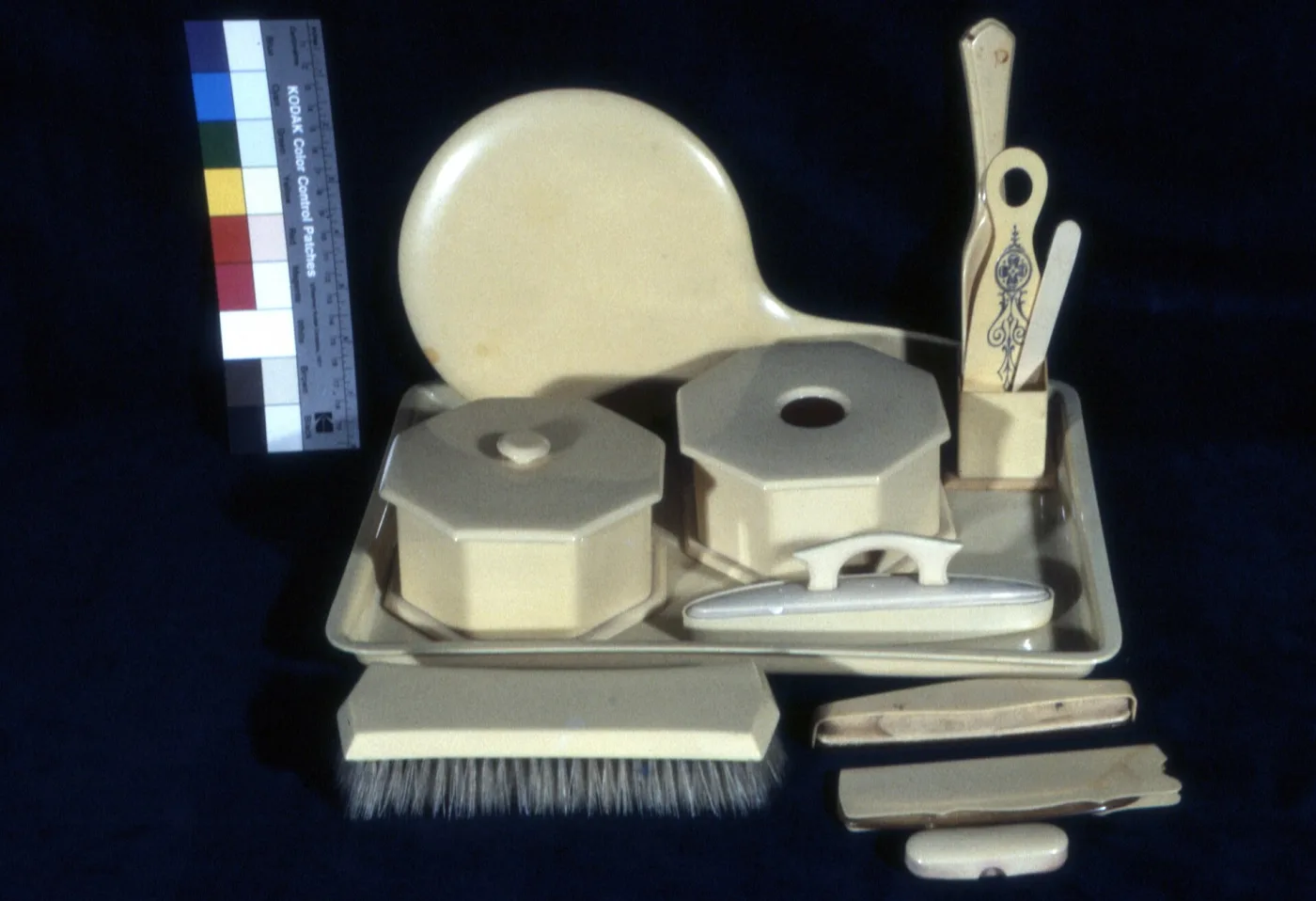
Celluloid requires specific storage conditions due to its inherent instability. Store celluloid dresser sets in a cool, dry environment away from direct sunlight, which causes yellowing and embrittlement. Avoid airtight containers, as celluloid can off-gas during deterioration and needs ventilation. Do not store celluloid in contact with rubber, which can cause staining. If a celluloid piece begins emitting a vinegar smell, isolate it from other items immediately, as the deterioration products can damage surrounding objects. Unfortunately, celluloid degradation is irreversible, though proper storage conditions slow the process considerably.
Preventing Tarnish
Anti-tarnish strips or cloths placed with stored silver pieces significantly reduce tarnish formation. Silica gel packets help control humidity. Store silver sets wrapped in acid-free tissue or Pacific Silvercloth, a specially treated fabric that absorbs tarnish-causing gases. Avoid rubber bands, newspaper, and plastic wrap, which can cause tarnish or damage. For displayed sets, regular light dusting with a soft cloth and periodic polishing every few months maintains appearance.
Display Tips
Displaying antique vanity sets enhances enjoyment while presenting preservation challenges. Choose display locations away from direct sunlight, heating vents, and bathrooms (where humidity fluctuates). A glass-enclosed display case reduces dust accumulation and tarnish while allowing visibility. For functional display on a dressing table, use a quality tray or mat beneath the set to protect both the set and the furniture surface. Rotating displayed items periodically helps prevent uneven light exposure. Ensure displayed pieces are stable and not at risk of falling, particularly tall mirrors and glass jars.
Building a Collection
Whether you are drawn to the opulence of Victorian silver or the streamlined geometry of Art Deco, building a collection of antique vanity sets is a rewarding pursuit that combines aesthetic appreciation with historical knowledge.
Where to Buy
Estate sales are often the best source for complete sets at reasonable prices, as many families are unfamiliar with the value of inherited dresser sets. Auction houses, from major firms like Christie's and Sotheby's to regional auction companies, regularly offer dresser sets in their silver and decorative arts sales. Antique shops and shows allow hands-on examination before purchase. Online platforms including eBay, Ruby Lane, and 1stDibs offer wide selection but require careful evaluation of photographs and seller descriptions. For high-value purchases, buying from established dealers who offer guarantees of authenticity provides important protection.
What to Look For
Begin by deciding on a collecting focus: a specific material (sterling silver, celluloid, enamel), a period (Victorian, Art Nouveau, Art Deco), a maker (Tiffany, Gorham, Comyns), or a type (travel sets, presentation sets). Focused collections tell coherent stories and allow deeper expertise. Always prioritize condition and completeness over decoration. A modest but complete set in excellent condition is a better purchase than a spectacular but damaged or incomplete one. Examine every piece carefully before buying, checking for repairs, replacements, and mismatched components.
Investment Potential
While no antique purchase should be viewed purely as an investment, certain categories of vanity sets have shown consistent appreciation. Art Nouveau sterling silver sets by recognized makers have performed strongly at auction over the past two decades. Edwardian guilloche enamel sets in excellent condition with all enamel intact are increasingly scarce and appreciated. Complete sets in original presentation cases from prestigious makers represent the best long-term value proposition. Celluloid sets, while currently modestly priced, may represent an undervalued category as collectors recognize their historical significance and design appeal. As with all antiques, buy what you love and can afford, educate yourself thoroughly, and purchase the best quality you can find.
Starter Sets
New collectors can enter the market affordably with silver-plated three-piece sets (mirror, brush, comb) from the early twentieth century, which can often be found for modest sums at estate sales. Celluloid sets from the 1920s-1930s, particularly Pyralin brand sets in their original boxes, offer excellent value and visual appeal. Single pieces from notable makers provide an entry point into collecting finer examples without the cost of a complete set. As your knowledge and eye develop, you can upgrade to more significant pieces and complete sets. Joining collector organizations, attending antique shows, and reading reference books accelerates the learning process and connects you with knowledgeable fellow collectors who can share expertise and sourcing tips.