Antique Hat Pins Identification Guide: Value, Dating & Authentication
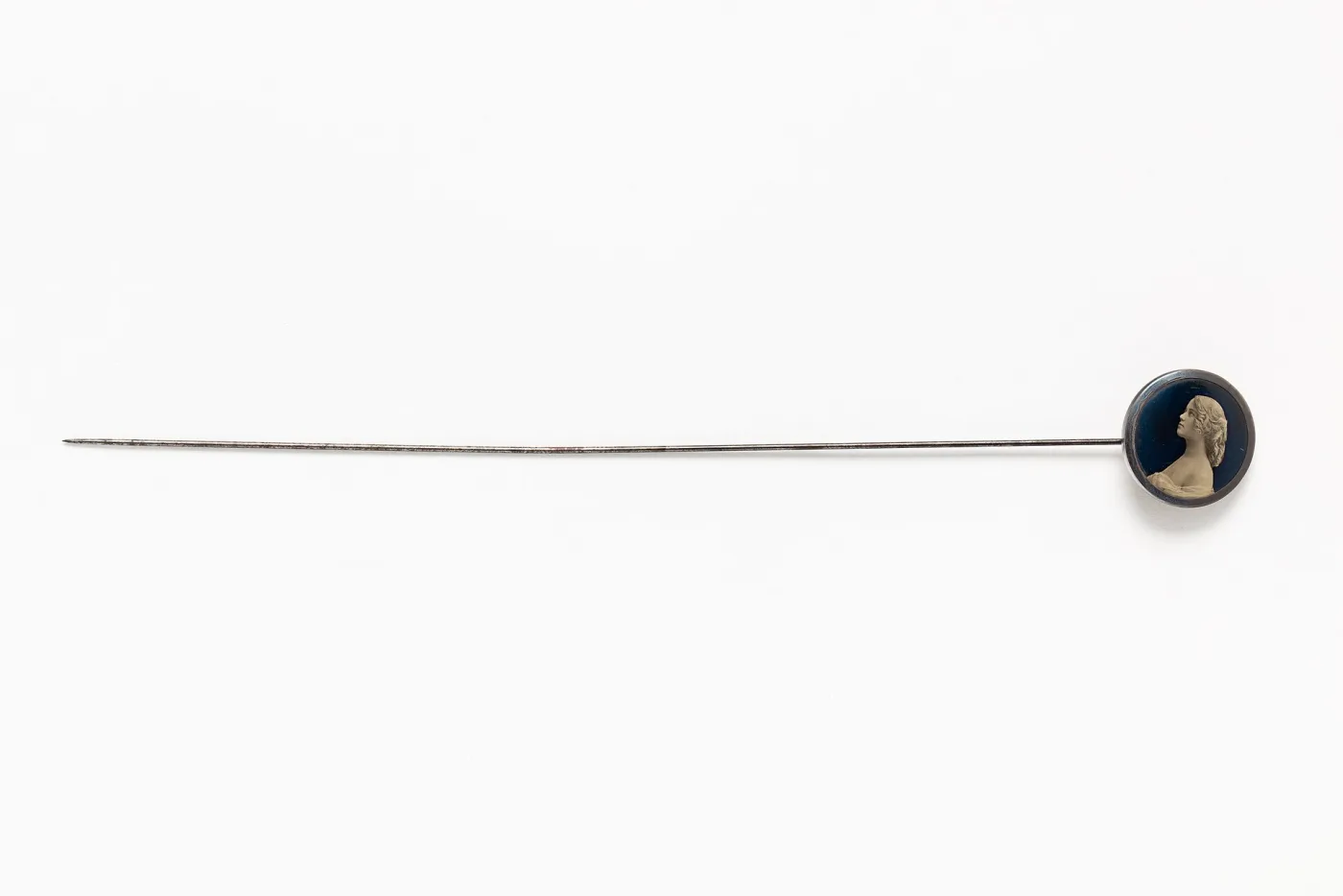
Antique hat pins represent a fascinating intersection of fashion, function, and decorative art from the Victorian and Edwardian eras. These long, ornamental pins, designed to secure elaborate hats to voluminous hairstyles, evolved from simple utilitarian objects into highly collectible works of art. Today, antique hatpins command significant attention from collectors, with rare examples fetching thousands of dollars at auction.
Understanding how to identify, authenticate, and value antique hat pins requires knowledge of historical fashion trends, manufacturing techniques, materials, and maker's marks. From simple brass pins to elaborate gold and gemstone creations, hatpins offer collectors a diverse and rewarding field of study that connects to broader themes of women's history, social change, and decorative arts.
This comprehensive guide will walk you through everything you need to know about antique hat pin identification, from recognizing period characteristics and evaluating materials to spotting reproductions and building a valuable collection. Whether you're a seasoned collector or just beginning to explore this captivating collectible category, you'll gain the expertise needed to confidently identify and assess antique hatpins.
Table of Contents
- The History of Hat Pins
- Anatomy of a Hat Pin
- Dating Antique Hat Pins by Era
- Materials and Construction Techniques
- Identifying Maker's Marks and Hallmarks
- Popular Styles and Design Motifs
- Evaluating Quality and Craftsmanship
- Valuation Factors and Price Ranges
- Authentication and Spotting Reproductions
- Condition Assessment and Grading
- Rare and Highly Collectible Examples
- Building a Hat Pin Collection
- Display and Storage Considerations
- Current Market Trends and Investment Potential
- Research Resources and Expert Guidance
The History of Hat Pins
The golden age of hat pins began in the 1850s and reached its zenith during the late Victorian and Edwardian periods, roughly spanning from the 1880s through the 1920s. This era coincided with the fashion for increasingly large and elaborate women's hats, which required substantial pins to secure them to the massive hairstyles of the period.
Victorian Era Hat Pins (1850s-1900)
Early Victorian hatpins were relatively simple affairs, often measuring 6 to 8 inches in length with modest decorative heads. As the century progressed and hats grew larger, hatpins became longer and more ornate. By the 1890s, hatpins had evolved into status symbols, with wealthy women commissioning elaborate custom designs featuring precious metals and gemstones.
The Victorian period saw hatpin heads decorated with everything from simple glass beads to intricate celluloid flowers, enameled designs, and miniature portraits. Materials reflected the owner's social standing, with upper-class women wearing gold and silver pins set with diamonds, pearls, or colored gemstones, while middle-class women opted for gilt brass, pinchbeck, or rolled gold alternatives.
Edwardian Era Hat Pins (1901-1920)
The Edwardian era represented the peak of hatpin production and creativity. Pins from this period often exceeded 12 inches in length to accommodate the enormous picture hats popular during the early 1900s. Manufacturers competed to create increasingly inventive designs, incorporating Art Nouveau motifs, plique-a-jour enameling, and innovative mechanical features.
This period saw the introduction of specialty hatpins, including those with hidden powder compacts, perfume reservoirs, or "trembler" designs where decorative elements moved with the wearer's motion. The craftsmanship of Edwardian hatpins often surpassed that of earlier periods, making them particularly desirable to modern collectors.
The Decline and Legacy
By the 1920s, changing fashion trends toward smaller, closer-fitting cloche hats reduced the need for long hatpins. The tradition gradually faded as women's hairstyles became shorter and more practical during the flapper era. Today, antique hatpins serve as tangible connections to a bygone era of elaborate women's fashion and provide insights into the social history, manufacturing capabilities, and aesthetic sensibilities of their time.
Anatomy of a Hat Pin
Understanding the basic components of a hatpin is essential for proper identification and evaluation. Each element contributes to the pin's overall value, authenticity, and historical significance.
The Pin Shaft
The shaft typically measures between 6 and 15 inches in length, though exceptional examples may exceed these dimensions. Victorian-era pins generally range from 6 to 10 inches, while Edwardian specimens often measure 10 to 15 inches to accommodate larger hats. The shaft should be straight, sturdy, and free from bends or breaks, as damage significantly reduces value.
Most shafts were manufactured from steel, though brass, bronze, and other metals were also used. The metal should show appropriate aging patina consistent with the pin's purported age. Modern reproductions often feature overly bright or perfectly uniform metal surfaces that lack the subtle variations of genuine antique examples.
The Decorative Head
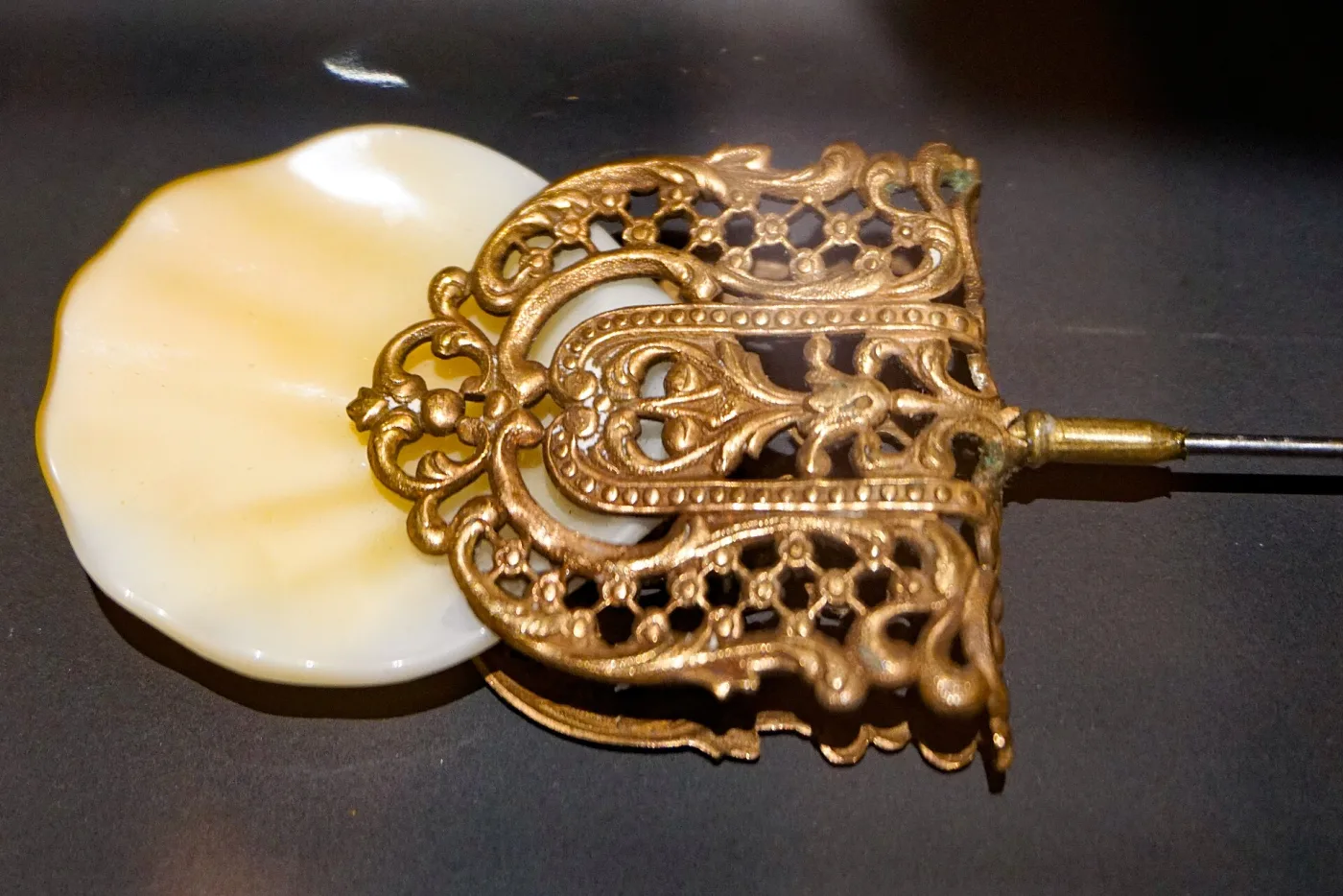
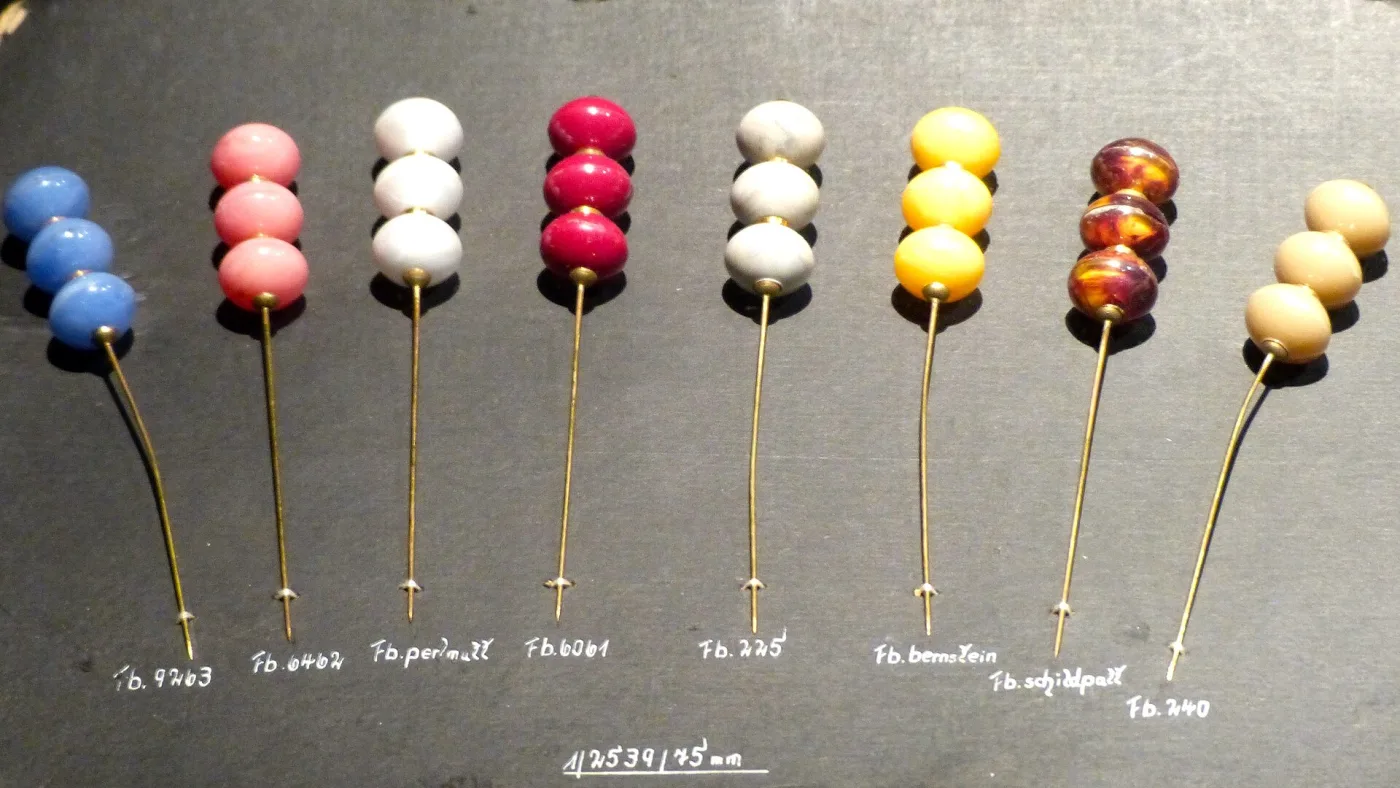
The head represents the most visually distinctive and valuable component of a hatpin. Heads were created in an astounding variety of materials, including precious metals, gemstones, glass, enamel, celluloid, jet, ivory, mother-of-pearl, and ceramics. The quality of workmanship, rarity of materials, and aesthetic appeal of the head primarily determine a hatpin's collector value.
Authentic antique heads should show signs of hand-craftsmanship, particularly in earlier examples. Machine-made components became more common in the early 20th century, but even these should exhibit period-appropriate manufacturing techniques and wear patterns consistent with genuine age.
The Junction and Attachment Method
The connection between head and shaft varies according to manufacturing period and quality. High-end pins feature soldered connections or threaded screws, while less expensive examples may use simple glue or press-fit attachments. Examining the junction point can reveal important clues about authenticity, as modern reproductions often employ attachment methods inconsistent with historical practices.
Original hatpins should show natural wear at stress points, particularly where the head meets the shaft. Complete absence of wear may indicate a reproduction or a pin that was never used, while excessive damage suggests improper handling or storage over the years.
The Point and Protector
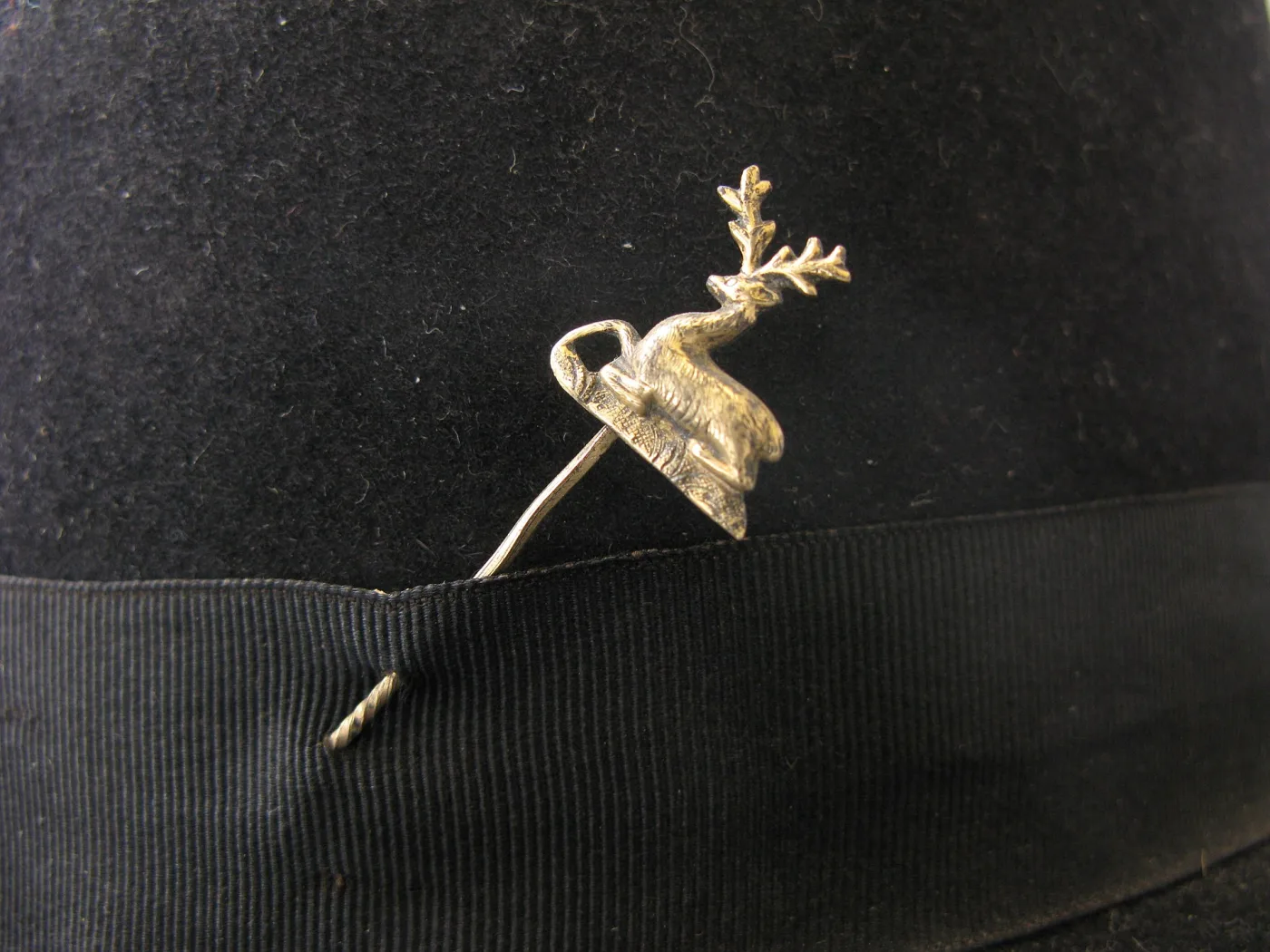
Authentic period hatpins feature sharp, functional points necessary for penetrating multiple layers of hat material and hair. Many original pins included removable safety caps or protectors, though these accessories are frequently lost over time. Finding a hatpin with its original protector significantly enhances value and confirms authenticity.
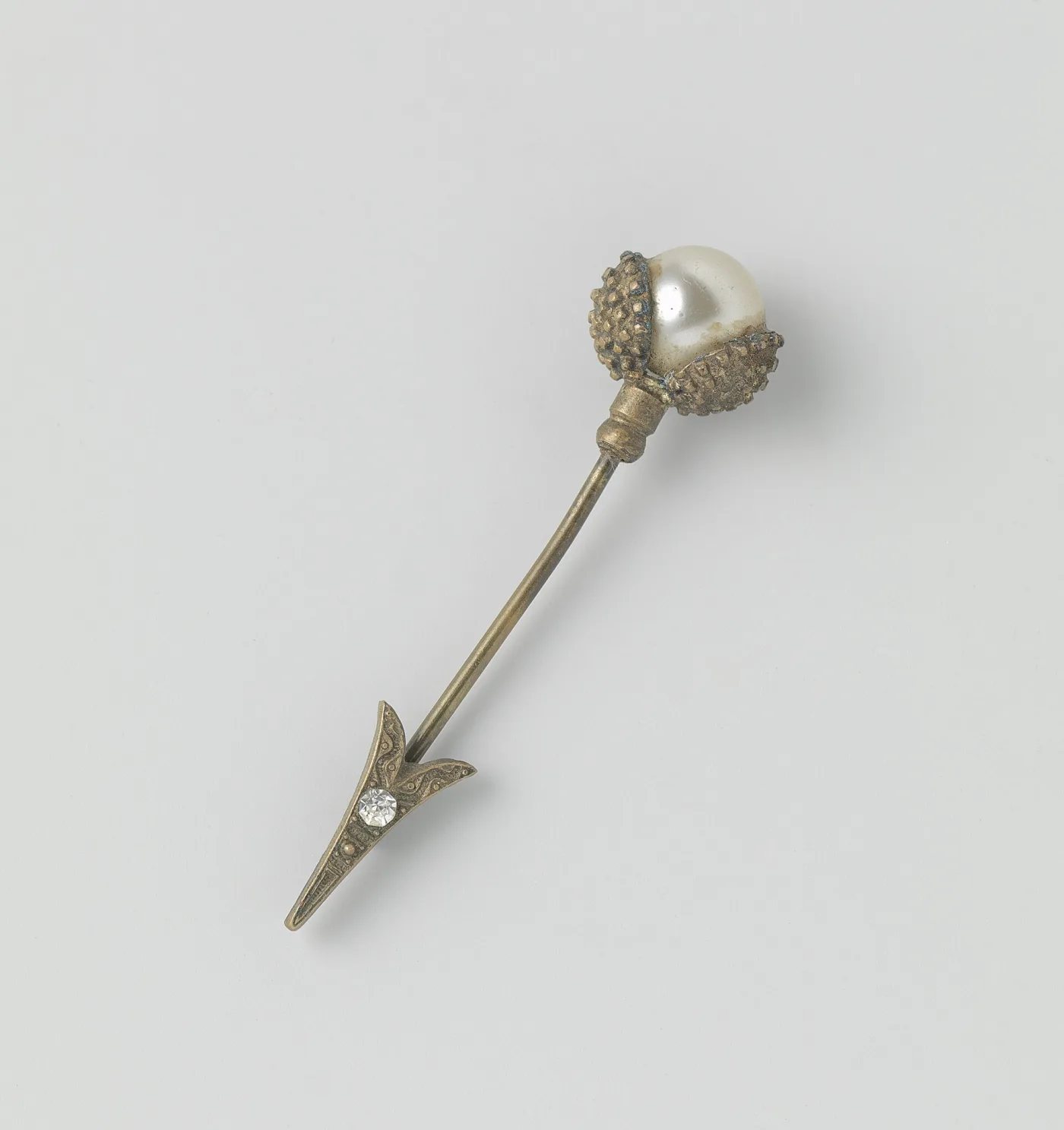
Dating Antique Hat Pins by Era
Accurately dating antique hatpins requires examining multiple factors including length, materials, decorative styles, and manufacturing techniques. Each historical period produced distinctive characteristics that help identify when a pin was made.
Early Victorian Period (1850s-1870s)
Hatpins from this early period are relatively rare in the collector market. They typically measure 6 to 8 inches in length and feature simple, restrained decorative heads. Common materials include brass, pinchbeck (copper-zinc alloy resembling gold), cut steel, and jet. Decorative motifs reflect broader Victorian aesthetics, including mourning jewelry influences, classical cameos, and natural forms like flowers or insects.
Construction methods from this period show primarily hand-fabrication with soldered connections. The metalwork often displays slight irregularities characteristic of handcrafting. Heads tend toward smaller, more conservative designs compared to later extravagant examples.
Late Victorian Period (1880s-1900)
This period saw explosive growth in hatpin production and creativity. Lengths increased to 8 to 12 inches as hats grew larger and more elaborate. The range of available materials expanded dramatically, incorporating colored glass, celluloid, porcelain, and semi-precious stones alongside traditional metals.
Late Victorian hatpins often feature romantic, naturalistic motifs including flowers, birds, butterflies, and female figures. The Art Nouveau movement began influencing designs in the 1890s, introducing flowing, organic forms and whiplash curves. Enamelwork became increasingly sophisticated, with guilloche and champlevé techniques creating colorful, intricate surfaces.
Edwardian Era (1901-1914)
Edwardian hatpins represent the pinnacle of the form's development, often measuring 10 to 15 inches or longer. This era produced the most elaborate and valuable examples, featuring exceptional craftsmanship and precious materials. Art Nouveau reached its height during the early Edwardian period, with designs emphasizing natural forms, feminine figures, and flowing lines.
High-end Edwardian pins showcased advanced techniques including plique-a-jour enameling (translucent enamel without backing, resembling stained glass), fine filigree work, and pavé-set gemstones. Novelty designs proliferated, including mechanical hatpins with moving parts, concealed compartments, and trembler elements with springs allowing decorative portions to quiver with movement.
Late Edwardian and WWI Era (1914-1920)
The First World War marked significant changes in hatpin design and production. Materials shortages led to increased use of base metals, glass, and plastics. Patriotic themes became common, with pins featuring flags, military insignia, and symbolic motifs. Quality generally declined from pre-war standards as manufacturers focused on efficiency and economy.
By the late 1910s, changing fashion toward smaller hats began reducing demand for long hatpins. Late examples from this period may show transitional characteristics, combining traditional forms with emerging Art Deco geometric influences that would dominate the 1920s.
1920s Decline
Hatpin production dramatically decreased during the 1920s as cloche hats became fashionable, requiring only short pins or alternative fastening methods. Remaining examples from this era tend toward simpler, more streamlined designs reflecting Art Deco aesthetics. These later pins have less collector interest compared to Victorian and Edwardian specimens, though Art Deco examples with strong geometric designs attract specialized collectors.
Materials and Construction Techniques
The materials used in hatpin construction provide crucial information about age, origin, quality, and value. Understanding period-appropriate materials helps authenticate pins and assess their relative worth in the collector market.
Precious Metals
Gold hatpins were luxury items worn by wealthy women. Most gold examples feature 9-karat, 14-karat, or 18-karat gold, with higher karatages indicating greater value. British pins often bear hallmarks indicating gold content, maker, and assay office. American gold pins may be marked with karat numbers or quality stamps.
Sterling silver hatpins are more common than gold examples but still represent quality pieces. Authentic silver pins should bear appropriate hallmarks or "Sterling" stamps. Silver-plated or rolled gold pins offered affordable alternatives to solid precious metals and are frequently encountered in the collector market. These examples can still possess significant value if well-crafted and in good condition.
Base Metals
Brass, bronze, and gilt metal were widely used for middle-market hatpins. These materials allowed manufacturers to create elaborate decorative effects at accessible price points. Quality varies considerably, with better examples featuring thick gilt coatings over substantial brass cores, while cheaper pins used thin plating over pot metal that degrades over time.
Pinchbeck, a copper-zinc alloy developed to simulate gold, appears frequently in Georgian and early Victorian jewelry including hatpins. Authentic pinchbeck develops a distinctive warm patina over time and possesses greater weight than modern brass reproductions. Cut steel, popular during the late 18th and early 19th centuries, features small faceted studs riveted to backing plates, creating glittering surfaces resembling diamonds.
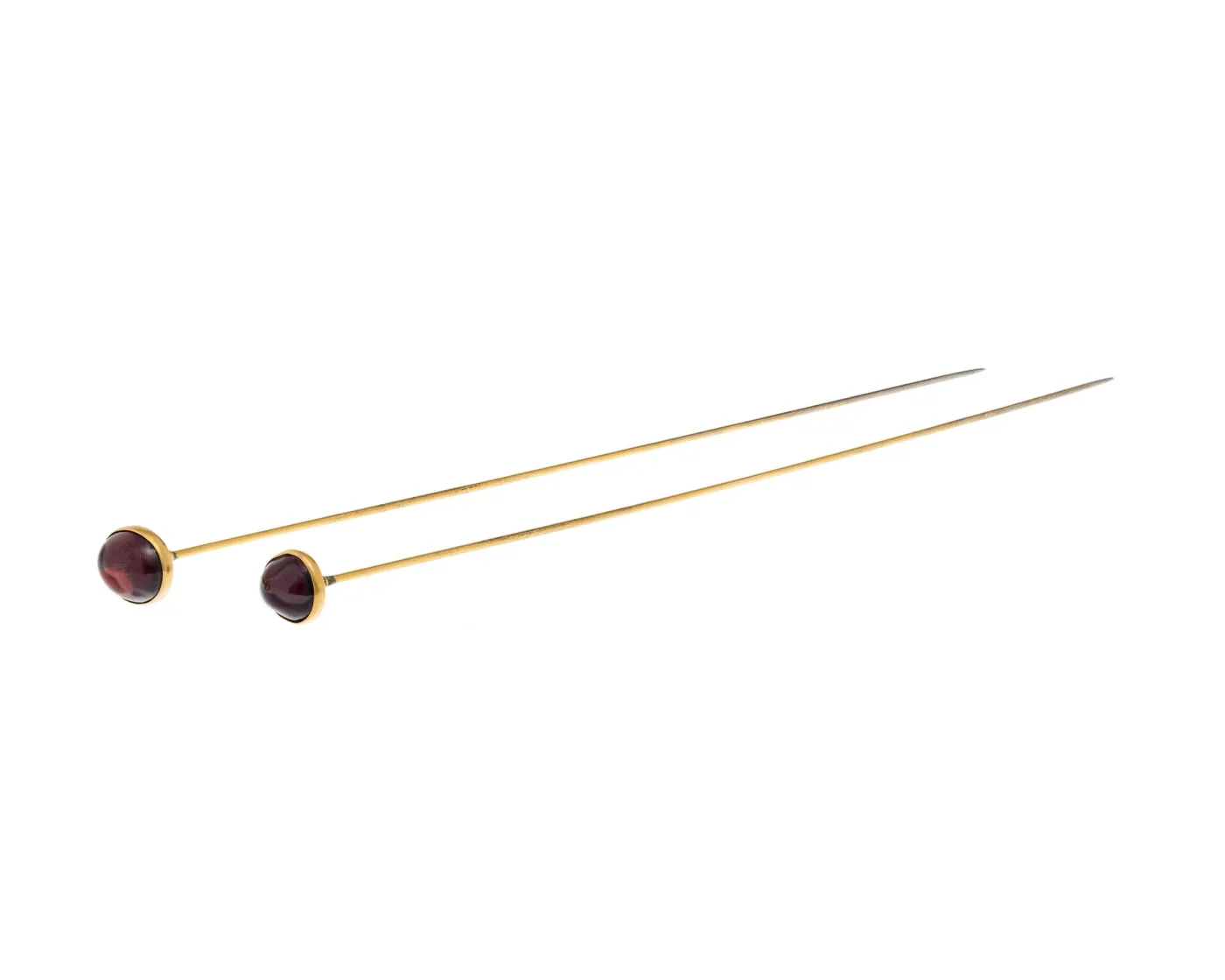
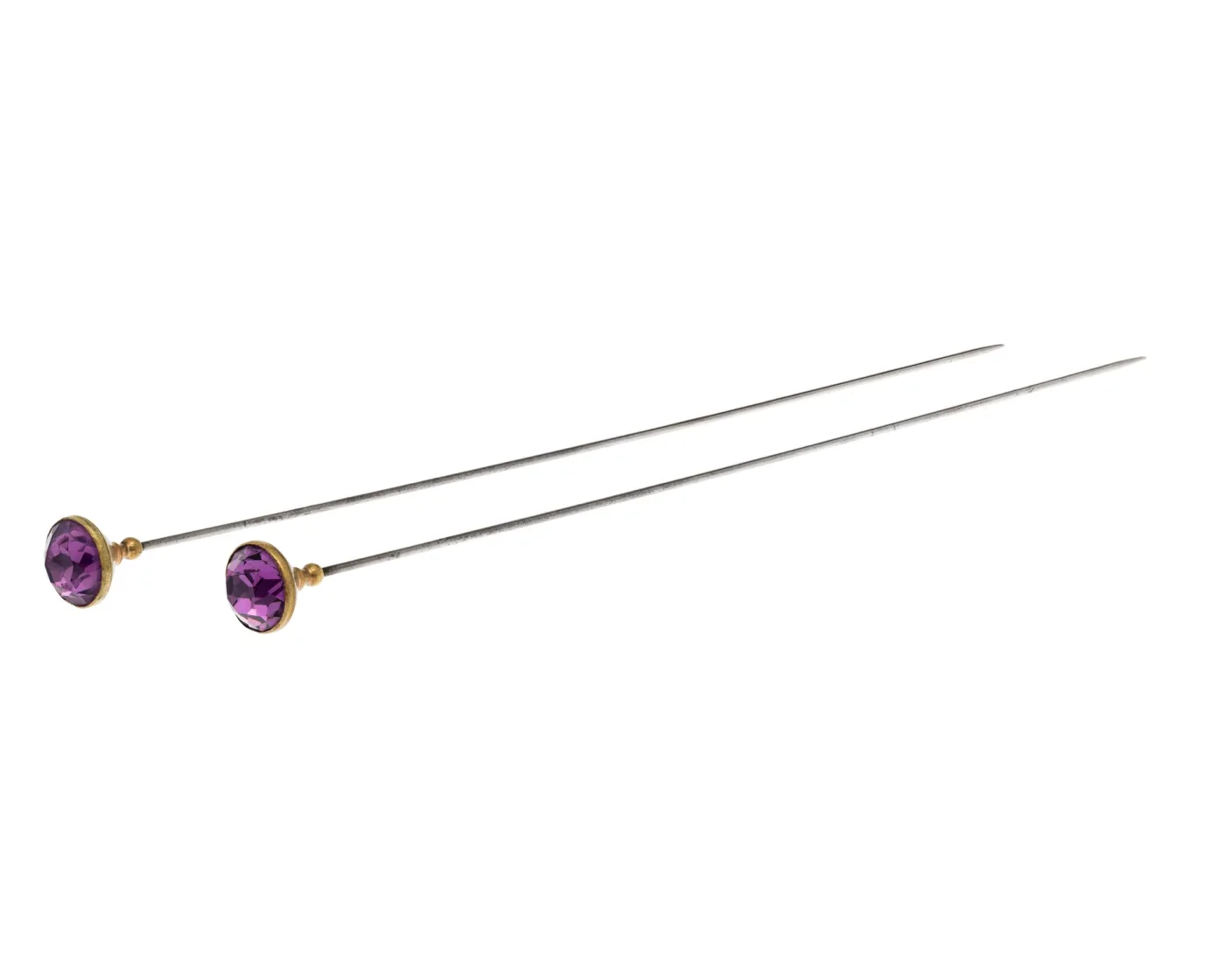
Both pairs came out of one Stockholm house, and at arm's length they do the same job. The differences that set the price are all close-range. The garnets are domed cabochons in a thin gold collet that gets out of the way and lets the stone carry the piece; the purple stones are faceted glass in a much heavier gilt-brass mount, because base metal has to be thicker to hold a stone that size securely. Weight settles most arguments in the hand — a gold collet on a steel shaft feels dense for its size, while a hollow gilt-brass mount of twice the volume feels like nothing. Neither pin is a fake. The second was sold honestly, to a different customer, at a fraction of the price.
Gemstones and Glass
Genuine gemstones including diamonds, pearls, sapphires, rubies, emeralds, and opals appear in high-end hatpins. Semi-precious stones like amethyst, citrine, garnet, and turquoise were used more frequently. Always verify stone authenticity when evaluating valuable pins, as period pastes (early glass simulations) and modern synthetic stones are common.
Art glass hatpins showcase remarkable creativity, with manufacturers producing heads in bohemian glass, carnival glass, and other specialty varieties. Some feature reverse-painted designs, while others incorporate swirls of colored glass or metallic inclusions. Czech glass hatpins from Bohemia represent particularly desirable examples known for vibrant colors and innovative forms.
Enamelwork
Enameling techniques reached extraordinary heights in quality hatpins. Guilloche enamel features machine-engraved geometric patterns beneath translucent enamel, creating subtle optical effects. Champlevé enamel fills recessed areas in metal with opaque colored enamel. Cloisonné uses fine metal wires to separate colored enamel areas.
Plique-a-jour enamel represents the most challenging and valuable technique, creating translucent enamel windows suspended in metal frameworks without backing. Light passes through these areas like stained glass, producing luminous effects. Pins featuring successful plique-a-jour work command premium prices due to the technique's difficulty and rarity.
Organic Materials
Natural materials including ivory, tortoiseshell, mother-of-pearl, and jet were popular for hatpin heads. Jet, fossilized coal from Whitby, England, became especially fashionable during Victorian mourning customs. Authentic jet is lightweight, warm to touch, and produces a brown streak when rubbed on unglazed porcelain.
Celluloid, an early plastic developed in the 1860s, appears frequently in late Victorian and Edwardian hatpins. Period celluloid develops characteristic aging including minor shrinkage, yellowing, and crazing. Modern plastics lack these aging signs and often feel lighter or more brittle than authentic celluloid.
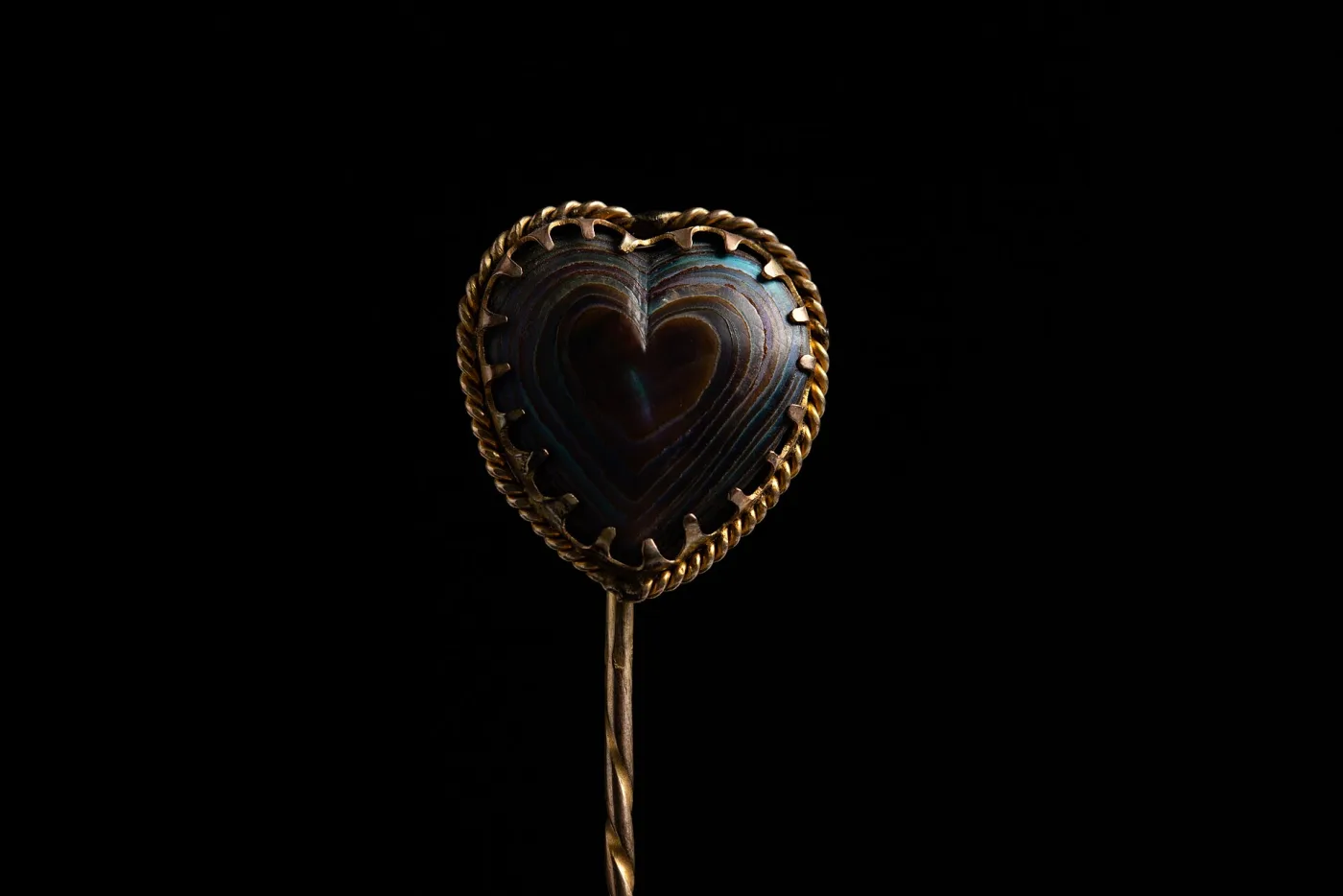
Identifying Maker's Marks and Hallmarks
Maker's marks provide valuable information about hatpin manufacturers, helping authenticate pieces and establish provenance. However, many quality antique hatpins lack identifying marks, as manufacturers did not universally mark their products during this period.
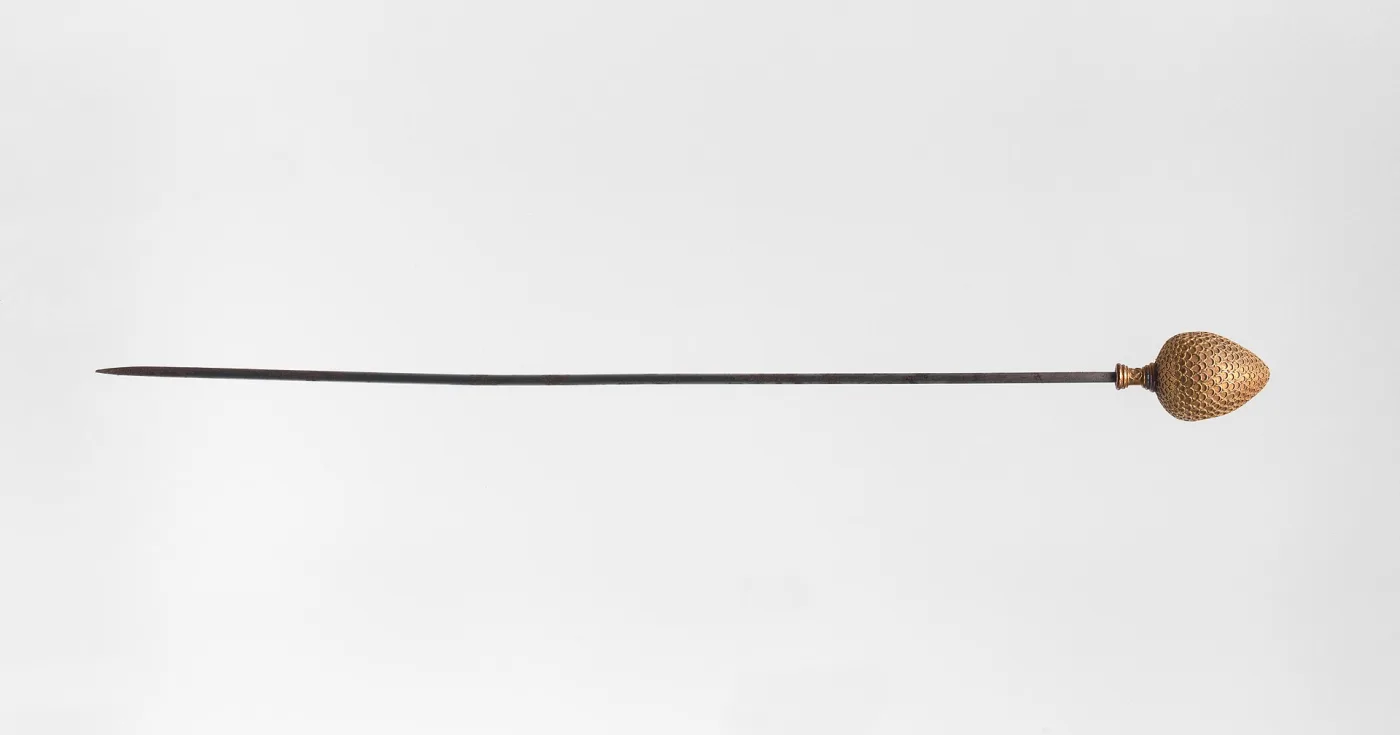
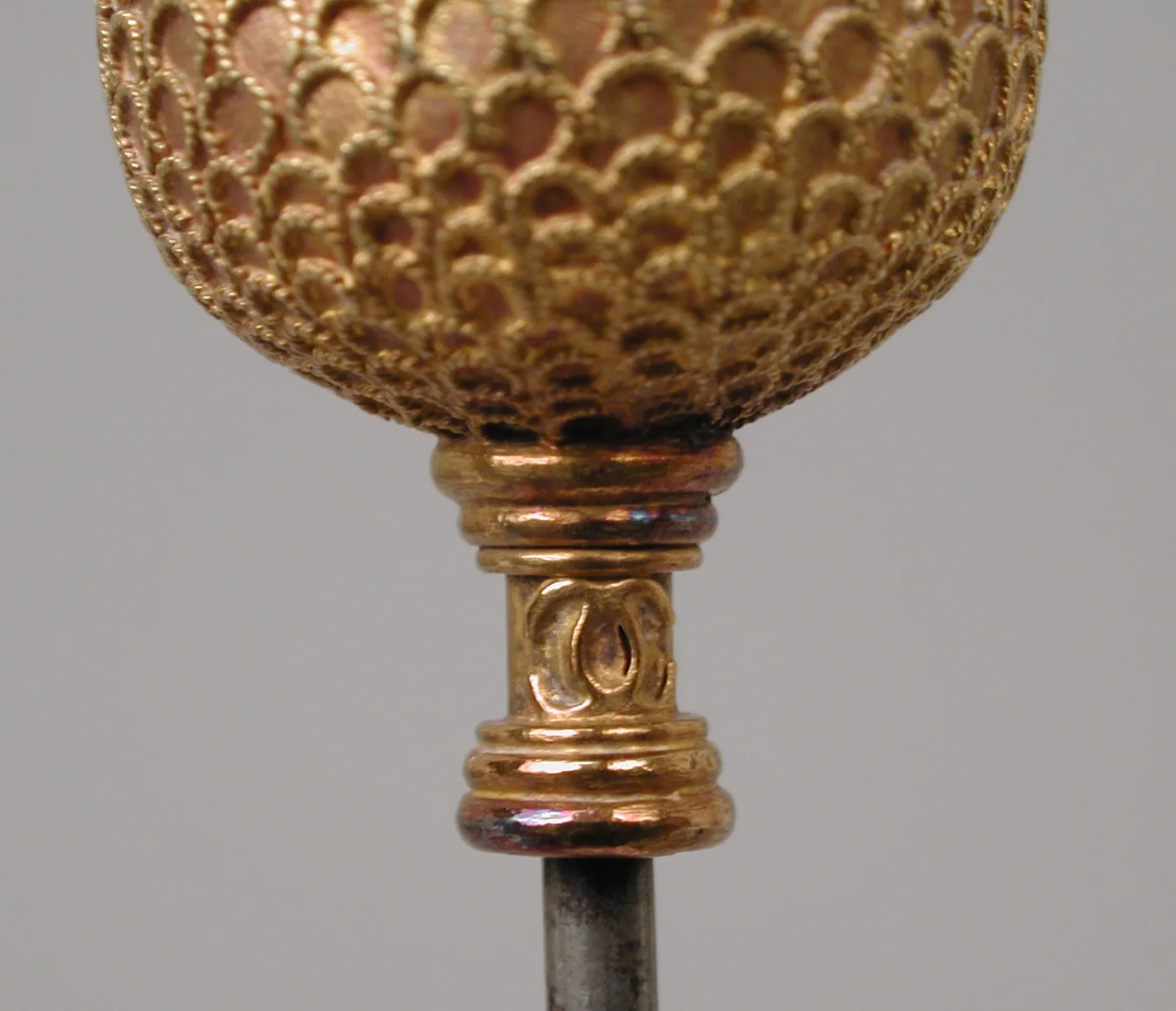
This is what a mark on a hat pin looks like, and how little there is to see. On this one it is not on the head, where it would interrupt the design, and not on the steel shaft, which is a different and baser metal: it is on the gold collar joining the two, in a band a few millimetres deep that needs a loupe. The pair of addorsed C's is the mark of the Roman firm of Castellani, whose archaeological-revival goldwork was imitated widely enough that on this style the mark is worth hunting for. Neither photograph shows a British hallmark, which is a different system entirely — a full British mark is a row of four or five separate punches, maker and standard and assay office and date letter, rather than a single monogram — and it takes the same magnification to read.
British Hallmarks
British-made precious metal hatpins often bear complete hallmarking including maker's mark, standard mark (indicating metal purity), assay office mark, and date letter. These hallmarks typically appear on the pin shaft near the head or on the decorative head itself. Understanding British hallmarking systems allows precise dating and verification of metal content.
London, Birmingham, Chester, and Edinburgh assay offices marked jewelry including hatpins during the Victorian and Edwardian periods. Each office used distinctive symbols, and date letters changed annually following specific alphabetical cycles. Reference guides to British hallmarks enable collectors to decode these marks and establish when and where a pin was made.
Notable Manufacturers
Charles Horner of Halifax, England, produced numerous Art Nouveau and Arts & Crafts style hatpins marked with "C.H." in a shield or similar variations. Horner's work is highly collectible, particularly examples featuring enamelwork or sterling silver construction. William Link Co. of Newark, New Jersey, manufactured quality American hatpins often marked with the company name or "W.L. Co."
Unger Brothers of Newark created exceptional Art Nouveau hatpins featuring feminine figures, flowing hair, and natural motifs. Their pieces typically bear "Unger Bros." or "U.B." marks and command strong prices due to superior design and execution. Pay & Baker Mfg. Co. produced commercial hatpins marked with their company name, representing solid middle-market examples.
Continental European Makers
French hatpins may bear French hallmarks including maker's marks, standard marks for gold or silver, and import marks if brought into other countries. German and Austrian pins sometimes feature maker's marks, though documentation of smaller Continental manufacturers remains incomplete. Czech glass hatpins rarely carry maker's marks but can be identified through characteristic glass colors and construction techniques.
Unmarked Pins
The majority of antique hatpins, particularly those made from base metals or less expensive materials, lack maker's marks. This doesn't automatically indicate lower quality or value. Many beautiful, well-crafted pins were simply never marked. Attribution in these cases relies on recognizing characteristic design elements, materials, and construction methods associated with specific periods, regions, or quality levels.
Popular Styles and Design Motifs
Hatpin designs reflected broader artistic movements and cultural trends of their eras. Recognizing characteristic style elements helps date pins and assess their artistic merit and collector appeal.
Victorian Naturalism
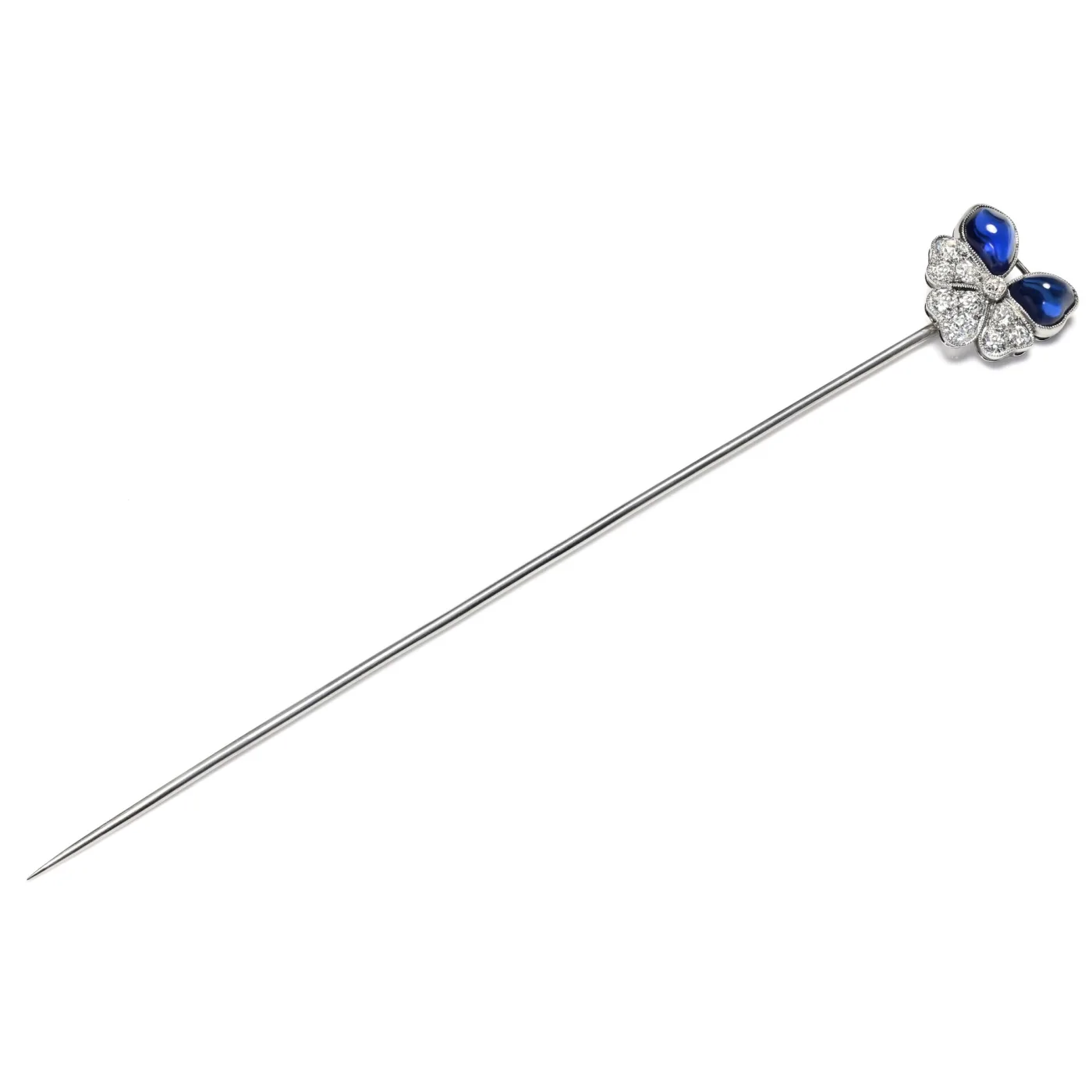
Victorian hatpins frequently featured realistic depictions of flowers, insects, birds, and other natural subjects. Roses, lilies, forget-me-nots, and violets appeared as three-dimensional heads crafted in metal, porcelain, or celluloid. Butterflies, dragonflies, and beetles showcased enameled wings or jeweled bodies. These naturalistic designs ranged from simple molded brass flowers to exquisite gold and enamel botanical studies.
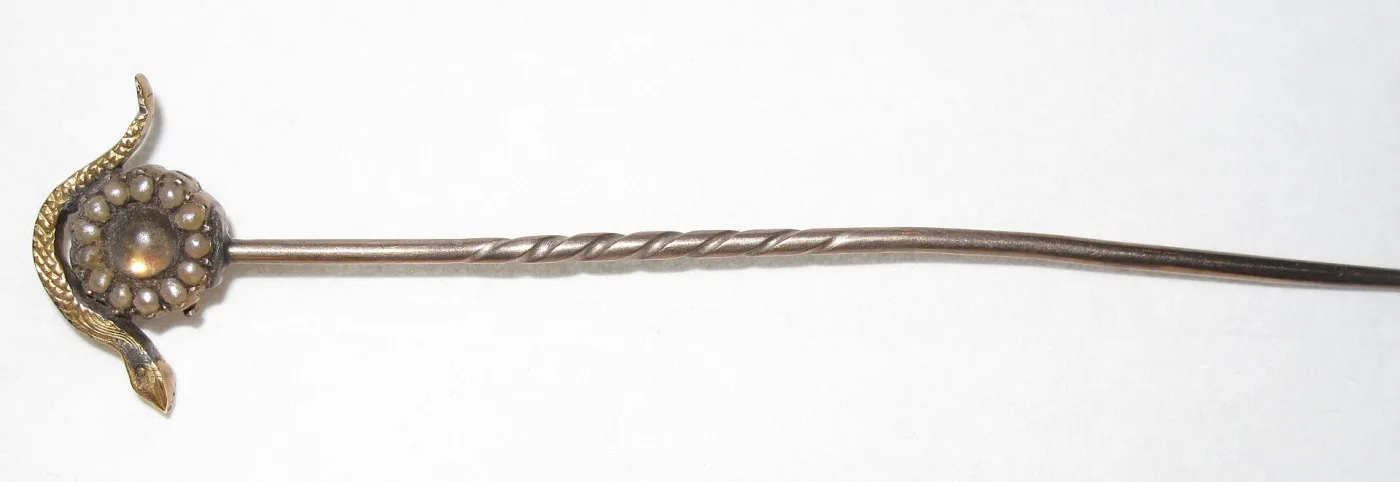
Art Nouveau Aesthetics
Art Nouveau revolutionized hatpin design from the 1890s through the 1910s, introducing flowing, organic forms and romantic imagery. Characteristic elements include feminine faces with flowing hair, whiplash curves, stylized flowers and plants, dragonflies and other insects rendered in sinuous lines, and peacock feathers. High-quality Art Nouveau hatpins represent some of the most desirable examples in the collector market.
The movement's emphasis on craftsmanship and artistic expression produced exceptionally creative designs. Plique-a-jour enameling reached its peak during this period, creating luminous wings on insect pins or translucent flower petals. Fine metalwork featured intricate detail and sculptural quality that distinguished Art Nouveau pieces from earlier Victorian examples.
Arts and Crafts Movement
Arts and Crafts hatpins emphasized hand-craftsmanship, simpler designs, and honest use of materials. These pieces often feature hammered metal surfaces, cabochon-cut gemstones rather than faceted stones, and Celtic or medieval-inspired motifs. The aesthetic values quality of execution over ostentatious display, resulting in understated but beautifully crafted pins.
Geometric and Art Deco Designs
As Art Nouveau waned in the 1910s, geometric and proto-Art Deco designs emerged. These transitional pieces feature more angular forms, symmetrical compositions, and streamlined silhouettes. Full Art Deco hatpins from the 1920s showcase bold geometric shapes, stepped designs, and stylized motifs reflecting the Jazz Age aesthetic, though by this point hatpins were declining in everyday use.
Novelty and Figural Pins
Novelty hatpins encompassed enormous variety, from realistic miniature objects to whimsical figures. Popular subjects included animals (especially cats, dogs, and horses), human figures, sporting equipment, weapons, tools, and vehicles. Egyptian revival pins featuring scarabs, pyramids, or hieroglyphic motifs became fashionable following archaeological discoveries. Oriental-inspired designs incorporated dragons, fans, and Asian figures.
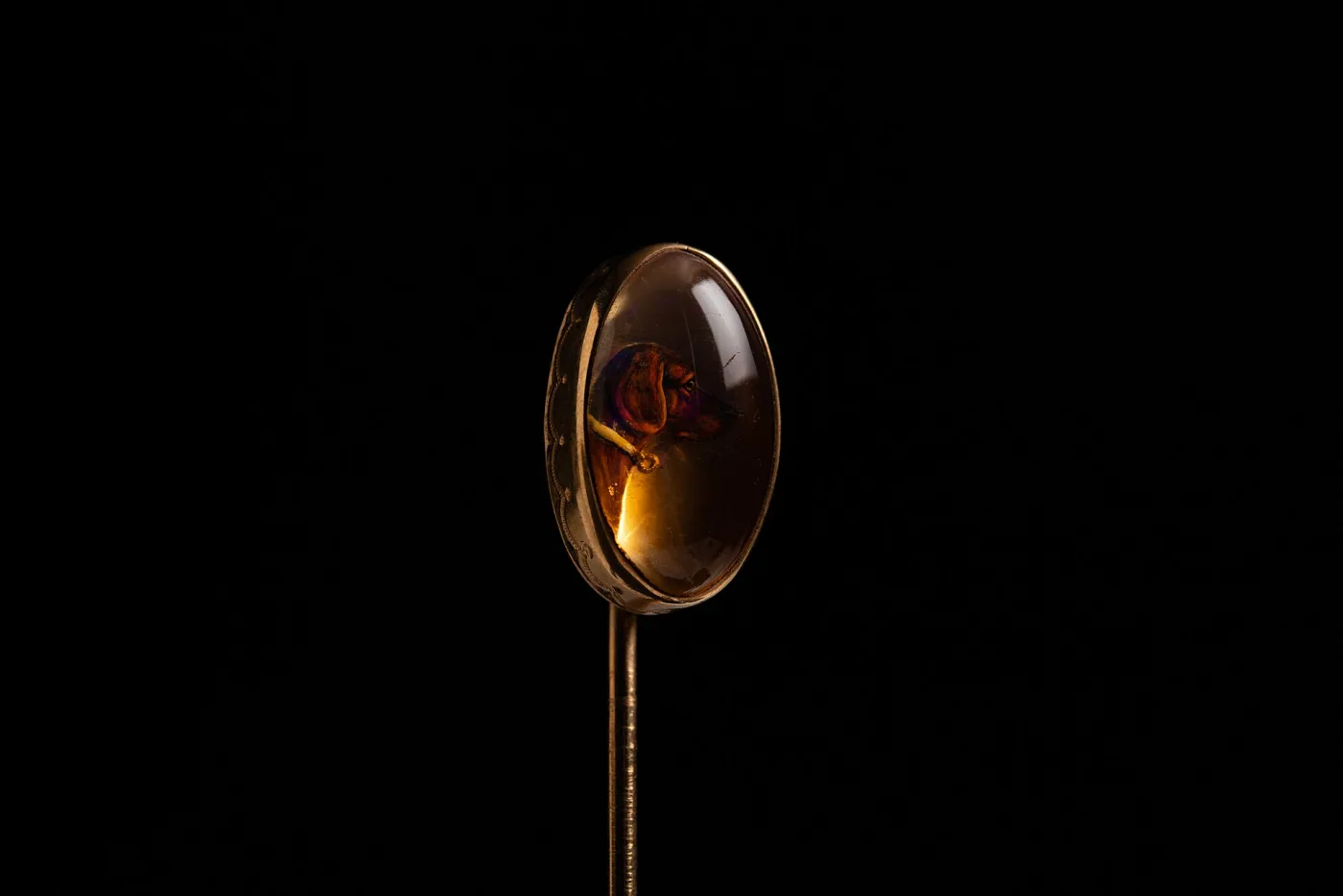
Mourning and Sentimental Pins
Victorian mourning customs influenced hatpin design, with jet, black glass, and dark enamels creating somber jewelry. Some mourning pins incorporated hairwork or memorial inscriptions. Sentimental designs featured hearts, hands, anchors (symbolizing hope), and other symbolic imagery. Locket hatpins with spaces for photographs or hair allowed wearers to keep loved ones close.

Evaluating Quality and Craftsmanship
Assessing hatpin quality requires examining construction methods, attention to detail, and overall execution. High-quality pins demonstrate superior craftsmanship in both decorative and functional elements.
Metalwork Quality
Examine metal components for precision and refinement. Quality pieces show crisp detailing, smooth finishes, and secure connections. Hand-chased or hand-engraved decoration should display confident execution with consistent depth and character. Cast elements should have sharp details without excessive filing marks or rough areas indicating inferior molds or finishing.
Check the pin shaft for straightness and appropriate gauge. Better hatpins feature substantial shafts with proper temper, neither too flexible nor brittle. The point should be cleanly formed and functional. Surface finish should be even and appropriate to the period, whether polished, matte, or oxidized.
Setting and Stone Quality
When gemstones are present, evaluate setting security and craftsmanship. Quality settings hold stones firmly while displaying them advantageously. Prongs should be intact and properly shaped. Bezel settings should fit stones precisely without gaps. Stone quality matters significantly, with better color, clarity, and cut commanding higher values.
Glass elements should be free from cracks, chips, or excessive wear. Colors should remain vibrant without significant fading. Painted or decorated glass should show original finishes with minimal loss. Molded glass should have crisp details and appropriate weight for the period.
Enamelwork Evaluation
High-quality enamelwork displays smooth, even surfaces without pitting, chips, or excessive wear. Colors should be vibrant and properly fired to create glossy, jewel-like finishes. Guilloche bases should show precise, regular patterns beneath translucent enamel. Plique-a-jour areas should be complete without cracks or missing sections, as repairs to this technique are extremely difficult.
Design Coherence
Superior hatpins demonstrate thoughtful, well-executed designs with balanced proportions and harmonious color combinations. The decorative head should relate appropriately to the shaft in scale and style. Design elements should work together cohesively rather than appearing randomly assembled. Original, creative designs generally indicate higher quality and artistic ambition than simple copies of common forms.
Valuation Factors and Price Ranges
Antique hatpin values vary enormously based on multiple factors. Understanding these value determinants helps collectors make informed purchasing decisions and properly assess their collections.
Material Value
Precious metal content significantly impacts value. Gold hatpins, particularly those in 14-karat or 18-karat gold, command premium prices starting around several hundred dollars even for simple examples. Exceptional gold and diamond pins can reach several thousand dollars. Sterling silver pins typically range from $75 to $500 depending on design complexity and condition.
Base metal pins span the widest price range, from $20 for simple brass examples to $300 or more for exceptional Art Nouveau designs or pins with quality enameling. Glass hatpins range from $30 for common pressed glass examples to $200+ for fine bohemian or art glass pieces.
Length and Size
Longer hatpins, particularly Edwardian examples exceeding 12 inches, are scarcer and more desirable than shorter pins. Extra-long pins in excellent condition command premium prices. Large, impressive decorative heads attract more collector interest than small, modest designs, all else being equal.
Rarity and Demand
Rare designs, unusual materials, or pins from noted makers bring higher prices than common examples. Plique-a-jour enameling, mechanical features, or exceptional artistic quality create strong demand. Pins from recognized manufacturers like Charles Horner or Unger Brothers typically sell for 50-200% above comparable unmarked examples.
Condition Impact
Condition dramatically affects value. Mint condition pins in original presentation cases command significant premiums. Excellent condition examples with minimal wear bring full market value. Moderate wear, missing elements, or minor damage reduce values by 30-60%. Significant damage, repairs, or missing components may decrease values by 70% or more.
Current Price Ranges
Common brass or base metal hatpins: $20-$75. Quality base metal pins with good design or enamelwork: $75-$200. Sterling silver hatpins: $100-$400. Exceptional Art Nouveau examples with plique-a-jour or superior design: $300-$800. Gold hatpins: $250-$1,500+. Rare maker's examples or exceptional pieces: $500-$5,000+. Museum-quality pieces from noted makers with exceptional design and materials can exceed $5,000.
Authentication and Spotting Reproductions
Hatpin reproductions range from honest modern recreations clearly marked as such to deliberate fakes designed to deceive collectors. Developing authentication skills protects against purchasing reproductions at antique prices.
Common Reproduction Indicators
Modern reproductions often exhibit overly bright, uniform metal finishes lacking the subtle variations of genuine antique examples. New metal lacks appropriate patina and aging, appearing too fresh or artificially aged through chemical treatments that create unnatural coloring. Machine-perfect uniformity in hand-worked areas suggests modern manufacturing rather than period hand-craftsmanship.
Lightweight construction frequently indicates reproductions. Modern manufacturers often use thin metal stampings or hollow construction to reduce costs, resulting in pieces that feel insubstantial compared to solid antique examples. Weight alone doesn't guarantee authenticity, but surprisingly light weight for apparent materials warrants closer examination.
Material Inconsistencies
Reproductions may combine materials in ways inconsistent with period practices. Modern plastics replacing period celluloid lack appropriate aging characteristics and often feel different to the touch. New glass lacks the subtle imperfections and pontil marks characteristic of period glasswork. Synthetic gemstones show too-perfect clarity or color unlike natural stones with typical inclusions and variations.
Construction Method Clues
Examine attachment points between heads and shafts. Period pins used soldering, threaded connections, or specific types of adhesives appropriate to their era. Modern glues or attachment methods not available during the Victorian and Edwardian periods indicate reproductions. Welding techniques or machine threading inconsistent with period capabilities suggest modern manufacture.
Wear Pattern Analysis
Genuine antique hatpins show logical wear patterns consistent with use and age. High points on decorative elements display appropriate smoothing from handling. Metal develops natural patina in recessed areas while raised surfaces show polishing from contact. Reproductions either lack wear entirely or show artificially applied "aging" that doesn't match natural use patterns.
Examine the pin point for authentic wear. Period pins used regularly show dulling or slight rounding from penetrating fabric and hair. Perfect needle-sharp points may indicate never-used pieces or reproductions. The shaft should show minor surface oxidation, tiny scratches, and patina consistent with age.
Known Reproduction Types
Certain popular styles face heavy reproduction including Art Nouveau designs with flowing hair and feminine figures, insect pins with plique-a-jour enamel wings, and elaborate jeweled examples. Being familiar with frequently reproduced forms helps identify suspicious examples. When encountering these popular types, apply extra scrutiny to authentication markers.
Condition Assessment and Grading
Accurate condition assessment is essential for proper valuation and informed collecting decisions. Hatpin condition ranges from mint to heavily damaged, with gradations significantly impacting value.
Mint Condition
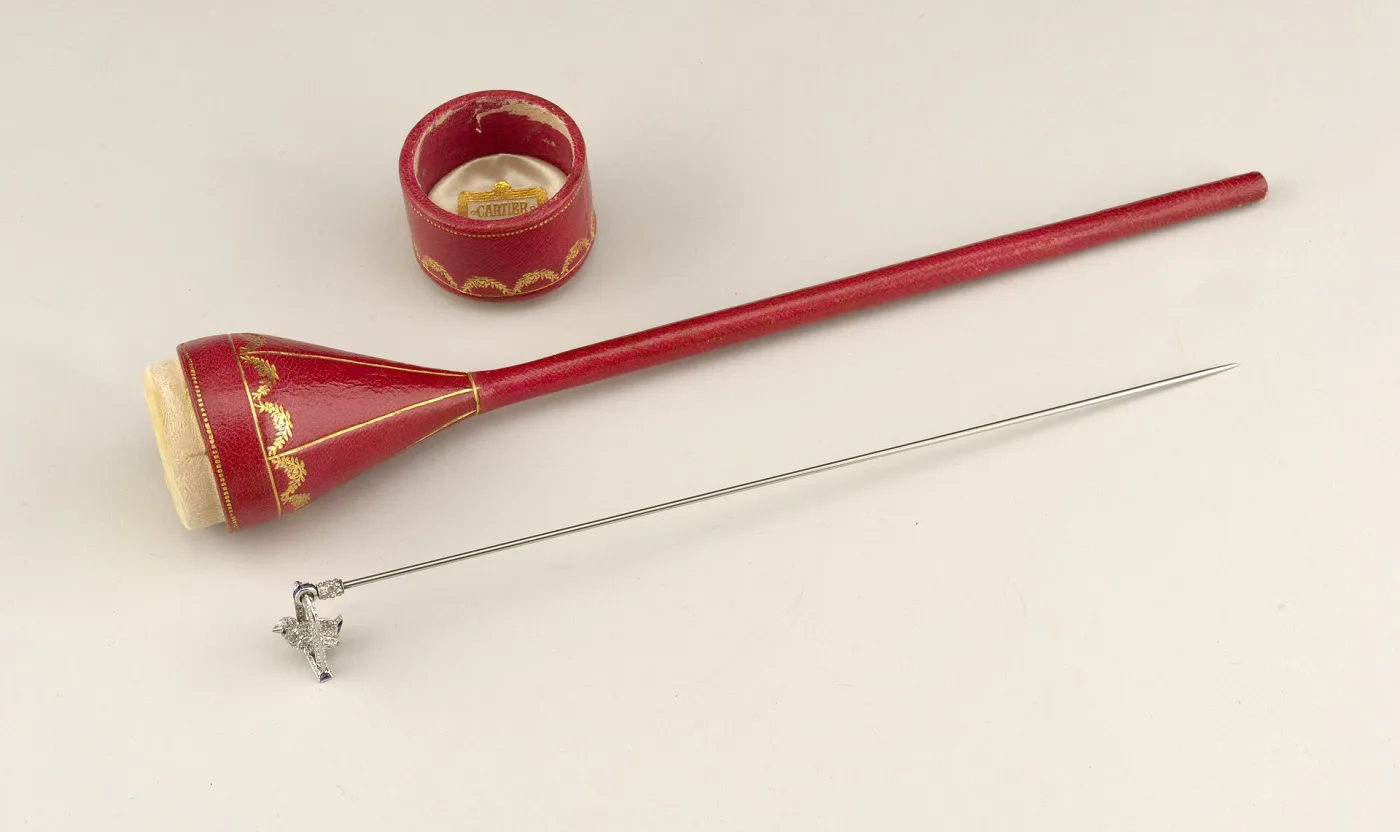
Mint condition hatpins show no evidence of wear or use, retaining perfect original finish and complete original components. These pieces may remain in original presentation cases or retail packaging. Mint examples are increasingly rare and command substantial premiums, particularly for desirable designs or quality materials.
Excellent Condition
Excellent condition pins display minimal wear consistent with careful use. Original finish remains largely intact with only slight dulling on high points. All original components are present and secure. Minor surface marks may be visible under magnification but don't detract from overall appearance. Most serious collectors seek examples in excellent or better condition.
Very Good Condition
Very good condition hatpins show moderate wear from use but remain attractive and sound. Finish may show thinning in areas, particularly on raised details. Minor enamel loss, small chips in glass elements, or slight bending in shafts may be present but don't significantly compromise structural integrity or appearance. These examples represent solid collectible pieces at more accessible prices than higher grades.
Good Condition
Good condition pieces show obvious wear but remain complete and stable. Finish loss may be significant, with brass showing through gilt surfaces or silver showing tarnish and wear. Enamel may have chips or losses. Glass elements might have minor cracks or chips. The pin remains displayable and collectible but at reduced values reflecting condition issues.
Fair to Poor Condition
Fair condition hatpins have significant damage including major finish loss, broken elements, bent shafts, or missing components. These pieces may have value as study examples, for restoration projects, or if extremely rare. Poor condition examples with major structural damage, heavy losses, or complete absence of decorative elements have minimal collector value unless representing exceptionally rare types.
Specific Condition Issues
Bent pins are common problems that reduce value substantially. Straightening is possible but risks breaking metal or creating stress fractures. Broken shafts significantly compromise value unless the decorative head alone justifies the piece. Missing decorative elements from heads can't be easily replaced and dramatically reduce value. Enamel losses are essentially irreparable, as matching period enamelwork is extremely difficult. Clouding or cracks in glass elements detract from appearance and value.
Rare and Highly Collectible Examples
Certain hatpin categories represent pinnacles of collecting interest due to rarity, artistic merit, or exceptional quality. Understanding these premium categories helps collectors recognize significant opportunities.
Plique-a-Jour Enamel Pins
Hatpins featuring successful plique-a-jour enameling rank among the most desirable examples. This challenging technique creates translucent enamel suspended in metal frameworks without backing, allowing light to pass through like stained glass. Insect pins with plique-a-jour wings are particularly sought-after, especially examples with well-preserved enamel showing vibrant colors and no cracks or losses. Quality plique-a-jour hatpins regularly command prices from $500 to $2,000 or more.
Mechanical and Novelty Features
Hatpins incorporating mechanical elements or hidden features attract specialized collector interest. Trembler pins with spring-mounted elements that quiver with movement demonstrate ingenious Victorian engineering. Locket hatpins containing compartments for photographs or mementos combine function with sentimentality. Pins with concealed powder compacts, perfume reservoirs, or other surprises showcase creativity and craftsmanship valued by collectors.
Named Maker Examples
Hatpins from documented makers command premium prices, particularly examples from renowned firms. Charles Horner Art Nouveau designs, especially those with enamelwork, consistently bring strong prices. Unger Brothers pins featuring exceptional Art Nouveau figural work represent American hatpin manufacturing at its finest. Liberty & Co. Arts and Crafts examples appeal to collectors of that movement. Documentation of maker provenance significantly enhances value.
Exceptional Materials
Hatpins incorporating rare or precious materials naturally attract attention. High-karat gold pins set with quality diamonds, rubies, sapphires, or other precious stones can reach several thousand dollars. Natural pearls, particularly large baroque specimens, create dramatic heads valued for both materials and aesthetics. Exceptional carved gemstones, such as detailed cameos or intaglios in hardstones, combine lapidary skill with jewelry art.
Egyptian Revival Designs
Following archaeological discoveries in Egypt during the late 19th and early 20th centuries, Egyptian-themed jewelry became fashionable. Hatpins featuring scarabs, pharaoh heads, pyramids, or hieroglyphic motifs appeal to collectors of Egyptian revival jewelry. Well-executed examples with quality materials and authentic period design attract strong interest from specialized collectors.
Early Victorian Rarity
Hatpins from the 1850s through 1870s are relatively scarce compared to later examples. Quality pins from this early period, particularly those with documented provenance or unusual designs, interest collectors seeking to represent early hatpin development. Jet examples from Whitby, England, particularly elaborate carved pieces, carry both intrinsic and historical value.
Building a Hat Pin Collection
Successful hatpin collecting combines knowledge, patience, and strategic focus. Whether building a comprehensive collection or focusing on specific categories, thoughtful approaches enhance both enjoyment and investment potential.
Defining Collection Focus
Many collectors find satisfaction in focused collecting rather than random accumulation. Potential specializations include specific eras (Victorian, Edwardian), materials (silver, enamel, glass), design movements (Art Nouveau, Arts and Crafts), makers, motifs (insects, flowers, figural), or technical categories (plique-a-jour, mechanical features). Focused collecting develops deeper expertise and can result in more significant collections than unfocused general accumulation.
Establishing Budget Parameters
Hatpin collecting accommodates various budget levels. Beginning collectors can assemble interesting collections focusing on $20-$100 examples while learning and developing expertise. Mid-range collectors might target $100-$500 pieces, accessing quality examples in precious metals or with superior designs. Advanced collectors pursuing rare examples or museum-quality pieces may invest $500-$5,000+ for exceptional pins. Setting clear budget guidelines helps maintain collecting discipline.
Sourcing Antique Hatpins
Antique hatpins appear through multiple channels, each with advantages and considerations. Antique shops and shows offer hands-on examination before purchase, allowing close inspection of condition and quality. Specialized jewelry dealers may stock curated selections of quality examples. Online auctions and marketplaces provide vast selection but require careful evaluation through photographs and descriptions. Estate sales occasionally yield collections at attractive prices. Antique jewelry auctions offer premium examples with expert cataloging but competitive bidding.
Documentation and Research
Maintain detailed records of acquisitions including purchase date, source, price paid, and condition notes. Photograph each pin from multiple angles for insurance and documentation purposes. Research individual pieces to establish maker attribution, dating, and comparable examples. Building comprehensive documentation enhances collection value and provides enjoyment through deeper understanding of individual pieces.
Quality Over Quantity
Experienced collectors generally advise prioritizing quality over quantity. A small collection of exceptional examples typically provides more satisfaction and investment value than large accumulations of mediocre pieces. Better examples maintain value more reliably, display more impressively, and offer greater opportunities for learning about superior craftsmanship and design.
Networking with Other Collectors
Connecting with fellow collectors provides opportunities to share knowledge, discover sources, and potentially trade or purchase pieces. Hatpin collecting organizations and online forums facilitate connections. Attending antique shows and auctions enables meeting dealers and collectors. Building relationships within the collecting community enhances knowledge and enjoyment while potentially providing access to pieces before public offering.
Display and Storage Considerations
Proper display and storage preserve hatpin condition while allowing enjoyment of collections. Balancing protection with accessibility requires thoughtful approaches.
Display Methods
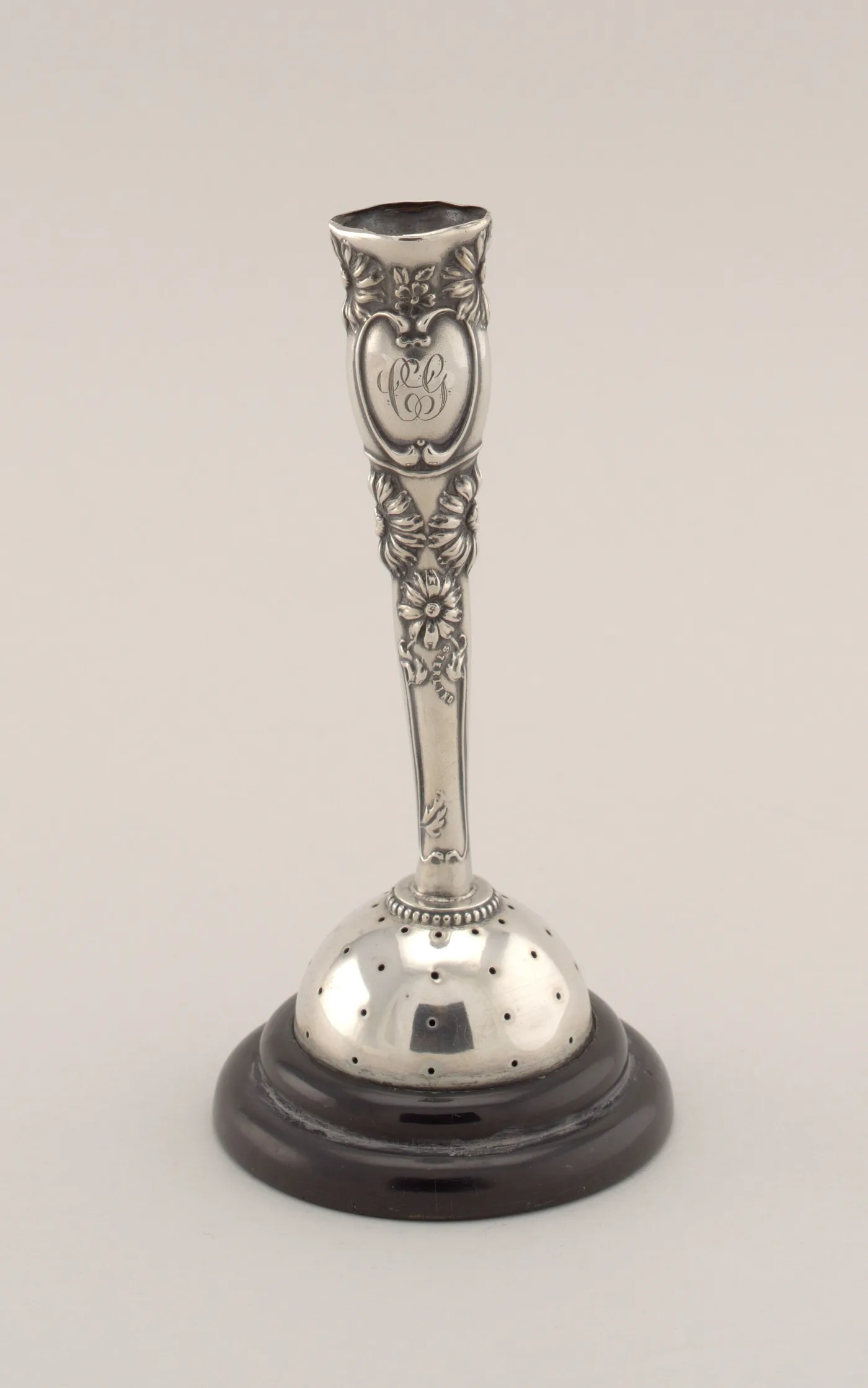
Shadow boxes with velvet or felt backing provide attractive display while protecting pins from handling damage. Arranging pins by theme, era, or color creates visual interest. Secure pins through backing material to prevent shifting. Glass fronts protect from dust and handling while allowing full visibility. Period hatpin holders, originally used in dressing tables, offer authentic Victorian display options and function well for collections.
Display cases with multiple levels accommodate larger collections while keeping individual pins visible and accessible. Arrange pins with adequate spacing to appreciate each piece individually. Consider lighting carefully, as direct sunlight fades enamels and degrades organic materials. LED lighting provides excellent illumination without heat or UV damage.
Storage Solutions
For pins not on display, proper storage prevents damage and deterioration. Store pins individually wrapped in acid-free tissue or soft cloth to prevent scratching and tangling. Shallow drawers lined with felt accommodate multiple wrapped pins while allowing easy access. Avoid storing different metals in direct contact, as galvanic reactions can cause corrosion. Climate-controlled environments prevent moisture damage and metal oxidation.
Handling Precautions
Handle hatpins by shafts rather than decorative heads when possible to minimize stress on connections and avoid skin oils contacting delicate surfaces. Examine pins over soft surfaces to cushion potential drops. Never force bent pins straight without professional advice, as inappropriate straightening can break metal or create fractures. Clean hands before handling to avoid transferring oils and acids to metal and enamel surfaces.
Conservation Concerns
Avoid aggressive cleaning that can damage finishes, remove patina, or harm delicate materials. Gentle dusting with soft brushes removes surface dirt without risk. Professional conservation services should handle significant cleaning or repair needs. Never use commercial jewelry cleaners without verifying safety for specific materials, as harsh chemicals damage enamel, organic materials, and patinas. Maintain stable temperature and humidity to prevent material deterioration and metal corrosion.
Current Market Trends and Investment Potential
The antique hatpin market has evolved significantly over recent decades, with certain trends shaping current values and future prospects. Understanding market dynamics helps collectors make informed decisions.
Strong Categories
Art Nouveau examples continue showing robust demand, particularly pieces with superior design execution and fine enameling. Plique-a-jour examples have appreciated consistently and show no signs of weakening demand. Named maker pins from Charles Horner, Unger Brothers, and other documented manufacturers command premium prices and sell reliably. Quality Victorian examples in precious metals maintain steady values supported by both jewelry collectors and hatpin specialists.
Emerging Interest
Egyptian revival designs are attracting increased attention as that broader collecting category gains recognition. Arts and Crafts movement pins appeal to collectors of that aesthetic seeking diverse examples beyond traditional jewelry forms. Unusual materials or techniques, including carved gemstones, exceptional glass work, and novelty mechanical features, generate strong bidding when they appear in the market.
Market Challenges
Common brass or base metal examples without distinctive design features face soft demand and stagnant values. The market contains substantial supply of ordinary pins that struggle to attract buyers at any price. Later 1920s examples generate limited interest as they fall between peak hatpin periods and Art Deco jewelry collecting. Damaged or heavily worn examples find few buyers unless representing rare forms or exceptional when intact.
Investment Considerations
Hatpins can represent reasonable alternative investments for those passionate about the category, though they shouldn't be viewed primarily as financial instruments. The most investment-worthy examples feature documented makers, exceptional materials and craftsmanship, rarity, and excellent condition. Museum-quality pieces appreciate most reliably, while middle-market examples provide enjoyment with modest value stability. Common examples should be collected purely for enjoyment rather than investment expectations.
Future Outlook
Long-term prospects for quality antique hatpins appear stable. As Victorian and Edwardian jewelry appreciation continues growing, hatpins benefit from increased recognition of period decorative arts. The finite supply of authentic period examples supports values, particularly for premium categories. However, the specialized nature of hatpin collecting limits dramatic appreciation potential compared to broader jewelry categories. Collectors should focus on personal satisfaction and historical interest rather than expecting significant financial returns.
Research Resources and Expert Guidance
Developing hatpin expertise requires utilizing various research tools and educational resources. Building knowledge enhances collecting success and enjoyment.
Reference Books
Several specialized reference works provide comprehensive information about antique hatpins. These publications offer photographs of authenticated examples, maker information, and historical context. Building a reference library supports identification efforts and provides comparable examples for valuation. Look for books featuring clear photographs, maker's mark illustrations, and detailed descriptions of materials and techniques.
Online Resources
Online auction archives provide valuable research tools, showing realized prices for comparable examples and offering photographs of authenticated pieces. Collector forums and websites dedicated to hatpins facilitate knowledge sharing and identification assistance. Museum collection databases display museum-quality examples with professional documentation and provenance information. Social media groups connect collectors worldwide for discussion and trading.
Professional Appraisal
For valuable pieces or comprehensive collections, professional appraisal provides expert authentication and valuation. Qualified appraisers examine pieces in person, utilizing specialized equipment and expertise to verify authenticity and assess value. Professional appraisals serve insurance purposes, estate planning, or potential sale preparation. Seek appraisers with specific Victorian and Edwardian jewelry expertise rather than general antique knowledge.
Collector Organizations
Joining specialized collector organizations provides access to publications, conventions, and networking opportunities. These groups often maintain extensive reference libraries and offer identification services to members. Annual meetings and shows enable viewing diverse collections and learning from experienced collectors. Publications from these organizations feature research articles, market reports, and collecting advice.
Museum Collections
Major museums with costume and decorative arts departments often include hatpin collections. Studying museum examples provides exposure to authenticated pieces of exceptional quality. Museum labels and documentation offer reliable information about makers, dating, and provenance. Some museums maintain study collections accessible to serious researchers by appointment, providing hands-on examination of reference examples.
Continuing Education
Hatpin knowledge develops through continuous learning and exposure to authentic examples. Attend antique shows regularly to handle and examine diverse pieces. Visit dealer booths, ask questions, and compare examples to develop eye for quality and authenticity. Study auction catalogs even when not bidding to see current market offerings and prices. Building expertise requires patient, consistent study over time, gradually developing the judgment and knowledge that separates novices from experts.