Antique Perfume Bottles Identification Guide: History, Makers, Materials & Collector Values
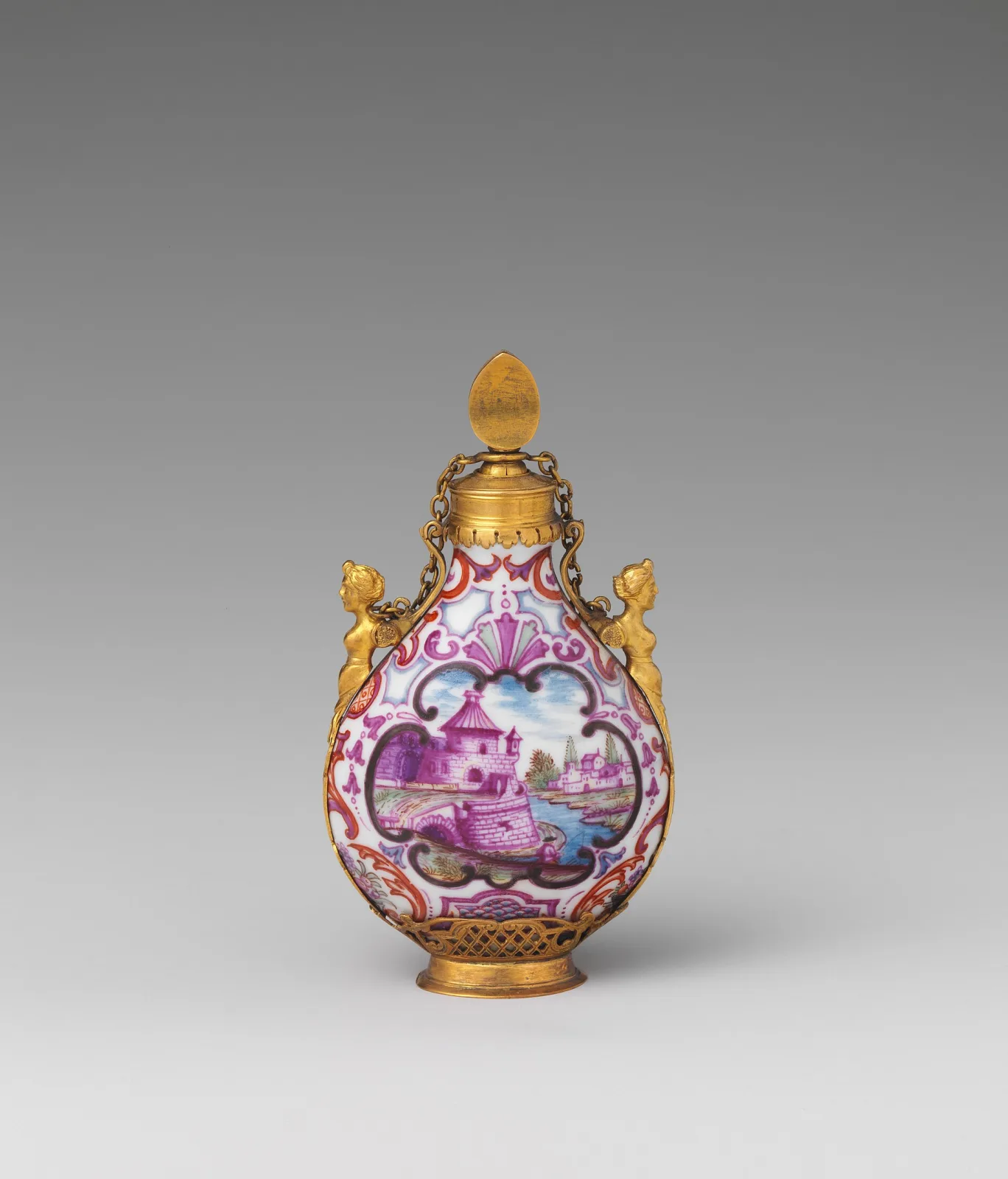
Antique perfume bottles represent a captivating intersection of functional design, artistic expression, and social history. From the delicate blown glass flacons of 18th-century Venice to the revolutionary Art Deco masterpieces by René Lalique, these miniature vessels have served as both practical containers and status symbols throughout the centuries. Whether crafted from Bohemian crystal, adorned with sterling silver overlays, or featuring intricate cameo glass techniques, each perfume bottle tells a story of its era's aesthetic sensibilities and technological achievements. This comprehensive guide equips collectors, dealers, and enthusiasts with the knowledge to identify, authenticate, and value antique perfume bottles with confidence and precision.
Table of Contents
- Historical Evolution of Perfume Bottles
- Types of Antique Perfume Bottles
- Glass Manufacturing Techniques and Materials
- Stopper Identification and Authentication
- Maker Marks, Signatures, and Attribution
- Dating Methods and Period Characteristics
- Condition Assessment and Conservation
- Market Valuation and Collecting Strategies
- Authentication Checklist and Resources
Historical Evolution of Perfume Bottles
Understanding the historical trajectory of perfume bottle design provides essential context for accurate identification and dating. Each era brought distinctive innovations in materials, techniques, and aesthetic preferences that left recognizable fingerprints on surviving examples.
Ancient Origins to Medieval Period
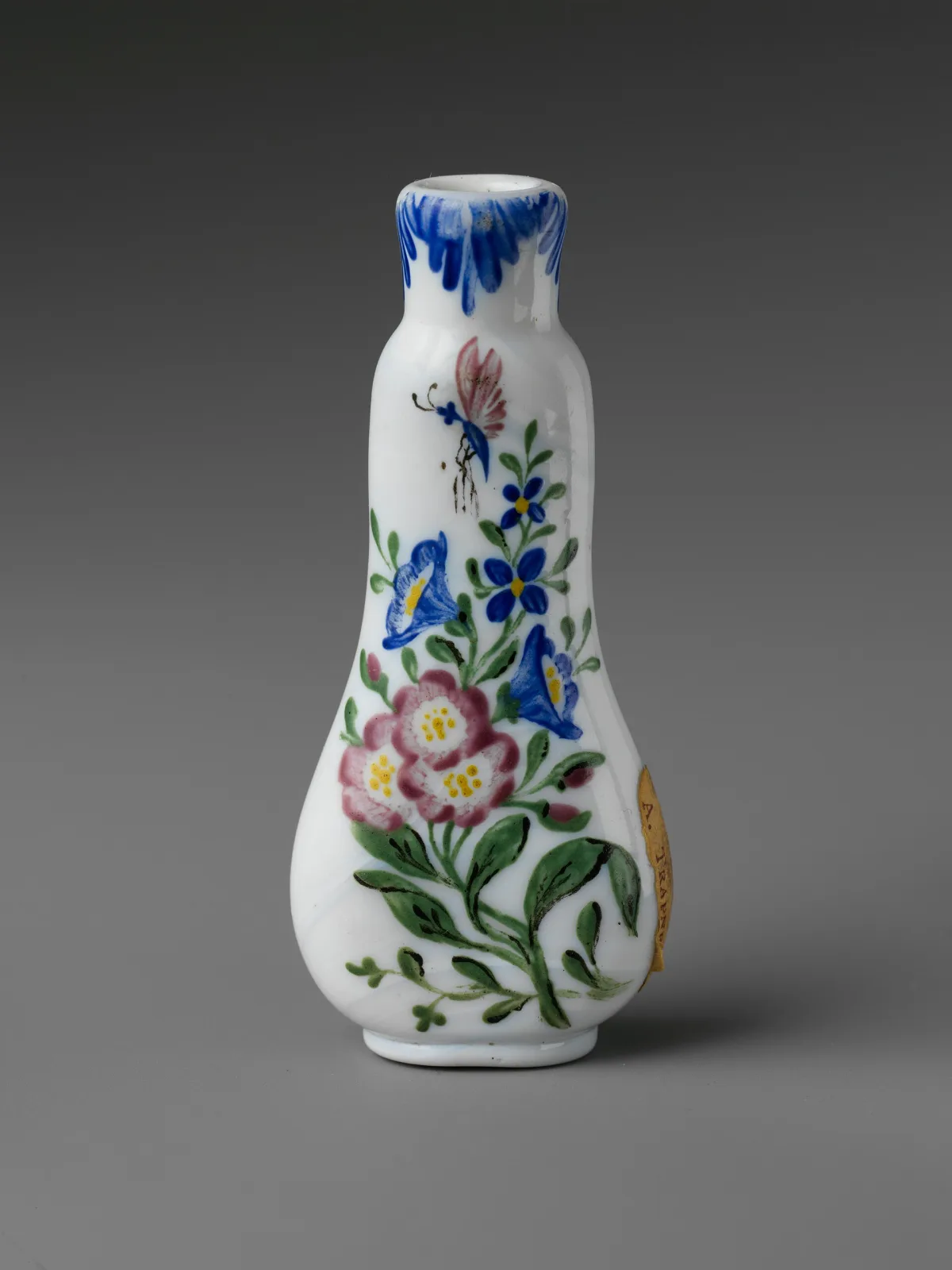
The earliest perfume containers date back to ancient Egypt, where artisans crafted core-formed glass vessels and carved alabaster jars to hold precious aromatic oils. Greek and Roman civilizations advanced these traditions with blown glass unguentaria—small, elongated bottles designed specifically for perfumed oils. Medieval European perfumers stored their creations in metal pomanders and ceramic pots, as glass production remained limited to specialized centers in Venice and the Byzantine Empire.
Renaissance and Baroque Splendor (1500–1750)
The Venetian island of Murano emerged as the undisputed center of luxury glass production during the Renaissance. Murano glassmakers developed cristallo—an exceptionally clear soda-lime glass—and pioneered techniques like latticino (twisted white threads within glass) and aventurine (copper-flecked golden glass). Perfume bottles from this era often feature elaborate applied decoration, serpentine handles, and delicate enamel painting. The 17th century saw the rise of Bohemian glassmakers who introduced potash-lime formulations that could be deeply cut and engraved, establishing a tradition that would influence perfume bottle design for centuries.
Georgian and Regency Elegance (1750–1830)
English and Irish glasshouses, including Waterford, Baccarat's precursor establishments, and numerous Bristol workshops, produced scent bottles of remarkable clarity and precision. The development of lead crystal by George Ravenscroft in the late 17th century reached its aesthetic peak during this period, with perfume bottles featuring elaborate faceted cutting, star-cut bases, and mushroom or lapidary-cut stoppers. Gilded decoration, often depicting neoclassical motifs, became fashionable among aristocratic patrons. Double-ended scent bottles—containing smelling salts at one end and perfume at the other—emerged as essential accessories for fashionable ladies.
Victorian Opulence (1837–1901)
The Victorian era witnessed an explosion of perfume bottle styles reflecting the period's eclectic tastes. Bohemian overlay glass—featuring colored glass layers cut through to reveal contrasting colors beneath—achieved widespread popularity. English manufacturers produced elaborate silver-mounted scent bottles, while French houses like Baccarat and Saint-Louis refined their cut crystal traditions. The Arts and Crafts movement introduced handcrafted alternatives to industrial production, while the aesthetic movement embraced Japanese influences in bottle decoration. Novelty bottles shaped like animals, shoes, and other whimsical forms appealed to Victorian collectors.
Art Nouveau Revolution (1890–1914)
The Art Nouveau movement transformed perfume bottle design with its emphasis on organic forms, flowing lines, and naturalistic motifs. Émile Gallé pioneered cameo glass techniques, layering colored glasses and carving botanical designs in relief. The Daum brothers developed their own distinctive cameo and pâte de verre styles. René Lalique, initially working as a jewelry designer, began creating revolutionary glass perfume bottles for François Coty in 1907, establishing the concept of the designer perfume bottle as an integral part of fragrance marketing. This collaboration marked the birth of the commercial perfume bottle as both container and brand identity.
Art Deco Glamour (1920–1940)
The Art Deco period represents the golden age of commercial perfume bottle design. Lalique dominated the luxury market with frosted glass bottles featuring geometric patterns, stylized female figures, and architectural motifs. Baccarat produced bottles for prestigious perfume houses including Guerlain, Elizabeth Arden, and Caron. Czech glass manufacturers created affordable yet stylish alternatives featuring bold colors and modernist designs. The atomizer, patented in the 1870s but perfected during this era, became the preferred dispensing method for fine fragrances.
Mid-Century Modern and Beyond (1940–1970)
Post-war perfume bottle design reflected broader cultural shifts toward streamlined modernism. Scandinavian designers influenced bottle shapes with clean geometric forms. American manufacturers like Steuben and Blenko produced art glass perfume bottles appealing to contemporary collectors. The commercial perfume industry increasingly standardized bottle production, though luxury houses maintained relationships with traditional crystal manufacturers. Collectors today focus primarily on bottles produced before 1970, though exceptional later examples by studio glass artists command significant interest.
Types of Antique Perfume Bottles
Antique perfume bottles encompass diverse forms designed for specific purposes and social contexts. Understanding these categories aids in accurate identification and appropriate valuation.
Scent Bottles
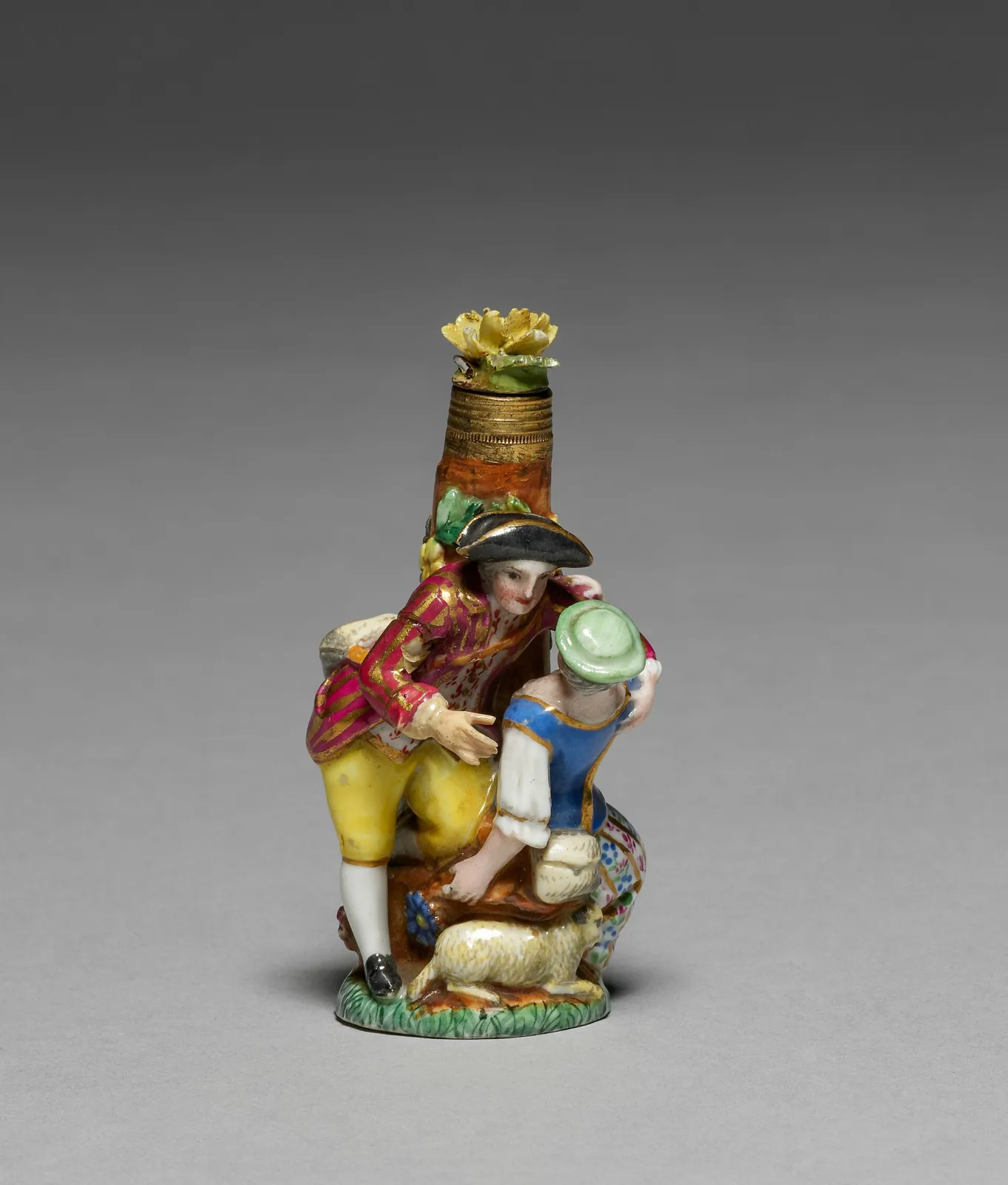
Scent bottles, closely related to the silver vinaigrette when fitted with pierced inner lids, were personal accessories designed for carrying on the person. Typically small (1-3 inches), they feature secure stoppers and often incorporate finger rings, chains, or chatelaine attachments. Georgian and Victorian examples frequently combine glass bodies with precious metal mounts, sometimes incorporating gemstones or enamel decoration. The most desirable scent bottles display exceptional craftsmanship in both glass and metalwork components.
Dresser Bottles
Dresser bottles, also termed vanity bottles or toilet bottles, graced bedroom dressing tables as part of coordinated sets. Larger than scent bottles (typically 4-8 inches), they held sufficient perfume for home use. Victorian and Edwardian dresser sets might include matching bottles for cologne, perfume, and toilet water, along with powder jars, hair receivers, ring trays, and powder compacts. Cut crystal dresser bottles with sterling silver or gilded bronze mounts represent the pinnacle of this category.
Commercial Perfume Bottles
Commercial perfume bottles were designed by or for fragrance houses to contain and market specific perfumes. Beginning with Lalique's collaboration with Coty in 1907, these bottles became integral to brand identity. Key examples include Lalique's "L'Air du Temps" dove stopper for Nina Ricci, Baccarat's "Shalimar" urn-shaped bottle for Guerlain, and numerous Art Deco designs by Czechoslovakian manufacturers. Commercial bottles are typically marked with both the glassmaker's signature and the perfume house's name or logo.
Atomizers
Perfume atomizers incorporate mechanical spray mechanisms allowing fine mist application. DeVilbiss, an American company, dominated the atomizer market from the 1900s through the 1960s, producing both complete atomizers and spray mechanisms for mounting on existing bottles. Antique atomizers feature hand-blown glass bodies, often in Art Deco or Art Nouveau styles, with metal spray mechanisms, silk-covered bulbs, and decorative tassels. Original working mechanisms significantly enhance value.
Laydown Bottles
Laydown bottles, designed to rest horizontally rather than stand upright, represent a distinctive Victorian innovation. Their elongated cylindrical or rectangular forms often feature elaborate cutting or overlay decoration visible from above when placed on a dressing table. Silver-mounted laydown bottles with hinged caps were particularly popular in England during the late 19th century.
Double-Ended Bottles
Double-ended scent bottles, popular from the Georgian period through the Victorian era, feature stoppers at both ends of an elongated body. One end typically contained perfume while the other held smelling salts or vinegar-soaked sponges for reviving fainting ladies. These practical accessories often feature contrasting colored glass at each end or elaborate silver mounting throughout.
Figural and Novelty Bottles
Figural perfume bottles shaped like people, animals, flowers, or objects appealed to Victorian and Art Deco collectors. German, Austrian, and Czechoslovakian manufacturers produced vast quantities of figural bottles, ranging from simple pressed glass examples to elaborate hand-painted porcelain figures. Crown Top bottles—featuring stoppers integrated into figurative designs—represent a distinctive subcategory particularly popular during the 1920s and 1930s.
Glass Manufacturing Techniques and Materials
Recognizing glass types and manufacturing methods provides crucial dating evidence and helps distinguish valuable handcrafted examples from later mass-produced pieces.
Blown Glass Techniques
- Free-Blown Glass: Created by inflating molten glass on a blowpipe without molds, resulting in slight asymmetries and unique character. Examine pontil marks on the base—rough pontil scars indicate pre-1860 manufacture, while ground and polished pontils suggest later production.
- Mold-Blown Glass: Glass blown into patterned molds creates consistent decorative effects. Two-piece molds leave visible seam lines; three-piece molds produce bottles with seams extending partway up the body. Fully automatic machine production (post-1903) creates seams extending through the lip.
- Pattern-Molded Glass: Glass first impressed with a pattern in a small mold, then expanded by further blowing, creating delicate ribbed or diamond effects. This technique, associated with early American and Venetian glass, creates patterns that appear to "float" within the glass wall.
Cut and Engraved Glass
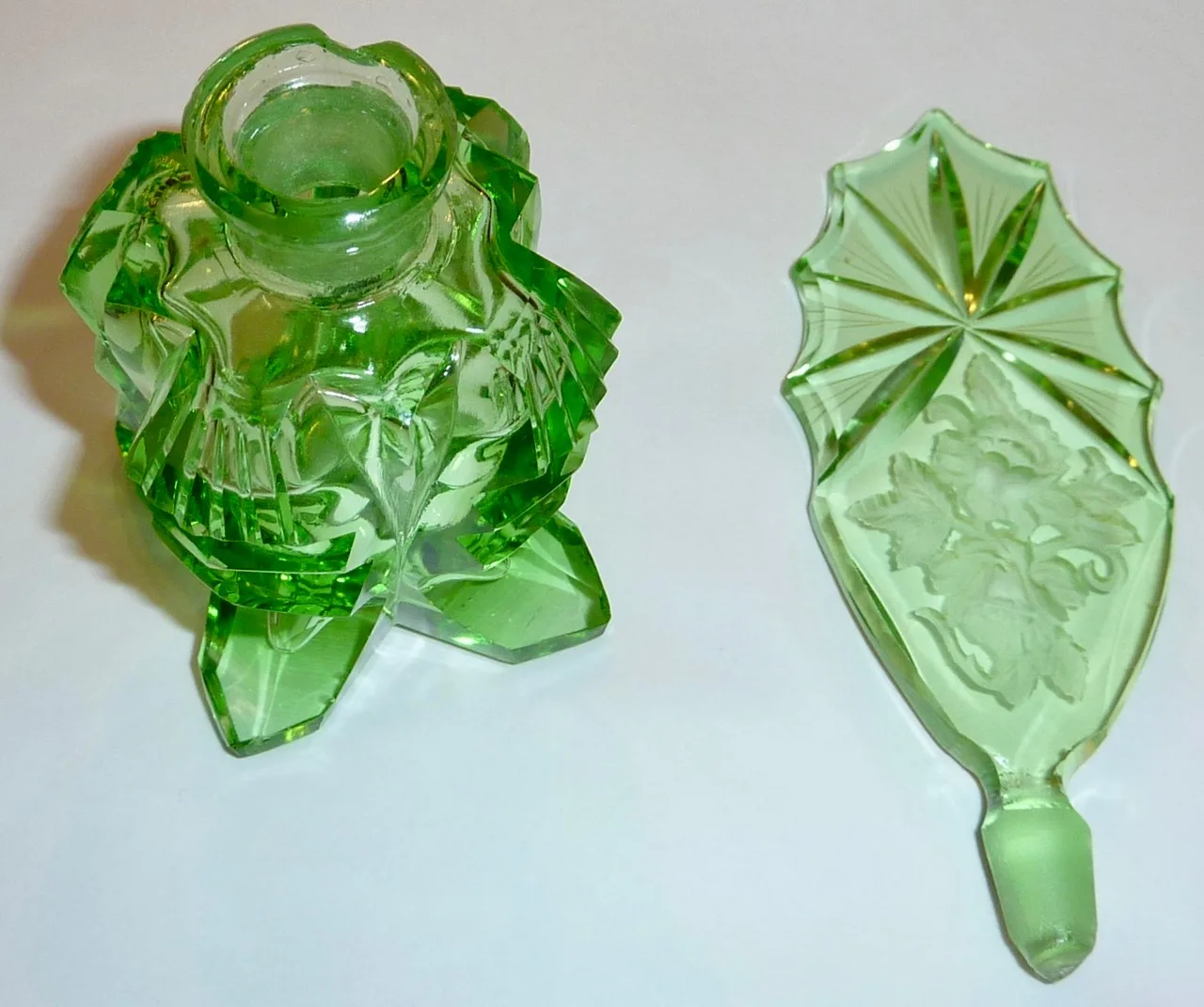
- Wheel Cutting: Rotating stone or iron wheels create geometric patterns ranging from simple facets to elaborate designs. Deep cutting requires high-quality lead crystal; shallow cutting may appear on lesser glasses. Examine cut surfaces—hand cutting shows slight irregularities, while machine cutting appears perfectly uniform.
- Copper-Wheel Engraving: Fine pictorial or calligraphic decoration achieved using small copper wheels with abrasive compounds. Bohemian glasshouses excelled at this technique, producing bottles with detailed hunting scenes, portraits, and elaborate monograms.
- Acid Etching: Chemical etching creates frosted or matte surface effects. Lalique pioneered artistic use of acid etching, often combining frosted and polished areas for dramatic contrast. Commercial acid etching (post-1850) produced less expensive alternatives to wheel cutting.
Colored and Decorated Glass
- Overlay or Cased Glass: Multiple layers of differently colored glass fused together, then cut through to reveal contrasting colors. Bohemian overlay glass typically features white, ruby, blue, or green over clear crystal. Examine cut areas for clean color transitions indicating quality manufacture.
- Cameo Glass: Layered glass carved in relief to create three-dimensional designs. Gallé, Daum, and Thomas Webb produced exceptional cameo perfume bottles. Genuine cameo glass shows tool marks and subtle surface variations; reproductions often appear mechanically uniform.
- Enamel Decoration: Vitreous enamel paints fired onto glass surfaces create colorful decoration. Venetian and Bohemian enameling traditions differ in palette and technique—Venetian work often features white latticework and gold, while Bohemian decoration emphasizes naturalistic florals and hunting scenes.
- Gilding: Gold decoration applied through various techniques including fired gold leaf, mercury gilding, and gold paint. Fired gilding withstands gentle cleaning; painted gold wears easily. Original gilding shows appropriate wear patterns consistent with age and use.
Glass Composition Identification
- Lead Crystal: Contains lead oxide (typically 24-35%), producing exceptional clarity, weight, and brilliance. Lead crystal rings musically when tapped and feels noticeably heavier than soda-lime glass. English and Irish manufacturers specialized in lead crystal from the 18th century onward.
- Soda-Lime Glass: The most common glass type, lighter than lead crystal with less brilliance. Venetian cristallo represents the finest soda-lime glass, while commercial bottles typically use standard soda-lime formulations.
- Potash-Lime Glass: Bohemian specialty glass, harder than soda-lime and capable of accepting deep cutting. Bohemian glass often displays a subtle grayish or greenish tint compared to English lead crystal's warm brilliance.
- Opaline Glass: Translucent milk-white or colored glass achieving opacity through added tin oxide or bone ash. French opaline perfume bottles from the 19th century command strong collector interest, particularly examples with gilt bronze mounts.

Stopper Identification and Authentication
Stoppers represent critical authentication elements—original stoppers significantly enhance value, while replaced or mismatched stoppers diminish desirability. Understanding stopper types and matching techniques prevents costly authentication errors.
Stopper Types and Terminology
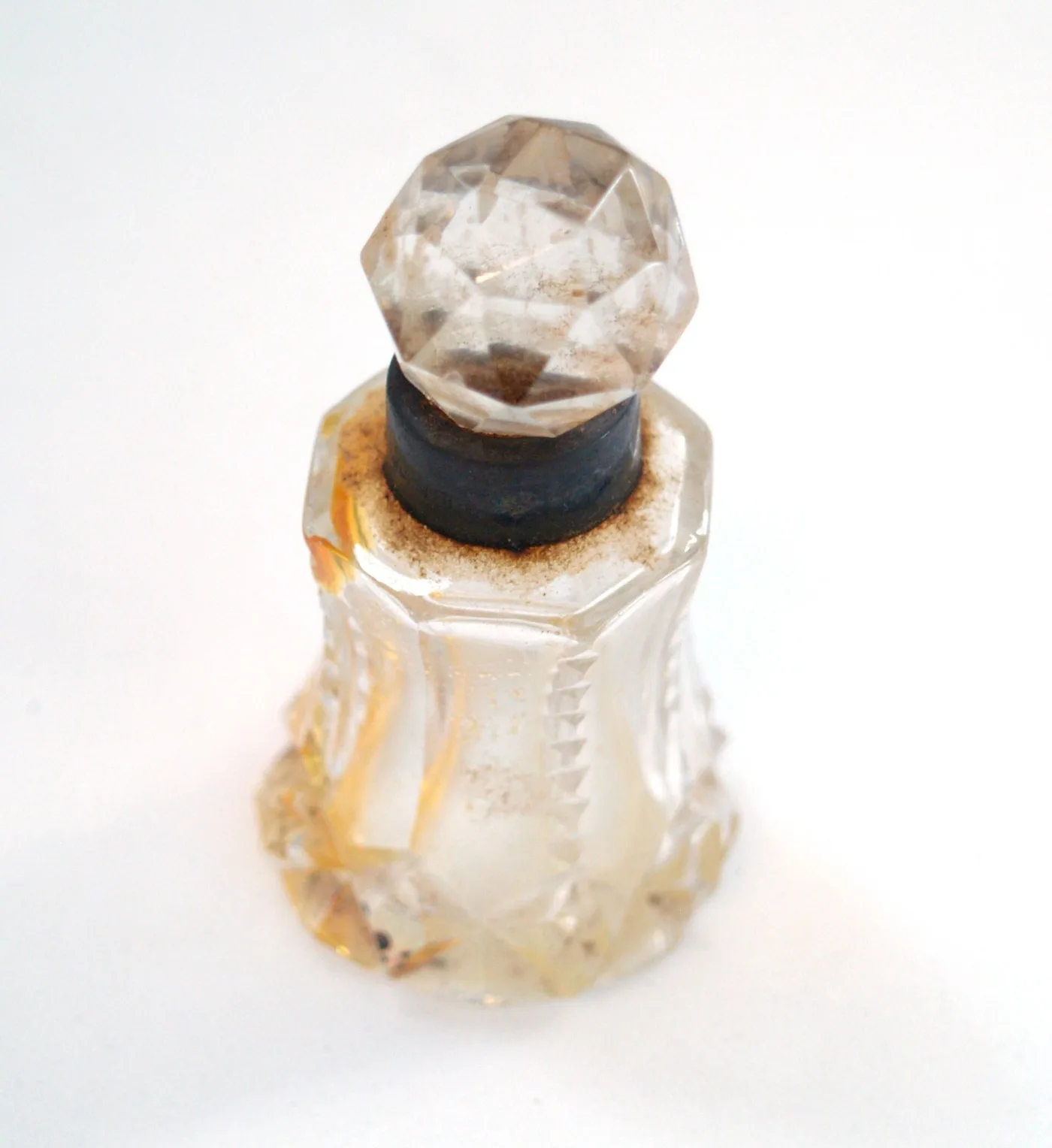
- Ground Glass Stoppers: Stoppers with ground (frosted) shanks that create airtight seals through friction fit. The grinding pattern should match between stopper and bottle neck. Original pairs show matching wear patterns and identical grinding texture.
- Lapidary-Cut Stoppers: Faceted stoppers cut like gemstones, popular on Georgian and Victorian bottles. Examine cutting quality and compare to bottle cutting style—original pairs typically show consistent craftsmanship.
- Mushroom Stoppers: Dome-shaped stoppers common on 18th and early 19th century bottles. Original mushroom stoppers often show pontil marks on their tops from the glassmaking process.
- Figural Stoppers: Stoppers shaped as flowers, birds, figures, or abstract forms. Lalique's figural stoppers—doves, butterflies, dancing figures—define Art Deco perfume bottle aesthetics.
- Dauber Stoppers: Stoppers with elongated glass rods for applying perfume directly to skin. The dauber length should be proportional to bottle depth, reaching near the bottom when fully inserted.
- Inner Stoppers: Some bottles feature both decorative outer stoppers and functional inner stoppers. Commercial bottles often use cork or plastic inner stoppers beneath glass decorative caps.
Matching Original Stoppers
- Fit and Function: Original stoppers fit precisely without wobbling or requiring force. The stopper should seal completely, preventing evaporation. Test fit by inverting the stoppered bottle briefly—no leakage should occur.
- Color and Clarity Match: Glass color, clarity, and any inclusions should match between bottle and stopper. Slight color variations may indicate replacement, though some period bottles were sold with intentionally contrasting stoppers.
- Cutting and Decoration Consistency: On cut glass bottles, stopper cutting should match bottle cutting in depth, pattern style, and quality. Enamel or gilded decoration should show consistent technique and wear.
- Wear Pattern Correlation: Original pairs display compatible wear—stoppers show handling wear on gripping surfaces while bottles show wear around necks. Mismatched wear patterns suggest later pairing.
- Numbering Systems: Some manufacturers, particularly Lalique and Baccarat, numbered bottles and stoppers to ensure correct pairing. Examine bases and stopper undersides for matching numbers or letters.
Stopper Replacement Considerations
Bottles with replaced stoppers typically sell for 30-60% less than examples with original stoppers. However, period-appropriate replacement stoppers from the same manufacturer or era may be acceptable for some collectors. Document any stopper replacement in provenance records and price accordingly.
Maker Marks, Signatures, and Attribution
Identifying the manufacturer or designer dramatically affects both authentication confidence and market value. Perfume bottle marks appear in various locations and formats requiring systematic examination.
Locating Maker Marks
- Base Marks: The most common location for signatures, often molded, etched, or engraved on bottle bottoms. Use good lighting and magnification to examine bases thoroughly.
- Stopper Marks: Some manufacturers marked stoppers separately or in addition to bottle bases. Lalique frequently signed stopper undersides.
- Metal Mount Marks: Sterling silver and gold mounts bear hallmarks indicating metal content, maker, date, and assay office. English hallmarks provide precise dating information.
- Paper Labels: Original paper labels, though often lost, provide definitive attribution. Surviving labels significantly enhance value and should be carefully preserved.
- Acid Stamps: Some manufacturers used acid-etched marks that appear as slightly frosted areas. These marks may be subtle and require careful examination.
Major Perfume Bottle Manufacturers
- René Lalique (France, 1860-1945): The most collected perfume bottle designer. Early bottles signed "R. Lalique" in script or block letters; post-1945 pieces (made by his son Marc) signed simply "Lalique." Examine signature style, as forgeries exist.
- Baccarat (France, 1764-present): Premier crystal manufacturer producing bottles for major perfume houses. Marks include acid-etched "Baccarat" script, circular stamps, and paper labels. Pre-1936 pieces may lack marks entirely.
- Saint-Louis (France, 1767-present): Historic French crystal house. Marks include "St. Louis" in various formats and paper labels. Known for exceptional paperweight-style stoppers.
- Steuben (USA, 1903-2011): American art glass manufacturer. Marks include acid-etched "Steuben" and fleur-de-lis symbols. Frederick Carder designs command premium prices.
- DeVilbiss (USA, 1905-1968): Leading atomizer manufacturer. Marks include paper labels and metal stamps on spray mechanisms. Complete original atomizers are increasingly scarce.
- Czechoslovakian Manufacturers: Numerous Czech glasshouses produced Art Deco perfume bottles, often marked "Czechoslovakia" or "Made in Czechoslovakia." Individual maker attribution requires specialized knowledge.
- Bohemian Glasshouses: Historic Bohemian manufacturers rarely marked individual pieces. Attribution relies on style, technique, and provenance documentation.
Attribution Without Marks
Many antique perfume bottles lack maker marks, requiring attribution through stylistic analysis, technique identification, and comparative study. Consult reference books, museum collections, and auction archives to identify unmarked pieces. Document attribution reasoning thoroughly, distinguishing between confirmed and attributed manufacturers.
Dating Methods and Period Characteristics
Accurate dating combines multiple evidence types including manufacturing techniques, stylistic elements, and material analysis. No single factor provides definitive dating; consider all available evidence collectively.
Manufacturing Evidence
- Pontil Marks: Rough pontil scars indicate pre-1860 manufacture; ground pontils suggest 1860-1900; snap-case production (no pontil mark) indicates post-1870 commercial manufacture.
- Mold Seams: Seam height indicates production method—seams stopping below the lip suggest mouth-blown finishing (pre-1903); seams through the lip indicate fully automatic production.
- Glass Quality: Bubbles, striations, and slight color variations characterize hand-produced glass. Perfectly uniform glass suggests modern manufacture.
- Cutting Technique: Hand cutting shows slight irregularities; machine cutting appears mechanically perfect. Examine cut intersections and pattern alignment carefully.
Stylistic Dating Indicators
- Georgian Period (1714-1830): Neoclassical motifs, faceted cutting, mushroom stoppers, restrained elegance. Heavy lead crystal with brilliant clarity.
- Victorian Period (1837-1901): Eclectic styles, overlay glass, elaborate silver mounts, novelty forms. Bohemian influence prominent mid-century.
- Art Nouveau (1890-1914): Organic forms, flowing lines, naturalistic decoration. Cameo glass, iridescent finishes, asymmetrical designs.
- Art Deco (1920-1940): Geometric patterns, stylized figures, bold colors. Frosted glass, architectural forms, streamlined elegance.
- Mid-Century Modern (1940-1970): Clean lines, abstract forms, Scandinavian influence. Studio glass movement emerges late in period.
Hallmark Dating
Silver and gold mounts on English perfume bottles bear hallmarks providing precise dating. English hallmarks include maker's mark, standard mark (lion passant for sterling), assay office mark (anchor for Birmingham, leopard's head for London), and date letter. Continental hallmarks follow different systems requiring specialized reference guides.
Documentary Evidence
Period advertisements, trade catalogs, patent records, and exhibition documentation can confirm dating and attribution. The Corning Museum of Glass, Victoria and Albert Museum, and major auction house archives maintain searchable databases of historical perfume bottle imagery.
Condition Assessment and Conservation
Condition significantly impacts value—minor flaws may reduce prices by 20-40%, while major damage can diminish value by 70% or more. Systematic condition assessment prevents costly surprises and informs appropriate pricing.
Common Condition Issues
- Chips and Flakes: Examine rims, stopper edges, and base edges carefully. Small chips may be acceptable on rare pieces but significantly affect common examples. Interior chips (inside the neck) are less visible but affect functionality.
- Cracks and Fractures: Any crack diminishes value substantially. Hairline cracks may be difficult to detect—examine bottles under strong light from multiple angles. Stress cracks around stopper necks indicate forcing or temperature shock.
- Cloudiness and Staining: Interior cloudiness from perfume residue or mineral deposits affects appearance. Professional cleaning may improve some staining, but permanent etching cannot be reversed. Exterior cloudiness may indicate glass disease requiring conservation intervention.
- Stopper Damage: Chipped, cracked, or replaced stoppers significantly reduce value. Frozen stoppers (stuck due to residue crystallization) may be freed by professional conservators but risk breakage.
- Metal Mount Condition: Dents, repairs, replaced parts, and missing elements affect silver-mounted bottles. Examine hallmarks for alterations indicating later additions or replacements.
- Decoration Loss: Worn gilding, flaking enamel, and faded painting reduce value proportionally to loss extent. Original decoration in good condition commands premium prices.
Condition Grading Standards
- Mint/Perfect: No visible flaws under careful examination. Original stopper, complete decoration, no repairs. Commands full market value.
- Excellent: Minor wear consistent with age; no chips, cracks, or repairs. Original stopper with minor wear. Commands 85-95% of mint value.
- Very Good: Light wear, possible minor fleabites on non-visible areas. Original stopper acceptable with minor flaws. Commands 70-85% of mint value.
- Good: Noticeable wear, small chips, or minor decoration loss. Stopper may be period replacement. Commands 50-70% of mint value.
- Fair: Significant wear, chips, or repairs. Stopper possibly missing or replaced. Commands 25-50% of mint value for rare examples only.
- Poor: Major damage, extensive repairs, or missing elements. Value limited to parts or study purposes except for extremely rare examples.
Conservation Best Practices
- Cleaning: Use only distilled water and mild dish soap for routine cleaning. Never use abrasives, ammonia, or ultrasonic cleaners on antique glass. Dry immediately with soft lint-free cloths.
- Storage: Store bottles upright in padded containers away from temperature extremes and direct sunlight. Separate stoppers from bottles during long-term storage to prevent sticking.
- Display: Use museum-quality display cases with UV-filtering glass. Avoid windowsills and areas with temperature fluctuation. Rotate displayed items periodically to prevent uneven fading.
- Professional Conservation: Consult qualified glass conservators for frozen stoppers, interior cleaning, and crack stabilization. Document all conservation treatments for provenance records.
Market Valuation and Collecting Strategies
The antique perfume bottle market offers opportunities across all budget levels, from affordable Victorian pressed glass to six-figure Lalique rarities. Understanding market dynamics helps collectors build meaningful collections and make informed purchasing decisions.
Primary Value Factors
- Maker and Designer: Signed Lalique, Baccarat, and Gallé pieces command premium prices. Attribution to known designers or manufacturers significantly enhances value over anonymous examples.
- Rarity: Limited production runs, unusual forms, and uncommon color combinations increase desirability. Research production quantities when possible—some "rare" bottles were actually produced in large numbers.
- Condition: Mint condition examples may sell for 2-3 times the price of damaged equivalents. Original stoppers are essential for maximum value.
- Provenance: Documented ownership history, especially connection to notable collections or historical figures, enhances value. Maintain and transfer provenance documentation with each sale.
- Aesthetic Appeal: Visual impact affects marketability. Striking colors, elaborate decoration, and elegant proportions attract competitive bidding.
- Historical Significance: Bottles associated with important perfume houses, historical events, or design innovations command scholarly and collector interest.
Current Market Trends
- Art Deco Dominance: Lalique and Czech Art Deco bottles remain the most actively traded category, with strong international demand particularly from Asian collectors.
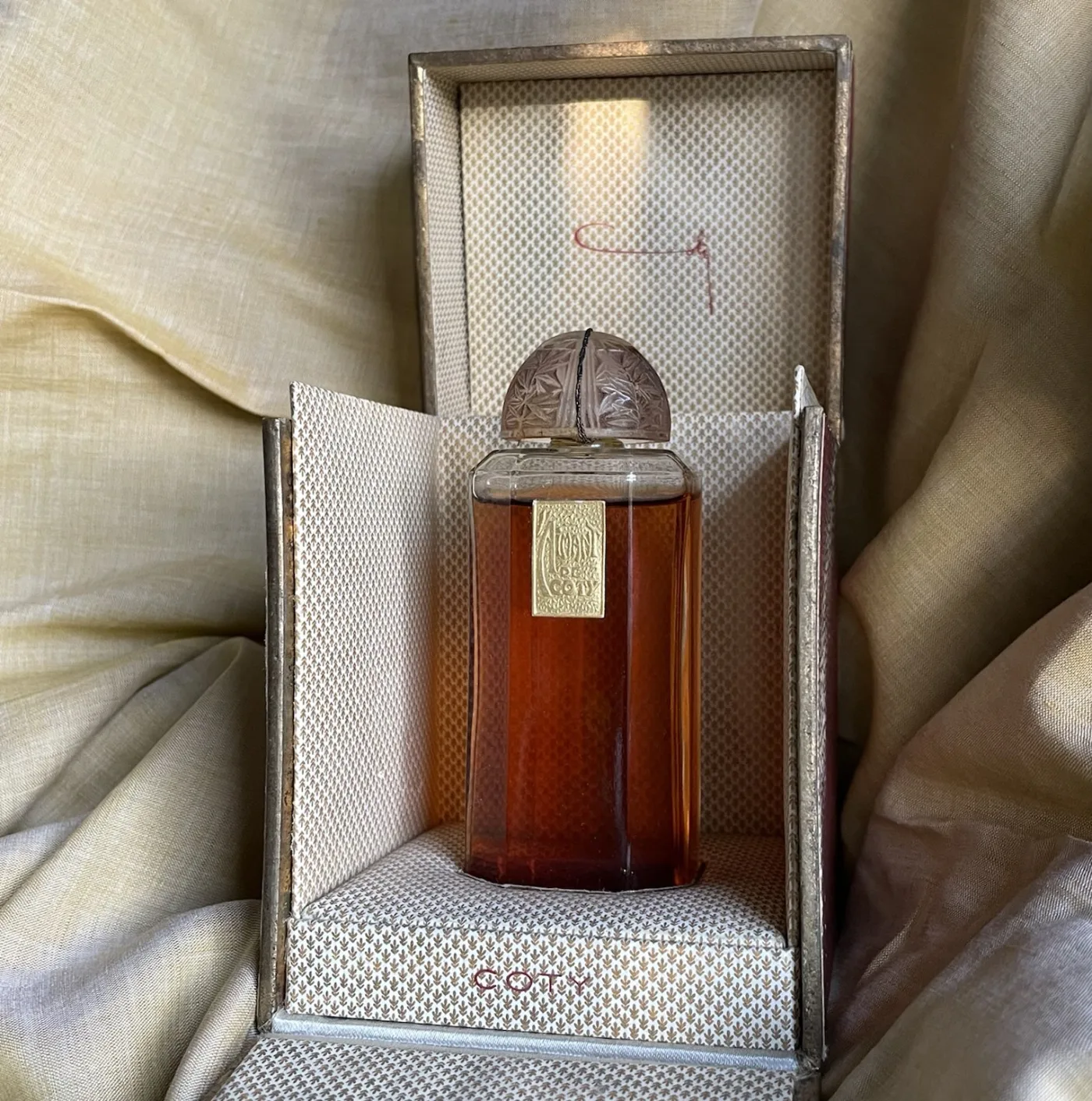
- Commercial Bottle Interest: Vintage commercial bottles from prestigious perfume houses (Guerlain, Caron, Worth) attract growing collector attention, especially complete with original packaging.
- Atomizer Revival: Complete DeVilbiss and European atomizers with working mechanisms command increasing premiums as functional examples become scarcer.
- Quality Over Quantity: Collectors increasingly favor fewer exceptional pieces over large accumulations of common examples. Investment-grade bottles show stronger appreciation.
- Online Market Expansion: Internet sales have democratized the market but increased forgery risks. Buy from reputable dealers with return privileges for online purchases.
Price Range Guidelines
- Entry Level ($25-$200): Victorian pressed glass, common Czech bottles, unmarked dresser bottles, damaged examples of better pieces.
- Mid-Range ($200-$1,000): Signed Czech pieces, quality cut glass, complete atomizers, Art Nouveau examples, silver-mounted Victorian bottles.
- Upper Market ($1,000-$10,000): Signed Lalique, quality Baccarat, Gallé cameo, exceptional Art Deco designs, rare commercial bottles.
- Museum Quality ($10,000+): Rare Lalique models, important Gallé pieces, exceptional historical examples, documented provenance from notable collections.
Building a Collection
- Define Focus: Successful collectors typically specialize—by period, maker, technique, or form. Focused collections demonstrate expertise and often appreciate more than scattered accumulations.
- Buy the Best: Prioritize quality over quantity. One exceptional bottle often outperforms ten mediocre examples in both satisfaction and investment return.
- Research Before Buying: Study reference books, auction results, and museum collections before making significant purchases. Knowledge protects against overpaying and forgeries.
- Build Relationships: Develop relationships with reputable dealers who understand your collecting interests. Dealers often offer first refusal on desirable pieces to established clients.
- Document Everything: Maintain detailed records including purchase information, provenance, condition reports, and photographs. Good documentation enhances resale value.
Authentication Checklist and Resources
Systematic authentication protects against forgeries and misattributions. Use this checklist when evaluating potential acquisitions and document findings for future reference.
Authentication Workflow
- Initial Visual Assessment: Examine overall form, proportions, and aesthetic consistency with attributed period and maker. Trust initial impressions—pieces that "feel wrong" often prove problematic upon closer examination.
- Signature Verification: Compare signatures to documented examples in reference books and museum databases. Examine signature execution—period signatures show appropriate technique and wear.
- Manufacturing Analysis: Assess glass quality, production techniques, and finishing consistent with attributed origin. Modern reproductions often fail in technical details invisible to casual observation.
- Stopper Evaluation: Verify stopper originality through fit, matching, and wear pattern analysis. Replaced stoppers require disclosure and price adjustment.
- Condition Documentation: Record all condition issues with photographs. Note any repairs, alterations, or replaced elements.
- Provenance Research: Request and verify ownership history. Examine supporting documentation for authenticity and consistency.
- Comparative Study: Compare to authenticated examples in reference books, museum collections, and auction archives. Significant variations from documented examples require explanation.
- Expert Consultation: For significant purchases, consult recognized experts or obtain formal appraisals from qualified specialists.
Red Flags for Forgeries
- Signature Anomalies: Incorrect signature format, inappropriate placement, or execution inconsistent with known examples.
- Manufacturing Inconsistencies: Modern production techniques on supposedly antique pieces—machine-perfect cutting, contemporary glass formulations, or inappropriate mold seams.
- Condition Paradoxes: Pieces appearing too perfect for claimed age, or showing artificial aging inconsistent with natural wear patterns.
- Provenance Gaps: Inability to document ownership history, especially for rare or valuable pieces that should have traceable provenance.
- Price Anomalies: Prices significantly below market value for comparable authenticated examples. Genuine bargains exist but require extra scrutiny.
- Seller Reluctance: Resistance to providing detailed photographs, condition reports, or return privileges. Reputable sellers welcome informed buyers.
Reference Resources
- Essential Books: "Perfume Bottles" by Jacquelyne North; "Lalique Perfume Bottles" by Mary Lou and Glenn Utt; "The Art of the Perfume" by Christie Mayer Lefkowith; "Baccarat Paperweights and Related Glass" by Paul Jokelson.
- Museum Collections: Corning Museum of Glass; Victoria and Albert Museum; Musée Lalique; The Perfume Museum, Grasse; International Perfume Museum.
- Auction Archives: Christie's, Sotheby's, and Bonhams maintain searchable databases of past sales with prices realized. Specialist auction houses including Perfume Bottles Auction and Ken Leach auctions focus specifically on perfume bottles.
- Collector Organizations: International Perfume Bottle Association (IPBA) provides educational resources, publications, and networking opportunities for collectors.
- Digital Tools: The Antique Identifier app offers AI-powered analysis to help identify makers, periods, and comparable sales for perfume bottles and other antiques.
Professional Appraisal
For insurance, estate, or significant purchase purposes, obtain written appraisals from qualified specialists. Look for appraisers with demonstrated expertise in antique glass and perfume bottles, membership in professional organizations (AAA, ASA, ISA), and no conflict of interest in the transaction. Expect to pay $50-$150 per item for formal written appraisals, with discounts for multiple items.
Conclusion
Antique perfume bottles offer collectors a uniquely rewarding pursuit combining artistic appreciation, historical research, and the sensory pleasures of beautiful objects. From the delicate craftsmanship of Georgian scent bottles to the bold geometry of Art Deco atomizers, each piece reflects its era's aesthetic values and technological capabilities while serving the timeless human desire to capture and preserve fragrance.
Success in collecting requires developing expertise through study, handling, and comparison of many examples. Build relationships with knowledgeable dealers, participate in collector organizations, and visit museum collections whenever possible. Document your acquisitions thoroughly, maintain appropriate storage and display conditions, and share your knowledge with fellow enthusiasts.
Whether you're drawn to the investment potential of signed Lalique masterpieces or the accessible charm of Victorian pressed glass, the world of antique perfume bottles rewards patient study with discoveries that delight the eye and enrich understanding of decorative arts history. Each bottle you encounter carries stories of the artisans who created it, the individuals who treasured it, and the cultural moments it witnessed—stories waiting to be uncovered by informed and passionate collectors.