
Antique Sundials Identification Guide: Types, Makers & Dating Methods
Antique sundials represent one of humanity's oldest and most elegant timekeeping traditions, spanning thousands of years from ancient Egyptian obelisks to the finely engraved brass instruments of the Georgian era. For collectors and enthusiasts, these instruments combine scientific precision with artistic craftsmanship, making them among the most fascinating objects in the world of antiques and scientific instruments.
Identifying and dating antique sundials requires an understanding of their many forms, the materials and techniques used in their construction, and the distinctive signatures of the workshops that produced them. Whether you have discovered a weathered stone dial in a garden, inherited a pocket sundial from a family estate, or spotted a brass horizontal dial at an auction, knowing what to look for can mean the difference between recognizing a valuable period piece and overlooking a modern reproduction.
This comprehensive guide covers every aspect of antique sundial identification, from the major types and their construction methods to the most celebrated makers, authentication techniques, and current market values. You will learn how to read inscriptions, analyze gnomon styles, assess condition, and build a meaningful collection of these timeless scientific instruments.
Table of Contents
- History of Sundials: From Ancient Timekeeping to Collectible Art
- Types of Antique Sundials
- Materials and Construction Methods
- Identifying Age and Period
- Famous Sundial Makers and Workshops
- Reading Inscriptions and Markings
- Gnomon Styles and Analysis
- Brass and Bronze Sundial Identification
- Stone and Marble Sundial Identification
- Pocket and Portable Sundial Identification
- Authentication and Detecting Reproductions
- Condition Assessment and Grading
- Value Factors and Market Trends
- Care and Preservation of Antique Sundials
- Building a Sundial Collection
History of Sundials: From Ancient Timekeeping to Collectible Art
The sundial is among the oldest scientific instruments known to civilization. Ancient Egyptians used tall obelisks as shadow clocks as early as 3500 BCE, dividing the day into segments based on the changing length and direction of the shadow cast by these monumental stone pillars. The Babylonians refined the concept further, developing hemispherical sundials carved into stone blocks that could track the sun's movement across the sky with greater accuracy. By the time of the ancient Greeks and Romans, sundial design had become a sophisticated branch of applied mathematics, with scholars such as Vitruvius describing more than a dozen distinct dial types in his architectural treatises.
During the medieval period, sundials became essential fixtures on churches and public buildings across Europe. Monks relied on them to regulate the hours of prayer, and the canonical sundial, with its simple radiating lines scratched into stone walls, became a ubiquitous feature of ecclesiastical architecture. These early scratch dials, sometimes called mass dials, are among the most commonly encountered antique sundials today, though their simplicity and worn condition often cause them to be overlooked by casual observers.
The Renaissance brought a revolution in sundial design and production. As mathematical understanding advanced and skilled metalworkers became more numerous, sundials evolved from purely functional timekeeping devices into objects of considerable artistry and scientific ingenuity. The 16th and 17th centuries saw the emergence of specialized sundial workshops in cities such as Nuremberg, Augsburg, Paris, and London, where craftsmen produced instruments of extraordinary precision and beauty. Portable sundials became fashionable accessories for educated gentlemen, and elaborate garden sundials served as status symbols for wealthy estate owners.
By the 18th and 19th centuries, the mechanical clock had largely supplanted the sundial as a practical timekeeper, but sundials continued to be made as decorative objects, scientific curiosities, and garden ornaments. The Victorian era witnessed a particular revival of interest in sundials, with new designs drawing on classical and Gothic motifs. Today, antique sundials are highly sought after by collectors of scientific instruments, garden antiques, and decorative arts, with prices ranging from modest sums for simple stone dials to tens of thousands for rare signed examples by renowned makers.
Types of Antique Sundials
Antique sundials come in a remarkable variety of forms, each designed to exploit the geometry of the sun's apparent motion in a different way. Understanding these types is fundamental to identification, as the form of a sundial often reveals much about its age, origin, and intended use. The major categories include horizontal dials, vertical dials, equatorial dials, armillary spheres, portable dials, and pillar dials, each with distinctive characteristics that collectors should learn to recognize.
Horizontal or Garden Sundials
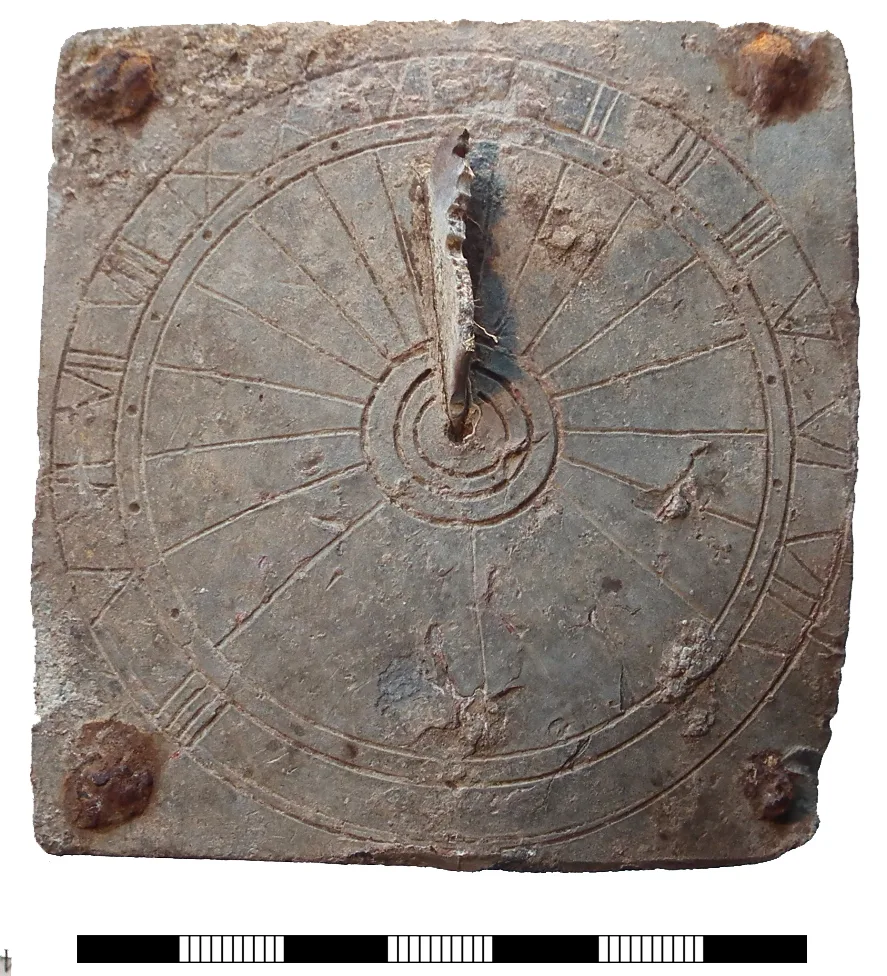
The horizontal sundial is perhaps the most familiar type, consisting of a flat plate or dial face mounted horizontally on a pedestal, with a triangular gnomon rising from its surface at an angle equal to the latitude of the location. Hour lines radiate from the base of the gnomon across the dial face, and the shadow of the gnomon's edge indicates the time. Horizontal sundials were widely produced from the 16th century onward and remain the most commonly encountered type in antique collections. Period examples typically feature engraved brass or bronze dial plates, though stone and slate versions were also popular for garden settings.
When examining a horizontal sundial, pay attention to the hour line layout. Genuine antique examples will have hour lines calculated for a specific latitude, and this latitude is often engraved on the dial face. The spacing of the hour lines is uneven on a horizontal dial, becoming more compressed near noon, which distinguishes authentic calculated dials from decorative reproductions that may use evenly spaced lines.
Vertical or Wall Sundials
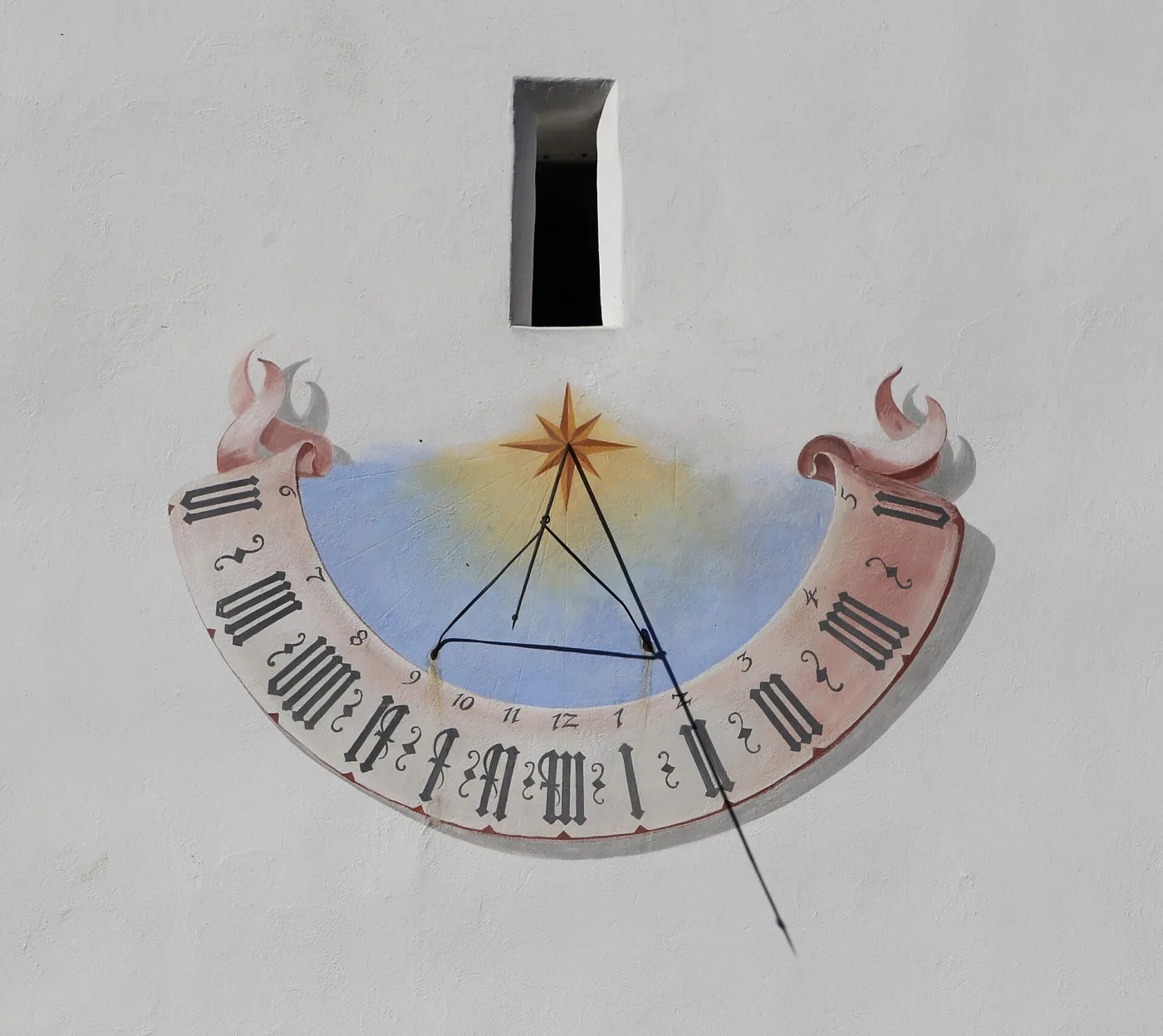
Vertical sundials are mounted on walls, typically on the south-facing facade of a building in the Northern Hemisphere. They were especially popular on churches, manor houses, and public buildings from the medieval period through the 19th century. The gnomon of a vertical sundial projects horizontally from the wall, and the hour lines are arranged in a pattern that differs from the horizontal dial because the dial plate is oriented vertically rather than flat. South-facing vertical dials are the simplest to design, but skilled makers also produced declining dials for walls that face southeast, southwest, or other orientations.
Antique vertical sundials range from simple scratch dials incised into church stonework to elaborate painted or carved examples with decorative borders, mottos, and calendar scales. Large painted wall sundials from the 17th and 18th centuries, particularly those found in Alpine regions of Austria, Switzerland, and southern Germany, are highly valued for their artistic quality and can feature allegorical figures, zodiac symbols, and polychrome decoration.
Equatorial Sundials
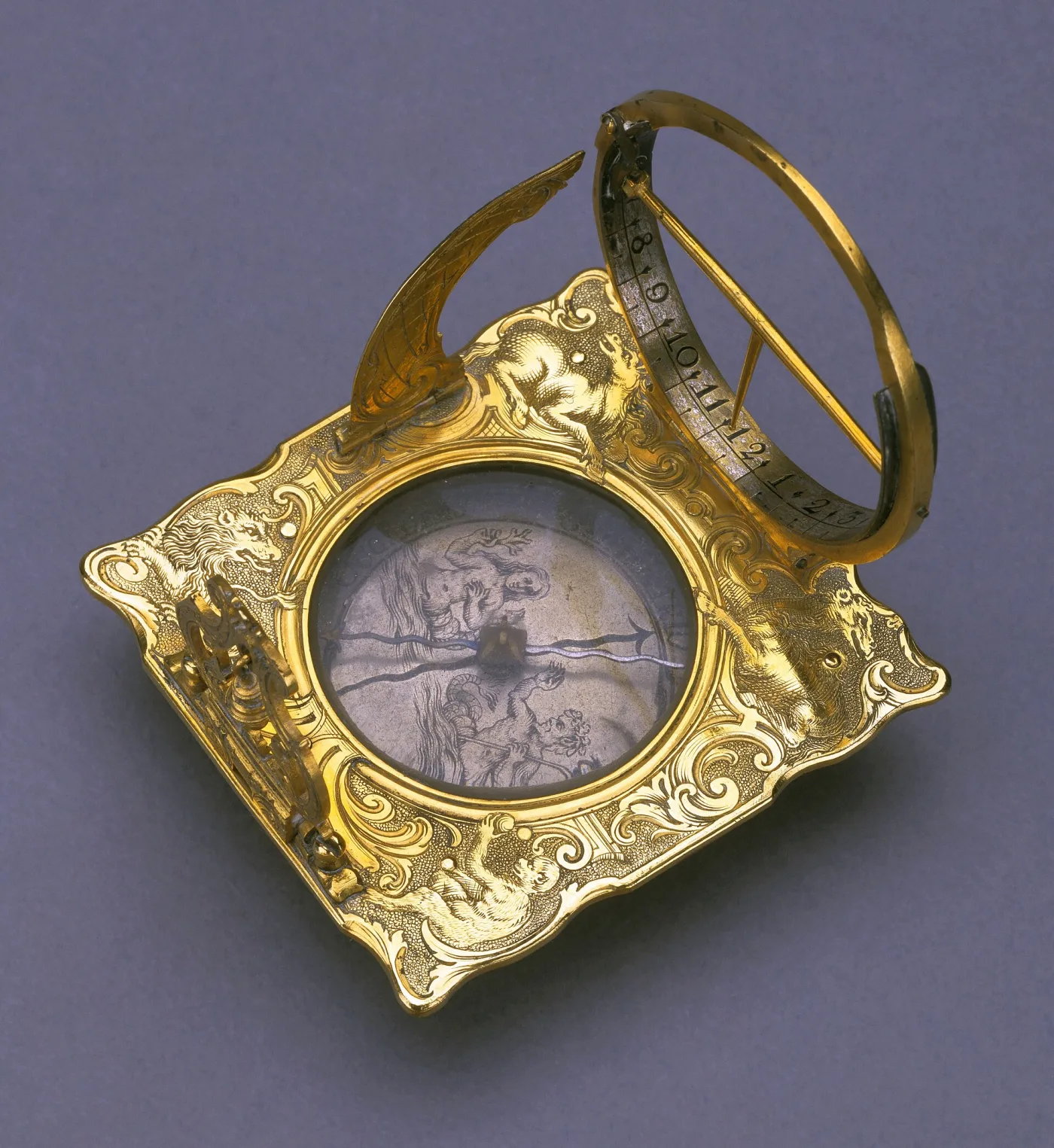
The equatorial sundial features a dial plate set parallel to the plane of the Earth's equator, tilted at an angle equal to the co-latitude of the location. This arrangement produces evenly spaced hour lines at 15-degree intervals, making the equatorial dial the simplest type to design and read. The gnomon passes through the center of the dial at right angles to the plate. Equatorial sundials were popular from the 17th century onward and are often found in both garden and portable forms.
One characteristic of the equatorial sundial that aids identification is the need for a dual-sided dial face. Because the sun is north of the equatorial plane for half the year and south of it for the other half, equatorial sundials require hour markings on both sides of the dial plate, or else can only tell time for part of the year. This feature is a reliable indicator of an equatorial design and helps distinguish it from other flat-plate sundial types.
Armillary Sphere Sundials
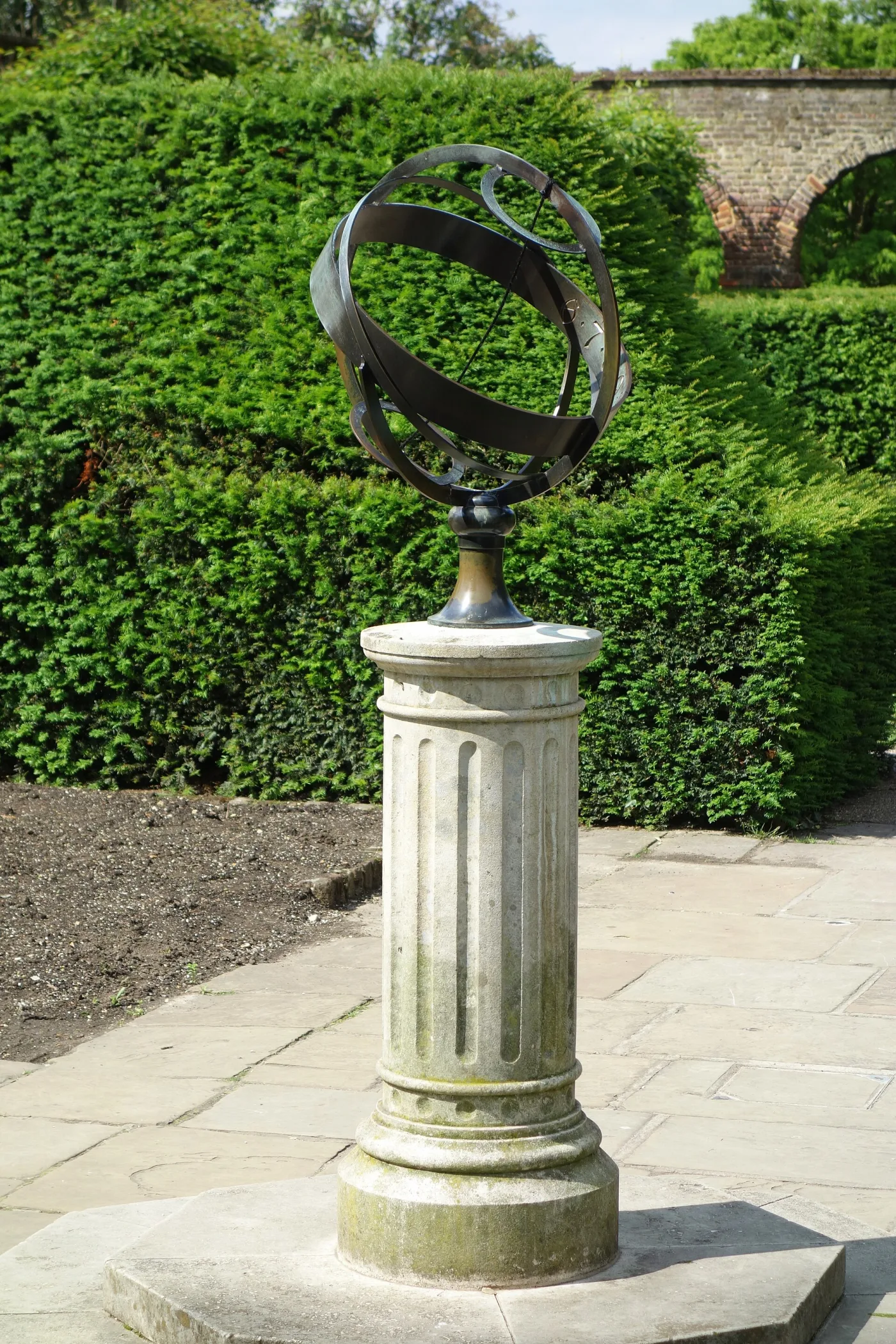
The armillary sphere sundial consists of a series of nested metal rings representing the major circles of the celestial sphere, including the equator, tropics, Arctic and Antarctic circles, and sometimes the ecliptic. A central rod or arrow serves as the gnomon, aligned with the Earth's polar axis. The shadow cast by this rod onto the equatorial ring indicates the time. Armillary spheres are among the most visually striking sundial types and have been produced since antiquity, though most surviving antique examples date from the 17th century onward.
Antique armillary sphere sundials are relatively rare and command premium prices at auction. Period examples are typically made of brass or bronze and may feature elaborate engraving, decorative finials, and complex ring assemblies. Be aware that armillary spheres have been widely reproduced as garden ornaments since the early 20th century, and many examples found in antique shops are modern decorative pieces rather than genuine scientific instruments.
Portable and Pocket Sundials
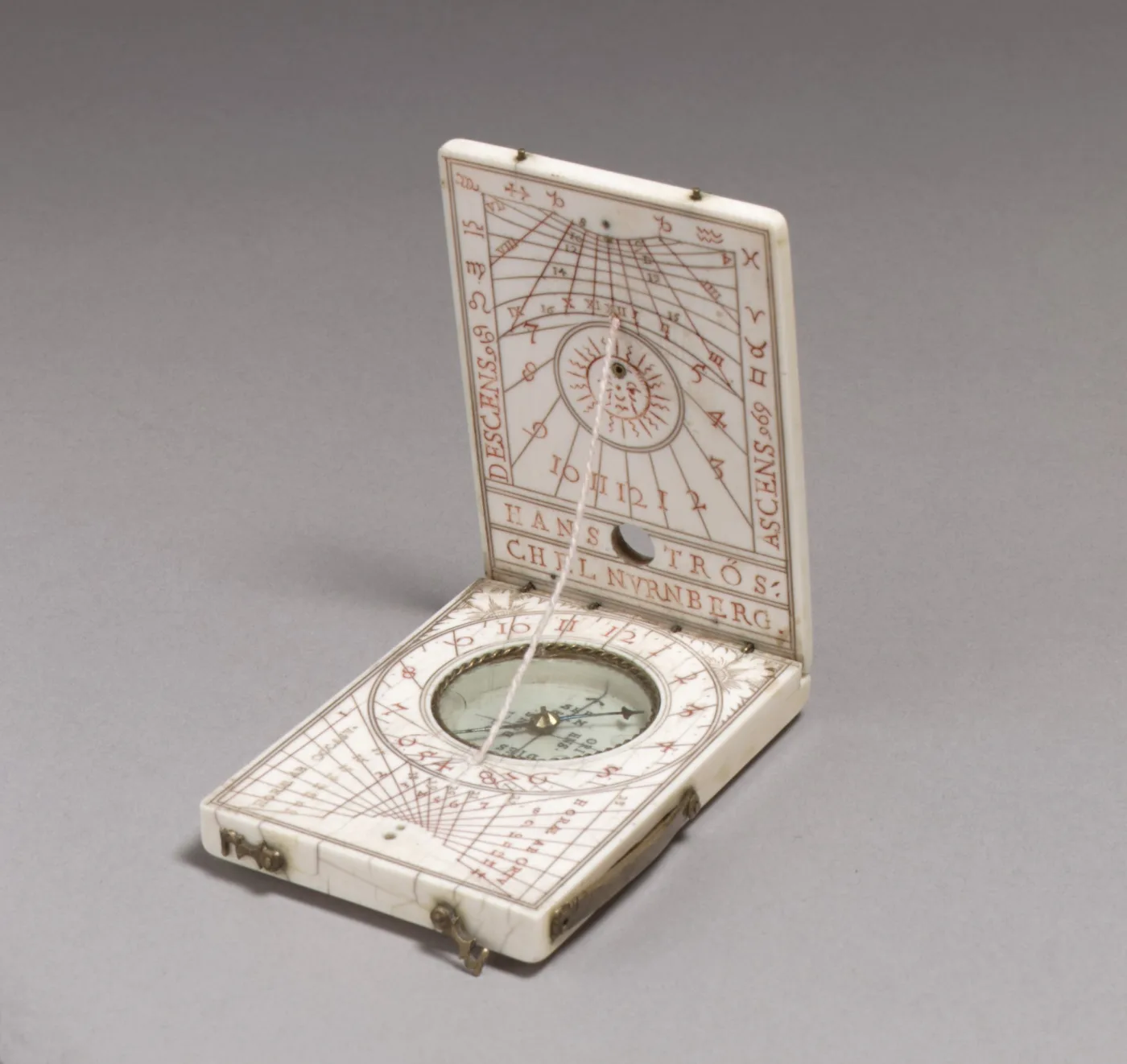
Portable sundials were designed for travelers and were produced in enormous variety from the 15th through the 19th centuries. The most common types include the diptych dial, which folds like a book and uses a string gnomon stretched between its two leaves; the Butterfield dial, a horizontal pocket dial with a folding gnomon shaped like a bird; the Augsburg dial, featuring a compass and adjustable gnomon; and the ring dial, a simple annular device worn on a chain. These instruments were often made of ivory, brass, silver, or combinations of materials, and many incorporate a magnetic compass for orientation.
Pocket sundials are among the most collectible and valuable types of antique sundials. Signed examples by known makers such as Michael Butterfield, Johann Willebrand, or David Beringer can fetch considerable sums at specialist auctions. The compact size and portability of these instruments also makes them particularly appealing to collectors with limited display space.
Pillar or Shepherd's Sundials
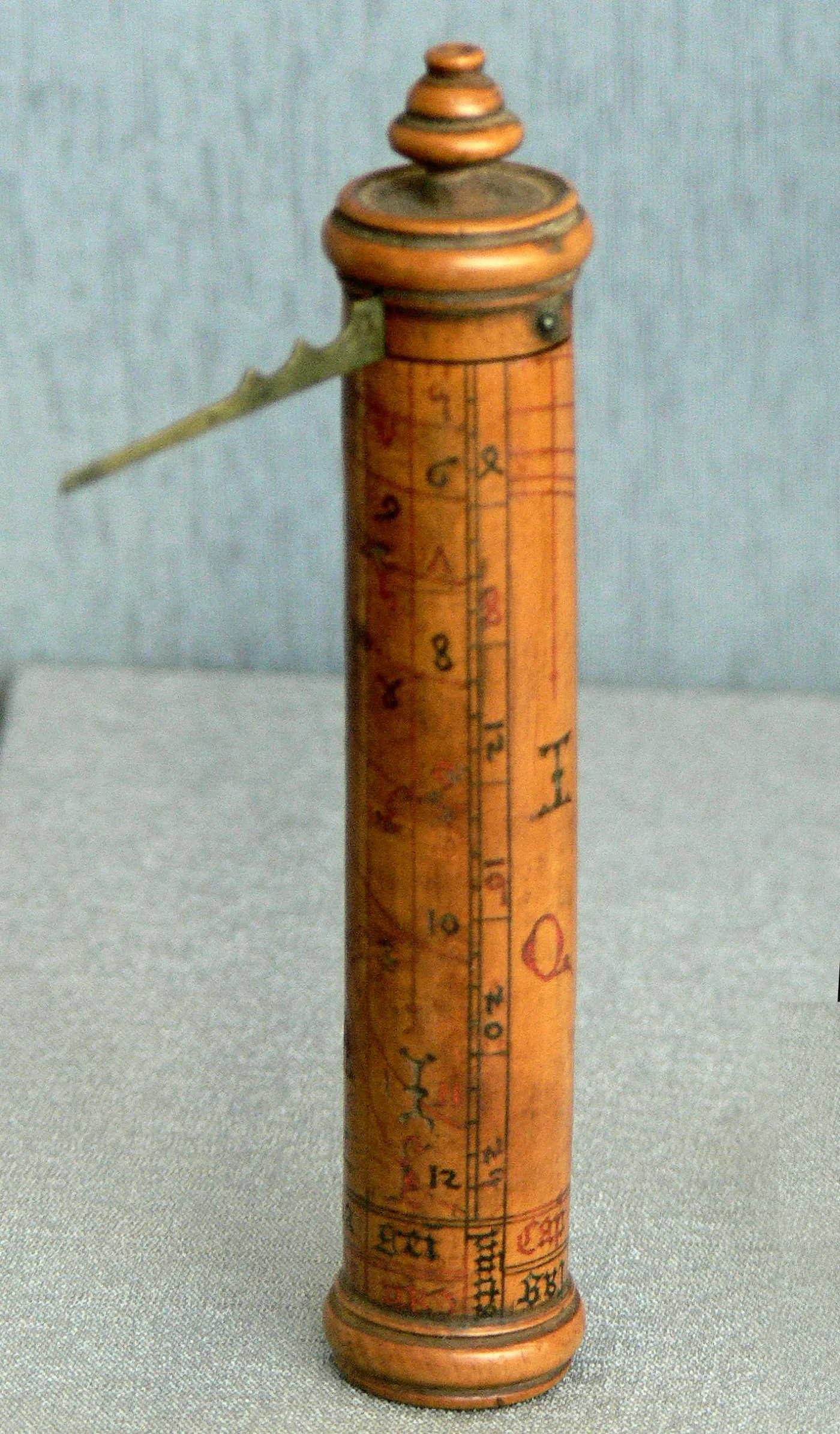
The pillar sundial, also known as a shepherd's dial or cylinder dial, consists of a vertical column or cylinder with hour lines marked on its surface and a horizontal gnomon that can be rotated or adjusted for different times of year. These instruments were popular among shepherds and travelers in mountainous regions of Europe from the medieval period through the 18th century. The simplest versions are wooden cylinders with a peg gnomon, while more sophisticated examples feature brass construction with calendar scales and adjustable fittings.
Pillar sundials are less commonly encountered than horizontal or pocket types but are valued by collectors for their historical associations and rustic charm. Authentic examples often show significant wear from outdoor use, and the wooden versions are particularly rare survivors due to their vulnerability to the elements.
Materials and Construction Methods
The materials used in sundial construction provide important clues to age, origin, and value. Different periods and regions favored different materials and working techniques, and understanding these preferences is essential for accurate identification and dating.
Bronze and Brass
Brass and bronze are the most common materials for quality antique sundials, used from the Renaissance onward for both fixed and portable instruments. Early sundials, particularly those from the 16th and 17th centuries, were often cast in bronze using the lost-wax method, producing a warm, reddish-gold alloy with a distinctive character. By the 18th century, sheet brass became more widely available and many sundials were fabricated from flat brass plates, cut, engraved, and assembled. The composition of the brass alloy changed over time, with earlier examples tending to have higher zinc content and a more golden appearance, while 19th-century brass is typically paler and more uniform.
Engraving is a critical feature to examine on brass and bronze sundials. Period engraving was done by hand with a burin or graver, producing slightly irregular lines with characteristic tapered ends. Machine-engraved lines, which appear perfectly uniform and mechanical, generally indicate a 19th-century or later date of manufacture. The depth and style of the engraving, the quality of the lettering, and the presence of decorative flourishes all contribute to identification.
Stone and Marble
Stone sundials have been produced since antiquity and were especially popular for garden and architectural use in Britain and northern Europe from the 17th through the 19th centuries. Common stone types include limestone, sandstone, slate, and marble. Scottish and English sundials frequently used local sandstone or limestone, with the dial face carved directly into the stone surface. Slate was favored in Wales and parts of northern England, prized for its smooth surface and resistance to weathering.
Marble sundials are typically associated with more affluent settings and were popular in Italian and French gardens. White Carrara marble was commonly used for ornamental garden dials, while colored marbles appear in more elaborate pieces. The condition of stone sundials is heavily influenced by their exposure to weather, acid rain, and biological growth, and collectors should assess the legibility of any carved hour lines and inscriptions carefully.
Silver, Ivory, and Precious Materials
The finest portable sundials were crafted from precious materials including silver, gold, ivory, and exotic woods. Silver pocket sundials were particularly popular in the 18th century and may bear hallmarks that assist greatly with dating and provenance. Ivory was extensively used for diptych dials produced in Nuremberg during the 16th and 17th centuries, with hour lines, compass roses, and decorative elements drawn in ink or engraved and filled with colored pigment. These ivory dials are now among the most prized and expensive sundial collectibles, with museum-quality examples commanding six-figure prices at major auction houses.
Wood was used for simpler sundials, particularly pillar dials and basic garden instruments. Boxwood and fruitwoods were common choices for portable dials due to their fine grain and ability to take detailed carving. Wooden sundials have poor survival rates compared to metal or stone examples, making authenticated period pieces particularly valuable.
Identifying Age and Period
Dating antique sundials requires attention to multiple features including design style, construction technique, materials, inscriptions, and provenance. While precise dating can be challenging without maker's marks or documented history, a combination of visual and technical analysis usually allows placement within a general period.
Renaissance Period (1450-1600)
Renaissance sundials reflect the era's fusion of art and science. Instruments from this period are typically made of gilt brass or bronze with elaborate engraving that may include astronomical scales, zodiac symbols, and allegorical decoration. Nuremberg and Augsburg were the leading production centers, and ivory diptych dials with compass inserts are characteristic products of this era. The hour markings on Renaissance sundials often use Roman numerals, and the engraving style tends to be bold and slightly irregular, reflecting hand craftsmanship. Sundials from this period are rare and extremely valuable, with most examples now residing in museum collections.
Look for Gothic or early Renaissance lettering styles, heavy construction, and the use of Latin inscriptions. The gnomon on Renaissance horizontal dials is typically a simple triangular plate, sometimes decorated with pierced work or engraved motifs. Calendar scales and astrological markings are common on more sophisticated instruments from this era.
17th and 18th Century
The 17th and 18th centuries represent the golden age of sundial making, when the craft reached its highest levels of precision and artistry. English makers such as Thomas Tompion, Henry Wynne, and Richard Glynne produced horizontal dials of exceptional quality, while French workshops under makers like Michael Butterfield created the distinctive Butterfield-type pocket sundials that bear their name. The engraving on dials from this period is typically finer and more precise than earlier work, with well-formed Roman or Arabic numerals, delicate compass roses, and elaborate cartouches surrounding maker's signatures.
Brass alloys from this period have a rich, warm tone, and the patina on authentic 17th and 18th century dials develops a characteristic deep brown or greenish hue that is extremely difficult to replicate artificially. Many dials from this era include latitude tables for multiple cities, reflecting their use by travelers. The presence of a latitude table with cities such as London, Paris, Rome, and Constantinople is typical of high-quality European dials from the 1650-1780 period.
Victorian Era (1837-1901)
Victorian sundials are among the most commonly encountered antique examples and were produced in considerable variety. The Victorian period saw a revival of interest in sundials as garden ornaments, and many dials from this era combine traditional designs with new manufacturing techniques including machine engraving and industrial casting. Bronze and cast iron became popular materials for garden sundials, often mounted on elaborate stone or cast-iron pedestals. Pocket sundials from the Victorian period tend to be more utilitarian than their 18th-century predecessors, though quality examples by makers such as Negretti and Zambra maintain high standards of craftsmanship.
Victorian sundials can often be identified by their characteristic combination of traditional design elements with industrial-era production methods. Machine-cut hour lines, stamped rather than hand-engraved lettering, and standardized rather than bespoke gnomon angles are typical indicators. However, the best Victorian makers continued to produce hand-finished instruments of considerable quality, and these should not be dismissed by collectors.
Regional Styles
Regional variations provide valuable clues for identification. Scottish sundials are distinctive, often featuring elaborate multi-faceted designs with numerous dial faces carved into a single sculptural stone form. These obelisk or polyhedral sundials, popular from the 17th through the early 19th centuries, are unique to Scotland and are highly collectible. French sundials tend to feature more decorative engraving and elegant proportions than their English counterparts, while German and Austrian sundials often incorporate multiple scientific scales and calendar information. Italian sundials frequently use classical motifs and are commonly found in marble or stone rather than metal.
Famous Sundial Makers and Workshops
The presence of a maker's signature or workshop mark on a sundial dramatically increases its value and historical significance. Learning to recognize the work of the most important sundial makers is one of the most rewarding aspects of collecting these instruments.
Thomas Tompion (1639-1713)
Thomas Tompion, often called the "Father of English Clockmaking," also produced sundials of exceptional quality. Based in London, Tompion was appointed Royal Clockmaker to Charles II and later to William III. His sundials are extremely rare and command extraordinary prices when they appear at auction. Tompion's work is characterized by precise engraving, elegant proportions, and the highest quality brass. His horizontal dials typically bear his signature in a flowing script within a decorative cartouche. Any sundial attributed to Tompion should be subjected to rigorous authentication, as his fame has made his name a frequent target for forgers.
Michael Butterfield (c.1635-1724)
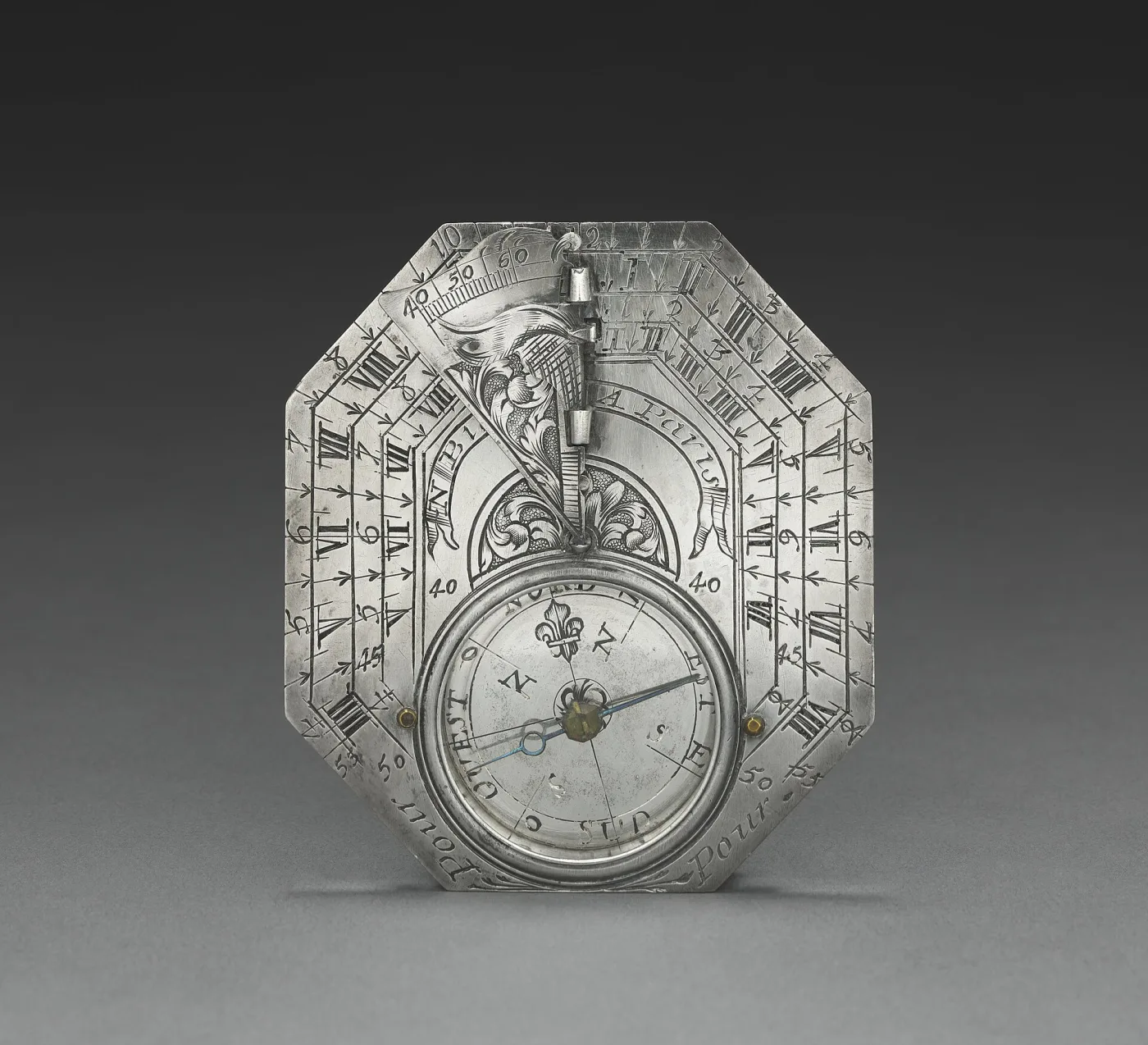
Michael Butterfield was an English-born instrument maker who settled in Paris and became one of the most celebrated sundial makers of the late 17th and early 18th centuries. He is best known for the Butterfield-type portable sundial, a compact horizontal dial with a distinctive bird-shaped folding gnomon that can be adjusted for different latitudes. The gnomon typically features a small pointer or beak that indicates the latitude setting on a scale engraved on the dial face. Butterfield dials were widely imitated throughout the 18th century, and the style remained popular long after the maker's death. Authentic Butterfield sundials are signed "Butterfield AParis" or similar variants, and the quality of his engraving is consistently superb.
Johann Martin (1642-1710) and the Augsburg Tradition
Johann Martin was among the leading sundial makers of the Augsburg school, which produced some of the finest portable sundials of the 17th and 18th centuries. Augsburg-type sundials are typically compact brass instruments featuring a magnetic compass, an adjustable gnomon, and hour scales for multiple latitudes. The city of Augsburg was home to a thriving community of instrument makers, including other notable craftsmen such as Johann Willebrand, Ludwig Theodor Muller, and Andreas Vogler. Augsburg dials are often recognizable by their octagonal shape, finely engraved compass roses, and the distinctive Augsburg city mark stamped on the instrument.
Richard Glynne (active 1700-1750)
Richard Glynne was a prominent London instrument maker known for producing high-quality horizontal sundials in brass. His dials are typically signed "Rich. Glynne Fecit" and feature precise hour lines, well-executed Roman numerals, and decorative engraving. Glynne's work represents the best of the early Georgian tradition of English sundial making, with carefully calculated hour lines and gnomons accurately set for London's latitude. His instruments are sought after by collectors of both sundials and broader scientific instruments of the Georgian period.
Other Notable Makers
The history of sundial making includes many other distinguished craftsmen whose work collectors should learn to recognize. Henry Wynne (active 1654-1709) produced some of the finest English sundials of the late Stuart period. Erasmus Habermel (c.1538-1606) created magnificent Renaissance instruments for the court of Rudolf II in Prague. Johann Georg Vogler (1721-1765) of Augsburg was renowned for his precision pocket dials. In the 19th century, firms such as Negretti and Zambra in London continued to produce quality sundials alongside their expanding range of meteorological and scientific instruments. French makers including Nicolas Bion (1652-1733) and Claude Langlois (1690-1756) produced instruments of outstanding elegance and precision.

Reading Inscriptions and Markings
Inscriptions on antique sundials serve multiple purposes and provide invaluable information for identification and dating. Learning to read and interpret these markings is an essential skill for any serious sundial collector or researcher.
Mottos and Philosophical Inscriptions
Sundials have long been associated with philosophical reflections on the passage of time, and many antique examples bear Latin mottos that express this theme. Common inscriptions include "Horas non numero nisi serenas" (I count only the sunny hours), "Tempus fugit" (Time flies), "Ut umbra sic vita" (As the shadow, so is life), and "Carpe diem" (Seize the day). The style and language of the motto can help with dating: Latin inscriptions are more common on earlier dials, while English-language mottos became popular from the mid-18th century onward. Some dials feature unique or customized mottos that may indicate a commission for a specific patron.
Latitude Markings
Most well-made sundials are designed to function accurately at a specific latitude, and this latitude is frequently engraved on the dial. On horizontal dials, look for a notation such as "Lat. 51 30" indicating the latitude of London, or "Lat. 48 50" for Paris. Portable sundials often include latitude tables listing multiple cities, allowing the traveler to adjust the gnomon angle accordingly. The cities included in a latitude table can help identify the intended market for the dial and sometimes indicate the maker's location. A dial listing primarily English cities was likely made in England, while one listing Continental European cities suggests French, German, or Italian manufacture.
Maker Signatures and Date Engravings
A maker's signature is the single most valuable marking on any antique sundial. Signatures typically appear in a prominent position on the dial face, often within a decorative cartouche or banner. The format varies by period and region: English makers often used the form "Made by [Name]" or "[Name] Fecit," while French makers might use "Fait par [Name]" or simply sign their surname followed by "AParis" or their city of workshop. Date engravings, when present, provide the most direct evidence for dating and may appear alongside the maker's signature or in a separate location on the dial. Be cautious, however, as dates can be added later to enhance value, and the style of the engraving should be consistent with the purported date.
Compass Rose and Directional Markings
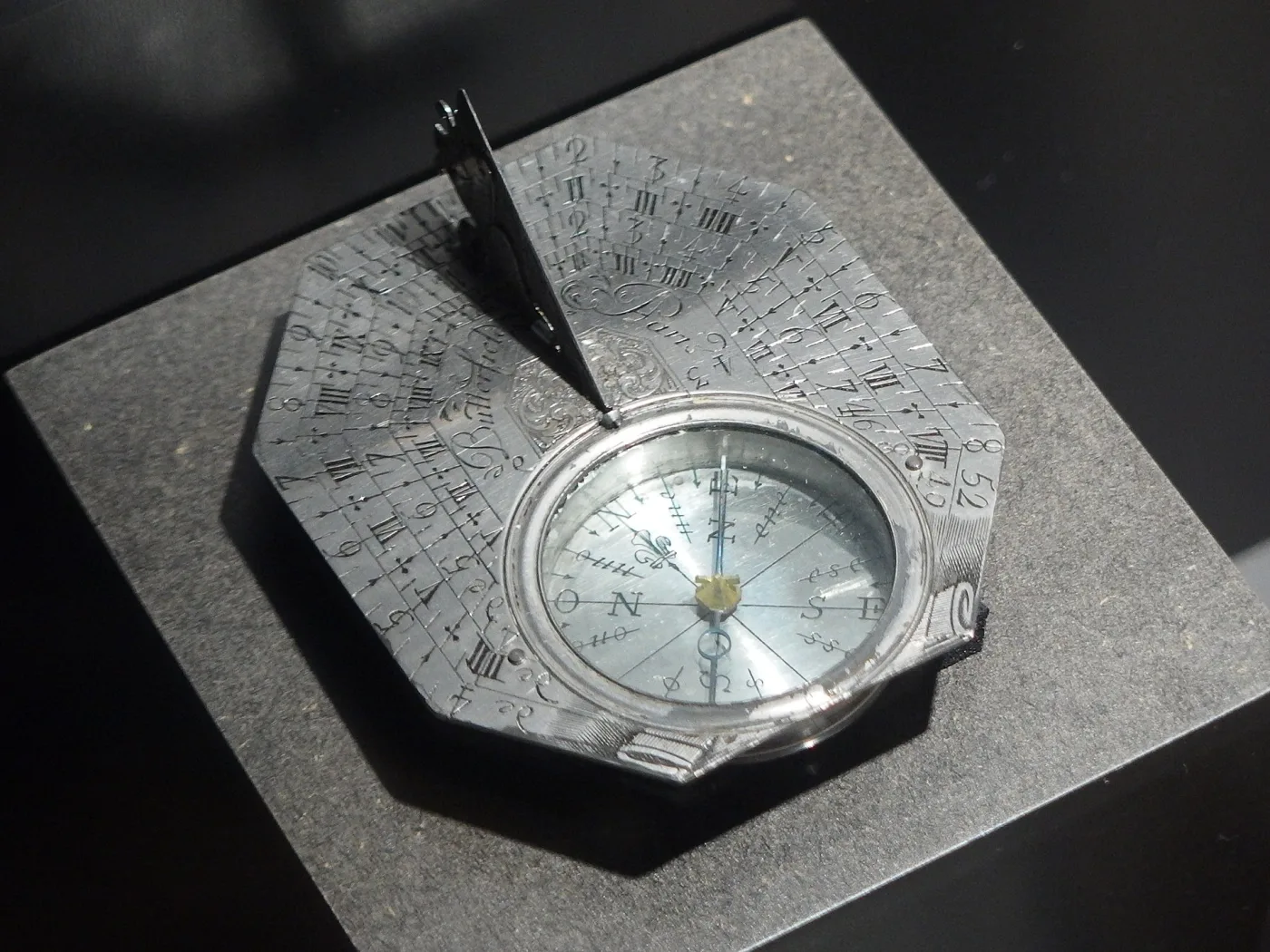
Many sundials, particularly portable types, incorporate a magnetic compass for proper orientation and feature an engraved compass rose. The style of the compass rose evolved over time and varies by region, making it a useful dating indicator. Early compass roses tend to be elaborate multi-pointed designs with decorative elements, while later examples become more simplified and functional. The presence of a declination correction mark near the compass, accounting for the difference between magnetic north and true north, is a feature found on more sophisticated instruments and can sometimes be used to estimate the date of manufacture based on the known history of magnetic declination at a given location.
Gnomon Styles and Analysis
The gnomon is the shadow-casting element of a sundial, and its form, material, and construction provide critical information for identification and authentication. A careful analysis of the gnomon can reveal much about a sundial's age, quality, and originality.
Types of Gnomons
The most common gnomon type on horizontal and vertical sundials is the triangular plate gnomon, a flat triangular piece of metal set perpendicular to the dial face with its sloping edge (called the style) aligned parallel to the Earth's polar axis. The angle of the style above the dial face should equal the latitude for which the dial was designed. Other gnomon types include the pin or nodus gnomon, used primarily on altitude dials and some portable instruments; the polar-pointing rod gnomon, found on equatorial and armillary sundials; and the string gnomon, characteristic of diptych dials and some portable instruments.
Gnomon Materials and Construction
On quality antique sundials, the gnomon is typically made from the same material as the dial plate, whether brass, bronze, or silver. The gnomon may be cast as a single piece with the dial plate, soldered or riveted to the surface, or designed to fold flat for storage in the case of portable instruments. Cast gnomons from the 17th and earlier centuries are often thicker and heavier than later sheet-brass examples. The folding gnomons on Butterfield-type dials feature a characteristic hinge mechanism with a spring or friction detent to hold the gnomon at the correct angle. The quality and design of this hinge mechanism is an important indicator of both age and quality.
Gnomon Angle and Accuracy
On a properly made horizontal sundial, the gnomon angle should correspond precisely to the latitude for which the dial was designed. This can be verified by measuring the angle with a protractor and comparing it to the latitude marked on the dial face. A significant discrepancy between the gnomon angle and the stated latitude may indicate a replacement gnomon, an incorrectly assembled reproduction, or a dial that has been modified. Period sundials by accomplished makers typically show gnomon angles accurate to within half a degree of the stated latitude.
Detecting Replacement Gnomons
Replacement gnomons are common on antique sundials, as the gnomon is the most vulnerable component and is frequently lost or damaged. Signs of a replacement gnomon include a mismatch in patina or color between the gnomon and dial plate, visible marks from different attachment methods (such as screw holes where rivets were originally used), an incorrect angle that does not match the stated latitude, and a gnomon style or thickness inconsistent with the period of the dial. A replacement gnomon does not necessarily destroy the value of an otherwise authentic sundial, but it should be noted and reflected in the price. Some collectors prefer to have a skilled craftsman create an accurate reproduction gnomon for a dial missing its original.
Brass and Bronze Sundial Identification
Brass and bronze sundials form the largest and most diverse category of collectible sundials, ranging from modest 19th-century garden dials to magnificent signed instruments by celebrated makers. Understanding the characteristics of these metallic sundials is essential for any collector.
Patina and Surface Assessment
Genuine antique brass and bronze sundials develop a characteristic patina over centuries of exposure to air and handling. On brass, this patina typically ranges from a warm brown to a dark chocolate color, sometimes with areas of greenish verdigris where the metal has been exposed to moisture. The patina on an authentic antique should appear natural and uneven, with deeper coloring in recessed areas such as engraved lines and lettering, and lighter tones on raised surfaces that have been subject to handling and polishing over time. Artificially aged brass, treated with chemicals to simulate patina, tends to look more uniform and may have an unnaturally even greenish or blackish tone.
Be cautious of brass sundials that have been heavily polished, as this treatment removes the natural patina and can obliterate fine engraving details. While some collectors prefer the bright appearance of polished brass, the loss of original surface is generally considered detrimental to both historical integrity and market value. A well-preserved original patina is one of the most reliable indicators of authenticity.
Casting Methods
The method of casting provides important dating evidence. Sand-casting, the most common method for brass sundials from the 17th through the 19th centuries, leaves characteristic surface textures on the underside of the dial plate, including slight roughness, seam lines from the mold, and sometimes small pits or irregularities. Earlier sundials cast using the lost-wax process tend to have smoother surfaces and may show finer detail. Industrial die-casting, which produces very smooth, uniform surfaces with sharp edges, indicates manufacture from the late 19th century onward. Examining the underside and edges of a brass sundial can reveal much about its construction method and approximate date.
Engraving Techniques
The engraving on brass sundials evolved considerably over time, and close examination of engraving style is one of the most reliable dating methods available. Hand engraving, used exclusively until the mid-19th century, produces lines that vary slightly in width and depth, with distinctive entry and exit marks where the engraver's burin cut into and lifted from the metal. The lettering on hand-engraved dials has an organic quality, with subtle variations in letter forms and spacing that reflect the individual craftsman's hand. Machine engraving, introduced in the early Victorian period, produces perfectly uniform lines and mechanically precise lettering. Pantograph engraving, which became common in the later 19th century, falls between these extremes, reproducing a hand-drawn original with mechanical precision.
Stone and Marble Sundial Identification
Stone sundials represent a long and distinguished tradition, from medieval scratch dials on church walls to the grand garden sundials of the Georgian and Victorian periods. Identifying and dating stone sundials requires attention to the type of stone, carving style, weathering patterns, and contextual clues.
Weathering and Erosion Patterns
Natural weathering is one of the most important indicators of age in stone sundials. Limestone and sandstone dials exposed to the elements develop characteristic erosion patterns over centuries, with softer areas wearing away more quickly than harder inclusions. In polluted urban environments, acid rain can cause significant deterioration, particularly on limestone and marble surfaces. Genuine centuries-old weathering produces irregular, organic erosion that is extremely difficult to fake convincingly. Fresh-looking stone with sharp, clean edges on a supposedly antique sundial is a strong indication of relatively recent manufacture.
Biological growth provides additional dating evidence. Lichen, moss, and algae accumulate on outdoor stone surfaces at varying rates depending on climate and exposure. Well-established lichen colonies, particularly the slow-growing crustose types that form tight adherence to the stone surface, suggest prolonged outdoor exposure. However, biological growth can be artificially encouraged, so it should be considered alongside other dating evidence rather than relied upon in isolation.
Carving Styles and Techniques
The style of carving on stone sundials reflects the artistic conventions and available tools of the period. Medieval scratch dials are characterized by simple radiating lines scratched into the wall surface with a pointed tool, often with a central hole for a peg gnomon. The lines are typically rough and may not be precisely calculated, reflecting their function as approximate indicators of prayer times rather than accurate timekeepers. Renaissance and later carved stone dials show more sophisticated craftsmanship, with carefully incised hour lines, Roman or Arabic numerals, and sometimes decorative borders and mottos.
The tool marks visible on carved stone can help determine the period of manufacture. Chisel marks from hand carving are characteristic of pre-industrial dials, while the smooth, regular surfaces produced by machine polishing indicate 19th-century or later manufacture. The lettering style on carved stone dials also evolves over time, from the Gothic and Roman letter forms of the medieval and Renaissance periods to the more refined serif and script styles of the 18th and 19th centuries.
Garden Sundials and Pedestals
Garden sundials were immensely popular in England from the 17th through the 19th centuries, and many surviving examples consist of a brass or bronze dial plate mounted on a stone or cast-iron pedestal. When evaluating a garden sundial, it is important to assess whether the dial plate and pedestal are original to each other. Mismatched combinations are common, as dial plates and pedestals were frequently separated and recombined over the centuries. Look for consistent weathering, matching proportions, and evidence of the original mounting arrangement. Baluster, column, and urn-shaped pedestals are all found on period examples, with the specific design often reflecting the architectural taste of the period.
Pocket and Portable Sundial Identification
Portable sundials are among the most collectible and diverse categories of antique sundial, encompassing a wide range of ingenious designs produced over more than four centuries. Their compact size, fine craftsmanship, and ingenious mechanisms make them particularly appealing to collectors.
Compass Sundials
The most common type of portable sundial incorporates a magnetic compass to allow the user to orient the instrument correctly toward true north. These compass sundials were produced in enormous quantities from the 17th through the 19th centuries, in forms ranging from simple brass discs to elaborate silver-cased instruments. The compass is typically mounted in the center of the dial face, surrounded by hour lines and a latitude adjustment scale. When examining a compass sundial, check that the compass needle moves freely and settles to a consistent bearing, inspect the glass or mica cover for cracks or replacement, and verify that the compass rose engraving is consistent in style and age with the rest of the dial.
Butterfield-Type Sundials
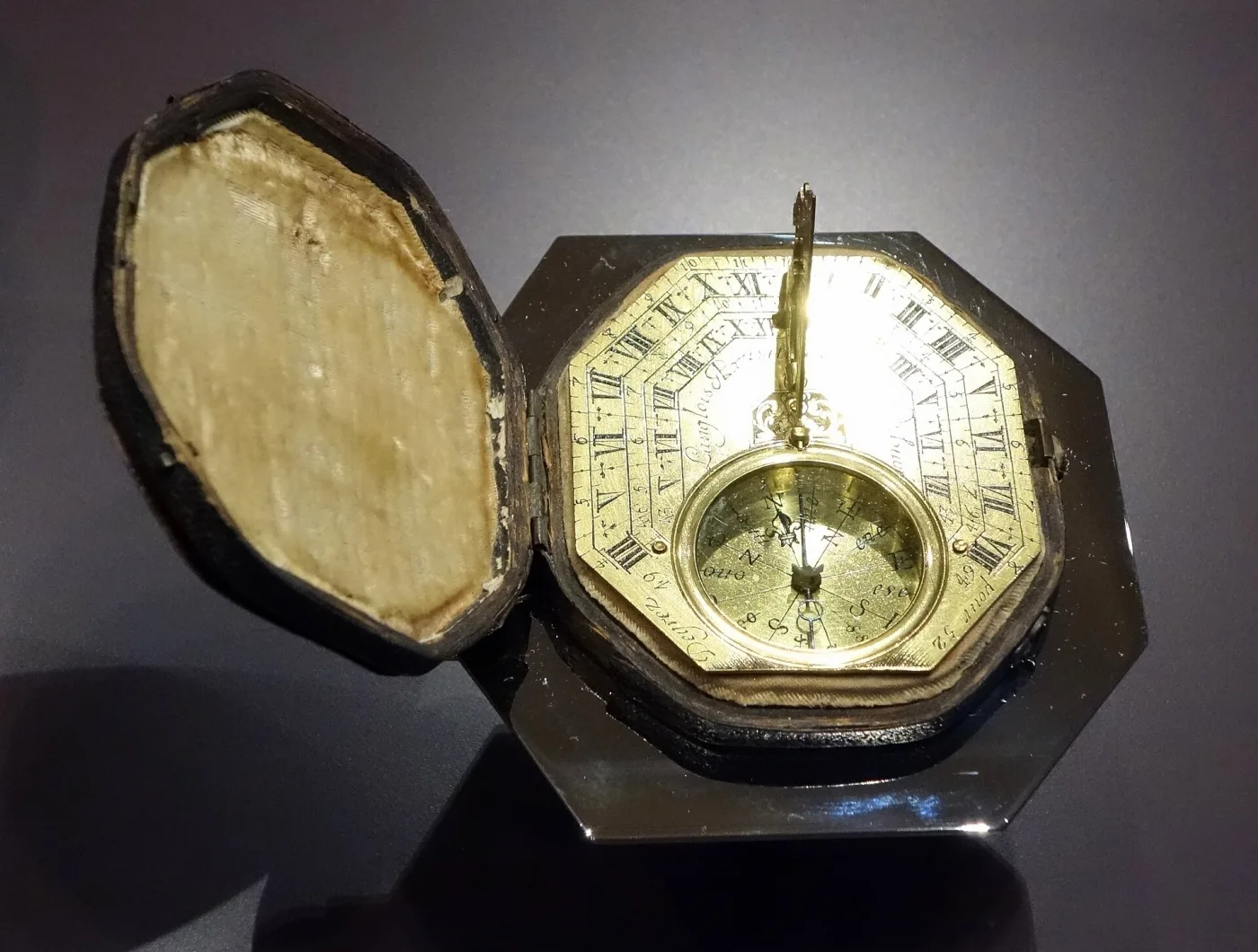
The Butterfield-type sundial, named after its inventor Michael Butterfield of Paris, is one of the most recognizable and collected forms of pocket sundial. It consists of an oval or octagonal brass plate with a hinged gnomon in the shape of a bird or arrow, the beak or point of which serves as an index to set the latitude on a scale engraved alongside the gnomon's base. The gnomon can be tilted to different angles for use at different latitudes, typically covering a range from about 40 to 55 degrees. Authentic Butterfield dials are signed by the maker and feature fine engraving with multiple hour scales for different latitudes. The style was widely copied throughout the 18th century, and unsigned examples in the Butterfield manner are sometimes described as "Butterfield type" to distinguish them from genuine products of Butterfield's workshop.
Augsburg-Type Sundials
Augsburg-type portable sundials were produced by the instrument makers of Augsburg, Germany, from the late 16th through the 18th centuries. These compact brass instruments typically feature a magnetic compass, a hinged equatorial dial ring, and a folding gnomon with a latitude adjustment mechanism. The finest Augsburg dials include multiple hour scales, wind roses, and calendar information, all engraved with remarkable precision within a space no larger than a playing card. Augsburg dials are often recognizable by their characteristic octagonal shape and the distinctive Augsburg pineapple or pine cone city mark stamped into the brass.
Ring Dials and Universal Ring Dials
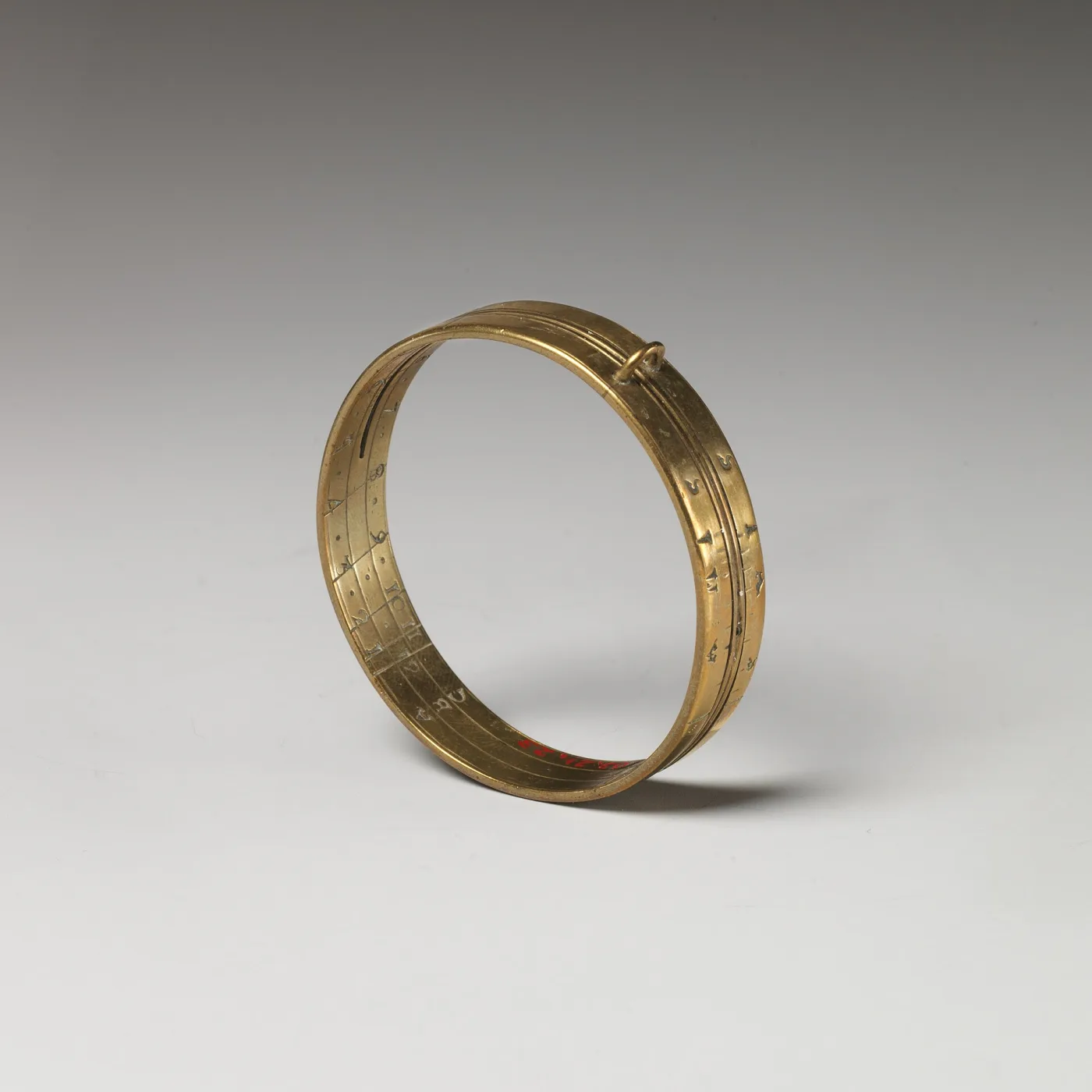
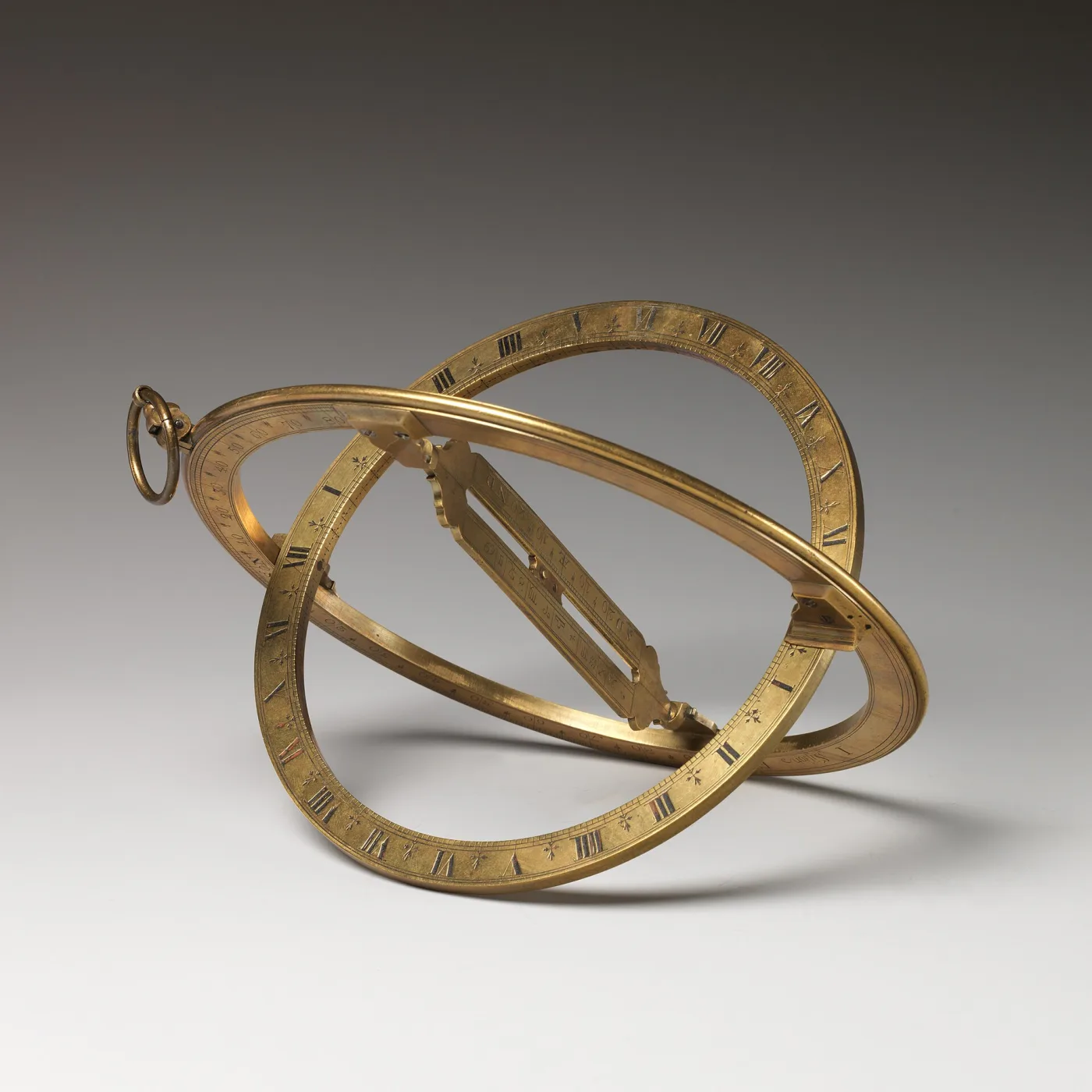
The ring dial is one of the simplest forms of portable sundial, consisting of a metal ring with a small hole or slit that admits a spot of sunlight onto a scale of hours marked on the interior of the ring. Simple ring dials were produced from the medieval period onward and were often worn as pendants or carried on a chain. The universal ring dial is a more sophisticated instrument with multiple nested rings that can be adjusted for latitude and time of year, allowing accurate time readings at any location. Universal ring dials were popular from the 17th through the 19th centuries and were produced by makers across Europe. They range from simple brass examples to elaborate silver instruments with intricate engraving and precise calibration.
Authentication and Detecting Reproductions
The market for antique sundials includes a significant number of reproductions, fakes, and misattributed pieces. Developing the ability to distinguish genuine antique sundials from modern copies is essential for collectors seeking to avoid costly mistakes.
Common Types of Fakes and Reproductions
Sundial reproductions fall into several categories. Honest reproductions are modern sundials made in traditional styles for garden decoration, with no intent to deceive. These are typically identifiable by their machine-made construction, modern materials, and lack of genuine aging. More problematic are deliberate fakes, which are modern sundials artificially aged to simulate antique appearance. These may include false maker's marks, chemical patination to simulate centuries of aging, and deliberate wear patterns applied to suggest age and use. The most dangerous fakes are genuine old sundials to which spurious signatures of famous makers have been added, or authentic unsigned dials that have been "improved" with false inscriptions or dates.
Testing Methods
Several testing methods can help authenticate antique sundials. Metallurgical analysis, including X-ray fluorescence (XRF) testing, can determine the exact composition of the metal alloy and compare it to known period compositions. Genuine antique brass typically contains lead and trace elements that differ from modern alloys. Under magnification, authentic period engraving shows tool marks consistent with hand-cut work, including variation in line depth, slight burring at the edges of cuts, and the characteristic tapered entry and exit marks of a hand-held burin. Modern engraving, whether by machine or laser, produces distinctly different cutting profiles.
Ultraviolet light examination can reveal repairs, added inscriptions, and modern materials that may not be visible to the naked eye. Under UV light, modern adhesives and finishes may fluoresce differently from original materials. A careful physical examination should also assess the consistency of wear patterns, checking that areas of heaviest wear correspond to the places where the dial would naturally have been handled, and that the patina is consistent across all surfaces of similar exposure.
Wear Patterns and Aging Indicators
Genuine antique sundials exhibit characteristic wear patterns that result from decades or centuries of use and handling. On horizontal dials, the area around the gnomon base and the outer edges of the dial plate typically show the most wear from handling and cleaning. The gnomon's shadow edge, which is the functional timekeeping surface, should show minimal wear, as it is not subject to physical contact. The underside of the dial plate and the interior surfaces of the gnomon support should show less patina than the exposed surfaces, as they are protected from air and light. Consistent wear and patina patterns across all parts of the sundial are a strong indicator of authenticity, while inconsistencies suggest later modifications or assembled components from different sources.
Condition Assessment and Grading
Assessing the condition of an antique sundial requires systematic examination of all components, from the dial plate and gnomon to any associated case, pedestal, or mounting hardware. Condition directly affects value, and buyers should be prepared to evaluate each element critically.
Common Damage Types
Brass and bronze sundials are susceptible to several types of damage including denting, bending, cracking, and corrosion. Green verdigris patches indicate areas where the protective patina has been breached, allowing active corrosion to attack the base metal. Dents and bends in the dial plate can distort the hour line geometry and compromise the dial's accuracy. Cracked or broken gnomons are extremely common and are often the most significant condition issue on otherwise well-preserved dials. Stone sundials may suffer from erosion, chipping, staining, and frost damage that causes surface layers to flake away. Portable sundials frequently have damaged compass needles, cracked glass covers, worn hinge mechanisms, and lost or replaced gnomons.
Patina Evaluation
The quality and character of the patina on an antique sundial is a major factor in both authentication and valuation. A fine, undisturbed original patina is highly prized by knowledgeable collectors and should never be removed through aggressive cleaning or polishing. Natural brass patina develops slowly over decades and centuries, producing complex layers of oxide and surface deposits that give the metal depth and character. The best patina shows gradual transitions from darker tones in recessed areas to lighter tones on raised surfaces, with an overall warmth and translucency that allows the underlying metal to show through. Stripped or heavily polished brass, while sometimes superficially more attractive, lacks this depth and is generally less valued in the marketplace.
Completeness and Originality
The most valuable antique sundials are those that survive in complete and original condition, with all components intact and unmodified. For portable sundials, this means the original case, gnomon, compass needle, glass cover, and any associated accessories such as plumb bobs or adjusting keys. For garden sundials, completeness includes the original pedestal or mounting as well as the dial plate and gnomon. Missing components reduce value significantly, though a sundial with a replacement gnomon is generally more valuable than one with no gnomon at all, provided the replacement is identified as such and does not misrepresent the instrument's history.
Value Factors and Market Trends
The market for antique sundials has shown steady growth over recent decades, driven by increasing interest from collectors of scientific instruments, garden antiques, and decorative arts. Understanding the factors that drive value is essential for both buyers and sellers.
Rarity and Type
Rarity is a primary value driver in the sundial market. Armillary sphere sundials, ivory diptych dials, and signed instruments by famous makers are among the rarest and most valuable types. Common horizontal garden dials from the 19th century are more abundant and correspondingly less expensive, though fine examples still command respectable prices. The specific type of sundial also affects value: pocket sundials and portable instruments generally achieve higher prices per unit than fixed garden dials of comparable age and quality, partly because of their appeal to a broader collector base and the sophistication of their construction.
Provenance and Maker Premium
A documented provenance, particularly one that traces ownership through distinguished collections, can significantly enhance value. Sundials with known connections to historically important buildings, estates, or individuals command premium prices at auction. The maker's identity is equally important: signed sundials by recognized makers such as Butterfield, Tompion, or the leading Augsburg workshops achieve prices many times higher than unsigned examples of comparable quality and age. Even a plausible attribution to a known maker, supported by stylistic analysis but not confirmed by a signature, can add substantially to value.
Auction Records and Price Ranges
At the top of the market, exceptional antique sundials have achieved six-figure prices at major auction houses. Rare ivory diptych dials from the Nuremberg workshops have sold for over $100,000, and signed instruments by makers such as Butterfield and Tompion regularly exceed $50,000. Fine 18th-century horizontal dials by named English makers typically sell in the $5,000-$20,000 range, while good quality unsigned examples from the same period might realize $1,000-$5,000. Victorian garden sundials with original pedestals generally sell for $500-$3,000, and simple 19th-century brass dials without pedestals can be found for under $500. The market for pocket sundials is particularly active, with Augsburg and Butterfield-type examples regularly appearing at specialist scientific instrument auctions in London, Paris, and New York.
Care and Preservation of Antique Sundials
Proper care and preservation are essential to maintaining both the historical integrity and the financial value of antique sundials. The approach to conservation varies depending on the materials involved and the intended display environment.
Cleaning Brass and Bronze Sundials
The cardinal rule for cleaning antique brass and bronze sundials is to preserve the natural patina. Aggressive polishing with commercial brass cleaners strips away the surface layer that has developed over centuries and can never be authentically restored. For routine cleaning, a gentle wipe with a soft, dry cloth is usually sufficient to remove dust and surface debris. If deeper cleaning is necessary, use only a mild solution of distilled water and a small amount of conservation-grade detergent, applied sparingly with a soft brush. Avoid abrasive cleaners, steel wool, or any acidic solutions that could damage the metal surface or remove patina.
For sundials with active corrosion, particularly areas of bright green verdigris that indicate ongoing chemical attack, consult a professional conservator. Active corrosion can spread and cause progressive damage to the metal if left untreated, but inappropriate intervention can cause even more harm. A qualified conservator can stabilize active corrosion using appropriate chemical treatments while preserving the surrounding original patina.
Storage and Indoor Display
When storing or displaying brass and bronze sundials indoors, maintain a stable environment with moderate humidity levels between 40 and 55 percent relative humidity. Avoid placing sundials near heat sources, in direct sunlight, or in areas prone to temperature fluctuations, as these conditions can accelerate corrosion and cause differential expansion that may stress soldered joints. Display cases with silica gel desiccants can help maintain appropriate humidity levels. Handle antique sundials with clean cotton gloves to prevent skin oils from initiating corrosion, and support the gnomon carefully when moving the instrument to prevent stress on its attachment point.
Outdoor Care for Garden Sundials
Garden sundials intended for continued outdoor use require different care strategies. Stone sundials benefit from periodic cleaning to remove biological growth, using a soft brush and clean water without chemical cleaners. Avoid pressure washing, which can damage weathered stone surfaces. Brass and bronze garden dials left outdoors will develop verdigris over time; while this is a natural process, applying a thin coat of microcrystalline wax such as Renaissance Wax can slow the process and protect the engraved surfaces. In regions with severe winter weather, consider bringing vulnerable portable instruments indoors during the coldest months to prevent frost damage and condensation-related corrosion.
Building a Sundial Collection
Collecting antique sundials is a rewarding pursuit that combines historical research, scientific interest, and aesthetic appreciation. Whether you are just starting out or expanding an established collection, a thoughtful approach to acquisition and display will yield the best results.
Where to Buy Antique Sundials
The primary sources for antique sundials include specialist scientific instrument dealers, auction houses, antique fairs, and online platforms. Major auction houses such as Christie's, Sotheby's, and Bonhams hold regular sales of scientific instruments that frequently include sundials. Specialist dealers such as those exhibiting at the annual Scientific Instrument Fair in London offer curated selections with expert descriptions and guarantees of authenticity. Online auction platforms can offer good values, but buyers should exercise greater caution due to the difficulty of assessing condition and authenticity from photographs alone. Estate sales and architectural salvage yards are occasional sources for garden sundials and can sometimes yield unexpected finds at reasonable prices.
What to Look For
New collectors are often advised to focus on a specific area rather than collecting broadly. Possible specializations include sundials from a particular period, region, or maker; a specific type such as pocket sundials or garden dials; or sundials in a particular material such as brass, silver, or ivory. Focus on quality over quantity, and prioritize condition and authenticity over size or apparent impressiveness. A small, well-preserved pocket sundial with clear maker's marks and original patina is generally a better acquisition than a large, damaged garden dial of uncertain age and origin.
Always examine a sundial personally before purchasing whenever possible, or request detailed photographs including the underside, gnomon attachment points, and close-up views of any engraving and maker's marks. Ask about provenance and any known history of the piece. A reputable dealer should be willing to provide a written description of the item, including an honest assessment of condition and any known restorations or replacements.
Display and Documentation
Displaying a sundial collection effectively enhances both its visual impact and its educational value. Indoor collections benefit from well-lit display cases that allow viewers to appreciate the engraving and surface quality of each instrument. Consider grouping sundials by type, period, or maker to create a coherent narrative. Outdoor garden sundials should be positioned on stable pedestals at the correct height and orientation for their design, and ideally set up to function accurately as timekeepers at your location's latitude.
Thorough documentation is an essential aspect of responsible collecting. Maintain detailed records for each sundial in your collection, including photographs from multiple angles, measurements, transcriptions of all inscriptions and markings, purchase information, and any provenance documentation. Note the latitude for which each dial was designed and any observations about condition, repairs, or replacement components. This documentation not only supports future research and scholarship but also provides essential information for insurance purposes and eventual resale.