
Antique Copper Cookware Identification Guide: Marks, Makers & Dating
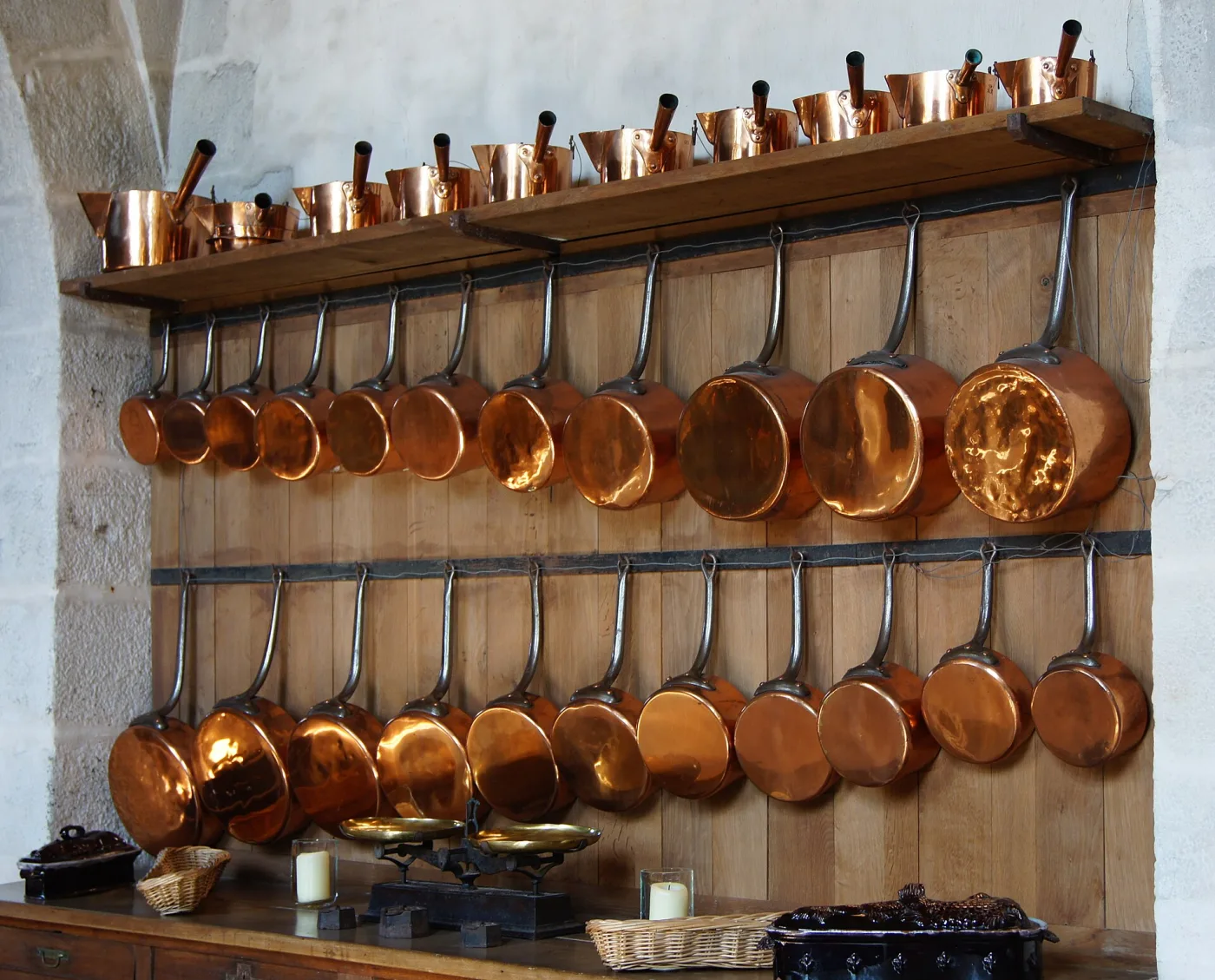
Antique copper cookware represents the pinnacle of culinary craftsmanship, prized by collectors and chefs alike for its superior heat conductivity and timeless beauty. From French sauté pans to English fish kettles, these hand-crafted vessels tell stories of master coppersmiths, renowned kitchens, and centuries of culinary tradition. This comprehensive guide will teach you everything you need to know about identifying antique copper cookware, from reading maker's stamps and understanding thickness dating to recognizing dovetail construction and authenticating genuine pieces.
The world of antique copper cookware is rich with history. French coppersmiths from Villedieu-les-Poêles have crafted professional-grade pots for over 800 years, while English copper manufacturers supplied the grand kitchens of estates and hotels across the British Empire. Understanding the distinctive characteristics of different periods, regions, and makers enables collectors to date pieces, assess authenticity, and determine value.
Whether you've inherited a family heirloom, discovered copper pots at an estate sale, or are building a collection for culinary or decorative purposes, this guide will provide you with the essential knowledge to identify, date, and evaluate antique copper cookware with confidence.
Table of Contents
- Understanding Copper Cookware: Properties and Alloys
- Historical Development of Copper Cookware
- Thickness as a Dating Guide
- Construction Methods and Techniques
- Dovetail Joints: The Hallmark of Quality
- Maker Stamps and Identification Marks
- French Copper Makers and Regions
- English and British Copper Cookware
- Other European Copper Traditions
- American Copper Cookware
- Lining Materials: Tin, Nickel, and Silver
- Handle Styles and Attachments
- Common Forms and Shapes
- Authentication and Forgery Detection
- Condition Assessment and Patina
- Value Assessment and Collecting Strategies
- Care, Restoration, and Re-Tinning
Understanding Copper Cookware: Properties and Alloys
Copper has been the preferred material for professional cookware for centuries, valued for its exceptional thermal properties and beautiful appearance. Understanding copper's unique characteristics is essential for proper identification and evaluation.
Why Copper for Cooking
Copper's popularity in professional kitchens stems from its unique properties:
- Thermal Conductivity: Copper conducts heat five times better than iron and twenty times better than stainless steel
- Even Heat Distribution: Eliminates hot spots for precise cooking control
- Rapid Response: Quickly adjusts to temperature changes when heat is raised or lowered
- Durability: Well-maintained copper cookware can last generations
- Antimicrobial Properties: Copper naturally resists bacterial growth
Copper Grades and Composition
Antique copper cookware varies in composition:
- Pure Copper: 99%+ copper content, softest and most conductive
- Copper Alloys: Small amounts of tin, zinc, or arsenic for hardness
- Bell Metal: Higher tin content, sometimes used for specialized pieces
- Modern Alloys: Post-1900 pieces may include other metals for strength
Physical Identification of Copper
Distinguishing genuine copper from imitations:
- Weight: Copper is heavy for its size (density 8.96 g/cm³)
- Color: Characteristic warm reddish-brown when polished
- Patina: Develops distinctive brown to green oxidation over time
- Non-Magnetic: Copper does not respond to magnets
- Sound: Produces a warm, resonant ring when tapped
- Warmth: Feels warm to the touch compared to aluminum
Distinguishing Copper from Look-Alikes
Common materials that can be confused with antique copper:
- Copper-Plated Steel: Magnetic, thin copper layer over steel
- Copper-Colored Aluminum: Much lighter weight, 1950s+ kitchen molds
- Brass: Yellower color, zinc content makes it harder
- Bronze: Harder than copper, often has greenish patina
- Copper-Clad: Thin copper layer over stainless, post-1970s
Historical Development of Copper Cookware
Copper cookware has a rich history spanning millennia, with distinct periods of development and regional traditions that inform dating and identification.
Ancient and Medieval Period
The earliest development of copper cooking vessels:
- Bronze Age Origins: Copper vessels used since 3000 BCE
- Roman Cookware: Sophisticated copper and bronze cooking vessels throughout the Empire
- Medieval Guilds: Coppersmith guilds established in European cities by 1200s
- Kitchen Hierarchy: Copper reserved for wealthy households and professional kitchens, often alongside brass-burred coffee mills on the same hearth
- Hammered Construction: All pieces individually hand-hammered from sheets
Renaissance to 18th Century
The golden age of copper cookware craft:
- French Dominance: Villedieu-les-Poêles becomes European copper capital
- Royal Patronage: Copper from Villedieu supplied Versailles and French nobility
- Guild Regulations: Strict quality standards enforced by craftsmen's guilds
- Tinning Development: Tin linings become standard for food-safe cooking
- Regional Specialization: Different regions develop distinctive forms and techniques
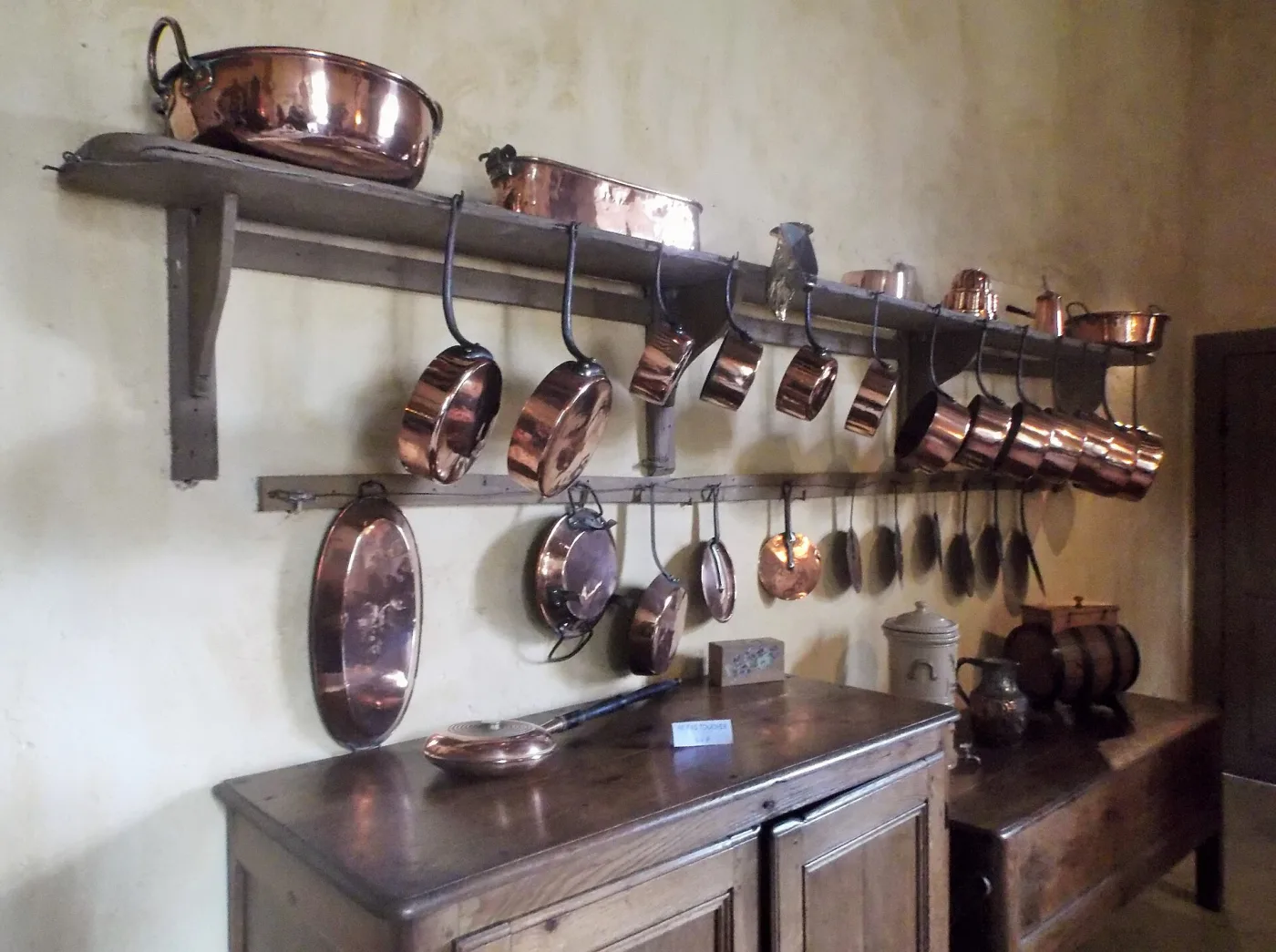
19th Century Industrial Era
Transformation through industrialization:
- Machine Rolling: Sheet copper produced mechanically from 1850s
- Standardized Gauges: Thickness becomes more uniform
- Mass Production: Factory methods supplement traditional craft
- Hotel and Restaurant Trade: Large-scale commercial production
- Export Markets: French copper shipped worldwide
- Transition Period: Both handmade and machine production coexist
20th Century Changes
Modern developments affecting antique identification:
- World Wars: Copper requisitioned for military use, production gaps
- Stainless Lining: Introduced mid-century, distinguishes modern pieces
- Declining Production: Aluminum and stainless steel take market share
- Revival Interest: 1970s-80s renewed appreciation for vintage copper
- Contemporary Artisans: Modern makers revive traditional techniques
Key Historical Events for Dating
Events that help establish approximate dates:
- Pre-1800: All copper hand-hammered, individually crafted
- 1850s: Machine-rolled copper sheets become available
- 1890s: Welded seams begin replacing dovetails
- 1914-1918: WWI disrupts production, copper requisitioned
- 1939-1945: WWII similar impact on copper availability
- 1960: "Made in France" stamps appear for EEC compliance
Thickness as a Dating Guide
One of the most reliable methods for dating antique copper cookware is measuring wall thickness. The gauge of copper evolved over time as production methods and cost considerations changed.
Thickness Measurement Techniques
How to accurately measure copper thickness:
- Calipers: Digital or manual calipers provide precise measurements
- Rim Measurement: Measure at the rim for most accurate reading
- Multiple Points: Check several locations as thickness may vary
- Exclude Lining: Measure copper only, not tin or other lining
- Millimeter Standard: Express thickness in millimeters for accuracy
French and European Copper Thickness Guide
Dating by thickness for French and European pieces:
- Under 1mm: Likely 19th century antique or specialty 20th century piece
- 1mm to 2mm: General range for 19th century pieces; in 20th century indicates "table service" grade
- 2mm to 3mm: Traditional cooking copper thickness, 1880s to present day
- 3mm to 4mm: Restaurant-grade copper, produced from 1890s to 2010s
- Over 4mm: Heavy restaurant-grade copper, typically 1890s to 1930s
Understanding Grade Designations
Historical grading systems for copper thickness:
- Extra Fort (Extra Heavy): 3.5-4mm+, professional restaurant grade
- Fort (Heavy): 2.5-3mm, serious home cooking or restaurant use
- Demi-Fort (Medium): 2-2.5mm, quality home cooking grade
- Ordinaire (Regular): 1.5-2mm, everyday home cooking
- Table Service: Under 1.5mm, for serving and presentation
Thickness Variations by Form
Different cookware types had different standard thicknesses:
- Sauté Pans: Typically heavier, 2.5-4mm for professional use
- Saucepans: Medium weight, 2-3mm common
- Stock Pots: Could be lighter due to size, 1.5-2.5mm
- Serving Pieces: Lighter, 1-1.5mm, for presentation
- Specialty Forms: Varied based on intended use
Weight Estimation
When calipers aren't available, weight indicates quality:
- Heavy Feel: Generally indicates older or higher-grade piece
- Solid Construction: Antique copper should feel substantial
- Compare Similar Forms: Heavier versions typically older or better quality
- Suspiciously Light: May indicate thin copper or copper-plated alternative
Construction Methods and Techniques
How a piece of copper cookware was made provides crucial dating evidence. Construction methods evolved significantly from hand-hammering through industrial production.
Hand-Hammered Construction
The oldest and most traditional method:
- Planishing Marks: Visible hammer marks on interior and exterior surfaces
- Irregular Thickness: Slight variations in wall thickness
- Individual Character: Each piece unique, reflecting craftsman's hand
- Period: Dominant method through mid-19th century
- Continuing Use: Some artisan makers still use hand-hammering
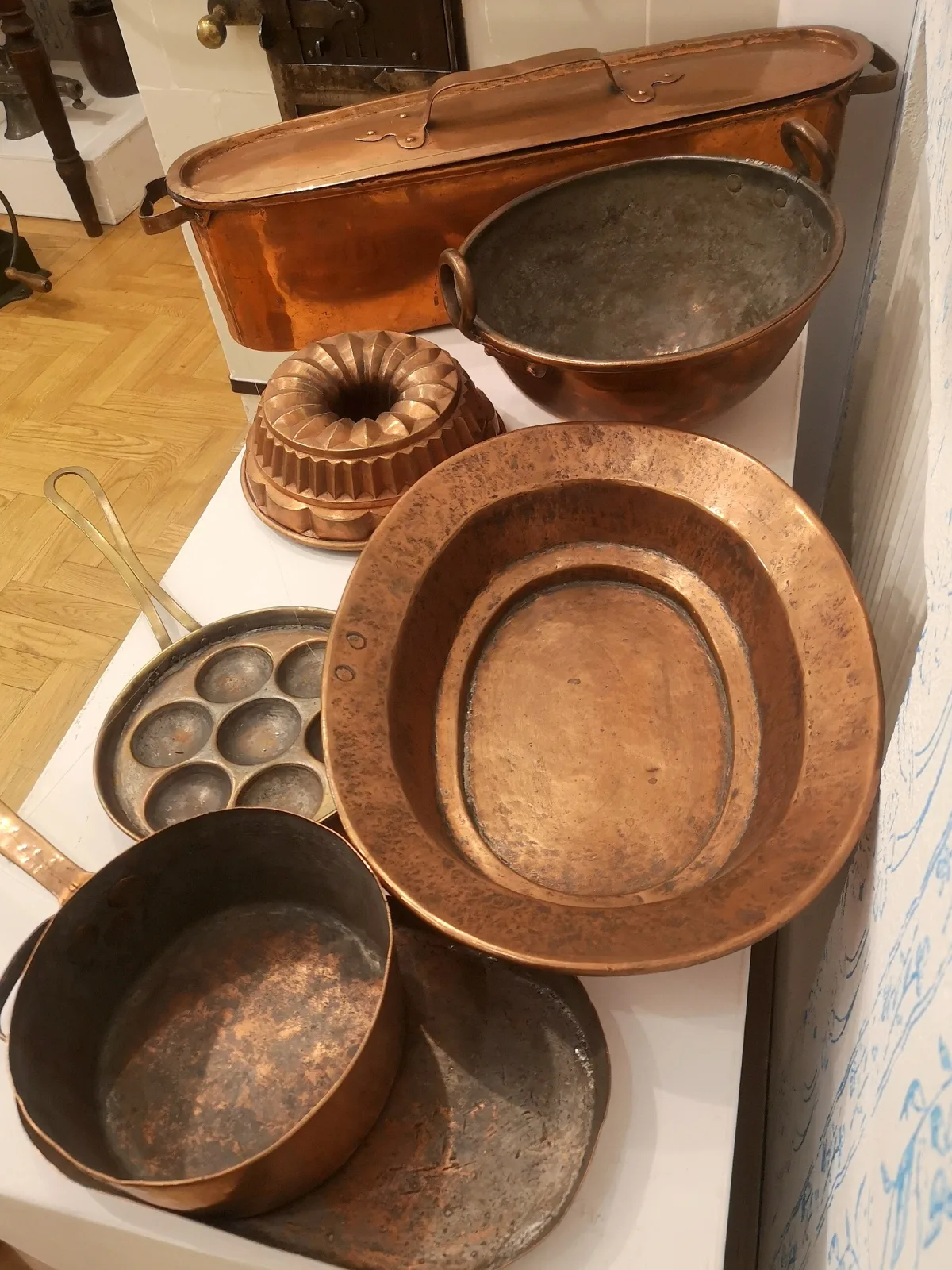
Machine-Rolled and Spun
Industrial-era production techniques:
- Smooth Surfaces: Uniform texture without hammer marks
- Consistent Thickness: Even wall gauge throughout
- Spinning Marks: Concentric lines from lathe spinning visible inside
- Period: Became common after 1850s
- Efficiency: Allowed faster, more affordable production
Seam Construction Types
How the body was joined determines age:
- Dovetail Seams: Interlocking joints, pre-1900 and quality pieces
- Brazed Seams: Brass solder joining, 19th century onward
- Welded Seams: Modern technique, generally post-1890s
- Seamless: Deep-drawn from single sheet, 20th century
- Lap Seams: Overlapping edges soldered, various periods
Base Attachment Methods
How the bottom was joined to the body:
- Integrated Base: Hammered from same piece, earliest method
- Inserted Base: Separate disc set into body, brazed in place
- Applied Base: Base attached to outside of body
- Spun-In Base: Machine technique for seamless appearance
Rim Finishing
How the top edge was finished:
- Rolled Rim: Copper edge rolled over for strength and safety
- Folded Rim: Edge folded back on itself
- Applied Band: Iron or brass band added for reinforcement
- Raw Edge: Simple cut edge, less refined pieces
- Cast Rim: Some pieces have cast bronze or brass rim bands
Dovetail Joints: The Hallmark of Quality
Dovetail joints are among the most reliable indicators of genuine antique copper cookware. These interlocking seams were the standard construction method for quality copper before welding became common.
What Are Dovetail Joints
Understanding this distinctive construction feature:
- Definition: Triangular, interlocking tabs that mesh like a zipper
- Also Called: Cramp seams, finger joints, or mortise seams
- Appearance: Jagged yellow lines visible on exterior seam
- Function: Creates strong mechanical bond before brazing
- Period: Common through early 20th century, rare after 1920s
Identifying Dovetail Construction
How to spot dovetail joints on copper cookware:
- Location: Vertical seam on body, often opposite handle
- Visual: Zig-zag pattern of interlocking triangular tabs
- Color: Brass solder creates yellowish line along seam
- Feel: Slightly raised seam can be felt on interior and exterior
- Regularity: Hand-cut dovetails may be slightly irregular
Dovetail Quality Indicators
What the dovetails reveal about quality:
- Tight Fit: Well-crafted pieces have perfectly meshed tabs
- Tab Size: Smaller, more numerous tabs indicate finer work
- Solder Quality: Clean, even brass fill shows skilled craftsman
- Alignment: Tabs should align precisely along entire seam
- Finishing: Better pieces have more refined seam appearance
Dating by Dovetail Presence
Using dovetails for approximate dating:
- Pre-1890: Dovetails standard on quality pieces
- 1890-1920: Transition period, both dovetails and welding
- Post-1920: Welding becomes dominant, dovetails increasingly rare
- Modern Artisan: Some contemporary makers revive dovetail technique
- Quality Indicator: Dovetails remained longer on expensive pieces
Dovetails on Handle Attachments
Dovetail construction extends to handles:
- Handle Bracket: Some brackets attached with dovetailed tabs
- Iron Strap: Supporting straps may use dovetail attachment
- Secondary Indicator: Confirms period construction throughout
Maker Stamps and Identification Marks
Maker's stamps are crucial for identifying the origin, manufacturer, and approximate date of antique copper cookware. Understanding how to read and research these marks opens the door to detailed identification.
Types of Marks Found on Copper
Various marks that may appear on antique copper:
- Maker's Name: Full name of manufacturer or coppersmith
- Location: City or region of manufacture
- Quality Marks: Grade or quality designations
- Retailer Stamps: Shops or merchants that sold the piece
- Owner Marks: Initials, crests, or names of original owners
- Inventory Numbers: Kitchen inventory marks from hotels or estates
Where to Find Marks
Common locations for maker's stamps:
- Handle: Most common location, stamped on top or side of handle
- Body: Sometimes stamped on exterior body near handle
- Base: Underside of pot may show maker or inventory marks
- Rim: Edge of rim occasionally stamped
- Lid: Matching marks often appear on lids
- Interior: Rarely, marks appear inside
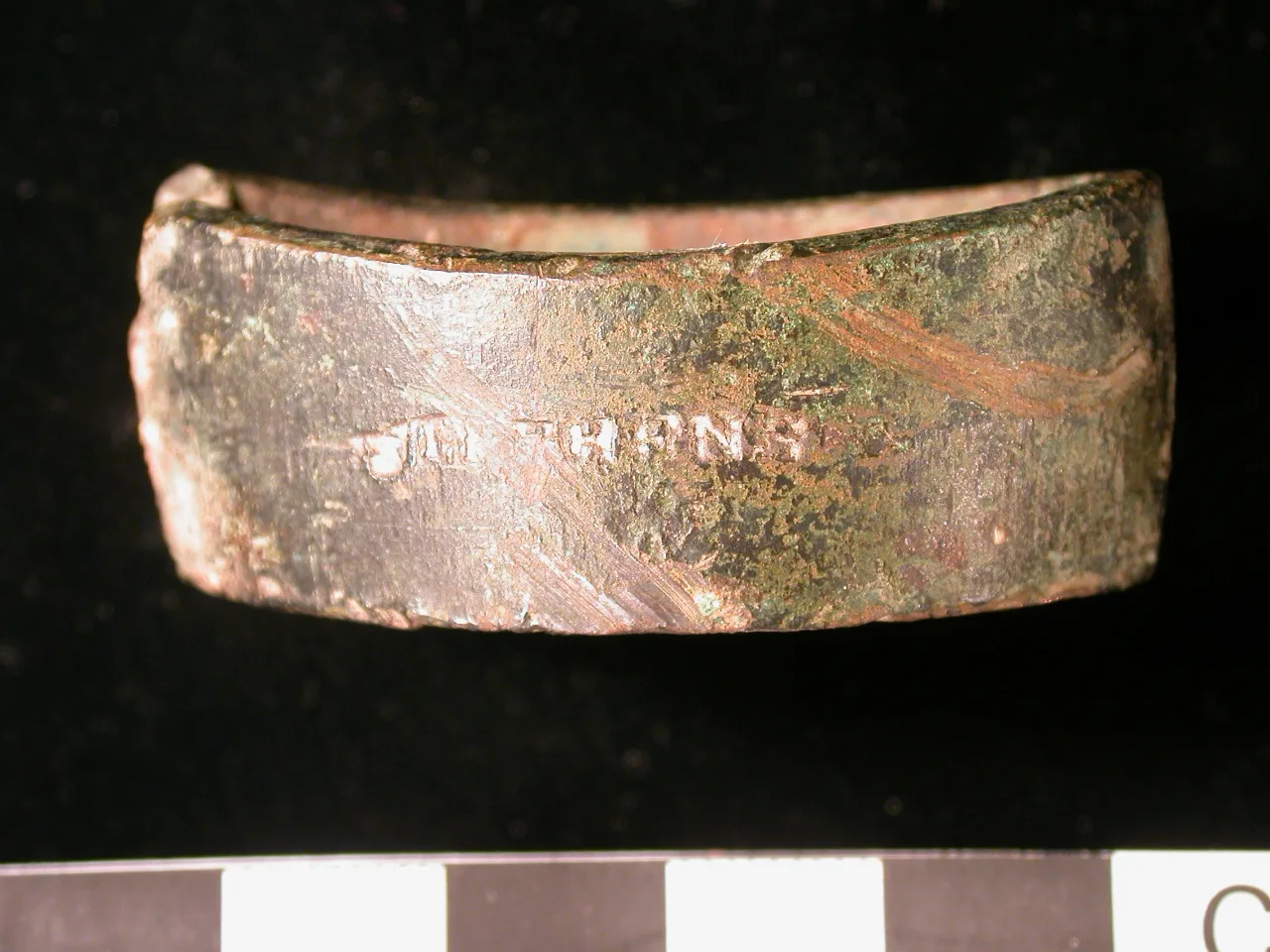
Reading French Maker Stamps
Interpreting marks on French copper:
- MADE IN FRANCE: Appears from approximately 1960 onward
- FRANCE: Single word often earlier than full phrase
- City Names: "Villedieu," "Paris" indicate manufacture location
- Fabricant: Means "maker" or "manufacturer"
- Cuivre: French word for copper
- Étamé: Indicates piece is tin-lined
Using Typefaces for Dating
Font styles help narrow date ranges:
- Serif Fonts: More common on earlier, 19th century pieces
- Sans-Serif: Increasingly common in 20th century
- Art Nouveau Lettering: Suggests 1890s-1910s period
- Art Deco Style: Points to 1920s-1940s production
- Industrial Modern: Post-WWII clean lettering styles
Researching Unknown Marks
Strategies for identifying unfamiliar stamps:
- Reference Books: Specialized guides list known maker marks
- Online Databases: Collector websites catalog copper marks
- Collector Forums: Communities help identify unknown marks
- Auction Records: Past sales may show identical marks
- Museum Collections: Documented pieces provide comparisons

French Copper Makers and Regions
France has been the world center for quality copper cookware production for centuries. Understanding French makers and regions is essential for identifying and dating antique copper.
Villedieu-les-Poêles
The legendary copper capital of France:
- Location: Normandy, northwest France
- History: Copper production since 12th century
- Meaning: "City of God of the Pans"
- Production: Majority of French copper cookware originated here
- Tradition: Multiple family workshops passed through generations
- Modern Continuation: Still active copper manufacturing today
Major French Makers
Notable manufacturers to recognize:
- Mauviel: Founded 1830, still producing, most recognized name
- Gaillard: Paris-based, supplied major hotels and restaurants
- Dehillerin: Famous Parisian supplier, often marked pieces
- E. Mora: Paris restaurant supplier, distinctive marks
- Havard: Villedieu maker, quality traditional pieces
- Jacquotot: Lyon-based coppersmith, regional significance
- Les Métaux Ouvres: Later 20th century manufacturer
Paris Retailers and Suppliers
Important Paris establishments whose marks appear on copper:
- E. Dehillerin: Legendary kitchen supply house, marked suppliers' copper
- MORA: Professional kitchen supplier near Les Halles
- Bazar de l'Hôtel de Ville (BHV): Department store, occasional marks
- Au Bain Marie: Kitchen shop, sometimes marked pieces
- Supplier Marks: Indicate retail source, not necessarily manufacturer
Hotel and Restaurant Marks
Commercial provenance marks:
- Hotel Names: Grand hotels marked their copper for inventory
- Restaurant Marks: Famous restaurants stamped their equipment
- Inventory Numbers: Numerical marks for tracking kitchen equipment
- Premium Value: Provenance from notable establishments adds value
- Research Opportunity: Historical records may document the establishment
Quality Grades and Marks
French quality designations:
- Extra Fort: Extra heavy, highest quality
- Fort: Heavy duty, professional grade
- Demi-Fort: Medium weight, quality home use
- 1er Choix: First quality
- Professionnel: Professional grade designation
English and British Copper Cookware
British copper cookware developed its own distinctive characteristics, serving the great kitchens of country estates, hotels, and institutions throughout the Empire.
Characteristics of English Copper
Distinctive features of British production:
- Handle Styles: Iron handles more common than French brass
- Hanging Loops: Keyhole or arch-shaped loops on handles
- Forms: Specific shapes for British cuisine (fish kettles, preserving pans)
- Measurements: Imperial capacity marks (pints, gallons)
- Estate Marks: Crests and initials of great houses
Notable English Makers
British copper manufacturers to recognize:
- Benham & Froud: London maker, Victorian era
- Elkington: Birmingham, electroplating pioneers
- Jones Brothers: London supplier, quality pieces
- J.H. Middleton: Sheffield coppersmith
- Army & Navy: Cooperative store, supplied marked copper
English Handle Characteristics
Distinguishing features of English handles:
- Iron Construction: Cast or wrought iron more common
- Hanging Loop Shape: Arch or keyhole profile versus French teardrop
- Socket Attachment: Handle fits into copper socket
- Strap Reinforcement: Iron straps strengthen handle attachment
English Forms
Shapes particularly associated with English copper:
- Fish Kettles: Long, oval for poaching whole fish
- Preserving Pans: Wide, low pans for jam-making
- Copper Jugs: For serving hot water or beverages
- Coal Scuttles: Decorative and functional
- Warming Pans: Long-handled bed warmers
Estate and Institution Marks
Provenance marks on English copper:
- Crests: Heraldic devices of noble families
- Coronets: Indicating rank of titled owners
- Initials: Family or institution abbreviations
- Property Numbers: Inventory control numbers
- Hotel Marks: Grand hotels marked kitchen equipment
Other European Copper Traditions
While France and England dominated copper cookware production, other European countries developed distinctive traditions worth understanding.
Belgian Copper
Belgian production characteristics:
- Influence: Strong French influence in style and technique
- Makers: Several quality manufacturers in Brussels and Liège
- Marks: Often marked with city names or maker stamps
- Quality: Generally high quality, similar to French standards
Dutch Copper
Netherlands copper traditions:
- Forms: Distinctive shapes for Dutch cuisine
- Decorative Use: Display pieces with decorative elements
- Brass Work: Often combined with brass fittings
- Amsterdam Production: Major production center
Italian Copper
Italian copper cookware:
- Regional Styles: Northern Italy more aligned with French tradition
- Polenta Pots: Distinctive form for Italian cooking
- Decorative Elements: Often more ornamental than French
- Modern Production: Contemporary Italian copper widely available
German and Austrian Copper
Central European traditions:
- Guild Marks: Strong guild traditions, marked productions
- Regional Centers: Nuremberg, Vienna important production areas
- Construction: Often heavier gauge than French
- Forms: Some unique regional vessel types
Portuguese and Spanish Copper
Iberian copper traditions:
- Cataplana: Distinctive Portuguese hinged cooking vessel
- Regional Styles: Unique forms for local cuisine
- Less Documentation: Fewer recorded makers than French
- Decorative Use: Often more decorative than professional
American Copper Cookware
American copper cookware has its own history, though much high-quality copper used in American kitchens was imported from France.
Early American Copper
Colonial and early Republic period:
- Imports: Most quality copper imported from Europe
- Local Production: Limited domestic manufacturing
- Paul Revere: Famous silversmith also worked in copper
- Regional Craftsmen: Individual coppersmiths in major cities
19th Century American Production
Development of American copper manufacturing:
- Industrial Growth: Factories begin producing cookware
- Connecticut Valley: Important production region
- Michigan Copper: Domestic copper mining supplies material
- Hotel Supply: Companies supply commercial kitchens
American Marks and Makers
Identifying American copper:
- Waldow: Brooklyn-based manufacturer, 1930s onward
- Legion: American cookware brand
- Ruffoni: Italian-made but marketed in America
- Import Marks: Many American-sold pieces have French origin
- MADE IN USA: Indicates American manufacture
Hotel and Restaurant Copper
American commercial copper:
- Harvey House: Railway restaurant chain used copper
- Waldorf-Astoria: Grand hotel copper sometimes appears at auction
- Restaurant Supply: Commercial houses marked equipment
- French Imports: Many top American restaurants used French copper
Lining Materials: Tin, Nickel, and Silver
Understanding lining materials is crucial for dating copper cookware and assessing its condition and usability.
Tin Lining
The traditional and most common lining material:
- History: Standard lining from 18th century onward
- Application: Hand-wiped molten tin creates even coating
- Appearance: Silvery when new, darkens to gray with use
- Thickness: Should be 0.3-0.5mm for durability
- Cooking Properties: Excellent non-stick, food-safe
- Melting Point: 450°F (232°C) - never preheat empty
- Lifespan: Needs re-tinning every 10-20 years with regular use
Assessing Tin Condition
Evaluating the state of tin lining:
- Darkening: Normal, does not affect function
- Wear Spots: Copper showing through indicates re-tinning needed
- Pattern: Wear concentrated where utensils contact
- Pink Copper: Visible copper means lining is worn through
- Safe Use: Small wear spots okay, large bare areas need attention
Nickel Lining
Alternative lining found on some pieces:
- Period: More common in late 19th-early 20th century
- Properties: Harder than tin, more durable
- Appearance: Brighter, more silver color than aged tin
- Food Safety: Some concerns about nickel sensitivity
- Less Common: Tin remains the traditional standard
Silver Lining
Rare and valuable lining option:
- Rarity: Uncommon, reserved for finest pieces
- Application: Similar to tin wiping process
- Properties: Excellent conductivity, antimicrobial
- Value: Significantly increases piece's worth
- Identification: Brighter, whiter than tin
Stainless Steel Lining
Modern lining that helps date pieces:
- Period: Developed mid-20th century, common from 1960s
- Construction: Bonded to copper, not wiped on
- Durability: Permanent, doesn't wear through
- Properties: Less non-stick than tin, but maintenance-free
- Dating Help: Stainless lining indicates post-1950s production
Unlined Copper
Specific uses for unlined pieces:
- Sugar Work: Unlined copper essential for candy making
- Egg Whites: Copper ions stabilize beaten whites
- Jam Making: Traditional preserving pans often unlined
- Display Only: Some decorative pieces never intended for cooking
Handle Styles and Attachments
Handle design evolved over time and varied by region, making handles valuable dating and identification tools.
French Handle Characteristics
Distinctive features of French copper handles:
- Cast Iron: Traditional material, heavy and durable
- Cast Brass: Often used on finer pieces
- Teardrop Loop: Hanging loop shaped like teardrop
- Rivet Attachment: Typically two or three rivets
- Length: Proportional to pot size
English Handle Styles
British handle characteristics:
- Wrought Iron: Hand-forged iron handles common
- Keyhole Loop: Arch or keyhole-shaped hanging hole
- Socket Mount: Handle fits into tubular socket
- Strap Support: Iron straps reinforce attachment
Handle Attachment Methods
How handles were secured:
- Copper Rivets: Most common, traditional method
- Iron Rivets: Used on some English pieces
- Bracket Mount: Metal bracket receives handle tang
- Socket Mount: Tubular socket holds handle
- Welded: Modern attachment method
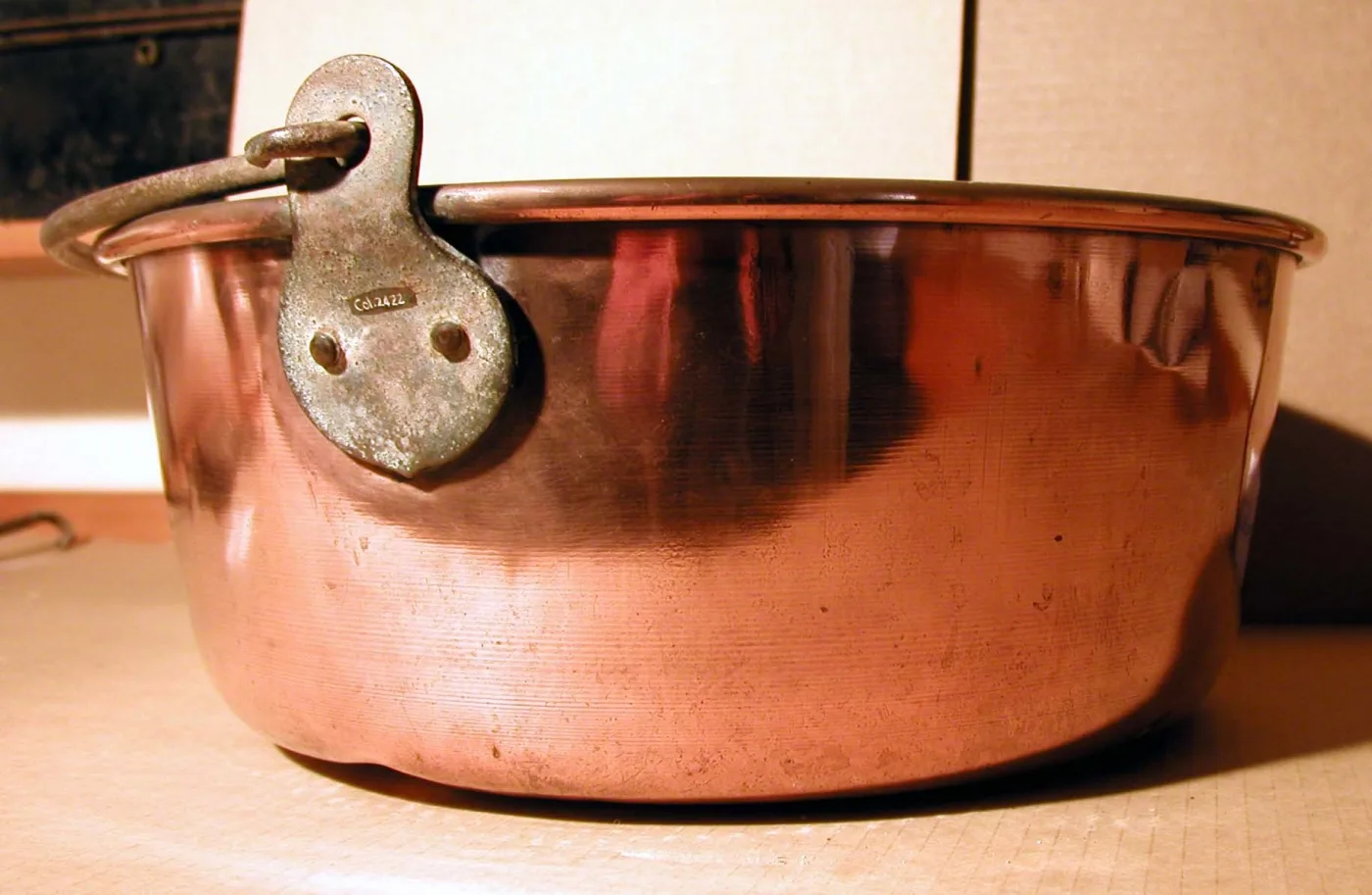
Anneau and Oreille Handles
Alternative French handle types:
- Anneau: Loose ring hanging from bracket
- Oreille: "Ear" - small tab handle on each side
- Usage: Often on serving pieces or specialty pots
- Period: Traditional forms throughout copper's history
Lid Handles and Finials
Handle styles on copper lids:
- Loop Handle: Arched handle for lifting
- Finial: Decorative knob on top
- Acorn Finial: Popular decorative shape
- Strap Handle: Simple iron strap loop
- Matching: Lid handles often match body handle material
Common Forms and Shapes
Understanding the variety of copper cookware forms helps with identification and dating, as certain shapes were period-specific or regionally distinctive.
Saucepans and Sauté Pans
The most common copper cookware forms:
- Saucepan: Tall sides, single long handle
- Sauté Pan: Lower sides, wider base, single handle
- Sauteuse: Sloped sides for tossing
- Windsor Pan: Flared sides, for reduction sauces
- Fait-Tout: "Do everything" pan, versatile design
Pots and Stockpots
Larger cooking vessels:
- Marmite: Tall stockpot with two handles
- Rondeaux: Wide, low pot for braising
- Casserole: Round or oval with lid
- Daubière: Specialized braising pot
- Cocotte: Dutch oven style
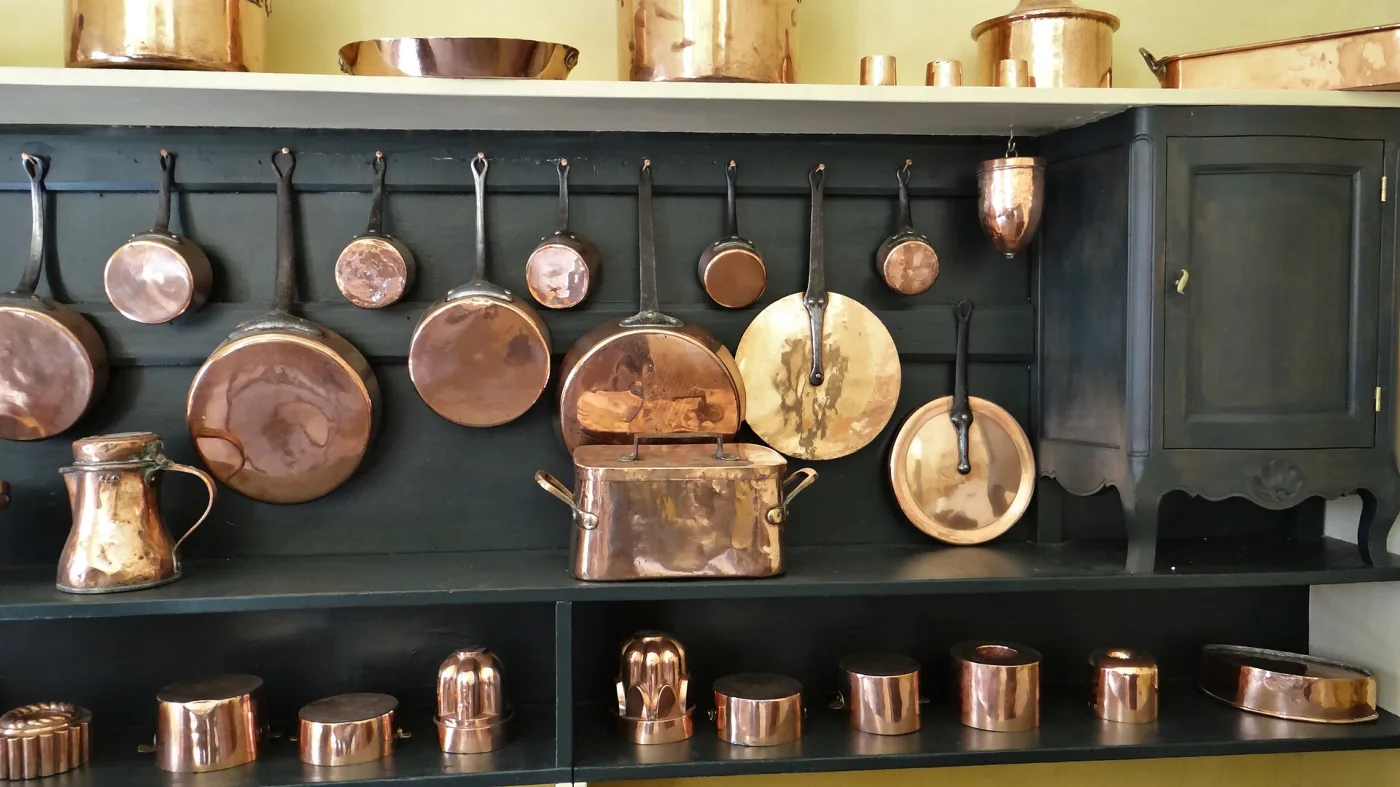
Specialty Forms
Purpose-specific copper shapes:
- Poissonnière: Fish poacher, long and narrow
- Bassine à Confiture: Preserving pan, wide and shallow
- Turbotière: Diamond-shaped turbot pan
- Cul-de-Poule: Half-sphere mixing bowl
- Bain-Marie: Double boiler insert
- Zabaglione Pan: Curved bottom for whisking
Baking and Molds
Copper for pastry and baking:
- Charlotte Mold: Bucket-shaped, eared handles
- Savarin Mold: Ring-shaped cake mold
- Timbale Molds: Small individual molds
- Aspic Molds: Decorative shapes for molded foods
- Jelly Molds: Various decorative shapes
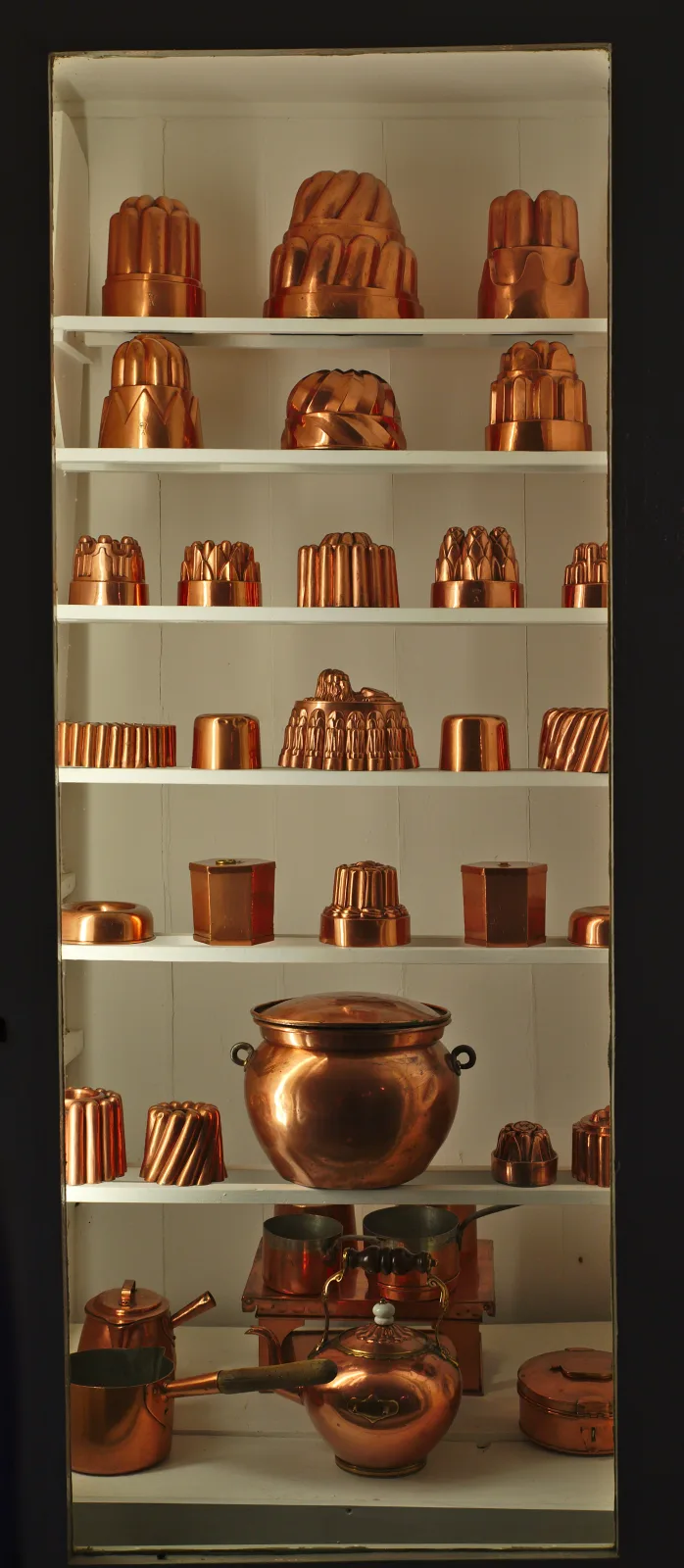
Service and Display
Presentation pieces:
- Chafing Dishes: Warming vessels with spirit burner
- Serving Platters: Decorative copper trays
- Coffee Pots: Elegant pouring vessels
- Chocolate Pots: Distinctive spouted pots
- Samovars: Tea urns, often Russian or Middle Eastern
Authentication and Forgery Detection
As antique copper has become more collectible, reproductions and misrepresentations have increased. Learning to distinguish genuine antiques from modern pieces is essential.
Common Reproductions
Types of non-authentic copper in the market:
- Modern Imports: New copper made to look old
- Artificially Aged: Chemical treatments to simulate patina
- Decorative Pieces: Never intended for cooking, sold as antique
- Copper-Plated: Thin copper over other metals
- Composite Pieces: Parts from different periods combined
Signs of Authentic Age
Indicators of genuine antique status:
- Wear Patterns: Consistent with decades of use
- Natural Patina: Develops unevenly over time
- Construction Details: Period-appropriate techniques
- Tool Marks: Evidence of hand work where expected
- Weight: Appropriate for claimed period
- Proportions: Consistent with historical standards
Red Flags for Fakes
Warning signs suggesting reproduction:
- Too Perfect: Uniform aging looks artificial
- Wrong Weight: Too light for claimed age and quality
- Modern Marks: Contemporary marks claiming vintage
- Inconsistent Details: Mixing elements from different periods
- Chemical Odor: Artificial aging agents may have smell
- Uniform Patina: Natural aging creates variation
Examining Construction
Authentication through construction analysis:
- Dovetails: Hand-cut versus machine-made appearance
- Solder Type: Period-appropriate brazing materials
- Handle Attachment: Methods consistent with period
- Tin Lining: Wear patterns show actual use
- Rivet Heads: Hand-formed versus machine
Mark Verification
Authenticating maker's stamps:
- Research: Verify mark matches known examples
- Strike Quality: Appropriate for claimed period
- Consistency: Same mark style throughout
- Wear: Marks should show appropriate aging
- Location: Period-correct placement
Condition Assessment and Patina
Understanding condition factors and the value of natural patina is crucial for evaluation and collecting.
Types of Patina
Understanding copper's natural aging:
- Brown Oxidation: Common, develops with air exposure
- Verdigris: Green patina from moisture and acids
- Fire Darkening: Black areas from cooking use
- Smoke Staining: Uneven darkening from flames
- Handled Areas: Wear from hands over time
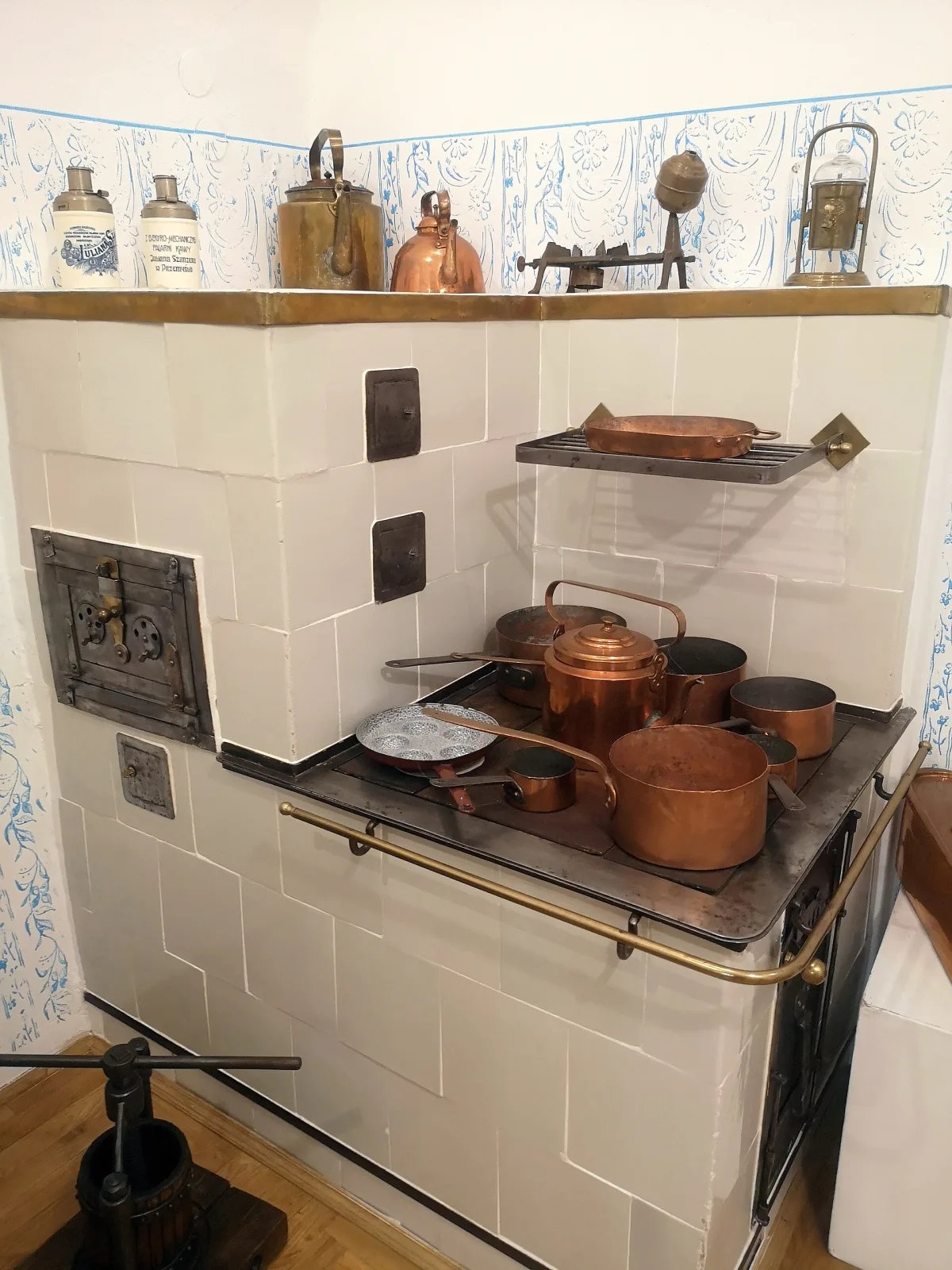
Condition Factors
Elements affecting copper's condition:
- Dents: Minor dents acceptable, major damage reduces value
- Dings: Small impact marks from normal use
- Scratches: Surface marks from utensils and cleaning
- Lining Wear: Tin showing through to copper
- Repairs: Previous fixes may affect value
- Pitting: Corrosion damage to copper surface
Assessing Structural Integrity
Checking for damage that affects usability:
- Seam Condition: Check dovetails or welds for separation
- Handle Stability: Tight rivets, no wobble
- Base Flatness: Should sit level, not rock
- Lid Fit: Should close properly
- Cracks: Rare but serious structural issue
Cleaning Considerations
Balancing cleaning with preservation:
- Patina Value: Many collectors prefer natural aging
- Over-Polishing: Removes metal, can damage marks
- Gentle Cleaning: Mild soap for routine care
- Selective Polishing: Can clean some areas, leave others
- Professional Advice: Consult before major cleaning
Collector Preferences
Understanding market expectations:
- Original Patina: Often preferred by serious collectors
- Functional Users: May prefer polished, re-tinned pieces
- Display Pieces: Patina adds visual interest
- Documentation: Record condition before any changes
Value Assessment and Collecting Strategies
Understanding what makes copper cookware valuable and how to build a meaningful collection.
Value Factors
Elements that determine copper's worth:
- Maker: Pieces from famous makers command premiums
- Age: Older pieces generally more valuable
- Thickness: Heavy gauge indicates quality
- Condition: Better condition increases value
- Provenance: Hotel or estate origin adds interest
- Rarity: Unusual forms or sizes command premiums
- Completeness: Original lid, matching handles add value
High-Value Categories
Types of copper that command premium prices:
- Pre-1850: Hand-hammered early pieces
- Major Makers: Mauviel, Gaillard with original marks
- Heavy Restaurant Grade: 3-4mm+ professional pieces
- Complete Sets: Matched sets from same source
- Famous Provenance: Hotel Ritz, Orient Express, etc.
- Rare Forms: Unusual specialty pieces
- Dovetailed Construction: Sign of quality and age
Collecting Strategies
Approaches to building a collection:
- By Maker: Focus on specific manufacturer
- By Period: Concentrate on certain era
- By Form: Collect specific types (saucepans, molds)
- By Origin: French, English, or other regional focus
- Functional Use: Build working kitchen collection
- Display Focus: Decorative pieces for wall display
Where to Buy
Sources for acquiring antique copper:
- Auction Houses: Major and regional sales
- Estate Sales: Kitchen contents from old homes
- Antique Shops: Specialists in kitchenware
- Online Platforms: eBay, Etsy, specialized sites
- European Sources: French flea markets, brocantes
- Specialized Dealers: Vintage French copper specialists
Buying Tips
Practical advice for purchases:
- Examine Carefully: Check thickness, marks, construction
- Ask Questions: Seller should know provenance
- Compare Prices: Research comparable sales
- Consider Condition: Factor in re-tinning costs
- Verify Authenticity: Use knowledge to authenticate
Care, Restoration, and Re-Tinning
Proper care ensures your copper collection remains in optimal condition, whether for use or display.
Routine Care
Daily and regular maintenance:
- Washing: Warm water and mild soap
- Drying: Thorough drying prevents water spots
- Never Dishwasher: Hand wash only
- Avoid Abrasives: No steel wool on tin-lined pieces
- Soft Cloths: Use soft materials for cleaning
Polishing Options
Methods for maintaining copper's shine:
- Commercial Polish: Purpose-made copper polishes
- Salt and Vinegar: Traditional home remedy
- Lemon and Salt: Mild, natural cleaning
- Ketchup: Acid content helps remove tarnish
- Leave Natural: Many collectors prefer patina
When to Re-Tin
Indicators that re-tinning is needed:
- Copper Showing: Bare copper visible in cooking area
- Large Worn Areas: Multiple spots need attention
- Food Sticking: Worn tin loses non-stick properties
- Discoloration: Unusual colors may indicate wear
Re-Tinning Process
Understanding professional re-tinning:
- Professional Service: Use experienced tinsmith
- Stripping: Old tin removed completely
- Cleaning: Copper thoroughly cleaned
- Application: Molten tin hand-wiped onto surface
- Thickness: Quality re-tin is 0.3-0.5mm thick
- Cost: Varies by size, $50-$150+ per piece typical
Storage and Display
Proper storage for copper collections:
- Dry Environment: Prevent moisture damage
- Hanging Display: Traditional pot rack display
- Padding: Protect from scratches when stacked
- Avoid Extremes: Stable temperature and humidity
- Periodic Check: Inspect for developing issues
Finding Re-Tinning Services
Locating quality restoration:
- Specialized Tinsmiths: Dedicated copper restoration
- East Coast Services: Several specialists in northeastern US
- European Options: France and UK have traditional craftsmen
- Online Research: Reviews and recommendations important
- Questions to Ask: Experience, tin source, warranty