
Antique Cameo Jewelry Identification Guide: Materials, Dating & Value Assessment
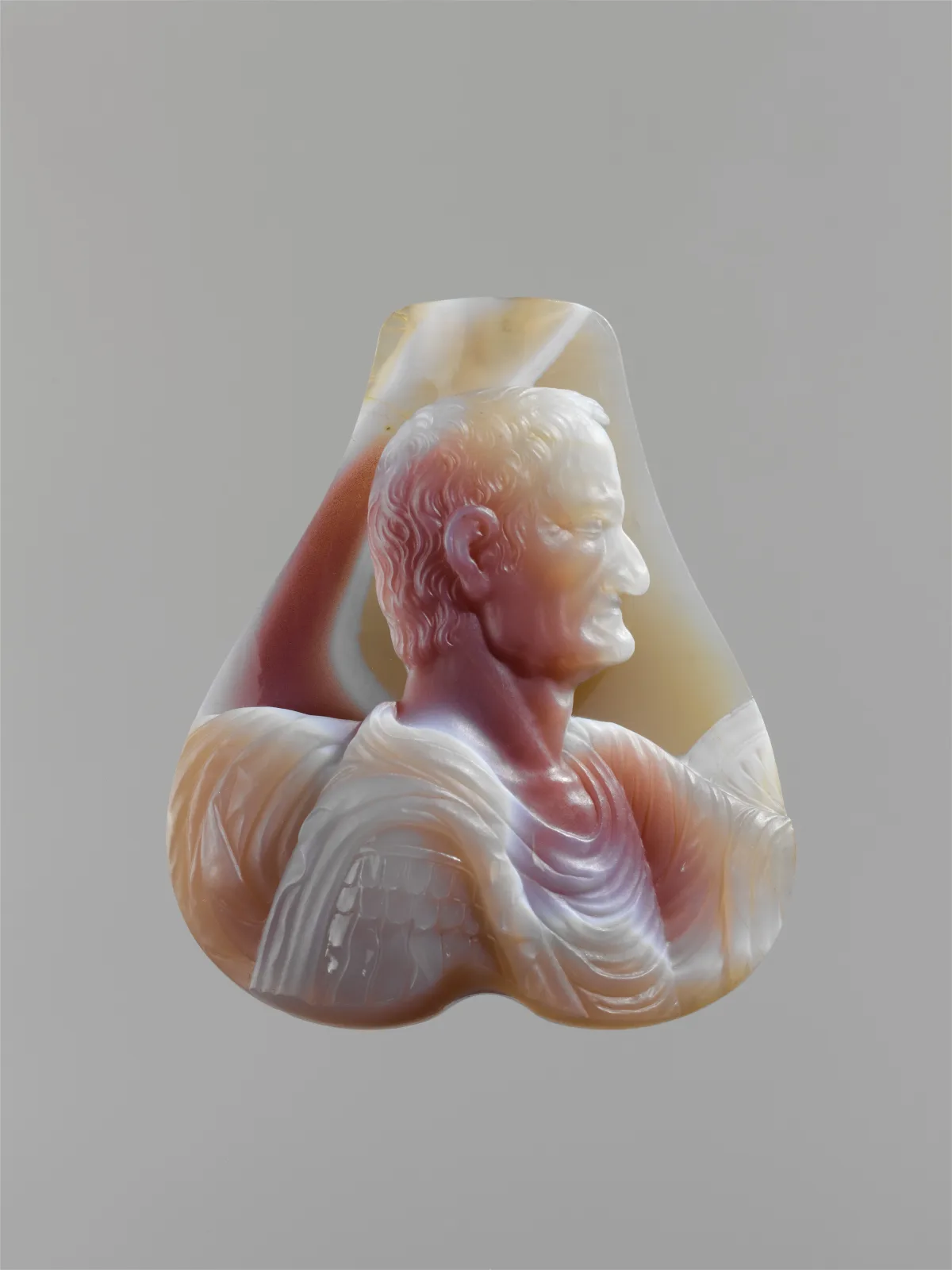
Cameo jewelry represents one of the oldest and most refined forms of decorative art, with a history spanning over four thousand years from ancient Mesopotamia through the height of Victorian elegance. These exquisite carved reliefs, featuring profiles and scenes raised from contrasting backgrounds, have captivated collectors for centuries. Whether inherited from a grandmother's jewelry box or discovered at an estate sale, understanding how to identify and authenticate antique cameos is essential for appreciating their artistic merit and determining their true market value.
The art of cameo carving requires extraordinary skill, patience, and an intimate understanding of materials. Master carvers traditionally worked in shell, coral, hardstones like agate and sardonyx, and even volcanic lava. Each material presents unique characteristics that help collectors distinguish genuine antique pieces from modern reproductions or plastic imitations. The subject matter, carving quality, frame construction, and clasp mechanisms all provide vital clues for accurate dating and authentication.
This comprehensive guide will equip you with expert knowledge to identify authentic antique cameos across all major materials and periods. You'll learn the telltale signs of genuine shell and hardstone cameos, understand how to date pieces by their subject matter and mounting styles, recognize the work of notable carving centers, and assess fair market values. Whether you're a beginning collector or seasoned enthusiast, mastering cameo identification opens a fascinating window into centuries of artistic tradition.
Table of Contents
- History and Evolution of Cameo Art
- Cameo Materials: Shell, Stone, Coral & More
- Shell Cameo Identification
- Hardstone and Gemstone Cameos
- Coral Cameo Authentication
- Lava Cameos and Grand Tour Souvenirs
- Wedgwood Jasperware Cameos
- Dating Cameos by Subject and Style
- Frame Styles and Setting Analysis
- Clasp Mechanisms and Dating Clues
- Major Carving Centers: Italy, Germany & Beyond
- Detecting Fakes and Reproductions
- Value Factors and Price Ranges
- Collecting Strategies and Market Insights
- Care and Preservation
History and Evolution of Cameo Art
The art of cameo carving traces its origins to ancient Mesopotamia around 3000 BCE, where artisans first discovered that layered stones could be carved to create images with natural color contrast. However, it was the Greeks and Romans who elevated cameo carving to a true art form. Ancient cameos depicted gods, heroes, emperors, and mythological scenes, serving as seals, talismans, and symbols of wealth and power.
Ancient Greek and Roman Period
Greek artisans perfected the technique of carving layered agates and sardonyxes, exploiting the natural color bands to create detailed portraits and mythological scenes. The Romans inherited and expanded this tradition, with emperors commissioning elaborate cameos as diplomatic gifts and symbols of imperial authority. The famous Gemma Augustea, carved around 10 CE, exemplifies the extraordinary skill achieved by Roman gem cutters.
Renaissance Revival
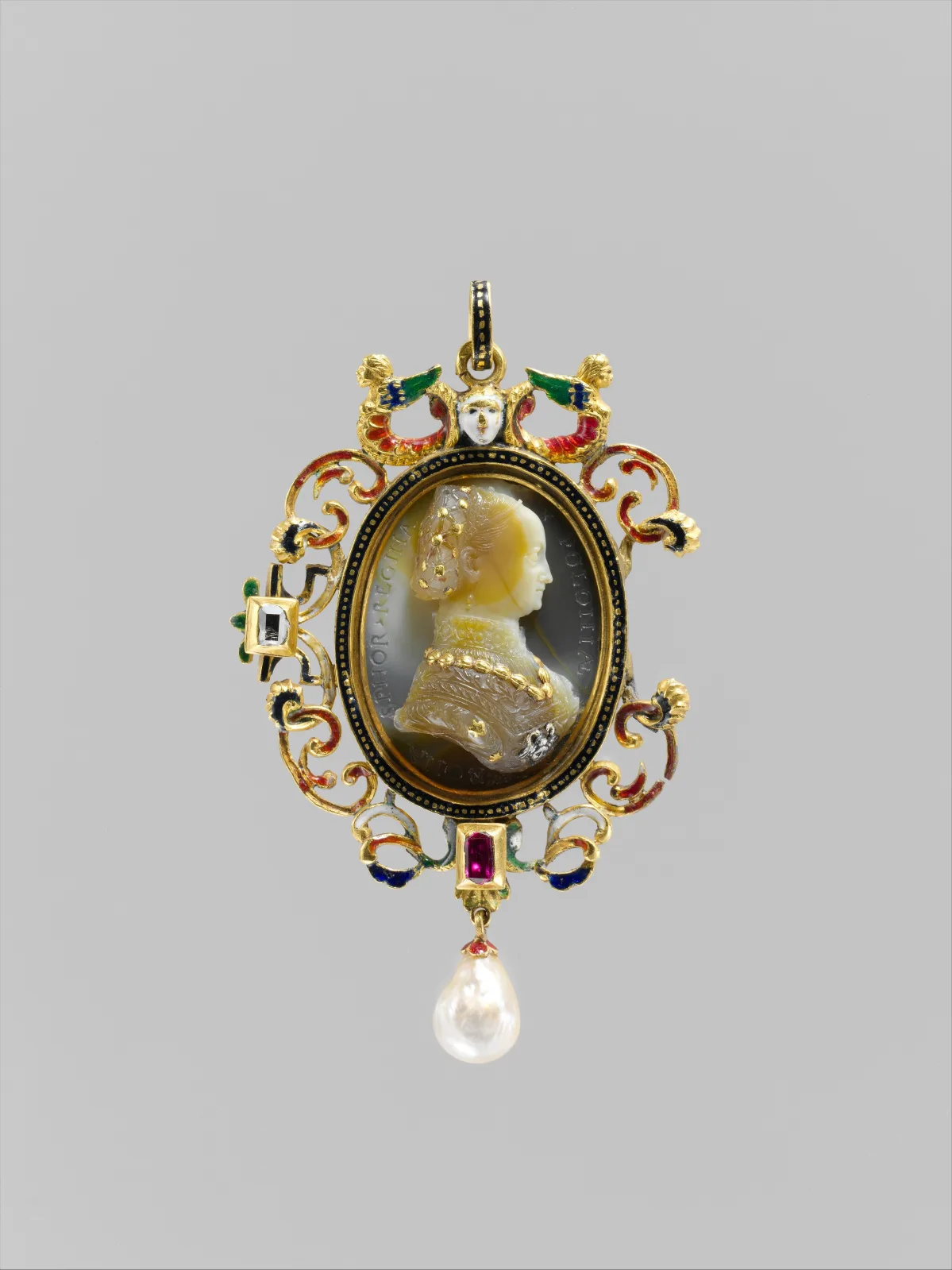
After centuries of decline following the fall of Rome, cameo carving experienced a dramatic revival during the Italian Renaissance. Wealthy patrons commissioned cameos depicting classical subjects, and collectors avidly sought ancient pieces. This period established Italy, particularly Naples and Rome, as the centers of cameo production that would continue for centuries.
Georgian and Victorian Golden Age
The eighteenth and nineteenth centuries marked the golden age of cameo jewelry. Grand Tour travelers returned from Italy with cameo souvenirs, sparking widespread collecting mania in Britain and across Europe. Shell cameos became affordable alternatives to expensive hardstone pieces, democratizing cameo ownership. Queen Victoria's passion for cameos, particularly after Prince Albert's death, cemented their status as essential Victorian accessories.
Twentieth Century to Present
The early twentieth century saw continued cameo production, though styles evolved to reflect Art Nouveau and Art Deco aesthetics. Mass production techniques and the introduction of plastic imitations in the mid-twentieth century diminished cameos' perceived value. Today, fine antique cameos are experiencing renewed appreciation among collectors who recognize their artistic merit and historical significance.
Cameo Materials: Shell, Stone, Coral & More
Understanding the various materials used for cameo carving is fundamental to accurate identification and valuation. Each material has distinctive characteristics, historical significance, and value implications that collectors must recognize.
Natural Shell
Shell cameos, particularly those carved from helmet shells (Cassis madagascariensis) and conch shells (Strombus gigas), became the most common form of cameo jewelry from the nineteenth century onward. The natural layering of these shells, with white or cream layers over orange, pink, or brown backgrounds, creates the characteristic contrast essential to cameo aesthetics. Shell cameos are relatively soft (3-4 on the Mohs scale) and can be identified by their warmth, light weight, and slight translucency when held to strong light.
Hardstones
Hardstone cameos represent the pinnacle of the carver's art. Agate, sardonyx, onyx, and carnelian require far more skill and time to carve than shell, commanding premium prices. These stones rate 6.5-7 on the Mohs scale and display a glassy luster. Genuine hardstone cameos feel noticeably cooler and heavier than shell equivalents.
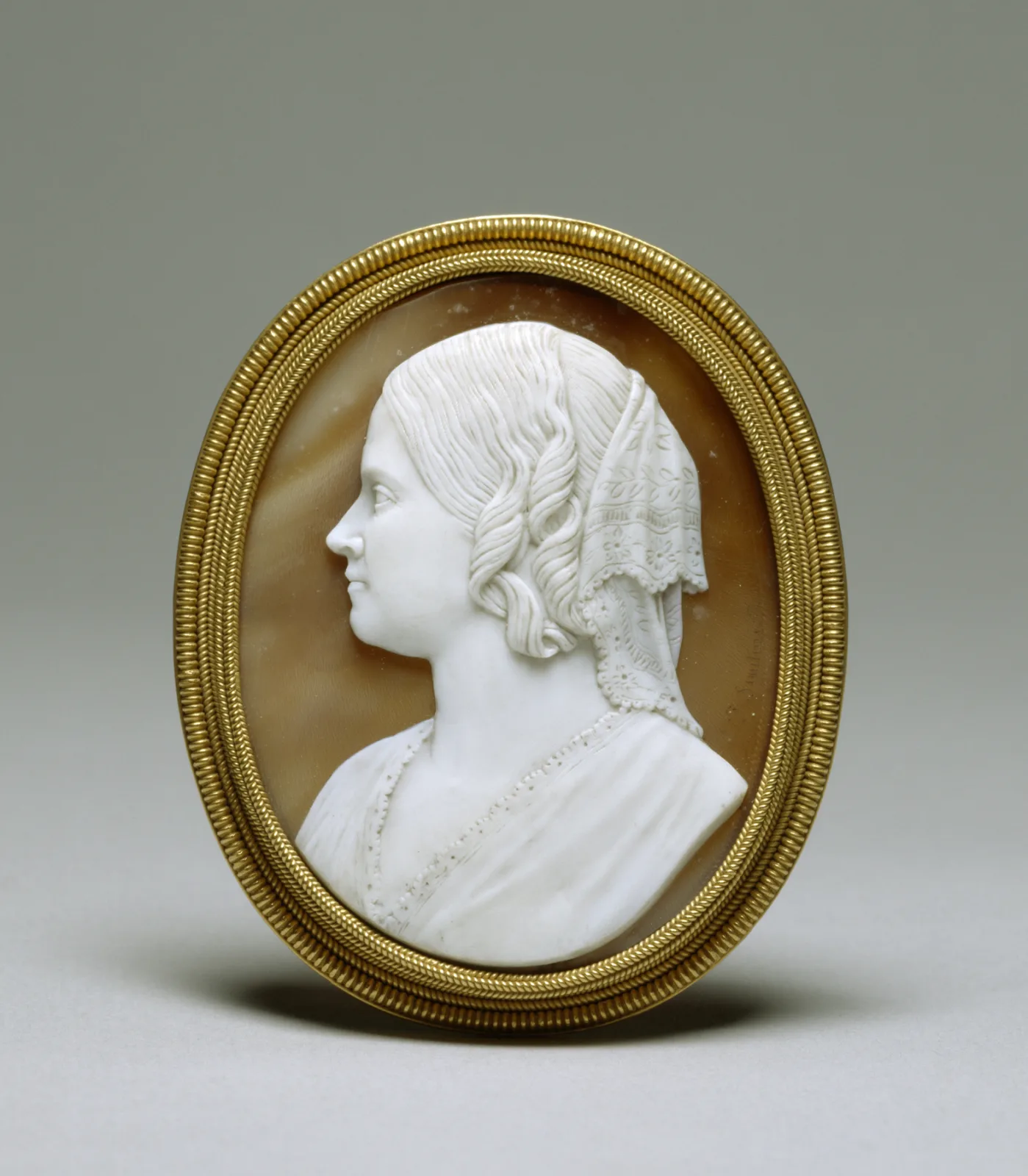
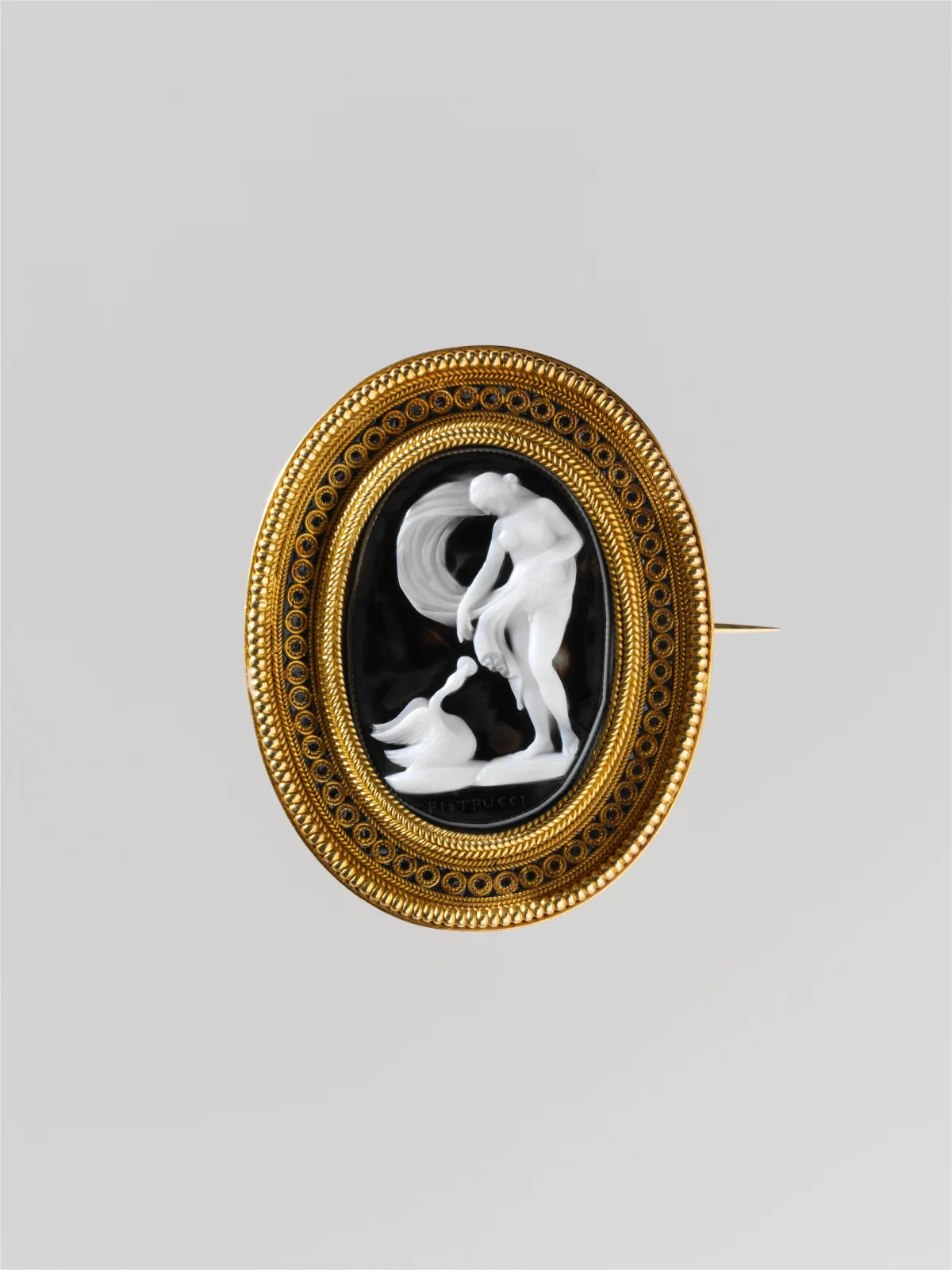
Held side by side the material tells itself, and the ground is where to look first. Shell gives you a warm caramel or honey brown that is never quite even — run your eye across the left of the brooch here and you can see the shell's own growth banding drifting through it. Onyx gives a flat, saturated black with no drift at all, and the white sits on it with a harder edge. Two further checks that cost nothing. Hardstone is cold to the lip and stays cold; shell warms in a second or two. And look at the back if the setting allows: shell is thin and slightly translucent, so a lamp behind it glows through, while a hardstone of the same size is thicker, opaque and noticeably heavier. Also worth noting on the right-hand brooch is the long pin projecting well past the frame — on a pre-1890 piece that is normal, and it is a useful independent date check on the setting.
Precious Coral
Mediterranean coral, particularly the prized salmon-pink "angel skin" and deep red varieties, provided material for some of the most valuable cameos. Coral cameos were especially popular in Victorian England and required exceptional skill due to the material's fragility. Today, coral cameos are increasingly rare and valuable due to environmental restrictions on coral harvesting.
Other Materials
Cameos have also been carved from ivory, jet, lava, glass, and Wedgwood jasperware. Each material has specific identification characteristics and historical contexts that inform dating and valuation.
Shell Cameo Identification
Shell cameos constitute the majority of antique cameos encountered by collectors today. Learning to distinguish genuine shell cameos from plastic imitations and to assess their quality and age is essential for any collector.
Shell Types and Characteristics
The helmet shell (Cassis madagascariensis, also known as sardonyx shell) produces cameos with a white carved layer over a brownish-orange background. This is the most common shell used for cameos. The queen conch (Strombus gigas) produces the distinctive pink or peachy background with white relief that many associate with classic cameo coloring. Both shells produce natural layering that cannot be precisely replicated by artificial means.
Authentication Tests
Several simple tests help authenticate shell cameos. Hold the piece up to a strong light source; genuine shell shows some translucency, particularly at thin areas and edges. Examine the back of the cameo, which should show the natural curvature and texture of shell rather than a flat, uniform surface. Touch the piece to your cheek; shell warms quickly to body temperature, while plastic remains at room temperature longer. Finally, examine under magnification for the natural grain structure of shell rather than the smooth, uniform surface of molded plastic.
Quality Assessment
Shell cameo quality depends on several factors: carving depth (high relief is more desirable), detail fineness (particularly in hair, drapery, and facial features), proportionality of the figure, and condition of the shell. Premium examples show extraordinary detail in flowing hair, realistic facial expressions, and fine textures in clothing and accessories.
Common Subjects
Classical female profiles dominate shell cameo subjects, often depicting goddesses, muses, or idealized beauties. Specific identifiable subjects include Flora (with flowers), Ceres (with grain), Diana (with crescent moon), Bacchus (with grape leaves), and various mythological scenes. Male profiles, pairs, full figures, and scenic compositions are rarer and often command premium prices.

Hardstone and Gemstone Cameos
Hardstone cameos represent the most valuable and technically demanding form of cameo carving. These pieces, carved from banded agates, sardonyxes, and other semi-precious stones, can command prices far exceeding their shell counterparts.
Agate and Sardonyx
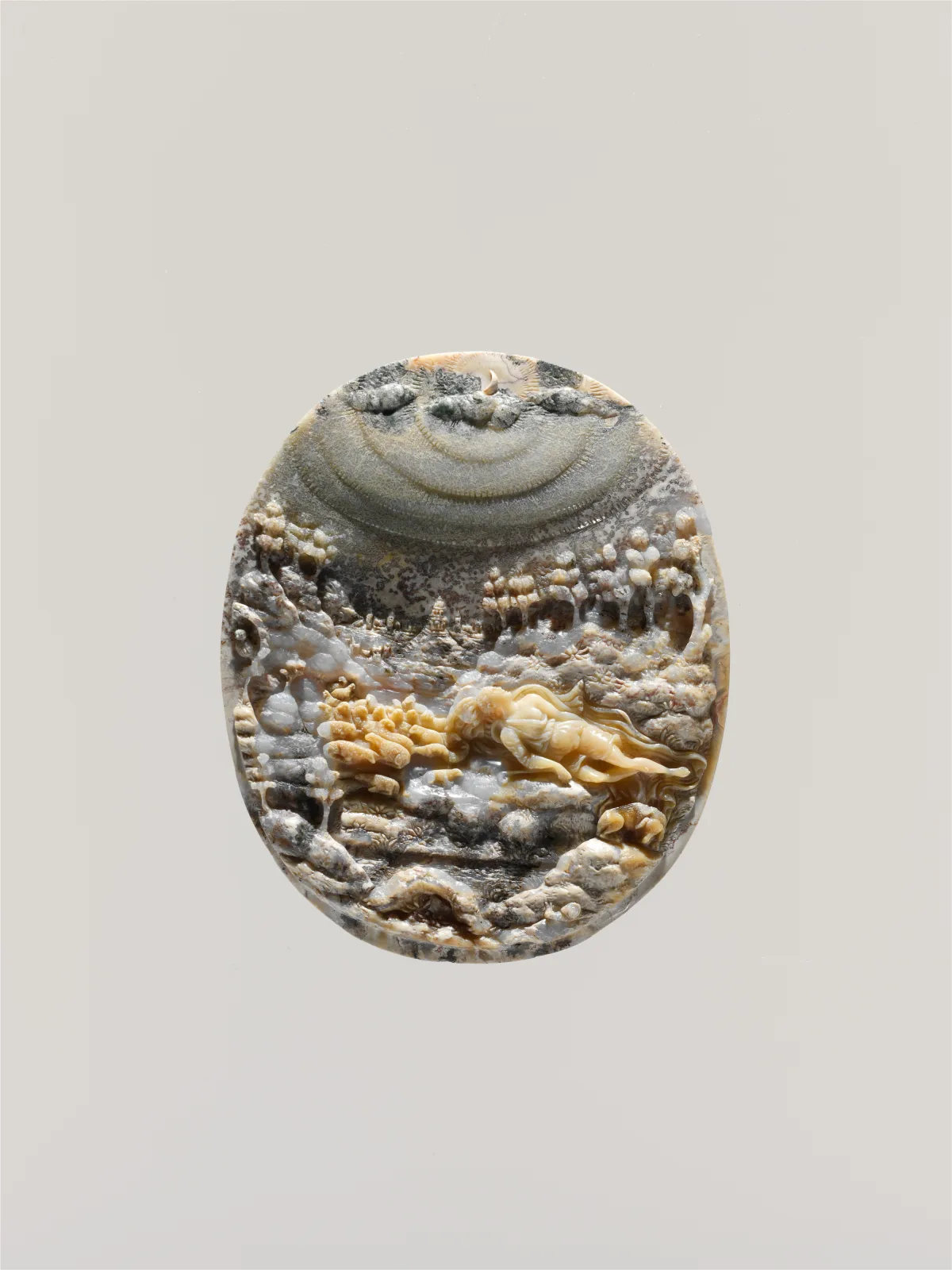
Agate and sardonyx (a variety of onyx with red and white bands) have been prized for cameo carving since antiquity. The natural color banding of these stones allows carvers to create dramatic contrast between figure and background. Genuine hardstone cameos display a glassy luster, feel cool to the touch, and show characteristic hardness (they cannot be scratched by a steel blade). Under magnification, the natural banding of the stone should be visible, following the contours of the carving.
Onyx and Carnelian
Black and white onyx produces dramatic cameos with stark contrast. Carnelian, with its warm reddish-orange color, was popular for both cameos and intaglios (recessed carvings). Some cameos combine multiple colors of banded agate to create elaborate polychrome effects.
Identifying Period and Origin
Ancient hardstone cameos typically show subject matter from Greek and Roman mythology, with somewhat stylized features characteristic of classical art. Renaissance cameos often depict portraits of contemporary nobles or classical subjects in more naturalistic style. Nineteenth-century hardstone cameos frequently copy classical subjects but show the more refined, detailed carving possible with improved tools.
Value Considerations
Hardstone cameos typically command significantly higher prices than shell examples of comparable quality. Ancient pieces in good condition are museum-worthy and extremely valuable. Quality nineteenth-century hardstone cameos regularly sell for thousands of dollars, while exceptional pieces reach five figures.
Coral Cameo Authentication
Coral cameos represent a distinctive and increasingly valuable category that requires specific identification skills. The unique properties of coral and current harvesting restrictions make genuine antique coral cameos particularly desirable.
Types of Coral Used
Mediterranean red coral (Corallium rubrum) provided the primary material for coral cameos. Color ranges from pale pink "angel skin" to deep ox-blood red. The most prized coral cameos display even, saturated color throughout. Some coral cameos were carved from white coral, though these are less common.
Distinguishing Coral from Shell
Coral and shell can sometimes appear similar, particularly pink conch shell and angel skin coral. However, coral is denser and heavier than shell of similar size. Under 10x magnification, coral shows distinctive growth lines running in parallel patterns, while shell shows a layered, laminated structure. Coral also takes a higher polish than shell and feels slightly cool and smooth.
Recognizing Imitations
Several materials have been used to imitate coral, including dyed bone, celluloid, the early plastics found in vintage costume jewelry, and modern plastics. Dyed bone shows a porous, grainy structure under magnification. Celluloid and Bakelite may show mold seams and emit characteristic chemical odors when rubbed vigorously. Modern plastics lack the density and cool feel of genuine coral.
Condition Concerns
Coral is relatively soft (3-4 Mohs) and susceptible to damage from acids, heat, and drying. Antique coral cameos frequently show surface crazing, chips, or color fading from improper storage or exposure. Significant condition issues substantially affect value.
Lava Cameos and Grand Tour Souvenirs
Lava cameos occupy a unique niche in cameo collecting as souvenirs of the Grand Tour, the educational journey through Europe undertaken by wealthy young aristocrats in the eighteenth and nineteenth centuries.
Origins and Production
Carved from volcanic stone (typically from Mount Vesuvius near Naples), lava cameos became popular souvenirs for tourists visiting the archaeological sites of Pompeii and Herculaneum. Local artisans carved classical profiles and mythological scenes to satisfy the demand from Grand Tour travelers.
Identification Features
Lava cameos display distinctive matte, porous surfaces quite different from the polished surfaces of shell or stone cameos. Colors range from gray and brown to soft greens and cream. The material is relatively soft and shows a granular texture under magnification. Lava cameos almost universally date to the Victorian era (roughly 1840-1900) and almost always depict classical subjects.
Typical Mountings
Lava cameos were typically set in suites including brooches, bracelets, earrings, and necklaces, often featuring multiple cameos in graduated sizes. Gold and pinchbeck (copper-zinc alloy simulating gold) frames are common. The mounting style provides dating clues, with earlier pieces showing simpler frames and later Victorian examples displaying more elaborate settings.
Collecting Value
Individual lava cameos are generally modestly priced, but complete suites in original cases command substantial premiums. Quality varies considerably, with the finest examples showing remarkably detailed carving despite the challenging material.
Wedgwood Jasperware Cameos
Wedgwood jasperware cameos represent a distinctive English contribution to cameo art, produced by the famous Staffordshire pottery firm from the late eighteenth century to the present.
History and Development
Josiah Wedgwood developed jasperware in the 1770s, creating a fine-grained, unglazed stoneware that could be colored throughout its body. The characteristic blue and white combination became synonymous with the Wedgwood name, though jasperware was also produced in green, lilac, yellow, and black backgrounds.
Cameo Characteristics
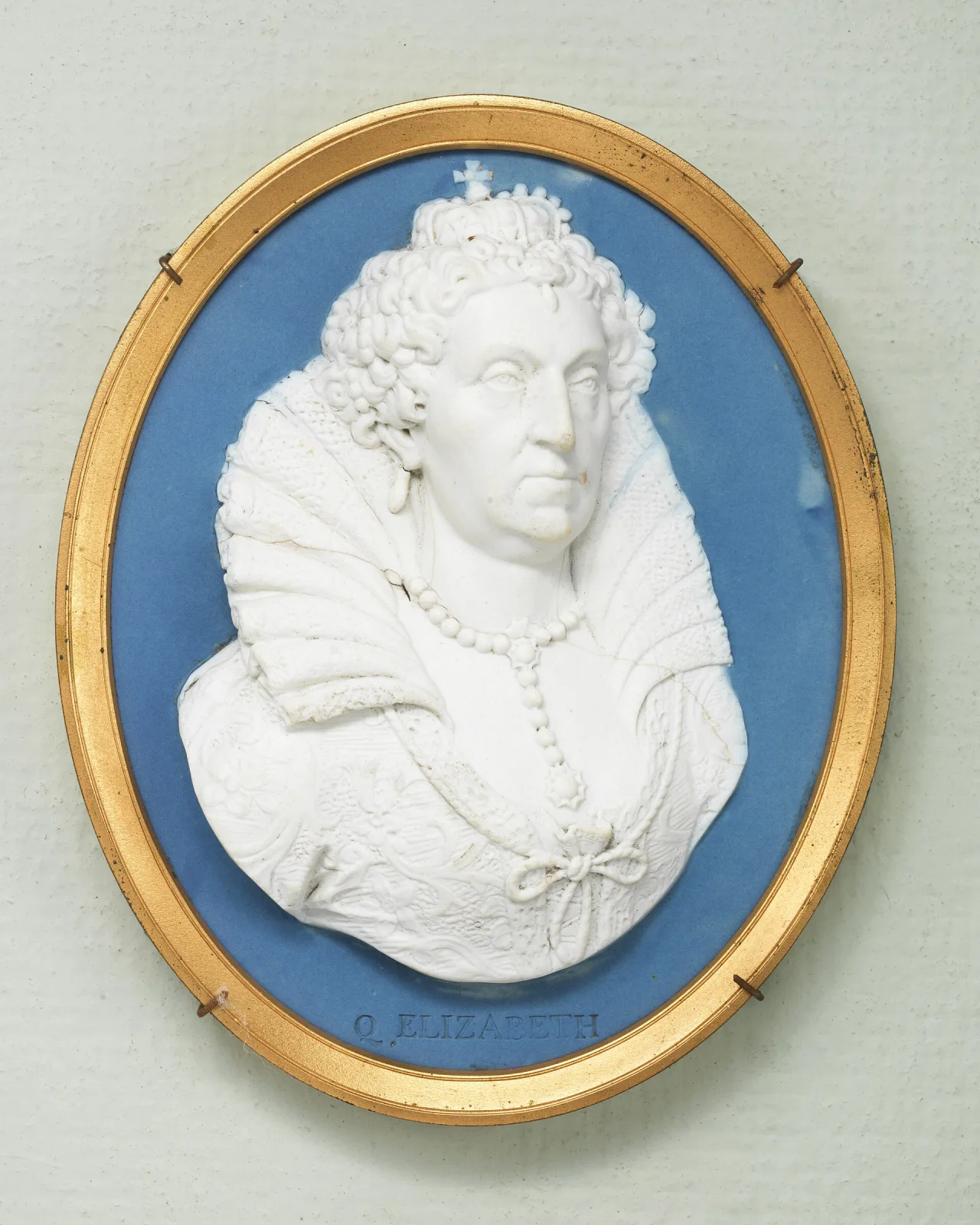
Wedgwood cameos feature classical subjects molded in white relief against colored backgrounds, imitating the appearance of hardstone cameos at far lower cost. The reliefs are sprig-molded (pressed separately and applied) rather than carved, resulting in somewhat flatter profiles than carved cameos. The ceramic body has a distinctive matte surface and slightly grainy texture.
Marks and Dating
Wedgwood pieces bear impressed marks that help with dating. "Wedgwood" impressed in uppercase indicates pieces from 1769-1780. "WEDGWOOD" with "ENGLAND" added dates from 1891 onward, when marking with country of origin became required. "WEDGWOOD MADE IN ENGLAND" appears on twentieth-century pieces. Various date letter systems provide more precise dating.
Authenticity Concerns
Numerous imitators produced jasperware-style pieces, some of considerable quality. Look for Wedgwood marks impressed (not printed) into the clay, and read them against the Wedgwood mark and date-code tables. Modern reproductions and outright fakes exist; genuine antique pieces show appropriate wear and signs of age.
Dating Cameos by Subject and Style
The subject matter and artistic style of a cameo provide valuable dating clues, as fashions in hairstyles, clothing, and aesthetic preferences changed over time.
Hairstyle Dating
Hairstyles depicted on cameos often follow contemporary fashions, making them useful dating tools. Georgian-era cameos (1714-1837) typically show elaborately dressed hair, often with plumes or ornamental elements. Early Victorian cameos (1837-1860) display center-parted hair with smooth bands framing the face. Later Victorian pieces (1860-1901) show more elaborate coiffures with cascading curls and braided elements.
Clothing and Accessories
Drapery styles also evolved over time. Classical subjects typically wear ancient-style togas and chitons. Victorian subjects may show contemporary fashion elements like lace collars, ribbons, or specific sleeve styles that help date the piece.
Subject Matter Trends
Certain subjects enjoyed particular popularity in specific periods. Bacchantes (followers of Bacchus) were especially popular in the mid-Victorian era. Rebecca at the Well was a favored subject in the 1850s-1870s. Aesthetic Movement influences in the 1870s-1890s brought Japanese-inspired subjects and naturalistic flower motifs.
Carving Style Evolution
Carving techniques and conventions changed over time. Earlier pieces tend toward higher relief and more stylized features. Victorian cameos often show romantic idealization with soft, delicate features. Art Nouveau examples display characteristic flowing lines and asymmetry.
Frame Styles and Setting Analysis
The frame or setting surrounding a cameo provides crucial information for authentication and dating. Antique frames exhibit construction techniques and decorative motifs specific to their periods.
Georgian Frames (1714-1837)
Georgian cameo frames typically feature high-karat gold (15-22 karat) with relatively simple, substantial construction. Common motifs include rope twist, beaded, and foliate borders. Pinchbeck (a copper-zinc alloy) was used for less expensive pieces.
Victorian Frames (1837-1901)
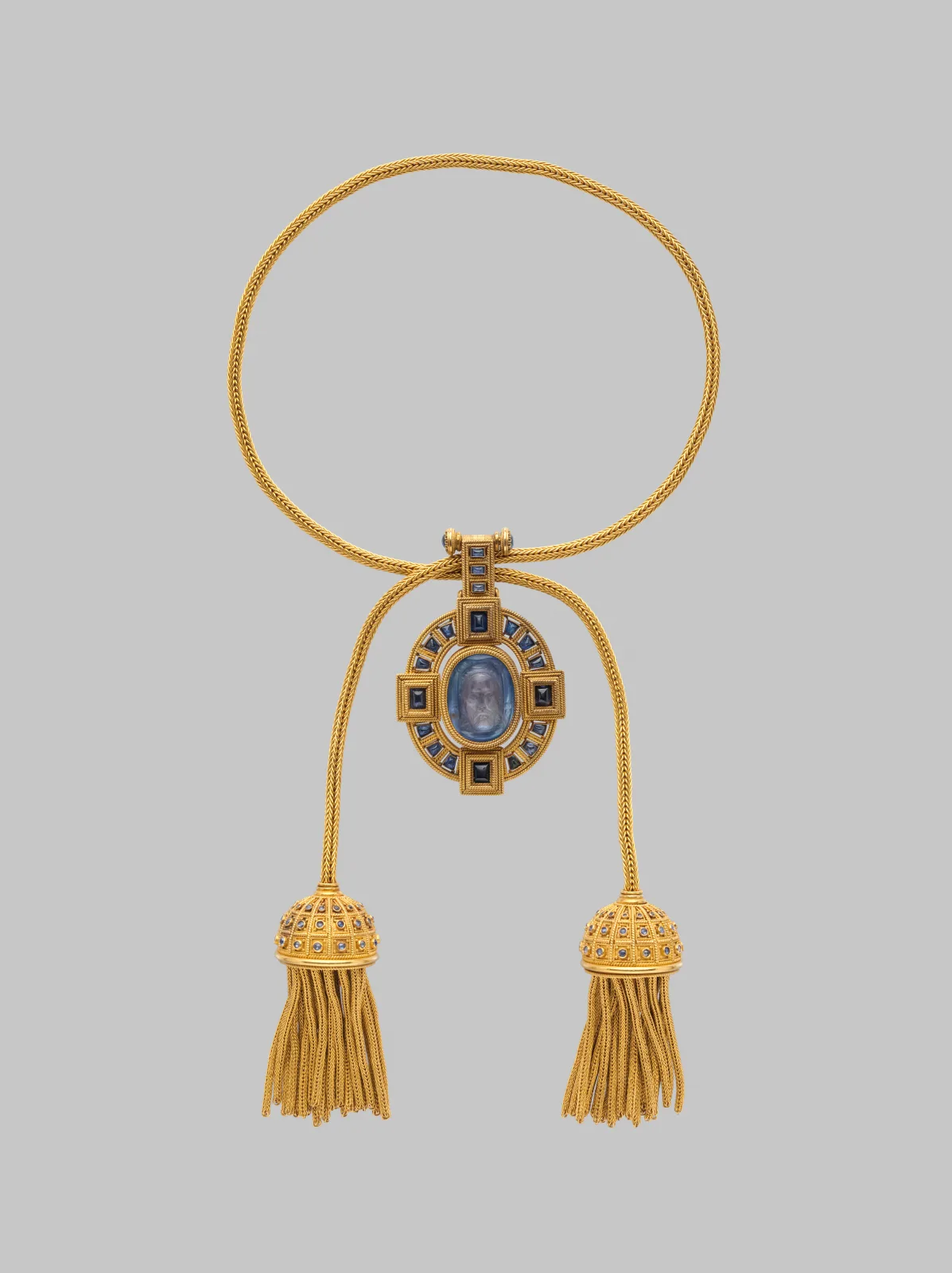
Victorian frames display tremendous variety reflecting the era's diverse aesthetic movements. Early Victorian frames show restrained elegance with delicate filigree work. Mid-Victorian frames become more elaborate with heavy gold work, seed pearls, and enamel details. Late Victorian frames reflect Aesthetic Movement influences with Japanese motifs or naturalistic floral designs.
Edwardian Frames (1901-1910)
Edwardian cameo frames frequently feature platinum or white gold, delicate milgrain edges, and subtle bow or garland motifs. The lighter metals complement the feminine aesthetic of the period.
Construction Examination
Examine how the cameo is secured in its frame. Antique pieces typically use bezel settings or prongs that show hand-finishing with slight irregularities. Machine-perfect construction suggests modern manufacture. Check for repairs, replaced frames, or marriages (antique cameos reset in newer frames).
Clasp Mechanisms and Dating Clues
The clasp or pin mechanism on a cameo brooch provides one of the most reliable dating indicators. Clasp styles evolved significantly over time as manufacturing technology improved.
C-Clasp (Pre-1890)
The simple C-clasp, consisting of a C-shaped wire catch, dominated brooch manufacture before 1890. The pin slides under the C with no locking mechanism. If your cameo brooch has a plain C-clasp, it likely dates before 1900.
Trombone Clasp (1890-1910)
The trombone clasp features a tube that extends and retracts to secure the pin. This mechanism was popular during the transition period between C-clasps and modern safety clasps.
Early Safety Clasps (1900-1940)
Various early safety mechanisms were developed in the early twentieth century, including revolving catches and primitive locking mechanisms. These show handmade characteristics and some irregularity.
Modern Safety Clasps
Modern spring-loaded safety catches with smooth, machine-made construction indicate post-1940 manufacture or a replaced clasp. The presence of a modern clasp on an otherwise antique-appearing cameo warrants careful examination of the entire piece.
Pin Examination
Antique pins typically show hand-cut points (slightly irregular) and extend the full width of the brooch. Modern pins often have machine-cut points and may be proportionally shorter. Replaced pins are common on genuine antique cameos.
Major Carving Centers: Italy, Germany & Beyond
Different regions developed distinct cameo carving traditions, and identifying these regional characteristics helps with attribution and valuation.
Torre del Greco, Italy
This small town near Naples has been the world's leading center for shell cameo production since the early nineteenth century. Torre del Greco carvers developed techniques passed through generations, creating cameos renowned for their fine detail and expressive quality. Even today, this region produces the finest shell cameos available.
Idar-Oberstein, Germany
The German town of Idar-Oberstein became a major center for hardstone cameo carving, benefiting from local agate deposits and established lapidary traditions. German hardstone cameos often show precise, somewhat formal carving styles distinct from Italian work.
British Production
While Britain imported most cameos, some shell carving was done in the Birmingham jewelry quarter. British-made cameos often show Victorian subject matter and may be set in British-hallmarked gold frames. Wedgwood jasperware cameos represent the most distinctive British contribution to the form.
Attribution Challenges
Most antique cameos lack maker's signatures, making precise attribution difficult. Regional characteristics, subject matter, and frame construction provide clues but rarely permit definitive attribution to specific workshops or carvers.
Detecting Fakes and Reproductions
The popularity of antique cameos has unfortunately spawned numerous reproductions and outright fakes. Learning to detect these imitations protects collectors from costly mistakes.
Plastic and Resin Fakes
The most common cameo fakes are molded from plastic or resin. These lack the natural layering of shell and show mold seams on close examination. Plastic feels warm and remains at room temperature, while genuine materials feel cool initially. Plastic shows none of the translucency of shell when held to light. Under magnification, plastic reveals a smooth, uniform surface lacking the natural grain of shell or the crystalline structure of stone.
Glass Cameos
Glass cameos, particularly those made by techniques like sulphide encasing, have been produced since the eighteenth century. While some are legitimate antiques, many are modern reproductions. Glass cameos feel cold and heavy, show conchoidal fractures if chipped, and may have small bubbles visible under magnification.
Assembled Cameos
Some fake cameos are created by cementing a thin slice of carved shell to a plastic or stone backing. These assembled pieces may pass initial inspection but reveal their construction under magnification at the edges where the materials meet.
Mass-Produced Shells
Modern technology allows mass production of carved shell cameos using ultrasonic or laser cutting. These pieces lack the individual character of hand-carved work, showing standardized features and mechanical precision. Genuine hand-carved cameos display subtle variations and sometimes minor asymmetries that reflect individual craftsmanship.
Aged Reproductions
Some reproductions are artificially aged to simulate antique patina. Look for uniform wear patterns (genuine wear concentrates on high points and edges), artificially darkened recesses, and new-looking materials beneath surface dirt.
Value Factors and Price Ranges
Cameo values vary enormously based on multiple factors. Understanding these determinants helps collectors make informed purchasing decisions and assess pieces in their collections.
Material Hierarchy
Material significantly impacts value. Hardstone cameos (agate, sardonyx, carnelian) command the highest prices, followed by coral, then shell. Exceptional quality in any material can transcend this general hierarchy. Glass and ceramic cameos are typically least valuable unless of historical significance.
Carving Quality
The skill evident in the carving profoundly affects value. High-relief carving that creates three-dimensional depth is more valuable than flat carving. Fine detail in hair, drapery, facial features, and any accessories increases value. Expressive, lifelike features command premiums over generic, stylized profiles.
Subject and Rarity
Unusual subjects command higher prices than common classical profiles. Scenic cameos depicting complete narratives are rarer than single-figure pieces. Male subjects and full-figure compositions are less common than female profiles. Identified historical personages or signed pieces are particularly valuable.
Condition
Condition significantly impacts value. Chips, cracks, or repairs reduce value substantially. Original frames in good condition add value over replaced or damaged settings. Complete suites (matching sets of multiple pieces) in original cases command premium prices.
Price Ranges
Simple shell cameos in base metal frames start around $25-100. Quality Victorian shell cameos in gold frames typically range from $300-1,500. Fine hardstone cameos regularly sell for $1,000-5,000, with exceptional pieces reaching $10,000 or more. Museum-quality ancient or Renaissance cameos can command six-figure prices at major auctions.
Collecting Strategies and Market Insights
Building a meaningful cameo collection requires both knowledge and strategy. Understanding the market helps collectors make wise acquisitions.
Starting a Collection
Beginning collectors often focus on quality Victorian shell cameos, which offer the best combination of availability, affordability, and aesthetic appeal. Learning to distinguish quality within this category builds skills applicable to more advanced collecting.
Specialization Options
Advanced collectors often specialize in particular areas: hardstone cameos, coral pieces, lava cameo suites, specific periods, or unusual subjects. Specialization develops expertise and creates cohesive, meaningful collections.
Purchasing Sources
Reputable antique jewelry dealers offer expertise and often guarantees of authenticity. Auction houses provide access to quality pieces but require bidding experience. Estate sales and antique shows offer discovery potential but require sharp eyes. Online platforms provide convenience but demand extra caution regarding authenticity.
Market Trends
The cameo market has shown renewed strength as collectors rediscover these classical pieces. Fine quality pieces in original condition consistently appreciate. Contemporary fashion's embrace of vintage accessories has brought new collectors to the market. Coral cameos show particular price strength due to material scarcity.
Investment Considerations
While cameos can appreciate in value, collectors should primarily buy for aesthetic enjoyment rather than investment returns. Quality always matters more than quantity. Provenance (documented history of ownership) enhances both interest and value.
Care and Preservation
Proper care ensures antique cameos survive to delight future generations. Different materials require specific handling approaches.
Shell Cameo Care
Shell cameos are relatively fragile and require gentle handling. Store individually in soft cloth or padded compartments to prevent scratching. Keep away from heat sources and direct sunlight, which can cause drying and cracking. Avoid exposure to chemicals including perfumes, hairsprays, and household cleaners. Clean gently with a soft, slightly damp cloth, then dry immediately.
Coral Care
Coral requires particular attention to prevent drying. Store away from heat and light. Periodic gentle rubbing with a small amount of mineral oil helps prevent surface crazing. Never use ultrasonic cleaners or harsh chemicals on coral.
Hardstone Care
Hardstone cameos are more durable than shell or coral but still require careful handling. Store separately to prevent scratching. Clean with mild soap and water, rinsing thoroughly. Avoid thermal shock from extreme temperature changes.
Frame and Setting Care
Gold frames can be cleaned with mild jewelry cleaner appropriate for the metal type. Check prongs and bezels regularly for security. Have loose settings repaired by qualified jewelers before wearing. Store in stable humidity conditions to prevent metal tarnishing.
Display Considerations
If displaying cameos, use museum-quality cases with UV-filtering glass. Maintain stable temperature and humidity. Rotate displayed pieces periodically to minimize light exposure. Document your collection with photographs and written descriptions.