Antique Brooches Identification Guide: Periods, Styles & Value Assessment
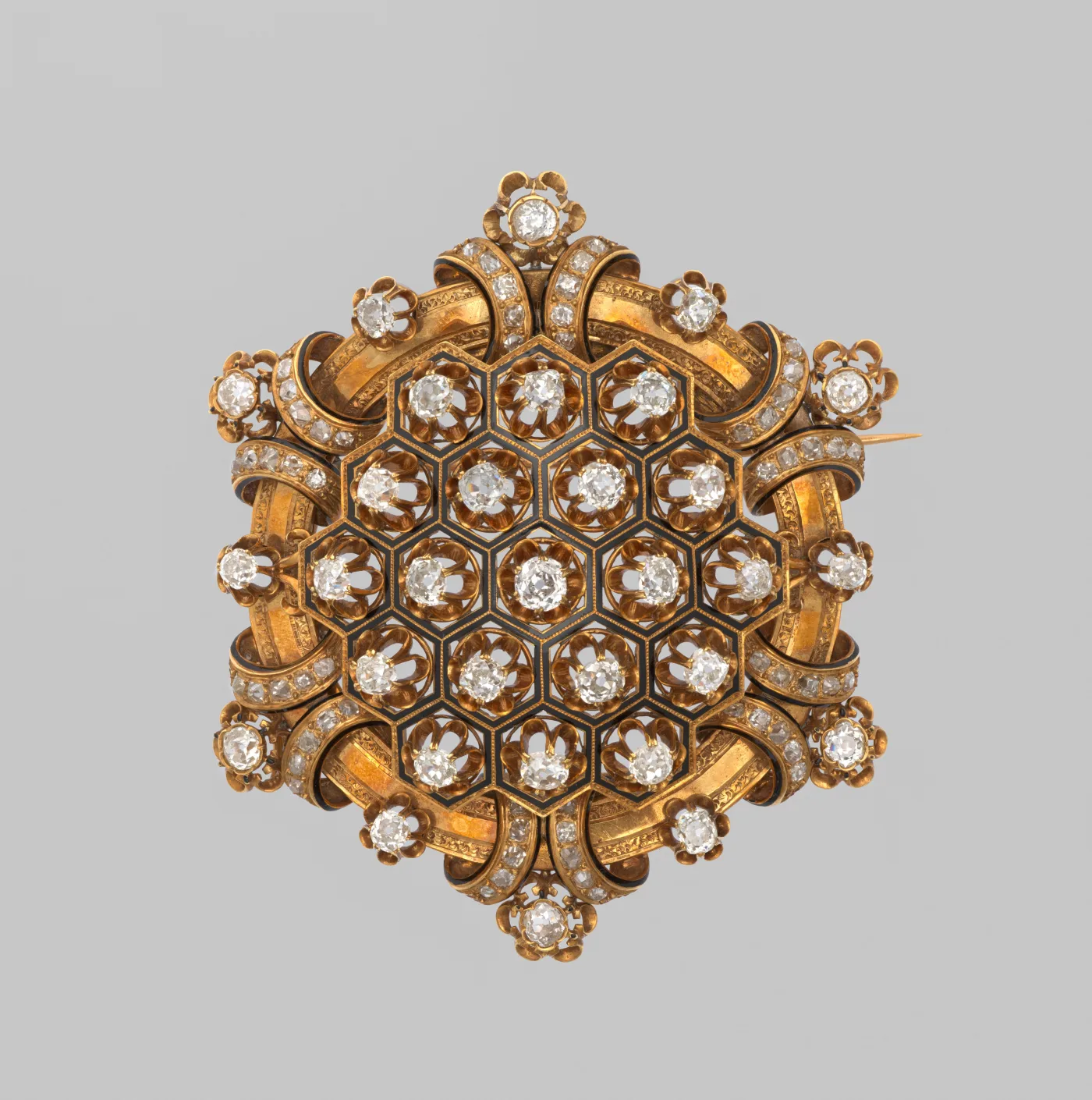
Antique brooches represent one of the most captivating and collectible categories of vintage jewelry, experiencing a remarkable resurgence in popularity among collectors and fashion enthusiasts in 2026. These decorative pins serve as wearable art that spans centuries of craftsmanship, from elaborate Victorian mourning brooches to sleek Art Deco geometric designs. Whether you've inherited a family heirloom, discovered a treasure at an estate sale, or are building a collection, understanding how to identify and authenticate antique brooches is essential for appreciating their historical significance and market value.
The art of brooch identification requires knowledge of multiple factors including historical periods, manufacturing techniques, materials, hallmarks, and stylistic elements. Each era produced distinctive brooch designs that reflect the cultural, social, and technological context of their time. From Georgian memento mori pieces to Edwardian platinum and diamond creations, antique brooches offer fascinating insights into fashion history, personal expression, and decorative arts evolution.
This comprehensive guide will equip you with the expertise needed to identify, authenticate, and evaluate antique brooches across all major periods and styles. You'll learn how to recognize period-specific characteristics, interpret maker marks, assess materials and construction quality, spot reproductions, and determine accurate market values for these timeless accessories.
Table of Contents
- Historical Periods and Era Identification
- Major Brooch Styles and Types
- Materials and Construction Analysis
- Hallmarks, Maker Marks, and Signatures
- Gemstones and Setting Techniques
- Victorian Brooches: Early, Mid, and Late Period
- Art Nouveau Brooches and Nature Motifs
- Edwardian Era: Platinum and Delicacy
- Art Deco Brooches: Geometric Modernism
- Specialty Brooches: Mourning, Cameo, and Scottish
- Pin Mechanisms and Dating Clues
- Authentication and Reproduction Detection
- Condition Assessment and Damage Evaluation
- Designer and Signed Brooches
- Value Determination and Market Trends
- Collecting Strategies and Investment Potential
- Care, Storage, and Preservation
Historical Periods and Era Identification
Understanding the major historical periods of brooch production is fundamental to accurate identification. Each era has distinctive aesthetic characteristics, manufacturing methods, and cultural influences that make brooch dating possible even without hallmarks.
Georgian Period (1714-1837)
Georgian brooches are among the rarest and most valuable antique pins, characterized by hand-crafted construction and distinctive period features. These brooches typically feature closed-back settings, foiled gemstones to enhance brilliance, and romantic or memorial themes. Common motifs include hearts, anchors, love knots, and symbolic imagery. Materials include gold (often higher karat), silver-topped gold, paste stones, and natural pearls. Georgian brooches show evidence of handwork including visible tool marks, irregular prong settings, and variations in symmetry.
Victorian Era (1837-1901)
The Victorian period represents the golden age of brooch production and related personal adornments like chatelaines, divided into three distinct sub-periods each with unique characteristics. Early Victorian or Romantic period brooches feature naturalistic designs, sentimental motifs like hearts and flowers, snake motifs symbolizing eternal love, and extensive use of colored gemstones. Mid-Victorian or Grand period brooches show influences from archaeological discoveries, bold and substantial designs, mourning jewelry prominence, and jet, onyx, and dark materials. Late Victorian or Aesthetic period pieces demonstrate lighter, more delicate construction, star and crescent moon motifs, increased use of diamonds, and transition toward Art Nouveau styles.
Edwardian Era (1901-1915)
Edwardian brooches epitomize elegance and refinement, characterized by the introduction of platinum metalwork, openwork filigree and milgrain detailing, garland and bow motifs, and extensive use of diamonds and pearls. These pieces showcase exceptional craftsmanship with intricate piercing and delicate construction that was made possible by platinum's strength. The white-on-white aesthetic of platinum, diamonds, and pearls defined the period's sophisticated palette.
Art Nouveau Period (1890-1910)
Art Nouveau brooches broke from traditional jewelry conventions with their emphasis on natural forms, flowing asymmetrical designs, female figures and faces, dragonflies, butterflies, and botanical motifs, innovative use of materials like horn, enamel, and baroque pearls, and artistry valued over intrinsic material worth. These pieces often feature exceptional craftsmanship by renowned makers like Lalique, showcasing the period's elevation of jewelry as wearable art.
Art Deco Period (1920-1935)
Art Deco brooches reflect the modern age with geometric patterns and angular designs, use of calibré-cut gemstones creating precise patterns, combination of contrasting materials like onyx and diamond, Egyptian, Asian, and tribal influences, and streamlined forms emphasizing symmetry and repetition. The period embraced both precious materials in high-end pieces and innovative use of new materials like Bakelite and chrome in costume jewelry.
Major Brooch Styles and Types
Brooches come in numerous distinct styles, each with specific characteristics and collecting niches. Understanding these categories helps narrow identification and specialization.
Bar Brooches
Bar brooches feature a horizontal rectangular or linear form that became especially popular during the Edwardian and Art Deco periods. These functional pins served to secure high-necked blouses and collars while providing decorative appeal. Edwardian examples typically showcase platinum with diamonds and pearls in delicate patterns, while Art Deco versions feature bold geometric designs with calibré-cut gemstones. Length typically ranges from 2 to 4 inches, with the pin mechanism running the full length of the bar for secure attachment.
Circle and Wreath Brooches
Circular brooches symbolizing eternity and unity appeared throughout the Victorian and Edwardian eras. These include open circle designs with gemstone settings around the perimeter, wreath forms featuring laurel leaves or floral garlands, buckle-inspired circular shapes popular in the late Victorian period, and target designs with concentric circles of different materials or stones. The center of circle brooches often features a significant gemstone, pearl, or decorative element.
Figural and Novelty Brooches
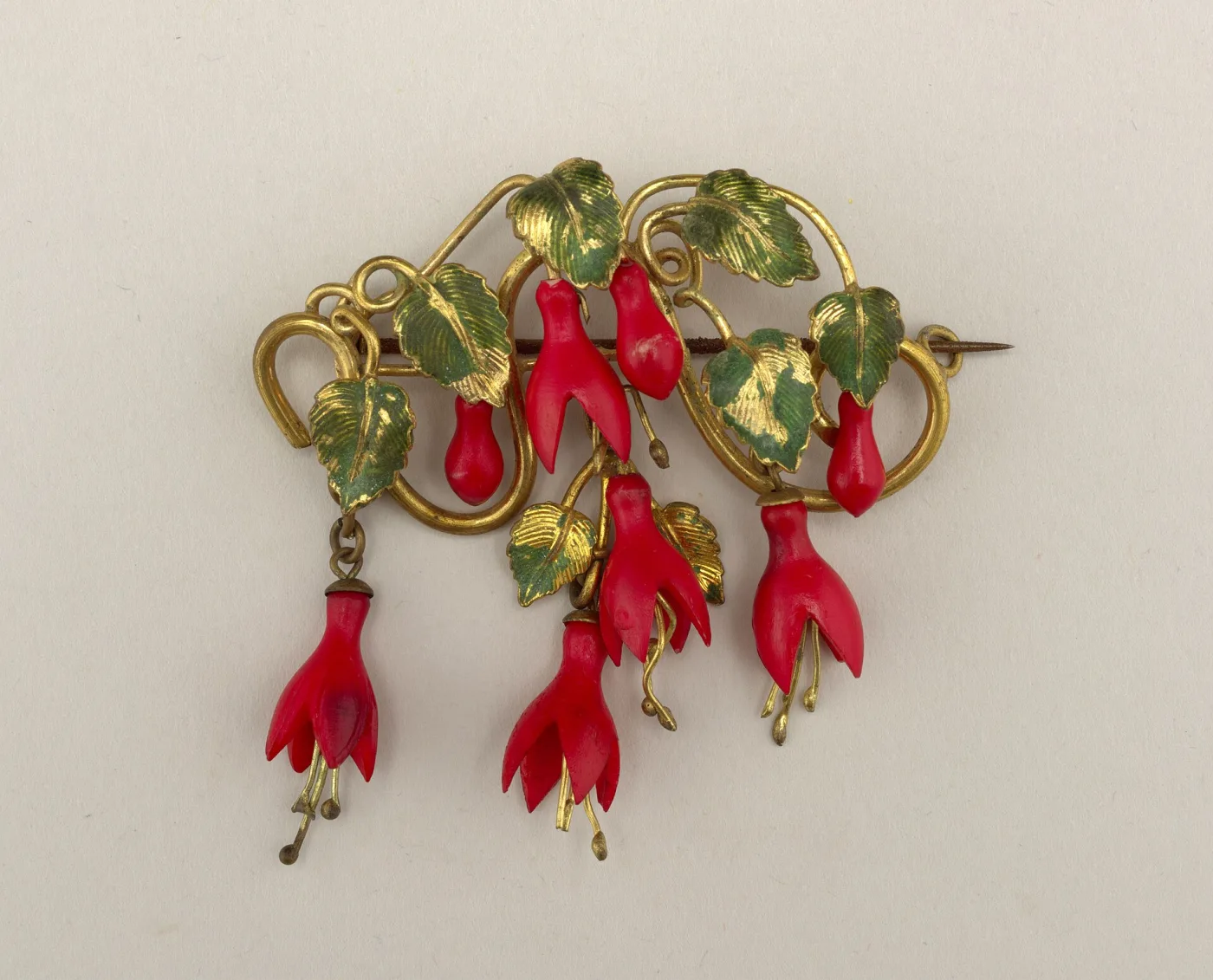
Figural brooches depicting recognizable objects, animals, or people gained popularity in the late Victorian period and exploded during the Art Deco and Retro periods. Categories include animal forms ranging from realistic to whimsical interpretations, insect motifs especially butterflies, dragonflies, and bees, floral designs with dimensional petals and leaves, people and figures from dancers to sailors, and object representations from musical instruments to household items. These pieces showcase technical virtuosity in metalwork, enameling, and gemstone setting.
Cameo and Intaglio Brooches
Cameo brooches feature raised relief carving on layered materials, with shell cameos being most common and affordable, hardstone cameos including agate, onyx, and sardonyx being more valuable, lava cameos from Italy popular as souvenirs, and portrait cameos depicting classical profiles or contemporary subjects. Intaglio brooches feature reverse carving into transparent or translucent materials, creating dimensional images visible when light passes through. Victorian cameo brooches often feature elaborate gold frames with decorative wirework and granulation.
Bow and Ribbon Brooches
Bow motif brooches appeared throughout the Georgian, Victorian, and Edwardian periods, symbolizing femininity and gift-giving. Early examples feature realistic ribbon representations in gold with gemstone accents, while later Edwardian pieces showcase stylized bows in platinum and diamonds with flowing ribbons and intricate openwork. Art Deco interpreted the bow motif with geometric abstraction and streamlined forms. Three-dimensional bow brooches with moveable elements represent the highest level of craftsmanship.
Mourning and Memorial Brooches
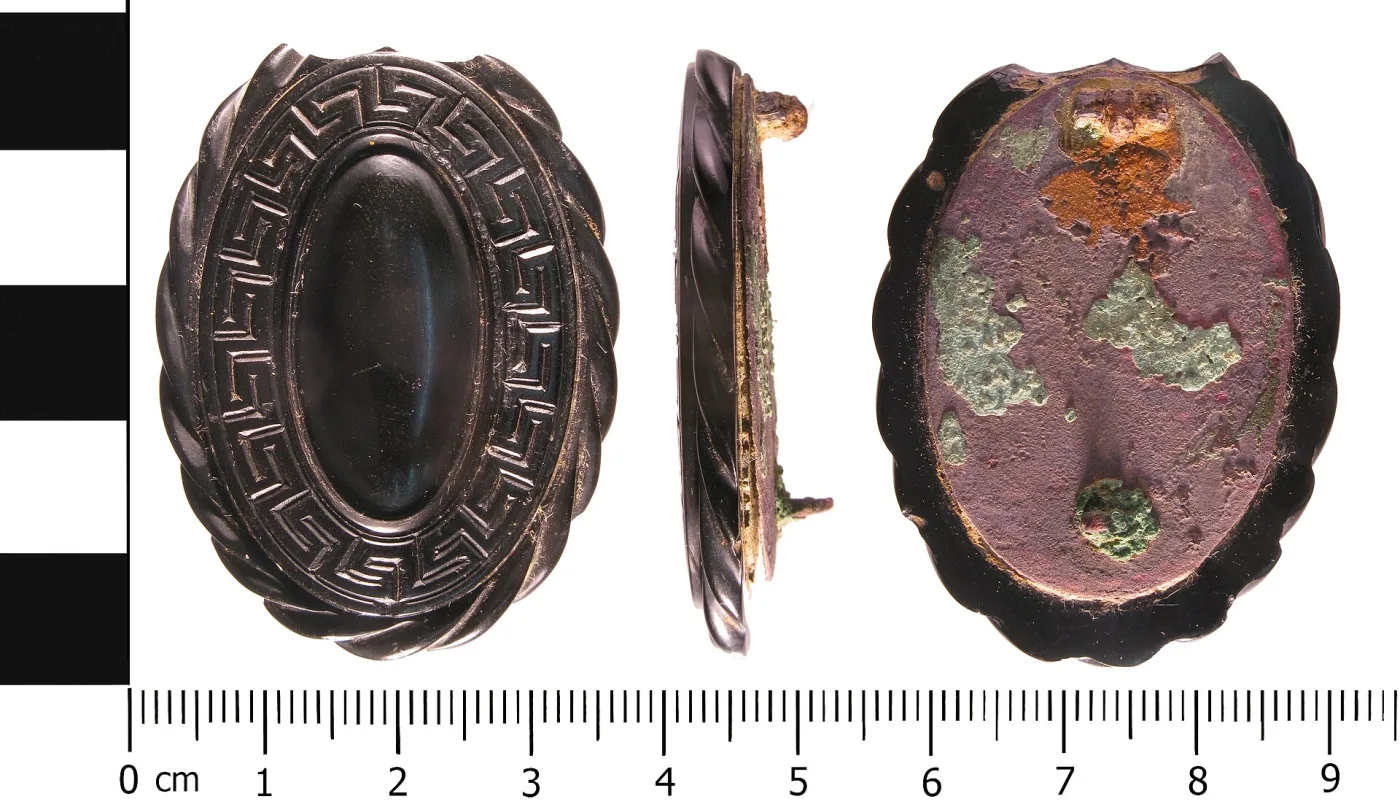
Mourning jewelry reached its peak during the Victorian era, particularly following Prince Albert's death in 1861. These somber pieces feature black materials including jet, onyx, black enamel, and gutta-percha, hair work incorporating the deceased's hair in woven or coiled patterns, memorial inscriptions with names and dates, and symbolic motifs like weeping willows, urns, and skulls. The quality and craftsmanship of mourning brooches varied widely based on the family's economic status, from elaborate gold and enamel pieces to simple jet pins.
Starburst and Sunburst Brooches
Celestial motifs including stars, sunbursts, and crescents appeared throughout the Victorian and Edwardian periods. These designs feature radiating patterns with gemstones or metalwork, trembling or en tremblant settings creating movement, combination of different diamond cuts for dimensional effect, and convertible designs that could be worn as brooches or hair ornaments. Victorian examples often incorporate colored gemstones, while Edwardian pieces favor all-diamond compositions in platinum.
Materials and Construction Analysis
Examining the materials and construction methods used in a brooch provides critical dating and authentication information. Different periods favored specific materials and techniques that serve as identification markers.
Precious Metals Identification
Understanding metal types and their period usage is essential. Georgian and early Victorian brooches typically use high-karat gold between 15K and 22K with warm yellow color, silver-topped gold combinations for diamond settings, and pinchbeck as a copper-zinc gold substitute. Mid to late Victorian pieces show 9K, 12K, and 15K gold as standards became established, rose gold popularity during the Romantic period, and introduction of rolled gold and gold-filled techniques. Edwardian brooches introduced platinum for the first time in jewelry, creating new design possibilities, white gold as a platinum alternative in later Edwardian period, and continued use of silver for less expensive pieces.
Base Metals and Alternatives
Non-precious materials expanded brooch accessibility and design possibilities. Victorian innovations included Pinchbeck, a brass alloy simulating gold developed in the 18th century, Berlin iron, cast iron jewelry popular during wars when precious metals were scarce, and cut steel, faceted steel studs creating brilliant effect mimicking diamonds. The 20th century introduced new materials like Bakelite and early plastics appearing in Art Deco costume jewelry, chrome and other plated metals for modern designs, and pot metal, a base metal alloy used in mass-produced costume pieces.
Gemstone Types and Periods
Gemstone selection and treatment varied by period. Georgian and early Victorian brooches feature foiled gemstones with metal backing to enhance color, rose-cut diamonds with flat bottoms and domed tops, carbuncle garnets with high cabochon cuts, and natural pearls exclusively before cultured pearl development. Later Victorian and Edwardian pieces show old mine cut and old European cut diamonds, transition cuts bridging old and modern cutting styles, demantoid garnets prized for brilliance, and peridots, aquamarines, and tourmalines. Art Deco introduced calibré-cut gemstones in precise geometric shapes, step-cut emeralds and other colored stones, and baguette diamonds for linear accent.
Secondary Materials
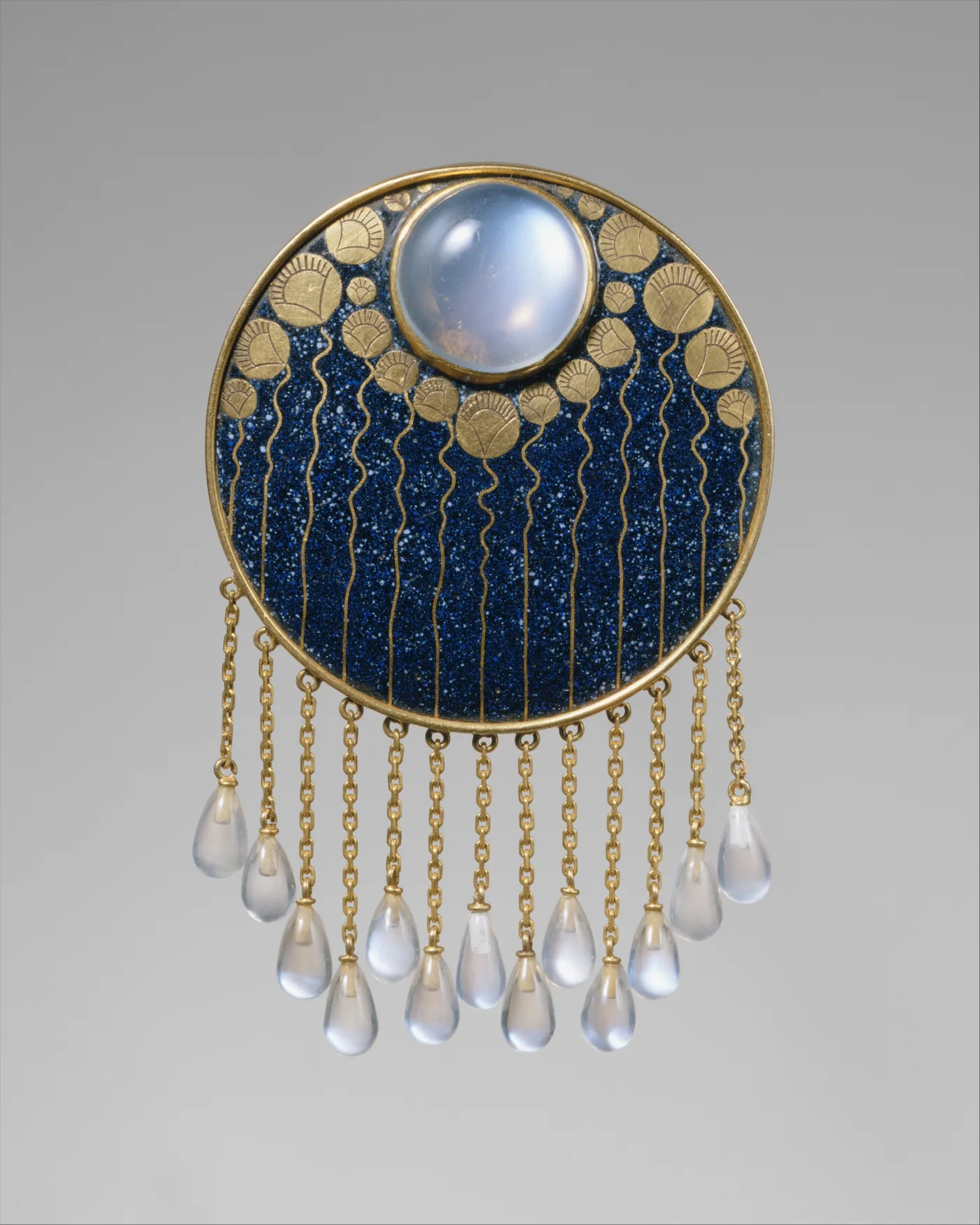
Additional materials add character and identification clues. Enamel work includes champlevé technique with recessed areas filled with enamel, plique-à-jour creating stained glass effect, guilloche enamel over engine-turned patterns, and painted enamel miniatures depicting scenes or portraits. Organic materials encompass carved ivory for cameos and figural elements, tortoiseshell with distinctive mottled appearance, horn material used in Art Nouveau pieces, and coral branches or carved forms. Hair work represents an important Victorian specialty with woven patterns creating intricate designs, coiled arrangements under glass or crystal, and memorial pieces incorporating deceased's hair.
Construction Quality Indicators
Manufacturing methods reveal age and quality level. Handmade characteristics include visible tool marks and slight irregularities, hand-cut and individually set stones, hand-engraved details and textures, and variations in pattern repeats. Machine-made indicators show uniform, perfectly regular patterns, stamped or die-struck components, identical spacing and measurements, and seamless mass-production elements. High-quality pieces regardless of period demonstrate secure stone settings with properly formed prongs or bezels, substantial hinge and pin mechanisms, finished backs with attention to detail, and appropriate weight for the metal type and size.
Hallmarks, Maker Marks, and Signatures
Hallmarks and maker marks provide definitive dating and attribution information when present, though many antique brooches lack formal marking due to size constraints or manufacturing practices.
British Hallmarking System
British brooches may bear comprehensive hallmarking including maker's mark identifying the manufacturing jeweler, standard mark indicating metal purity like lion passant for sterling silver, assay office mark from Birmingham, London, Chester, Edinburgh, or Sheffield, and date letter changing annually in a rotation system. The presence and position of hallmarks evolved over time, with full hallmarking becoming more standardized after the 1854 Plate Act. Small brooches under certain weight thresholds were exempt from hallmarking, explaining the absence of marks on many Victorian pieces.
American Marking Practices
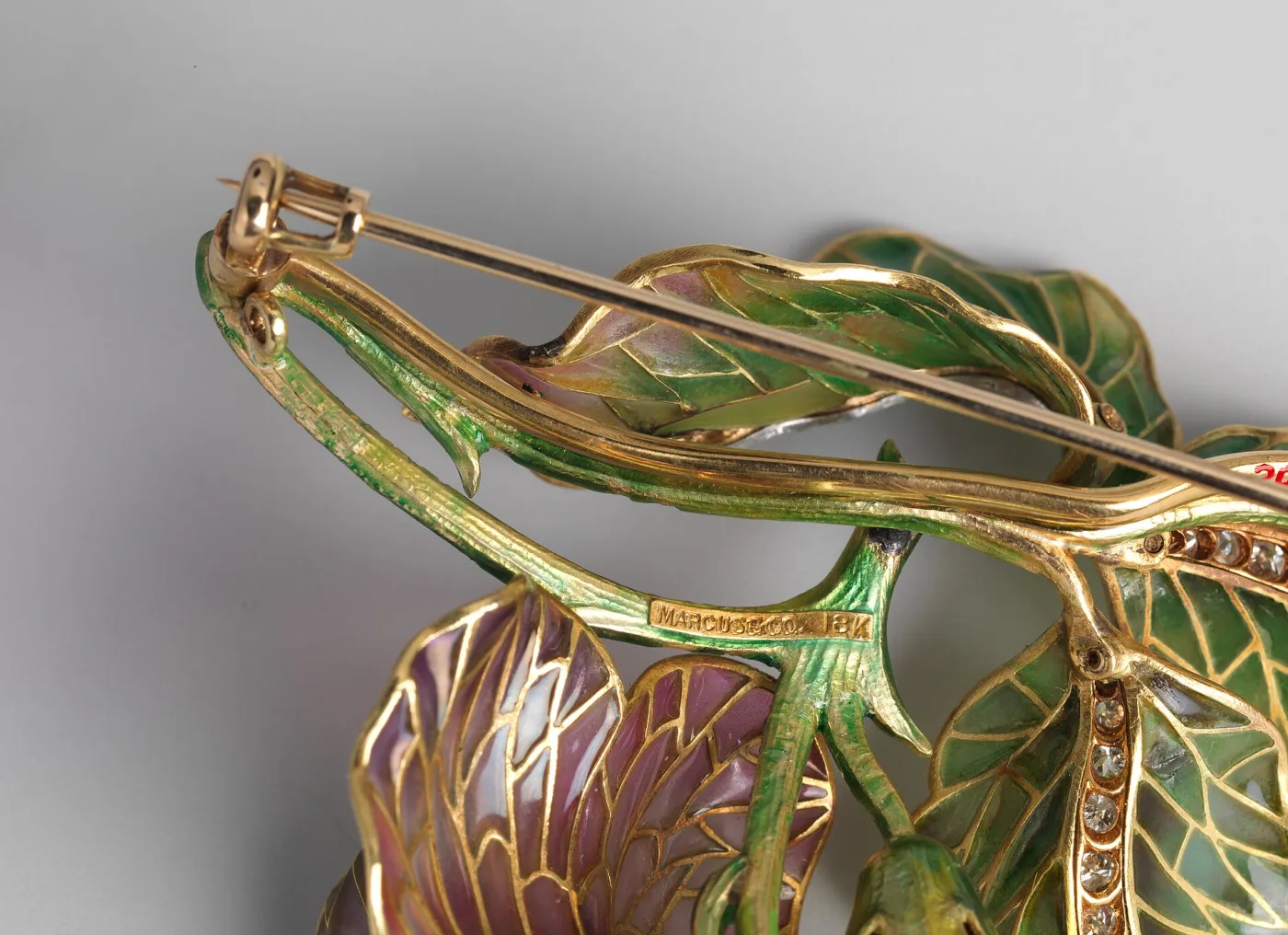
American jewelry marking developed differently from European systems. Early American pieces often lack marks entirely before 1906 when trademark registration became common, company names or initials like Tiffany & Co., Krementz, or Whiteside & Blank appear on quality pieces, karat stamps indicating gold purity became standard in the 20th century, and patent numbers on innovative pin mechanisms or designs. American costume jewelry makers like Trifari, Coro, and Eisenberg prominently signed their pieces, making attribution straightforward.
European Continental Marks
European countries developed unique marking systems. French marks include eagle head for 18K gold, dog head for gold import pieces, and poinçons de maître identifying specific makers. German marks feature crown and crescent moon for silver, numeric purity marks, and city marks from Pforzheim and other centers. Austrian, Italian, and other European nations had distinct systems requiring specialized reference materials for accurate interpretation.
Designer Signatures
High-end designer pieces carry significant value premiums. Art Nouveau masters like Lalique signed pieces with etched or cast signatures often in script form. Cartier, Tiffany, and other luxury houses used consistent marking systems across their production. Studio jewelers and Arts and Crafts makers often signed their work prominently as a point of pride. Even when unsigned, certain designers can be attributed through distinctive style elements, construction methods, and provenance documentation.
Interpreting Partial or Worn Marks
Many antique brooches have partial or worn marks requiring interpretation. Using magnification ranging from 10x loupe to microscope reveals faint marks, examining multiple angles and lighting conditions shows stamped impressions, comparing to known mark references in specialist books and databases, and consulting with gemological laboratories or appraisers for expert analysis. Even partial marks can narrow dating and origin significantly, while the absence of expected marks might indicate period practices or restoration.
Gemstones and Setting Techniques
Gemstone selection, cutting styles, and setting methods changed dramatically across periods, providing crucial dating evidence and quality indicators.
Diamond Cutting Styles
Diamond cutting evolved significantly impacting brooch dating. Rose cuts with flat backs and triangular facets forming a dome appeared in Georgian and early Victorian jewelry, producing subtle brilliance and requiring less rough material. Old mine cuts bridging rose and modern brilliant cuts featured cushion-shaped outlines, small tables, high crowns, large culets, and hand-cut faceting with visible irregularities. Old European cuts developed in the late Victorian and Edwardian periods showing rounder outlines than mine cuts, improved proportions for brilliance, open culets smaller than mine cuts, and transition toward modern cutting. Modern brilliant cuts with precision proportions rarely appear in genuine antique brooches before 1920s, making their presence a warning sign for later pieces or replacements.
Colored Stone Cuts
Colored gemstone fashioning followed different patterns. Cabochon cuts with smooth polished domes suited opaque and translucent materials like garnets, opals, and moonstones. Step cuts with parallel rectangular facets appeared in emeralds and other colored stones. Mixed cuts combining brilliant crowns with step-cut pavilions optimized color and brilliance. Victorian jewelers favored calibré cuts during transition to Art Deco for precise geometric patterns. Natural uneven cutting in Georgian and early Victorian pieces shows hand-fashioning before mechanization, while later periods demonstrate increased precision and uniformity.
Setting Styles and Techniques
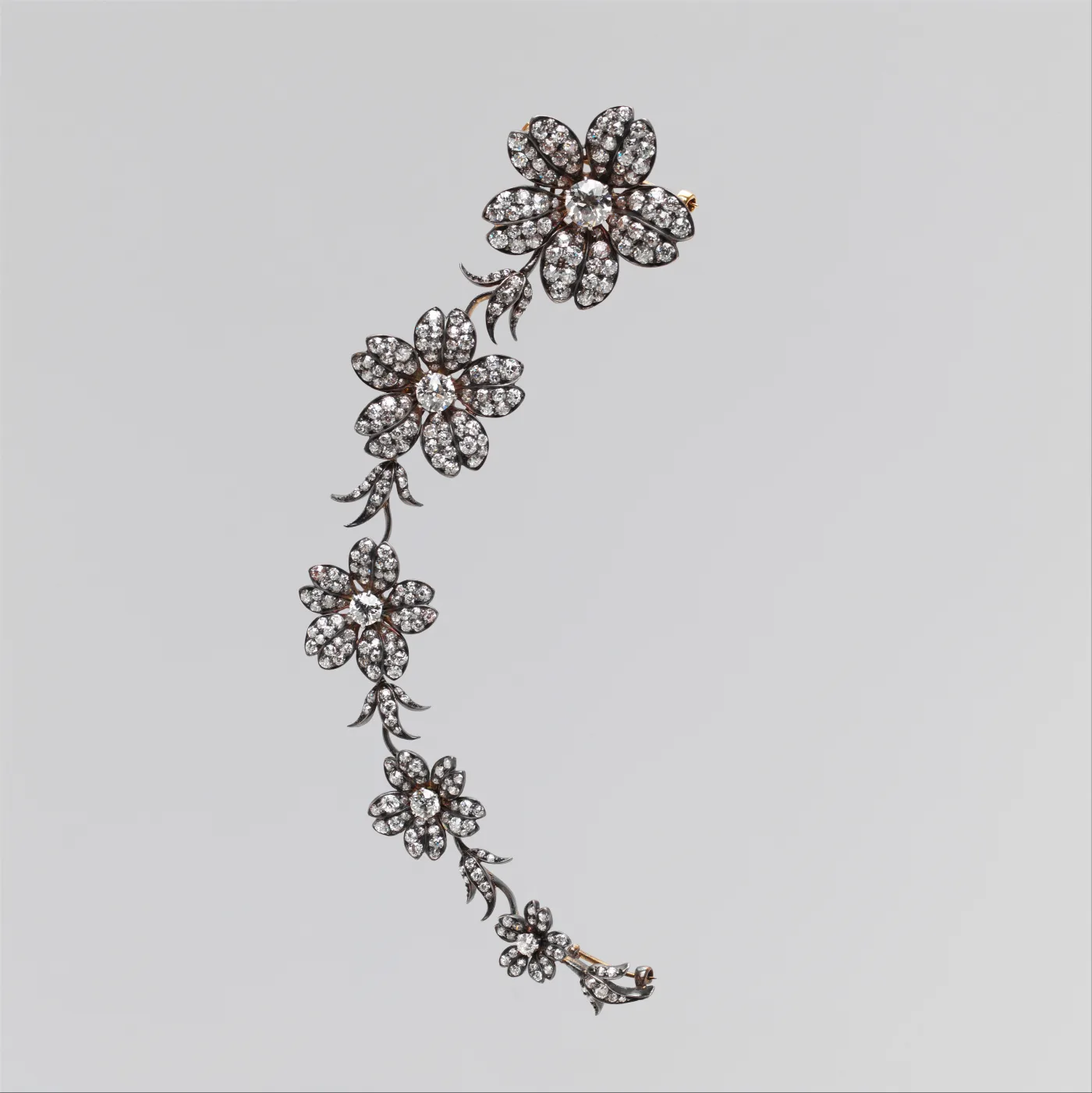
How gemstones attach to metal reveals period and quality. Closed-back settings standard in Georgian jewelry feature opaque metal backings, foiled backs to enhance stone color and brilliance, and limited light transmission reducing sparkle by modern standards. Open-back settings allowing light through stones appeared increasingly in Victorian period, maximizing diamond brilliance, requiring more secure prong or bezel work, and indicating later production generally after 1850s. Specialized settings include gypsy or flush settings with stones set level with metal surface, coronet settings with pointed prongs resembling crowns, illusion settings making small stones appear larger, and pavé settings with tiny stones set closely together.
Gemstone Treatments and Enhancements
Understanding historical treatments helps authentication. Period-appropriate enhancements include foiling for color enhancement in closed-back Georgian and early Victorian jewelry, doublets and triplets combining layers of different materials, heat treatment of gemstones occurring for centuries, and natural patina and aging in materials like turquoise and coral. Suspect modern treatments that indicate later alteration or reproduction include synthetic stones unavailable in the claimed period, modern fracture filling or clarity enhancement, evidence of laser drilling in diamonds, and treatments inconsistent with period practices.
Simulated and Imitation Stones
Historical jewelry included various stone simulants. Period-appropriate imitations encompass paste or glass stones used extensively in Georgian and Victorian jewelry, doublets with thin gemstone slices over colored glass backing, garnet-topped doublets popular in Victorian period, and marcasite cut steel substituting for diamonds. These materials were used honestly in their period and can represent legitimate antique pieces. Modern synthetics and simulants include cubic zirconia post-1976, modern glass with perfect clarity and bubbles, plastic stones in supposed Victorian pieces, and synthetic gemstones with properties inconsistent with natural period stones.
Victorian Brooches: Early, Mid, and Late Period
The Victorian era represents the most prolific period of brooch production, with distinct sub-periods each having recognizable characteristics reflecting Queen Victoria's personal tastes and societal changes.
Early Victorian Romantic Period (1837-1860)
Early Victorian brooches reflected romanticism and sentimentality. Characteristic features include naturalistic floral motifs with roses, forget-me-nots, and pansies, acrostic jewelry spelling words with gemstone initials like REGARD or DEAREST, snake motifs symbolizing eternal love after Queen Victoria's engagement ring, lover's eye miniatures showing single painted eyes, and lockets and compartments for hair or photographs. Materials favored during this period include colored gemstones such as garnets, amethysts, turquoise, and coral, yellow gold in 15K and 18K, seed pearls for delicate accents, and enamel work in various colors. Construction shows hand-fabrication with individual attention, closed-back settings for gemstones, and romantic inscriptions and dedications.
Mid-Victorian Grand Period (1860-1880)
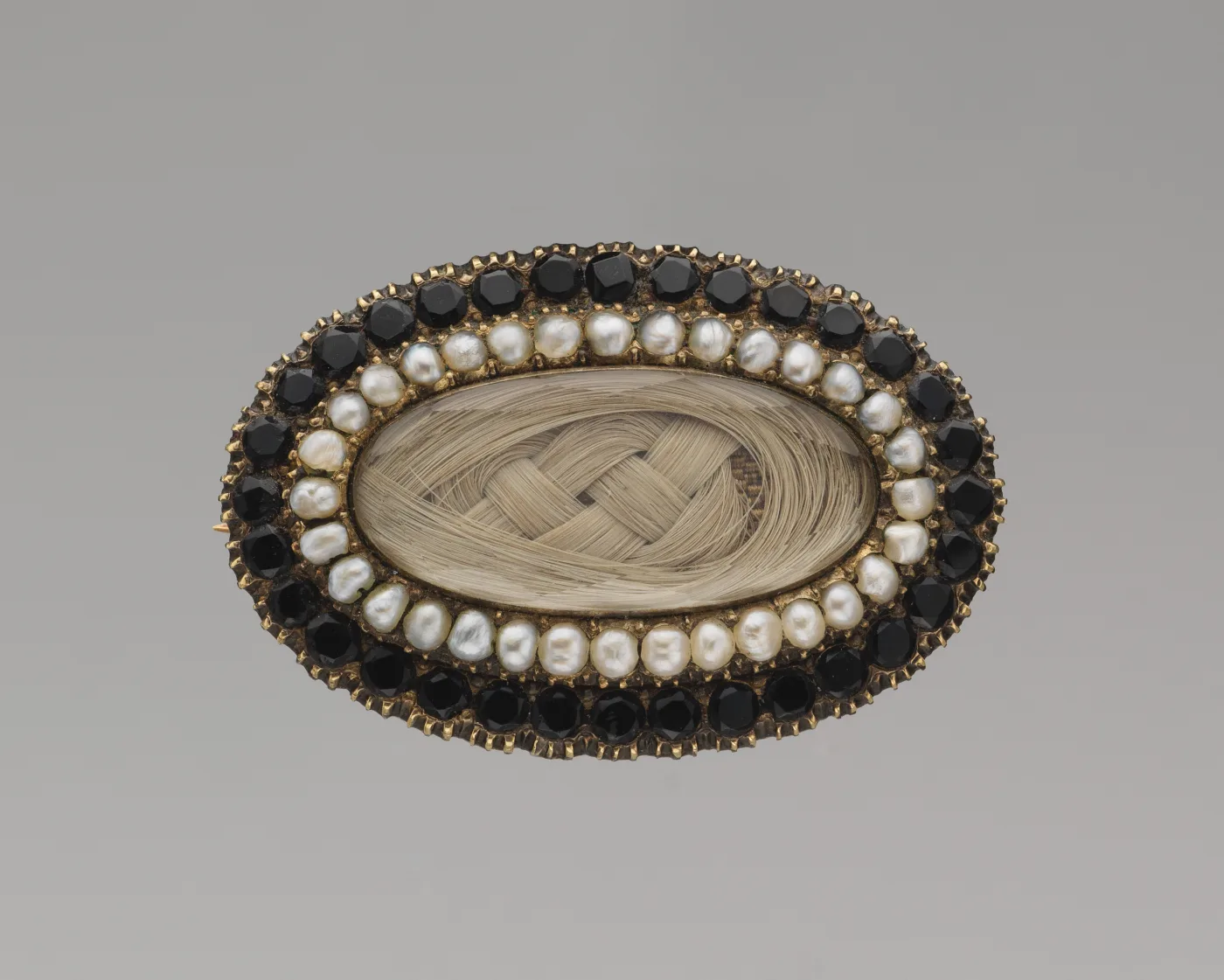
The mid-Victorian period saw dramatic change following Prince Albert's death in 1861, with mourning jewelry becoming predominant. Characteristic mourning pieces feature jet from Whitby in Yorkshire as primary material, black onyx and black enamel alternatives, memorial inscriptions with "In Memory Of" and dates, hair work incorporating the deceased's hair, and symbolic motifs including weeping willows, urns, crosses, and anchors. Simultaneously, the archaeological revival inspired bold Etruscan, Egyptian, and Renaissance-influenced designs, granulation and wirework techniques, substantial scale and sculptural quality, and discovery-inspired motifs from excavations at Pompeii and Troy. This period produced some of the largest and most dramatic Victorian brooches.
Late Victorian Aesthetic Period (1880-1901)
Late Victorian design moved toward lighter, more delicate aesthetics. Characteristics include star and crescent moon motifs reflecting celestial themes, bird and insect forms especially swallows and butterflies, increased diamond usage as sources expanded, transition toward Art Nouveau naturalism, and Japanese-influenced asymmetry and nature themes. Technical developments included improved diamond cutting techniques, platinum experimentation in high-end pieces, openwork and piercing for delicacy, and standardized machine production alongside handcraft. This period bridges Victorian sentimentality and Art Nouveau innovation, producing transitional pieces with characteristics of both movements.
Victorian Bar Brooches and Practical Pins
Functional brooches served practical purposes beyond decoration. Name brooches spelling out names in wire or individual letters gained popularity, stock pins securing neckties and cravats, safety pins including the Tara brooch inspired Celtic designs, and hat pins with decorative terminals though technically distinct from brooches. These practical pieces often received less elaborate decoration than purely ornamental brooches but showcased skilled metalwork and compact design efficiency.
Victorian Cameo Brooches
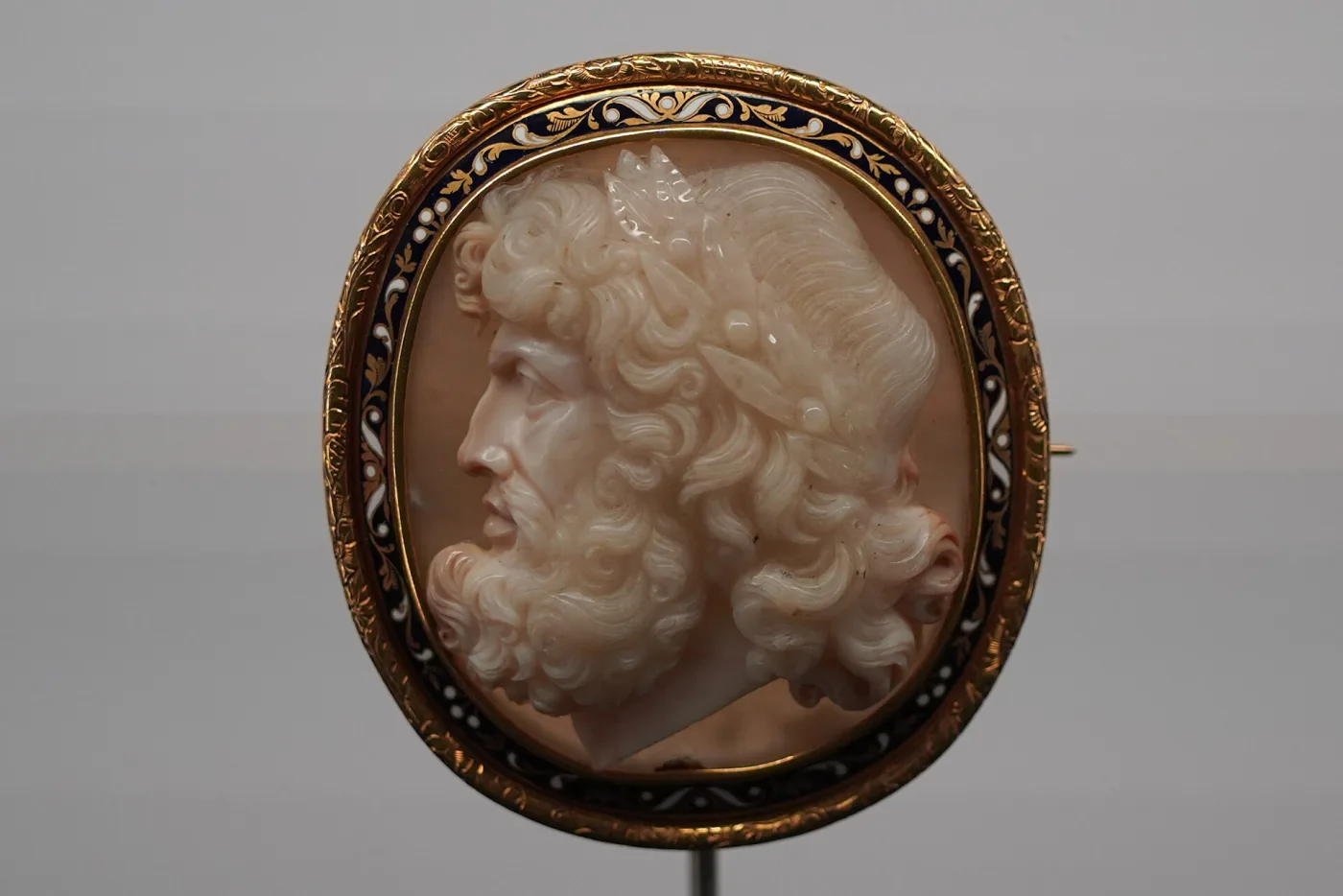
Cameo brooches represented a major Victorian category deserving special attention. Shell cameos carved from helmet shells or queen conch feature classical profiles being most common, mythological scenes, and affordability compared to hardstone alternatives. Hardstone cameos in agate, onyx, or sardonyx command premium value, showcase exceptional carving skill, and demonstrate fine detail possible in hard materials. Lava cameos from volcanic stone near Pompeii served as Italian tourist souvenirs and feature soft material allowing detailed carving. Quality assessment depends on carving depth and detail, frame craftsmanship and ornamentation, condition of carved material, and subject matter with mythology valued highly.

Art Nouveau Brooches and Nature Motifs
Art Nouveau revolutionized jewelry design between 1890 and 1910, elevating artistic vision over material value and introducing naturalistic forms that broke from geometric Victorian traditions.
Defining Art Nouveau Characteristics
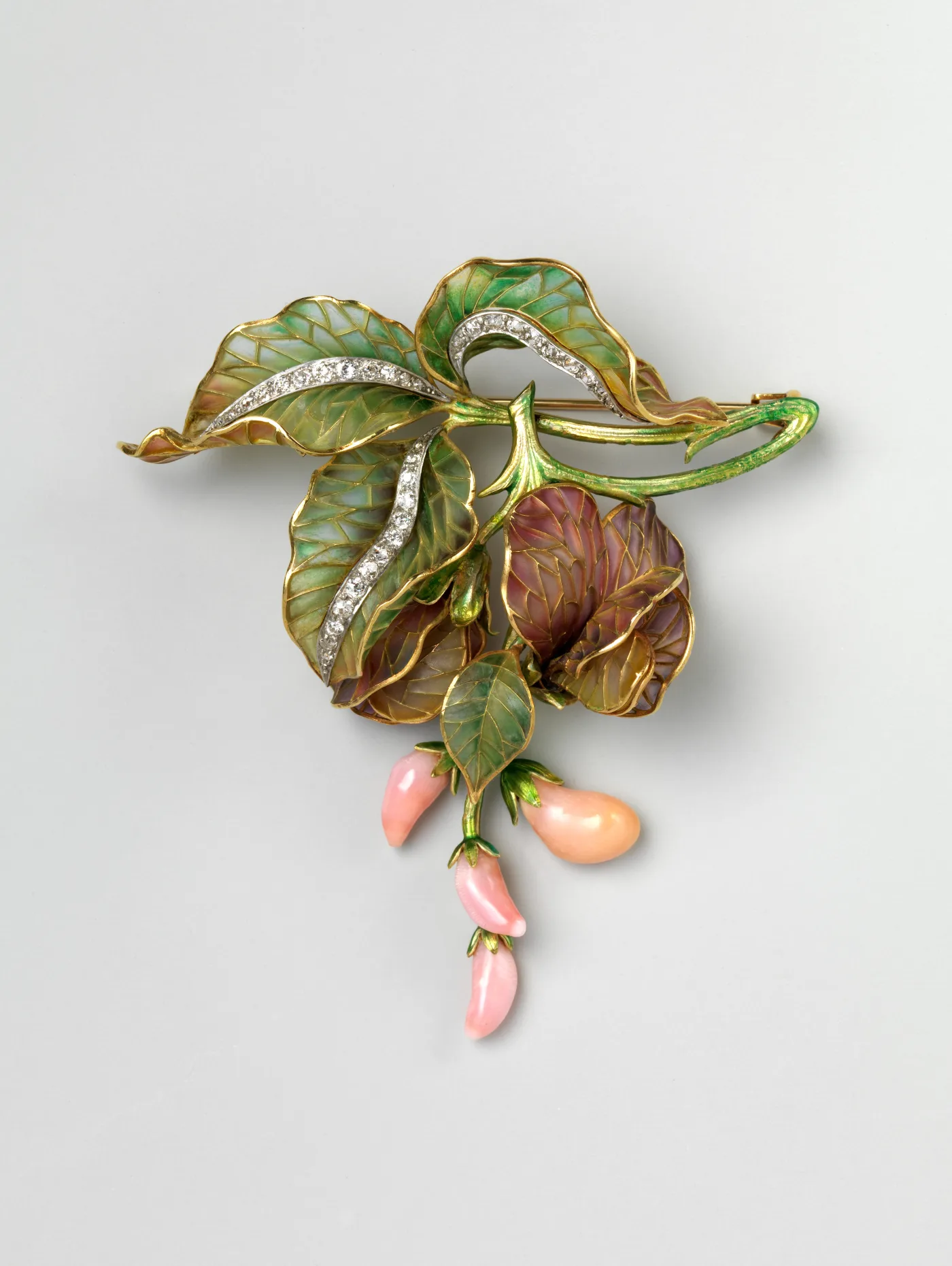
Art Nouveau brooches showcase immediately recognizable features including flowing asymmetrical compositions rejecting bilateral symmetry, whiplash curves creating dynamic movement, female figures with flowing hair and draped garments, nature motifs featuring flowers, insects, and animals, and innovative materials like horn, glass, and enamel valued for artistic effect. The style emphasized craft artistry and original design over gemstone value, making Art Nouveau pieces valuable for their artistic merit rather than intrinsic material worth.
Master Designers and Makers
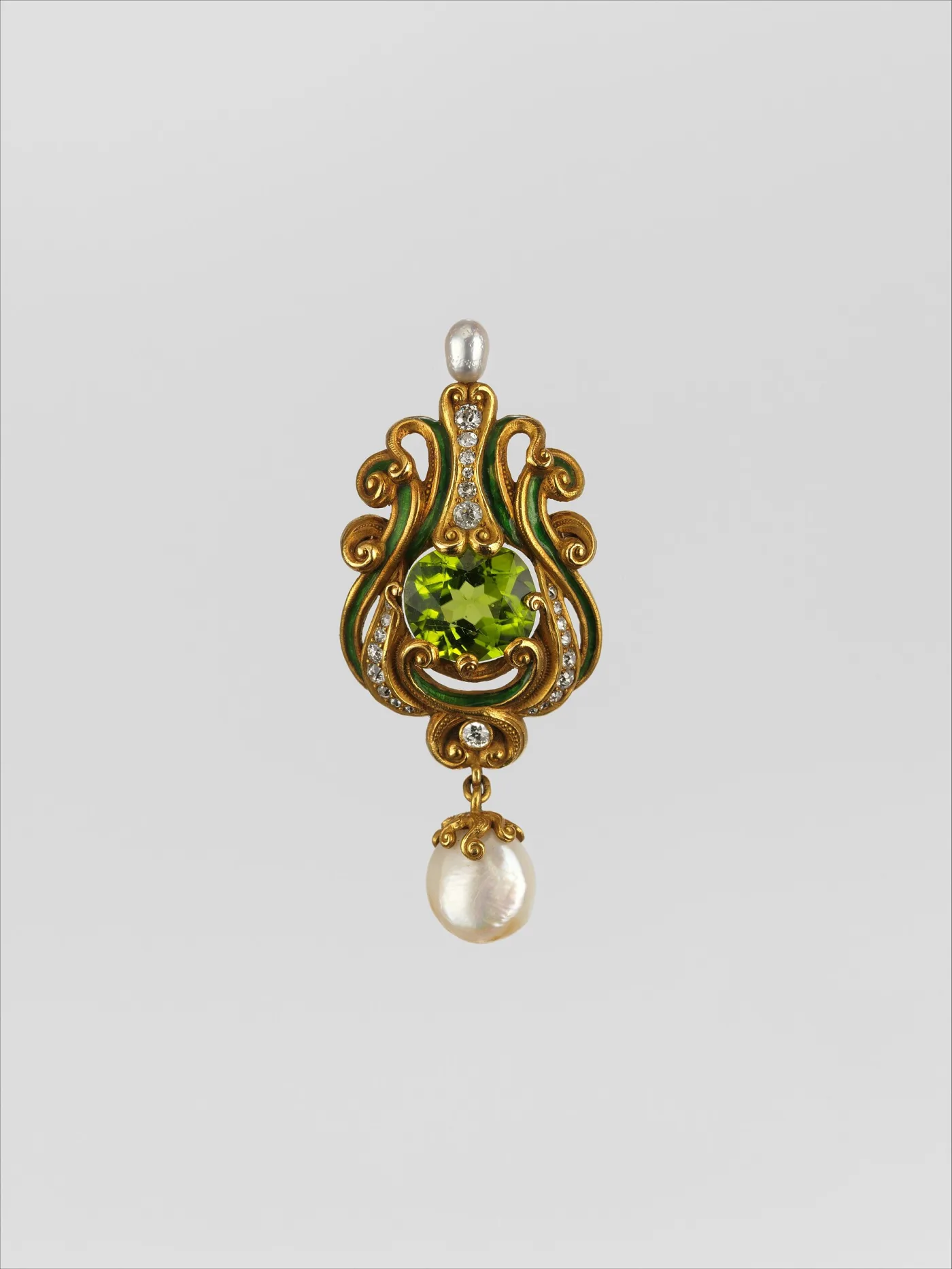
René Lalique stands as the most celebrated Art Nouveau jeweler, creating pieces that are museum-quality art featuring enamel work of exceptional quality, incorporation of glass elements, fantastical and mythological themes, and female figures and faces in various states. Signed Lalique brooches command premium prices reaching six and seven figures for exceptional examples. Other important makers include Georges Fouquet with sculptural forms and enamel work, Eugène Feuillâtre specializing in plique-à-jour enamel, Philippe Wolfers from Belgium with naturalistic designs, and numerous talented artist-jewelers elevating the craft.
Common Art Nouveau Motifs
Insect forms dominated Art Nouveau design with dragonflies featuring enameled wings and jeweled bodies as most iconic motif, butterflies in various poses and configurations, beetles and scarabs reflecting Egyptian influences, and bees and wasps showing naturalistic detail. Floral elements included orchids and exotic flowers, water lilies and aquatic plants, wisteria and hanging blossoms, and intertwined stems and vines. Fantasy and mythology featured nymphs and sprites, mermaids and water spirits, medieval and fairy tale themes, and symbolic and allegorical imagery.
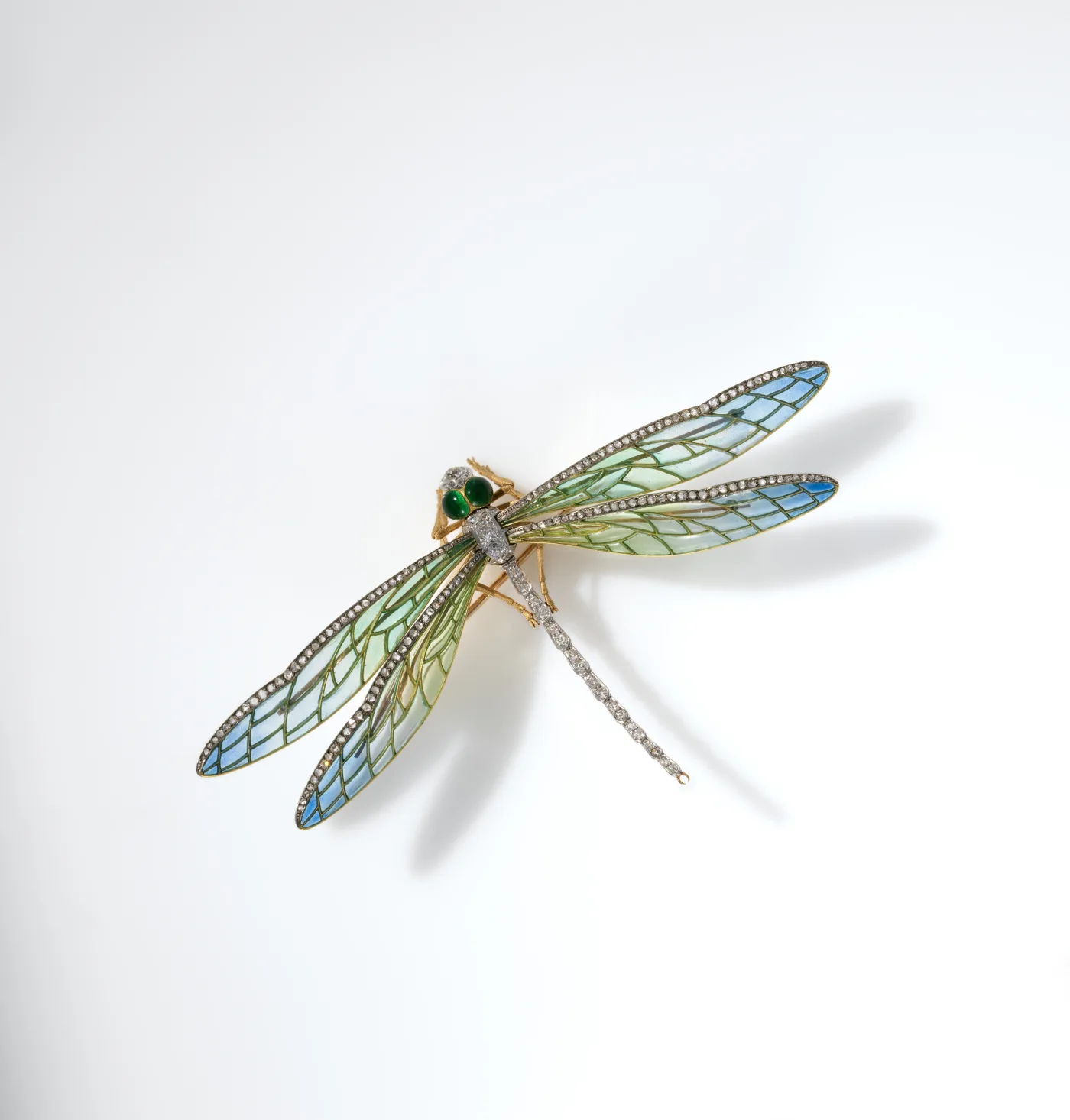
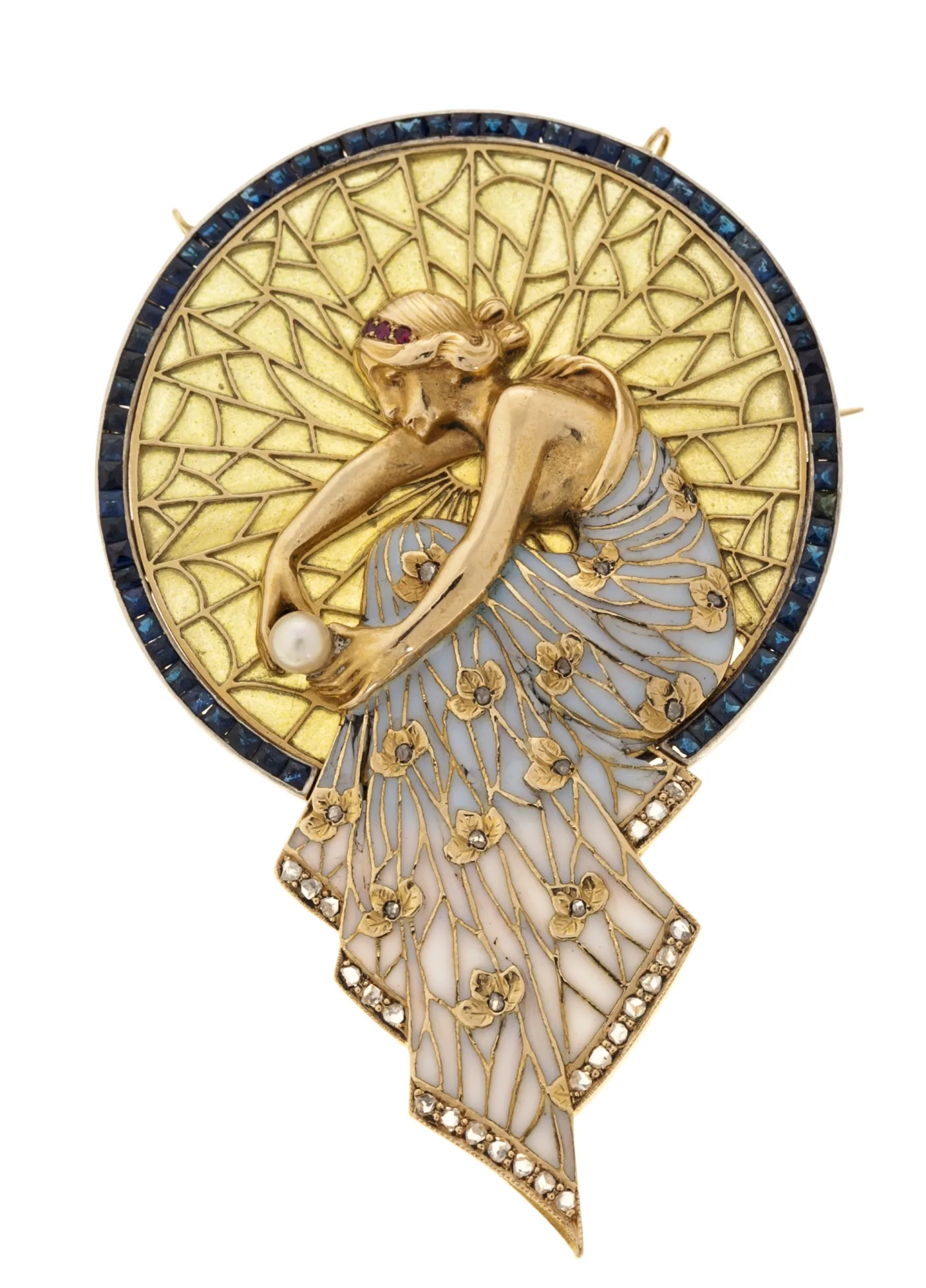
The two dominant Art Nouveau subjects, executed by the same technique. In both, the enamel is divided by gold wires into small irregular cells with nothing behind them, so the panels read as leaded glass. That construction is the single most reliable authentication test in this style: hold the piece up to a window and period plique-à-jour transmits light. Later revival pieces from the 1960s and 70s usually imitate the look with opaque enamel on a solid backplate, which stays dark.
Materials and Techniques
Art Nouveau exploited materials for artistic effect rather than value. Enamel work reached new heights with plique-à-jour translucent enamel creating stained glass effects, champlevé enamel in recessed areas, painted miniature enamel portraits and scenes, and gradient and shaded enamel work. Alternative materials included carved horn used for bodies and background elements, molded glass often opalescent or colored, baroque pearls chosen for irregular organic forms, and moonstones and opals for mystical quality. Metalwork showcased different patinas and surface treatments, hand-chasing and detailed engraving, combination of gold and silver elements, and sculptural three-dimensional forms.
Identification and Authentication
Genuine Art Nouveau brooches show exceptional hand craftsmanship throughout, sculptural three-dimensional qualities, attention to reverse and back finishing, appropriate period construction methods including hand-fabrication evidence, naturalistic rather than mechanical forms, and asymmetrical balanced compositions. Reproductions often lack the artistic sophistication and craftsmanship, show modern construction methods like laser welding, feature overly perfect symmetry, include modern safety catches and findings, and use materials inappropriate for the period. The Art Nouveau market includes many later revival pieces from the 1960s-1970s requiring careful examination to distinguish from period originals.
Edwardian Era: Platinum and Delicacy
The Edwardian period from 1901 to 1915 represented jewelry's most delicate and refined era, characterized by platinum's introduction enabling unprecedented openwork and intricate designs.
Platinum Revolution
Platinum transformed jewelry design with its unique properties. The strong yet malleable metal allowed extremely fine wire and delicate settings that would be impossible in gold or silver. Platinum's white color complemented diamonds and pearls perfectly, creating the signature white-on-white Edwardian aesthetic. Its durability supported elaborate openwork filigree and lace-like patterns. Early Edwardian pieces often combine platinum tops with gold backs to reduce cost and weight. By the period's end, platinum reigned supreme for fine jewelry, commanding premium prices that continue today.
Characteristic Design Elements
Edwardian brooches showcase instantly recognizable motifs. Garland style dominated featuring swags, festoons, and ribbon bows, laurel wreaths and classical inspiration, and delicate floral garlands. Openwork filigree created lace-like patterns with millegraining adding textured edges, pierced platinum forming negative space, and geometric patterns within flowing forms. Knife-edge wire formed thin platinum ribbons, creating dimensional effects and supporting diamonds along edges. The overall effect emphasized lightness, femininity, and aristocratic refinement reflecting the belle époque era's elegance.
Gemstones and Settings
Edwardian gem selection followed strict conventions. Diamonds dominated as the premier gemstone appearing in old European cuts transitioning to more modern proportions, rose cuts for accent and paved areas, and single cuts for small accent stones. Natural pearls remained essential as the only available type before cultured pearls, appearing in drops, rounds, and baroque forms. Colored gemstones played secondary roles with sapphires, rubies, and emeralds in fine pieces, demantoid garnets particularly popular, and semi-precious stones in less expensive examples. Settings maximized stone visibility through open-back construction, fine platinum prongs barely visible, collet settings for smaller stones, and bezel settings for colored stones and pearls.
Forms and Styles
Edwardian brooches appeared in specific forms. Bar brooches served practical and decorative purposes, securing high collars and blouse fronts with designs featuring repeating patterns, gemstones in linear arrangements, and lengths ranging from 2 to 4 inches. Circle brooches and wreaths continued Victorian popularity with platinum and diamond execution, open centers sometimes containing suspended elements, and laurel leaf patterns. Bow brooches achieved peak refinement with flowing ribbons in platinum and diamonds, moveable elements creating dimension, and combination with garland motifs. Conversion pieces designed for multiple uses could transform from brooch to pendant or hair ornament via removable pin stems and versatile design elements.
Quality Assessment
Edwardian quality varies significantly requiring careful evaluation. Finest pieces show all-platinum construction, extensive hand fabrication despite some machine elements, natural pearls rather than cultured, old-cut diamonds with period appropriate cutting, and comprehensive hallmarking when British. Lesser examples feature platinum tops with gold or silver backs, cultured pearls in later Edwardian pieces, use of diamond substitutes like white sapphire or paste, and simplified construction with stamped elements. Even modest Edwardian pieces showcase superior design and craftsmanship compared to later mass-production jewelry.
Art Deco Brooches: Geometric Modernism
Art Deco jewelry from the 1920s through 1930s represents modernism's impact on decorative arts, featuring geometric forms, bold contrasts, and streamlined aesthetics reflecting the machine age and jazz era.
Geometric Design Language
Art Deco brooches speak in geometric vocabulary with angular forms using triangles, trapezoids, and chevrons, straight lines and sharp corners replacing curves, symmetrical balanced compositions, and stepped patterns echoing skyscraper architecture. Repeating motifs created rhythm through pattern repetition, banding and linear elements, and precise spacing and measurements. The overall effect emphasized modernity, sophistication, and the machine aesthetic celebrating technological progress and streamlined efficiency.
Color and Material Contrasts
Art Deco exploited dramatic material contrasts. The classic combination paired white diamonds and platinum or white gold with black onyx creating stark monochromatic schemes. Color accents appeared through coral providing bright orange-red, jade especially jadeite in vivid green, lapis lazuli in deep blue, and ruby, sapphire, and emerald in saturated hues. Mixed materials combined precious and semi-precious elements, metal with enamel or lacquer, and transparent stones with opaque materials. These contrasts enhanced the geometric patterns while demonstrating sophisticated color theory and design principles.
Cutting and Setting Innovations
Art Deco demanded precision in stone cutting and setting. Calibré-cut stones were cut to exact geometric specifications fitting precisely into designed patterns in baguettes, trapezoids, triangles, and other shapes. Step cuts with parallel facet rows suited rectilinear designs appearing in emerald cuts, Asscher cuts, and baguettes. Channel settings held calibré stones in continuous rows with metal channels gripping stone sides and minimal metal visibility. Invisible settings hid metal structure appearing later in the period as technical achievement creating seamless stone surfaces.
Cultural Influences
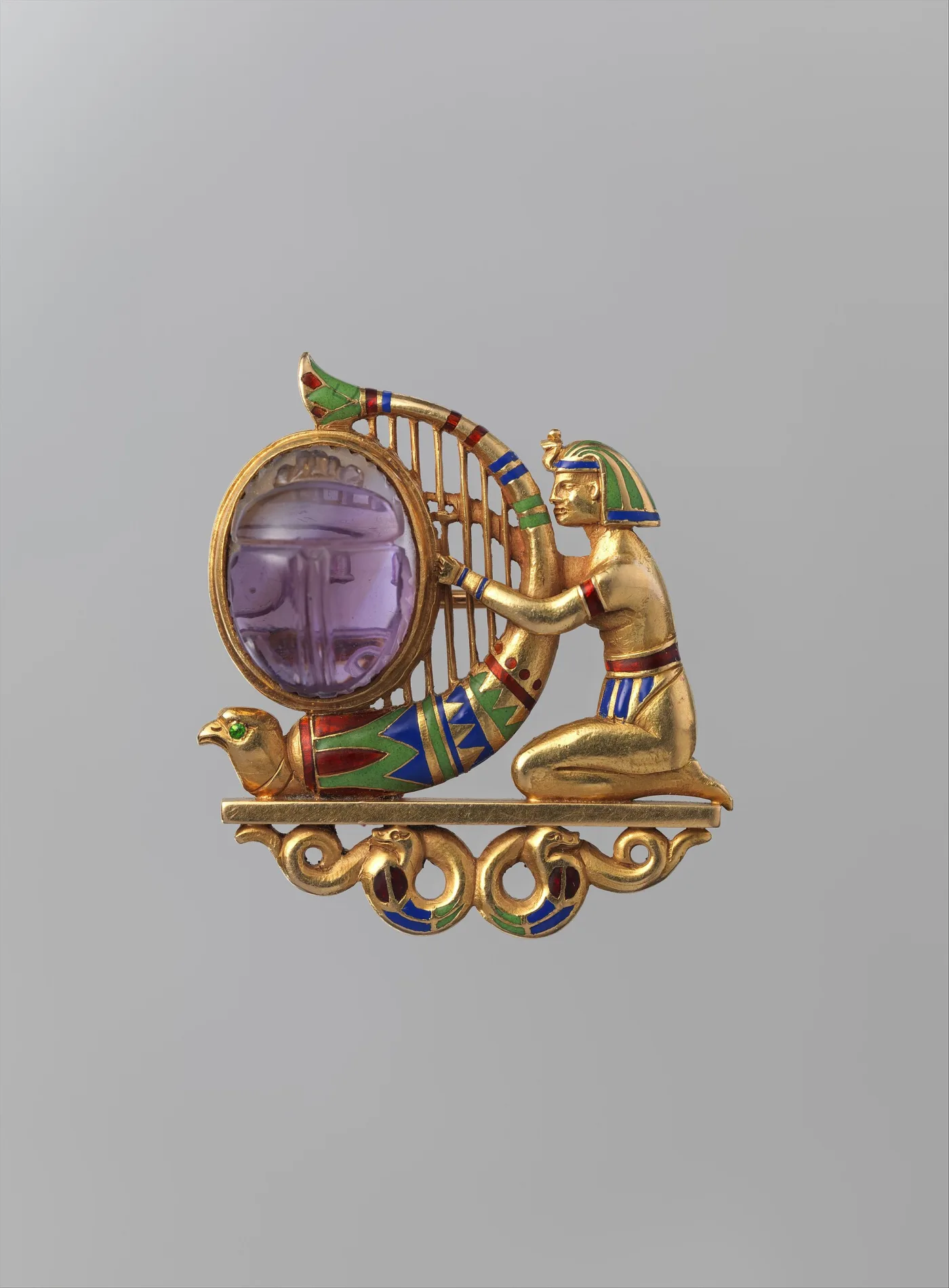
Art Deco absorbed diverse cultural influences. Egyptian revival followed Tutankhamun's tomb discovery in 1922 with scarabs and cartouche forms, pyramid and obelisk shapes, lotus and papyrus motifs, and hieroglyphic-inspired patterns. Asian influences appeared in Chinese cloud and fret patterns, Japanese design principles, carved jade and coral, and pagoda and lantern forms. Tribal and African art inspired abstract geometric patterns, bold simplified forms, and exotic material combinations. These influences merged into distinctly modern Art Deco aesthetic rather than literal copying.
Double Clip Brooches
A distinctive Art Deco innovation, double clip brooches consist of two separate dress clips that could be worn individually or joined via a frame to form a single large brooch. This versatility appealed to practical modern women. Each clip features a spring-loaded mechanism gripping fabric, symmetrical matched designs when joined, and bold geometric or figural forms. Major makers including Cartier, Van Cleef & Arpels, and Trifari produced exceptional examples. The mechanism's complexity and dual functionality make these pieces particularly desirable to collectors.
Period Dating Within Art Deco
Early Art Deco from 1920-1925 shows transition from Edwardian with some filigree elements, initial geometric experimentation, and continued platinum dominance. Peak Art Deco from 1925-1930 demonstrates fully developed geometric style, bold color contrasts, and innovative cutting and setting. Late Art Deco from 1930-1935 introduces streamline moderne influence, larger scale and more three-dimensional forms, and increased use of yellow gold. These distinctions help narrow dating within the broader Art Deco movement.
Specialty Brooches: Mourning, Cameo, and Scottish
Certain brooch categories deserve dedicated attention due to their distinctive characteristics, cultural significance, and specialized collecting markets.
Mourning Brooches
Victorian mourning jewelry follows specific conventions. Materials identify mourning pieces immediately through jet from Whitby being primary material for true mourning jewelry appearing lightweight with warm touch, sometimes showing deterioration or cracking with age. Jet substitutes include French jet, actually black glass heavier than genuine jet, vulcanite hardened rubber lighter than glass, bog oak from preserved wood, and gutta-percha molded tree sap resembling hard rubber. Forms include memorial brooches with compartments holding hair, photograph frames showing deceased images, inscribed plaques with names and dates, and symbolic imagery of willows, urns, and crosses.
Hair Work Brooches
Hair work represents a significant Victorian specialty requiring expert identification. Techniques include palette work where hair is coiled and shaped into patterns, table work where hair is woven on a special table creating intricate designs, and sculptural work where hair forms three-dimensional elements. These pieces typically feature glass or crystal covers protecting hair, gold frames and mounts, memorial inscriptions, and symbolic designs including hearts, flowers, and crosses. Genuine period hair work shows natural aging, secure original mounting, and appropriate period metalwork. Modern collectors prize these pieces for historical significance despite potential personal discomfort with the medium.
Scottish Brooches
Scottish jewelry developed distinctive regional characteristics. Traditional forms include kilt pins securing pleated kilts with long pin and decorative terminal, Luckenbooth brooches featuring crowned heart designs symbolizing love, plaid brooches holding tartan scarves, and Tara brooches inspired by ancient Celtic examples. Materials favored Scottish agates including Cairngorm citrine quartz, banded agates, bloodstone, and granite. Citrine quartz appears in large cairngorm stones, smoky quartz, and topaz. Silver predominates over gold in Scottish jewelry with oxidized finishes highlighting detail. Victorian Scottish jewelry served the tourism market following Queen Victoria's Highland enthusiasm while also continuing traditional forms for local use.
Pietra Dura Brooches
Italian pietra dura inlay work creates pictures from precisely cut hardstone pieces. These brooches feature floral compositions being most common with roses, pansies, and mixed bouquets, bird and insect subjects, architectural scenes especially Roman ruins, and geometric patterns in Florentine work. Materials include various jaspers, malachite, lapis lazuli, coral, and numerous other hardstones. Construction involves individual stone pieces cut to exact shapes, fitted into slate or marble backgrounds, and polished flush for smooth surfaces. Victorian tourists purchased these extensively, making them common in antique markets, though finest examples command significant prices.
Micro Mosaic Brooches
Micro mosaic differs from pietra dura through its use of tiny glass tesserae rather than hardstone. Roman workshops specialized in this technique creating images from thousands of minute glass pieces set in black glass or hardstone backgrounds. Common subjects include famous buildings and ruins, doves and classical subjects, floral arrangements, and geometric borders. Quality varies dramatically from tourist pieces with crude work and limited colors to finest examples with extraordinary detail and full color range. Victorian gold frames surround the mosaic plaques often with twisted wire and granulation decoration. These souvenirs represent the Grand Tour tradition and Victorian travel culture.
Mizpah Brooches
Mizpah jewelry carried sentimental significance with biblical verse meaning "The Lord watch between me and thee when we are absent one from another." These pieces feature the word Mizpah prominently displayed, heart forms sometimes in double or divided hearts, engraved or enameled decoration, and gold or silver construction. Popular during the late Victorian and Edwardian periods, they represented tokens of affection during separations. Similar sentiment pieces include love token brooches, sweetheart jewelry, and friendship pins all carrying emotional significance beyond their material value.
Pin Mechanisms and Dating Clues
The pin mechanism securing a brooch provides valuable dating and origin information often overlooked by novice collectors. Manufacturing methods and safety features evolved significantly across periods.
Georgian and Early Victorian Mechanisms
Early pin mechanisms show primitive construction including simple straight pins extending from the back, tube hinges forming rough cylindrical hinges, and hand-forged catches featuring basic C-shaped catches or hooks. Pins attach via solder joints visible under magnification, and metal composition matches the brooch body with high-karat gold or silver. These early mechanisms lack safety catches, relying solely on the C-catch to prevent loss. Pins often appear thick and substantial compared to later refined mechanisms. The presence of a simple pin mechanism supports early dating but alone cannot confirm age due to later replacements.
Mid-Victorian Improvements
Victorian jewelers refined pin mechanisms throughout the period. Innovations included barrel hinges replacing tube hinges with neater appearance, C-catches with stronger springs, hook catches providing additional security, and trombone catches with sliding metal tubes. Safety catches began appearing with simple catches preventing the pin from opening accidentally and patented mechanisms by innovative jewelers. Pin quality improved with thinner, more flexible pins, better tempered metal maintaining spring, and neater integration with brooch design. The presence of safety catches generally indicates post-1860 production though exact dating requires confirming other period characteristics.
Edwardian and Early 20th Century Mechanisms
Early 20th century mechanisms achieved refinement. Characteristics include safety catches as standard features, patented mechanisms with specific designs stamped with patent numbers, joint construction ensuring precise pin alignment, and appropriate metal use including platinum components in finest pieces. Edwardian brooches often feature particularly well-executed mechanisms matching the overall quality and delicacy. The pin itself appears thin and flexible, the hinge integrates seamlessly, and the catch operates smoothly with good spring tension.
Modern Safety Catches
Modern safety catches appearing after 1900 provide security. Types include basic safety catches with hinged covers over the pin point, rollover safety catches with rotating cylinders, figure-eight safety catches twisting to secure, and combination catches integrating safety features into the main catch. The presence of specific patented safety catches can help narrow dating by researching patent dates. This same principle of dating by closure design is central to identifying antique cufflinks, whose patented bullet-back and toggle mechanisms pin pieces to specific decades. However, mechanisms may be replaced or updated, so they confirm a brooch is no later than the mechanism date but not necessarily that old.
Detecting Replaced Mechanisms
Replaced pin mechanisms appear frequently in antique brooches. Warning signs include metal composition not matching the brooch body with yellow gold mechanism on white gold brooch, modern solder or brazing visible as different color or texture, mechanism style inconsistent with period, safety catch appearing too new for claimed age, crude attachment suggesting unprofessional replacement, and visible repair work or filing marks. Replacement mechanisms don't necessarily disqualify a brooch as antique but affect value and authenticity assessment. Professional replacement using period-appropriate parts is acceptable, while crude modern additions decrease value significantly.
Converting Brooches to Pendants
Many antique brooches show evidence of added pendant loops or bails allowing alternative wear. Victorian and Edwardian pieces particularly often feature original pendant conversion capabilities with hinged pendant bails folding flat, removable pin stems, and dual-purpose designs. Later additions appear more obviously with solder joints adding pendant loops, removed pin mechanisms leaving traces, and style inconsistencies. Original conversion capabilities don't reduce value, while later additions may decrease it depending on execution quality and reversibility.
Authentication and Reproduction Detection
The antique brooch market includes numerous reproductions, later revivals, and deliberate fakes requiring careful authentication. Learning to distinguish genuine period pieces from later creations protects collectors and ensures accurate attribution.
Common Red Flags
Several warning signs suggest non-period origin. Construction indicators include modern solder or laser welding visible under magnification, perfectly uniform machine-made elements lacking hand-work character, pristine condition inconsistent with claimed age, and modern findings like safety catches on supposedly Georgian pieces. Material issues encompass modern synthetic gemstones unavailable in the claimed period, platinum in pieces supposedly pre-1900, modern alloys and metal treatments, and plastic or acrylic simulating period materials. Style inconsistencies include motifs anachronistic for the claimed period, proportions and design elements not matching period examples, combination of characteristics from different eras, and perfect symmetry in supposedly handmade Art Nouveau pieces.
Revival Jewelry
Revival jewelry legitimately recreates earlier styles in later periods, differing from fakes in honest representation. Victorian revivals drew inspiration from Georgian, Etruscan, Renaissance, and Egyptian sources creating new pieces in historical styles that were marketed as revival work not ancient originals. Art Nouveau revivals from 1960s-1970s reproduced classic Art Nouveau designs as legitimate jewelry though sometimes misrepresented later as period pieces. Georgian style revivals from Edwardian period created elaborate pieces in earlier style using platinum and modern cuts revealing later origin. These revivals have value in their own right but must be properly attributed to avoid misrepresentation.
Period Characteristics
Genuine period pieces show consistent characteristics. Age indicators include appropriate wear patterns on expected areas, patina development on metals, stone wear on edges and facet junctions, and oxidation in recessed areas. Construction evidence shows hand fabrication marks on supposedly handmade pieces, irregularities consistent with period production, appropriate solder types for the era, and finishing techniques matching period practices. Materials demonstrate appropriate alloys and purity marks, period-correct gemstones and cutting styles, natural stones rather than synthetics before their invention, and appropriate secondary materials for the claimed date. The totality of characteristics must align, as fakers may get some elements correct while missing others.
Testing and Analysis
Professional testing verifies authenticity. Non-destructive testing includes XRF analysis identifying metal composition, gemological examination of stones, microscopic examination of construction details, and UV light revealing some repairs and treatments. Destructive testing when necessary involves acid testing for metal verification, specific gravity testing for gemstones, and spectroscopic analysis. Provenance research examines ownership history, comparison to documented examples, archival research for makers and styles, and expert authentication opinions. While testing cannot always provide absolute certainty, it narrows possibilities and identifies definite misattributions.
Documentation and Certification
Proper documentation supports authenticity claims. Valuable documentation includes original boxes and packaging, purchase receipts and invoices from reputable sources, family history and provenance, maker catalogs showing the model, period photographs showing the piece being worn, appraisal documents from qualified gemologists, and auction house documentation from major houses. Gemological laboratory reports from GIA, AGL, or other respected labs provide stone identification and characteristics. Authentication certificates from jewelry experts familiar with specific periods carry weight based on the expert's reputation. Collectors should maintain documentation carefully and obtain professional certification for significant pieces.
Condition Assessment and Damage Evaluation
Evaluating condition accurately affects value assessment and purchase decisions. Understanding common damage types, their impact on value, and restoration possibilities guides collectors toward sound acquisitions.
Metal Condition Issues
Metal wear appears in various forms. Surface wear includes shallow scratches from normal use, deeper gouges from impacts, worn edges and details from friction, and flattened engraving or patterns. Structural damage encompasses bent pins or catches, broken or missing components, cracked solder joints, and thin areas from excessive polishing. Corrosion and tarnish show oxidation on silver, copper, or base metals, green corrosion deposits from copper, and pitting from aggressive cleaning or environmental exposure. Minor surface wear is acceptable and expected on antique pieces, while structural damage requires professional repair affecting value significantly.
Gemstone Damage
Stone condition requires close examination. Common issues include chips on facet edges or girdles, cracks or fractures internal or surface-reaching, abrasion dulling facets and edges, and missing stones from settings. Specific stone vulnerabilities include emeralds prone to cracking due to inclusions, opals subject to crazing and dehydration, pearls vulnerable to peeling and surface damage, and soft stones like turquoise easily scratched. Minor edge chips may be acceptable depending on position and size, while cracks, large chips, or missing stones significantly affect value. Some damage may be addressed through recutting at the cost of stone size or replacement with period-appropriate stones.
Enamel Condition
Enamel damage is particularly challenging to repair. Issues include chipping with small losses at edges, cracking with hairline fractures, missing sections with exposed metal underneath, and discoloration from age or heat exposure. Enamel work in Art Nouveau pieces adds substantial value, making condition critical. Even minor enamel damage reduces value significantly as proper restoration requires specialized skills approaching the original creation's difficulty. Collectors should carefully examine enamel under magnification noting any damage and adjusting price expectations accordingly. Minor surface wear may be acceptable, but losses and cracks substantially impact value.
Pin Mechanism Condition
Functional mechanisms ensure wearability. Problems include loose hinges from wear, weak catches that don't hold securely, bent or damaged pins, broken safety catches, and replaced components not matching original. A properly functioning mechanism requires a straight pin, secure hinge with no wobble, strong catch holding the pin firmly, smooth operation without forcing, and appropriate spring tension. Mechanism repairs are relatively straightforward for competent jewelers, though replacing with modern parts affects collectibility. Condition issues here are generally less serious than damage to the visible brooch face but still warrant attention and potential price adjustment.
Restoration and Repair Considerations
Restoration decisions balance function and value preservation. Appropriate repairs include pin mechanism restoration for wearability, securing loose stones in their original settings, cleaning to remove surface dirt and tarnish, and stabilization of structural issues preventing further damage. Controversial interventions include replating or refinishing original surfaces, replacing missing stones with modern stones, reconstructing missing elements, and aggressive polishing removing original surface character. Over-restoration reducing original patina and character decreases value particularly for collectors, while necessary repairs enabling use and preventing deterioration are acceptable. Professional restoration using period-appropriate techniques preserves value better than amateur attempts or inappropriate modern methods.
Designer and Signed Brooches
Brooches by identified makers and prestigious houses command premium prices based on reputation, quality, and collectibility. Understanding major names and their characteristics helps identify valuable signed pieces and attribute unsigned examples.
Cartier
Cartier brooches represent the pinnacle of luxury jewelry design across all periods. Edwardian Cartier features garland style platinum and diamond brooches, natural pearl and diamond combinations, and Belle Époque elegance. Art Deco Cartier showcases geometric precision with calibré-cut gemstones, bold color contrasts, Egyptian and Asian influences, and iconic panther motifs introduced later. Cartier signatures appear as engraved marks typically on pin stems or brooch backs, and numbered pieces in company archives. Even unsigned pieces may be attributed through documented design comparisons and distinctive construction methods. Cartier brooches command prices from thousands to hundreds of thousands depending on period, design, and materials.
Tiffany & Co.
American jewelry leader Tiffany & Co. produced exceptional brooches across all periods. Victorian Tiffany includes naturalistic floral designs in colored gemstones and elaborate diamond compositions. Art Nouveau Tiffany features rare and valuable pieces influenced by European trends with American interpretation. Art Deco Tiffany demonstrates geometric designs with exceptional stone quality and sophisticated color combinations. Tiffany marks include "Tiffany & Co." stamped clearly on pieces, sometimes with additional makers' marks, and patent numbers on innovative designs. Tiffany brooches maintain strong value due to brand reputation and consistent quality standards.
René Lalique
Lalique Art Nouveau brooches represent the movement's artistic peak. Characteristics include innovative enamel techniques especially plique-à-jour, glass elements incorporated into designs, natural and mythological themes, female figures and faces prominent, and signature artistic vision over material value. Lalique signatures appear as "LALIQUE" marked clearly, sometimes with additional marks or numbers. Authentic Lalique brooches are rare and valuable, routinely fetching five to seven figures at auction for exceptional examples. Many reproductions exist requiring expert authentication through construction methods, enamel quality, and documented provenance.
Arts and Crafts Makers
Arts and Crafts movement jewelers created distinctive handcrafted brooches. Notable makers include Liberty & Co. with their Celtic-influenced Cymric silver jewelry, handcrafted construction emphasizing hammer marks, and enamel work in soft colors. Charles Horner produced silver and enamel brooches with affordability making them accessible, maker's marks including "CH" in various formats, and Arts and Crafts aesthetic in commercial production. Other important makers include Archibald Knox, Henry Wilson, and numerous studio jewelers. These pieces emphasize handcraft over industrial production, artistic design over gemstone value, and silver over gold as democratic material. Values range widely based on maker, design quality, and condition.
Costume Jewelry Designers
High-quality costume jewelry makers produced collectible brooches. Coco Chanel revolutionized costume jewelry with bold statement pieces mixing real and faux elements and marked "CHANEL" clearly. Miriam Haskell created elaborate brooches with seed beads and faux pearls, Russian-inspired designs, and characteristic unsigned or marked "Miriam Haskell" examples. Eisenberg produced detailed rhinestone brooches with exceptional quality competing with fine jewelry and marked "EISENBERG ORIGINAL" or "EISENBERG ICE." Trifari, Coro, Boucher, and others created collectible costume brooches with strong followings. While lacking precious materials, these pieces are valued for design, quality, and historical significance in fashion jewelry development.
Identifying Unmarked Designer Pieces
Many designer brooches lack signatures requiring attribution through other means. Techniques include comparing to documented signed examples, identifying distinctive construction methods specific to makers, recognizing signature design elements, and researching provenance and ownership history. Reference books showing maker's output and period catalogs displaying original models aid identification. When confident attribution isn't possible, pieces should be described generically by period and style rather than misattributing to prestigious names. Professional appraisers specializing in jewelry can sometimes identify makers through experience with their work.
Value Determination and Market Trends
Antique brooch values vary dramatically based on numerous factors including period, maker, materials, condition, and current market trends. Understanding valuation principles helps collectors make informed decisions and set realistic expectations.
Primary Value Factors
Several key elements determine value. Intrinsic material value includes precious metal weight and purity, gemstone type, quality, and carat weight, natural pearls commanding premiums over cultured, and rare materials like natural jade or coral. Artistic and historical value encompasses aesthetic appeal and design quality, historical significance and period importance, maker attribution and designer signatures, rarity of the specific design or type, and condition and completeness affecting all other factors. Market demand reflects current collecting trends, jewelry fashion influencing wearability, availability of comparable examples, and buyer demographics and preferences. These factors interact in complex ways with artistic merit sometimes outweighing material value in Art Nouveau pieces, while Georgian brooches command premiums regardless of gemstone quality due to rarity.
Period-Specific Value Ranges
Different periods show characteristic value ranges. Georgian brooches from 1714-1837 represent the rarest period with even modest examples starting at $1,000-$2,000, fine examples ranging $5,000-$20,000, and exceptional pieces exceeding $50,000. Victorian brooches from 1837-1901 vary widely with modest examples from $200-$800, quality pieces from $1,000-$5,000, exceptional or unusual pieces from $5,000-$25,000, and mourning jewelry valued from $100-$3,000 depending on material and quality. Edwardian brooches from 1901-1915 include modest pieces from $500-$2,000, quality platinum and diamond pieces from $3,000-$15,000, and exceptional or designer pieces exceeding $25,000. Art Nouveau brooches from 1890-1910 demonstrate the widest value range with modest unsigned pieces from $300-$1,500, quality signed pieces from $2,000-$10,000, and master designer works like Lalique from $25,000 to over $1,000,000. Art Deco brooches from 1920-1935 include costume jewelry examples from $50-$500, quality fine jewelry from $1,000-$8,000, and designer or exceptional pieces from $10,000-$100,000+.
Current Market Trends in 2026
The brooch market shows notable trends. Strong categories include Art Deco geometric designs experiencing renewed interest, Victorian mourning jewelry gaining appreciation, signed designer pieces maintaining premium prices, and versatile designs wearable with modern fashion. Declining categories include heavily ornate Victorian pieces challenging to wear, damaged or incomplete examples, common forms in huge supply, and unsigned costume jewelry except premier makers. Emerging collector interests favor sustainability making antique jewelry eco-friendly choices, unique and unusual pieces over standard forms, historical significance beyond pure aesthetics, and pieces with documented provenance and stories. These trends affect pricing with fashionable categories commanding premiums while unfashionable types languish despite objective quality.
Gemstone Impact on Value
Gemstone quality dramatically affects prices. Diamond brooches vary with old cut diamonds sometimes worth less per carat than modern cuts due to yield loss in recutting, but also valued by collectors preferring original period stones, color and clarity significantly impacting value with colorless stones commanding premiums, and size driving prices exponentially with large diamonds rare in antique brooches. Colored gemstone brooches fluctuate based on ruby, sapphire, and emerald quality and size driving values, natural vs. synthetic requiring gemological verification, treated vs. untreated with treatments reducing value, and colored stone fashion with certain stones like aquamarine or peridot experiencing popularity cycles. Natural pearls in brooches always command premiums over cultured with large matched pearls extremely valuable, baroque pearls valued in Art Nouveau contexts, and condition critical as damaged pearls lose significant value.
Obtaining Professional Appraisals
Professional appraisals serve multiple purposes requiring different approaches. Insurance appraisals establish replacement value typically the highest figure representing retail replacement cost, requiring certified appraisers, needing updates every few years, and documenting all characteristics for identification. Estate appraisals determine fair market value representing what piece would sell for between willing parties, required for estate tax purposes, demanding expertise in jewelry valuation, and sometimes lower than insurance values. Resale appraisals estimate actual selling price accounting for market conditions, typically the lowest figure, varying by sales venue, and helping set realistic expectations. Collectors should use qualified appraisers with relevant credentials like GG (Graduate Gemologist) or ISA (International Society of Appraisers), experience in antique jewelry specifically, no conflict of interest from offering to purchase, and reputation for accuracy and thoroughness.
Collecting Strategies and Investment Potential
Building a meaningful brooch collection requires strategy, focus, and understanding of market dynamics. Different collecting approaches suit various goals, budgets, and interests.
Collecting by Period
Period-focused collecting allows deep expertise development. Victorian specialist collections might focus on mourning jewelry documenting this unique cultural practice, or span all three Victorian sub-periods showing style evolution, or concentrate on specific Victorian motifs like snakes or crescents. Edwardian specialist collections could emphasize platinum and diamond brooches, focus on specific forms like bar brooches, or document garland style development. Art Nouveau collections showcase the artistic movement with major designer pieces as ultimate goals, examples from different makers comparing approaches, and various techniques like enameling or horn work. Art Deco collections might focus on geometric designs in fine jewelry, double clip brooches as specific form, or contrast fine jewelry with quality costume pieces. Period specialization builds valuable expertise while limiting collection scope to manageable focus.
Collecting by Maker or Designer
Maker-focused collections document specific jewelers' output. High-end designer collections feature Cartier pieces showing their evolution, Tiffany brooches spanning decades, or Lalique and other Art Nouveau masters. Arts and Crafts collections showcase Liberty & Co. and other movement makers, Charles Horner's accessible pieces, or studio jewelers' unique visions. Costume jewelry collections specialize in Miriam Haskell elaborate designs, Eisenberg quality rhinestone work, or Coro, Trifari, and other major makers. Designer focus allows understanding individual makers' characteristics while potentially building comprehensive documentation of their work. Investment potential varies with premier makers maintaining strong value while lesser names fluctuate more with broader market trends.
Collecting by Motif or Type
Thematic collections explore specific subjects. Animal motif collections might feature insect brooches from Georgian to Art Deco, bird brooches spanning periods and styles, or panthers and big cats showing motif evolution. Specialty type collections focus on cameo brooches in all materials and periods, mourning jewelry documenting memorial practices, or bar brooches showing this practical form's variations. Symbolic collections explore hearts, crosses, and love symbols, celestial motifs like stars and crescents, or flower specific collections. Thematic focus creates coherent collections with clear narratives while allowing flexibility to acquire pieces across multiple periods and price points.
Investment Considerations
Brooches as investments present opportunities and challenges. Strong investment characteristics include rarity making pieces difficult to replace, exceptional quality standing out in any market, prestigious maker attribution, proven provenance and documentation, wearability maintaining demand, and historical significance beyond pure decoration. Weaker investment characteristics include common forms in huge supply, average quality without distinction, condition issues requiring restoration, unfashionable styles or periods, and lack of documentation or attribution. Investment-minded collectors should focus on the best examples affordable prioritizing quality over quantity, diversify across periods and styles reducing specific trend risk, maintain excellent documentation supporting authenticity and provenance, keep pieces in excellent condition storing properly, and stay informed about market trends and auction results. However, jewelry should be primarily acquired for personal enjoyment rather than pure investment as markets fluctuate unpredictably and transaction costs can be high.
Building a Collection on a Budget
Meaningful collections don't require unlimited funds. Budget strategies include starting with more affordable categories like modest Victorian pieces or costume jewelry, focusing on smaller brooches which typically cost less than large examples, accepting pieces needing minor restoration work if priced accordingly, shopping at estate sales, flea markets, and online venues rather than high-end dealers, developing expertise allowing identification of underpriced treasures, and being patient waiting for right pieces at right prices. Even modest budgets allow assembling interesting collections demonstrating period characteristics and personal taste. Starting collectors should prioritize learning over spending acquiring reference pieces representing different periods while building knowledge for future high-value purchases.
Wearability and Practical Considerations
Collectors wearing their brooches balance preservation and enjoyment. Wearable brooches require secure pin mechanisms preventing loss, reasonable size and weight for comfort, design compatibility with modern wardrobes, and durability withstanding normal wear. Fragile pieces including delicate Edwardian filigree, pieces with vulnerable enamel work, brooches with loose stones or structural issues, and extremely valuable items should be reserved for special occasions or display rather than everyday wear. Insurance considerations include scheduling valuable pieces specifically, updating appraisals regularly, photographing all items for documentation, and understanding coverage limitations. Wearing antique brooches allows enjoying them while honoring their original purpose though proper precautions prevent damage or loss.
Care, Storage, and Preservation
Proper care ensures antique brooches survive for future generations while maintaining their beauty and value. Understanding appropriate handling, cleaning, storage, and conservation practices protects these fragile artifacts.
Cleaning and Maintenance
Appropriate cleaning varies by materials. Metal cleaning for gold pieces involves gentle washing with mild soap and lukewarm water using soft brushes for crevices, careful drying with soft cloth, and avoiding ultrasonic cleaners on pieces with glued elements or fragile stones. Silver requires gentle polishing with proper silver polish, avoiding aggressive scrubbing removing oxidation that enhances detail, and preventing over-polishing that removes original surface. Platinum needs similar care to white gold with less tarnishing concern. Gemstone cleaning depends on stone type with diamonds cleaned with ammonia-water solution or ultrasonic cleaning when securely set, emeralds, opals, and pearls requiring only gentle wiping with damp cloth avoiding water immersion, and organic materials like coral or ivory needing minimal moisture exposure. Professional cleaning for valuable or complex pieces ensures safety and appropriate methods.
Storage Guidelines
Proper storage prevents damage during non-wear periods. Basic principles include storing brooches individually preventing scratching and tangling, using soft pouches or lined boxes providing protection, avoiding plastic bags trapping moisture potentially causing tarnish, and separating by material type as different metals and stones have different needs. Climate control maintains stable temperature and humidity preventing metal corrosion and stone deterioration, avoids extreme heat damaging materials like pearls and opals, and protects from direct sunlight fading certain gemstones. Security considerations include safe or secure storage for valuable items, insurance documentation of all pieces, and inventory with photographs and descriptions. Proper storage seems mundane but prevents most collection damage over time.
Handling Best Practices
Proper handling minimizes damage risk. Guidelines include washing and drying hands before handling preventing oil and dirt transfer, holding brooches by edges or pin mechanism avoiding stone contact, examining pin clasp before each wearing ensuring security, and avoiding catching on fabrics when putting on or removing. When wearing, position carefully on stable fabric avoiding delicate materials that could tear, check periodically during wear confirming secure attachment, remove before activities risking damage or loss, and avoid exposure to chemicals including hairspray, perfume, and cleaning products. These simple practices prevent most wear-related damage and loss.
Professional Conservation
Significant pieces warrant professional conservation. Appropriate interventions include structural stabilization securing loose elements, pin mechanism repair ensuring function, stone tightening in settings preventing loss, and cleaning by conservators using appropriate methods. Documentation before conservation includes detailed photographs of all angles, written description of condition issues, dimensional measurements, and weight recording. Questionable interventions requiring careful consideration include refinishing original surfaces potentially removing patina, replacing missing stones altering originality, reconstructing missing elements beyond preservation needs, and aggressive cleaning removing character. Working with conservators specializing in antique jewelry ensures appropriate techniques respecting the pieces' historical integrity. Major museums and auction houses can recommend qualified conservators with relevant expertise.
Insurance and Documentation
Protecting collection value requires proper insurance and records. Documentation essentials include professional appraisals for valuable pieces updated every 3-5 years, detailed photographs showing all angles and marks, purchase receipts and provenance records, and inventory list with descriptions and values. Insurance considerations involve scheduling individual valuable pieces above policy limits, understanding coverage for mysterious disappearance and damage, documenting claimed values with appraisals, and reviewing policies annually updating as needed. Digital backup of documentation stored separately from physical pieces ensures recovery capability after loss. This administrative work seems tedious but proves invaluable if claims arise or estate planning becomes necessary.
Environmental Hazards
Certain conditions threaten brooches. Moisture and humidity cause metal tarnish and corrosion, pearl and organic material deterioration, and glue failure in assembled pieces. Extreme temperatures crack certain gemstones, damage pearls and opals, and melt or deform soft materials. Light exposure fades some gemstones like amethyst and kunzite, deteriorates organic materials, and damages certain enamel colors. Chemical exposure from cleaning products, cosmetics, and atmospheric pollutants causes metal tarnish, stone etching, and finish damage. Awareness of these hazards allows preventive measures including climate-controlled storage, avoiding chemical exposure, proper display techniques, and regular condition monitoring.