Antique Limoges Porcelain Identification: A Complete Collector's Guide
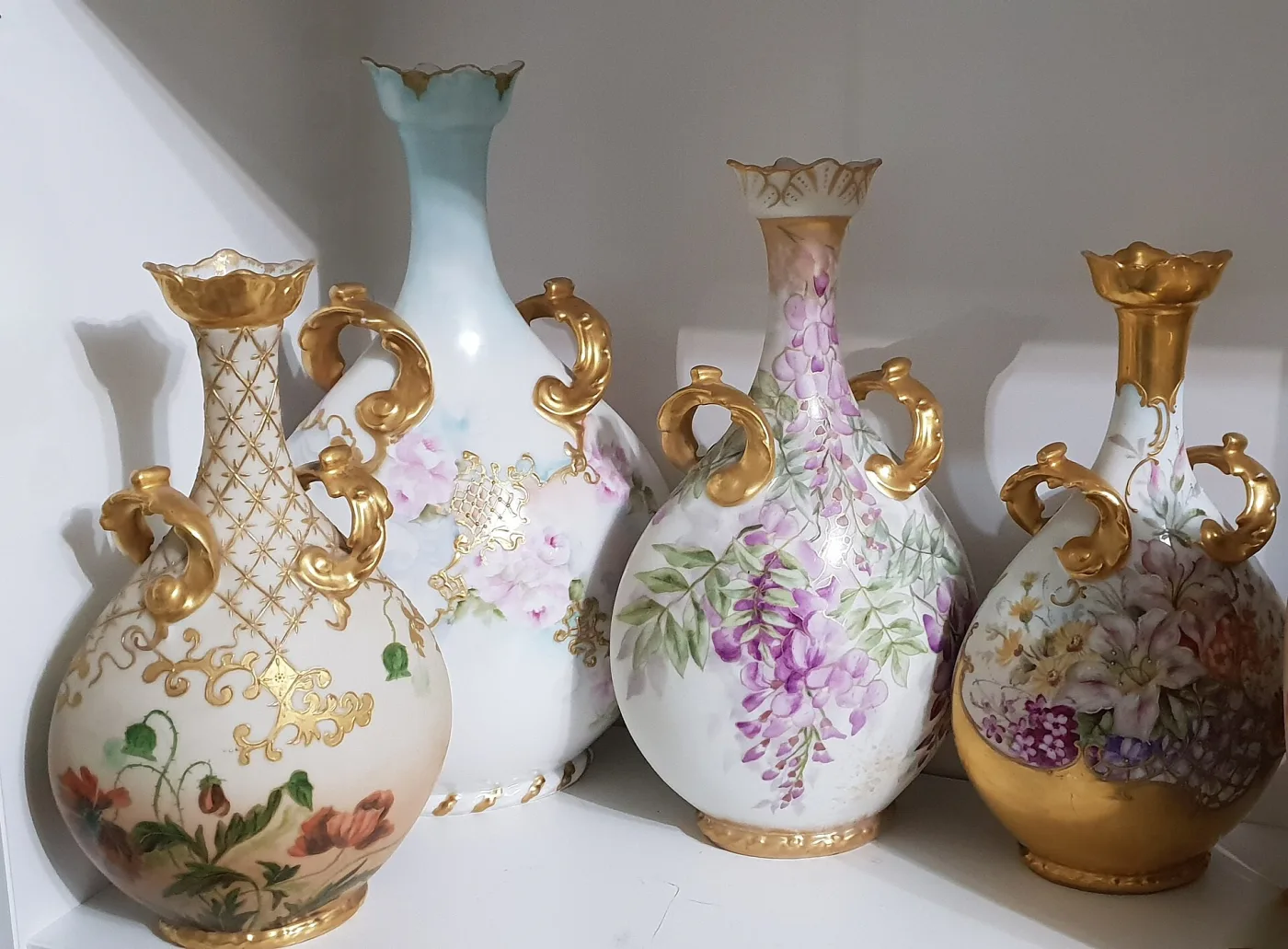
Limoges porcelain stands as one of the most celebrated and collectible categories of European ceramics. Produced in and around the city of Limoges in central France since the late eighteenth century, this hard-paste porcelain is renowned for its luminous white body, exceptional translucency, and exquisite hand-painted decoration. For collectors, dealers, and enthusiasts, understanding how to identify authentic Limoges pieces is essential for building a meaningful collection and avoiding costly mistakes.
What makes Limoges porcelain truly special is the unique combination of natural resources and artistic tradition. The discovery of high-quality kaolin deposits near Limoges in 1768 transformed the region into the porcelain capital of France, eventually rivaling the great German factories of Meissen and the English producers of bone china. Over the following two and a half centuries, dozens of manufacturers created an extraordinary range of tableware, decorative objects, and artistic pieces that continue to captivate collectors worldwide.
This guide covers everything you need to identify and authenticate antique Limoges porcelain, from understanding factory marks and paste quality to recognizing decoration techniques and dating methods. Whether you have inherited a single Haviland dinner plate or are considering a major purchase at auction, the knowledge in these pages will help you make informed decisions and appreciate the rich heritage behind every piece of Limoges porcelain.
Table of Contents
- History of Limoges Porcelain
- Major Limoges Factories & Makers
- Understanding Limoges Factory Marks
- Types of Limoges Porcelain
- Identifying Authentic Limoges Paste
- Decoration Techniques
- Dating Limoges Porcelain
- Hand-Painted vs Factory-Decorated
- Haviland Porcelain Guide
- Limoges Boxes (Trinket Boxes)
- Common Reproductions & Fakes
- Value Factors & Price Guide
- Care & Display
- Building a Limoges Collection
History of Limoges Porcelain
The story of Limoges porcelain begins in 1768, when a local surgeon's wife discovered a deposit of kaolin clay near the village of Saint-Yrieix-la-Perche, approximately 40 kilometers south of Limoges. Kaolin is the essential ingredient in hard-paste porcelain, and until this discovery, France had relied on soft-paste formulas that could not match the durability and translucency of Chinese and German porcelain. The find was immediately recognized as a game-changer for French ceramics, and the Limoges region quickly became the center of a booming porcelain industry.
King Louis XVI placed the kaolin deposits under royal protection, and the first Limoges porcelain factory was established under the patronage of the Comte d'Artois in 1771. This royal factory operated under the direction of the Massie brothers and initially produced simple whiteware. By the 1780s, the factory had developed sufficient skill to produce decorated pieces that rivaled those of Sevres, the prestigious royal porcelain manufactory near Paris. The French Revolution disrupted production, but the industry recovered and expanded dramatically in the early nineteenth century.
The Golden Age (1840-1914)
The period between 1840 and the outbreak of World War I represents the golden age of Limoges porcelain. During these decades, the number of factories multiplied, export markets expanded enormously (particularly to the United States), and decoration techniques reached extraordinary levels of refinement. American businessman David Haviland established his factory in Limoges in 1853, creating a direct pipeline of fine French porcelain to the American market. By 1900, there were more than 30 active porcelain factories in the Limoges region, employing thousands of workers and producing everything from simple dinner plates to elaborate presentation vases.
The Modern Era
World War I and the subsequent economic disruptions forced many smaller factories to close or merge. The industry consolidated throughout the twentieth century, with a handful of major firms surviving to the present day. Bernardaud, Haviland, and Royal Limoges continue to produce fine porcelain, while the tradition of hand-painted Limoges boxes emerged as a significant collector category beginning in the 1960s. Today, the name "Limoges" remains synonymous with the highest quality French porcelain, and antique pieces from the golden age command strong prices at auction and in the dealer market.
Major Limoges Factories & Makers
Understanding the major Limoges manufacturers is fundamental to identification and valuation. Each factory had distinctive marks, specialties, and periods of peak production. Here are the most important names you will encounter when collecting Limoges porcelain.
Haviland & Co. (1853-Present)
Founded by American entrepreneur David Haviland, this is arguably the most recognized Limoges maker, especially in the United States. Haviland produced enormous quantities of dinnerware for the American market, with thousands of documented patterns. The company used various marks throughout its history, including the famous "H&Co" monogram and the "Haviland France" backstamp. Charles Field Haviland, a relative, operated a separate factory (marked "CFH/GDM") that is often confused with the main Haviland firm. Theodore Haviland, David's son, also established his own company in 1893, adding another layer of complexity for collectors.
Tressemanes & Vogt (T&V) (1882-1919)
T&V produced high-quality porcelain blanks and decorated ware, often featuring elaborate hand-painted designs. Their marks typically include "T&V" within various frames, sometimes with "Limoges France" or "Depose" added. The company was particularly known for its fine art porcelain and decorative pieces, and T&V blanks were popular with amateur china painters in America during the late nineteenth and early twentieth centuries.
William Guerin & Co. (1872-1932)
Guerin was known for producing exceptionally fine whiteware, and many of their blanks were sold undecorated for use by outside decorating studios and amateur painters. Their mark features "W.G.&Co." and later "Wm Guerin & Co." with "Limoges France." Factory-decorated Guerin pieces, particularly vases and large decorative items, are highly sought after by collectors.
Bernardaud (1863-Present)
Originally founded as a decorating workshop, Bernardaud grew into one of the most prestigious Limoges manufacturers. The company is still in operation today and continues to produce luxury tableware. Antique Bernardaud pieces bear various marks including "B&Co" and later "Bernardaud Limoges." Their collaboration with contemporary artists has made certain modern pieces collectible as well.
Jean Pouyat (JP/L) (1842-1932)
Pouyat was one of the earliest and most important Limoges factories. Their marks include "J.P." and "JP/L" (Jean Pouyat, Limoges), typically in green underglaze for whiteware and red overglaze for decorated pieces. Pouyat was known for exceptionally high-quality paste and was among the first Limoges factories to export heavily to America.
Other Notable Makers
Several other factories made significant contributions to Limoges porcelain. A. Lanternier (1855-present) produced fine tableware and figurines marked with "A.L." GDA (Gerard, Dufraisseix and Abbot, 1900-1953) created high-quality dinnerware often found in American homes, marked with "GDA France." Coiffe produced porcelain marked with a distinctive fleur-de-lis, while Ahrenfeldt was known for supplying blanks to major retailers. Elite Works (Bawo & Dotter) supplied porcelain to American importers, and their pieces are marked with "Elite" in various configurations.
Understanding Limoges Factory Marks
The mark system used by Limoges factories is one of the most complex in the ceramics world, but understanding it is absolutely essential for proper identification. Unlike many other porcelain traditions where a single mark tells the whole story, Limoges pieces frequently bear two or even three separate marks, each conveying different information about the piece's origin and history.
The Whiteware Mark (Underglaze)
The first mark to look for is the whiteware or factory mark, applied under the glaze before the final firing. This mark identifies the factory that produced the porcelain blank. Because it is applied under the glaze, this mark cannot be removed or altered without damaging the piece. Whiteware marks are most commonly green, though some factories used other colors. This mark tells you where the physical porcelain body was manufactured, regardless of who later decorated it. Common examples include the green "H&Co" stamp of Haviland, the green "T&V" of Tressemanes & Vogt, and the green "W.G.&Co." of William Guerin.
The Decorating Mark (Overglaze)
The second mark is the decorating mark, applied over the glaze after decoration. This red, blue, brown, or gold mark identifies the studio or factory that painted and finished the piece. Many Limoges blanks were sold undecorated to independent studios, retailers, or amateur painters, so the decorating mark may be entirely different from the whiteware mark. For example, you might find a piece with a green Haviland whiteware mark and a red Flambeau decorating mark, indicating that Haviland made the blank but Flambeau decorated it.
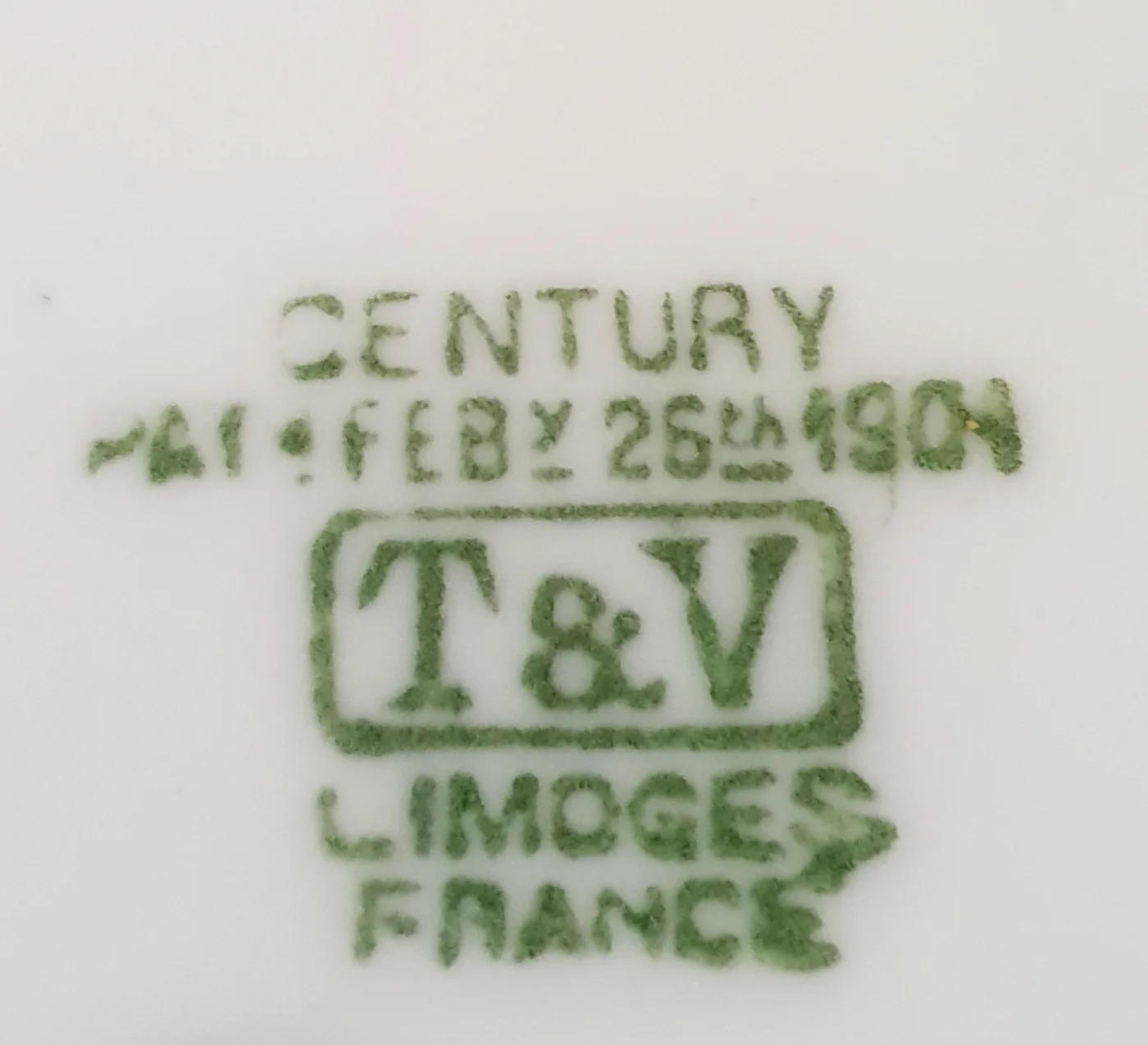
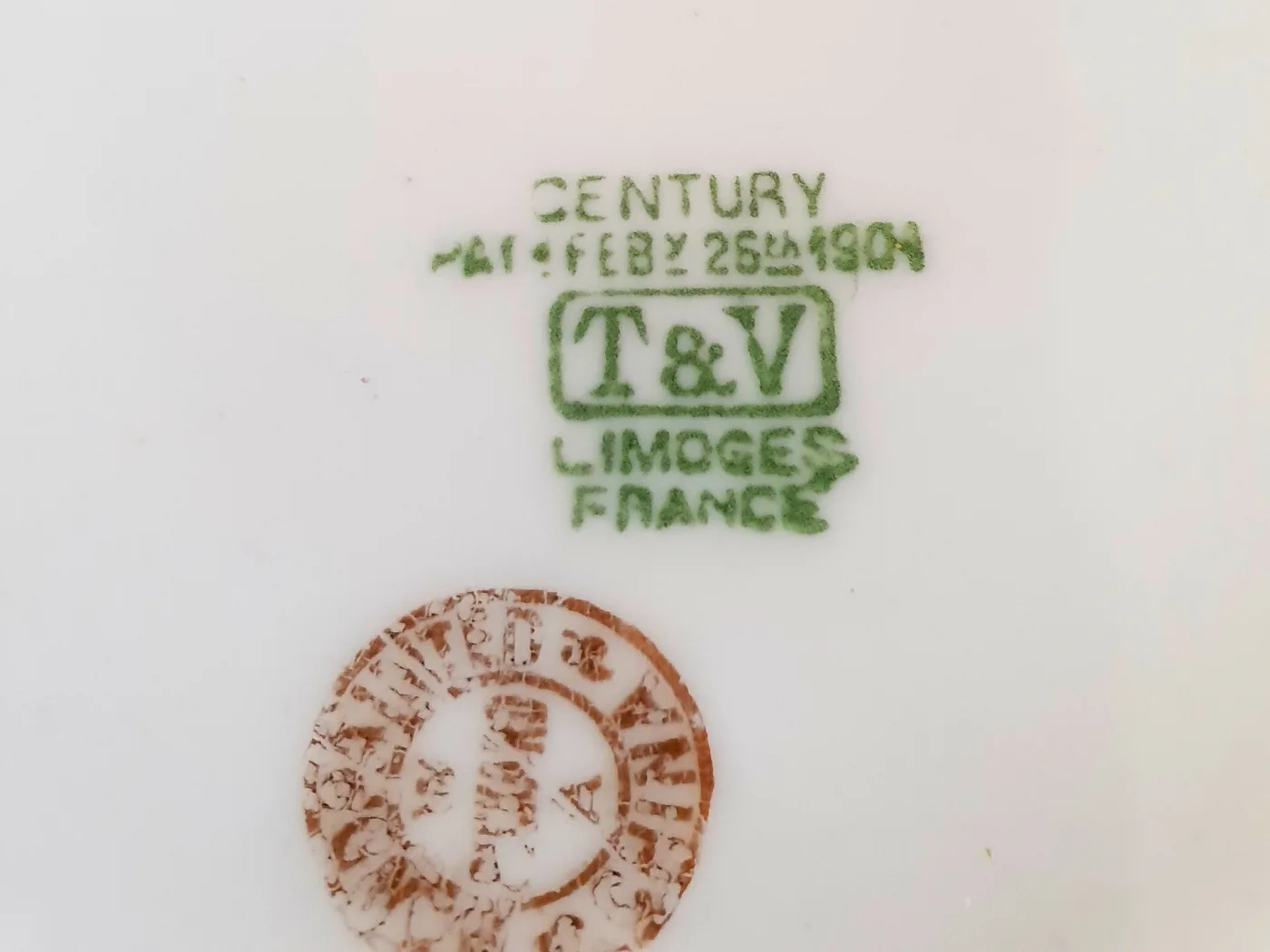
Compare the two undersides. The green T&V stamp is identical in both — same factory, same 1901 patent date, same blank. What differs is the second mark: on the right-hand piece a decorating studio has added its own stamp on top of the fired glaze, and that mark is the only thing on the base recording who actually painted the piece. Both are genuinely Limoges porcelain. Only one of them was decorated in Limoges. When you photograph a base for identification, photograph all of it, not just the mark you recognise first.
Mark Colors and Their Meanings
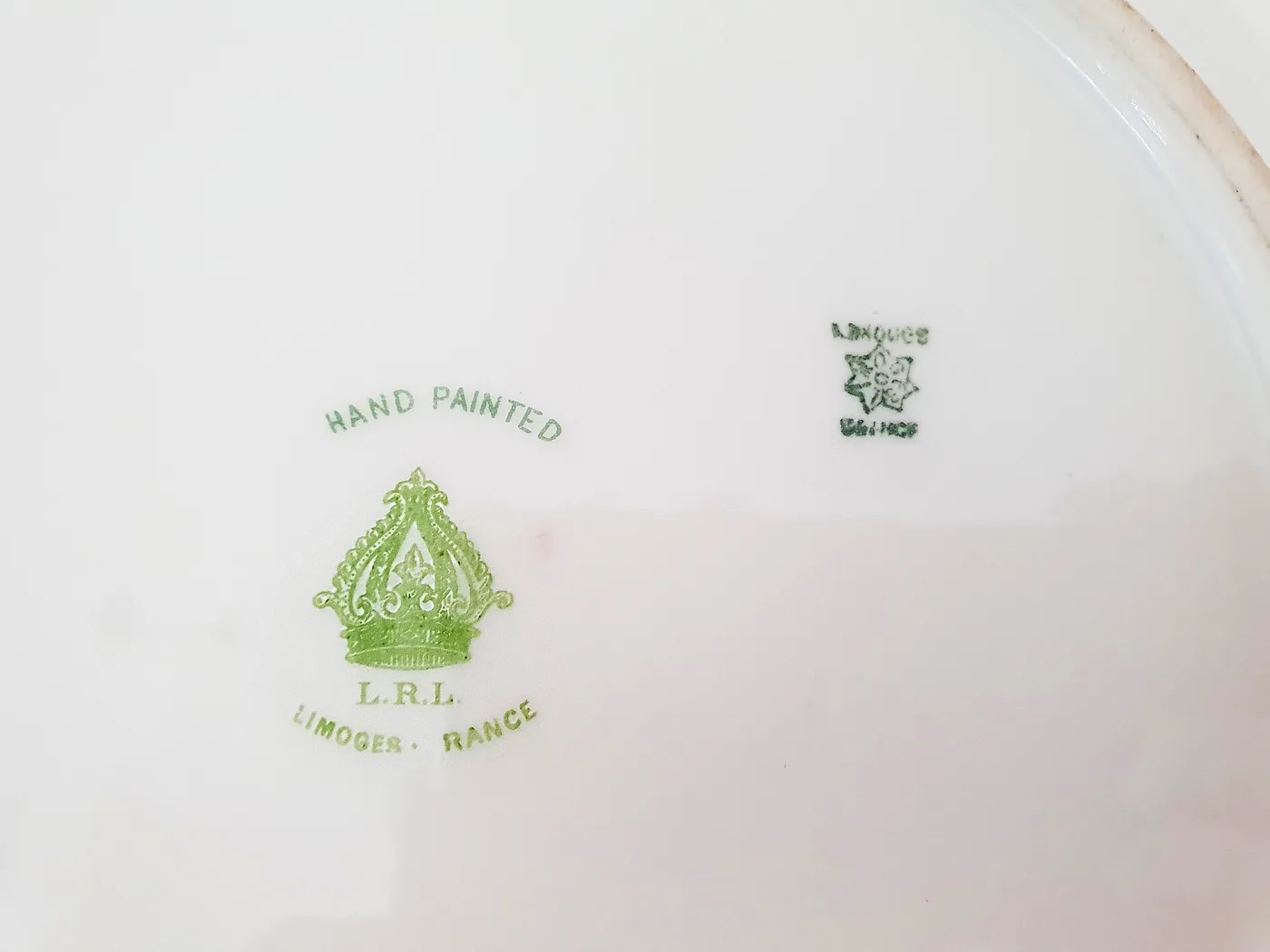
The color of a Limoges mark generally indicates its purpose. Green marks are almost always underglaze whiteware marks indicating the manufacturer. Red marks typically denote the decorating studio or factory. Blue marks can indicate either manufacturing or decorating, depending on the factory. Gold marks sometimes appear on specially commissioned or high-end pieces. Brown and black marks were used by certain factories and decorating studios during specific periods. Understanding these color conventions will immediately help you determine whether a mark identifies the maker or the decorator.
Evolution of Marks Over Time
Most Limoges factories changed their marks multiple times throughout their history. These changes often corresponded to ownership changes, partnerships, or new export regulations. For example, French law required the addition of "France" to export marks beginning in 1891, and "Made in France" became standard after 1914. By tracking these mark variations, collectors can narrow down the production date of a piece to within a decade or two. Reference books such as Mary Frank Gaston's "Collector's Encyclopedia of Limoges Porcelain" provide comprehensive mark charts that are indispensable for serious collectors.
Types of Limoges Porcelain
Limoges factories produced an extraordinarily diverse range of porcelain objects over two and a half centuries. Understanding the major categories helps collectors focus their interests and recognize unusual or particularly valuable forms.
Dinnerware Services
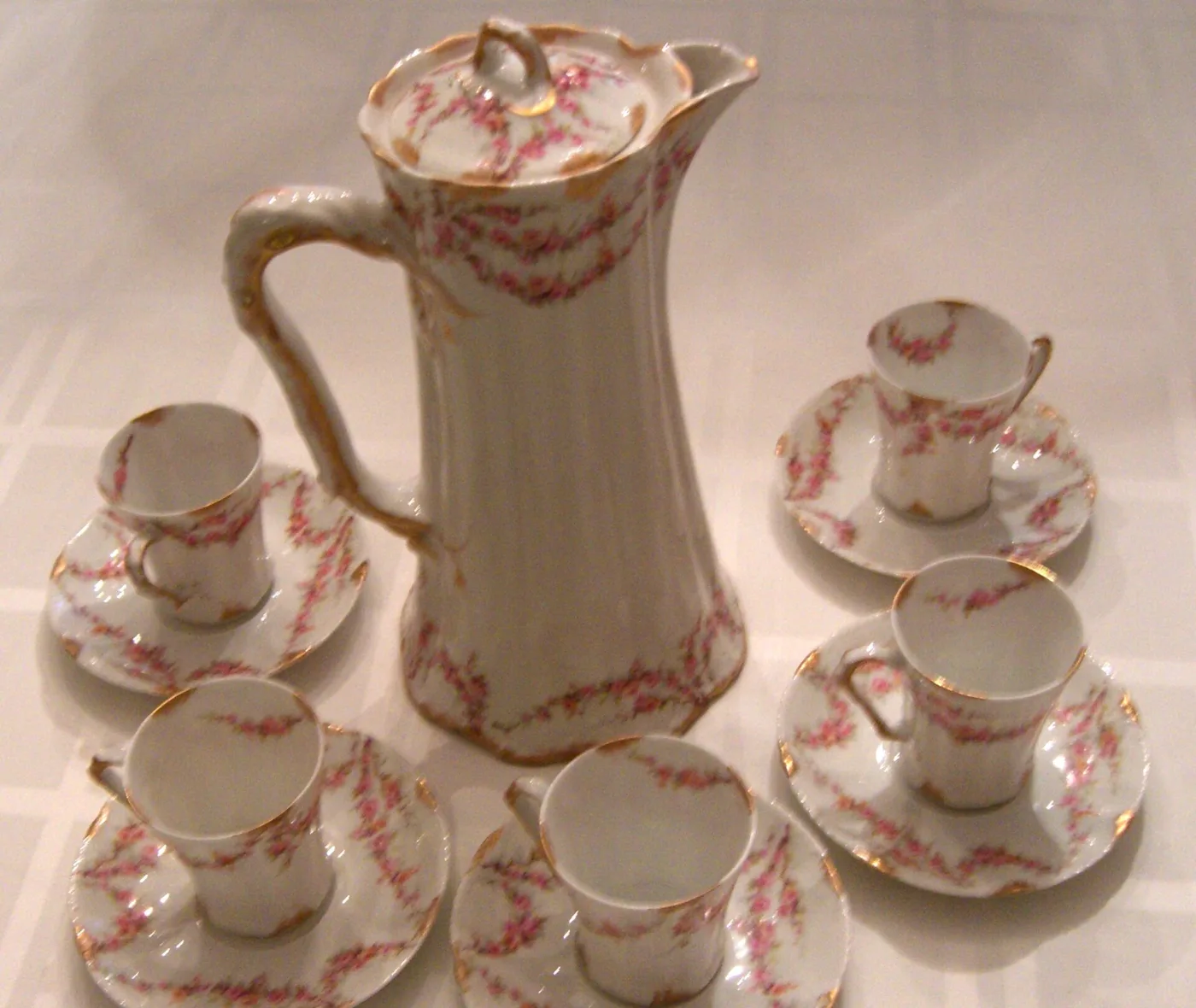
Tableware was always the bread and butter of the Limoges industry. Complete dinner services could include dozens of pieces: dinner plates, luncheon plates, salad plates, bread plates, soup bowls, cup and saucer sets, serving platters, covered vegetable dishes, gravy boats, butter dishes, and more. Haviland alone produced thousands of distinct patterns for the American market. Complete or near-complete services in desirable patterns command premium prices, while individual plates and odd pieces are more affordable entry points for new collectors.
Decorative Plates & Chargers
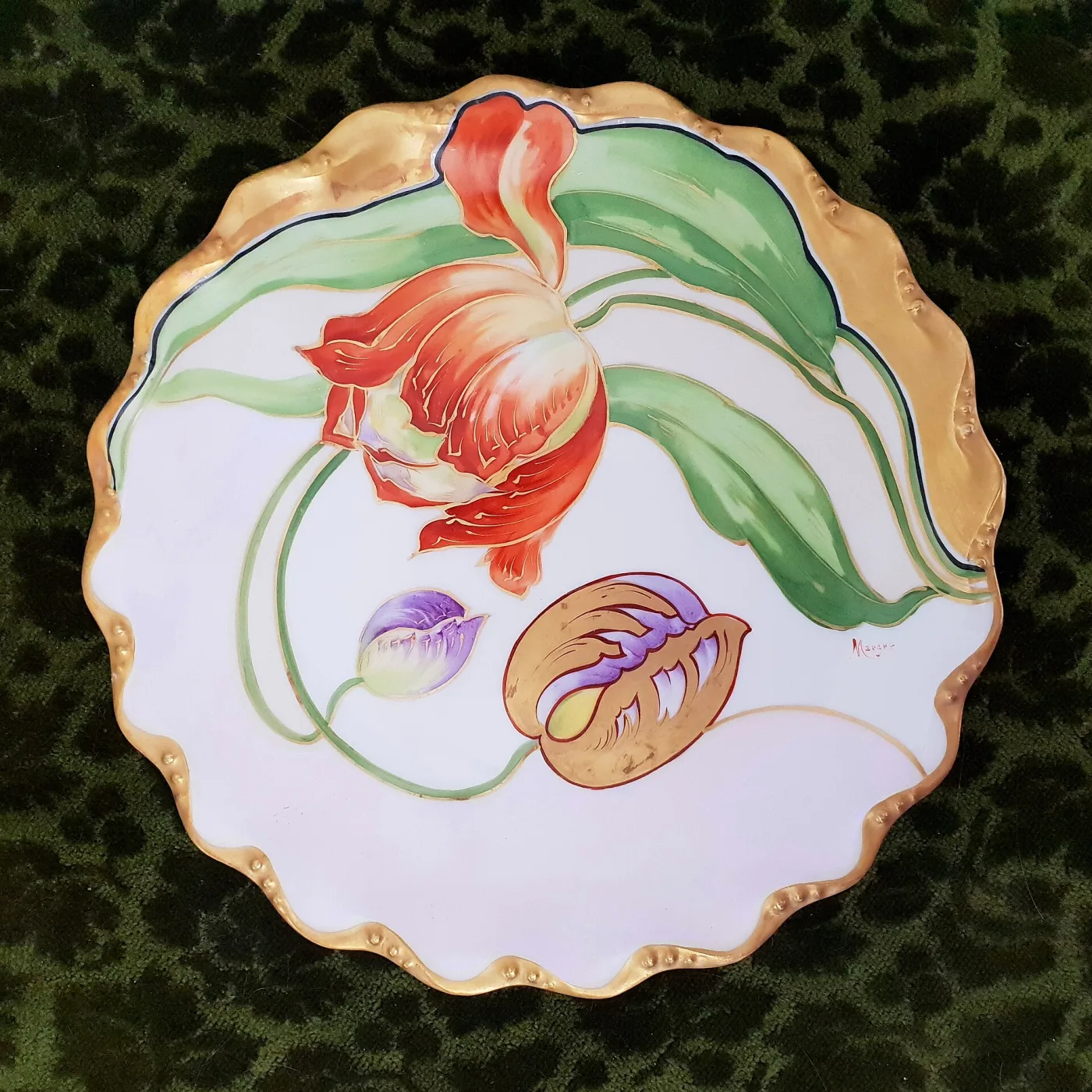
Beyond functional tableware, Limoges factories produced decorative plates, chargers, and cabinet plates intended for display. These pieces often feature elaborate hand-painted scenes including landscapes, portraits, florals, fruit arrangements, and game birds. Fish and game sets, consisting of a large platter and matching individual plates each painted with a different species, are particularly prized. Portrait plates depicting beautiful women, historical figures, or classical scenes represent some of the most valuable Limoges decorative ware.
Vases & Jardinières
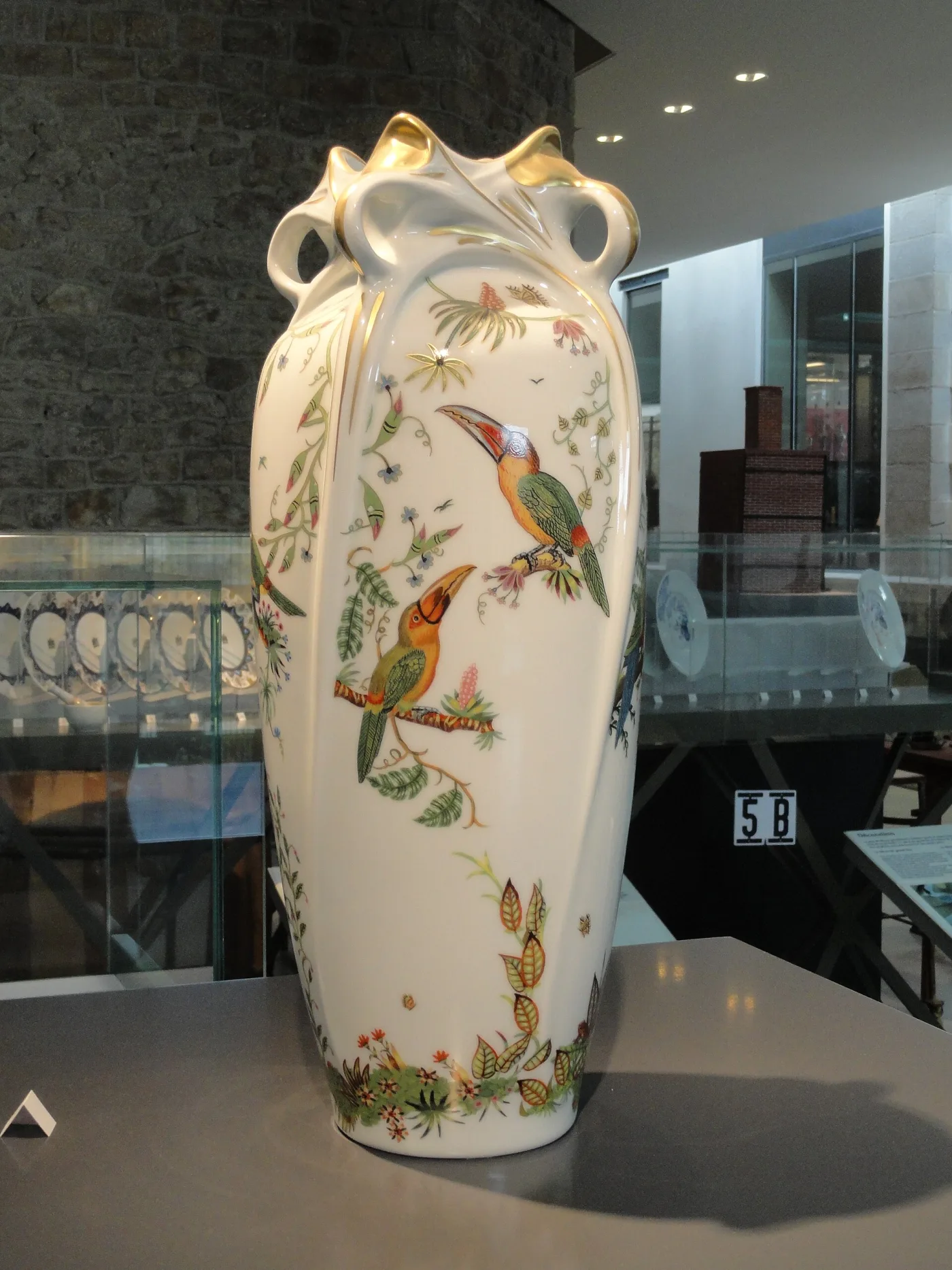
Limoges vases range from simple bud vases a few inches tall to monumental floor vases over two feet in height. Shapes include classical urn forms, bottle vases, pillow vases, and organic art nouveau designs. Jardinières (large planters) were popular in the late Victorian era and were often lavishly decorated with roses, chrysanthemums, or scenic designs. Large, well-painted vases and jardinières are among the most valuable Limoges pieces on the market today.
Boxes, Dresser Sets & Specialty Items
Limoges factories produced a wide variety of smaller luxury items including trinket boxes, powder boxes, hair receivers, hatpin holders, and complete dresser sets. Chocolate pots with matching cups, tea sets, and coffee services are highly collectible. Specialty items such as tankards, steins, punch bowls, cider pitchers, and lemonade sets appeal to both porcelain collectors and those interested in specific beverage-ware categories. Inkwells, pen trays, candlesticks, and cache-pots round out the enormous range of Limoges production.
Identifying Authentic Limoges Paste
The physical characteristics of Limoges porcelain are among the most reliable indicators of authenticity. True Limoges is hard-paste porcelain made from kaolin clay, feldspar, and quartz, fired at extremely high temperatures. Understanding what genuine Limoges porcelain looks and feels like will help you spot imitations and reproductions.
The Translucency Test
One of the simplest and most effective tests for authentic Limoges porcelain is the translucency test. Hold the piece up to a strong light source or place a flashlight against the back of a plate. Genuine Limoges porcelain will transmit light, showing a warm, slightly greenish or ivory glow. You should be able to see the shadow of your hand through the porcelain body. The degree of translucency varies with the thickness of the piece, but even relatively thick areas should show some light transmission. Pieces that are completely opaque are likely not true hard-paste porcelain.
Weight and Feel
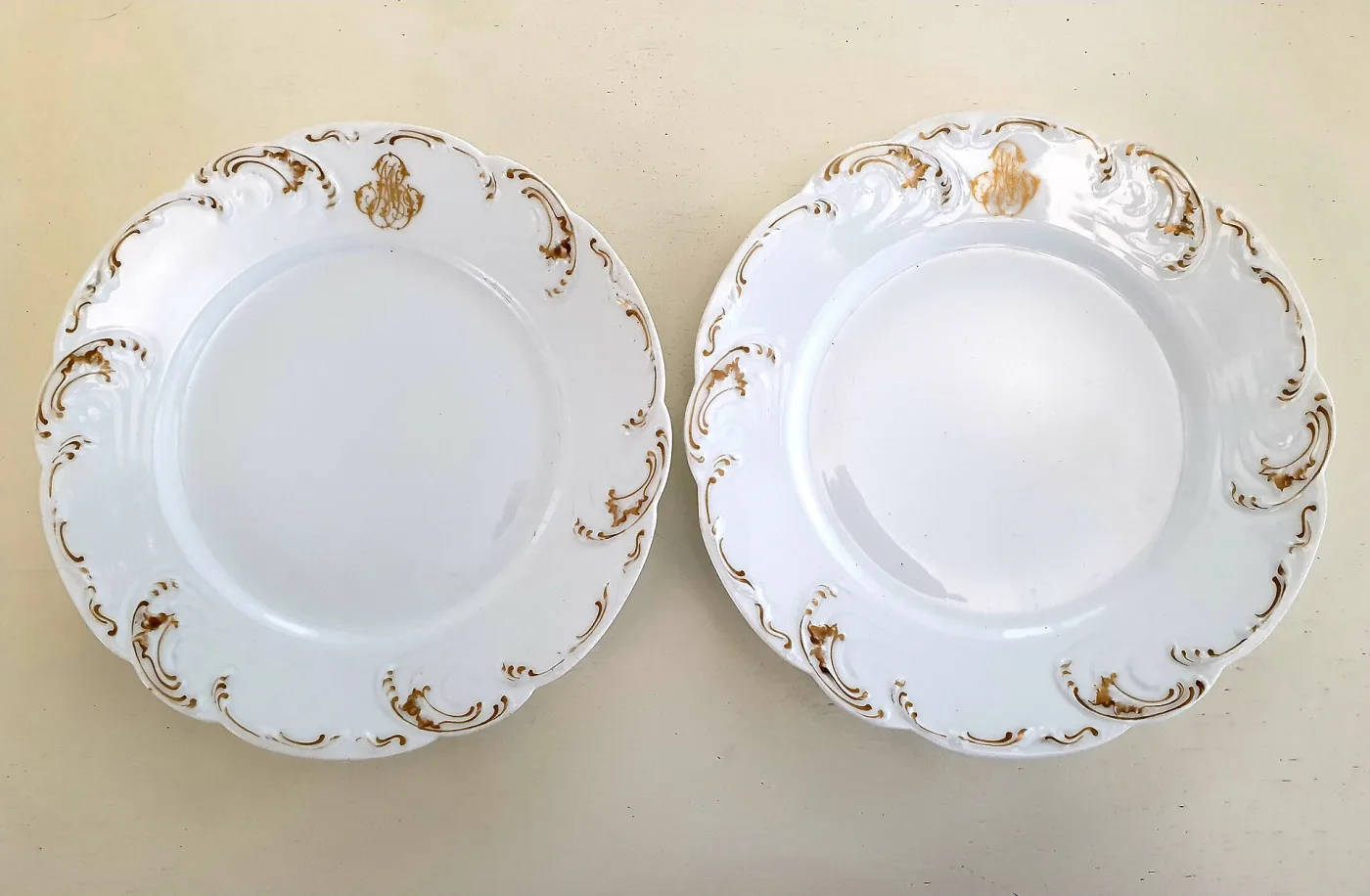
Authentic Limoges porcelain has a characteristic weight and feel that experienced collectors learn to recognize. It is heavier than bone china but lighter than earthenware or stoneware of similar size. The surface should feel smooth and glass-like, with a thin, even glaze that is fully fused to the body. Run your finger across the surface; genuine Limoges has a subtle warmth to the touch that distinguishes it from cold, heavy imitations. The edges of plates and rims should be thin and refined, not thick or clumsy.
Glaze Quality
The glaze on authentic Limoges porcelain is a critical identification feature. It should be clear, smooth, and evenly applied, with a soft sheen rather than a harsh glitter. Examine the piece under good lighting for signs of crawling (where the glaze has pulled away from the body), pinholes, or uneven thickness. While minor firing imperfections are normal and even expected on antique pieces, the overall glaze quality should be consistently high. The glaze should be tightly bonded to the porcelain body with no signs of flaking or peeling, which would suggest a lower-quality imitation.
Distinguishing from Imitations
Several types of ceramics are sometimes confused with Limoges porcelain. Bone china, produced primarily in England, is more ivory in color and slightly more translucent. Ironstone and semi-porcelain are heavier and opaque. Japanese and Chinese porcelain may look similar but often have different glaze characteristics and body composition. Modern reproductions from China may bear fake Limoges marks but typically have a harsher white color, cruder decoration, and inferior glaze quality. When in doubt, compare a suspected piece directly with a known authentic example, and pay close attention to the overall refinement of the piece.
Decoration Techniques
The decoration on Limoges porcelain ranges from simple gilt-edged patterns to breathtaking hand-painted masterpieces. Understanding the major decoration techniques used by Limoges factories and independent studios is essential for accurate identification and valuation.
Hand-Painted Decoration
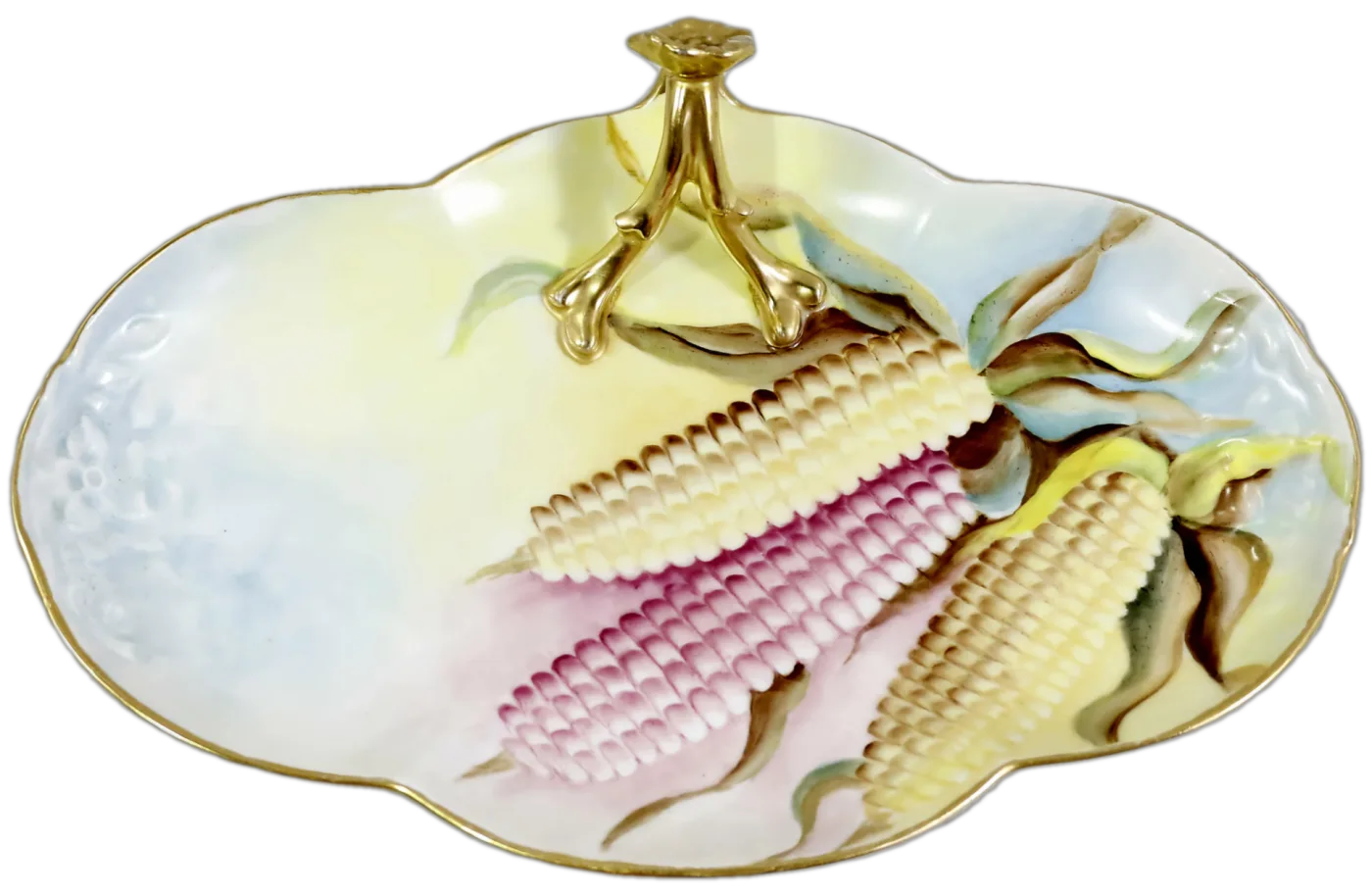
Hand-painting is the most prestigious and valuable form of Limoges decoration. Skilled artists used mineral-based pigments to create everything from delicate floral sprays to elaborate scenic compositions. The best hand-painted Limoges displays confident brushwork, subtle color blending, and a three-dimensional quality that transfer printing cannot achieve. Look closely at the decoration with a magnifying glass: hand-painted work will show individual brush strokes, slight variations in line thickness, and a natural flow that distinguishes it from mechanical reproduction. Factory artists sometimes signed their work, and pieces bearing recognized artist signatures command premium prices.
Transfer Printing
Transfer printing, also known as decalcomania or litho decoration, uses pre-printed designs that are applied to the porcelain surface and fired. This technique allowed factories to produce consistently decorated pieces far more quickly and cheaply than hand-painting. Under magnification, transfer-printed decoration shows a regular dot pattern similar to newspaper printing. Many Limoges pieces combine transfer printing with hand-painted accents, where the main design is transferred and an artist adds gilding, color fills, or additional details by hand. Pure transfer-printed pieces are generally less valuable than hand-painted examples, but rare patterns and high-quality transfers remain collectible.
Gilding Techniques
Gold decoration is a hallmark of fine Limoges porcelain and appears in several distinct forms. Bright gold, applied as a liquid gold solution and fired, produces a shiny, mirror-like finish. Burnished gold is applied as a matte paste and then polished with an agate burnishing tool to create a rich, lustrous surface. Raised gold, also called encrusted gold or paste gold, involves building up layers of gold paste to create a three-dimensional texture. Acid-etched gold combines etched patterns in the glaze with gold fill, creating intricate designs that catch the light. The quality and type of gilding can significantly affect a piece's value, with raised gold and acid-etched gold generally being the most prized.
Specialty Techniques
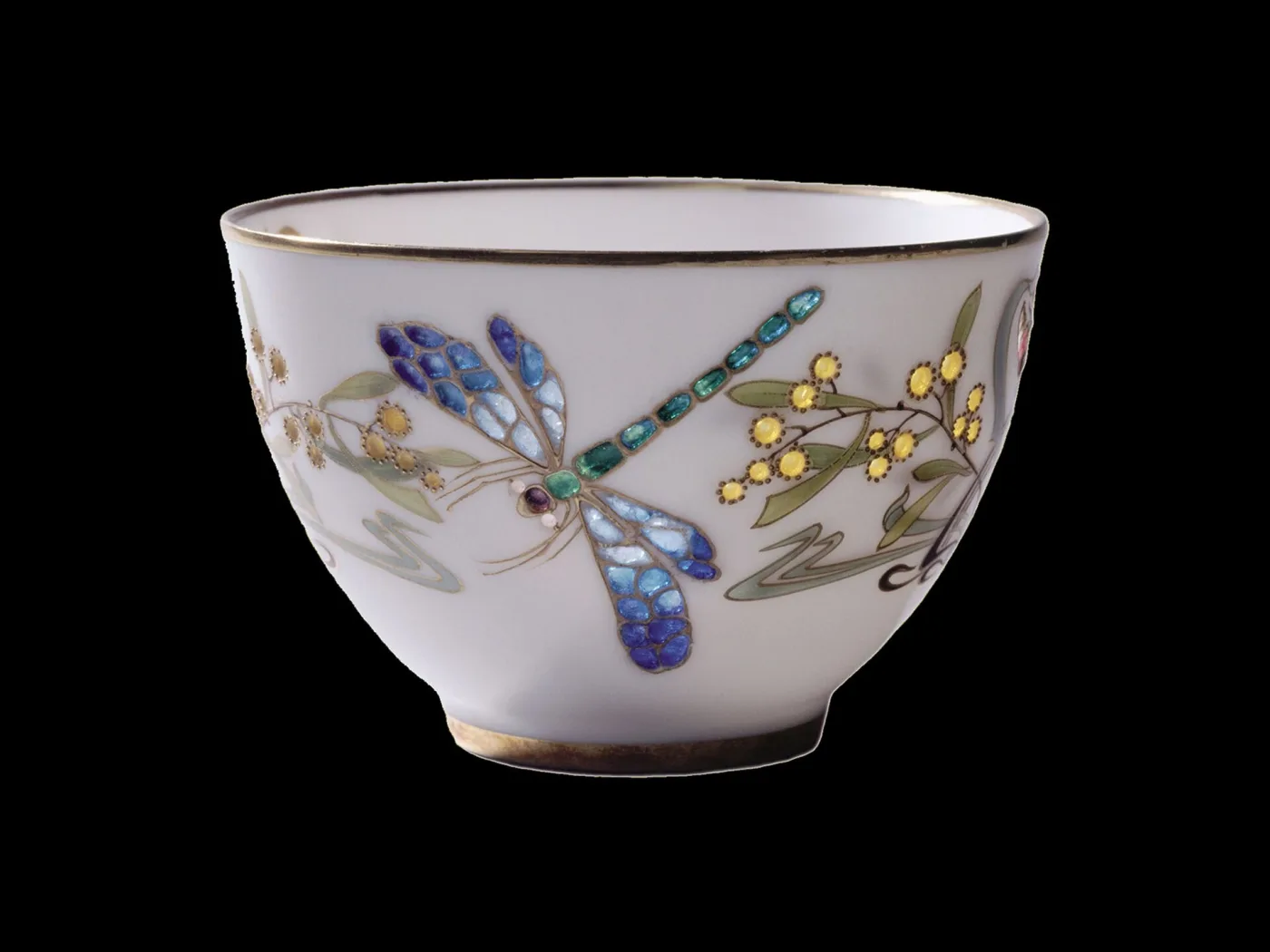
Beyond standard painting and gilding, Limoges decorators employed several specialty techniques. Pate-sur-pate (paste-upon-paste) involves building up layers of liquid slip to create a cameo-like relief decoration, often in white against a colored ground. Cobalt blue backgrounds, achieved by applying cobalt oxide under the glaze, provide a rich, deep ground for gold and enamel decoration. Raised enamel work uses thick applications of colored enamel to create jewel-like dots and designs. Some pieces feature a combination of multiple techniques, and these complex, multi-technique pieces are often the most valuable Limoges decorative ware.

Dating Limoges Porcelain
Determining the age of Limoges porcelain involves examining multiple factors, from backstamp variations to stylistic details. While precise dating is not always possible, combining several approaches usually allows you to place a piece within a reasonable time frame.
Mark Chronology
The most straightforward dating method relies on factory mark variations. Most Limoges factories changed their marks at documented intervals, and reference books catalog these changes in detail. Key dating indicators include the presence or absence of "France" (required for export after 1891), the addition of "Made in France" (common after 1914), and specific design elements within the mark itself. For Haviland pieces, the mark evolution is particularly well-documented, with distinct stamps corresponding to specific decades. Always photograph marks clearly and compare them against published mark charts for the most accurate dating.
Decoration Style Evolution
Decorative styles changed predictably over time and provide valuable dating clues. Early Limoges pieces (1770s-1840s) tend to feature neoclassical designs, simple floral sprays, and restrained gilding. The mid-Victorian period (1850s-1880s) saw an explosion of romantic florals, particularly roses, and more elaborate gilding. The Aesthetic Movement (1880s-1890s) introduced Japanese-inspired designs, naturalistic motifs, and asymmetrical compositions. Art Nouveau influences (1890s-1910s) brought flowing lines, organic shapes, and muted color palettes. Art Deco (1920s-1930s) introduced geometric patterns, bold colors, and streamlined forms. Recognizing these stylistic shifts helps narrow the production date even when marks are unclear.
Shape and Form Indicators
The physical forms of Limoges pieces also evolved over time. Cup shapes changed from the low, wide forms of the early nineteenth century to taller, more cylindrical shapes in the later period. Handle designs, rim profiles, and foot ring styles all varied by period. Certain forms are associated with specific eras: chocolate pots were most popular from the 1880s through the 1910s, while art deco-influenced shapes appeared primarily in the 1920s and 1930s. Plate sizes and rim widths also shifted over time, with wider rims being more common in earlier production.
Production Technique Indicators
Technical aspects of production can also help with dating. Early Limoges pieces were often slightly irregular in shape, reflecting the limitations of hand-forming techniques. By the later nineteenth century, improved molds produced more uniform shapes. The quality and consistency of glazing improved over time, and certain defects are more common in earlier production. Stilt marks (small unglazed spots where kiln furniture supported the piece during firing) were common in the early period but became less frequent as firing techniques improved. The overall weight and thickness of the porcelain body also changed over time, with later pieces tending to be more refined and thinner.
Hand-Painted vs Factory-Decorated
One of the most important distinctions in Limoges collecting is between factory-decorated pieces, professionally studio-decorated pieces, and amateur-painted pieces. This distinction significantly affects value, and learning to tell the difference is an essential collector skill.
Factory-Decorated Pieces
Factory-decorated Limoges was painted by skilled artists employed directly by the porcelain manufacturer. These pieces typically bear both the factory's whiteware mark (underglaze) and the same factory's decorating mark (overglaze). Factory decoration tends to be highly accomplished, with consistent quality and refined technique. Designs were often created by named artists or followed standardized patterns. Factory-decorated pieces from major makers like Haviland, T&V, and Guerin represent the benchmark for Limoges quality and generally command the highest prices.
Professional Studio Decoration
Independent decorating studios purchased blank whiteware from Limoges factories and applied their own decoration. Some of these studios employed highly skilled artists whose work equals or even surpasses factory decoration. Notable decorating studios include Flambeau (marked with a torch), Stouffer Studio of Chicago, Pickard China Company (which decorated Limoges blanks before beginning its own production), and numerous Parisian ateliers. Studio-decorated pieces bear the factory whiteware mark plus the decorating studio's mark, and their value depends heavily on the quality of the decoration and the reputation of the studio.
Amateur-Painted Pieces
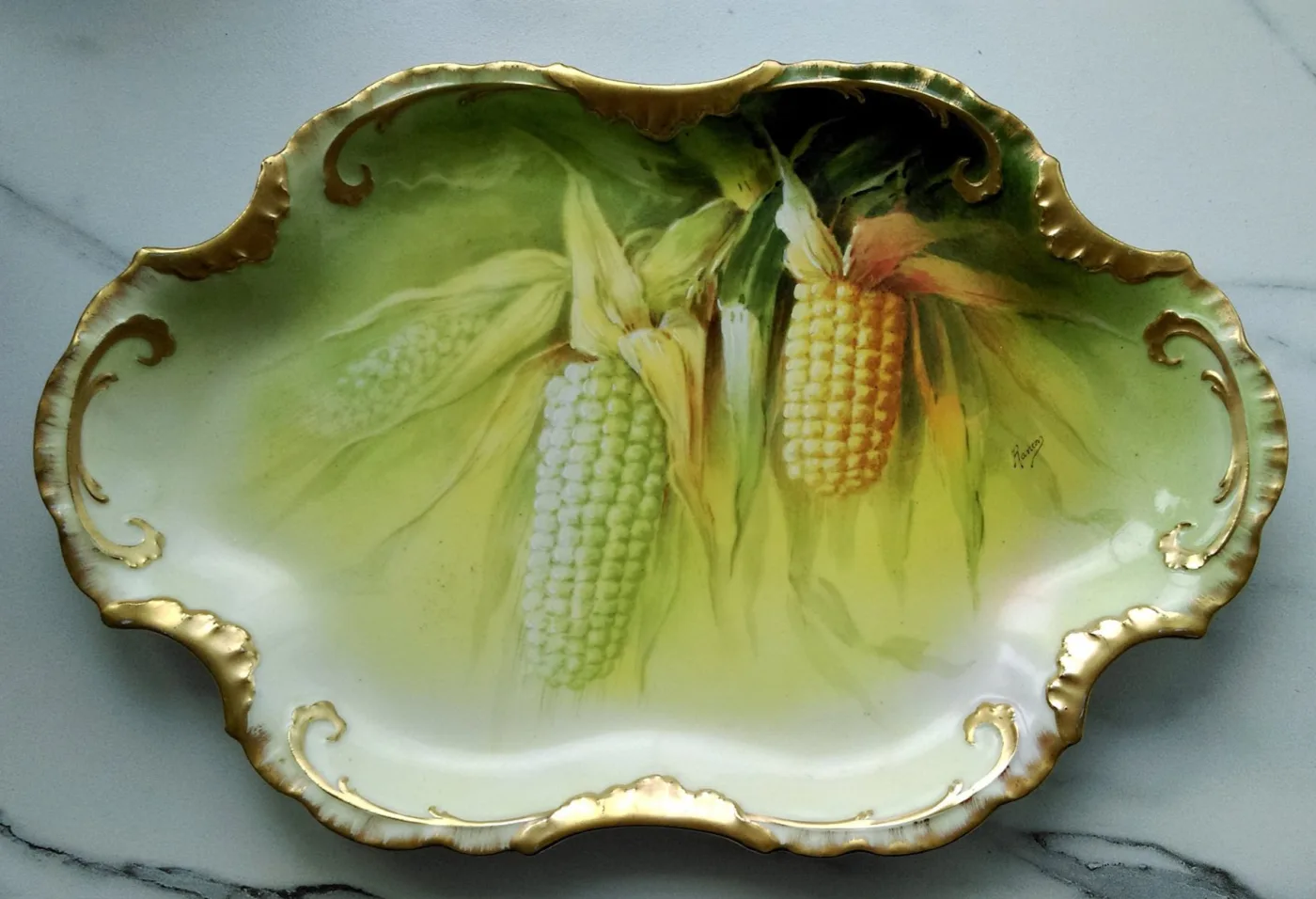
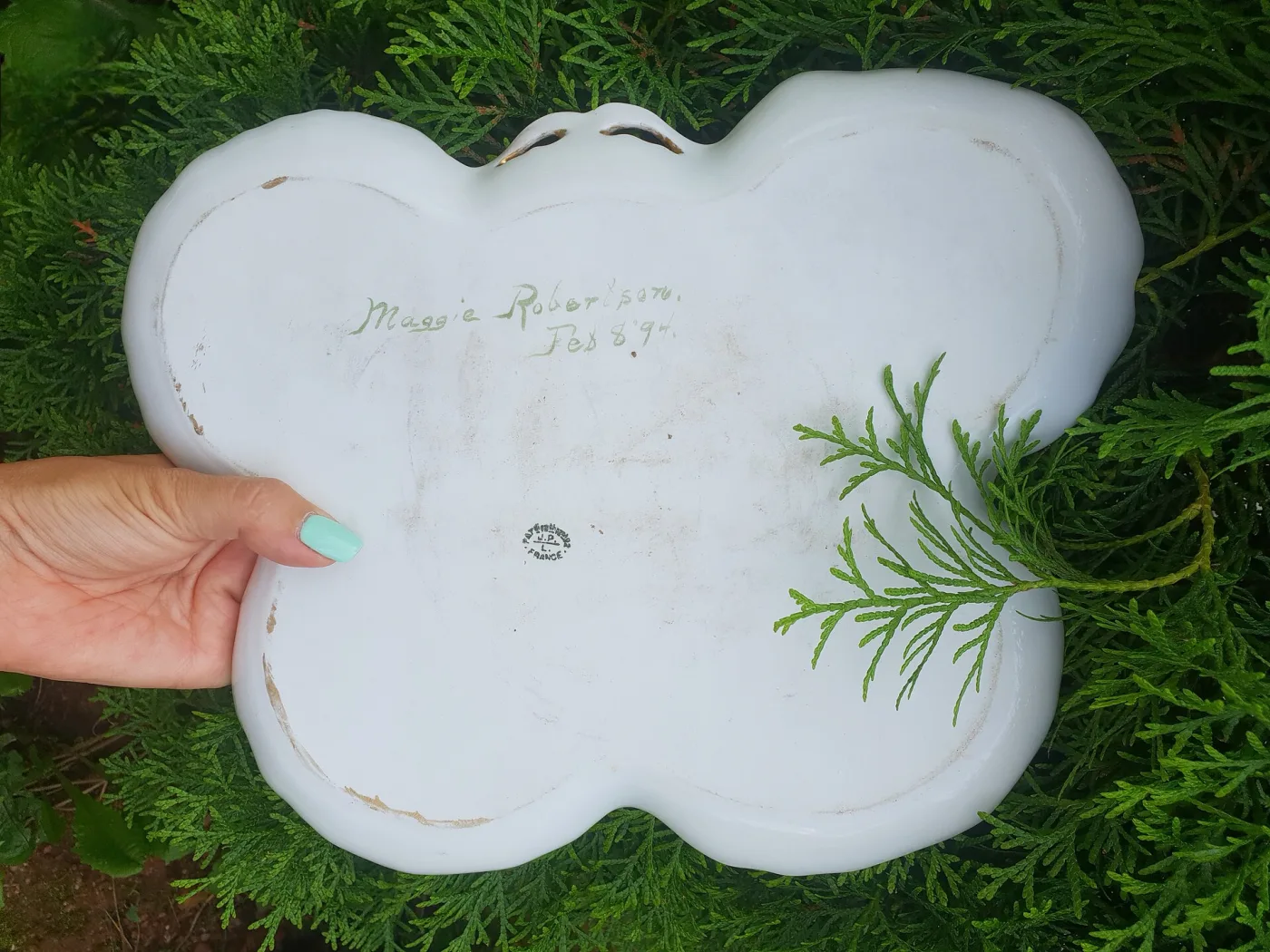
During the late nineteenth and early twentieth centuries, china painting became an enormously popular hobby, particularly among American women. Limoges factories sold vast quantities of undecorated whiteware blanks to amateur painters through art supply stores and mail-order catalogs. Amateur-painted pieces vary enormously in quality, from crude efforts to remarkably skilled work. These pieces typically bear only the whiteware mark with no decorating mark, or they may include a hand-written artist's name and date. In general, amateur-painted pieces are worth less than factory or professionally decorated examples, though exceptionally fine amateur work on high-quality blanks can still be valuable.
How to Tell the Difference
Several clues help distinguish factory, studio, and amateur decoration. Factory decoration tends to be precisely executed with consistent spacing and color application. Studio work may be more artistic and individual but maintains a professional level of skill. Amateur work often shows hesitant brushwork, uneven color application, and simplified designs. Examine the back of the piece for marks: two marks (whiteware plus decorating) suggest professional decoration, while a single whiteware mark may indicate amateur painting. The presence of an overglaze red, gold, or blue decorating mark from a known studio or factory adds both provenance and value to any Limoges piece.
Haviland Porcelain Guide
Haviland is by far the most commonly encountered Limoges porcelain in the American market, and it deserves special attention. The Haviland story is complex, involving multiple family branches, separate companies, and thousands of patterns that continue to be actively collected and traded today.
The Haviland Family Companies
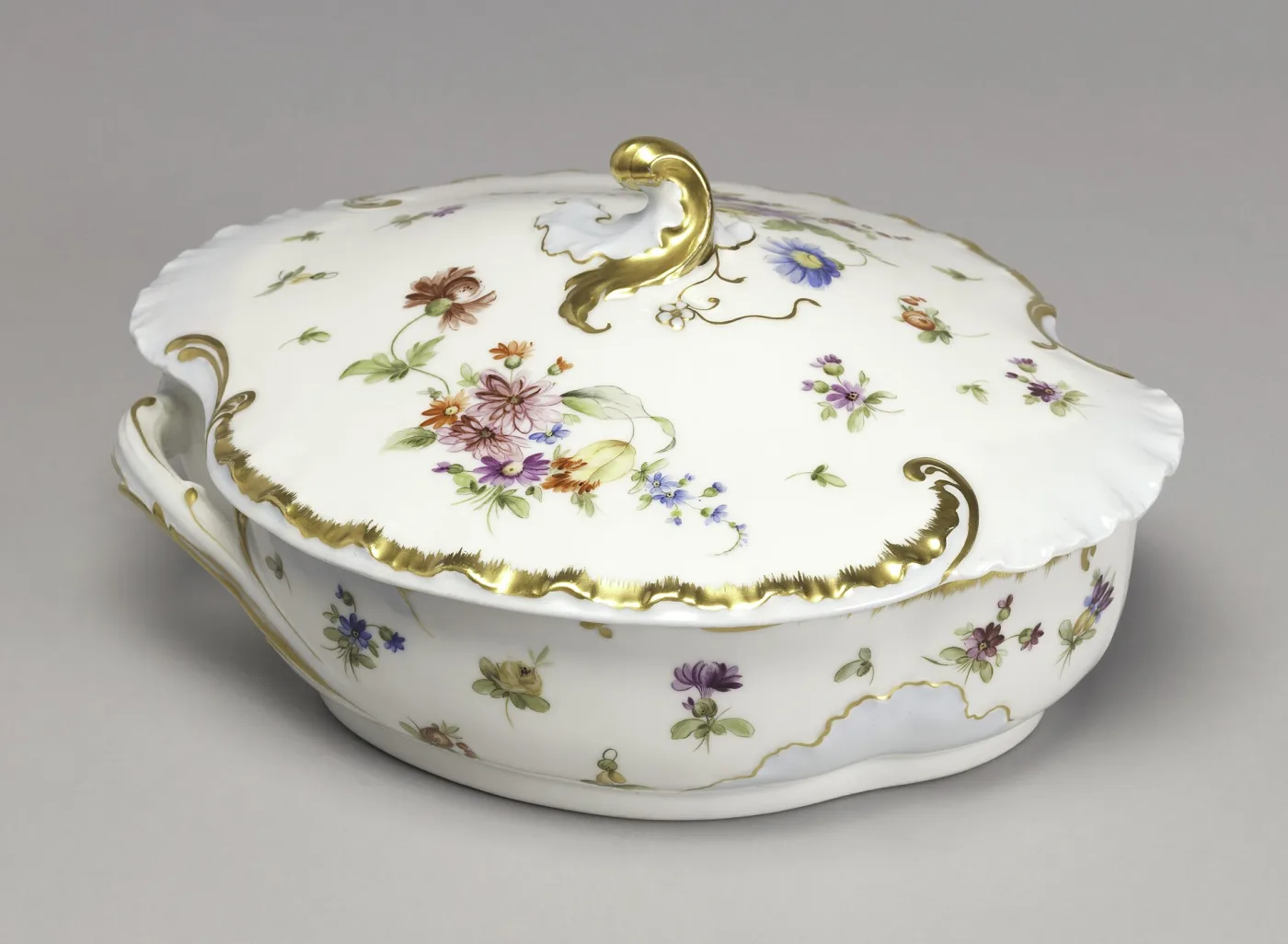
David Haviland founded the original Haviland & Co. in Limoges in 1853. His sons Charles Edward and Theodore continued and expanded the business. Theodore Haviland split off to form his own company in 1893. Charles Field Haviland, a nephew, operated yet another factory. Johann Haviland produced porcelain in Bavaria, Germany, and should not be confused with the French Haviland companies. Each of these entities used distinct marks, and confusing them is one of the most common mistakes among Limoges collectors. The original Haviland & Co. (H&Co.) and Theodore Haviland pieces are generally the most collectible and valuable.
Haviland Mark Identification
Haviland marks evolved significantly over the company's long history. The earliest pieces (1850s-1860s) may bear only an impressed "H&Co." Later marks include the green underglaze "H&Co./Haviland & Co./Limoges" and the red overglaze decorating stamp. Theodore Haviland pieces are marked "Th. Haviland" or "Theodore Haviland." Charles Field Haviland used "CFH/GDM" marks. The addition of "France" after 1891 and "Made in France" after 1914 helps date pieces further. Some rare early marks and unusual mark variations are particularly sought after by advanced Haviland collectors.
The Schleiger Numbering System
Arlene Schleiger created the definitive pattern identification system for Haviland porcelain, cataloging over 3,000 patterns with unique numbers. Her books, "Two Hundred Patterns of Haviland China" and subsequent volumes, remain the standard reference. When buying or selling Haviland, referencing the Schleiger number immediately identifies the pattern and eliminates confusion. Popular patterns include Schleiger 1 (the "Ranson" blank with gold trim), Schleiger 57 (pink and blue florals), Schleiger 72 (a delicate violet spray), and Schleiger 271a (the famous "Silver Anniversary" pattern). Matching services and collector groups routinely use Schleiger numbers to facilitate trades and sales.
Most Collectible Haviland Patterns
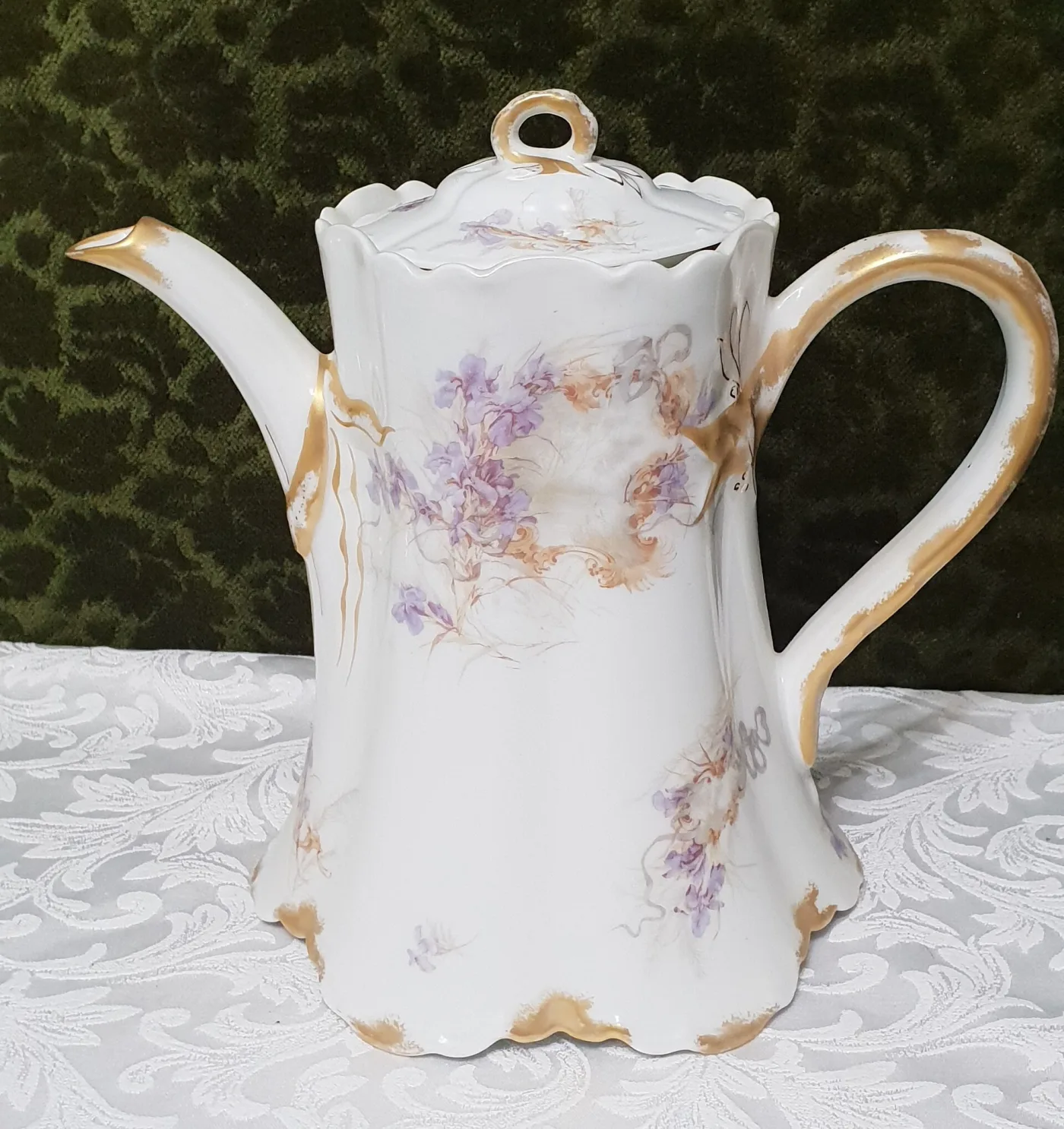
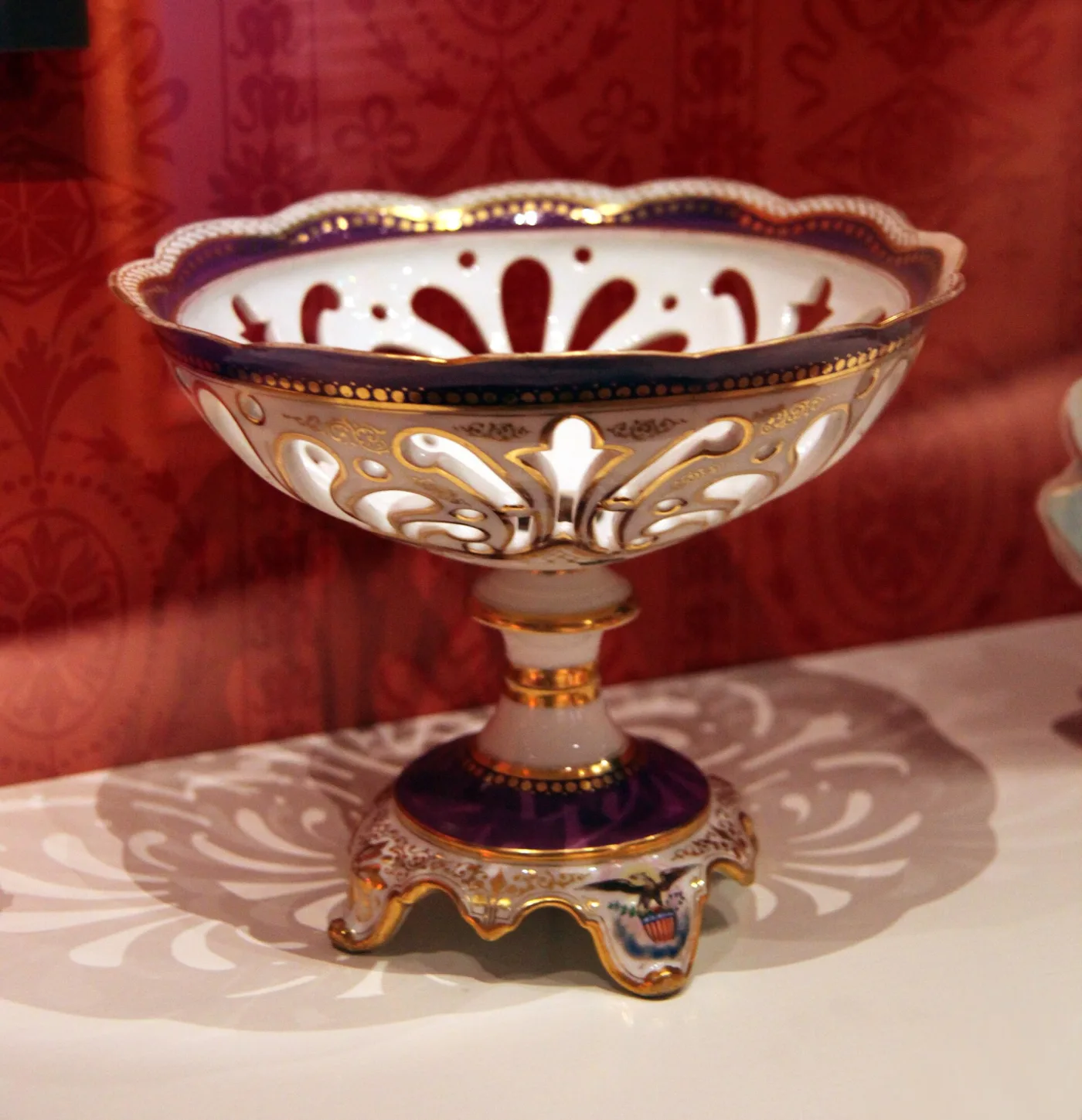
Certain Haviland patterns are especially sought after and command premium prices. Drop Rose (Schleiger 55), with its distinctive pink roses and gold trim, is perennially popular. The Autumn Leaf pattern, originally produced for the Jewel Tea Company, has a dedicated collector following. Presidential china patterns, including those made for the White House during the Hayes, Harrison, and Lincoln administrations, are museum-quality rarities. Art Nouveau and Art Deco patterns appeal to collectors of those styles and often feature more adventurous designs than the traditional floral patterns. Blank shapes also matter, with the Ranson, Marseille, and Star blanks being particularly popular among collectors.
Limoges Boxes (Trinket Boxes)
Limoges trinket boxes, also known as Limoges boxes or hinged boxes, represent one of the most popular and accessible categories of Limoges collecting. These small, hand-painted porcelain boxes with metal hinges have been produced in the Limoges region since the eighteenth century, though the modern collector market emerged primarily in the 1960s and 1970s.
History of Limoges Boxes
The tradition of small porcelain boxes in Limoges dates to the late 1700s, when snuff boxes and patch boxes were fashionable accessories among the French aristocracy. Production declined in the nineteenth century as porcelain factories focused on tableware. The modern revival began in the 1960s when manufacturers recognized the tourist and gift market potential of small, decorative boxes. Companies began producing boxes in an enormous variety of shapes and themes, from traditional oval and round forms to whimsical figurals depicting animals, food, buildings, and holiday themes. Today, Limoges boxes are collected worldwide, with thousands of designs available.
Identifying Authentic Limoges Boxes
Authentic Limoges boxes share several identifying characteristics. They are made from genuine hard-paste porcelain and should pass the translucency test. The phrase "Peint Main" (painted by hand) indicates hand-painted decoration, while "Decor Main" means hand-decorated (which can include applied transfers with hand-finished details). Look for a Limoges factory mark on the base, which should include "Limoges France." The hinge mechanism should be well-crafted brass or gilt metal, attached with tiny metal pins. Many authentic boxes also include a small painted design inside the lid, a sign of quality craftsmanship. A clasp, typically a small metal hook or tab, secures the lid when closed.
Major Box Makers
Several companies have become particularly well-known for Limoges box production. Artoria (marked "Artoria Limoges France") is one of the largest producers, known for a vast range of designs. Chamart produces both traditional and whimsical designs, often marked with the Chamart name. Rochard is recognized for detailed figurative boxes with fine painting. Parry-Vieille (PV) is known for high-quality artistic designs. Dubarry specializes in elegant, traditional shapes. Each maker has its own quality standards and price range, and collectors often develop preferences for specific manufacturers.
Antique vs Modern Boxes
Distinguishing antique Limoges boxes (pre-1940) from modern production is important for valuation. Antique boxes tend to be simpler in form, with less elaborate hinge mechanisms and more restrained decoration. The porcelain body may be slightly thicker, and the marks will follow the historical conventions of the period. Modern boxes (1960s onward) feature more complex shapes, better hinges, and a wider variety of themes. While antique boxes are rarer and often more valuable to serious collectors, modern Limoges boxes from reputable makers also hold their value well, particularly limited editions and retired designs from major manufacturers.
Common Reproductions & Fakes
The popularity and value of antique Limoges porcelain have inevitably attracted counterfeiters and reproductions. Knowing what to watch for can save you from expensive mistakes and protect the integrity of your collection.
Chinese Reproductions
The most common fakes on the market today are Chinese-made porcelain pieces bearing fake Limoges marks. These reproductions have flooded online marketplaces and flea markets, often at prices that seem too good to be true. Chinese reproductions typically have a harsher, bluer-white body color compared to the warm, creamy white of authentic Limoges. The glaze may be uneven or bubbly, and the decoration often lacks the finesse of genuine Limoges painting. Marks on Chinese fakes are frequently poorly printed, with fuzzy edges, incorrect fonts, or misspellings. The porcelain itself may be heavier or lighter than genuine Limoges and may not pass the translucency test.
Fake and Misleading Marks
Several types of misleading marks appear on the market. Some pieces bear marks that include the word "Limoges" but were not actually made in the Limoges region. The term "Limoges" is not legally protected outside of France, so manufacturers in other countries have sometimes used it to imply French origin. Watch for marks that say "Limoges style," "Limoges type," or simply include "Limoges" as part of a company name without the geographic connection. Other fakes reproduce specific factory marks but with subtle differences in size, font, color, or placement that reveal them as copies. Always compare suspicious marks against published reference materials.
Decorated Fakes
Another category of reproduction involves genuine old Limoges blanks that have been recently decorated to appear antique. Unscrupulous sellers may purchase inexpensive undecorated antique blanks and add elaborate hand-painted decoration to increase their apparent value. These pieces will have authentic whiteware marks but no legitimate decorating mark. The decoration may look "too perfect" or use colors and styles that do not match the period of the blank. Examine decoration carefully under magnification for signs of modern pigments, overly uniform brushwork, or decoration that appears to have been applied over an aged surface.
Red Flags to Watch For
Several warning signs should alert you to potential fakes or reproductions. Prices significantly below market value are always suspicious. Marks that appear blurry, smudged, or poorly aligned may be reproductions. Pieces with elaborate decoration but no decorating mark deserve extra scrutiny. A harsh, bright white body color is more typical of modern Asian porcelain than antique French production. Gilding that is uniformly bright with no wear may be recently applied. If a piece feels unusually heavy or light for its size, it may not be genuine hard-paste porcelain. When purchasing expensive pieces, always buy from reputable dealers who stand behind their merchandise and are willing to provide written guarantees of authenticity.
Value Factors & Price Guide
The value of antique Limoges porcelain depends on a complex interplay of factors. Understanding what drives prices helps collectors make informed purchases and accurately assess the worth of pieces they already own.
Maker and Mark
The manufacturer is often the single most important value factor. Pieces from prestigious makers like Haviland, T&V, and Guerin generally command higher prices than those from lesser-known factories. Within a maker's output, certain mark periods are more desirable than others. Early marks, rare marks, and marks associated with peak production periods tend to add value. Pieces with both a whiteware mark and a matching factory decorating mark are typically worth more than blanks or pieces decorated by unknown studios.
Decoration Quality
The quality, type, and condition of decoration significantly affect value. Hand-painted pieces are generally worth more than transfer-printed examples. Factory-decorated pieces outvalue amateur-painted blanks. Elaborate techniques like raised gold, pate-sur-pate, and cobalt grounds add substantial premium. Artist-signed pieces, particularly those bearing the signatures of recognized factory artists, command higher prices. The subject matter also matters: portrait plates, scenic designs, and elaborate floral compositions tend to be more valuable than simple border patterns or monochromatic designs.
Condition and Rarity
Condition is paramount in the Limoges market. Chips, cracks, staining, crazing, and worn gilding all significantly reduce value. A piece in perfect condition may be worth several times more than an identical piece with damage. Rarity also plays a major role: unusual forms, rare patterns, limited production items, and pieces from short-lived factories command premium prices. Complete sets and matching services are worth more than the sum of their individual pieces, as assembling matching Limoges from various sources is increasingly difficult.
Current Market Trends
The Limoges market has evolved considerably in recent years. Traditional dinnerware services, once the backbone of the market, have softened in price as formal dining has become less common. However, decorative pieces such as vases, portrait plates, and elaborately painted items have maintained or increased their value. Limoges trinket boxes remain a strong collector category with an active market. Art Nouveau and Art Deco pieces appeal to a younger generation of collectors and have seen price appreciation. Online sales have expanded the market globally but also increased the availability of reproductions. Exceptional pieces from the best makers and periods continue to perform well at major auction houses, with rare items occasionally achieving five-figure prices.
Care & Display
Proper care and display of your Limoges collection preserves its beauty and value for future generations. Porcelain is durable but not indestructible, and some common practices can actually damage antique pieces.
Cleaning Limoges Porcelain
Always hand-wash antique Limoges porcelain. Never put antique pieces in the dishwasher, as the harsh detergents and high temperatures can damage gilding, fade decoration, and stress the porcelain body. Use warm (not hot) water with a mild dish soap and a soft cloth or sponge. Avoid abrasive cleaners, scouring pads, and any products containing bleach. For stubborn stains, soak the piece in warm water with a small amount of white vinegar or denture-cleaning tablets. Tea and coffee stains on the interior of cups can often be removed with a paste of baking soda and water, applied gently with a soft cloth. Dry pieces thoroughly after washing to prevent water spots, and never stack wet porcelain.
Storage Tips
When storing Limoges porcelain, always place soft padding between stacked pieces. Felt plate separators, acid-free tissue paper, or soft cotton cloths work well. Never stack more than four or five plates to avoid excessive weight on bottom pieces. Store cups hanging from hooks or nestled individually in padded containers rather than stacking them. Keep porcelain away from extreme temperature fluctuations, which can cause crazing or cracking. Avoid storing pieces in attics (too hot) or basements (too damp). If boxing pieces for storage, use acid-free materials and label boxes clearly to prevent damage from rough handling.
Display Recommendations
Display cabinets with glass doors protect pieces from dust and accidental contact while allowing visual enjoyment. Plate stands and wall-mount plate hangers showcase individual pieces beautifully, but ensure hangers are the correct size and padded to prevent chipping. Avoid displaying porcelain in direct sunlight, which can fade decoration over time. Museum-quality display lighting (LED or fiber optic) illuminates pieces without generating the heat that incandescent bulbs produce. For valuable collections, consider earthquake putty or museum wax to secure pieces against accidental displacement.
Insurance Considerations
Significant Limoges collections should be professionally appraised and insured. Standard homeowner's insurance may not adequately cover antique porcelain, and a dedicated fine arts or collectibles rider may be necessary. Document your collection with detailed photographs of each piece, including close-ups of marks, decoration, and any damage. Keep purchase receipts, provenance documentation, and appraisal records in a separate location from the collection itself. Update appraisals every three to five years to reflect current market values.
Building a Limoges Collection
Whether you are drawn to Limoges porcelain by a family heirloom, a flea market find, or a fascination with French decorative arts, building a focused collection is one of the most rewarding pursuits in the antiques world. Here are strategies and resources to help you get started.
Starting Strategies
The most successful Limoges collections begin with focus. Rather than acquiring everything labeled "Limoges," concentrate on a specific area that interests you: a particular maker (Haviland patterns, for example), a form (vases, trinket boxes, or chocolate pots), a decoration type (hand-painted florals, portrait plates, or cobalt and gold), or a period (Art Nouveau, for instance). Focused collecting helps you develop deep expertise, makes storage and display more manageable, and generally results in a more cohesive and valuable collection. Start by handling as many genuine pieces as possible at antique shows, dealer shops, and museums to train your eye for quality.
Where to Find Pieces
Limoges porcelain appears across virtually every antique venue. Estate sales are often the best source for quality pieces at reasonable prices, particularly for dinnerware services that heirs may undervalue. Antique shops and shows offer curated selections with dealer expertise, though prices reflect the dealer's overhead and knowledge. Online auctions through platforms like eBay, LiveAuctioneers, and Invaluable provide enormous selection but require careful evaluation of photographs and seller reliability. Major auction houses such as Sotheby's and Christie's occasionally feature exceptional Limoges pieces in their decorative arts sales. Replacement services like Replacements.com specialize in matching patterns and are invaluable for completing sets.
Auction Tips
When buying at auction, always preview pieces in person when possible. Examine marks carefully, check for damage under strong lighting, and handle pieces to assess weight and feel. Set a firm budget before bidding and stick to it. Research completed auction results for comparable pieces to establish fair market value. At online auctions, pay close attention to the photograph quality and ask sellers for additional images of marks and any damage. Factor in buyer's premiums (typically 20-25% at major houses), shipping costs, and insurance when calculating your total investment. Build relationships with auctioneers and dealers who specialize in French porcelain, as they can alert you to upcoming lots that match your collecting interests.
Joining Collector Communities
The Limoges collecting community is active and welcoming. The Haviland Collectors International Foundation maintains a database of patterns and connects collectors worldwide. Online forums and social media groups dedicated to Limoges and Haviland porcelain provide free identification help, buying and selling opportunities, and a wealth of shared knowledge. Local antique clubs often include members with Limoges expertise. Reference books are essential tools: Mary Frank Gaston's encyclopedia, Arlene Schleiger's Haviland pattern books, and Debby DuBay's guides to Limoges boxes are indispensable additions to any collector's library. The more you immerse yourself in the community and literature, the faster your expertise will develop and the more enjoyment you will derive from your collection.