Antique Carnival Glass Identification Guide: Colors, Patterns & Values
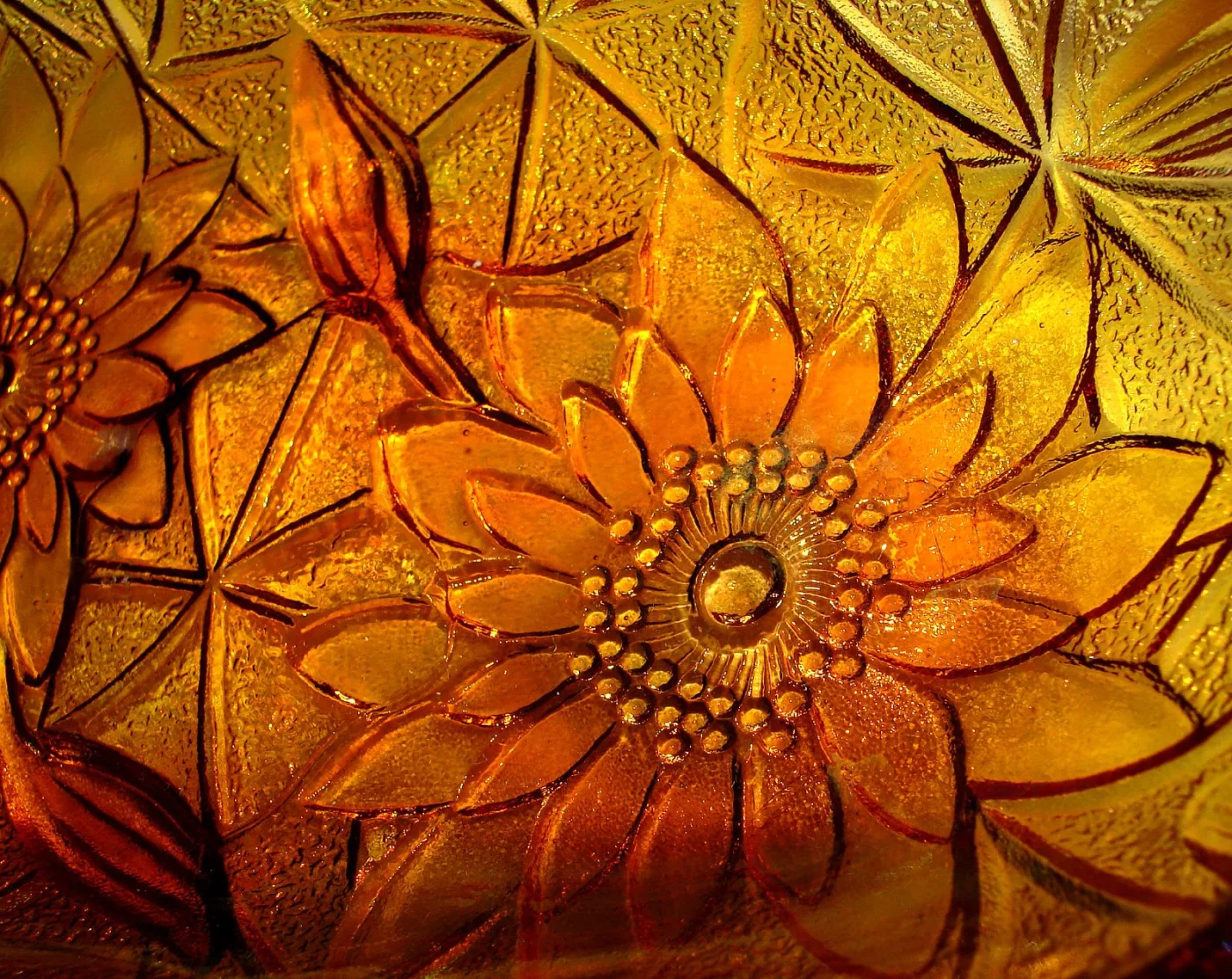
Carnival glass, with its mesmerizing rainbow iridescence and intricate pressed patterns, represents one of the most popular and accessible categories of antique glassware. Originally marketed as an affordable alternative to expensive Tiffany art glass, carnival glass was produced from 1907 through the 1930s and has since become a passionate collecting field with pieces ranging from common finds at $20-30 to rare specimens fetching over $100,000 at auction.
The distinctive iridescent finish that gives carnival glass its magical shimmer was achieved by spraying metallic salts onto hot pressed pattern glass, creating a surface that reflects light in spectacular rainbow patterns. Understanding the key characteristics of color, pattern, shape, and maker is essential for any collector seeking to identify, authenticate, and value these beautiful pieces of American glass history.
This comprehensive guide will teach you everything you need to know about carnival glass identification, from recognizing the major manufacturers and their signature marks to understanding the complex grading system that determines value. Whether you're examining a potential treasure at an estate sale or cataloging an inherited collection, this guide provides the expertise you need.
Table of Contents
- History and Origins of Carnival Glass
- What Makes Glass "Carnival Glass"
- Base Glass Colors
- Understanding Iridescence
- Major Carnival Glass Manufacturers
- Identifying Maker's Marks
- Popular Patterns and Motifs
- Shapes and Forms
- The Carnival Glass Grading System
- Rare and Valuable Colors
- Authentication and Reproductions
- Value Factors and Pricing
- Collecting Strategies and Tips
- Care, Cleaning, and Display
History and Origins of Carnival Glass
Carnival glass emerged during the early twentieth century as America's answer to the expensive iridescent art glass created by Louis Comfort Tiffany and European houses such as Loetz. Understanding its historical context helps collectors appreciate its significance and identify authentic period pieces.
The Birth of Carnival Glass (1907-1920)
The origins and early development of this distinctive glassware:
- Fenton's Innovation: Fenton Art Glass Company introduced the first carnival glass in 1907
- Original Name: Originally called "Iridill" by Fenton, marketed as iridescent ware
- Affordable Alternative: Created to offer Tiffany-like iridescence at accessible prices
- Rapid Adoption: Other manufacturers quickly developed their own versions
- Peak Production: Golden era from 1908 to 1925
- Mass Market: Sold in department stores, catalog houses, and five-and-dime stores
The "Carnival" Name
How this glass got its distinctive name:
- Later Designation: The name "carnival glass" wasn't used during original production
- Prize Origins: Given as prizes at carnivals and fairs in the 1920s-1930s
- Collector Adoption: Name adopted by collectors in the 1950s-1960s
- Historical Terms: Originally called "poor man's Tiffany" or "iridescent ware"
- Trade Names: Each manufacturer had proprietary names for their iridescent lines
The Classic Era (1907-1930)
The golden age of carnival glass production:
- American Dominance: Major production in Ohio, West Virginia, Pennsylvania
- Pattern Explosion: Hundreds of patterns created during peak years
- Color Development: Continuous innovation in base colors and iridescent treatments
- Export Market: American carnival glass shipped worldwide
- Depression Impact: Production declined during Great Depression
International Production
Carnival glass manufacturing beyond America:
- European Makers: Brockwitz (Germany), Eda (Sweden), Sowerby (England)
- Australian Production: Crown Crystal Glass Company
- Czech Glass: Various Bohemian manufacturers
- Later Production: India, China, Argentina in later decades
- Distinctive Styles: Each region developed characteristic patterns
Decline and Revival
The changing fortunes of carnival glass:
- 1930s Decline: Depression era reduced demand for decorative glass
- Post-War Disinterest: Viewed as old-fashioned in 1940s-1950s
- Collector Revival: Serious collecting began in late 1950s
- 1970s Boom: Carnival glass became major collecting category
- Reference Books: Publication of comprehensive guides aided collectors
- Record Prices: Rare pieces began commanding significant sums
What Makes Glass "Carnival Glass"
Understanding the technical characteristics that define authentic carnival glass helps distinguish it from other types of iridescent glassware.
The Iridescent Process
How carnival glass gets its distinctive finish:
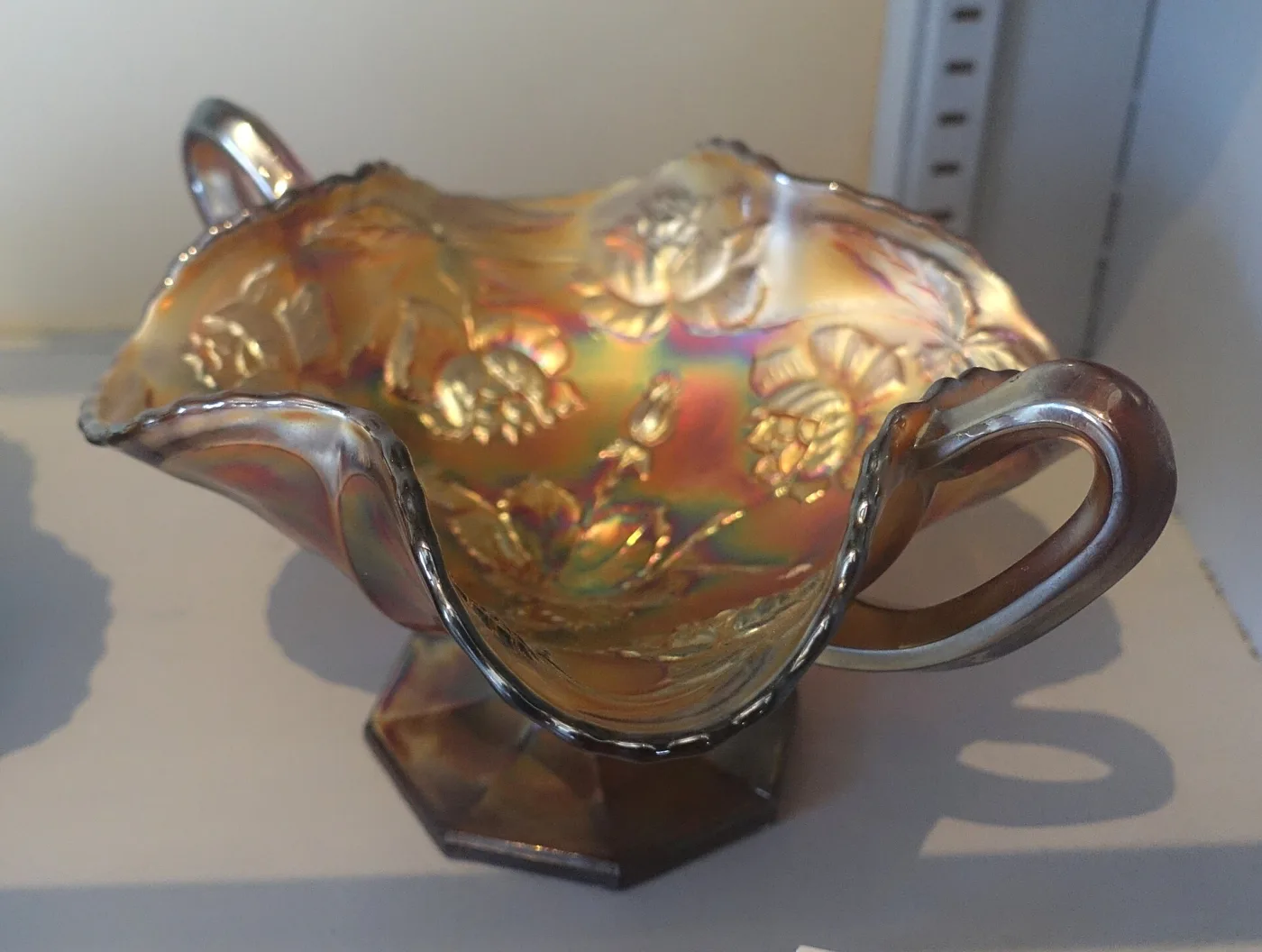
- Metallic Salts: Iron chloride and tin chloride solutions sprayed on hot glass
- Application Timing: Applied while glass still hot from pressing
- Chemical Reaction: Salts bond to glass surface creating iridescent layer
- Reheating: Some pieces reheated to enhance iridescence
- Variation: Application technique affected iridescent quality
Pressed Glass Foundation
The base construction of carnival glass:
- Mold Pressing: Hot glass pressed into metal molds
- Pattern Imprinting: Intricate designs formed by mold
- Mass Production: Enabled affordable manufacturing
- Seam Lines: Mold seams visible on many pieces
- Shaping: Additional hand-shaping for ruffles and edges
Distinguishing Features
Key characteristics that identify carnival glass:
- Rainbow Effect: Multiple colors visible as light changes
- Surface Iridescence: Color on surface, not through glass
- Pressed Patterns: Raised or intaglio designs
- Base Color: Underlying glass color visible in thick areas
- Period Characteristics: Specific patterns and shapes of era
Carnival vs. Other Iridescent Glass
Distinguishing carnival from similar glassware:
- Tiffany Favrile: Blown, not pressed; iridescence throughout glass
- Art Glass: Usually blown, one-of-a-kind pieces
- Stretch Glass: Different iridescent process, "onionskin" texture
- Modern Iridescent: Different chemical processes, different appearance
- Reproduction Carnival: Post-1960s pieces, often marked
Base Glass Colors
The base color of carnival glass—the actual color of the glass beneath the iridescent surface—is a primary factor in identification and value. Different colors were produced in varying quantities, making some significantly rarer than others.
Marigold (Most Common)
The most prevalent carnival glass color:
- Base Glass: Clear glass with amber/orange iridescent coating
- Appearance: Golden-orange with multicolor iridescence
- Production: Most extensively produced color
- Value: Generally most affordable due to abundance
- Variations: Light marigold, pumpkin marigold, pastel marigold
Amethyst/Purple
A popular and collectible color:
- Base Glass: Purple/amethyst colored glass
- Appearance: Rich purple with electric iridescence
- Production: Second most common after marigold
- Value: Moderately valued, more than marigold
- Appeal: Strong collector following
Blue
A highly desirable color category:
- Cobalt Blue: Deep, rich blue base glass
- Sapphire Blue: Lighter, more transparent blue
- Electric Blue: Brilliant blue with strong iridescence
- Ice Blue: Very pale blue, quite rare
- Value: Generally commands premium prices
Green
Another sought-after color:
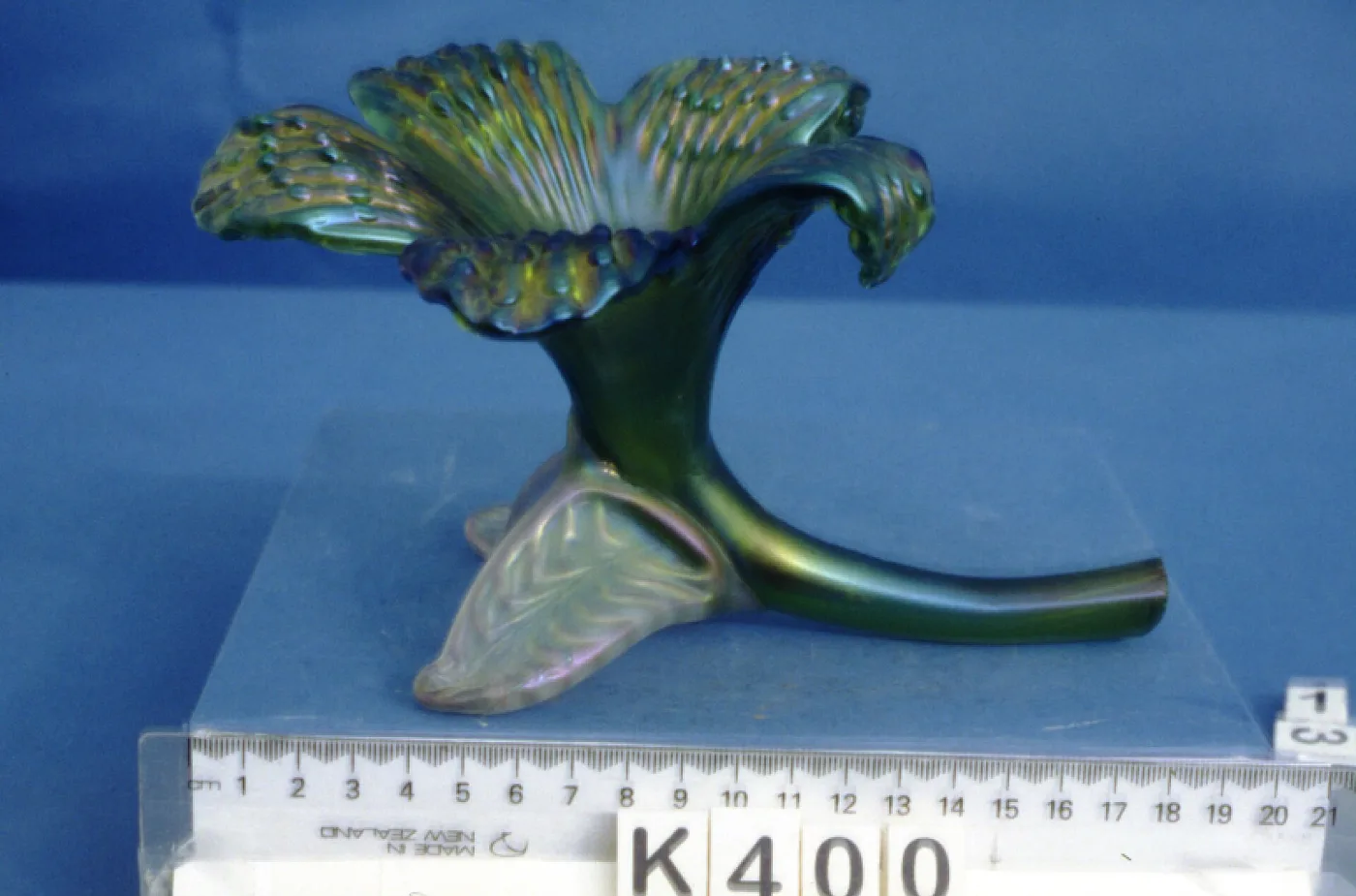
- Emerald Green: Deep, rich green base
- Lime Green: Lighter, yellowish green
- Ice Green: Pale green, relatively rare
- Helios Green: Green with golden iridescence
- Value: Higher than marigold, varies by shade
Rare and Unusual Colors
Colors that command significant premiums:
- Red: Extremely rare, highest values; true red base glass
- Aqua Opalescent: Pale blue with milky opalescence
- Vaseline/Uranium: Yellow-green, glows under UV light
- White: Milk glass base with iridescence
- Smoke: Grayish base, sophisticated appearance
- Lavender: Pale purple, delicate appearance
- Celeste Blue: Pale ice blue, quite rare
- Peach Opalescent: Peachy pink with opalescence
Color Identification Tips
How to accurately identify base colors:
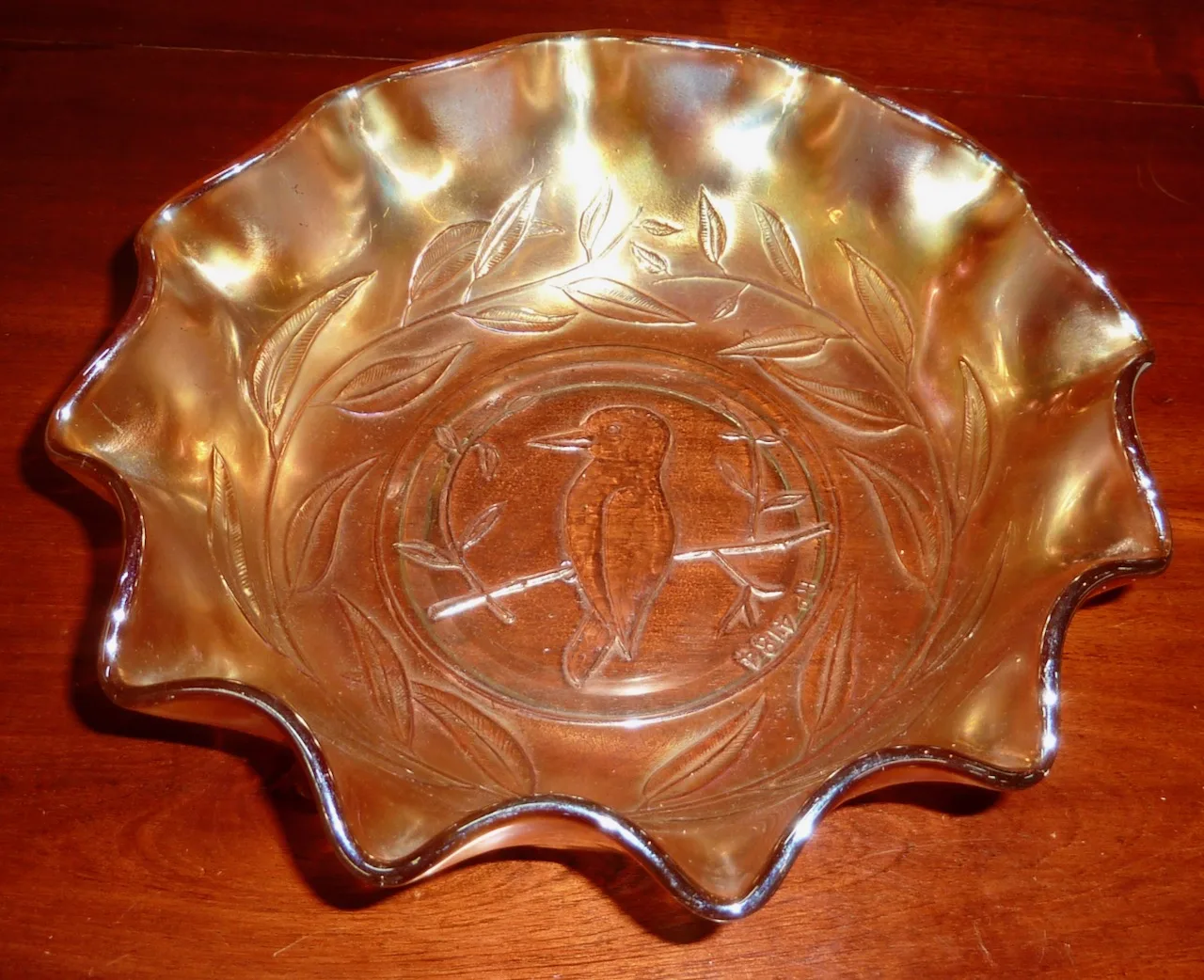
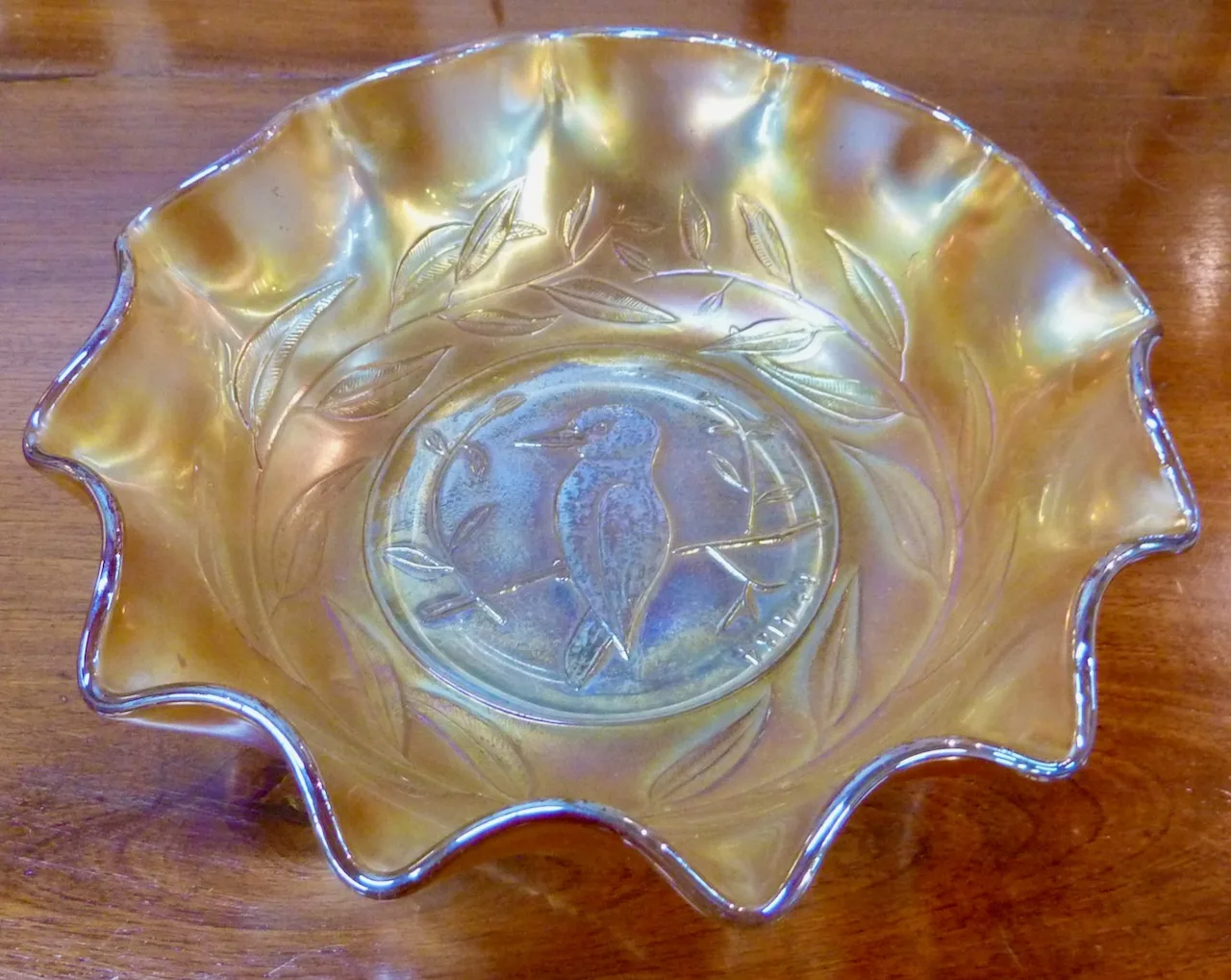
- Light Source: Examine in natural daylight for accuracy
- Thick Areas: Look at thickest glass areas for true color
- Edge Viewing: Hold to light and view through edge
- Iridescence Interference: Don't confuse iridescence with base color
- Photography: Colors can appear differently in photos
Understanding Iridescence
The quality and character of iridescence significantly impacts carnival glass value. Learning to evaluate iridescent finish separates knowledgeable collectors from casual observers.
Types of Iridescence
Different iridescent effects found on carnival glass:
- Multicolor Rainbow: Full spectrum of colors visible
- Electric: Intense, bright, almost metallic shine
- Satin: Softer, more subtle iridescent glow
- Radium: Mirror-like, silvery iridescence
- Pastel: Delicate, light iridescent finish
Iridescence Quality Factors
What makes excellent iridescence:
- Intensity: Strong, vibrant color play
- Coverage: Even distribution across surface
- Color Range: Multiple colors visible in finish
- Depth: Dimensional, almost glowing appearance
- Condition: No wear, scratches, or dullness
Common Iridescence Problems
Issues that affect iridescent quality:
- Light Iridescence: Thin, weak coating—reduces value
- Uneven Application: Spotty or blotchy coverage
- Wear: Iridescence worn from handling or cleaning
- Scratches: Surface damage affecting finish
- Chemical Damage: From improper cleaning
Interior vs. Exterior Iridescence
Understanding where iridescence appears:
- Exterior Only: Most common application
- Interior Only: Less common, found on some bowls
- Both Sides: Highest quality pieces
- Value Impact: Both-sides iridescence commands premium
Major Carnival Glass Manufacturers
Understanding the major American carnival glass manufacturers and their distinctive characteristics is essential for accurate identification and attribution.
Fenton Art Glass Company
The pioneer of carnival glass:
- Location: Williamstown, West Virginia
- Active: 1905-2011 (carnival: 1907-1930s, revival: 1970s+)
- Significance: First American carnival glass producer
- Signature Patterns: Dragon and Lotus, Orange Tree, Butterfly and Berry
- Quality: Known for exceptional iridescence and craftsmanship
- Marks: Early pieces unmarked; later pieces marked "Fenton"
Northwood Glass Company
Producer of highly collectible patterns:
- Location: Wheeling, West Virginia
- Active: 1902-1925
- Founder: Harry Northwood, English immigrant glassmaker
- Signature Patterns: Grape and Cable, Peacock at the Fountain, Good Luck
- Mark: Underlined "N" in circle—highly recognizable
- Quality: Excellent iridescence, fine detail
Imperial Glass Company
Major producer with distinctive style:
- Location: Bellaire, Ohio
- Active: 1901-1984
- Signature Patterns: Lustre Rose, Heavy Grape, Windmill
- Mark: Iron Cross or "IG" mark on later pieces
- Characteristics: Heavier glass, distinctive patterns
- Revival: Produced reproduction carnival in 1960s-70s
Millersburg Glass Company
Short-lived but highly prized:
- Location: Millersburg, Ohio
- Active: 1909-1912 (only 3 years!)
- Founder: John Fenton (no relation to Fenton Art Glass)
- Significance: Rarest carnival glass due to short production
- Signature Patterns: Peacock at Urn, People's Vase, Hobstar and Feather
- Value: Commands highest prices; People's Vase sold for $155,000
- Quality: Exceptional quality, "radium" iridescence
Dugan/Diamond Glass Company
Important Ohio manufacturer:
- Location: Indiana, Pennsylvania
- Active: 1904-1931 (as Dugan), continued as Diamond
- Signature Patterns: Farmyard, Wreathed Cherry, Ski Star
- Mark: "D" in diamond shape
- Characteristics: Known for unusual shapes and colors
Other Notable Makers
Additional manufacturers to recognize:
- Cambridge Glass: Massachusetts producer, elegant patterns
- Westmoreland Glass: Pennsylvania, continued production into 1970s
- U.S. Glass Company: Conglomerate of smaller manufacturers
- Fostoria Glass: Limited carnival production; better known for elegant tableware

Identifying Maker's Marks
While many carnival glass pieces are unmarked, understanding the marks that do exist helps with attribution and authentication.
Northwood Mark
The most recognized carnival glass mark:
- Design: Capital "N" with underline, often in circle
- Location: Usually on base or inside bowl
- Period: Used from 1905-1925
- Variations: Several slightly different versions exist
- Importance: Marked pieces often command premium
Other Manufacturer Marks
Marks from other major producers:
- Imperial: Iron Cross mark, later "IG" or "Imperial"
- Dugan/Diamond: "D" inside diamond shape
- Fenton: Early pieces unmarked; after 1970s: "Fenton" in oval
- Cambridge: "C" in triangle
- Westmoreland: "WG" mark on later pieces
Unmarked Pieces
Identifying carnival glass without marks:
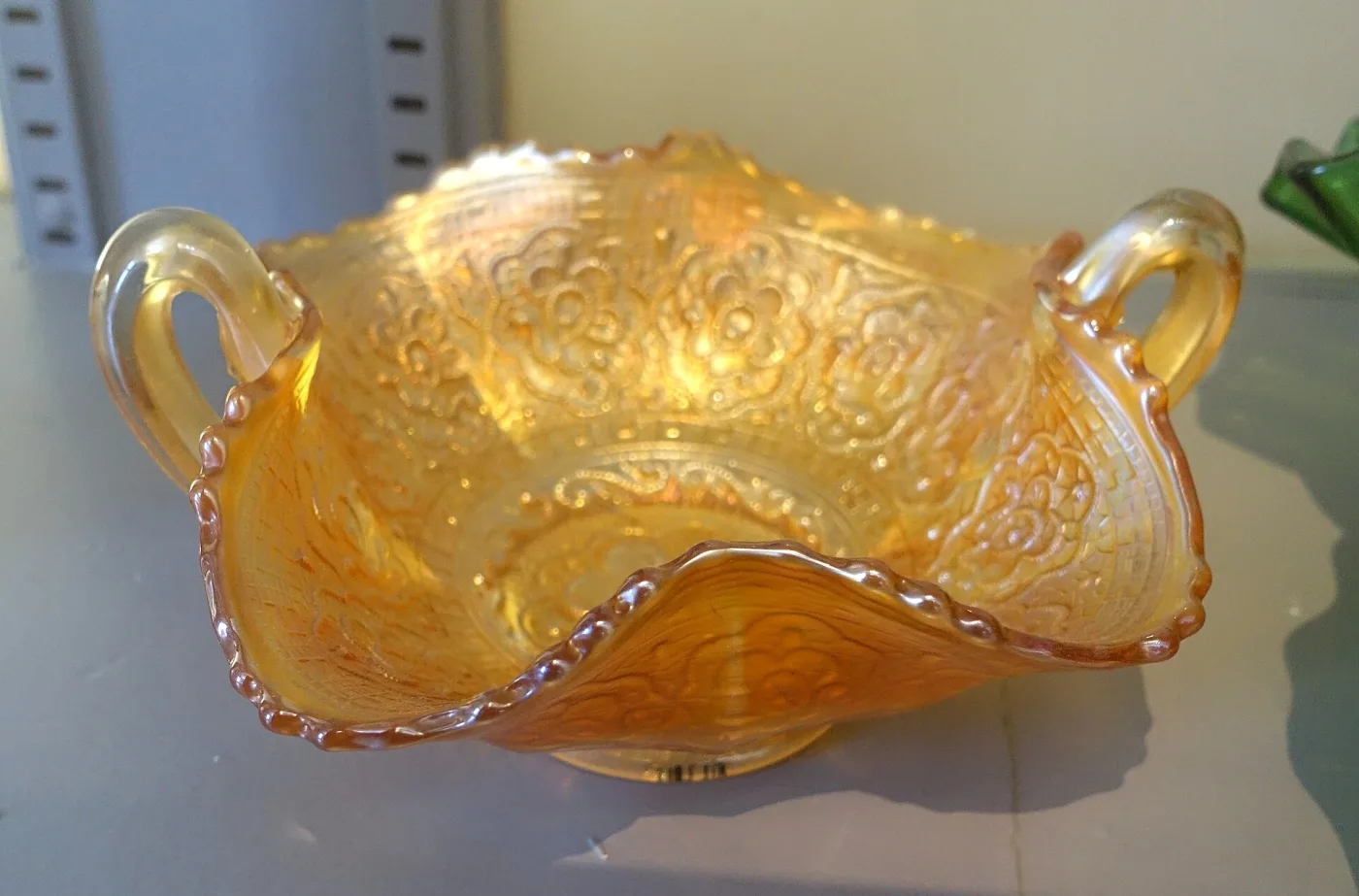
- Pattern Attribution: Many patterns exclusive to specific makers
- Color Characteristics: Each maker had distinctive colors
- Glass Quality: Weight, clarity, and feel differ by maker
- Shape Details: Ruffling, crimping styles vary
- Reference Books: Essential for pattern identification
Reproduction Marks
Identifying newer production:
- Required Marking: Modern reproductions usually marked
- "Made in Taiwan": Common on Asian reproductions
- Fenton Logo: Modern Fenton pieces clearly marked
- Imperial "IG": Reissued patterns marked with IG
- Dating Marks: Some include production dates
Popular Patterns and Motifs
Carnival glass features hundreds of distinct patterns, ranging from common to extremely rare. Understanding pattern identification is crucial for collectors.
Nature-Inspired Patterns
Floral and botanical motifs:
- Grape and Cable: Northwood's most famous pattern—grapes with cable border
- Orange Tree: Fenton signature—stylized orange trees
- Butterfly and Berry: Fenton—butterflies amid berry branches
- Lotus and Dragon: Fenton—oriental-inspired design
- Wreath of Roses: Elegant floral design
- Acorn: Simple acorn motif, multiple makers
Bird and Animal Patterns
Fauna-based designs:
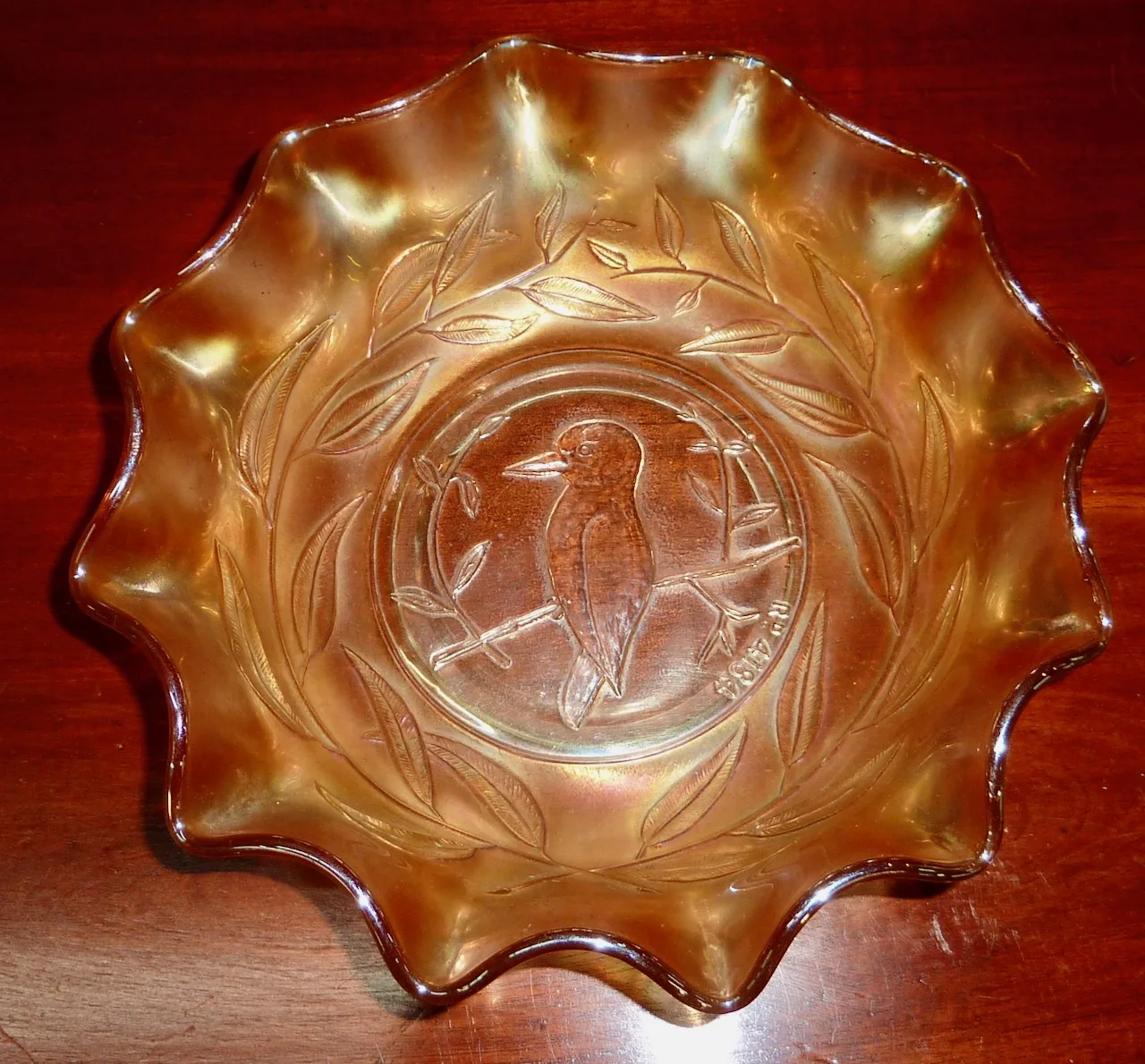
- Peacock at the Fountain: Northwood—extremely popular
- Peacock at Urn: Millersburg—highly valued
- Rooster: Various rooster designs
- Swan: Elegant bird motifs
- Farmyard: Dugan—roosters in farmyard scene
- Stag and Holly: Fenton—deer amid holly
Geometric Patterns
Abstract and geometric designs:
- Hobstar: Star patterns, multiple variations
- Fine Rib: Vertical ribbed pattern
- Beaded Cable: Beaded rope-like design
- Diamond: Various diamond configurations
- Zipper: Interlocking pattern
Pictorial Patterns
Scenic and narrative designs:
- Windmill: Imperial—Dutch windmill scene
- Good Luck: Northwood—horseshoe motif
- Town Pump: Northwood—village pump scene
- Soldiers and Sailors: Patriotic commemorative
Rare and Valuable Patterns
Patterns commanding highest prices:
- People's Vase: Millersburg—record $155,000 sale
- Farmyard: Dugan—highly sought after
- Millersburg Patterns: All relatively rare due to short production
- Advertising Pieces: Limited production promotional items
- Experimental Colors: One-of-a-kind color variations
Shapes and Forms
Carnival glass was produced in a wide variety of shapes, each with its own collector following and value considerations.
Bowls
The most common carnival glass form:
- Berry Bowls: Small individual serving bowls
- Master Bowls: Large serving bowls, often footed
- Fruit Bowls: Deep bowls for fruit display
- Ice Cream Bowls: Shaped for ice cream service
- Rose Bowls: Crimped top bowls for flowers
Bowl Edge Treatments
Distinctive finishing techniques:
- Ruffled: Wavy, decorative edge—most common
- Three-in-One: Alternating ruffles pattern
- Pie Crust: Crimped like pie edge
- Candy Ribbon: Twisted ribbon effect
- Ball: Smooth, round edge
- Tricorner: Three-pointed shape
Plates and Platters
Flat serving pieces:
- Plates: Flat with low rim
- Chop Plates: Large serving plates
- Handgrip Plates: With handles for serving
- Value Note: Plates often more valuable than bowls in same pattern
Vases
Vertical display pieces:
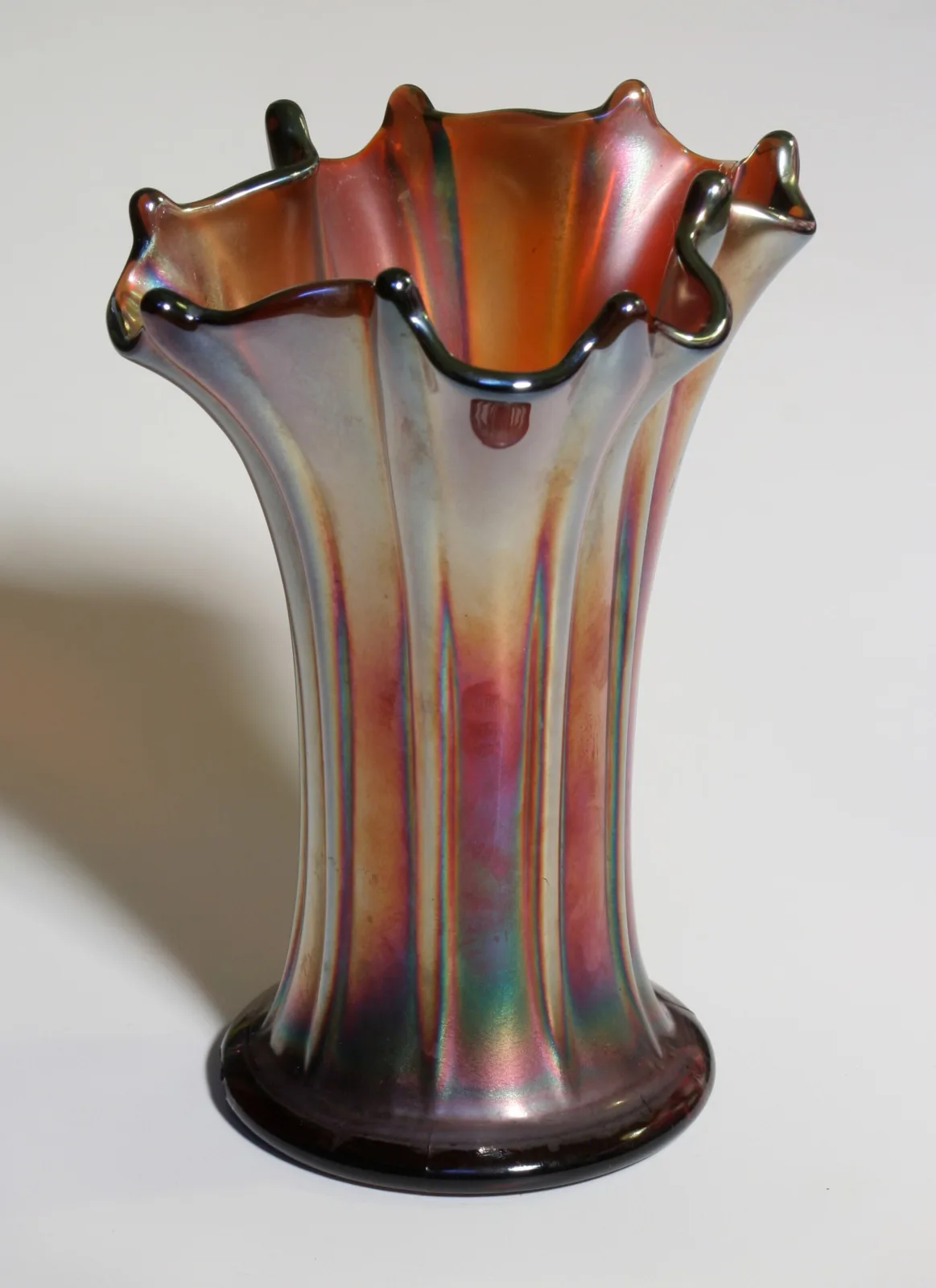
- Swing Vases: Pulled from tumbler mold, very tall
- Standard Vases: Traditional vase shapes
- Jack-in-the-Pulpit: Flared, dramatic form
- Funeral Vases: Very tall, for grave decoration
- Bud Vases: Small single-flower vases
Table Service Items
Functional tableware:
- Water Sets: Pitcher with tumblers
- Table Sets: Creamer, sugar, butter, spooner
- Punch Sets: Bowl with cups and base
- Berry Sets: Master bowl with small bowls
- Compotes: Footed serving dishes
Specialty Forms
Unusual and collectible shapes:
- Hatpin Holders: Tall narrow holders
- Loving Cups: Two-handled trophy forms
- Epergnes: Centerpieces with lily inserts
- Candlesticks: Various heights and styles
- Baskets: With applied handles
- Whimseys: Unusual one-of-a-kind shapes
The Carnival Glass Grading System
A standardized grading system helps collectors evaluate and compare carnival glass quality. Understanding these criteria is essential for accurate valuation.
Iridescence Grading
Evaluating the quality of the finish:
- Outstanding: Brilliant, multicolor, exceptional depth
- Excellent: Strong, vibrant iridescence
- Good: Nice color play, even coverage
- Average: Moderate iridescence, some weak areas
- Poor: Light, spotty, or heavily worn
Condition Grading
Assessing physical condition:
- Mint: Perfect condition, no damage or wear
- Near Mint: Very minor flaws, barely visible
- Excellent: Minor wear or tiny flaws
- Good: Some wear, small chips possible
- Fair: Noticeable damage, significant wear
- Poor: Major damage, for display only
Pattern Definition
Evaluating mold quality:
- Sharp: Crisp, well-defined pattern details
- Good: Clear pattern, minor softness
- Soft: Pattern somewhat blurred or shallow
- Worn Mold: Pattern weak from mold wear
Color Quality
Assessing base color:
- Rich: Deep, saturated base color
- Good: Pleasant, even coloring
- Light: Pale version of color
- Uneven: Color variation within piece
Manufacturing Flaws vs. Damage
Distinguishing original issues from later damage:
- Straw Marks: Manufacturing lines, acceptable
- Annealing Lines: Cooling stress marks, original
- Chips: Post-production damage, affects value
- Cracks: Serious damage, major value impact
- Repairs: Can significantly reduce value
Rare and Valuable Colors
Certain colors were produced in very limited quantities and command significant premiums among collectors.
Red Carnival Glass
The most valuable color:
- Rarity: Extremely rare, difficult to produce
- Production: Required expensive gold or selenium
- Value: Commands highest premiums—often 10x+ standard colors
- Makers: Fenton and Imperial primary producers
- Verification: True red shows red even in thick areas
- Caution: Amberina (red/amber) often confused with true red
Aqua Opalescent
A highly prized color combination:
- Appearance: Pale aqua with milky opalescence
- Rarity: Limited production, highly sought
- Value: Strong premium over common colors
- Makers: Northwood and Fenton primary
- Patterns: Found in select patterns only
Ice Colors
Pastel versions of standard colors:
- Ice Blue: Very pale blue, quite valuable
- Ice Green: Pale green, sought after
- White: Clear/milk glass base, uncommon
- Production: Limited quantities made
- Appeal: Delicate appearance attracts collectors
Vaseline/Uranium Glass
Distinctive fluorescent color:
- Appearance: Yellow-green color
- Special Property: Glows bright green under UV light
- Composition: Contains uranium oxide
- Safety: Low-level radiation, generally considered safe
- Value: Premium due to novelty and rarity
Smoke
Sophisticated gray-based color:
- Appearance: Gray to brownish-gray base
- Iridescence: Often shows multicolor effectively
- Rarity: Less common than standard colors
- Makers: Imperial primary producer
Wisteria
Rare purple variant:
- Appearance: Pale lavender/wisteria purple
- Rarity: Very limited production
- Makers: Northwood pieces most common
- Value: Significant premium
Authentication and Reproductions
The popularity of carnival glass has led to significant reproduction production. Learning to distinguish original pieces from later reproductions is essential.
Original vs. Reproduction
Key differences to identify:
- Glass Weight: Originals often heavier, better quality glass
- Iridescence: Original finish has different quality than modern
- Pattern Sharpness: Original molds produced crisper patterns
- Color Accuracy: Reproductions may have "off" colors
- Marks: Reproductions usually marked; originals often not
Common Reproductions
Frequently reproduced items:
- Imperial Reissues: Same molds used, marked "IG"
- Fenton Reproductions: Marked with Fenton logo
- Summit Art Glass: Reproductions of classic patterns
- Asian Imports: Often marked "Made in Taiwan" or similar
- L.G. Wright: Produced reproductions from 1930s-1990s
Red Flags for Fakes
Warning signs of non-original pieces:
- Too Perfect: Overly pristine condition suspicious
- Wrong Colors: Colors not produced in that pattern originally
- Price Too Good: Underpriced "rare" pieces warrant scrutiny
- Modern Feel: Glass feels different than period pieces
- Unmarked "Rare": Supposedly rare pieces without provenance
Authentication Resources
Tools for verification:
- Reference Books: Essential for pattern verification
- Collector Clubs: ACGA and other organizations
- Expert Dealers: Established carnival glass specialists
- Auction Records: Compare with documented examples
- UV Light: Can reveal repairs and some reproductions
Value Factors and Pricing
Multiple factors combine to determine carnival glass value. Understanding these helps collectors make informed decisions.
Primary Value Factors
Elements with greatest impact on value:
- Color: Rare colors command significant premiums
- Pattern: Rare patterns more valuable than common
- Maker: Millersburg pieces typically most valuable
- Shape: Plates often worth more than bowls
- Condition: Mint condition essential for top prices
- Iridescence Quality: Better finish = higher value
Price Ranges
General market value guidelines:
- Common Pieces: $20-$50 for marigold bowls, standard patterns
- Better Colors: $50-$200 for blue, green, amethyst
- Rare Colors: $500-$5,000+ for red, aqua opal, ice colors
- Rare Patterns: $1,000-$50,000+ for Millersburg, rare patterns
- Record Prices: $155,000 for Millersburg People's Vase
Market Trends
Current collecting trends:
- Rare Colors: Continued strong demand
- Millersburg: Consistently commands premiums
- Common Marigold: Values stable but modest
- Complete Sets: Premium for matched sets
- Documentation: Provenance adds value
Where to Buy
Sources for acquiring carnival glass:
- Auctions: Major auction houses, carnival glass specialty auctions
- Antique Shows: Glass shows, antique markets
- Estate Sales: Potential for good finds
- Online: eBay, specialized glass sites
- Dealers: Established carnival glass specialists
- Club Sales: ACGA conventions and sales
Collecting Strategies and Tips
Building a meaningful carnival glass collection requires strategy, knowledge, and patience.
Getting Started
Advice for new collectors:
- Study First: Learn before buying expensive pieces
- Handle Pieces: Develop feel for authentic glass
- Start Affordable: Begin with common colors and patterns
- Buy Quality: Better to have fewer excellent pieces
- Join Clubs: Learn from experienced collectors
Collecting Approaches
Different ways to focus a collection:
- By Pattern: Collect all colors/shapes in one pattern
- By Maker: Focus on one manufacturer
- By Color: Specialize in one color
- By Form: Collect specific shapes (vases, water sets)
- By Rarity: Focus on rare and unusual pieces
Building Knowledge
Resources for learning:
- Reference Books: Standard pattern guides essential
- ACGA Membership: American Carnival Glass Association
- HOC Membership: Heart of America Carnival Glass Association
- Online Resources: Collector websites and forums
- Museum Collections: Study documented examples
Investment Considerations
For collectors considering value:
- Buy the Best: Quality pieces hold value better
- Document Purchases: Keep records and provenance
- Condition Critical: Damaged pieces much less valuable
- Market Knowledge: Understand current trends
- Insurance: Document and insure valuable pieces
Care, Cleaning, and Display
Proper care preserves both beauty and value of carnival glass collections.
Safe Cleaning Methods
How to clean carnival glass properly:
- Lukewarm Water: Never use hot water
- Mild Soap: Gentle dish soap only
- Soft Cloth: No abrasive materials
- Air Dry: Or use soft lint-free cloth
- Avoid: Dishwashers, harsh chemicals, ammonia
Cleaning Don'ts
Actions that damage carnival glass:
- No Abrasives: Can scratch iridescence
- No Ammonia: Can damage finish
- No Dishwasher: Heat and chemicals harmful
- No Soaking: Extended water exposure risky
- No Scrubbing: Gentle handling only
Display Recommendations
Showing off your collection:
- Lighting: Display where light catches iridescence
- Stability: Secure display to prevent falls
- UV Protection: Some fading possible with direct sun
- Cabinet Display: Protects from dust and damage
- Rotation: Enjoy different pieces periodically
Storage Tips
Safe storage for pieces not displayed:
- Wrap Individually: Acid-free tissue or soft cloth
- No Stacking: Pieces can scratch each other
- Stable Temperature: Avoid extreme changes
- Padding: Use soft materials between pieces
- Inventory: Keep records of stored items
Handling Guidelines
Safe handling practices:
- Clean Hands: Oils can affect glass
- Two Hands: Support weight properly
- Stable Surface: Set down on padded surface
- Avoid Edges: Ruffled edges are delicate
- No Rings: Remove jewelry when handling