
Fender and Gibson Serial Numbers: Date a Guitar by Year
The serial number is the quickest way to date a Fender or a Gibson, and both companies changed their systems many times. The number gives you a range of years, not a birthday, and how wide that range is depends on when the guitar was made. This guide condenses Fender’s own published charts and the Gibson systems that dealers agree on, then reads out seven real serial numbers from photographs.
A guitar from the 1950s to the 1970s is vintage rather than antique, because an antique is usually a century old; our five checks for whether something is an antique explain the difference. These guitars still turn up at estate sales and in lofts, and the serial is where to start.
Table of Contents
Where to Find the Number
Fender has put its serials in several places. Early 1950s Stratocasters carry the number on the back plate over the vibrato springs, and some Telecasters on the bridge plate. From the mid-1950s most guitars have it stamped on the metal neck plate where the neck bolts to the body. From 1976 it moved to a decal on the headstock, front or back.
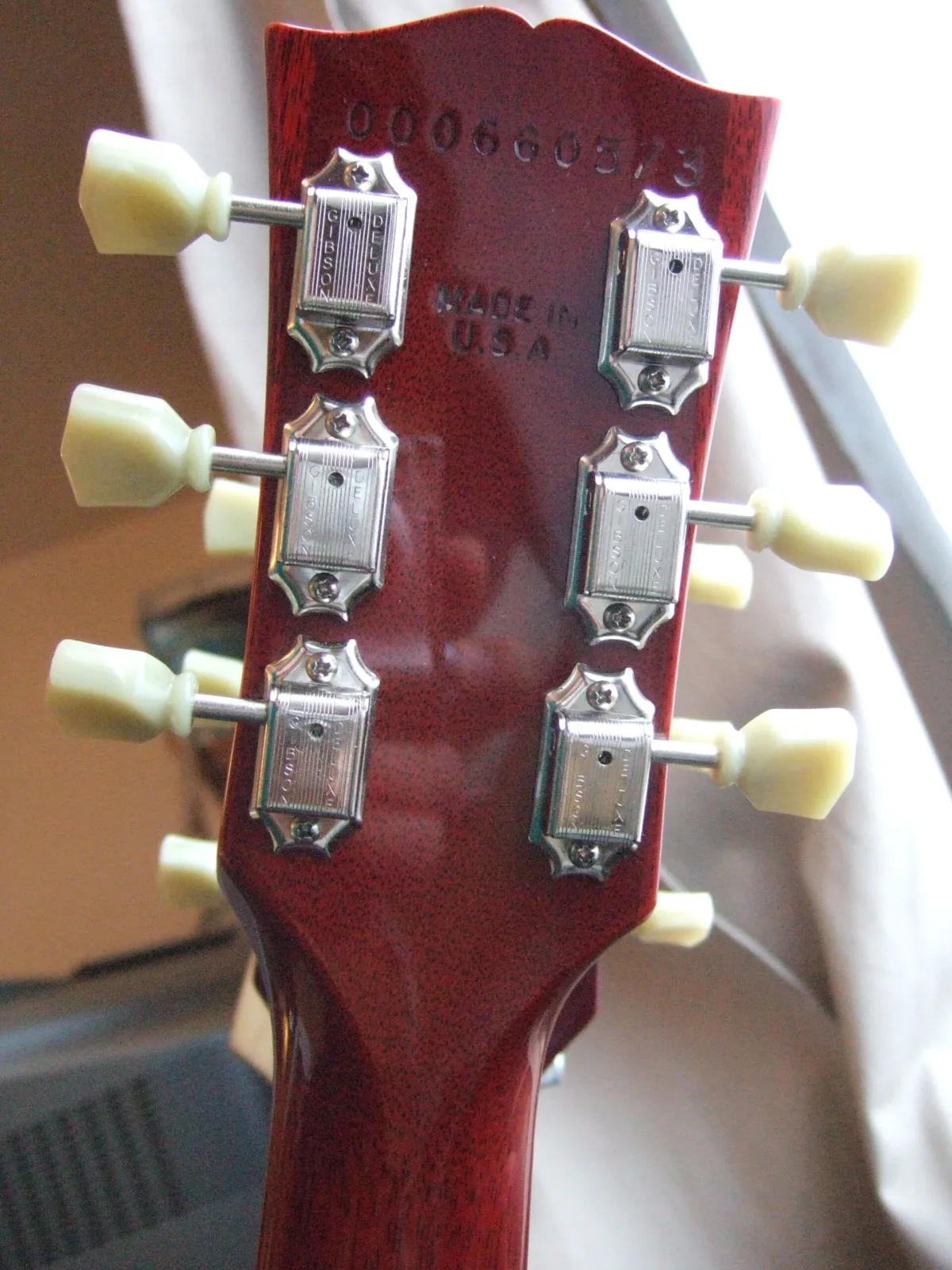
Gibson puts it on the back of the headstock. Solid-body guitars from the 1950s have an ink stamp there, and from 1961 the number is pressed into the wood. Hollow-body and acoustic guitars made before 1961 often carry it on a paper label inside, read through the f-hole or sound hole.
Fender, Made in USA
Condensed from Fender’s own support charts. Fender warns that its numbering was often out of sequence and that the years overlap by two to four years until the mid-1980s, so read each row as a likely range.
| Serial number | Years | Where you usually find it |
|---|---|---|
| Up to 6,000 | 1950–54 | Bridge plate or back plate |
| Up to 10,000 and the 10,000s | 1954–56 | Neck plate, or the back plate on early Stratocasters |
| 10,000s–50,000s | 1957–60, rising about 10,000 a year | Neck plate |
| 50,000s–90,000s | 1961–63 | Neck plate |
| L + 5 digits | 1963–65 | Neck plate |
| 100,000s–700,000s | 1965–76; CBS bought Fender in January 1965 | Neck plate |
| 76 or S6, S7, S8, S9 + 5 digits | 1976–81; the digit after S is the year | Headstock |
| E0–E4, E8, E9 + 5 digits | 1979–90; the digit after E roughly tracks the year | Headstock |
| V + 4 to 6 digits | From 1982, Vintage reissue series; date these from the neck | Varies by model |
| N + 5 or 6 digits | 1990s; N0 is 1990, N1 1991, and so on | Headstock |
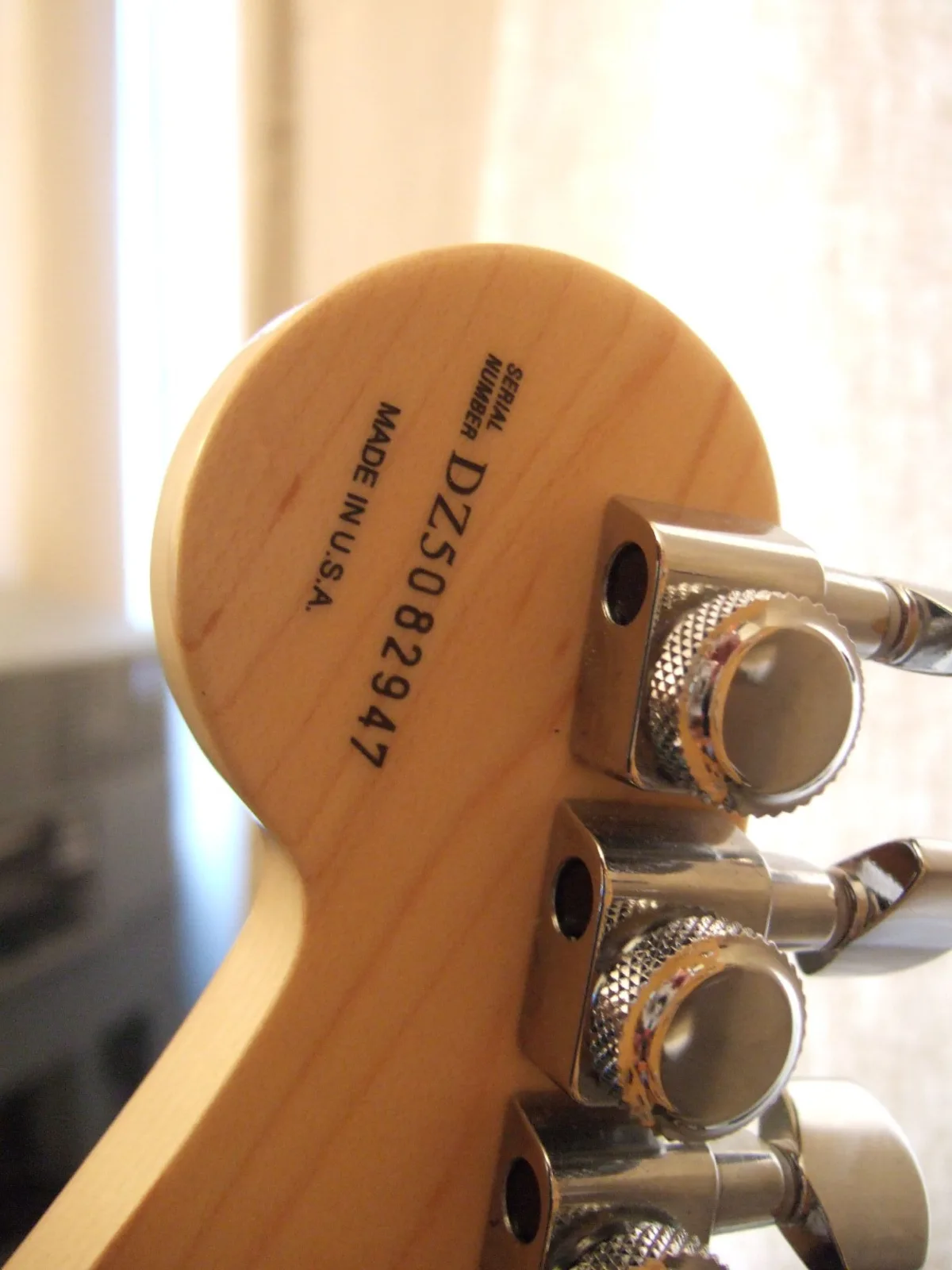
| Z + 5 or 6 digits (DZ on American Deluxe) | 2000s; Z0 is 2000, Z5 2005 | Headstock |
| “10”, a space and 7 digits | Late 2009 to March 2010 | Headstock |
| US + 8 digits | From about March 2010; the first two digits are the year, US10 is 2010 | Headstock |
One trap is printed on Fender’s own page. Decals were made in advance, and some N9 decals, meant for 1999, went onto guitars in 1990. A Fender with an N9 serial and early-1990s features may be older than the prefix suggests.
Fender, Made in Japan
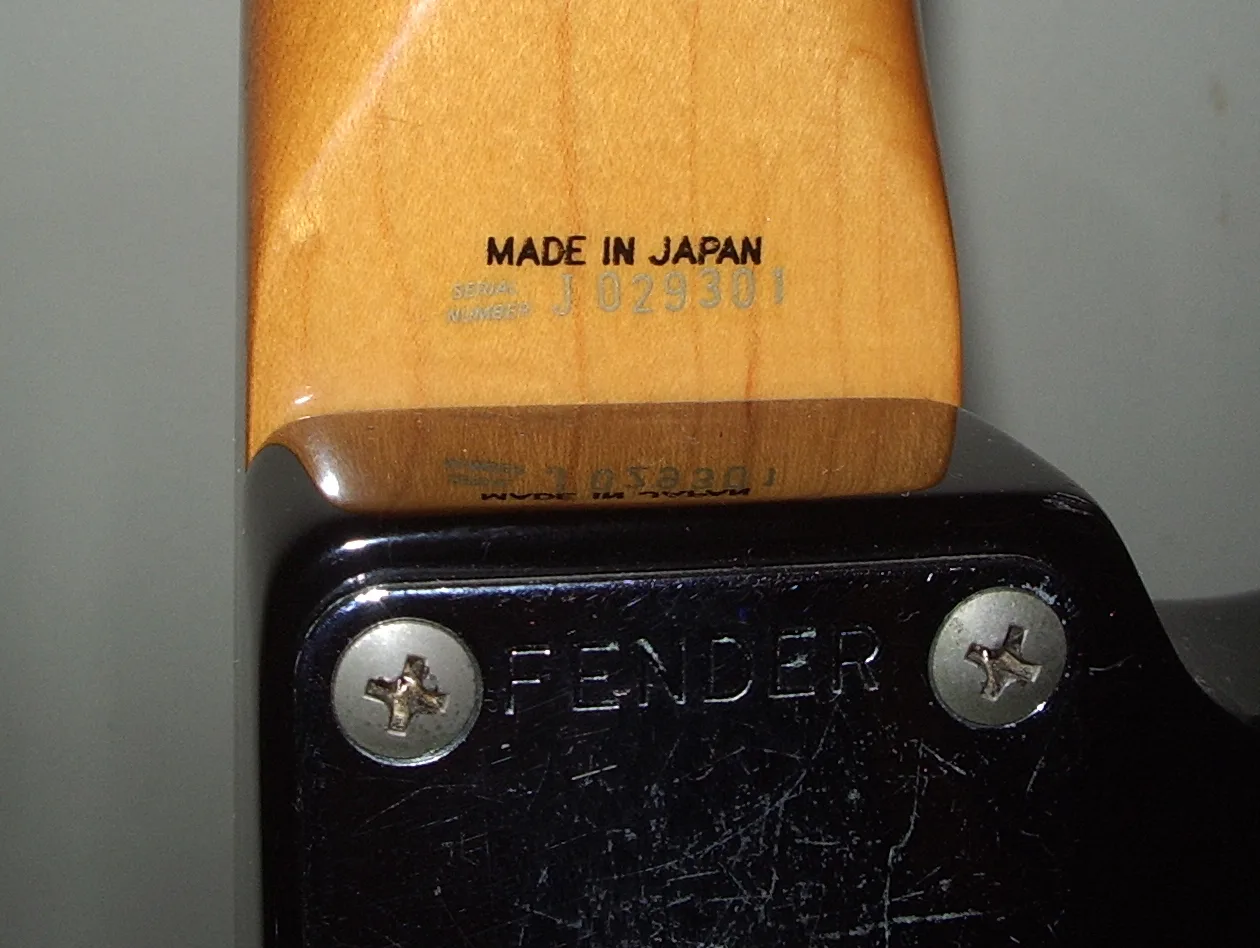
Fender’s Japanese guitars use a letter for the year. Fender says its records on early Japanese production are incomplete, so treat these as approximate.
| Prefix | Years | Prefix | Years |
|---|---|---|---|
| JV + 5 digits | 1982–84 | I or J + 6 digits | 1989–90 |
| SQ + 5 digits | 1983–84 | K + 6 digits | 1990–91 |
| E + 6 digits | 1984–87 | L + 6 digits | 1991–92 |
| A, B or C + 6 digits | 1985–86 | M + 6 digits | 1992–93 |
| F + 6 digits | 1986–87 | N, O, P or Q + 6 digits | 1993–94 |
| G + 6 digits | 1987–88 | S or T + 6 digits | 1994–95 |
| H + 6 digits | 1988–89 | U + 6, N + 5, V + 6 digits | 1995–97 |
From 1997 the wording changes to Crafted in Japan, and the letters start again: A + 6 digits for 1997–98, then O, P, Q and R + 5 digits through 2005. So read the wording before the letter, because a Q on a “Made in Japan” neck and a Q on a “Crafted in Japan” neck are about ten years apart.

Gibson
Gibson’s systems split into eras. The two dealer guides we compared agree on the formats below; they disagree on the exact years for some six-digit numbers, which is why that row says “check features”.
| Years | What the number looks like | How to read it |
|---|---|---|
| 1947–61, hollow bodies | “A” and a number on a paper label inside | Look up the A-series range for the year |
| 1953–60, solid bodies | Ink stamp on the back of the headstock, often with a space after the first digit | The first digit is the last digit of the year: 9 3182 is 1959 |
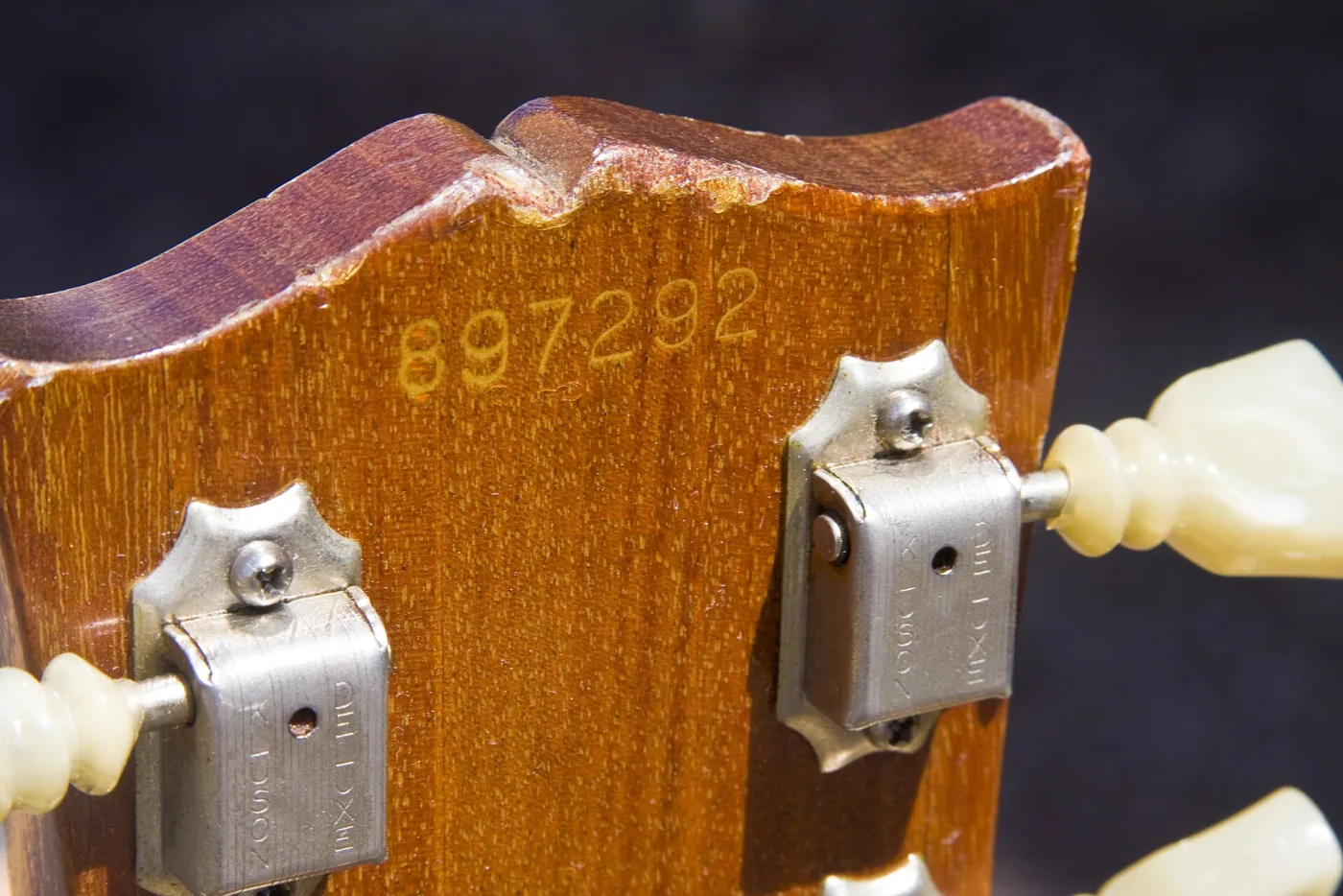
| 1961–69 | 4 to 6 digits pressed into the wood, no MADE IN U.S.A. | Numbers repeat across years; check features |
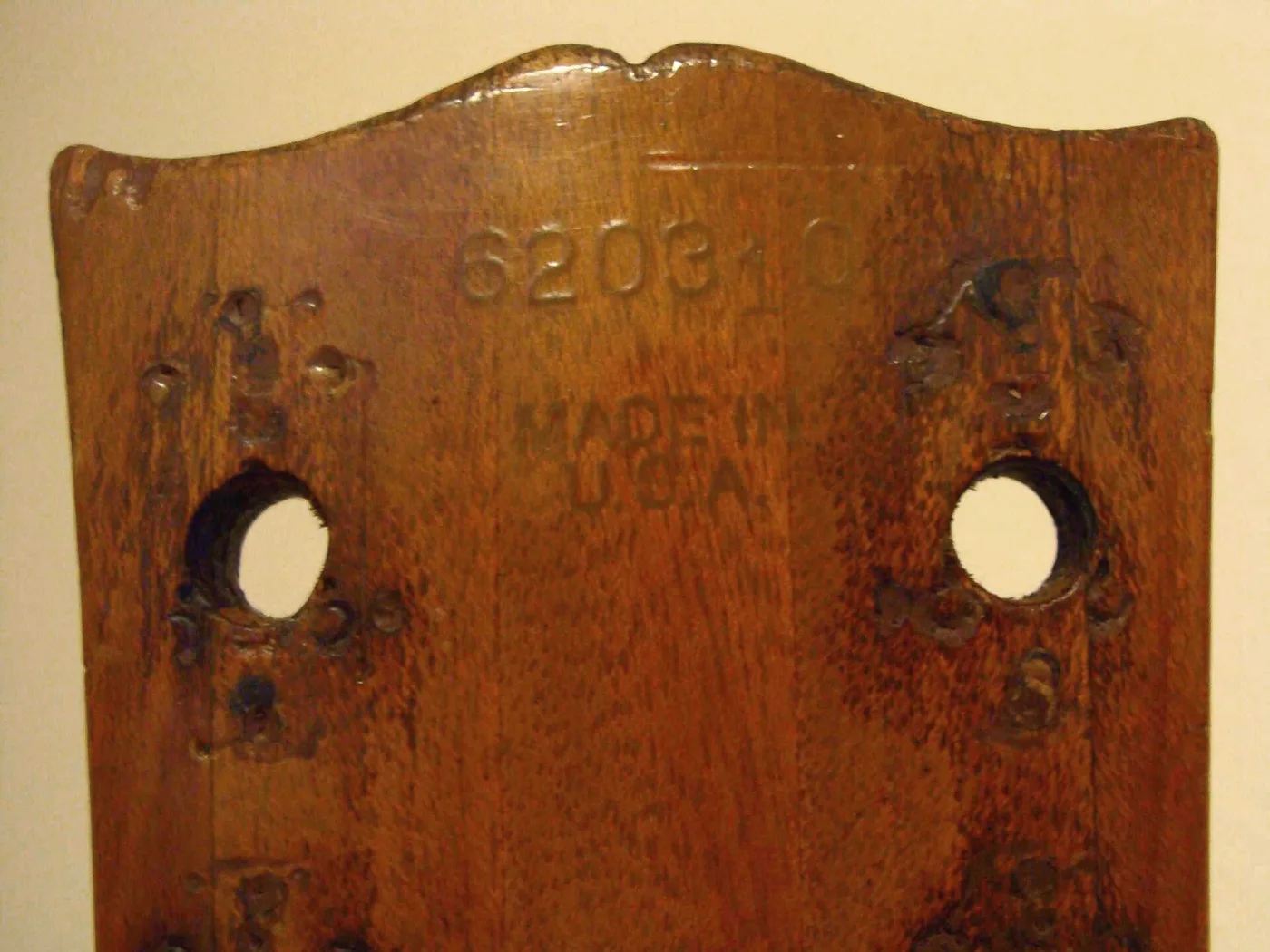
| About 1970–75 | 6 digits with MADE IN U.S.A. below | Ranges overlap; check features |
| 1975–77 | 8 digits on a decal | The first two digits are a year code; check features |
| 1977–2005 | 8 digits pressed in, MADE IN U.S.A. | 1st and 5th digits are the year, 2nd–4th the day of the year |
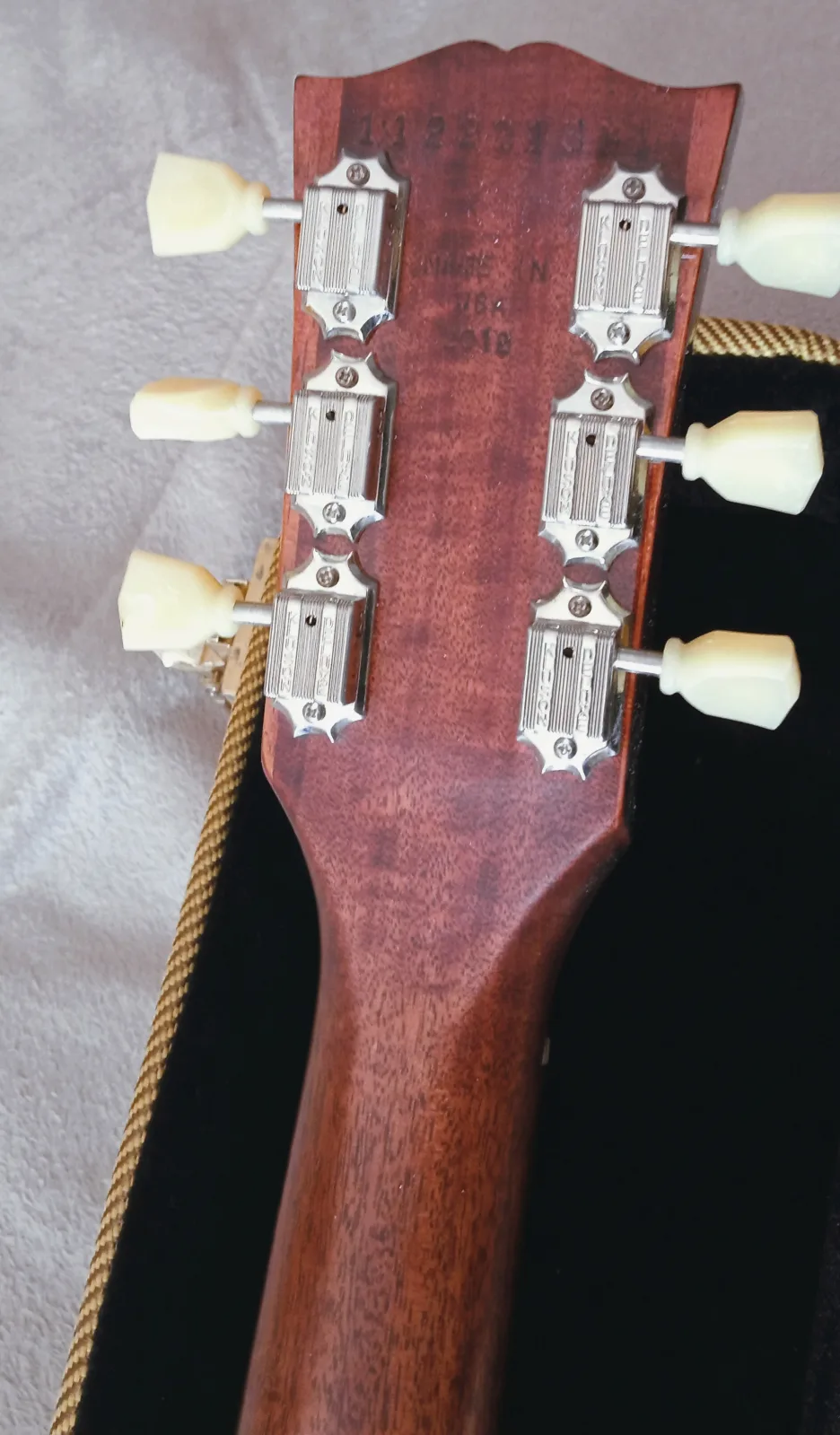
| 2005–2014 and from 2019 | 9 digits | Same as above; the 6th digit is a batch number |
| 2014–2019 | 9 digits | The first two digits are the model year |
The 1977 system is the one to learn. Take the first digit and the fifth digit together and you have the year; the three digits between them count the day from 1 January. The last three digits rank the guitar within that day, and for some years they also show the factory: Kalamazoo numbered each day from 001, Nashville from 500.
Seven Serial Numbers, Read Out
Built for this article from photographs where the number is legible. Each serial is read with the tables above, then compared with what the guitar’s owner or museum says.
| Serial | Read with the tables | Owner or museum says |
|---|---|---|
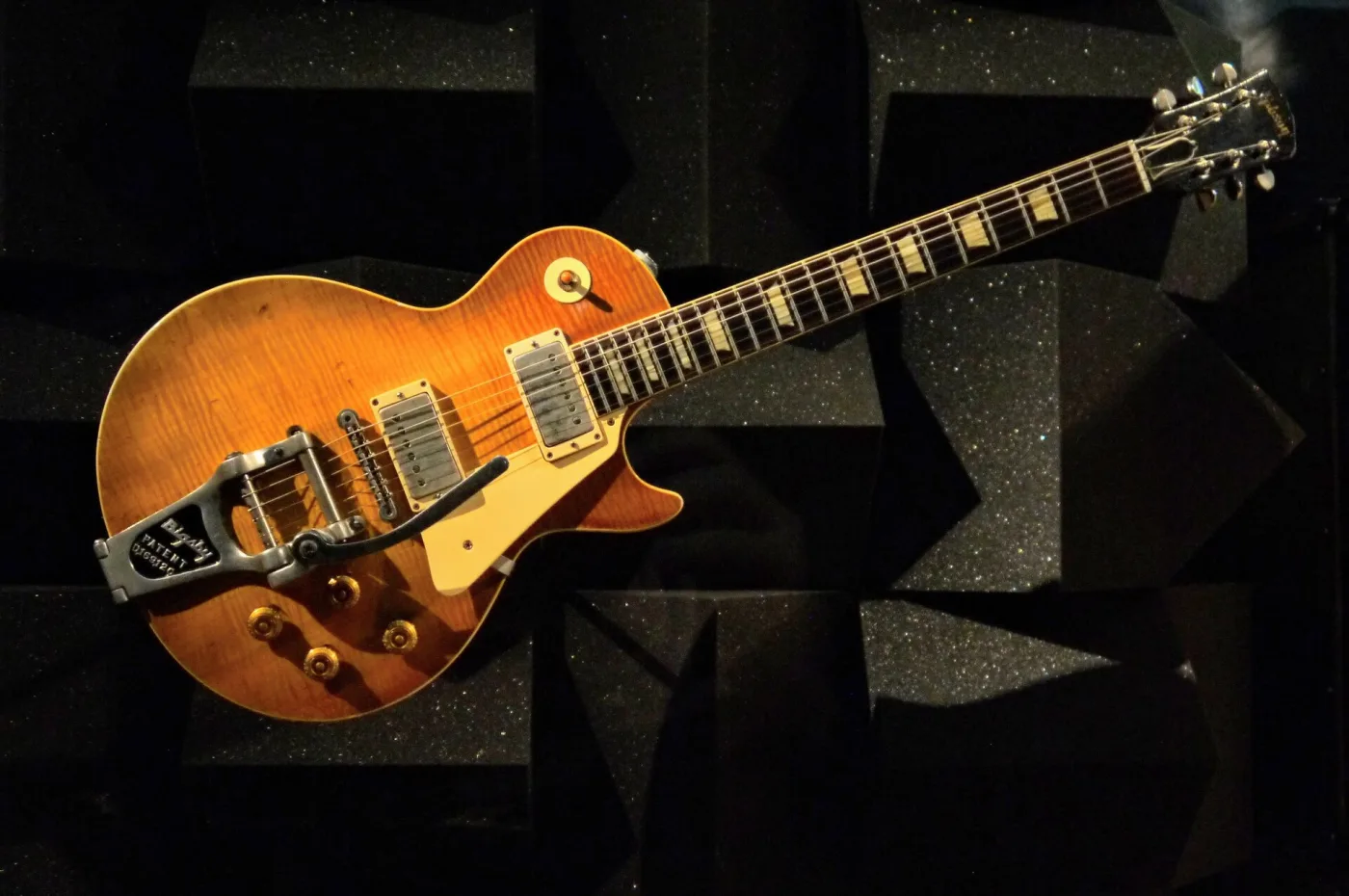
| Gibson 9 3182 (ink) | 1959 | 1959 Les Paul Standard |
| Gibson 897292, no MADE IN U.S.A. | 1960s; one guide says 1968, the other 1967 or 1969 | About 1969, citing the Blue Book |
| Gibson 620310, MADE IN U.S.A. | 1970s; both guides include 1970–72, one adds 1974–75 | 1973 |
| Gibson 000660573 | 6 January 2006 | 6 January 2006 |
| Gibson 112221331 | 1 May 2012 | 2012 |
| Fender DZ5082947 | American Deluxe, about 2005 | 2005 American Deluxe Stratocaster |
| Fender J029301, Made in Japan | About 1989–90 | Japanese Fender; no year given |
The modern numbers land on the day. The 1960s and 1970s numbers give a span, and in one case the owner’s year sits outside both guides’ ranges. That is not necessarily an error by anyone: it is what overlapping, batch-stamped numbers do.
Serial charts work the same way for other makers. Our guide to dating a Waltham pocket watch tests a published serial chart against factory records, and finds it exact for some movements and years out for others.
When the Number Is Not Enough
For a Fender, the best second opinion is under the neck. Fender says production dates were pencilled or stamped on the end of the neck heel on most guitars, though not consistently from 1973 to 1981. The date belongs to the neck, not the whole guitar, since necks waited in stock before they met a body. If you are not comfortable taking a neck off, a guitar tech can do it for you.
For a Gibson, look at the features that changed with the years: the logo, the knobs, the tuners and the pickups. The dealer guides insist on this for the 1960s and early 1970s, where the same number can belong to two or three different years. Before 1961, many hollow-body Gibsons also carry a factory order number inside, a batch number that can date the guitar when the serial is missing.
The serial does not set the price. Fender says it does not value used instruments and points owners to vintage dealers, Vintage Guitar magazine and published price guides. For how values work more generally, see the valuation guide, and for other instruments the musical instruments guide and our page on Stradivarius violin labels.
Frequently Asked Questions
How do I find out what year my Fender was made?
Read the serial number on the neck plate or the headstock and look it up in Fender's chart for the country where the guitar was made. The chart gives a range, because Fender's numbers overlap by two to four years until the mid-1980s. For a closer date, a guitar tech can remove the neck and read the date written on the heel.
How do I read a Gibson serial number?
From 1977 the first and fifth digits give the year and the second to fourth digits give the day of the year, so 000660573 was stamped on 6 January 2006. Earlier numbers follow other systems, and six-digit numbers from the 1960s and early 1970s repeat across several years.
Why does my guitar's serial number not match the chart?
Both makers numbered parts in batches and used them out of order, so a serial often lands a year or more from the build date. Necks also get swapped. Use the serial for a range, then narrow it with the neck date, the parts and the features of that year.
Where is the serial number on a Fender?
On most guitars made from the mid-1950s to 1976 it is stamped on the metal neck plate. From 1976 it is usually on the front or back of the headstock. Early Stratocasters have it on the back plate and some early Telecasters on the bridge plate.
Does the serial number tell me what my guitar is worth?
No. It dates the guitar, and the date matters, but value depends on the model, originality, condition and the market. Fender itself does not value used instruments and refers owners to vintage dealers, Vintage Guitar magazine and published price guides.
The Short Version
Find the number, note the wording next to it, and read it with the right chart: Fender by country, Gibson by era. Modern Gibson and Fender numbers can give you the year and sometimes the day. Numbers from the 1950s to the early 1980s give a range, and the neck date or the guitar’s features narrow it. Neither tells you the price, so take the date to a vintage dealer when the guitar deserves it.