
Antique Writing Slopes & Lap Desks Identification Guide
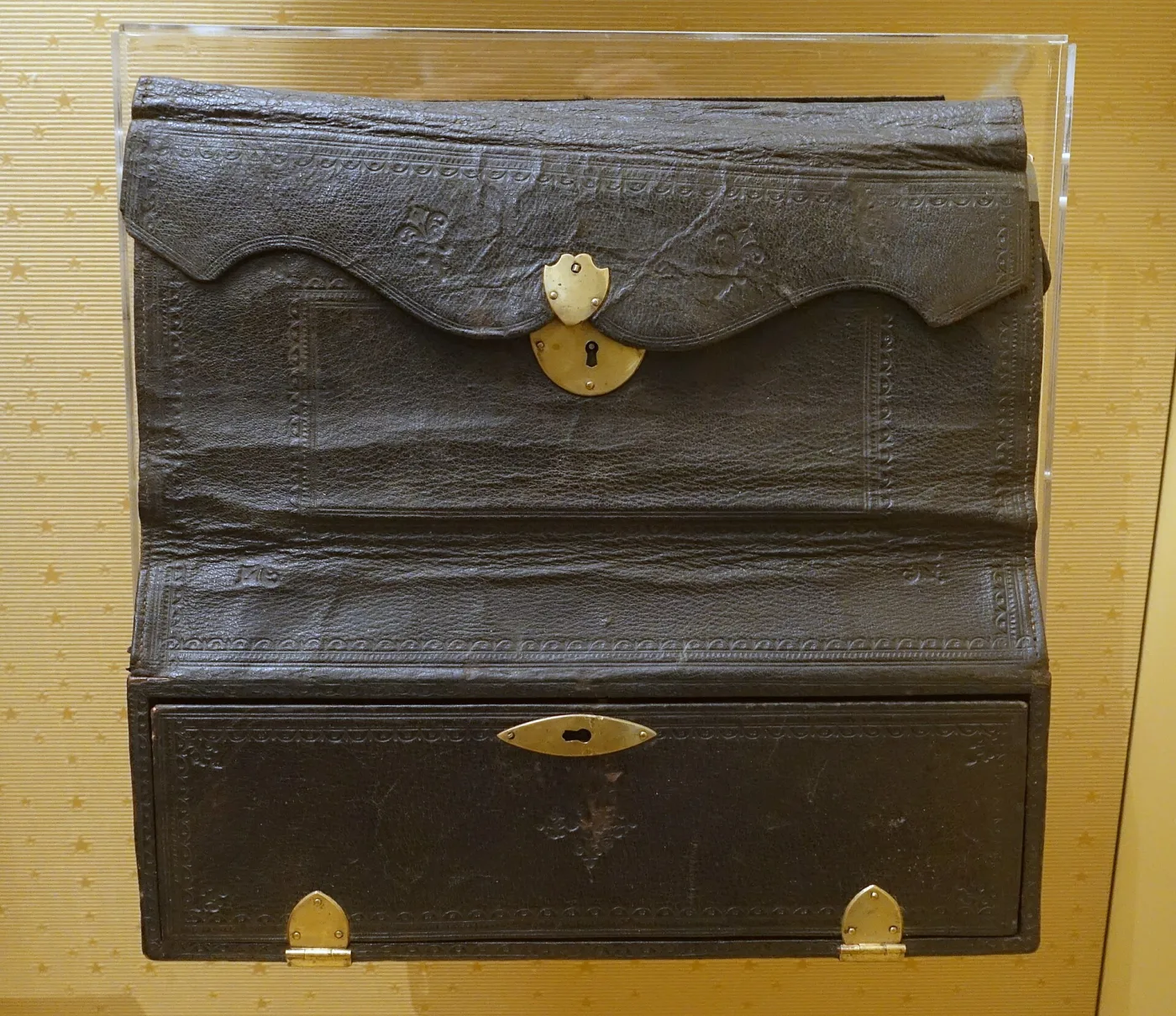
Antique writing slopes and lap desks are among the most practical and personal objects in the antiques market. They were portable offices for soldiers, civil servants, clergy, merchants, and travelers, and many still contain traces of their original owners: monograms, hidden letters, wax seals, and handwritten labels tucked into secret wells. Because they were used daily, these desks also reveal repairs, upgrades, and marriages that can confuse even experienced buyers.
This guide gives you a repeatable method to identify period writing slopes, authenticate original interiors, date lock hardware, and estimate value with confidence. Whether you collect Georgian campaign furniture or Victorian stationery pieces, the same principles apply: construction first, then hardware, then interior evidence, then provenance.
Quick Navigation
- 1) What Is a Writing Slope or Lap Desk?
- 2) Core Form Types
- 3) Timber, Veneer, and Exterior Finish
- 4) Brass Binding, Corners, and Inlay
- 5) Interior Layout and Original Fittings
- 6) Locks, Keys, and Escutcheon Dating
- 7) Secret Compartments and Authenticity Clues
- 8) Period Dating Framework (1780-1910)
- 9) Common Restorations and Red Flags
- 10) Value Drivers in Today’s Market
- 11) Buyer Checklist and Documentation
- 12) Storage, Care, and Long-Term Preservation
1) What Is a Writing Slope or Lap Desk?
A writing slope is a portable, slanted writing case that opens to reveal a leather- or baize-covered writing surface and compartments for ink, pens, wafers, and correspondence. The term “lap desk” is often used interchangeably, especially in American markets. In British catalogs, you may also see “writing box,” “campaign writing slope,” or “portable dispatch box.”
Most classic examples date from the late 18th century to early 20th century. Their portability made them status tools: military officers used brass-bound forms in campaign settings, while middle-class households used decorative rosewood or walnut examples for letter writing.
2) Core Form Types
Start identification by form. Slab-top writing slopes with straight sides are often later Victorian and easier to mass-produce. Wedge-shape slopes with strong taper are common in Georgian and Regency periods. Domed or serpentine lids tend to be decorative variants from the mid-to-late 19th century.
Some pieces include side drawers activated by a hidden pin. Others open as “double slopes” with mirrored writing surfaces. Form alone cannot date a desk, but it creates a baseline that must agree with construction and hardware evidence.
3) Timber, Veneer, and Exterior Finish
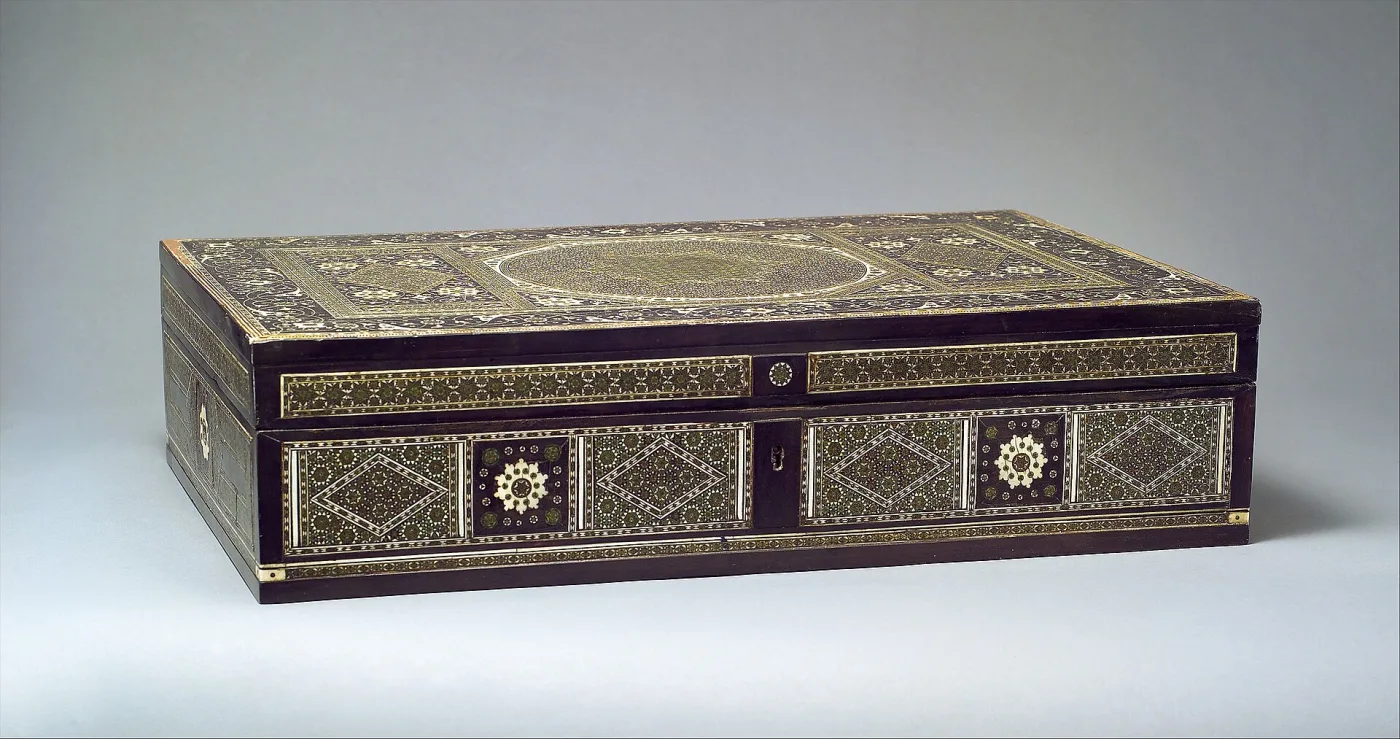
Mahogany dominates late 18th- and early 19th-century production, while rosewood became fashionable in Regency and early Victorian decorative work. Walnut and satinwood appear in later 19th-century pieces, especially in continental and American markets. Always check both visible veneers and secondary woods on the underside of lids and compartment walls.
Look for oxidation consistency. Original finishes show gradual softening and edge wear, not uniform gloss. Bright polyurethane shine, filled pores, or heavy sanding around corners usually indicate modern refinishing that can suppress value.
4) Brass Binding, Corners, and Inlay
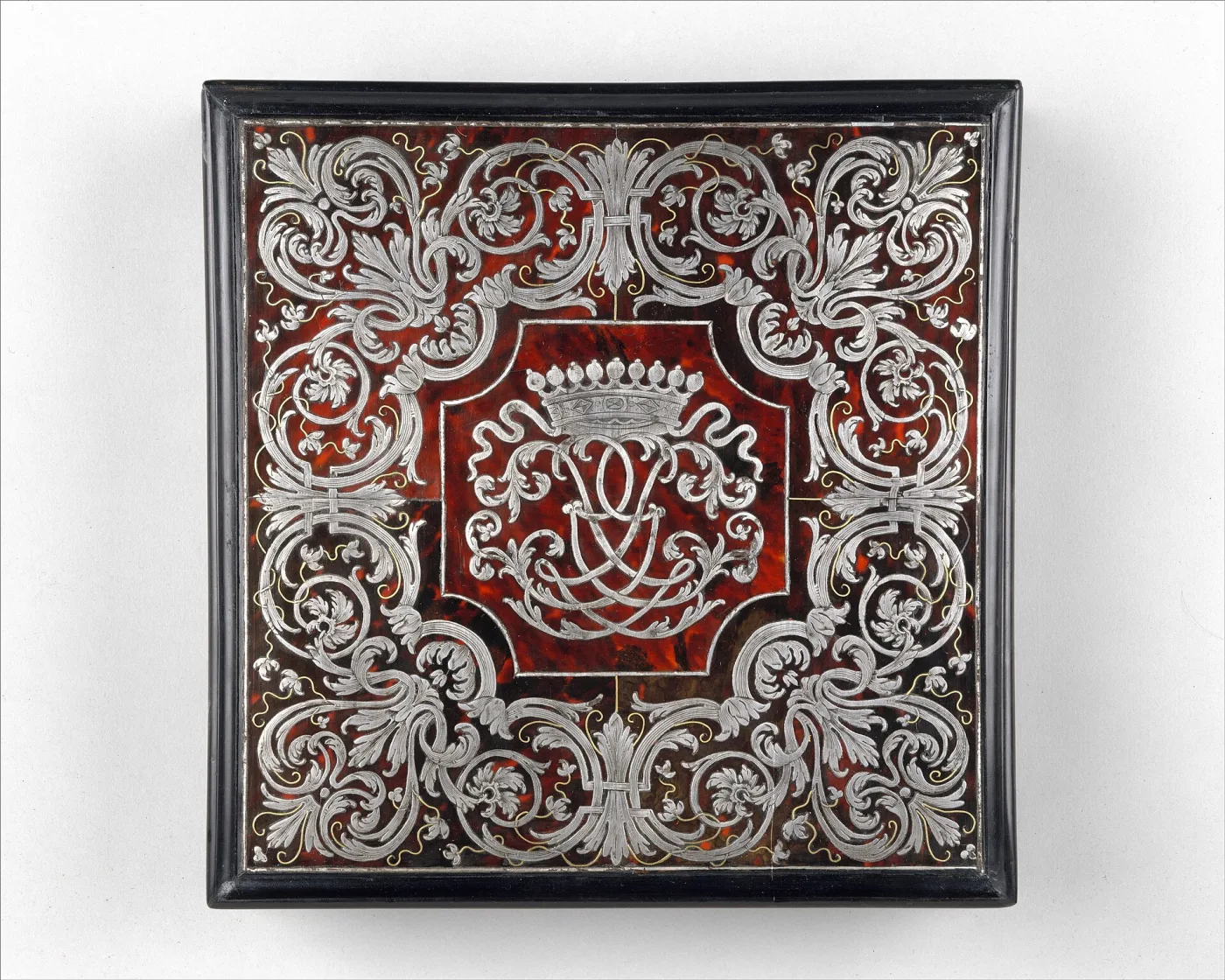
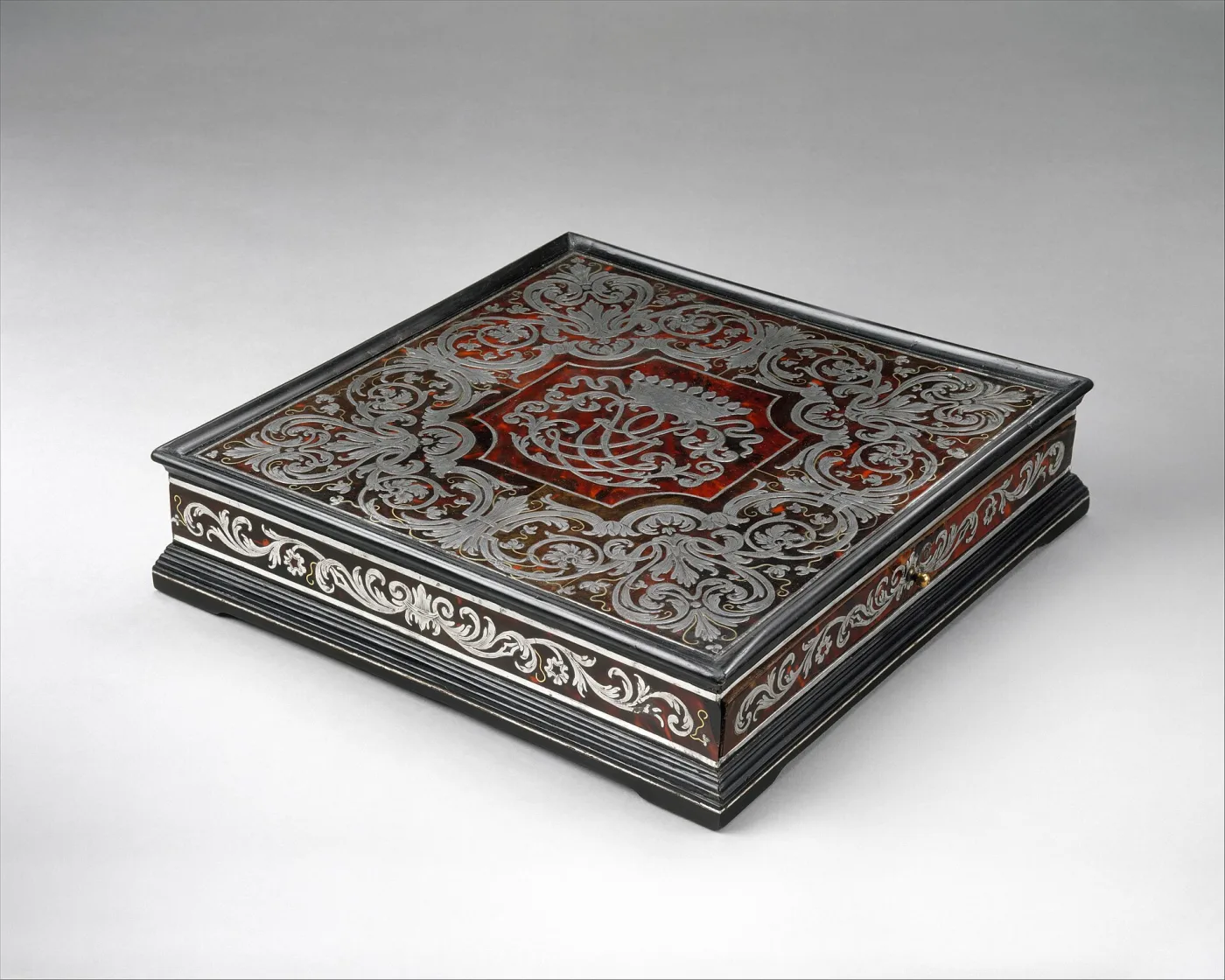
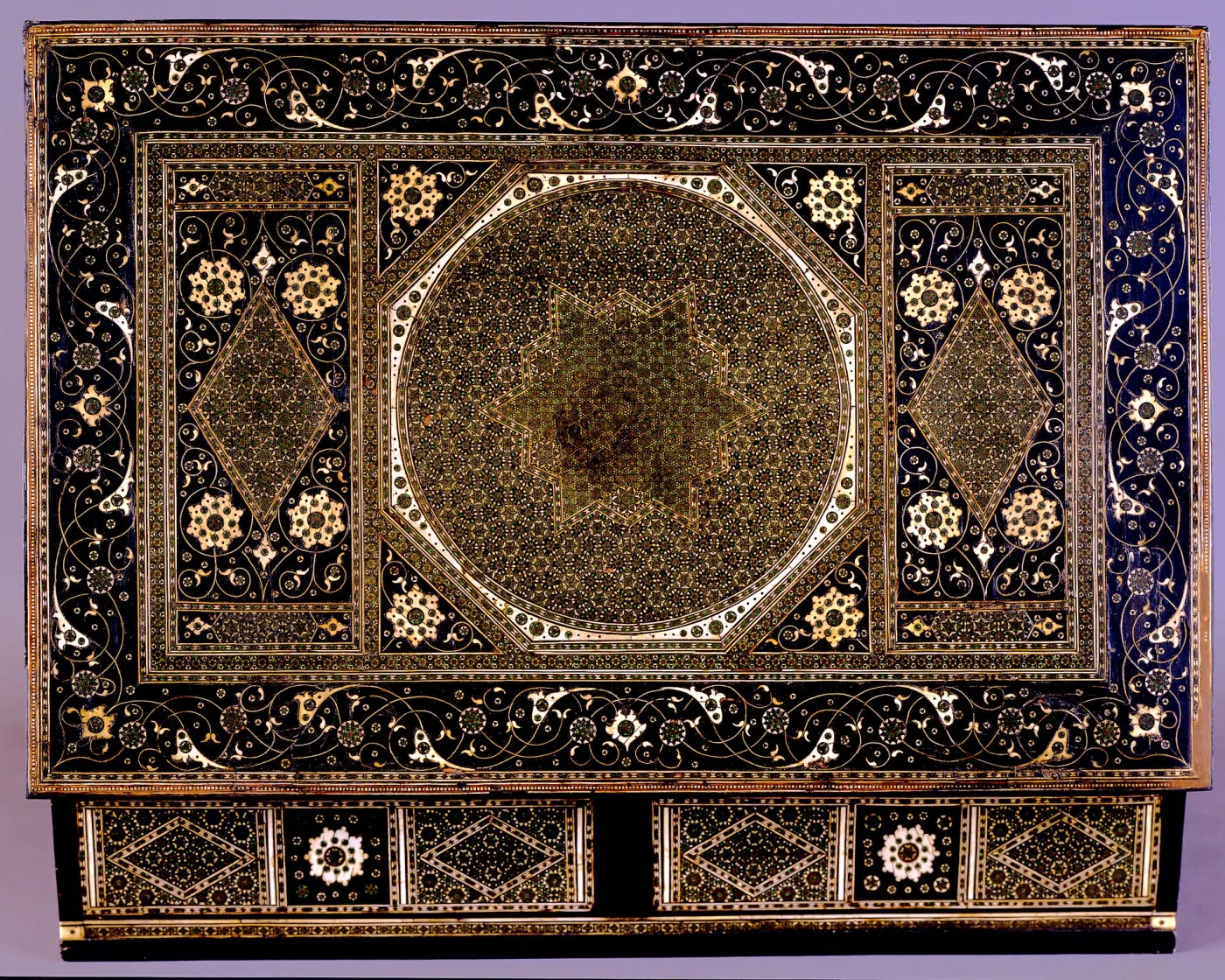
Brass edge strapping and corner guards often signal campaign influence, but they were also used decoratively. Early work tends to have hand-cut screws with subtle slot irregularities and mild asymmetry in miters. Later replacements are usually machine-perfect with modern screw heads and overly bright brass tone.
Mother-of-pearl and brass line inlay can be original, but inspect adhesive, shrinkage gaps, and tool marks. Inlay that floats above the surface or appears routed with modern rotary tooling is usually a restoration or replica warning.
Need a fast second opinion while browsing?
Use the Antique Identifier app to compare marks, materials, and construction details in real time while you inspect a writing slope in person.

5) Interior Layout and Original Fittings
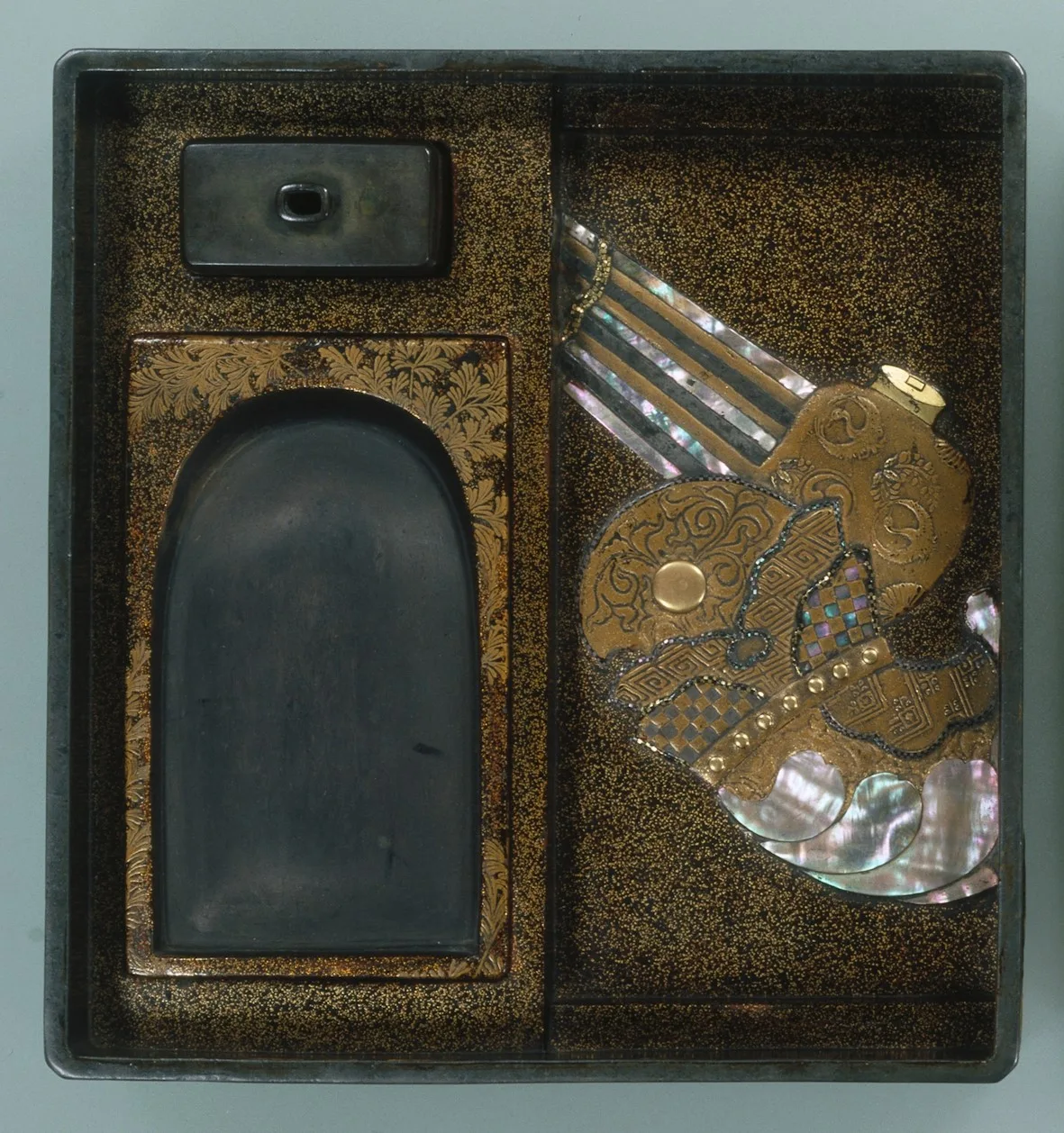
The interior tells the truth. Most authentic slopes have a two-panel writing surface (often leather over board) that lifts to reveal storage wells. Original wells may include glass inkwells with brass or bone tops, sanding shaker bottles, wafer boxes, and pen trays. Missing fittings are common and acceptable; mismatched fittings presented as original are not.
Check hinge screws, wood color inside wells, and dust lines. If compartments are very clean while the rest of the desk is heavily worn, fittings may have been swapped or reconstructed.
6) Locks, Keys, and Escutcheon Dating
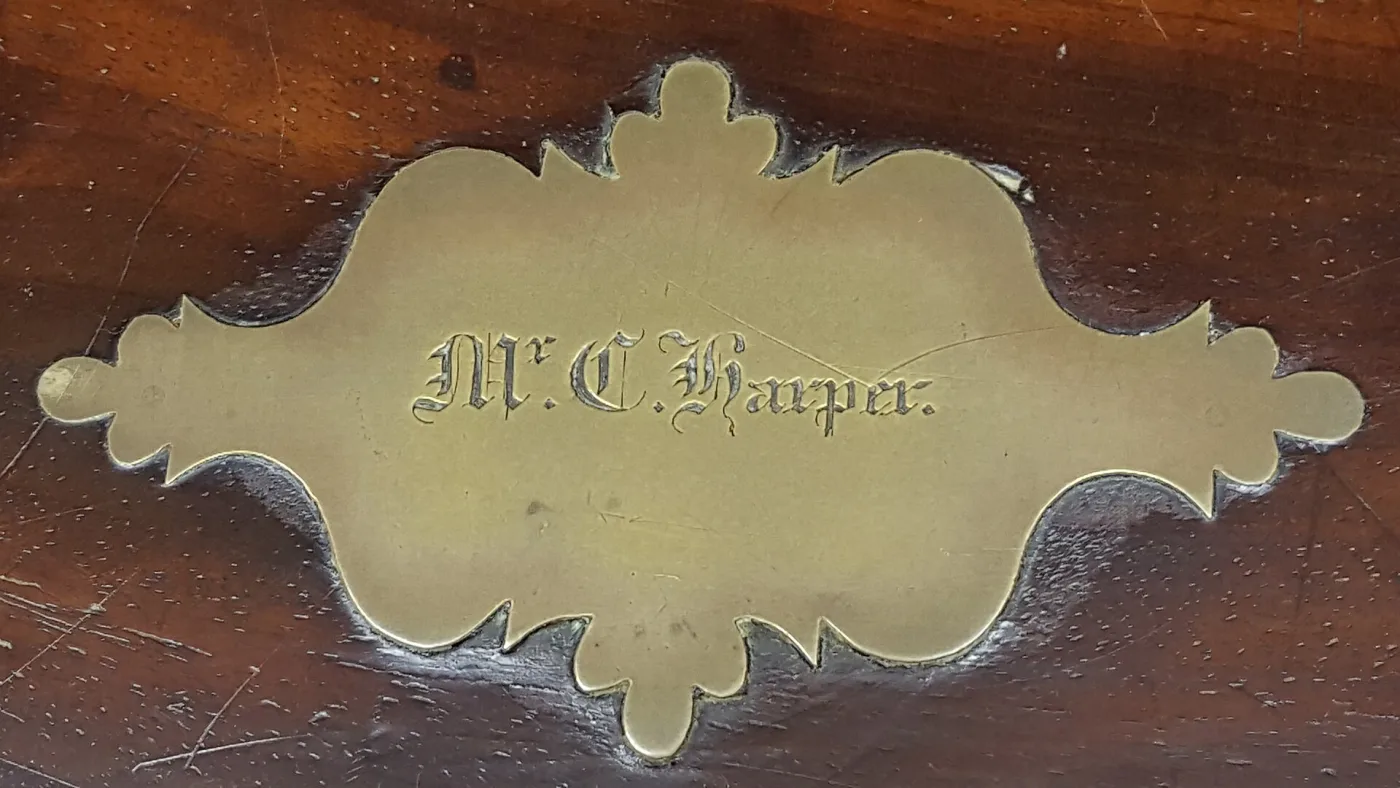
Lock plates are major dating tools. Many 19th-century British locks carry maker names such as Bramah, Chubb, Hobbs, or lesser-known Birmingham manufacturers. Patent references can provide date ceilings. Escutcheon style also matters: shield forms, lozenges, and oval plates trend differently by era and region.
Original keys often have wear on the same plane as escutcheon scratches. A pristine reproduction key is common and not necessarily problematic, but it should be disclosed and priced accordingly.
7) Secret Compartments and Authenticity Clues
Many writing slopes include “secret” wells behind the pen tray or under spring panels. These were intended for seals, small documents, or valuables. In authentic desks, hidden compartments are integrated into the joinery and opening logic. In modern reproductions, secret spaces are often theatrical add-ons with crude cuts and fresh tool marks.
Use a flashlight and mirror to inspect inaccessible edges. Hand-tool chatter, aged adhesive, and old dust accumulation are positive signs. Bright raw timber or rotary sanding marks inside hidden spaces suggest modern intervention.
8) Period Dating Framework (1780-1910)
1780-1820 (Georgian/Regency): Mahogany exteriors, restrained lines, hand-cut joinery, less standardized hardware. 1820-1860: Rosewood popularity rises, brass binding broadens, interiors become more compartmentalized. 1860-1890: Increased factory consistency, decorative veneers, stamped hardware appears more often. 1890-1910: Transitional utility forms, simplified interiors, and occasionally machine-made lock components.
Always date by convergence: form + construction + hardware + wear pattern + provenance. Any single clue can mislead in an object category where replacement and restoration are common.
9) Common Restorations and Red Flags
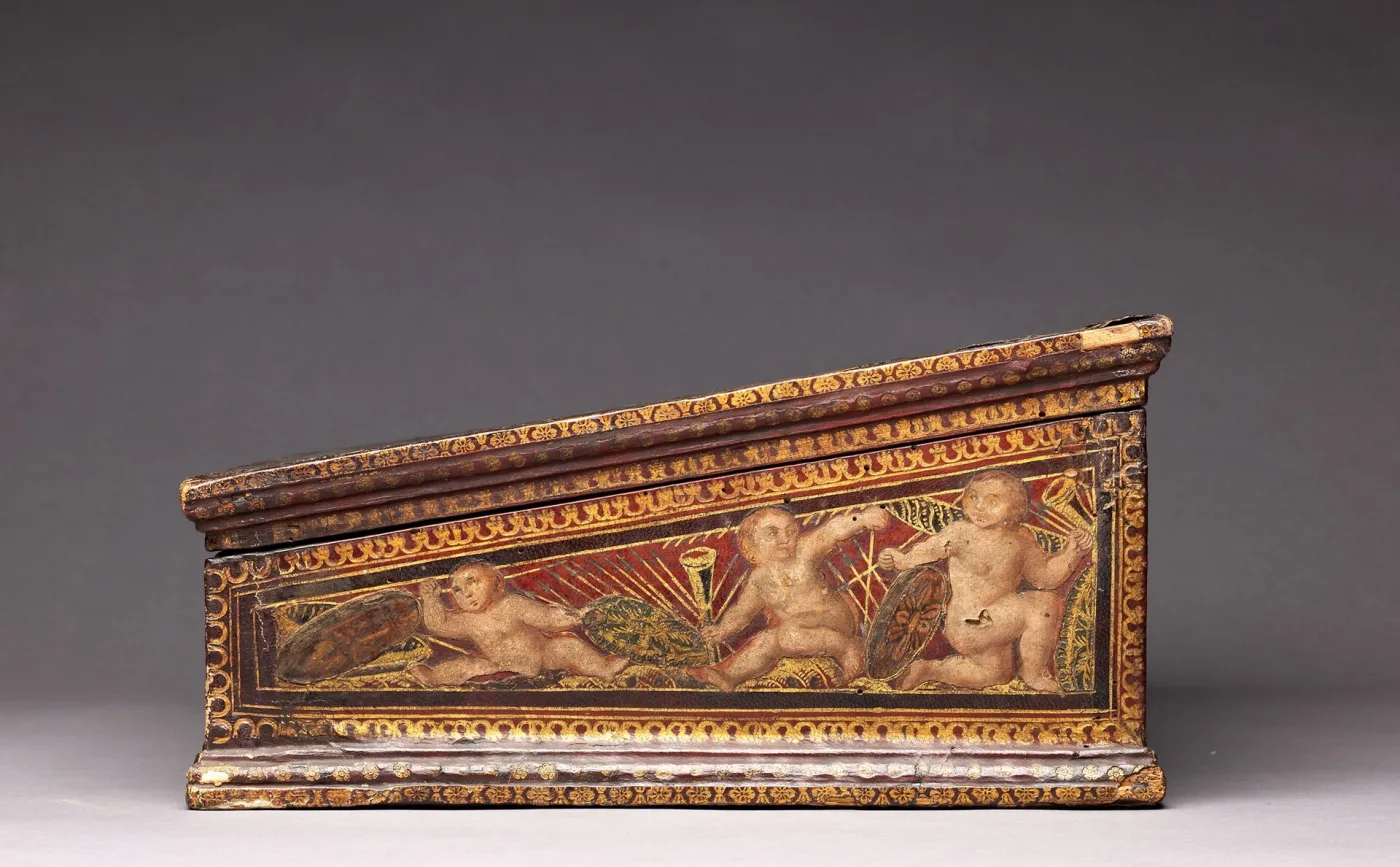
Frequent repairs include re-covered writing surfaces, replaced hinges, lid crack stabilization, and new brass corner caps. Restoration is not automatically bad, but quality and transparency determine market impact. Poor restoration can erase historical evidence and make authentication harder.
Red flags include modern plywood under leather panels, synthetic glues squeezed into old joinery, machine-thread screws in pre-Victorian hardware, and uniformly “antiqued” patina that lacks high-point wear logic.
10) Value Drivers in Today’s Market
Value is shaped by originality, condition, decorative appeal, and named provenance. Georgian examples with documented military or notable owner history can command strong premiums. Mid-range Victorian desks remain accessible but vary widely based on interior completeness and veneer condition.
Collectors pay more for coherent objects: matching lock and key, sympathetic period restoration, stable structure, and compelling interior details. Heavy refinishing, replaced interiors, or speculative attribution reduce confidence and pricing power.
11) Buyer Checklist and Documentation
Before purchase, photograph all six sides, interior wells, underside of writing panels, lock face, and any retailer labels. Record dimensions, weight, timber identification, and key behavior. Ask sellers directly what has been replaced. Written disclosure protects both parties.
For insurance and resale, maintain a dossier with condition notes, receipts, conservation invoices, and high-resolution photos under neutral light. Good documentation can significantly improve buyer trust and final sale outcomes.
12) Storage, Care, and Long-Term Preservation
Store writing slopes in stable humidity and away from direct heat. Avoid long periods in attics or near radiators where veneers can lift and glue joints fail. Support the base evenly and never display with lid hinges under constant strain.
Use dry microfiber for routine dusting. For leather inserts, avoid aggressive conditioners unless advised by a conservator. If metal corrosion appears around lock plates, stabilize environment first before attempting any cleaning. Preventive care preserves both functionality and historical evidence.