Antique Christmas Ornaments Identification Guide: Types, Makers, and Dating Clues
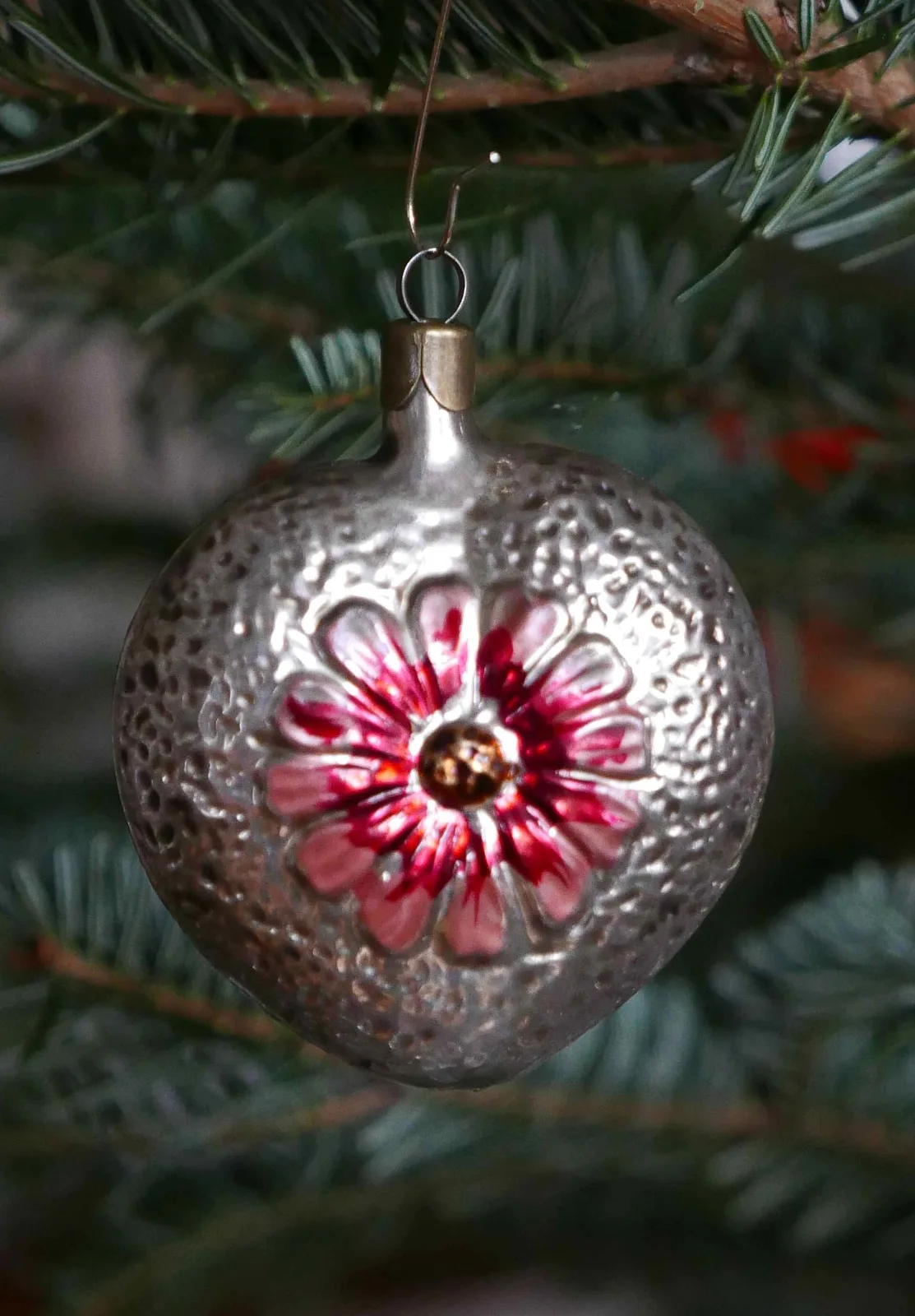
Antique Christmas ornaments blend nostalgia, folk craft, and industrial design history in one highly collectible category. From hand-blown German glass baubles to cotton batting figures, early ornaments can tell you a lot about trade routes, holiday customs, and household taste across the nineteenth and early twentieth centuries.
The challenge is that many modern reproductions imitate antique style very convincingly. Paint can be artificially distressed, metal caps can be swapped, and old ornament parts are sometimes assembled into "composite" pieces that look period at first glance. A confident identification process relies on construction details, not just appearance.
This guide walks you through ornament types, materials, cap and hanger clues, maker identification, dating methods, condition grading, and storage practices. Use it as a step-by-step field manual when buying at antique malls, auctions, estate sales, or online marketplaces.
Table of Contents
- What Counts as Antique Christmas Ornaments?
- Major Ornament Categories Collectors Should Know
- Glass Construction and Surface Clues
- Caps, Hangers, and Hardware Dating
- Recognizing Notable Makers and Origins
- Paint, Glitter, and Decorative Finish Analysis
- How to Spot Reproductions and Married Pieces
- Condition Grading and Value Drivers
- Buying Strategy: Online vs In-Person
- Cataloging and Provenance for Collections
- Cleaning, Packing, and Long-Term Storage
- Quick Authentication Checklist
What Counts as Antique Christmas Ornaments?
In strict trade language, "antique" generally means 100 years or older, while "vintage" covers later twentieth-century ornaments. In practice, many sellers use the terms loosely. When you evaluate a listing, ignore the label and verify age using objective clues: materials, manufacturing method, cap style, hook design, and wear patterns.
Early ornament production centers include Germany (especially Lauscha), later Czechoslovakia, and eventually Japan and the United States for mid-century output—the same cottage workshops that supplied the American market with vintage Halloween collectibles. German nineteenth-century glass ornaments remain a cornerstone for advanced collectors because of quality, variety, and historical significance.
Major Ornament Categories Collectors Should Know
Kugel ornaments
Kugels are thick, heavy, often silvered glass ornaments from nineteenth-century Germany, closely related to the mercury glass tradition. True examples frequently have substantial weight, molded necks, and specific cap assemblies. Colors include amethyst, cobalt, cranberry, green, and rare shades that can carry strong premiums.
Dresden ornaments
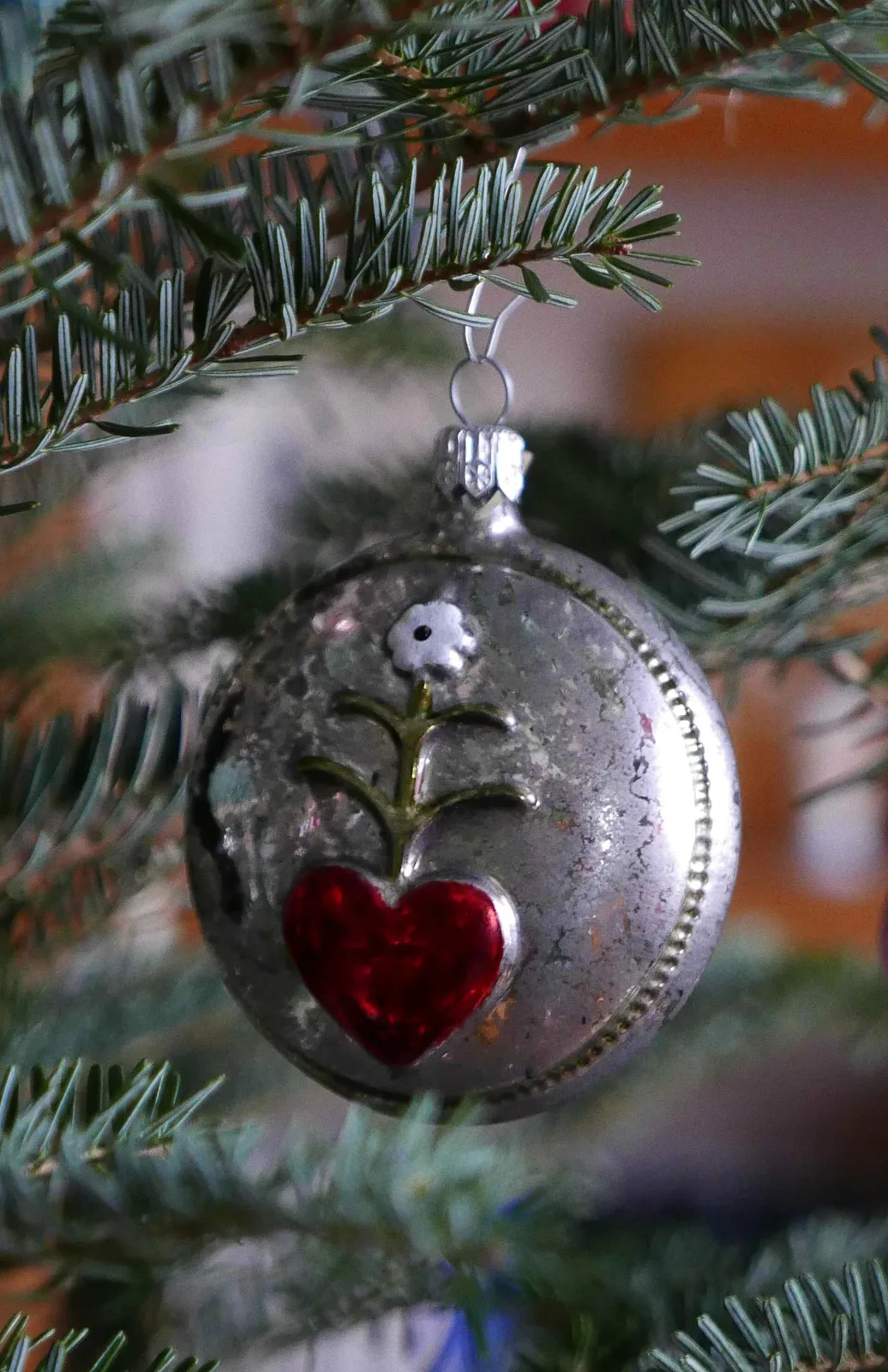
Dresden pieces are embossed cardboard forms, often gilded or silvered, depicting animals, sleighs, stars, and novelty figures. Look for crisp embossing, period glues, and natural oxidation rather than bright modern metallic finishes.
Cotton batting ornaments
These fragile figures use spun cotton over wire or paper cores, often with tiny paper faces and mica snow effects. Originals usually show delicate age toning, hand-applied elements, and subtle construction irregularities that machine-made reproductions lack.
Blown figural glass ornaments
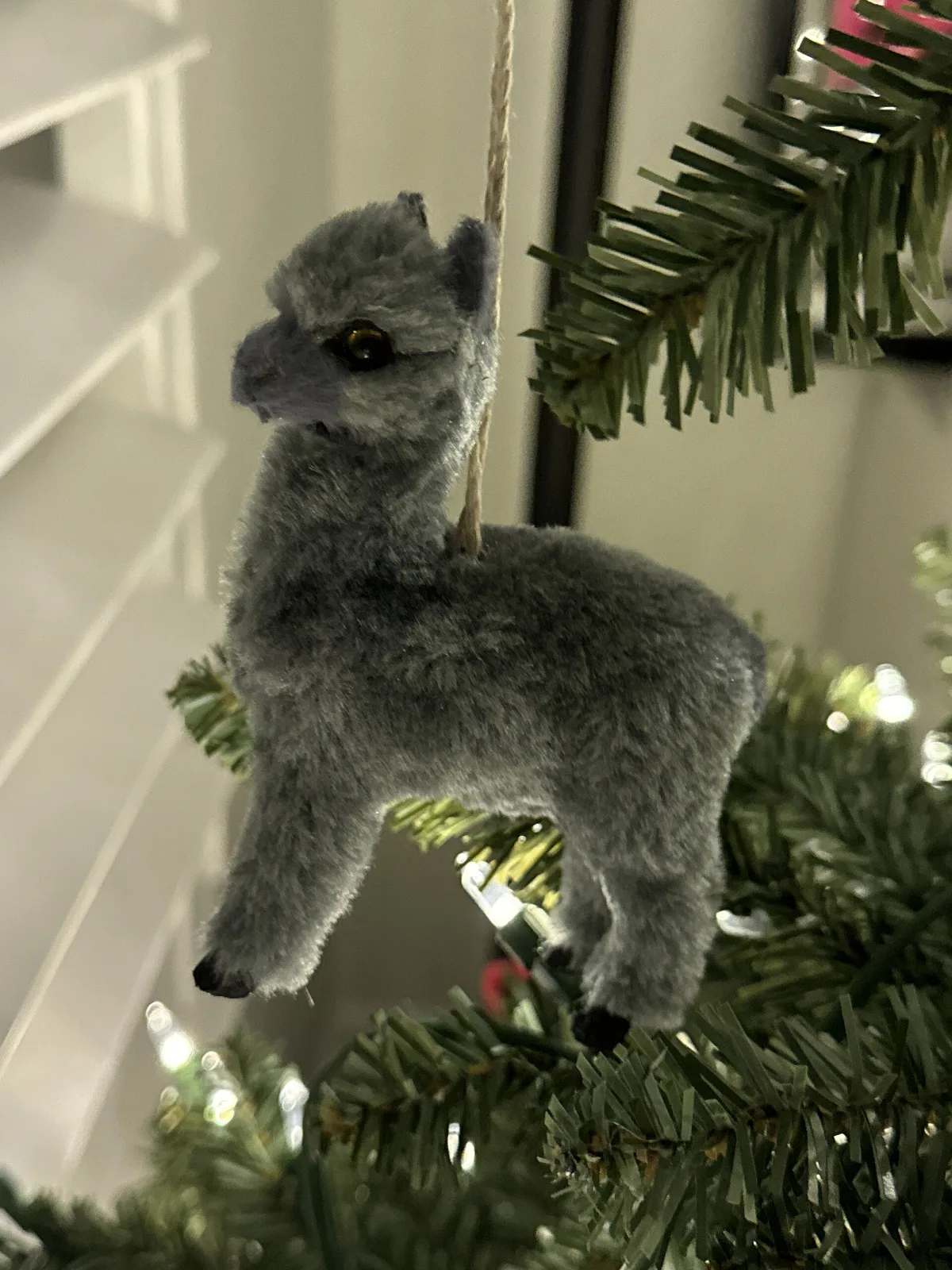
Figurals include fruit, birds, animals, and whimsical character forms. Collector value depends on rarity of form, color retention, intact neck and cap area, and presence of original clip hardware when applicable.
Glass Construction and Surface Clues
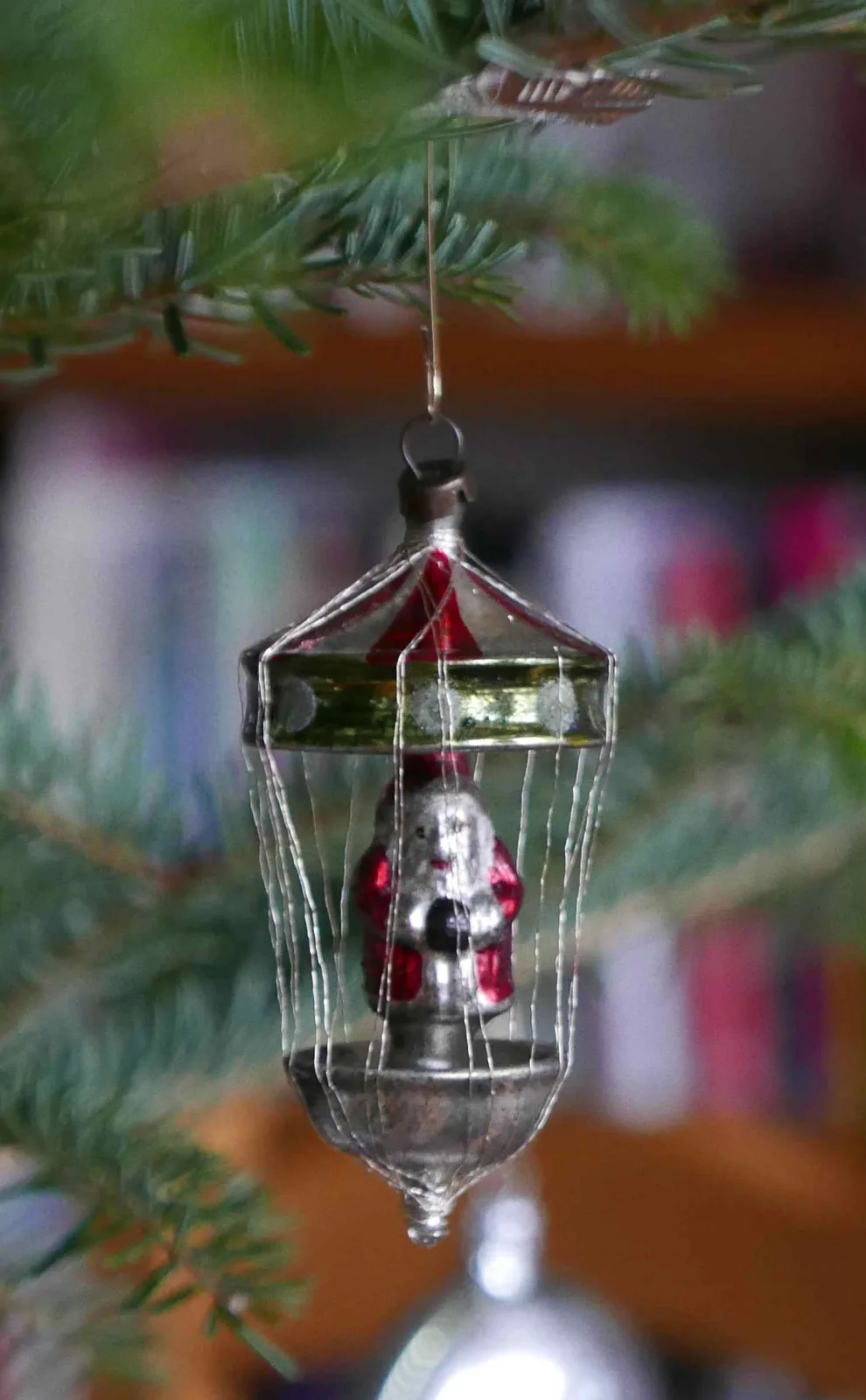
Hand-blown ornaments usually show small asymmetries: uneven wall thickness, slight form drift, and tiny tool influences near the neck or seam area. Mold-blown examples can still be antique, but seam sharpness and repetitive uniformity often indicate later mass production.
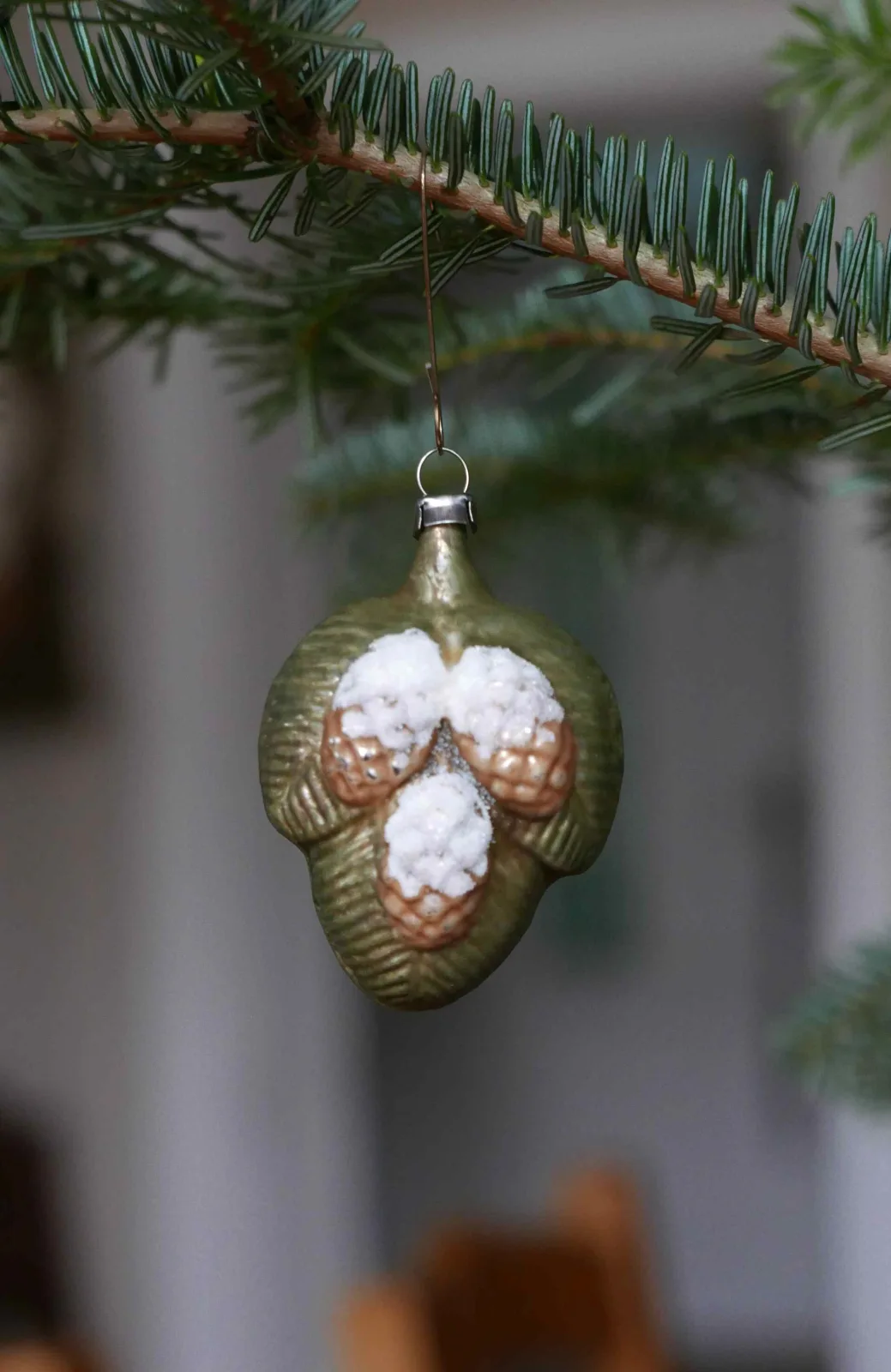
Interior silvering deserves careful inspection. On authentic older glass, silvering loss tends to be gradual and irregular, with soft transitions where moisture and storage conditions affected the inside surface over decades. Artificially aged interiors often look theatrical, with abrupt or pattern-like removal.
Use angled light to inspect stress lines and impact points. Stable old wear usually presents as light abrasions and edge softening, while fresh chips often have bright, sharp edges and powdery fragments nearby.
Caps, Hangers, and Hardware Dating
Caps are one of the strongest dating tools for glass ornaments. Early caps may be crimped in patterns and made from specific alloys that oxidize in distinct ways. Hook loop shape, solder style, and aperture dimensions can support period attribution.
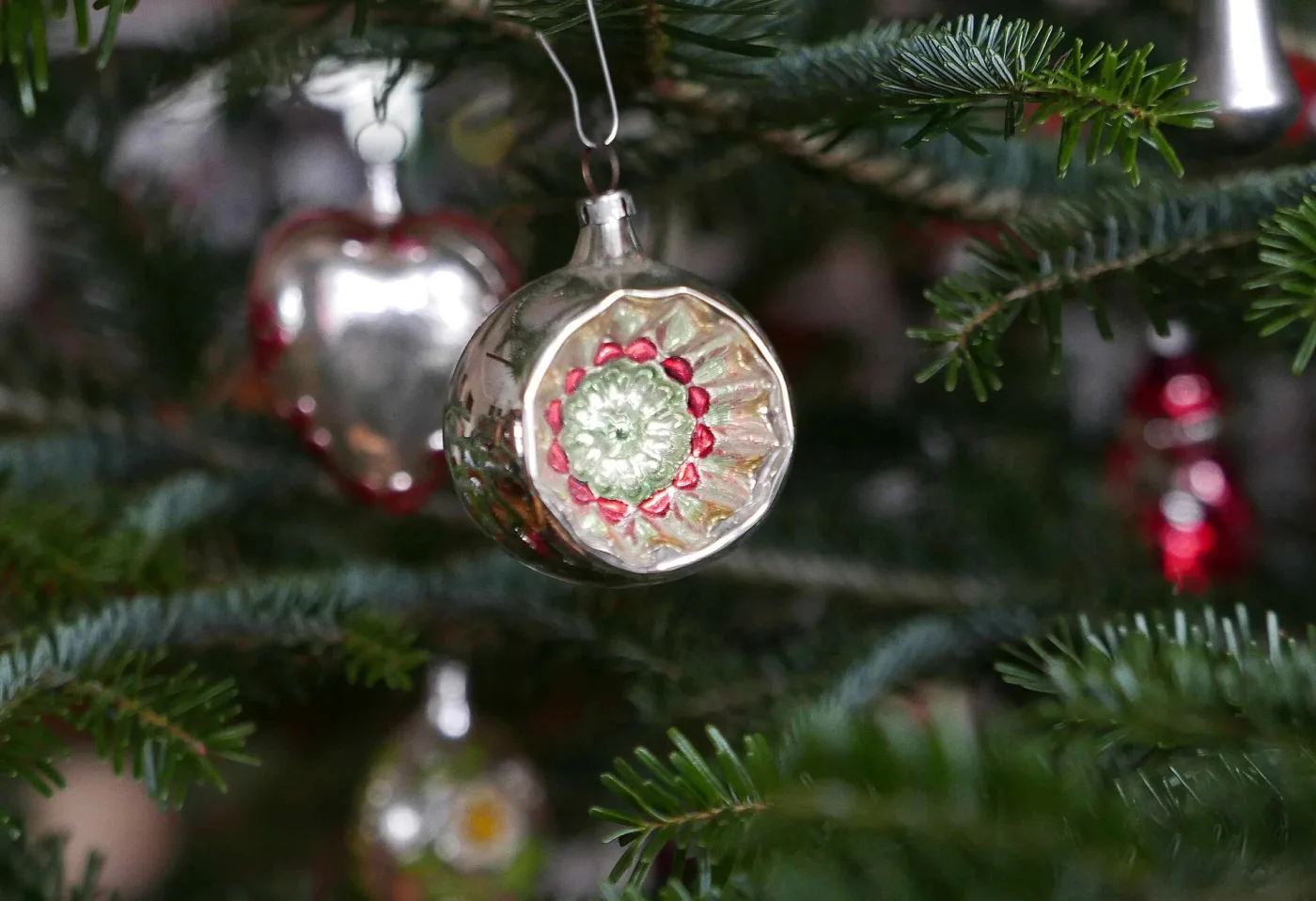
Be cautious: caps are frequently replaced. A nineteenth-century body with a modern cap is common and should be priced accordingly. Examine fit at the neck. Loose mismatch, modern machine-perfect crimping, or fresh tool marks can reveal replacement hardware.
For clip-on bird ornaments, inspect the spring and wire. Period clips often show consistent patina and age-related finish wear matching the ornament body. A pristine clip on heavily worn glass suggests component mixing.
Recognizing Notable Makers and Origins
Many early ornaments are unmarked, so attribution relies on style, materials, and construction rather than explicit maker stamps. German Lauscha production is especially important, with characteristic blown forms and interior silvering traditions that influenced global ornament design.
Later twentieth-century collectibles may include identifiable branding from Shiny Brite, Christopher Radko (reissues and revival styles), and regional makers. These are often vintage rather than antique, but still highly collectible when condition and packaging are strong.
Country labels, original boxes, and period catalog references can significantly strengthen provenance. Always keep associated ephemera, because documentation can separate an average lot from a premium sale group.

Paint, Glitter, and Decorative Finish Analysis
Older hand-decorated ornaments often show brushwork variation, layered pigment depth, and wear concentrated on raised points where handling occurred. Modern paint can look too even, too opaque, or chemically bright compared with period palettes.
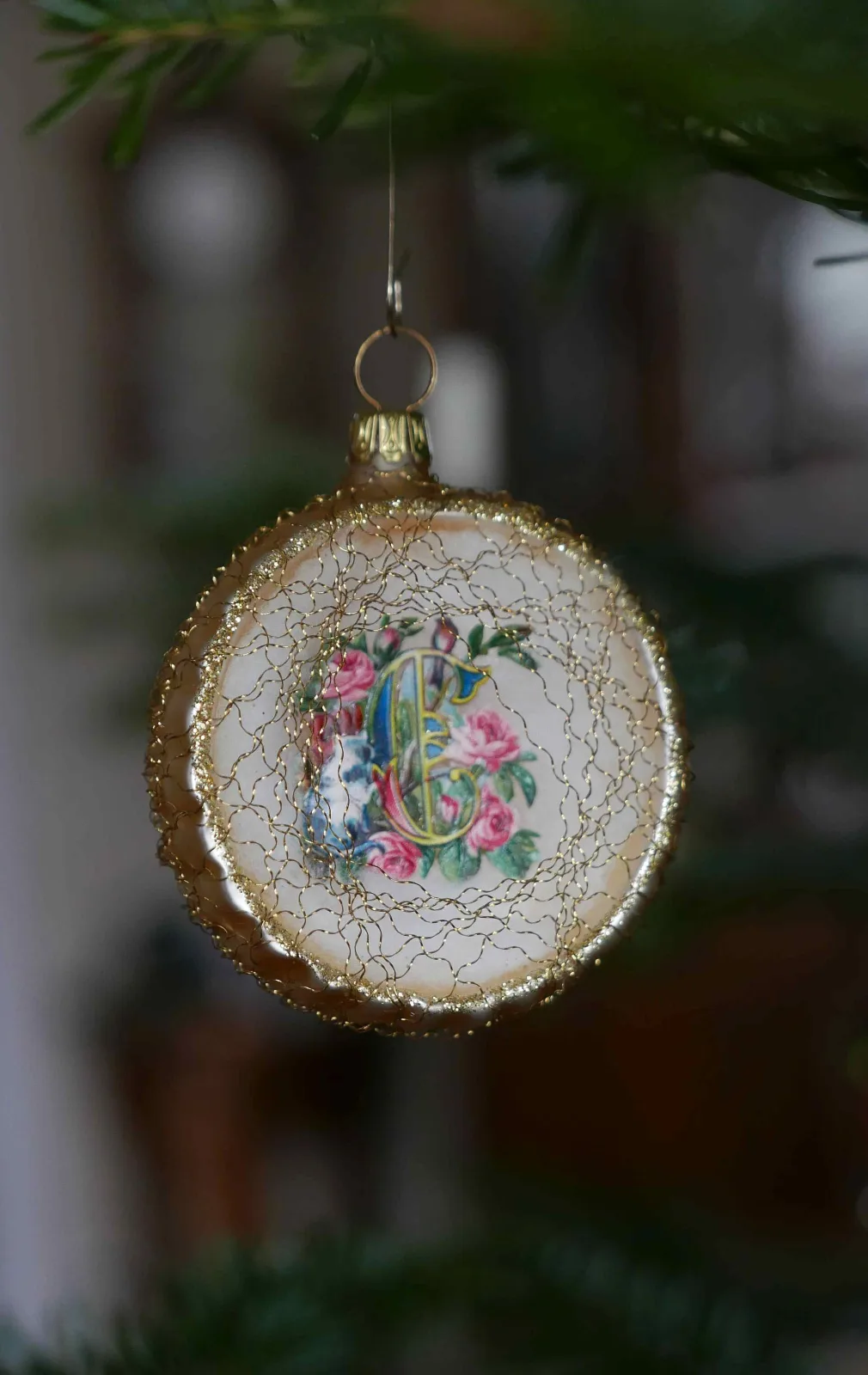
Glitter and mica should be evaluated under magnification. Antique mica appears flaky and irregular, while modern glitter can be uniform and reflective in a synthetic way. Adhesive behavior is another clue: period glues generally age with discoloration and brittleness.
Snow effects on cotton batting and cardboard decorations should integrate naturally with surrounding wear. If the "snow" looks freshly applied while all other surfaces appear aged, suspect restoration or intentional distressing.
How to Spot Reproductions and Married Pieces
Reproductions are not always problematic if sold honestly, but they become risky when represented as antique. Warning signs include repetitive artificial patina, bright untouched interior surfaces paired with externally distressed finishes, and inconsistent materials that do not match known historical methods.
Married pieces combine old and newer components: antique glass with replaced cap, period body with modern topper, or mixed-part figural builds. These can still be decorative, but collector value should reflect altered integrity.
When uncertain, compare suspect examples to documented references and sold auction lots from reputable houses. Pattern memory is essential in ornament collecting; the more originals you study, the easier mismatches become to detect.
Condition Grading and Value Drivers
Value is heavily condition-sensitive. Hairlines at the neck, cap-area chips, and silvering collapse reduce prices significantly, especially for common forms. Rare colors, scarce figural molds, and complete matching sets can still command strong values despite moderate wear.
Use a repeatable grading framework: mint, excellent, very good, good, fair, and damaged. Define each level by glass stability, paint retention, cap originality, and restoration visibility. Consistent grading improves buying discipline and resale credibility.
Market timing also matters. Holiday-season demand can inflate retail pricing, while off-season auctions may yield better buying opportunities for patient collectors.
Buying Strategy: Online vs In-Person
Online marketplaces offer wider selection and easier price comparison, but photo quality and seller expertise vary. Request close-ups of neck, cap, interior silvering, and any stress lines. Ask whether repairs, repainting, or cap replacements are present.
In-person buying lets you check weight, balance, texture, and true color immediately. Bring a loupe, small flashlight, and soft cloth gloves. Inspect ornament tops first, then body seams, then finish wear. Fast, systematic routines reduce impulse mistakes.
At estate sales, mixed boxes may hide high-value pieces among common stock. Prioritize unusual forms, old boxes, and ornaments with consistent untouched patina across glass and hardware.
Cataloging and Provenance for Collections
A simple catalog system pays off quickly. Record dimensions, weight, material, color, cap style, purchase source, date acquired, and price paid. Add high-resolution photos from multiple angles and close-ups of condition notes.
Track any known provenance, including family ownership history, original box labels, estate paperwork, and auction lot references. Provenance may not transform every ornament's value, but it builds confidence and supports stronger insurance documentation.
If you buy in lots, assign each ornament an internal inventory number immediately. This prevents mix-ups and helps you study performance across categories over time.
Cleaning, Packing, and Long-Term Storage
Avoid aggressive cleaning. Most antique ornament surfaces are delicate, and over-cleaning can erase value-bearing patina. Use dry, soft tools first, then minimal humidity control methods only when needed.
Store each ornament in acid-free tissue and compartmentalized archival boxes. Keep metal hardware from rubbing against painted surfaces. Stable temperature and low humidity are critical for glass silvering and cotton batting integrity.
Never suspend heavy antique ornaments on stressed branches for long display periods. Use supportive mounts and rotate display pieces to reduce cumulative handling risk.
Quick Authentication Checklist
Before buying, run this quick sequence: verify form type, inspect neck and cap fit, evaluate paint and silvering wear, test consistency of patina across components, and compare with documented examples. If one key area conflicts with the claimed age, slow down and renegotiate.
Advanced collectors combine object analysis with market research: sold results, known reproduction runs, and maker-specific features. The most reliable decisions come from evidence stacking, not a single dramatic clue.
With practice, antique Christmas ornaments become one of the most rewarding categories to collect: relatively accessible entry points, rich visual variety, and strong seasonal demand. Focus on authenticity, condition, and documentation, and your collection quality will improve steadily year after year.