Antique Thimbles Identification Guide: Materials, Makers & Dating Techniques
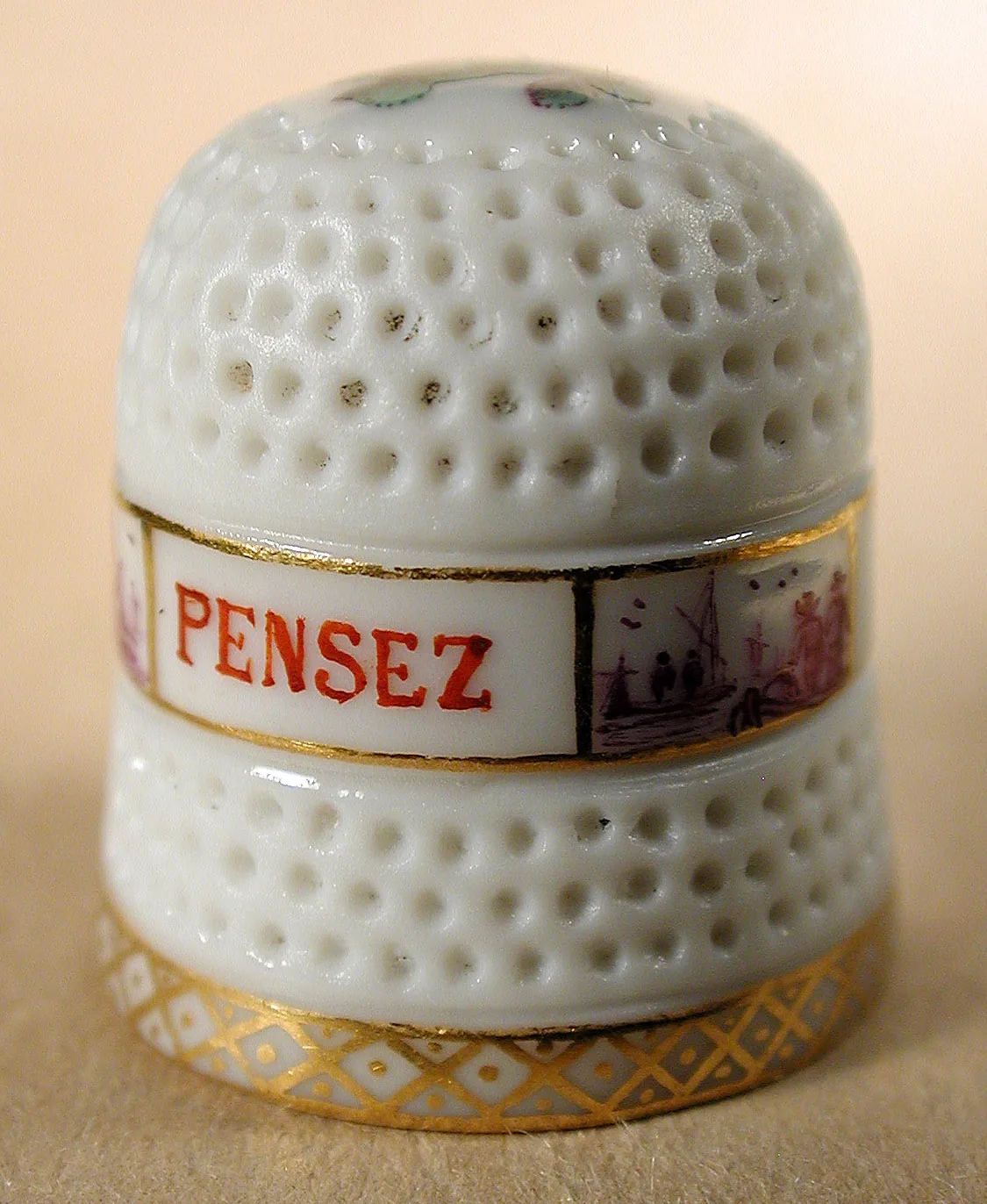
Antique thimbles represent a fascinating and often overlooked area of collecting that combines functional utility with exquisite craftsmanship. These small protective finger caps, used for centuries to push needles through fabric, evolved from simple utilitarian tools into intricate works of art. From humble brass examples used by working seamstresses to lavish gold and diamond-encrusted presentation pieces given as tokens of affection, antique thimbles tell rich stories of social history, technological advancement, and artistic achievement. This comprehensive guide will teach you everything you need to know about identifying antique thimbles, understanding their materials, recognizing maker marks, and determining their historical significance and value.
Table of Contents
- The History and Evolution of Thimbles
- Understanding Thimble Materials
- Construction Methods and Techniques
- Maker Marks and Hallmarks
- Famous Thimble Makers and Manufacturers
- Dating Techniques and Period Identification
- Types of Antique Thimbles
- Decorative Elements and Ornamentation
- Condition Assessment and Value Factors
- Authentication and Detecting Reproductions
- Collecting Tips and Best Practices
- Digital Tools for Identification
The History and Evolution of Thimbles
Understanding the historical context of thimbles is essential for accurate identification and dating. The thimble's evolution spans thousands of years and reflects broader changes in technology, society, and decorative arts.
Ancient Origins
The earliest thimbles date back to ancient civilizations:
- Ancient Rome: Bronze and iron thimble-like rings used by leather workers and sailmakers, typically open-ended designs
- Ancient China: Jade and bronze thimbles from the Han Dynasty (206 BC - 220 AD) with distinctive closed-top designs
- Byzantine Empire: Copper and bronze thimbles with simple indentation patterns, often found in domestic contexts
- Medieval Period: Cast bronze and brass thimbles became common household items throughout Europe
The Evolution of European Thimbles
European thimble-making evolved significantly from the medieval period onward:
- 14th-15th Century: Nuremberg, Germany emerged as a major thimble production center, producing cast brass thimbles
- 16th Century: Silver thimbles appeared among the wealthy, often as gifts or presentation pieces
- 17th Century: English and Dutch thimble makers developed distinctive styles; porcelain thimbles appeared
- 18th Century: Industrial revolution brought mechanized production; gold and enamel thimbles became fashionable
- 19th Century: Peak of thimble collecting and production; elaborate decorative styles flourished
- Early 20th Century: Art Nouveau and Art Deco influenced thimble design; advertising thimbles proliferated
Cultural Significance
Thimbles held important cultural roles beyond their practical function:
- Betrothal Gifts: Silver and gold thimbles given as tokens of love and commitment
- Mourning Jewelry: Black enamel and jet thimbles worn during Victorian mourning periods
- Presentation Pieces: Elaborately decorated thimbles given as awards or commemorative items
- Trade Tokens: Advertising thimbles distributed by businesses as promotional items
- Religious Objects: Thimbles decorated with religious imagery or carried as protective talismans
Understanding Thimble Materials
Material identification is fundamental to thimble authentication and dating. Each material has distinctive characteristics that help determine origin, age, and value.
Precious Metals
Precious metal thimbles were made for the wealthy and as presentation pieces:
- Gold: 9ct, 14ct, 15ct, and 18ct gold thimbles; look for hallmarks and weight; yellow, rose, and white gold variations
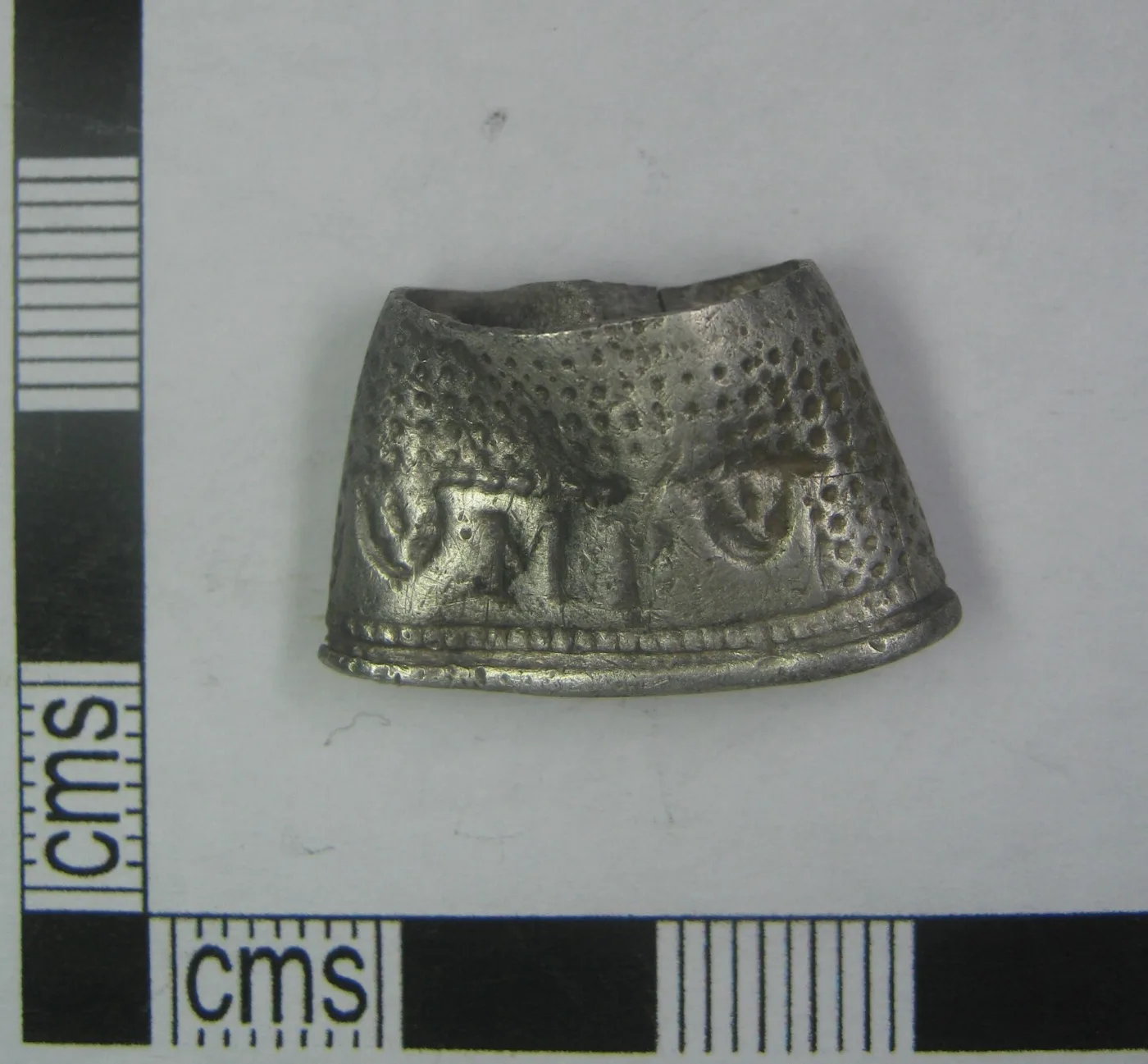
- Sterling Silver: Most common precious metal; should bear hallmarks indicating purity (925); develops characteristic patina
- Coin Silver: American standard (900 silver); often marked "coin" or "C.S."; lighter color than sterling
- Platinum: Rare; primarily early 20th century; extremely heavy for size; usually hallmarked
- Vermeil: Gold-plated silver; check for wear patterns revealing silver beneath
Base Metals
Base metal thimbles were more common and affordable:
- Brass: Golden color; may show green verdigris patina; common from medieval period through 19th century
- Bronze: Darker than brass; often cast rather than formed; common in ancient and medieval examples
- Steel: Magnetic; often blued or nickel-plated; common in tailor's thimbles; can show rust
- Copper: Reddish color; develops green patina; used in early American thimbles
- Nickel Silver (German Silver): Silver-colored alloy without actual silver; marked "N.S." or "German Silver"
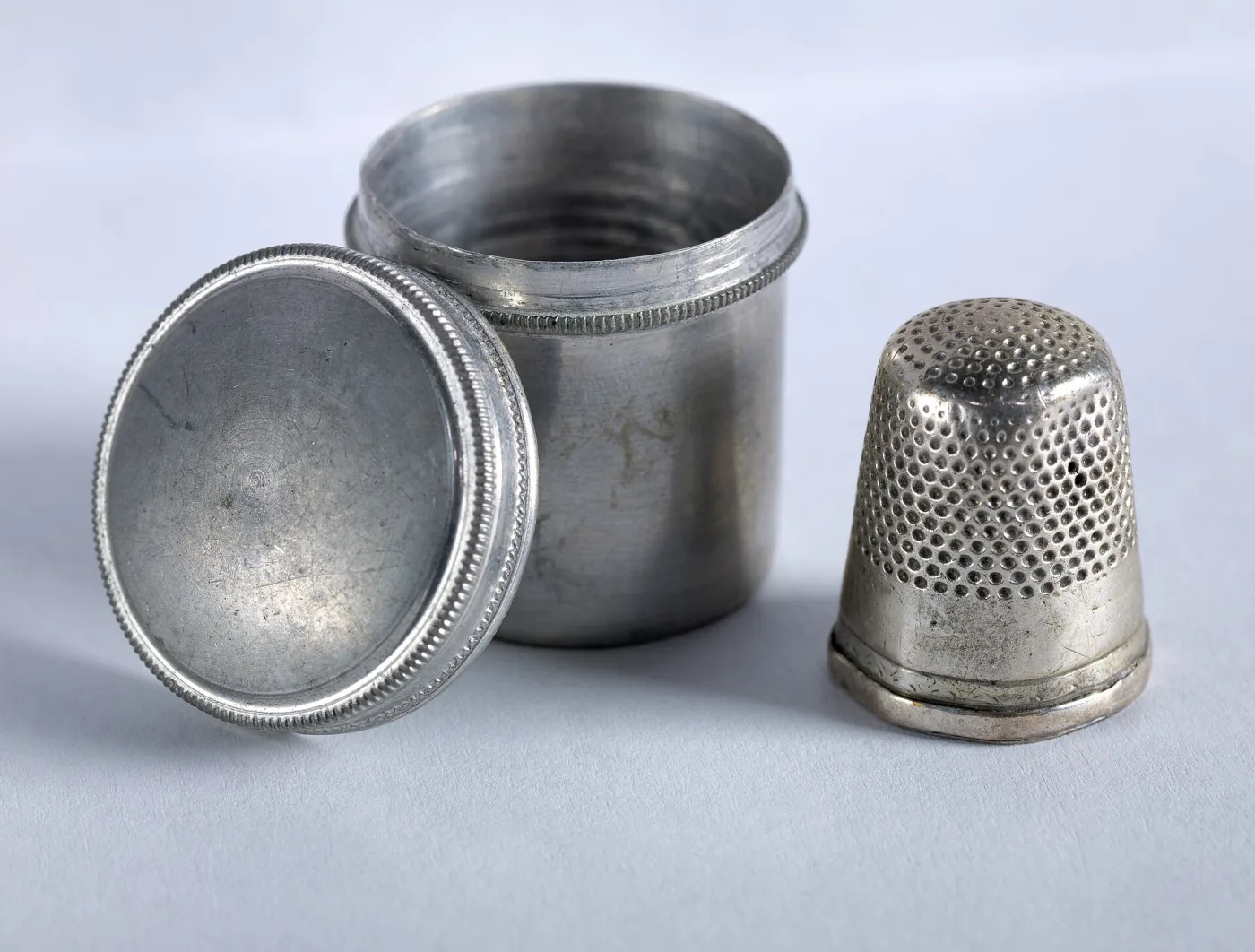
- Aluminum: Lightweight; appeared after 1886; often used for advertising thimbles
Ceramics and Glass
Decorative thimbles often used ceramic materials:
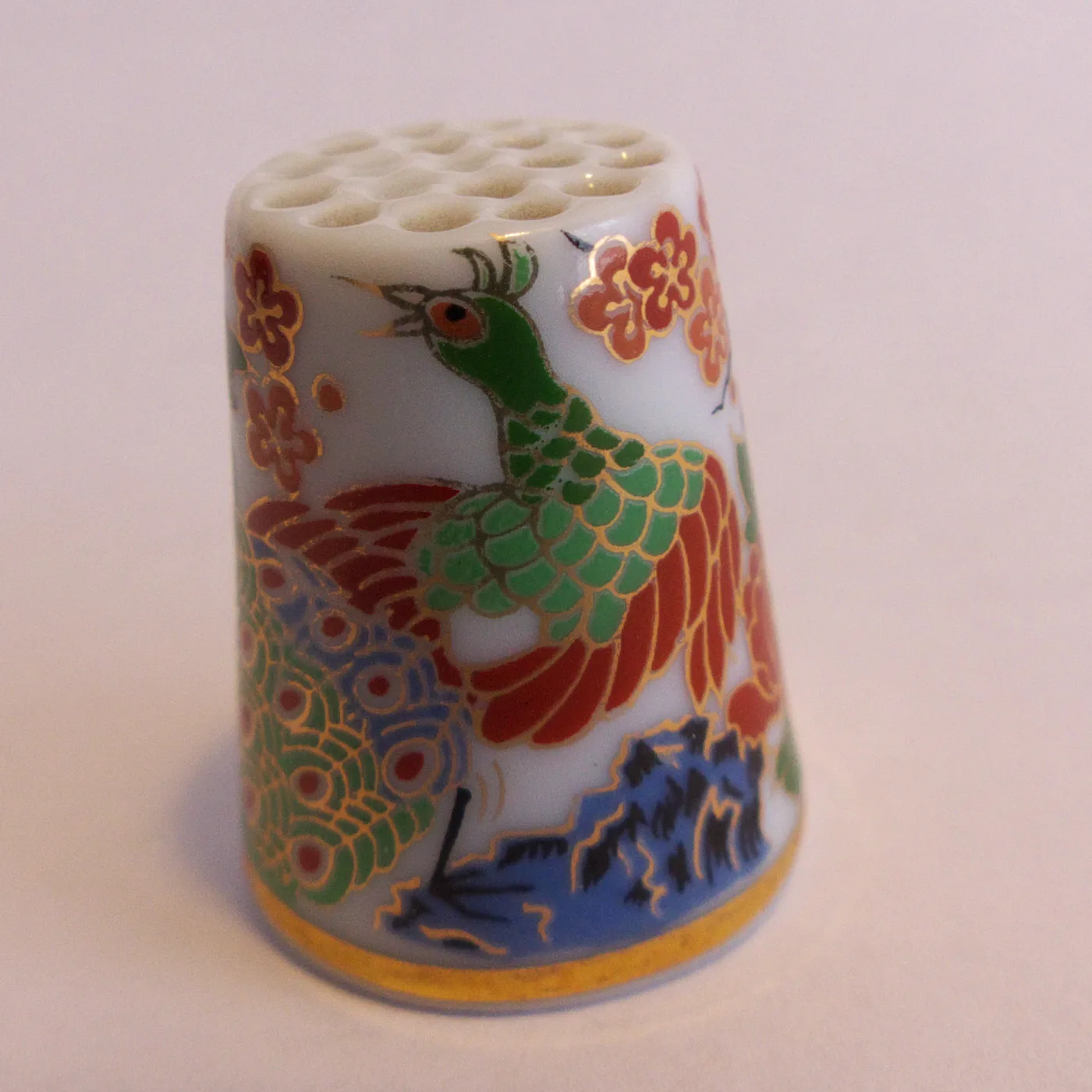
- Hard-Paste Porcelain: European factories like Meissen, Sèvres, and Royal Worcester produced fine porcelain thimbles
- Soft-Paste Porcelain: Earlier English examples; slightly warmer tone than hard-paste
- Bone China: English specialty; translucent quality; often elaborately decorated
- Stoneware: Heavy, durable; salt-glazed examples from German and English potteries
- Glass: Venetian and Bohemian glass thimbles; often colored or millefiori decorated
- Enamel on Metal: Cloisonné, champlevé, and painted enamel decorations on metal bases
Organic Materials
Natural materials were used for specialized purposes:
- Ivory: Elephant, walrus, or whale ivory; shows Schreger lines under magnification; now regulated by CITES
- Bone: Often confused with ivory; shows porous structure; more matte appearance
- Mother-of-Pearl: Iridescent shell material; often combined with silver or gold mountings
- Tortoiseshell: Brown mottled pattern; can be softened and molded; now protected species
- Leather: Sailor's and craftsman's thimbles; open-ended design for flexibility
- Vegetable Ivory (Tagua Nut): Hard nut material; can be carved like ivory; lacks Schreger lines
Semi-Precious and Decorative Materials
Luxury thimbles incorporated decorative materials:
- Agate: Banded stone; Scottish pebble jewelry traditions; often combined with silver mountings
- Jade: Chinese examples; nephrite or jadeite; difficult to carve
- Coral: Pink or red Mediterranean coral; Victorian fashion
- Jet: Fossilized wood; black; Victorian mourning jewelry
- Amber: Fossilized resin; golden to brown; Baltic origins
Construction Methods and Techniques
Understanding how thimbles were made helps date them and assess authenticity. Construction methods evolved significantly over time.
Hand-Made Construction (Pre-Industrial)
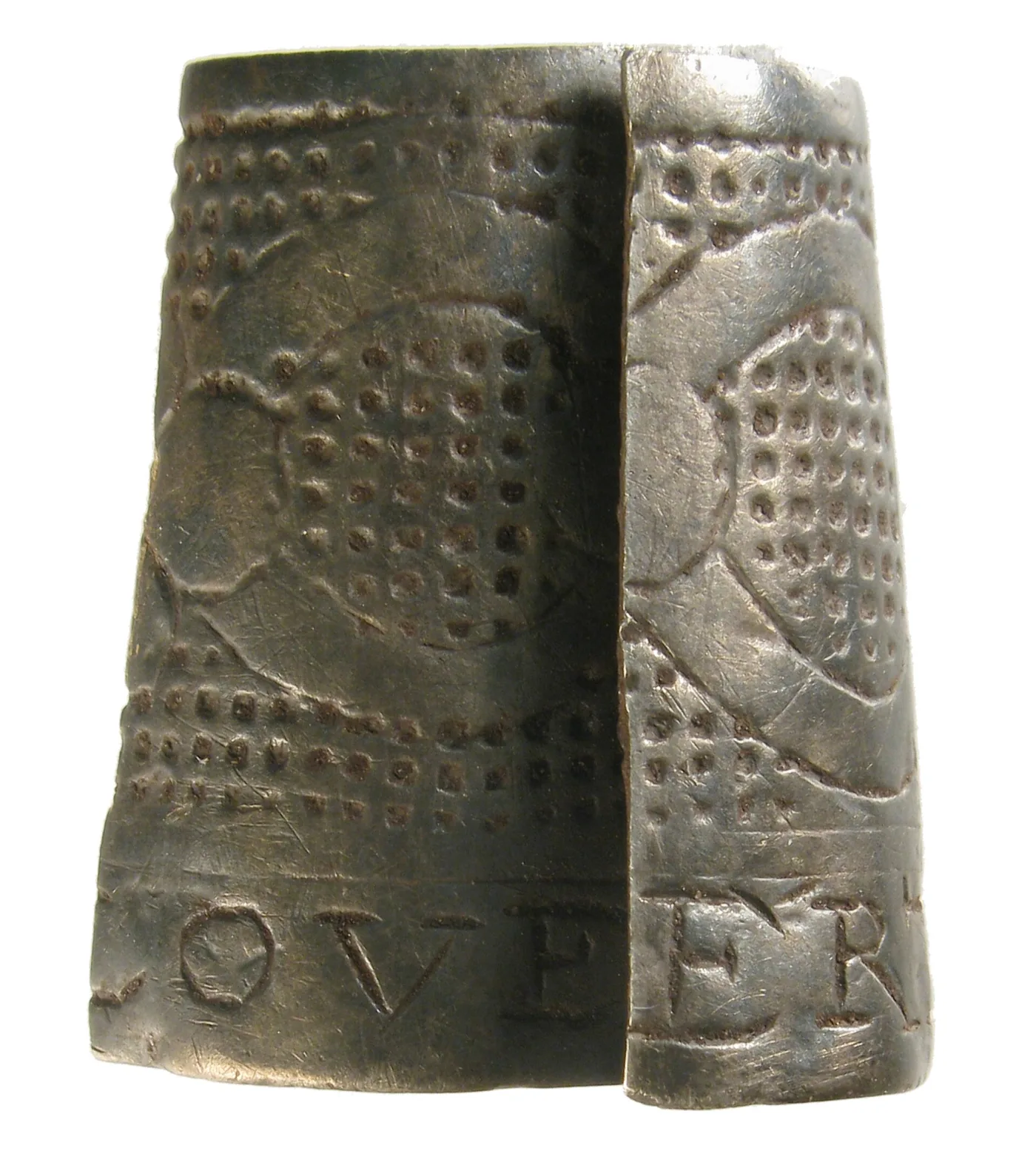
- Casting: Molten metal poured into molds; seams and irregularities visible; common in brass and bronze thimbles
- Raising: Sheet metal hammered over a mandrel; thicker at base; handmade indentations
- Spinning: Sheet metal formed on a lathe; visible concentric marks inside
- Forging: Metal hammered and shaped; very rare; earliest examples
Machine-Made Construction (Industrial Era)
- Deep Drawing: Metal pressed into shape by dies; seamless construction; uniform thickness
- Die Stamping: Patterns impressed by mechanical dies; regular, uniform indentations
- Rolled Edges: Machine-rolled rims; consistent width and profile
- Mass Production: After 1850s, standardized sizes and uniform construction
Indentation Patterns (Knurling)
The pattern of indentations on a thimble's surface is an important dating clue:
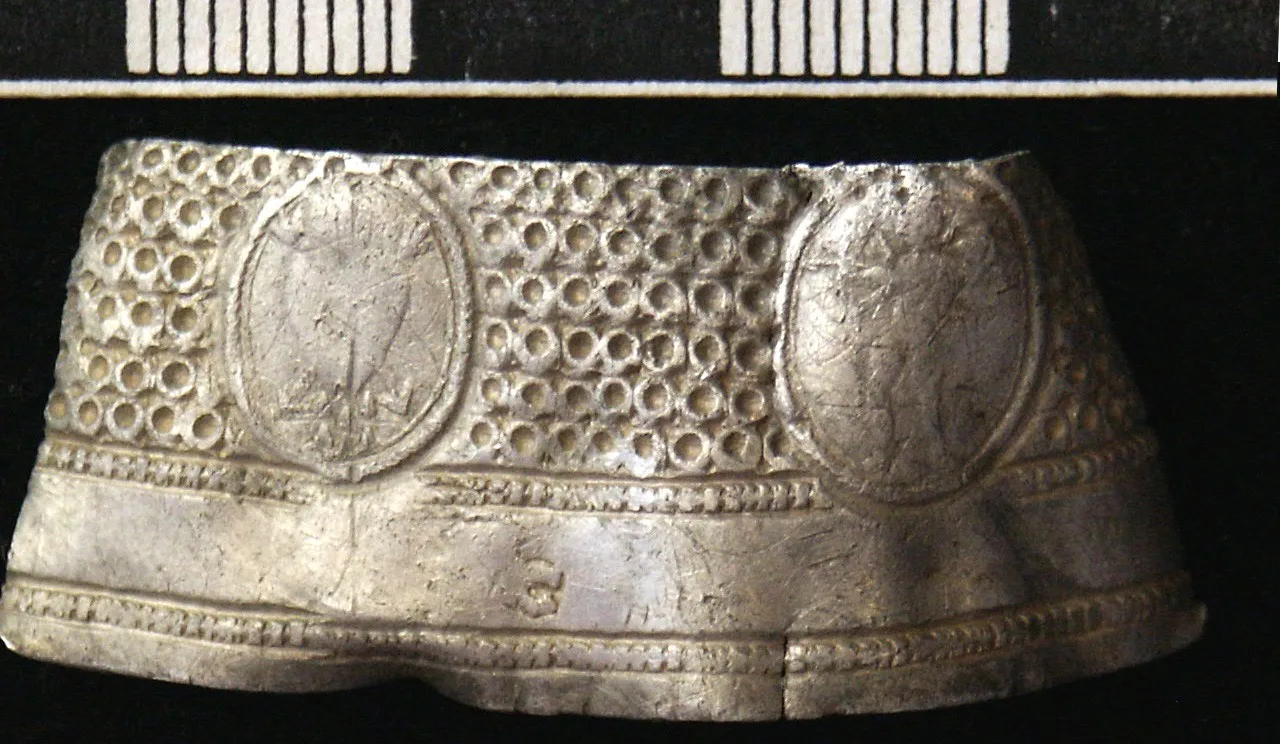
- Hand-Punched: Irregular spacing and depth; each indentation individually made; pre-1850
- Machine-Knurled: Regular spiral or grid patterns; uniform depth and spacing; post-1850
- Diamond Pattern: Cross-hatched lines forming diamond shapes; popular 18th-19th century
- Spiral Pattern: Continuous spiral of indentations; common after mechanization
- Dot Pattern: Round indentations in rows; varies from hand to machine production
- Dimple Pattern: Larger, shallower indentations; often found on porcelain thimbles
Dome and Rim Construction
- Domed Top: Standard protective shape; varies from tall to flat profile
- Open Top: Tailor's thimbles; allows fingertip contact with fabric
- Flat Top: Less common; found in some specialty thimbles
- Rolled Rim: Edge folded over for strength and comfort
- Plain Rim: Simple cut edge; earlier or lower quality examples
- Decorative Rim: Scalloped, beaded, or ornamental edge treatments
Maker Marks and Hallmarks
Identifying maker marks and hallmarks is crucial for authenticating and dating antique thimbles. These marks provide valuable information about origin, material, and manufacturer.
British Hallmarks
British silver thimbles should bear standard hallmarks:
- Standard Mark: Lion passant (England), thistle (Scotland), or Hibernia (Ireland) indicates sterling silver
- Assay Office Mark: Anchor (Birmingham), leopard's head (London), rose (Sheffield), castle (Edinburgh)
- Date Letter: Letter in a shield indicates year of assay; varies by assay office
- Maker's Mark: Initials or symbol of the silversmith; essential for attribution
- Duty Mark: Sovereign's head indicating tax paid (1784-1890)
Continental European Marks
- French: Eagle head (18ct gold), owl (imported silver), Minerva head (silver after 1838)
- German: Crown and crescent moon mark; "800" or "835" silver content marks
- Dutch: Lion mark for silver; various town marks
- Russian: Kokoshnik mark (female head); maker's initials in Cyrillic
- Austrian: Diana head mark; "A" in oval for Vienna
American Marks
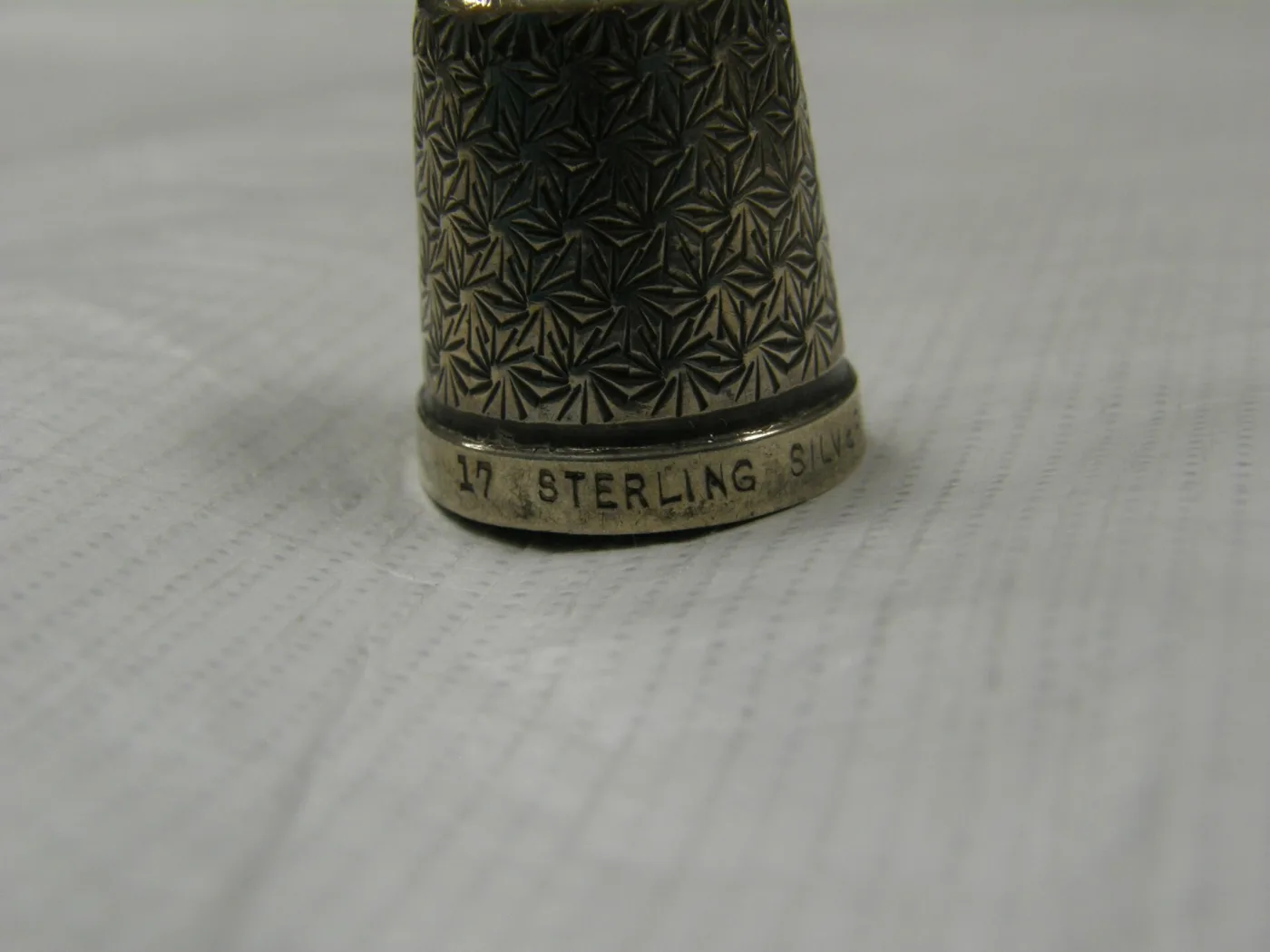
- "Sterling": Word mark indicating 925 silver; used after 1860s
- "Coin": Indicates coin silver (900 fine); pre-1860s common
- "14K" or "10K": Gold content marks in karats
- Maker's Names: Often spelled out (e.g., "Simons Bros." "Goldsmith Stern")
- Patent Marks: "Pat." followed by date; useful for dating
Reading and Interpreting Marks
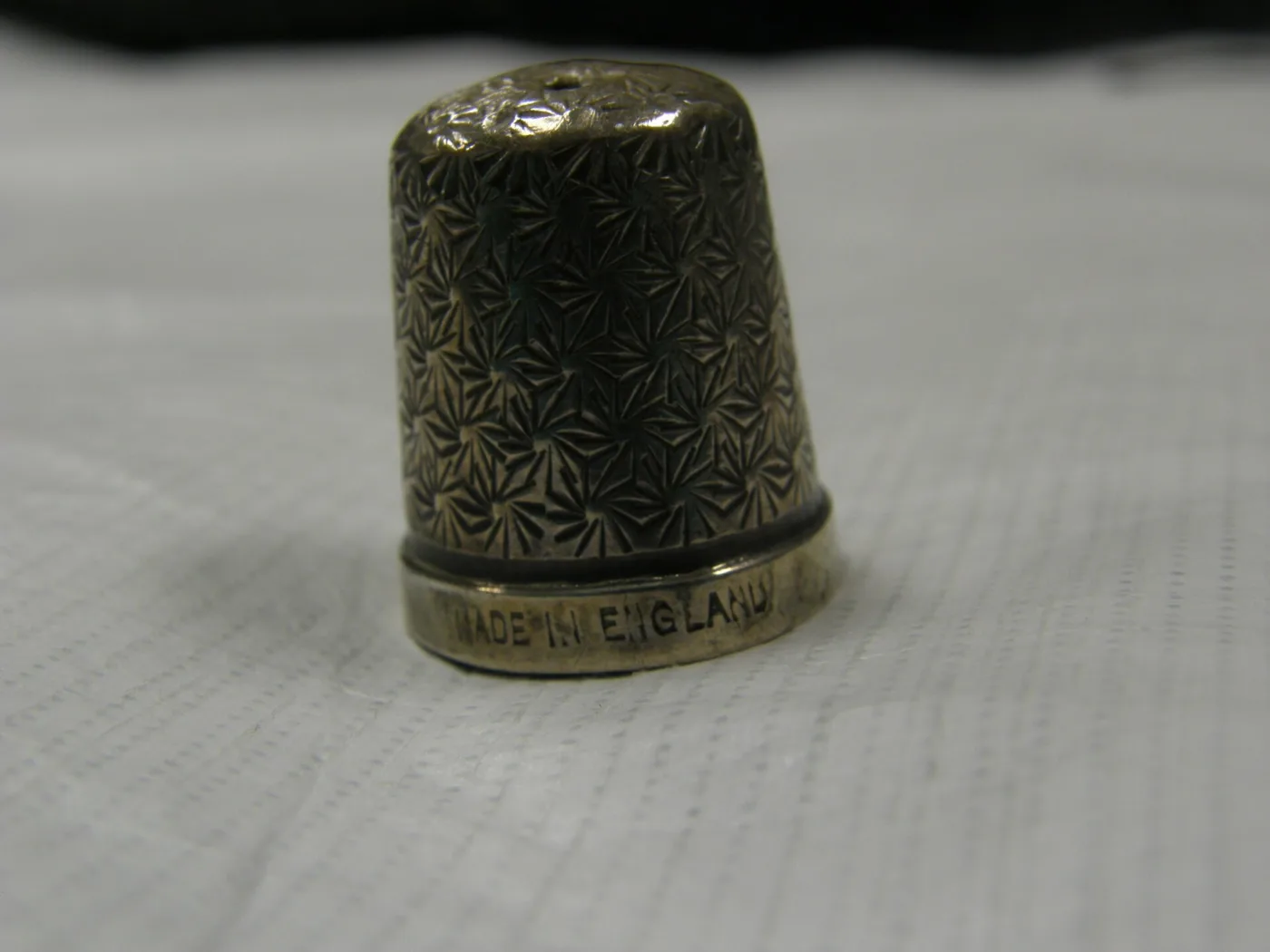
- Location: Marks typically found inside rim, on apex, or in decorative band
- Wear Patterns: Genuine old marks show consistent wear with thimble
- Strike Quality: Hand-struck marks may be uneven; machine strikes are crisp
- Multiple Marks: Repairs or additions may show different date letters
- Pseudo Marks: Some base metal thimbles imitate hallmarks; know the difference

Famous Thimble Makers and Manufacturers
Certain makers are particularly valued by collectors. Knowing these names helps identify quality pieces.
British Makers
- Charles Horner (Chester, 1860-1958): Known for distinctive Dorcas thimbles with patented steel core; silver examples highly collectible
- James Fenton (Birmingham, 1806-1860s): Prolific maker of quality silver thimbles; "JF" mark
- Henry Griffith & Sons (Birmingham, 1859-1930s): Made thimbles for other retailers; "HG&S" mark
- James Swann & Son (Birmingham, 1876-present): Still producing; historic examples collectible
- Samuel Pemberton (Birmingham, 1790s-1820s): Georgian period thimbles; "SP" mark
American Makers
- Simons Brothers Company (Philadelphia, 1840-1970s): Largest American thimble maker; elaborate patterns; "SBC" mark
- Ketcham & McDougall (New York, 1840s-1930s): Quality silver thimbles; "K&M" mark
- Goldsmith Stern & Company (New York, 1880s-1962): Luxury thimbles; "GSC" mark
- Waite Thresher Company (Providence, 1880s-1920s): "WT" mark; known for quality
- Webster Company (North Attleboro, 1890s-1950s): Silver and gold thimbles; "W" in shield mark
German Makers
- Gabler Brothers (Schorndorf, 1824-present): World's oldest thimble factory; distinctive designs
- Lotthammer (Iserlohn, 1870s-1960s): Quality brass and silver thimbles
- Nuremberg Makers (14th-18th century): Historic brass thimbles; often unmarked or with town shield
Porcelain Factory Thimbles
- Meissen (Germany, 1710-present): Crossed swords mark; extremely valuable
- Royal Copenhagen (Denmark, 1775-present): Wave and crown marks
- Royal Worcester (England, 1751-present): Various marks through periods
- Wedgwood (England, 1759-present): Jasperware thimbles; impressed "WEDGWOOD"
- Limoges (France, various factories): Hand-painted porcelain; factory marks vary
Dating Techniques and Period Identification
Accurate dating requires examining multiple characteristics in combination.
Dating by Construction
- Cast Thimbles: Medieval through early 19th century; visible seams and irregularities
- Hand-Raised: Pre-1850; individual craftsmanship evident
- Machine-Made: Post-1850; uniform construction and knurling
- Deep-Drawn: After 1870s; seamless, consistent wall thickness
Dating by Style
- Georgian (1714-1837): Tall, elegant proportions; classical motifs; quality silver
- Victorian Early (1837-1860): Romantic motifs; Gothic revival influences; sentimental inscriptions
- Victorian High (1860-1880): Elaborate decoration; naturalistic designs; diverse materials
- Victorian Late (1880-1901): Aesthetic movement influences; Japanese motifs; simpler elegance
- Edwardian (1901-1910): Light, delicate designs; garlands and ribbons; fine craftsmanship
- Art Nouveau (1890-1910): Flowing organic lines; nature themes; sinuous forms
- Art Deco (1920-1940): Geometric patterns; bold colors in enamel; streamlined shapes
Dating by Marks
- British Date Letters: Cycle every 20-25 years; requires knowledge of assay office systems
- Duty Marks: British sovereign heads 1784-1890 indicate manufacture in that period
- Registration Marks: Diamond-shaped British registry marks 1842-1883
- Patent Dates: American thimbles often marked with patent dates
- Maker's Active Dates: Research when specific makers operated
Dating by Size Standards
- Pre-Standardization: Before 1850, sizes varied by maker; no universal system
- British System: Numbers 1-17 (1 being largest); established mid-19th century
- American System: Numbers 6-12 common; different scale than British
- Continental Systems: Various numbering systems; often differ from Anglo-American
Types of Antique Thimbles
Understanding the various types of thimbles helps with identification and collecting focus.
By Function
- Dressmaker's Thimble: Standard closed-top design; general sewing use
- Tailor's Thimble: Open top; allows fingertip contact; typically steel
- Quilter's Thimble: Special designs with raised ridges for quilting; various materials
- Sailmaker's Thimble: Heavy-duty; leather or metal palm worn versions
- Child's Thimble: Smaller sizes; often simpler construction; educational purpose
By Purpose
- Working Thimbles: Designed for actual use; sturdy construction; wear patterns evident
- Presentation Thimbles: Luxury pieces for display or gifting; elaborate decoration
- Commemorative Thimbles: Mark special events; inscriptions or imagery
- Advertising Thimbles: Promotional items with company names; aluminum common
- Souvenir Thimbles: Tourist items depicting places; various materials
- Political Thimbles: Campaign items; candidate names or slogans
Specialty Designs
- Thread Cutter Thimbles: Built-in blade slot for cutting thread
- Needle Threader Thimbles: Integrated needle threading device
- Thimble Cases: Protective containers; often more valuable than thimble itself
- Etui Sets: Sewing kits containing thimble with matching implements such as antique scissors and needle cases
- Chatelaine Thimbles: Designed to hang from antique chatelaine chains
Decorative Elements and Ornamentation
Decoration techniques and motifs help date and attribute thimbles to specific periods and makers.
Surface Decoration Techniques
- Engraving: Lines cut into metal surface; hand or machine; creates patterns or scenes
- Engine Turning (Guilloché): Machine-made geometric patterns; often under translucent enamel
- Chasing: Pushing metal from front to create relief; no metal removed
- Repoussé: Pushing metal from behind; creates raised designs
- Bright Cutting: Faceted cuts that catch light; late 18th-early 19th century
- Niello: Black metallic alloy inlaid into engraved designs; Russian specialty
Applied Decoration
- Enamel: Glass fused to metal; champlevé, cloisonné, and painted varieties
- Gemstones: Set stones as accents; amethyst, turquoise, garnets common
- Applied Motifs: Separate elements soldered on; common on presentation pieces
- Gold Overlay: Gold applied to silver or base metal for contrast
- Inlay: Different materials set into surface; mother-of-pearl, gold, silver
Common Decorative Motifs
- Floral: Roses, forget-me-nots, lilies; varies by period and region
- Architectural: Buildings, castles, churches; often souvenir themes
- Scenic: Landscapes, pastoral scenes; hand-painted or transfer
- Patriotic: Flags, eagles, national symbols; common during wartime
- Romantic: Hearts, cupids, doves; betrothal and Valentine themes
- Nature: Birds, butterflies, animals; Victorian favorites
- Geometric: Greek key, rope twist, beading; neoclassical influence
Inscriptions and Text
- Names: Owner's names or initials; personalized gifts
- Dates: Commemorating events, births, marriages
- Mottoes: Sentimental phrases; "Remember Me," "Forget Me Not"
- Advertising: Company names, slogans, product information
- Places: Location names on souvenir thimbles
Condition Assessment and Value Factors
Condition significantly impacts value. Understanding wear patterns and damage types is essential for accurate assessment.
Condition Categories
- Mint/Unused: No wear; original finish; full marks visible; rare in antiques
- Excellent: Minimal wear; marks clear; decoration intact; minor age patina acceptable
- Very Good: Light wear consistent with age; marks legible; decoration largely intact
- Good: Moderate wear; some mark wear; minor damage acceptable
- Fair: Heavy wear; marks partially visible; decoration worn; still displayable
- Poor: Significant damage, holes, or repairs; primarily for study or parts
Common Wear Patterns
- Apex Wear: Top shows most wear from needle pushing; acceptable use wear
- Interior Wear: Finger contact area shows smoothing; indicates genuine use
- Rim Wear: Edge shows friction marks; common and acceptable
- Knurling Wear: Indentations flattened from use; acceptable in moderation
- Mark Wear: Hallmarks may show friction wear; affects attribution
Damage Types
- Holes: Worn through at apex; common in heavily used working thimbles
- Splits: Vertical cracks in body; often from stress or poor repair
- Dents: Deformation from impact; may be repairable
- Corrosion: Oxidation, verdigris, rust; varies by material
- Repairs: Patches, resoldering; affects value; should be disclosed
- Enamel Damage: Chips, cracks, losses in enamel decoration
Value Factors
- Material: Gold and silver more valuable than base metals; hallmarked examples premium
- Maker: Known makers command premiums; prestigious manufacturers highly valued
- Age: Genuine antique examples more valuable than modern; documentation helps
- Rarity: Unusual materials, forms, or decorations increase value
- Provenance: Documented history, famous ownership add value
- Condition: Better condition typically means higher value
- Completeness: Original case or etui set adds significant value
- Aesthetic Appeal: Beautiful design and craftsmanship attract collectors
Authentication and Detecting Reproductions
The thimble market includes many reproductions. Knowing how to authenticate genuine antiques is essential.
Signs of Authenticity
- Appropriate Wear: Consistent with age and claimed use; genuine patina
- Period-Correct Construction: Methods match claimed date of manufacture
- Correct Marks: Hallmarks appropriate for date and origin; properly struck
- Proportions: Period shapes and sizes; match known examples
- Material Consistency: Appropriate materials for claimed period and origin
- Decoration Style: Motifs and techniques consistent with period
Red Flags for Reproductions
- Too Perfect: Lack of any wear on supposedly old thimbles
- Wrong Patina: Artificially applied aging; inconsistent oxidation
- Incorrect Marks: Modern mark styles on "antique" pieces; wrong position or size
- Modern Materials: Contemporary alloys or finishes on claimed antiques
- Anachronistic Elements: Designs or techniques not available in claimed period
- Poor Quality: Crude execution of supposedly fine examples
Common Reproductions and Fakes
- Modern Silver Copies: New thimbles made to look old; check hallmarks carefully
- Fantasy Pieces: Designs that never existed historically; research is key
- Upgraded Pieces: Plain thimbles with added decoration or marks
- Marriage Pieces: Top from one thimble joined to base of another
- Reproduction Porcelain: Modern copies of desirable factory designs
Authentication Resources
- Reference Books: Consult specialized thimble collecting guides
- Collector Organizations: Thimble Collectors International and similar groups
- Hallmark References: Official hallmark guides for various countries
- Expert Consultation: Professional appraisers specializing in thimbles
- Comparison: Compare with known authentic examples
Collecting Tips and Best Practices
Building a meaningful thimble collection requires strategy and knowledge.
Starting a Collection
- Focus: Consider specializing by period, material, maker, or type
- Budget: Set realistic expectations; quality over quantity
- Education: Learn before buying; read, attend shows, join groups
- Documentation: Keep records of purchases, provenance, research
- Storage: Proper storage protects investment; avoid humidity and temperature extremes
Buying Strategies
- Reputable Sources: Buy from established dealers, auctions, and collectors
- Examination: Always examine in person when possible; use magnification
- Questions: Ask about provenance, condition issues, returns
- Comparison: Know current market values; avoid overpaying
- Patience: Wait for the right piece rather than settling
Care and Conservation
- Cleaning: Gentle methods appropriate to material; avoid harsh chemicals
- Handling: Use cotton gloves for precious metals; avoid touching enamel
- Display: Protect from direct sunlight; stable temperature and humidity
- Insurance: Document and insure valuable collections
- Conservation: Consult professionals for significant cleaning or repair
Market Considerations
- Trends: Certain categories more popular at different times
- Regional Interest: British thimbles popular in UK, American examples in US
- Crossover Appeal: Thimbles connected to famous makers or events attract wider interest
- Investment: Focus on quality, rarity, and condition for best returns
Digital Tools for Antique Thimble Identification
1. AI-Powered Apps
Modern technology has revolutionized antique thimble identification:
- Antique Identifier App: Instant AI-powered identification from photos
- Image Recognition: Compare thimble designs with vast databases
- Material Analysis: AI assessment of metal types and construction
- Maker Mark Matching: Digital comparison with known hallmarks and marks
2. Online Databases
Digital resources for thimble research and comparison:
- Museum Collections: High-resolution images and detailed descriptions from major museums
- Auction Archives: Historical sales data and pricing trends
- Collector Forums: Community knowledge and experience sharing
- Hallmark Databases: Online resources for identifying marks
- Maker Directories: Information on thimble manufacturers
3. Digital Photography for Documentation
Best practices for photographing thimbles:
- Multiple Angles: Document all sides, top, bottom, and interior
- Macro Photography: Close-ups of marks, decoration, and condition issues
- Scale Reference: Include ruler or standard object for size reference
- Consistent Lighting: Even illumination reveals true colors and details
Conclusion
Antique thimble identification is a rewarding pursuit that combines detective work with historical appreciation. These small objects offer windows into the lives of past generations, from working seamstresses to aristocratic ladies, from industrial innovation to artistic achievement. Understanding materials, construction methods, maker marks, and decorative styles allows collectors to accurately identify, date, and value these fascinating artifacts.
While modern tools like the Antique Identifier app can provide instant insights and assist with identification, they work best when combined with traditional knowledge and hands-on experience. Building expertise in thimble identification requires studying genuine examples, consulting reference materials, connecting with fellow collectors, and handling as many authentic pieces as possible.
Whether you're drawn to the glitter of gold and precious stones, the craftsmanship of hand-engraved silver, the artistry of painted porcelain, or the humble utility of worn brass working thimbles, there's a rich world of collecting to explore. Start with quality pieces within your budget, build your knowledge systematically, and enjoy the journey of discovery that antique thimble collecting offers.