
Antique Swords and Blades: Complete Identification Guide
Antique swords and bladed weapons represent some of the most historically significant and collectible artifacts, combining military history, metallurgical craftsmanship, and artistic design. From medieval broadswords to Japanese katanas, from ceremonial sabers to military cutlasses, each blade tells a story of its era, maker, and purpose. Understanding how to properly identify and authenticate these weapons requires knowledge of blade construction, maker's marks, military regulations, and historical context.
The market for antique swords has grown significantly, with rare examples commanding substantial prices at auction. However, this popularity has also led to widespread reproduction and forgery. Learning to distinguish authentic period pieces from later copies is essential for collectors, historians, and dealers. Key identification factors include blade signatures, tang construction, hilt fittings, scabbard details, and period-appropriate manufacturing techniques.
This comprehensive guide covers everything you need to identify antique swords and blades, from examining blade markings and understanding construction methods to recognizing period styles and avoiding common reproductions. Whether you've inherited a military saber, discovered an ornate ceremonial sword, or are considering a purchase, this guide will help you understand what you have and determine its authenticity, age, and historical significance.
Table of Contents
- Types of Antique Swords and Blades
- Blade Anatomy and Terminology
- Identifying Blade Markings and Signatures
- Construction Methods and Manufacturing
- European Swords: 15th-20th Century
- Military and Regulation Swords
- Japanese Swords and Blade Identification
- Middle Eastern and Asian Blades
- Hilt, Guard, and Pommel Identification
- Scabbards and Fittings
- Famous Makers and Their Marks
- Dating Techniques for Antique Blades
- Authentication and Fake Detection
- Condition Assessment and Grading
- Preservation and Care
- Market Values and Collecting
- Frequently Asked Questions
Types of Antique Swords and Blades
Understanding the various types of swords and bladed weapons is fundamental to proper identification. Each category has distinct characteristics, historical contexts, and identification markers.
Military Swords
Military swords follow specific regulations established by national armed forces. These include cavalry sabers, infantry short swords, naval cutlasses, and officer's dress swords. Military blades typically feature regulation patterns, official markings, inspection stamps, and standardized dimensions. They often bear unit markings, date codes, and maker's marks from government contractors.
Ceremonial and Presentation Swords
Ceremonial swords were created for formal occasions, presentations, or decorative purposes. These often feature elaborate decoration including etching, gilding, precious metal fittings, and ornate hilts. Presentation swords may have engraved inscriptions dedicating them to specific individuals or commemorating particular events. These are typically higher quality than standard military issue.
Civilian and Hunting Swords
Civilian swords include rapiers, smallswords, walking sword canes, and hunting hangers. These were worn by gentlemen for self-defense or hunting purposes. Civilian blades often show more variety in design and decoration than military regulation pieces, reflecting personal taste and fashion trends of their era.
Daggers and Short Blades
This category includes fighting knives, dirks, stilettos, and military daggers. Many cultures developed specific dagger styles such as Scottish dirks, German dress daggers, and various military combat knives. These shorter blades often feature distinctive regional characteristics and manufacturing techniques.
Blade Anatomy and Terminology
Proper identification requires understanding the technical terminology used to describe sword components. Each part provides clues about the sword's origin, purpose, and authenticity.
Blade Components
The blade consists of several distinct areas: the forte (strong section near the hilt), the foible (weaker section toward the point), the fuller (groove running along the blade), the edge (sharpened cutting surface), and the back or spine. The blade's cross-section can be diamond-shaped, lenticular, hollow-ground, or flat with raised edges, each serving different purposes.
Tang and Construction
The tang is the extension of the blade that fits into the hilt. A full tang extends the entire length of the grip, while a partial or rat-tail tang is narrower and shorter. The tang construction method is crucial for authentication, as period pieces use specific techniques that differ from modern reproductions. Examining the tang often reveals maker's marks, serial numbers, and construction clues.
Point Styles
Sword points vary by purpose and period. Common types include the acute point (sharp for thrusting), the clip point (back edge beveled near tip), the spear point (symmetrical), the reinforced point (strengthened for armor penetration), and the false edge (sharpened section on the back near the tip). Point style helps identify a sword's intended use and military purpose.
Fuller Patterns
Fullers are grooves running along the blade's length, reducing weight while maintaining strength. Single fullers, multiple parallel fullers, stopped fullers (not running the full length), and decorated fullers each indicate different periods and manufacturing traditions. The fuller often contains maker's marks, inspection stamps, or decorative etching.
Identifying Blade Markings and Signatures
Blade markings provide the most direct evidence of a sword's origin, maker, and date. Learning to locate, interpret, and authenticate these marks is essential for proper identification.
Maker's Marks and Signatures
Blade makers typically stamped, etched, or inlaid their marks on the blade, usually in the forte area or along the fuller. European makers often used full names, city marks, or symbolic stamps. Famous makers like Clemens Solingen, Robert Mole & Sons, and WKC (Weyersberg, Kirschbaum & Co.) have distinctive marks that evolved over time. Japanese swordsmiths signed the tang in specific calligraphic styles.
Military Inspection Stamps
Government-issued military swords bear inspection and acceptance marks. These include ordnance marks, proof stamps, inspector's initials, and military branch symbols. U.S. military swords often have dated inspection stamps and arsenal marks. British military blades feature broad arrow marks and inspector's stamps. German military pieces show proof house marks and unit designations.
Date Codes and Serial Numbers
Many military and commercial swords include date codes or serial numbers. These may appear as full dates, year codes, or production numbers. Understanding the coding systems used by different manufacturers and military organizations helps establish precise dating. Some makers used letter-number combinations representing specific years or production runs.
Decorative Etchings and Inscriptions
Blade etching includes military motifs, patriotic slogans, unit designations, owner's names, and decorative patterns. The style and subject matter of etching helps date and identify swords. Presentation inscriptions often include dates and names. The technique used for etching (acid-etched, engraved, or gold-inlaid) indicates quality level and period.
Construction Methods and Manufacturing
Understanding how antique swords were manufactured reveals crucial authentication markers and helps distinguish period pieces from modern reproductions.
Forging Techniques
Traditional sword blades were forged from iron or steel through repeated heating and hammering. Pattern-welded blades show distinctive folding patterns visible on the surface. Crucible steel blades display characteristic watered patterns. Damascus blades feature layered construction with visible forge patterns. The presence and characteristics of these patterns help authenticate genuine period pieces.
Heat Treatment and Tempering
Proper heat treatment creates different hardness zones along the blade. Japanese swords show a distinct hamon (temper line) where differential hardening was applied. European blades were typically through-hardened or selectively tempered. Evidence of proper period-appropriate heat treatment supports authenticity, while uniform modern heat treatment suggests reproduction.
Grinding and Finishing
Period blades show hand-grinding marks and finishing patterns characteristic of their era. Water-wheel grinding creates specific patterns different from modern belt-grinding. Stone grinding leaves particular scratch patterns. Machine-made blades from the late 19th century onward show uniform grinding patterns distinct from earlier hand work.
Assembly Methods
How the blade attaches to the hilt reveals much about a sword's age and authenticity. Period construction methods include peened tangs, threaded pommels, pinned grips, and wrapped tangs. Each culture and period used specific assembly techniques. Examination of the assembly often reveals whether components are original to each other or have been married from different pieces.
European Swords: 15th-20th Century
European sword development spans centuries, with distinct styles evolving for different purposes and periods. Each era has characteristic features that aid identification.
Medieval and Renaissance Period (1400-1650)
Medieval swords include longswords, arming swords, and early rapiers. These feature simple cross-guards, wheel pommels, and broad blades. Authentic medieval swords are extremely rare and valuable. Most pieces in private hands date to the Renaissance or later. Key identification features include blade cross-section, tang construction, and hilt style appropriate to the period.
Rapiers and Smallswords (1500-1800)
Rapiers feature long, narrow blades designed for thrusting, with complex guard systems protecting the hand. Smallswords emerged in the late 17th century as lighter civilian weapons. These show elaborate hilt designs, often silver or gilt. Quality pieces feature hollow-ground blades, decorative shells and knuckle guards, and maker's marks from famous sword cutlers.
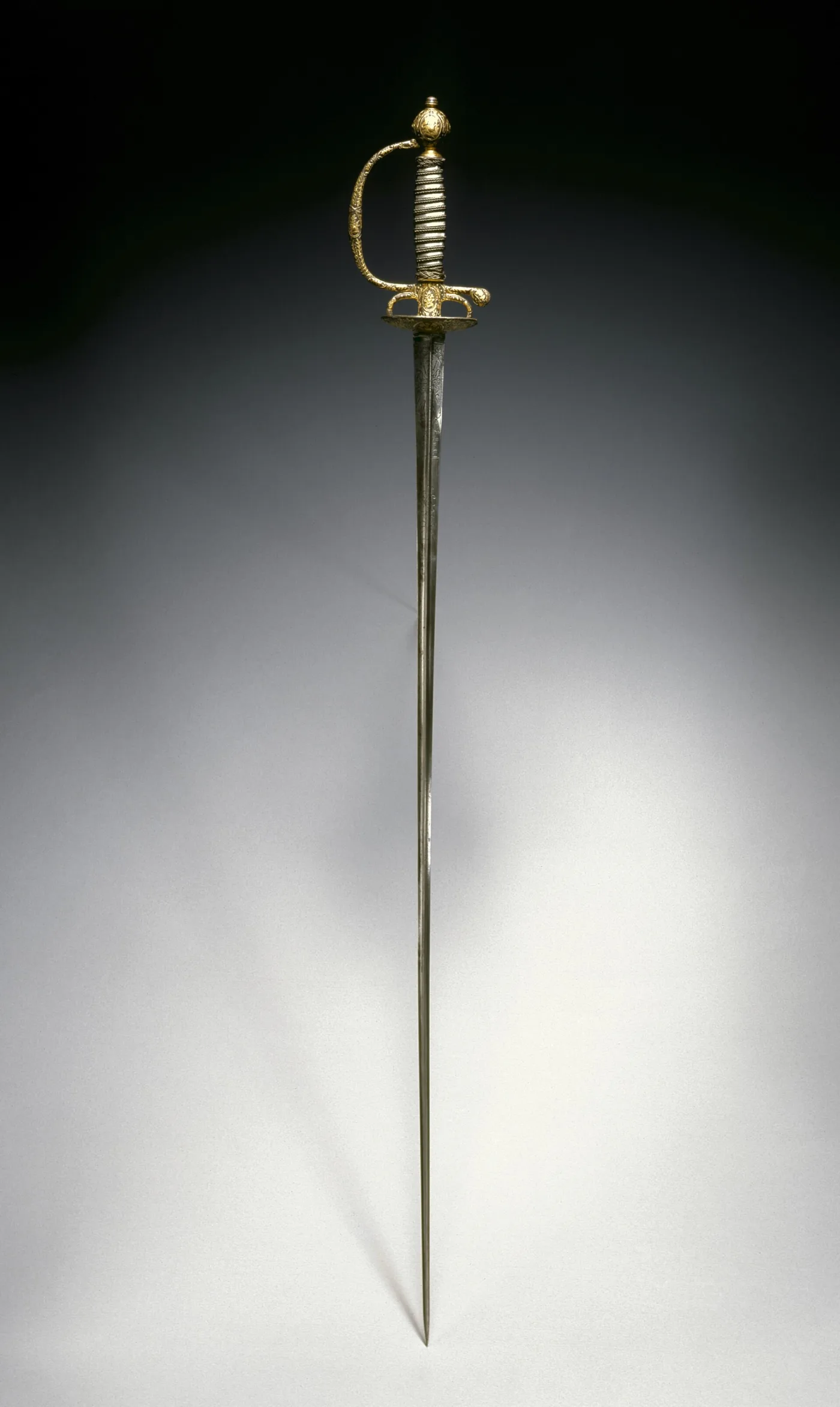
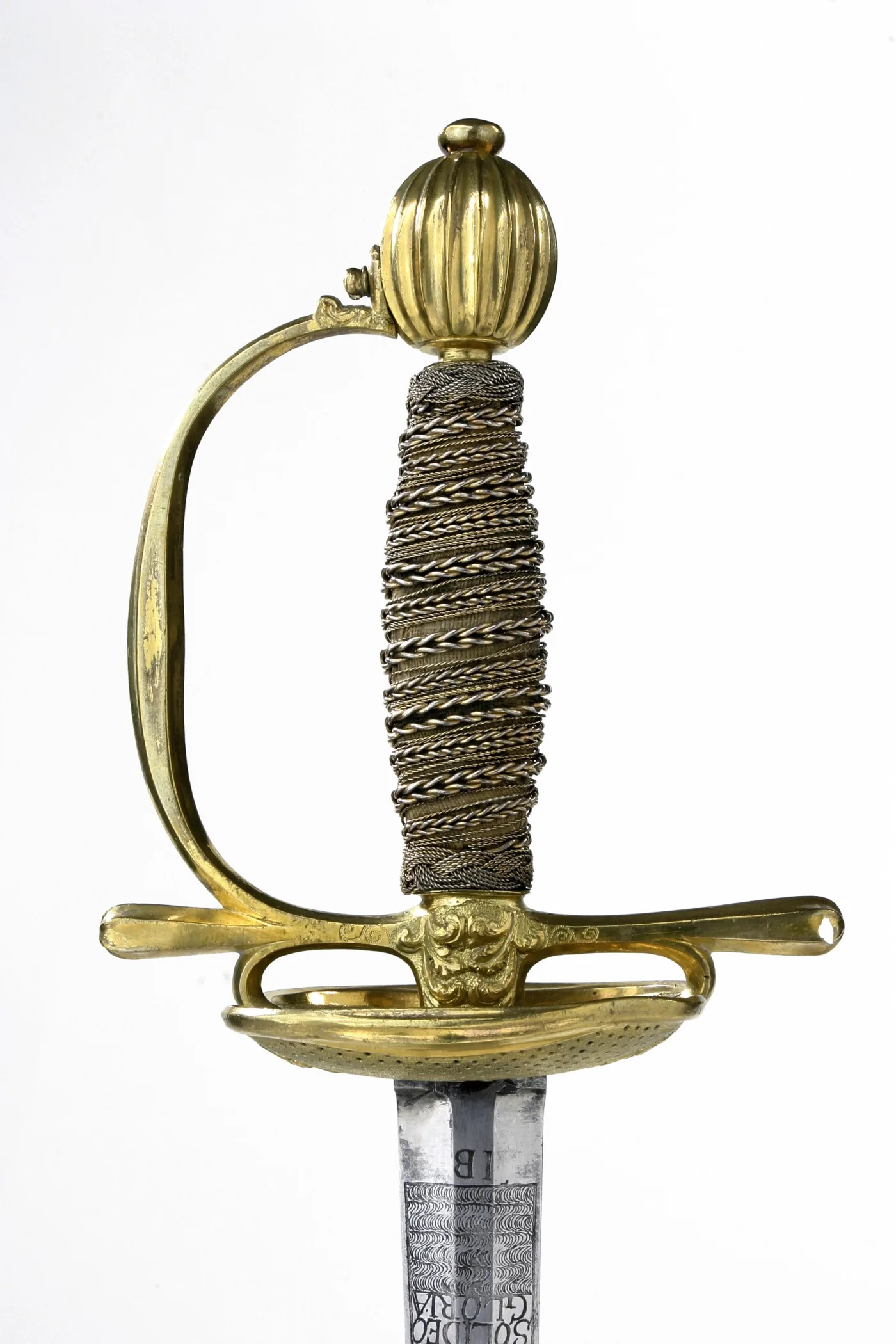
Judge a smallsword on the hilt, not the blade. Blades were replaceable and often were replaced; the hilt carries the silver or gilt work, the maker's ambition and — on English examples — the hallmarks. Note the wire binding on the grip above: original binding is tight and unbroken into the ferrules at both ends, and a grip rewrapped in the 20th century almost never gets that junction right.
Military Sabers and Cutlasses (1750-1900)
Military cavalry sabers feature curved blades optimized for slashing from horseback. Cutlasses are shorter, heavier blades used by naval forces. Identification relies on conformance to official military patterns, presence of regulation markings, and period-appropriate construction. British, French, German, and American military services each developed distinctive patterns.
Victorian and Edwardian Era (1837-1914)
Late 19th and early 20th century swords include elaborate dress swords, lodge swords, and late military patterns. Many feature decorative etching, plated fittings, and ceremonial designs. Quality varies widely from fine handmade pieces to mass-produced commercial products. Victorian swords are relatively common and provide good entry points for collectors.
Military and Regulation Swords
Military swords followed official specifications, making them among the easiest to identify and authenticate when markings are present and patterns are known.
American Military Swords
U.S. military swords include Model 1850 Staff and Field Officers' Swords, Model 1860 Light Cavalry Sabers, Model 1902 Officers' Swords, and various naval patterns. Authentic pieces bear contractor marks, dated inspection stamps, and conform to official specifications. Famous makers include Ames, Horstmann, and Schuyler, Hartley & Graham. Confederate swords are particularly valuable and heavily reproduced.
British Military Patterns
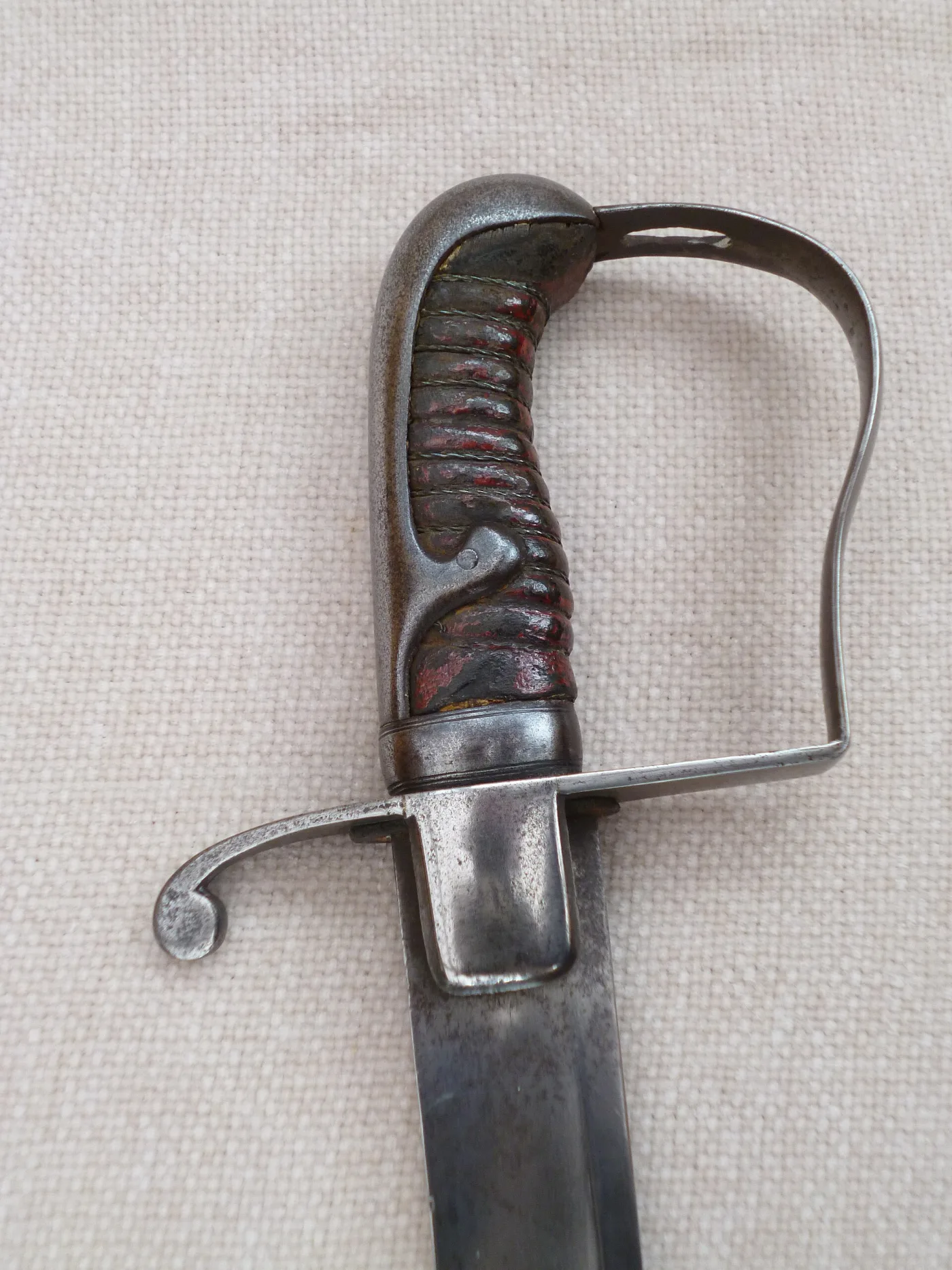
British military swords follow numbered patterns such as Pattern 1796 Light Cavalry Saber, Pattern 1822 Infantry Officer's Sword, and Pattern 1897 Infantry Officer's Sword. Genuine pieces show government broad arrow marks, inspector stamps, and contractor information. Quality British military swords came from makers like Wilkinson, Henry Wilkinson, and Robert Mole & Sons.
German Military Swords
German military swords include Imperial German army and navy sabers, Prussian infantry short swords, and various state patterns. Third Reich period pieces are highly collected but also heavily reproduced. Authentic German military swords feature proof marks, acceptance stamps, and maker's marks from firms like Carl Eickhorn, WKC, and others. Post-war reproductions are extremely common.
French Military Swords
French military patterns include Napoleonic cavalry sabers, Second Empire infantry swords, and republican-era officer's swords. French blades often feature beautiful etching with patriotic motifs, unit designations, and maker's marks. Manufacturers like Chatellerault, Klingenthal, and St. Etienne produced military contracts. Revolutionary and Napoleonic period pieces command premium prices.
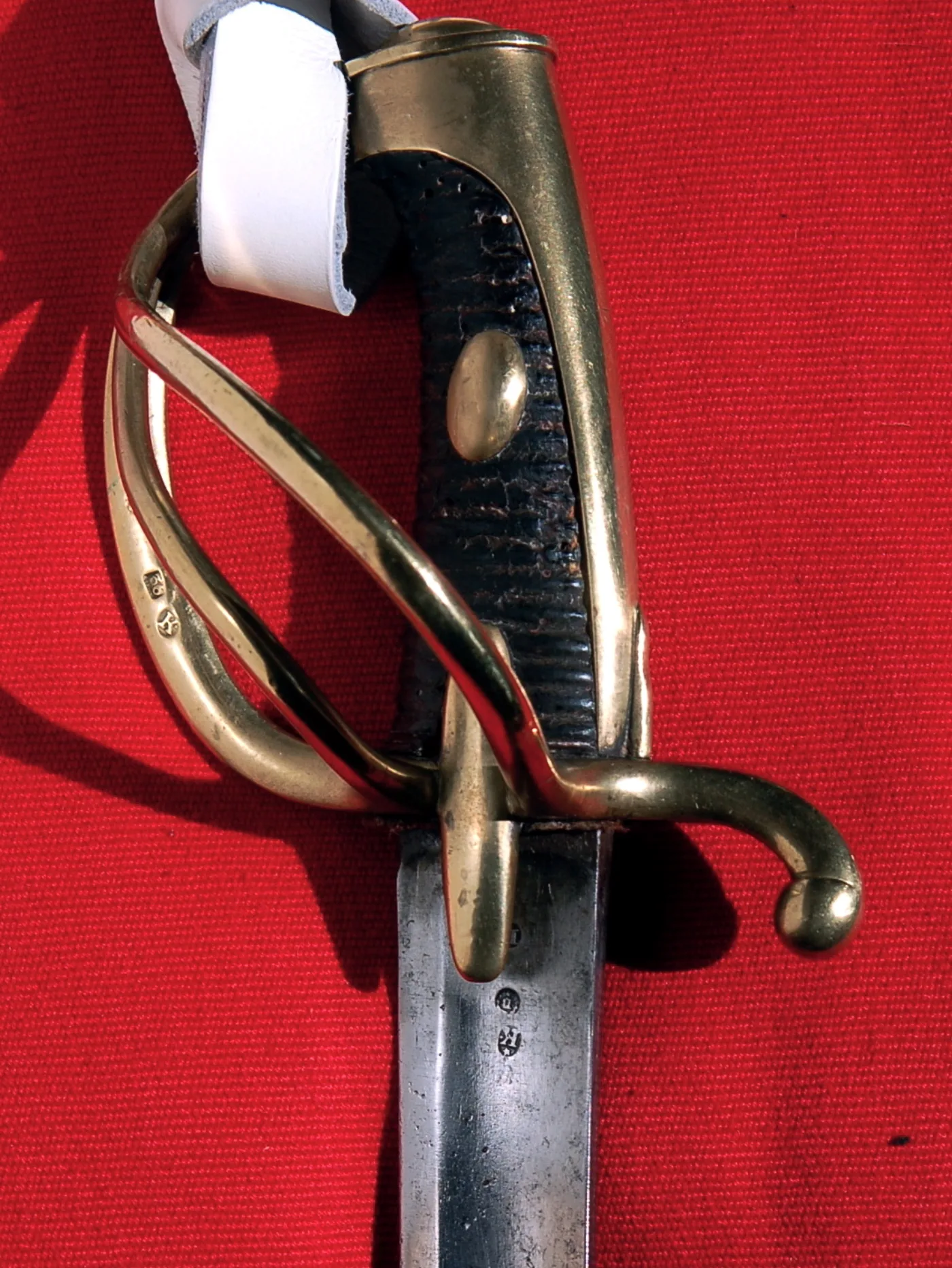
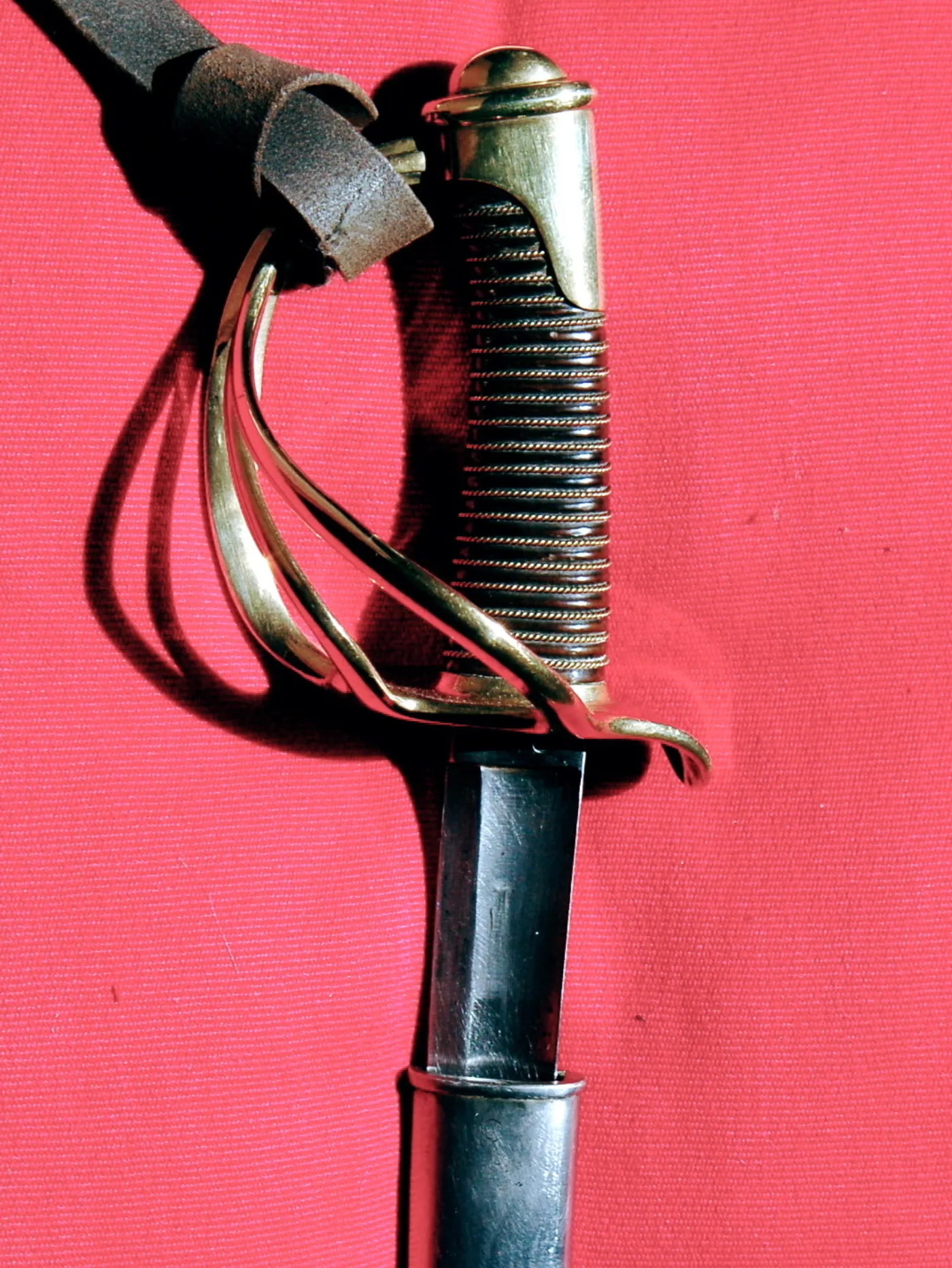
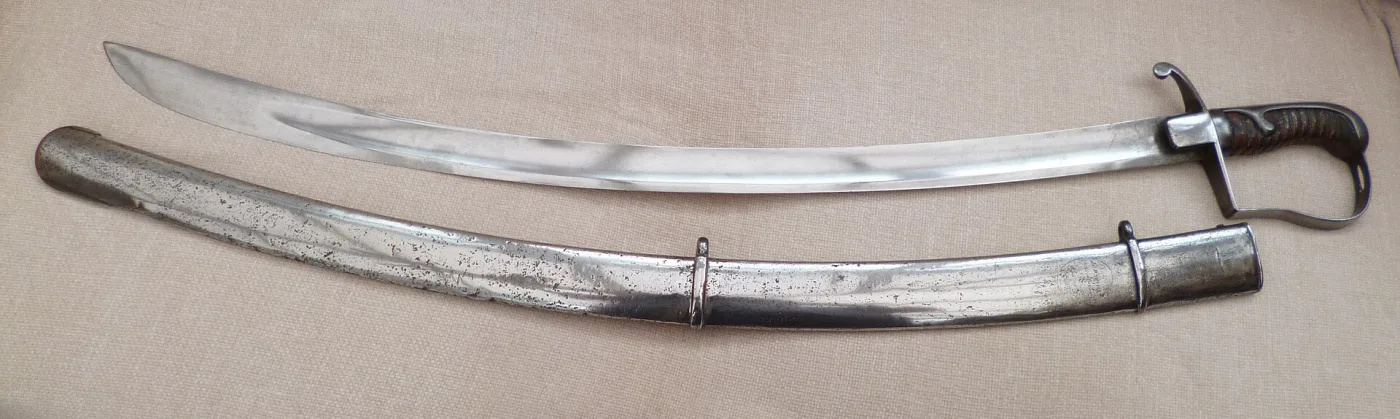
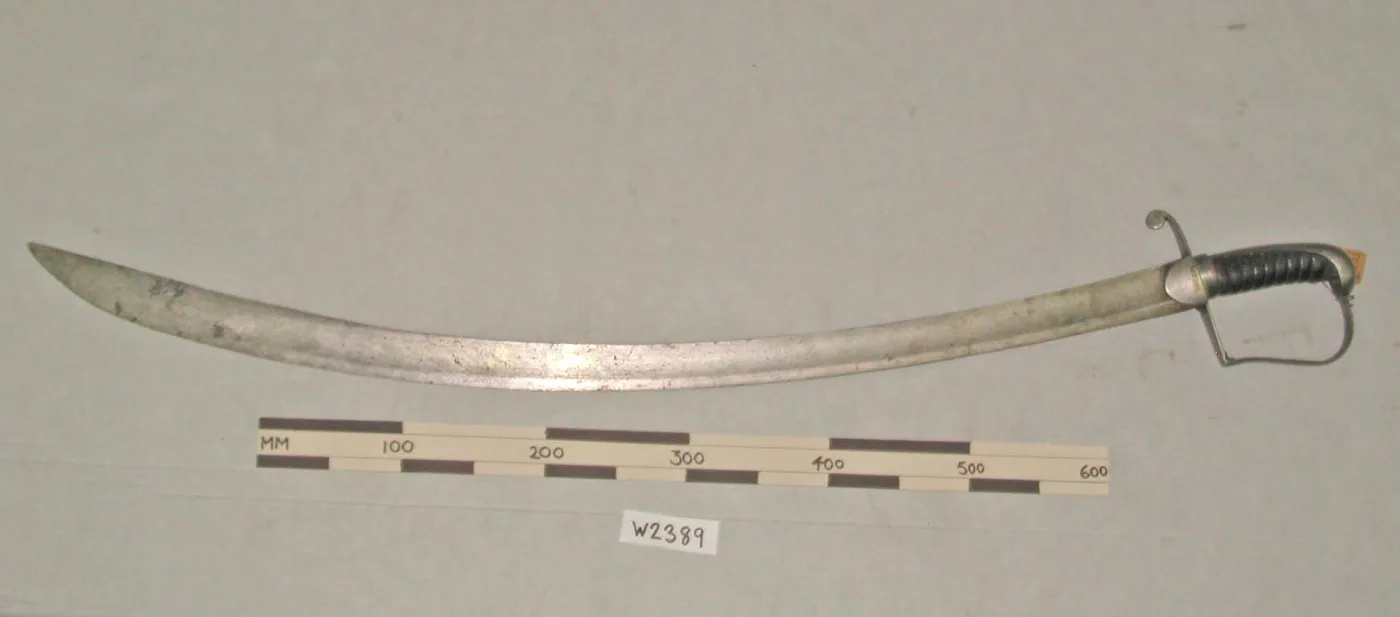
These two are constantly confused in listings, and counting the guard branches will not separate them: both carry a three-branch brass guard, which is why the mistake is so common. Look at the grip instead. The An XI is covered in leather and held by a brass rivet through the side; the 1822 has a grooved grip bound with twisted brass wire. Sellers who call any French brass-hilted cavalry sword "Napoleonic" are frequently holding the later pattern, and the attribution carries most of the price.

Japanese Swords and Blade Identification
Japanese swords represent one of the most sophisticated and collectible categories of antique blades, with their own specialized terminology and authentication methods.
Types of Japanese Swords
Japanese blades are classified by length and mounting: katana (long sword over 60cm), wakizashi (short sword 30-60cm), tanto (dagger under 30cm), tachi (slung edge-down cavalry sword), and naginata (pole arm). Each type follows traditional construction methods and bears signatures according to established conventions.
Blade Signatures and Dating
Japanese swordsmiths signed the nakago (tang) in specific calligraphic styles. Signatures include the smith's name, location, and sometimes date. The style of signature, chisel work, and file marks help authenticate and date blades. Famous smiths like Masamune, Muramasa, and members of the Bizen school are highly valued. Many blades have been shortened or re-signed over centuries.
Construction and Quality Assessment
Japanese sword quality is judged by hamon (temper line pattern), hada (grain pattern in the steel), activity in the steel, and overall balance and proportion. Authentic nihonto (Japanese swords) show laminated construction with harder edge steel and softer core steel. The presence of proper hamon with nie and nioi (crystalline structures along the temper line) indicates traditional construction.
Military and Gunto Identification
Japanese military swords (gunto) from the WWII era include traditionally made blades in military mounts and machine-made showato (show swords). Gunto show military-style fittings, canvas-covered scabbards, and may bear arsenal stamps. Some gunto have genuine antique blades remounted during wartime. Distinguishing traditionally made from machine-made blades requires examining construction, hamon, and tang characteristics.
Middle Eastern and Asian Blades
Middle Eastern and Asian sword traditions developed distinctive blade forms, each with unique identification features and cultural significance.
Persian and Indian Swords
Persian shamshir and Indian tulwar feature distinctive curved blades, often with wootz (crucible steel) construction showing characteristic patterns. These blades may bear maker's marks in Persian or Arabic script, inlaid cartouches, and date inscriptions. Hilts are typically steel, sometimes gold or silver inlaid. Quality examples show fine watered steel patterns and elaborate decoration.
Turkish and Ottoman Weapons
Turkish kilij and yataghan feature distinctive blade shapes and characteristic silver or brass hilts. Ottoman military blades often bear tughra (sultan's seal) marks and Arabic inscriptions. Blade decoration includes gold inlay work (koftgari), while scabbards show fine metalwork and sometimes jeweled fittings. The quality of materials and workmanship varies considerably.
Chinese Swords
Chinese jian (straight double-edged sword) and dao (single-edged saber) represent two main traditional forms. Antique Chinese swords may feature complex hilt designs, tassel attachments, and ornate scabbard fittings. Blades sometimes bear maker's marks or ownership inscriptions in Chinese characters. Imperial pieces show distinctive patterns and quality levels.
Southeast Asian Blades
Southeast Asian swords include the Indonesian kris (with its distinctive wavy blade), Philippine kampilan, and Malay parang. The kris is particularly collectible, with different pamor (pattern-welded designs) and hilt forms indicating origin and age. Many of these blades carry spiritual significance in their cultures and may be accompanied by traditional beliefs about their properties.
Hilt, Guard, and Pommel Identification
The hilt assembly provides crucial information about a sword's origin, period, and purpose. Each component should be examined for authenticity and period correctness.
Hilt Materials and Construction
Hilts are constructed from various materials including wood, bone, horn, ivory, leather, wire-wrapped, or cast metal. Military swords typically have practical grips designed for combat use. Civilian and ceremonial pieces may feature precious materials, decorative carving, or elaborate wrapping. The material and construction method must be appropriate for the sword's supposed period and origin.
Guard Styles and Functions
Guards range from simple crossguards to complex basket hilts. The style indicates the sword's purpose and origin: simple crosses on medieval swords, elaborate swept hilts on rapiers, stirrup guards on sabers, shell guards on smallswords, and full basket guards on broadswords. The guard should show appropriate wear patterns and construction methods for its period.
Pommel Types and Markings
Pommels serve both as counterweights and decorative elements. Common types include wheel pommels, fishtail pommels, acorn pommels, lion's head pommels, and urn-shaped pommels. Some pommels unscrew for blade maintenance. Pommels may bear maker's marks, military stamps, or decorative elements. The pommel style should be appropriate for the sword's period and type.
Wire Wrapping and Grip Details
Grip wrapping techniques evolved over time. Twisted wire wrap indicates certain periods and sword types. Leather wrapping, shagreen (ray skin), and braided materials each have specific uses. The wrapping technique, material, and wear pattern help confirm authenticity and provide dating clues. Original grip materials show age-appropriate patina and wear.
Scabbards and Fittings
Original scabbards and their metal fittings provide significant authentication evidence and add substantial value to a sword. Many antique swords survive without original scabbards, or with replacement sheaths from different periods.
Scabbard Construction
Scabbards consist of a wooden core covered with leather, metal, or other materials. The construction method and materials should be period-appropriate. Leather scabbards show stitching patterns and techniques characteristic of their era. Metal-covered scabbards (common on military swords) may be brass, steel, or silver. The scabbard should fit the blade properly with appropriate clearance.
Metal Fittings and Mounts
Scabbard fittings include the throat (top mount), middle mount(s), and chape (bottom tip). These components protect the scabbard and provide attachment points for suspension. The style, material, and decoration of fittings help identify origin and period. Military scabbard fittings follow regulation patterns. Quality civilian pieces feature elaborate decorative mounts, sometimes with precious metals.
Suspension Systems
How the scabbard attaches to the wearer provides dating clues. Suspension methods include belt hooks, frog studs, rings for sword belts, clips for military equipment, and baldric attachments. The suspension system should be appropriate for the sword's type and intended use. Military swords have regulation suspension fittings that evolved over time.
Matching Blades to Scabbards
Determining whether a blade and scabbard are original to each other requires examining fit, throat dimensions, wear patterns, and stylistic consistency. The blade should fit the scabbard properly without excessive play. Throat wear patterns should align with blade geometry. Decorative elements and quality levels should match between blade and scabbard. Mismatched or replaced scabbards are common and significantly affect value.
Famous Makers and Their Marks
Certain sword makers achieved recognition for quality and innovation. Learning to identify their marks helps establish provenance and value.
Solingen, Germany
Solingen has been a sword-making center since medieval times. Famous makers include Clemens & Jung, WKC (Weyersberg, Kirschbaum & Co.), Carl Eickhorn, and others. Solingen marks include the king's head, running fox, and various maker-specific stamps. The city name "Solingen" appears on countless blades, both authentic and reproduction. Quality and authenticity vary considerably among Solingen-marked pieces.
English Makers
Premier British makers include Wilkinson Sword, Henry Wilkinson, Robert Mole & Sons, Pooley Sword, and Firmin & Sons. These firms supplied British military contracts and high-quality civilian pieces. Their marks are well-documented and help authenticate British swords. Wilkinson maintained detailed production records that can sometimes document specific swords.
American Makers
Notable American sword manufacturers include Ames Manufacturing Company, N.P. Ames, Horstmann Bros., Schuyler, Hartley & Graham, and Tiffany & Co. Many American martial swords bear the maker's name and location on the blade. Confederate-era makers like Boyle & Gamble, Louis Froelich, and Burger & Bros. are particularly collectible. Authentication is crucial as reproductions abound.
French and Continental Makers
French sword-making centers included Klingenthal, Chatellerault, and St. Etienne. These arsenals produced military contracts bearing specific marks and dates. Private French makers like Coulaux and Duperrier also have distinctive marks. Other European makers of note include Austrian, Spanish, and Italian firms, each with characteristic marking systems.
Dating Techniques for Antique Blades
Determining a sword's age requires examining multiple factors including style, construction methods, materials, markings, and historical context.
Stylistic Dating
Sword styles evolved over time, with particular designs characteristic of specific periods. Comparing a sword's form, proportions, and decorative elements to documented examples helps establish its era. Fashion changes affected civilian swords more than military regulation pieces. Understanding period-appropriate features prevents mistaking later revival pieces for earlier originals.
Manufacturing Technology Indicators
Construction techniques evolved with industrial technology. Hand-forged versus machine-made components, grinding methods, heat treatment evidence, and assembly techniques all provide dating clues. The introduction of machine tools, standardized parts, and modern materials mark transition points. Microscopic examination reveals manufacturing methods invisible to the naked eye.
Marking and Documentation Dating
Dated markings provide definitive evidence when present and authentic. Maker's marks changed over time as businesses evolved, firms merged, or addresses changed. Researching specific marks and matching them to documented time periods establishes dates. Military inspection stamps and serial numbers can sometimes be traced to specific production years or contracts.
Patina and Wear Analysis
Genuine age produces characteristic patina on metal surfaces, wear patterns on grips and guards, and corrosion consistent with the sword's claimed history. Artificial aging looks different under examination. Natural patina develops unevenly based on handling and storage. Wear patterns should be logical based on how the sword would have been used. Inconsistent aging suggests alteration or fakery.
Authentication and Fake Detection
The antique sword market includes numerous reproductions, restorations, and outright fakes. Developing authentication skills protects collectors from costly mistakes.
Common Reproduction Indicators
Modern reproductions often show telltale signs: machine-made uniformity, incorrect materials, inappropriate markings, wrong construction methods, and artificially aged appearance. Cast rather than forged components, modern grinding patterns, contemporary alloys, and inconsistent details all suggest reproduction. Many decorative "wall hanger" swords made for the collector market closely resemble authentic pieces but lack proper construction.
Fake Markings and Alterations
Fraudulent markings include added inscriptions, fake maker's marks, forged signatures, and enhanced decorations. Examining marks under magnification reveals whether they were applied using period-appropriate techniques. Fresh-looking marks on supposedly old swords raise suspicion. Some authentic but plain swords have been "improved" with added inscriptions or decorations to increase value.
Married Pieces and Restorations
Many swords combine original components from different pieces. A genuine antique blade may be mounted in a later hilt, or vice versa. While not necessarily fake, married pieces have reduced value compared to all-original examples. Replaced grips, modified tangs, or substituted pommels affect authenticity. Repairs and restorations should be disclosed, as they impact value and collectibility.
Professional Authentication
Valuable or questionable swords warrant professional examination. Expert appraisers use specialized knowledge, reference materials, and sometimes scientific testing to authenticate pieces. Metallurgical analysis can identify materials and manufacturing methods. X-ray examination reveals internal construction. Documented provenance adds authentication evidence. For high-value purchases, professional authentication is essential.
Condition Assessment and Grading
Sword condition significantly affects value. Developing consistent grading standards helps compare examples and establish fair pricing.
Blade Condition
Blade condition ranges from mint (perfect, unused) through excellent, very good, good, fair, to poor. Factors affecting condition include sharpness retention, surface finish, presence of pitting or corrosion, active rust, edge damage, bending or warping, and cracks. Light patina is generally acceptable and often desirable as authentication evidence. Heavy corrosion and pitting significantly reduce value. Complete original polish is rare and valuable.
Hilt and Fittings Condition
Hilt condition includes grip integrity, guard condition, pommel tightness, and overall finish. Original grips in excellent condition are relatively rare. Replaced grips reduce value unless sensitively restored using appropriate materials. Loose fittings, damaged guards, and missing components detract from condition. Original gilding or decorative finish adds value when well-preserved.
Scabbard Condition
Scabbard condition is assessed separately from the blade. Complete original scabbards in good condition substantially increase value. Damaged leather, dented metal, missing fittings, or incorrect scabbards reduce value. Some rare swords survive without scabbards. Period replacement scabbards are preferable to modern reproductions.
Overall Condition Grading
Professional condition grading considers all components and describes both positive and negative factors. Honest condition assessment is crucial for ethical dealing. Condition should be described specifically rather than using vague terms. Photographs documenting condition are essential for sales listings. Condition directly affects value, sometimes dramatically.
Preservation and Care
Proper care preserves antique swords for future generations. Understanding preservation principles helps maintain condition and value.
Storage Considerations
Swords should be stored in climate-controlled environments with stable temperature and moderate humidity. Excessive humidity promotes rust; excessive dryness can damage organic materials. Blades should be lightly oiled with appropriate conservation-grade materials. Scabbards should be stored with blades removed to prevent damage. Vertical storage is preferable to hanging by guards or pommels.
Cleaning and Maintenance
Cleaning antique swords requires careful consideration. Light surface dirt can be removed with appropriate materials, but aggressive cleaning removes patina and can damage blades. Never use abrasives, steel wool, or harsh chemicals on antique blades. Renaissance Wax or similar museum-quality products protect metal surfaces. Leather components benefit from appropriate leather treatments. When in doubt, consult a conservator.
Display Methods
Displayed swords require protection from handling, excessive light, and environmental fluctuations. Wall hangers should support blades properly without stress. Display cases provide protection from dust and handling. UV-filtering glass protects from light damage. Swords should never be displayed in bathrooms, kitchens, or other high-humidity areas. Security considerations apply to valuable pieces.
Professional Conservation
Valuable or damaged swords may benefit from professional conservation. Conservators can stabilize active corrosion, repair damage, and preserve historical integrity. Conservation differs from restoration, which may involve replacing missing components or improving appearance. Conservation focuses on stabilizing condition while preserving authenticity. Always use qualified conservators familiar with antique weapons.
Market Values and Collecting
The antique sword market varies greatly based on type, origin, condition, rarity, and historical significance. Understanding market factors helps collectors make informed decisions.
Factors Affecting Value
Value depends on authenticity, condition, rarity, historical significance, maker, provenance, and market demand. Named or documented swords command premiums. Military presentation pieces with engraved inscriptions are particularly desirable. Swords associated with famous individuals or historical events have enhanced value. Complete original swords in excellent condition bring top prices. Common late Victorian pieces have modest value despite age.
Market Segments
The sword collecting market includes military specialists focusing on specific armies or periods, Japanese sword collectors (a specialized field), medieval and Renaissance collectors, presentation sword enthusiasts, and general edged weapon collectors. Different segments have different value standards and collecting priorities. Understanding your collecting focus helps guide purchases and building expertise.
Price Ranges and Investment
Antique swords range from under $100 for common late 19th-century pieces to millions for exceptional museum-quality examples. Military regulation swords typically range from $200-$5,000 depending on period and rarity. Japanese swords start around $1,000 for late military pieces and exceed $100,000 for signed masterworks. Medieval swords, when authentic, command five to six figures. Collecting as investment requires expertise, careful buying, and patience.
Building a Collection
Beginning collectors should start with affordable pieces while building knowledge. Focus on a specific area rather than buying randomly. Study reference books, museum collections, and documented examples. Buy from reputable dealers willing to guarantee authenticity. Condition matters more for common pieces than rarities. Document purchases with photographs and research. Join collector organizations to access knowledge and networking. As expertise grows, quality can improve while the collection develops focus and coherence.
Frequently Asked Questions
How do I tell a genuine antique sword from a reproduction?
Start with the parts nobody bothers to fake convincingly. Look at the tang where it enters the hilt, at the peen where it is fixed to the pommel, and at the inside of the guard: age produces different oxidation in recessed areas than on polished surfaces, and a uniformly aged sword is usually a chemically aged one. Then check that the wear pattern makes sense — a blade with a bright, sharp edge but a heavily pitted forte has generally been re-ground. Decorative wall-hanger reproductions typically have cast rather than forged blades, with a visible mould seam along the spine.
Should I clean or polish an old sword blade?
No. Removing patina is the single most common way collectors destroy value, and it is irreversible. Stable dark patina protects the metal underneath and is evidence of age. Active red rust is the only thing you should address, with light oil and, at most, a very fine abrasive used only on the corroded spot. Never take a power tool or metal polish to a blade, and never attempt to sharpen an antique — an edge that has been re-profiled cannot be put back.
Are the numbers stamped on the blade a serial number?
Usually not. Marks on a military blade are more often inspection or acceptance stamps, contractor codes, unit and rack numbers, or assembly numbers matching parts made in one batch. Genuine sequential serial numbers become common only on later 19th-century and 20th-century production. Rack and unit numbers are still useful, because they can tie a sword to a specific regiment, but they will not date it on their own.
Does a missing scabbard matter much?
It reduces value, typically by a substantial margin on regulation military swords where the scabbard is part of the pattern, and less so on civilian smallswords where scabbards rarely survive at all. Be careful with a sword that has one: a scabbard from the correct pattern but a different example is a marriage, and it should be described as such. If the sword slides in loosely or the throat does not meet the guard cleanly, the two did not start life together.
Is it legal to buy and own antique swords?
In most jurisdictions genuine antiques are treated differently from modern bladed weapons, but the definitions vary and so do the rules on carrying, shipping and selling. Some countries set an age threshold, others exempt specific categories, and several restrict curved blades and certain fighting knives regardless of age. Check your national and local law before buying, and check the destination's import rules before shipping across a border — customs seizures of legitimately purchased antique blades are common.