Antique Snuff Box Identification Guide: Materials, Makers & Collecting Essentials
Antique snuff boxes represent one of the most fascinating collecting fields in decorative arts—small treasures that once served as status symbols, artistic canvases, and personal accessories for aristocracy and gentry across Europe. From lavish gold and enamel presentation boxes gifted by monarchs to humble horn and papier-mâché examples carried by common folk, snuff boxes encapsulate centuries of craftsmanship, social history, and artistic innovation. This comprehensive guide equips collectors, dealers, and enthusiasts with the knowledge to identify, authenticate, date, and value antique snuff boxes with expert precision.
Table of Contents
- The History and Evolution of Snuff Taking
- Materials and Categories of Snuff Boxes
- Hallmarks, Maker Marks, and Assay Stamps
- Regional Styles and National Characteristics
- Famous Makers and Prestigious Workshops
- Dating Techniques and Period Identification
- Decorative Techniques and Artistic Styles
- Condition Assessment and Authentication
- Market Valuation and Collecting Strategies
- Care, Conservation, and Display
- Frequently Asked Questions
The History and Evolution of Snuff Taking
Understanding the cultural context of snuff taking illuminates why these small containers became such important objects of artistic expression and social signaling throughout European history.
Origins and Spread of Snuff
Snuff—finely ground tobacco inhaled through the nostrils—arrived in Europe via Spanish explorers returning from the Americas in the 16th century. Initially promoted for supposed medicinal benefits, snuff taking rapidly evolved from pharmaceutical novelty to fashionable habit. By the mid-17th century, French and Spanish courts had embraced snuff as a sophisticated alternative to pipe smoking, which was considered coarse and associated with lower classes.
The French diplomat Jean Nicot, who introduced tobacco to the French court in 1560 and lent his name to nicotine, championed snuff's reputed therapeutic properties. Catherine de Medici reportedly used snuff to treat migraines, lending royal endorsement to the practice. This aristocratic adoption set the stage for snuff boxes to become essential accessories for the fashionable elite.
The Golden Age of Snuff Taking (1700–1850)
The 18th century marked the zenith of snuff culture. Louis XIV's court established elaborate rituals around snuff taking, with the manner of offering, accepting, and inhaling snuff becoming intricate social performances. A gentleman might own dozens of snuff boxes, selecting different examples for various occasions, outfits, or times of day. The snuff box became as essential to a gentleman's toilette as his pocket watch or walking stick.
Frederick the Great of Prussia was legendary for his snuff box collection, reportedly owning over 1,500 examples. He commissioned the finest goldsmiths and jewelers to create presentation boxes for diplomatic gifts, establishing snuff boxes as instruments of statecraft. Napoleon similarly used snuff boxes as diplomatic currency, commissioning elaborate examples from Parisian goldsmiths for foreign dignitaries and military honors.
Decline and Transformation
The 19th century saw gradual decline in snuff taking as cigars and cigarettes gained popularity. However, snuff boxes continued production, often as presentation pieces, commemorative objects, or luxury gifts rather than functional accessories. By the early 20th century, snuff boxes had largely transitioned from everyday accessories to collectible antiques, with the finest examples entering museum collections and the auction market.
Cultural Significance for Collectors
For modern collectors, understanding this historical context is essential. A snuff box's original purpose—whether personal daily use, royal gift, military presentation, or commemorative object—significantly influences its design, materials, inscriptions, and ultimately its value. Presentation boxes with documented provenance to significant historical figures can command exceptional premiums, while everyday examples offer accessible entry points for new collectors.
Materials and Categories of Snuff Boxes
Snuff boxes were crafted from an extraordinary range of materials, each with distinctive characteristics that aid identification and dating. Understanding material hierarchies also clarifies the original market position and likely quality of craftsmanship.
Gold Snuff Boxes
Gold boxes represent the pinnacle of snuff box production, reserved for royalty, aristocracy, and presentation purposes. Several gold types and techniques are commonly encountered:
- Solid Gold (18K or higher): The most prestigious examples, often from Paris, London, or Geneva, featuring substantial gold content and exceptional craftsmanship. French boxes typically used 18-karat gold with distinctive rose tint.
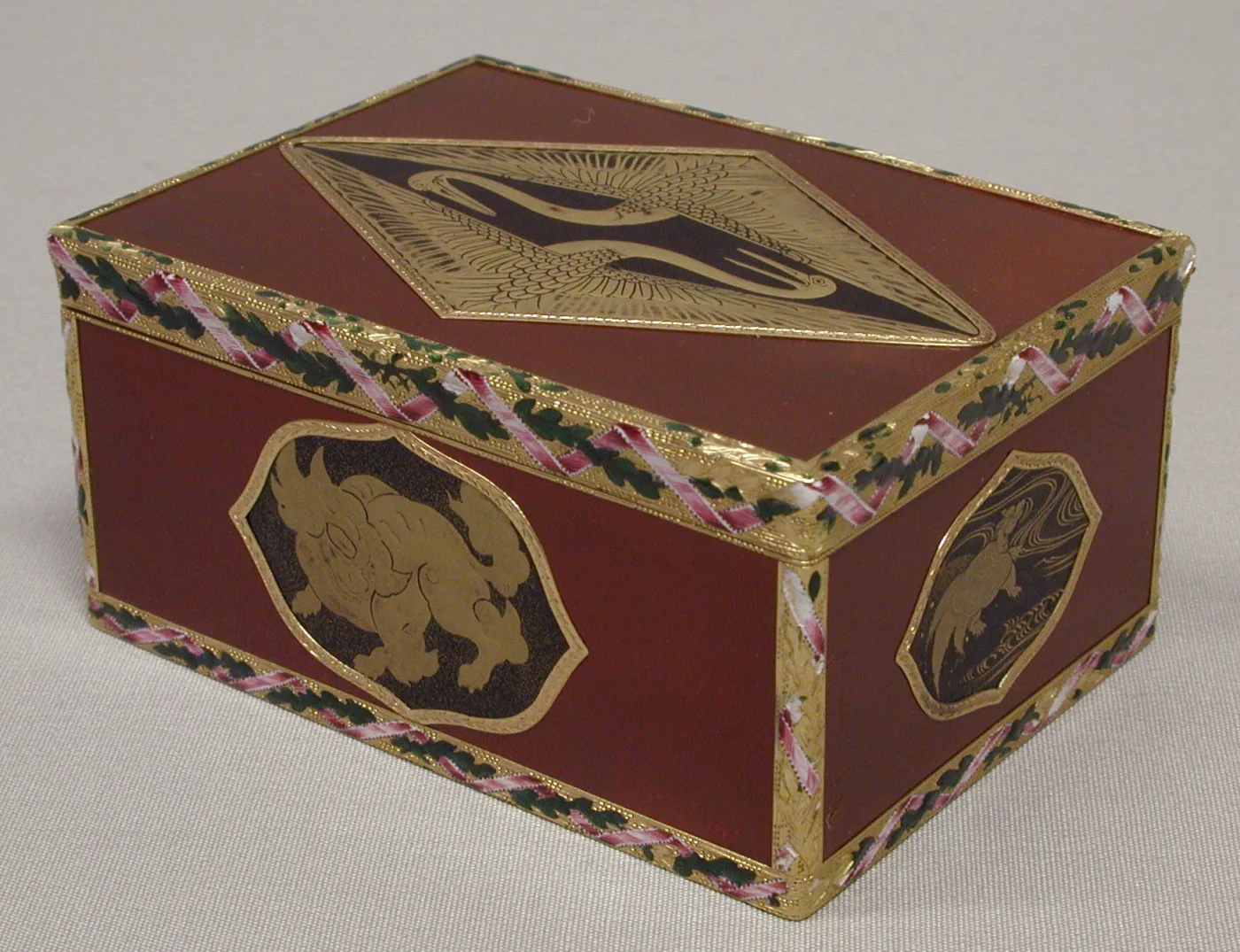
- Quatre-Couleur Gold: A French specialty using four gold alloys (yellow, white, rose, and green) to create intricate decorative effects without enamel. Achieved by varying copper, silver, and iron content in the gold alloy.
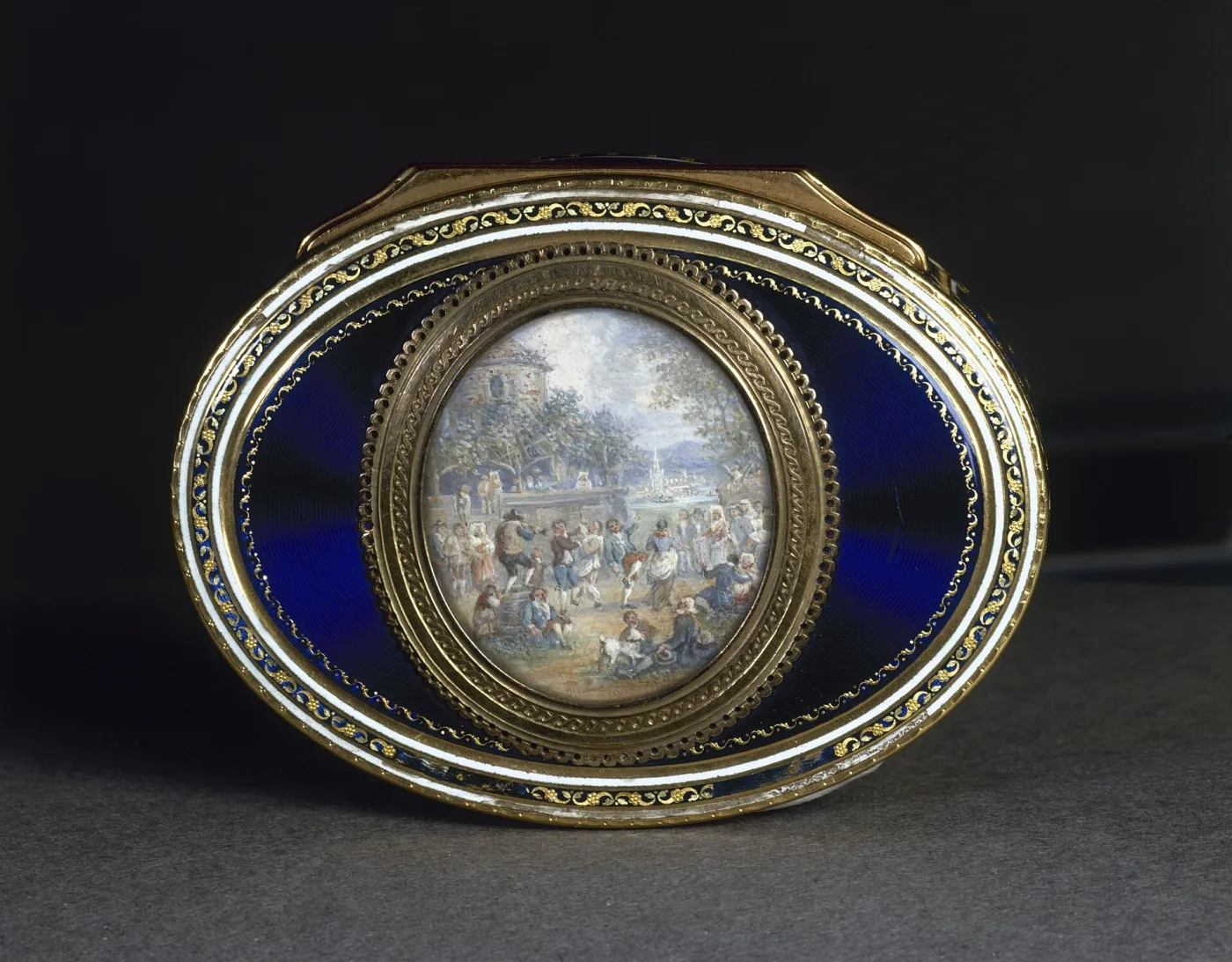
- Engine-Turned Gold: Machine-engraved patterns (guilloché) creating geometric designs beneath translucent enamel, popular from the late 18th century onward.
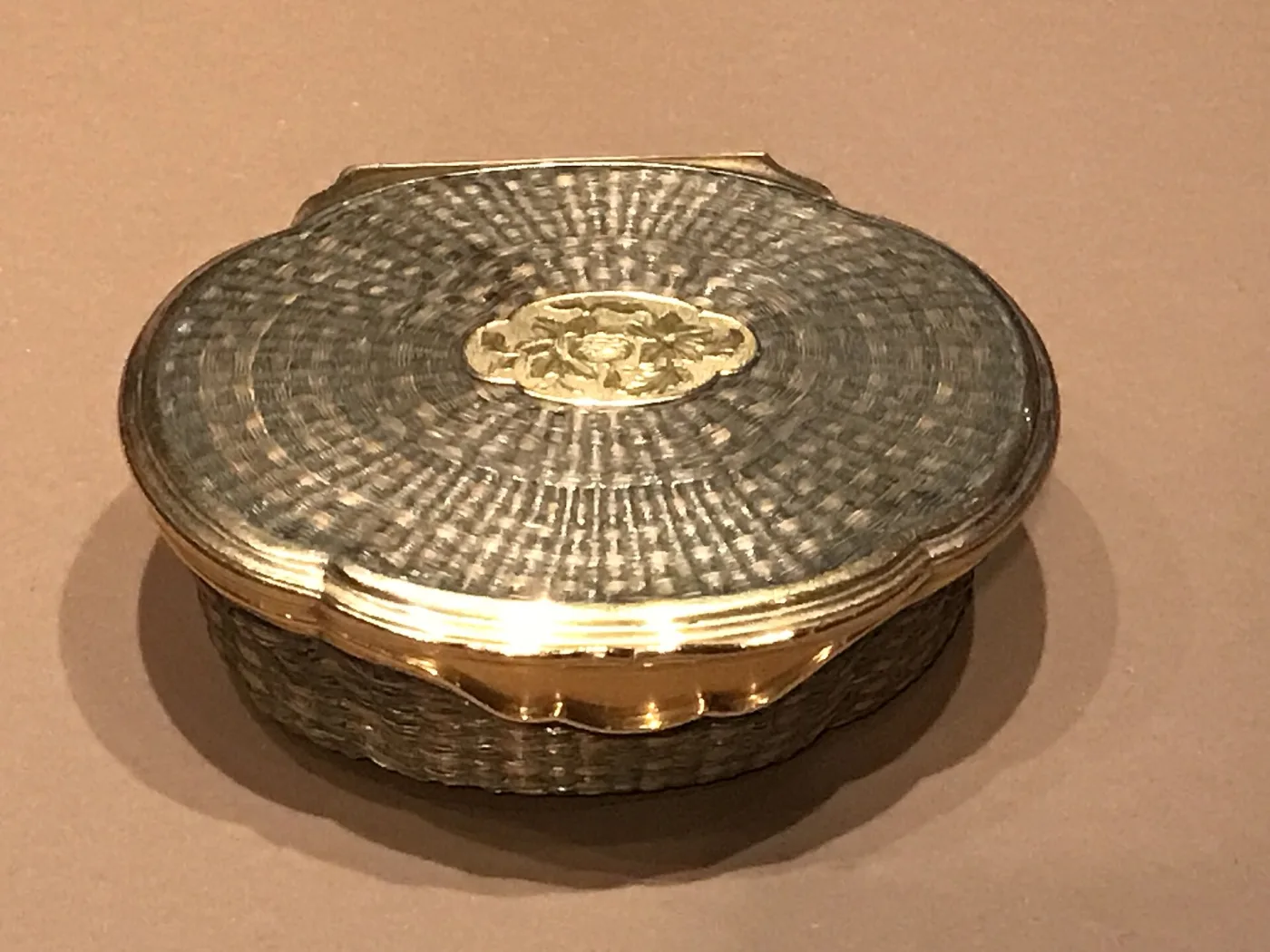
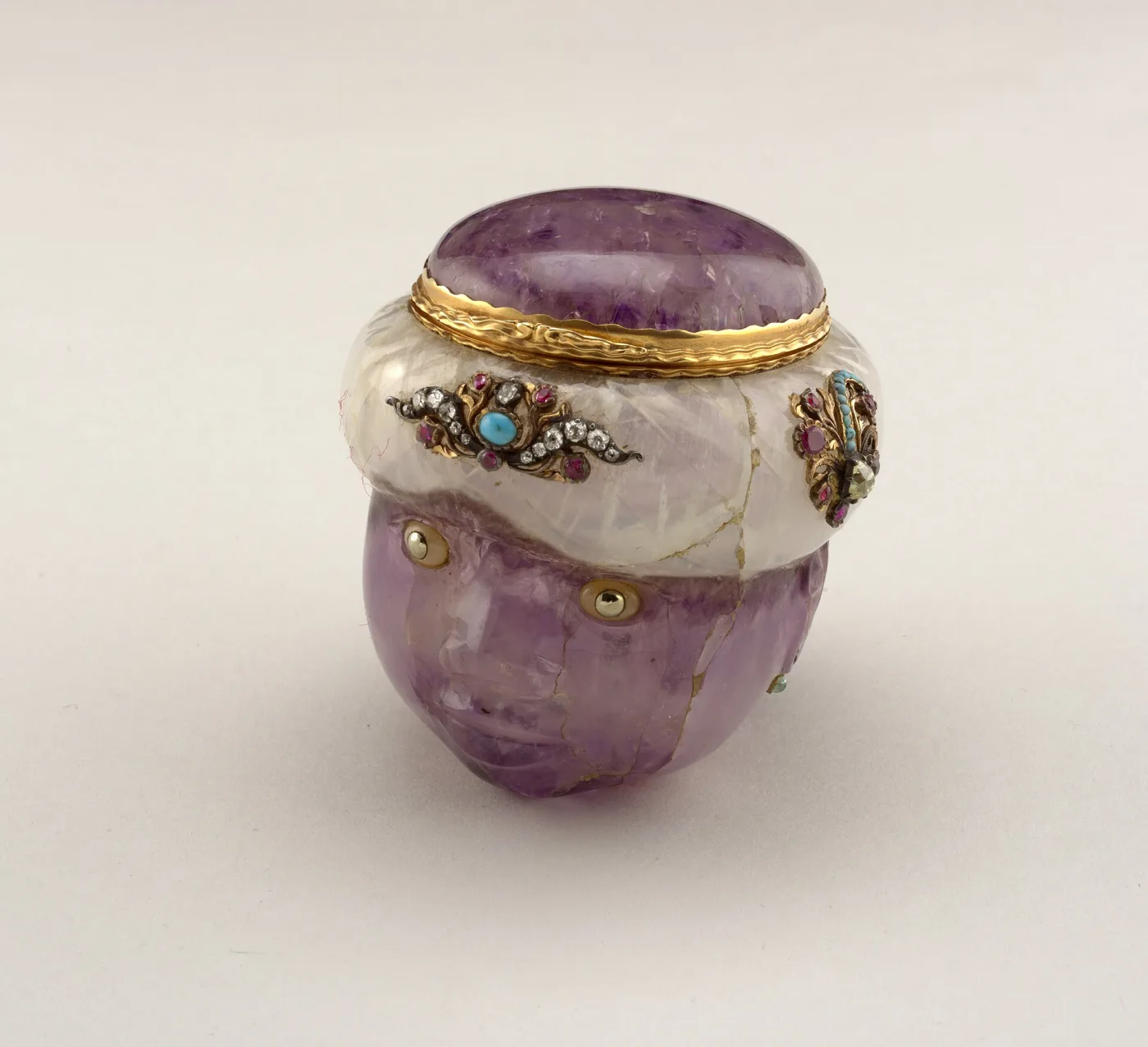
- Gold-Mounted: Hardstone, porcelain, or enamel bodies with gold hinges, rims, and thumb pieces, offering prestige at lower cost than solid gold.
Silver Snuff Boxes
Silver boxes provided luxury accessibility below gold while still commanding significant artistic attention:
- Sterling Silver: English and American examples typically in sterling (92.5% silver), featuring hallmarks that facilitate precise dating and attribution.
- Continental Silver: French, German, and Dutch examples with varying silver standards (often 800 or 950 fineness), each with national assay marks.
- Gilt Silver (Vermeil): Silver with gold wash or mercury gilding, offering gold appearance at silver pricing. Wear patterns reveal underlying silver, helping distinguish from solid gold.
- Niello Work: Russian and Eastern European specialty featuring black sulfide compounds filling engraved designs on silver, creating dramatic contrast.
Enamel Snuff Boxes
Enamel work allowed full pictorial decoration, making these boxes miniature art objects:
- Painted Enamel: Copper bodies covered in white enamel ground with hand-painted scenes, popular in Battersea, Bilston, and Birmingham (English), as well as Limoges (French).
- Champlevé Enamel: Enamel filling carved recesses in metal, common in Chinese and Russian production.
- Cloisonné Enamel: Wire compartments filled with enamel, associated with Chinese and Japanese export pieces.
- Guilloché Enamel: Transparent enamel over engine-turned metal, revealing the pattern beneath. Fabergé elevated this technique to legendary status.
Hardstone and Mineral Boxes
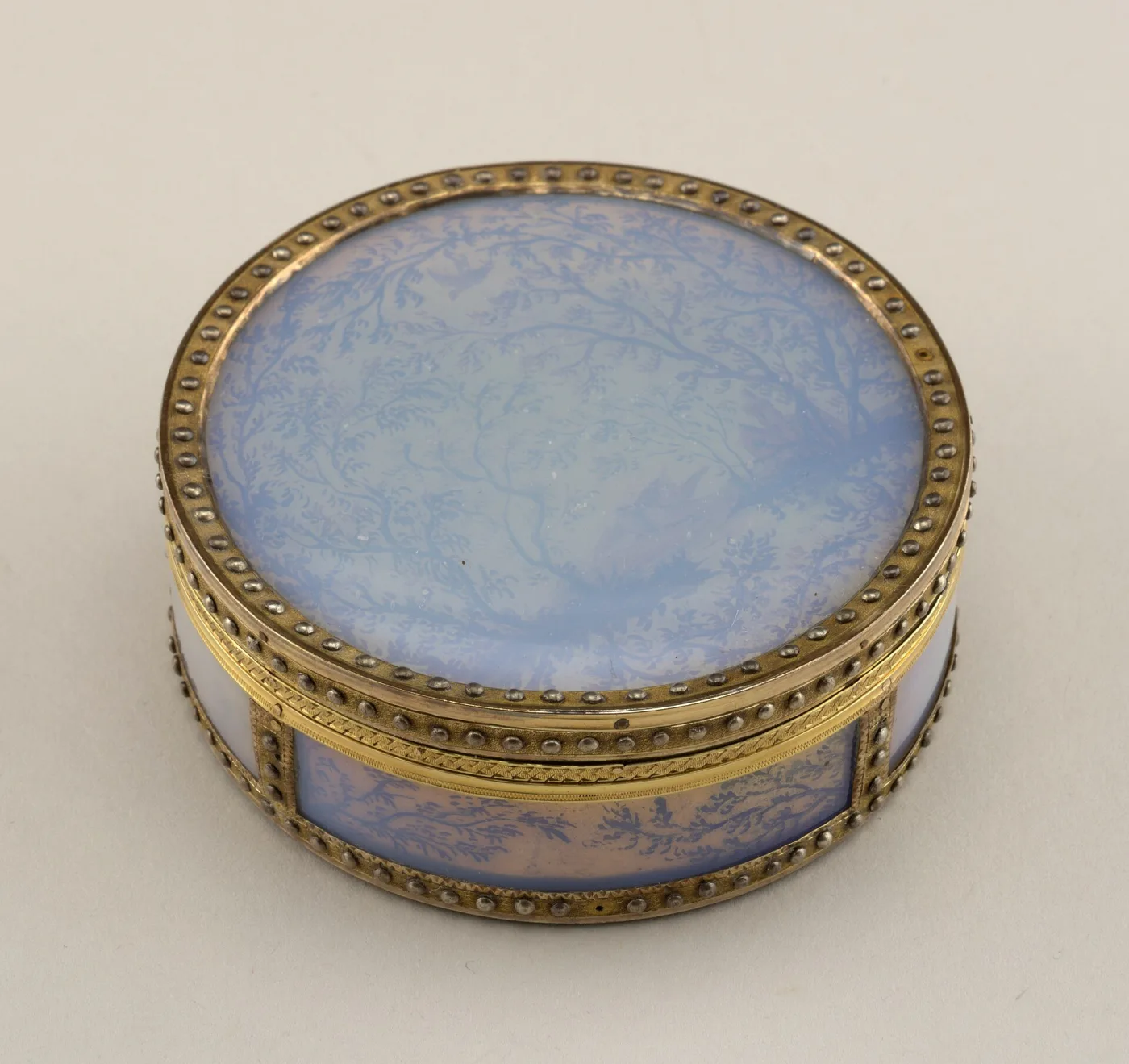
Natural stones provided durable, beautiful containers often with gold or silver mounts:
- Agate: Banded or moss agate from German workshops, particularly Dresden and Idar-Oberstein, with elaborate gold mounts.
- Bloodstone (Heliotrope): Dark green jasper with red spots, favored for masculine presentation pieces.
- Lapis Lazuli: Deep blue mineral with gold pyrite inclusions, prized for royal commissions.
- Rock Crystal: Colorless quartz carved and polished, sometimes with enclosed miniature paintings or goldwork.
- Jade and Nephrite: Chinese and Central Asian examples, sometimes repurposed from earlier jade carvings with European mounts added.
Porcelain Snuff Boxes
European porcelain manufactories produced elaborate boxes, often with gilt metal mounts:
- Meissen: German hard-paste porcelain with distinctive crossed swords mark, featuring painted scenes, figures, and ground colors.
- Sèvres: French royal manufactory producing soft-paste then hard-paste boxes with bleu céleste, rose Pompadour, and other signature ground colors.
- Chelsea, Bow, and Derby: English factories producing elaborate boxes for the domestic market.
- Chinese Export: Armorial and famille rose decorated boxes for European markets, alongside carved cinnabar lacquer boxes prized for their deep red relief.
Organic and Novelty Materials
More accessible materials served middle-class and working-class markets:
- Tortoiseshell: Hawksbill turtle shell, often with gold or silver piqué (inlaid) work. Now protected under CITES regulations.
- Horn: Cow, ram, or buffalo horn, sometimes pressed into decorative shapes while heated.
- Papier-Mâché: Lacquered compressed paper, popular for Scottish and Birmingham production with painted or transfer-printed decoration.
- Wood: Carved hardwoods, burl veneers, and marquetry work, sometimes with hidden compartments.
- Ivory: Carved elephant or walrus ivory, often with micromosaic or portrait miniatures. Now heavily restricted in trade.
- Cowrie Shells: Natural shells with silver mounts, particularly Scottish examples.
Hallmarks, Maker Marks, and Assay Stamps
Precious metal snuff boxes typically carry marks that provide crucial dating and attribution evidence. Understanding hallmarking systems is fundamental to authentication.
British Hallmarking System
English, Scottish, and Irish silver and gold boxes carry comprehensive marks regulated since the 14th century:
- Maker's Mark: Initials or symbol identifying the silversmith or goldsmith. Registers at assay offices link marks to specific craftsmen.
- Assay Office Mark: Leopard's head (London), anchor (Birmingham), rose (Sheffield), castle (Edinburgh), crowned harp (Dublin), and others identifying where the metal was tested.
- Standard Mark: Lion passant for sterling silver in England, thistle for Scottish sterling, Britannia figure for Britannia standard (95.8% silver).
- Date Letter: Alphabetical letter cycling through the alphabet in specific fonts, changing annually and varying by assay office. Date letter charts enable precise year identification.
- Duty Mark: Sovereign's head indicating payment of duty, used 1784–1890.
British hallmarks appear inside the box, typically on the base interior, inside the lid, or on the rim. A complete set of clear marks dramatically increases value and facilitates research.
French Hallmarking System
French marks are notably complex, with systems changing through revolutionary periods:
- Poinçon de Maître: Maker's mark in a lozenge shape, often with initials and a symbol between them.
- Charge Mark (Poinçon de Charge): Tax mark indicating metal registration, varying by period and geographic region.
- Discharge Mark (Poinçon de Décharge): Confirmation that duty was paid, applied upon sale.
- Warden's Mark (Poinçon de Jurande): Guild verification mark before the Revolution.
- Titre Mark: Fineness guarantee (owl for imported gold after 1838, eagle's head for French gold).
Revolutionary and Napoleonic periods disrupted marking practices, creating gaps and transitional marks that specialists can interpret. Post-1838 French marks follow more standardized patterns.
Other European Hallmarks
- German States: Pre-unification Germany had city marks (crescent for Augsburg, Gothic B for Berlin, tower for Hamburg) rather than national standards.
- Swiss: Bear for Bern, key for Geneva, various cantonal marks. Geneva goldsmith marks are particularly important for high-quality boxes.
- Russian: Cyrillic maker's marks, city marks (St. George for Moscow, crossed anchors for St. Petersburg), and fineness numbers (84 for 875 silver, 56 for 14K gold).
- Dutch: Lion for second standard silver, key for Amsterdam, crossed swords for various cities.
Interpreting and Researching Marks
Careful examination under magnification reveals mark details often invisible to the naked eye. Reference works such as Jackson's English Goldsmiths and Their Marks, Tardy's International Hallmarks on Silver, and specialized databases enable identification. Partial or worn marks can still provide useful evidence when combined with stylistic analysis.
Fake and Spurious Marks
Collectors should be aware that fake marks exist. Warning signs include:
- Marks too crisp for the period: Genuine marks wear over centuries of handling.
- Incorrect mark combinations: Date letters from different years, impossible assay office combinations.
- Marks struck over existing surfaces: Original makers sometimes converted earlier pieces, requiring expert evaluation.
- Transposed marks: Genuine marks cut from one piece and soldered into another—examine surrounding metal for seam evidence.
Regional Styles and National Characteristics
Snuff box design varied considerably by country, reflecting national tastes, available materials, and craft traditions. Recognizing regional characteristics narrows attribution even when marks are absent or unclear.
French Snuff Boxes
France dominated luxury snuff box production, especially during the 18th century. Parisian goldsmiths created the most expensive and sought-after examples:
- Form: Oval, rectangular with canted corners, and cartouche shapes predominate. Lids often slightly domed.
- Decoration: Quatre-couleur gold chasing, elaborate enamel work, miniature portraits, and allegorical scenes. Engine-turning became prominent from the 1780s.
- Mounts: Invisible hinges, precise fitting, thumb pieces integral to design rather than functional afterthoughts.
- Quality: Unsurpassed finishing, with interior surfaces polished smooth to prevent snuff contamination.
English Snuff Boxes
English production emphasized practicality alongside decoration:
- Form: Rectangular, oblong, and oval forms. Deeper bodies than French examples, reflecting different snuff-taking habits.
- Decoration: Bright-cut engraving, reeded borders, presentation inscriptions, cast and applied ornament.
- Birmingham Trade: Large-scale production from late 18th century, including silver, Sheffield plate, papier-mâché, and enamel boxes at various price points.
- Scottish Characteristics: Distinctive engine-turning patterns, cowrie shell boxes, and cairngorm (smoky quartz) mounts.
German and Swiss Snuff Boxes
Germanic production centered on Dresden, Berlin, Augsburg, and Geneva:
- Dresden Hardstone: Exceptional agate and jasper carving with elaborate gold mounts, rivaling French quality.
- Berlin Iron: Cast iron boxes from the early 19th century, sometimes exchanged for gold jewelry during patriotic fundraising.
- Swiss Enamel: Geneva workshops produced miniature enamel portraits and landscape scenes of exceptional quality.
- Musical Boxes: Swiss specialty combining snuff storage with concealed musical movements.
Russian Snuff Boxes
Russian production developed distinctive national characteristics:
- Niello Work: Silver boxes with black niello filling engraved designs, particularly from Tula and Moscow.
- Imperial Presentation: Elaborate gold and enamel boxes bearing imperial portraits or ciphers, given as official gifts.
- Fabergé: The House of Fabergé elevated Russian box-making to legendary status with guilloché enamel, hardstone, and gold boxes of unmatched refinement.
Dutch and Scandinavian Boxes
- Dutch Silver: Elaborate repoussé work with pastoral, mythological, and maritime scenes. Distinctive hinge mechanisms.
- Dutch Brass: Engraved tobacco and snuff boxes for merchant-class use.
- Scandinavian: Often featuring folk motifs, runic inscriptions, and national romantic themes in the 19th century.
American Snuff Boxes
American production largely followed English models:
- Colonial Period: Rare examples from colonial silversmiths, often unmarked or with pseudo-hallmarks.
- Federal Period: Presentation boxes commemorating Revolutionary War heroes, early presidents, and naval victories.
- 19th Century: Philadelphia, New York, and Boston silversmiths produced quality silver boxes, often with patriotic motifs.

Famous Makers and Prestigious Workshops
Certain makers achieved legendary status, and boxes bearing their marks command significant premiums. Identifying these makers is essential for valuation.
Parisian Gold Box Makers
- Daniel Govaers (active 1717–1736): Early 18th-century master known for sculptural gold boxes with mythological themes.
- Jean George (active 1752–1765): Master of quatre-couleur gold work with exceptionally refined chasing.
- Jean-Joseph Barrière (active 1763–1793): Produced some of the finest Louis XVI period boxes with Neo-classical ornament.
- Pierre-François Drais (active 1763–1788): Renowned for boxes with miniature portrait panels.
- Adrien-Jean-Maximilien Vachette (active 1779–1839): Major Napoleonic-era goldsmith supplying imperial presentation boxes.
English Silver Box Makers
- Matthew Linwood (Birmingham, 1790–1830): Prolific producer of quality silver boxes with cast figural ornament.
- Nathaniel Mills (Birmingham, 1826–1850s): Specialist in "castle-top" boxes featuring architectural views, among the most collected Victorian silver boxes.
- Edward Smith (Birmingham, 1830s–1850s): Similar castle-top production to Mills, sometimes confused in attributions.
- Joseph Willmore (Birmingham, 1806–1840s): Quality producer in both silver and silver-gilt.
Swiss Enamel Workshops
- Jean-Louis Richter (Geneva, 1766–1841): Master miniature painter whose landscape enamels appear on the finest Geneva boxes.
- Jean Petitot (Geneva/Paris, 1607–1691): Early enamel portraitist whose work influenced generations of Swiss enamelers.
- Bautte & Moynier: Geneva firm producing exceptional enamel boxes and watches.
The House of Fabergé
Peter Carl Fabergé (1846–1920) and his workmasters created boxes that represent the ultimate in Russian decorative arts:
- Michael Perchin: Head workmaster 1886–1903, responsible for many imperial commissions.
- Henrik Wigström: Succeeded Perchin, continuing the highest standards until 1917.
- August Holmström: Jewelry workmaster whose pieces sometimes included box-form objects.
Fabergé boxes feature distinctive marks including the Fabergé name in Cyrillic or Latin script, workmaster initials, and imperial warrant marks. Due to high values, Fabergé pieces require expert authentication.
Other Notable Makers
- James Tassie (Scottish, 1735–1799): Known for portrait medallions in vitreous paste that appear on box lids.
- Wedgwood: Jasperware plaques mounted in silver or cut-steel boxes.
- Johann Melchior Dinglinger (Dresden, 1664–1731): Court jeweler producing spectacular Saxon royal boxes.
Dating Techniques and Period Identification
Multiple overlapping methods help establish production dates, especially when hallmarks are missing or unclear.
Stylistic Dating
- Baroque (1650–1720): Elaborate sculptural ornament, heavy cartouche forms, mythological scenes in high relief.
- Rococo (1720–1770): Asymmetrical scrollwork, shell motifs, pastoral scenes, lighter forms with canted corners.
- Neo-classical (1770–1820): Symmetrical designs, Greek key patterns, urns, cameo profiles, engine-turning introduction.
- Regency/Empire (1800–1830): Bold geometric shapes, Egyptian motifs, military themes, laurel wreaths, eagles.
- Victorian (1837–1901): Eclectic revival styles, naturalistic florals, sentimental subjects, architectural views.
- Art Nouveau (1890–1910): Flowing organic forms, whiplash curves, female figures, nature motifs.
- Art Deco (1920–1940): Geometric abstraction, bold color contrasts, machine-age influences.
Technical Dating Indicators
- Hinge Construction: Integral hinges with invisible pins suggest quality 18th-century French production. Visible external hinges are more common on English and later boxes.
- Engine-Turning Patterns: Specific guilloché patterns can be dated by their introduction and popularity periods.
- Thumb Piece Design: Shell-form thumb pieces suggest mid-18th century; geometric or foliate forms indicate later periods.
- Interior Gilding: Gold boxes typically have plain polished interiors. Silver boxes may have gilt interiors to prevent tarnishing affecting snuff flavor—common from the 18th century onward.
Material Dating
- Pinchbeck: Copper-zinc alloy simulating gold, popular 1720–1760s before hallmarking regulations tightened.
- Sheffield Plate: Silver-plated copper by fusion, produced 1743–1840s before electroplating superseded it.
- Electroplate: Post-1840 technique—presence indicates Victorian or later production.
- Synthetic Materials: Early plastics (Bakelite, celluloid) appeared from the late 19th century.
Subject Matter Dating
Pictorial boxes often depict dateable subjects:
- Portraits: Identified sitters, fashion, and hairstyles can be dated to specific decades.
- Commemorative Events: Coronations, battles, exhibitions, and political events provide terminus post quem dates.
- Architectural Views: Buildings depicted in their original or altered states indicate production periods.
Decorative Techniques and Artistic Styles
Understanding decorative techniques aids authentication and reveals the skill level and likely origin of a piece.
Metalworking Techniques
- Chasing: Relief decoration created by pushing metal from the front with punches. No metal is removed. Characteristic of French gold boxes.
- Repoussé: Relief created by hammering from the reverse, refined by chasing from the front. Common on Dutch and German silver.
- Engraving: Lines cut into metal with sharp tools, removing material. Bright-cut engraving creates faceted surfaces that sparkle.
- Engine-Turning: Geometric patterns cut by rose engine lathes, providing grounds for translucent enamel. Introduced mid-18th century, perfected by Fabergé.
- Casting: Relief ornaments cast separately and applied. Common for English silver box borders and thumb pieces.
Enamel Techniques
- Painted Enamel: Vitreous enamel colors applied with fine brushes, fired in layers. Requires exceptional skill for miniature work.
- Guilloché Enamel: Transparent colored enamel over engine-turned metal. Light penetrates to the pattern, creating optical depth.
- Champlevé: Enamel filling carved recesses in metal, polished flush with the surface.
- Cloisonné: Thin wire cells filled with enamel, creating outlined designs.
- Basse-Taille: Translucent enamel over low-relief chased or engraved metal, creating tonal variations.
- Plique-à-jour: Translucent enamel without metal backing, creating stained-glass effects. Rare on snuff boxes.
Portrait Miniatures
Miniature paintings on ivory, enamel, or vellum often adorn box lids. Key identification points include:
- Technique: Watercolor on ivory (stippled hatching technique) versus enamel (fused glass colors).
- Costume and Hairstyle: Fashion details date portraits within narrow periods.
- Artist Identification: Signed miniatures by known artists (e.g., Richard Cosway, Jean-Baptiste Isabey) significantly increase value.
- Later Copies: Victorian copies of 18th-century portraits exist—examine costume details and painting technique carefully.
Micromosaic
Italian specialty using tiny glass tesserae (often 1mm or smaller) to create pictorial panels, frequently depicting Roman ruins, classical subjects, or animals. Mounted in gold or silver boxes for the Grand Tour market.
Pietra Dura
Florentine hardstone mosaic using precisely cut semi-precious stone pieces fitted together to create pictorial or geometric designs. Common on Italian boxes and those with Italian panels mounted in Northern European goldwork.
Condition Assessment and Authentication
Careful examination reveals condition issues, restorations, and potential authenticity problems that affect value and collectibility.
Condition Factors
- Hinges: Check for repair, replacement, or weakness. Original integral hinges are preferable to replaced external hinges.
- Lid Fit: Warping, dents, or repairs may cause poor closure. Original tight fit with subtle "pop" when opened indicates good condition.
- Enamel Condition: Hairline cracks, chips, losses, and repairs significantly affect enamel box values. Ultraviolet light may reveal later restorations.
- Gilding Wear: Worn gilt reveals underlying silver on vermeil boxes. Heavy wear reduces value; minimal wear is acceptable.
- Surface Damage: Dents, scratches, and polish wear affect appearance and value. Light patina is acceptable; heavy polishing that removes detail is problematic.
- Miniature Condition: Portrait miniatures suffer from flaking, cracking, and fading. Damaged miniatures substantially reduce overall value.
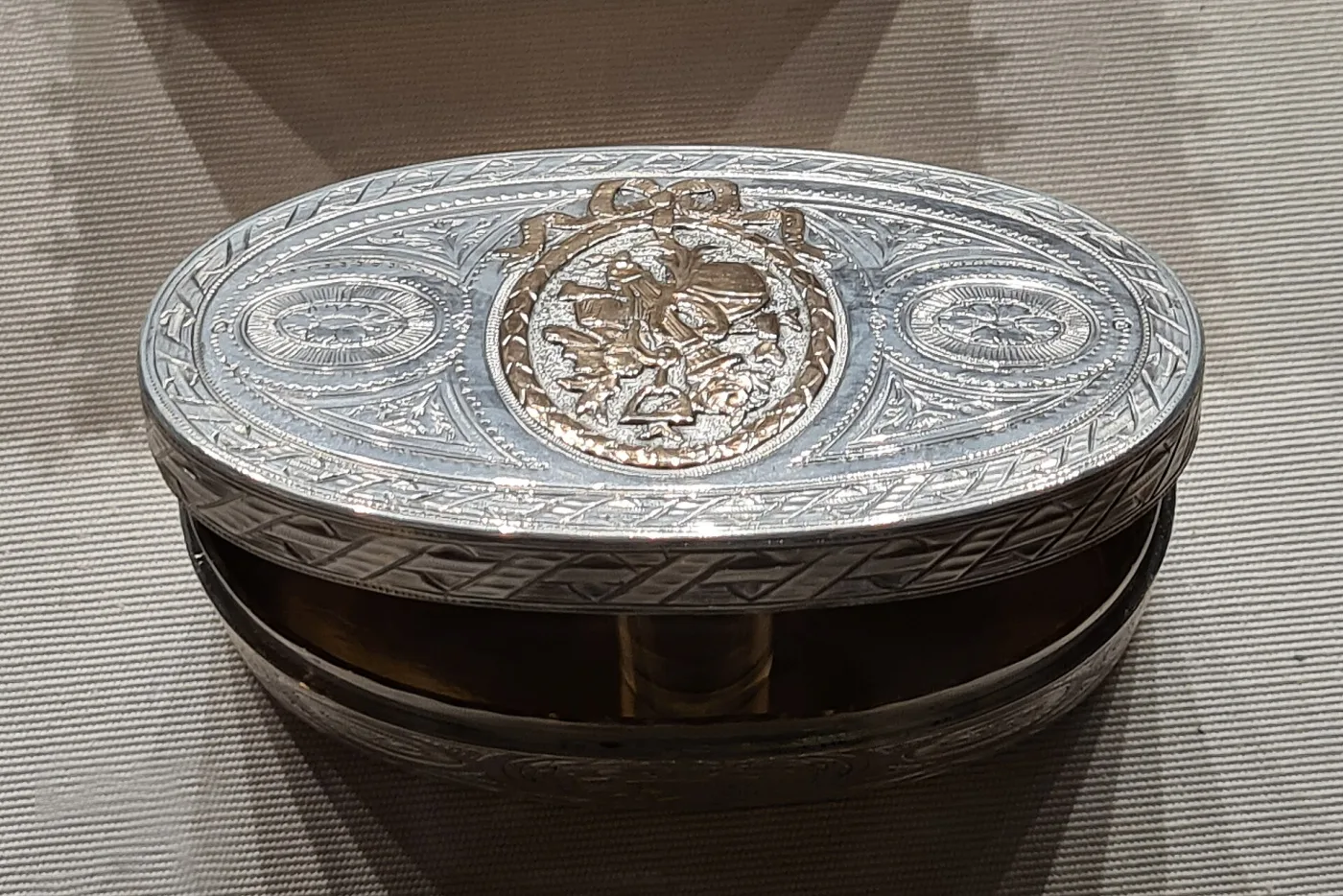
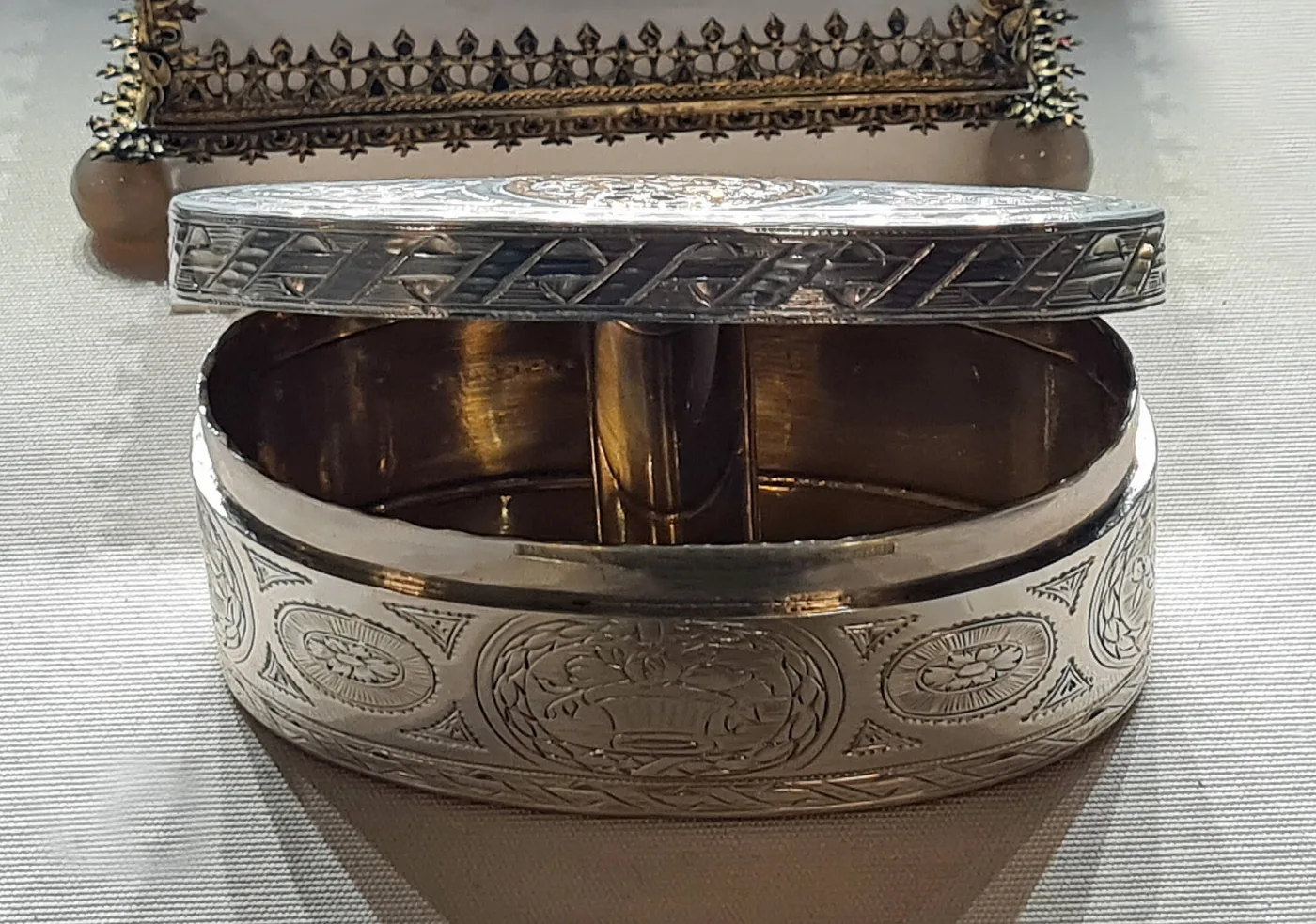
The second view is the one that settles most condition questions, and it is the one sellers rarely photograph. An original hinge is cut from the same sheet as the body and its knuckles line up with the rim; a replacement is usually a separate strip soldered on, visible as a seam inside the lid. Ask for the open shot before bidding.
Restoration Issues
- Acceptable Restorations: Professional cleaning, minor hinge repair, conservation mounting of loose miniatures.
- Problematic Restorations: Major structural repairs, enamel repainting, replaced panels, re-gilding that obscures original surfaces.
- Disclosure Obligation: Reputable dealers and auction houses should disclose known restorations. Undisclosed work discovered later may constitute grounds for return.
Authentication Red Flags
- Mismatched Marks: Marks inconsistent with apparent origin, period, or material.
- Style/Mark Conflicts: Decoration inconsistent with the period indicated by marks.
- Converted Objects: Watch cases, vinaigrettes, or other objects converted to snuff boxes.
- Married Components: Lids and bases from different original boxes—check mark consistency and patina match.
- Fabergé Fakes: The high value of Fabergé has spawned sophisticated forgeries. Expert authentication is essential for significant purchases.
Professional Authentication
For valuable pieces, professional authentication is advisable:
- Specialist Dealers: Established dealers in gold boxes and Russian decorative arts offer expertise.
- Auction House Experts: Major houses employ specialists who can provide opinions.
- Museum Curators: Some institutions offer authentication consultations for significant pieces.
- Laboratory Analysis: Metal composition testing, enamel dating, and pigment analysis can resolve attribution questions.
Market Valuation and Collecting Strategies
The snuff box market offers opportunities at various price levels, from modest silver examples under $500 to museum-quality gold boxes exceeding $1 million.
Primary Value Factors
- Material: Gold > hardstone with gold mounts > silver-gilt > silver > enamel on copper > base metals and organic materials.
- Maker: Signed pieces by recognized masters command substantial premiums.
- Provenance: Documented history, especially royal or celebrity ownership, dramatically increases value.
- Quality: Exceptional craftsmanship and artistic merit distinguish the finest examples.
- Condition: Original, unrestored pieces in excellent condition are increasingly rare and valued.
- Historical Significance: Presentation boxes with inscriptions, commemorative pieces, and documented historical connections.
Market Segments
- Entry Level ($200–$1,000): Victorian silver boxes, papier-mâché, horn, and modest English enamel.
- Intermediate ($1,000–$10,000): Quality Georgian and Victorian silver, unsigned French provincial silver, good Bilston enamel.
- Advanced ($10,000–$100,000): Good French gold boxes, Russian niello and enamel, signed English castle-tops, quality Swiss enamel.
- Museum Quality ($100,000+): Exceptional French royal presentation boxes, Fabergé, documented provenances, masterwork examples.
Collecting Strategies
- Focus Areas: Build expertise in specific categories—English silver, French gold, enamel portraits, regional makers.
- Quality Over Quantity: Fewer excellent pieces typically prove better investments than many mediocre examples.
- Condition Standards: Establish condition thresholds and resist temptation to accept substandard pieces at "bargain" prices.
- Documentation: Maintain provenance records, purchase receipts, photographs, and research files for each piece.
- Professional Relationships: Develop relationships with reputable specialist dealers who can source suitable pieces.
Buying Venues
- Auction Houses: Christie's, Sotheby's, Bonhams, and regional houses offer regular sales. Buyer premiums add 20–30% to hammer prices.
- Specialist Dealers: Experts offering vetted inventory with guarantees of authenticity.
- Antique Shows: Major fairs (TEFAF, Masterpiece London, Winter Antiques Show) attract quality dealers.
- Online Platforms: Require caution—verify dealer credentials and insist on return privileges.
Care, Conservation, and Display
Proper care preserves value and ensures these treasures survive for future generations.
Storage Recommendations
- Individual Cases: Store each box separately in acid-free tissue within fitted boxes to prevent scratching.
- Climate Control: Maintain stable temperature (65–70°F) and humidity (45–55% RH). Avoid attics, basements, and exterior walls.
- Silver Storage: Use tarnish-preventing cloths or storage materials. Avoid rubber bands and sulfur-containing papers.
- Light Protection: Store miniatures and enamel away from light; even display lighting causes cumulative fading.
Handling Guidelines
- Clean Hands: Handle boxes with clean, dry hands. Cotton gloves may be used but reduce tactile sensitivity.
- Support Properly: Hold boxes by the body, not the lid. Avoid stressing hinges.
- Avoid Lotions: Skin products, perfumes, and cosmetics can damage surfaces and attract contaminants.
- Photography: Document pieces annually with detailed photographs for insurance and condition monitoring.
Cleaning and Maintenance
- Dust Removal: Soft brushes (natural hair) for regular dusting. Avoid touching painted surfaces.
- Silver Cleaning: Gentle polishing with quality silver cream when necessary. Avoid dips and harsh abrasives.
- Gold Cleaning: Soft cloth only. Gold rarely requires chemical cleaning.
- Enamel Care: Never use water or solvents on painted enamel. Dry brushing only.
- Professional Conservation: Leave repairs, hinge adjustments, and restoration to qualified conservators.
Display Considerations
- Security: Display in locked cases for valuable collections.
- Lighting: LED lighting reduces UV damage. Limit light levels for miniatures and textiles.
- Rotation: Consider rotating displays to limit cumulative light exposure.
- Insurance: Maintain adequate coverage with current valuations. Specialist insurers understand decorative arts.
Conclusion
Antique snuff boxes offer collectors an extraordinary window into centuries of craftsmanship, social history, and artistic achievement. From modest horn examples to magnificent royal presentation pieces, each box tells stories of the hands that made it, the fashionable society that used it, and the collectors who preserved it through generations.
Successful collecting requires developing connoisseurship across multiple disciplines—hallmark interpretation, material identification, stylistic analysis, and condition assessment. Building expertise takes time, but the rewards include owning objects of genuine historical significance and exceptional beauty that fit in the palm of your hand.
Whether you're drawn to the glittering perfection of Parisian gold boxes, the charming architectural views on Birmingham castle-tops, or the luminous enamels of Geneva and Fabergé, the world of antique snuff boxes offers endless fascination. Each acquisition adds another chapter to these objects' ongoing stories—and to your own journey as a collector.
Frequently Asked Questions
How can I tell a solid gold snuff box from a gold-mounted one?
Look at where the gold stops. On a solid gold box the metal is continuous over lid, sides and base, and the interior is the same colour as the exterior. A gold-mounted box has a body of hardstone, enamel, porcelain or shell held by gold rims, hinge and thumb piece only, so you will see a join line where the mount meets the body. Gold-mounted boxes are not fakes — they were a legitimate way to buy prestige below the price of solid gold — but they are valued differently.
Why do so many snuff boxes have no maker's mark?
Marking practice varied by country and by material. British silver boxes are usually fully hallmarked and can be dated precisely. French boxes carry charge and discharge marks that were struck for tax purposes and are easy to misread. Boxes in horn, papier-mâché, wood, tortoiseshell and carved organic materials were rarely marked at all, because the marking systems applied to precious metal. On an unmarked box, dating falls back on form, decoration technique and the mount.
How do I check whether the hinge has been replaced?
Open the box and look inside the lid. An original integral hinge is worked from the same sheet as the body, so its knuckles align with the rim and there is no added metal. A replacement is normally a separate strip soldered in, and the solder seam is visible from the interior even when the exterior looks untouched. This is also why you should ask a seller for a photograph of the box open before bidding — the closed view hides the most common repair.
Does a portrait miniature make a snuff box more valuable?
It can, but condition governs the outcome. A fine miniature by an identifiable hand on a documented box adds substantially. A miniature that is flaking, cracked or faded reduces the value of the whole object, because it cannot be restored without disturbing the original surface. Judge the miniature separately from the box, then judge whether the two belong together — miniatures were sometimes married to boxes long after both were made.
Is it legal to buy antique snuff boxes made of tortoiseshell or ivory?
It depends on your jurisdiction and on documentation, not on the age of the box alone. Hawksbill tortoiseshell is covered by CITES and elephant ivory is heavily restricted in trade, with rules differing between the EU, the UK and the United States, and further rules on export. Antique exemptions exist in some places but generally require proof of age. Establish what your own country requires before buying, and keep any provenance paperwork that comes with the piece.