
Antique Samplers & Needlework Identification Guide: Dating, Authentication & Value Assessment
Antique samplers and needlework represent some of the most personal and historically significant textile artifacts in the collecting world. These embroidered pieces, created primarily by young girls and women from the 17th through early 20th centuries, serve as both artistic achievements and historical documents, recording family genealogies, regional customs, educational practices, and social values across generations. From elaborate mourning samplers and alphabets stitched by schoolgirls to sophisticated Berlin woolwork and crewelwork pieces, antique needlework offers collectors a tangible connection to the hands, hearts, and daily lives of women throughout history.
Identifying and authenticating antique samplers requires specialized knowledge of stitching techniques, textile materials, regional characteristics, and historical context. Unlike many antiques with maker's marks or clear documentation, samplers rely on subtle clues including fabric weave, thread composition, stitch vocabulary, design elements, inscriptions, and condition patterns to reveal their origins and age. The market for fine samplers has strengthened considerably, with exceptional American samplers from the 18th and early 19th centuries commanding prices from several thousand to over $100,000 at auction, while charming Victorian pieces remain accessible to beginning collectors.
This comprehensive guide will equip you with the expert knowledge needed to identify, date, authenticate, and value antique samplers and needlework. Whether you've discovered a family heirloom, are building a collection, or simply want to understand these remarkable textile artifacts, you'll learn the essential techniques collectors and dealers use to distinguish exceptional pieces from reproductions, recognize regional characteristics, decode inscriptions and dates, and assess condition and value in today's dynamic market.
Table of Contents
- The History of Samplers and Their Purpose
- Types of Antique Samplers
- Dating Techniques for Antique Needlework
- Fabric and Ground Material Analysis
- Thread and Fiber Identification
- Identifying Stitches and Techniques
- Regional and National Characteristics
- Decoding Inscriptions, Dates, and Signatures
- Design Elements and Motifs
- American Schoolgirl Samplers
- Mourning and Memorial Samplers
- Berlin Woolwork and Victorian Needlework
- English Samplers Characteristics
- European Continental Needlework
- Condition Assessment and Common Issues
- Authentication and Detecting Reproductions
- Value Factors in Antique Samplers
- Preservation and Care
- Research and Attribution Resources
- Collecting Advice and Market Trends
The History of Samplers and Their Purpose
The word "sampler" derives from the Latin "exemplar," meaning an example or pattern to be followed. Originally, samplers served as reference works for needlewomen, collections of stitches, patterns, and techniques to be consulted when creating household linens, clothing, and decorative textiles. In an era when printed pattern books were rare and expensive, samplers functioned as personal pattern libraries, with women recording favorite motifs, borders, and stitch combinations on a single piece of linen. The sewing tools used to create these works were themselves prized possessions, often carried on ornate chatelaines worn at the waist.
Evolution Through the Centuries
Early samplers from the 16th and 17th centuries were long, narrow bands covered densely with patterns, often worked on both sides and rolled for storage. These "band samplers" contained no inscriptions or pictorial elements, focusing entirely on stitch techniques and repeating geometric patterns. By the late 17th century, samplers began to take on more decorative and educational purposes, incorporating alphabets, numerals, and pious verses alongside traditional patterns.
The 18th century brought the "marking sampler," designed to teach young girls the alphabet letters and numerals needed to mark household linens with family initials and inventory numbers. These samplers typically featured alphabets in various sizes, sometimes in both upper and lower case, along with numerals. Many girls would complete multiple samplers during their education, progressing from simple alphabets to more complex pictorial designs.
Samplers as Educational Tools
By the late 18th and early 19th centuries, needlework had become a central component of female education across Europe and America. Young girls, typically between ages 8 and 14, created samplers as proof of their accomplishment in this essential feminine skill. These pieces demonstrated mastery of various stitches, ability to follow patterns, patience, and moral virtue. Students also learned to use essential sewing tools, including fine scissors and shears that are now collectible in their own right. The sampler served as both educational exercise and display piece, often framed and hung in the family home as evidence of the maker's refinement and readiness for marriage and household management.
Wealthy families sent daughters to academies and finishing schools where needlework instruction formed a major part of the curriculum. These institutions often had distinctive styles, making it possible for today's collectors to identify samplers created at specific schools. The finest examples feature elaborate borders, complex pictorial scenes, silk thread on fine linen, and sophisticated compositions that required months or even years to complete.
Decline and Modern Collecting
Sampler making declined dramatically after the mid-19th century as education for girls expanded beyond domestic arts and as machine-made household textiles became widely available. By the early 20th century, sampler creation had largely ceased except as occasional folk art or revival pieces. This finite production period makes authentic antique samplers increasingly valuable to collectors, who prize them not only for their aesthetic appeal but also for their historical significance as documents of women's education, family history, and changing social values.
Types of Antique Samplers
Understanding the different categories of samplers helps collectors identify age, purpose, and value. Each type served specific educational or practical functions and displays characteristic design elements.
Band Samplers
The earliest sampler type, band samplers date primarily from the 16th and 17th centuries. These long, narrow pieces feature horizontal bands of repeating geometric patterns, often covering the entire surface with minimal blank ground. Band samplers typically measure 8-12 inches wide by 20-36 inches long, though examples vary considerably. They rarely include dates, initials, or pictorial elements, focusing instead on pattern vocabulary. Authentic early band samplers are extremely rare and command premium prices when they appear at auction.
Marking Samplers
Marking samplers, also called alphabet samplers, dominated production from the late 17th through early 19th centuries. These pieces feature alphabets in various sizes and styles, often including numerals and the maker's name and date. The purpose was practical: teaching girls to embroider letters and numbers for marking household linens with family initials. Simple marking samplers might contain only alphabets and numbers, while more elaborate versions add decorative borders, small motifs, and pious verses.
Pictorial Samplers
The most sought-after category, pictorial samplers emerged in the late 18th century and flourished through the mid-19th century. These pieces feature elaborate scenic compositions including houses, gardens, figures, animals, trees, flowers, and pastoral landscapes. American Federal period examples often depict the family home, local landmarks, or idealized country estates. English and European pictorial samplers might show religious scenes, classical motifs, or naturalistic botanical studies. The finest examples demonstrate sophisticated composition, fine detail, and excellent preservation.
Map Samplers
A specialized category primarily English, map samplers emerged in the late 18th and early 19th centuries as geography became part of girls' education. These pieces depict counties of England, the British Isles, Europe, or occasionally other continents, worked in silk thread with details picked out in contrasting colors. Map samplers are relatively rare and highly collectible, particularly when they include fine detail, accurate geography, and good condition. Some American examples exist but are much scarcer than English versions.
Darning Samplers
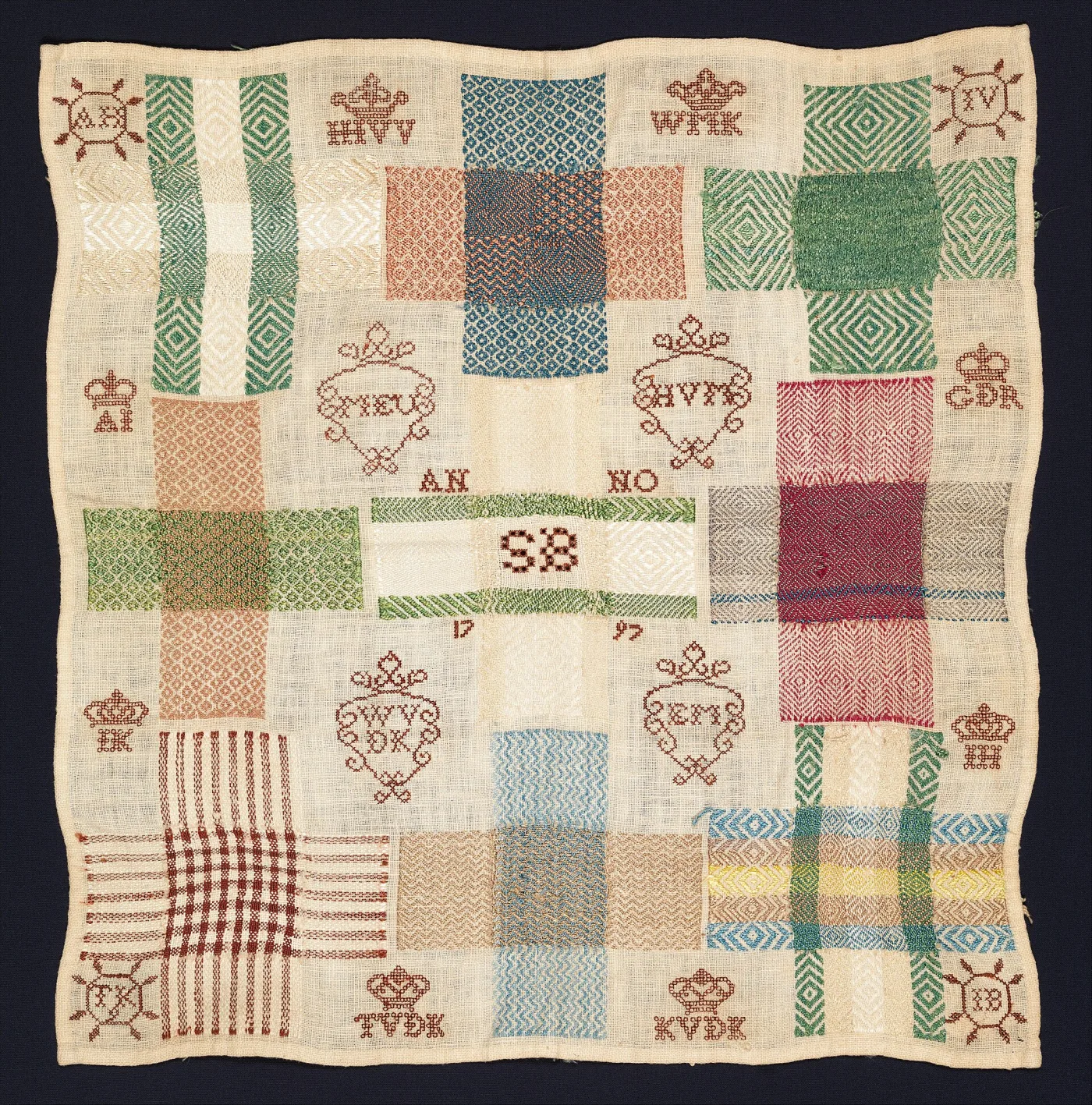
Practical darning samplers taught the essential skill of mending textiles invisibly. These pieces feature squares or patches of various darning techniques, often in different patterns and thread colors to demonstrate the range of methods. While less visually dramatic than pictorial samplers, darning samplers represent important documentation of household textile maintenance techniques. Continental European examples, particularly Dutch and German, are most common.
Mourning Samplers
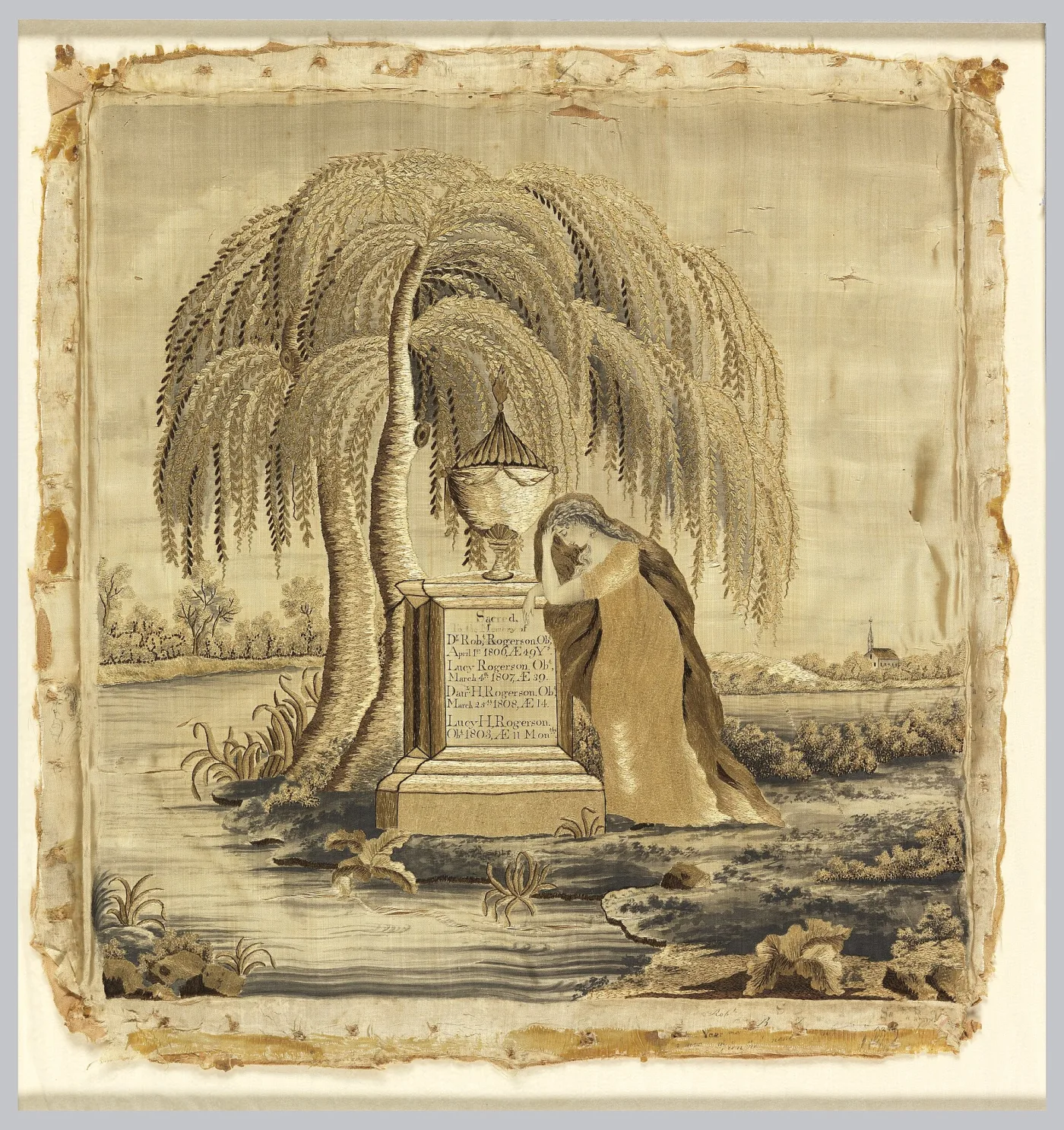
A distinctly American form, mourning samplers emerged around 1800 and remained popular through the 1830s. These pieces commemorate deceased family members with imagery including weeping willows, urns, tombs, mourning figures, church buildings, and memorial verses. Many include detailed family genealogy information with birth and death dates. Mourning samplers reflect the period's elaborate death rituals and sentimentality, making them fascinating historical documents as well as artistic achievements.
Genealogical Samplers
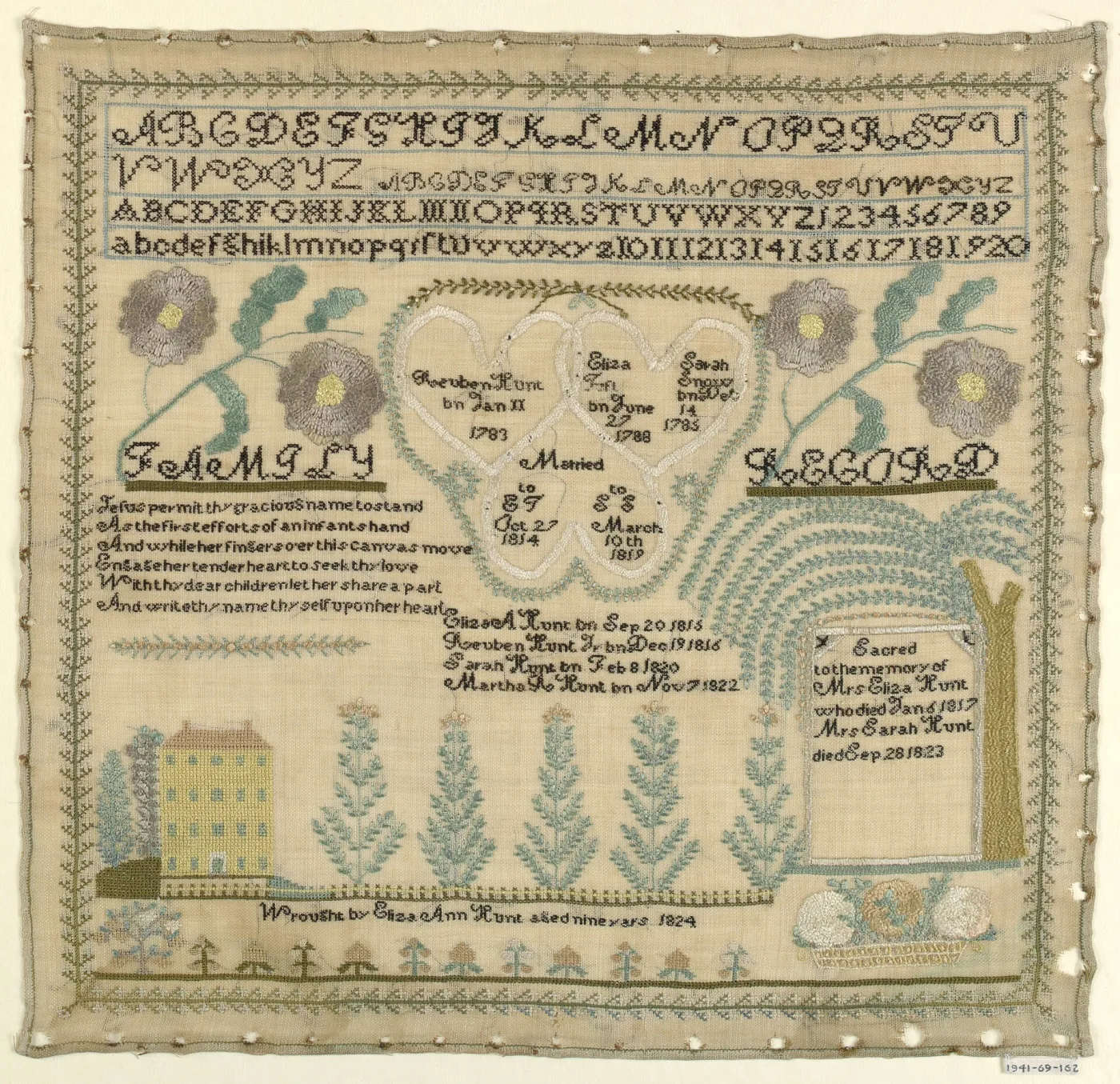
Some samplers function primarily as family records, listing names, births, marriages, and deaths in embroidered form. These genealogical samplers provide invaluable documentation for family historians and reflect the importance of lineage in historical societies. They may be entirely text-based or combine family information with decorative borders and small motifs. Values depend on the completeness of information, prominent family names, and overall aesthetic appeal.
Dating Techniques for Antique Needlework
Accurately dating a sampler requires examining multiple factors, as embroidered dates can be misleading or absent entirely. Experienced collectors develop an eye for period characteristics that reveal true age.
Embroidered Dates
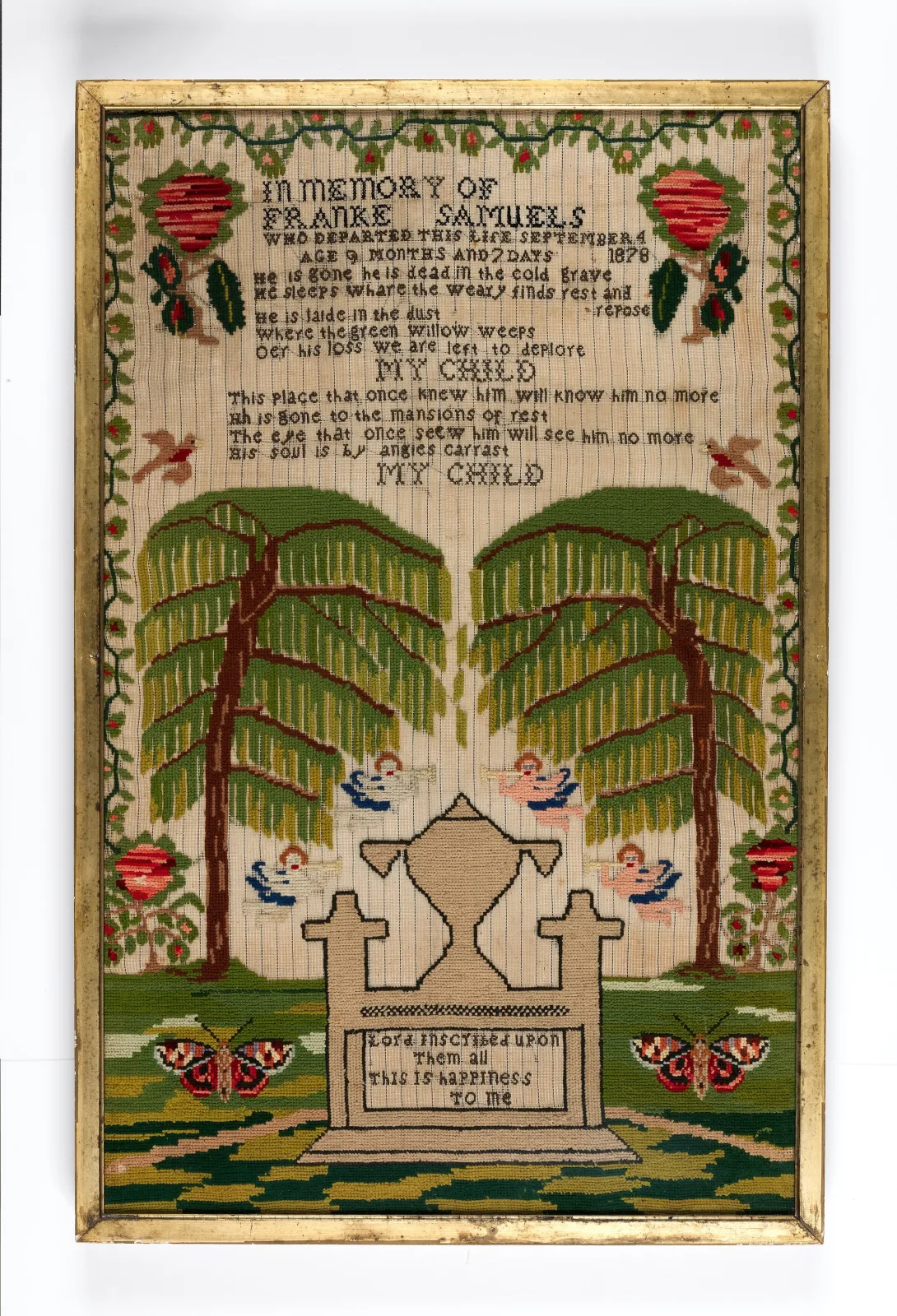
Many samplers include embroidered dates, typically indicating the year of completion. However, these should be verified against other dating evidence, as later additions, misreadings, or deliberate alterations can occur. Dates appear in various formats: four-digit years (1823), abbreviated years (23 for 1823), or Roman numerals. Cross-reference embroidered dates with the maker's age if given, as impossibly young ages or dates inconsistent with the sampler's style suggest later additions or errors.
Fabric Dating
The ground fabric provides crucial dating evidence. Linen dominated through the early 19th century, with variations in weave tightness, thread count, and preparation methods indicating different periods. Very fine, evenly woven linen suggests 18th century or earlier work. Coarser, more irregularly woven linen appears in later 18th and early 19th century pieces. Cotton and linen-cotton blends became common after 1820. Wool tammy cloth appears on some English samplers from the mid-18th century onward. Machine-woven fabrics with perfectly regular weave indicate post-1820 construction.
Thread Characteristics
Thread composition and preparation methods changed significantly over time. Hand-spun silk and linen threads with slight irregularities characterize work before 1800. These threads show variation in thickness and subtle slubs. Machine-spun threads, introduced in the early 19th century, are perfectly uniform. Synthetic dyes, introduced after 1856, created colors impossible with natural dyes—particularly bright purples, magentas, and chemical greens. The presence of synthetic dye colors definitively dates a piece to after 1856, and usually to 1860 or later.
Stylistic Period Indicators
Design elements reflect the aesthetics of their era. Georgian samplers (1714-1820) favor formal, symmetrical compositions with classical motifs, architectural elements, and balanced borders. Federal period American samplers (1780s-1820s) often feature Adam-style houses with distinctive architectural details, pastoral scenes, and decorative urns. Regency and Empire period pieces (1811-1830) show lighter, more delicate designs with naturalistic flowers, flowing ribbons, and romantic elements. Victorian samplers (1837-1901) became increasingly sentimental, with religious themes, cottage gardens, and Berlin woolwork influence.
Verse and Inscription Analysis
The verses, moral sayings, and religious texts embroidered on samplers changed with shifting cultural values. 17th and early 18th century verses emphasize religious devotion and mortality awareness. Late 18th century examples often include classical references and moral instruction. Early 19th century verses become increasingly sentimental and romantic. Researching specific verse texts can help identify period and even specific schools or regions where particular verses were popular. The same sentimental and devotional mottoes appear on the machine-made Victorian woven silk bookmarks of Thomas Stevens, which mass-produced in silk the kind of texts schoolgirls once stitched by hand.
Fabric and Ground Material Analysis
The foundation fabric reveals essential information about a sampler's age, origin, and quality. Close examination of the ground material should be a primary step in authentication.
Linen Characteristics
Linen was the standard ground fabric for samplers from the earliest examples through the early 19th century. High-quality samplers used fine, closely woven linen with thread counts ranging from 28 to 60 threads per inch. The finest examples, particularly those from the 18th century, employed linen so fine it resembles silk. Examine the weave with magnification to assess quality—irregular hand-woven linen with slight variations in thread thickness indicates early production, while perfectly regular weave suggests later machine production.
Linen color provides dating clues. Natural, unbleached linen ranges from beige to light brown. Bleached linen, achieved through exposure to sunlight and moisture, appears lighter, sometimes nearly white when new. Over time, linen oxidizes and darkens, developing a tan or light brown tone. Extremely white linen in an otherwise convincing antique sampler may indicate fabric replacement or modern reproduction.
Cotton and Mixed Fabrics
Cotton ground fabrics became increasingly common after 1820, particularly in America. These cotton grounds range from relatively coarse to quite fine weave. Some samplers employ cotton-linen blends combining the strength of linen with the whiteness and availability of cotton. By the mid-19th century, machine-woven cotton became standard for many samplers, particularly simpler examples and those worked outside formal academy settings.
Wool Tammy and Other Specialty Grounds
English samplers, particularly from the mid-18th through early 19th centuries, sometimes employed wool tammy cloth—a fine worsted wool fabric with a smooth surface. Tammy provided an excellent ground for silk embroidery, showing colors brilliantly. Scottish samplers occasionally used wool grounds as well. Continental European samplers might employ specialty fabrics including silk gauze for exceptionally fine work or loosely woven linen for pulled thread techniques.
Thread Count and Weave Analysis
Thread count significantly affects both the working experience and final appearance. Fine linen with high thread counts (45-60 threads per inch) allowed for detailed pictorial work and delicate lettering. Medium counts (30-40 threads per inch) suited most alphabet and marking samplers. Coarser linen (20-30 threads per inch) appears on simpler, more utilitarian examples. Use a thread counter or magnifying glass to determine exact thread count, which helps establish quality level and appropriate value range.
Thread and Fiber Identification
The embroidery threads used in antique needlework provide critical evidence for authentication and dating. Understanding fiber types, spinning methods, and dyeing techniques allows collectors to distinguish authentic period work from later reproductions.
Silk Thread Characteristics
Silk was the preferred embroidery thread for fine samplers, valued for its luster, color brilliance, and ability to work smoothly through linen. Early silk threads were hand-reeled and hand-twisted, creating a slightly irregular thread with variable thickness and a soft sheen. These irregularities are visible under magnification and are a hallmark of pre-1840 work. Machine-spun silk threads, introduced in the early 19th century, are perfectly uniform in diameter and have a different, harder sheen.
Silk thread was sold in skeins with multiple strands twisted together. Needleworkers separated these strands to achieve different coverage levels. Fine work might use a single strand, while bolder areas employed multiple strands for greater coverage. Examine the back of a sampler to see how threads were handled—period work shows appropriate strand separation and neat, efficient thread management.
Linen and Cotton Floss
Linen thread appears on earlier samplers, particularly band samplers from the 17th century and some utilitarian marking samplers. Linen embroidery thread lacks the sheen of silk but was more economical and readily available. Cotton embroidery floss became common in the 19th century, particularly after 1840. Early cotton floss has a matte appearance compared to silk and was often used for white work and monochromatic embroidery.
Wool Threads and Crewel Work
Wool embroidery appears on some samplers, particularly English and Continental examples. Fine worsted wool threads create crewelwork pieces featuring elaborate floral designs, often on linen-cotton twill grounds. Berlin woolwork, popular from the 1830s through 1870s, employed brightly colored wool yarns worked in tent stitch or cross stitch on canvas following printed charts. These pieces have a distinct appearance and different market value than silk-on-linen samplers.
Natural Dyes Versus Synthetic Dyes
The introduction of synthetic dyes in 1856 revolutionized textile coloring and provides a definitive dating benchmark. Natural dyes, derived from plants, insects, and minerals, create characteristic color palettes with certain shades achievable and others impossible. Natural dye colors typically include various browns, blues (indigo), reds (madder, cochineal), yellows (weld, fustic), and greens (combinations of blue and yellow dyes). These colors tend to fade in predictable patterns—indigo blues often remain strong while yellows fade, turning greens blue.
Synthetic dyes introduced colors never seen in nature, particularly bright fuchsia, purple, and chemical green shades. The presence of these colors definitively dates a sampler to 1856 or later. However, natural dyes continued in use alongside synthetics, so their presence doesn't preclude a late date. Chemical testing can identify dye types, but collectors more commonly rely on color observation, comparing suspect colors to known natural dye examples.
Metallics and Specialty Threads
Some elaborate samplers incorporate metallic threads, particularly gold and silver wrapped threads, in borders or to highlight special elements. These metallics may be real metal wrapped around silk or linen cores, or later substitutes. Genuine metal threads tarnish characteristically and show wear patterns consistent with age. Sequins, beads, and spangles sometimes embellish fancy pieces, particularly those from the early 19th century. Their construction methods and materials help confirm authenticity.
Identifying Stitches and Techniques
The stitches employed in a sampler reveal skill level, period, regional preferences, and educational background of the maker. Different eras favored different stitch combinations, providing valuable dating evidence.
Cross Stitch
The most common sampler stitch, cross stitch creates X-shaped marks formed by two diagonal stitches crossing at the center. Nearly all marking samplers and many pictorial samplers rely primarily on cross stitch for letters, numbers, and designs. Period cross stitch should show consistency in tension and direction, with all top stitches running the same direction. Examine the back of the work—period needleworkers typically completed all bottom stitches in one direction before returning to complete top stitches, creating neat parallel lines on the reverse.
Satin Stitch and Long and Short Stitch
Satin stitch creates smooth, lustrous filled areas by laying parallel stitches closely together. It appears in sampler borders, filled motifs, and pictorial elements requiring solid coverage. Long and short stitch, a variation of satin stitch, creates shaded effects by alternating stitch lengths and using graduated thread colors. This technique appears in sophisticated pictorial samplers, particularly for rendering naturalistic flowers, trees, and landscape elements in the Federal and Regency periods.
Eyelet and Specialty Openwork Stitches
Eyelet stitches create deliberate holes in the ground fabric, forming decorative elements. The fabric is pierced with a stiletto and overstitched to create a clean, round opening. Eyelets often form flower centers, decorative borders, or whitework designs. Related pulled-thread techniques create patterns by pulling stitches tightly to form openings without actually piercing the fabric. These advanced techniques appear on high-quality samplers and indicate significant skill.
Tent Stitch and Petit Point
Tent stitch, worked diagonally across single canvas threads, creates a smooth, tapestry-like surface. It appears primarily on Berlin woolwork samplers and canvas-based needlework rather than linen samplers. Petit point uses very fine tent stitch on high-count canvas for detailed pictorial work, the technique behind Viennese purse panels. Both techniques enjoyed great popularity in the mid-to-late 19th century for decorative pieces, pictures, and upholstery.
Backstitch and Outline Work
Backstitch creates continuous lines ideal for outlining designs, working fine details, and forming letters. It appears in many pictorial samplers to define building features, delineate landscape elements, and add details to figures and animals. Some samplers combine backstitch outlines with cross stitch fill, creating crisp, well-defined imagery.
Queen Stitch and Other Decorative Stitches
Queen stitch, also called rococo stitch, creates an ornate diamond pattern with a raised center. It appears on elaborate samplers, often in borders or as fill for special elements. Other specialty stitches including Algerian eye, rice stitch, and various geometric pattern stitches demonstrate advanced skill and appear on the finest examples. The presence of complex stitch vocabulary indicates formal instruction and high-quality workmanship.
Stitch Execution Quality
Beyond identifying stitch types, examine execution quality. Period work by skilled needlewomen shows remarkable consistency in tension, size, and placement. Stitches should be even and regular, creating smooth surfaces in filled areas and uniform patterns in geometric designs. However, remember that many samplers were created by children still learning the craft, so some irregularity is normal and doesn't necessarily indicate later work. The key is distinguishing the natural irregularities of period learning pieces from the different character of modern attempts to replicate antique stitching.
Regional and National Characteristics
Samplers developed distinct regional and national characteristics based on local educational practices, aesthetic preferences, and cultural traditions. Learning these regional markers helps collectors identify origins and assess rarity.
American Regional Styles
American samplers, particularly those from the late 18th and early 19th centuries, display strong regional characteristics often traceable to specific schools and teachers. New England samplers from Boston, Salem, and Providence often feature elaborate borders, classical buildings, pastoral scenes, and sophisticated verse selections. Pennsylvania German samplers include distinctive fraktur-influenced lettering, bright colors, and folk art motifs including tulips, hearts, and birds.
Mid-Atlantic samplers from Philadelphia, Baltimore, and surrounding areas developed particular styles associated with Quaker and other religious schools. These pieces might include detailed cityscapes, mourning imagery, or naturalistic floral studies. Southern samplers from Virginia, the Carolinas, and Charleston show distinct aesthetic preferences, though fewer survive than from Northern regions. Identifying American regional characteristics requires study of documented examples and reference to specialized publications.
English Sampler Traditions
English samplers evolved somewhat differently than American examples, with distinctive periods and styles. Stuart period band samplers (17th century) are narrow and densely worked with patterns. Georgian samplers (18th century) include alphabets, biblical verses, and increasingly elaborate borders. By the Regency period, English samplers often featured Adam-style houses, formal gardens, and romantic pastoral imagery.
English map samplers form a specialized category, with girls embroidering county maps, maps of England and Wales, or occasionally world maps. These educational pieces demonstrate geography knowledge and needlework skill simultaneously. English samplers more commonly employ wool tammy grounds than American examples and may show different verse preferences and religious emphasis.
Scottish and Irish Characteristics
Scottish samplers often include distinctive national symbols, including thistles, Scottish verses, and references to Scottish geography and history. Some Scottish examples work on dark wool grounds with brightly colored wools, creating bold, graphic effects. Irish samplers are relatively scarce but show influence from both English and Continental traditions, sometimes including Celtic motifs and distinctly Irish place names and family names.
Dutch and German Needlework
Continental European samplers differ markedly from Anglo-American traditions. Dutch samplers frequently feature darning and mending techniques, demonstrating practical household skills. They may include dense fill patterns, specialty stitches, and less pictorial content than English or American examples. German samplers show influence from folk art traditions, with bright colors, stylized flowers and animals, and Gothic lettering. Some include secular verses or folk sayings rather than religious texts.
Other European Traditions
French samplers often display exceptional technical skill with elaborate pulled-thread work, delicate whitework, and sophisticated design sensibilities reflecting French decorative arts. Spanish and Italian samplers may include religious imagery, Catholic verses, and Mediterranean motifs. Scandinavian examples sometimes incorporate regional folk art traditions and distinctive color preferences. Understanding these national characteristics requires exposure to documented examples and study of regional needlework traditions.
Decoding Inscriptions, Dates, and Signatures
The text elements on samplers provide crucial information for authentication, attribution, and historical research. Learning to read and interpret inscriptions unlocks the stories these textile documents tell.
Maker's Names and Ages
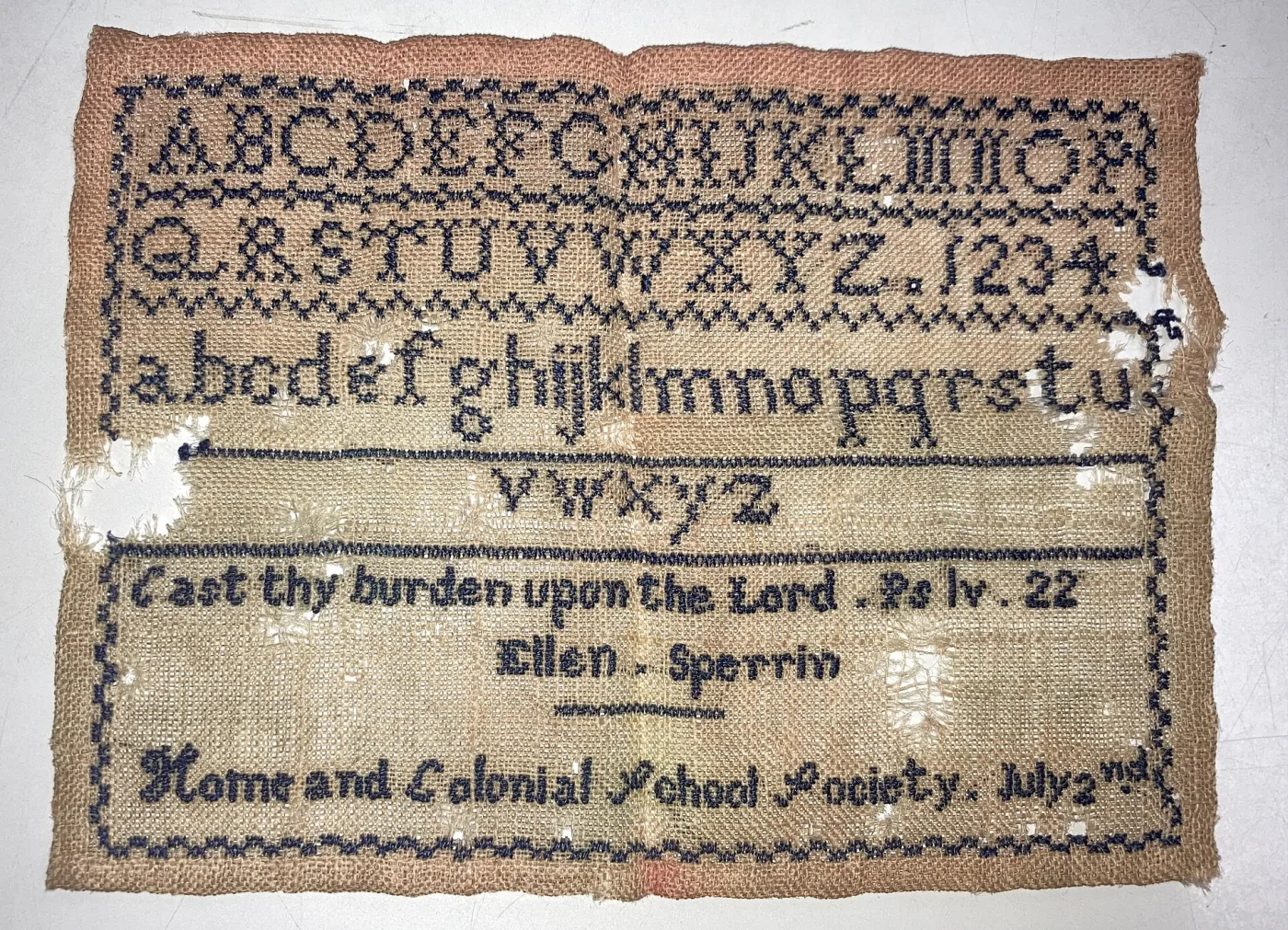
Most samplers include the maker's name, often with age at completion. This information appears in various formats: "Mary Smith aged 11 years," "M.S. AET 11" (aetatis meaning age), or simply "Mary Smith 1823." The maker's name enables genealogical research, potentially revealing family information, school attendance, and later life details. Cross-referencing the maker's age with the embroidered date should produce a consistent birth year—discrepancies may indicate later alterations or errors.
Some samplers include teacher or school names, invaluable for attribution. Examples might read "Wrought at Mrs. Saunders & Miss Beach's School" or "Under the tuition of Miss Brown." These attributions allow collectors to group samplers from specific institutions, identifying characteristic school styles and comparing quality across student work.
Family Information
Genealogical samplers include extensive family data, listing parents, siblings, births, deaths, and sometimes multiple generations. This information serves both as personal family record and as documentation for historians and genealogists. Mourning samplers commemorate deceased family members with names, dates, and sometimes ages and relationships. Verifying this family information through census records, vital records, and genealogical databases can confirm authenticity and provide fascinating historical context.
Verses and Religious Texts
The verses embroidered on samplers reflect period values, religious emphasis, and educational goals. Common sources include Biblical passages, hymns, moral poetry, and specially composed verses emphasizing virtue, mortality, and piety. Certain verses appear repeatedly, becoming associated with specific periods or regions. Researching the specific verse text can help identify the sampler's probable date and origin.
Some verses include references to death and mortality that seem morbid to modern readers but reflected normal period attitudes toward mortality, particularly child mortality. Others emphasize obedience, industry, and feminine virtue. The choice of verse often reveals much about the school or family's values and religious affiliation.
Place Names and Geographic References
Many samplers include place names indicating where they were worked, providing valuable provenance information. These might be town names, county names, or school locations. American samplers might include state names, while English examples include county or parish names. These geographic references help researchers attribute samplers to specific regions and correlate them with documented schools and teachers.
Dates and Dating Formats
Dates appear in various formats and locations on samplers. Most common are four-digit years at the bottom of the composition, often flanking the maker's name. Some use two-digit abbreviations (23 for 1823), requiring interpretation from style and other evidence. Roman numerals appear occasionally, particularly on earlier examples. A few samplers include complete dates with month and day. Always verify embroidered dates against style and material evidence, as dates could be misread, later added, or deliberately falsified.
Alphabet Analysis
The alphabets on marking samplers reveal information about the maker's education and the sampler's purpose. Most include uppercase alphabets, often in multiple sizes or styles. Lowercase letters appear less frequently, primarily on later or more advanced examples. Some samplers include elaborately decorated alphabets with flourishes, serif letters mimicking printing types, or distinctive regional letter forms. The presence or absence of certain letters (J, U, W evolved later) can provide dating clues.

Design Elements and Motifs
The imagery and decorative elements on samplers follow period conventions while allowing for individual creativity. Understanding common motifs and their symbolic meanings enriches appreciation and helps date and attribute pieces.
Architectural Elements
Buildings appear frequently on American Federal period samplers, ranging from simple house representations to detailed architectural renderings of family homes, schools, churches, or idealized estates. These structures often follow Adam-style architectural conventions popular in the late 18th and early 19th centuries, with symmetrical facades, central doorways, multiple windows, and sometimes elaborate detail including fencing, paths, and outbuildings.
The architectural style depicted helps date the sampler and identify regional characteristics. New England samplers might show wooden clapboard structures, while Mid-Atlantic examples depict brick buildings. Some samplers include identifiable buildings—local churches, courthouses, or prominent estates—making them particularly valuable for their historical documentation. Examining architectural details including window styles, door treatments, and roof lines provides clues about both the sampler's date and the building's actual construction period.
Trees and Landscape Elements
Trees serve both decorative and symbolic functions on samplers. Weeping willows appear prominently on mourning samplers, symbolizing grief and mortality. Other tree forms include stylized potted trees, flowering trees in borders, and naturalistic landscape trees. The tree's form and stitching technique reflect period and skill level—earlier examples show simplified, geometric tree forms, while later samplers employ sophisticated shading and naturalistic representation.
Other landscape elements including hills, fences, paths, ponds, and garden beds create context for architectural and figural elements. These landscape features evolved stylistically through periods, from formal Georgian garden layouts to romantic Regency natural landscapes to Victorian cottage gardens.
Floral and Botanical Motifs
Flowers appear on virtually all decorative samplers, either as border elements, basket arrangements, potted plants, or garden scenes. Specific flowers carry symbolic meanings: roses symbolize love and beauty, carnations represent divine love, lilies suggest purity, tulips indicate passion, and forget-me-nots represent remembrance. Some samplers include botanically accurate flower renderings, while others employ simplified or stylized forms following pattern conventions.
Border designs frequently incorporate floral vines, wreaths, garlands, and repeating flower patterns. The complexity and naturalism of floral work indicate skill level and period—early examples use geometric flower forms, mid-period samplers show more naturalistic rendering, and late Berlin woolwork examples feature elaborate shaded flowers.
Birds and Animals
Birds populate sampler landscapes, from realistic species renderings to highly stylized forms. Doves symbolize peace and the Holy Spirit, peacocks represent immortality, and generic songbirds suggest nature and beauty. Some American samplers include distinctive bird forms traceable to specific schools or pattern sources.
Other animals including sheep, deer, dogs, cats, and occasionally exotic creatures like lions or camels appear in landscape scenes or as individual motifs. The quality of animal rendering varies tremendously from crude but charming folk art forms to sophisticated naturalistic work. Animal presence sometimes indicates particular pattern sources or school influences.
Human Figures
Figures appear on many pictorial samplers, ranging from simple geometric forms to detailed portraits. Mourning samplers typically include weeping figures at tombs, dressed in period costume with characteristic high-waisted gowns and mourning veils. Pastoral scenes might show shepherdesses, children, or couples in landscapes. Some samplers depict biblical scenes with multiple figures, requiring advanced skill to execute successfully.
The quality of figure work varies widely and significantly affects value. Well-proportioned, naturalistically rendered figures with appropriate period costume details indicate advanced skill, while awkward, stiff figures suggest less accomplished work. However, even naive figure work can have considerable charm and historical value.
Symbolic Elements
Many sampler motifs carry symbolic meaning understood by period viewers. Urns represent classical culture and mourning, baskets suggest abundance and domestic virtue, crowns symbolize heavenly reward, hearts indicate love and affection, and anchors represent hope and salvation. Understanding this symbolic vocabulary enriches interpretation and appreciation of samplers as cultural documents reflecting period values and beliefs.
Borders and Framing Elements
Border designs frame sampler compositions and demonstrate technical skill. Simple borders might consist of single or multiple straight lines in contrasting colors. More elaborate borders include geometric patterns, floral vines, sawtooth edges, strawberry borders (a common English motif), or complex interlaced patterns. The finest borders incorporate multiple decorative bands with different patterns, sometimes including the entire alphabet worked into the border design.
Border complexity and execution quality significantly affect sampler value. Wide, elaborate borders worked with variety and precision indicate advanced skill and substantial time investment. Borders should be complete and balanced, with careful corner treatments where horizontal and vertical elements meet. Incomplete or poorly executed borders diminish value considerably.
American Schoolgirl Samplers
American schoolgirl samplers from the late 18th and early 19th centuries represent the pinnacle of the form, combining technical excellence with artistic sophistication and historical significance. These pieces, created at female academies and under private instruction, command the highest prices in today's market.
Identifying School-Made Samplers
Samplers created at formal academies share recognizable characteristics. Girls at the same school often worked similar designs, with variations in execution quality reflecting individual skill. Specific schools developed signature styles including particular architectural representations, distinctive border patterns, characteristic verse selections, and preferred color palettes. Identifying these school-specific features allows attribution even when the sampler doesn't include the school name.
Important American schools producing exceptional samplers include Mary Balch's school in Providence, Rhode Island; Mrs. Rowson's Academy in Boston; various Quaker schools in Philadelphia and surrounding Pennsylvania counties; and numerous smaller institutions throughout New England and the Mid-Atlantic states. Reference books documenting these schools' samplers enable collectors to identify and attribute school-made pieces.
Quality Assessment
The finest American schoolgirl samplers demonstrate exceptional technical skill with very fine stitching, complex compositions, sophisticated color usage, and excellent preservation. Premium examples might feature silk thread on fine linen (40+ threads per inch), elaborate pictorial scenes including detailed architecture, naturalistic landscapes, complex borders with multiple decorative bands, sophisticated verse selections, and complete, well-preserved condition.
These high-quality pieces represent months or even years of work, with girls sometimes beginning a sampler at one age and completing it much later. The best examples balance technical proficiency with artistic composition, creating pieces that succeed both as needlework demonstrations and as aesthetic achievements.
Regional Variations
Different American regions produced distinctive sampler styles reflecting local aesthetics, ethnic backgrounds, and religious influences. New England samplers often feature detailed architectural renderings, classical motifs, and Federalist design sensibilities. Pennsylvania German examples include fraktur lettering, bright colors, and folk art motifs. Quaker-made samplers might show restrained color palettes and emphasis on simplicity, while samplers from more fashionable urban academies display awareness of current decorative arts trends.
Notable Makers and Exceptional Examples
Some sampler makers' names have become well-known among collectors due to the exceptional quality of their work or the historical interest of their life stories. Researching a sampler maker can reveal fascinating biographical information, from her family background and later marriage to her descendants and any surviving family records. This provenance and historical context adds significantly to a sampler's value and interest.
Mourning and Memorial Samplers
Mourning samplers represent a distinctly American contribution to the sampler tradition, emerging around 1800 and flourishing through the 1830s. These pieces commemorate deceased family members and reflect the period's elaborate mourning customs and sentimentality about death.
Identifying Mourning Samplers
Mourning samplers include characteristic iconography: weeping willows, urns or tombs often inscribed with family names and dates, mourning figures (typically female) in period dress, church or landscape settings, and memorial verses. Many include detailed family genealogy with birth and death dates for multiple family members, creating valuable historical documents. The imagery draws on contemporary mourning art including painted memorials, printed mourning cards, and cemetery monuments.
Iconographic Elements
The weeping willow serves as the central motif on most mourning samplers, its drooping branches symbolizing grief and sorrow. Willows often flank central urns or tombs, sometimes with figures beneath the branches. Urns, derived from classical funerary art, might be inscribed with family names, death dates, or memorial verses. Some elaborate examples include detailed tomb monuments with architectural features.
Mourning figures typically wear period costume with high-waisted Empire dresses and characteristic mourning veils. These figures may gesture toward the tomb, lean on urns, or stand with heads bowed in grief. The quality of figure work varies tremendously, from sophisticated, well-proportioned representations to charmingly naive stick figures.
Family Genealogy and Historical Value
Many mourning samplers function as embroidered family registers, listing parents, siblings, and extended family with birth and death dates. This genealogical information makes them invaluable to family historians and descendants. Some families lost multiple children to disease, with samplers documenting these tragedies. Others commemorate parent or grandparent deaths. The completeness and accuracy of genealogical information affects both historical value and market price.
Quality and Value Factors
Mourning sampler values depend on execution quality, completeness of imagery, genealogical interest, condition, and regional desirability. The finest examples combine sophisticated needlework, complex compositions with multiple pictorial elements, well-preserved silk threads in varied colors, complete family information, and provenance to prominent families or regions. Simpler examples with crude execution, limited color, or poor condition remain more affordable while still offering historical interest and decorative appeal.
Berlin Woolwork and Victorian Needlework
Berlin woolwork transformed needlework in the mid-19th century, representing a different tradition from earlier silk-on-linen samplers. Understanding Berlin work helps collectors appreciate Victorian needlework while distinguishing it from earlier sampler traditions.
Berlin Work Characteristics
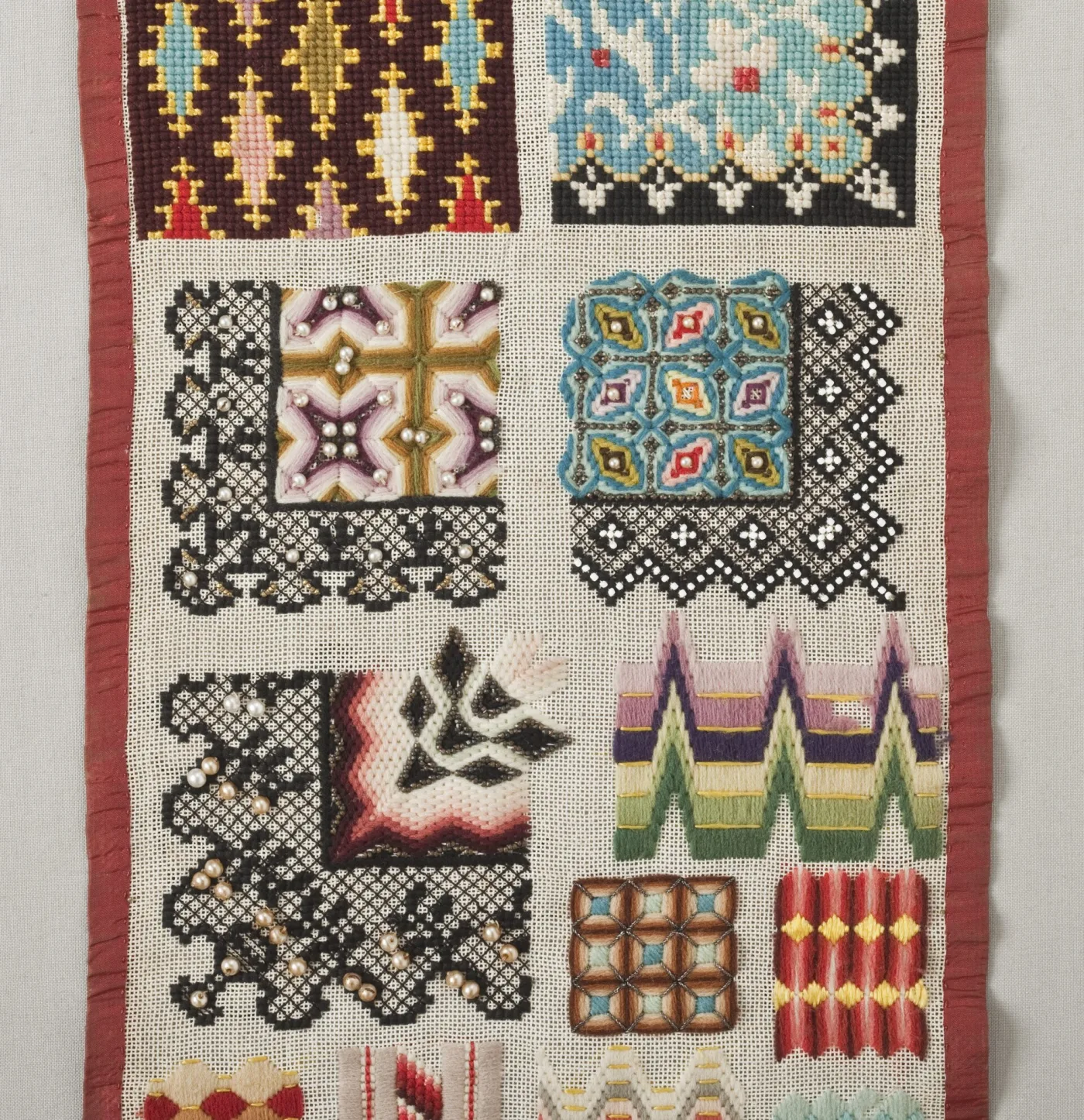
Berlin woolwork employs brightly colored wool yarns worked primarily in tent stitch or cross stitch on canvas, following printed charts. The technique originated in Germany around 1810 and swept through England and America in the 1830s-1870s. Berlin work pieces include samplers, pictures, upholstery panels, cushions, fire screens, and decorative objects. The aesthetic differs markedly from earlier silk samplers, with bolder colors, larger scale, and emphasis on pictorial realism rather than educational alphabets.
Design and Imagery
Berlin work designs featured elaborate floral arrangements, sentimental scenes, religious imagery, pets (especially King Charles spaniels and cats), exotic birds, and reproductive paintings and prints. The use of printed charts meant many needleworkers created identical designs, unlike the more individual character of earlier samplers. Quality depends on fineness of canvas, number of wool colors employed, complexity of design, and execution skill.
Materials and Techniques
Berlin work uses wool yarns on canvas grounds, with finer work employing silk threads for details or accents. The canvas ranges from coarse to very fine (petit point), with finer work allowing greater detail and considered more desirable. Wool colors included vivid synthetic dyes after 1856, creating color palettes impossible with natural dyes. These bright colors are characteristic of the Berlin work aesthetic but prone to fading and color loss.
Market Position and Collecting
Berlin woolwork occupies a different market segment than earlier silk samplers. While less valuable than fine 18th or early 19th century samplers, good Berlin work has its own collecting following, particularly for pieces with unusual subjects, exceptional execution, or good preservation. Elaborate floral studies, rare pictorial subjects, and large decorative panels command the best prices. Many Berlin work pieces suffer from wool moth damage, color fading, and general wear, making well-preserved examples increasingly scarce.
English Samplers Characteristics
English samplers developed somewhat differently than American examples, with distinct periods, styles, and collecting considerations. Understanding English sampler traditions helps collectors identify origins and assess value.
Stuart Period Band Samplers
The earliest English samplers, from the 17th century Stuart period, are long, narrow band samplers densely worked with geometric patterns, cutwork, and specialty stitches. These pieces rarely appear on the market and command premium prices when they do. They typically lack dates, initials, or pictorial elements, focusing entirely on pattern vocabulary. Authentication requires expert examination of materials, stitching techniques, and comparison to documented museum examples.
Georgian Era Samplers
English samplers from the Georgian period (1714-1820) include alphabets, numerals, pious verses, and increasingly decorative elements. Common features include repeating border patterns, small motifs (flowers, birds, crowns, hearts), biblical verses, and the maker's name and date. Many employ silk threads on linen, though some use wool tammy grounds. Colors tend toward faded pastels in surviving examples, though originally included vibrant reds, blues, greens, and golds.
Regency Period Developments
English Regency samplers (approximately 1811-1820s) often feature Adam-style houses, formal gardens, romantic pastoral scenes, and lighter, more delicate aesthetic than earlier Georgian work. Borders became more elaborate, compositions more sophisticated, and technical execution more refined. The finest examples rival American schoolgirl samplers in quality and command comparable prices.
Map Samplers
English map samplers form a specialized collecting category. These pieces depict English counties, the British Isles, Europe, or occasionally other continents, worked in silk on linen with geographic details, place names, and sometimes decorative border elements. Dating primarily from the late 18th and early 19th centuries, map samplers demonstrate both needlework skill and geographic knowledge. They are relatively rare and highly sought by collectors, particularly examples with fine detail, accurate geography, and good condition.
Victorian Era Changes
English samplers from the Victorian era (1837-1901) became increasingly sentimental and decorative, with religious themes, cottage gardens, and influence from Berlin woolwork aesthetics. Quality and desirability vary tremendously, from fine silk-worked pieces maintaining earlier traditions to simpler cross-stitch examples on cotton or canvas. Late Victorian samplers generally command lower prices than Georgian or Regency examples, though exceptional pieces retain significant value.
European Continental Needlework
Continental European samplers and needlework developed distinct traditions reflecting different educational systems, cultural values, and aesthetic preferences. Understanding these continental traditions helps collectors identify origins and appreciate different needlework expressions.
Dutch Samplers
Dutch samplers emphasize practical darning and mending techniques, with many examples featuring multiple darning patterns, pulled-thread work, and whitework techniques. These pieces demonstrate household management skills rather than purely decorative accomplishment. Dutch samplers often employ characteristic color combinations, distinctive border patterns, and sometimes include Dutch text, dates, and maker's names. While less pictorially elaborate than English or American examples, fine Dutch samplers show exceptional technical skill and are valued by specialists.
German Needlework
German samplers reflect folk art traditions with bright colors, stylized flowers and animals, Gothic lettering, and sometimes secular verses or folk sayings. They may employ cotton or linen grounds with wool or silk embroidery. Some German examples include elaborate borders, family information, and religious imagery. The aesthetic differs markedly from Anglo-American traditions, making German samplers distinctive and appealing to collectors interested in folk art and ethnic needlework traditions.
French Needlework Excellence
French needlework from the 18th and 19th centuries demonstrates exceptional technical sophistication with elaborate pulled-thread techniques, delicate whitework, sophisticated compositional sense, and innovative design. French samplers might include secular verses, classical references, and distinctive aesthetic sensibilities reflecting French decorative arts leadership. While less common on the American and British markets, fine French needlework commands respect and substantial prices from knowledgeable collectors.
Scandinavian Traditions
Scandinavian countries developed regional needlework traditions incorporating folk art motifs, distinctive color preferences, and characteristic techniques. Swedish, Norwegian, and Danish samplers might include regional costume elements, folk patterns, and national symbols. These pieces appeal particularly to collectors with Scandinavian heritage or interest in folk art and regional textile traditions.
Southern European Work
Spanish and Italian samplers may include Catholic religious imagery, Mediterranean motifs, and regional aesthetic influences. Portuguese samplers sometimes feature distinctive folk art elements. These southern European examples are less common on international markets but offer collecting opportunities for specialists interested in Mediterranean needlework traditions.
Condition Assessment and Common Issues
Condition dramatically affects sampler value, with pristine examples commanding premium prices while damaged pieces may be worth only a fraction of perfect specimen values. Learning to assess condition accurately helps collectors make informed purchasing decisions.
Fabric Condition
Examine the ground fabric carefully for breaks, tears, holes, thinning, and overall integrity. Linen becomes brittle with age and acidic exposure, sometimes developing splits along fold lines or areas of heavy embroidery. Check edges particularly carefully as they often show first signs of deterioration. Minor edge weakness may be acceptable if the central design remains intact, but significant fabric loss or fragility substantially reduces value.
Staining presents another common fabric issue. Brown stains may indicate foxing (rust spots from iron in water), while other discolorations could be water damage, insect residue, or mold. Light staining that doesn't obscure design elements may be acceptable, but heavy staining diminishes appeal and value. Some stains can be professionally removed by textile conservators, though treatment should only be undertaken by qualified specialists.
Thread and Color Condition
Examine embroidery threads for breaks, fraying, loss, and color fading. Some thread loss is normal in antique samplers, particularly along edges and in areas subject to abrasion. Minor losses may be acceptable, but significant thread loss obscuring alphabets, dates, names, or pictorial elements severely affects value. Some collectors prefer unrestored pieces even with thread loss, while others accept appropriate conservation work to stabilize fragile threads.
Color fading affects most antique textiles to some degree. Certain dyes fade predictably—yellows often fade completely, turning greens blue and browns gray. Reds may fade to pink, while blues (particularly indigo) often remain relatively stable. Assess fading in context of age and overall condition. Some fading adds to antique character, but severely faded samplers lack visual impact and command lower prices.
Repairs and Restoration
Previous repairs significantly affect value and desirability. Period repairs, done during the sampler's working life or shortly after, may be acceptable and even interesting as part of the piece's history. Later restoration work ranges from museum-quality conservation to damaging amateur attempts. Examine carefully for re-weaving, thread replacement, backing fabric additions, and other interventions. Professional conservation performed by qualified textile specialists preserves value better than amateur restoration attempts.
Mounting and Framing Damage
Historical framing and mounting practices often damaged samplers. Tacking or sewing samplers directly to acidic cardboard or wood backing caused staining and fabric deterioration. Rolling samplers around cylinders created permanent crease lines and stress. Modern conservation framing uses acid-free materials and appropriate mounting techniques, but many samplers show damage from decades or centuries of improper storage and display.
Insect Damage
Wool moth larvae and carpet beetles consume protein fibers including silk and wool threads. Check carefully for tiny holes, channel marks, and thread loss indicating insect activity. Active infestations require immediate professional treatment, while old damage represents static condition issues. Severe insect damage can render a sampler worthless, while minor damage may be acceptable depending on overall significance and rarity.
Overall Condition Grading
Collectors and dealers use condition grades including excellent (minimal age-related changes, complete, vibrant colors), very good (some acceptable fading, minor edge wear, essentially complete), good (moderate fading, minor thread loss, stable condition), fair (significant fading or thread loss, but design remains readable), and poor (major damage, extensive loss, unstable condition). These grades significantly affect pricing, with excellent condition pieces commanding 3-10 times prices of similar samplers in fair condition.
Authentication and Detecting Reproductions
The popularity and value of antique samplers has led to reproduction production, ranging from honest decorative reproductions to deliberate fakes. Learning authentication techniques protects collectors from costly mistakes.
Reproduction Identification
Modern reproductions often reveal themselves through material inconsistencies. Machine-woven fabric with perfectly regular weave indicates modern manufacture. Synthetic threads, detectable by burning tests or microscopic examination, definitively prove modern origin. Synthetic dye colors, particularly bright fuchsias, purples, and chemical greens impossible with natural dyes, indicate post-1856 production and usually much later work.
Modern embroiderers often struggle to replicate period stitching characteristics. Examine thread tension, stitch regularity, and working methods. Period samplers show characteristic thread handling on the reverse, with neat, efficient work reflecting practiced technique. Modern attempts may show inconsistent tension, inappropriate thread management, or stitching techniques unknown in the period.
Artificially Aged Pieces
Some reproduction samplers receive artificial aging treatments to suggest antiquity. Tea staining creates false yellowing of fabric but looks different from natural age-related discoloration. Check for even, uniform coloring suggesting dye bath treatment rather than irregular age-related changes. Examine for appropriately random distribution of wear, fading, and deterioration rather than artificially uniform aging.
Married Pieces and Alterations
Some samplers combine old and new elements or include later alterations. An old fabric might receive modern embroidery, or a fragmentary old sampler might be "completed" with new work. Check carefully for consistency in threads, stitching style, and fabric condition throughout the piece. Significant color variations, different stitching techniques in different areas, or inconsistent aging patterns suggest composite pieces.
False Inscriptions and Dates
Later additions of dates, names, or verses increase perceived value but constitute fraudulent alterations. Compare thread characteristics in inscriptions against the main body of work. Different threads, inconsistent aging, or stitching style variations suggest later additions. Research embroidered dates and names for historical consistency—impossible ages, dates inconsistent with style, or names not found in period records raise authentication questions.
Documentation and Provenance
Strong provenance strengthens authentication. Family history, photographs showing the sampler in early settings, estate documentation, and other records support authenticity claims. However, provenance can be fabricated, so it should support rather than replace material analysis. Published references to a specific sampler in scholarly works provide particularly strong authentication evidence.
Expert Opinion
When significant investment is contemplated, consider obtaining expert opinion from qualified appraisers, dealers specializing in samplers, or museum curators with textile expertise. Reputable auction houses provide condition reports and authentication opinions for consigned pieces. While experts occasionally disagree on attributions or dating, qualified specialists can identify reproductions and problematic pieces that might fool less experienced collectors.
Value Factors in Antique Samplers
Sampler values range from under $100 for simple Victorian examples to over $100,000 for exceptional American schoolgirl samplers. Understanding the factors that drive value helps collectors make informed acquisition decisions.
Age and Period
Earlier samplers generally command higher prices than later examples, all else being equal. Band samplers from the 17th century are extremely rare and valuable. Fine 18th century samplers command premium prices. Federal period American samplers (1780s-1820s) represent the market peak, with exceptional examples reaching six figures. Later 19th century samplers, while potentially attractive, typically sell for much less unless they possess extraordinary characteristics.
Quality and Execution
Technical excellence dramatically affects value. Fine stitching on high-quality linen with silk threads commands premium prices. Complex, well-executed compositions with sophisticated design sense bring higher prices than simple alphabets. Consider thread count of ground fabric, fineness of stitching, color palette complexity, design sophistication, and overall aesthetic impact when assessing quality.
Condition
Condition differences can create 10-fold or greater value variations between similar samplers. Pristine examples with vibrant, unfaded colors, complete threads, intact fabric, and no damage command maximum prices. Even minor condition issues reduce value, while significant damage, fading, or loss may make otherwise desirable samplers nearly worthless. Collectors should carefully weigh condition against other desirability factors.
Subject Matter and Imagery
Pictorial samplers with elaborate imagery command higher prices than simple alphabet samplers. Specific subjects affect value—detailed architectural renderings, particularly of identified buildings, bring premiums. Mourning samplers with complete family genealogy attract both collectors and family descendants. Map samplers are relatively rare and desirable. Unusual subjects or particularly accomplished pictorial work increases value significantly.
Regional and School Attribution
Samplers from prestigious schools or desirable regions command premium prices. New England schoolgirl samplers from documented institutions bring strong prices. Pennsylvania German examples appeal to folk art collectors. English map samplers have their own market. Attribution to specific teachers or schools based on documented characteristics adds value, particularly when published references exist.
Provenance and Historical Significance
Documented history increases value. Samplers with continuous family provenance back to the original maker offer historical certainty. Makers from prominent families or with interesting biographies add appeal. Samplers that appear in published references or museum exhibition catalogs gain authentication credibility and market recognition. Historical significance beyond decorative appeal enhances value for both collectors and institutions.
Market Factors
The antique sampler market fluctuates with broader decorating trends, economic conditions, and collector demographics. Currently, the market shows strength for exceptional pieces while more ordinary examples sell softly. Fresh-to-market pieces with strong provenance often perform better than frequently-traded examples. Geographic markets vary—American samplers sell best in America, English examples in Britain, though international collectors increasingly participate across markets.
Size Considerations
Very large samplers present display challenges for modern homes, potentially limiting market appeal despite aesthetic merit. Conversely, very small samplers may lack visual impact. Mid-size pieces roughly 12x16 to 18x24 inches often have broadest appeal. However, extraordinary quality or rarity can overcome size limitations in either direction.
Preservation and Care
Proper care preserves sampler condition and value while allowing enjoyment of these historic textiles. Following conservation best practices prevents damage and deterioration.
Environmental Conditions
Control light exposure carefully. Direct sunlight causes rapid fading and fabric degradation. Even indirect natural light damages textiles over time. Display samplers away from windows, under UV-filtering glazing, and consider rotating displayed pieces to distribute light exposure. Some collectors display reproductions while storing valuable originals except for occasional viewing.
Maintain stable temperature and humidity. Fluctuating conditions cause dimensional changes stressing fabrics and threads. Ideal storage and display conditions maintain 65-70°F temperature and 45-55% relative humidity year-round. Avoid damp basements, hot attics, and locations near heating vents or exterior walls with temperature fluctuations.
Proper Framing and Mounting
Modern conservation framing uses acid-free materials throughout, appropriate spacers preventing glass contact with textiles, and mounting techniques avoiding adhesives or sewing through fabric when possible. Samplers should be fully supported without tension or stress. Many historic frames contain acidic mat board, cardboard backing, and inappropriate mounting methods causing staining and deterioration. Consider conservation reframing for valuable pieces, retaining historic frames separately if they have value.
Cleaning and Conservation
Never attempt cleaning antique samplers without professional guidance. Washing can cause catastrophic damage through dye bleeding, fabric deterioration, or thread loss. Even gentle vacuuming risks pulling fragile threads. If a sampler requires cleaning, consult a qualified textile conservator who can assess condition, test dyes, and determine appropriate treatment if any.
Conservation work should be undertaken only by qualified professionals with textile expertise. Appropriate conservation stabilizes deterioration, supports fragile areas, and prevents further damage while respecting the textile's integrity and history. Inappropriate restoration work can destroy value and historical information. Always request detailed documentation of any conservation treatment including before/after photographs and description of materials and methods used.
Storage Methods
Store unframed samplers flat in acid-free boxes with interleaving tissue. Never fold samplers, as creases become permanent and stressed areas deteriorate. If space limitations require rolling, roll around acid-free tubes at least 4 inches diameter with the textile face out to minimize stress on embroidered areas. Wrap rolled textiles in acid-free tissue and store horizontally.
Handling Guidelines
Handle samplers minimally and always with clean, dry hands or cotton gloves. Support the entire textile when moving it, never lifting by corners or edges. Unframed samplers should be supported on acid-free board during examination. Avoid touching embroidered surfaces, which transfer skin oils to threads. Take particular care with fragile areas including edges, areas with thread loss, and deteriorated fabric sections.
Pest Prevention
Protect samplers from insects that consume protein fibers. Wool moths and carpet beetles cause devastating damage to silk and wool. Maintain clean storage areas, inspect textiles regularly for insect activity signs (tiny holes, channel marks, visible insects or larvae), and consider appropriate pest management if problems arise. Never store samplers in proximity to wool carpets, upholstered furniture, or other potential insect habitats without proper protection.
Research and Attribution Resources
Researching samplers enriches collecting enjoyment and can uncover valuable attribution and provenance information. Multiple resources assist in identifying makers, schools, and historical context.
Reference Books and Publications
Specialized sampler reference books document regional schools, characteristic styles, and individual makers. Essential references include comprehensive surveys of American samplers, regional studies focusing on New England, Mid-Atlantic, or Pennsylvania examples, English sampler surveys, and specialized publications on topics including mourning samplers, map samplers, or specific schools. These references provide comparative examples, school attributions, and historical context.
Museum Collections
Museums hold major sampler collections available for study. Significant collections include those at the Metropolitan Museum of Art, Colonial Williamsburg, the Museum of Fine Arts Boston, the Victoria and Albert Museum in London, and numerous historical societies and regional museums. Many museums provide online collection databases with photographs and documentation, enabling remote research. Visiting collections in person allows detailed examination of construction techniques, materials, and quality standards.
Online Databases and Resources
Digital resources increasingly facilitate sampler research. Online auction archives show comparable sales with prices realized, helping establish values. Digital museum collections provide access to documented examples. Genealogical databases help research sampler makers, potentially revealing family information, later life details, and descendant connections. Historic newspapers accessible through digital archives may contain references to schools, teachers, or family events mentioned on samplers.
Genealogical Research
Researching the maker and family named on samplers often reveals fascinating historical information. Census records, vital records, family genealogies, and local histories provide biographical context. Some makers' families maintained detailed records including photographs, diaries, and correspondence. Connecting with descendant families sometimes yields additional samplers by the same maker, school records, or family history clarifying the sampler's creation context.
Expert Consultation
Specialized dealers, auction house experts, museum curators, and independent appraisers offer expertise for attribution and authentication questions. While expert opinions may involve fees, they provide valuable guidance for significant pieces. Dealer expertise particularly helps with regional attribution and market value assessment. Museum curators contribute scholarly knowledge and access to comparative collections.
Collector Organizations
Organizations dedicated to textile history and sampler collecting provide educational resources, publications, conferences, and networking with fellow enthusiasts. These groups often maintain research archives, publish scholarly journals, and sponsor exhibitions. Membership connects collectors with expertise and provides access to specialized knowledge and research resources.
Collecting Advice and Market Trends
Building a meaningful sampler collection requires knowledge, patience, and strategic decision-making. Understanding market dynamics and developing collecting focus enhances both enjoyment and investment potential.
Developing Collecting Focus
Most successful sampler collectors develop specializations rather than acquiring randomly. Possible focuses include specific periods (Federal era American, Georgian English, Victorian), regional or school examples (New England schools, Pennsylvania samplers, English map samplers), types (mourning samplers, pictorial samplers, alphabet samplers), or thematic interests (genealogical content, architectural imagery, botanical motifs). Focused collecting develops expertise, creates meaningful collections, and often proves more financially rewarding than unfocused acquisition.
Quality Versus Quantity
Expert collectors consistently advise prioritizing quality over quantity. A single exceptional sampler provides more lasting satisfaction and better investment potential than multiple mediocre examples. Consider waiting for the right piece rather than settling for compromised condition or lesser quality. Study extensively before purchasing significant pieces, ensuring informed decisions based on knowledge rather than impulse.
Condition Considerations
Decide your condition standards early. Some collectors insist on excellent condition, accepting only minor age-appropriate changes. Others willingly acquire pieces with condition issues if other factors (rarity, historical significance, aesthetic appeal) compensate. Be realistic about restoration options and costs—professional textile conservation is expensive, and some damage cannot be satisfactorily repaired. Factor condition thoroughly into pricing decisions, never paying premium prices for compromised pieces.
Building Knowledge
Invest in education before significant purchases. Study reference books, visit museum collections, attend sampler exhibitions, examine pieces at reputable dealers and auction previews, and learn from experienced collectors. Handle pieces when possible to understand materials, construction, and quality variations. Knowledge prevents expensive mistakes and enhances collecting enjoyment.
Purchasing Venues
Samplers appear through various market channels, each with advantages and considerations. Major auction houses offer authenticated pieces with published condition reports but charge buyer's premiums. Specialized dealers provide expertise and often allow extended examination but prices reflect retail markup. Online auctions and marketplaces offer lower prices but require excellent authentication skills and carry higher risk. Estate sales and local auctions may yield bargains but require ability to authenticate independently.
Market Trends and Investment Potential
The sampler market has shown long-term strength for exceptional pieces while ordinary examples have softened. Museum-quality American schoolgirl samplers from the Federal period continue appreciating, with record prices set regularly. English samplers, particularly map samplers and fine Georgian examples, maintain strong values. Later 19th century pieces remain affordable entry points but show limited appreciation potential. The market responds to condition, quality, and rarity, with fresh-to-market pieces often performing strongly.
Documentation and Provenance
Maintain careful records for purchased samplers including acquisition sources, prices paid, available provenance information, condition reports, and any research undertaken. Photograph samplers thoroughly, documenting overall composition, details, reverse side, and any condition issues. This documentation supports insurance coverage, facilitates future sales, and preserves information for historical record.
Enjoying Your Collection
While financial considerations matter, remember that collecting should primarily provide aesthetic pleasure and intellectual engagement. Display pieces thoughtfully, rotate items to distribute light exposure, share your collection with interested friends and researchers, and continue learning about your holdings. The most successful collectors balance financial prudence with genuine passion for these remarkable textile artifacts and the historical stories they tell.