Antique Restaurant Ware & Hotel China Identification Guide
Restaurant ware and hotel china represent a fascinating collecting category that captures the golden age of American dining, travel, and hospitality. These durable, vitrified ceramic pieces were specifically designed for commercial use in restaurants, hotels, railroad dining cars, steamships, and airlines throughout the late 19th and 20th centuries. Unlike fragile household dinnerware, commercial china—often made from durable ironstone china bodies—was built to withstand the rigors of institutional use while maintaining elegance and style.
From the iconic Buffalo China used in diners across America to the elegant Syracuse patterns gracing luxury hotel tables, restaurant ware tells the story of American commerce and culture. Many pieces feature custom designs, logos, and patterns created exclusively for specific establishments, making them highly collectible pieces of commercial history. Railroad china, airline ware, and steamship dinnerware are particularly prized by collectors for their historical significance and often beautiful designs.
This comprehensive guide will teach you how to identify restaurant ware by manufacturer, decode date marks and backstamps, recognize valuable patterns, and understand what makes certain pieces more collectible than others. Whether you discover pieces at estate sales, antique shops, or inherited family collections, this knowledge will help you appreciate and value these durable treasures of American hospitality history.
Table of Contents
- What Is Restaurant Ware?
- History and Evolution of Commercial China
- Major Manufacturers and Their Marks
- Homer Laughlin China Identification
- Buffalo China Identification
- Syracuse China Identification
- Shenango China Identification
- Other Notable Manufacturers
- Railroad, Airline & Steamship China
- Pattern Identification and Dating
- Collecting Tips and Values
- Care and Preservation
What Is Restaurant Ware?
Restaurant ware, also known as hotel china or commercial china, refers to the heavy-duty, vitrified ceramic tableware produced specifically for use in commercial and institutional settings. This includes plates, bowls, cups, saucers, creamers, sugar bowls, platters, and specialty items like monkey dishes (small sauce bowls), bouillon cups, and demitasse sets. The distinguishing characteristic of restaurant ware is its exceptional durability achieved through vitrification, a firing process that creates a glass-like, non-porous body resistant to chipping, cracking, and thermal shock.
Characteristics of Restaurant Ware
Restaurant ware differs significantly from household dinnerware in several key ways:
- Weight: Considerably heavier than home china, typically 30-50% more substantial
- Thickness: Thicker walls and rolled edges for durability and chip resistance
- Vitrification: Fully vitrified body that is non-porous and extremely hard
- Glaze: Commercial-grade glazes designed to resist scratching and staining
- Design: Often features bold patterns and institutional styling
- Standardization: Made in standard sizes for commercial kitchen efficiency
Types of Commercial Settings
Restaurant ware was produced for various commercial and institutional environments:
- Restaurants and diners: From fine dining to casual eateries
- Hotels: Guest rooms, dining rooms, and banquet facilities
- Railroad dining cars: Custom designs for major rail lines
- Airlines: In-flight service ware for first class and general cabins
- Steamships and cruise lines: Ocean liner dining rooms
- Hospitals and institutions: Healthcare and educational facilities
- Military: Officers' clubs and mess halls
- Private clubs: Country clubs, social clubs, and lodges
History and Evolution of Commercial China
Origins in the Late 19th Century
The restaurant ware industry in America emerged in the 1870s as the hospitality industry expanded following the Civil War. Early American commercial china makers sought to compete with imported European wares, particularly from England and France. The growth of the railroad industry and the expansion of hotels across the country created enormous demand for durable, attractive tableware.
Syracuse China Company was among the first American potteries to focus on the hospitality industry, beginning production in 1871. This pioneering company established many of the standards that would define the industry for the next century.
The Golden Age (1900-1960)
The early to mid-20th century marked the golden age of American restaurant ware. During this period:
- Major potteries expanded their commercial lines and developed distinctive styles
- Railroad dining reached its peak of elegance with custom china for each line
- Hotels competed to offer the finest dining experiences with exclusive patterns
- Diners proliferated across America with their characteristic heavy-duty ware
- Airbrushed decorations and bold patterns became popular design elements
Post-War Changes and Decline
The industry began changing significantly after World War II:
- Plastic and melamine began replacing china in casual dining settings
- Railroad travel declined as air travel expanded
- Many historic potteries consolidated or closed
- Foreign imports increased competition
- Fast food culture reduced demand for traditional restaurant china
Today, vintage restaurant ware has become highly collectible, with pieces from defunct establishments, railroads, and airlines commanding premium prices.
Major Manufacturers and Their Marks
Understanding manufacturer marks is essential for identifying and dating restaurant ware. The major American producers of commercial china each developed distinctive backstamp systems that evolved over time. Here is an overview of the primary manufacturers:
Primary American Manufacturers
- Homer Laughlin China Company (1873-present) - Newell, West Virginia
- Buffalo Pottery/Buffalo China (1901-2004) - Buffalo, New York
- Syracuse China Company (1871-2009) - Syracuse, New York
- Shenango Pottery Company (1901-1991) - New Castle, Pennsylvania
- Walker China Company (1923-1980) - Bedford, Ohio
- Mayer China Company (1881-1985) - Beaver Falls, Pennsylvania
- Sterling China Company (1917-1976) - Wellsville, Ohio
- Jackson China Company (1917-1985) - Falls Creek, Pennsylvania
- Wallace China Company (1931-1964) - Vernon, California
- Tepco (Technical Porcelain and Chinaware Company) (1918-1968) - El Cerrito, California
Reading Backstamps
Most restaurant ware backstamps contain several elements:
- Manufacturer name or logo: The primary identifying mark
- Location: City, state, or "USA"
- Date code: Letters and/or numbers indicating production date
- Pattern name or number: If decorated with a named pattern
- Quality designation: Terms like "Vitrified" or "Warranted"
- Customer name: Restaurant, hotel, or institution name if custom ordered
Homer Laughlin China Identification
Homer Laughlin China Company, founded in East Liverpool, Ohio in 1873 by brothers Homer and Shakespeare Laughlin, became one of America's largest and most prolific dinnerware manufacturers. While famous for their household lines like Fiesta dinnerware, they also produced significant quantities of restaurant ware.
Company History
Key dates in Homer Laughlin history:
- 1873: Company founded as Ohio Valley Pottery
- 1876: Won medal for best white ware at Philadelphia Centennial Exposition
- 1877: Shakespeare Laughlin departed; renamed Homer Laughlin
- 1896: Became "The Homer Laughlin China Company"
- 1906: Moved to Newell, West Virginia
- 1936: Introduced Fiesta dinnerware, designed by Frederick Hurten Rhead
- 1959: Began significant restaurant ware production
- 1970: Ended household china, focused exclusively on hotel/restaurant ware
Homer Laughlin Date Codes
Homer Laughlin used a systematic date coding system from 1911 to 1960:
- First element: Month (1-12 or letter code)
- Second element: Year (last two digits)
- Third element: Plant designation (N for Newell, etc.)
For example, a code like "L 45 N" would indicate December 1945, Newell plant. After 1960, the coding system changed to a different format that required different interpretation tables.
Identifying Marks
Common Homer Laughlin marks include:
- The name "Homer Laughlin" in various scripts and type styles
- A fleur-de-lis style mark with "H" centered in an "L"
- "HLC" monogram
- Pattern names like Best China or American White
- Shape names indicating the body style
Notable Restaurant Ware Lines
Homer Laughlin produced several restaurant ware body styles:
- Americana: Popular institutional line
- Best China: Heavy-duty commercial grade
- Restaurant Ware: Standard commercial line
Buffalo China Identification
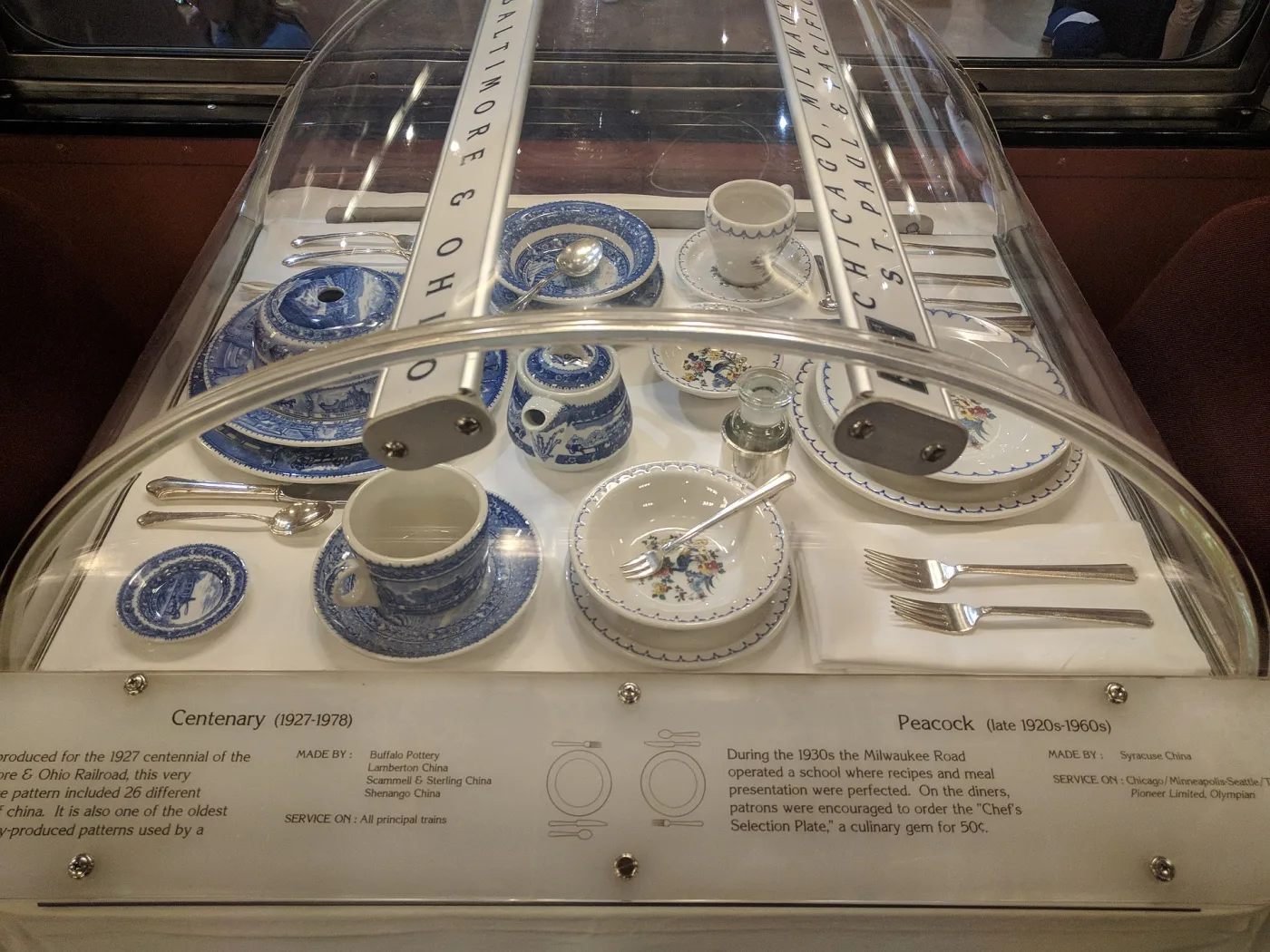
Buffalo Pottery, founded in Buffalo, New York in 1901, became one of America's premier manufacturers of commercial china. For most of the 20th century, Buffalo Pottery (later Buffalo China) manufactured custom institutional, restaurant, railroad, steamship, and hotel ware for major establishments across the country.
Company History
- 1901: Buffalo Pottery founded as subsidiary of Larkin Soap Company
- 1915-1930s: Peak production of commemorative and commercial wares
- 1956: Became Buffalo China, Inc.
- 1983: Acquired by Oneida Ltd.
- 2004: Production ended
Buffalo China Date Codes
Buffalo used a date coding system where marks evolved over time:
- Early marks (1901-1915): "Buffalo Pottery" with date included
- Mid-century marks: Date codes with numbers for year
- Later marks: "Buffalo China" with various code systems
The Restaurant Ware Collectors Network maintains comprehensive charts for decoding Buffalo date stamps throughout the company's history.
Notable Custom Orders
Buffalo Pottery produced custom ware for many prestigious clients:
- Chesapeake & Ohio Railway
- The Greenbrier Resort
- Ahwahnee Hotel at Yosemite National Park
- Roycroft Inn
- 1939 New York World's Fair
Identifying Features
Buffalo China is known for:
- High-quality vitrification
- Distinctive green and blue color schemes
- Elaborate custom designs and logos
- Railroad dining car patterns
- Diner-style airbrushed decorations

Syracuse China Identification
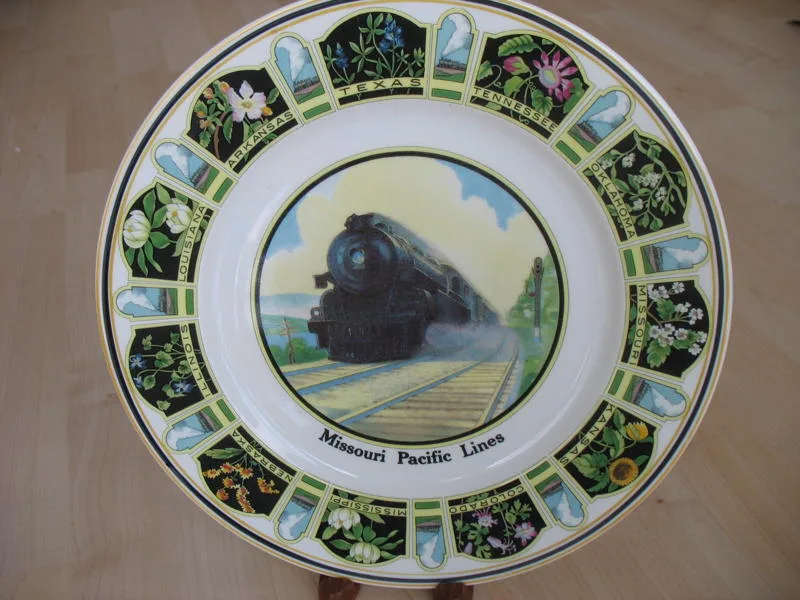
Syracuse China Company, one of the first American potteries to specialize in hospitality dinnerware, set industry standards for quality and design. Founded in 1871, Syracuse became synonymous with elegant hotel and restaurant china.
Company History
- 1871: Founded as Onondaga Pottery Company (O.P.Co.)
- 1890s: Began using "Syracuse China" trademark
- 1966: Officially became Syracuse China Corporation
- 1995: Acquired by Libbey Inc.
- 2009: U.S. production ended
Syracuse Date Codes
Syracuse used complex date coding systems that changed over the decades:
- Early period: Year often spelled out or shown as digits
- 1920s-1960s: Letter and number combinations
- Later period: Simplified numerical codes
When attempting to match a Syracuse China backstamp with a date, collectors should review multiple reference charts as the numbering systems can appear similar across different eras.
Notable Features
Syracuse China is recognized for:
- Exceptional quality and durability
- Elegant hotel and fine dining patterns
- Custom designs for luxury establishments
- Distinctive bright colors including lime green and cobalt
- Innovative glaze formulations
Sample Values
Syracuse China values vary widely:
- Common solid color creamers: $15-25
- Custom hotel patterns: $25-100+
- Railroad dining car pieces: $50-500+
- Rare patterns and complete sets: premium prices
Shenango China Identification
Shenango Pottery Company, based in New Castle, Pennsylvania, operated from 1901 to 1991 and became a major producer of commercial and institutional china. From 1909 to 1936, the company focused exclusively on commercial china for restaurants, hotels, and large institutions.
Company History
- 1901: Founded in New Castle, Pennsylvania
- 1909-1936: Focused exclusively on commercial china
- 1936: Added household dinnerware lines
- 1968: Acquired by Interpace Corporation
- 1991: Company closed
Shenango Date Codes
Shenango used distinctive date coding systems:
- Early codes: Single or double digit number, dash, double-digit number (month-year)
- Example: "1-12" would indicate January of a specific year
- Later codes: Letter-number combinations like "E-12" (1954)
The month is represented by numbers 1-12 (1 for January, 12 for December). The company's location in New Castle, Pennsylvania often appears on backstamps.
Identifying Shenango
To identify Shenango china:
- Look for "Shenango" or "Shenango China" in the backstamp
- Check for "New Castle, Pa." location mark
- Examine date code format
- Look for customer/client name if custom ordered
Notable Production
Shenango produced china for:
- Major restaurant chains
- Hotels across America
- Airlines and railroads
- Institutions and hospitals
Other Notable Manufacturers
Walker China Company
Based in Bedford, Ohio (1923-1980), Walker China produced quality commercial ware known for durability and attractive designs. Their pieces are recognizable by the "Walker China" backstamp and Bedford, Ohio location.
Mayer China Company
Operating from 1881 to 1985 in Beaver Falls, Pennsylvania, Mayer China was known for high-quality hotel and restaurant ware. Their distinctive patterns and quality glazes make Mayer pieces desirable to collectors.
Sterling China Company
Wellsville, Ohio-based Sterling China (1917-1976) produced substantial quantities of restaurant and hotel ware. Look for "Sterling China" or "Sterling Vitrified" backstamps.
Jackson China Company
Falls Creek, Pennsylvania's Jackson China (1917-1985) manufactured durable institutional ware. Their pieces often feature the "Jackson China" mark with Falls Creek location.
Wallace China Company
California-based Wallace China (1931-1964) produced distinctive Western-themed restaurant ware. Their cowboy, western, and desert motifs are highly collectible today.
Tepco (Technical Porcelain and Chinaware Company)
El Cerrito, California's Tepco (1918-1968) produced commercial china for Western establishments. Known for durability and clean designs, Tepco ware is popular with collectors.
Scammell China Company
The Lamberton Works/Scammell China Company was renowned for railroad and hotel china. Their Lamberton China line is particularly prized by collectors.
Railroad, Airline & Steamship China
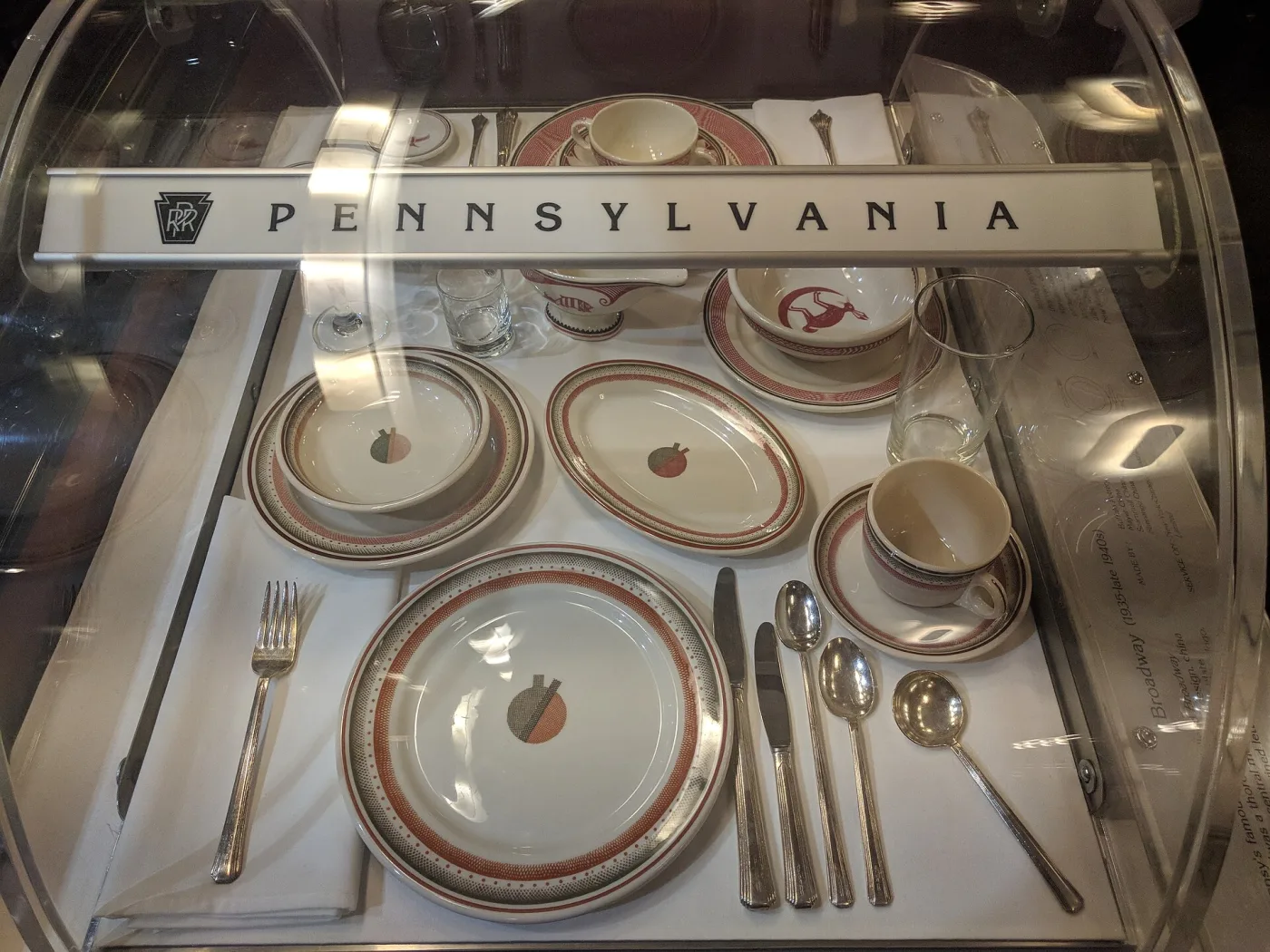
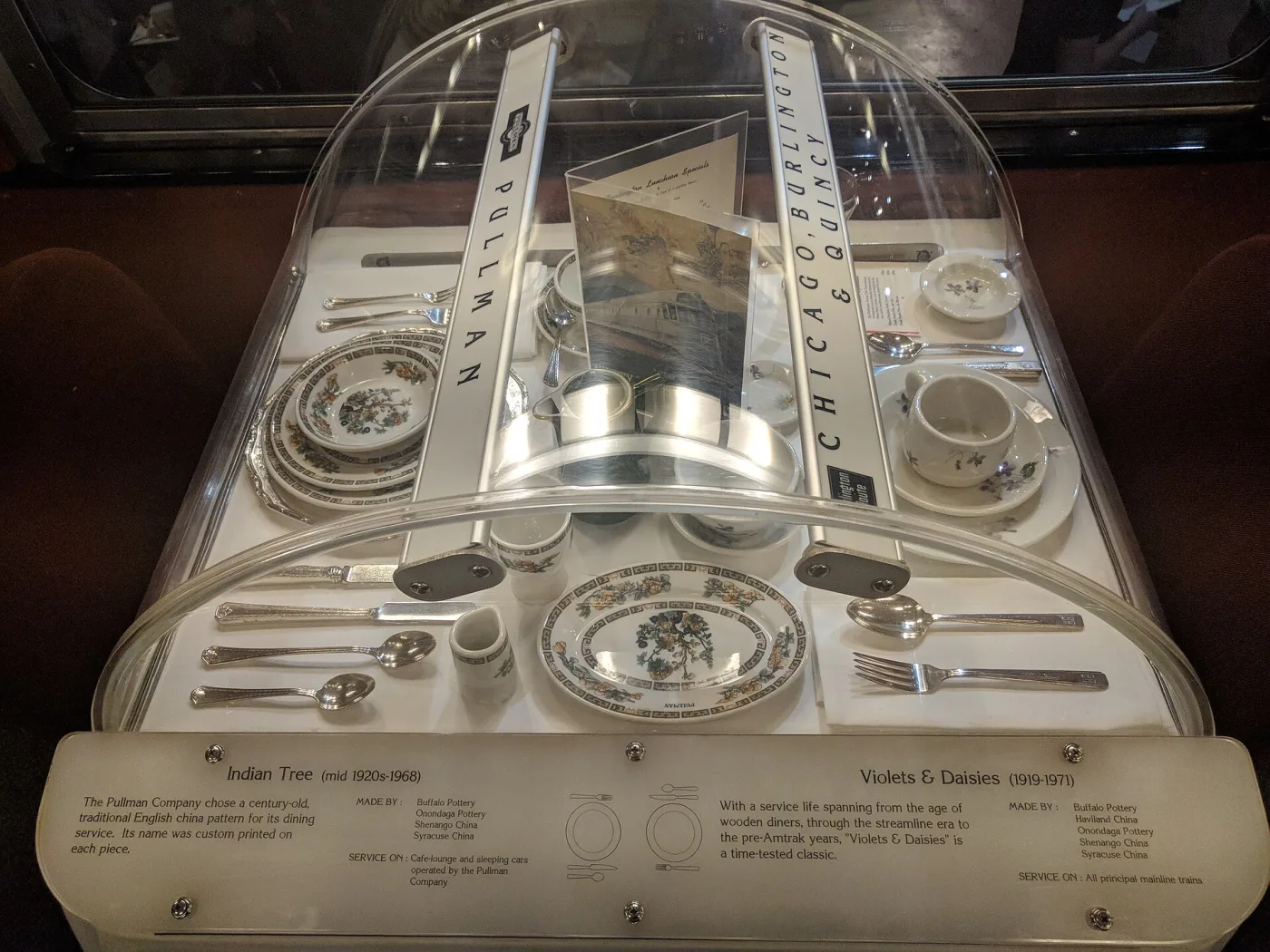
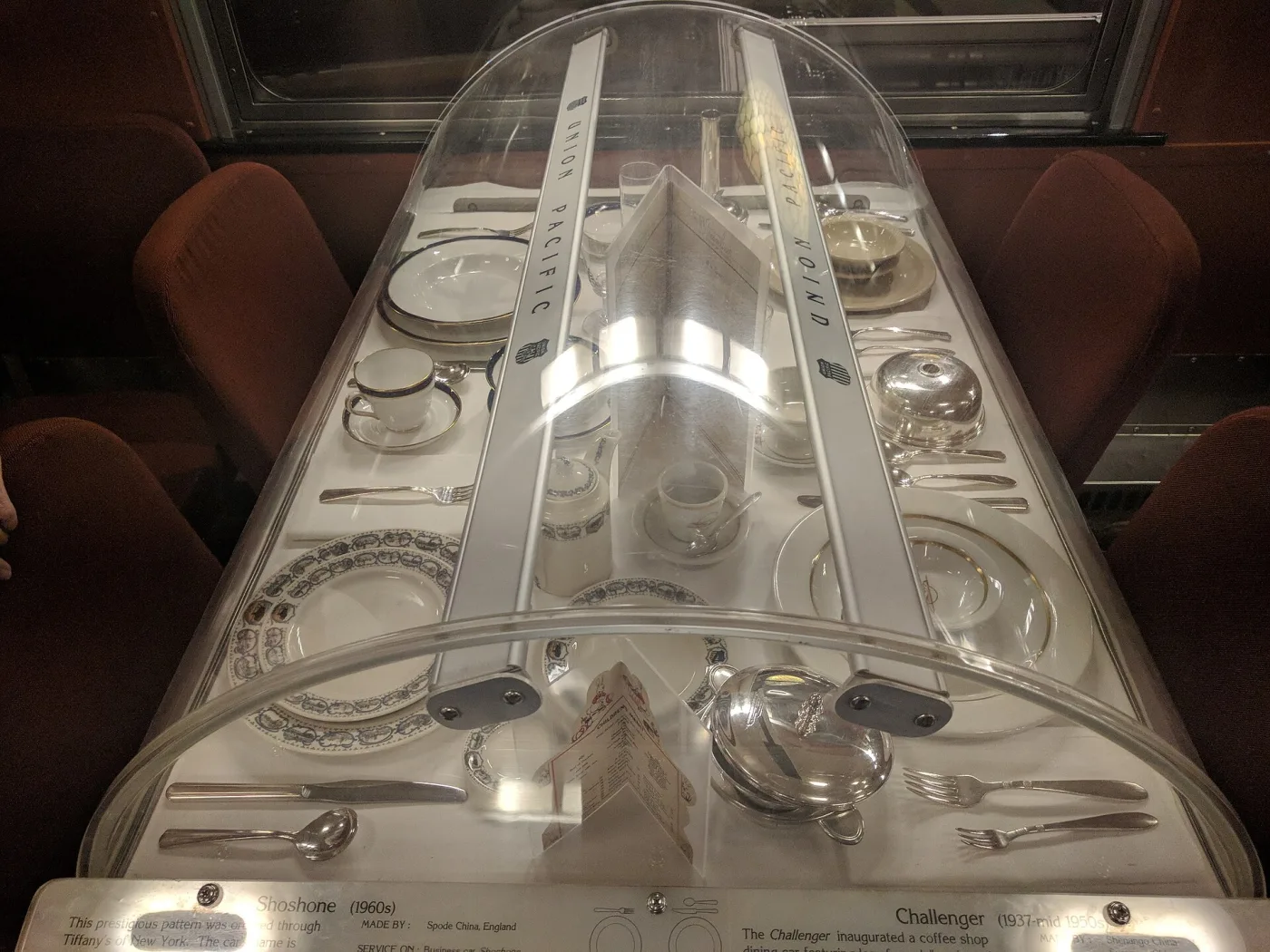
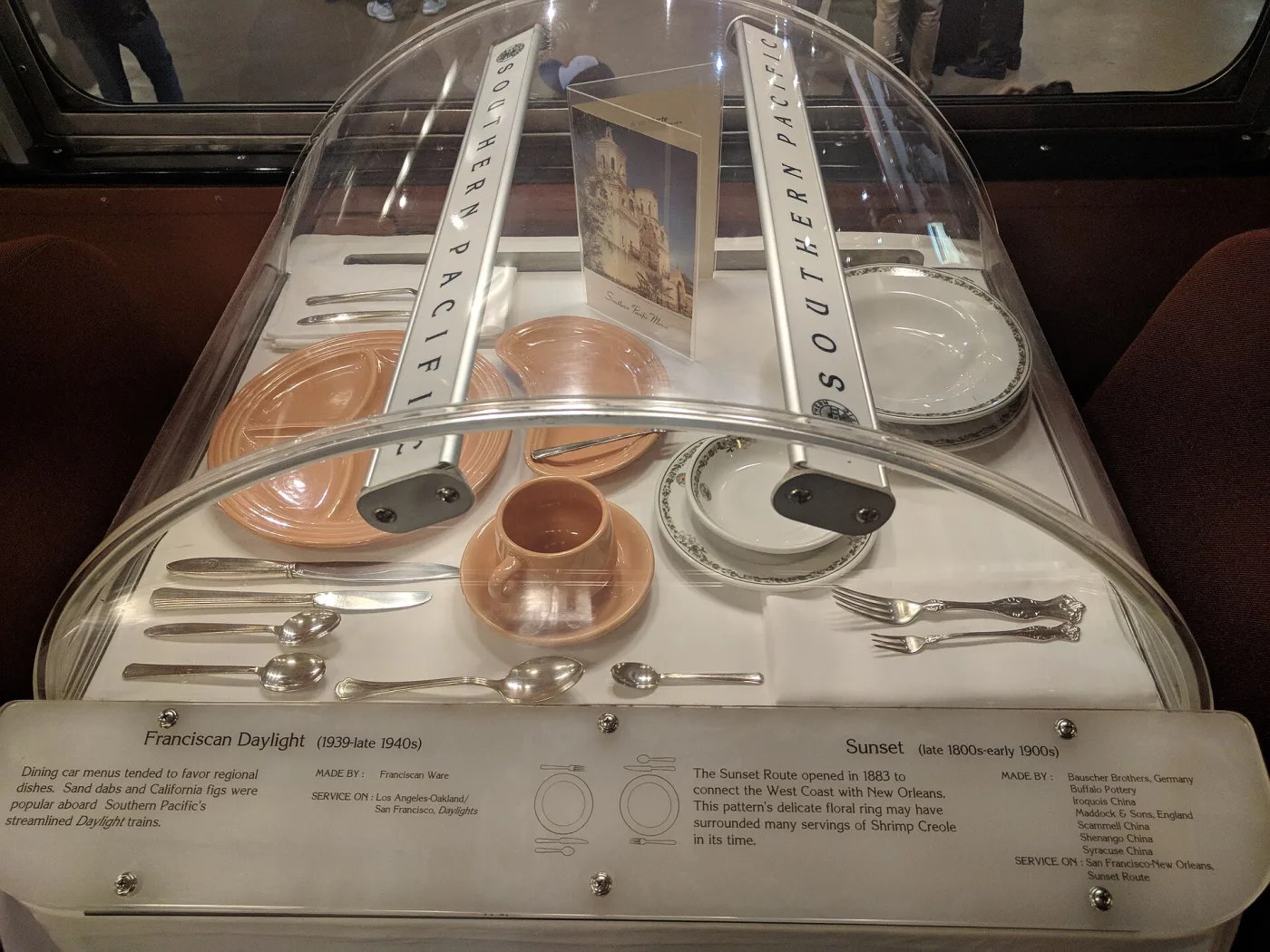
Transportation china represents some of the most collectible restaurant ware. Each railroad, airline, and steamship line typically commissioned custom patterns that reflected their brand identity and service standards.
Railroad Dining Car China
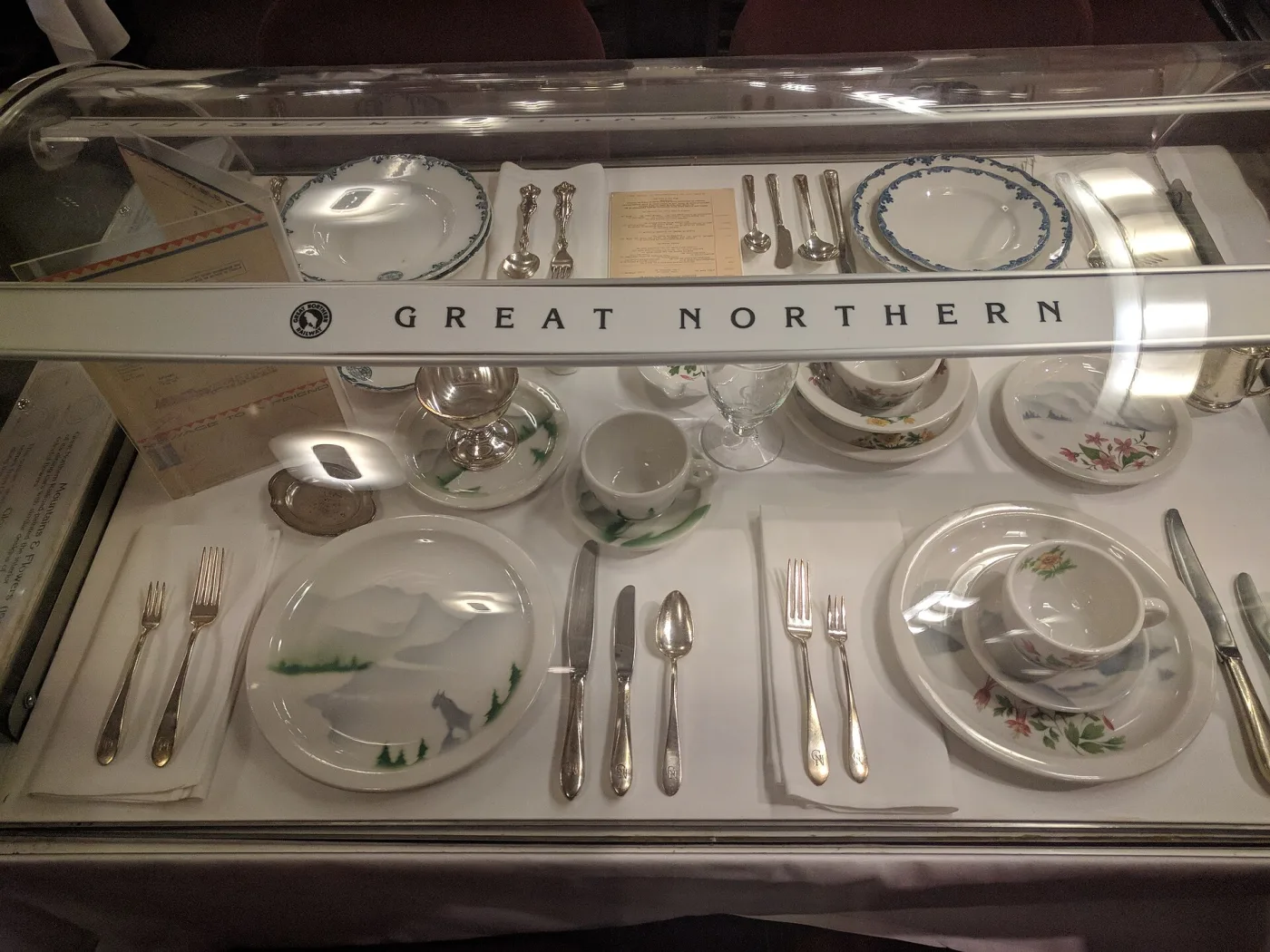
Railroad china was specifically produced to promote the railroad hospitality business. Each rail line commissioned distinctive patterns:
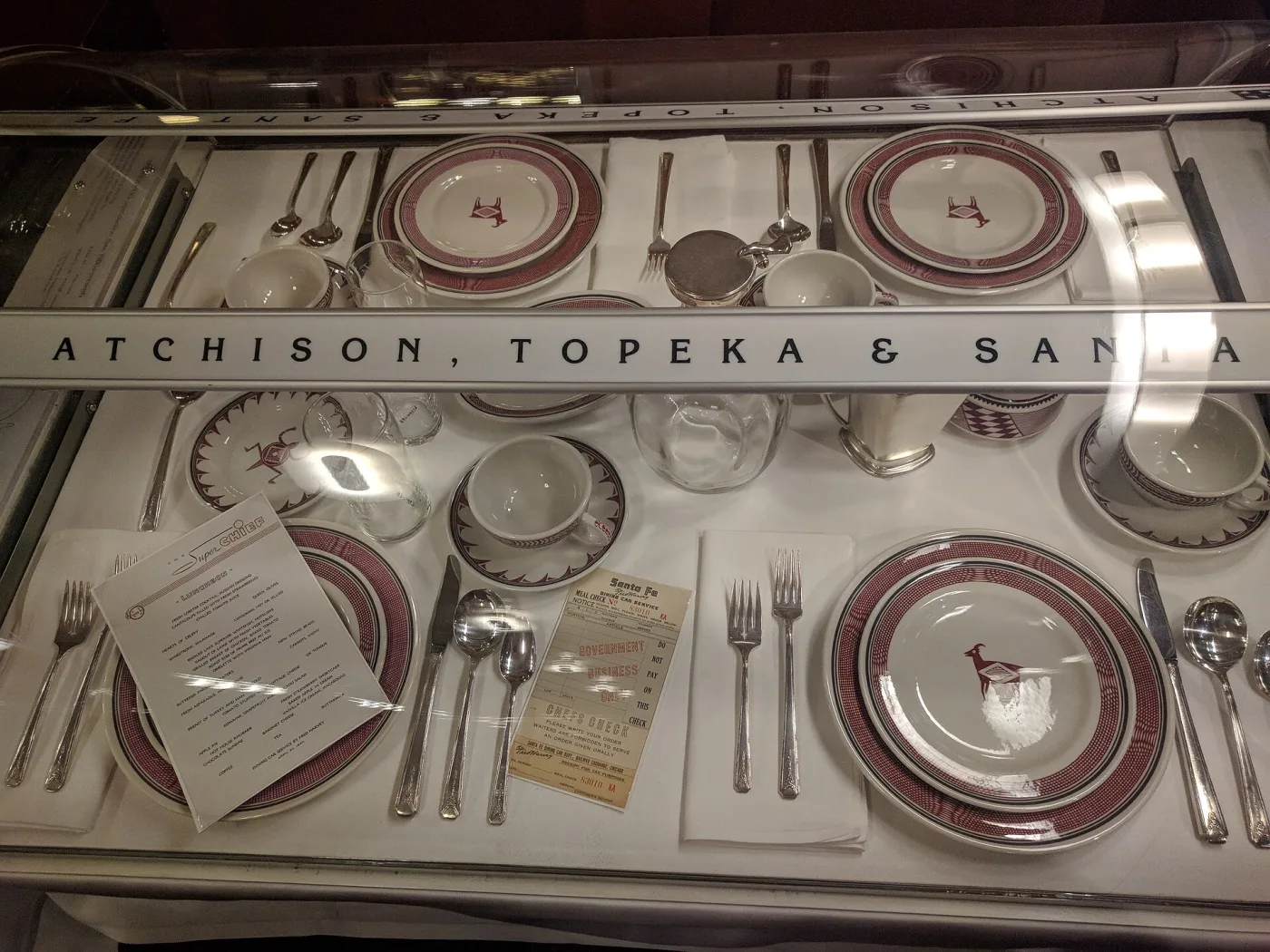
- Union Pacific: Distinctive patterns including Harriman Blue
- Santa Fe: Mimbreno and California Poppy patterns
- Baltimore & Ohio: Capitol, Centenary patterns
- Southern Pacific: Sunset and Prairie Mountain designs
- New York Central: Mercury and DeWitt Clinton patterns
- Great Northern: Mountains and Flowers pattern
Railroad china is very collectible and can command premium prices, especially complete place settings or rare patterns.
Airline China
Major airlines commissioned china for first-class and premium cabin service:
- Pan American World Airways
- Trans World Airlines (TWA)
- United Airlines
- American Airlines
- Eastern Airlines
Airline china from defunct carriers is particularly collectible for its historical significance.
Steamship and Ocean Liner China
Ocean liner dining rooms featured elegant custom china:
- Cunard Line
- White Star Line
- Holland America Line
- United States Lines
Buffalo Pottery was a major producer of steamship china, including pieces for the Flagler System (Florida East Coast Railway and Peninsular & Occidental Steamship Lines).
Collecting Transportation China
When collecting transportation china:
- Verify authenticity through backstamps and pattern research
- Complete place settings command higher prices
- Defunct lines are generally more valuable
- Condition is critical for value
- Documentation and provenance add value
Pattern Identification and Dating
Common Pattern Types
Restaurant ware patterns fall into several categories:
- Solid colors: Single-color glazes in green, blue, tan, or ivory
- Banded: Colored bands around rims or edges
- Airbrushed: Soft color gradients and designs
- Decal transfers: Applied decorative images
- Custom logos: Restaurant, hotel, or company emblems
- Western themes: Cowboys, cacti, wagon wheels
- Floral designs: Flowers and botanical motifs
Popular Collectible Patterns
Some of the most sought-after patterns include:
- Airbrushed diner ware: Classic American diner aesthetic
- Western motifs: Wagon wheels, cowboys, lassoes
- Tropical themes: Palm trees, flamingos
- Art Deco designs: Geometric patterns from the 1920s-30s
- Custom establishment logos: Historic restaurants and hotels
Dating Techniques
To date restaurant ware:
- Backstamp evolution: Compare marks to documented examples
- Date codes: Decode manufacturer-specific systems
- Style analysis: Design elements typical of specific eras
- Historical research: When did the establishment exist?
- Pattern catalogs: Reference manufacturer archives
Resources for Pattern Identification
Useful resources include:
- Restaurant Ware Collectors Network identification wiki
- Manufacturer-specific reference books
- Online collector forums and groups
- Museum collections and archives
- Auction house catalogs and records
Collecting Tips and Values
What Makes Restaurant Ware Valuable?
Several factors influence restaurant ware values:
- Custom designs: Pieces with establishment logos or names
- Historical significance: Famous establishments, defunct companies
- Rarity: Limited production runs, unusual pieces
- Condition: No chips, cracks, or significant wear
- Completeness: Full sets or matching pieces
- Manufacturer reputation: Premium makers command higher prices
- Visual appeal: Attractive patterns and colors
Price Ranges
General price guidelines (as of 2026):
- Common plain ware: $3-15 per piece
- Airbrushed diner pieces: $15-50
- Custom restaurant/hotel logo: $20-100+
- Railroad dining car china: $50-500+
- Rare patterns or makers: $100-1,000+
- Complete sets: Premium over individual pieces
Where to Find Restaurant Ware
Collectors find pieces at various venues:
- Estate sales and garage sales
- Antique shops and malls
- Flea markets
- Online auctions and marketplaces
- Collector shows and conventions
- Restaurant and hotel closures
Building a Collection
Tips for new collectors:
- Start with a focus: single manufacturer, pattern type, or theme
- Learn to recognize quality and authenticity
- Study backstamps and date codes
- Join collector groups and forums
- Invest in reference books
- Document your collection with photos and notes
Care and Preservation
Cleaning Restaurant Ware
Proper cleaning maintains value and appearance:
- Hand wash with mild dish soap
- Avoid harsh abrasives that can damage glazes
- Remove stains with baking soda paste
- Rinse thoroughly and dry completely
- Never use bleach on decorated pieces
Storage Recommendations
Protect your collection with proper storage:
- Use felt or paper separators between stacked pieces
- Avoid extreme temperature changes
- Store away from direct sunlight
- Keep in dry conditions to prevent moisture damage
- Display on secure shelving
Handling Considerations
Despite their durability, handle pieces carefully:
- Support plates and platters from below
- Avoid sudden temperature changes
- Inspect for existing damage before use
- Use padded containers for transport
Restoration and Repairs
Consider these factors regarding restoration:
- Minor chips generally don't require repair for display
- Professional restoration is available for significant damage
- Repairs may affect value for serious collectors
- Document original condition before any restoration
Conclusion
Antique restaurant ware and hotel china offer a unique window into American commercial and cultural history. From elegant hotel dining rooms to classic roadside diners, from luxury railroad cars to ocean liners, these durable pieces served millions while representing the best of American manufacturing and design. The stories they tell through their patterns, logos, and makers' marks connect us to a golden age of hospitality and travel.
Whether you're drawn to the bold graphics of Western-themed diner ware, the elegant simplicity of fine hotel china, or the historical significance of railroad and airline patterns, restaurant ware collecting offers something for everyone. By learning to identify manufacturers, decode date marks, and recognize valuable patterns, you can build a meaningful collection that preserves this important aspect of American material culture.
As you explore this fascinating collecting field, remember that each piece has a story to tell. The backstamps, patterns, and wear marks all contribute to understanding where these pieces served and who they served. With careful research and attention to quality, you can assemble a collection that brings the history of American dining and hospitality into your home.