
Antique Radio Identification Guide: Models, Brands & Values 2026
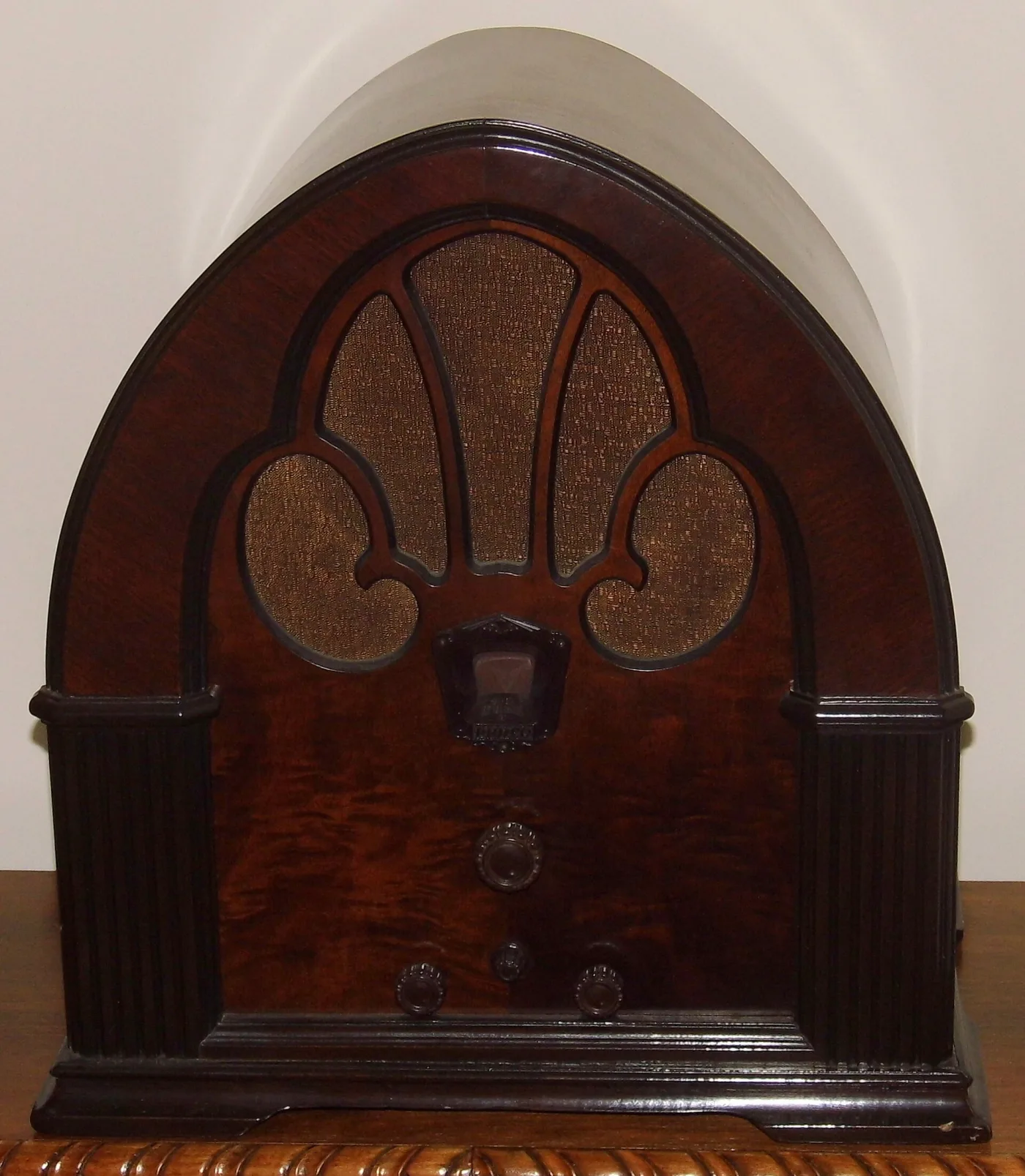
Vintage radios represent one of the most dynamic and rewarding areas of antique collecting in 2026. From the humble crystal sets of the 1920s to the colorful Catalin radios of the 1940s, these technological marvels capture the golden age of broadcasting and American industrial design. With Catalin radios now commanding prices from $1,500 to $25,000, and mid-century tube radios experiencing a surge in collector interest, understanding radio identification has never been more valuable.
This comprehensive guide will teach you to identify antique radios by cabinet style, tube configuration, brand characteristics, and manufacturing dates. Whether you're evaluating a cathedral radio at an estate sale, researching a colorful Bakelite set, or authenticating a rare FADA or Emerson Catalin model, you'll learn the critical markers that determine authenticity, era, and value.
From tube types and chassis construction to dial styles and speaker configurations, we'll explore every aspect of radio identification. You'll discover how to spot reproductions, recognize valuable models, date radios by their components, and understand the market factors driving the 2026 vintage radio renaissance among younger collectors seeking sustainable, storied collectibles.
Table of Contents
- Radio Eras and Timeline
- Cabinet Styles and Forms
- Catalin and Bakelite Radios
- Major Radio Brands and Makers
- Tube Types and Configurations
- Chassis and Construction Methods
- Dial Styles and Mechanisms
- Speaker Types and Grille Cloth
- Dating Methods and Markers
- Brand Identification Features
- Rare and Valuable Models
- Condition Assessment
- Restoration vs. Originality
- Market Values and Pricing 2026
- Spotting Reproductions and Fakes
- Collecting Strategies
- Authentication Tips
- Preservation and Display
Radio Eras and Timeline
Understanding the evolution of radio technology is fundamental to identification. Each era brought distinct design characteristics, technical innovations, and manufacturing approaches that help date and authenticate vintage radios.
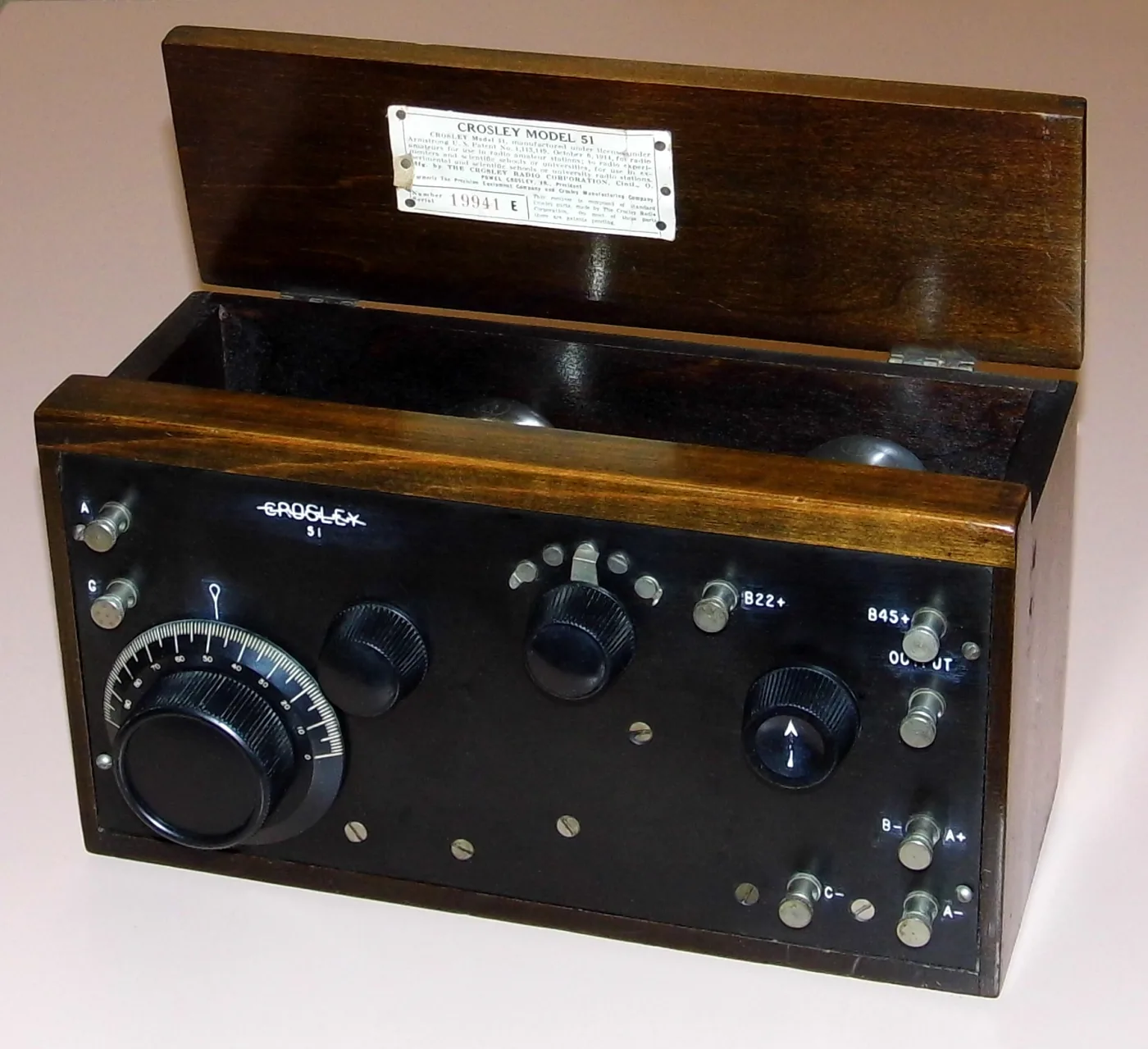
Crystal Radio Era (1920-1925)
The earliest consumer radios required no external power, using a crystal detector to receive signals. These primitive sets typically consisted of exposed components mounted on wooden boards or housed in simple wooden boxes. Key identification features include crystal detectors, cat's whisker wire contacts, single headphone output, minimal or no amplification, simple variable capacitors, and basic coil wound tuners. Crystal sets are highly collectible for their historical significance, though most examples show modification from decades of hobbyist tinkering.
Battery Tube Era (1925-1928)
Early tube radios operated on batteries, typically requiring separate A, B, and C batteries for different voltage requirements. Cabinet designs were often simple breadboard or table models. Identification markers include separate battery compartments, exposed tube tops visible from cabinet top, simple controls with minimal dial markings, external speaker connections, and brass or wood hardware. These transitional radios show the shift from kit assembly to manufactured consumer products.
AC Tube Era (1928-1935)
The introduction of AC-powered radios revolutionized the industry. Cabinet designs became more elaborate as radios transitioned from utility to furniture. Look for power transformers in the chassis, AC/DC power cords, more sophisticated dial mechanisms, cathedral and tombstone cabinet styles emerging, and decorative veneers and carved details. This era saw the rise of distinctive cabinet styles that define vintage radio collecting.
Golden Age (1935-1942)
The late 1930s through early war years represent the peak of radio design innovation. Streamlined Art Deco styling dominated, with manufacturers competing on both performance and aesthetics. Catalin and colorful Bakelite radios emerged during this period. Key features include sophisticated superheterodyne circuits, push-button station selection, multiband capabilities, colorful plastic cabinets, intricate dial designs, and automatic volume control. This era produces the most valuable collector radios today.
Wartime Era (1942-1945)
World War II drastically affected radio production. Civilian radio manufacturing virtually ceased as factories converted to military production. Radios from this period are rare and often show material substitutions due to wartime shortages. Identification includes plastic replacing metal parts, simplified designs, brown or black Bakelite (no colorful Catalin), limited production numbers, and military contract markings on some examples.
Postwar Era (1945-1955)
After the war, radio design embraced modern aesthetics while transitioning toward smaller formats as television emerged. Look for modern streamlined styling, increased use of plastics, smaller table radios, clock radio combinations, and transitional AM/FM models. Values are generally lower than pre-war radios, though certain designs command premium prices.
Transistor Transition (1955-1965)
The shift from tubes to transistors marked the end of the classic radio era. While transistor radios fall outside traditional collecting, late tube models and early transistor examples attract specialized collectors. These radios typically show compact designs, reduced cabinet sizes, emphasis on portability, and hybrid tube-transistor circuits in some models.
Cabinet Styles and Forms
Cabinet style provides immediate clues about a radio's era, manufacturer, and market position. Understanding these distinctive forms is essential for quick identification and preliminary dating.
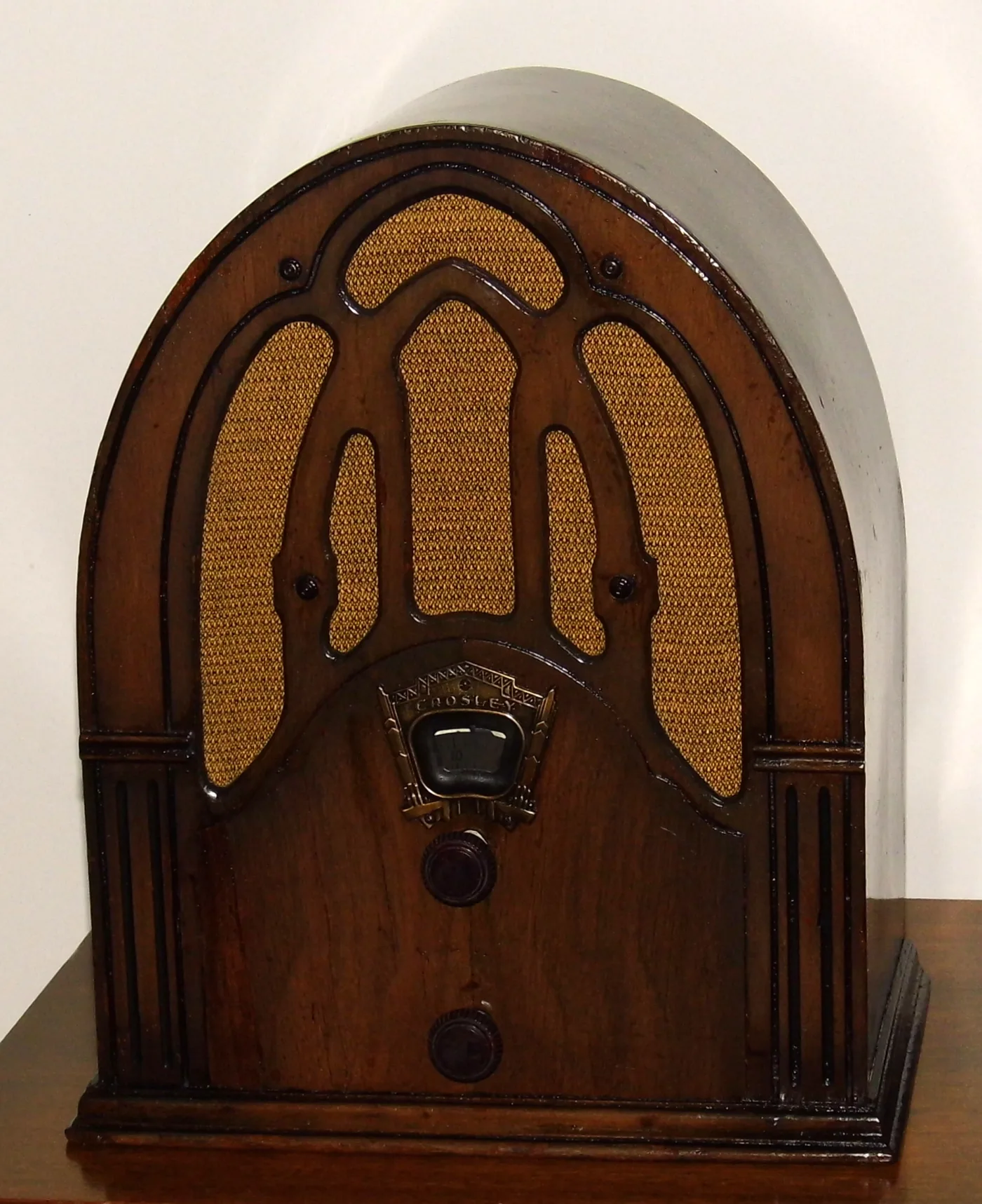
Cathedral Style
Named for their resemblance to Gothic church windows, cathedral radios dominated the early 1930s. These radios feature arched tops, vertical orientation, decorative carved details, speaker grille often incorporated into the arch, and wooden construction with veneer. Popular manufacturers included Philco, RCA, Atwater Kent, and Zenith. Cathedral radios in good original condition command strong prices, particularly rare models or unusual veneers. The style's popularity has made it subject to extensive reproduction, requiring careful authentication.
Tombstone Style
Tombstone radios feature rounded or straight tops, taller vertical cabinets, front-facing speakers, elaborate veneer work, and prominent dial escutcheons. These radios were positioned as premium furniture pieces in the mid-1930s. Larger examples are often called "console tombstones." Value factors include cabinet size and condition, veneer rarity, brand prestige, and electronic condition. Tombstone radios represent solid collecting value, though they require significant display space.
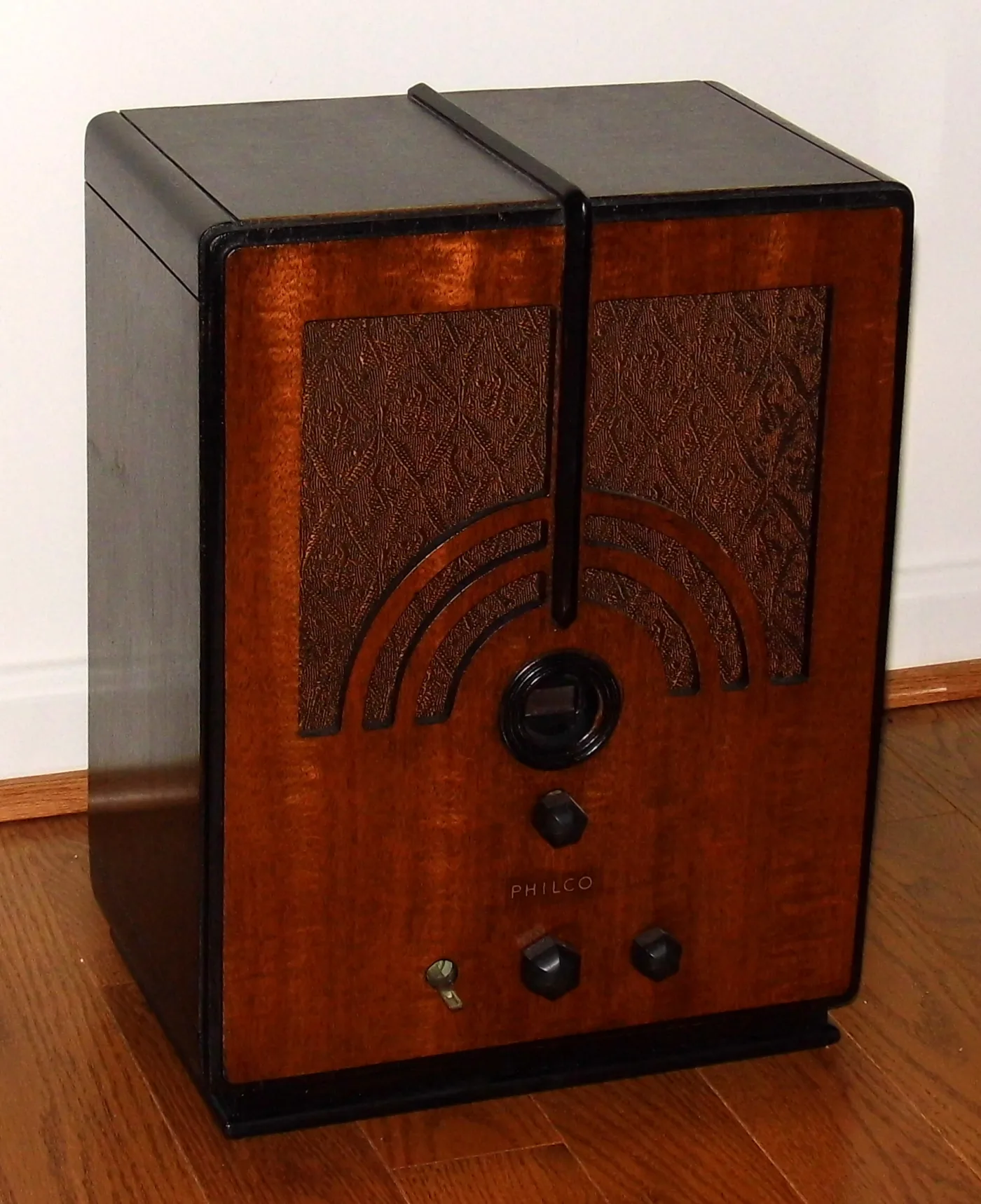
Table Model
Compact horizontal radios designed for tabletop placement represent the most common format across all eras. These radios show tremendous variation in styling from simple boxes to elaborate Art Deco designs. Key identification points include wood veneer or plastic construction, horizontal orientation, front or top-mounted dials, built-in speakers, and compact footprint. Value ranges dramatically based on design, materials, and manufacturer. Colorful Catalin table models command premium prices, while common wooden examples have modest value.
Console Style
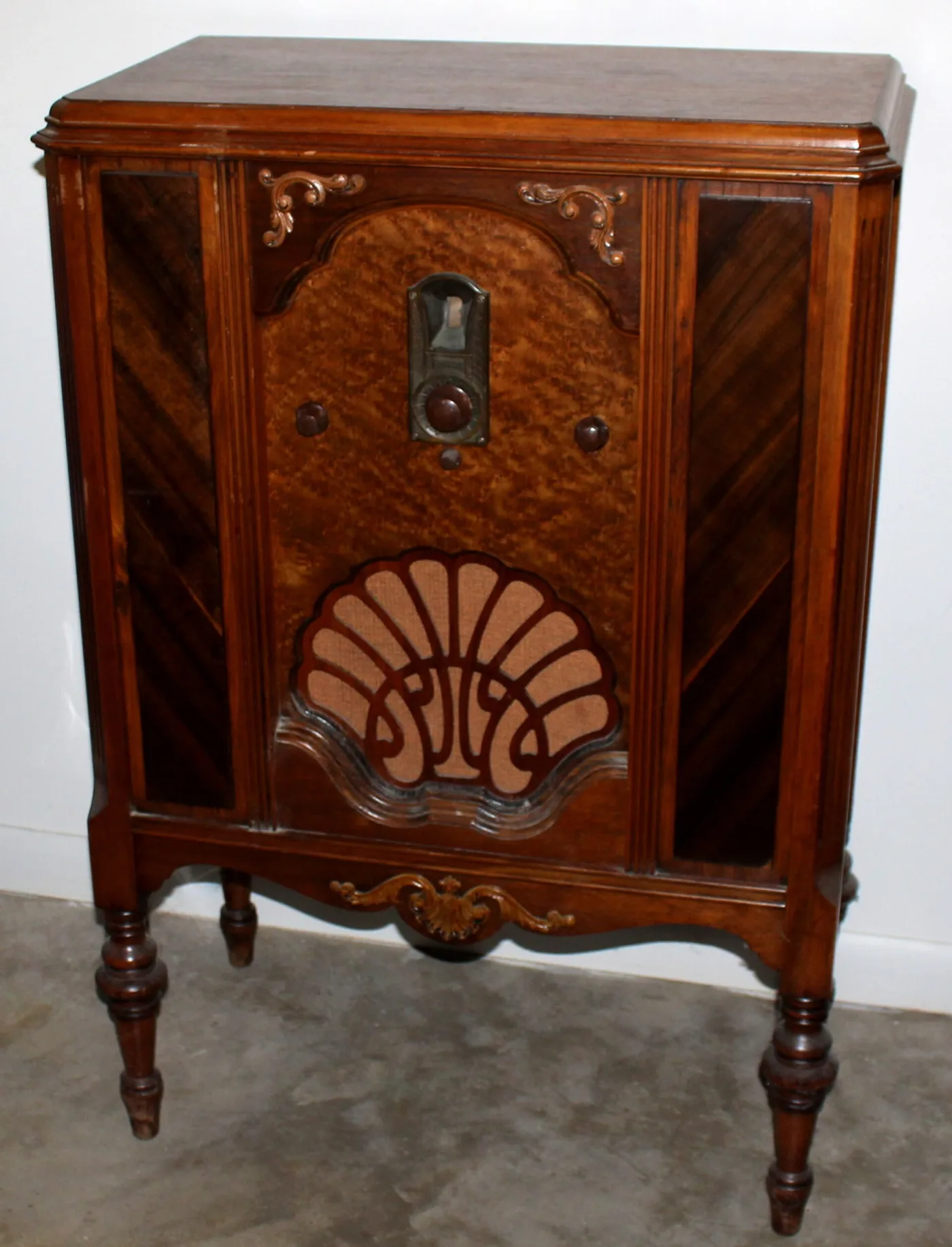
Floor-standing console radios served as furniture pieces and status symbols. These large radios feature full-height cabinets, elaborate veneer work, large speaker systems, and often included record players in later examples. High-end consoles from prestige manufacturers with sophisticated electronics and intact veneer can command strong prices. However, most common consoles have limited collector interest due to size and restoration costs. Valuable examples include early superheterodyne models, rare manufacturers, and elaborate Art Deco designs.
Portable Style
Portable radios with handles and compact designs emerged in the late 1930s. Early portables used tubes and were quite heavy despite "portable" designation. Look for leather or leatherette covered cases, carrying handles, battery operation with optional AC, compact tube layouts, and built-in antennas. Portable radios bridge the tube and transistor eras, with late tube portables particularly interesting for their engineering compromises.
Novelty and Specialty Styles
Manufacturers produced numerous novelty designs to attract buyers. These radios might be shaped like globes, mirrored designs, Art Deco sculptures, or character designs. Novelty radios often command premium prices due to scarcity and crossover appeal to specialty collectors. Authentication is critical as these unusual designs are frequently reproduced.
Catalin and Bakelite Radios
Colorful plastic radios represent the pinnacle of vintage radio collecting, with rare Catalin examples bringing $25,000 or more. Understanding the differences between Bakelite and Catalin, recognizing authentic examples, and assessing condition requires specialized knowledge.
Bakelite vs. Catalin
Bakelite, invented in 1907, is a thermoset plastic typically produced in black or brown. Catalin, developed later, is a cast phenolic resin capable of brilliant colors. Identification differences include Bakelite's opaque black or brown versus Catalin's translucent colors when backlit, Bakelite's molded construction versus Catalin's cast and machined production, Bakelite's uniform color versus Catalin's color variation and marbling, and Catalin's oxidation and color shift over time. True Catalin radios were produced primarily between 1936 and 1942, with production ending during World War II. Many radios advertised as Catalin are actually Bakelite or later plastics.
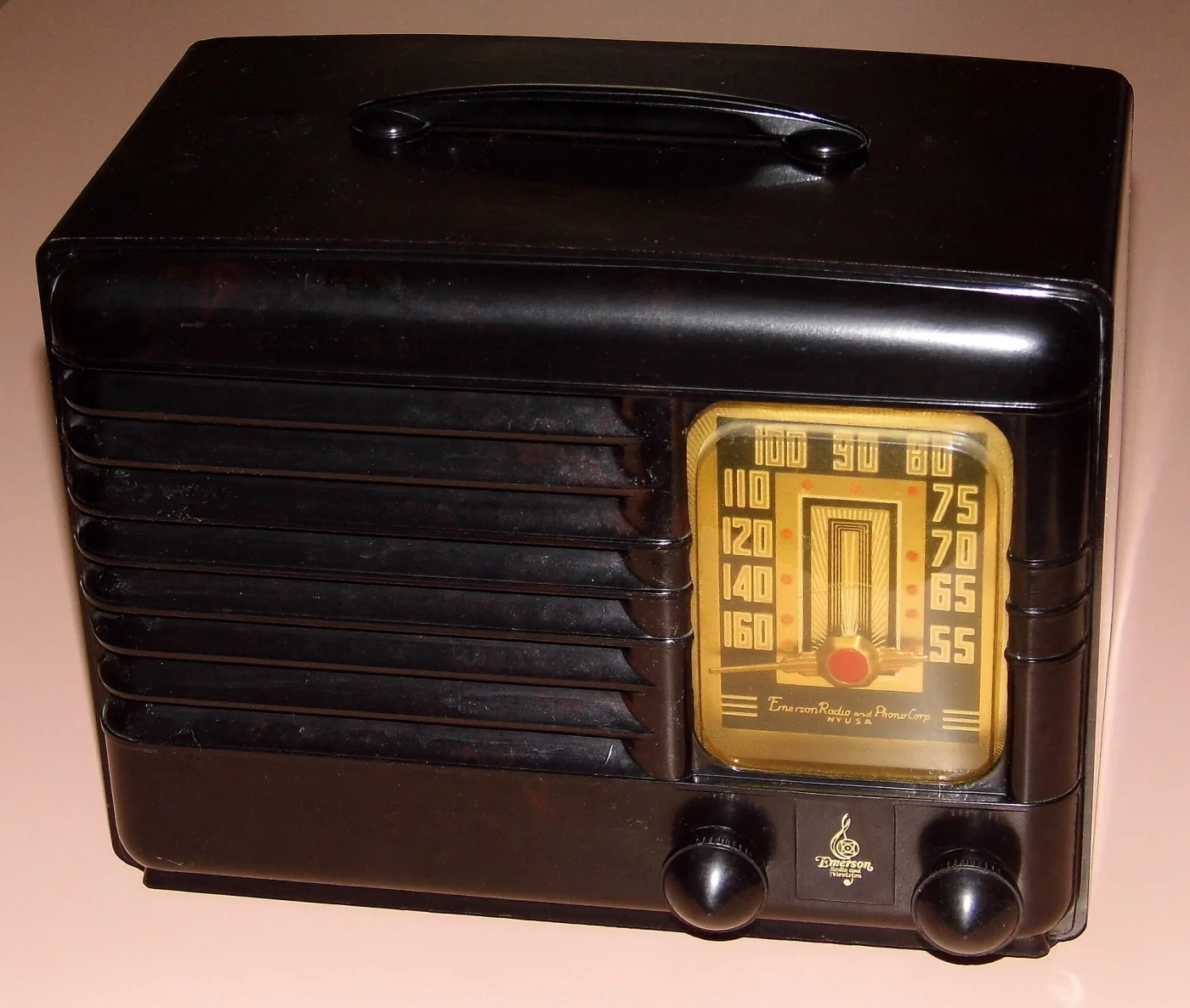
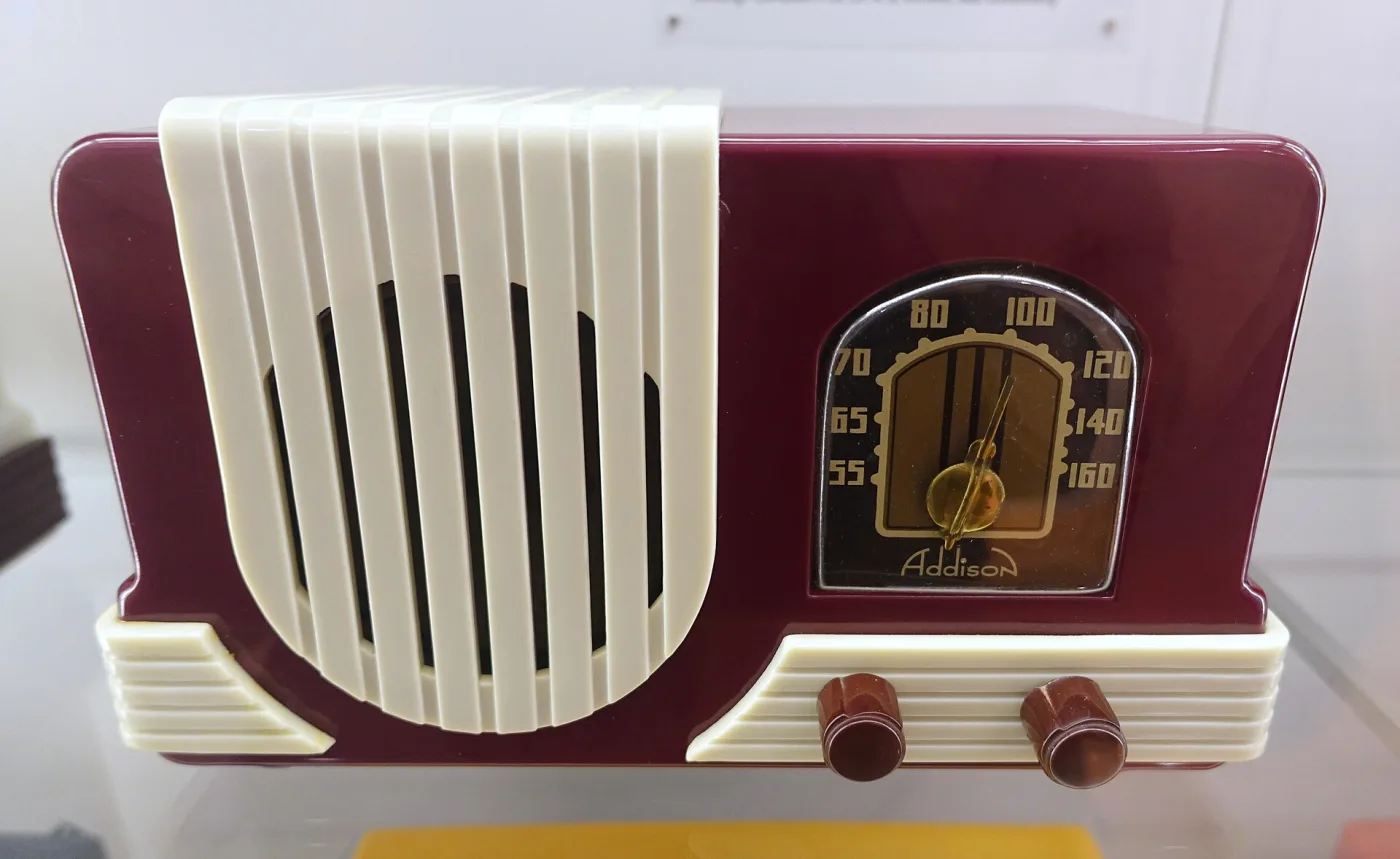
Set these two beside each other and the manufacturing method does the identifying for you. The Emerson on the left is a single moulding, so its colour runs uniformly through a shape a die could release, and every edge is soft. The Addison on the right was cast as rod stock, then sawn, machined and screwed together — which is the only reason it can carry a cream grille and plinth against a maroon body, an assembly no moulder would attempt. Note that this is Addison's Canadian-built Model 52A of 1940, not the Model 2 named above, though both are cast phenolic. The confirming test is light: hold a suspect case against a bright lamp and Catalin glows at its thin edges, while Bakelite stays dead.
Catalin Color Rarity
Catalin color significantly affects value. Common colors include brown (often oxidized from yellow), butterscotch or yellow, red, and green. Rare colors command premium prices including blue, oxblood or tortoiseshell, alabaster or white, and onyx or black Catalin with colored marbling. The rarest Catalin radios feature contrasting color combinations, decorative inserts, or geometric patterns.
Major Catalin Radio Brands
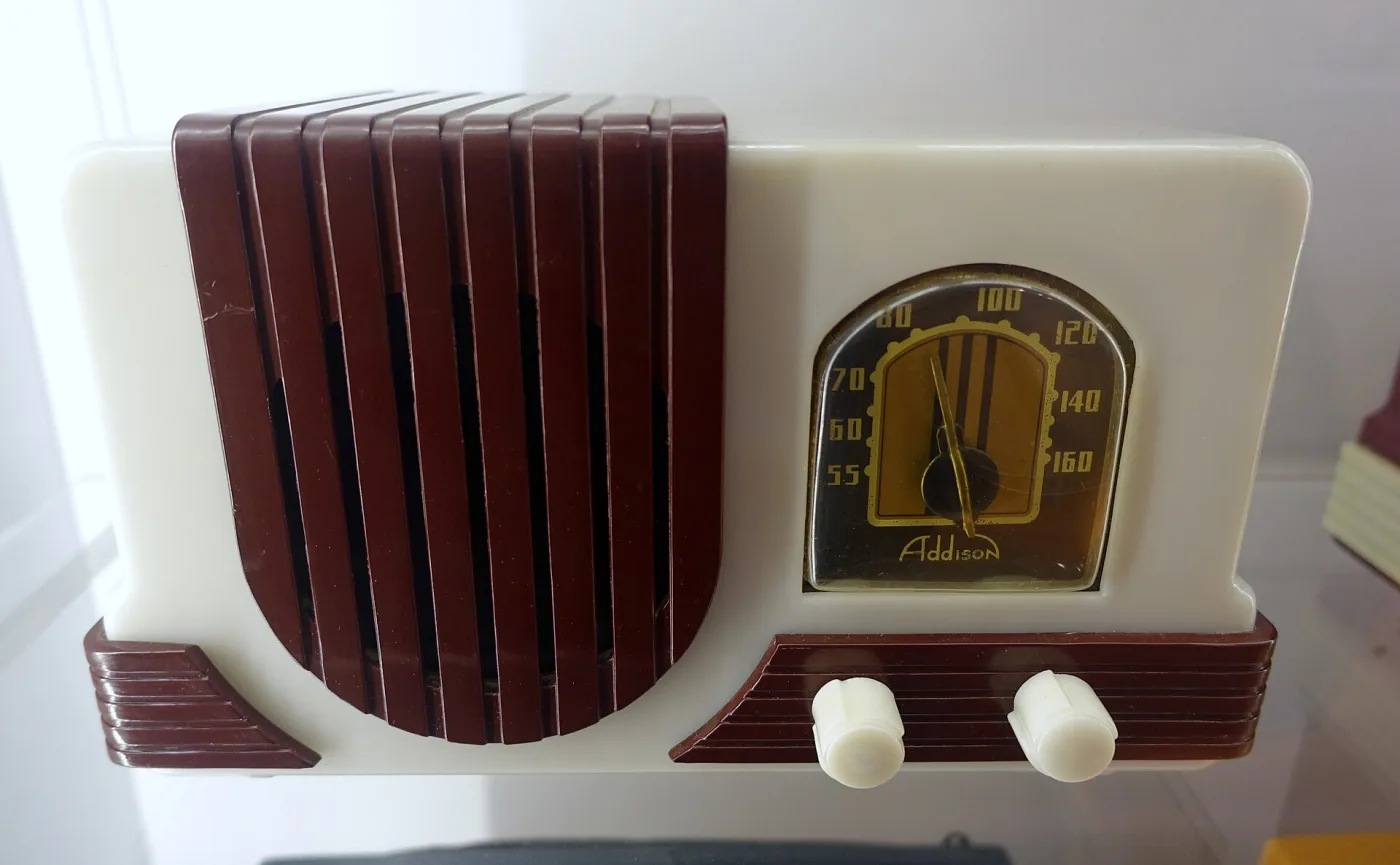
FADA produced some of the most valuable Catalin radios, particularly the streamlined "bullet" models. FADA Models 1000, 652, and 845 are especially prized. Emerson created distinctive Catalin designs including the Patriot model with red, white, and blue stripes and the "tombstone" style AU-190. Addison produced bold, geometric designs with the Addison Model 2 among the most valuable tube radios ever made. Garod, Kadette, and Sentinel offered more affordable Catalin models that remain collectible though less valuable than the premium brands.
Catalin Condition Assessment
Catalin condition dramatically affects value, with perfect examples bringing multiples of damaged pieces. Key condition factors include color retention, with oxidation causing yellowing or browning; cracks or repairs, with any damage severely reducing value; case integrity, checking for warping or shrinkage; hardware completeness, with original knobs and trim essential; and dial condition, as replacement dials significantly reduce value. Restoration of Catalin radios is controversial, with purists preferring oxidized originals to polished examples.
Authentication Concerns
The high values of Catalin radios have created a market for reproductions and fakes. Warning signs include colors too vivid for age, indicating modern plastics; perfect condition in rare colors; incorrect chassis that don't match cabinet; modern components or replacement parts; and seller claims of "new old stock" in rare colors. Reputable dealers provide provenance and guarantee authenticity. When in doubt, seek expert authentication before making significant purchases.
Major Radio Brands and Makers
Brand identification helps date radios, assess quality, and determine value. Major manufacturers had distinctive design languages and quality levels that affect collectibility.
Philco
The Philadelphia Storage Battery Company (Philco) was America's largest radio manufacturer through much of the 1930s. Identification features include cathedral models with distinctive arched designs, "Baby Grand" and other descriptive model names, shadow meter tuning indicators, automatic volume control systems, and excellent build quality and component selection. Philco radios are widely collected, with cathedral models particularly desirable. Model numbers typically started with year designation. Premium value models include rare cathedral configurations, high-tube-count sets with sophisticated features, and chairside remote control models.
RCA and RCA Victor
Radio Corporation of America leveraged its patents and technical leadership to dominate the premium market. RCA features include emphasis on technical performance, conservative styling focused on quality, early superheterodyne designs, and Victor branding after 1929 merger. Valuable RCA models include early superheterodyne receivers, console models with elaborate cabinets, and pre-war television radio combinations.
Zenith
Zenith emphasized technical innovation and quality construction throughout its history. Identifying Zenith features include "black dial" models with distinctive styling, push-button tuning innovations, multi-band capabilities, and trans-oceanic portable models. Zenith stratosphere and black dial models command premium prices. The company's long production history means availability varies dramatically by model.
Atwater Kent
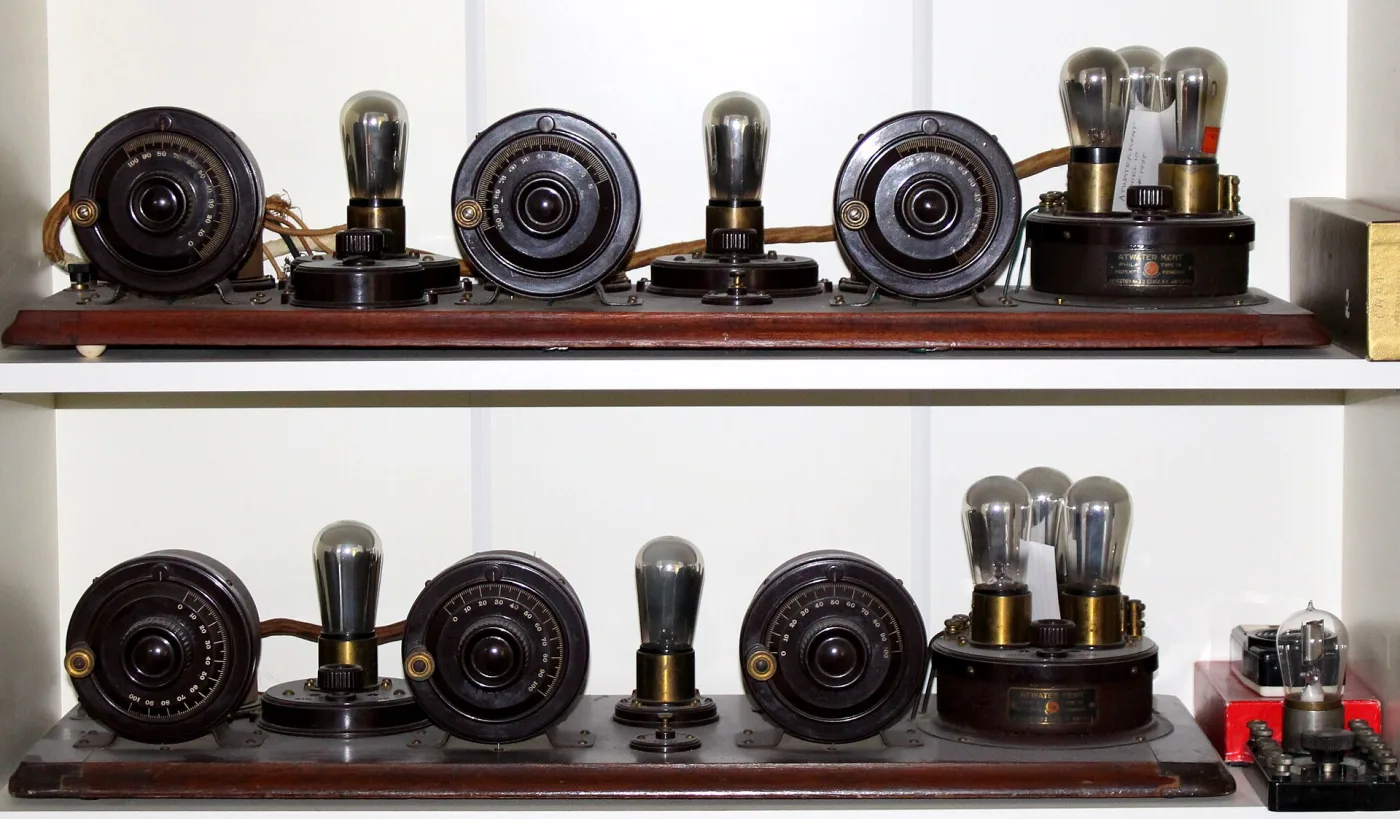
Atwater Kent dominated early radio manufacturing before declining in the 1930s. Key characteristics include breadboard and table models from the 1920s, cathedral radios from early 1930s, metal chassis construction, and conservative styling emphasizing quality. Early breadboard Atwater Kent radios are historically significant, while later cathedral models are more commonly collected. The company's 1936 closure makes later models scarcer.
FADA
F.A.D. Andrea produced both standard wooden radios and highly valuable Catalin models. FADA's Catalin radios, particularly streamlined models, are among the most valuable vintage radios. The FADA 1000 "bullet" Catalin radio can exceed $10,000 in rare colors. Wooden FADA radios have modest value, but Catalin examples are highly sought after.
Emerson
Emerson produced affordable radios in both wood and plastic, with notable Catalin models in the late 1930s and early 1940s. The Emerson Patriot with red, white, and blue striped Catalin is iconic and valuable. Wooden Emerson radios are common with modest value, but Catalin models command significant prices. Post-war Emerson radios show modern design influence.
Other Notable Manufacturers
Additional collectible brands include Crosley, offering affordable models with good availability; Stromberg-Carlson, producing high-quality radios with conservative styling; Motorola, transitioning from auto radios to home models; Sparton, creating Art Deco mirror-front models; and Admiral, producing post-war modern designs.
Tube Types and Configurations
Understanding tube technology helps date radios, assess authenticity, and evaluate functionality. Tube types and circuit designs evolved rapidly through radio's golden age.
Early Tube Types (1920s)
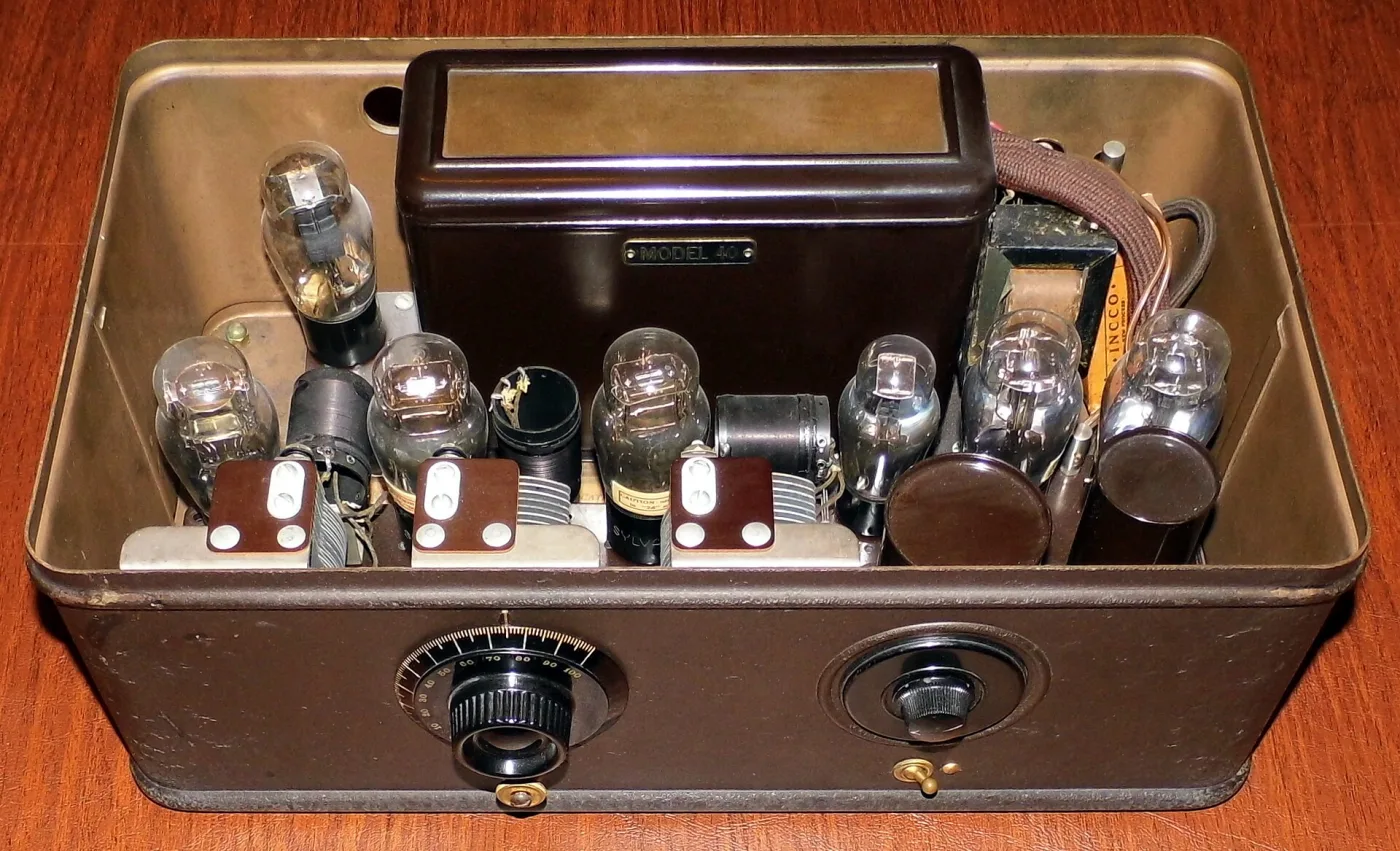
Early radios used directly heated tubes with exposed filaments. Type 01A tubes were common in mid-1920s sets, while Type 45 power tubes appeared in later battery sets. Type 26 and 27 tubes marked the transition to AC operation. These early tubes had 4 or 5 pins and distinctive bases. Battery radios required multiple battery voltages for different tube elements.
Metal Tubes (1935-1940)
RCA introduced metal tubes in 1935, quickly adopted across the industry. Metal tubes offered better shielding, uniform dimensions, and improved reliability. Identification includes silver metal envelopes, octal 8-pin bases, and model numbers starting with 6 for 6.3-volt heaters. Metal tubes date radios to the late 1930s or early 1940s. They're often intermixed with glass tubes in the same chassis.
Glass Tube Types
Glass tubes remained standard throughout the tube era. Common types include GT (Glass Tubular) style introduced in late 1930s with smaller envelopes than earlier ST style, loctal tubes with different base design used in some manufacturers' radios, and miniature 7-pin tubes appearing in portable and late-era radios. Tube top markings help identify manufacturers and date production.
Circuit Configurations
Radio circuits evolved from simple to complex designs. TRF circuits used tuned radio frequency stages common in 1920s before superheterodyne became standard. Superheterodyne circuits with intermediate frequency amplification became industry standard by 1930. All-American Five designs using five tubes in standardized configuration dominated affordable post-war radios. Tube count generally indicates radio complexity and quality, though later efficient designs needed fewer tubes than earlier receivers.
Tube Identification for Dating
Tubes provide critical dating evidence. Consider tube type progression, mixing of glass and metal tubes indicating transition period, octal vs. loctal vs. miniature bases, voltage requirements, and tube manufacturer markings and dates. Original tubes add value, though most collectors accept appropriate replacement tubes for functionality.
Chassis and Construction Methods
Chassis construction reveals manufacturing era, quality level, and modification history. Understanding chassis features helps authenticate radios and assess restoration feasibility.
Early Open Chassis
1920s radios often used breadboard or open chassis with components mounted to wooden bases or metal frames. Wiring was point-to-point with cloth-covered wire. These exposed designs show all components and make authentication relatively straightforward. However, modification and component replacement were common, requiring careful examination to determine originality.
Metal Chassis Era
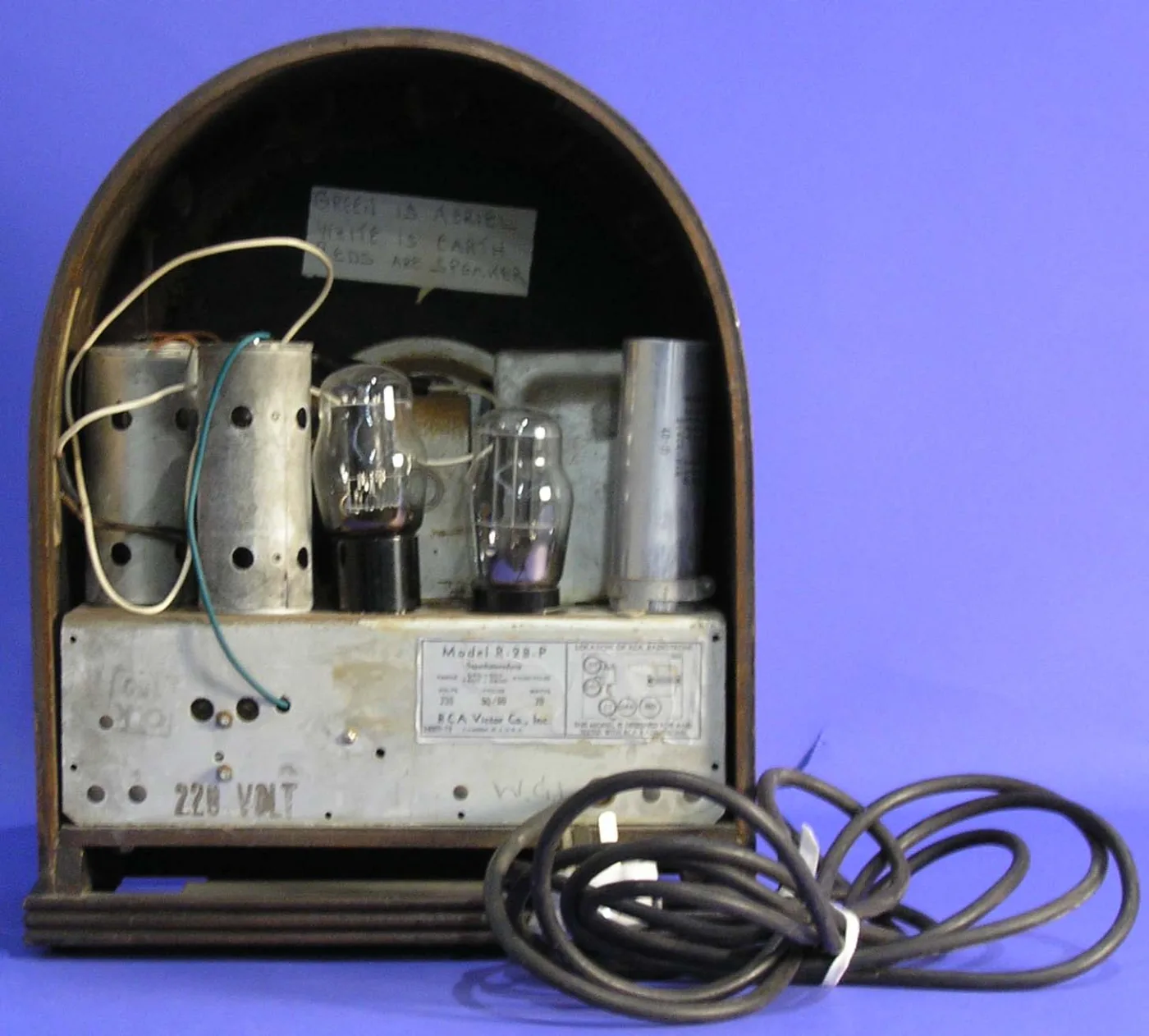
Steel chassis became standard by the late 1920s. Look for heavy steel stampings, cadmium or zinc plating, riveted construction, and separate subchassis for RF sections. Quality manufacturers used heavier gauge metal and more sophisticated stamping dies. Chassis corrosion indicates storage conditions and may reveal restoration challenges.
Component Layout
Component arrangement provides manufacturing clues. Professional layouts show logical signal flow, organized wiring, quality component selection, and proper shielding of sensitive stages. Amateur or kit radios display less organized layouts, point-to-point wiring without cable dressing, variable component quality, and potential modifications. Original manufacturer layouts can often be verified against service documentation.
Wiring Methods
Wiring style helps date chassis and identify modifications. Original wiring shows cloth insulation common through the tube era, consistent wire colors indicating professional assembly, period-appropriate solder joints, and neat routing and cable dressing. Replaced wiring uses plastic insulation, mismatched wire types, modern solder appearance, and messy routing. Some rewiring is acceptable for functionality, but extensive modifications reduce collector value.
Manufacturing Markings
Chassis often carry valuable identification information including model numbers stamped or labeled, date codes indicating manufacture date, inspector stamps, and patent numbers. These markings help verify authenticity and pinpoint manufacturing date. Compare chassis markings to cabinet labels or dial markings for consistency.
Dial Styles and Mechanisms
Radio dials evolved from simple scales to elaborate illuminated displays. Dial style provides immediate dating clues and significantly affects collector appeal.
Early Dial Types
1920s radios used simple calibrated dials with degree markings or arbitrary numbers, often requiring multiple dials for multi-gang tuning. These basic dials were typically metal plates with stamped or engraved markings. Each tuning control had its own dial, making operation complex.
Station Logging Dials
As standardized station frequencies emerged, dials incorporated station logging features. Look for frequency markings, station call letters, removable logging scales, and pointer or needle indicators. Station logging dials help date radios to the transition from amateur to broadcast-focused designs.
Art Deco Dial Design
The 1930s saw elaborate dial designs become major style elements. Premium radios featured illuminated dial backgrounds in colors like amber, green, or white; elaborate escutcheons with decorative metalwork; station call letters and city names; and dramatic typeface and graphics. These decorative dials significantly enhance collector appeal. Original condition with intact printing is essential, as restoration of elaborate dials is difficult and expensive.
Push-Button Tuning
Push-button station selection appeared in the mid-1930s. Early systems were mechanical with preset stations, while later versions added electronic memory. Push-button radios represent technical advancement but add maintenance complexity. Value depends on functionality, as non-working push-button systems are difficult to repair.
Multi-Band Dials
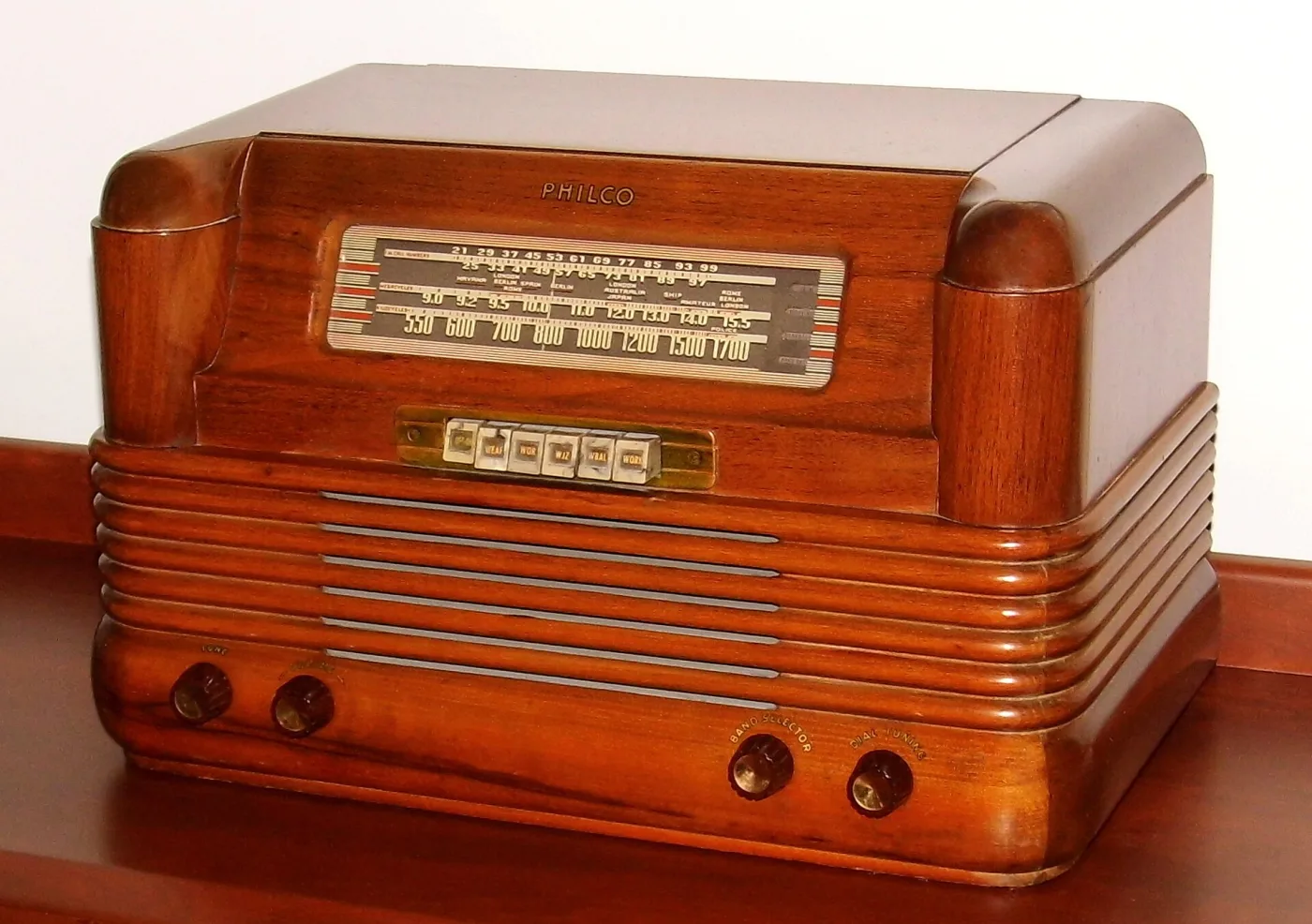
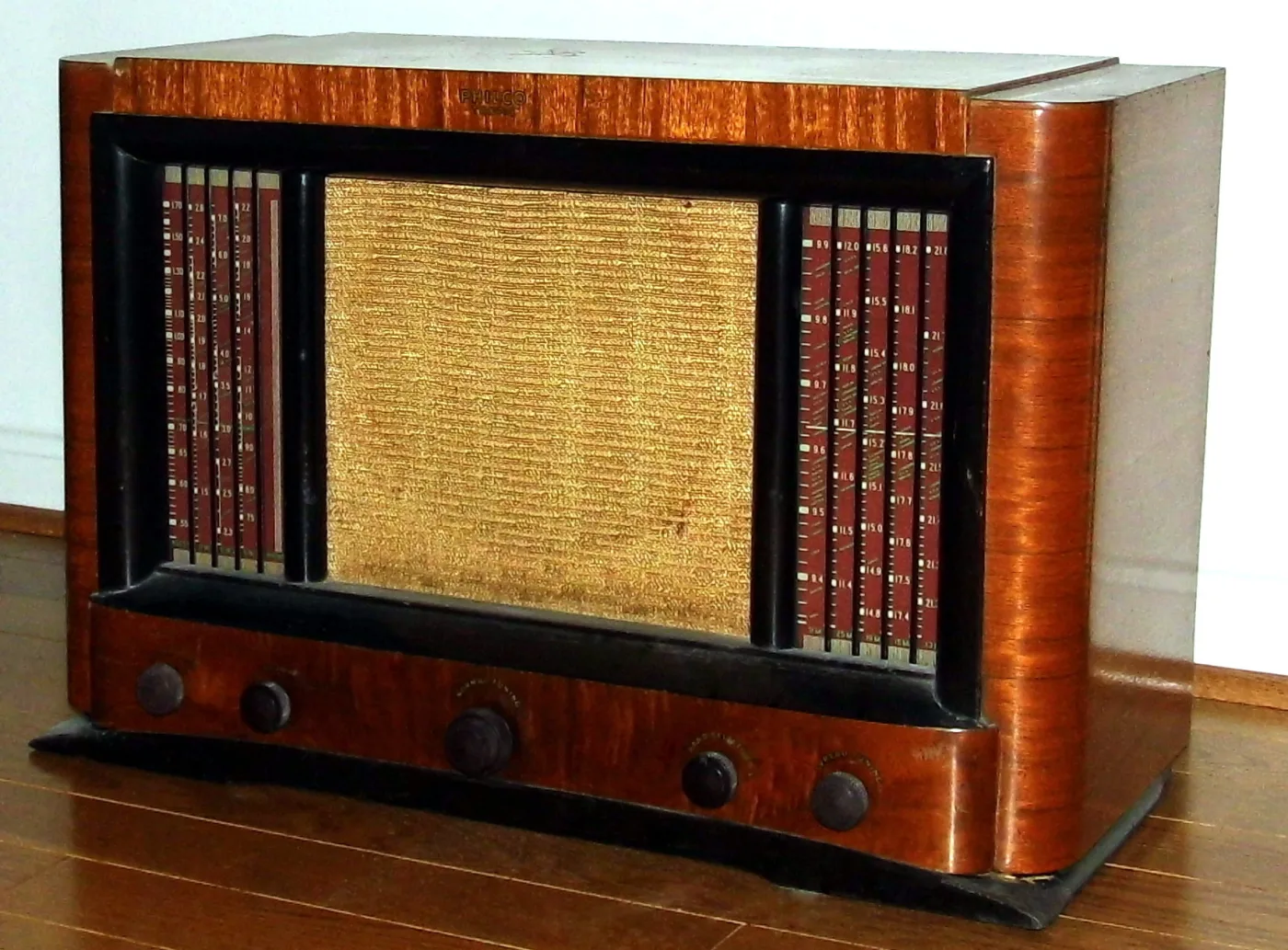
Radios with shortwave or multi-band capabilities required complex dials showing AM broadcast band, shortwave bands, and sometimes police or weather bands. These sophisticated dials indicate premium radios with more complex circuitry. Condition is critical as multi-band dials with deteriorated printing or damaged scales are difficult to restore.
Dial Condition Assessment
Dial condition dramatically affects radio value and restoration feasibility. Check for intact printing and graphics, which are difficult to restore; proper illumination where applicable; complete glass or celluloid covers; correct pointer or needle; and dial escutcheon condition. Replacement dials exist for common models but are often inferior to originals. Rare radios with damaged dials face difficult restoration decisions.

Speaker Types and Grille Cloth
Speaker configuration and grille cloth help date radios and assess originality. Speaker technology evolved rapidly, and original grille cloth significantly affects collector value.
Early Speaker Types
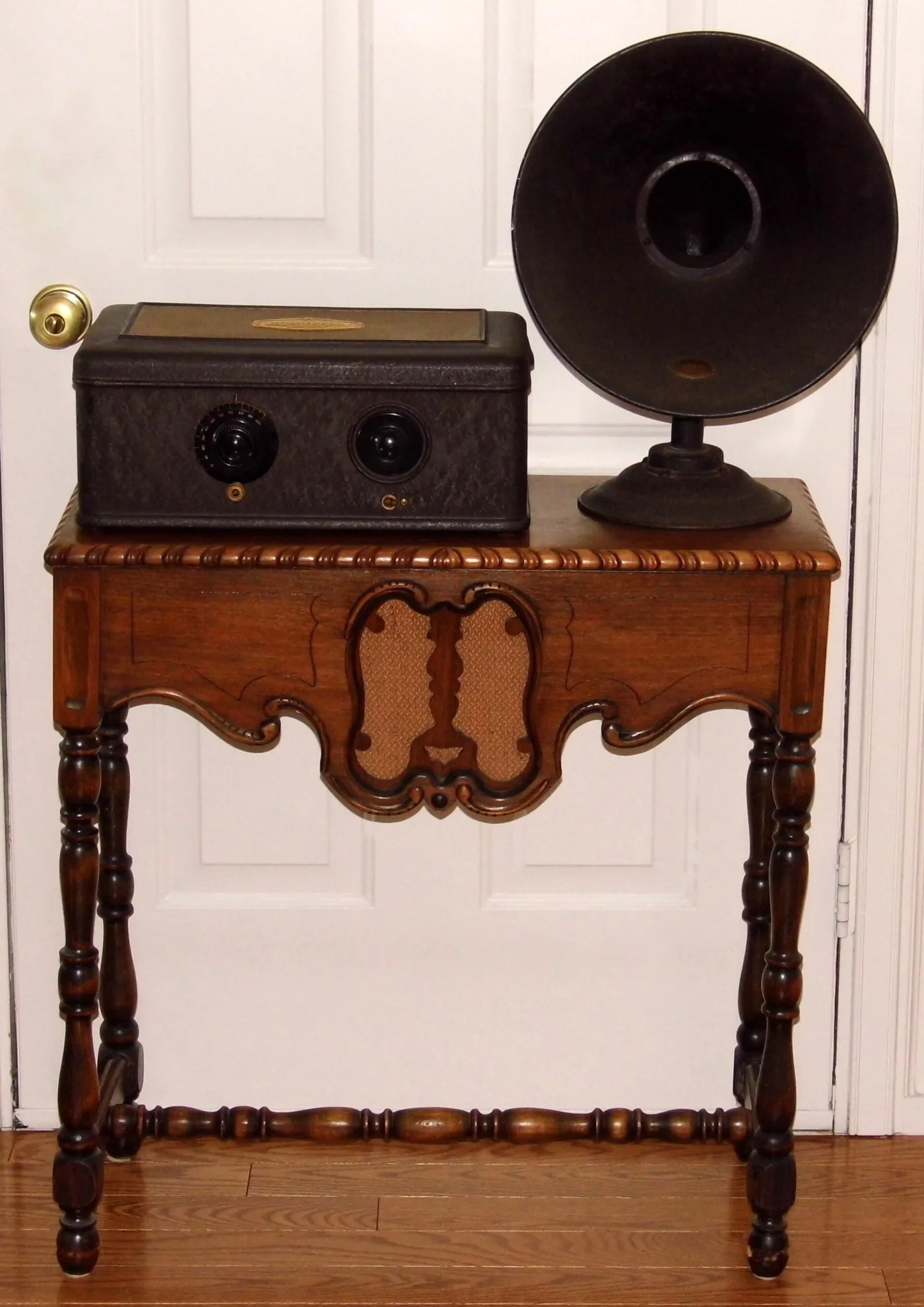
Early radios used external speakers or headphones. Horn speakers connected via cable to the radio chassis. Cone speakers emerged in the mid-1920s, initially as separate units. By 1928, integrated speakers became standard in console and table radios. Radios with provisions for external speakers date to the transition period.
Dynamic Speakers
Electromagnetic dynamic speakers became standard by 1930. These speakers used field coils powered by the radio's power supply, with permanent magnet speakers appearing later. Identification features include heavy field coil transformers, mounting centered in cabinet, and output transformer connected to chassis. Field coil speakers help date radios to the early 1930s, while permanent magnet types indicate later production.
Speaker Size and Placement
Speaker diameter increased as radio quality improved. Small radios used 4 to 5-inch speakers, medium table models had 6 to 8-inch speakers, and console radios featured 10 to 12-inch or larger speakers. Premium radios sometimes used multiple speakers or bass reflex enclosures. Speaker placement varied by cabinet style, with front-facing speakers in most table models, top-firing speakers in some compact designs, and elaborate baffling in quality consoles.
Grille Cloth Styles
Grille cloth protected speakers and added decoration. Original cloth significantly affects value and collector appeal. Period grille cloths show Art Deco geometric patterns, floral or ornate designs, metallic gold or silver threads, and colors coordinated with cabinet finish. Many radios have replacement grille cloth, reducing collector value. Reproduction cloth is available for some models, though rarely matching original quality.
Grille Cloth Authentication
Determining original grille cloth requires examining mounting method and hardware; consistency with manufacturer's known patterns; age-appropriate wear and fading; and comparison to documented examples. Original grille cloth in good condition adds significant value. Radios with missing or severely deteriorated cloth face difficult restoration choices, as period-appropriate replacement cloth is increasingly scarce.
Dating Methods and Markers
Accurate dating combines multiple evidence sources. Radio manufacture dates can often be determined within a year or two using systematic investigation.
Date Code Systems
Many manufacturers used date coding systems on chassis, components, or labels. Common systems include week and year codes stamped on chassis, component date codes on transformers and capacitors, inspector stamps with dates, and patent date references. Understanding manufacturer-specific coding helps pinpoint manufacture dates. Early radios rarely have clear date codes, while later production typically includes systematic dating.
Model Number Analysis
Model numbers often incorporate year information. Philco used year prefix systems, with model 37-116 indicating 1937 production. Other manufacturers used sequential numbering that can be correlated to years through documentation. Research manufacturer model number systems through collector resources and documentation.
Tube Type Dating
Tube types help establish manufacturing windows. Metal tubes indicate 1935 or later. Octal base tubes suggest mid-1930s to 1950s. Loctal tubes point to specific manufacturers in specific periods. Miniature tubes indicate post-war production. Original tubes may carry date codes, though replacement tubes are common.
Component Dating
Electronic components provide dating evidence including capacitor types and construction showing era, transformer design and materials, resistor styles, and switch types and mechanisms. Replacement components are common in functional radios but help date original manufacture.
Cabinet Style Dating
Cabinet design narrows date ranges significantly. Cathedral style indicates early 1930s. Streamlined Art Deco suggests late 1930s to early 1940s. Colorful Catalin points to 1936-1942. Post-war modern styling dates to 1945-1955. Cabinet style combined with electronic evidence provides accurate dating.
Documentation Research
Researching specific models through collector resources yields detailed information. Resources include online radio databases with model listings, manufacturer catalogs and advertising, collector forums and communities, and service documentation. Most common models are well documented, allowing precise dating once model is identified.
Brand Identification Features
When labels are missing or obscured, brand identification requires recognizing characteristic design features, construction methods, and component selections specific to manufacturers.
Philco Identification
Philco radios show distinctive features including shadow meter tuning indicators on many models, automatic volume control badges, model numbers typically on chassis and cabinet, characteristic dial layouts with distinctive fonts, and quality construction with good component selection. Philco cathedral radios have recognizable architectural details. Model number format changed over years but generally included year prefix in 1930s.
RCA Victor Identification
RCA radios emphasize engineering over styling. Look for conservative cabinet designs focusing on quality, "Nipper" the dog logo on some cabinets, metal chassis construction with quality components, model numbers following RCA systems, and premium pricing reflected in construction. RCA console radios often featured elaborate veneer work and quality hardware.
Zenith Identification
Zenith features include distinctive "black dial" styling on premium models, push-button tuning innovations, multi-band capabilities on many radios, quality construction and component selection, and characteristic cabinet designs. Zenith model numbers and chassis layouts help identification. The company's reputation for quality means Zenith radios generally receive strong collector interest.
Catalin Radio Brand Markers
Catalin radios often lack obvious external branding. Identification requires recognizing characteristic cabinet shapes by manufacturer, chassis layouts specific to brands, dial designs and fonts, and speaker grille patterns. FADA "bullet" models have distinctive streamlined shape. Emerson Catalin radios show characteristic Art Deco styling. Addison models feature bold geometric designs.
Lesser-Known Brand Identification
Identifying obscure manufacturers requires chassis inspection for labels and model numbers, comparison to documented examples, component supplier evidence, and cabinet construction techniques. Many radio manufacturers used outsourced chassis, making electronic identification challenging. Cabinet style and construction provide better identification clues for obscure brands.
Rare and Valuable Models
Certain radio models command exceptional prices due to scarcity, design significance, or historical importance. Understanding what makes radios rare helps identify valuable discoveries.
Catalin Radio Values
The most valuable vintage radios are rare Catalin models. Top values include FADA 1000 "bullet" in rare colors, potentially exceeding $25,000; Addison Model 2 in multi-color combinations, commanding five-figure prices; Emerson Patriot with red, white, and blue stripes, valued at $10,000+; FADA 652 and 845 models in rare colors; and Garod and Kadette rare color combinations. Catalin values depend heavily on color rarity and condition. Even common Catalin radios in average condition command $1,500-$3,000.
Pre-War Premium Models
Beyond Catalin, certain pre-war radios are valuable. Sparton "Bluebird" mirror-front Art Deco design brings $5,000-$15,000. Philco Model 16 cathedral and high-end console models command strong prices. Early superheterodyne radios from quality manufacturers have historical value. Multi-band receivers with elaborate dials attract collectors. These radios combine rarity, technical sophistication, and design appeal.
Early Crystal and Battery Sets
Historically significant early radios appeal to specialized collectors. Complete crystal sets in original condition are increasingly rare. Early battery sets from notable manufacturers have collector interest. Breadboard radios with original components command premium prices. Early superheterodyne receivers demonstrate technical innovation. These radios require expertise to authenticate and often need significant restoration.
Novelty and Specialty Radios
Unusual designs command premium prices. Sparton mirror-front models are iconic Art Deco designs. Character radios shaped like buildings or vehicles appeal to crossover collectors. Advertising radios given as premiums or promotions are scarce. Early portable radios before transistor era show engineering innovation. These specialty radios are particularly susceptible to reproduction, requiring careful authentication.
Condition Premium Models
Even common models command premium prices in exceptional condition. Radios with all original parts including tubes, chassis never modified or repaired, perfect cabinet finish, original grille cloth, and original documentation and packaging can bring multiples of average examples. Museum-quality examples of even common models attract serious collectors.
Condition Assessment
Condition dramatically affects radio value and collecting decisions. Systematic assessment helps evaluate restoration feasibility and market value.
Cabinet Condition
Cabinet assessment focuses on finish quality and damage. Examine veneer condition for checking, lifting, or loss; wood condition for cracks, warping, or insect damage; finish integrity, looking for fading, scratches, or crazing; hardware completeness with original knobs and escutcheon; and grille cloth condition. Minor veneer damage may be repairable, but extensive loss or structural damage severely reduces value. Catalin radios require special attention to cracking, warping, and color shift.
Electronic Condition
Electronic functionality affects usability but doesn't always dictate collector value. Check whether radio powers on and receives stations; audio quality and speaker condition; all functions including band selection and tone controls; originality of components and wiring; and evidence of modifications or repairs. Many collectors prefer original but non-functional radios to extensively modified working examples. However, radios that can be returned to functionality with basic service command premium prices over those requiring extensive restoration.
Dial Condition
Dial condition critically affects restoration potential. Evaluate printing integrity with no flaking or fading, glass or celluloid cover completeness, pointer or needle originality, illumination functionality, and escutcheon condition. Damaged dials are difficult to restore authentically. Radios with rare dials in poor condition face difficult decisions about restoration versus preservation.
Completeness
Original completeness significantly affects value. Check for all knobs matching and original; grille cloth original to radio; back cover present; internal components unmolested; and tubes appropriate to design though not necessarily original. Missing components, particularly unusual knobs or rare grille cloth, may be impossible to replace authentically.
Modification Assessment
Modifications severely reduce collector value. Look for replaced components using modern parts; added features like FM conversion; removed components for other projects; drilled holes or cabinet modifications; and external antenna or speaker modifications. Some modifications can be reversed, but others permanently damage collector value. Original unmodified examples command significant premiums over modified radios.
Restoration vs. Originality
The debate between restoration and originality divides radio collectors. Understanding both perspectives helps make informed decisions about radios in your collection.
Originality Preference
Many serious collectors prefer unrestored radios preserving original finish with patina, period components even if non-functional, unmodified circuits, and historical integrity. This approach values radios as historical artifacts rather than consumer electronics. Originality collectors accept non-functionality, finish imperfections, and deteriorated components as evidence of authenticity and history.
Sympathetic Restoration
Moderate restoration seeks to preserve character while improving usability. This approach includes electrical restoration with period-appropriate components; cabinet cleaning and preservation without refinishing; grille cloth replacement with period-correct fabric; and basic functionality while maintaining originality. Sympathetic restoration attracts buyers seeking both authenticity and usability.
Full Restoration
Extensive restoration creates like-new appearance and functionality including complete cabinet refinishing; rewiring and electronic overhaul; replacement grille cloth; dial restoration or reproduction; and cosmetic perfection. Full restoration is controversial among purists but appeals to decorative buyers. Restoration significantly affects value, sometimes reducing it below original condition examples.
Restoration Decisions by Radio Type
Appropriate restoration level depends on the radio. Rare or valuable radios demand preservation of originality. Common radios in poor condition may benefit from restoration. Catalin radios present special challenges, as restoration methods remain controversial. Console radios often require significant work to be displayable, making restoration more acceptable. Research collector preferences for specific models before beginning restoration.
Documentation of Restoration
When restoring radios, document the process thoroughly with photographs before, during, and after restoration; description of work performed; list of components replaced; preservation of original parts; and evidence of materials and methods used. Documentation helps future owners understand restoration history and may mitigate negative value impact.
Market Values and Pricing 2026
Radio values vary dramatically based on rarity, condition, and collector demand. Understanding current market trends helps evaluate purchases and collections.
Catalin Radio Market
Catalin radios dominate the high end of vintage radio values. Current market ranges include rare colors and models at $15,000-$25,000+, scarce colors and desirable models at $5,000-$15,000, common colors in excellent condition at $2,500-$5,000, and average examples in good condition at $1,500-$2,500. The Catalin market remains strong in 2026, driven by scarcity and crossover appeal to design collectors. Rare colors command dramatic premiums, with condition heavily affecting value.
Premium Pre-War Radios
Quality wooden radios from prestige manufacturers show moderate values. Cathedral radios in excellent condition bring $300-$800 typically, with rare models commanding $1,000+. Tombstone radios range from $200-$600 for common models up to $2,000+ for rare examples. Console radios face size challenges, with most common examples valued at $150-$400, though exceptional models reach $1,000+. Art Deco table models in excellent condition range $200-$600. These values assume good original condition; restored or modified examples bring significantly less.
Common Wooden Radios
The majority of vintage radios have modest values. Common table radios in average condition typically sell for $50-$150. Post-war plastic radios bring $25-$75 for common models. Console radios in average condition often sell for $100-$250, though buyer interest is limited. Small portable radios range $30-$100. These values assume working or easily restored condition; non-functional or damaged examples may have minimal value.
Market Trends 2026
The vintage radio market shows evolving dynamics. Younger collectors increasingly enter the market, seeking sustainable and storied collectibles. Mid-century modern designs see growing interest. Catalin radios maintain strong values with continued appreciation. Common wooden radios face soft demand except exceptional examples. Condition premium increases as restoration costs rise. These trends favor quality over quantity, with exceptional examples commanding strong prices while common radios languish.
Regional Variations
Radio values vary by region. Urban markets with active collector communities support higher prices. Regional manufacturers command premium prices in their home markets. Coastal markets show stronger interest in Art Deco and modern designs. Midwest and rural areas favor traditional cathedral and console styles. Online sales reduce regional variation but shipping costs for large consoles limit market efficiency.
Spotting Reproductions and Fakes
High-value Catalin radios and rare models are frequently reproduced. Understanding how to spot fakes protects collectors from expensive mistakes.
Catalin Reproduction Warning Signs
Modern reproductions of valuable Catalin radios are increasingly sophisticated. Red flags include colors too vivid or uniform for vintage plastic; perfect condition without oxidation or age; modern plastic that doesn't show Catalin characteristics when backlit; incorrect weight compared to originals; and chassis that doesn't match cabinet vintage. Authentic Catalin shows age-appropriate oxidation, color variation, and patina. New plastic lacks the depth and translucency of genuine Catalin. Weight differences reflect modern plastic versus vintage phenolic resin.
Chassis Mismatch
Valuable cabinets may be paired with incorrect chassis. Warning signs include chassis date inconsistent with cabinet style; modern components in supposedly original radio; chassis model inconsistent with cabinet; and modifications to fit chassis to cabinet. Compare chassis model numbers to references for the specific cabinet. Inappropriate tube types or circuit design may indicate chassis substitution.
Restored vs. Original Misrepresentation
Heavily restored radios sometimes are misrepresented as original. Look for finish too perfect for age, refinished wood with modern materials, replaced components misrepresented as original, reproduction grille cloth, and reproduction decals or dials. Ask detailed questions about restoration history. Request photos showing interior and chassis details. Examine finish closely for evidence of refinishing.
Fantasy and Fake Models
Some reproductions create models that never existed. These fantasy radios might combine desirable features, use rare colors in common cabinet styles, or feature impossible combinations of components. Verify model existence through collector resources before purchasing expensive radios. If a radio seems too good to be true, research carefully.
Authentication Resources
Leverage collector community expertise for authentication. Online forums include radio collectors who identify models and spot fakes. Reference libraries document authentic models and variations. Expert appraisers provide authentication services for valuable radios. Museum collections offer comparison examples. When purchasing expensive radios, invest in expert authentication before committing significant funds.
Collecting Strategies
Successful radio collecting requires focus and strategy. Understanding different collecting approaches helps build satisfying collections within budget constraints.
Era-Based Collecting
Focusing on specific periods creates coherent collections. Strategies include collecting 1920s crystal and battery sets showing radio's early development; 1930s cathedral radios from the golden age; late 1930s Catalin and colorful radios at the design peak; or post-war modern designs representing the tube era's end. Era focus provides collecting direction and builds expertise in specific period's characteristics.
Brand Collecting
Following specific manufacturers allows deep expertise development. Popular approaches include Philco collectors acquiring cathedral models and other iconic designs; Zenith collectors seeking black dial and multi-band receivers; Catalin brand specialists focusing on FADA, Emerson, or Addison; or regional manufacturer collectors preserving local heritage. Brand specialization helps develop authentication skills and builds community connections with other collectors.
Style Collecting
Design-focused collectors emphasize aesthetic over electronics. Collections might focus on Art Deco radios with elaborate styling, Catalin and colorful plastics, novelty and unusual designs, or mirror-front and special materials. Style collecting attracts crossover interest from design and decorative arts collectors. Values may be driven more by aesthetics than radio functionality.
Technical Collecting
Technology-focused collectors prize circuit innovation and technical achievement. Approaches include early superheterodyne receivers showing technical advancement, multi-band and shortwave-capable radios, early FM or television-radio combinations, or portable tube radios demonstrating engineering innovation. Technical collecting emphasizes functionality and operating radios.
Investment Collecting
Some collectors focus on value appreciation. This strategy emphasizes rare Catalin radios in exceptional condition, historically significant early models, unusual and rare designs, and museum-quality examples of important models. Investment collecting requires significant capital and extensive knowledge. Market timing and condition assessment critically affect returns.
User Collecting
Many collectors enjoy operating vintage radios. This approach values functionality over rarity, accepts sympathetic restoration, focuses on readily serviced models, and prioritizes listening experience. User collectors may prefer common models in excellent working order over rare radios requiring extensive restoration.
Authentication Tips
Systematic authentication protects against mistakes and builds confidence in collection quality. Develop authentication skills through experience and research.
Visual Inspection
Begin with careful visual examination. Look for cabinet construction appropriate to era; finish and hardware consistent with age; components and layout matching reference examples; and signs of modification or replacement. Compare suspect radios to documented examples. Inconsistencies warrant deeper investigation.
Component Analysis
Internal examination reveals authenticity clues. Check tube types and dates; capacitor and resistor styles; transformer construction; wiring methods and materials; and chassis stampings and labels. Modern components in supposedly original radio indicate modifications or restoration. Period-incorrect components suggest inauthentic presentation.
Documentation Research
Verify model existence and specifications through collector resources including online radio databases, manufacturer service documentation, collector forums and expertise, and museum collections. If model cannot be verified through multiple sources, proceed with caution. Rare models require extraordinary proof of authenticity.
Provenance Investigation
Ownership history provides authentication support. Strong provenance includes original purchase documentation, service records showing period repairs, estate documentation, and previous collector ownership. Radios with documented history carry reduced authentication risk. Lack of provenance doesn't indicate fake but requires thorough technical authentication.
Expert Consultation
For valuable radios, seek expert opinions. Resources include experienced collectors in specialist communities, professional appraisers with radio expertise, museum curators for significant examples, and radio restoration specialists. Expert consultation costs are minimal compared to expensive authentication mistakes. Most experts will evaluate photos and descriptions for preliminary opinions.
Preservation and Display
Proper care ensures radios survive for future generations. Understanding preservation needs protects both value and historical integrity.
Environmental Control
Radios require stable conditions to prevent deterioration. Maintain moderate temperature avoiding extremes; controlled humidity preventing wood movement and component corrosion; protection from direct sunlight to prevent finish fading; and clean environment free of dust and pollutants. Avoid basements, attics, and garages where temperature and humidity fluctuate. Display in climate-controlled living spaces.
Cabinet Care
Preserve cabinet finish without aggressive restoration. Use gentle dusting with soft cloths; appropriate wood care products for finish type; avoidance of harsh cleaners or abrasives; and protection from impacts and scratches. Catalin cabinets require special care. Avoid polishing, which can remove oxidation but may damage plastic. Accept age-appropriate patina rather than attempting to restore like-new appearance.
Electronic Preservation
Even non-functional radios benefit from basic preservation. Store in dry conditions to prevent corrosion; protect from rodents and insects; avoid powering on without inspection and service; and maintain original components even if non-functional. Radios with deteriorated capacitors or other components should not be powered on without service, as damage may result.
Display Considerations
Attractive display enhances enjoyment while protecting radios. Consider shelving appropriate to weight and size; positioning avoiding direct sunlight; rotation preventing single-position stress; and security for valuable examples. Group radios by era, brand, or style for visual impact. Ensure adequate support and protection from accidents.
Documentation
Maintain records for each radio in your collection including photographs from multiple angles; model and serial numbers; provenance and acquisition information; condition assessment at acquisition; and any restoration or service work performed. Documentation helps track collection value, facilitates insurance claims if necessary, and provides information for eventual sale or estate disposition.
Insurance
Valuable radio collections warrant insurance protection. Document collection with photographs and appraisals; consider specialized collectibles insurance; maintain inventory with values; and update coverage as values change. Standard homeowner's insurance may provide limited coverage for collections. Specialist collectibles insurance offers better protection.