Antique Quilts and Textile Art Identification: Patterns, Dating & Authentication
Antique quilts and textile art represent some of the most beautiful and historically significant pieces in the world of antiques. From intricate patchwork quilts to elegant samplers and embroidered textiles, each piece tells a story of craftsmanship, cultural heritage, and artistic expression. This comprehensive guide will teach you everything you need to know about identifying antique quilts and textile art, from recognizing traditional patterns to understanding fabric dating techniques and determining value.
Table of Contents
- Understanding Quilts and Textile Art
- Traditional Quilt Patterns and Designs
- Fabric Identification and Dating
- Construction Techniques and Methods
- Quilting Styles and Regional Variations
- Types of Antique Textile Art
- Dating Methods and Techniques
- Maker Identification and Signatures
- Condition Assessment and Preservation
- Value Assessment and Market Factors
Understanding Quilts and Textile Art
Before diving into identification, it's essential to understand what makes a quilt and the various forms of antique textile art.
What is a Quilt?
A quilt is a multi-layered textile consisting of three parts:
- Top Layer: Decorative pieced or appliquéd fabric
- Batting: Insulating middle layer (cotton, wool, or synthetic)
- Backing: Bottom fabric layer
- Quilting: Stitching that holds all layers together
Types of Quilts
Quilts can be categorized by construction method:
- Pieced Quilts: Made from fabric pieces sewn together
- Appliqué Quilts: Fabric shapes sewn onto a background
- Whole Cloth Quilts: Single fabric with decorative quilting
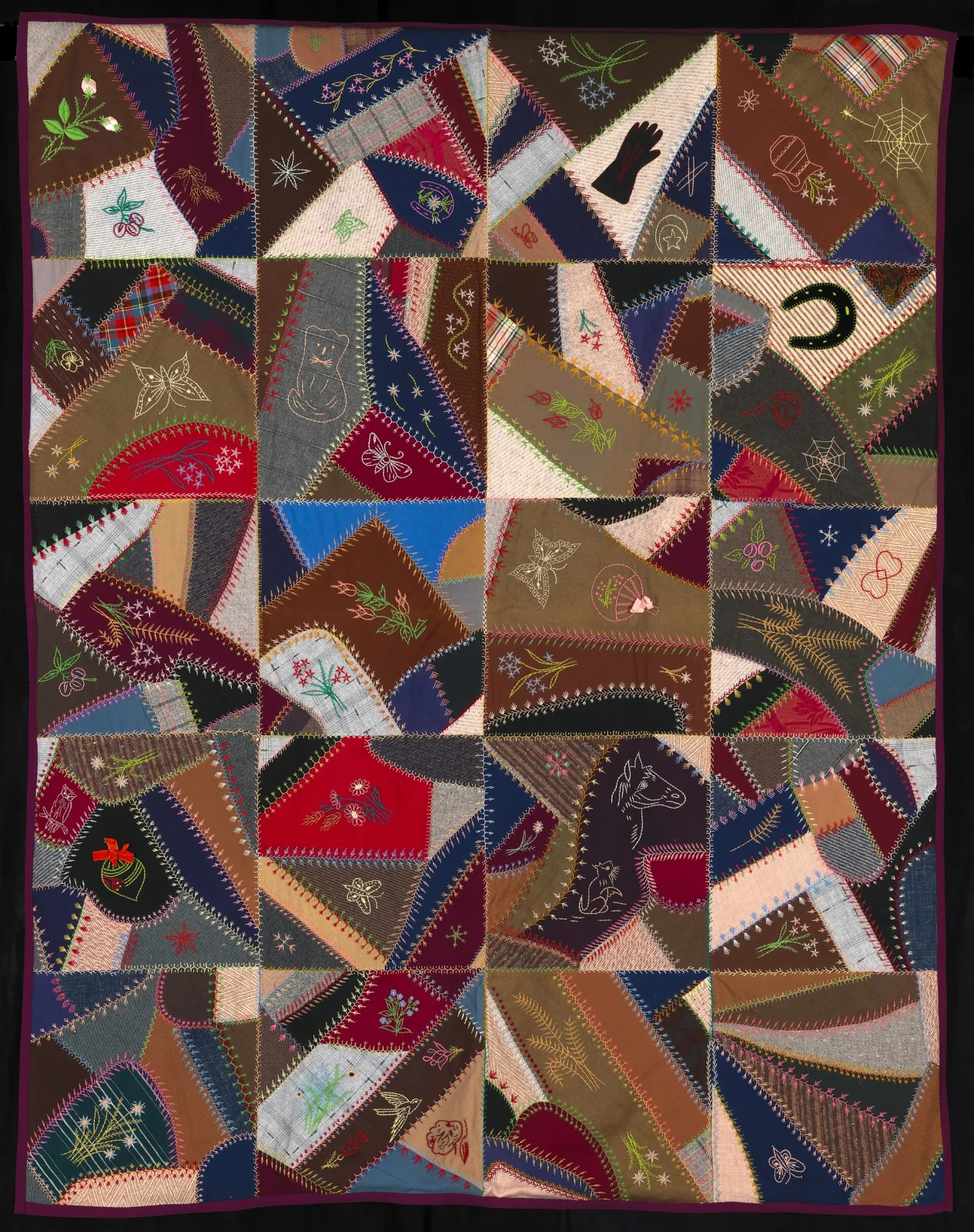
- Crazy Quilts: Irregular pieces with decorative embroidery
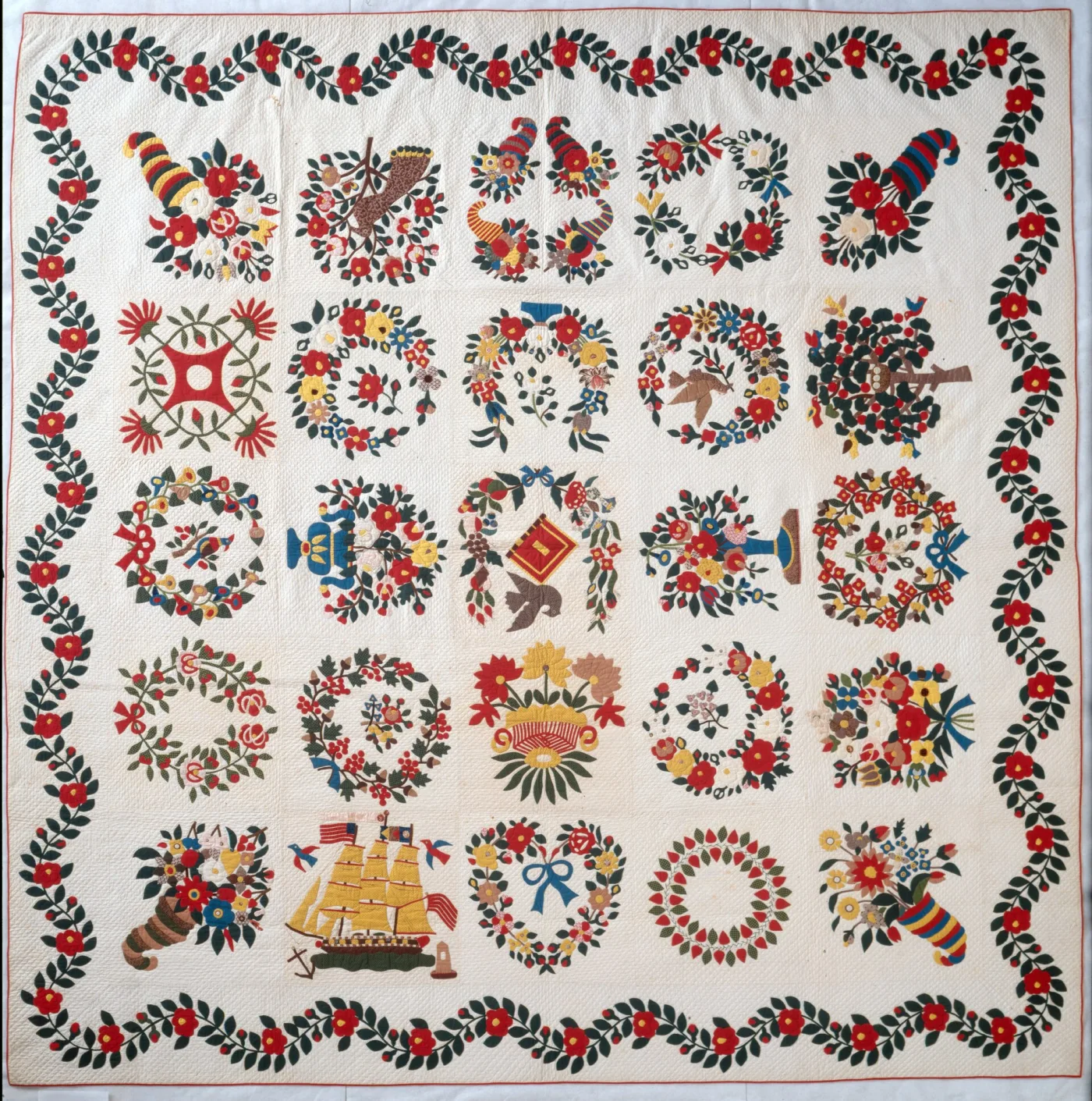
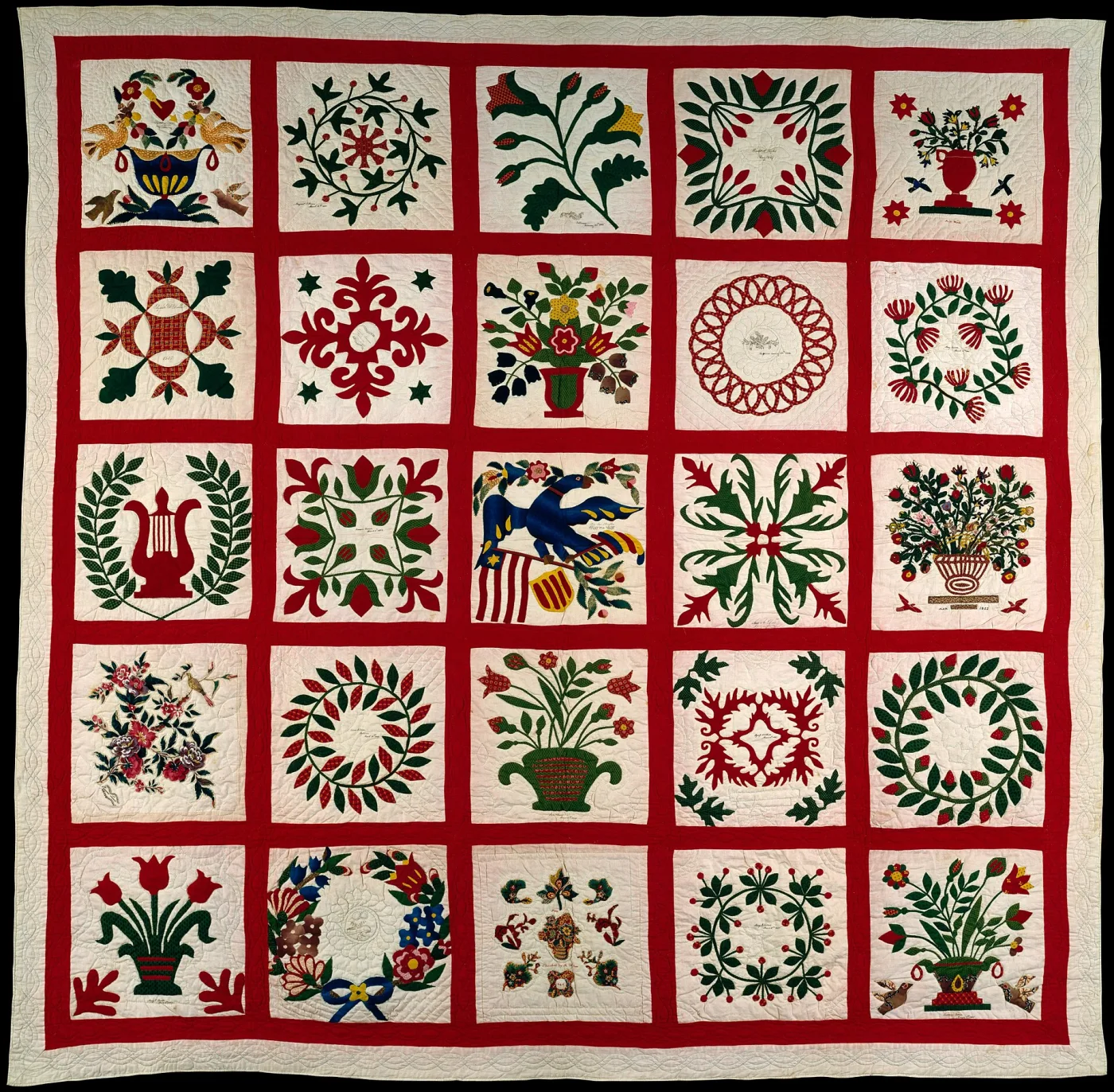
- Album Quilts: Blocks made by different makers
Historical Significance
Quilts and textile art have played important roles throughout history:
- Functional Art: Practical warmth combined with artistic expression
- Social History: Documents of women's work and community
- Cultural Heritage: Regional styles and traditions
- Economic Value: Historical investment and trade items
Traditional Quilt Patterns and Designs
Understanding traditional quilt patterns is fundamental to accurate identification and dating.
Geometric Patterns
Geometric patterns are among the most common in antique quilts:
- Log Cabin: Strips arranged around a central square
- Nine Patch: Nine squares arranged in a grid
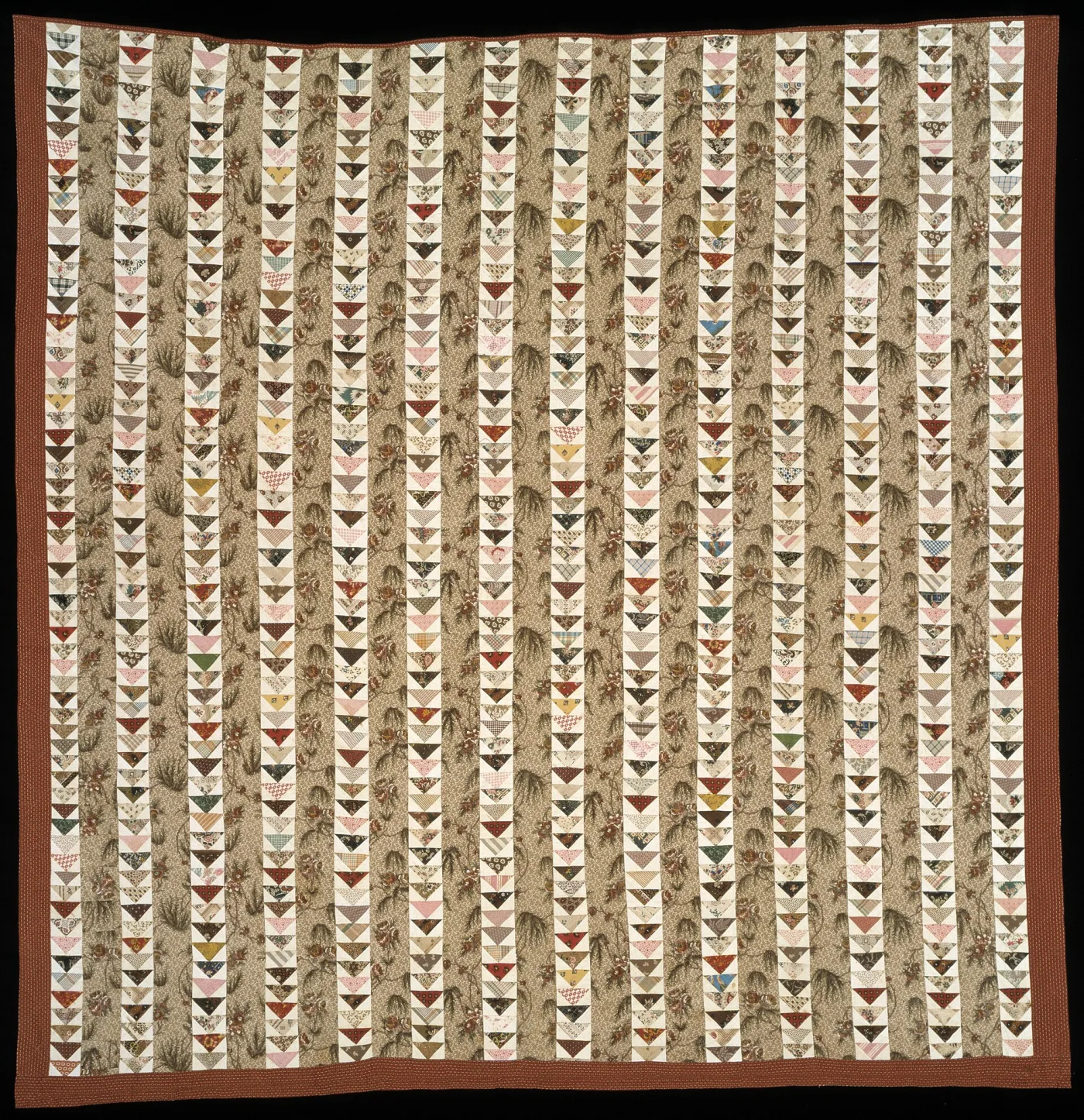
- Flying Geese: Triangular units forming V-shapes
- Dresden Plate: Circular appliqué with radiating petals
- Wedding Ring: Interlocking circles or rings
- Star Patterns: Various star configurations (Lone Star, Variable Star)
Appliqué Patterns
Appliqué quilts feature fabric shapes sewn onto backgrounds:
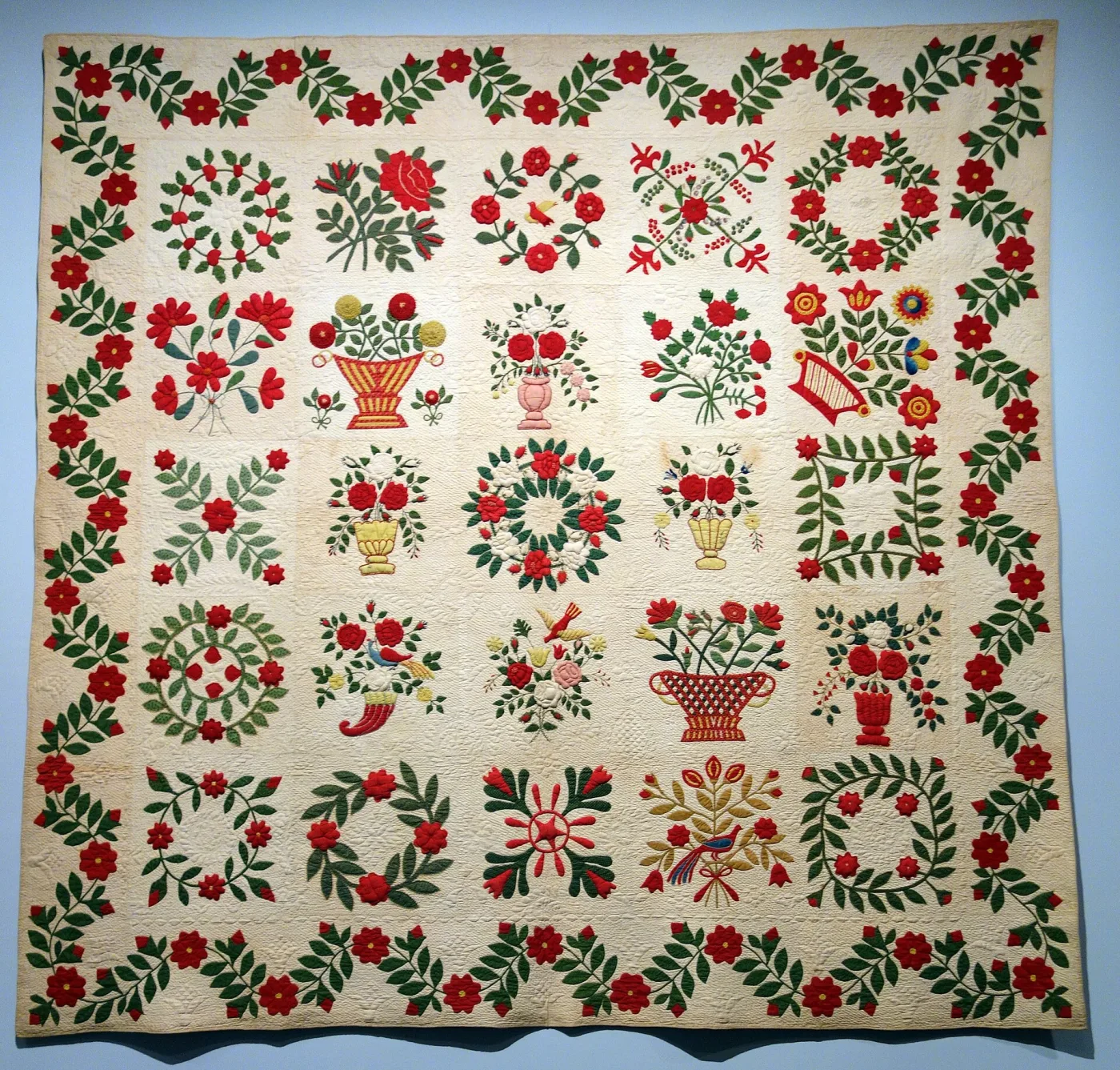
- Floral Appliqué: Flowers, leaves, and vines
- Baltimore Album: Elaborate pictorial blocks
- Hawaiian Appliqué: Symmetrical cut-out designs
- Broderie Perse: Cut-out printed motifs
- Red and Green Appliqué: Classic 19th-century style
Regional Pattern Variations
Different regions developed distinctive pattern styles:
- Amish Quilts: Bold colors, geometric designs, fine quilting
- Southern Quilts: Bright colors, scrap quilts, utility quilts
- New England Quilts: Refined patterns, fine workmanship
- Midwestern Quilts: Practical patterns, community quilts
- Western Quilts: Pioneer influences, resourceful materials
Period-Specific Patterns
Certain patterns were popular during specific time periods:
- Colonial Period (1600-1775): Whole cloth, simple piecing
- Federal Period (1775-1820): Medallion quilts, chintz appliqué
- Victorian Period (1837-1901): Crazy quilts, album quilts
- Arts & Crafts (1880-1920): Simple geometric patterns
- Depression Era (1930s): Feed sack quilts, scrap quilts
Fabric Identification and Dating
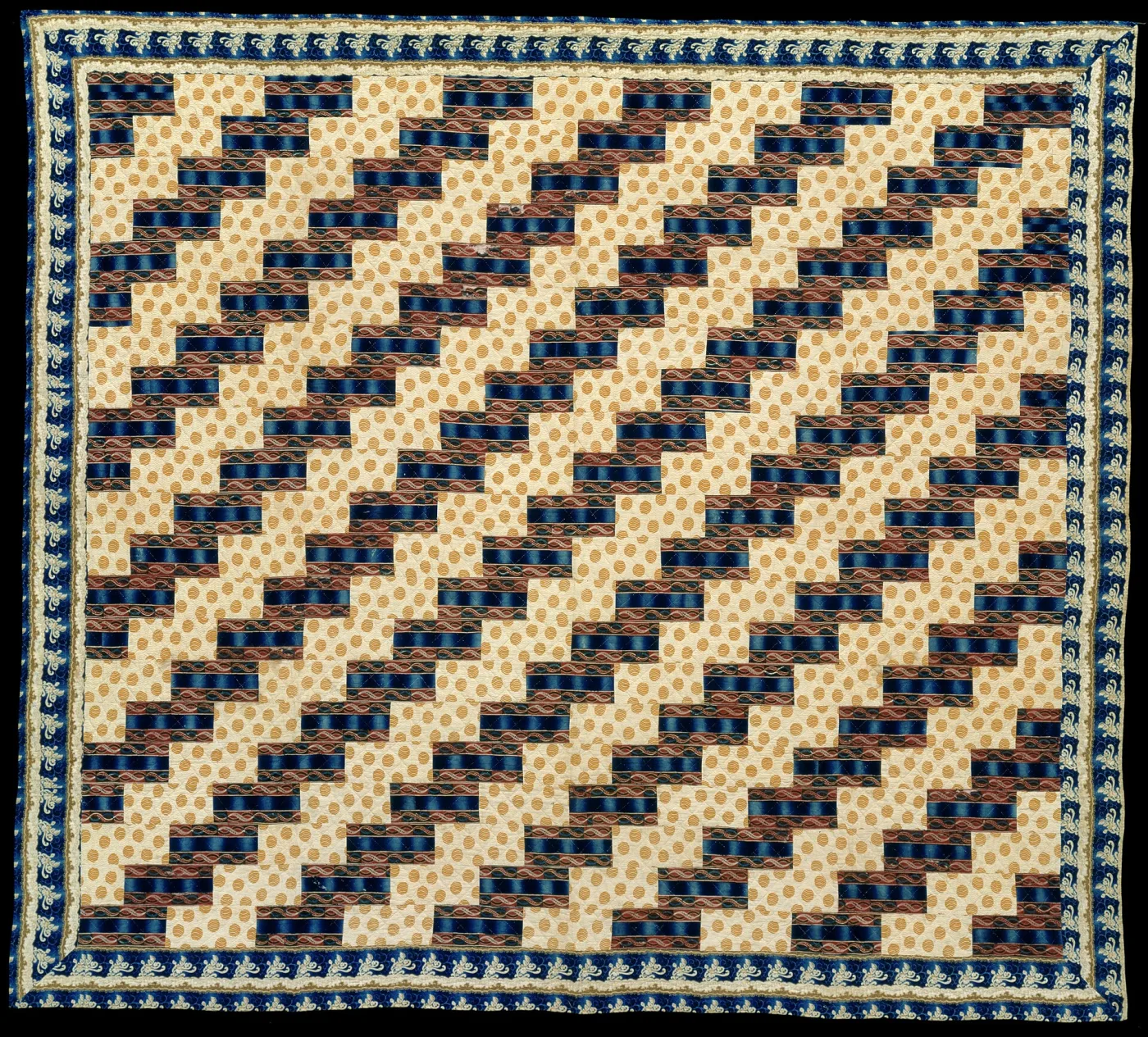
Fabric types and characteristics provide crucial dating clues and authenticity indicators.
Historical Fabric Types
Different fabrics were available during different periods:
- Linsey-Woolsey: Colonial period, linen warp with wool weft
- Calico: Cotton print fabric, popular from 1800s
- Chintz: Glazed cotton, popular in Federal period
- Muslin: Plain cotton, used for backgrounds
- Silk: Luxury fabric, used in fine quilts
- Wool: Warm, durable, used in utility quilts
Fabric Printing Techniques
Printing methods evolved over time and help date fabrics:
- Block Printing (pre-1800): Hand-carved blocks, irregular patterns
- Copperplate Printing (1750-1850): Fine detail, continuous patterns
- Roller Printing (1785-present): Machine-printed, consistent patterns
- Screen Printing (1920s-present): Modern technique, bold designs
Fabric Dating Clues
Several characteristics help date fabrics:
- Color Availability: Synthetic dyes introduced in 1856
- Pattern Styles: Reflect historical events and trends
- Fabric Width: Historical loom widths (18-36 inches)
- Selvage Edges: Machine-woven vs. hand-woven indicators
- Fiber Content: Cotton, wool, silk, or blends
Reproduction vs. Antique Fabrics
Distinguishing between antique and reproduction fabrics:
- Fiber Analysis: Modern synthetics weren't available historically
- Print Quality: Modern printing is more precise
- Color Fastness: Antique dyes may have faded or changed
- Fabric Hand: Feel and texture differences
- Documentation: Provenance and history
Construction Techniques and Methods
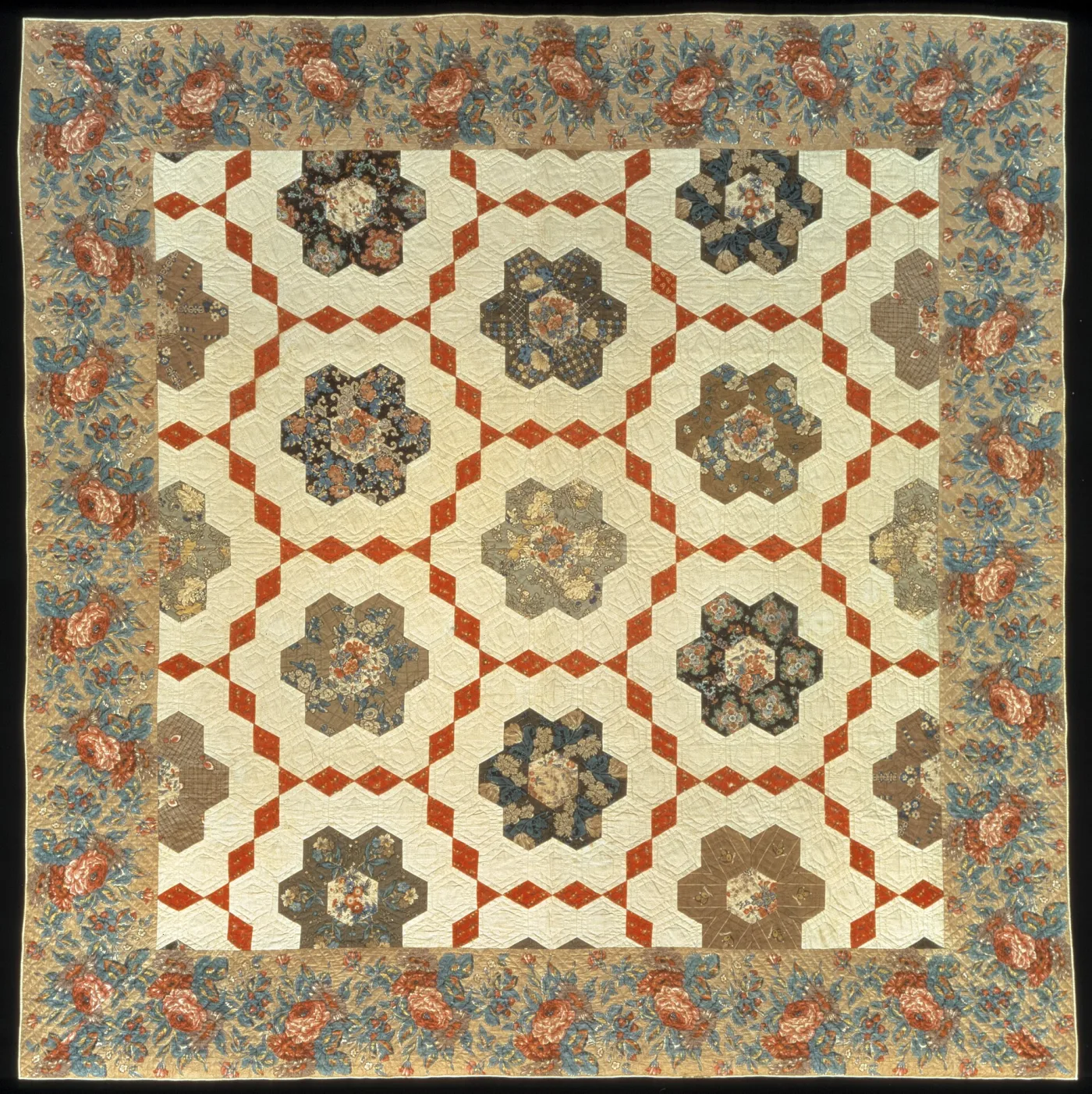
Understanding how quilts were constructed provides important dating clues and authenticity indicators.
Piecing Techniques
The method of joining fabric pieces evolved over time:
- Hand Piecing: Hand-sewn seams, irregular stitches
- Machine Piecing: Machine-sewn seams, consistent stitches
- English Paper Piecing: Fabric wrapped around paper templates
- Foundation Piecing: Pieces sewn onto a foundation fabric
Quilting Stitches
Quilting stitches hold the layers together and can indicate age:
- Hand Quilting: Irregular stitches, varying lengths
- Machine Quilting: Uniform stitches, consistent tension
- Stitch Length: Historical preferences varied
- Quilting Patterns: Design motifs in the quilting
- Stitch Count: Stitches per inch (higher = finer work)
Binding and Finishing
Edge finishing methods provide dating clues:
- Hand-Bound Edges: Folded and hand-stitched
- Knife Edge: No binding, edges turned under
- Piped Binding: Cord inserted in binding
- Prairie Points: Folded fabric triangles
- Machine Binding: Modern finishing technique
Batting Types
The middle layer material helps with dating:
- Cotton Batting: Traditional, natural material
- Wool Batting: Warm, used in colder climates
- Polyester Batting: Modern, introduced mid-20th century
- Battling: Old quilts may have no batting or thin layers

Quilting Styles and Regional Variations
Different regions and communities developed distinctive quilting styles.
Amish Quilting
Amish quilts are known for their distinctive characteristics:
- Colors: Solid colors, no prints, traditional palette
- Designs: Geometric patterns, bold compositions
- Quilting: Fine, elaborate quilting patterns
- Construction: Hand-pieced and hand-quilted
- Period: Primarily 1880-1940, with some modern examples
African American Quilting
African American quilting traditions have unique characteristics:
- Designs: Bold patterns, improvisational piecing
- Colors: Bright, contrasting colors
- Techniques: Strip piecing, string quilting
- Cultural Significance: Story quilts, community quilts
- Historical Context: Resourceful use of materials
Hawaiian Quilting
Hawaiian quilts have distinctive appliqué techniques:
- Designs: Symmetrical cut-out patterns
- Colors: Two-color designs, often white on colored background
- Motifs: Nature-inspired, island themes
- Technique: Reverse appliqué, intricate cutting
- History: Developed from missionary influences
English Quilting
English quilting traditions influenced American quilting:
- Whole Cloth: Single fabric with decorative quilting
- Medallion Style: Central design with borders
- Quilting Patterns: Elaborate, intricate designs
- Materials: Fine fabrics, silk, wool
Types of Antique Textile Art
Beyond quilts, antique textile art includes many other forms.
Samplers
Embroidered samplers were educational and decorative:
- Purpose: Learning embroidery stitches and alphabet
- Designs: Alphabets, numbers, verses, motifs
- Materials: Linen or cotton ground, silk thread
- Dating: Style, verse, and maker information
- Value: Age, condition, maker, and design quality
Embroidered Textiles
Various forms of antique embroidery:
- Needlework Pictures: Embroidered scenes and portraits
- Berlin Woolwork: Victorian era, wool on canvas
- Silk Embroidery: Fine work on silk fabric
- Whitework: White thread on white fabric
- Cross-Stitch: Counted thread embroidery
Hooked Rugs
Hooked rugs are a form of textile art:
- Technique: Strips of fabric pulled through backing
- Materials: Wool strips, burlap backing
- Designs: Geometric, floral, pictorial
- Dating: Materials, design style, construction
- Regional Styles: Canadian, New England, Pennsylvania
Woven Textiles
Antique woven textiles include various forms:
- Coverlets: Woven bed coverings made on the loom rather than pieced like quilts
- Rugs: Hand-woven floor coverings, alongside hooked rugs pulled through burlap or linen backing
- Tapestries: Decorative wall hangings
- Linens: Table linens, household textiles
Dating Methods and Techniques
Accurate dating requires multiple approaches and evidence.
Style Analysis
- Pattern Identification: Pattern popularity by period
- Color Analysis: Available colors and dyes
- Design Elements: Motifs and decorative details
- Historical Context: Events and trends reflected in designs
Technical Dating
- Fabric Analysis: Fiber content, printing methods
- Construction Methods: Hand vs. machine techniques
- Thread Analysis: Thread type and characteristics
- Scientific Methods: Fiber dating, dye analysis
Provenance Research
- Family History: Ownership documentation
- Maker Information: Signed or documented makers
- Photographs: Historical images showing quilts
- Written Records: Diaries, letters, inventories
Common Dating Mistakes
- Reproduction Fabrics: Modern fabrics in old patterns
- Reconstructed Quilts: Old fabrics in new quilts
- Style Revival: Modern quilts in historical styles
- Condition Misinterpretation: Wear patterns and aging
Maker Identification and Signatures
Identifying the maker can significantly increase value and historical interest.
Types of Maker Marks
- Signed Quilts: Names or initials embroidered or inked
- Dated Quilts: Dates included in design or signature
- Inscribed Quilts: Messages, verses, or dedications
- Album Quilts: Multiple makers, each block signed
Researching Makers
- Family Records: Genealogical research
- Quilt Documentation: Quilt indexes and databases
- Historical Records: Census, probate, and property records
- Museum Collections: Similar quilts and documentation
Famous Quilt Makers
Some quilt makers are well-documented:
- Harriet Powers: African American story quilt maker
- Mary Totten: Baltimore Album quilt maker
- Regional Makers: Local and community quilt makers
- Professional Quilters: Commercial quilt makers
Unsigned Quilts
Most antique quilts are unsigned, but can still be identified:
- Style Analysis: Regional and period characteristics
- Material Analysis: Fabric types and origins
- Construction Analysis: Techniques and methods
- Provenance: Family or ownership history
Condition Assessment and Preservation
Understanding condition is crucial for identification and value assessment.
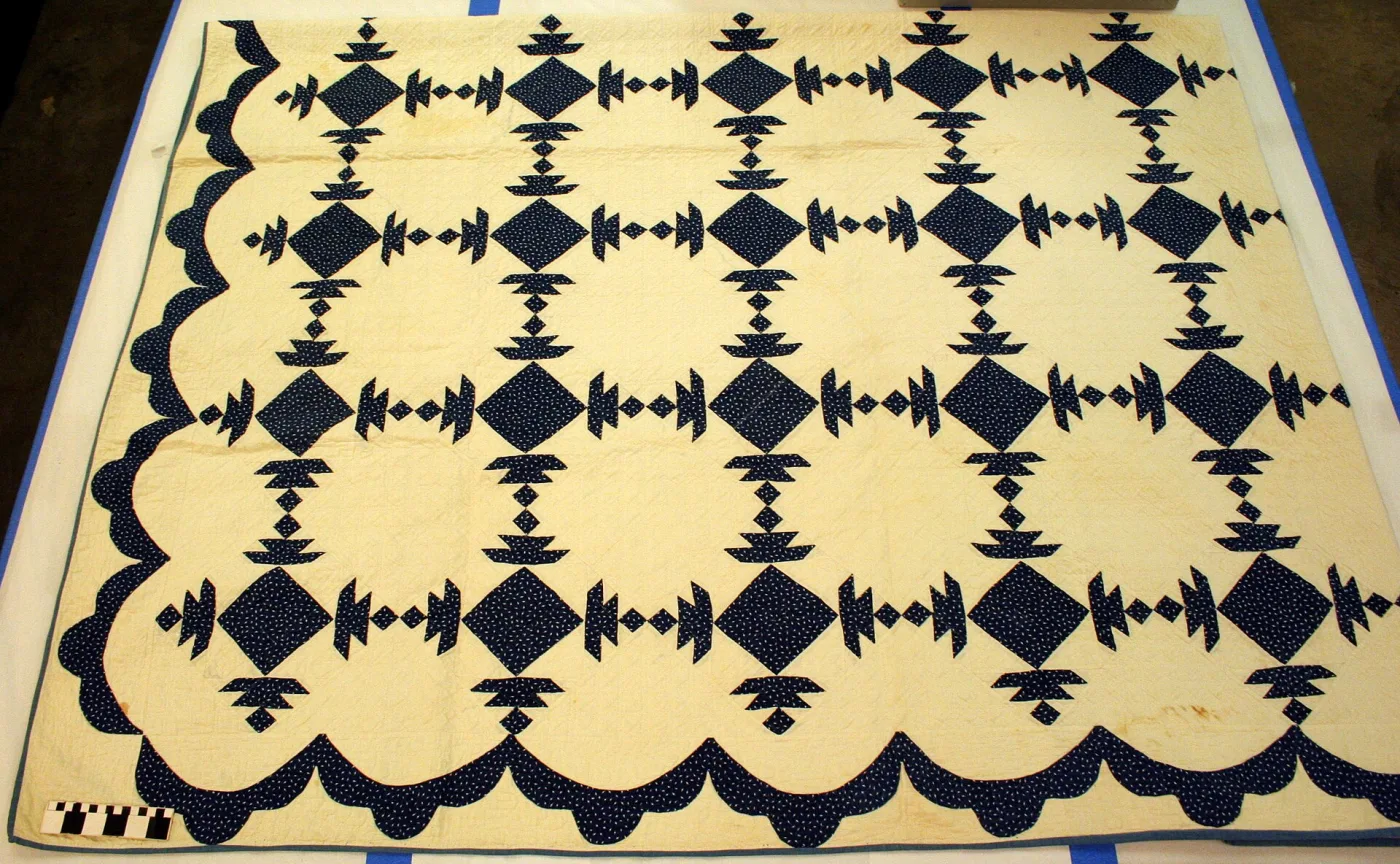
Condition Factors
- Fabric Condition: Tears, holes, fading, staining
- Quilting Condition: Broken threads, missing stitches
- Binding Condition: Worn or missing binding
- Batting Condition: Shifting, clumping, deterioration
- Overall Integrity: Structural soundness
Common Damage Types
- Fabric Deterioration: Weak fibers, holes, tears
- Color Fading: Sun damage, washing, age
- Staining: Water damage, food, ink, rust
- Wear Patterns: Use-related damage
- Insect Damage: Moth holes, other pest damage
Preservation Considerations
- Storage: Proper folding, acid-free materials
- Display: Light exposure, mounting methods
- Cleaning: Professional conservation, appropriate methods
- Repair: Conservation vs. restoration approaches
- Documentation: Photographs, condition reports
Restoration vs. Conservation
- Conservation: Stabilization, minimal intervention
- Restoration: Repair and reconstruction
- Reversible Methods: Techniques that can be undone
- Documentation: Recording all work done
- Professional Help: Consulting textile conservators
Value Assessment and Market Factors
Understanding what makes quilts and textile art valuable helps with identification and appraisal.
Value Factors
- Age: Older quilts generally more valuable
- Condition: Original condition, minimal damage
- Rarity: Unusual patterns, rare fabrics, unique designs
- Provenance: Famous ownership, documented history
- Maker: Known or important quilt maker
- Workmanship: Quality of piecing and quilting
- Design: Aesthetic appeal and complexity
Market Considerations
- Current Trends: Popular styles and periods
- Collector Interest: Specialized collector groups
- Geographic Demand: Regional preferences and markets
- Economic Factors: Market conditions, interest rates
- Exhibition History: Museum shows and publications
Appraisal Methods
- Comparable Sales: Recent auction results
- Replacement Cost: Cost to recreate or replace
- Insurance Value: Replacement value for insurance
- Fair Market Value: Price between willing buyer and seller
- Expert Opinion: Professional appraiser assessment
Specialized Markets
- Amish Quilts: High-end market, fine workmanship
- Baltimore Album Quilts: Premium prices for quality examples
- Story Quilts: Historical and cultural significance
- Samplers: Educational and decorative value
- Regional Quilts: Local and regional markets
Conclusion
Antique quilts and textile art identification is a fascinating field that combines historical knowledge, technical understanding, and aesthetic appreciation. By learning to recognize traditional patterns, fabric characteristics, and construction techniques, you can develop the expertise needed to identify and authenticate antique quilts and textile art pieces.
Remember that textile identification often requires multiple pieces of evidence working together. A single characteristic is rarely definitive, but when combined with other indicators—such as fabric type, construction method, pattern style, and provenance—it can provide a clear picture of an item's age, origin, and authenticity.
Whether you're a collector, dealer, or simply someone who appreciates the beauty and history of antique textiles, understanding these identification techniques will enhance your appreciation and help you make informed decisions about these remarkable pieces of art and history.