Antique Murano Glass Identification Guide: Expert Tips for Collectors
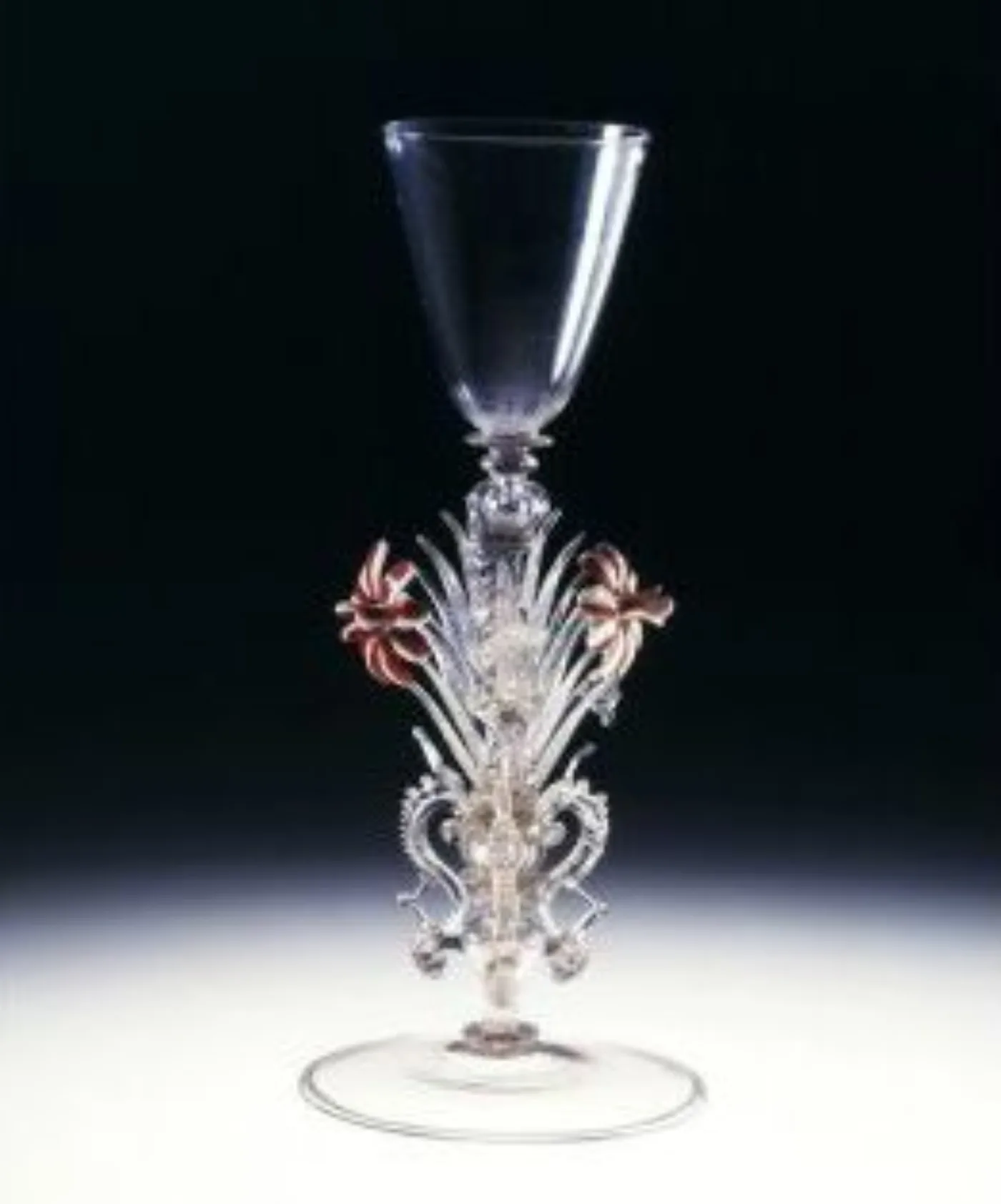
Murano glass represents centuries of Venetian glassmaking mastery, with pieces that have captivated collectors worldwide through their vibrant colors, intricate techniques, and artistic innovation. From the legendary island of Murano near Venice, Italy, these glass creations range from delicate millefiori paperweights to massive chandeliers adorned with flowers and fruits. Authentic Murano glass has experienced renewed enthusiasm among collectors in recent years, with pieces by renowned makers like Venini, Barovier, and Seguso commanding premium prices at auction.
Identifying genuine Murano glass requires understanding the distinctive techniques developed over seven centuries of glassmaking tradition. The challenge for collectors lies in distinguishing authentic Venetian pieces from the countless reproductions and imitations flooding the market. While some Murano glass bears signatures or labels, many historic pieces remain unmarked, requiring collectors to develop an eye for the characteristic qualities that define true Murano craftsmanship.
This comprehensive guide will equip you with the knowledge to identify authentic Murano glass, recognize important makers and periods, understand traditional techniques, evaluate condition and value, and build a meaningful collection. Whether you're examining a colorful sommerso vase, an elaborate chandelier, or a delicate figurine, these insights will help you appreciate and authenticate these treasured works of glass art.
Table of Contents
- History of Murano Glassmaking
- Traditional Murano Techniques
- Identifying Authentic Murano Glass
- Signatures and Marks
- Major Murano Glass Makers
- Styles and Periods
- Colors and Patterns
- Types of Murano Glass Objects
- Spotting Reproductions and Fakes
- Condition Assessment
- Valuation Factors
- Building a Murano Glass Collection
- Care and Preservation
- Authentication Resources
- Market Trends and Investment
- Frequently Asked Questions
History of Murano Glassmaking
The story of Murano glass begins in 1291, when the Venetian Republic ordered all glassmaking furnaces moved from Venice to the island of Murano. This decree, ostensibly to prevent fires in the city's wooden structures, also served to protect the closely guarded secrets of Venetian glassmaking. The glassmakers became essentially prisoners of their craft, forbidden to leave the island under penalty of death, yet granted privileges that elevated their social status.
Medieval and Renaissance Innovations
By the 15th century, Murano glassmakers had developed cristallo, a remarkably clear glass that rivaled rock crystal. This breakthrough established Murano's supremacy in European glassmaking. Renaissance masters created elaborate mirrors, which became Venice's most profitable glass export, and developed aventurine glass containing suspended copper crystals that sparkled like gold dust. The techniques for lattimo (milk glass) and calcedonio (resembling hardstones) demonstrated the technical virtuosity that defined Murano production.
Baroque Splendor
The 17th and 18th centuries saw Murano glassmakers create increasingly elaborate forms. Massive chandeliers with intricate floral decorations became signatures of Venetian craftsmanship, adorning palaces throughout Europe. The technique of applying molded glass flowers and fruits to vessels and lighting fixtures reached peak sophistication during this period. Despite competition from Bohemian crystal, Murano maintained its reputation for artistic innovation and technical excellence.
Decline and Revival
The fall of the Venetian Republic in 1797 marked the beginning of Murano's decline. The industry struggled throughout the 19th century as glassmakers dispersed and secrets became less guarded. However, the late 19th century witnessed a remarkable revival. Firms like Salviati revived traditional techniques and created new interpretations of classic forms. This renaissance established the foundation for 20th-century innovation.
Modern Masters
The 20th century transformed Murano glass into a vehicle for artistic expression. Designers like Carlo Scarpa at Venini, Archimede Seguso, and Ercole Barovier pushed boundaries with bold colors and sculptural forms. The post-World War II period proved particularly innovative, with designers creating pieces that blurred the line between craft and fine art. This era produced many of the most collectible Murano pieces available today.
Traditional Murano Techniques
Understanding Murano glassmaking techniques is essential for identification, as each method produces distinctive visual characteristics that help authenticate pieces and determine their origin and period.
Sommerso (Submerged Glass)
The sommerso technique involves layering different colored glass to create depth and dimension. Artisans dip a gather of colored glass into one or more layers of contrasting colors, typically with clear glass as the outer layer. This creates pieces where colors appear to float within the glass, producing dramatic visual effects. Authentic sommerso pieces show perfectly smooth transitions between layers without air bubbles or irregularities, demonstrating the skill required to maintain proper temperature and timing. This technique became particularly popular in the 1950s and 60s, with designers like Flavio Poli creating iconic sommerso vases in bold color combinations.
Millefiori (Thousand Flowers)
Millefiori involves creating intricate patterns using thin glass canes embedded with colorful designs. Glassmakers first form complex patterns in thick glass rods, then heat and pull them to reduce their diameter while maintaining the pattern. These canes are sliced, arranged in molds, and fused together. When polished, the surface reveals countless tiny floral or geometric patterns. Authentic millefiori pieces display crisp, well-defined patterns with consistent sizing and spacing. This ancient technique traces back to Roman times but experienced revival in 19th-century Murano, particularly in paperweights and decorative vessels.
Filigrana (Filigree Glass)
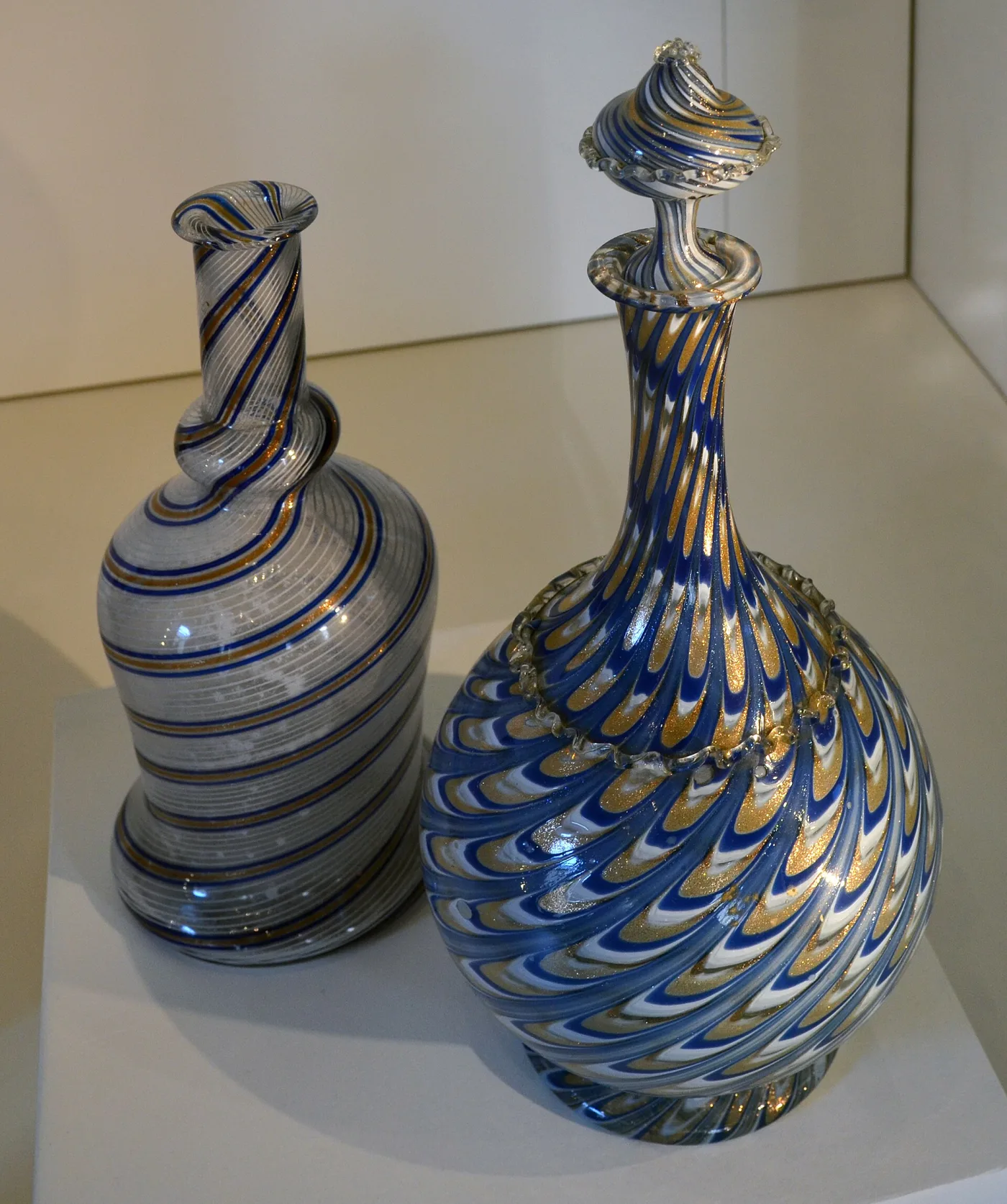
Filigrana encompasses several techniques using thin colored glass threads embedded in clear glass. Vetro a fili features simple parallel threads, while vetro a retorti creates twisted spiral patterns. The most complex variation, vetro a reticello, produces a delicate lace-like network of crossed threads forming regular patterns of tiny air bubbles. Creating filigrana requires extraordinary skill, as the threads must be perfectly aligned and evenly spaced throughout the piece. Authentic filigrana displays precise, regular patterns without distortion or irregularity, particularly impressive in larger forms like goblets and vases.
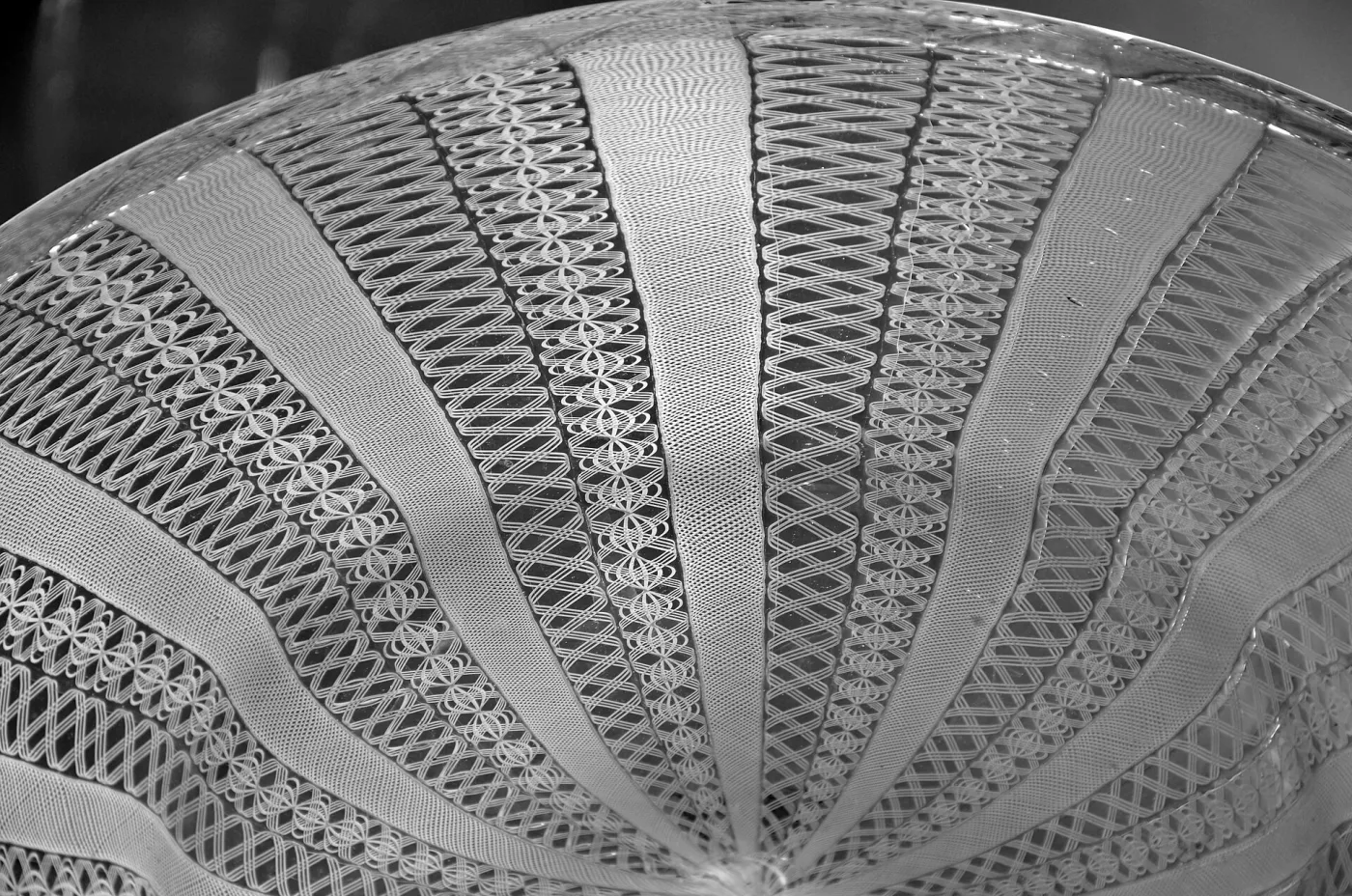
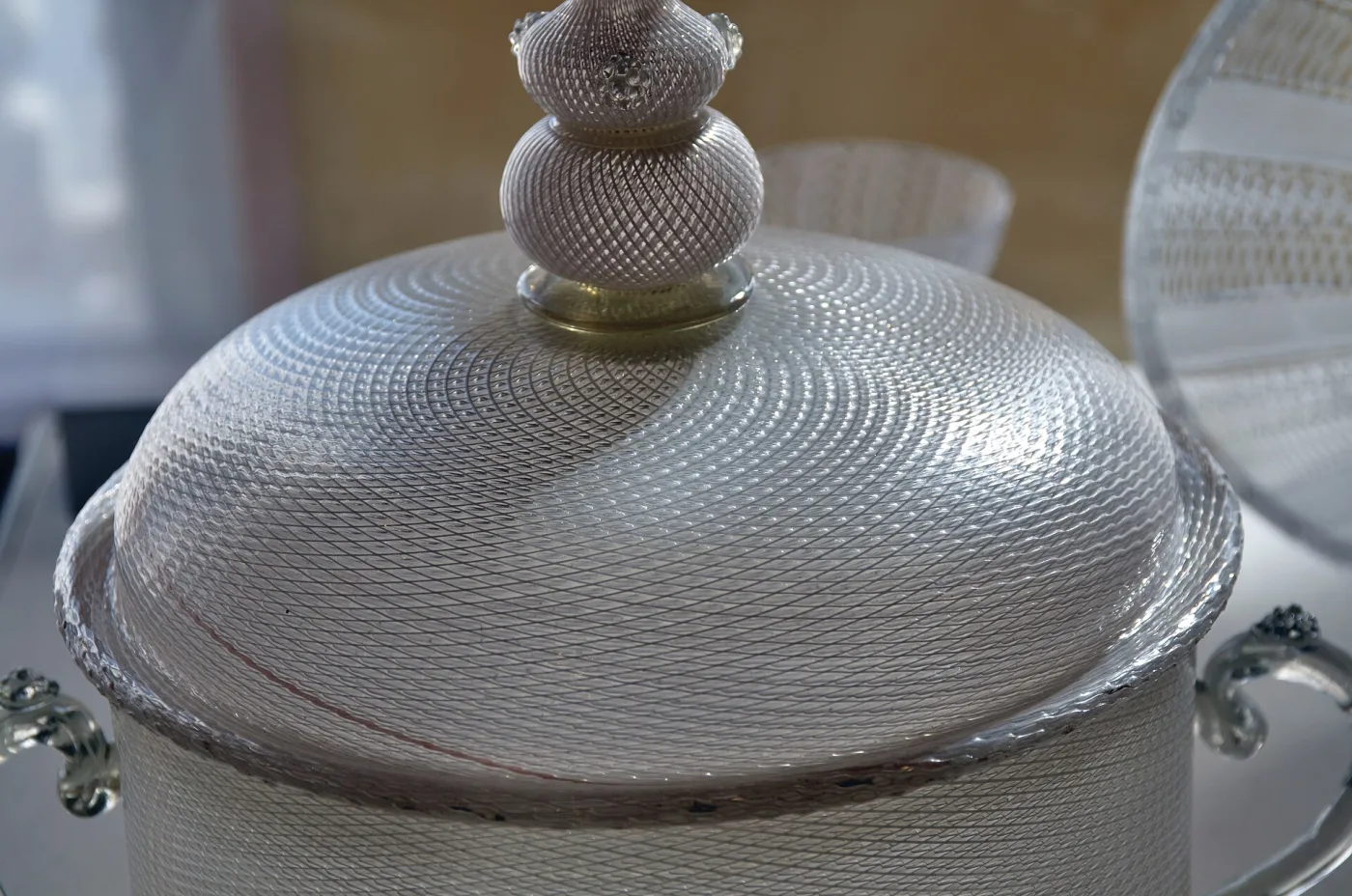
Judge filigrana at this magnification, not across a room. The threads should hold their width as they curve and keep even spacing all the way into the base, where the glass was worked last and hardest. Imitations give themselves away exactly there: threads that bunch, wander or fade out near the pontil. A lidded piece raises the difficulty again, because the pattern has to be matched across two separately blown parts.
Avventurina (Aventurine)
Aventurine glass contains suspended copper crystals that create a shimmering, golden sparkle throughout the piece. This extremely difficult technique requires precise temperature control to precipitate copper particles of optimal size. Too large and they sink; too small and they remain invisible. Authentic aventurine glass shows consistent distribution of sparkle throughout the piece, with a depth and richness impossible to replicate in modern imitations. The technique was perfected in the 17th century and remains one of the most technically demanding forms of Murano glass production.
Lattimo (Milk Glass)
Lattimo produces an opaque white glass resembling porcelain. Murano glassmakers developed this technique in the 15th century using bone ash and other opacifiers. Unlike ordinary milk glass, Murano lattimo often features a subtle translucence when held to light and displays a characteristic warm, creamy tone rather than harsh white. The glass served as a canvas for enamel decoration and gilt work, with pieces often imitating Chinese porcelain popular in Renaissance Europe.
Incalmo
The incalmo technique joins two or more separately blown glass sections of different colors with perfect seams. This demanding method requires multiple glassblowers working in precise coordination, as the sections must be joined while maintaining proper temperature and shape. Authentic incalmo pieces display seamless color transitions with perfectly aligned sections. Modern pieces by masters like Lino Tagliapietra demonstrate this technique's potential for creating bold, geometric color blocking.
Murrine
Similar to millefiori but typically larger and bolder, murrine involves creating patterned canes that are sliced and applied to the surface of vessels or fused into flat panels. Each murrine cross-section reveals intricate patterns, from simple geometric shapes to complex faces and figures. The technique requires creating the initial pattern cane with precise color placement, then carefully heating and applying the slices to maintain pattern clarity. Pieces by designers like Carlo Scarpa demonstrate murrine's potential for creating stunning decorative effects.
Identifying Authentic Murano Glass
Authenticating Murano glass requires examining multiple characteristics, as no single feature definitively proves authenticity. Genuine pieces display a combination of qualities that reflect centuries of refined craftsmanship.
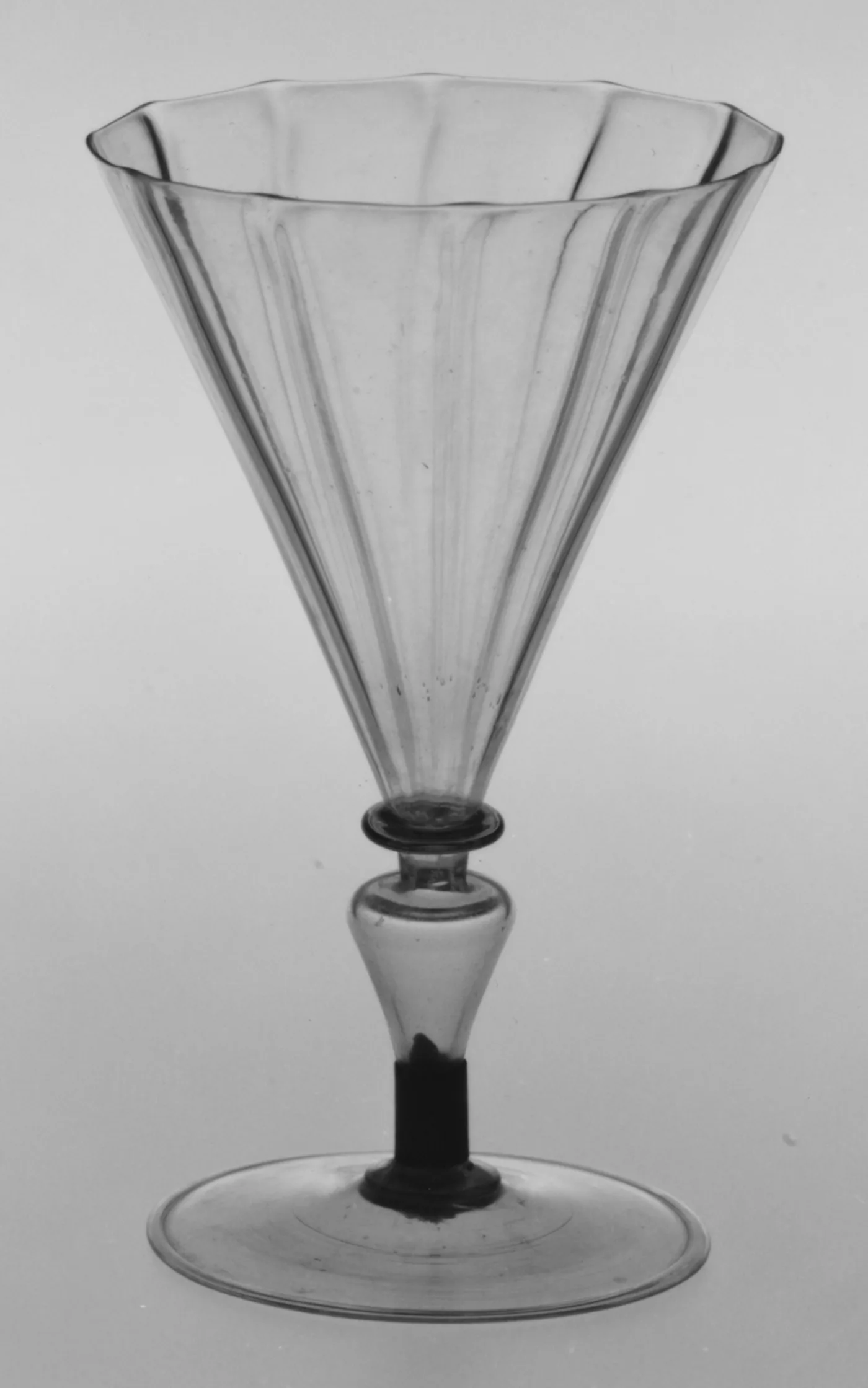
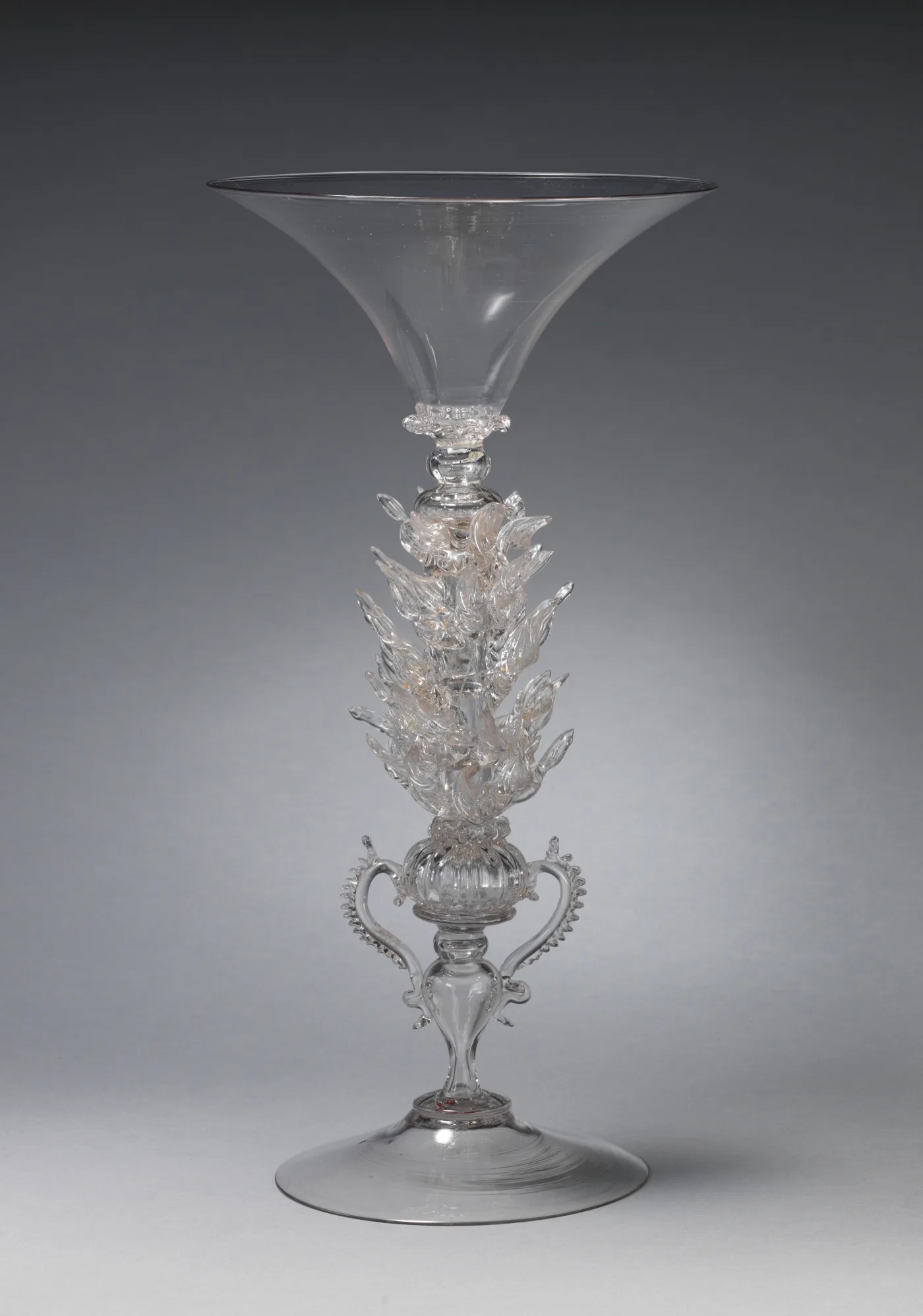
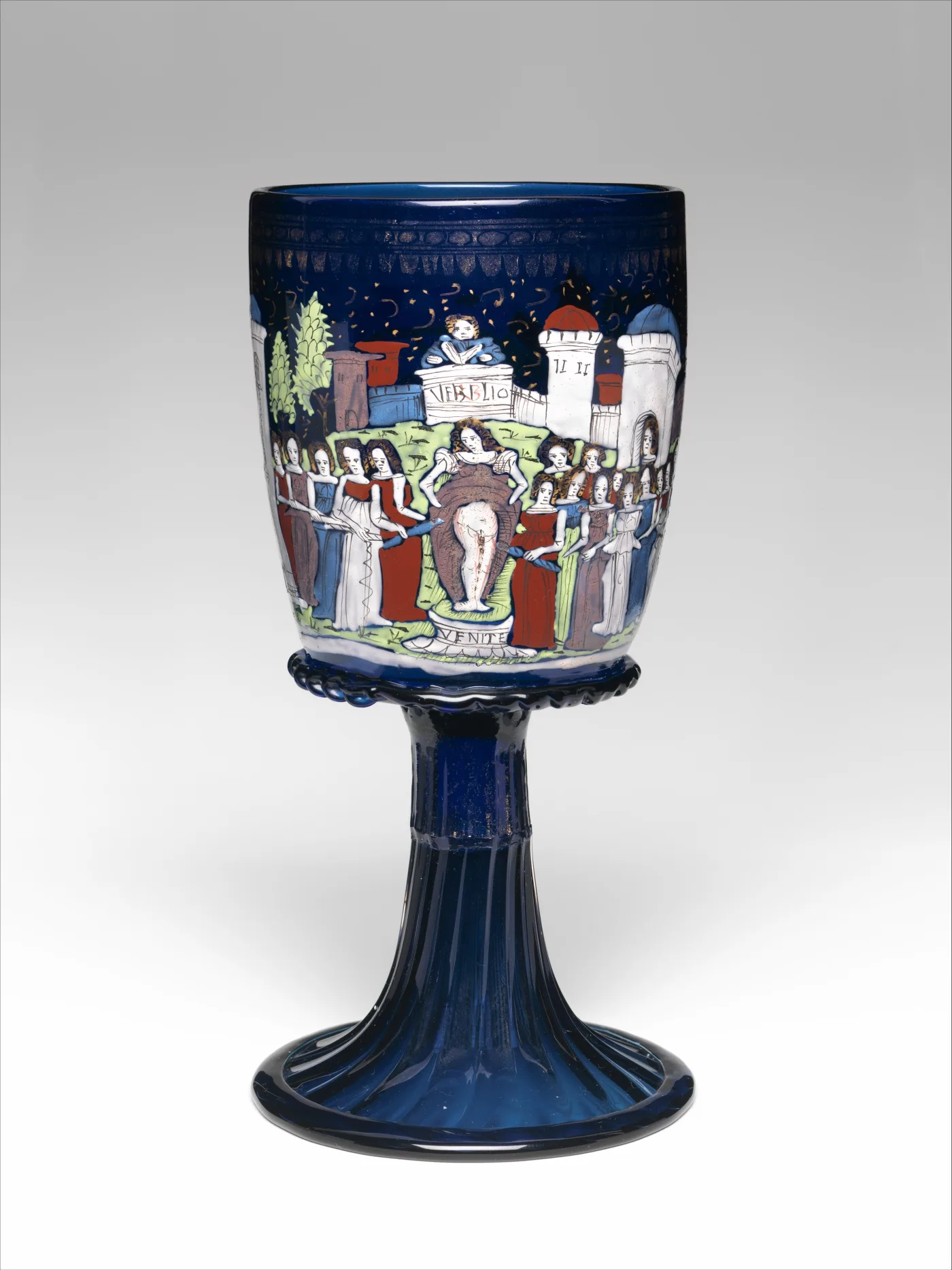
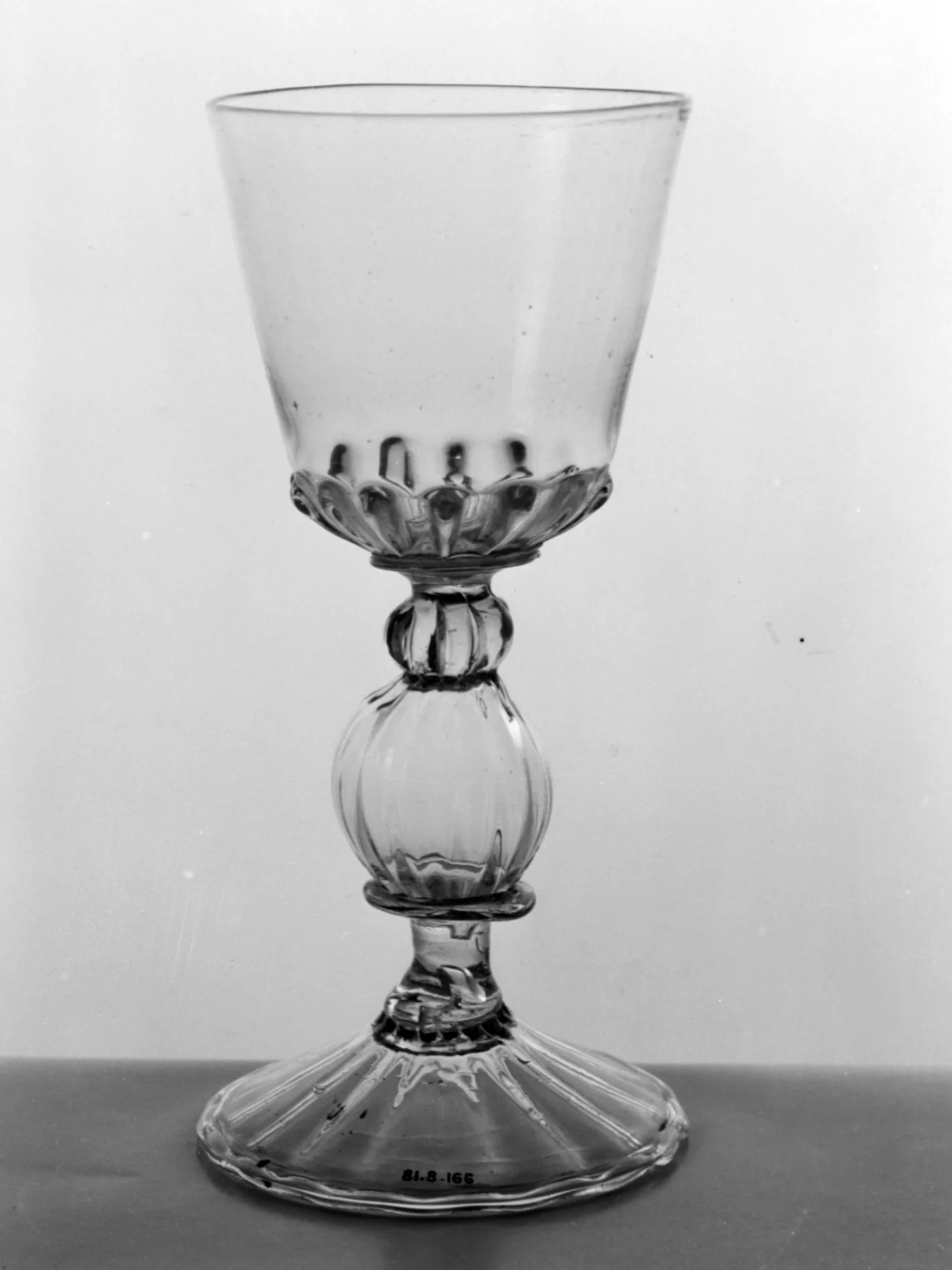
The hardest problem in this field is not modern fakes but façon de Venise — glass made in the Venetian manner in Antwerp, the Netherlands, England or Germany, often by emigrant Venetian workmen, from the 16th century onward. It is period, it is genuine, and it is not Murano. Note how the Metropolitan hedges on the left-hand goblet: even with the object in hand, a major museum will say "probably". Treat any seller who is certain about an unmarked Renaissance-style goblet with corresponding caution.
Quality of Execution
Authentic Murano glass demonstrates exceptional technical precision. Examine the piece for evenness of form, smoothness of surface, and precision in decorative elements. While handmade objects naturally show minor variations, these should reflect artistic choice rather than technical limitation. Colors should be vibrant and rich, not muddy or inconsistent. Transitions between colors or techniques should appear seamless and intentional. The overall impression should be one of confident mastery rather than tentative execution.
Pontil Marks
The pontil mark, where the glassblower's rod attached to the base during creation, provides important authentication clues. Genuine Murano pieces typically show a polished pontil mark on the base, ground smooth after creation. The mark should feel smooth to the touch, though visible as a circular depression or slight irregularity. Older pieces may retain rougher pontil scars, while modern production pieces often show highly polished, nearly invisible marks. Be suspicious of pieces with no pontil mark, perfectly flat bases, or obviously molded construction.
Weight and Balance
Authentic Murano glass possesses substantial weight appropriate to its size. The glass should feel solid and well-balanced, with weight distributed evenly. This results from using quality glass batch and proper forming techniques. Modern imitations often feel lighter and cheaper, particularly those made from soda-lime glass rather than the traditional formulations. Pick up the piece and assess whether the weight feels appropriate for the object's size and apparent thickness.
Color Clarity and Vibrancy
Murano glassmakers developed proprietary color formulas over centuries, producing hues difficult to replicate exactly. Authentic pieces display clear, vibrant colors with characteristic depth and richness. Reds should glow with inner fire, blues range from deep cobalt to delicate aquamarine, and greens show subtle variations impossible in modern production glass. When held to light, colors should appear translucent and luminous rather than opaque or muddy, except in techniques like lattimo specifically designed for opacity.
Surface Quality
Run your hand over the piece's surface. Genuine Murano glass should feel silky smooth, the result of careful annealing and finishing. Any rough spots should appear intentional, part of the decorative scheme. The surface may show very fine scratches from age and handling, but should not display the mold seams or irregularities common in mass-produced glass. Areas of applied decoration should integrate seamlessly with the main body, not appear obviously attached or added.
Bubble Characteristics
Air bubbles provide important authentication clues. In techniques like vetro a reticello, regular patterns of tiny bubbles are intentional and desirable. In other pieces, occasional small bubbles demonstrate handwork, but should appear as tiny points rather than large, irregular voids. The distribution should seem random and natural, not arranged in lines suggesting mold seams. Excessive bubbling or large irregular voids suggest inferior production quality inconsistent with genuine Murano craftsmanship.
Construction Methods
Examine how different elements attach to the main body. Handles, stems, and applied decoration should show evidence of hand attachment while hot, fusing seamlessly with the base glass. Look for the slight irregularities and tool marks that indicate handwork. Mold-formed pieces or those showing obvious glue attachment are suspect. Applied elements like flowers and fruits should display individual character, with variations between similar forms rather than identical repetition.
Signatures and Marks
While signatures provide valuable authentication evidence, understanding their limitations and variations is essential for proper identification of Murano glass.
Acid-Etched Signatures
Many mid-to-late 20th century Murano pieces bear acid-etched signatures on the base. These typically include the maker's name and sometimes "Murano" or "Murano Italia." Quality pieces by firms like Venini, Seguso, and Barovier often feature these marks. However, acid-etched signatures can be faked relatively easily, so they should be considered alongside other authentication factors. Genuine acid-etched marks typically show consistent depth and clean edges, while fake marks may appear cruder or show signs of recent application.
Paper Labels
Original paper labels reading "Vetro Artistico Murano" or bearing maker's names provide strong authentication evidence when present. However, most labels were removed or lost over time, so absence doesn't indicate forgery. Original labels should show appropriate age, with period-correct printing, adhesive discoloration, and potential partial deterioration. Be cautious of pristine labels on supposedly old pieces, as fake labels are widely available. Photographs of the label alongside the piece strengthen provenance documentation.
Engraved Signatures
Some prestigious makers used diamond-point engraving for signatures, creating scratched rather than etched marks. These signatures require close examination, often appearing quite subtle. Venini commonly employed this method, with signatures reading "venini murano ITALIA" in distinctive lettering. Engraved signatures are more difficult to fake convincingly than acid-etched marks, as they require similar tools and technique to the originals.
Unsigned Pieces
Many authentic Murano pieces, particularly those before the mid-20th century, bear no signatures or marks. Glassmakers often worked anonymously, and even prestigious firms didn't consistently mark output. The absence of signatures should prompt careful examination of quality, technique, and style rather than automatic rejection. For older pieces, provenance, attribution based on known designs, and technical analysis become particularly important.
Famous Makers' Marks
Familiarize yourself with marks from major producers. Venini pieces often bear acid-etched "venini murano ITALIA" marks. Seguso pieces may show "Seguso Vetri d'Arte" or variations. Barovier & Toso used various marks over time. Each maker's signatures evolved, so research period-appropriate marks for pieces from specific eras. Reference books and museum collections provide examples of authentic signatures from different periods.
Registry Numbers
Some pieces include registry or design numbers alongside or instead of signatures. These numbers reference specific designs in company archives, allowing precise authentication and dating. Venini maintained particularly detailed archives, with design numbers corresponding to specific creators and production periods. When present, these numbers provide valuable research starting points for confirming attribution and learning about a piece's history.
Major Murano Glass Makers
Understanding the major Murano glass manufacturers and their distinctive styles helps with attribution and establishes context for individual pieces.
Venini
Founded in 1921 by Paolo Venini and Giacomo Cappellin, Venini became synonymous with modern Murano glass. The firm collaborated with renowned designers including Carlo Scarpa, Gio Ponti, and Tapio Wirkkala, creating pieces that merged artistic vision with technical innovation. Venini pieces are characterized by bold colors, architectural forms, and innovative techniques like the pezzato (patchwork) and tessuto (textile) patterns. The firm's pieces typically bear acid-etched signatures and often include design numbers. Venini glass commands premium prices, with major works by key designers achieving five and six-figure sums at auction.
Seguso
The Seguso family has produced glass on Murano for over 600 years, with multiple branches and firms bearing the name. Seguso Vetri d'Arte, founded by Archimede Seguso and others in 1933, created some of the 20th century's most important Murano glass. Archimede Seguso later established his own firm, known for innovative techniques and sculptural forms. Seguso pieces range from traditional Venetian styles to bold modern designs, often featuring the sommerso technique and vibrant color combinations. The family's long history and multiple firms require careful research to determine specific attribution and period.
Barovier & Toso
Claiming origins dating to 1295, Barovier & Toso represents Murano's oldest continuously operating glassworks. The firm combined traditional techniques with 20th-century innovation under artistic director Ercole Barovier, who developed numerous new techniques and striking designs. Barovier pieces often feature bold colors, innovative textures, and complex techniques like the intarsio (inlay) method. The firm produced everything from traditional Venetian forms to cutting-edge modern designs, maintaining exceptional quality throughout. Ercole Barovier's pieces from the 1930s-60s are particularly collectible.
Salviati
Antonio Salviati revived traditional Murano glassmaking in the 1860s, studying ancient techniques and creating modern interpretations of classic forms. The firm produced elaborate chandeliers, mosaic glass, and decorative objects that sparked international interest in Murano glass. Salviati pieces often feature complex techniques like millefiori and aventurine, executed with exceptional technical skill. The firm's 19th and early 20th-century output demonstrates the revival of traditional Venetian glassmaking, making these pieces important for understanding Murano's modern evolution.
Fratelli Toso
Founded in 1854, Fratelli Toso specialized in millefiori glass and traditional Venetian techniques while embracing modern design aesthetics. The firm created exceptional murrine work and colorful mosaics, along with innovative art glass in the mid-20th century. Their pieces often feature intricate patterning and vibrant color combinations. After merging with Barovier in 1936 to form Barovier & Toso, the Toso name disappeared, making earlier Fratelli Toso pieces particularly desirable to collectors.
AVEM (Arte Vetraria Muranese)
Founded in 1932, AVEM created some of the most whimsical and colorful Murano glass of the mid-20th century. The firm's pieces often feature organic forms, bold colors, and playful designs incorporating various traditional techniques. AVEM vases, bowls, and decorative objects epitomize the exuberant style of 1950s Italian design. The firm's output remains somewhat undervalued compared to Venini and Seguso, presenting collecting opportunities.
Alfredo Barbini
Master glassblower Alfredo Barbini established his own furnace in 1950 after working for various Murano firms. His pieces showcase exceptional technical skill, particularly in sculptural forms and thick-walled vessels with dramatic sommerso effects. Barbini pieces often feature organic, flowing forms and innovative color combinations. His work bridges traditional Venetian craftsmanship and modern artistic expression, with pieces signed "Barbini Murano" highly valued by collectors.
Styles and Periods
Murano glass styles evolved dramatically across centuries, with distinct characteristics marking different periods and movements.
Renaissance and Baroque (15th-18th centuries)
Early Murano glass includes cristallo tableware, elaborate goblets with intricate stems, and mirrors that made Venice wealthy. Baroque period pieces feature applied decoration including flowers, fruits, and elaborate handles. Chandeliers grew increasingly elaborate, with multiple tiers adorned with glass flowers and leaves. These pieces demonstrate technical virtuosity while maintaining functional purpose. Surviving examples are rare and command premium prices, primarily found in museums and prestigious private collections.
Revival Period (1860s-1920s)
The late 19th century revival emphasized recreating historical techniques and forms. Firms like Salviati produced pieces inspired by Renaissance and Baroque models while incorporating Victorian aesthetic preferences. This period saw renewed interest in millefiori, aventurine, and elaborate applied decoration. Revival pieces often demonstrate exceptional technical skill while reflecting 19th-century taste for elaborate ornamentation. These pieces bridge traditional Venetian craftsmanship and modern collecting interest.
Art Nouveau and Art Deco (1890s-1930s)
Some Murano makers embraced Art Nouveau's organic forms and flowing lines, though the style had less impact on Murano than elsewhere. Art Deco's geometric forms and bold colors found stronger expression, particularly in pieces from the 1920s and 30s. Barovier created striking Art Deco pieces incorporating new techniques and dramatic color contrasts. These pieces demonstrate Murano's ability to interpret international design movements through traditional glassmaking expertise.
Mid-Century Modern (1940s-1960s)
The post-war period represents a golden age for collectible Murano glass. Designers pushed boundaries with bold colors, architectural forms, and innovative techniques. Sommerso pieces in dramatic color combinations epitomize this era's aesthetic. Organic, sculptural forms replaced traditional vessel shapes in many pieces. This period produced the majority of Murano glass available to collectors today, with pieces by key designers commanding strong prices.
Contemporary (1970s-present)
Recent decades have seen both continuation of traditional techniques and radical artistic experimentation. Some makers focus on preserving historical methods, while others treat glass as purely sculptural medium. Studio glass movement influence encouraged individual artistic expression over factory production. Contemporary pieces by renowned artists achieve high values, while production pieces remain affordable entry points for new collectors.

Colors and Patterns
Murano glassmakers developed extraordinary color palettes and patterns, with specific combinations and techniques associated with particular periods and makers.
Traditional Color Formulas
Authentic Murano colors derive from traditional formulas developed over centuries. Cobalt blue shows deep, rich tones with slight variations in intensity. Murano red, achieved with gold or selenium, glows with internal luminescence. Greens range from pale aquamarine to deep emerald. Amber tones show warmth and clarity. These colors appear vibrant yet sophisticated, avoiding the harsh, synthetic appearance of modern mass-produced glass. Understanding these characteristic tones helps distinguish genuine pieces from imitations.
Color Combinations
Certain color pairings appear frequently in Murano glass. The 1950s and 60s favored bold contrasts: deep purple with clear, blue with amber, green with clear. Earlier periods preferred more subtle combinations. Sommerso pieces often layered three or more colors, creating depth and visual complexity. The progression of colors should appear intentional and harmonious, reflecting artistic sophistication. Study museum collections and auction catalogs to develop familiarity with period-appropriate color palettes.
Lattimo and Latticino
White glass appears in two primary forms. Lattimo produces solid, opaque white resembling porcelain. Latticino (or filigrana) embeds thin white threads in clear glass, creating delicate lace-like patterns. These white elements often combine with colored glass, creating striking contrasts. The quality of white glass varies significantly, with finest examples showing creamy, warm tones rather than harsh white. Thread work should display precision and regularity, particularly in complex patterns like reticello.
Metallic Effects
Beyond aventurine's golden sparkle, Murano glassmakers created other metallic effects. Silver leaf sandwiched between clear glass layers creates shimmering surfaces. Gold leaf similarly produces lustrous decoration. These effects appear in various forms, from overall coverage to delicate accent details. Authentic metallic inclusions should show slight variations and natural aging, not the perfectly uniform appearance of modern reproductions.
Pattern Recognition
Familiarize yourself with characteristic patterns. Filigrana displays parallel or spiral threads. Millefiori shows cross-sections of patterned canes. Murrine features bold geometric or figurative patterns. Pezzato creates patchwork color blocks. Each pattern requires specific techniques, with execution quality revealing authenticity. Patterns should appear crisp and well-defined, with colors maintaining separation rather than bleeding together. Irregularities should reflect handwork rather than technical failure.
Types of Murano Glass Objects
Murano artisans created diverse object types, each with characteristic forms and typical applications of various techniques.
Vases and Bowls
Vessels represent the most common Murano glass form available to collectors. These range from small bud vases to massive floor-standing pieces. Mid-century sommerso vases in bold colors are particularly collectible, especially those by known designers. Look for pieces with strong sculptural presence, innovative forms, or exceptional color. Even unsigned pieces by unknown makers can be valuable when demonstrating exceptional quality and period characteristics. Bowls similarly range from simple forms to elaborate creations incorporating multiple techniques.
Chandeliers and Lighting
Murano chandeliers rank among the island's most spectacular creations. Traditional Venetian chandeliers feature elaborate tiers of arms adorned with glass flowers, fruits, and leaves. These complex assemblies required teams of specialized artisans, with different workers creating arms, flowers, and other elements. Mid-century designers created more minimalist forms emphasizing color and simple geometry. Collecting chandeliers requires space and installation expertise, but these pieces make dramatic statements. Smaller table lamps and sconces offer more accessible alternatives.
Figurines and Sculptures
Murano artisans created countless figurines, from realistic animals to abstract forms. Traditional subjects included birds, fish, clowns, and dancers. Quality varies enormously, from crude tourist souvenirs to museum-worthy sculptures. The best examples demonstrate exceptional glassblowing skill, with details added through careful manipulation while hot. Modern sculptural pieces blur the line between craft and fine art, with works by recognized artists commanding gallery prices. Examine these pieces for quality of execution and artistic merit rather than simply decorative appeal.
Paperweights
Murano millefiori paperweights rank among the most collectible glass forms. The best examples feature crisp, complex patterns with precise cane arrangement. Closely packed canes showing varied patterns create the most desirable compositions. Examine these pieces carefully for damage, as even minor chips dramatically reduce value. Comparative study reveals quality differences between tourist-grade pieces and collector-worthy examples. Major makers like Fratelli Toso created exceptional paperweights rivaling French production.
Drinking Vessels
Wineglasses, goblets, and decanters demonstrate Murano's functional glassmaking heritage. Traditional forms feature elaborate stems with wings, ribs, and applied decoration. Filigrana technique creates particularly elegant stemware. Modern designers created simpler, more architectural forms. Complete sets command premium prices, while individual pieces remain accessible. Examine these pieces carefully for chips and cracks, especially on rims and stems where damage commonly occurs.
Beads and Jewelry
Murano's bead-making tradition dates to the Renaissance, with beads exported worldwide. Millefiori beads show cross-sections of patterned canes, while sommerso beads feature layered colors. Modern jewelry incorporates traditional beads and contemporary glass elements. Quality varies from cheap tourist items to high-end artisan creations. Examine beads for crisp patterns, vibrant colors, and proper finishing with smooth drill holes.
Spotting Reproductions and Fakes
The Murano glass market contains numerous reproductions and outright fakes, requiring collectors to develop critical examination skills.
Asian Reproductions
Chinese and other Asian manufacturers produce countless "Murano-style" pieces sold as authentic. These typically show inferior quality in color, weight, and execution. Colors often appear harsh or muddy compared to genuine Murano glass. The glass itself may feel lighter and less substantial. Examination often reveals mold seams, overly perfect symmetry, or other signs of mass production. Applied elements like flowers may appear crude or attached with glue rather than fused while hot. These pieces may bear fake signatures or labels claiming Murano origin.
Eastern European Glass
Czech and other Eastern European glassmakers produce high-quality art glass sometimes misattributed as Murano. These pieces may show excellent technical quality but differ in color palette, style, and construction details. Czech glass often favors cut and polished decoration over Murano's hot-working techniques. Colors and forms reflect different aesthetic traditions. These pieces have legitimate value in their own right but should not be confused with Murano production.
Fake Signatures
Adding fake signatures to unsigned pieces or cheap reproductions is common practice. Examine signatures carefully for consistency with known authentic examples. Fake acid-etched marks often show cruder execution or wrong lettering styles. Check that the signature's period matches the piece's style and characteristics. Research authentic signatures from different periods to recognize inconsistencies. Remember that absence of signature doesn't indicate fake, while presence doesn't guarantee authenticity.
Married Pieces
Some "Murano" lamps and chandeliers assemble genuinely old Murano glass elements with new parts or combine elements from different sources. These creations may include authentic Murano glass while being fundamentally modern assemblages. Examine whether all elements show consistent age, style, and production methods. Original chandeliers should display unified design intent, not random assembly of disparate parts. Rewiring is acceptable and expected, but wholesale reconstruction creates essentially new objects.
Too-Good-To-Be-True Prices
Genuine Murano glass by recognized makers commands significant prices reflecting quality and reputation. Deeply discounted pieces supposedly by Venini, Seguso, or other major makers warrant skepticism. While bargains exist, especially at estate sales and thrift stores, sellers with knowledge typically price accordingly. Online marketplaces overflow with cheap reproductions marketed as "Murano" or "Murano-style." Research current market values for comparable pieces before purchasing, and apply extra scrutiny to unusual bargains.
Red Flags
Several warning signs suggest reproductions or fakes. Perfectly symmetrical forms suggesting mold production rather than handwork raise concerns. Excess bubbles, crude construction, or poor finishing indicate low quality inconsistent with authentic Murano. Labels or signatures in wrong styles for the piece's apparent period suggest additions. Harsh, synthetic-looking colors differ from traditional formulas. Very light weight suggests cheap soda-lime glass. Trust your instincts when something seems wrong, and seek expert authentication for expensive purchases.
Condition Assessment
Evaluating condition requires systematic examination, as damage significantly impacts value and collecting decisions.
Structural Integrity
Begin by examining the piece for cracks, which may be subtle but catastrophically affect value. Hold the piece to light and look carefully at all surfaces, paying particular attention to stress points like where handles attach or where the piece narrows. Tap the piece gently with your fingernail while listening for clear ring versus dull thud indicating internal damage. Cracks may appear as fine lines visible only in certain light. Any structural damage severely reduces value except for extremely rare pieces.
Chips and Flakes
Surface damage ranging from tiny fleabites to substantial chips commonly affects glass. Examine rims, edges, and high points carefully. Run your finger around rims feeling for rough spots indicating chips. Small rim chips on otherwise exceptional pieces may be acceptable, but significantly impact value. Damage to decorative elements like applied flowers or figurine details proves particularly detrimental. Consider whether damage can be professionally repaired and how visible repairs would be.
Scratches and Wear
Minor surface scratches from normal use are acceptable on older pieces, contributing to patina of age. However, deep scratches, especially on important decorative elements, reduce value. Interior scratches on vases from flower stems are common and generally acceptable. Excessive wear suggesting harsh cleaning or abuse raises concerns. The surface should maintain the silky smooth quality characteristic of properly finished Murano glass, with wear patterns consistent with age and reasonable use.
Cloudiness and Staining
Interior cloudiness or staining often affects vases and vessels that held water. This may be removable through proper cleaning, or may indicate permanent etching from alkaline water. Test whether cloudiness disappears when wet. Interior staining generally affects value less than structural damage but detracts from appearance. Excessive cloudiness suggesting improper annealing or glass degradation raises concerns about long-term stability.
Missing Elements
Chandeliers, lamps, and decorative objects may be missing flowers, leaves, or other applied elements. Assess the completeness by comparing to documented examples or considering whether the composition appears balanced. Missing elements substantially reduce value, particularly for rare or important pieces. Replacement with period-appropriate elements may be possible but requires expertise. Document missing elements thoroughly when purchasing incomplete pieces.
Previous Repairs
Many older pieces have undergone repair. Examine carefully for evidence of gluing, filling, or other restoration. Professional restoration using appropriate techniques may be acceptable, particularly for rare pieces, but should be disclosed and reflected in pricing. Amateur repairs using epoxy or other inappropriate materials reduce value and may cause further damage. Ultraviolet light can reveal some repairs and adhesives invisible under normal lighting.
Valuation Factors
Understanding what drives Murano glass values helps collectors make informed purchasing and selling decisions.
Maker Attribution
Pieces by recognized makers command significantly higher prices than comparable unsigned pieces. Venini pieces, particularly those by star designers like Carlo Scarpa, achieve premium prices. Seguso, Barovier & Toso, and other major firms similarly command strong values. However, attribution must be reliable, supported by signatures, documentation, or expert authentication. Questionable or speculative attributions add little value. Familiarize yourself with makers' characteristic styles and typical price ranges.
Designer Importance
Within major firms, pieces by important designers achieve highest values. Venini pieces by Carlo Scarpa, Gio Ponti, or Tapio Wirkkala far exceed those by lesser-known designers. Research designer portfolios and learn to recognize characteristic styles. Designer attributions require authentication through signatures, design numbers, or documentation in company archives. Major auction houses often provide expert authentication for important pieces.
Rarity and Desirability
Scarce forms, colors, or techniques command premium prices. One-of-a-kind or very limited production pieces achieve highest values. However, rarity alone doesn't ensure value; the piece must also appeal to collectors. Common forms in typical colors may sell for modest prices regardless of maker. The most valuable pieces combine rarity with aesthetic appeal and important attribution. Monitor auction results to understand which characteristics collectors most prize.
Size and Presence
Large, impressive pieces typically command higher prices than small examples, all else equal. Floor vases, major chandeliers, and substantial sculptures make strong visual impact valued by collectors and decorators. However, very large pieces may prove difficult to display and transport, potentially limiting market. Medium-sized pieces often prove most salable, balancing visual impact with practicality. Tiny pieces may seem like bargains but can be harder to resell.
Condition Impact
Condition dramatically affects value, with pristine examples commanding significant premiums over damaged pieces. Minor flaws may reduce value by 20-50% depending on type and location. Significant damage can render pieces essentially valueless except for extremely rare items. However, some collectors accept condition issues on older or rare pieces that would be unacceptable on common examples. Factor condition heavily into purchase prices, and be realistic about how damage affects resale potential.
Market Trends
Murano glass markets fluctuate based on collecting trends and economic conditions. Mid-century pieces have experienced strong appreciation in recent years. Certain makers and styles move in and out of favor. Stay current with market trends through auction results, dealer prices, and collector forums. What sells strongly today may soften tomorrow, so buy pieces you genuinely appreciate rather than purely for investment. However, understanding trends helps identify undervalued areas and avoid overpriced items.
Building a Murano Glass Collection
Successful collecting requires strategy, knowledge, and patience to build a meaningful collection reflecting personal taste and meeting collecting goals.
Defining Your Focus
Consider specializing in specific areas rather than collecting randomly. Focus options include particular makers, techniques, periods, forms, or colors. Specialization allows developing deep expertise and building comprehensive holdings in your chosen area. You might collect Venini vases, sommerso pieces, or birds and figurines. Focused collecting typically proves more satisfying and potentially more valuable than scattered acquisitions. However, remain flexible enough to acquire exceptional pieces outside your core focus when opportunities arise.
Education and Research
Invest time in education before making major purchases. Study museum collections, particularly those at Murano's Glass Museum and major decorative arts institutions. Read reference books covering Murano glass history, makers, and techniques. Attend auction previews to examine pieces personally and compare your assessments to expert descriptions. Join collector groups and online forums to learn from experienced collectors. Handle pieces whenever possible to develop tactile familiarity with quality Murano glass characteristics.
Building Relationships
Develop relationships with reputable dealers specializing in Murano glass. Good dealers provide authentication expertise, offer fair pricing, and may alert you to pieces matching your interests. Auction house specialists similarly provide valuable resources and information. Building these relationships takes time but pays dividends through access to better pieces and expert knowledge. Attend antique shows and gallery events to meet dealers and collectors. Be a serious, informed buyer, and dealers will take your interests seriously.
Starting Modestly
Begin with less expensive pieces while developing expertise and taste. Mid-century production pieces by lesser-known makers offer affordable entry points demonstrating authentic Murano quality. These purchases allow learning to identify quality and develop personal preferences without major financial risk. As knowledge and budget grow, upgrade to more important pieces. Many collectors eventually sell early purchases to fund better examples, viewing starter pieces as tuition in collecting education.
Quality Over Quantity
Better to own fewer exceptional pieces than many mediocre examples. Outstanding pieces provide greater enjoyment, appreciate better, and prove easier to sell when necessary. Resist impulses to buy every appealing piece encountered. Wait for pieces meeting your quality standards and collecting goals. Budget constraints may limit purchases initially, but patience allows acquiring better examples over time. Remember that space for display and storage is also limited, making selectivity important.
Documentation and Provenance
Maintain careful records for each acquisition. Photograph pieces thoroughly from multiple angles and create written descriptions including measurements, signatures, and condition notes. Document purchase sources, prices, and any authentication information. Keep original receipts and any provenance documentation. These records prove valuable for insurance, eventual sale, and personal reference. Well-documented pieces command higher prices and sell more easily than those lacking documentation.
Display and Enjoyment
Collect pieces you enjoy seeing daily, not just investment vehicles. Display your collection thoughtfully, considering lighting, arrangement, and safety. Murano glass benefits from natural light showcasing color and transparency, but protect from direct sunlight to prevent fading. Group pieces by color, maker, or form for visual impact. Rotate displays periodically to keep arrangements fresh. Remember that enjoyment represents collecting's primary purpose, with financial appreciation a potential bonus.
Care and Preservation
Proper care preserves your collection's condition and value while allowing safe display and handling.
Cleaning Methods
Clean Murano glass carefully using appropriate methods. For routine dusting, use soft microfiber cloths, avoiding abrasive materials that could scratch surfaces. For washing, use lukewarm water with mild dish soap, handling pieces carefully to avoid dropping. Avoid harsh chemicals, abrasive cleaners, or dishwashers. For interior cloudiness, try soaking in solution of vinegar and water, then rinse thoroughly. Dry with lint-free cloths, buffing gently to restore shine. For valuable pieces, consider professional cleaning if simple methods prove insufficient.
Handling Precautions
Always handle glass with clean, dry hands. Support pieces from the bottom rather than grasping stems, handles, or delicate elements. Move one piece at a time, never stacking or carrying multiple items. Clear workspace areas before handling pieces, removing obstacles and providing soft surfaces. Be particularly careful with applied decoration like flowers and figurine details, which break easily. When showing pieces to others, provide handling guidance and supervise carefully.
Display Considerations
Display glass away from high-traffic areas where pieces might be bumped or knocked over. Use display cabinets with glass shelves allowing light transmission and dust protection. Ensure shelves provide adequate support and won't sag under weight. Place small pieces toward rear of shelves where they can't be easily knocked off. Avoid displaying near heat sources or in direct sunlight, which may cause fading. Consider museum wax or similar products to secure valuable pieces against earthquakes or accidental bumps.
Storage Solutions
Store pieces not on display carefully wrapped in acid-free tissue paper or bubble wrap. Use sturdy boxes with dividers preventing pieces from touching. Store boxes in stable environment away from temperature extremes and humidity fluctuations. Label boxes clearly with contents for easy retrieval. Never stack glass pieces directly on each other. For chandeliers and complex pieces, photograph during disassembly and create written notes for eventual reassembly. Store small components like chandelier flowers in divided containers.
Environmental Control
Maintain stable temperature and humidity in display and storage areas. Extreme fluctuations can stress glass, potentially causing cracking. Avoid damp basements or hot attics for storage. Room temperature environments with moderate humidity prove ideal. Protect from airborne pollutants and dust when possible. Clean display areas regularly to prevent dust accumulation. Monitor conditions periodically to identify potential problems before damage occurs.
Insurance and Documentation
Photograph collections thoroughly for insurance purposes, documenting all angles and any signatures or damage. Maintain detailed written inventories including descriptions, measurements, acquisition information, and current values. Update valuations periodically as market values change. Consider specialized collectibles insurance providing broader coverage than standard homeowners policies. Keep documentation in secure location separate from collection itself. Provide insurance company with professional appraisals for valuable pieces.
Authentication Resources
Various resources help authenticate Murano glass and research pieces in your collection or under consideration for purchase.
Reference Books
Build a reference library covering Murano glass history, makers, and techniques. Essential titles include books on specific makers like Venini and Barovier, technical guides to glassmaking techniques, and general histories of Murano glass. Illustrated references showing documented examples prove particularly valuable for comparison. Books featuring auction records and price guides help establish values. Libraries and bookstores offer access to expensive references before purchasing for your collection.
Museum Collections
Visit museums with strong Murano glass holdings to study authenticated examples firsthand. The Museo del Vetro in Murano houses the most comprehensive collection. Major decorative arts museums worldwide include important Murano pieces. Museum visits allow examining quality characteristics, studying signatures and construction methods, and comparing similar pieces. Museum catalogs and online collections provide research resources accessible from home. Museum curators may offer authentication assistance for exceptional pieces.
Auction Houses
Major auction houses employ specialists with deep Murano glass expertise. Review auction catalogs studying descriptions, photographs, and presale estimates. Attend preview exhibitions to examine pieces personally before sales. Auction results provide market value data for comparable pieces. Some auction houses offer authentication services for fees. Building relationships with specialists provides access to expertise and information about upcoming offerings matching your interests.
Expert Appraisers
Qualified appraisers provide authentication and valuation services for important pieces. Seek appraisers with specific Murano glass expertise and professional credentials. Appraisals prove valuable for insurance, estate planning, and purchase decisions for expensive pieces. Expect to pay appropriate fees reflecting expertise required. Appraisers should provide detailed written reports with photographs, descriptions, and value estimates. Verify appraisers' credentials and experience before engaging services.
Online Resources
Numerous websites and online databases provide research tools. The Murano Glass Museum offers online collections and research information. Auction house websites maintain searchable databases of past sales. Collector forums and social media groups allow discussing pieces and seeking identification help. However, verify information from online sources through multiple references, as accuracy varies. Never rely solely on online authentication for expensive purchases.
Maker Archives
Some major makers maintain archives documenting historical production. Venini's archives include extensive records of designs and production. Access may require formal requests and possibly fees, but archives provide definitive authentication for pieces with design numbers or other identifying features. Archives also offer historical information about designers, techniques, and production periods. When acquiring expensive pieces attributed to archived makers, consider requesting archive authentication.
Market Trends and Investment
Understanding current market trends and investment potential helps collectors make informed acquisition and disposition decisions.
Recent Market Performance
Murano glass markets have strengthened significantly in recent years, with renewed enthusiasm for mid-century pieces by major makers. Venini pieces by star designers like Carlo Scarpa have achieved record prices at auction. Sommerso pieces in bold colors remain particularly popular. Lesser-known makers like AVEM have gained recognition, with prices rising as collectors seek alternatives to expensive Venini pieces. Overall, quality mid-century Murano glass has proven a strong performer compared to many decorative arts categories.
Emerging Collecting Areas
Several areas show potential for growth. Later 20th-century pieces by important designers remain relatively undervalued compared to mid-century production. Contemporary studio glass by recognized Murano artists offers opportunities to acquire current work by masters. Smaller makers and designers overshadowed by Venini and Seguso may represent value opportunities as scholarship expands attribution knowledge. However, stick to quality examples with solid authentication rather than speculating on obscure makers.
Investment Considerations
While Murano glass can appreciate, approach collecting primarily for enjoyment rather than investment. Buy quality pieces you genuinely like, as they provide value through enjoyment even if financial appreciation disappoints. The strongest performers combine important attribution, excellent condition, aesthetic appeal, and rarity. However, decorative arts markets can be unpredictable, with tastes and values changing over time. Don't invest more than you can afford, and maintain realistic expectations about returns.
Liquidity and Selling
Selling Murano glass requires realistic expectations about pricing and timeline. Exceptional pieces by major makers sell relatively easily through quality auction houses or dealers. Lesser pieces may require patience finding buyers willing to pay fair prices. Online marketplaces provide selling venues but involve effort and potential complications. Expect to receive less than retail replacement cost when selling, particularly to dealers. Build relationships with dealers who might purchase from your collection when you're ready to sell.
Future Outlook
Interest in quality decorative arts generally continues strong among collectors, designers, and museums. Murano glass combines artistic merit, technical virtuosity, and historical importance appealing to diverse collectors. Limited supply of best pieces suggests continued strong demand and appreciation potential. However, economic conditions, changing tastes, and generational shifts affect all collecting markets. Focus on acquiring pieces you appreciate personally, positioned to enjoy them regardless of market performance.
Frequently Asked Questions
Does a missing label mean my Murano glass is not authentic?
No. Most Murano glass was never labelled, and paper labels are the first thing to be washed off or fall away. Consistent signing is largely a mid-20th-century practice, and even then it was inconsistent between firms. Judge the object instead: quality of execution, the pontil, the weight and balance, and whether the technique is one that requires real skill. A label proves very little in the other direction either, since labels are reproduced and applied to imported glass.
What is façon de Venise, and does it matter?
Façon de Venise means glass made in the Venetian manner outside Venice — in Antwerp, the Low Countries, England, Germany or Bohemia — often by Venetian craftsmen who had left the lagoon despite laws intended to keep them there. It matters commercially, because Murano attribution carries a premium, and it matters practically, because the two can be nearly indistinguishable. Even major museums catalogue such pieces as "probably". Treat confident Murano attributions of unmarked Renaissance-style glass with scepticism.
How can I tell real millefiori from a pressed-glass imitation?
Look at the canes at the edge of the piece and where the form curves. Genuine murrine are slices of drawn cane fused together, so each one is slightly distorted by the shaping and the joins between them are visible as faint irregular seams. Pressed or moulded imitations repeat identical "canes" at regular intervals with no distortion, because the pattern is in the mould rather than in the glass. A loupe settles it in seconds.
Is glass with lots of bubbles a sign of age or a defect?
Neither, on its own. Fine scattered bubbles are normal in early glass, where the batch could not be fully refined, and they are also deliberately induced in the 20th-century technique called bollicine. What matters is whether they are consistent with the rest of the object: random, varied bubbles suit an early piece, while an even, regular field of identical bubbles is a modern decorative effect. Bubbles alone never date a piece.
Can chipped or cracked Murano glass be repaired?
Chips on a rim can be ground down, but doing so alters the profile and is detectable — and disclosable. Cracks cannot be repaired invisibly or structurally. For most pieces the cost of professional restoration exceeds the gain in value, so it is worth doing only for rare or documented examples. Whatever is done must be declared on resale; undisclosed grinding is one of the more common complaints in the glass trade.