Depression Glass Identification Guide: Patterns, Colors, Makers & Values
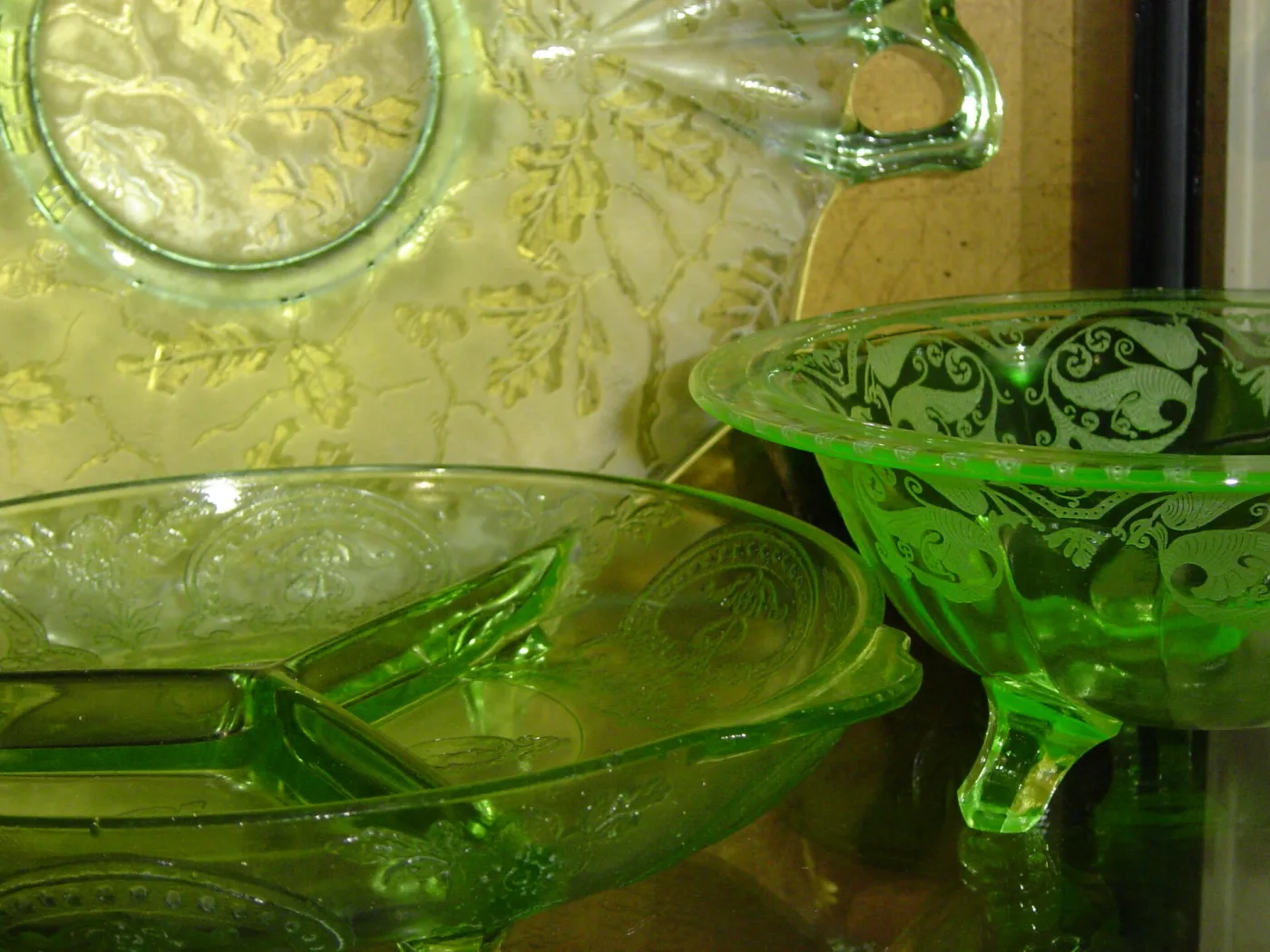
Depression glass represents one of America's most beloved and accessible collecting categories. This colorful, translucent glassware was mass-produced during the 1920s through the early 1940s, distributed through five-and-dime stores, movie theaters, and as promotional premiums with everything from cereal to gasoline. What was once everyday tableware given away to struggling Depression-era families has become a nostalgic collectible that brings color and history to modern homes.
With over one hundred patterns produced by more than twenty manufacturers, Depression glass offers collectors an extraordinary variety of forms, colors, and styles. From the delicate pink of American Sweetheart to the coveted cobalt blue of Royal Lace, each pattern tells a story of American ingenuity during difficult times. Understanding how to identify patterns, recognize authentic pieces, and assess value has become essential knowledge for collectors, dealers, and anyone who discovers these treasures at estate sales or in family cupboards.
This comprehensive guide covers everything you need to know about Depression glass identification—from the major manufacturers and their most popular patterns to color variations, authentication techniques, and current market values. Whether you're starting a collection or trying to identify inherited pieces, this guide will help you navigate the colorful world of Depression glass.
Table of Contents
- History and Overview of Depression Glass
- Key Identifying Characteristics
- Depression Glass Colors Guide
- Major Manufacturers and Their Marks
- Most Popular and Valuable Patterns
- Rare and Highly Valuable Patterns
- Special Types: Uranium, Jadeite & More
- Authentication and Spotting Reproductions
- Condition Assessment and Value Factors
- Collecting Tips and Strategies
- Care, Cleaning, and Display
- Resources for Collectors
History and Overview of Depression Glass
Depression glass emerged from a unique convergence of American manufacturing innovation and economic hardship. During the late 1920s and throughout the 1930s, glass manufacturers developed efficient mass-production techniques that allowed them to create attractive, colorful tableware at remarkably low costs. These pieces became both affordable household goods and effective marketing tools during the nation's most challenging economic period.
Origins and Production Era
The term "Depression glass" was coined by collectors decades after the glass was manufactured, referring primarily to the inexpensive, machine-made colored glassware produced between approximately 1920 and 1940. However, some patterns continued into the early 1950s. The glass was pressed in molds rather than hand-blown, allowing for rapid, economical production of complete dinner sets.
Distribution Methods
What makes Depression glass historically fascinating is how it reached American homes:
- Five-and-dime stores: Woolworth's, Kresge's, and similar discount retailers sold complete sets at budget prices
- Premium promotions: Gas stations, movie theaters, and grocery stores gave away pieces as customer incentives
- Cereal and oatmeal boxes: Companies like Quaker Oats included glass pieces in their packaging
- Mail-order catalogs: Sears and other catalogs offered Depression glass sets
Manufacturing Centers
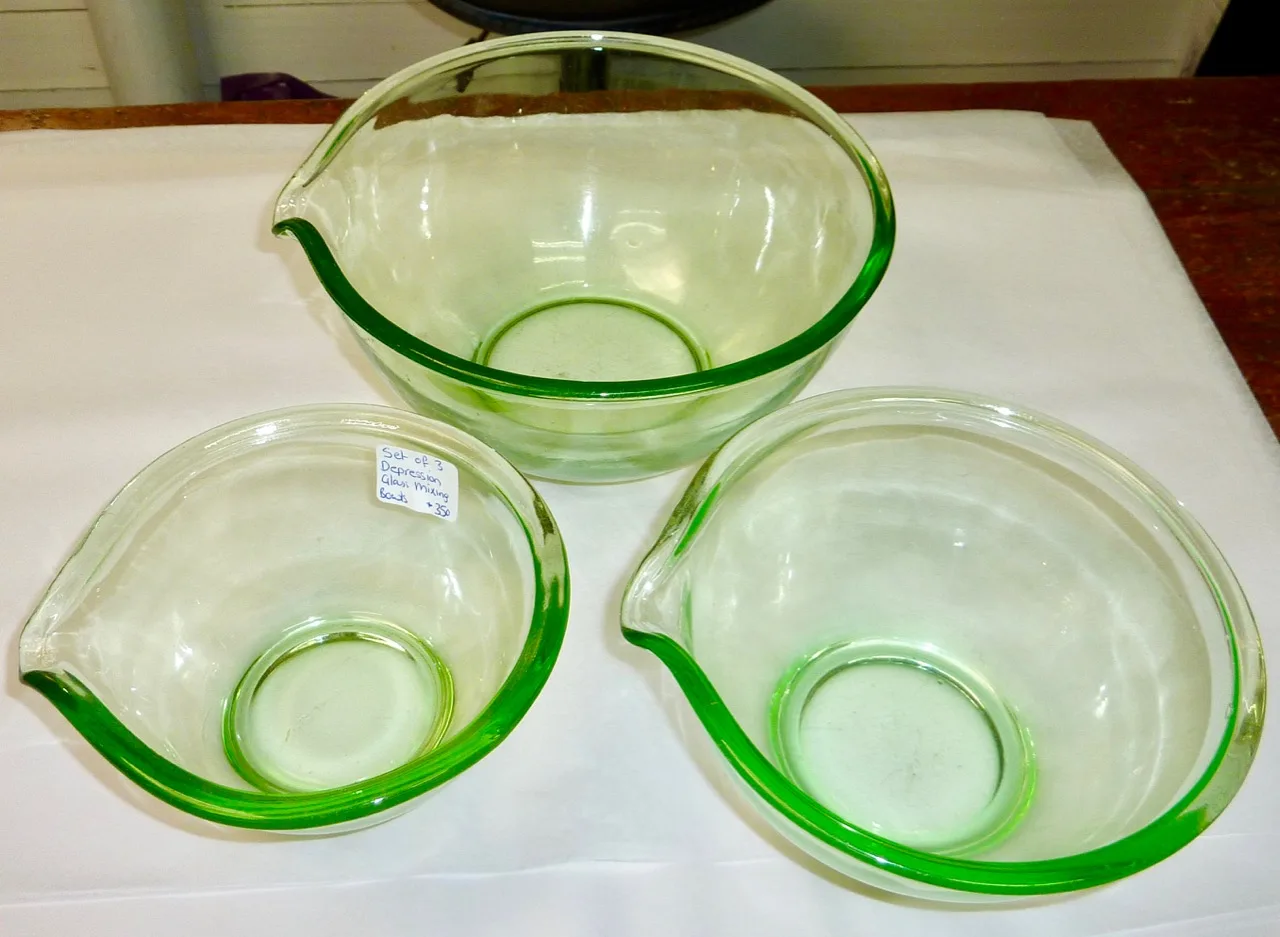
Most Depression glass came from factories in the American Midwest and Mid-Atlantic regions, particularly Ohio, Pennsylvania, West Virginia, and Indiana. These areas had ready access to the raw materials needed for glass production—silica sand, soda ash, and limestone—as well as the natural gas or coal needed to fire the furnaces.
End of the Era
Production of traditional Depression glass patterns declined during World War II when glass factories shifted to wartime production. After the war, consumer tastes changed, and the colorful pressed glass gave way to different styles. This finite production period is part of what makes Depression glass collectible today—no more authentic pieces will ever be made.
Key Identifying Characteristics
Learning to recognize authentic Depression glass involves understanding the distinctive physical characteristics that result from mass-production techniques of the era.
Weight and Thickness
Depression glass is noticeably thin and lightweight compared to earlier Early American Pattern Glass. Manufacturers used as little material as possible to keep costs down while maintaining the glass's translucency. When you pick up a piece of Depression glass, it should feel light in your hand. Heavy, thick glass usually indicates a reproduction or a different type of glassware entirely.
Mold Seams
Because Depression glass was pressed in two-part molds, the pieces typically show faint vertical seams where the mold halves met. These seams may be visible on the sides of bowls, along the handles of cups, or on the stems of goblets. While manufacturers tried to minimize these marks, their presence actually helps authenticate genuine pieces.
Bubbles and Imperfections
Small air bubbles trapped within the glass are common and expected in authentic Depression glass. These bubbles result from the rapid manufacturing process and are considered a positive identifier rather than a flaw. You may also notice:
- Straw marks (lines from the pressing process)
- Slight variations in thickness
- Minor pattern inconsistencies between pieces
- Small surface irregularities
Pattern Details
Authentic Depression glass patterns should appear smooth and delicate, with fine details clearly defined. The patterns were created by the mold and should be integral to the glass, not applied afterward. Patterns may show some softening or slight blurring due to wear, but the overall design should be consistent with documented examples.
Color Consistency
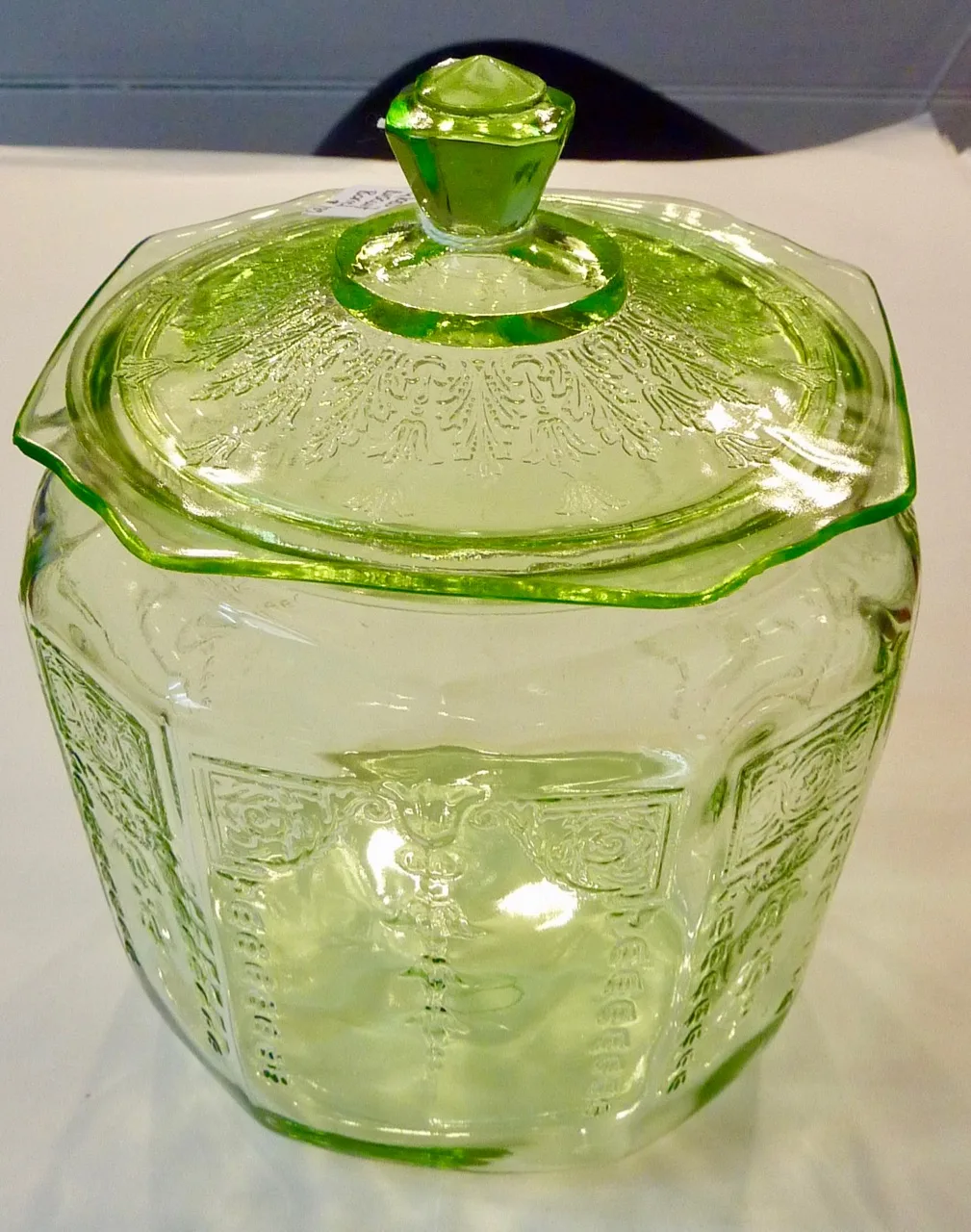
Within a given manufacturer's production, colors should be relatively consistent, though some variation occurred between batches. True Depression glass colors have a particular quality—pink tends toward a soft rose rather than hot pink, and green often has a subtle yellow undertone. Understanding these color characteristics comes with experience handling authentic pieces.
Depression Glass Colors Guide
Color is one of the most important factors in Depression glass identification and valuation. While the classic colors are pink, green, amber, and crystal (clear), manufacturers produced an impressive range of hues.
Pink (Rose)
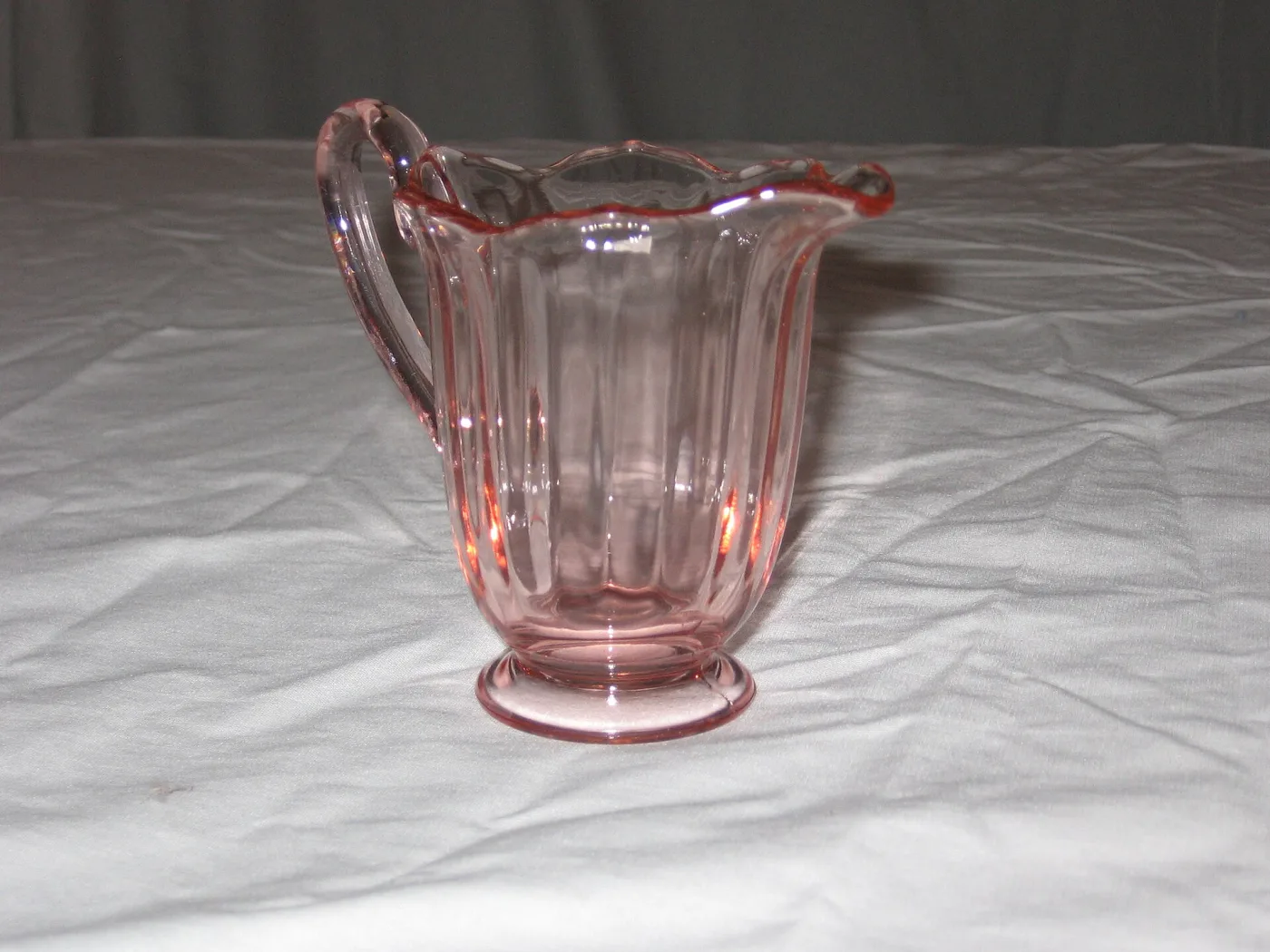
Soft pink, sometimes called rose, is perhaps the most iconic Depression glass color. It ranges from a pale blush to a deeper rose shade, with variations between manufacturers. Pink pieces are highly collectible, particularly in popular patterns like American Sweetheart and Mayfair. The color was achieved by adding selenium or gold compounds to the glass batch.
Green
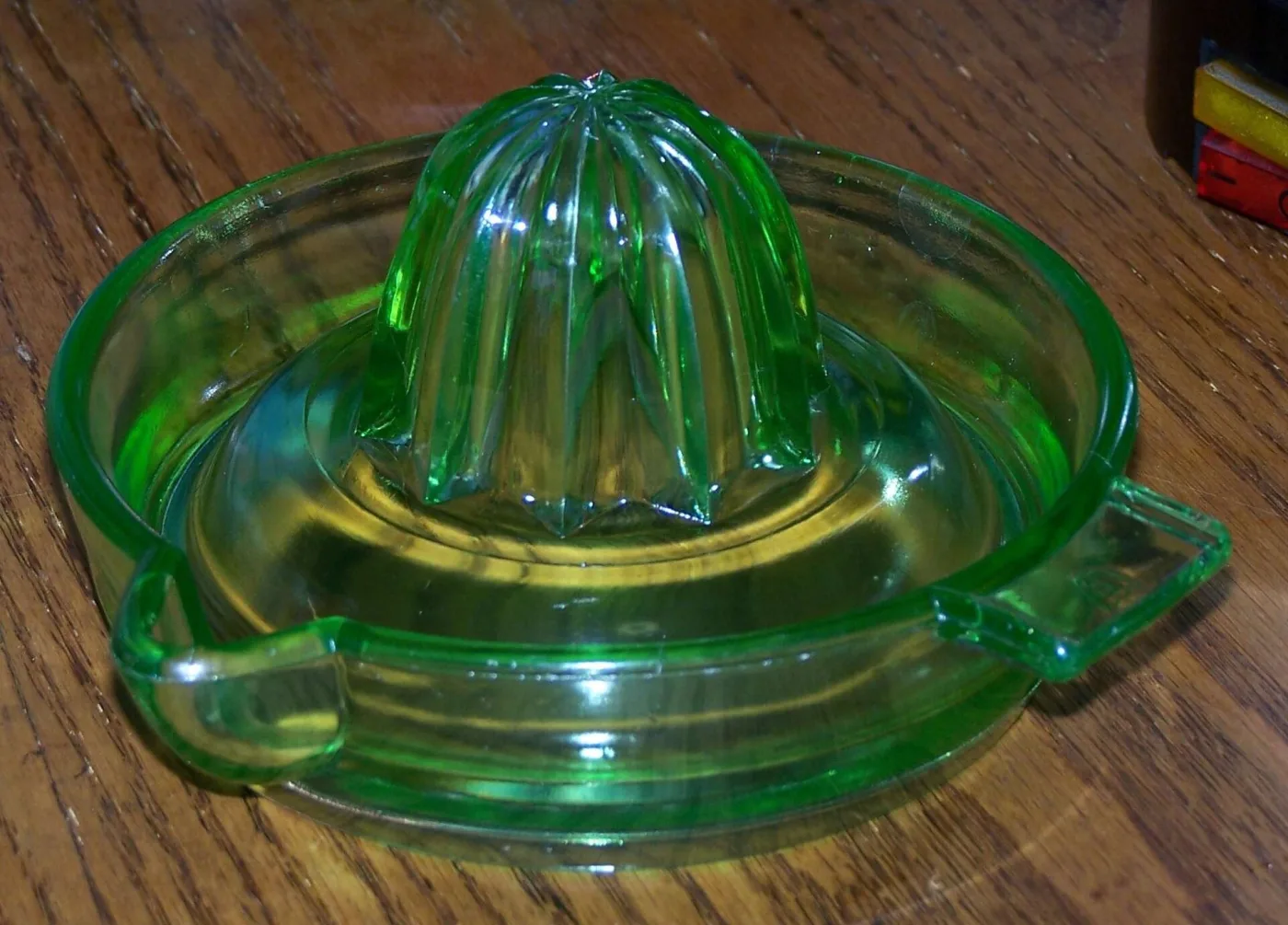
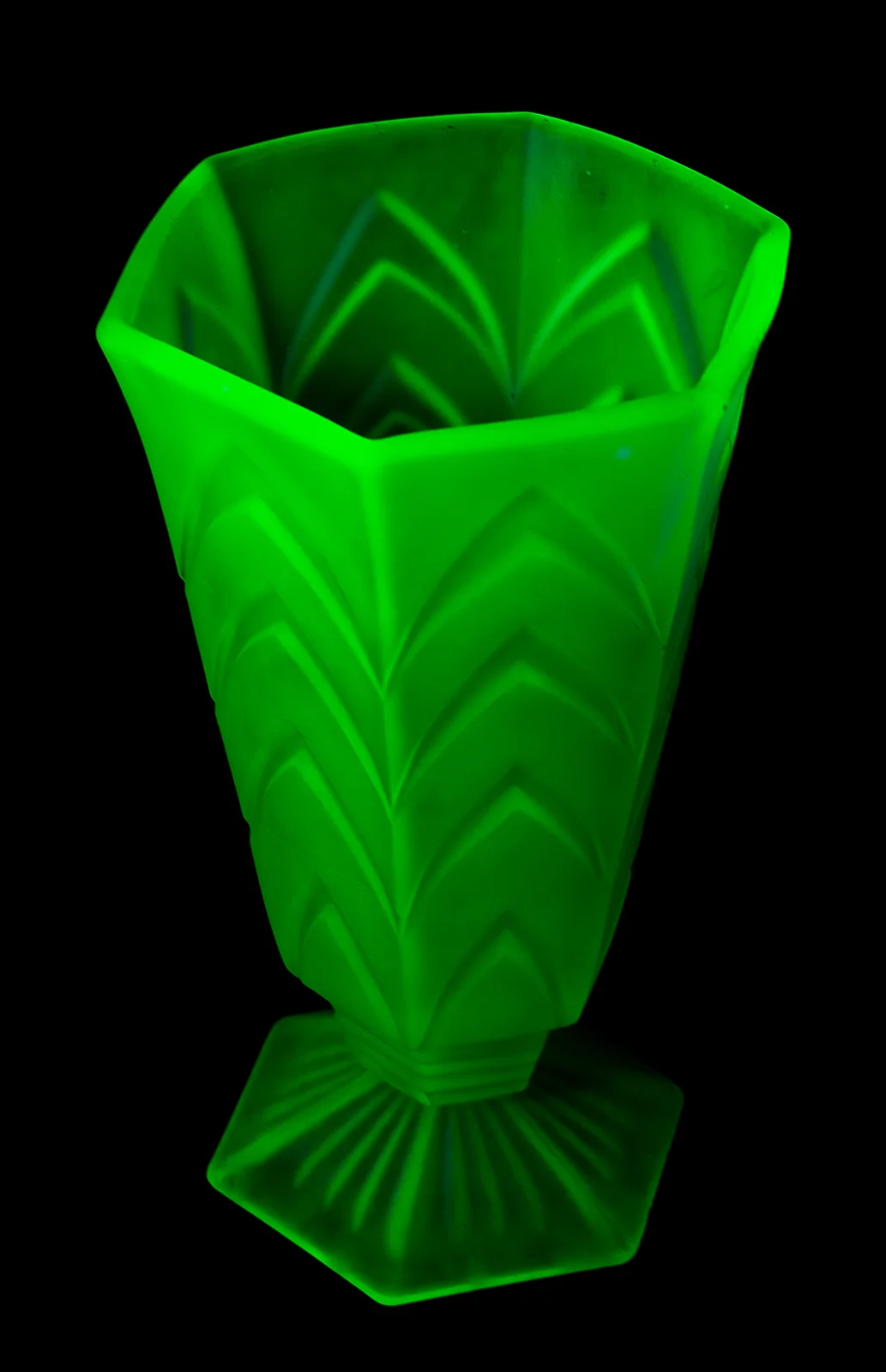
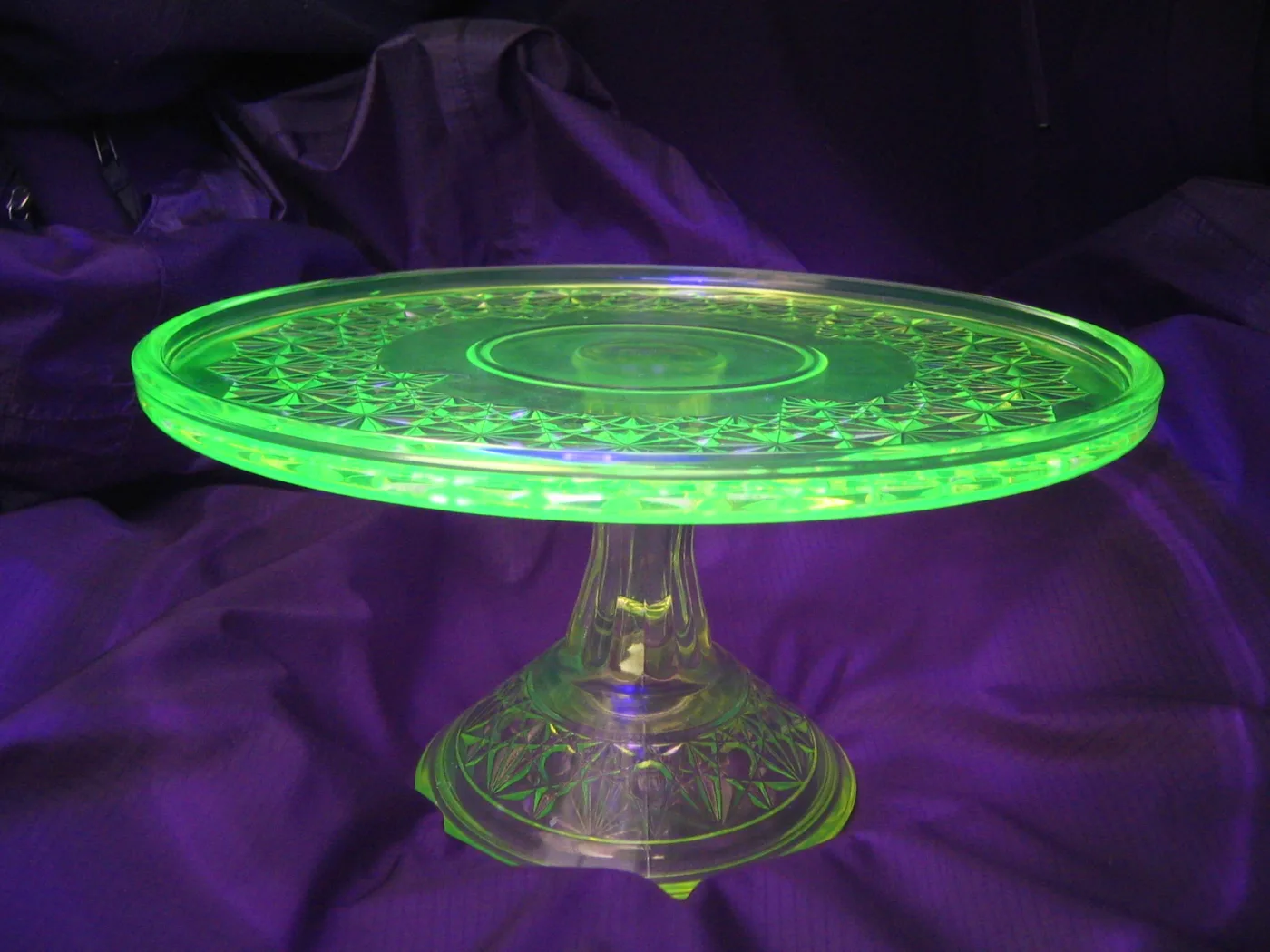
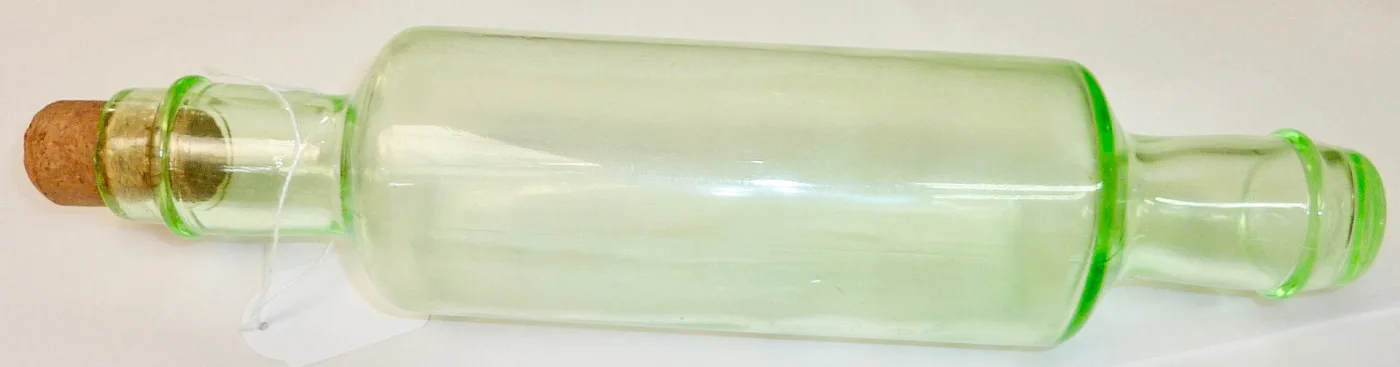
Green Depression glass spans from pale seafoam to deeper emerald tones. Many green pieces contain uranium oxide, which causes them to glow bright green under ultraviolet (black) light. This "uranium glass" or "Vaseline glass" has its own devoted following. Green was extremely popular during the 1930s and appears in most major patterns.
Amber
Amber, ranging from pale yellow to deep honey tones, was among the most popular colors during the Depression era. Its earth-toned warmth suited the period's aesthetic. While common and therefore generally less expensive than pink or blue, amber pieces in rare patterns can still command good prices. Amber color came from iron and sulfur compounds.
Crystal (Clear)
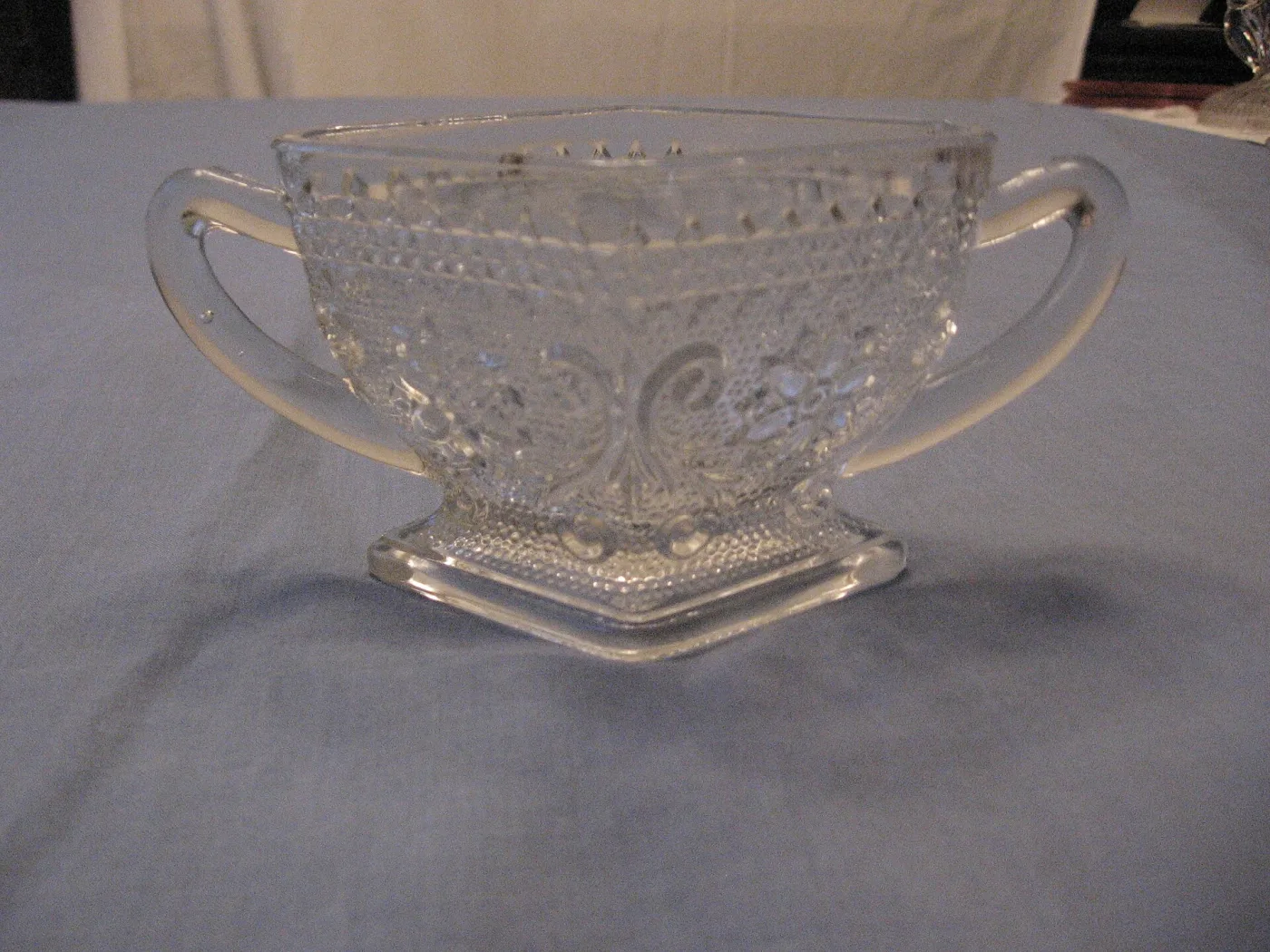
Clear, or crystal, Depression glass was produced in nearly every pattern. While often less valuable than colored versions, crystal pieces in rare patterns or forms can be quite collectible. Crystal allows the intricate pattern details to show clearly and was popular for formal table settings.
Cobalt Blue
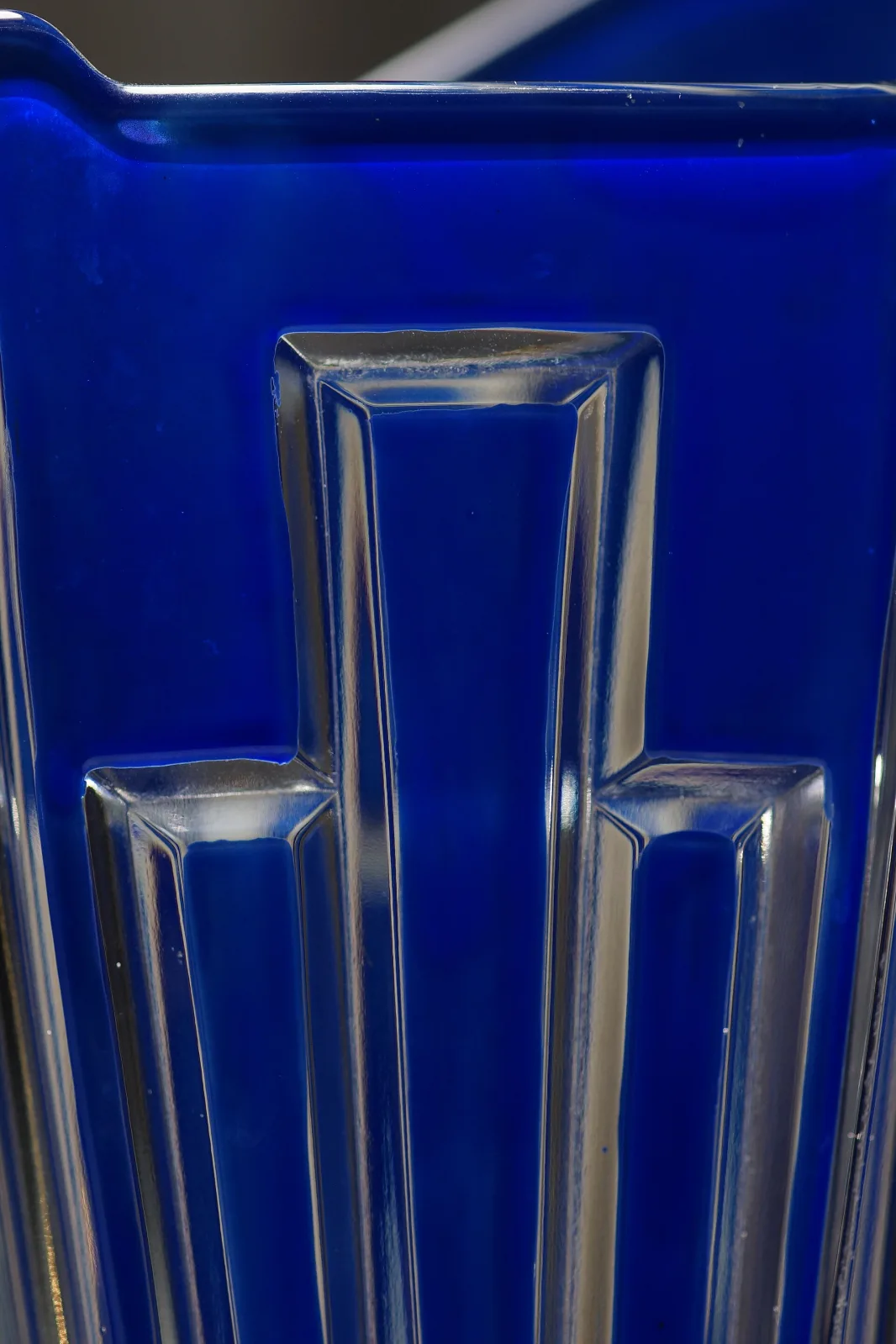
Deep cobalt blue is among the most valuable Depression glass colors. Relatively few patterns were produced in this rich shade, making blue pieces particularly desirable. Royal Lace in cobalt blue commands premium prices. The color came from cobalt oxide additives.
Yellow
Yellow Depression glass ranges from pale canary to deeper golden tones. Sometimes called "topaz" by manufacturers, yellow pieces were popular in the early 1930s. Yellow is relatively uncommon in some patterns, adding to its collectibility.
Rare Colors
Several colors were produced in limited quantities and are now highly sought after:
- Tangerine/Orange: Very limited production; highly valuable
- Alexandrite: Changes color depending on light source; extremely rare
- Ruby Red: Deep red color; produced in limited patterns
- Delphite (Opaque Blue): Soft blue opaque glass; collectible specialty
- Iridescent: Rainbow sheen on various base colors
Major Manufacturers and Their Marks
Understanding the major Depression glass manufacturers helps with identification, as each company had distinctive patterns and production characteristics. However, most Depression glass is unmarked, requiring pattern identification for attribution.
Anchor Hocking Glass Corporation
Based in Lancaster, Ohio, Anchor Hocking was one of the largest Depression glass producers. The company formed in 1937 from the merger of Hocking Glass Company and Anchor Cap Corporation, though Hocking had been producing glass since 1905.
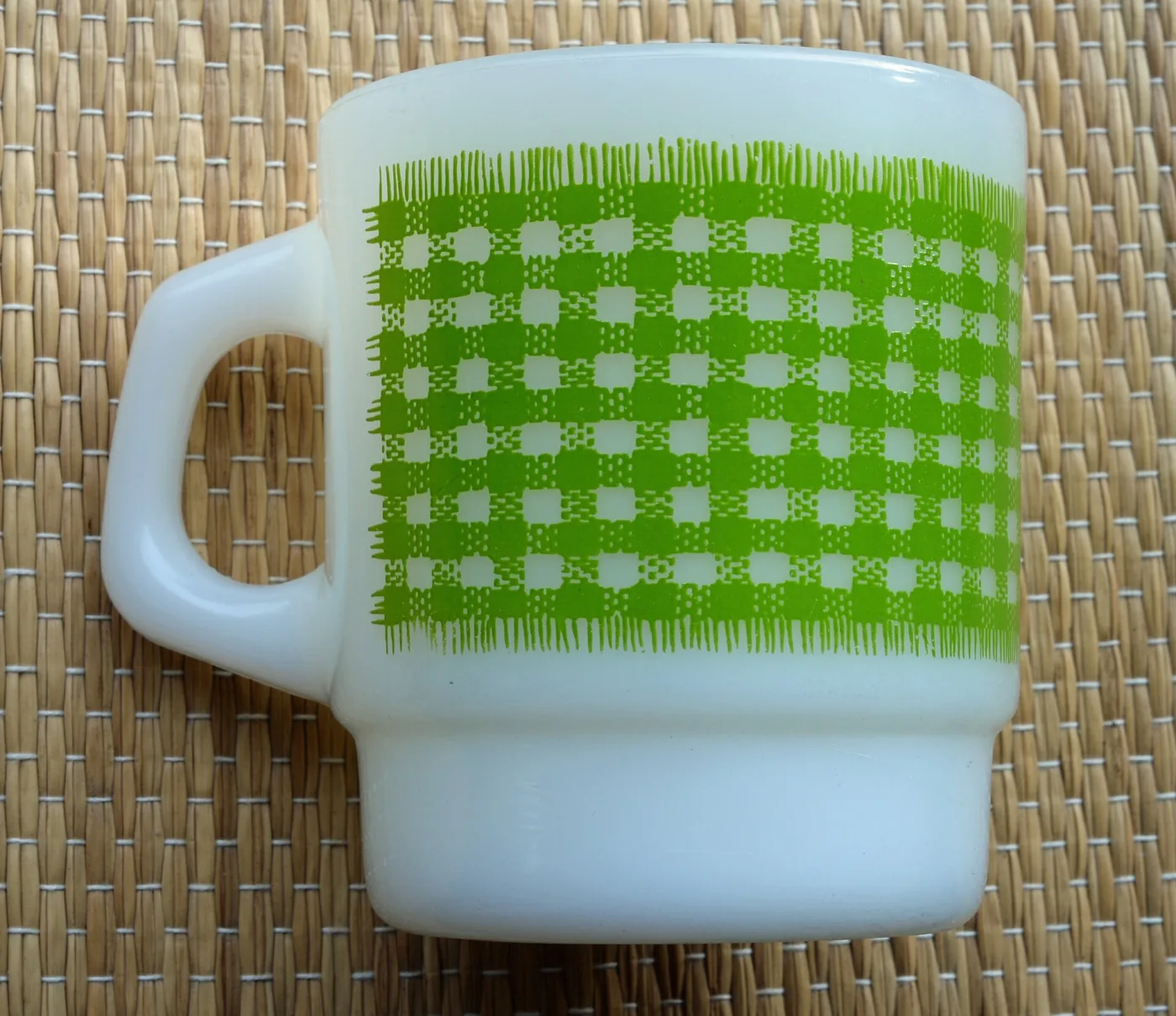
Notable patterns: Mayfair (Open Rose), Cameo (Ballerina), Miss America, Waterford, Block Optic, Colonial, Ring
Marks: When marked, pieces may show an anchor symbol or "Fire-King" (post-1942)
Federal Glass Company
Operating from Columbus, Ohio, Federal Glass produced some of the most recognizable Depression glass patterns from 1900 to 1984.
Notable patterns: Patrician (Spoke), Madrid, Sharon (Cabbage Rose), Georgian, Rosemary, Diana, Columbia
Marks: Shield with "F" in center (when marked)
Jeannette Glass Company
Located in Jeannette, Pennsylvania, this company produced Depression glass from 1898 until closing in 1983. Jeannette is known for some of the most elaborate patterns.
Notable patterns: Cherry Blossom, Adam, Iris (Iris and Herringbone), Doric, Floragold, Windsor, Anniversary, Jadeite kitchenware
Marks: Often unmarked; some pieces bear paper labels (usually lost)
Hazel Atlas Glass Company
With plants in several states, Hazel Atlas was a major manufacturer known for both Depression patterns and later kitchenware.
Notable patterns: Royal Lace, Moderntone, Newport (Hairpin), Florentine, Cloverleaf, Aurora
Marks: "H" over "A" mark (when marked)
MacBeth-Evans Glass Company
This company, based in Charleroi, Pennsylvania, produced some of the most delicate and valuable Depression glass patterns.
Notable patterns: American Sweetheart, Dogwood, S Pattern, Petalware, Stippled Rose
Marks: Generally unmarked
Indiana Glass Company
Operating from Dunkirk, Indiana, this company produced Depression glass and continued making similar patterns well into later decades (important for dating).
Notable patterns: Sandwich, Tea Room, Pyramid, Horseshoe (No. 612)
Marks: Generally unmarked during Depression era

Most Popular and Valuable Patterns
While over one hundred Depression glass patterns were produced, certain patterns have achieved particular popularity among collectors due to their beauty, availability, or rarity.
American Sweetheart (MacBeth-Evans, 1930-1936)
This elegant pattern features a center motif surrounded by a scrolled border. Known for its delicate, thin glass, American Sweetheart is prone to damage, making perfect pieces increasingly rare. The pattern was produced in pink, Monax (creamy white), red, and crystal. Pink pieces, particularly water pitchers and console bowls, command premium prices. A pink water pitcher in excellent condition can sell for hundreds of dollars.
Mayfair "Open Rose" (Hocking, 1931-1937)
Featuring a center flower design surrounded by a wide, ribbed band, Mayfair was produced in an unusually long run for Depression glass. The pattern appears in pink, blue, green, yellow, and crystal. Blue Mayfair is particularly coveted—a set of six blue footed tumblers can bring several hundred dollars. Note that Federal Glass also made a "Mayfair" pattern, which is different and less valuable.
Cherry Blossom (Jeannette, 1930-1939)
One of the most beautiful and popular patterns, Cherry Blossom features delicate cherry branches with blossoms and leaves. Produced in pink, green, crystal, delphite (opaque blue), and rare jadeite. The pattern's detail and beauty make it highly collectible. Beware of reproductions—Cherry Blossom has been widely copied.
Cameo "Ballerina" (Hocking, 1930-1934)
Named for its dancing girl figures, Cameo was produced in green, yellow, pink, and crystal. Green is most common, while pink and yellow are quite rare and valuable. The pattern also features ribbons, scrolls, and floral elements. Some pieces show frosted (satin) backgrounds that highlight the clear pattern elements.
Sharon "Cabbage Rose" (Federal, 1935-1939)
This pattern features a large, central cabbage rose with surrounding foliage. Available in pink, green, amber, and crystal. Pink and green pieces are most desirable. Sharon was extensively reproduced in the 1970s, so authentication is important.
Miss America (Hocking, 1935-1938)
Characterized by its distinctive hobnail-like diamond pattern, Miss America was produced in pink, crystal, green, and rare ice blue and ruby. Pink and crystal are most common, while the colored versions are harder to find. The pattern's geometric design appeals to Art Deco enthusiasts.
Iris "Iris and Herringbone" (Jeannette, 1928-1932, 1950, 1970)
This dramatic pattern features iris flowers and herringbone texturing. The original production included crystal, iridescent, and pink (rare). Later reproductions in different colors appeared in 1950 and 1970, so dating is important. Original pink Iris is extremely rare and valuable.
Rare and Highly Valuable Patterns
Royal Lace (Hazel Atlas, 1934-1941)
Considered one of the most elegant Depression glass patterns, Royal Lace features intricate lace-like borders. While produced in pink, green, crystal, and cobalt blue, it's the blue that collectors prize most highly. Cobalt blue Royal Lace tumblers can sell for $40-50 each, with sets bringing several hundred dollars. Authentication tip: genuine Royal Lace tumblers have the pattern on the bottom; reproductions often have blank bottoms.
Doric and Pansy (Jeannette, 1937-1938)
With only two years of production, this pattern combining geometric doric design with pansy motifs is genuinely rare. Available in ultramarine (teal), pink, and crystal, it was primarily made as children's dishes. Complete sets are extremely difficult to assemble and valuable when found.
Adam (Jeannette, 1932-1934)
This elaborate pattern features alternating plume and feather motifs in a square shape. Produced in pink, green, crystal, yellow, and delphite. Pink and green are most collectible, with rare pieces like covered candy dishes bringing significant prices.
Tea Room (Indiana, 1926-1931)
An Art Deco design with geometric panels, Tea Room was made in pink, green, and crystal. Its stylish design appeals to both Depression glass collectors and Art Deco enthusiasts. Banana split boats and other unusual forms are particularly sought after.
Parrot (Sylvan) (Federal, 1931-1932)
Featuring a tropical parrot in a palm tree setting, this short-lived pattern is quite rare. Available in green, amber, and crystal (blue is extremely rare). Complete pieces in good condition are difficult to find.
Special Types: Uranium, Jadeite & More
Uranium Glass (Vaseline Glass)
Many green Depression glass pieces contain uranium oxide, which causes them to glow brilliant green under ultraviolet light. This "uranium glass" or "Vaseline glass" (named for its yellow-green color resembling petroleum jelly) has become a collecting specialty of its own. The glass is safe to handle and use—the uranium content is very low—but the dramatic glow effect makes these pieces highly appealing. A simple UV flashlight reveals whether a piece contains uranium.
Jadeite
This opaque, milky green glass resembles jade and stands out from typical translucent Depression glass. Jeannette's Jadeite kitchenware—canisters, mixing bowls, refrigerator dishes, and mugs—has become extremely popular with collectors. Originally utilitarian kitchen items, Jadeite pieces now command premium prices, especially complete sets or rare forms. Fire-King Jadeite from Anchor Hocking (made 1945-1976) is related but slightly different from Depression-era Jadeite.
Delphite
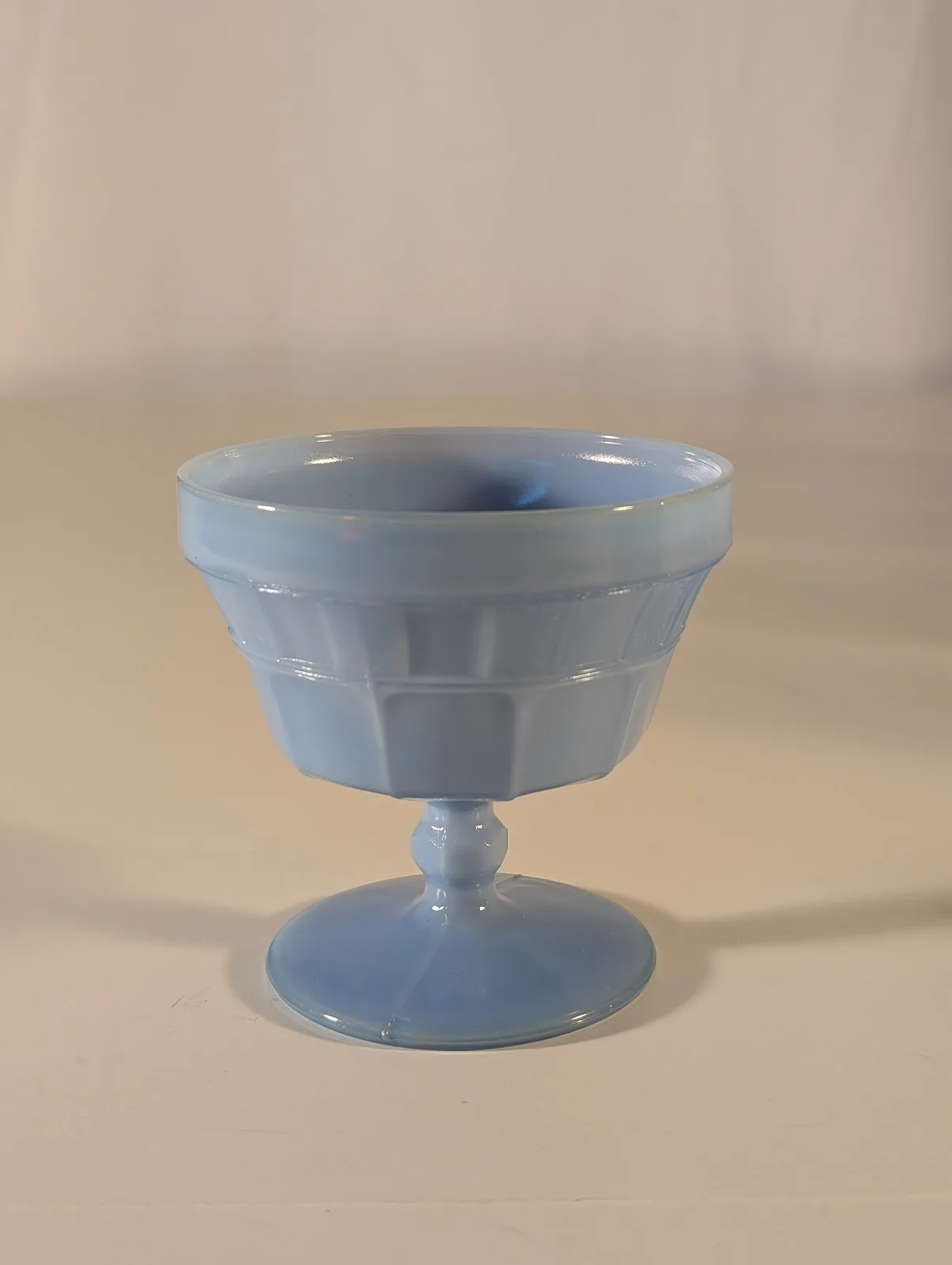
This opaque blue glass has a soft, powder-blue color. Produced by Jeannette and other makers, Delphite pieces are relatively uncommon and collectible. The opaque quality distinguishes it from transparent blue Depression glass.
Monax
MacBeth-Evans' name for their opaque white glass, used most notably for American Sweetheart. Monax has a slightly translucent, creamy quality that distinguishes it from later milk glass, which became a major collectible category in its own right.
Iridescent Depression Glass
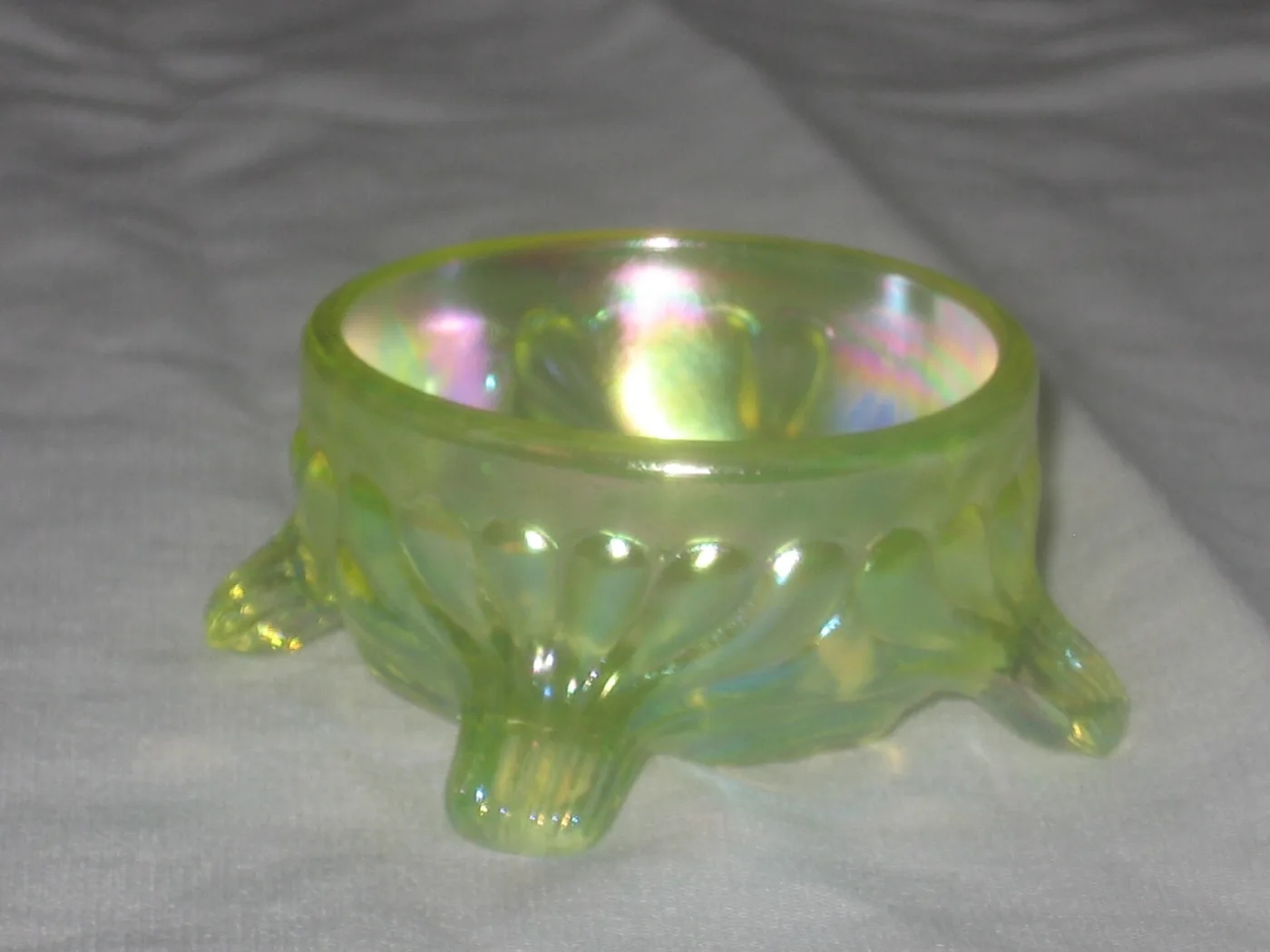
Some manufacturers applied iridescent treatments to Depression glass, creating rainbow effects similar to carnival glass. These pieces should not be confused with true carnival glass, which was made using different techniques. Floragold (Jeannette) is an example of iridescent Depression glass.
Authentication and Spotting Reproductions
Depression glass has been reproduced since the 1970s, and distinguishing originals from reproductions is essential for collectors.
Weight and Thickness Test
Reproduction Depression glass is typically heavier and thicker than originals. Period manufacturers used minimal glass to reduce costs; modern reproductions don't have this constraint. Pick up pieces and compare their weight to known authentic examples.
Color Variations
Reproduction colors often differ subtly from originals. Pink may be too bright or too pale. Green may lack the subtle yellow undertone of period glass. Cobalt blue may be too dark or too bright. Developing an eye for authentic colors requires handling many confirmed pieces.
Mold Quality
Original Depression glass patterns should appear crisp and detailed (allowing for age-related wear). Reproductions sometimes show softer, less defined patterns because they were made from molds created from original pieces rather than original molds. Look for pattern clarity and definition.
Bubbles and Imperfections
Authentic Depression glass typically shows small bubbles, straw marks, and minor imperfections from rapid production. Modern glass tends to be cleaner and more uniform. The presence of bubbles is generally a positive sign.
Pattern-Specific Tests
Some patterns have specific authentication tests:
- Royal Lace tumblers: Originals have pattern on the bottom; reproductions may have blank bottoms
- Cherry Blossom: Original cherries are rounded; reproduction cherries are flatter
- Mayfair cookie jars: Original has specific rim configuration
- Sharon: Check spoke arrangement and detail definition
UV Light Test
Green Depression glass containing uranium will glow bright green under UV light. This doesn't prove age (reproductions could also contain uranium), but it confirms the glass type. Most green Depression glass is uranium glass.
Red Flags
- Perfect condition on supposedly old pieces
- Colors or forms not documented in original production
- Unusually heavy weight
- No signs of age-appropriate wear
- Prices too good to be true for rare pieces
Condition Assessment and Value Factors
Condition Grades
- Mint: Perfect condition with no flaws; commands highest prices
- Excellent: Very minor wear, no chips or cracks; slight reduction from mint
- Very Good: Minor wear, perhaps small scratches; good collectible value
- Good: Noticeable wear or minor flaws; reduced value but still collectible
- Fair/Poor: Significant damage; primarily for display or replacement parts
Value Factors
Pattern: Some patterns are inherently more valuable due to shorter production runs, greater complexity, or collector demand. Royal Lace, American Sweetheart, and Cherry Blossom typically bring higher prices than more common patterns.
Color: Rare colors dramatically increase value. Cobalt blue, tangerine, and alexandrite bring premiums in any pattern. Pink and green are generally more valuable than amber or crystal in most patterns.
Form: Unusual forms—pitchers, covered dishes, punch sets—are often more valuable than common items like plates and cups. Large serving pieces and complete sets command premiums.
Rarity: Some color/pattern/form combinations were produced in small quantities and are genuinely rare. Research production records and collector guides to understand relative rarity.
Price Ranges
Depression glass values span an enormous range:
- Common pieces (plates, cups) in common patterns: $5-25
- Desirable colors in popular patterns: $25-75
- Rare forms or colors: $75-200
- Premium pieces (blue Royal Lace, pink American Sweetheart pitchers): $200-500+
- Exceptional rarities: $500-1000+
Collecting Tips and Strategies
Starting a Collection
- Choose a focus: Select a specific pattern, color, or manufacturer to specialize in
- Learn before buying: Study pattern guides and handle authentic pieces
- Start with common pieces: Build experience before investing in expensive rarities
- Document your collection: Keep records of purchases, prices, and provenance
Where to Find Depression Glass
- Estate sales and auctions
- Antique shops and malls
- Online marketplaces (with caution)
- Depression glass shows and conventions
- Flea markets and garage sales
Building Sets
Many collectors aim to assemble complete dinner sets in their chosen patterns. This can take years, as specific pieces may be difficult to find. Consider focusing on luncheon sets (smaller than dinner sets) or collecting individual place settings that can be mixed with other patterns.
Investment Considerations
While some Depression glass has appreciated significantly, collect primarily for enjoyment rather than investment. Rare colors and patterns tend to hold value best. Complete sets are more valuable than miscellaneous pieces. Quality and condition affect long-term value more than quantity.
Care, Cleaning, and Display
Cleaning Depression Glass
- Hand wash in lukewarm water with mild dish soap
- Never use abrasive cleaners or scrubbers
- Avoid sudden temperature changes that could crack the thin glass
- Dry with soft, lint-free cloths
- For stubborn deposits, soak in warm soapy water
- Never put Depression glass in the dishwasher
Removing Cloudiness
Mineral deposits from hard water can cloud Depression glass over time. Try soaking in a solution of white vinegar and water, or use a commercial glass cleaner designed for antiques. Some cloudiness from etching (glass disease) may be permanent.
Storage
- Store pieces with felt or paper between them to prevent scratching
- Avoid stacking heavy items that could chip rims
- Keep away from temperature extremes
- Store cups right-side up to protect rims
Display Options
Depression glass displays beautifully:
- China cabinets with glass shelves allow light to pass through
- Window displays let light enhance the colors (but avoid direct sun)
- Open shelving creates colorful kitchen displays
- UV lights showcase uranium glass dramatically
Using Depression Glass
Many collectors enjoy using their Depression glass for special occasions. The glass is food-safe (despite uranium content in some pieces) but fragile. Use with appropriate care, hand wash afterward, and avoid exposing to extreme temperatures.
Resources for Collectors
Reference Books
- "Warman's Depression Glass: Identification and Price Guide" by Ellen Schroy
- "Collector's Encyclopedia of Depression Glass" by Gene and Cathy Florence
- "Mauzy's Depression Glass: A Photographic Reference with Prices"
- Pattern-specific guides for serious collectors
Organizations
- National Depression Glass Association
- Regional Depression glass clubs
- Online collector forums and communities
Shows and Events
Depression glass shows offer opportunities to see extensive collections, learn from experienced collectors, and find pieces for your collection. Major shows occur throughout the year across the United States. The National Depression Glass Association hosts an annual convention with educational programs and sales.