
Antique Cabbage Ware Identification Guide: Majolica & Ceramic Plates
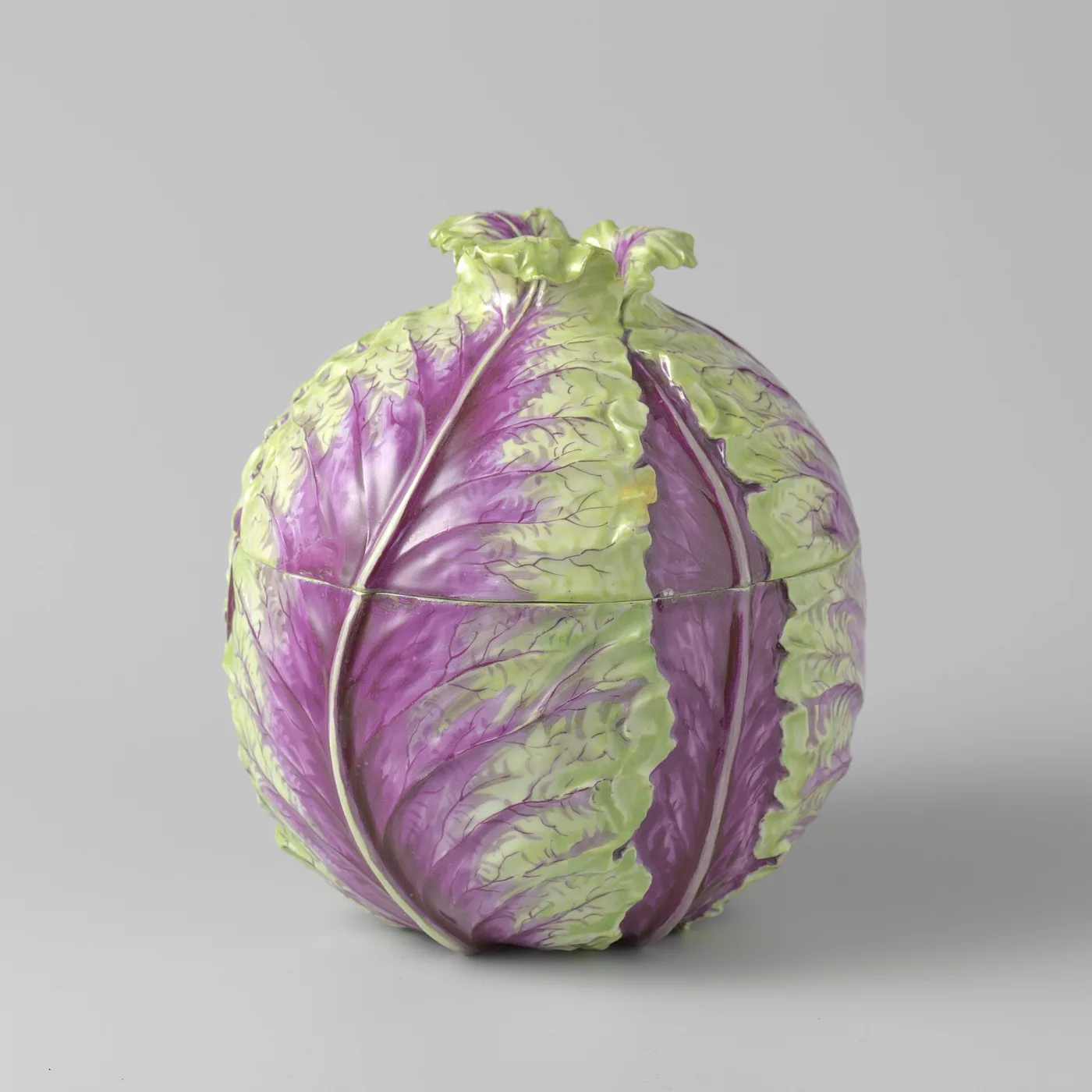
Antique cabbage ware has surged in popularity among collectors in 2026, with these naturalistic ceramic pieces becoming as recognizable and sought-after as Depression glass or Blue Willow china. These charming pottery items, sculpted to resemble cabbage leaves with remarkable botanical accuracy, represent a fascinating intersection of functional tableware and decorative art that spans over two centuries of ceramic production.
The resurgence of interest in cabbage ware reflects broader collecting trends favoring maximalist design, botanical motifs, and pieces with distinctive character. Whether you've inherited a cabbage leaf plate, discovered one at an estate sale, or are actively building a collection, understanding how to identify authentic antique cabbage ware from various makers and periods is essential for proper authentication and valuation.
This comprehensive guide covers everything from the 18th-century origins of naturalistic pottery to identifying specific makers like Bordallo Pinheiro, Dodie Thayer, and Wedgwood. You'll learn to recognize authentic period pieces, distinguish between old and new production, identify maker's marks, assess condition issues unique to cabbage ware, and understand current market values for these increasingly collectible ceramics.
Table of Contents
- The History of Cabbage Ware Ceramics
- Origins in 18th and 19th Century Europe
- Major Manufacturers and Makers
- Bordallo Pinheiro: The Portuguese Masters
- Dodie Thayer: American Cabbage Ware Icon
- Wedgwood Majolica Cabbage Ware
- Other Notable Makers and Regional Production
- Identification Techniques and Authentication
- Maker's Marks and Signatures
- Construction Methods and Molding Techniques
- Glaze Characteristics and Color Patterns
- Dating Antique Cabbage Ware
- Condition Issues and Assessment
- Crazing, Chips, and Common Damage
- Restoration and Conservation Considerations
- Types and Forms of Cabbage Ware
- Collecting Strategies and Market Trends
- Authentication Red Flags and Reproductions
- Valuation and Current Market Prices
- Care, Display, and Preservation
The History of Cabbage Ware Ceramics
Cabbage ware represents a distinctive tradition within the broader category of naturalistic pottery, where ceramic artists sought to recreate botanical forms with remarkable fidelity. This artistic movement gained momentum during the 18th century when European potteries began experimenting with molded forms that imitated vegetables, fruits, and plant life rather than relying solely on painted decoration.
The appeal of cabbage-shaped ceramics reflected both the aesthetic sensibilities of various periods and practical considerations. These pieces brought the garden directly to the table, celebrating agricultural abundance while providing functional serving vessels. The intricate leaf veining, naturalistic coloring, and three-dimensional modeling demonstrated the technical skill of ceramicists while creating conversation pieces that elevated everyday dining.
Throughout the 19th and 20th centuries, cabbage ware production centered in several key regions, each developing distinctive styles and techniques. Portuguese, English, French, and later American makers all contributed to the evolution of cabbage ware, with some manufacturers maintaining continuous production for over a century while others created limited runs that are now highly prized by collectors.
Origins in 18th and 19th Century Europe
The earliest examples of cabbage-shaped ceramics emerged from European porcelain manufactories during the 18th century. The renowned Meissen factory in Germany, known for pioneering European hard-paste porcelain, produced sophisticated porcelain pieces molded to resemble lettuce, cabbage, and other vegetables. These early pieces demonstrated the technical mastery required to capture botanical detail in ceramic form.
French Faïence Tradition
French potteries in regions like Alsace and Provence developed their own traditions of vegetable-shaped earthenware during the 18th and 19th centuries. These pieces, typically made from tin-glazed earthenware known as faïence, featured bold green glazes and prominent leaf textures. French cabbage tureens and serving pieces often incorporated additional naturalistic elements like snail or vegetable finials on lids.
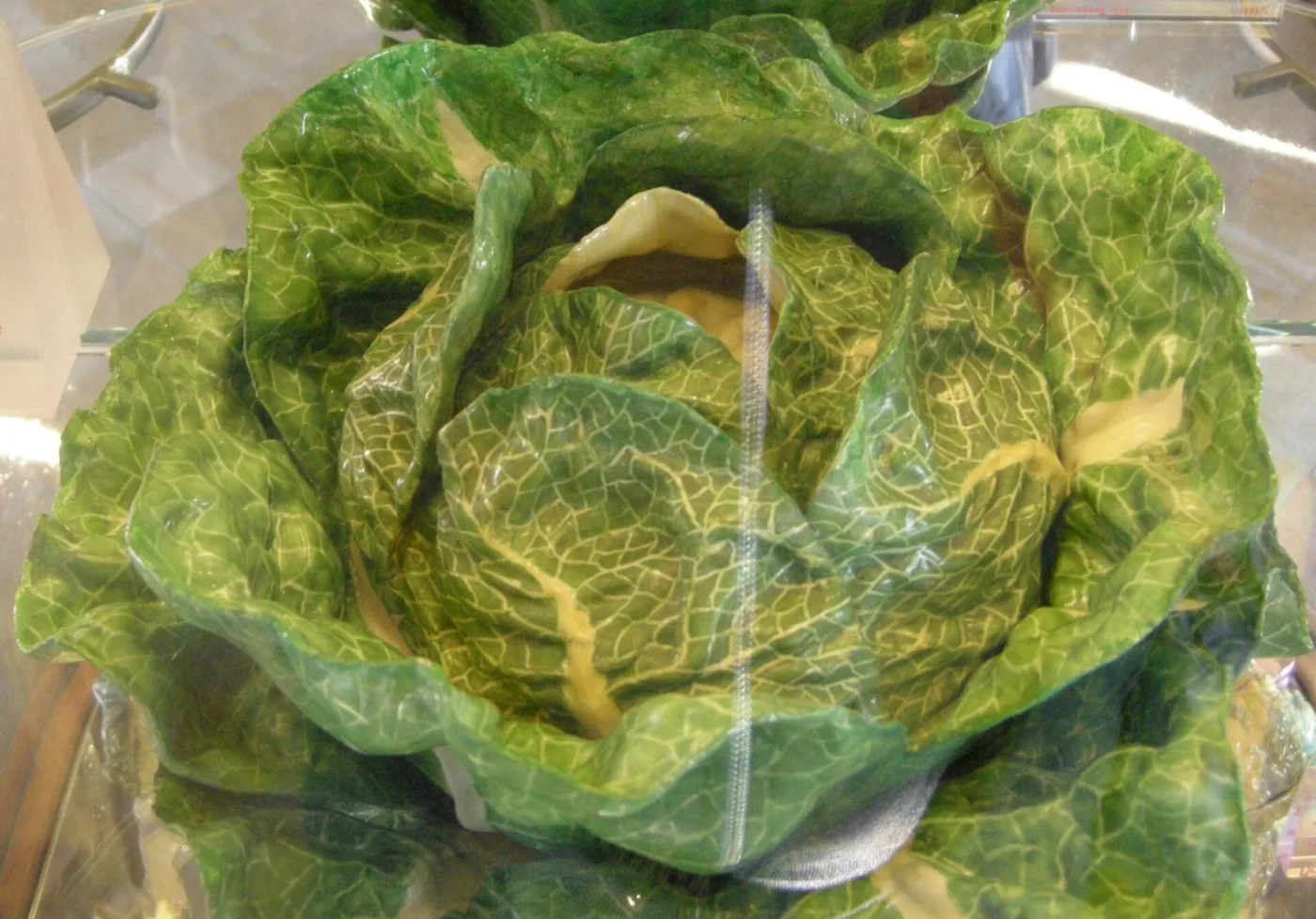
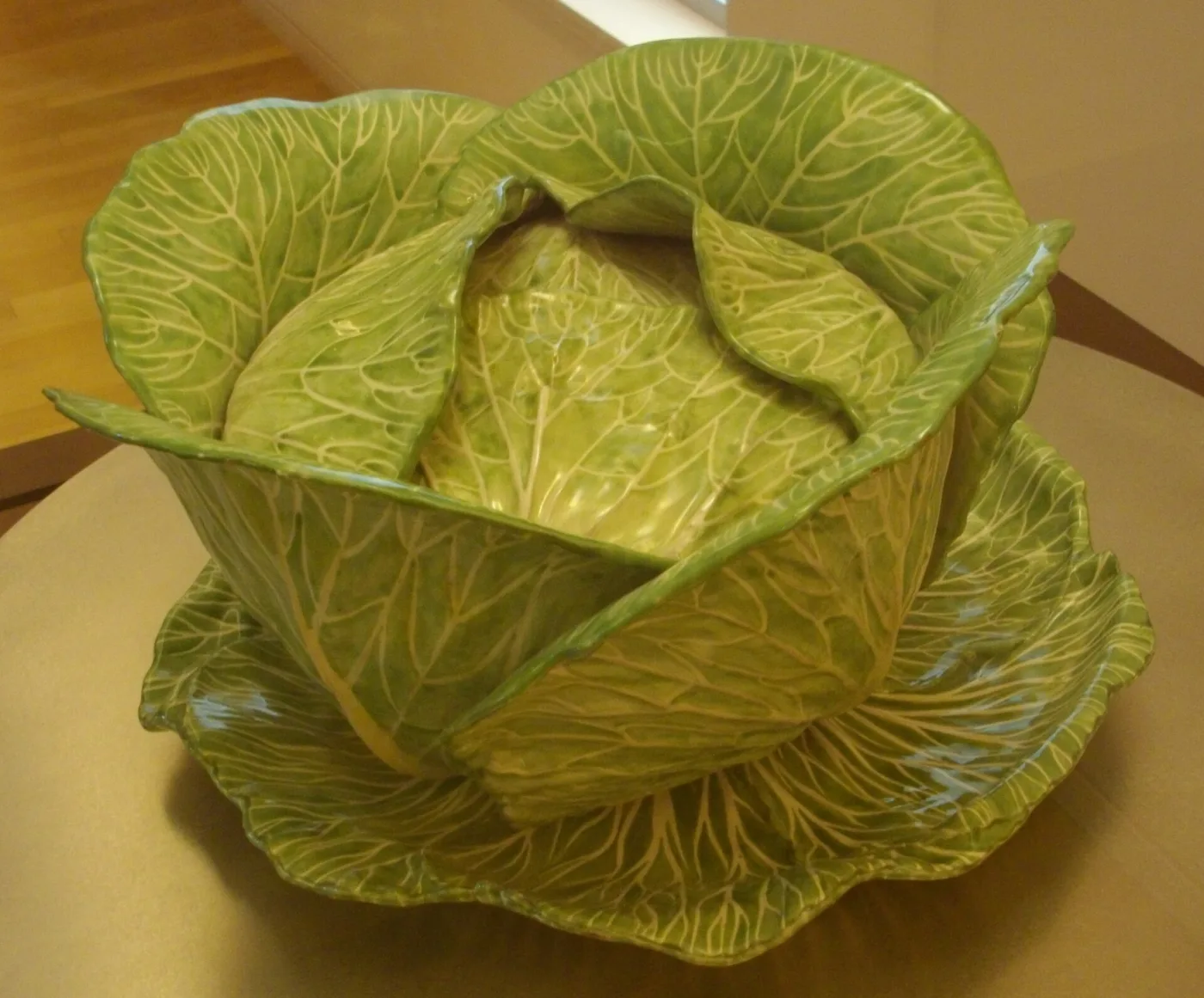
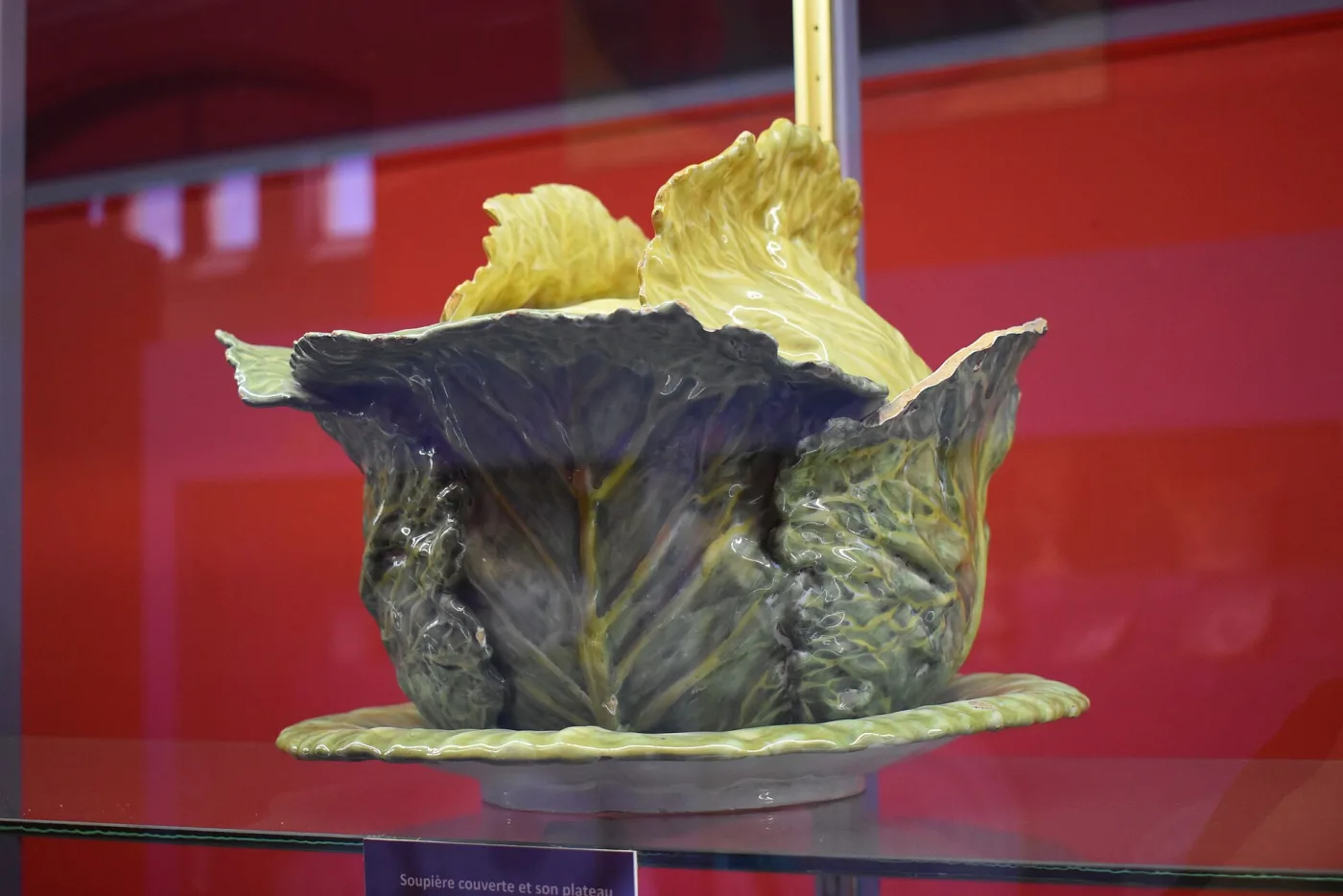
Both of these are French tin-glazed earthenware made within about a decade of each other, and what separates them is modelling rather than palette. The Strasbourg tureen builds its cabbage from leaves applied so that they break the outline and never quite repeat, which is why no two survive looking identical; the Niderviller one keeps its leaves tight against a rounder body and puts the work into incised veining, so its silhouette is a clean dome. Neither photograph shows a mark, and neither needs to: both attributions come from museum records rather than from the pieces themselves, which is exactly the position you will be in with most unmarked continental cabbage ware.
English Majolica Movement
The Victorian era saw an explosion of interest in majolica, a type of earthenware with colorful lead glazes. English potteries including Wedgwood, Minton, and George Jones created extensive lines of naturalistic tableware featuring cabbage leaves, cauliflowers, asparagus, and other garden vegetables. These majolica pieces combined practical function with whimsical design, appealing to Victorian tastes for elaborate table settings.
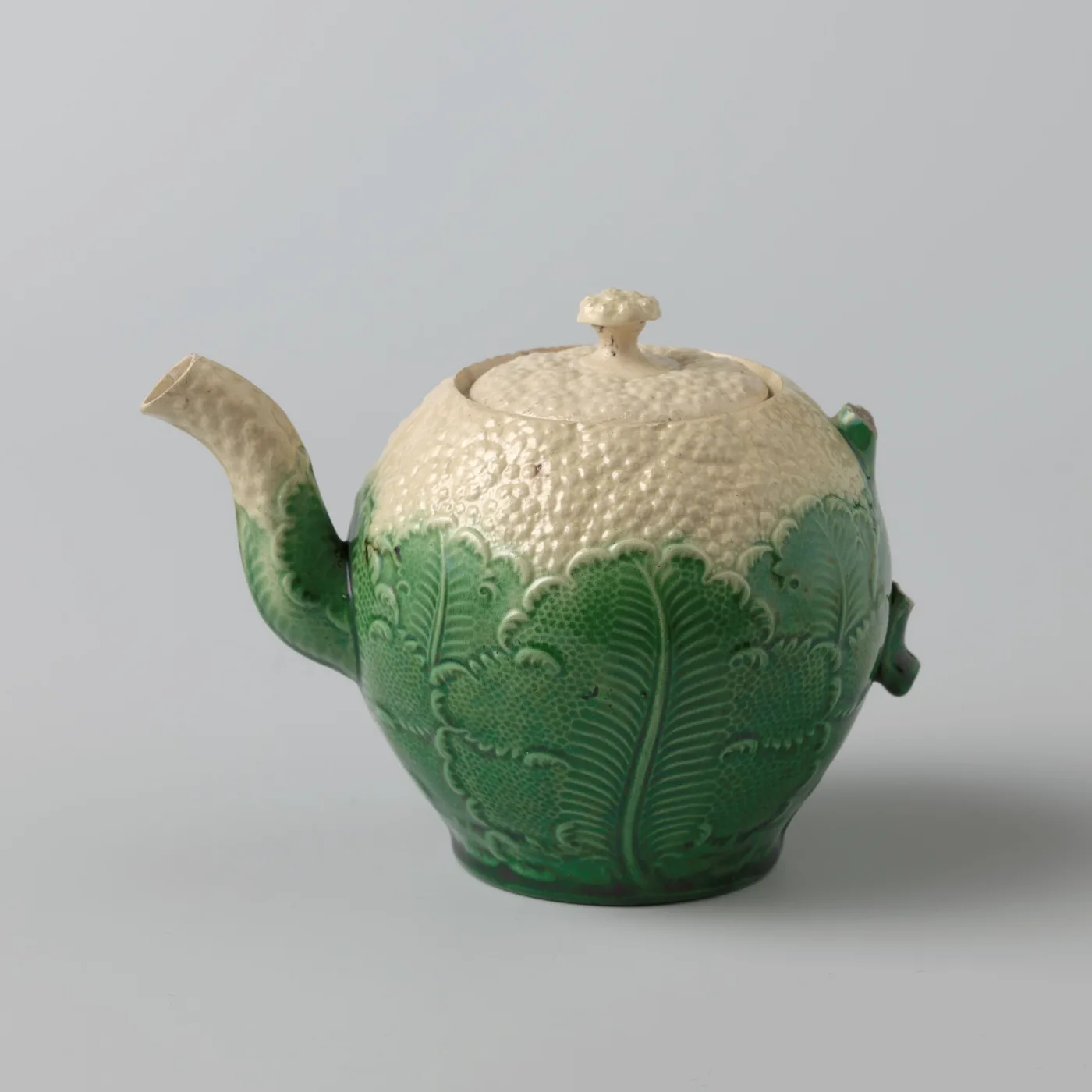
Portuguese Ceramic Traditions
Portuguese pottery centers developed distinctive approaches to cabbage ware that would become internationally recognized. The tradition of naturalistic ceramics in Portugal dates to at least the early 19th century, with regional workshops creating both functional pottery and decorative pieces inspired by local agricultural life.
Major Manufacturers and Makers
Several manufacturers dominate the cabbage ware collecting field, each bringing distinctive characteristics that aid in identification. Understanding the major makers, their production periods, and signature styles forms the foundation of cabbage ware authentication. While some manufacturers maintained consistent production for decades or even centuries, others created limited runs during specific periods, making their pieces particularly desirable to collectors.
The most collectible cabbage ware typically comes from established manufacturers with documented histories and recognizable quality standards. However, unmarked pieces from smaller regional potteries can also hold significant value when they demonstrate exceptional craftsmanship or represent rare forms. Learning to recognize the distinctive features of major makers while remaining open to interesting unmarked examples creates the most comprehensive approach to cabbage ware collecting.
Bordallo Pinheiro: The Portuguese Masters
Bordallo Pinheiro stands as the most prolific and widely recognized maker of cabbage ware, with production continuing from 1884 to the present day. Founded by Raphael Bordallo Pinheiro, a Portuguese political cartoonist who turned his creative talents to ceramics, the factory established itself in Caldas da Rainha, a town with a long pottery tradition in central Portugal.
Raphael Bordallo Pinheiro's Artistic Vision
Raphael Bordallo Pinheiro brought his satirical eye and attention to detail from political cartooning to ceramic design. His cabbage ware pieces showcase remarkable botanical accuracy combined with subtle artistic interpretation. The leaves display naturalistic veining, irregular edges, and organic curves that distinguish Bordallo Pinheiro pieces from more stylized interpretations by other makers.
Identifying Bordallo Pinheiro Pieces
Bordallo Pinheiro cabbage ware typically features deeply sculpted relief, capturing the dimensional quality of actual cabbage leaves. The glaze exhibits varying shades of green, from pale sage to deep forest tones, often with cream or yellow undertones where leaves overlap. The undersides of plates and serving pieces usually carry impressed or stamped marks, though many vintage pieces show only "Made in Portugal" or remain entirely unmarked.
Distinguishing Old from New Production
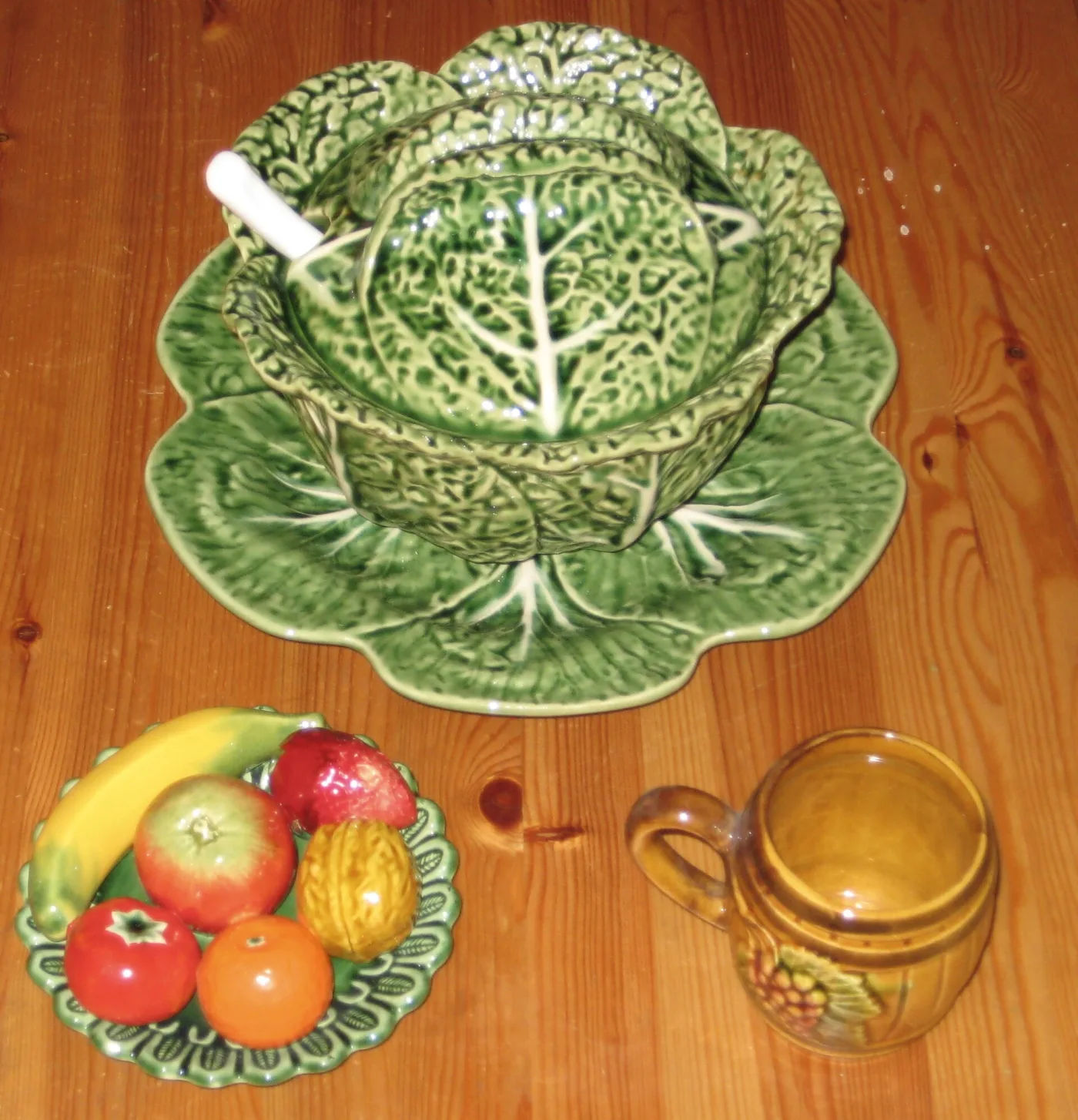
One of the greatest challenges with Bordallo Pinheiro cabbage ware involves distinguishing vintage pieces from current production, as the company continues manufacturing these designs with only subtle variations. Older pieces often display more muted glaze colors, finer crazing patterns in the glaze surface, and signs of age-appropriate wear on the foot rims and unglazed areas. Contemporary pieces tend to have brighter, more uniform glazes and pristine condition.
Marks and Dating
Bordallo Pinheiro marks evolved throughout the company's history, providing clues for dating pieces. Early marks may include Raphael Bordallo Pinheiro's signature or initials, while mid-20th century pieces often show "Bordallo Pinheiro Caldas Portugal" stamps. Some pieces bear only "Made in Portugal" markings, which appear across multiple decades of production, making precise dating difficult without additional context clues.
Range of Forms and Sizes
Bordallo Pinheiro produced cabbage ware in an extensive range of forms including dinner plates, salad plates, dessert plates, serving platters, bowls in multiple sizes, tureens with matching lids, pitchers, teapots, covered serving dishes, and even three-dimensional vegetable figures. This variety means collectors can focus on specific forms or build comprehensive table settings entirely in cabbage ware.
Dodie Thayer: American Cabbage Ware Icon
Dodie Thayer revolutionized American ceramics and entertaining style through her distinctive cabbage ware created from the 1960s through the 1990s. A Florida-born artist working primarily in Palm Beach, Thayer developed a signature style that combined sophisticated design with whimsical charm, attracting a devoted following among high society and design enthusiasts.
The Lettuce Ware Collection
While technically lettuce rather than cabbage, Thayer's vegetable-themed ceramics fall within the broader cabbage ware category and represent some of the most valuable examples of 20th-century decorative pottery. Her pieces featured realistically sculpted lettuce leaves, often in pale green glazes with delicate shading and dimensional modeling that captured the crisp, fresh appearance of garden vegetables.
Identifying Authentic Dodie Thayer Pieces
Genuine Dodie Thayer pieces carry distinctive characteristics including refined, delicate modeling with thinner walls than most European cabbage ware, subtle color gradations in pale to medium green tones, sophisticated shapes that elevate functional pottery to art objects, and typically a signed mark reading "Dodie" or "Dodie Thayer" on the underside. The quality of craftsmanship in authentic Thayer pieces exceeds most mass-produced cabbage ware.
Market Position and Collectibility
Dodie Thayer cabbage ware commands premium prices in the current market, with individual pieces often selling for hundreds to thousands of dollars depending on form and condition. The combination of American studio pottery credentials, celebrity associations (including Jacqueline Kennedy Onassis), limited production compared to factory-made European pieces, and increasing recognition of 20th-century American decorative arts drives strong collector demand.
Reproductions and Contemporary Production
Following Dodie Thayer's passing, Tory Burch acquired the rights to her designs and partnered with Bordallo Pinheiro to produce authorized reproductions. These contemporary pieces, while beautiful and officially licensed, should not be confused with Thayer's original handmade works. Current production pieces typically include clear markings indicating the Tory Burch collaboration and Portuguese manufacture.
Wedgwood Majolica Cabbage Ware
The venerable English pottery Wedgwood produced distinctive cabbage leaf plates and serving pieces as part of its Victorian-era majolica lines. Wedgwood majolica cabbage ware, produced primarily from the 1860s through the early 20th century, represents some of the finest examples of English naturalistic pottery and remains highly sought by collectors of both Wedgwood and majolica.
Wedgwood's Majolica Production
Wedgwood entered majolica production in 1860, slightly later than competitors like Minton but quickly establishing itself as a quality producer of colorful earthenware. The company's cabbage leaf designs showed characteristic Wedgwood refinement, with carefully modeled leaf structures, balanced color application, and superior glaze quality that avoided the garishness sometimes seen in lesser majolica production.
Characteristic Features
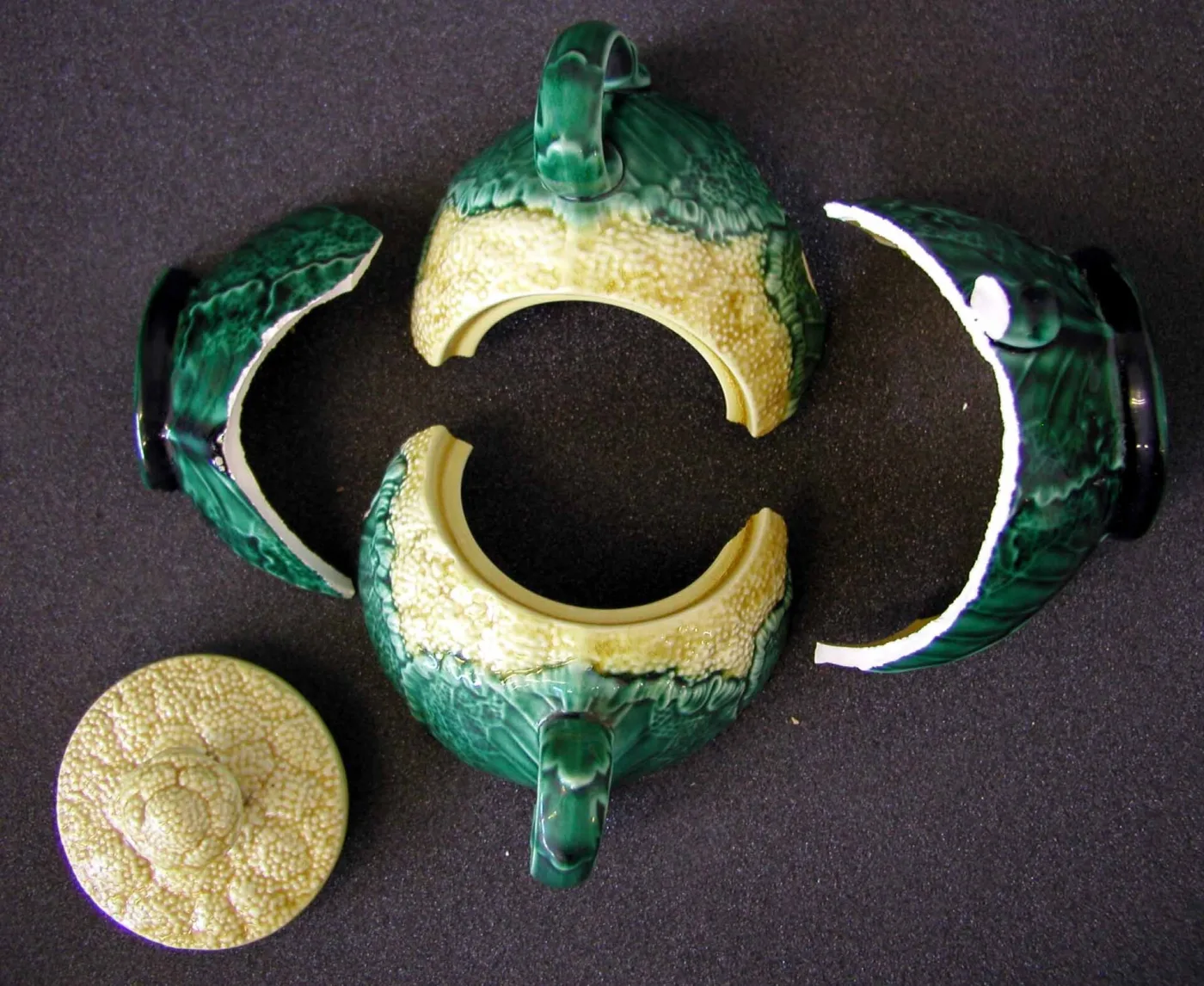
Wedgwood majolica cabbage ware typically displays bright but sophisticated green glazes, often with touches of brown, yellow, or purple at leaf edges and veins. The modeling shows fine detail with naturalistic veining and organic leaf shapes. Most pieces incorporate Wedgwood's distinctive earthenware body, which differs from the porcelain or faïence used by some continental makers.
Marks and Authentication
Authentic Wedgwood cabbage ware carries the impressed "WEDGWOOD" mark, usually on the underside. Pieces from specific periods may include additional marks such as "Etruria" (used when the factory operated at the Etruria site) or "Barlaston" (after the 1940 move). Date letters and model numbers can help establish precise production dates for marked pieces. The presence of clear Wedgwood marks significantly enhances value compared to unmarked examples.
Forms and Uses
Wedgwood produced cabbage ware in various functional forms including plates in multiple sizes, serving platters, cheese wedges and covers, sardine boxes with attached underplates, butter dishes with covers, and pickle dishes. The combination of Wedgwood's reputation, the appeal of Victorian majolica, and the whimsy of cabbage shapes makes these pieces particularly desirable to collectors.
Other Notable Makers and Regional Production
Beyond the major manufacturers, numerous other potteries and individual ceramicists produced cabbage ware throughout the 19th and 20th centuries. While these makers may be less recognized than Bordallo Pinheiro or Wedgwood, their pieces contribute to the rich diversity of cabbage ware collecting and can offer excellent value for collectors.
French Pottery Centers
Several French pottery regions produced distinctive cabbage ware. Sarreguemines created majolica-style pieces with bright glazes and naturalistic modeling. Lunéville and other faïence producers made cabbage leaf plates and serving pieces throughout the 19th century. These French pieces often show different aesthetic sensibilities than English or Portuguese examples, with particular attention to decorative surface treatment.
Other Portuguese Makers
Beyond Bordallo Pinheiro, other Portuguese potteries in Caldas da Rainha and surrounding regions produced cabbage ware. While often unmarked, these pieces can be identified by construction methods, glaze characteristics, and regional stylistic features. Some collectors specifically seek these alternative Portuguese examples as they often cost less than Bordallo Pinheiro while offering similar aesthetic appeal.
German and Austrian Production
German and Austrian potteries occasionally produced cabbage-themed pieces, particularly during the late 19th and early 20th centuries. These pieces might incorporate cabbage elements into broader Art Nouveau or Jugendstil designs, creating hybrids between strict naturalism and period artistic movements.
Asian Interpretations
Some Chinese and Japanese potteries created cabbage-inspired pieces, particularly export wares intended for Western markets. These Asian examples typically show different ceramic bodies and glaze formulations than European or American pieces, along with distinctive artistic interpretation of the cabbage form influenced by Asian ceramic traditions.
Studio Pottery and Individual Artists
Studio potters throughout the 20th and 21st centuries have created individual or small-batch cabbage ware pieces. While these don't carry the historical significance of 19th-century examples or the brand recognition of major manufacturers, they can demonstrate exceptional artistry and craftsmanship, appealing to collectors who value artistic merit over maker name recognition.
Identification Techniques and Authentication
Successfully identifying and authenticating antique cabbage ware requires a systematic approach combining multiple evidence types. No single characteristic definitively establishes authenticity or identifies a maker, but building a comprehensive picture through careful examination of marks, construction details, glaze characteristics, and stylistic elements enables confident attribution in most cases.
Developing expertise in cabbage ware identification comes through hands-on experience examining authentic examples, studying reference materials, and learning to recognize the subtle differences between makers and periods. The following sections outline key identification techniques that form the foundation of cabbage ware authentication.

Maker's Marks and Signatures
Maker's marks provide the most direct evidence for attributing cabbage ware to specific manufacturers, yet many authentic antique pieces carry no marks at all. Understanding marking practices across different makers and periods helps collectors work confidently with both marked and unmarked examples.
Common Marking Locations
Cabbage ware marks typically appear on the underside of plates and platters, inside the rim of bowls, or on the base of three-dimensional pieces like tureens. Marks may be impressed (stamped into the clay before firing), incised (scratched into the surface), painted or printed with ink or slip, or applied as ceramic decals. The marking method itself can provide clues about production period and manufacturer.
Types of Marks Found on Cabbage Ware
Complete maker names and locations provide the clearest identification, such as "Wedgwood" or "Bordallo Pinheiro Caldas Portugal." Initials or abbreviated marks require knowledge of specific manufacturers' marking systems. Generic country marks like "Made in Portugal," "Made in France," or "Made in England" indicate origin without specifying the manufacturer. Registry marks or patent numbers can help establish production dates for English pieces. Model numbers or pattern codes may appear alongside or instead of maker names.
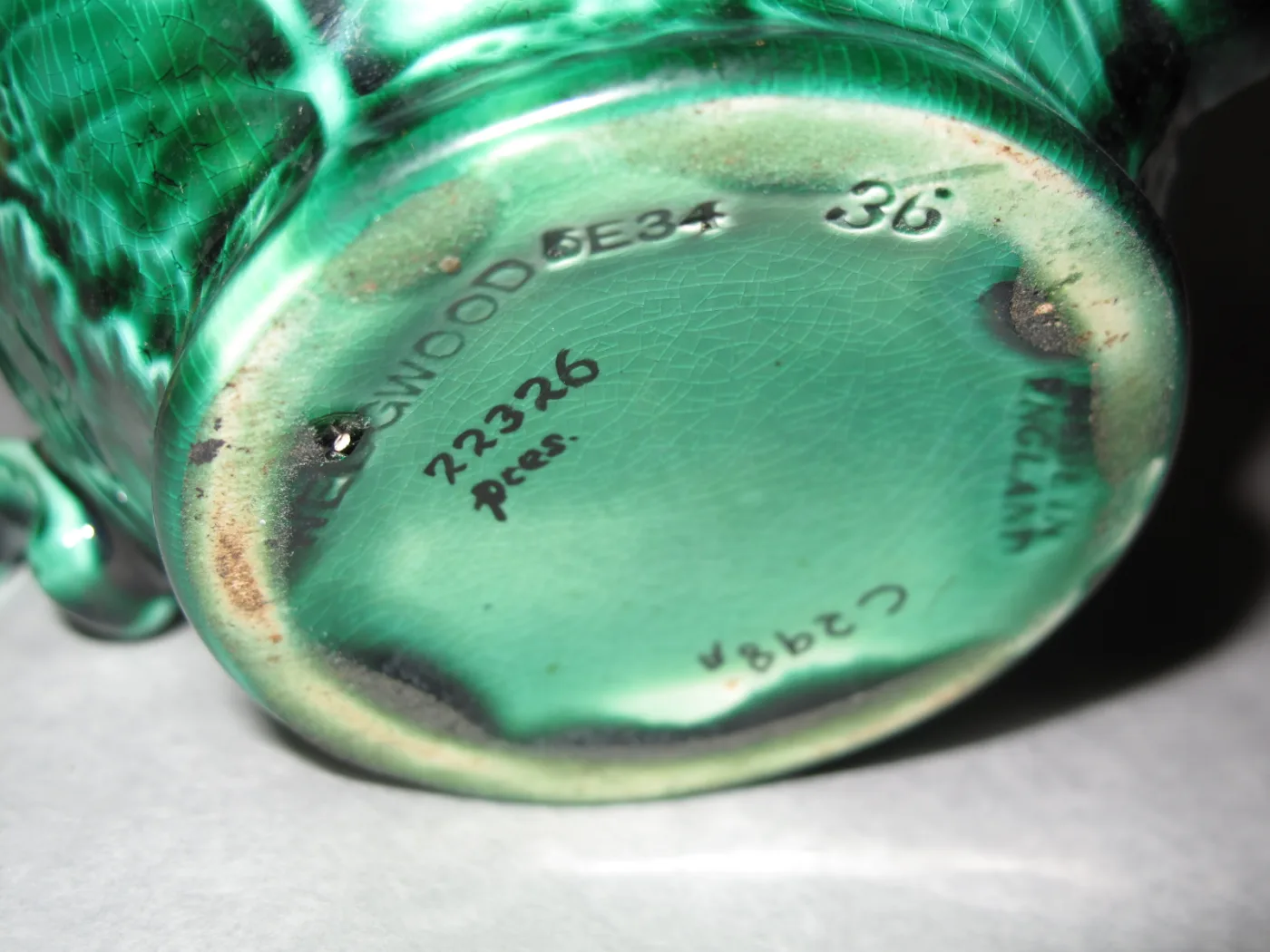
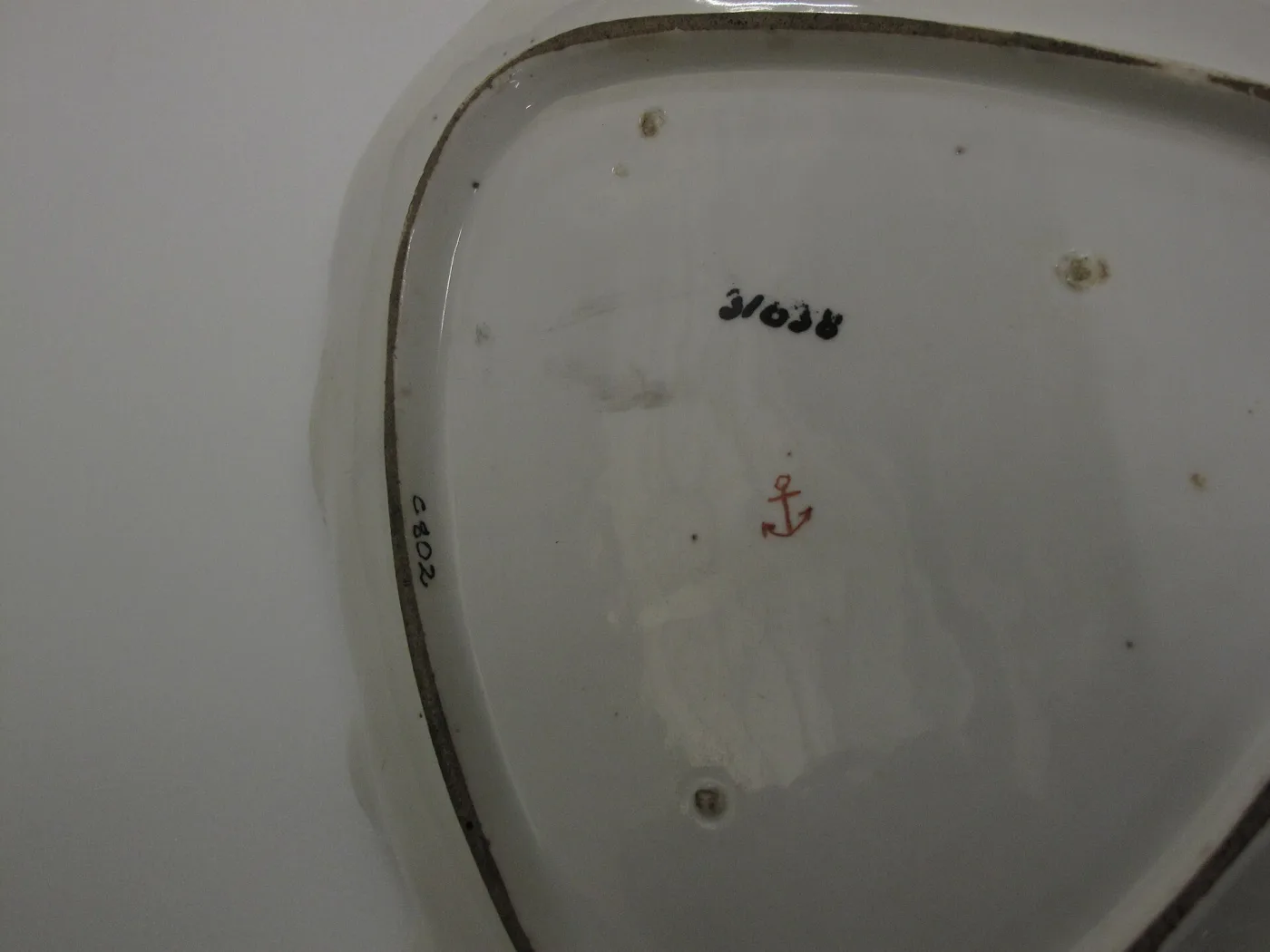
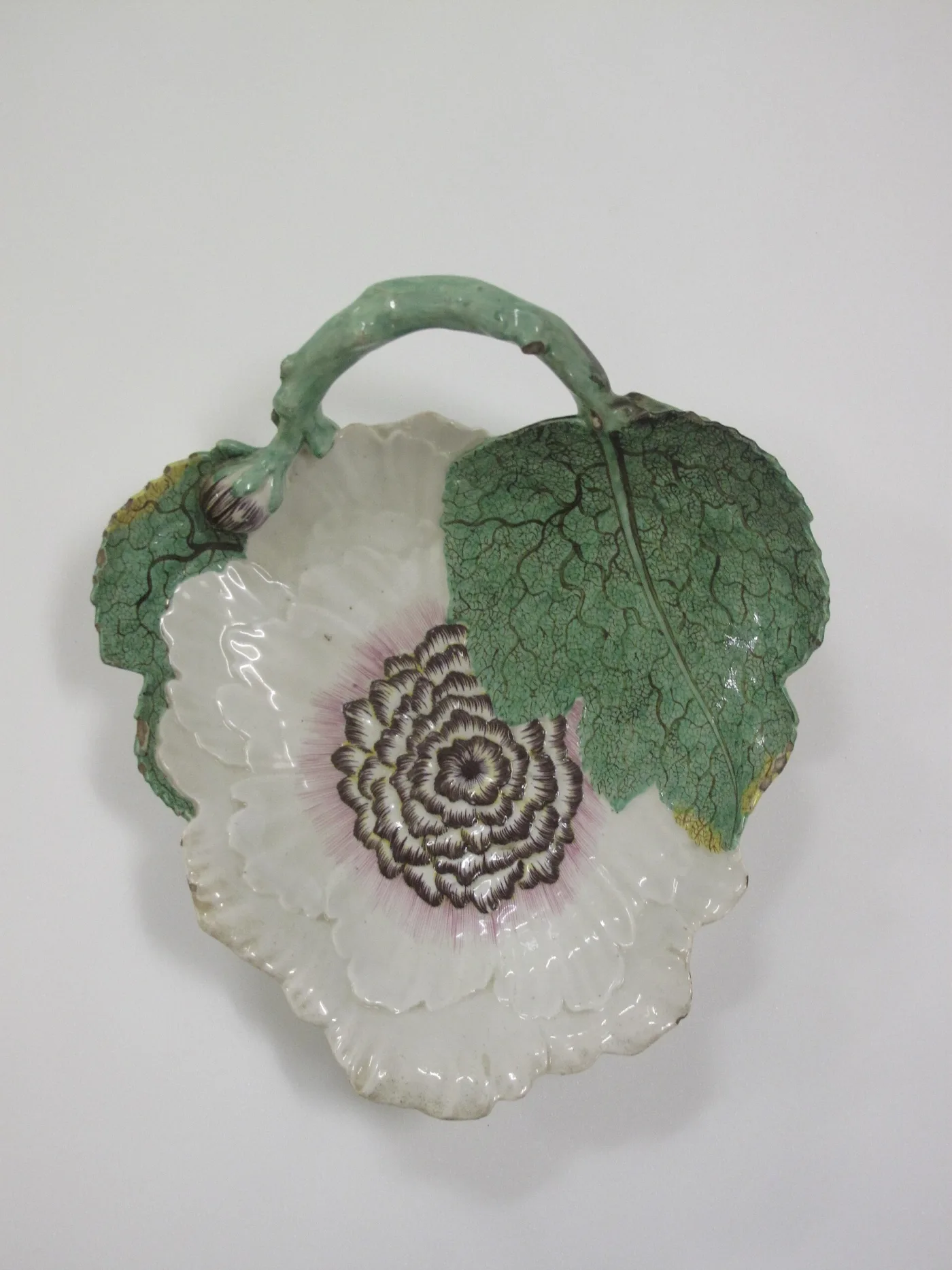
These are the two mark types you will actually meet, and they fail in opposite directions. An impressed mark is pressed into soft clay, so it is a little soft-edged, sits under the glaze, and cannot be added later without disturbing the surface around it — but on its own it dates nothing. The words beside it do: country-of-origin phrasing like MADE IN ENGLAND belongs to export marking introduced after 1891 and is routine on twentieth-century Wedgwood, which fits Auckland Museum dating the teapot this base belongs to as before 1935. A painted mark such as the Chelsea anchor is a brushstroke with visible variation in thickness, and it is by far the easier of the two to add to an unmarked piece — so treat a red anchor as evidence only when the body, the glaze and the modelling already read as 1750s porcelain. One caveat on the right-hand photograph: that dish is a leaf dish rather than a cabbage proper, but the factory marked its naturalistic wares the same way.
Unmarked Pieces
Many authentic cabbage ware pieces, particularly from smaller regional potteries or certain production periods, carry no marks. For these pieces, attribution relies on recognizing characteristic construction details, glaze formulations, stylistic elements, and manufacturing techniques associated with specific makers or regions. Unmarked pieces generally sell for less than marked examples from known manufacturers, but exceptional quality or rarity can offset the absence of marks.
False and Misleading Marks
Collectors should be aware that some reproductions carry marks intended to deceive, including fake Wedgwood stamps, spurious age indicators, or marks copying authentic manufacturers. Learning authentic mark characteristics for major makers, comparing questionable marks to verified examples, and examining the mark's integration with the piece (authentic marks show consistent aging with the rest of the item) helps identify questionable markings.
Construction Methods and Molding Techniques
The construction and molding methods used to create cabbage ware provide important clues for authentication and dating. Different manufacturers employed distinctive techniques that left characteristic traces in finished pieces, allowing knowledgeable collectors to identify makers even when marks are absent or unclear.
Mold Construction and Seam Lines
Most cabbage ware pieces were created using molds rather than being individually hand-modeled. Examining mold seam lines reveals information about manufacturing methods and can help distinguish factory-produced pieces from studio work. Clean, precisely matched seams indicate skilled factory production with well-maintained molds. Irregular or prominent seams may suggest earlier production, smaller workshops, or worn molds. Multiple-part molds show different seam patterns than two-part molds, with some complex forms requiring three or more mold sections.
Wall Thickness and Weight
The thickness and weight of cabbage ware pieces vary significantly between makers and periods. Fine porcelain cabbage ware from makers like Meissen shows thin, translucent walls quite different from heavy earthenware examples. English majolica typically has substantial weight with relatively thick walls supporting the lead glazes. Portuguese pottery often shows medium weight with walls neither as fine as porcelain nor as heavy as some majolica. Learning the expected weight and thickness for different makers helps identify pieces and spot reproductions that may use different materials.
Foot Rims and Bases
The foot rim (the base on which a plate or platter sits) shows manufacturing details often more revealing than decorated surfaces. Examine whether the foot rim is unglazed, partially glazed, or fully glazed, as practices varied between makers. Look for wheel marks, finishing marks, or hand-tooling evidence. Check for stilt marks (small rough spots where pieces rested on supports during firing) and their configuration. Note the smoothness or roughness of unglazed areas, which can indicate production methods and period.
Attachment Methods
For cabbage ware with added elements like handles, lids, or applied decoration, examine how components attach to the main body. Hand-applied elements show individual variation and tool marks. Mold-applied elements appear more uniform across multiple pieces. The quality of joins between elements indicates manufacturing skill and can help distinguish fine production from rushed work.
Glaze Characteristics and Color Patterns
The glazes used on cabbage ware provide essential clues for identification and authentication. Different makers employed distinctive glaze formulations, application techniques, and color palettes that create recognizable signatures for knowledgeable collectors. Understanding glaze characteristics helps distinguish between European majolica, Portuguese earthenware, French faïence, and other cabbage ware types.
Majolica Glazes
English and European majolica pieces feature bright, opaque lead glazes in saturated colors. The glazes typically show a slight sheen rather than high gloss, with colors that remain distinct rather than blending extensively. Victorian majolica often incorporated multiple glaze colors on a single piece, with greens, browns, yellows, and sometimes purples or blues creating naturalistic coloring. The lead content of antique majolica glazes gives them a particular depth and richness that differs from modern lead-free formulations.
Portuguese Pottery Glazes
Bordallo Pinheiro and other Portuguese cabbage ware typically uses glossier glazes than English majolica, with colors that may show more variation and blending. The greens range from very pale sage through medium grass green to deep forest tones. Portuguese glazes often pool in crevices and thin on raised areas, creating dimensional color variation that enhances the naturalistic modeling. The glossy surface sometimes shows a slight orange-peel texture upon close examination.
Porcelain and Faïence Glazes
Fine porcelain cabbage ware features smooth, glassy glazes quite different from earthenware examples. French faïence pieces show tin-based glazes creating an opaque white base with green coloring applied over or mixed into the tin glaze. These pieces often have a softer, less glossy surface than Portuguese pottery.
Color Consistency and Variation
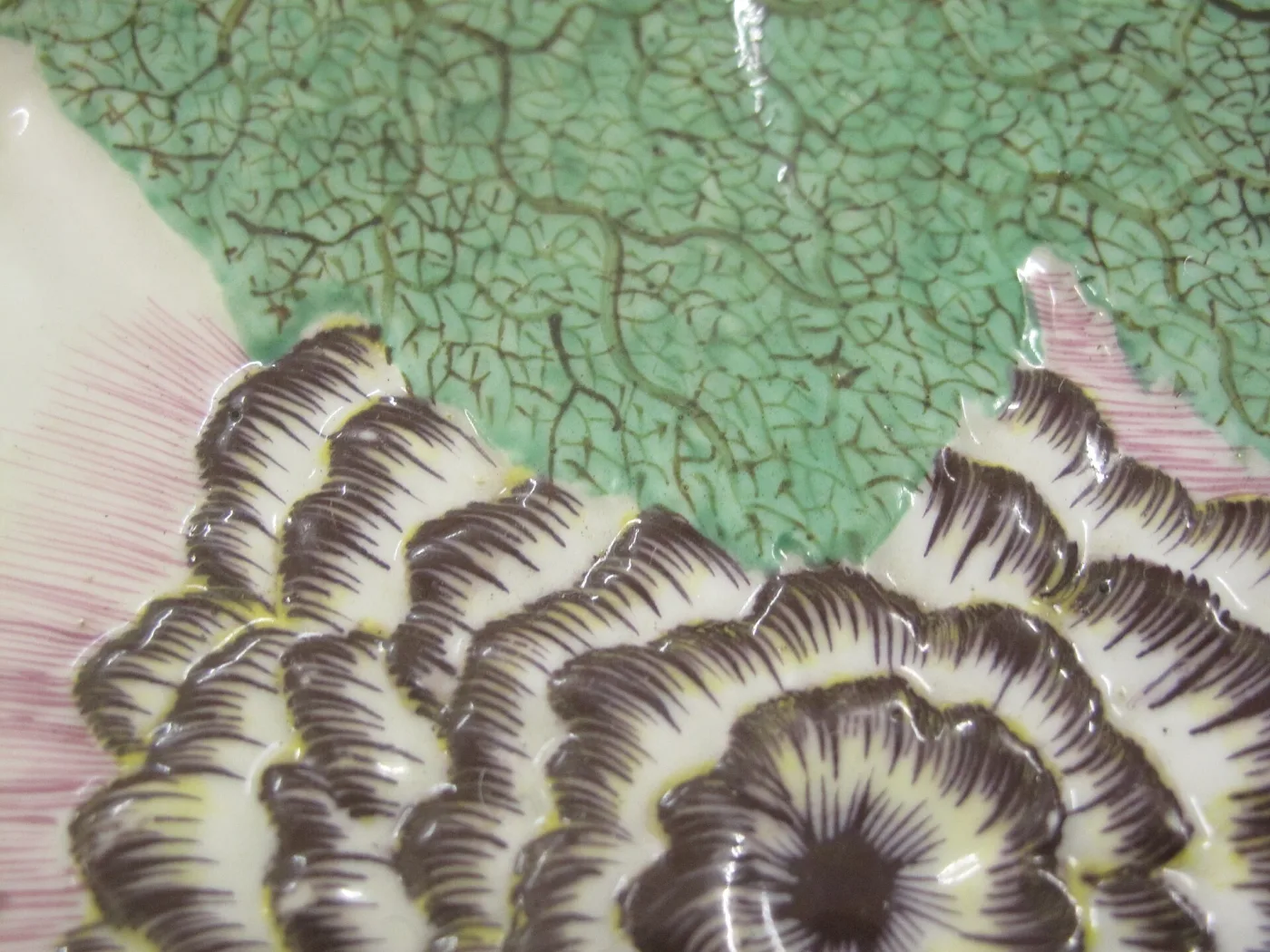
Authentic antique cabbage ware shows color variation consistent with period production methods. Hand-applied glazes create organic variation in color intensity and distribution. Factory-produced pieces show consistency across multiple examples of the same form. Modern reproductions may show artificially uniform coloring or, conversely, exaggerated variation intended to simulate age.
Crazing and Age-Related Glaze Changes
Many antique cabbage ware pieces develop crazing, a network of fine cracks in the glaze surface caused by differential expansion between the ceramic body and glaze coating. While crazing can occur on relatively recent pieces under certain conditions, extensive, darkened crazing typically indicates age. The crazing pattern, depth, and degree of discoloration provide clues about a piece's history and authenticity, though collectors should note that crazing does not occur uniformly across all pieces or makers.
Dating Antique Cabbage Ware
Establishing accurate dates for cabbage ware pieces combines evidence from maker's marks, stylistic elements, manufacturing techniques, and material characteristics. While precise dating proves impossible for many unmarked pieces, collectors can typically establish approximate production periods with reasonable confidence using multiple evidence types.
Mark-Based Dating
For pieces from major manufacturers with documented mark evolution, makers marks provide the most reliable dating method. Wedgwood's detailed marking system, including date codes used from 1860 onward, allows precise dating of marked examples. Bordallo Pinheiro marks evolved throughout the company's history, though the long production runs of many designs complicate dating. Reference books and manufacturer documentation help decode marks and establish production periods for many marked pieces.
Stylistic Dating Indicators
Cabbage ware design elements reflect broader artistic movements and periods. Victorian majolica shows characteristic 19th-century naturalism with bright colors and elaborate forms. Early 20th-century pieces may show Art Nouveau influence in flowing lines and organic shapes. Mid-century examples often feature cleaner lines and more restrained decoration. Recognizing period-appropriate design elements helps establish approximate dates even for unmarked pieces.
Manufacturing Technology Clues
Production methods changed over time, leaving traces that aid dating. Earlier pieces typically show more hand-finishing and individual variation. Later factory production demonstrates increasing standardization and precision in molding and glazing. The types of materials used, particularly clay bodies and glaze formulations, evolved throughout the 19th and 20th centuries, with changes sometimes identifiable through careful examination or analysis.
Condition and Wear Patterns
While condition alone cannot definitively date a piece (as well-preserved old pieces exist while new pieces can be artificially aged), authentic age-related wear shows characteristic patterns. Foot rim wear from years of use appears different from artificial distressing. Genuine crazing develops over decades and accumulates dirt in the fine cracks creating discoloration patterns difficult to fake convincingly. Learning to recognize authentic age-related changes helps distinguish genuinely old pieces from reproductions.
Condition Issues and Assessment
Evaluating the condition of antique cabbage ware requires understanding both general ceramic condition issues and problems specific to this pottery type. The dimensional modeling, glaze characteristics, and functional use of cabbage ware create particular vulnerability to certain types of damage. Accurate condition assessment significantly affects value and guides decisions about purchase, insurance, and conservation.
Collectors must balance the reality that few antique pieces survive in perfect condition with the understanding that certain condition problems more severely impact value and usability than others. Developing skill in condition assessment involves learning to identify different damage types, understand their causes and implications, and make informed decisions about acceptable condition for individual pieces based on rarity, intended use, and budget.
Crazing, Chips, and Common Damage
Antique cabbage ware commonly displays several characteristic forms of damage and deterioration. Understanding these condition issues helps collectors make informed decisions and set appropriate expectations when building collections.
Crazing
Crazing appears in the glaze of many cabbage ware pieces, particularly Portuguese pottery and majolica. This network of fine cracks results from different expansion and contraction rates between the ceramic body and glaze surface over time and temperature fluctuations. Light crazing with minimal discoloration minimally affects value for most pieces. Heavy crazing with dark staining can reduce value, particularly if it obscures decoration or makes pieces appear dingy. Crazing sometimes develops after purchase, especially if pieces experience temperature changes or improper washing.
Chips and Edge Damage
The dimensional, sculptural nature of cabbage ware, combined with functional use as tableware, makes chips and edge damage common. Rim chips on plates and platters typically impact value depending on size, location, and number. Small rim flakes may be acceptable to many collectors while large chips significantly reduce desirability. Chips to prominent raised elements like leaf tips or applied decoration show more conspicuously than damage to flatter areas. Professional restoration can address chips, but collectors should weigh restoration costs against the piece's value.
Cracks and Hairlines
Cracks represent more serious structural damage than surface crazing. Through-cracks that penetrate the full thickness of the ceramic body compromise structural integrity and significantly reduce value. Hairline cracks may be difficult to detect, requiring careful examination under varied lighting angles. Cracks sometimes become more visible after washing as water seeps into the opening. Pieces with significant cracking should be priced substantially lower than undamaged examples.
Staining and Discoloration
Cabbage ware can develop various forms of staining including discoloration in crazing lines from accumulated dirt, food stains in unglazed areas, hard water deposits in crevices of the molded design, and overall yellowing or browning of white or light-colored glazes. Some staining responds to gentle cleaning while other discoloration becomes permanent. The impact on value depends on severity and whether staining detracts from the piece's appearance.
Glaze Wear and Loss
Heavy use can result in glaze wear, particularly on plates and serving pieces where utensils made repeated contact. Minor glaze wear typically has minimal impact on value for functional pieces while extensive glaze loss significantly affects both appearance and value. Glaze flaking or peeling may indicate manufacturing defects in the original firing process rather than use-related wear.
Restoration and Conservation Considerations
Decisions about restoration and conservation significantly impact both the preservation and value of antique cabbage ware. While some condition issues can be successfully addressed through professional restoration, collectors must carefully weigh the costs, benefits, and potential value implications before proceeding with restoration work.
Professional vs. Amateur Restoration
Professional ceramic restoration by qualified conservators produces results vastly superior to amateur attempts. Professional work includes proper materials selection compatible with original ceramics, techniques that remain reversible when possible, color matching that blends repairs invisibly with original glazes, and structural repairs that restore stability without compromising the piece further. Amateur restoration attempts often cause additional damage, reduce value below even damaged-but-unrestored condition, and may make future professional restoration more difficult or impossible.
Types of Restoration Work
Common restoration procedures for cabbage ware include filling chips and losses with compatible materials, in-painting to match original glaze colors, staple or rivet removal and hole filling, crack stabilization to prevent progression, and complete reconstruction of missing sections for severely damaged but rare pieces. Each restoration type carries different cost implications and varying effects on value.
Value Impact of Restoration
The effect of restoration on value depends on multiple factors. High-quality, nearly invisible restoration on rare pieces may minimally impact value while making pieces more displayable and enjoyable. Obvious or poor-quality restoration typically reduces value below unrestored condition. For common pieces, restoration costs may exceed the item's value, making restoration economically unjustifiable. Collectors should disclose restoration when selling pieces, as undisclosed restoration discovered by buyers can create ethical and potentially legal issues.
Conservation and Stabilization
Conservation focuses on stabilizing damage and preventing further deterioration rather than disguising damage through cosmetic restoration. Conservation approaches often prove more appropriate than full restoration for historically important pieces or when restoration costs exceed value. Simple conservation measures like consolidating loose glaze, stabilizing cracks without filling, or removing harmful accretions preserve pieces for future enjoyment without the cost and value implications of full restoration.
Cleaning vs. Restoration
Proper cleaning can dramatically improve appearance without the costs or concerns of restoration. Gentle cleaning removes accumulated dirt from crazing, eliminates surface grime, and may reduce staining in some cases. However, overly aggressive cleaning can cause additional damage including abrading softened glazes, forcing water into cracks creating further damage, removing valuable age patina, or causing thermal shock if pieces experience rapid temperature changes.
Types and Forms of Cabbage Ware
Cabbage ware appears in diverse forms ranging from simple plates to elaborate tureens, serving pieces, and decorative objects. Understanding the range of available forms helps collectors identify pieces, appreciate their intended uses, and build cohesive collections. Different manufacturers emphasized different forms, with some specializing in tableware while others created broader decorative ranges.
Plates and Platters
Plates represent the most common form of cabbage ware, produced in multiple sizes from small dessert plates through large dinner plates to serving platters exceeding 15 inches in diameter. Plate forms vary from relatively flat designs with molded leaf textures to deeply sculptured examples with pronounced three-dimensionality. Some plates feature single large cabbage leaf designs while others incorporate multiple overlapping leaves. The variety in plate sizes and designs offers collectors numerous options for building table settings or creating wall displays.
Bowls and Serving Vessels
Cabbage ware bowls range from small individual serving bowls to large centerpiece vessels. Forms include shallow bowls suitable for salads or fruits, deeper bowls for soups or vegetables, footed compotes for elegant fruit displays, and two-handled serving bowls. The three-dimensional, organic shapes of cabbage bowls create visual interest while providing functional serving vessels that complement naturalistic or garden-themed table settings.
Covered Dishes and Tureens
Tureens and covered serving dishes represent the most elaborate and often most valuable cabbage ware forms. These pieces combine functional soup or vegetable service with sculptural presence, featuring molded cabbage leaf bodies and covers with cabbage, vegetable, or animal finials. Large tureens with matching underplates and ladles constitute substantial investments but create dramatic centerpieces for formal dining or display collections. Smaller covered dishes served specific purposes like cheese storage, butter service, or individual portions.
Pitchers and Beverage Service
Cabbage-themed pitchers and creamers combine functional liquid service with decorative appeal. Forms range from small cream pitchers to large water pitchers, with designs incorporating cabbage leaves into the body while typically using more conventional handles and spouts. Some pitchers emphasize naturalistic molding while others stylize cabbage elements into graceful forms suitable for formal table service.
Specialized Forms
Beyond standard tableware, cabbage ware appears in numerous specialized forms including sardine boxes with attached serving plates, cheese wedges with covers, pickle dishes, cruet sets with oil and vinegar vessels, salt and pepper shakers, napkin rings, and candleholders. These specialized pieces demonstrate the creative range of cabbage ware design while serving specific functional purposes that make them particularly interesting to collectors.
Three-Dimensional Figures and Decorative Objects
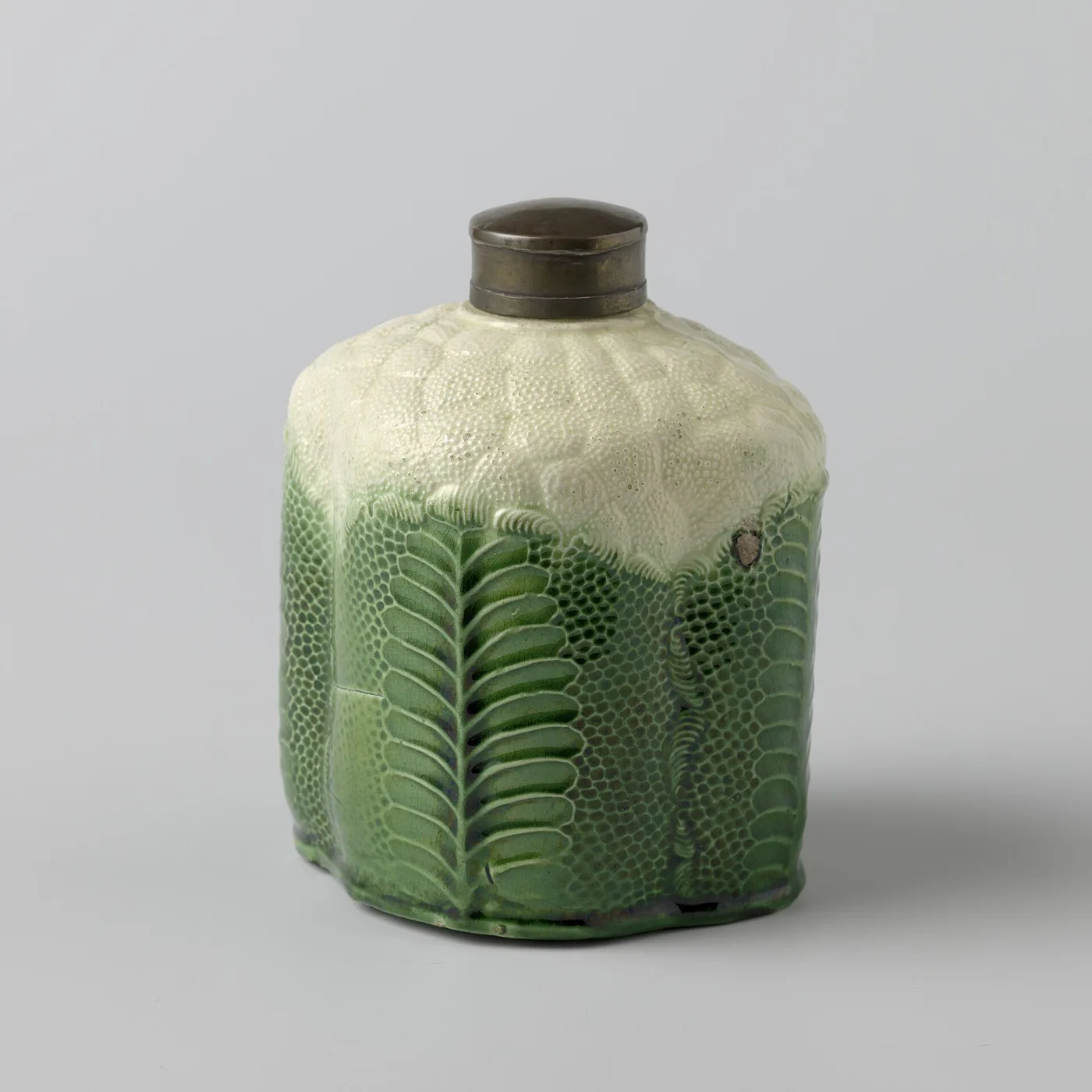
Some manufacturers, particularly Bordallo Pinheiro, created three-dimensional cabbage sculptures and decorative objects beyond functional tableware. These pieces range from naturalistic cabbage replicas serving as containers or centerpieces to whimsical interpretations like cabbage-shaped animals or figures. Such pieces appeal to collectors seeking purely decorative examples or those building comprehensive representations of a manufacturer's range.
Collecting Strategies and Market Trends
Building a meaningful cabbage ware collection requires strategy aligned with personal preferences, budget constraints, and collecting goals. The current surge in cabbage ware popularity, driven by design trends favoring maximalist, botanical, and vintage aesthetics, creates both opportunities and challenges for collectors entering or expanding in this field.
Focused vs. Broad Collecting
Collectors can pursue focused strategies concentrating on specific makers like Bordallo Pinheiro or Wedgwood, particular forms such as plates or tureens, defined periods like Victorian majolica or mid-century production, specific colors or glaze types, or pieces from particular regions. Alternatively, broad collecting approaches embrace diverse makers, periods, and styles united by the cabbage theme. Focused collecting often leads to deeper expertise in a specific area while broad collecting creates more varied visual displays and may offer more purchase opportunities.
Condition Standards and Budget
Establishing clear condition standards aligned with budget helps collectors make consistent decisions. Premium budgets can focus on excellent condition marked examples from top makers. Mid-range budgets might accept minor condition issues or emphasize unmarked quality pieces over imperfect marked examples. Limited budgets can build interesting collections by accepting condition challenges, focusing on less fashionable makers, or seeking damaged pieces suitable for daily use rather than investment.
Market Trends and Timing
The 2026 surge in cabbage ware interest has elevated prices across most categories, with particularly strong demand for Bordallo Pinheiro pieces, Dodie Thayer examples commanding premium prices, Victorian majolica showing steady appreciation, and online marketplaces creating price transparency reducing bargain opportunities. Collectors entering now face higher prices than existed several years ago but can still find value through careful hunting, relationship building with dealers, and willingness to consider less fashionable makers or forms.
Acquisition Sources
Cabbage ware appears through multiple channels including antique shops and malls (opportunities for hands-on inspection), online marketplaces like eBay and Etsy (wider selection but higher risk), auction houses for premium pieces (often higher prices but authenticated examples), estate sales and tag sales (potential bargains but requiring knowledge to identify pieces), and antique shows and fairs (opportunities to compare multiple examples and build dealer relationships). Diversifying acquisition sources maximizes opportunities while developing expertise in evaluating pieces through different purchase channels.
Authentication and Due Diligence
As prices rise, reproduction and misrepresentation risks increase. Collectors should learn authentic characteristics of target pieces, request detailed photographs when buying remotely, understand return policies and protections, join collector communities to learn from experienced members, and develop relationships with reputable dealers. Initial purchases might focus on lower-value pieces while developing authentication skills before committing to expensive acquisitions.
Authentication Red Flags and Reproductions
The growing popularity and value of antique cabbage ware has prompted increased reproduction production and, unfortunately, instances of misrepresentation. Learning to identify reproductions and recognize warning signs of questionable pieces protects collectors from costly mistakes while building confidence in authentication skills.
Common Reproduction Characteristics
Modern reproductions often display overly bright, uniform glazes lacking the subtle variations of antique pieces, suspiciously perfect condition inconsistent with age claims, artificially induced crazing that looks different from authentic age-related patterns, marks that appear too crisp or don't match known authentic examples, and unusually light weight suggesting modern materials. No single characteristic definitively indicates reproduction, but combinations of these features warrant careful scrutiny.
Specific Maker Reproduction Issues
Bordallo Pinheiro continues producing cabbage ware, making old versus new distinction particularly challenging. Collectors should examine glaze characteristics carefully (older pieces often show more muted colors), assess condition realistically (pristine pieces may be recent production), research current production lines to recognize currently manufactured forms, and understand that "vintage" sometimes describes pieces only decades rather than a century old. For Dodie Thayer, be aware of the authorized Tory Burch reproductions clearly marked as such, watch for unmarked pieces claimed to be Thayer originals (most authentic pieces bear her signature), and understand that extremely high prices may motivate fraudulent attribution.
Seller Red Flags
Beyond piece characteristics, certain seller behaviors warrant caution including vague or inconsistent descriptions, reluctance to provide additional photographs or information, pressure to complete transactions quickly, prices significantly below market levels for claimed attribution (if it seems too good to be true, it probably is), and lack of return policies or guarantees. Reputable dealers stand behind their attributions and welcome reasonable questions from potential buyers.
Artificial Aging and Alterations
Some sellers artificially age new pieces to enhance antique appearance. Signs of artificial aging include unnaturally uniform dirt or staining, crazing that appears too regular or extensive for the piece's supposed age, chips or damage that look fresh rather than showing wear consistent with age, and tea staining or other discoloration treatments that appear in unusual patterns. Comparing questionable pieces to verified authentic examples helps develop an eye for artificial alterations.
Misattribution vs. Fraud
Not all incorrect attributions represent intentional fraud. Honest mistakes occur when sellers lack expertise, rely on family stories without verification, or repeat misinformation from previous owners. However, collectors should protect themselves regardless of intent by requesting written attributions and guarantees, understanding return rights and timelines, considering escrow or secure payment methods for expensive purchases, and consulting experts when significant investments are at stake. When deliberate fraud is suspected, collectors may have legal recourse depending on jurisdiction and transaction details.
Valuation and Current Market Prices
Cabbage ware values vary dramatically based on maker, condition, rarity, form, and market trends. Understanding valuation factors helps collectors make informed purchase decisions, appropriately insure collections, and recognize fair prices when buying or selling. The current strong market for cabbage ware has elevated prices across most categories while creating particular demand for certain makers and forms.
Maker Impact on Value
Manufacturer identity strongly influences value. Dodie Thayer pieces command the highest prices, with individual serving pieces often selling for $500-3,000 and rare forms reaching higher. Marked Wedgwood majolica cabbage ware typically sells for $100-800 depending on form and condition. Authenticated Bordallo Pinheiro vintage pieces range from $30-300 for common forms in good condition, with rare early examples commanding premiums. Other Portuguese unmarked pieces often sell for $20-100 depending on quality and size. French majolica and faïence examples fall in the $50-400 range based on maker and condition. Lesser-known makers or unmarked pieces typically sell for $15-150 depending on quality and appeal.
Form and Size Effects
Larger and more elaborate forms generally command higher prices. Large serving platters typically sell for more than small plates from the same maker. Covered tureens, particularly with matching ladles and underplates, represent premium forms. Three-dimensional figures and specialized forms often attract collector interest beyond common tableware. Sets of matching pieces command premiums over individual items, though buyers should verify authenticity of set composition rather than assuming modern assemblages represent original sets.
Condition and Value
Condition dramatically affects value across all categories. Excellent condition examples command full market prices and may exceed typical ranges for particularly desirable pieces. Minor flaws like light crazing or small chips might reduce value 20-40% for common pieces but less for rare examples. Significant damage including large chips, cracks, or heavy restoration typically reduces value 50-80% or more. Completely damaged pieces have minimal value unless extremely rare.
Market Venues and Price Variation
Prices vary significantly across different selling venues. High-end antique shops and galleries charge premium prices but typically offer authenticity guarantees and return options. General antique malls and shops offer mid-range pricing with varying expertise levels. Online marketplaces show wide price ranges from bargains to overpriced pieces requiring careful evaluation. Auction results vary depending on audience composition and competition for specific lots. Estate sales and tag sales occasionally offer bargain opportunities when sellers lack knowledge of values.
Investment Considerations
While some collectors view cabbage ware as investment vehicles, several factors warrant consideration. The current popularity surge may represent peak pricing rather than sustainable long-term appreciation. Decorative trends change, potentially reducing future demand. Only the finest examples from recognized makers typically appreciate significantly over time. Pieces purchased primarily for enjoyment rather than investment avoid disappointment if future values don't meet expectations. Proper insurance protects valuable collections but adds ongoing costs to collecting.
Care, Display, and Preservation
Proper care and display practices preserve cabbage ware collections while allowing collectors to enjoy their pieces. Whether displaying collections decoratively or using pieces for dining, appropriate handling and maintenance prevents damage and deterioration while maximizing enjoyment of these charming ceramics.
Cleaning and Maintenance
Gentle hand washing with mild dish soap and warm (not hot) water safely cleans most cabbage ware. Avoid dishwashers, as high heat and harsh detergents can damage glazes and loosen any existing cracks or repairs. Use soft cloths or sponges rather than abrasive scrubbers that might scratch glazes. Pay attention to crevices in molded designs where dirt accumulates, using soft brushes if necessary. Dry pieces thoroughly after washing to prevent water spots and discourage mold growth in crazing. For pieces with significant crazing, avoid submerging in water as moisture may seep into cracks and cause problems. Never use bleach or harsh chemicals that can damage glazes and clay bodies.
Display Considerations
Cabbage ware displays effectively in multiple settings. Plate racks and wall-mounting systems showcase plates while protecting them from handling damage. Display cabinets provide dust protection while allowing viewing, with glass shelves particularly effective for showing pieces from multiple angles. Open shelving creates accessible displays but requires more frequent dusting. Consider lighting when positioning displays, as natural sunlight can fade some glazes over time. Group pieces by maker, color, or form for visual coherence, or create eclectic arrangements mixing different styles. Ensure display furniture can support the weight of ceramic collections, as accumulated pieces can become surprisingly heavy.
Safe Handling and Storage
Handle cabbage ware carefully, supporting pieces from the bottom rather than lifting by handles or raised elements that might be weak points. When stacking plates for storage, place protective padding between pieces to prevent chipping and scratching. Avoid stacking too high, as weight can damage lower pieces. Store pieces in stable environments away from temperature extremes and humidity fluctuations that can accelerate deterioration. Wrap stored pieces in acid-free tissue rather than newspaper (which can leave ink stains) or bubble wrap touching glazes directly (which may stick or leave marks). Keep comprehensive inventory records including photographs, acquisition information, and condition notes for insurance and authentication purposes.
Using Cabbage Ware for Dining
While some collectors prefer keeping pieces purely decorative, using cabbage ware for special occasion dining can be deeply satisfying. Consider condition before using pieces for food service, avoiding items with significant crazing that might harbor bacteria in glaze cracks or pieces with repairs that might not be food-safe. Hand wash immediately after use rather than allowing food to dry on surfaces. Avoid temperature extremes by not using pieces for very hot foods if they've been cold or vice versa. Recognize that use accelerates wear, so reserve most valuable or fragile pieces for display while enjoying sturdier examples. The joy of using beautiful antique pieces for their intended purpose often outweighs concerns about minor wear for many collectors.
Insurance and Documentation
Valuable cabbage ware collections warrant proper insurance coverage. Standard homeowner's or renter's insurance may provide inadequate coverage for collectibles, making specialized collectibles insurance worth investigating. Maintain detailed documentation including purchase receipts, condition reports, professional appraisals for valuable pieces, and comprehensive photographs showing overall appearance and maker's marks. Update documentation regularly as collections grow and market values change. This documentation supports insurance claims, aids identification if pieces are lost or stolen, and provides valuable information for heirs who may not share your collecting knowledge.