
Antique Beer Stein Identification Guide: Marks, Types & Authentication
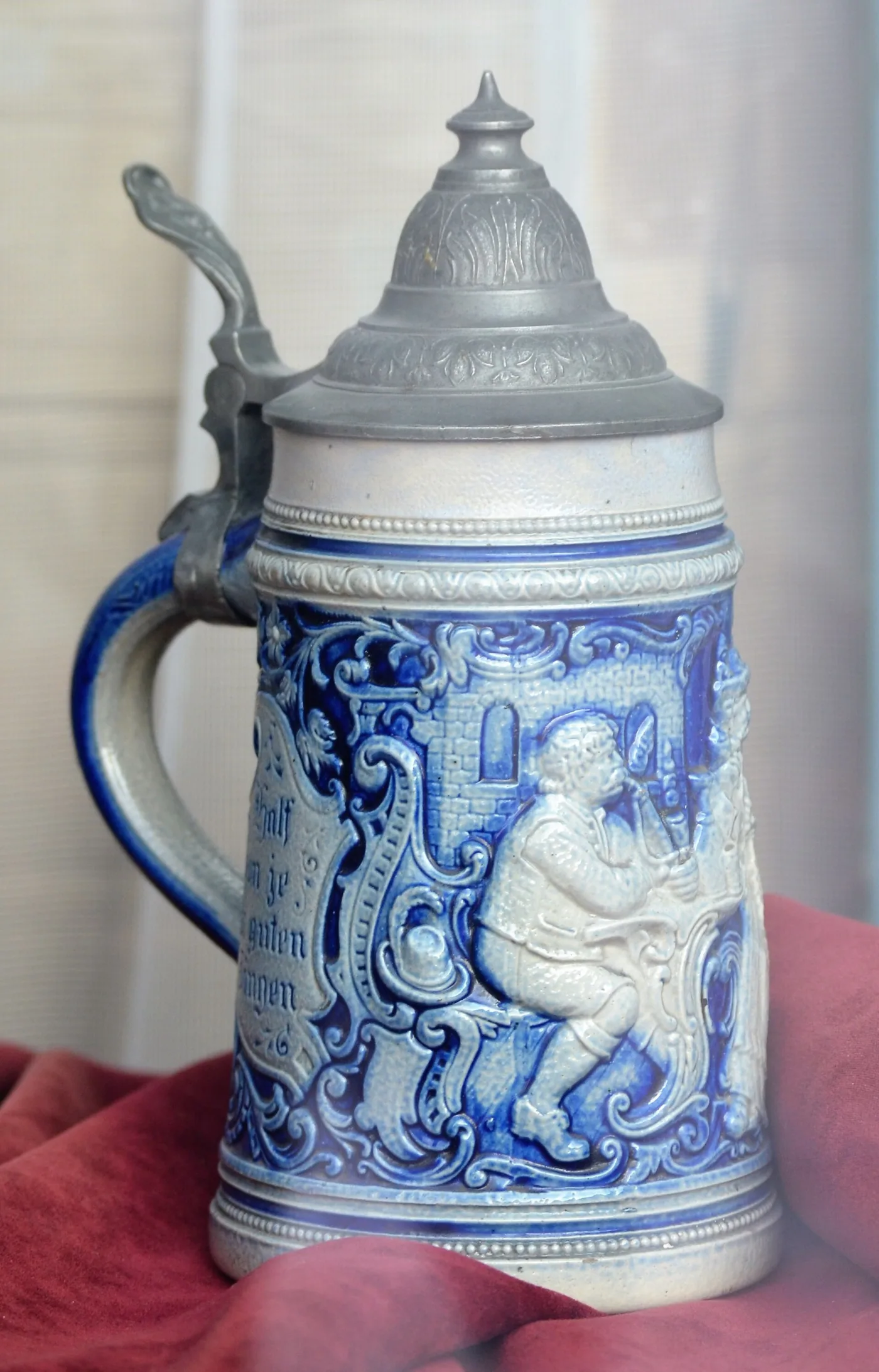
Antique beer steins represent one of the most beloved categories of collectible German heritage items, combining functional craftsmanship with artistic decoration. These traditional drinking vessels, characterized by their hinged pewter lids and ornate designs, have been produced since the 14th century and continue to captivate collectors worldwide. Understanding how to identify authentic antique beer steins requires knowledge of maker marks, materials, construction techniques, and historical periods.
The term "stein" originates from the German word "Steinzeug," meaning stoneware, though these collectibles have been crafted from various materials including pewter, porcelain, glass, and even silver. Values for authentic antique German beer steins range from $50 to $5,000, with exceptional pieces commanding significantly higher prices. Whether you've inherited a family heirloom or discovered a piece at an estate sale, learning to recognize the characteristics of genuine antique steins is essential for collectors and enthusiasts.
This comprehensive guide will walk you through the essential elements of beer stein identification, from decoding maker marks and understanding material types to recognizing regimental steins and authenticating pewter lids. You'll learn the key differences between authentic German steins and modern reproductions, discover the most valuable types sought by collectors, and master the techniques professional appraisers use to date and authenticate these historic pieces.
Table of Contents
- The History of German Beer Steins
- Types of Antique Beer Steins
- Materials and Construction Methods
- Understanding Maker Marks and Signatures
- Regimental and Military Steins
- Dating Techniques for Beer Steins
- Pewter Lid Identification
- Mettlach Steins: The Prestigious Collection
- Famous German Stein Manufacturers
- Authentication and Reproduction Detection
- Assessing Condition and Damage
- Factors Affecting Beer Stein Values
- Building Your Beer Stein Collection
- Preservation and Care Techniques
- Resources for Collectors
- Frequently Asked Questions
The History of German Beer Steins
The beer stein emerged during the 14th century in response to the bubonic plague that swept across Europe. As the Black Death devastated populations, authorities implemented public health measures including laws requiring covered drinking vessels to prevent contamination. This practical necessity gave rise to the distinctive hinged lid that became the hallmark of the traditional beer stein.
Medieval Origins and Early Development
The earliest beer steins were simple stoneware vessels produced by local potters in German territories. These primitive containers featured basic designs and hand-forged pewter lids attached with simple leather hinges. The word "stein" itself derives from "Steinzeug," the German term for the salt-glazed stoneware that became the primary material for these drinking vessels.
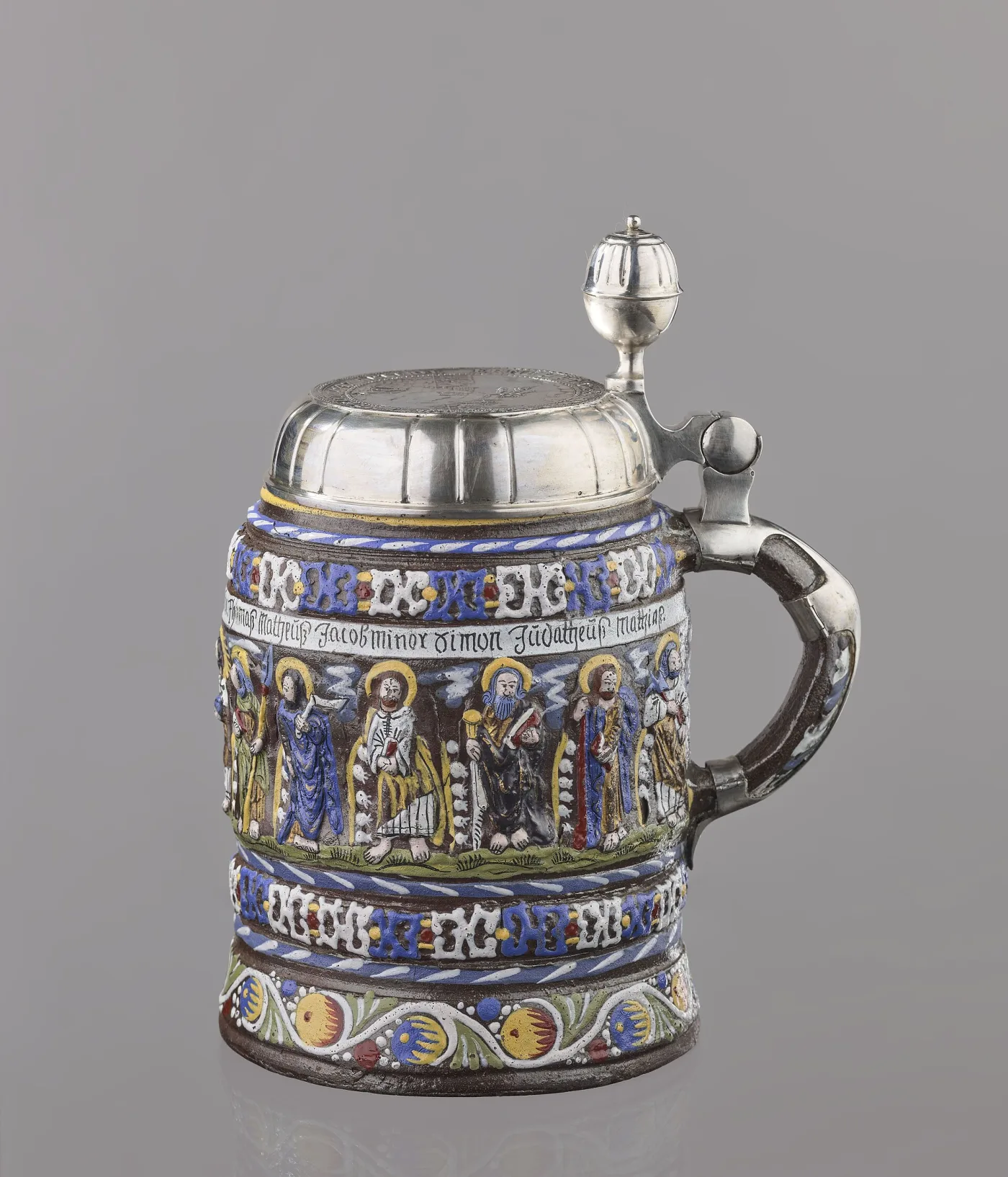
During the 16th and 17th centuries, German craftsmen began elevating the beer stein from utilitarian container to decorative art form. Potters in regions like the Westerwald developed distinctive blue and gray salt-glazed stoneware decorated with incised or relief-molded designs. These regional styles became increasingly sophisticated, with workshops competing to create more elaborate and visually striking pieces.
The Golden Age of Beer Steins
The 19th century marked the golden age of beer stein production, coinciding with German industrialization and the rise of middle-class prosperity. Manufacturers like Villeroy & Boch established large-scale production facilities combining traditional craftsmanship with modern manufacturing techniques. The famous Mettlach factory, operated by Villeroy & Boch, became renowned for producing exceptionally high-quality steins featuring intricate hand-painted designs and innovative chromolithographic decoration.
This period also saw the emergence of character steins, which featured figural designs shaped like people, animals, buildings, and objects. These whimsical pieces reflected German folklore, occupational themes, and social satire. Regimental steins became particularly popular during the German Empire period, serving as commemorative pieces for soldiers completing their military service.
Modern Era and Collectibility
The World Wars disrupted traditional stein production, with many manufacturers converting facilities to support war efforts or ceasing operations entirely. Post-war production gradually resumed, though the quality and artistry rarely matched pre-war standards. Steins marked "Made in Western Germany" date from the divided Germany period between 1949 and 1990, providing a clear chronological marker for collectors.
Today, antique beer steins from the late 19th and early 20th centuries represent the most sought-after pieces for serious collectors. The combination of superior craftsmanship, historical significance, and increasingly limited supply has driven values steadily upward for authentic examples in good condition.
Types of Antique Beer Steins
German beer steins were produced in numerous styles and categories, each with distinctive characteristics that help with identification and valuation. Understanding these different types is essential for collectors seeking to build comprehensive collections or identify specific pieces.
Stoneware Steins
Stoneware represents the most traditional and historically significant category of beer steins. These vessels were fired at temperatures between 1200°C and 1300°C, creating a vitrified ceramic material that is extremely hard, non-porous, and resistant to staining. The high firing temperature produced a durable vessel ideal for daily use in taverns and homes.
Salt-glazed stoneware steins feature the characteristic "orange peel" texture created by throwing salt into the kiln during firing. The salt vaporizes and forms a thin glass coating on the clay surface. Westerwald stoneware steins display distinctive blue decorations on a gray body, created using cobalt oxide applied before firing. These pieces often feature incised or relief-molded decorations depicting hunting scenes, coats of arms, and traditional German motifs.
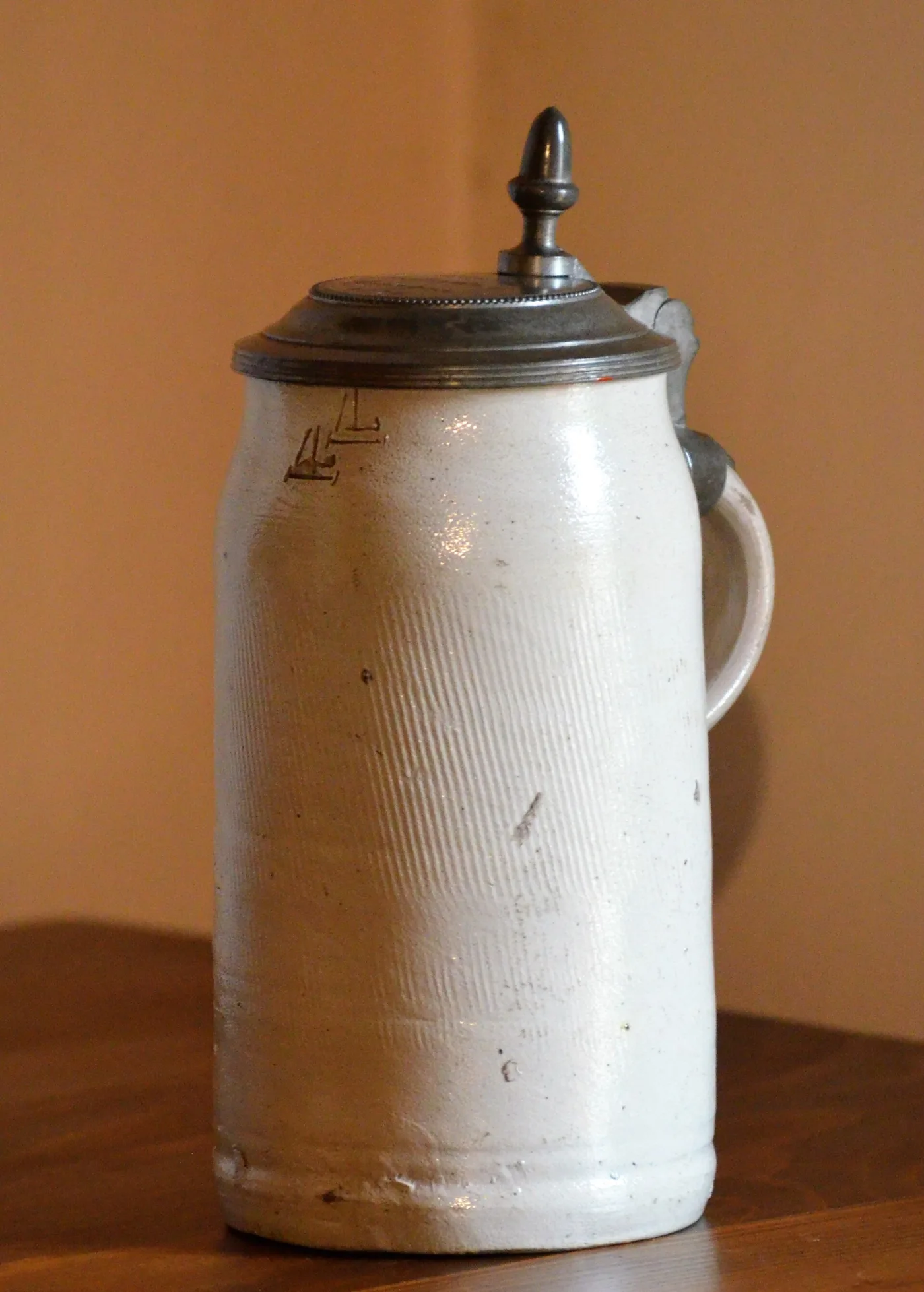
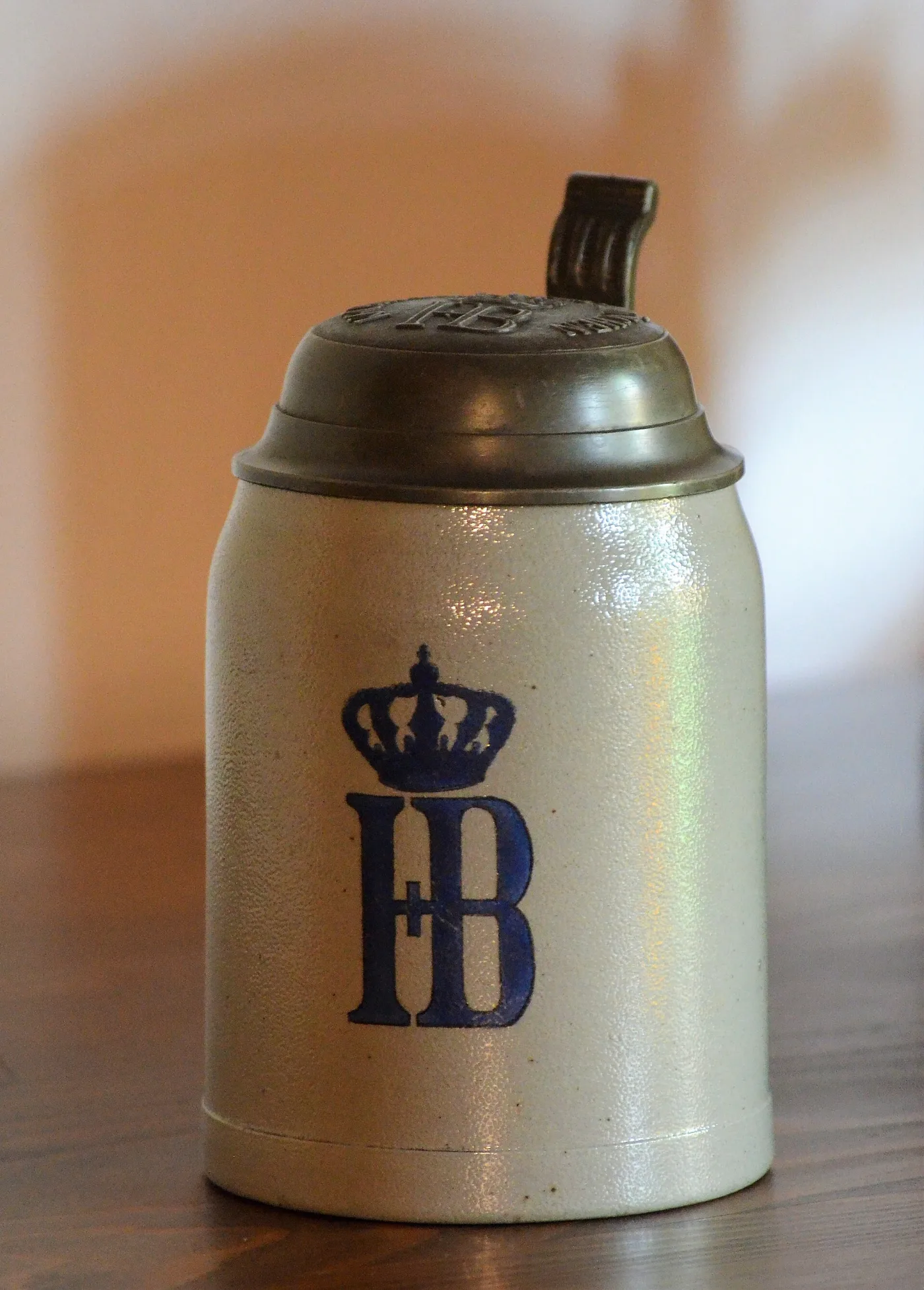
These two are the same object commercially, and one is worth several times the other. A brewery or tavern mark turns an anonymous mug into a documented one that can be tied to a place and a date range, and collectors of brewery advertising compete for them alongside stein collectors. Always photograph the body mark before the lid — it is the part that carries the provenance.
Porcelain Steins
Porcelain steins are prized by collectors for their delicate beauty and sophisticated artwork. Made from fine white or ivory-colored porcelain clay, these steins typically feature hand-painted scenes depicting German customs, folklore, landscapes, and historical events. The smooth porcelain surface provided an ideal canvas for detailed painted decoration.
The finest porcelain steins were produced by established manufacturers like KPM (Königliche Porzellan-Manufaktur Berlin) and Meissen. These pieces often incorporated transfer-printed designs combined with hand-painted details and gilt accents. Porcelain steins are generally more fragile than stoneware examples and require careful handling, making examples in excellent condition particularly valuable.
Glass Steins
Glass-blown steins represent some of the earliest types of beer drinking vessels produced in German territories. These hand-blown steins appear in various colors including red, green, cobalt blue, amber, and clear glass. Many feature etched or engraved scenes on the body, created by skilled glass artists using copper wheels or acid etching techniques.
Bohemian glass steins from the Czech regions are particularly sought after, showcasing elaborate cut glass designs and overlay techniques. These pieces demonstrate exceptional craftsmanship, with intricate patterns created by cutting through colored glass layers to reveal contrasting colors beneath. The fragility of glass steins means that surviving examples in good condition command premium prices.
Pewter and Metal Steins
Pure pewter steins, made entirely from the tin-copper alloy, were primarily produced in England and other European regions rather than Germany. These vessels are exceptionally durable and resistant to breakage. Pewter steins often feature embossed or engraved decorations created by skilled metalsmiths. The metal develops a natural patina over time, which collectors often prefer to leave undisturbed as evidence of age and authenticity.
Some high-end steins incorporated silver or silver-plated components, particularly lids and handle attachments. These luxury pieces were commissioned by wealthy patrons and often feature elaborate engraving, repoussé work, and semi-precious stone inlays. Silver hallmarks provide valuable information about the maker, location, and date of manufacture.
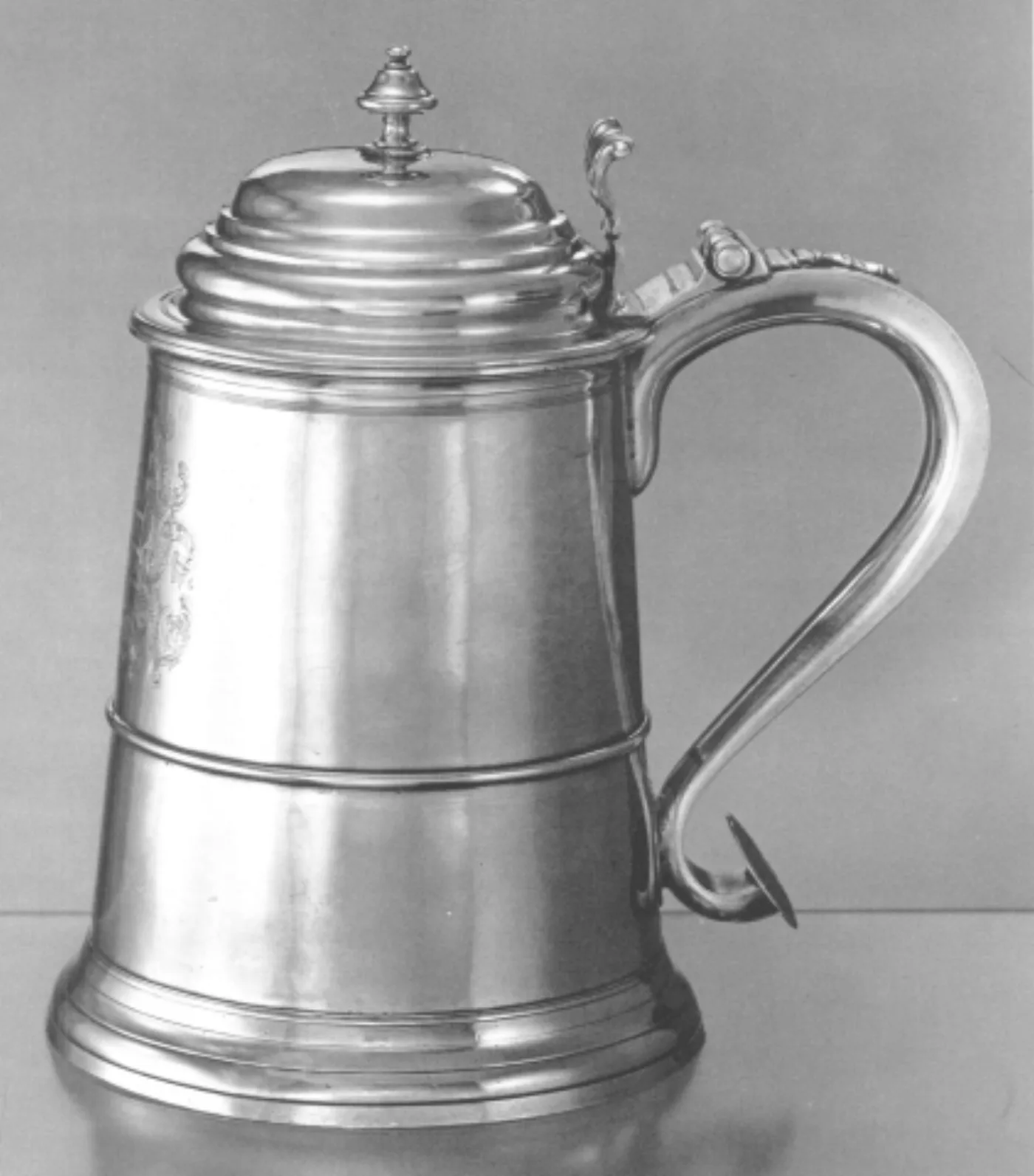
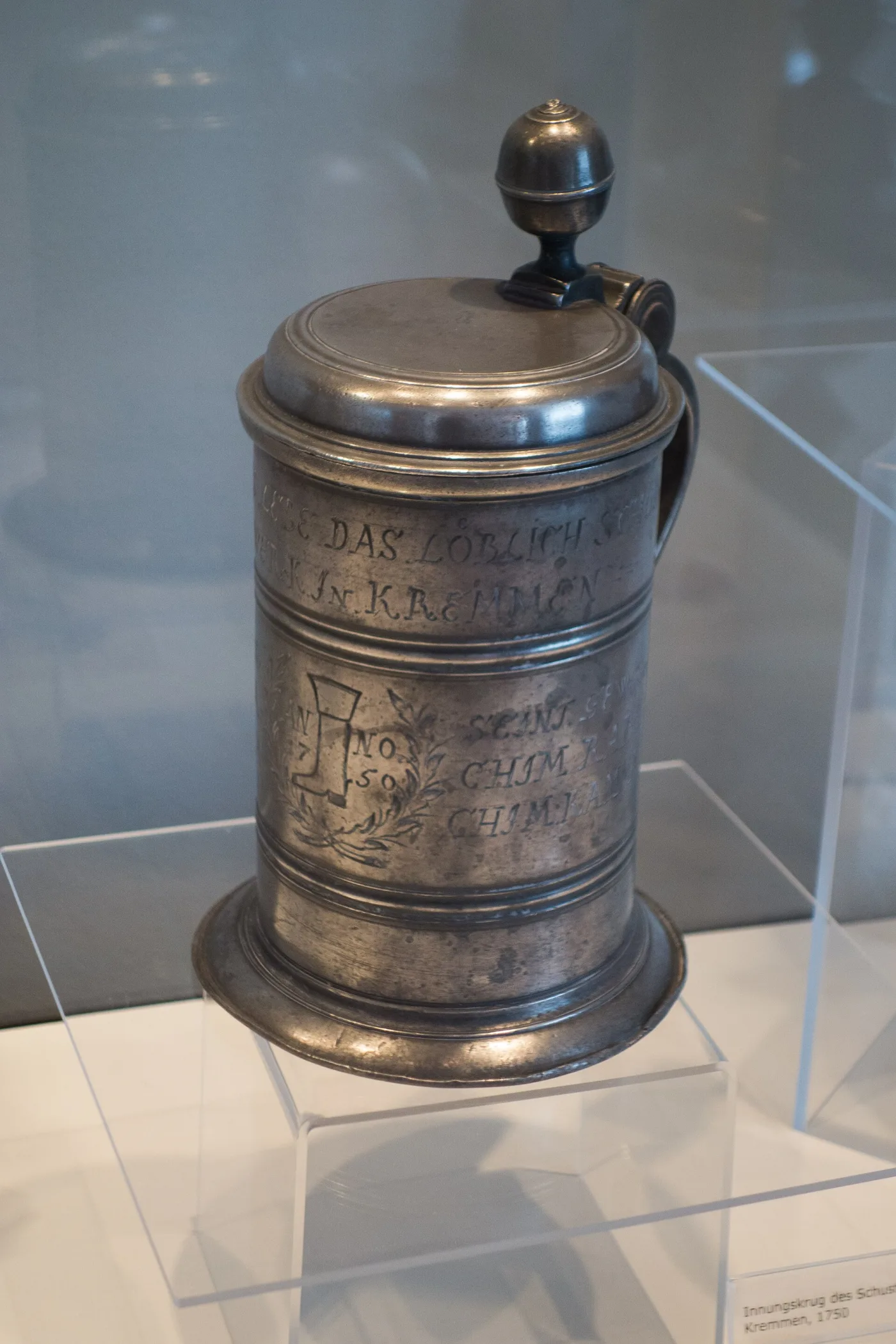
Metal steins are dated by their touchmarks rather than their look, and the two systems are different. Pewter carries a maker's touch struck inside the base or on the lid, regulated by guild rather than by state, so it identifies a workshop but rarely a year. Silver carries assay marks that usually give both maker and date. If a metal stein has no marks anywhere, treat an early attribution with real scepticism — unmarked pewter is far more often 19th-century reproduction than 17th-century survival.
Ivory and Carved Steins
Ivory steins represent the pinnacle of beer stein artistry and are among the most valuable examples available to collectors. These exceptional pieces feature highly detailed, realistic carvings of human figures, animals, hunting scenes, and mythological subjects. Master carvers spent hundreds of hours creating these sculptural masterworks, which were commissioned by royalty and aristocratic families.
Due to modern wildlife protection laws, the sale and export of ivory items face significant legal restrictions. Collectors must obtain proper documentation and comply with CITES regulations when buying or selling ivory steins. The combination of artistic merit, historical significance, and legal restrictions makes authentic ivory steins extremely valuable, with prices often reaching five figures for exceptional examples.
Character Steins
Character steins feature three-dimensional figural designs shaped to represent people, animals, buildings, objects, and fantasy creatures. These whimsical pieces became extremely popular during the late 19th and early 20th centuries. Common subjects include monks, soldiers, brewers, animals like cats and frogs, towers, barrels, and skulls.
The finest character steins were produced by Schierholz, Musterschutz, and other specialist manufacturers. These pieces demonstrate remarkable artistry in their sculpting and hand-painted decoration. Character steins appeal to collectors seeking decorative pieces with personality and charm, and rare examples in excellent condition command strong prices at auction.
Materials and Construction Methods
Understanding the materials and construction techniques used in antique beer steins is crucial for authentication and dating. Each material type has distinctive characteristics that help identify genuine period pieces and distinguish them from modern reproductions.
Stoneware Construction
Authentic stoneware steins were thrown on potter's wheels or molded in multi-piece molds. The clay body was shaped while leather-hard, then allowed to dry completely before the first firing. Decorative elements were either incised into the clay, applied as separate molded relief pieces, or created using stamps pressed into the wet clay surface.
Salt-glazing occurred during the final high-temperature firing. Potters threw common salt into the kiln at peak temperature, causing it to vaporize and bond with the silica in the clay body to form a thin glassy coating. This process created the characteristic texture and slight color variations that identify authentic salt-glazed stoneware. The bottom of genuine stoneware steins shows throwing marks or mold seams, and the interior typically displays the unglazed stoneware body.
Pewter Components
Pewter is an alloy consisting primarily of tin with small amounts of copper, antimony, or bismuth added for strength and workability. Historical pewter formulations varied by region and period, with quality declining somewhat as lead was sometimes added to reduce costs. Modern regulations prohibit lead in pewter used for drinking vessels due to health concerns.
Authentic antique pewter lids develop a natural dark patina from oxidation and handling over decades or centuries. This patina appears as a deep gray or blackish surface layer that cannot be easily replicated on modern reproductions. The pewter used in quality antique steins has a substantial weight and exhibits fine casting details in decorative elements like thumblifts and relief designs.
Pewter lids made before World War II were typically cast in three or four-part molds, with visible seam lines where the mold sections joined. Post-war pewter lids are generally cast in single molds using more modern production techniques. Examining the lid's interior for mold seams helps date pewter components and authenticate older pieces.
Porcelain Formulation
True hard-paste porcelain consists of kaolin (china clay) and petuntse (china stone) fired at temperatures exceeding 1300°C. This creates a translucent, vitrified ceramic body that produces a clear ringing tone when gently tapped. German porcelain manufacturers developed their formulas through centuries of experimentation, with Meissen achieving the first European hard-paste porcelain in the early 18th century.
Decorating techniques for porcelain steins included underglaze painting applied before the final glaze firing, overglaze enamels added after glazing and refired at lower temperatures, and transfer printing using engraved copper plates. The finest pieces combine multiple techniques with added gilt highlights. Examining decoration under magnification reveals brush strokes in hand-painted areas and the characteristic dot pattern of transfer printing.
Glass Manufacturing
Antique glass steins were produced using traditional glass-blowing techniques. A glassblower gathered molten glass on the end of a blowpipe and formed the basic vessel shape through blowing and manipulation with hand tools. The handle was applied separately by attaching a ribbon of molten glass and shaping it while hot. This production method creates subtle irregularities in wall thickness and shape that distinguish handmade glass from modern molded examples.
Decorative techniques included wheel-engraving, where artists used copper wheels of various sizes to cut intricate designs into the glass surface. Acid etching created frosted designs by masking areas with wax and exposing the glass to hydrofluoric acid. Enameling involved applying metallic oxide paints to the glass surface and firing them in a low-temperature kiln to create permanent colored decorations.
Handles and Attachments
The method of handle attachment provides valuable clues for dating and authentication. Early stoneware steins have handles attached using clay slip as adhesive, with the joint reinforced by pressing the clay together before firing. The attachment point shows as a slight ridge where excess clay was smoothed away. These hand-attached handles often show slight irregularities in alignment and position.
A crucial dating feature involves the presence or absence of bumps on the handle. Beer stein handles did not incorporate the characteristic thumb bumps or grips until the 1920s. Steins with perfectly smooth handles without bumps or raised grips generally date to before this period, while those featuring bumps or gripping ridges were produced during or after the 1920s.
Understanding Maker Marks and Signatures
Maker marks represent one of the most important elements for identifying and authenticating antique beer steins. These marks provide crucial information about the manufacturer, origin, and approximate age of a piece. Learning to locate and interpret these marks is essential for serious collectors.
Origin Markings
Since 1887, international trade agreements required beer steins to clearly indicate their country of origin. Look for marks stating "Made in Germany," "Gemacht in Deutschland," or simply "Germany" on the base or inside the lid. These marks confirm German origin and help establish a post-1887 manufacture date.
Steins marked "Made in Western Germany" or "West Germany" were produced during the divided Germany period between 1949 and 1990. This marking provides a precise chronological range and helps distinguish mid-20th century production from earlier periods. Similarly, "Made in Occupied Germany" indicates production during the immediate post-World War II period from 1945 to 1949.
Manufacturer's Marks
Major stein manufacturers developed distinctive logos and trademarks that appear on their products. Villeroy & Boch used various tower marks and "V&B" monograms that evolved through different periods. The famous Mettlach mark includes a Mercury staff with intertwined serpents and often includes the word "Mettlach" and a form number.
Reinhold Merkelbach used a "RM" monogram, often within a circle or shield shape. Simon Peter Gerz marked pieces with "GERZ" or "S.P. GERZ" accompanied by various symbols. Marzi & Remy used an "M&R" mark, while other manufacturers like Hauber & Reuther, Dümler & Breiden, and August Saelzer developed their own distinctive marks.
Manufacturer marks often include additional information such as form numbers, capacity marks, and decorator signatures. Cross-referencing these marks with published reference guides helps identify the specific manufacturer, approximate production date, and original line or series for a stein.
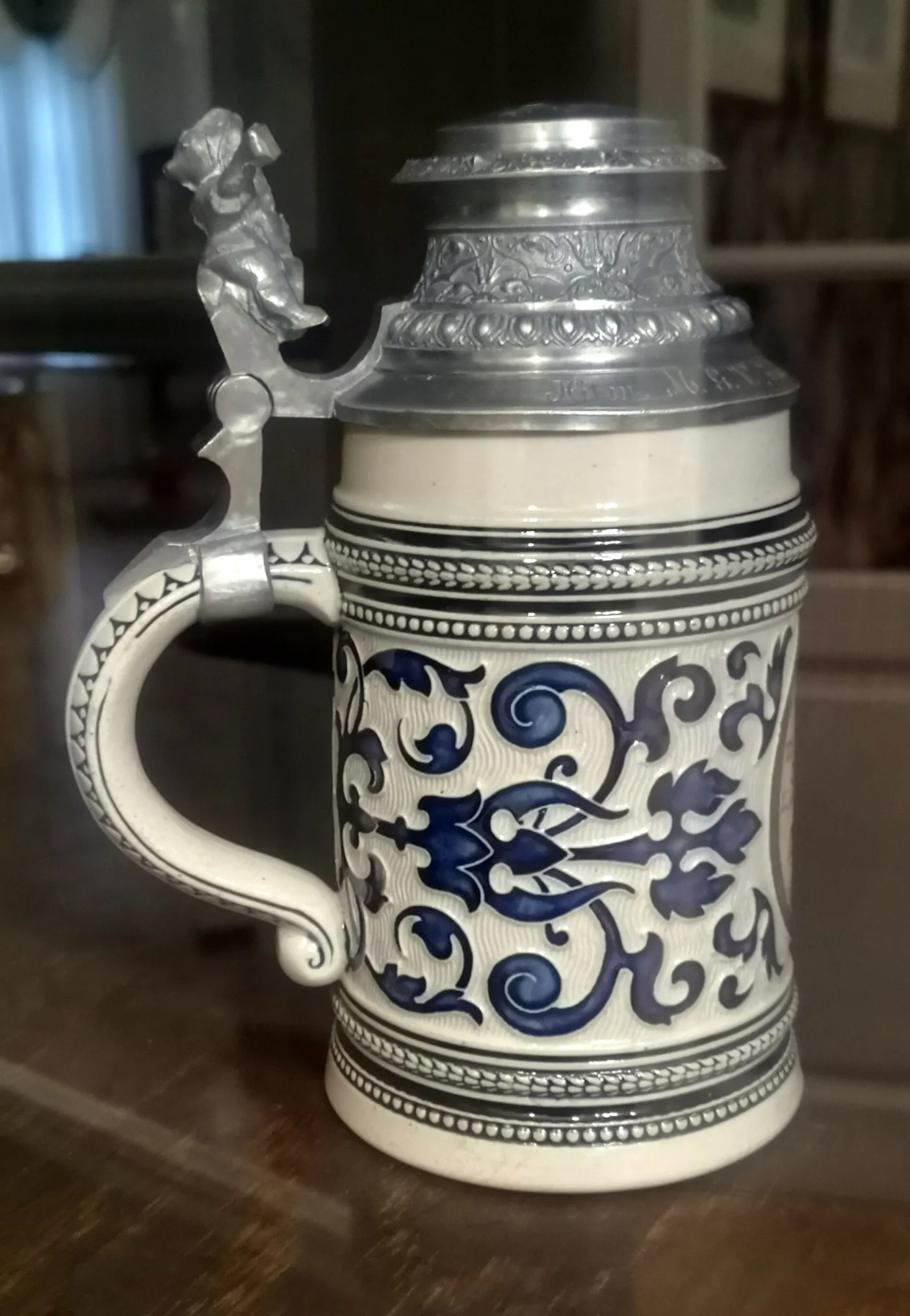
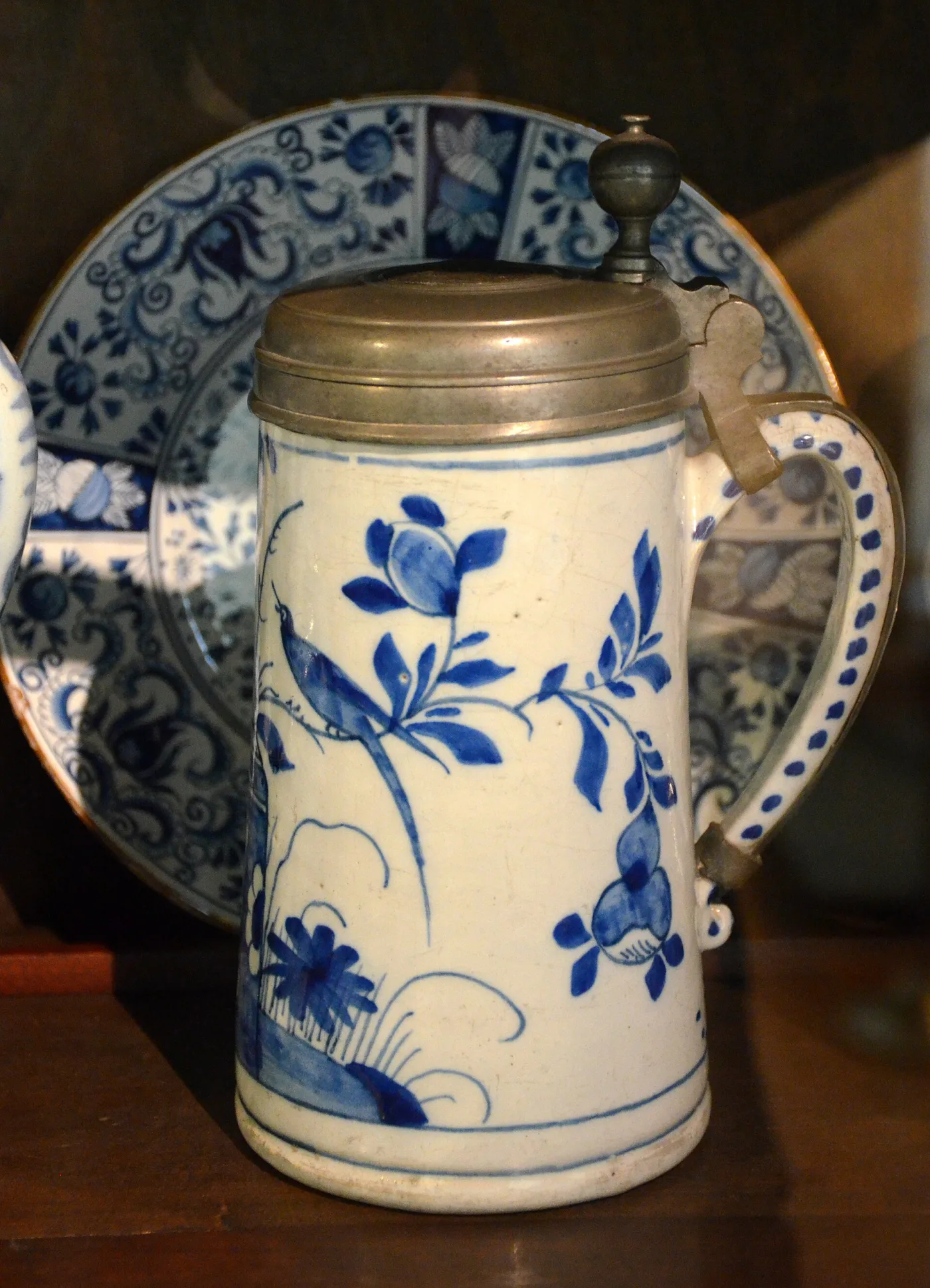
Two cautions belong together here. Thumblift shape is often a better attribution clue than any painted mark, because workshops reused their own castings for decades — record it in a photograph. And "stein" is not a guarantee of German origin: Dutch, Bohemian, Alsatian and Polish potteries made lidded blue-and-white drinking vessels that are routinely sold as German. Decoration style and body colour separate them more reliably than form does.
Mold and Form Numbers
Many steins display numbers stamped or incised into the base or underside of the lid. These numbers typically identify the specific mold or form used during production. Common numbering systems include three or four-digit numbers, sometimes preceded by letters indicating different production lines or periods.
It's important to note that numbers beginning with "17," "18," or "19" do not necessarily indicate manufacture dates. If these numbers appear stamped into the base or behind the handle, they most likely represent form or mold numbers rather than dates. Actual date marks appear in different locations and formats, often as part of the manufacturer's mark or as separate impressed numerals.
Capacity Marks
Calibration or capacity marks indicate the volume of liquid the stein holds, typically measured in liters or fractions thereof. Common sizes include 1/4 liter, 1/2 liter, 1 liter, and larger sizes up to 2 or 3 liters. These marks often include an "L" for liter or show the decimal amount (.25L, .5L, 1.0L).
German regulations required beer steins used in taverns and public establishments to display accurate capacity marks indicating the volume to allow proper space for beer foam. An official stamp or seal often accompanied these marks to certify the measurement's accuracy. These calibration marks help distinguish tavern-use steins from decorative household pieces.
Decorator and Artist Signatures
High-quality hand-painted steins sometimes bear the signature or monogram of the individual artist who decorated the piece. These signatures appear in various locations including the base, inside the lid, or incorporated into the painted design. Certain artists developed reputations for exceptional work, and pieces bearing their signatures command premium prices.
However, collectors should exercise caution as signatures can be faked or added to unmarked pieces to increase apparent value. Cross-referencing signatures with known examples and comparing painting styles with documented work by the attributed artist helps authenticate genuine signed pieces.
Regimental and Military Steins
Regimental steins represent a particularly collectible category of German beer steins, created as commemorative pieces for soldiers completing their military service. These historically significant pieces provide valuable documentation of military units, individual servicemen, and German military history from the late 19th and early 20th centuries.
Historical Context
The tradition of regimental steins emerged during the German Empire period when young men were required to complete mandatory military service. Upon completing their service term, typically two or three years, soldiers would commission personalized steins as mementos of their military experience. These pieces served both as personal keepsakes and as status symbols demonstrating the owner's fulfillment of his patriotic duty.
Production of regimental steins peaked between approximately 1890 and 1914, during the reign of Kaiser Wilhelm II. The outbreak of World War I disrupted this tradition, though some pieces were produced during and after the war. Regimental steins from the pre-war period are generally considered more desirable by collectors due to their superior quality and historical significance.
Identifying Features
Authentic regimental steins display specific identifying information that distinguishes them from decorative military-themed pieces. The stein body typically features the soldier's name, rank, and military unit designation. Earlier examples from the 1890s and early 1900s often show only the soldier's last name, while later pieces include both first and last names along with rank designation.
Unit information includes the regiment name and number, company designation, and location where the unit was stationed. Common unit types include infantry (Infanterie), artillery (Artillerie), cavalry (Kavallerie), and specialized units like pioneers (Pioniere) and train battalions (Train). The service dates appear as a range showing when the soldier entered and completed his military obligation.
Decorative elements on regimental steins incorporate military themes including battle scenes, military exercises, barracks life, soldiers in uniform, military equipment, and patriotic symbols like eagles and flags. The lithophane bottom, when present, typically depicts a military subject such as a fortress, soldiers, or military equipment. These translucent porcelain panels reveal their image when the stein is held up to light.
Roster Steins
Roster steins represent an elaborate variation featuring lists of all soldiers serving in a specific unit during a particular period. These pieces include decorative rosters showing names, ranks, and sometimes portrait photographs or illustrations of the soldiers. The most impressive examples include photographs of multiple soldiers arranged around the stein body, creating a visual record of the entire unit.
These roster steins were typically commissioned by unit commanders or created as presentation pieces for special occasions. Their historical value as documentation of specific military units makes them particularly desirable to military historians and specialized collectors.
Naval and Aviation Steins
While army regimental steins are most common, the German Imperial Navy (Kaiserliche Marine) and early aviation units also produced commemorative steins. Naval steins feature ship names, sailor rosters, naval battles, and maritime imagery. These are generally scarcer than army examples and highly sought after by naval history enthusiasts.
Aviation steins from the early days of military flying are extremely rare and valuable. These pieces commemorate service in observation balloon units, early airplane squadrons, and Zeppelin crews. The novelty of aviation during this period and the limited number of men who served in these elite units makes aviation regimental steins among the most valuable in the category.
Authentication Considerations
The popularity and value of regimental steins have unfortunately led to the production of numerous reproductions and outright fakes. Authenticating these pieces requires careful examination of materials, construction techniques, and historical accuracy. Genuine period examples show appropriate aging of pewter lids, natural wear patterns, and decoration consistent with the stated time period.
Researching the military unit information helps verify authenticity. The regiment number, location, and service dates should align with historical records of actual German military units. Inconsistencies in this information may indicate a fantasy piece created to appear old but not representing an actual soldier's service.
Dating Techniques for Beer Steins
Accurately dating antique beer steins requires evaluating multiple factors including construction methods, materials, maker marks, and stylistic elements. Developing skill in these dating techniques helps collectors determine authenticity and estimate appropriate age ranges for unmarked pieces.
Handle Features
The presence or absence of bumps or grips on the handle provides a reliable chronological indicator. Beer stein handles remained smooth without decorative bumps or raised gripping areas until approximately the 1920s. Steins with completely smooth handles generally date to before this period, while those featuring one or more bumps or ridges were produced during or after the 1920s.
Handle attachment methods also indicate age. Early handmade steins show slight irregularities in handle placement and attachment, with visible clay joining at the attachment points. Later mass-produced examples display more uniform handle positioning and machine-made precision in attachment.
Pewter Lid Construction
Pewter lid manufacturing techniques changed significantly over time, providing valuable dating clues. Pre-World War II pewter lids were typically cast in three or four-part molds, leaving visible seam lines where the mold sections joined together. Examining the interior of the lid reveals these construction seams on authentic older pieces.
Post-war pewter lids were increasingly made using single-piece molds enabled by improved casting technology. These lids lack the interior seam lines found in earlier examples. Additionally, the pewter alloy composition changed over time, with older pewter developing a characteristic dark patina while newer pewter alloys resist tarnishing and maintain a brighter appearance.
Origin Marks and Trade Laws
International trade agreements beginning in 1887 required imported goods to display their country of origin. Beer steins marked "Made in Germany" or "Germany" date to after this requirement took effect. Unmarked pieces or those showing only a city name likely predate 1887, though some domestic-market pieces produced after this date may also lack origin marks.
The specific format of origin marks helps narrow dating ranges. "Made in Western Germany" or "West Germany" precisely dates pieces to 1949-1990, while "Made in Occupied Germany" indicates 1945-1949 manufacture. "Made in Germany" without the "Western" designation suggests either pre-1949 or post-1990 production, requiring additional evidence to determine which period.
Manufacturing Technology
Changes in manufacturing technology over time created distinctive characteristics in beer steins from different periods. Early stoneware steins show hand-throwing marks on the interior and slight irregularities in wall thickness. Mid-19th century pieces often display molded relief decorations with sharp, well-defined details from freshly cut molds.
Late 19th and early 20th century production incorporated transfer-printing and chromolithographic techniques for applying decoration. These industrial processes created consistent, detailed imagery impossible to achieve through hand-painting alone. Examining decoration under magnification reveals the characteristic patterns of transfer-printed designs.
Stylistic Dating
Decorative styles and subject matter reflect the aesthetic trends of different periods. Art Nouveau designs featuring flowing organic forms and stylized natural motifs characterized the 1890s-1910s. Art Deco geometric patterns and streamlined forms emerged in the 1920s-1930s. Historical and folkloric themes remained popular throughout the 19th and early 20th centuries.
The clothing styles, military uniforms, architectural elements, and vehicles depicted in stein decoration provide chronological clues. These period details must be appropriate for the claimed age of the piece. Anachronistic elements suggest either later production or reproduction.

Pewter Lid Identification
The pewter lid represents one of the most distinctive and important components of traditional German beer steins. Understanding pewter lid construction, decoration, and aging characteristics is essential for authentication and dating these collectible pieces.
Construction and Casting
Authentic antique pewter lids were cast in multi-part molds, typically consisting of three or four separate sections that were assembled to create the complete mold cavity. After pouring molten pewter into the assembled mold and allowing it to solidify, the mold sections were separated to release the finished lid. This process left characteristic seam lines where the mold parts joined together.
Examining the interior of the lid reveals these mold seams on genuine period pieces. The seams appear as subtle raised lines running across the inside surface of the lid. Modern reproduction lids are typically cast in single-piece molds using more advanced manufacturing techniques and lack these telltale seams. The presence of multiple interior seam lines strongly indicates pre-World War II manufacture.
Pewter Composition and Patina
Historical pewter alloys consisted primarily of tin with smaller amounts of copper, antimony, or bismuth added to improve strength and casting properties. The specific composition varied by region, period, and manufacturer. Some lower-quality pewter incorporated lead to reduce costs, though this practice became less common as health concerns about lead became understood.
Authentic antique pewter develops a distinctive dark gray to blackish patina through decades of oxidation and handling. This natural aging process cannot be accurately replicated on modern reproductions. The patina typically appears darker in recessed areas and around decorative details where oxidation and dirt accumulation occur more readily. The raised surfaces show lighter wear patterns from repeated handling and polishing.
Collectors should be cautious of artificially aged pewter. Some reproduction makers attempt to simulate age through chemical treatments or artificial distressing. Genuine patina develops gradually and evenly, appearing as a natural darkening rather than applied surface treatment. Examining the patina under magnification helps distinguish authentic age from artificial finishing.
Thumblifts and Decoration
The thumblift mechanism allows users to open the hinged lid with one hand while holding the stein. Thumblifts appear in numerous decorative forms including simple curved tabs, elaborate figural designs, heraldic shields, animals, and architectural elements. The quality and complexity of thumblift casting and finishing often correlates with the overall quality of the stein.
High-end steins feature detailed cast relief decoration on the lid surface including crests, scenes, inscriptions, and ornamental borders. These decorative elements were created as part of the original casting or added through subsequent engraving and chasing work. The sharpness and detail of this decoration indicates the quality of the mold and the skill of the pewter caster.
Hinge Mechanisms
The hinge connecting the lid to the strap (the curved band attached to the handle) evolved through different construction methods over time. Early steins used simple riveted hinges where a metal pin passed through loops on both the lid and strap. These hinges show wear from repeated use, with the pin often displaying grooves worn by friction against the metal loops.
Later production incorporated more sophisticated hinge mechanisms including spring-loaded designs that hold the lid open at a specific angle. The complexity and style of the hinge mechanism provides additional clues for dating and authenticating pewter lids.
Touchmarks and Maker's Marks
Some pewter lids bear touchmarks or maker's marks identifying the pewterer who created the lid. These marks typically appear as small stamped impressions on the interior or underside of the lid. Pewter touchmarks include the maker's initials, symbols, quality marks indicating pewter grade, and sometimes location information.
Researching these touchmarks through pewter reference guides helps identify the maker and approximate period of manufacture. However, not all antique pewter lids carry maker's marks, particularly those produced by smaller workshops or created as parts of mass-produced steins where individual component makers were not documented.
Mettlach Steins: The Prestigious Collection
Mettlach steins, produced by the Villeroy & Boch company at their Mettlach factory in Germany, represent the pinnacle of 19th and early 20th century beer stein production. These prestigious pieces are highly sought after by collectors for their exceptional quality, innovative decoration techniques, and artistic merit.
Factory History
The Mettlach factory was established in 1809 in the town of Mettlach in the Saar region of Germany. François Boch founded the original enterprise, which later merged with Villeroy to form Villeroy & Boch in 1836. The factory became renowned for producing high-quality stoneware using advanced manufacturing techniques combined with traditional craftsmanship.
During the late 19th century, Mettlach developed into one of Europe's most important ceramic production centers, employing hundreds of skilled artisans and utilizing the latest industrial technology. The factory's beer steins became celebrated for their innovative decoration methods and superior quality, establishing Mettlach as the standard by which other manufacturers' products were judged.
Chromolithographic Decoration
Mettlach's most innovative contribution to beer stein production was the chromolithographic or PUG (Print Under Glaze) decoration technique. This revolutionary process involved printing detailed color images directly onto unfired clay using thin layers of liquid clay in different colors. The decoration was applied to the clay body before glazing and firing, becoming permanently integrated into the ceramic surface.
This technique allowed Mettlach to produce steins with extraordinarily detailed and colorful decoration that would not wear away with use or cleaning. The printed images maintained sharp detail and vibrant colors that hand-painting could not match at comparable production costs. Chromolithographic Mettlach steins display characteristic fine detail and precise registration of multiple color layers.
Etched and Relief Steins
In addition to chromolithographic pieces, Mettlach produced exceptional etched steins featuring intricate designs carved into the clay body. Artisans hand-carved decorative motifs into the leather-hard clay before firing, creating designs with remarkable depth and detail. These etched areas were often filled with colored clay slip, producing multicolored relief designs.
Cameo or relief steins featured raised decorative elements applied to the body surface. These pieces showcased Germanic themes including castles, hunting scenes, folk tales, drinking scenes, and historic events. The quality of carving and complexity of composition on the finest Mettlach relief steins demonstrates extraordinary artistic skill.
Form Numbers and Dating
Mettlach steins bear incised form numbers on their base, typically consisting of three or four digits, sometimes with additional letters or symbols. These numbers identify the specific design and allow collectors to date pieces using published Mettlach form number references. The Mettlach mark also appears on the base, featuring the Mercury staff symbol with intertwined serpents and the word "Mettlach" in various formats.
Some Mettlach steins include impressed year codes indicating the production year. Additional marks include capacity indicators, decorator signatures on hand-painted examples, and quality control marks. Cross-referencing all these marks provides precise dating and authentication information.
Collectibility and Values
Mettlach steins command premium prices in today's collector market, with values ranging from several hundred dollars for common forms in average condition to tens of thousands of dollars for rare designs, exceptional artistry, or pieces with important historical associations. The most valuable examples include early experimental pieces, steins with special-order decoration, and forms with unusual or elaborate decoration.
Condition significantly affects Mettlach stein values. Collectors seek examples with bright, unfaded decoration, intact pewter lids with original finish, no chips or cracks, and minimal signs of use. Professional restoration can address minor damage, but heavily restored pieces trade at substantial discounts compared to pristine examples.
Famous German Stein Manufacturers
The German beer stein industry included numerous manufacturers whose products varied in quality, style, and collectibility. Learning to recognize the marks and characteristics of major producers helps collectors identify and evaluate pieces.
Villeroy & Boch
Beyond their famous Mettlach production, Villeroy & Boch operated multiple factories producing various grades of stoneware and porcelain steins. The company used different marks for products from different facilities, with the tower mark being particularly associated with their products. V&B steins range from mass-produced tavern ware to exceptional art pieces, requiring careful evaluation of individual examples.
Reinhold Merkelbach
Based in Grenzhausen in the Westerwald region, Reinhold Merkelbach produced high-quality salt-glazed stoneware steins from approximately 1845 onward. The company's "RM" mark appears in various formats including impressed monograms within circles or shields. Merkelbach steins feature traditional Westerwald blue and gray decoration and often incorporate relief-molded designs of excellent quality.
Simon Peter Gerz
Simon Peter Gerz established his pottery in Höhr-Grenzhausen around 1862, producing stoneware steins that became highly regarded for their quality and decoration. Gerz steins bear "GERZ" or "S.P. GERZ" marks along with various symbols and form numbers. The company remained in operation through multiple generations, producing both traditional stoneware and later ceramic steins in various styles.
Marzi & Remy
Operating in the Westerwald region, Marzi & Remy produced stoneware steins from the late 19th century into the 20th century. Their "M&R" mark identifies products ranging from simple tavern steins to more elaborate decorative pieces. The company specialized in relief-molded stoneware with traditional salt-glaze finishes and blue decoration.
Hauber & Reuther
This manufacturer produced steins at their Freising facility in Bavaria. Hauber & Reuther specialized in porcelain and pottery steins with transfer-printed and hand-painted decoration. Their mark includes the company name or initials along with Freising location information. Many of their products featured Bavarian themes and imagery.
Schierholz
The Schierholz porcelain factory, located in Plaue, Thuringia, gained fame for producing exceptional character steins and figural pieces. Their highly detailed sculptural work and fine porcelain quality made Schierholz steins particularly desirable to collectors. The company's mark evolved through different periods, with various versions incorporating the Schierholz name and location.
Musterschutz
The term "Musterschutz" (meaning pattern protection or registered design) appears on German steins as a mark indicating the design was legally protected. While not a manufacturer name, Musterschutz marks often appear alongside manufacturer information and help authenticate period pieces. The presence of this mark indicates the design was considered valuable enough to merit legal protection against copying.
Authentication and Reproduction Detection
The popularity and value of antique German beer steins have unfortunately encouraged the production of reproductions and outright fakes. Developing skills to distinguish authentic period pieces from modern copies protects collectors from costly mistakes and helps preserve the integrity of the hobby.
Common Reproduction Indicators
Modern reproductions often display certain telltale characteristics that distinguish them from genuine antiques. The pewter used in reproduction lids typically appears too bright and shiny, lacking the deep patina that develops naturally over decades. Many reproductions use pewter alloys that resist tarnishing, maintaining a silvery appearance that looks too new for an allegedly old piece.
The interior of reproduction pewter lids generally lacks the mold seam lines found in authentic pre-WWII examples. Reproduction lids are typically cast in modern single-piece molds that produce seamless interiors. Examining the lid's interior with a bright light reveals whether the characteristic seam lines are present or absent.
Manufacturing Quality Issues
Many reproductions display lower manufacturing quality than genuine antique pieces. Paint application may appear crude or sloppy compared to the careful hand-painting on authentic examples. Transfer-printed decoration on reproductions often shows registration problems where multiple color layers don't align precisely, whereas period chromolithographic decoration displays excellent registration.
The clay body of reproduction stoneware often differs in color, texture, and weight from authentic pieces. Modern clays may appear too uniform in color or show artificial coloring added to simulate age. The base of reproductions frequently shows machine-made precision rather than the slight irregularities of hand-finished pieces.
Artificial Aging Techniques
Reproduction makers employ various methods to make new pieces appear old. Common techniques include applying dark stains or chemical treatments to pewter to simulate patina, deliberately chipping or wearing edges to fake damage, adding dirt or staining to crevices, and distressing surfaces to mimic wear. Learning to recognize these artificial aging attempts helps collectors avoid being deceived.
Genuine wear patterns develop naturally in areas subjected to regular handling and use. The handle shows smooth wear where hands gripped it, the base displays wear from being set down on tables, and the rim may show small chips from use. Artificial aging often appears in illogical locations or shows patterns inconsistent with natural use.
Marks and Signatures
Reproduction makers sometimes add fake marks to increase apparent authenticity and value. These fake marks may copy authentic manufacturer marks, add spurious signatures of known decorators, or include completely invented marks designed to appear old. Comparing questionable marks with documented authentic examples in reference books helps identify fakes.
Some reproductions honestly declare their modern origin through marks stating "reproduction" or including contemporary dates. However, unscrupulous sellers may obscure these marks or falsely claim the piece is antique despite honest marking. Always examine all marks carefully and research any unfamiliar marks before purchasing.
Provenance and Documentation
Documented provenance provides valuable evidence supporting authenticity claims. Family history showing the stein has been owned for generations, photographs depicting the piece in historical settings, purchase receipts from reputable dealers, or inclusion in published collections all support authenticity. Conversely, pieces appearing suddenly without provenance deserve extra scrutiny.
Professional authentication services can evaluate questionable pieces using advanced techniques including materials analysis, ultraviolet examination, and comparison with documented authentic examples. For valuable steins, the cost of professional authentication provides worthwhile protection against expensive mistakes.
Assessing Condition and Damage
Condition significantly affects antique beer stein values and collectibility. Learning to accurately assess and describe condition helps collectors make informed buying decisions and properly value pieces in their collections.
Structural Integrity
The most serious condition issues involve structural damage affecting the stein's integrity. Cracks in the body compromise both visual appeal and functionality. Hairline cracks may be difficult to detect visually but reveal themselves when the stein is gently tapped and produces a dull thud rather than a clear ring. More serious cracks extend completely through the wall and may leak.
Chips represent localized damage where pieces of the ceramic body have broken away. Small chips on the base or inconspicuous areas have minimal impact on value, while chips on the rim, handle, or decorative elements significantly reduce desirability. The size, location, and number of chips all affect the condition assessment.
Pewter Condition
Pewter lids and fittings develop various condition issues over time. Dents in pewter lids from impacts or rough handling detract from appearance, though minor dents may be acceptable on otherwise exceptional pieces. Broken or missing thumblifts significantly reduce value as these important functional and decorative elements cannot be easily replaced with period-appropriate parts.
Corrosion or deterioration of pewter components appears as pitting, roughness, or structural weakness. Severe corrosion may cause pewter to crumble or disintegrate. Replaced lids dramatically reduce a stein's value unless the replacement is period-appropriate and of comparable quality to the original. Many collectors prefer steins with damaged original lids over those with replacement lids.
Decoration Condition
The condition of painted or printed decoration affects both appearance and value. Fading occurs when steins are exposed to strong light over long periods, causing colors to lose intensity and vibrancy. While some fading is expected on genuinely old pieces, severe fading reduces visual impact and collectibility.
Wear to decoration results from cleaning, handling, and use. Gilded highlights may show wear from polishing, painted details can be worn away by repeated washing, and transfer prints may fade or partially disappear. The extent and location of decoration wear influences value, with wear to prominent decorative elements being more detrimental than wear to background areas.
Restoration and Repair
Many antique steins have undergone some form of restoration or repair during their existence. Professional restoration can address cracks, chips, missing pieces, and decoration loss, but always affects value compared to unrestored examples in similar condition. Collectors should learn to recognize signs of restoration including color mismatches in repaired areas, texture differences, and repairs visible under ultraviolet light.
The quality and extent of restoration influence its impact on value. Expert restoration that perfectly matches original materials and is nearly invisible has less negative effect than obvious amateur repairs. Full disclosure of all restoration work is essential when buying or selling collectible steins.
Condition Grading
Collectors and dealers use standardized condition terminology to describe steins. "Mint" or "pristine" indicates virtually perfect condition with no damage, wear, or issues. "Excellent" describes pieces with minimal wear consistent with age but no significant damage. "Very good" indicates minor issues such as small chips or slight wear. "Good" suggests more noticeable condition problems, while "fair" or "poor" describes pieces with significant damage or wear.
When describing condition, be specific about all issues including their location, size, and severity. Photographs should clearly show any damage or condition problems. Honest, accurate condition assessment builds trust and helps establish appropriate market values.
Factors Affecting Beer Stein Values
Understanding the factors that influence antique beer stein values helps collectors make informed decisions about purchases, sales, and insurance coverage. Multiple elements combine to determine any individual piece's market value.
Manufacturer and Quality
Steins produced by prestigious manufacturers like Mettlach, Schierholz, and other renowned factories command premium prices based on their established reputations for quality and artistry. Pieces from lesser-known makers may be equally old but typically sell for lower prices unless they possess exceptional artistic or historical merit.
The quality of materials, craftsmanship, and decoration significantly affects value independent of maker. An exceptionally well-executed piece by an unknown maker may be more valuable than a mediocre example from a famous manufacturer. Collectors should evaluate each piece on its individual merits rather than relying solely on maker reputation.
Rarity and Desirability
Scarcity increases values when combined with collector demand. Common forms produced in large quantities trade at lower prices than rare variations or limited production pieces. However, rarity alone doesn't guarantee high value if collectors don't actively seek that particular type. The combination of scarcity and strong collector demand drives the highest prices.
Certain categories enjoy particularly strong collector interest including regimental steins with exceptional historical documentation, character steins with unusual subjects, early Mettlach chromolithographic pieces, and steins with important provenance or historical associations. Following market trends and auction results helps identify currently desirable categories.
Condition Impact
Condition dramatically affects beer stein values, with pristine examples commanding substantial premiums over damaged pieces of the same type. A stein in mint condition may sell for two to three times the price of an identical example with significant damage. Minor condition issues like small base chips or slight lid wear have less impact than major problems like cracks, missing components, or severely worn decoration.
For very rare or historically important steins, collectors may accept condition issues that would be unacceptable in common pieces. A unique or museum-quality stein retains significant value even with damage, though condition still affects the price. Common steins with serious condition problems may become essentially unsaleable.
Size and Capacity
Beer steins were produced in various sizes ranging from miniature examples holding a few ounces to massive pieces holding several liters. Standard sizes include 1/4 liter, 1/2 liter, and 1 liter, with these common sizes generally being most affordable. Miniature steins and extremely large examples are scarcer and often command premium prices from collectors seeking unusual sizes.
Market Trends
Beer stein values fluctuate based on overall market trends and collector interest patterns. Economic conditions affect discretionary spending on collectibles, with prices sometimes softening during economic downturns and strengthening during prosperous periods. Long-term trends show quality antique German steins appreciating steadily, though short-term fluctuations occur.
Generational changes in collector demographics influence which categories are most desirable. Traditional categories like regimental steins remain strong, while other types may gain or lose favor. Monitoring auction results, dealer prices, and collector publications helps track current market trends.
Authentication and Documentation
Properly authenticated pieces with solid documentation command higher prices than similar steins without provenance. Professional appraisals, certificates of authenticity, historical documentation, and published references all add value by providing confidence in authenticity and historical accuracy. For expensive pieces, professional authentication may be essential to realize full market value.
Building Your Beer Stein Collection
Developing a focused collecting strategy helps build a cohesive and personally satisfying collection while maximizing both enjoyment and potential investment value. Thoughtful planning and disciplined collecting practices separate successful collectors from those who accumulate random pieces without clear direction.
Defining Collecting Focus
Many collectors choose to specialize in specific categories rather than trying to collect all types of beer steins. Possible focus areas include steins from a particular manufacturer like Mettlach, a specific type such as regimental or character steins, pieces from a defined time period, steins featuring certain themes or subjects, or examples from a particular geographic region.
Specialization allows collectors to develop deep knowledge about their chosen area, building expertise that helps with authentication, valuation, and identifying good buying opportunities. A focused collection also tends to be more coherent and impressive than a random assemblage of unrelated pieces.
Research and Education
Successful collecting requires ongoing education about beer steins, their history, manufacturers, and market values. Building a reference library with key books about German steins provides essential information for identification and authentication. Important references include manufacturer catalogs, mark identification guides, price guides, and historical studies of stein production.
Joining collector organizations provides access to experienced collectors willing to share knowledge, newsletters and publications with research articles and market information, conventions and shows where steins can be examined and purchased, and online forums for discussing questions and sharing discoveries. The Beer Stein Library and similar resources offer invaluable information for serious collectors.
Buying Strategies
Developing good buying practices helps collectors acquire quality pieces at fair prices. Sources for beer steins include specialized antique dealers, auction houses conducting antique sales, estate sales and house clearances, online marketplaces and auction sites, collector conventions and shows, and private sales from other collectors.
Each buying venue has advantages and considerations. Specialized dealers typically offer authenticated pieces with guarantees but charge higher prices reflecting their expertise. Auctions may present bargain opportunities but require careful pre-sale inspection and research. Online purchases necessitate thorough examination of photographs and explicit understanding of return policies.
Budget Management
Establishing and maintaining a collecting budget prevents overspending and helps prioritize purchases. Many collectors allocate a specific amount annually for their hobby, allowing accumulation of funds for occasional significant purchases while maintaining regular buying opportunities. Resisting impulse purchases of mediocre pieces preserves funds for truly exceptional examples.
Value in collecting comes from acquiring the best quality pieces affordable rather than accumulating large numbers of common examples. One exceptional stein often provides more satisfaction and better long-term value than multiple mediocre pieces costing the same total amount.
Documentation and Records
Maintaining detailed records of each piece in a collection serves multiple purposes. Documentation should include purchase information (source, date, price), physical description with measurements and marks, condition assessment with photographs, provenance information, and insurance appraisal values. This information proves invaluable for insurance claims, estate planning, and eventual sale or donation of the collection.
Regular photography of the collection documents its growth and provides visual records of each piece's condition at specific times. These images help track any changes or damage that may occur and support insurance claims if needed.
Preservation and Care Techniques
Proper care and preservation ensures antique beer steins remain in stable condition for future generations. Understanding appropriate handling, cleaning, display, and storage methods protects these valuable collectibles from damage and deterioration.
Handling Guidelines
Always handle beer steins with clean, dry hands to avoid transferring oils, dirt, or moisture to the surface. Grasp steins by the body rather than the handle, as old handles may be weakened by age and could break under stress. Never pick up a stein solely by its lid, which could damage the hinge or attachment points.
When examining steins, work over a padded surface or table to minimize damage if a piece is accidentally dropped. Handle only one stein at a time, avoiding the temptation to carry multiple pieces simultaneously. Take special care with particularly fragile types like glass or ivory steins, which require gentle handling.
Cleaning Methods
Cleaning antique beer steins requires caution to avoid damaging surfaces, decoration, or patina. For routine dusting, use soft brushes or microfiber cloths to gently remove surface dust. Avoid feather dusters which can catch on thumblifts or decorative elements and cause damage.
When more thorough cleaning is needed, use only lukewarm water and mild soap specifically designed for antiques. Never submerge steins in water, particularly those with pewter components, as water can damage hinges and cause pewter corrosion. Instead, wipe surfaces with a barely damp cloth, then dry immediately with a soft, lint-free cloth.
Never use abrasive cleaners, harsh chemicals, or scouring pads on antique steins. These can permanently damage glazes, remove decoration, and destroy patina. Avoid dishwashers entirely, as the high heat, harsh detergents, and physical jostling can cause irreparable damage. Do not attempt to polish pewter lids to remove patina, as the natural darkening adds authenticity and value.
Display Considerations
Displaying beer steins requires protecting them from environmental hazards while showcasing their beauty. Position display cabinets away from direct sunlight, which can fade decoration and potentially cause thermal stress leading to cracks. Strong artificial light can also cause fading over time, so use moderate lighting levels and consider UV-filtering glass in display cases.
Maintain stable temperature and humidity levels in display areas. Extreme fluctuations can cause ceramic bodies to expand and contract, potentially leading to cracks. Avoid locations near heating vents, air conditioning ducts, fireplaces, or exterior walls where temperature variations are greatest. Relative humidity should remain between 40-60% to prevent damage from excessive dryness or moisture.
Display shelving should be stable and level, with sufficient depth to prevent steins from being knocked off accidentally. Use museum wax or other stabilizing materials to secure valuable pieces, particularly in earthquake-prone areas. Space steins adequately to prevent contact between pieces if vibration occurs.
Storage Practices
When storing steins not on display, wrap each piece individually in acid-free tissue paper or unbleached muslin cloth. Avoid newspaper or other materials containing chemicals that could transfer to the stein surface. Store wrapped steins in sturdy boxes with adequate cushioning materials, ensuring pieces cannot shift and contact each other during storage.
Label storage boxes clearly with contents and any relevant condition notes. Store boxes in climate-controlled areas with stable temperature and humidity. Avoid basements, attics, and garages where environmental extremes are common. Periodically inspect stored pieces for any signs of deterioration or pest activity.
Insurance and Security
Valuable beer stein collections should be properly insured through scheduled personal property endorsements or specialized collectibles insurance policies. Standard homeowner's insurance typically provides limited coverage for collections. Have collections professionally appraised periodically to ensure insurance coverage reflects current market values.
Document the collection thoroughly with photographs and written descriptions as evidence for insurance claims. Store copies of documentation, appraisals, and purchase records in secure locations separate from the collection itself. Consider security measures including alarm systems, locked display cases, and avoiding publicizing the collection's location or value.
Resources for Collectors
Numerous resources support beer stein collectors in their pursuit of knowledge, authentication assistance, and collecting opportunities. Taking advantage of these resources enhances collecting success and enjoyment.
Reference Books and Publications
Building a reference library provides essential information for identifying, authenticating, and valuing beer steins. Key references include comprehensive guides to German manufacturers and their marks, catalogs from major producers like Mettlach showing original designs and form numbers, price guides documenting market values, and historical studies of stein production and cultural context.
Specialized publications focus on particular categories such as regimental steins, character steins, or specific manufacturers. These detailed references provide in-depth information invaluable for collectors specializing in these areas.
Online Databases
Internet resources have revolutionized access to stein information and collecting opportunities. MySteinCollection.com maintains the largest free database of collectible beer steins, featuring images, descriptions, and producer information for over 18,000 steins from private collections and manufacturer catalogs. This searchable resource helps identify unknown pieces and research specific manufacturers.
SteinMarks.co.uk provides comprehensive coverage of stein marks, helping collectors identify manufacturer marks and symbols. Various other websites offer mark identification tools, discussion forums, and market information.
Collector Organizations
The Stein Collectors International organization connects beer stein enthusiasts worldwide, providing newsletters, conventions, regional chapters, and online resources. Membership offers networking opportunities with experienced collectors, access to exclusive publications and research materials, and opportunities to buy, sell, and trade steins with other members.
Regional and local collector clubs host meetings, show-and-tell sessions, and educational programs. These smaller organizations provide opportunities for hands-on learning and building relationships with nearby collectors.
Museums and Public Collections
Several museums maintain significant beer stein collections available for research and study. The American Museum of Ceramic Art houses The Beer Stein Library, an extensive collection available for examination. The Rosenberg Library Museum and other institutions feature permanent stein displays and special exhibitions. Visiting these collections provides opportunities to examine authenticated museum-quality examples and learn from expert curators.
Dealers and Auction Houses
Developing relationships with reputable dealers specializing in German antiques and beer steins provides access to quality pieces, authentication assistance, and market knowledge. Established dealers stake their reputations on selling authentic pieces and typically offer guarantees and return privileges.
Major auction houses periodically conduct specialized sales of beer steins and German collectibles. Auction catalogs provide valuable research information, and auction results help establish current market values for comparable pieces.
Appraisal Services
Professional appraisers with expertise in German antiques and beer steins provide authentication, valuation, and documentation services. Seek appraisers with relevant credentials, specialized knowledge, and no conflict of interest in purchasing items they appraise. Professional appraisals are essential for insurance purposes, estate planning, and authenticating valuable pieces before purchase.
Frequently Asked Questions
Is a stein without a lid worth much less?
Usually yes, because on most German steins the lid is original to the piece and its loss removes both a component and the evidence it carried — thumblift form, pewter touchmarks, and often a date. Expect a substantial reduction. The exception is vessels never made with lids at all, including many Bohemian and English drinking mugs, where a missing lid is not missing anything. Establish which kind you have before pricing it.
What does the number on the base of my stein mean?
On a factory stein it is most often a mould or form number identifying the shape in the maker's catalogue, sometimes accompanied by a decoration number. It is not a date and not a serial number. Mettlach pieces are the useful exception, since their numbering and the accompanying date codes allow quite precise dating. A number alone, with no maker's mark beside it, identifies very little.
How can I spot a modern reproduction?
Look at the pewter first. Old pewter is soft, slightly grey and dented rather than scratched, and the hinge shows wear from thousands of openings. Reproduction pewter is bright, hard, and often has a hinge that moves too freely or too stiffly with no corresponding wear. On the body, check whether the relief decoration is crisp everywhere: genuine moulded stoneware softens at the high points from use, while a new casting is uniformly sharp. Interior glaze that is perfectly clean on a supposedly 19th-century tavern mug is another warning.
Are regimental steins a good place to start collecting?
They are popular and well documented, which cuts both ways. Unit, garrison and reservist names can be researched, and rosters let you confirm that a named soldier existed — genuinely satisfying detective work. But that same documentation makes them the most heavily faked category in the field, with reproduction lithophanes and re-fired names common. Buy regimental steins from specialists, and expect to pay for the attribution rather than discovering it yourself.
Can I safely drink from an antique stein?
Not from anything with pewter mounts. Historic pewter was frequently alloyed with lead, sometimes heavily, and beer is acidic enough to leach it. The same caution applies to lead-glazed earthenware and to any repaired or gilded surface. Salt-glazed stoneware with no metal parts is chemically inert and safe in principle, but sustained use will still wear a piece that has already survived two centuries. Keep antiques for display and drink from something made this century.