
Antique Baskets and Woven Goods Identification Guide: Materials, Techniques & Regional Styles
Antique baskets and woven goods represent some of the most functional and artistically significant items in the world of antiques. From intricately decorated Native American baskets to utilitarian Shaker storage baskets, each piece reflects centuries of traditional craftsmanship, regional materials, and cultural heritage. Woven goods encompass a vast array of items including baskets, hampers, fish traps, grain storage containers, and decorative pieces, each with unique characteristics that tell stories of their makers, origins, and historical periods. This comprehensive guide will teach you everything you need to know about identifying antique baskets and woven goods, from recognizing weaving techniques and materials to understanding regional styles and determining authenticity and value.
Table of Contents
- Weaving Techniques and Construction Methods
- Materials Identification and Characteristics
- Regional Styles and Cultural Traditions
- Native American Basketry Traditions
- American Basketry Traditions and Styles
- European Woven Goods and Traditions
- Asian Basketry Traditions
- Maker Identification and Signatures
- Dating Methods and Historical Context
- Condition Assessment and Preservation
- Authenticity Verification and Reproductions
- Value Assessment and Market Factors
Weaving Techniques and Construction Methods
Understanding weaving techniques is fundamental to identifying and dating antique baskets. Different cultures and time periods employed distinct methods that leave characteristic marks and patterns.
Coiling Techniques
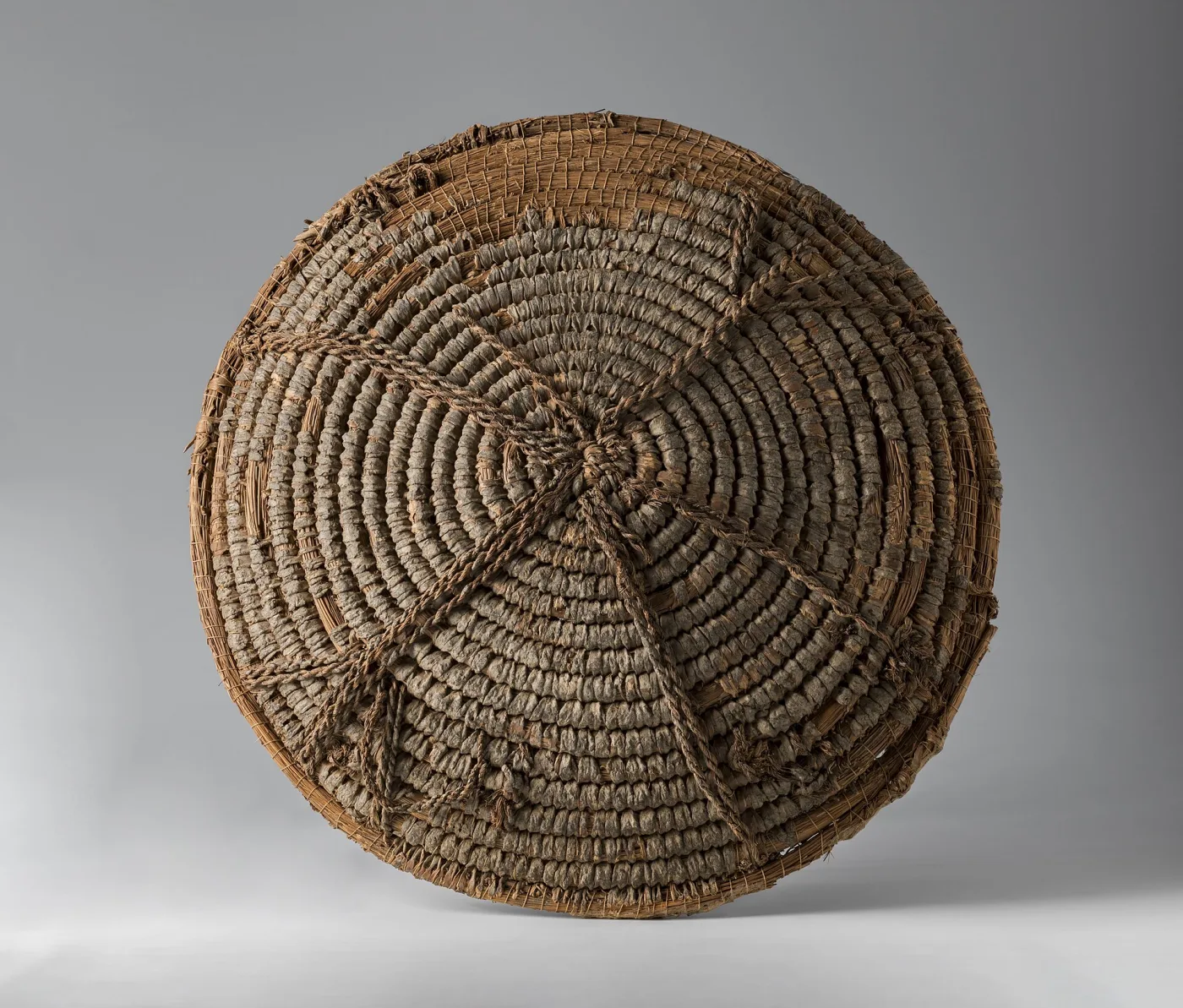
Coiling is one of the oldest and most versatile basket-making methods, found in cultures worldwide:
- Single-Rod Coiling: Uses one rod wrapped with a binder, creating a spiral pattern
- Bundled Coiling: Multiple rods bound together, creating thicker, stronger baskets
- Split-Stitch Coiling: Binder splits and wraps around previous row, creating interlocked structure
- Figure-Eight Stitch: Binder crosses over and under in figure-eight pattern
- Lazy Squaw Stitch: Simple wrapping technique, common in Native American baskets
- Characteristics: Visible spiral pattern, individual coils, stitching patterns between rows
Plaiting and Twining Techniques
Plaiting and twining create flexible, strong baskets with distinctive patterns:
- Checkerboard Plaiting: Simple over-under pattern creating squares
- Diagonal Plaiting: Elements woven at angles, creating diagonal patterns
- Twining: Two weft elements twist around warp elements
- Wickerwork: Flexible shoots woven around rigid frame elements
- Wrapped Twining: Weft elements wrapped around warp, creating smooth surface
- Openwork Twining: Spaced twining creating decorative patterns
Frame Construction Methods
Many baskets use rigid frames with flexible weavers:
- Rib Construction: Vertical ribs with horizontal weavers
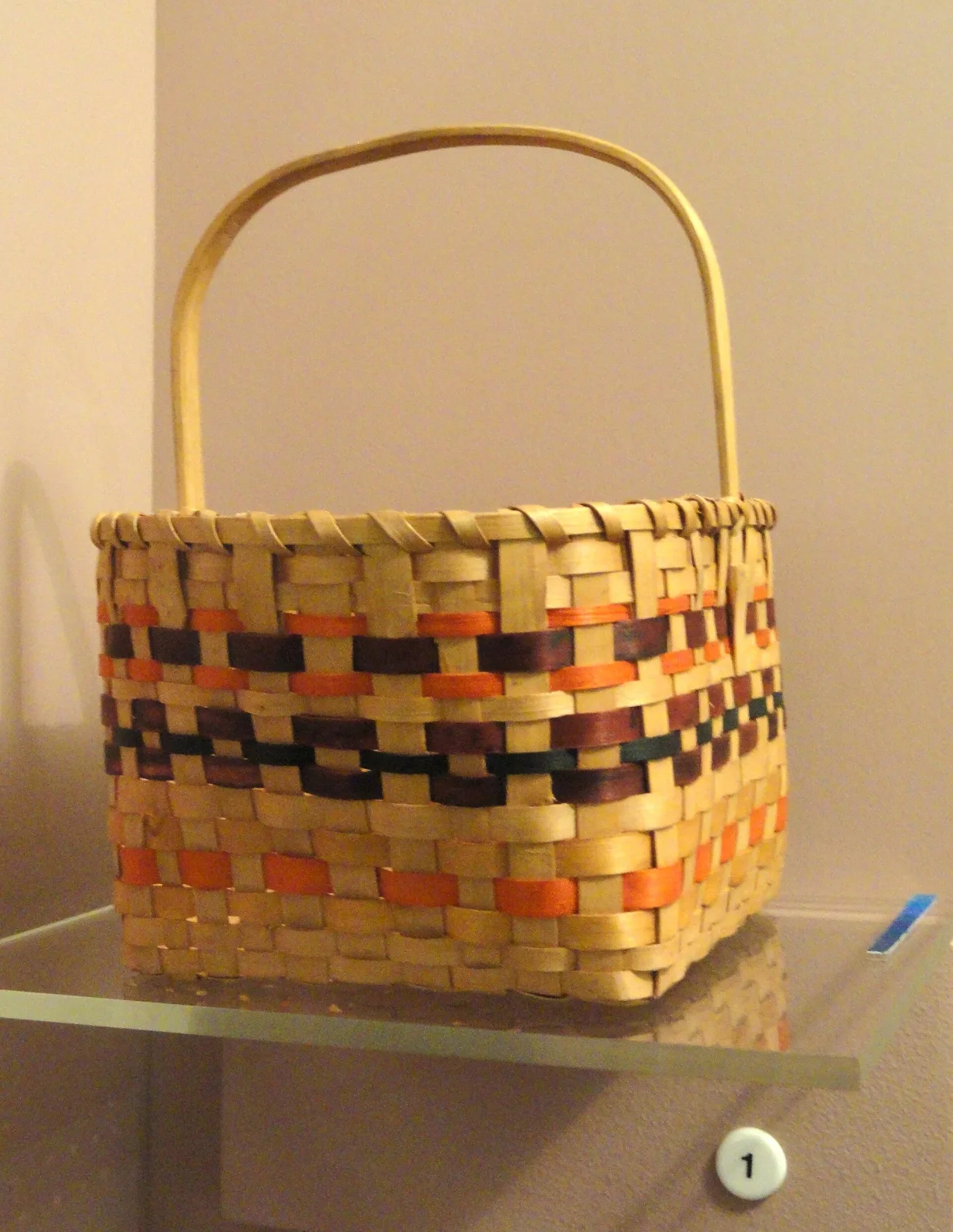
- Stake and Strand: Vertical stakes with horizontal strands
- Hooped Construction: Wooden hoops with woven sides
- Handled Baskets: Integrated handles formed from frame or added separately
- Base Construction: Methods for forming basket bottoms
Specialized Weaving Patterns
Decorative patterns often indicate regional styles or maker identity:
- Herringbone: Zigzag pattern created by alternating weave direction
- Diamond Patterns: Geometric diamond shapes in weave
- Step Patterns: Stepped geometric designs
- Colored Accents: Use of dyed materials for patterns
- Beadwork Integration: Beads incorporated into weaving
Materials Identification and Characteristics
Different materials were used in different regions and periods, making material identification crucial for dating and authenticating baskets.
Natural Plant Materials
Traditional baskets use locally available plant materials:
Wood Splint
- Source: Split from ash, oak, hickory, or other hardwood trees
- Characteristics: Flat, wide strips, smooth or rough texture
- Regional Use: Common in Northeastern United States, Europe
- Age Indicators: Natural patina, slight darkening, flexibility changes
Rattan and Cane
- Source: Climbing palms from tropical regions
- Characteristics: Smooth, flexible, uniform diameter
- Regional Use: Asia, imported to Europe and America
- Types: Round rattan, split cane, flat reed
Willow and Osier
- Source: Willow trees, particularly Salix species
- Characteristics: Flexible shoots, smooth bark when peeled
- Regional Use: Europe, England, some American regions
- Processing: May be peeled or left with bark
Grasses and Rushes
- Sources: Sweetgrass, bulrush, cattail, various grasses
- Characteristics: Fine, flexible, aromatic (sweetgrass)
- Regional Use: Native American traditions, coastal regions
- Special Features: Sweetgrass has distinctive aroma when fresh
Root and Vine Materials
- Sources: Pine roots, cedar roots, grapevines, other vines
- Characteristics: Flexible, strong, often irregular
- Regional Use: Native American, particularly Pacific Northwest
- Processing: Often split or used whole
Bark and Other Materials
- Birch Bark: Waterproof, used for containers in northern regions
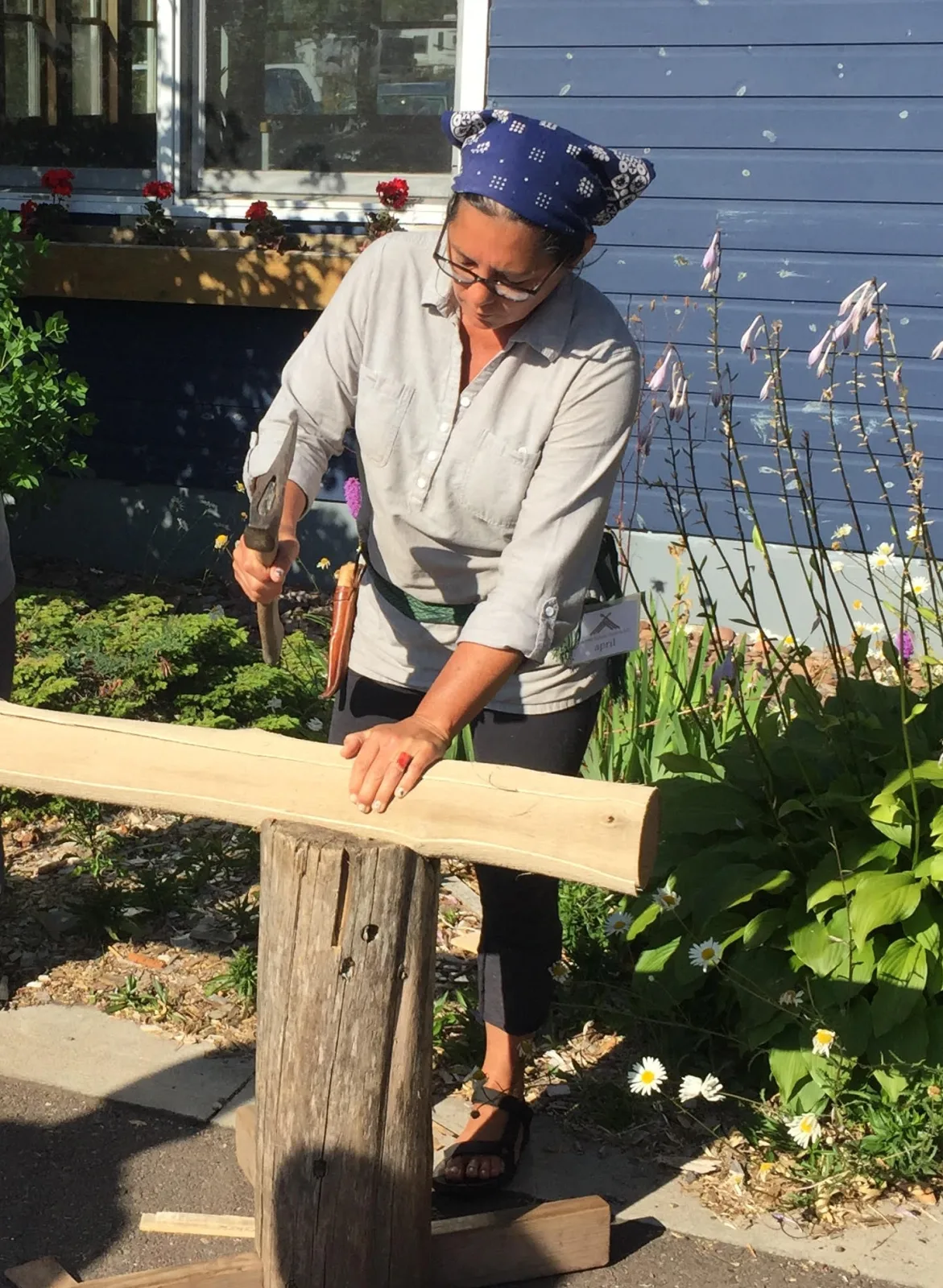
- Cedar Bark: Stripped and processed for weaving
- Palm Leaves: Used in tropical regions
- Corn Husks: Used in some American traditions
- Straw: Used in European and Asian traditions
Dyed and Colored Materials
Understanding dye techniques helps date baskets:
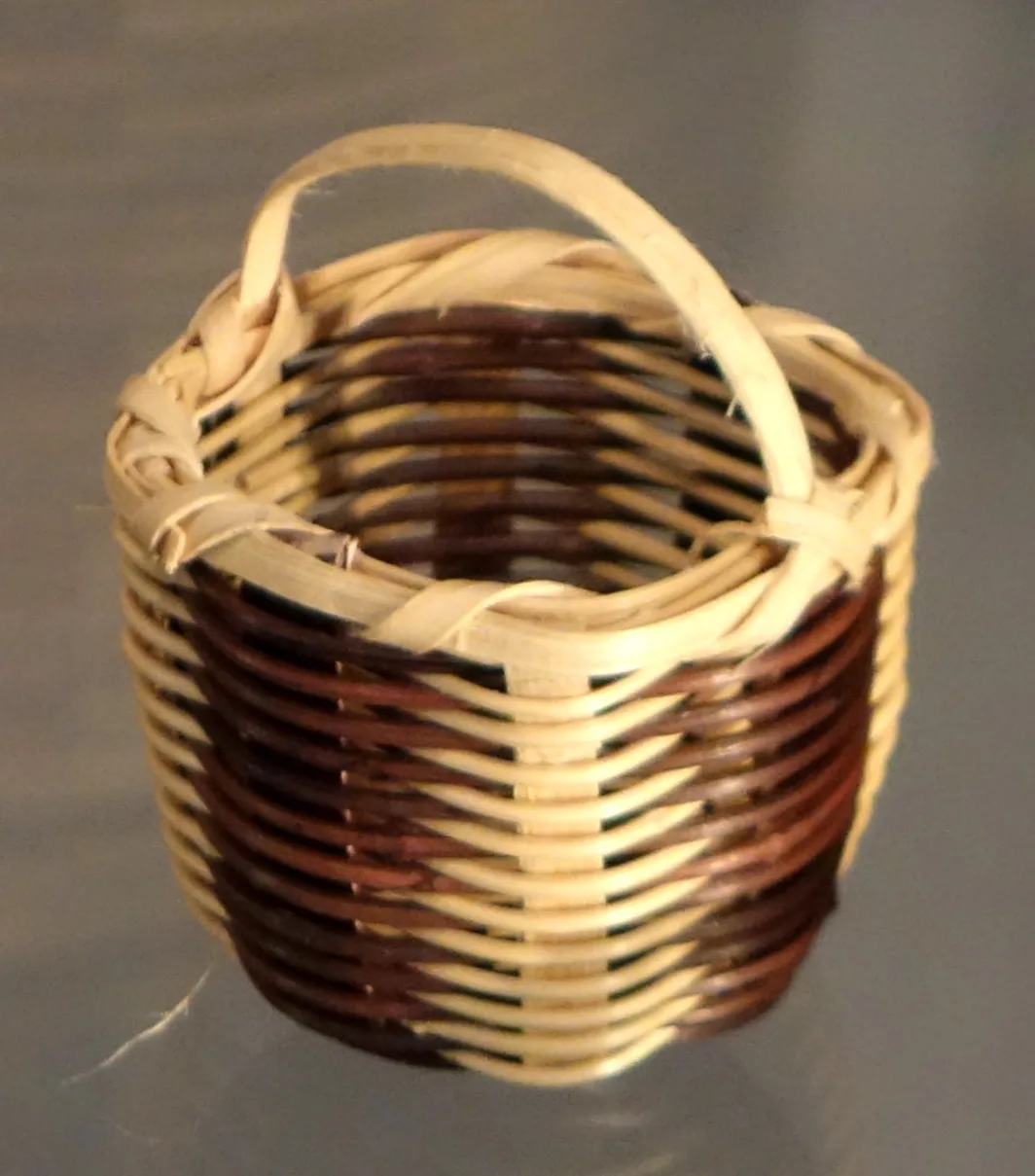
- Natural Dyes: Plant-based dyes in traditional colors
- Aniline Dyes: Introduced in 19th century, brighter colors
- Commercial Dyes: Modern synthetic dyes
- Color Fastness: Older dyes may fade or change color
Modern Materials (Red Flags)
- Plastic: Synthetic materials indicating modern production
- Artificial Reeds: Uniform, manufactured appearance
- Machine-Wrapped Handles: Perfectly uniform wrapping
- Synthetic Dyes: Bright, uniform colors not available historically
Regional Styles and Cultural Traditions
Regional styles developed based on available materials, functional needs, and cultural traditions. Understanding these regional characteristics is essential for identification.
Identifying Regional Characteristics
Key elements that indicate regional origin:
- Material Preferences: What materials were available locally
- Functional Needs: What the baskets were used for
- Cultural Aesthetics: Decorative traditions and preferences
- Construction Methods: Traditional techniques of the region
- Shape and Form: Typical shapes for the region
Native American Basketry Traditions
Native American baskets represent some of the finest and most collectible woven goods. Different tribes developed distinct styles based on their environments and cultural traditions.
Northwest Coast Baskets
Pacific Northwest tribes created highly sophisticated baskets:
- Tribes: Tlingit, Haida, Tsimshian, Coast Salish, others
- Materials: Cedar bark, spruce root, bear grass
- Techniques: Twining, coiling, plaiting
- Characteristics: Tightly woven, geometric patterns, often decorated
- Styles: Storage baskets, cooking baskets, ceremonial items
- Decorative Elements: Geometric patterns, representational designs, sometimes dyed
California Baskets
California tribes created diverse basket styles:
- Tribes: Pomo, Paiute, Washoe, Yurok, Karuk, many others
- Materials: Willow, sedge root, redbud, various grasses
- Techniques: Coiling predominant, twining also used
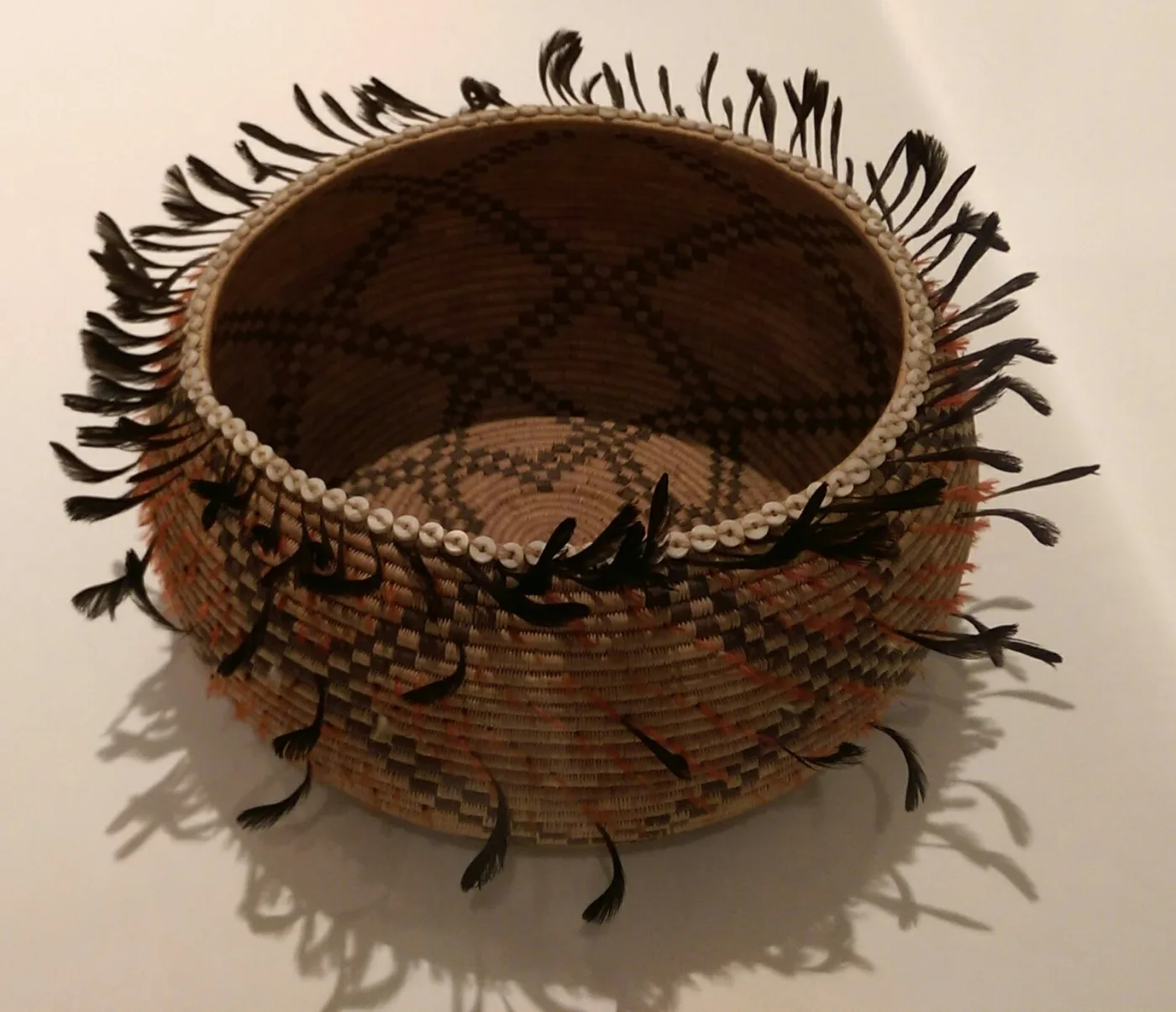
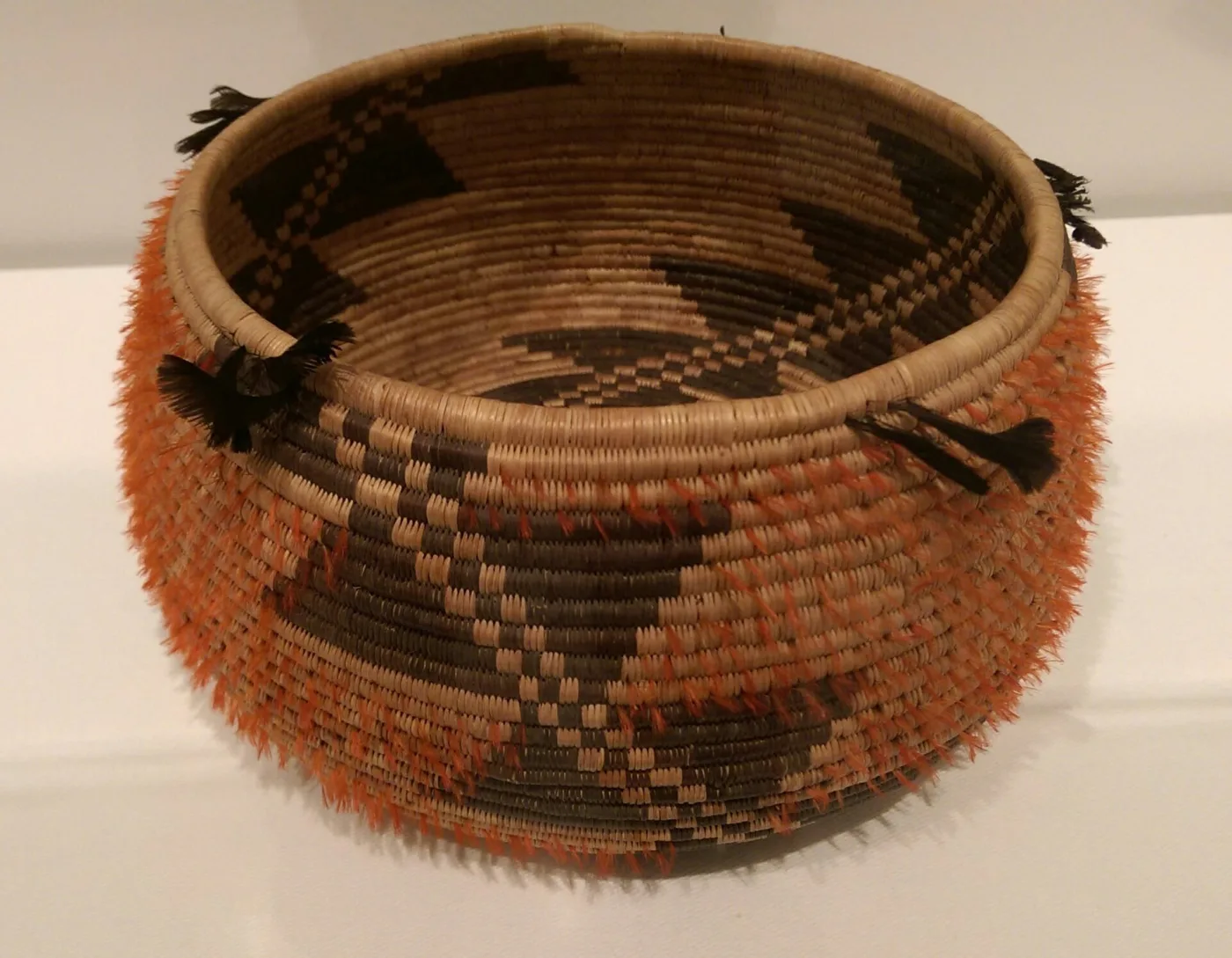
- Pomo Baskets: Famous for fine coiling and feather decoration
- Characteristics: Extremely fine coiling, elaborate decoration, perfect symmetry
- Decorative Techniques: Feather overlay, shell beads, quail topknots
Southwestern Baskets
Southwestern tribes created distinctive basket styles:
- Tribes: Hopi, Apache, Navajo, Pima, Papago (Tohono O'odham)
- Materials: Yucca, willow, sumac, rabbitbrush, devil's claw
- Techniques: Coiling, wicker, twining
- Characteristics: Geometric patterns, symbolic designs
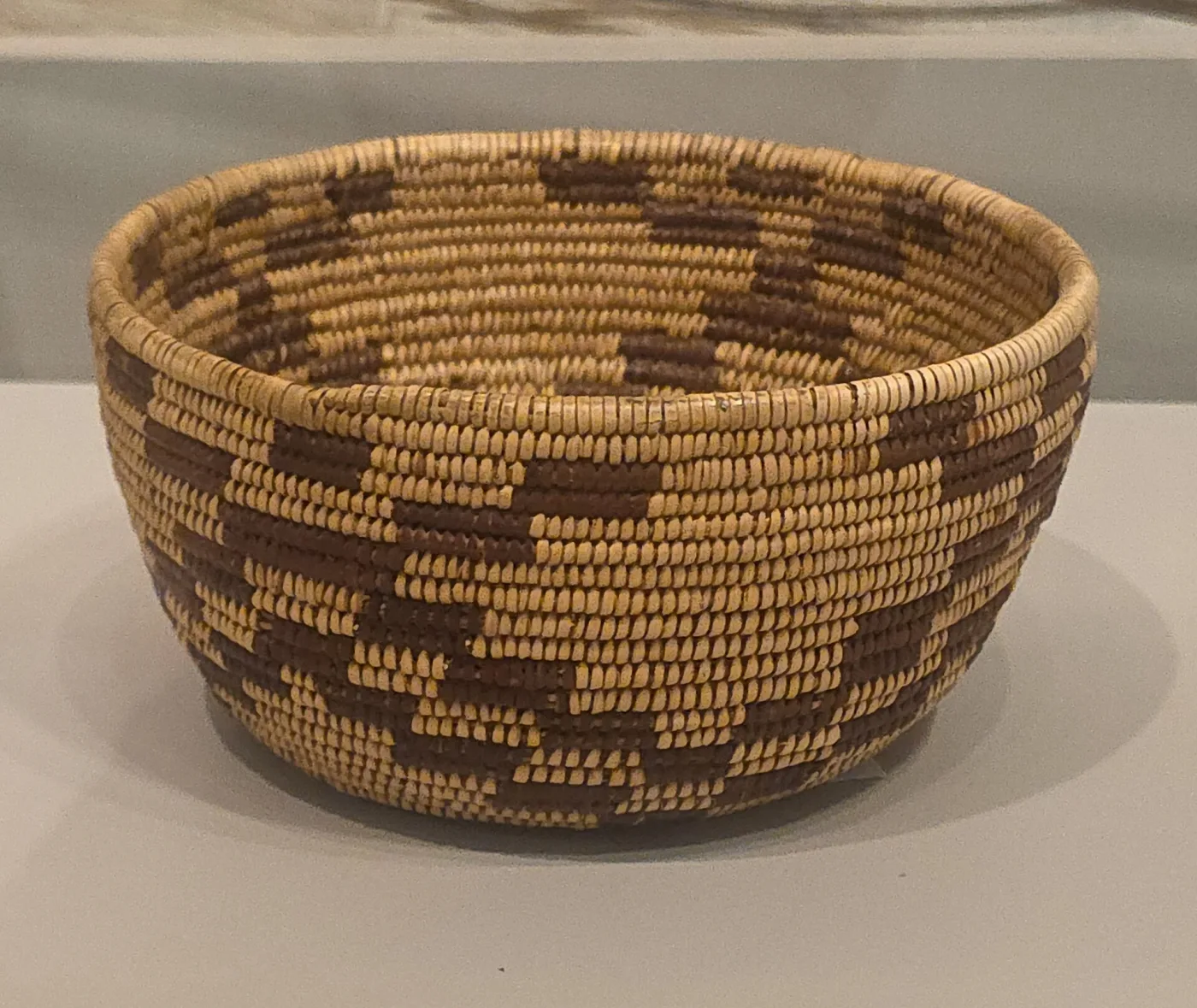
- Hopi Baskets: Coiled baskets with symbolic designs, often ceremonial
- Apache Baskets: Tightly coiled, geometric patterns, distinctive forms
Northeastern Baskets
Northeastern tribes used wood splint techniques:
- Tribes: Abenaki, Penobscot, Passamaquoddy, others
- Materials: Ash splint, sweetgrass, birch bark
- Techniques: Splint weaving, sometimes with sweetgrass accents
- Characteristics: Practical forms, sometimes decorated
- Shapes: Storage baskets, gathering baskets, utility forms
Great Lakes and Plains Baskets
- Materials: Willow, birch bark, sweetgrass
- Techniques: Various, including birch bark construction
- Characteristics: Functional designs, regional variations
Native American Basket Makers
Many Native American basket makers became known by name:
- Identification: Some baskets signed or attributed to makers
- Family Traditions: Basket-making skills passed through families
- Collector Interest: Baskets by known makers command premium prices
- Documentation: Museum collections help identify maker styles

American Basketry Traditions and Styles
European settlers in America adapted basket-making techniques to New World materials and needs, creating distinctive American styles.
Shaker Baskets
The Shakers created some of the most sought-after American baskets:
- Time Period: 18th through early 20th century
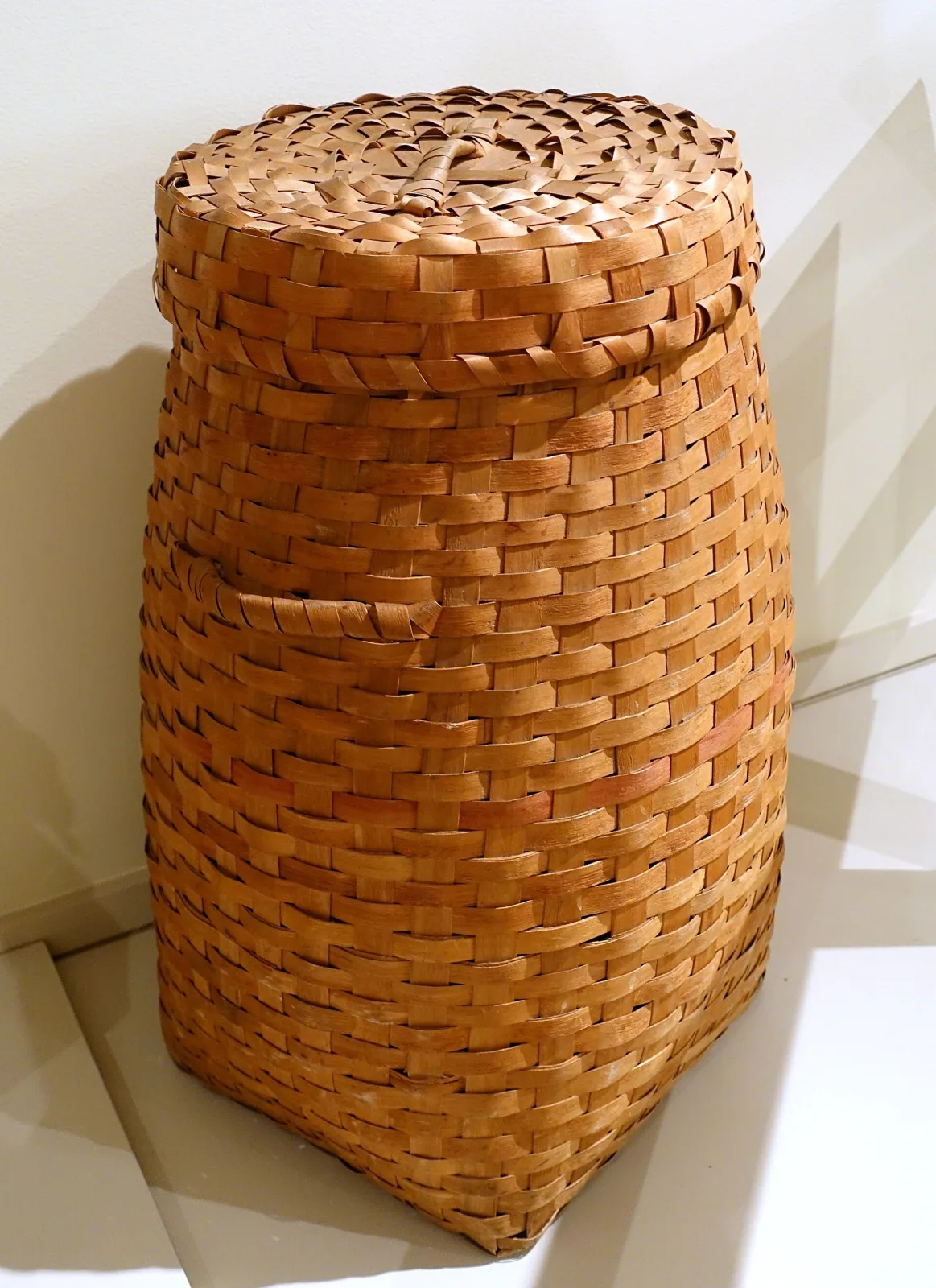
- Materials: Ash splint, maple handles
- Characteristics: Simple, functional designs, exceptional craftsmanship
- Construction: Fine splint work, distinctive handle attachments
- Forms: Storage baskets, carriers, specialized forms
- Identification: Typically unmarked, identified by style and quality
- Value Factors: Rarity, condition, form, provenance
Nantucket Baskets
Nantucket baskets are among the most valuable American baskets:
- Origin: Nantucket Island, Massachusetts
- Time Period: Mid-19th century to present
- Materials: Rattan cane, wooden bases, wooden handles
- Characteristics: Tightly woven, staved construction, distinctive shapes
- Forms: Purses, baskets, various functional forms
- Makers: Well-documented makers, often signed or attributed
- Value: Extremely valuable, particularly early examples
Appalachian and Mountain Baskets
Mountain regions developed distinct basket traditions:
- Materials: White oak, hickory, willow
- Techniques: Splint weaving, rib construction
- Characteristics: Functional, sturdy, often unadorned
- Forms: Gathering baskets, storage, utility forms
- Regional Variations: Different styles in different mountain areas
Oval and Round Splint Baskets
Common American basket forms:
- Materials: Ash, oak, or hickory splint
- Construction: Rib construction with splint weavers
- Forms: Storage baskets, market baskets, gathering baskets
- Handles: Various handle styles and attachments
- Dating: Construction methods and materials help date
Industrial and Commercial Baskets
Mass-produced baskets for commercial use:
- Time Period: Late 19th and early 20th centuries
- Characteristics: More uniform, machine-aided production
- Forms: Shipping baskets, fruit baskets, hampers
- Identification: Less individual character, more standardized
European Woven Goods and Traditions
Europe has long traditions of basket-making, with distinct regional styles and techniques.
English Baskets
English basket-making traditions:
- Materials: Willow, cane, sometimes imported rattan
- Techniques: Wickerwork, stake and strand
- Characteristics: Functional designs, often unadorned
- Forms: Shopping baskets, hampers, specialized forms
- Regional Styles: Variations by region
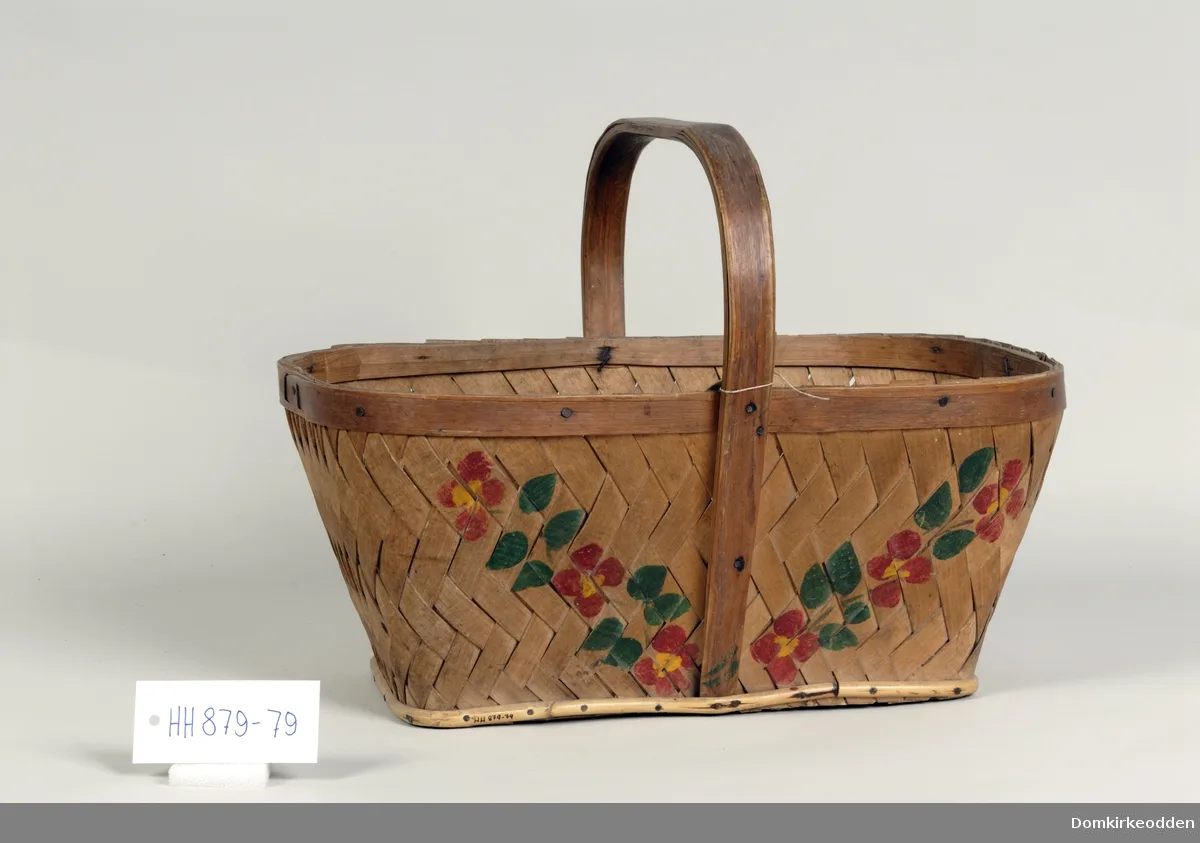
French Baskets
- Materials: Willow, cane, various regional materials
- Characteristics: Often more decorative than English
- Regional Variations: Distinct styles in different regions
- Forms: Market baskets, storage, decorative items
Scandinavian Baskets
- Materials: Birch bark, roots, various woods
- Techniques: Traditional methods, sometimes with bark construction
- Characteristics: Functional, often simple designs
Central European Baskets
- Materials: Willow, straw, various regional materials
- Techniques: Various traditional methods
- Characteristics: Regional variations, functional designs
Asian Basketry Traditions
Asian basket-making traditions are among the oldest and most sophisticated in the world.
Chinese Baskets
- Materials: Bamboo, rattan, various plant materials
- Techniques: Highly refined techniques, often very fine work
- Characteristics: Excellent craftsmanship, sometimes decorative
- Forms: Storage baskets, carrying baskets, specialized forms
- Regional Variations: Different styles by region
Japanese Baskets
- Materials: Bamboo, various plant materials
- Techniques: Exceptional craftsmanship, often very fine
- Characteristics: Aesthetic focus, sometimes art pieces
- Forms: Tea ceremony items, flower arranging, decorative
Southeast Asian Baskets
- Materials: Rattan, bamboo, palm, various tropical materials
- Techniques: Traditional methods, often very fine work
- Characteristics: Functional and decorative items
Maker Identification and Signatures
Identifying basket makers can significantly enhance value and historical interest, though many baskets were made anonymously.
Signed Baskets
Some baskets bear maker signatures or marks:
- Signature Methods: Written signatures, stamped marks, tags
- Location: Often on bottom, sometimes on handle or inside
- Authenticity: Verify signatures, beware of forgeries
- Documentation: Research signed baskets through reference materials
Attributed Baskets
Many baskets can be attributed to makers through style analysis:
- Style Analysis: Recognizing maker's characteristic techniques and patterns
- Comparative Study: Comparing with known examples
- Expert Opinion: Consulting specialists for attribution
- Documentation: Supporting attribution with research
Family and Workshop Traditions
- Family Styles: Techniques and styles passed through families
- Workshop Identification: Recognizing workshop characteristics
- Regional Makers: Identifying makers by region and style
- Documentation: Researching maker histories and traditions
Native American Maker Identification
Native American basket makers often developed distinctive styles:
- Style Recognition: Learning to recognize individual maker styles
- Tribal Styles: Understanding tribal and regional variations
- Family Traditions: Recognizing family styles and techniques
- Documentation: Museum collections and reference materials
- Expert Consultation: Consulting Native art specialists
Research Resources
- Reference Books: Books on basket makers and traditions
- Museum Collections: Studying authenticated examples
- Online Databases: Digital collections and resources
- Expert Consultation: Working with basket specialists
Dating Methods and Historical Context
Accurate dating of baskets requires understanding materials, techniques, and historical context.
Material Dating
Materials can provide dating clues:
- Natural Aging: How materials age over time
- Dye Analysis: When certain dyes became available
- Material Availability: When materials were introduced or used
- Processing Methods: How materials were processed in different periods
Technique Dating
- Construction Methods: Techniques used in different periods
- Tool Marks: Evidence of hand vs. machine production
- Detail Quality: Fineness and consistency of work
- Style Evolution: How techniques evolved over time
Historical Context
- Functional Needs: What baskets were used for in different periods
- Cultural Changes: How basket-making responded to cultural shifts
- Commercial Production: Introduction of commercial basket-making
- Collector Interest: When certain styles became collectible
Comparative Dating
- Similar Examples: Comparing with dated examples
- Museum Collections: Studying documented pieces
- Photographic Evidence: Historical photographs showing baskets
- Documentation: Any available documentation or provenance
Condition Assessment and Preservation
Condition significantly affects value and requires careful assessment. Understanding preservation needs helps maintain antique baskets.
Condition Factors
Key elements to assess:
- Structural Integrity: Is the basket sound and functional
- Material Condition: Condition of weaving materials
- Losses and Damage: Missing elements, breaks, wear
- Previous Repairs: Evidence of repairs or restoration
- Staining and Discoloration: Age-related or damage-related changes
- Handle Condition: Condition of handles and attachments
Common Condition Issues
- Dryness and Brittleness: Natural aging of organic materials
- Breakage: Broken elements, loose weaving
- Losses: Missing elements, incomplete baskets
- Staining: Water damage, food stains, other discoloration
- Insect Damage: Evidence of pest damage
- Mold and Mildew: Fungal damage from moisture
Preservation and Care
Proper care extends basket life:
- Humidity Control: Maintaining appropriate humidity levels
- Temperature Control: Avoiding extreme temperatures
- Light Protection: Limiting exposure to light, especially UV
- Handling: Careful handling to avoid damage
- Cleaning: Appropriate cleaning methods for different materials
- Storage: Proper storage conditions and methods
Restoration Considerations
- Original vs. Restored: Understanding impact of restoration on value
- Appropriate Methods: Using historically appropriate materials and techniques
- Documentation: Documenting any restoration work
- Professional Help: Consulting conservators for valuable baskets
Authenticity Verification and Reproductions
Determining authenticity is crucial, as many baskets are reproduced or made to deceive collectors.
Authentic Characteristics
Signs of authentic antique baskets:
- Natural Aging: Consistent, natural aging patterns
- Material Authenticity: Period-appropriate materials
- Construction Quality: Appropriate craftsmanship for period and style
- Technique Consistency: Consistent techniques throughout
- Wear Patterns: Natural wear from use
- Patina: Natural patina and aging
Reproduction Indicators
Red flags that may indicate reproductions:
- Modern Materials: Synthetic materials not available historically
- Machine Production: Evidence of machine manufacture
- Artificial Aging: Unnatural aging patterns or methods
- Inconsistent Quality: Quality that doesn't match claimed period
- Modern Techniques: Construction methods not used historically
- Perfect Condition: Condition too perfect for claimed age
Verification Methods
- Material Analysis: Examining materials carefully
- Construction Analysis: Studying construction methods
- Comparative Study: Comparing with authenticated examples
- Expert Consultation: Consulting basket specialists
- Scientific Testing: When appropriate, scientific analysis
Common Deception Methods
- Artificial Aging: Chemical or mechanical aging methods
- Material Substitution: Using modern materials made to look old
- Style Imitation: Copying styles without understanding techniques
- False Attribution: Claiming baskets are by famous makers
- Misrepresentation: Incorrectly describing origin or age
Value Assessment and Market Factors
Understanding what makes baskets valuable helps with identification and collecting decisions.
Value Factors
Elements that affect basket value:
- Rarity: How uncommon the basket type or style is
- Condition: State of preservation and completeness
- Maker: Baskets by known or important makers
- Age: Generally older baskets are more valuable
- Provenance: Documented history and ownership
- Size and Form: Desirable sizes and forms
- Decorative Elements: Decoration and artistic quality
- Technical Excellence: Quality of craftsmanship
High-Value Categories
Basket categories that typically command premium prices:
- Native American Baskets: Particularly fine examples, known makers
- Nantucket Baskets: Early examples, known makers
- Shaker Baskets: Early period, excellent condition
- Pomo Baskets: Particularly fine coiling, feather decoration
- Signed Baskets: Baskets by identified makers
- Rare Forms: Unusual or rare basket forms
- Ceremonial Baskets: Baskets with ceremonial significance
Market Considerations
- Collector Interest: Current collector preferences and trends
- Market Conditions: General economic and market factors
- Regional Markets: Different markets for different styles
- Exhibition History: Baskets with exhibition history
- Publication History: Baskets referenced in publications
Appraisal Methods
- Comparative Sales: Recent auction and sale results
- Expert Appraisal: Professional appraiser assessment
- Condition Analysis: Careful condition assessment
- Provenance Research: Researching history and documentation
Conclusion
Antique baskets and woven goods identification is a fascinating field that combines material knowledge, technical understanding, cultural appreciation, and historical awareness. From recognizing the fine coiling of a Pomo basket to identifying the distinctive construction of a Nantucket basket, each piece tells a story of its maker, materials, and historical period. By learning to identify weaving techniques, understand material characteristics, and recognize regional styles, you can develop the expertise needed to authenticate and appreciate antique baskets.
Remember that basket identification often requires multiple pieces of evidence working together. Material analysis, construction methods, style recognition, and historical context all contribute to accurate identification. Whether you're identifying a family heirloom, building a collection, or researching basket history, the knowledge and techniques in this guide provide a solid foundation for your work.
As you continue exploring antique baskets, remember that these items represent centuries of traditional craftsmanship and cultural heritage. Each basket was made by hand using techniques passed down through generations, using materials gathered from local environments. The skills needed to create fine baskets required years of practice and deep knowledge of materials and techniques. By learning to identify and appreciate these works, you contribute to preserving this important cultural heritage.
Modern tools like the Antique Identifier app can provide instant AI-powered identification assistance for your baskets, but understanding these fundamental identification principles is essential for serious collectors and researchers. Combining traditional knowledge with modern technology gives you the best tools for identifying and appreciating antique baskets and woven goods.